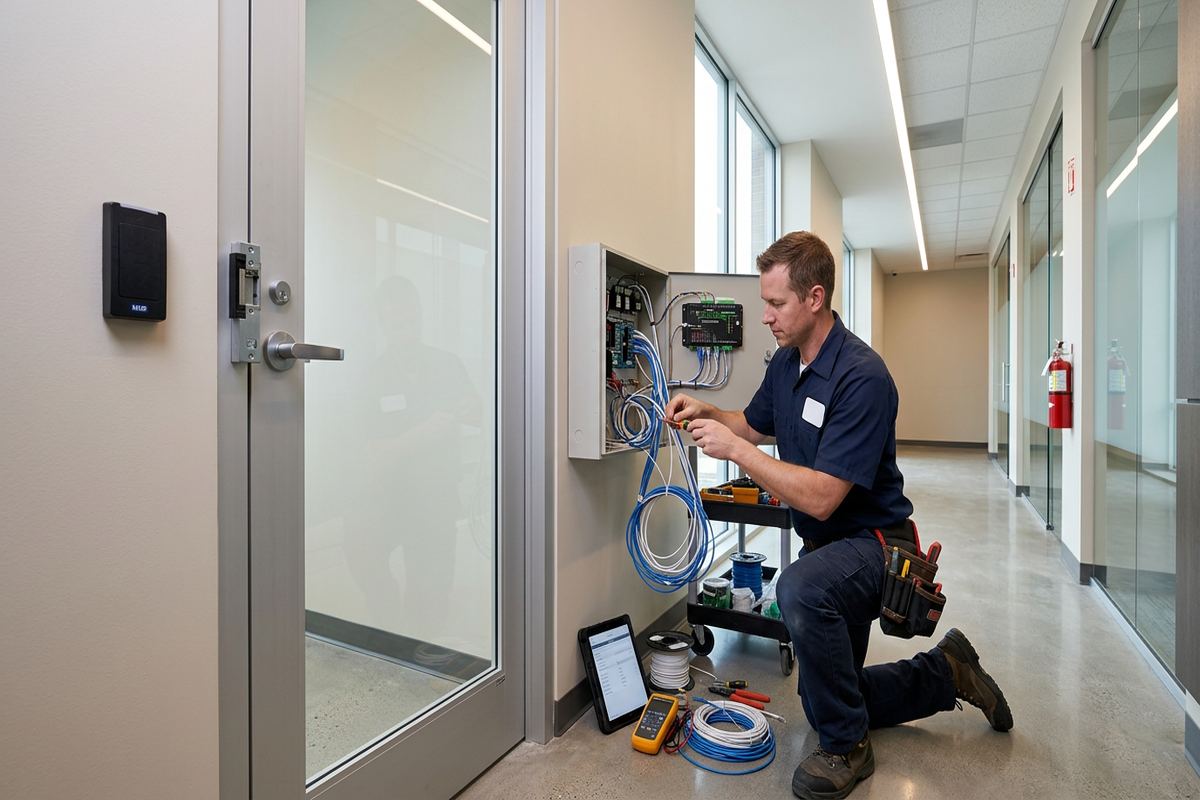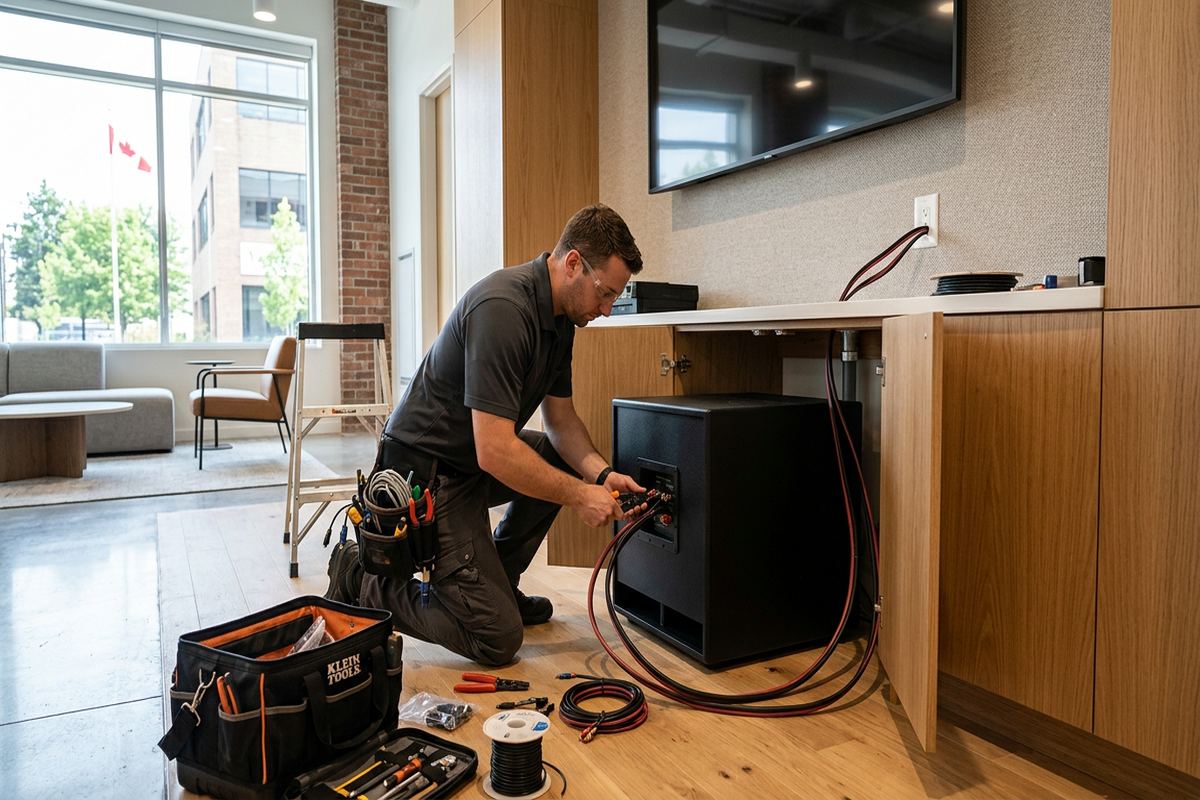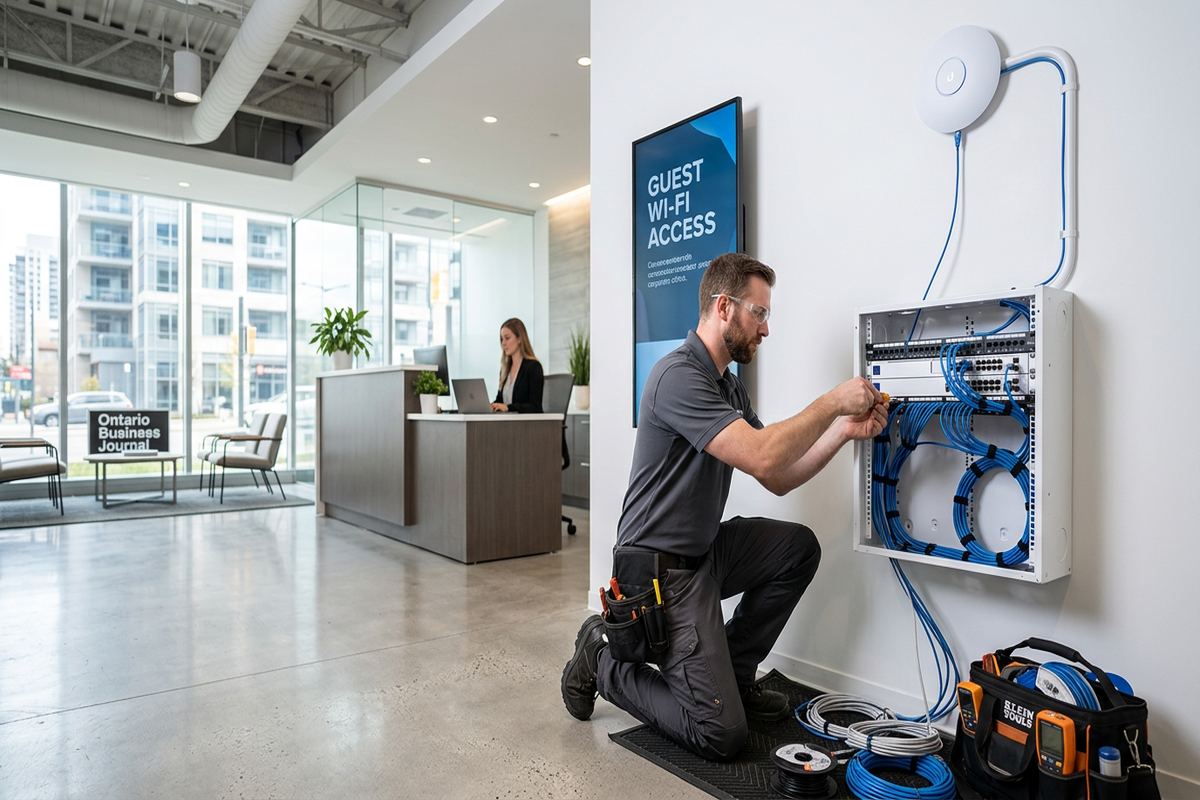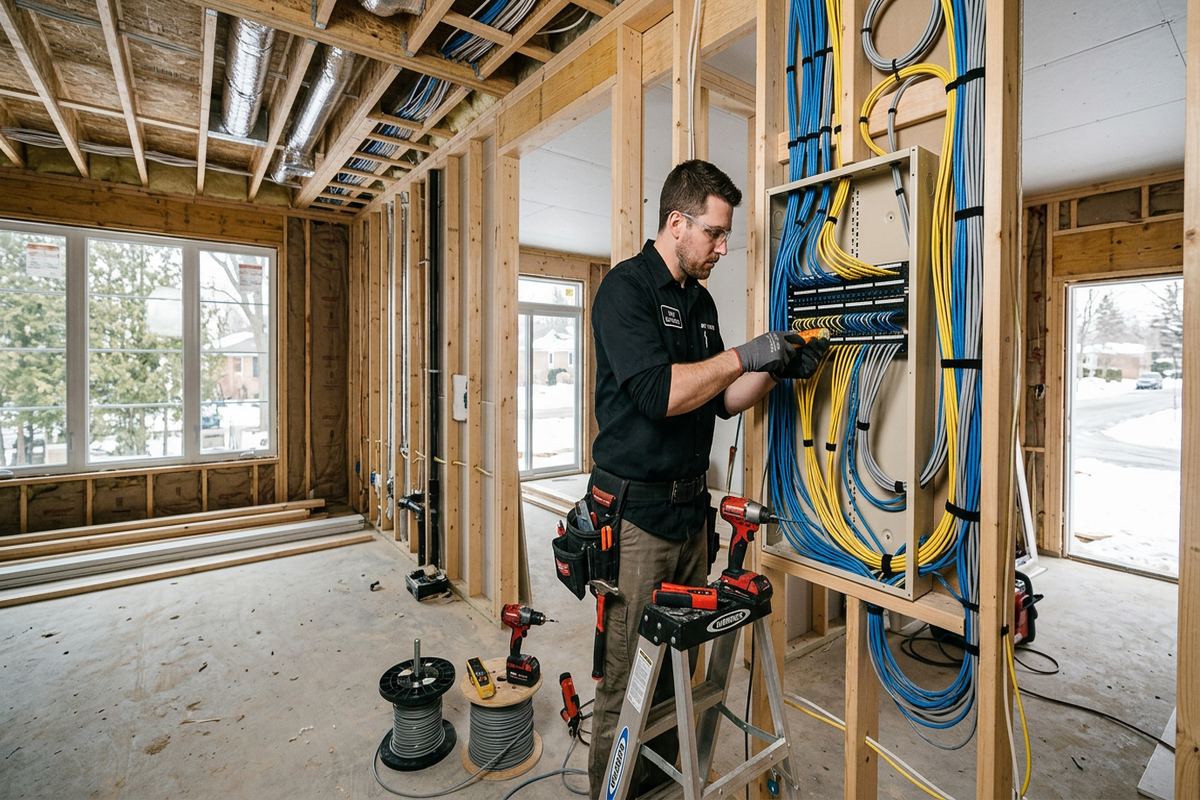
UnifiedLink installs structured cabling for homes, offices, shops, industrial units and seasonal properties across Fort Erie. We plan cable routes, install continuous labelled runs, terminate and test each connection, and configure connected network equipment on site. The result is an organized foundation for internet, Wi-Fi, cameras, phones, access control, audio and other low-voltage systems.
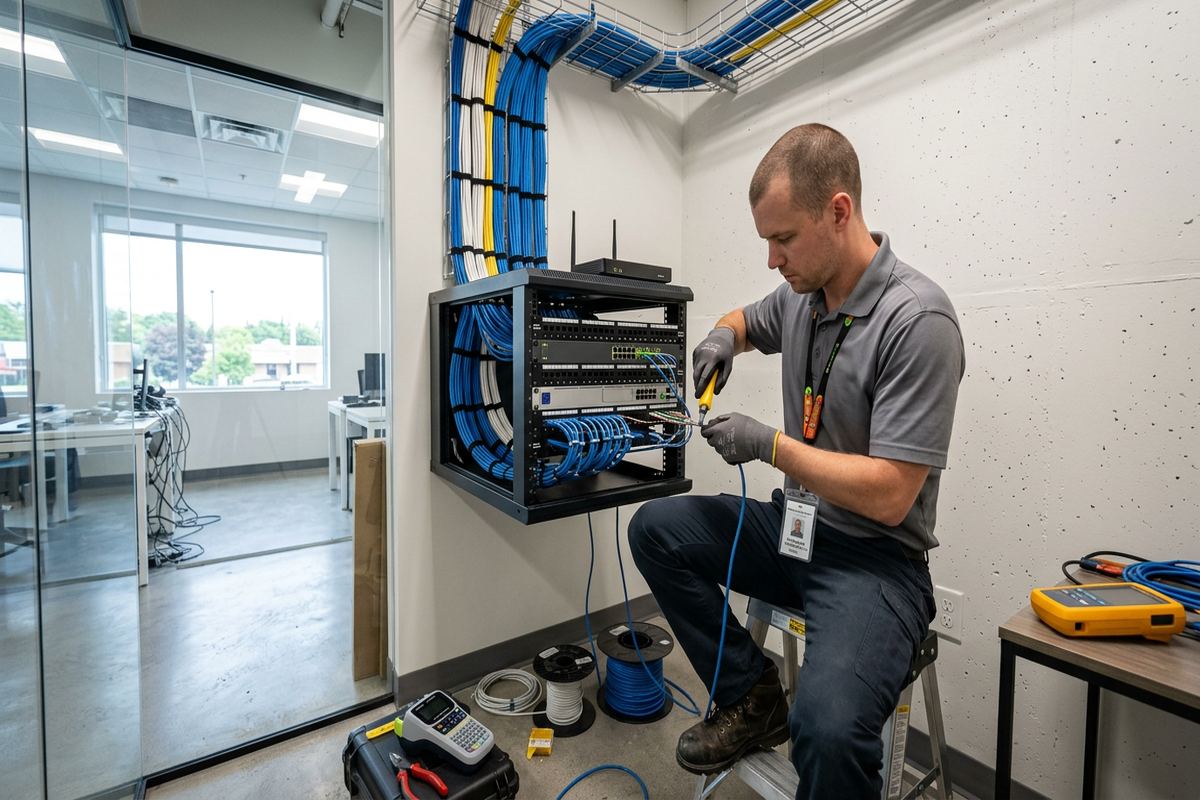
Structured Cabling for Fort Erie Properties
A structured cabling system provides permanent, organized connections between a central network location and devices throughout a property. In Fort Erie, that may include data outlets in a Bridgeburg office, ceiling connections for Wi-Fi access points, camera links around a Ridgeway shop or internet wiring in a Crystal Beach home. UnifiedLink plans these connections as one coordinated system rather than a collection of extension cables and improvised routes. Each run is selected for its intended equipment, installed continuously where practical, labelled at both ends, terminated using suitable hardware and tested before the system is handed over.
Good cabling supports more than computers. The same planned infrastructure can serve wireless access points, VoIP phones, security cameras, access control panels, intercoms, televisions, audio equipment and building automation devices. We consider current requirements alongside realistic future additions, avoiding unnecessary cabling while leaving sensible capacity at the rack or enclosure. Device locations, cable categories, pathway limits and power needs are addressed before work begins. This helps Fort Erie homeowners and businesses understand which devices will use direct network connections, which will connect through Wi-Fi and where Power over Ethernet may simplify installation.
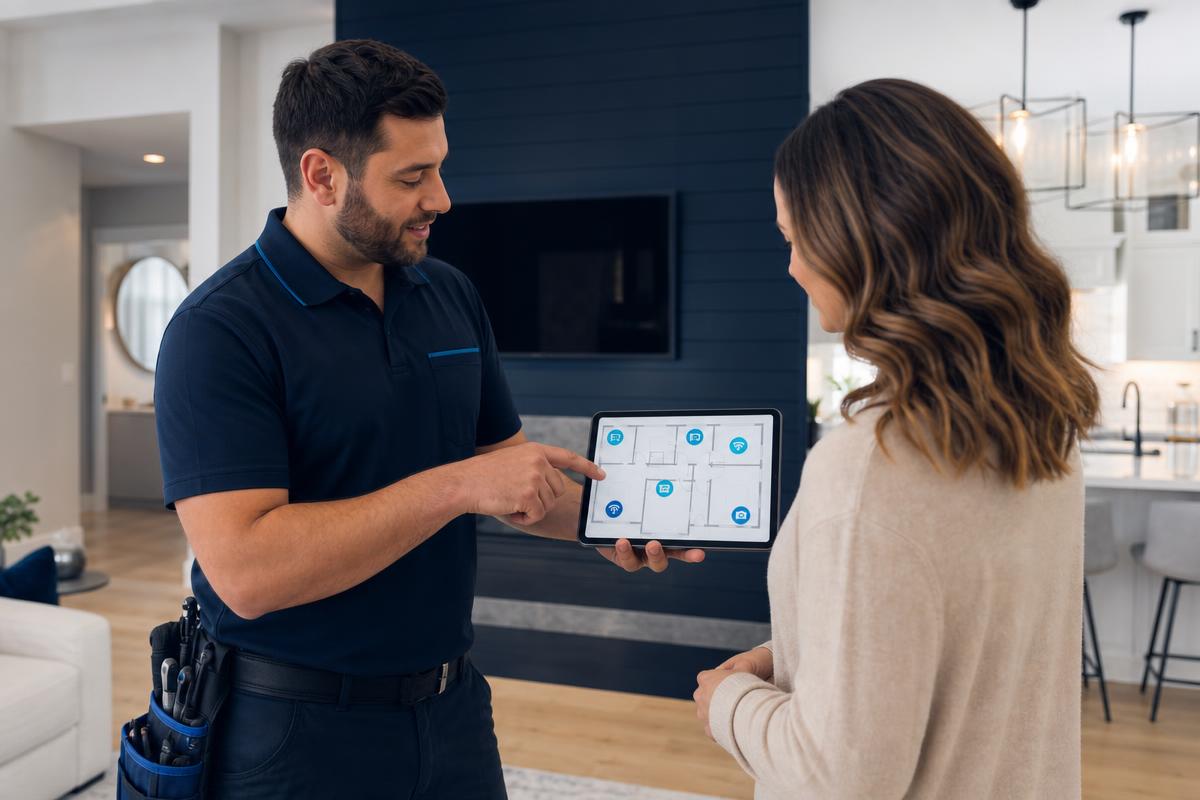
Every project starts with a site assessment before pricing. We inspect accessible ceiling spaces, basements, utility rooms, wall construction, existing pathways and the proposed network equipment location. The written scope identifies equipment, cable routes, device placement, exclusions, equipment ownership and warranty details. It also records assumptions about access, patching, electrical power and work by other trades. This process is particularly important in older or altered Fort Erie buildings, where finished walls may conceal masonry, blocked cavities, previous renovations or abandoned wiring that affects the practical route between rooms and floors.
- Cat6 and other application-appropriate network cabling
- Data outlets, patch panels and network racks
- Connections for Wi-Fi access points and cameras
- Clear labels at outlets and central terminations
- Testing completed before system handover
Planning Cable Routes in Fort Erie Buildings
Route planning balances performance, serviceability and the appearance of the finished installation. Cable must remain separated from electrical conductors and sources of interference, stay within applicable distance limits and avoid sharp bends or damaging tension. In finished Fort Erie homes, routes may pass through basements, attics, closets or discreet surface pathways. Commercial properties may offer suspended ceilings, service corridors or open structural areas. We review these options with the customer before installation, including any visible conduit, access openings or wall plates, so the agreed route is understood rather than decided after walls have been opened.
Building construction changes the installation method. Frame homes often provide usable stud and joist spaces, although insulation, fire blocking and renovations can interrupt them. Masonry buildings around established commercial areas may require surface-mounted pathway, carefully drilled penetrations or existing chases instead of conventional wall fishing. Industrial units can include concrete walls, steel structure, high ceilings and shared service spaces. UnifiedLink selects fasteners, supports, sleeves and pathway components for the surface and environment. Penetrations are positioned deliberately and sealed appropriately, while cable is supported independently rather than laid on ceilings or attached loosely to unrelated services.
Approvals must be settled before cabling begins in managed or rented properties. Condo corporations may control common walls, exterior surfaces, risers and equipment rooms, while landlords may restrict drilling or require restoration plans. Commercial tenants may also need property-management approval for ceiling access, conduit or telecommunications-room work. We can define the proposed route and mounting approach for the customer’s approval process, but the customer remains responsible for obtaining permissions unless the written scope says otherwise. Confirming these details early reduces route changes and helps installations in Fort Erie proceed without placing cable in unauthorized common or shared areas.
- Route review before drilling or cable pulling
- Options for concealed and surface-mounted pathways
- Appropriate supports for masonry, wood and steel
- Coordination with landlords and property managers
- Documented exclusions for inaccessible areas
Weather-Rated Exterior Cabling in Fort Erie
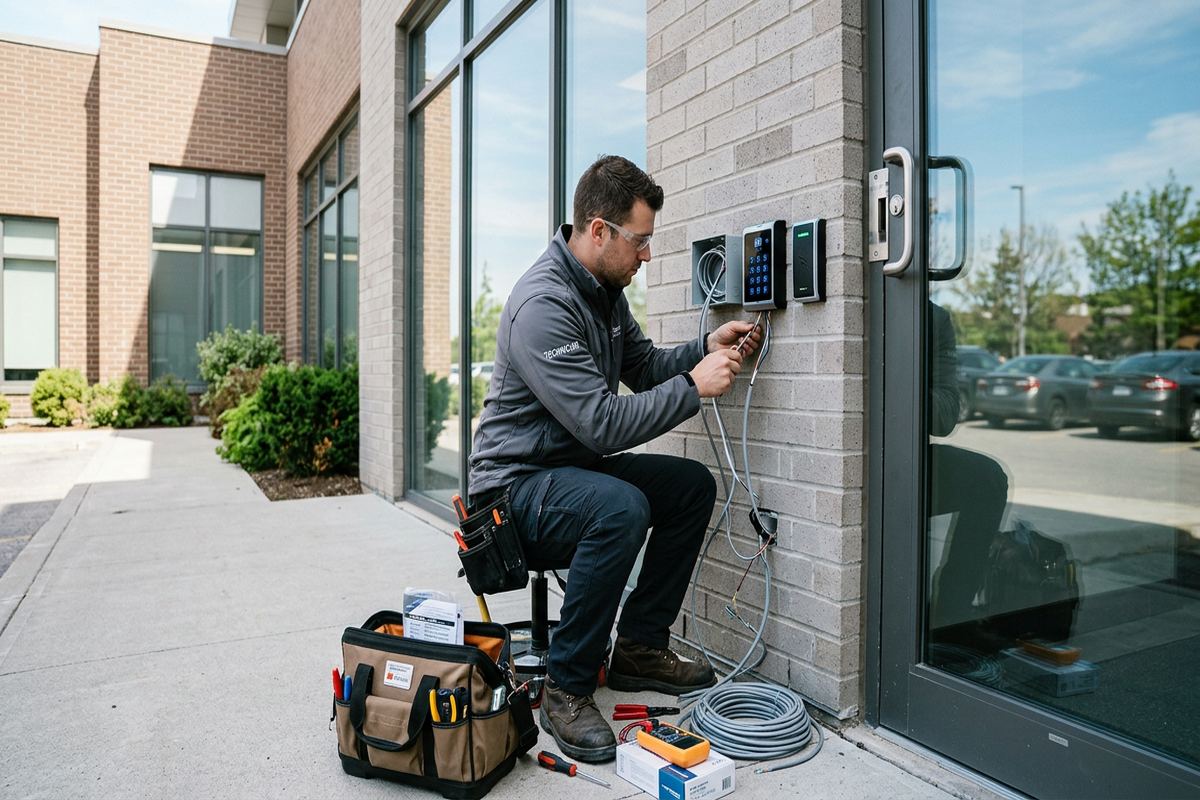
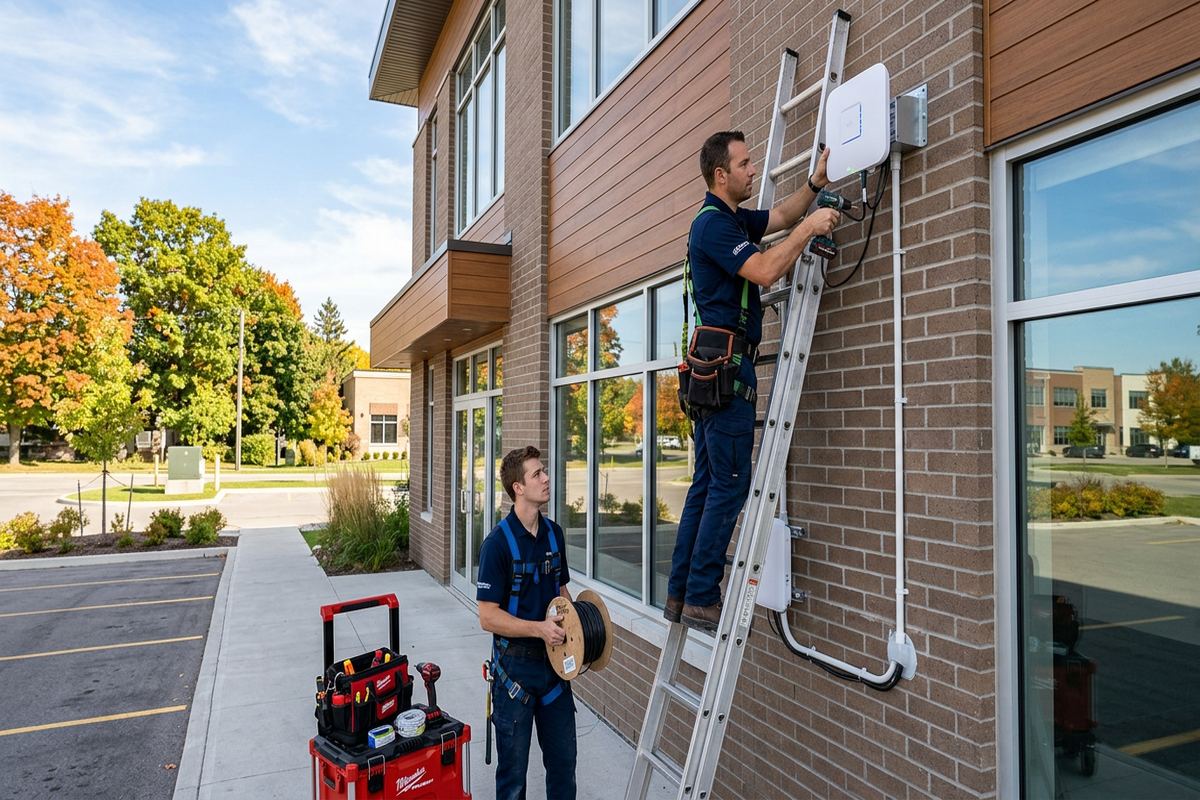
Border-adjacent businesses and lakefront and seasonal homes make weather-rated exterior gear a standard consideration in Fort Erie. Outdoor network links may serve cameras, detached garages, gate equipment, patios, signs or access points, but indoor cable and fittings are not suitable for exposed routes. We assess sunlight, wind-driven rain, snow accumulation, moisture entry and physical impact when selecting cable, boxes, glands and conduit. Exterior equipment is mounted to stable surfaces with entries arranged to limit water travel. Drip loops and appropriate seals are used where required, without relying on a bead of sealant to correct a poorly planned penetration.
Fort Erie winters also create repeated freeze-thaw movement around exterior penetrations and mounting points. Water entering a small gap can freeze, expand and damage finishes or allow moisture to track along a cable. We choose penetration locations carefully, slope or protect entries where appropriate and use compatible sealing methods for masonry, siding or other cladding. Exterior cable is supported so that ice, wind and temperature movement do not pull directly on device connections. Where a route passes from outdoors to indoors, the transition is planned to keep exposed cable appropriate for the environment and maintain a serviceable termination.
Detached structures require more than simply extending copper cable outdoors. Distance, electrical grounding conditions, surge exposure and the relationship between building services all affect the suitable connection method. In some cases, fibre is preferable because it provides electrical isolation and supports longer links; in others, properly protected copper may meet the application. We review power availability, network equipment and pathway conditions before recommending an approach. Seasonal properties in Crystal Beach or along exposed areas also benefit from secure enclosures and organized indoor termination points that remain protected when the building is unoccupied for extended periods.
- Outdoor-rated cable and weather-resistant enclosures
- Sealed penetrations for masonry and siding
- UV, moisture and freeze-thaw considerations
- Fibre options between detached buildings
- Protected transitions from exterior to interior
Fort Erie, Ontario
Structured cabling installation in Fort Erie, scoped in writing first
Book a site assessment and get equipment, routes, exclusions, and warranty on paper before anything is installed.
Business Network Cabling Across Fort Erie
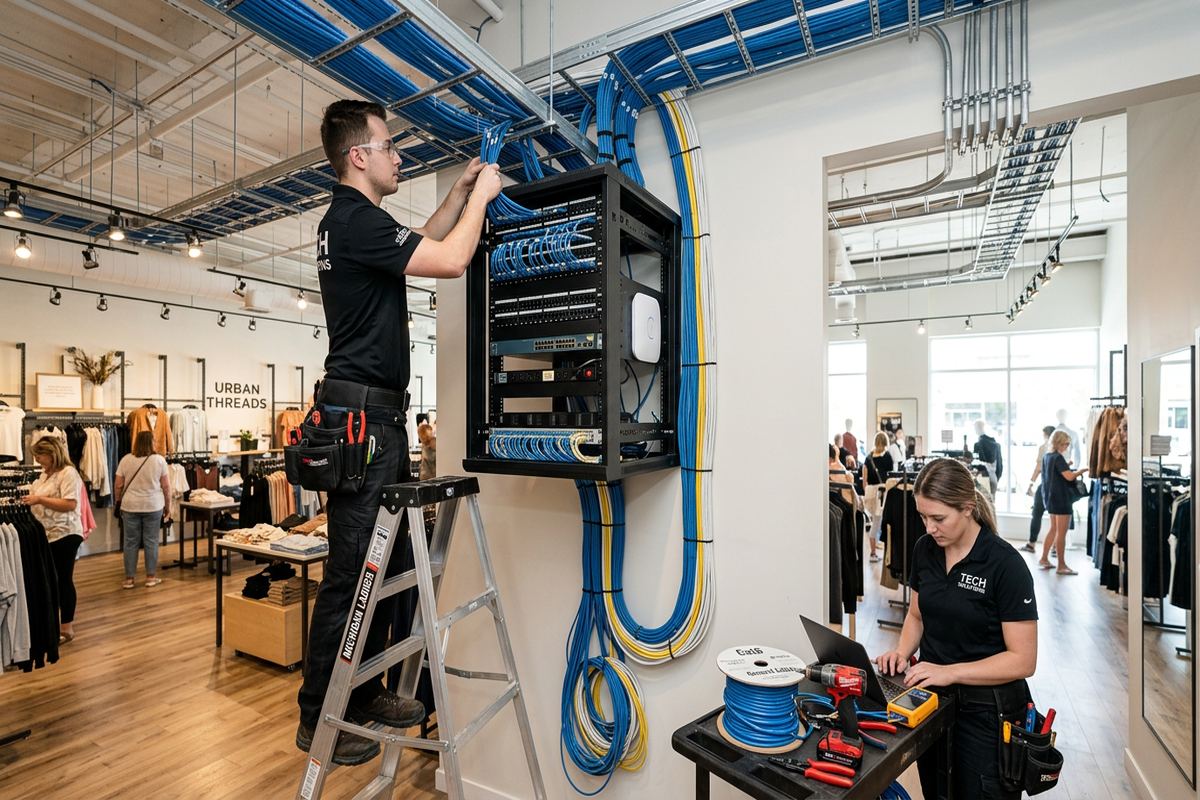
Commercial cabling must support daily operations while remaining understandable to whoever services the network later. For Fort Erie offices, retail spaces and border-adjacent businesses, we can install workstation outlets, printer connections, wireless access point cabling, VoIP phone links and dedicated runs for security devices. A central rack or wall enclosure keeps patching, switches and internet-provider equipment organized. Port labels correspond with room or device labels, reducing guesswork during moves and troubleshooting. We also separate network ownership from provider responsibilities so the customer knows which cabling and equipment belong to the premises and which items remain controlled by an internet carrier.
Commercial strips and mixed-use buildings can present limited ceiling access, shared walls and older pathways already crowded with telephone or coaxial wiring. Before adding cable, we inspect what can be reused, what should remain untouched and where a new pathway is necessary. Existing cable is not assumed to be suitable merely because it reaches the right room. Its category, condition, termination and route all matter. In Bridgeburg or Ridgeway storefronts, work may need to avoid customer areas or coordinate with operating hours. Access arrangements and any expected disruption are documented in the scope before installation is scheduled.
Industrial and service units often require longer routes, higher mounting positions and protection from equipment movement, dust or accidental contact. Cable may need tray, conduit or other supported pathways rather than an open office-style installation. We identify suitable device positions while considering shelving, machinery, overhead doors and future layout changes. Network cabinets should remain accessible without occupying vulnerable production space. Where lifts, specialized access equipment or coordination with an electrician is needed, that requirement is identified during assessment. The goal is a maintainable Fort Erie installation with clear boundaries between network cabling, electrical work and customer-supplied equipment.
- Workstation, printer and VoIP connections
- Rack, enclosure and patch-panel installation
- Cabling for cameras and controlled-entry devices
- Pathways suited to commercial and industrial spaces
- Coordination around operating areas and access
Home and Seasonal Property Cabling
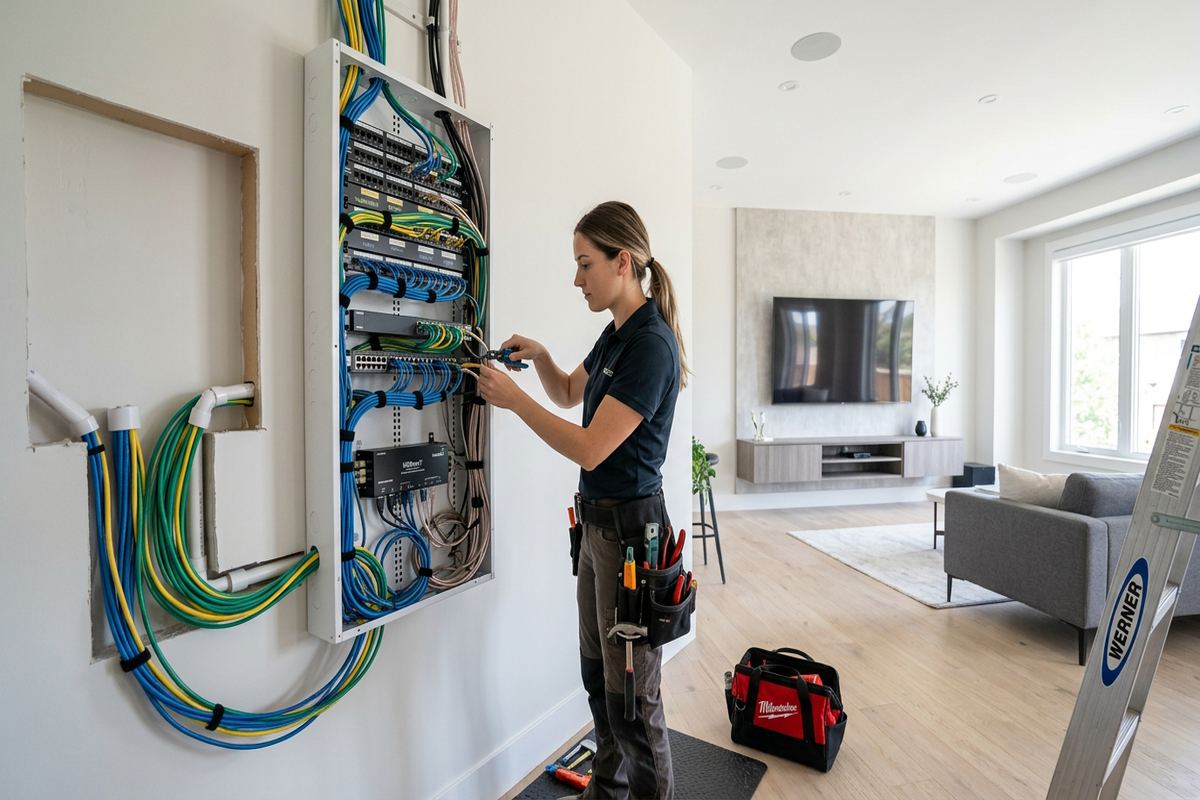
Home cabling provides stable connections where wireless service alone is inconsistent or unnecessarily congested. In Fort Erie houses, direct data outlets can serve offices, televisions, game systems, media equipment and desktop computers, while ceiling or wall connections support properly positioned Wi-Fi access points. We avoid treating the internet modem location as the automatic centre of the network. Instead, we review where service enters, where equipment can remain ventilated and accessible, and how cables can reach occupied rooms. A compact panel, enclosure or backboard can organize connections without turning a utility area into a tangle of adapters and loose wires.
Older homes and renovated properties require careful expectations. Some walls can be fished through existing cavities, while others contain masonry, plaster, insulation, blocking or additions with no continuous route. A cable path from the basement may be practical in one room but impossible in the next without visible pathway or selective access openings. We explain these limitations before finalizing the scope and identify who will handle any patching or finish repair. In Douglastown, Stevensville and other Fort Erie communities, construction varies widely, so installation methods are based on the inspected property rather than assumptions about its age or exterior appearance.
Lakefront and seasonal homes benefit from infrastructure that is simple to shut down, restart and troubleshoot. Labelled cabling helps owners identify cameras, access points and entertainment connections without tracing wires during every visit. Network equipment should be placed in a dry, secure and reasonably conditioned location, not in an exposed exterior box or damp corner unless specifically designed for that environment. If remote monitoring devices are planned, we confirm their wired connection and power requirements while avoiding claims about internet or electrical availability. The handover shows how permanent cabling connects to customer-owned or provider-supplied network equipment.
- Wired connections for offices and media areas
- Cabling for centrally placed Wi-Fi access points
- Compact home network panels and enclosures
- Practical routes for finished living spaces
- Clear identification for seasonal-property systems
Installation, Termination and Testing in Fort Erie
Installation follows the documented route unless site conditions reveal an obstruction or safety concern. If a route must change, we discuss the alternative before making a material departure from the scope. Cables are pulled without damaging tension, supported with appropriate hardware and protected at penetrations or exposed transition points. Continuous labelled runs are used between the outlet and central termination rather than hidden joins. In Fort Erie properties with multiple floors, additions or detached areas, consistent labelling is especially important because route tracing can otherwise require unnecessary access to finished spaces. Cable slack is managed neatly without creating unsupported coils or blocked equipment areas.
At the room end, cable is terminated at a suitable jack, faceplate, surface box or device connection. At the network location, runs may terminate on a patch panel or other specified hardware. Termination layout preserves bend radius, keeps labels visible and allows individual connections to be changed without disturbing the entire bundle. We test completed runs using methods appropriate to the installed system and address termination faults before handover. Testing confirms basic connection performance, but it does not guarantee the speed of an internet plan, remote service or customer device. Those results also depend on switches, routers, providers and endpoint capabilities.
On-site configuration can include installed network components covered by the written scope, such as switches or wireless access points. Settings are created using the customer’s own credentials, and ownership is clarified before handover. We do not retain control through undisclosed accounts or make the customer dependent on installer-only access. The completed record identifies outlet and patch-panel labels, device positions and important pathway information available from the installation. For Fort Erie businesses with several rooms or tenant areas, this as-built information provides a practical reference when staff move, equipment changes or another technical provider needs to understand the physical network.
- Continuous runs without concealed cable joins
- Neat jack and patch-panel termination
- Testing appropriate to the installed cabling
- On-site configuration within the agreed scope
- Customer credentials used for system handover
Upgrading Existing Fort Erie Cabling
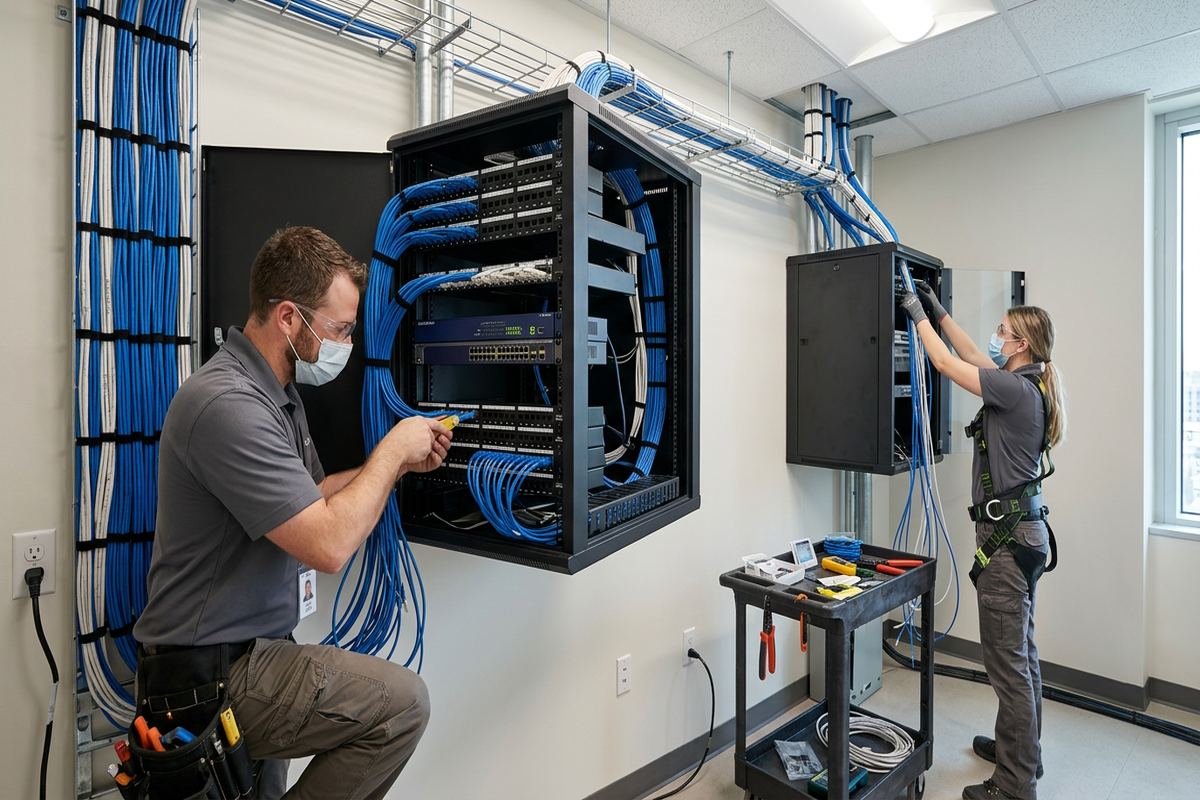
Not every network problem requires complete replacement. Existing Fort Erie cabling may be reusable when its type, route, condition and terminations suit the current application. We inspect visible markings, outlet hardware, patching and accessible pathways, then test relevant runs where practical. A failed connection may result from a damaged jack, incorrect termination, patch-cord problem or undocumented change rather than the in-wall cable itself. Conversely, a cable that produces a link is not automatically appropriate for modern devices or Power over Ethernet. Findings are separated from recommendations so customers can understand what is confirmed and what remains inaccessible.
Renovations are a useful time to improve pathways before walls and ceilings are closed. We can coordinate planned outlet positions, access point locations, network enclosures and cable routes with the customer, contractor or other trades. Low-voltage cable should not be compressed by insulation crews, covered before required testing or routed through spaces reserved for electrical equipment. If future devices are expected, an empty conduit or pull string may sometimes offer more flexibility than installing speculative cable. In Fort Erie additions and commercial alterations, early planning also helps keep exterior penetrations and visible surface routes away from finished architectural features.
Abandoned wiring can make a network area difficult to service, but removal is not always straightforward. Some cables may serve active telephone, alarm, camera or building systems, and inaccessible wiring may pass through fire separations or shared spaces. We identify known active connections before removing or rearranging anything covered by the scope. Unused accessible cabling can be managed or removed where agreed, while unknown or shared wiring is left undisturbed until ownership is established. The finished rack or enclosure is organized around current services, with labels that distinguish active runs, reserved connections and provider equipment for future Fort Erie service work.
- Assessment of reusable existing cable
- Repair of jacks and terminations where suitable
- Planning during renovations and additions
- Removal or management of agreed abandoned wiring
- Clear separation of active and unknown services
Scope, Handover and Support in Fort Erie
UnifiedLink acts as one accountable contractor for the structured cabling work defined in the scope. That can include pathway planning, cable installation, termination, testing, rack organization, device mounting and on-site configuration, depending on the project. Responsibilities involving electricians, internet providers, general contractors or customer IT staff are identified rather than implied. This is important when a Fort Erie project combines new internet service with Wi-Fi, cameras, phones or access control. A written division of work helps prevent missing power outlets, unavailable provider equipment or assumptions that another trade will complete an essential connection.
Handover includes the customer’s own administrative credentials for configured equipment and an as-built record of the completed installation. We review the central termination area, labels and basic patching so the customer can identify each connection. Equipment ownership and warranty information follow the written scope, including any customer-supplied devices or carrier-owned hardware that falls outside our responsibility. If an installation differs from the original plan because of approved site changes, the record reflects the completed arrangement. This documentation is useful for homeowners, landlords and businesses that may need another provider to work on the Fort Erie network later.
Requests sent during business hours are answered the same day, while after-hours requests are answered the next business day. Site assessment timing depends on the service and travel distance. During the initial discussion, we ask about the property type, required outlets, connected devices, internet entry point, construction and any exterior or detached-building routes. Photos or existing plans can provide useful context but do not replace assessment where hidden conditions affect pricing. After the visit, the written scope provides the basis for the work, allowing the customer to review routes, equipment, exclusions, ownership and warranty details before proceeding.
- Site assessment completed before pricing
- Written scope with routes and exclusions
- One accountable low-voltage contractor
- As-built record provided at handover
- Customer-controlled administrative credentials
Fort Erie neighbourhoods we cover
- Bridgeburg
- Crystal Beach
- Ridgeway
- Stevensville
- Douglastown
Structured cabling installation in Fort Erie — common questions
Can you install cabling in a finished Fort Erie home?
Yes, provided a practical pathway is available. We assess basements, attics, closets, wall cavities and possible surface routes before pricing. Finished walls in Fort Erie homes may contain insulation, masonry, blocking or previous renovations that prevent concealed fishing. The written scope identifies the proposed route, visible pathway and any access openings or finish repairs that are excluded.
What cable type should I install?
The correct cable depends on device speed, distance, power requirements, environment and pathway. Cat6 is common for many data, Wi-Fi and camera connections, but fibre or outdoor-rated cable may be more suitable for long routes, detached buildings or exposed Fort Erie locations. We recommend cable after reviewing the application instead of selecting it only by category name.
Can network cable run outside during Fort Erie winters?
Yes, when the route and materials are designed for exterior use. Fort Erie freeze-thaw cycles, moisture, ultraviolet exposure and wind-driven precipitation require suitable cable, fittings, enclosures, supports and sealing. Indoor cable should not be treated as exterior cable simply because it is inside conduit. We also review surge exposure and whether fibre is preferable between separate buildings.
Will you work in a condo or rented commercial unit?
Yes, but condo, landlord or property-management approval may be required before drilling, entering common areas or mounting exterior equipment. In Fort Erie commercial and residential properties, we can document proposed routes and equipment locations for the approval process. The customer is responsible for securing permission unless the written scope specifically assigns that task to UnifiedLink.
Do you test and label every installed run?
Installed runs are labelled at both ends and tested using methods appropriate to the cabling and agreed application. Labels connect room outlets or devices with their corresponding patch-panel positions. At handover, Fort Erie customers receive an as-built record showing the completed arrangement. Testing covers the installed cabling; internet speed still depends on provider service, network equipment and connected devices.
How quickly can I arrange a Fort Erie site assessment?
Requests sent during business hours are answered the same day, and after-hours requests are answered the next business day. Site assessment timing depends on the service and travel distance. We first gather details about the Fort Erie property, required connections, construction, equipment locations and exterior routes, then arrange an assessment where needed before preparing pricing and a written scope.
Coverage in Fort Erie is confirmed against the address before we quote. See everything we install in Fort Erie or the province-wide structured cabling installation page.