UnifiedLink plans and installs commercial security camera systems for Fort Erie properties. We assess entrances, parking areas, loading zones and interior risks before defining camera placement, cable routes, recording and remote access. Installations use weather-rated exterior equipment suited to Niagara Region conditions, with on-site configuration, labelled cabling and documented handover.
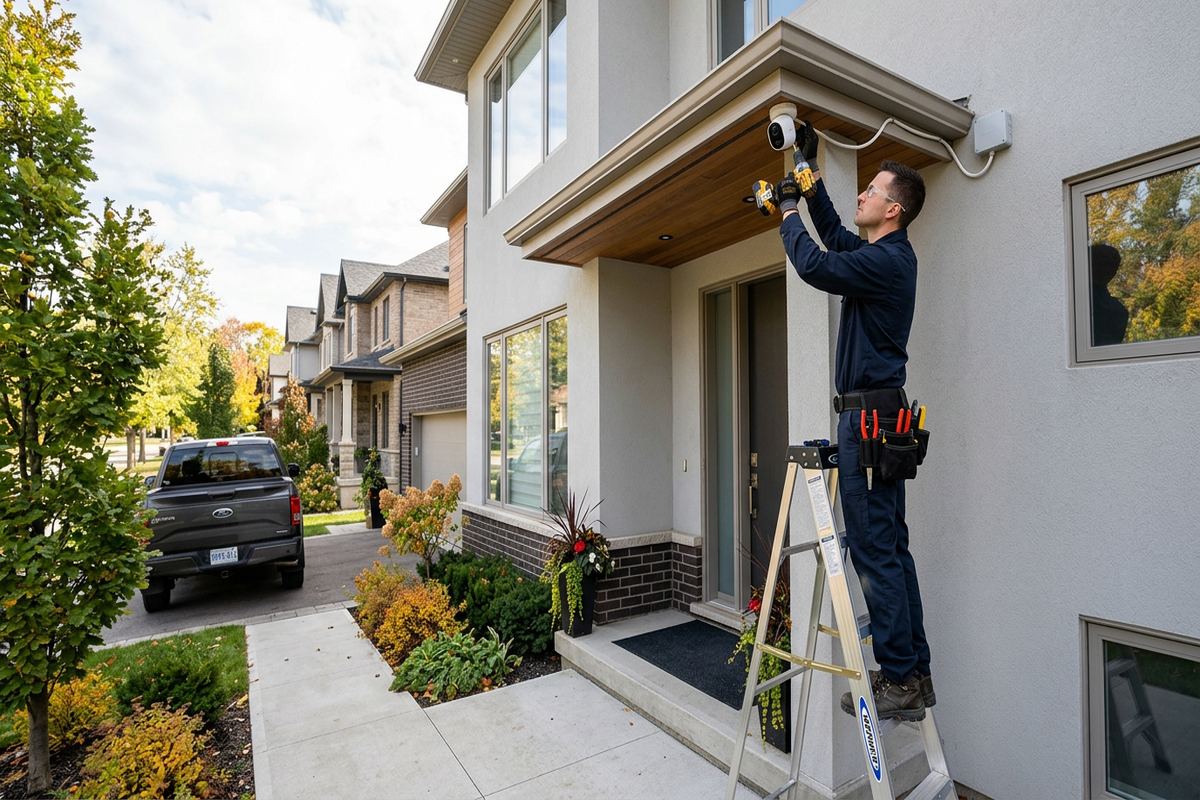
Commercial Camera Planning in Fort Erie
A useful camera system begins with the risks and operating pattern of the property, not a generic device count. During a Fort Erie site assessment, we examine entrances, service doors, cash or transaction areas, parking spaces, loading points and equipment yards. We also consider lighting changes, public roads, neighbouring properties and the direction people normally travel. This process identifies where recognizable detail is needed and where a wider overview is sufficient. Pricing follows the assessment so that the written scope reflects practical coverage, installation access and the recording requirements discussed on site.
Border-adjacent businesses can experience frequent vehicle movement, deliveries and changing traffic patterns. Camera positions must therefore capture useful approaches without relying on excessive digital zoom after an incident. For commercial strips, detached offices and industrial units, we plan views around doors, driveways, gates and shared access lanes. Each proposed view is checked for likely obstructions, headlight glare and strong backlighting. The objective is not to place cameras everywhere. It is to establish defined coverage at decision points while avoiding unnecessary views into adjacent businesses, homes or areas unrelated to the customer’s property.
Fort Erie properties range from older masonry buildings to newer frame construction, and mounting methods must suit the actual surface. Brick, block, siding, soffit and steel cladding require different anchors, penetrations and cable-entry details. We inspect available pathways before committing to a route, particularly where finished ceilings, fire separations or inaccessible wall cavities are present. The written scope identifies equipment, expected cable routes, device placement, exclusions, equipment ownership and warranty. That documentation gives property managers and business owners a practical basis for approving work before equipment is ordered or openings are made.
- Site assessment before pricing
- Entrance, parking and loading-area review
- Defined camera views and recording objectives
- Written equipment and installation scope
- Ownership and warranty details documented
Weather-Rated Exterior Cameras for Fort Erie
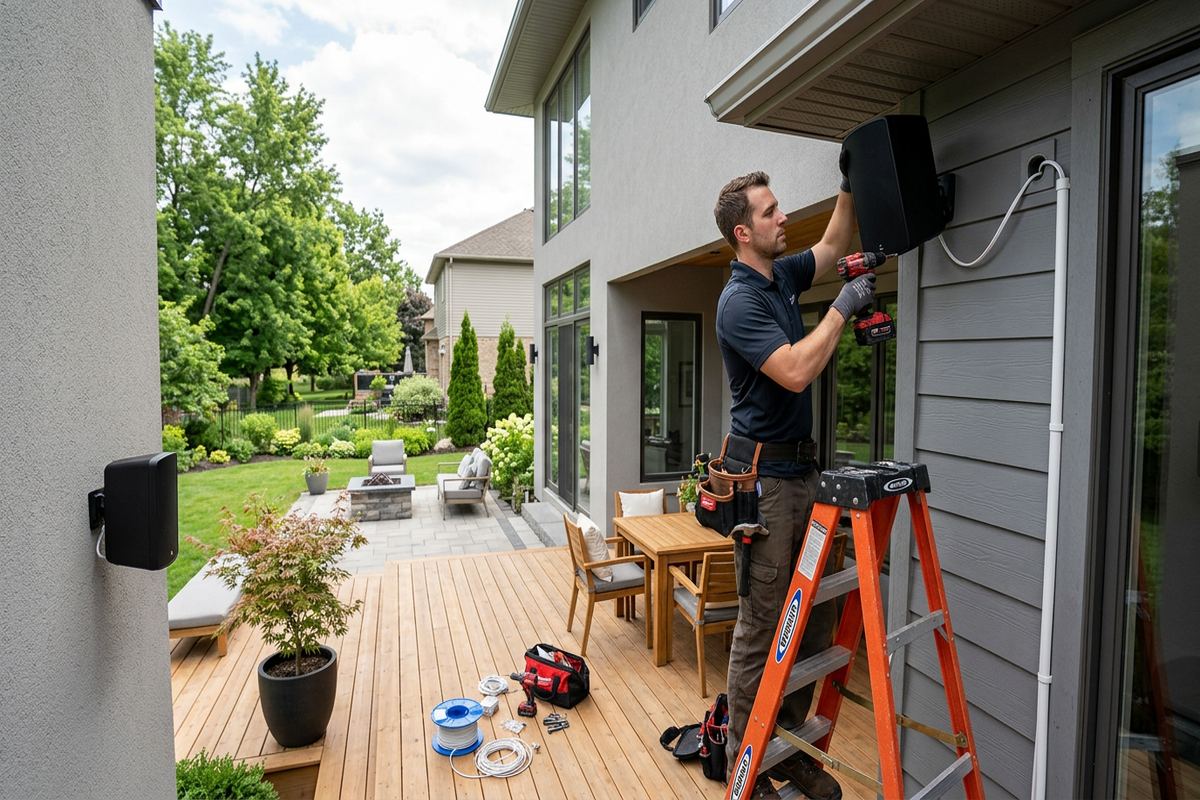
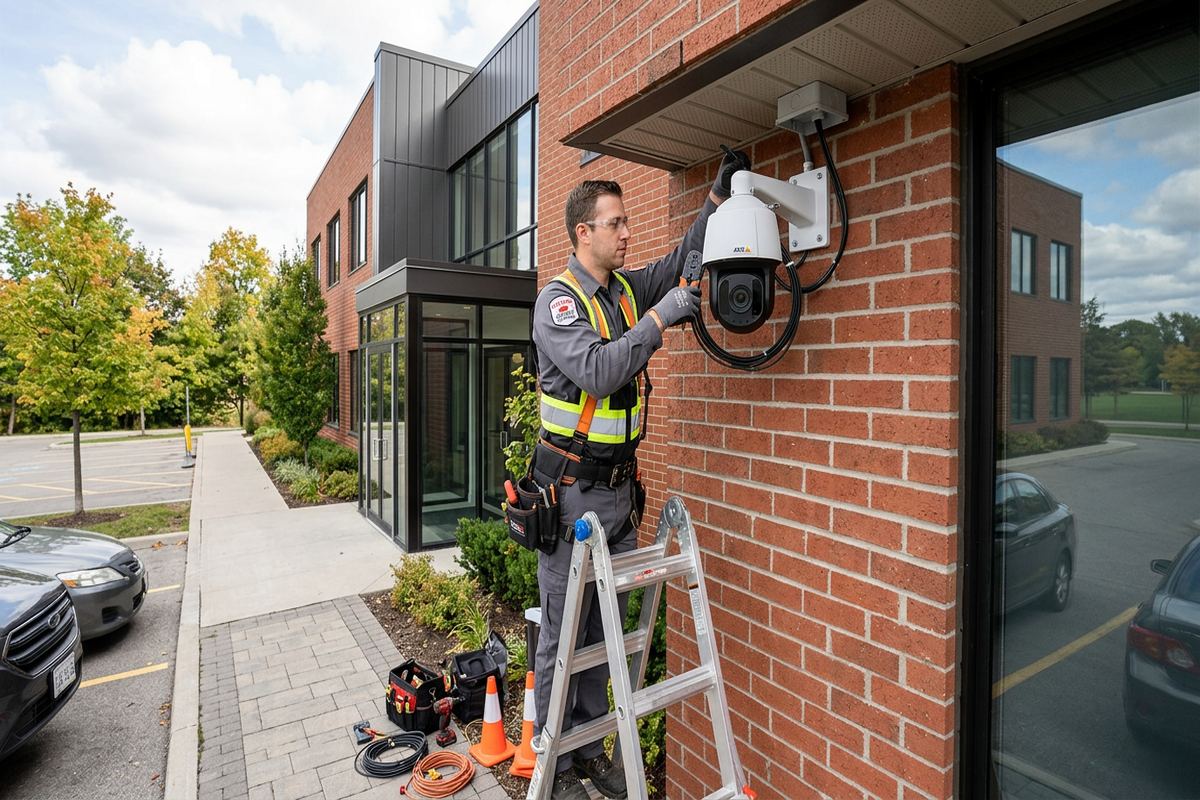
Lakefront exposure, winter wind and seasonal temperature swings make exterior equipment selection important throughout Fort Erie. Weather-rated cameras and suitable mounting hardware are standard for exposed locations, but an enclosure rating alone does not solve every problem. Cable entries, junction boxes, connectors and fasteners must also be selected and installed for outdoor use. We position equipment to reduce direct exposure where practical while maintaining the required view. In Crystal Beach and other lake-influenced areas, placement must account for wind-driven precipitation, changing sun angles and conditions that can affect housings, lenses and mounting surfaces.
Freeze-thaw cycles can open poorly sealed penetrations and place stress on exterior mounting points. Our installation approach uses appropriate exterior boxes, protected cable transitions and sealing methods compatible with the building surface. Drip paths and cable orientation are considered so water is not directed toward a penetration. On masonry walls, anchors and entry points are planned to avoid unnecessary damage and unstable joints. Frame buildings require attention to siding profiles, sheathing and concealed services. These details help protect the cable route and building envelope while keeping future inspection or camera replacement reasonably accessible.
Exterior image quality also depends on lighting and environmental conditions, not only camera resolution. Snow, wet pavement, headlights and reflective siding can produce bright areas that obscure faces or vehicles. We configure exposure, infrared behaviour and image settings on site after the cameras are mounted. Where existing lighting creates difficult contrast, we explain the limitation and discuss practical placement adjustments. Vegetation, signs, seasonal displays and parked vehicles are considered during commissioning. The final view is checked against the coverage objective, rather than accepted simply because the camera powers on and appears in the recording system.
- Outdoor-rated cameras and junction boxes
- Sealed, protected exterior cable entries
- Mounting suited to masonry or frame walls
- On-site exposure and infrared adjustment
- Views checked under actual site lighting
Camera Placement for Local Business Properties
Commercial properties need different levels of detail in different areas. A broad parking-lot view can show movement and timing, while a doorway camera should provide a more useful view of people entering or leaving. For Fort Erie shops, offices, restaurants, warehouses and service businesses, we separate identification points from general observation areas during design. Camera height and lens selection are coordinated so important subjects do not occupy only a small part of the image. We also look for predictable paths, such as reception approaches, checkout lanes, loading doors and fenced access points, before recommending device locations.
Older storefronts in Bridgeburg may have limited ceiling access, finished masonry walls or renovated spaces containing several generations of wiring. These conditions can make a seemingly direct cable path impractical. We inspect basements, utility areas, suspended ceilings and available risers to find routes that remain serviceable and visually appropriate. Surface pathways may be discussed where concealed installation would cause excessive disruption or cannot meet the intended route. Any assumptions are recorded in the scope, including customer-provided access, required after-hours coordination and areas where exploratory work or approval may be needed before installation proceeds.
Industrial units and multi-tenant commercial buildings introduce shared walls, common parking areas and landlord-controlled service spaces. Before mounting equipment, the customer should confirm authority for exterior work and access to telecommunications rooms, roof areas or common corridors. We can provide placement and route information for landlord or condo review, but approval remains the customer’s responsibility unless separately included. In Ridgeway and Stevensville, mixed building types can place offices, workshops and storage areas within one property. Coverage should follow operational boundaries while avoiding cameras that unnecessarily capture another tenant’s private workspace or unrelated activity.
- Identification views at controlled entrances
- Overview coverage for parking and yards
- Practical routes through older buildings
- Planning for multi-tenant boundaries
- Landlord or condo approvals identified
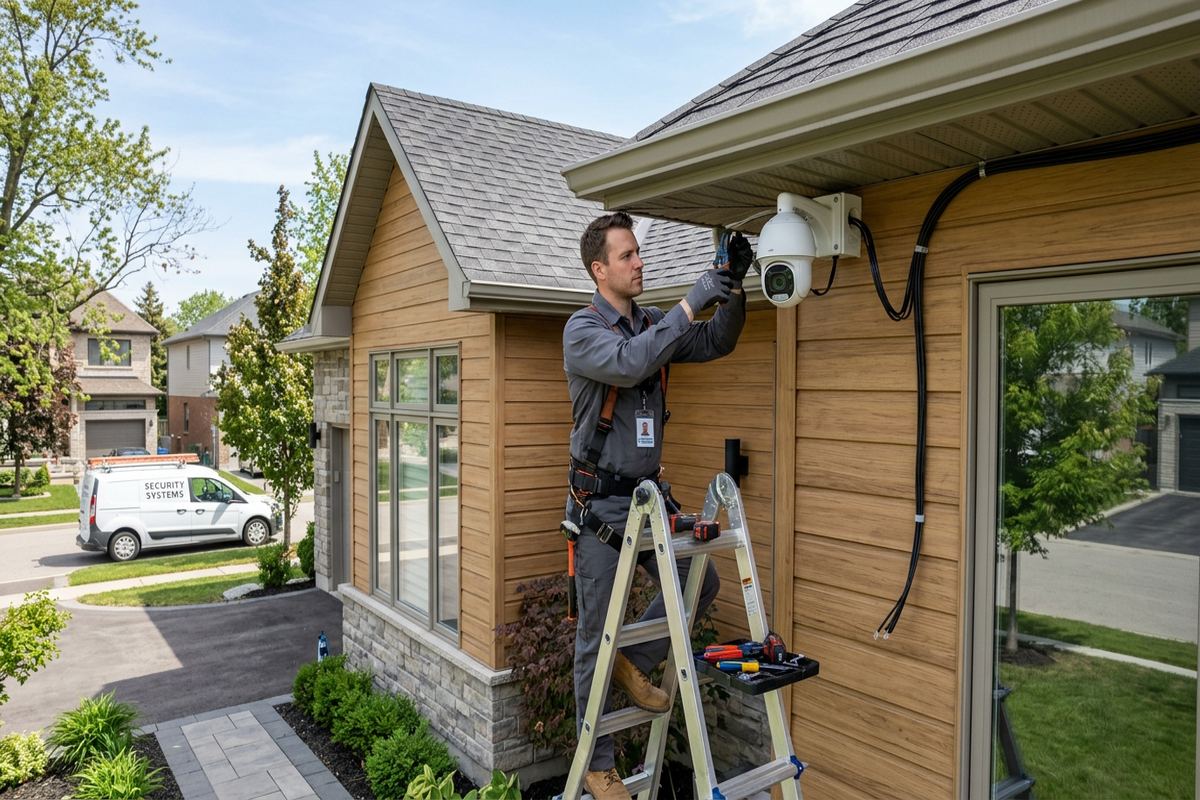
Fort Erie, Ontario
Commercial security camera installation in Fort Erie, scoped in writing first
Book a site assessment and get equipment, routes, exclusions, and warranty on paper before anything is installed.
Recording, Retention and Remote Access
Recording design starts with how the customer expects to use footage. The number of cameras, selected resolution, frame rate, recording schedule and scene activity all influence storage requirements. We discuss whether continuous recording, motion-based recording or a combined approach fits each area. Retention is estimated from the approved configuration, but actual results can vary when activity levels or settings change. For Fort Erie businesses with seasonal peaks, storage calculations should consider busy periods rather than only quiet conditions. The recorder is placed in a suitable location with attention to ventilation, physical access and available network connections.
Remote viewing can help an owner or manager verify activity without travelling to the property, but it must be configured carefully. UnifiedLink completes on-site setup using supported applications and gives the customer control through their own credentials. We do not build routine access around an installer-owned account. Where multiple managers need access, individual user permissions are preferable to a widely shared password. Available functions depend on the chosen platform and internet connection. We explain live view, playback and export steps during handover, along with any limitations affecting alerts, mobile access or bandwidth at the Fort Erie location.
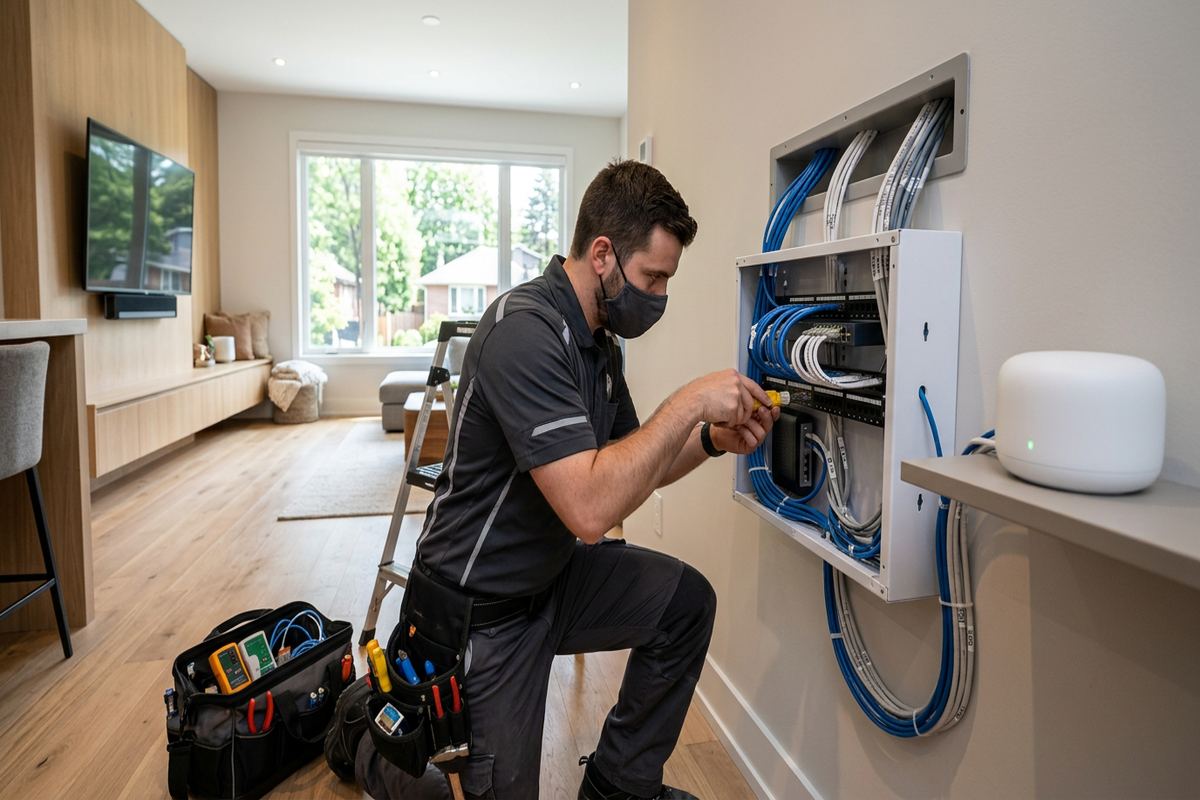
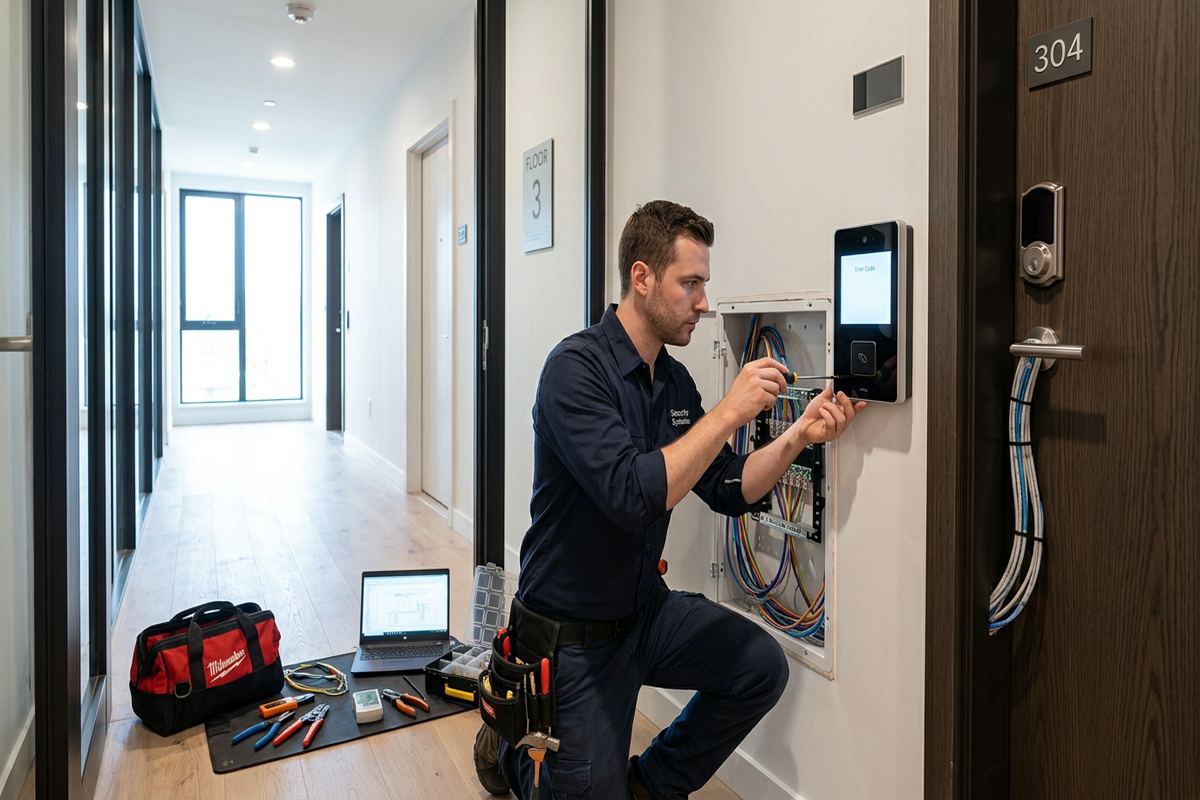
Network-connected cameras should not be treated as isolated devices. Recorder placement, switch capacity, power delivery, internet routing and account security can all affect operation. We review the relevant network conditions and identify dependencies in the written scope. Where the camera system shares existing infrastructure, coordination may be needed with the customer’s managed service provider or internal IT contact. Remote access is tested on site where internet service and customer devices are available. The customer receives system credentials and an as-built record showing installed devices and key connection details for future service or administration.
- Storage planned around recording settings
- Continuous or motion recording options
- Customer-controlled remote access credentials
- Recorder ventilation and security considered
- Playback and export covered at handover
Commercial Camera Cabling in Fort Erie
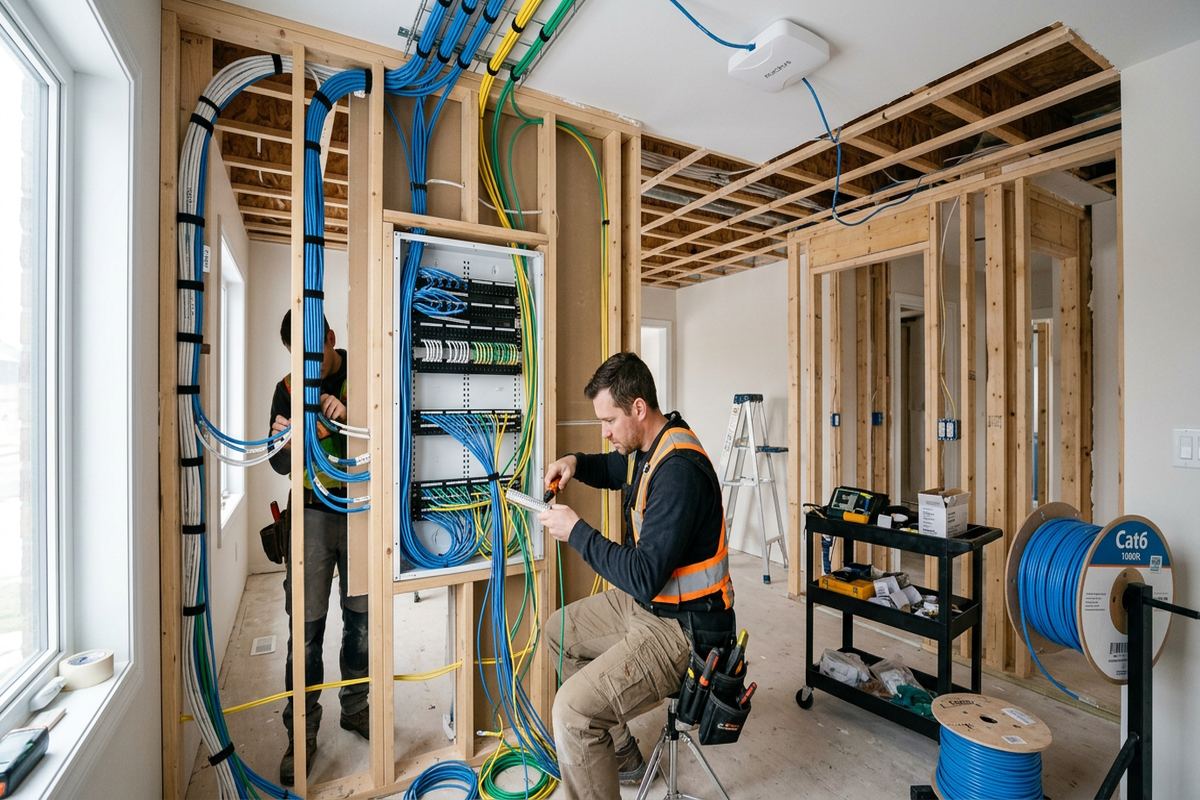
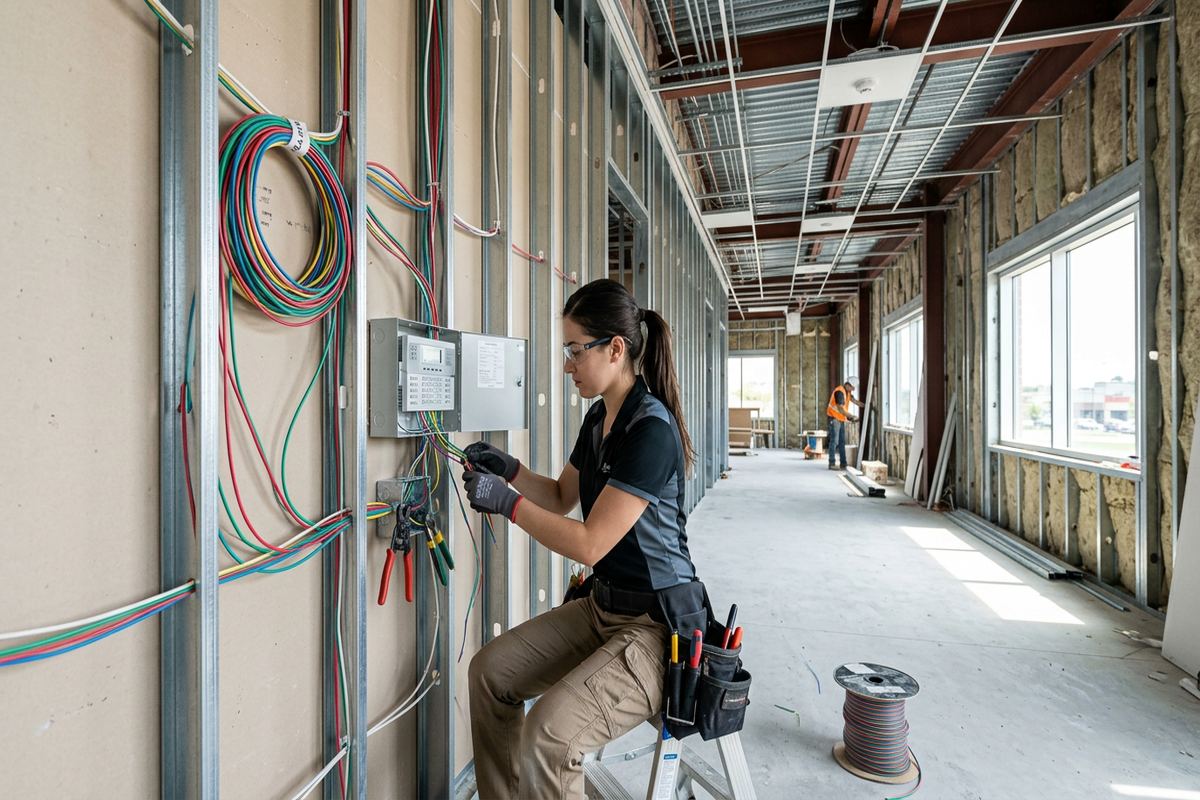
Reliable video depends on the pathway between each camera and the recording or network equipment. UnifiedLink installs continuous labelled cable runs rather than creating avoidable hidden joints. Cable type is matched to the system design, pathway and environment, including outdoor or underground-rated products where the route requires them. In Fort Erie commercial buildings, we may encounter existing conduits, open warehouse ceilings, finished retail spaces or compact utility rooms. Each condition affects support, separation and termination choices. Routes are planned to reduce exposure to physical damage, electrical interference, moisture and inaccessible spaces that would complicate later troubleshooting.
Exterior cabling requires more than running an indoor patch cable through a wall. Any outdoor segment, conduit transition or exposed box must be suitable for the conditions it will face. We protect entries, maintain sensible bend radius and support cable independently where required. In buildings with block or brick construction, drilling locations are reviewed for structural surfaces, concealed services and interior finishes. For frame or metal-clad units, transitions are selected to avoid unsupported penetrations and sharp edges. Cable labels correspond with camera and recorder identification, allowing future technicians to trace a run without unnecessary disconnection or guesswork.
Existing cabling can sometimes be reused, but only after its type, route and condition are reviewed. Unlabelled conductors, damaged jackets, improvised splices or unsuitable exterior cable can undermine a new camera installation. We identify what is known, what can be tested and what remains concealed. If reuse is included, its limitations and any excluded remediation are stated in the scope. New cable pathways may also need coordination with alarm, access control, data or electrical infrastructure. Keeping one accountable low-voltage contractor for the defined work reduces gaps between camera placement, cabling, network connections and final configuration.
- Continuous cable runs without hidden joints
- Labels matched to cameras and recorder
- Outdoor-rated cable where required
- Supported pathways and protected transitions
- Existing cabling reviewed before reuse
Installation in Active Fort Erie Workplaces
Camera installation often occurs while a business remains open, so access and disruption need to be planned in advance. We discuss operating hours, restricted areas, ceiling access and tasks that may affect entrances or customer circulation. Work around checkout areas, reception desks, loading bays or production zones may require staged access. For seasonal Fort Erie businesses, scheduling can also depend on opening periods, inventory movement and contractor access to closed spaces. The scope identifies known site responsibilities, including clear work areas, keys, lift access or escorts when applicable, so the installation sequence is understood before work begins.
Mounting locations are confirmed before permanent holes are made. Minor changes may be required once ceiling spaces or wall conditions are visible, but material changes are discussed rather than assumed. Cameras are aimed after installation and checked against the intended scene. Recorder channels, names, time settings and user access are configured on site. If network changes fall under another provider’s control, we coordinate the required information with the customer. This structured process keeps physical installation and system configuration connected, preventing a completed cable route from being treated separately from whether the resulting image is actually useful.
Douglastown commercial properties and outlying units may combine offices, storage areas, yards and customer-facing spaces. One installation plan should account for those different operating conditions without applying the same camera type or mounting height everywhere. Interior cameras may need compact placement and careful privacy boundaries, while yard cameras may require stronger weather protection and narrower views. At completion, we review the installed system with the designated customer contact. Handover includes the customer’s own credentials, basic operating guidance and an as-built record of camera locations and system connections.
- Work sequencing around business operations
- Mounting points confirmed before drilling
- Camera names and time settings configured
- Coordination with customer IT providers
- Documented system handover
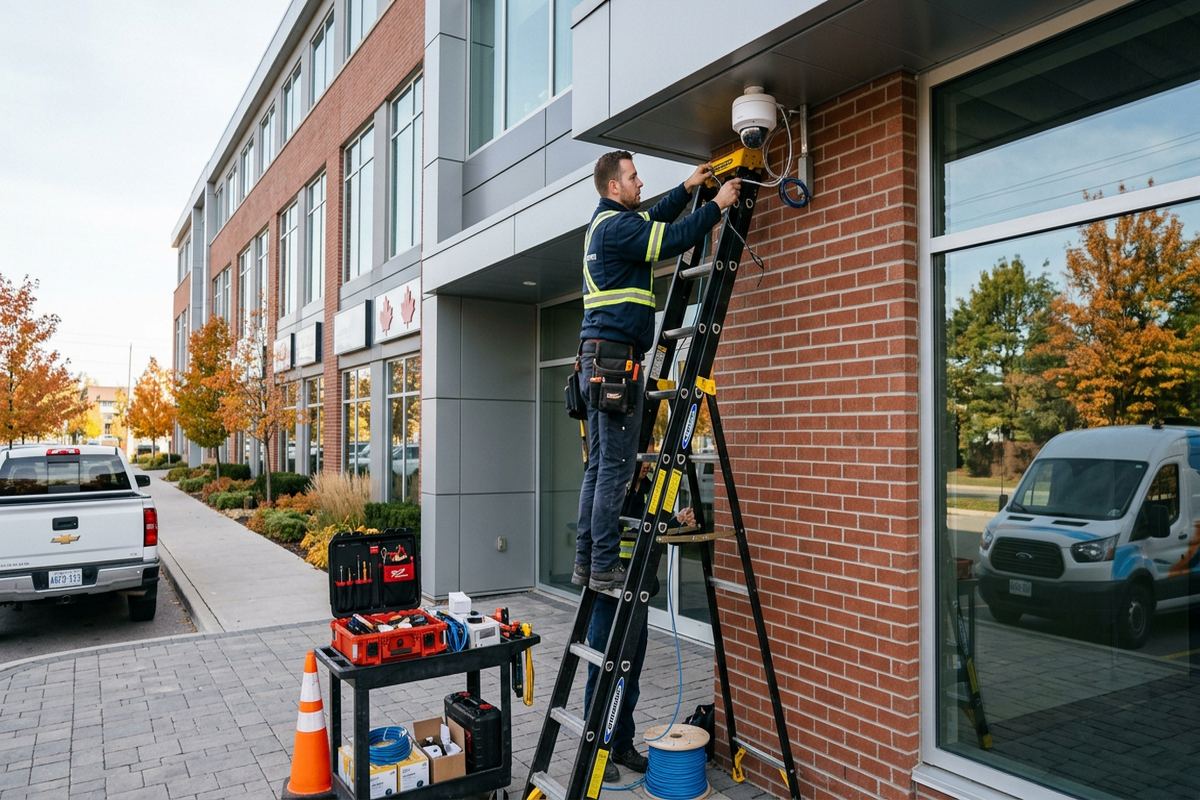
Privacy, Permissions and Evidence Handling
A commercial camera system should be limited to a clear security or operational purpose. Placement must consider employees, customers, neighbouring properties and public areas visible from the site. UnifiedLink can adjust fields of view and supported privacy-masking features, but the property owner or operator is responsible for deciding where surveillance is lawful and appropriate. Cameras should not be placed in areas where people reasonably expect privacy. For Fort Erie properties near homes, shared lanes or closely spaced storefronts, careful framing can reduce unnecessary capture while preserving the doorway, lot or equipment area that requires observation.
Landlord, condominium or property-management approval may be necessary before drilling exterior surfaces, entering common spaces or placing equipment where it changes the building appearance. This applies to leased storefronts, multi-unit commercial sites and properties with shared exterior elements. Customers should secure written authorization before installation where their agreement requires it. We provide proposed device and route information that can support that review. Heritage considerations, internal corporate policies or insurer requirements may also affect placement. These matters should be identified during assessment so the approved scope does not depend on access or permission that has not been confirmed.
Recorded footage is useful only when authorized users can find and export it correctly. During handover, we demonstrate basic search and export functions for the selected system. Customers should establish internal rules for account access, password changes, retention, disclosure and handling exported files. Accurate time settings are checked during configuration because incorrect timestamps can complicate review. We do not determine whether footage satisfies a legal or insurance requirement. If a Fort Erie business has specific evidentiary, labour or privacy obligations, it should obtain appropriate guidance and communicate any resulting technical requirements before system design is finalized.
- Views limited to defined purposes
- Privacy masking where supported
- Shared-property approvals confirmed first
- Individual user permissions encouraged
- Search and export process demonstrated
Service, Expansion and Fort Erie System Handover
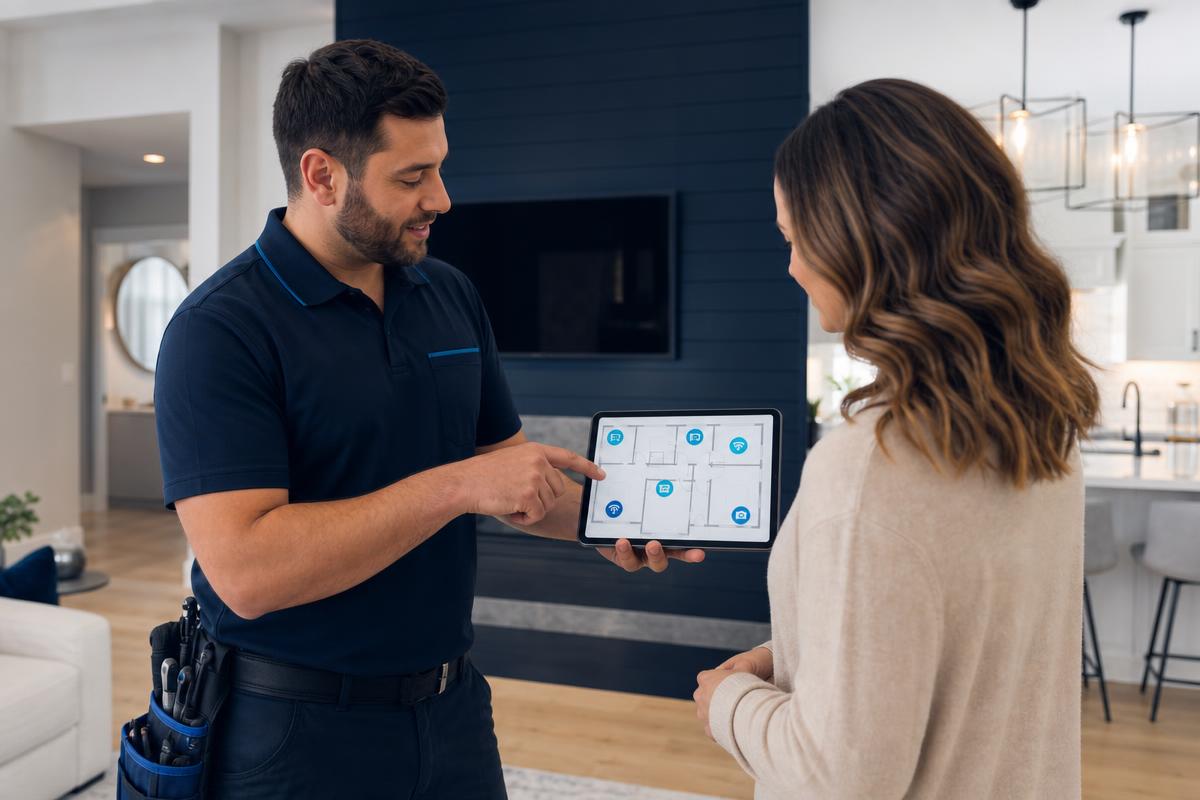
A camera system should be documented so future service does not begin with tracing unknown cables and guessing at account ownership. UnifiedLink provides an as-built record showing installed camera locations and relevant system connections. Labels identify field runs and corresponding equipment positions. The customer receives credentials under its own control, along with the operating information covered during handover. Equipment ownership and warranty terms are stated in the written scope. This approach is particularly useful for Fort Erie businesses with seasonal managers, multiple locations or changing staff, because system administration remains connected to the organization rather than an individual installer account.
Future expansion is easier when it is considered during the initial design. Available recorder channels, switch capacity, power budgets, storage, network ports and pathway space can limit later additions. We discuss known plans for new entrances, yard coverage, tenant changes or building alterations during assessment. Allowing for growth does not mean installing unnecessary equipment; it means identifying constraints before the base system is selected. When expansion is uncertain, the scope can distinguish installed capacity from possible upgrades. Any later camera addition should still be reviewed for image purpose, cable route, storage impact and compatibility with the existing platform.
Service requests are handled with clear availability wording. Requests sent during business hours are answered the same day, while after-hours requests are answered the next business day. Site assessment timing depends on the requested service and travel distance. Some issues can be narrowed down through system details, screenshots or customer observations, but physical faults may require on-site inspection. UnifiedLink remains one accountable contractor for the camera work included in its scope, covering defined equipment, cabling, configuration and handover rather than leaving the customer to coordinate unrelated installers for each low-voltage component.
- As-built camera and connection record
- Customer-controlled system credentials
- Expansion constraints reviewed early
- Ownership and warranty stated in writing
- One contractor for the defined scope
Fort Erie neighbourhoods we cover
- Bridgeburg
- Crystal Beach
- Ridgeway
- Stevensville
- Douglastown
Commercial security camera installation in Fort Erie — common questions
How many cameras does my Fort Erie business need?
The appropriate number depends on the views required, not building size alone. We assess entrances, parking, transaction areas, loading points and restricted spaces, then separate identification views from general overview coverage. Fort Erie properties with detached yards or shared access lanes may require different lenses and mounting positions. A site assessment is completed before pricing, and the proposed device count is documented in the written scope.
Will exterior cameras operate through Fort Erie winters?
Exterior cameras are selected with weather ratings appropriate to the installation location. We also use suitable junction boxes, protected transitions, mounting hardware and sealing methods because the camera rating does not protect an improper cable entry. Fort Erie freeze-thaw cycles, wind-driven precipitation, snow and reflective surfaces are considered during placement and configuration. No outdoor system is maintenance-free, so exposed devices should be inspected periodically for damage, movement or obstructed lenses.
Can you install cameras in an older brick building?
Yes, subject to a site assessment of mounting surfaces and cable pathways. Older masonry properties in areas such as Bridgeburg may have finished brick, block walls, inaccessible cavities or previous renovations that complicate routing. We select appropriate anchors and entry methods while avoiding unnecessary penetrations. If concealed cabling is impractical, a protected surface pathway may be proposed. The expected route, exclusions and any customer approvals are recorded before installation.
Do I need landlord or condo approval?
Approval may be required when cameras or cable routes affect exterior walls, common corridors, shared ceilings, roof areas or other controlled property. This is common in leased commercial units, condominiums and multi-tenant Fort Erie buildings. The customer is responsible for confirming authority to proceed unless approval work is separately included. UnifiedLink can provide proposed camera positions and route information to support a landlord, condominium board or property manager review.
Can I view my Fort Erie cameras remotely?
Remote viewing can be configured where the selected system, network and internet service support it. Setup is completed using the customer’s own credentials rather than an installer-owned account. We test available live view and playback functions on site and explain supported mobile or desktop access. Performance can depend on connection quality, firewall settings and third-party services, so any network dependencies or required coordination with your IT provider are identified in the scope.
How soon will UnifiedLink respond to my request?
Requests sent during business hours are answered the same day. Requests sent after hours are answered the next business day. The timing of a Fort Erie site assessment depends on the service involved and travel distance. After assessing the property, UnifiedLink prepares a written scope covering equipment, cable routes, placement, exclusions, ownership and warranty. Installation timing can then be discussed based on access, approvals, equipment requirements and the operating needs of the property.
Coverage in Fort Erie is confirmed against the address before we quote. See everything we install in Fort Erie or the province-wide commercial security camera installation page.