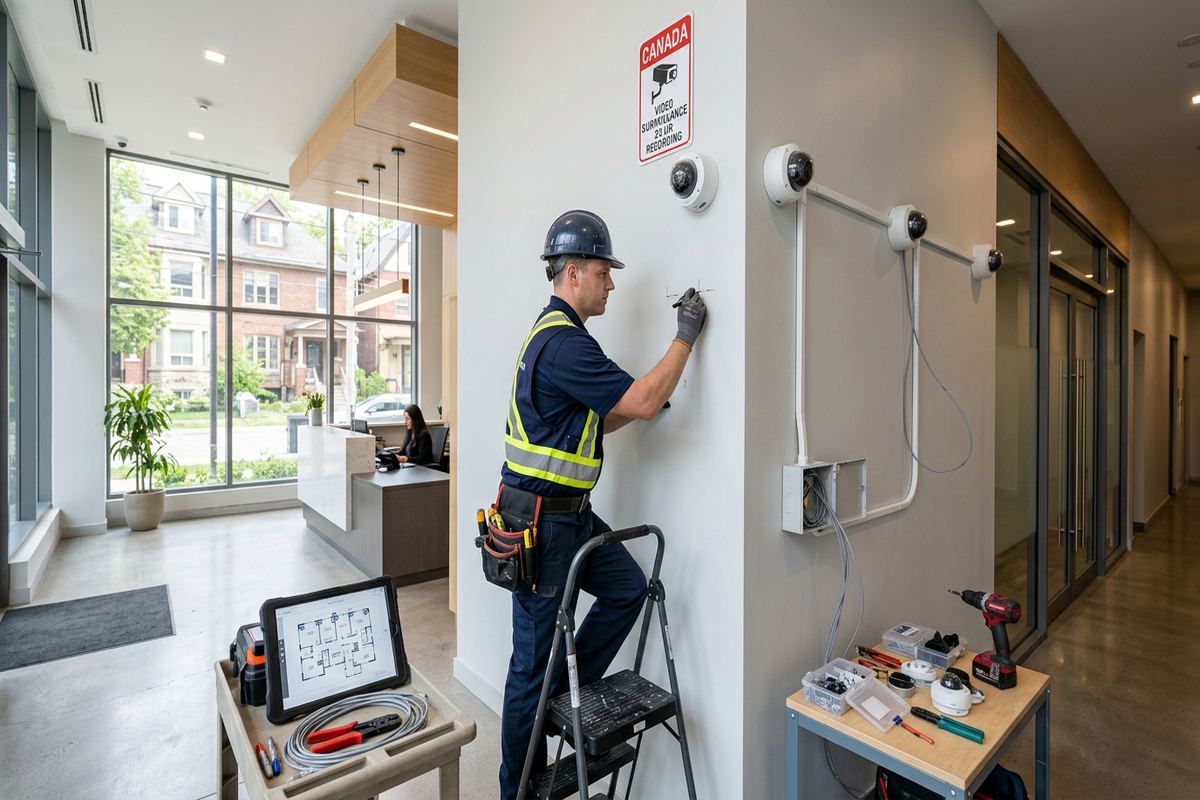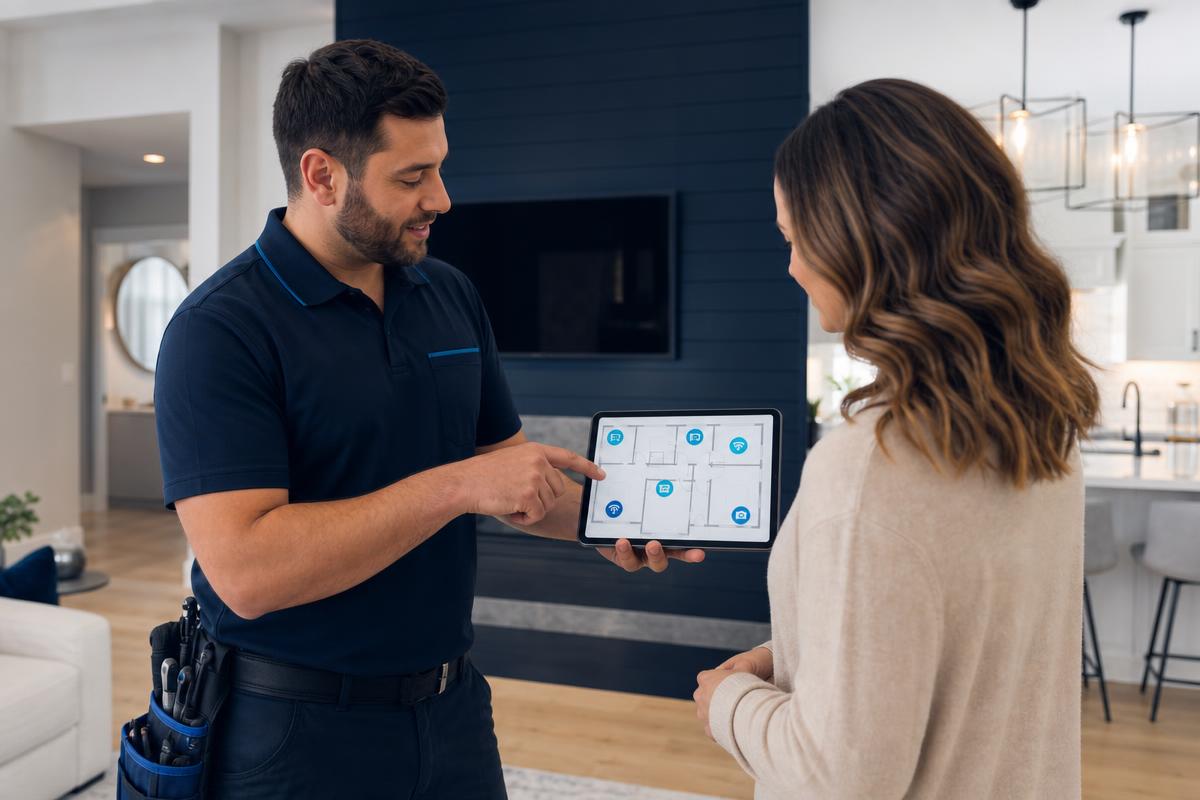
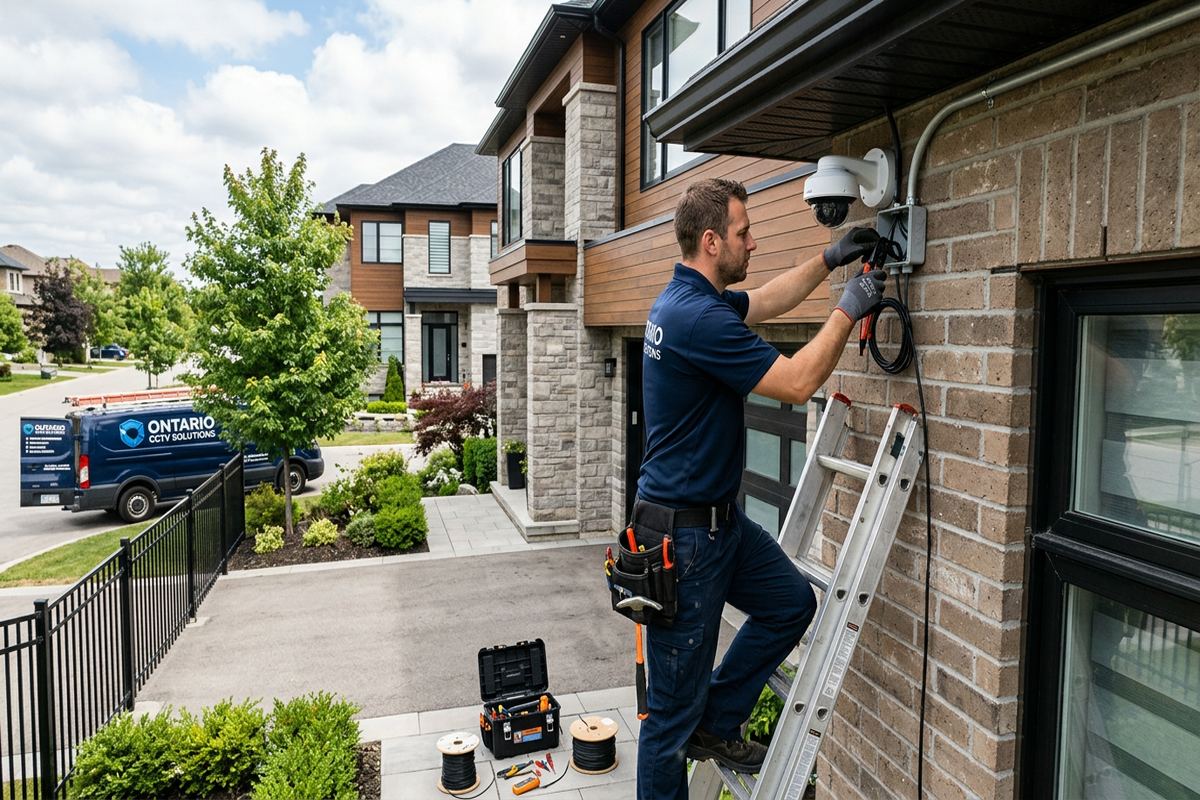
UnifiedLink installs outdoor security cameras for homes, seasonal properties, commercial sites and industrial units across Fort Erie. Each system is planned around useful views, reliable recording, exterior construction and local weather exposure. We assess the site before pricing, document the proposed work and configure the completed system on location using credentials owned by the customer.
Outdoor Camera Planning for Fort Erie Properties
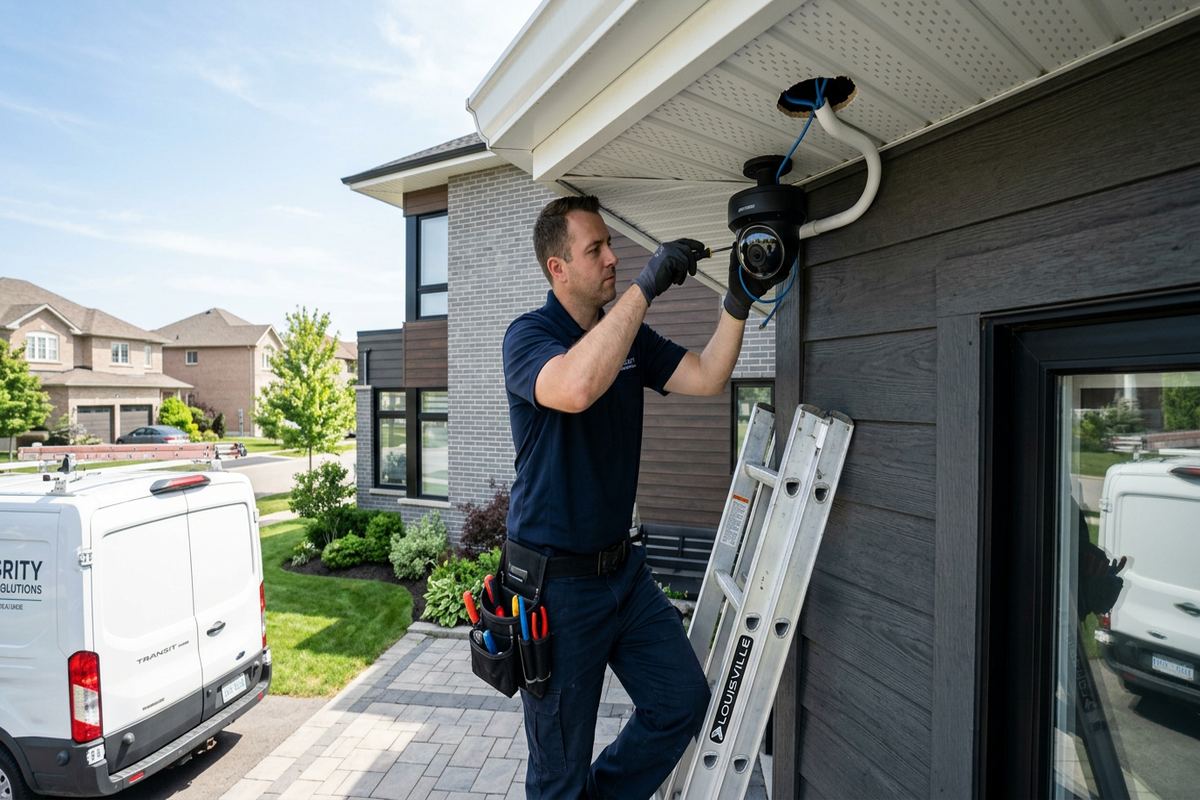
A useful outdoor camera system starts with the site, not a box of equipment. In Fort Erie, we assess entrances, driveways, parking areas, loading points, detached buildings and waterside exposures before recommending camera locations. The assessment considers what must be identified, the distance involved, available lighting and the direction people or vehicles normally travel. We also check where recorders, network switches and power equipment can be installed securely. This planning avoids broad but unhelpful views, excessive overlap and camera positions that become blocked by vehicles, vegetation, seasonal furniture or snow accumulation.
Local property types require different approaches. A frame house in Crystal Beach may offer accessible soffits and attic routes, while an older masonry building in Bridgeburg may need surface conduit or carefully planned penetrations. Commercial strips can have shared façades, signs, canopies and public sidewalks that affect mounting choices. Industrial units often require views across wider yards, overhead doors and controlled vehicle approaches. We explain practical route and mounting options before work begins, including visible conduit where concealed cabling is not reasonable. The objective is a serviceable installation that respects the building rather than forcing one standard layout onto every site.
The written scope identifies equipment, cable routes, device placement, exclusions, equipment ownership and warranty details. This gives Fort Erie property owners a clear basis for reviewing the project before installation. For rented premises, condominiums or buildings with shared exterior elements, the owner or customer must obtain any required landlord, condominium corporation or property-management approvals. We can provide proposed locations and routing information to support that process. Pricing follows the site assessment because camera quantity alone does not show installation complexity, cable distance, access requirements, construction materials, network work or the condition of existing infrastructure.
- Entrance, driveway and yard coverage planning
- Review of lighting and identification distances
- Recorder, network and power location assessment
- Written equipment and cable-route scope
- Approval planning for shared or rented properties
Weather-Rated Cameras for Fort Erie Exteriors
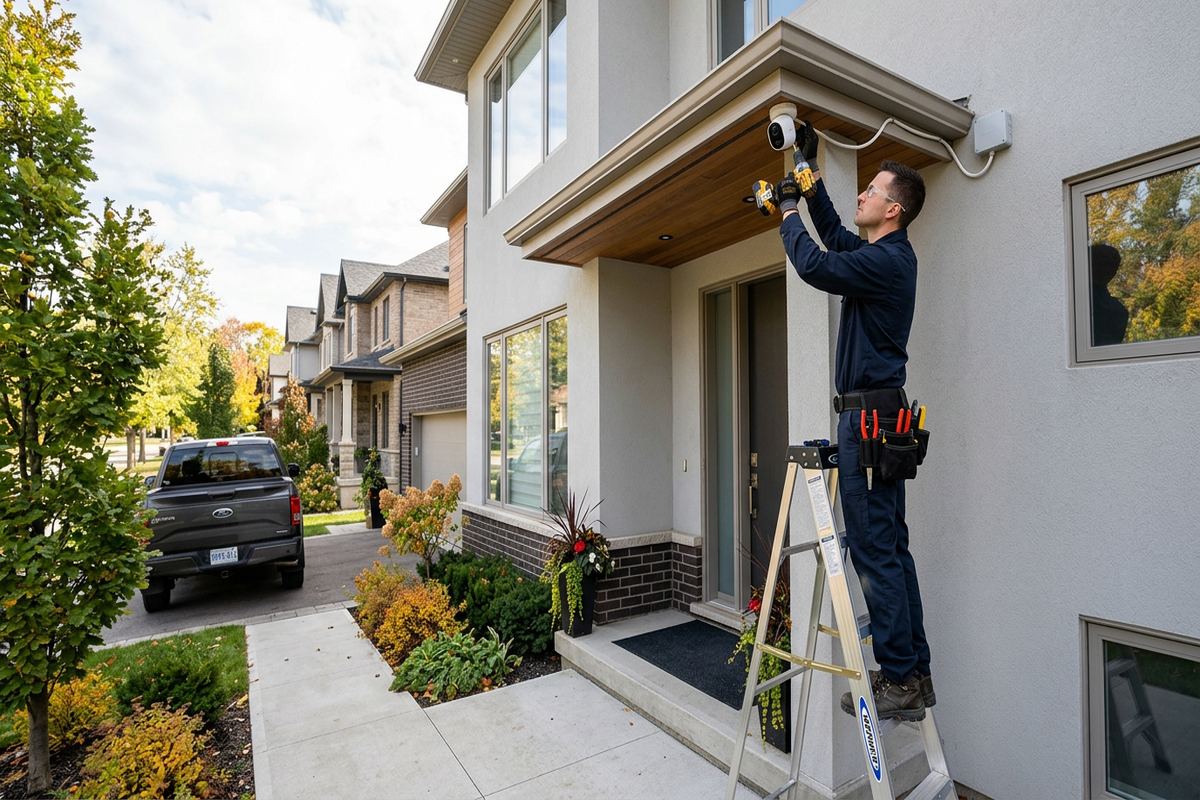
Fort Erie winters expose exterior equipment to cold, wind, moisture and repeated freeze-thaw cycles. Lakefront and seasonal homes can also experience driven precipitation and long periods without regular occupant checks. We therefore treat weather-rated exterior gear as standard, not an optional upgrade. Product ratings must suit the mounting location, but the enclosure rating alone is not enough. Cable entries, junction boxes, connectors, fasteners and wall penetrations all need appropriate protection. A camera installed beneath an overhang still faces condensation, temperature swings and windblown moisture, so sheltered placement does not remove the need for sound exterior installation practices.
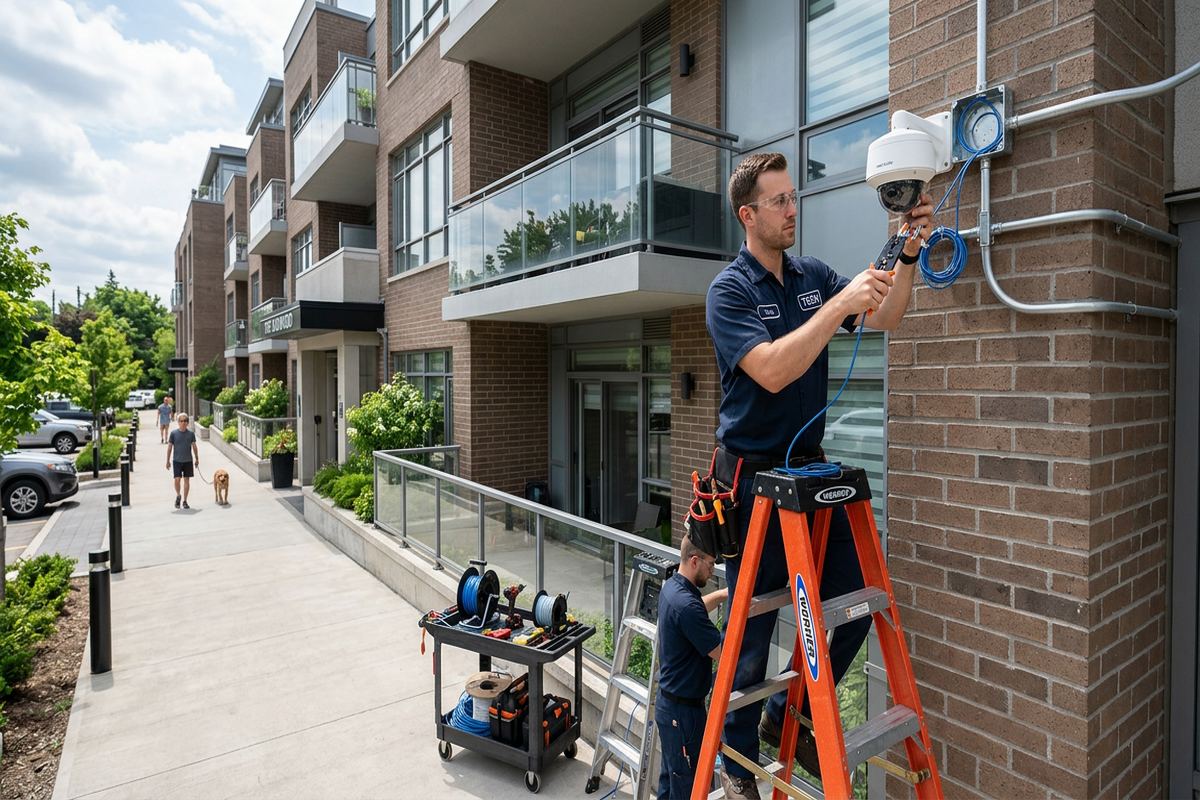
Mounting surfaces respond differently as temperatures change. Masonry can hold a stable camera mount when the correct anchors and drilling methods are used, but poorly placed penetrations may damage brick faces, mortar joints or cladding transitions. Frame construction may provide easier cable access, although vinyl siding, wood trim and soffit materials require proper support behind the finish. We select attachment methods after examining the surface rather than relying on sealant to carry or stabilize equipment. Exterior penetrations are positioned and sealed to help shed water, while cable entry points are arranged to reduce direct exposure and avoid unnecessary openings.
Seasonal properties around Crystal Beach and Ridgeway need systems that continue recording when owners are away. That means considering stable power, network availability, recorder ventilation and the consequences of an internet outage. Local recording can continue independently of remote viewing when the system is designed accordingly, but exact behaviour depends on the selected equipment. We configure recording schedules, motion rules and remote access on site, then show the customer how to check system status. Outdoor cameras cannot prevent every incident, yet they can provide consistent visual records when placement, storage and environmental protection are planned together.
- Exterior-rated cameras and junction boxes
- Protected cable and connector entries
- Mounting suited to masonry or frame walls
- Sealing planned for freeze-thaw exposure
- Local recording options for seasonal homes
Camera Views and Placement in Fort Erie
More cameras do not automatically produce better evidence. A high, wide view may show that someone entered a property without providing enough facial or vehicle detail to be useful. During a Fort Erie assessment, we separate overview needs from identification points. Entrances, gates and narrow approaches usually offer controlled paths where a camera can capture clearer detail. Wider cameras can then document movement across a yard, storefront or parking area. Mounting height, lens selection and scene width are balanced so cameras are difficult to reach but not placed so high that they mainly record hats, roofs or vehicle tops.
Lighting changes a camera scene throughout the day. Direct sunrise or sunset, reflective snow, glossy siding, headlights and bright wall fixtures can cause glare or leave important areas underexposed. Infrared illumination may reflect from soffits, nearby walls, eaves, spider webs or dirty domes. We inspect likely light sources and choose angles that reduce those effects. Where existing lighting is inadequate, the scope can identify lighting issues without assuming a camera will compensate for complete darkness. Night performance is reviewed against the actual purpose of each view, whether that is monitoring a door, documenting a driveway or observing an outdoor storage area.
Privacy also affects placement. Cameras should focus on the customer’s entrances, structures and activity areas rather than unnecessarily capturing neighbouring windows, private yards or spaces outside the intended security purpose. Fort Erie businesses may need views of public-facing entrances or parking approaches, but the system should still be aimed narrowly enough to serve a defined operational need. Audio recording creates additional privacy considerations and is not treated as a default feature. Customers remain responsible for how their system is used, who can access recordings and whether notices, policies or other measures are appropriate for their property or organization.
- Separate overview and identification views
- Angles checked for glare and backlighting
- Night scenes assessed at key locations
- Privacy-conscious framing and masking options
- Mounting heights balanced for detail and reach
Fort Erie, Ontario
Outdoor camera installation in Fort Erie, scoped in writing first
Book a site assessment and get equipment, routes, exclusions, and warranty on paper before anything is installed.
Exterior Cabling and Sealing Details
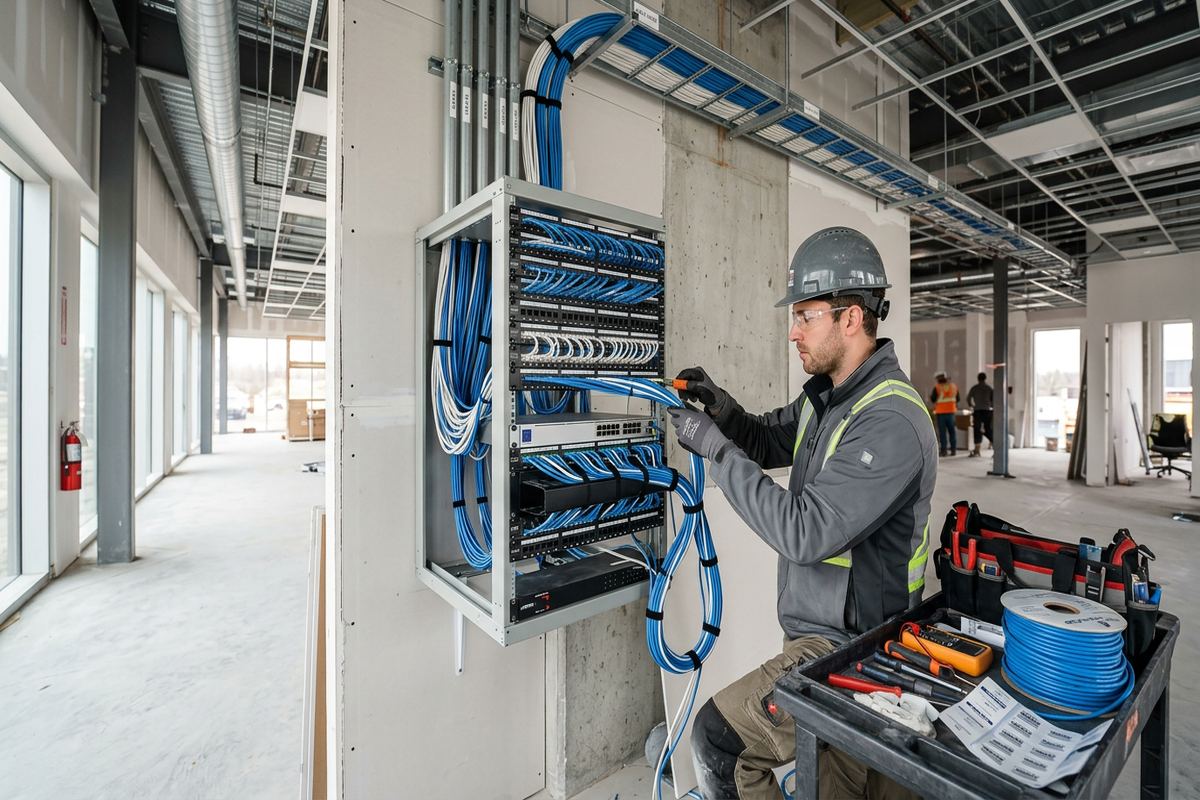
Outdoor cameras depend on the cabling behind them. UnifiedLink installs continuous labelled cable runs between devices and the designated network, power or recording location. Connections hidden inside walls, attics or inaccessible exterior spaces can become difficult failure points, so unnecessary intermediate joints are avoided. Cable type and pathway are selected for the environment, including exposure to moisture, sunlight, temperature changes and possible physical damage. Where a route passes outside, we discuss protective conduit or other suitable methods. Labels at both ends make future testing, replacement and system expansion more practical for the owner or another qualified technician.
Cable routing in older Fort Erie buildings often requires compromise. Solid masonry walls, finished basements, additions and inaccessible roof spaces can prevent fully concealed routes. In Bridgeburg storefronts, a pathway may need to follow a rear service area rather than cross a finished customer space. Frame homes in Stevensville may provide attic access but still have insulation, fire stops or roof geometry that limits movement. We review these conditions before finalizing the route and identify visible sections in the written scope. Drilling is kept purposeful, and exterior holes are sealed using methods appropriate to the surrounding surface and cable pathway.
Existing camera wiring can sometimes be reused, but it is tested rather than assumed to be serviceable. Cable category, conductor condition, length, connector quality and previous exposure all affect whether it can support the proposed equipment. Legacy analogue cabling may also limit resolution, power methods or future choices compared with a new network-based route. If existing cable is retained, the scope states what is being reused and what remains outside the installation work. Fort Erie owners then have a clear record of new and existing infrastructure instead of an undocumented mix that is difficult to diagnose later.
- Continuous cable runs without hidden joints
- Labels at both ends of every run
- Exterior conduit where exposure requires protection
- Purposeful penetrations with suitable sealing
- Existing cable tested before proposed reuse
Recording and Remote Viewing in Fort Erie
A camera is only one part of the system. Recording capacity, image settings, retention needs, network bandwidth and user access must be considered together. We help Fort Erie customers choose between practical recorder arrangements based on the number of cameras, desired recording behaviour and available installation space. Storage duration cannot be stated from camera count alone because resolution, frame rate, compression, motion activity and continuous recording settings all affect consumption. The written scope identifies the proposed recording equipment and assumptions, while final configuration is completed on site so the system reflects actual scenes rather than generic factory defaults.
Remote viewing normally relies on the property’s internet connection and local network. Weak Wi-Fi, unstable service, changed router settings or lost power can interrupt remote access even while a properly designed recorder continues storing footage locally. For this reason, outdoor cameras are generally connected through structured cable where practical instead of depending on exterior Wi-Fi conditions. Border-adjacent businesses may also have operational or information-security requirements that affect network separation and account access. We review available network connections, coordinate reasonable changes within scope and avoid leaving the system dependent on an installer-owned account.
Customers receive access using their own credentials at handover. We configure authorized phones, computers or viewing stations included in the scope, explain basic live-view and playback functions, and show how to export footage where the selected platform supports it. Passwords should be unique and retained by the customer, with access removed promptly when staff, tenants or contractors change. Fort Erie seasonal-property owners should also know how to confirm that cameras are online and recording before leaving for an extended period. The as-built record documents device locations and relevant system details for future support.
- Recorder capacity matched to recording settings
- Wired camera connections where practical
- Remote access using customer-owned accounts
- On-site playback and export demonstration
- As-built device and system record
Homes, Storefronts and Industrial Units
Residential layouts often centre on front doors, side gates, driveways, garages and rear access. Detached buildings may require separate cable pathways, network links or power considerations that must be assessed before equipment is selected. In Douglastown and Stevensville, larger lots can create distances that exceed simple residential assumptions, while mature trees and outbuildings may block otherwise useful angles. Lakefront and seasonal homes may need views that remain useful through changing vegetation, outdoor furniture and winter conditions. We plan fixed, purposeful coverage rather than expecting one movable camera to monitor several critical areas at once.
Commercial properties have different priorities. A Ridgeway storefront may need a clear entrance view, a protected delivery area and coverage of a rear service door without recording unnecessary portions of neighbouring premises. Border-adjacent businesses may focus on vehicle approaches, shipping points, employee entrances or outdoor inventory. Camera placement must account for signs, awnings, exterior lighting, public walkways and snow-clearing patterns. Where tenants occupy the site, exterior drilling and shared network use require landlord approval. We can coordinate one documented scope, but the customer remains responsible for permissions and internal policies governing access to footage.
Industrial units frequently involve high mounting points, steel cladding, loading doors, fenced compounds and long cable distances. These conditions can require lifts, protective pathways, dedicated network equipment or coordination with site operations. Mounting directly to thin cladding without suitable backing may allow vibration or water entry, so the underlying structure must be considered. We also review where trucks, forklifts, stacked goods or open overhead doors could obstruct views. Work areas and access requirements are set out before installation, helping the customer arrange escorts, shutdowns or clearances where their site rules make those steps necessary.
- Coverage for doors, garages and detached buildings
- Storefront entrance and delivery-area views
- Vehicle and loading-point monitoring
- Mounting planned around steel cladding
- Routes assessed for larger lots and yards
Fort Erie Installation and On-Site Configuration
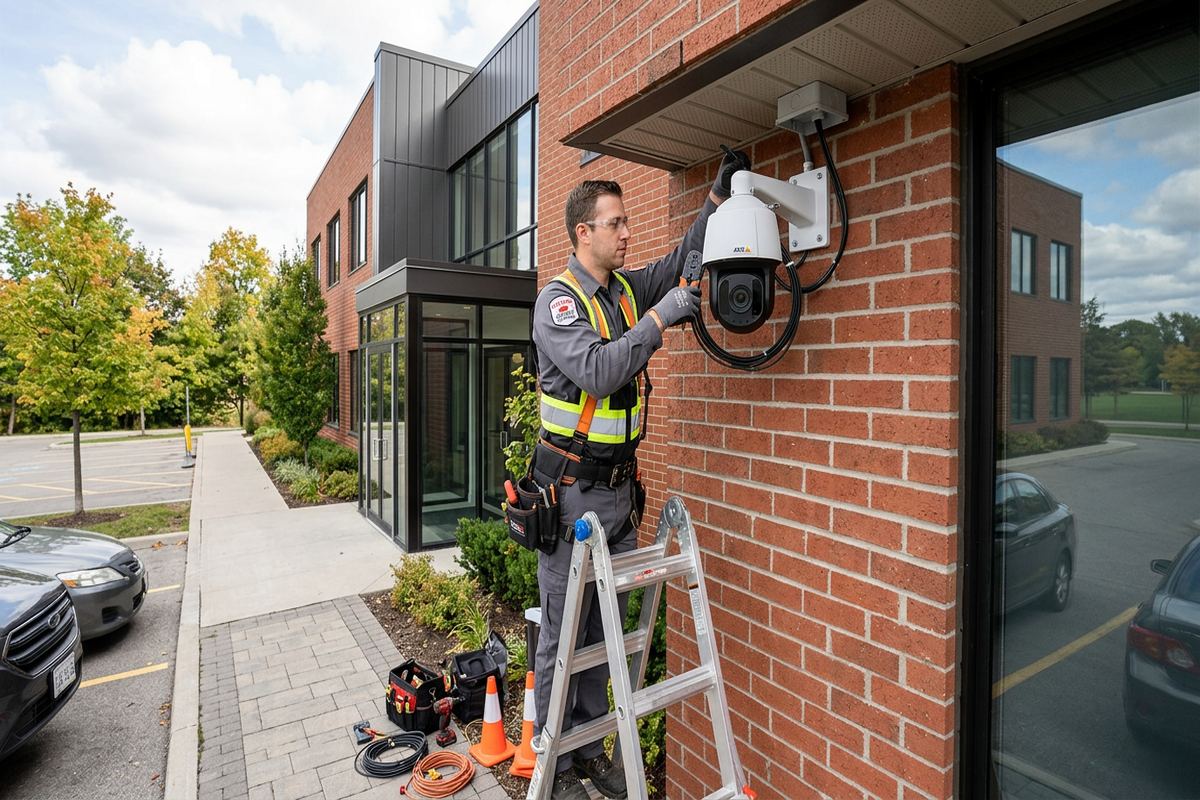
Installation follows the approved scope, beginning with confirmation of device positions and cable routes. Technicians mount cameras, install labelled cabling, complete terminations and connect the recorder or network equipment included in the work. If hidden conditions make a planned route unsuitable, the change is discussed before proceeding rather than concealed behind an undocumented decision. Work areas are kept organized, and penetrations or exterior pathways are completed according to the agreed method. One accountable contractor manages the camera installation, cabling, configuration and handover, reducing gaps between separate trades when a complete system is being delivered.
Configuration takes place at the Fort Erie property because every view behaves differently once mounted. We adjust aim, focus where applicable, image orientation, recording schedules, motion regions and notification settings included in the scope. Alerts require careful tuning: trees, shadows, snow, insects, traffic and headlights can create unwanted events if detection areas are too broad. No analytic feature should be treated as infallible, and customers should understand what triggers were selected. The completed views are reviewed with the owner or representative so obvious obstructions, privacy concerns or operational conflicts can be corrected before handover.
Testing includes confirming that cameras display, record and play back through the designated system. Remote access is checked when internet service and customer devices are available, and basic operation is demonstrated. The handover uses the customer’s own credentials and includes an as-built record showing installed device locations and relevant infrastructure details. Equipment ownership and warranty information follow the written scope. If another contractor supplies part of the network, power or mounting infrastructure, responsibilities and exclusions are documented so Fort Erie customers know which party should address a future issue.
- Positions confirmed before drilling begins
- Camera aim and recording rules configured on site
- Motion areas adjusted for local scene activity
- Playback and authorized remote access tested
- Customer credentials and as-built record provided
Starting an Outdoor Camera Project in Fort Erie
The first step is a conversation about the property and the result the system needs to provide. Useful details include the Fort Erie address, property type, areas of concern, available internet service, existing cameras and whether the building is occupied, rented or seasonal. Photos can help with initial context, but they do not replace an assessment where routes, heights, surfaces and equipment locations must be verified. Requests sent during business hours are answered the same day, while after-hours requests are answered the next business day. Site assessment timing depends on the service and travel distance.
At the assessment, we walk through desired views and examine realistic mounting points. Access to electrical panels, network equipment, attics, basements, utility rooms and exterior service areas may be needed depending on the proposed system. Owners of older masonry buildings should identify known water-entry concerns or protected finishes before drilling is planned. Condo owners, tenants and commercial occupants should confirm who can authorize exterior work. For seasonal homes, arranging access while utilities and internet service are active allows more complete testing. These preparations help turn the visit into a practical design review rather than a camera-count estimate.
Following assessment, the written scope sets out equipment, cable routes, device placement, exclusions, equipment ownership and warranty. Customers can review visible pathways, recorder location, access requirements and any work expected from other parties before accepting the project. Installation is then scheduled around site access and the agreed scope. UnifiedLink completes on-site configuration and a documented handover instead of leaving cameras at default settings. For properties in Fort Erie, Bridgeburg, Crystal Beach, Ridgeway, Stevensville or Douglastown, the result is a system planned around the building, local exposure and the customer’s defined coverage needs.
- Same-day reply during business hours
- Assessment before project pricing
- Written scope provided for review
- Installation scheduled around site access
- Documented configuration and customer handover
Fort Erie neighbourhoods we cover
- Bridgeburg
- Crystal Beach
- Ridgeway
- Stevensville
- Douglastown
Outdoor camera installation in Fort Erie — common questions
What outdoor cameras suit Fort Erie weather?
Exterior cameras should have weather ratings appropriate to their mounting locations, along with suitable junction boxes, connectors, fasteners and cable protection. Fort Erie’s winters, freeze-thaw cycles and lakefront exposure make the complete installation method important. We assess the surface and exposure before specifying equipment rather than relying only on a camera enclosure rating.
Can cameras be installed on brick?
Yes, cameras can be mounted on many brick and masonry buildings in Fort Erie. The installer must consider anchor type, brick and mortar condition, cable entry, water shedding and the location of interior finishes. Some older buildings are better served by surface conduit or mounting near an existing service route instead of creating a long concealed pathway.
Will outdoor cameras record without internet?
A system with local recording can generally continue storing footage without internet access, provided the cameras, recorder and local network remain powered and connected. Remote viewing and cloud-dependent functions may stop until service returns. This distinction is important for Fort Erie seasonal homes, where owners may be away when an internet or power interruption occurs.
Do I need approval for installation?
Approval may be required if you rent, occupy a condominium, share exterior walls or operate in a managed commercial property. Fort Erie tenants and condo owners should confirm permission for exterior drilling, visible conduit and device placement before installation. UnifiedLink can provide proposed locations and routing details, but the customer is responsible for obtaining the necessary authorization.
Can you reuse my existing camera cables?
Existing cable may be reusable if its type, condition, length and termination quality support the proposed equipment. We test accessible infrastructure rather than assuming it is suitable. Older analogue or weather-exposed cabling can limit camera choices and reliability. The Fort Erie project scope will identify any reused infrastructure and distinguish it from newly installed, labelled cable runs.
How soon will you assess my property?
Requests sent during business hours are answered the same day, and after-hours requests are answered the next business day. Site assessment timing depends on the service and travel distance. Before arranging a Fort Erie visit, we may ask about the property type, required coverage, existing equipment, internet availability and who can authorize exterior work.
Coverage in Fort Erie is confirmed against the address before we quote. See everything we install in Fort Erie or the province-wide outdoor camera installation page.