UnifiedLink installs wired and wireless security camera systems for homes, seasonal properties and small businesses in Fort Erie. We assess the site before pricing, plan useful coverage and select weather-rated exterior equipment for local conditions. Installation includes cable routing, mounting, on-site configuration and a documented handover using credentials controlled by the property owner.
Planning Home Security Cameras in Fort Erie
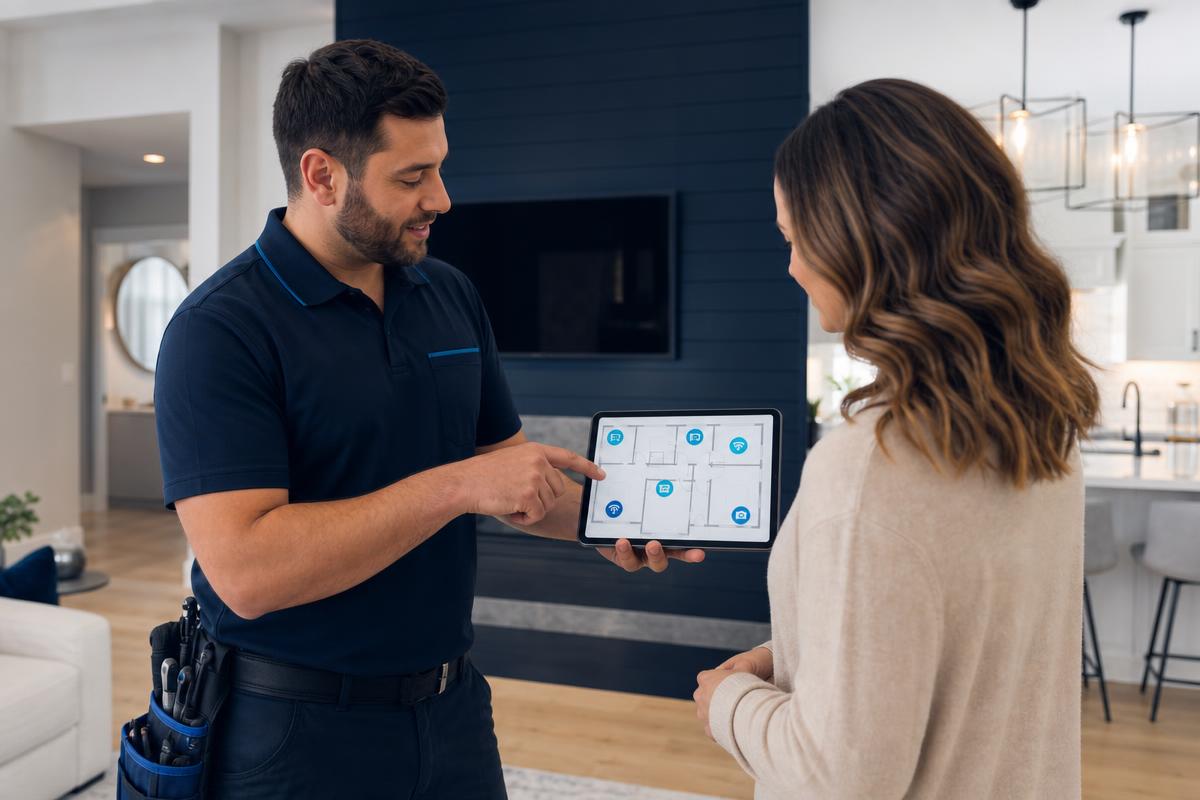
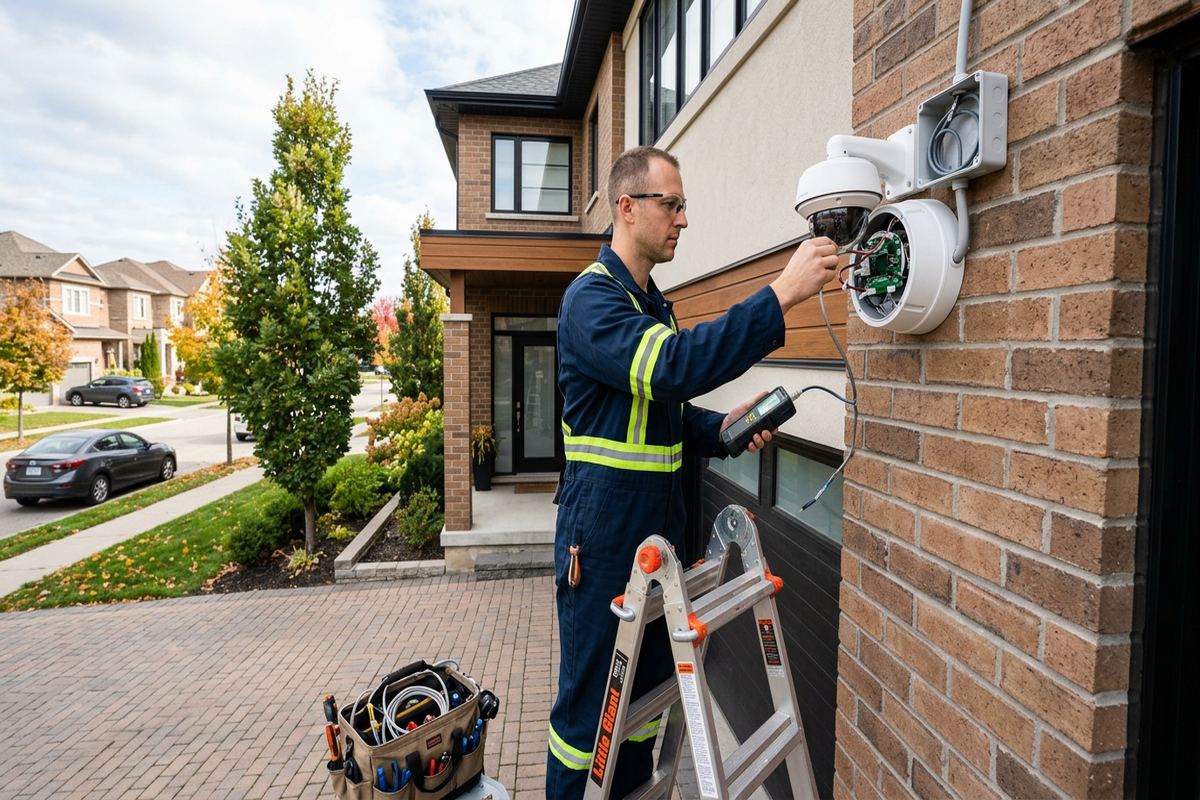
A useful camera system begins with the property, not a preselected camera package. During a Fort Erie site assessment, we review entrances, driveways, side yards, garages, decks and other practical observation points. We also consider where people actually approach the building and whether landscaping, parked vehicles, lighting or rooflines will obstruct the image. This process establishes the number of cameras, appropriate lens angles and realistic identification distances. Pricing follows the assessment so the proposed system reflects the building, cable routes and coverage goals rather than assumptions made without seeing the site.
Fort Erie properties range from older masonry buildings and compact homes near established streets to newer frame construction, lakefront houses and seasonal cottages. Each type presents different mounting and cable-routing decisions. Brick may require carefully placed anchors and sealed penetrations, while siding needs suitable mounting blocks or structurally secure attachment points. Finished basements, additions and detached garages can limit direct pathways. We inspect these conditions before proposing routes, helping avoid exposed cable, unnecessary wall openings and camera positions that appear convenient but produce weak or easily obstructed views.
The written scope identifies equipment, proposed cable routes, device placement, exclusions, equipment ownership and warranty details. It also distinguishes included recording, remote viewing and network work from any optional changes. This is particularly important when a homeowner wants several exterior cameras but has limited attic access, finished ceilings or an outbuilding without an existing data connection. A defined scope gives everyone the same installation plan before work starts. Where conditions remain concealed until access is opened, those limitations are noted rather than treated as settled facts during the initial assessment.
- Review entrances, driveways, yards and detached structures
- Identify obstructions, lighting issues and practical viewing distances
- Plan mounting methods for masonry, siding and soffits
- Document equipment, routes, exclusions, ownership and warranty
Camera Coverage for Fort Erie Homes
Good coverage is based on the purpose of each view. A wide image can show general activity across a yard, but it may not provide enough detail at a doorway or vehicle approach. We separate overview requirements from identification points and select camera placement accordingly. At a typical Fort Erie home, this may mean a focused entrance view, a driveway camera positioned to reduce headlight glare and wider coverage along accessible sides. Camera height also matters: mounting too high can hide faces under hats or produce an image dominated by the tops of heads.
Properties in Bridgeburg and Douglastown may have narrow side passages, mature trees, porches or additions that create blind areas around an otherwise simple building. Instead of adding cameras without a plan, we map likely movement between the street, doors, yard and garage. Overlapping fields of view can help maintain context while keeping priority areas large enough in the image. We also consider privacy boundaries, avoiding unnecessary views into neighbouring windows or private spaces. The objective is useful evidence and awareness on the customer’s property, not indiscriminate recording beyond it.
Night performance depends on more than an infrared specification. Reflective soffits, pale siding, nearby walls, spider webs and moisture can bounce infrared light into the lens, while deep yards may remain dark beyond the camera’s effective illumination. Existing porch lights and motion lighting can improve colour and detail when positioned carefully, but direct glare can also reduce visibility. During planning, we examine the scene after considering expected nighttime conditions and choose angles that limit reflection. Configuration is then adjusted on site because default exposure settings rarely suit every entrance, driveway and yard.
- Separate overview views from identification points
- Reduce glare from headlights and exterior lighting
- Avoid infrared reflection from walls and soffits
- Respect neighbouring properties and private areas
Weather-Rated Exterior Equipment
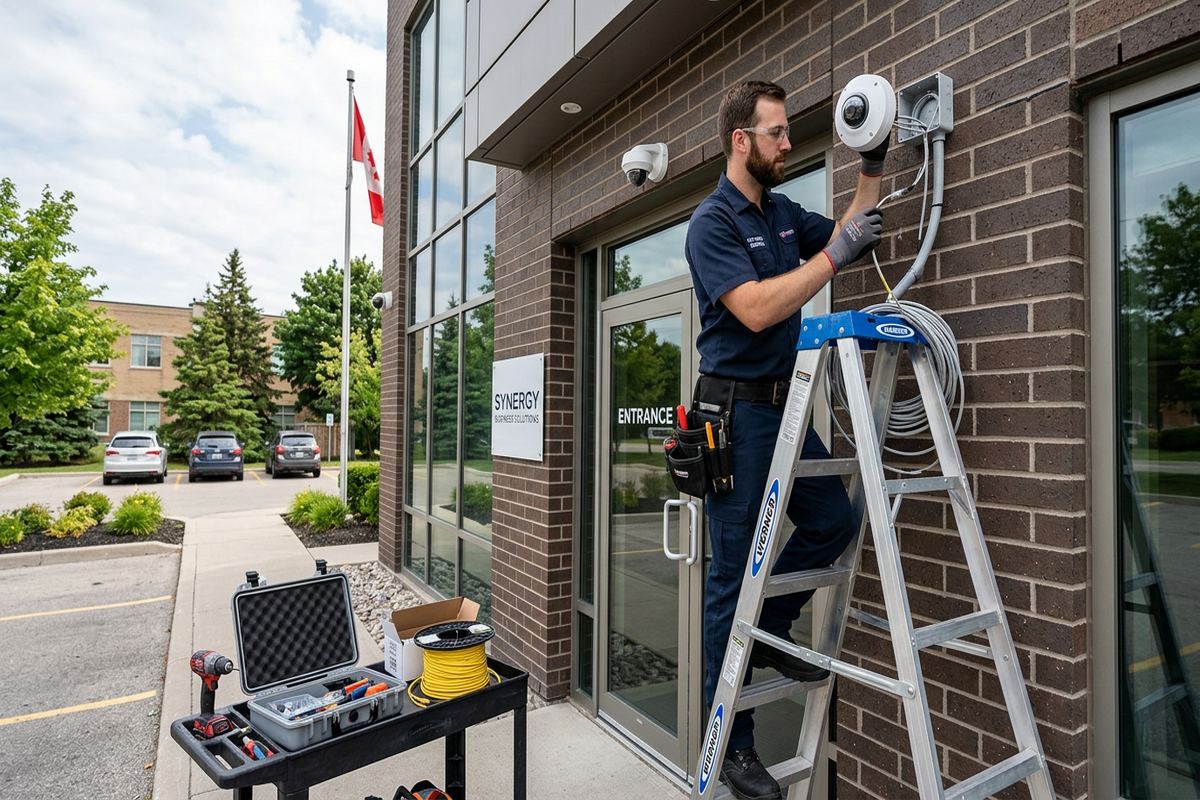
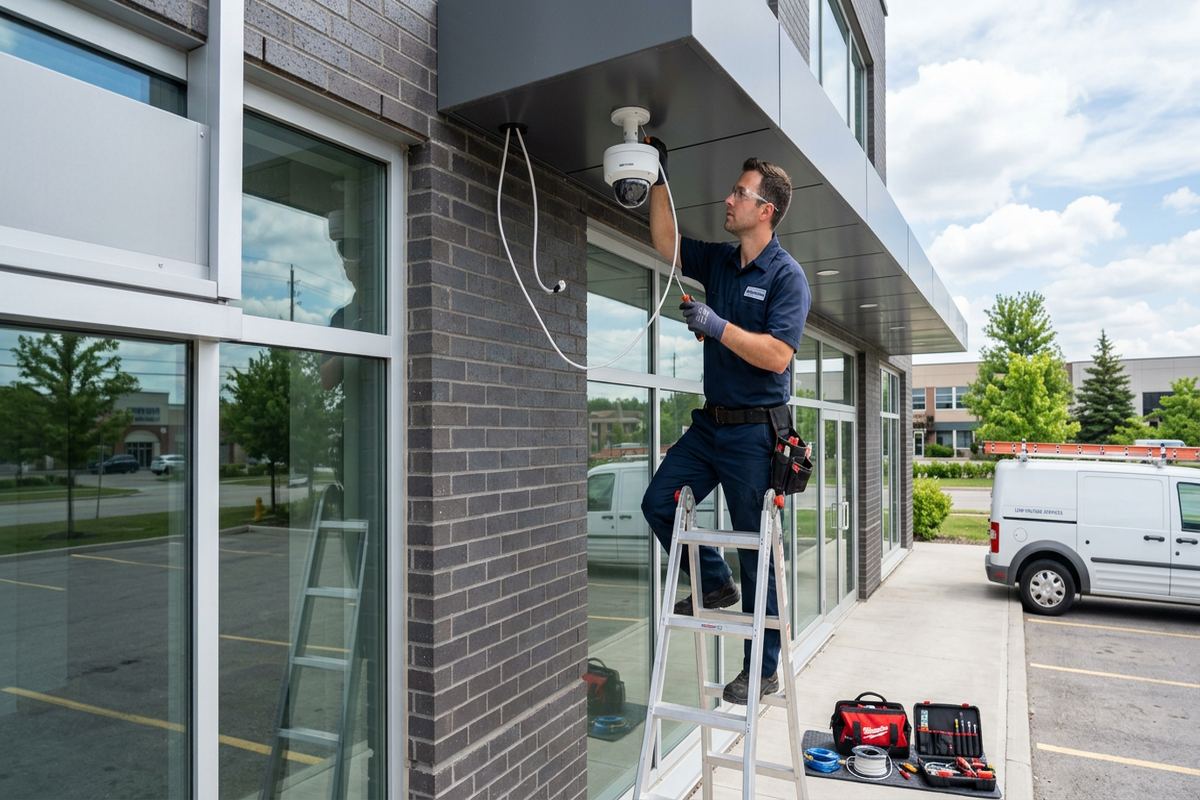
Border-adjacent businesses, lakefront properties and seasonal homes are part of Fort Erie’s local property mix, making weather-rated exterior gear a standard planning requirement. An outdoor rating alone does not make every location suitable. Cameras still need sound mounting surfaces, protected cable entries and appropriate positioning beneath or beyond roof edges. Wind-driven precipitation can reach areas that appear sheltered, and exposed lakefront walls may experience harsher conditions than an interior courtyard. We match the mounting approach to the actual exposure rather than assuming every soffit, wall or pole provides equivalent protection.
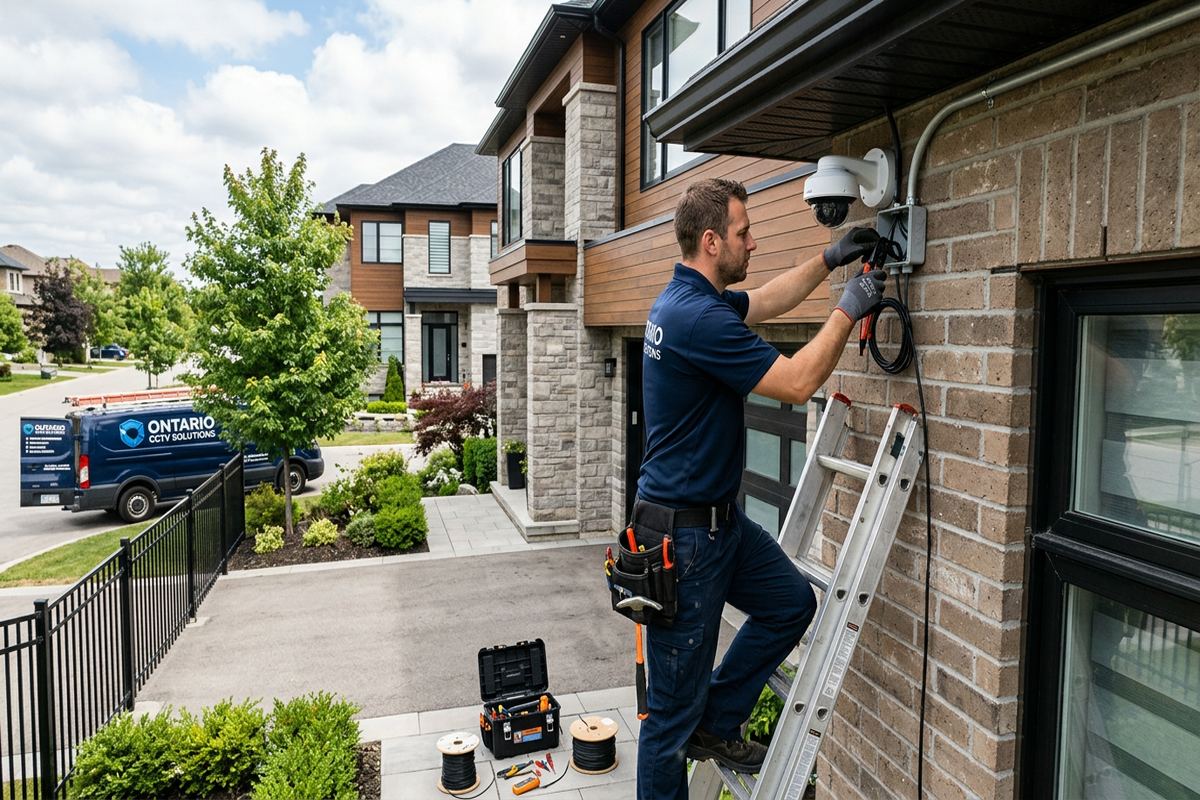
Winter freeze-thaw cycles place repeated stress on exterior penetrations and poorly supported cable. Water entering around a fastener or cable opening can expand when frozen, damaging seals or surrounding materials over time. Our installation approach uses exterior-suitable fittings and sealing methods matched to masonry, siding or other cladding. Cable is supported rather than left loose against sharp edges, downspouts or moving components. Drip management is considered before a cable enters the building or junction point. These details help protect both the camera connection and the envelope around the installation.
Seasonal homes in Crystal Beach or Ridgeway may remain unoccupied for extended periods, so the system should recover predictably after ordinary power or internet interruptions. Recording design determines whether footage remains available locally when the internet is down and how remote access resumes when service returns. We explain these dependencies instead of implying that every function works without power, network connectivity or an active service. Where equipment is shut down seasonally, restart procedures and device status checks can be included in the handover, allowing the owner or property manager to confirm operation after reopening.
- Use exterior-rated cameras, fittings and cable components
- Seal penetrations for wind-driven rain and freeze-thaw
- Support cable away from edges and moving components
- Explain power, internet and recording dependencies
Fort Erie, Ontario
Home security camera installation in Fort Erie, scoped in writing first
Book a site assessment and get equipment, routes, exclusions, and warranty on paper before anything is installed.
Wired Camera Installation in Fort Erie
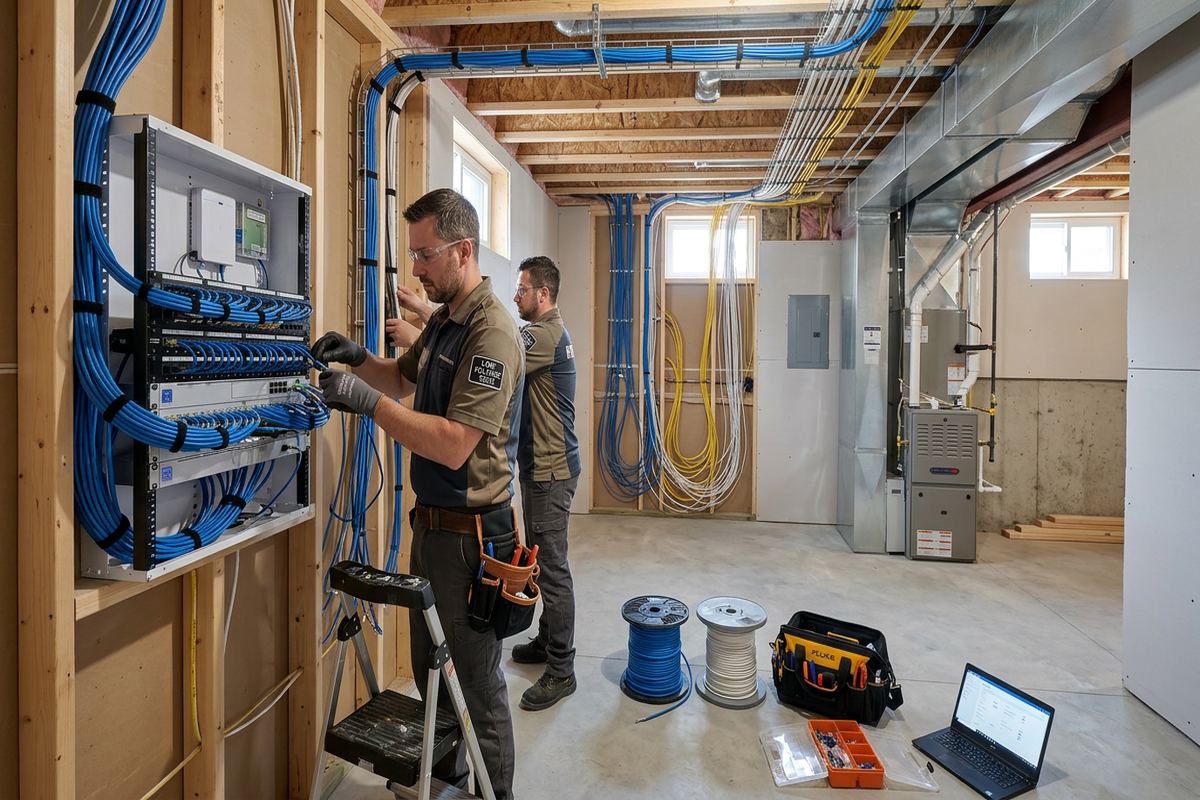
For permanent coverage, a wired network camera system usually provides the clearest path to consistent power, recording and maintenance. One network cable can carry both data and power when compatible equipment is used, reducing the need for an electrical receptacle at every camera. UnifiedLink installs continuous labelled cable runs rather than hidden intermediate joins that complicate troubleshooting. Routes are selected around accessible basements, attics, utility spaces and service areas. At the recorder or network location, each run is identified so a future service visit does not depend on guessing which cable serves each camera.
Older Fort Erie buildings can combine original masonry, later frame additions, plaster finishes and renovated sections with no continuous pathway between them. A route that appears direct from outside may encounter blocked joist spaces, solid headers or inaccessible ceiling cavities. The assessment considers interior impact as well as exterior appearance. Where concealed routing is not practical, we can discuss neatly supported surface routes or alternative equipment locations. Any required patching, painting, electrical work or restoration outside the low-voltage scope is identified as an exclusion rather than being left unclear until installation day.
Detached garages, workshops and accessory buildings require additional decisions because ordinary copper network cable should not simply be treated as an unrestricted link between separate structures. Distance, available conduit, electrical conditions and exposure influence the appropriate connection method. Depending on the site, the design may use an existing suitable pathway, fibre, or a purpose-planned wireless bridge. We verify where recording and network equipment can be secured, ventilated and powered. The final route is documented so the owner understands how an outbuilding camera reaches the recorder and which supporting devices must remain operational.
- Install continuous, labelled cable runs
- Use accessible attic, basement and utility routes
- Plan alternatives where concealed pathways are blocked
- Assess detached-building links separately
Recording and Remote Viewing
Recording can be kept on a local network video recorder, supported by camera storage, or provided through a compatible cloud service, depending on the selected platform. Each approach has different internet, retention and account requirements. We discuss what events need to be captured, how footage will be searched and who requires access before selecting storage capacity or subscriptions. Motion recording may extend practical retention, but poor detection settings can miss relevant activity or create excessive alerts. Continuous recording offers a fuller timeline while requiring greater storage, so the decision should follow the customer’s actual priorities.
Remote viewing requires a stable connection between the camera system and the property network. Wi-Fi signal bars on a phone do not establish whether an exterior camera location has reliable bandwidth, and internet upload capacity affects off-site viewing. Wired cameras reduce dependence on wireless coverage at each mounting point, although the recorder and application still rely on the local network for remote access. During configuration, we connect approved devices, set the correct time and test live and recorded video. We do not leave default credentials in place or retain ownership of the customer’s administrative account.
Alerts are most useful when they correspond to an area where the owner needs attention. Movement from trees, reflections, insects, passing traffic or precipitation can create unwanted notifications if detection zones are left at broad defaults. We configure available motion or object-detection features around entrances, walkways and vehicle approaches, then explain their limitations. In Fort Erie, changing weather, seasonal foliage and snow accumulation can alter the scene after installation, so settings may require adjustment. The handover shows the customer where to review clips, modify notification schedules and confirm that recording remains active.
- Select local, camera or cloud recording appropriately
- Test live view, playback and exported footage
- Configure owner-controlled administrative credentials
- Set practical zones and notification schedules
Camera Installation for Seasonal and Rental Properties
A seasonal property needs camera views that remain useful when nobody is present to clean a lens, reset a plug or move an obstruction. In Crystal Beach and other lakeside areas, exterior placement should account for wind, precipitation, changing vegetation and furniture stored near the building. Cameras should also remain reachable for planned maintenance without being easily tampered with. We review whether local recording equipment will remain powered and connected throughout the closure period. If internet or electrical service is suspended, the owner receives a clear explanation of which recording and remote features will be unavailable.
Landlords should define who owns the equipment, controls recordings and receives notifications before installation. Camera placement must avoid interior tenant spaces and other areas where recording would create privacy concerns. For multi-unit or rented properties, approval may also be needed for exterior penetrations, shared walls, common areas or network use. UnifiedLink records equipment ownership and access responsibilities in the written scope. The installation handover then uses the designated customer’s credentials, helping prevent uncertainty when tenants change, a property manager is replaced or the building is eventually sold.
Condo owners in Fort Erie should obtain any required condominium approval before exterior cameras, doorbell cameras or cable routes are installed on common elements. Rules may address visible equipment, drilling, hallway views, shared networks and acceptable mounting locations. We can document the proposed devices and route for review, but authorization remains the owner’s responsibility. Similar care applies to leased premises, where landlord consent may be required even if the tenant is purchasing the system. Confirming approval before scheduling avoids a technically complete proposal that cannot legally or practically proceed at the chosen locations.
- Plan for unattended seasonal operation
- Clarify recording access and equipment ownership
- Avoid tenant interiors and inappropriate shared-area views
- Confirm condo or landlord approval before installation
Small Business Cameras in Fort Erie
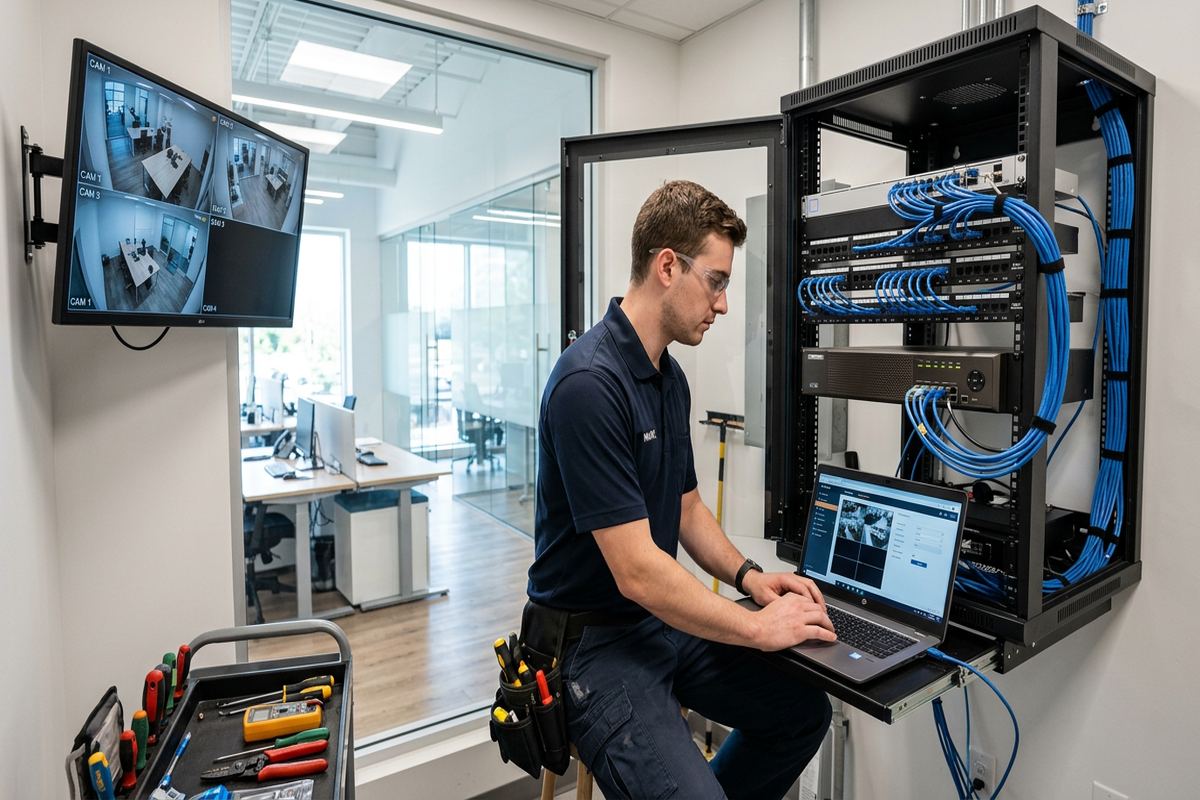
Home-focused systems sometimes extend to a workshop, home office or small business on the same property. Fort Erie’s border-adjacent businesses, commercial strips and mixed-use buildings may need views of public entrances, delivery points, stock areas or staff-only doors. Business coverage should be planned around operating procedures rather than copied from a residential layout. We identify where transactions, deliveries or access events occur and keep each camera’s purpose specific. Audio recording is not assumed, and customers should consider applicable privacy, workplace and notice obligations when operating cameras around employees, visitors or the public.
Commercial strips and older storefronts can have masonry party walls, finished retail ceilings and limited access above display areas. Industrial units may offer open structure but introduce long cable distances, high mounting positions, dust or changing storage layouts. The same camera model is not automatically suitable for every environment. We assess reachable pathways, lighting, mounting height and safe future service access. Cameras placed above shelving or equipment can lose their intended view as operations change, so placement discussions include likely obstructions rather than only the current empty or staged condition.
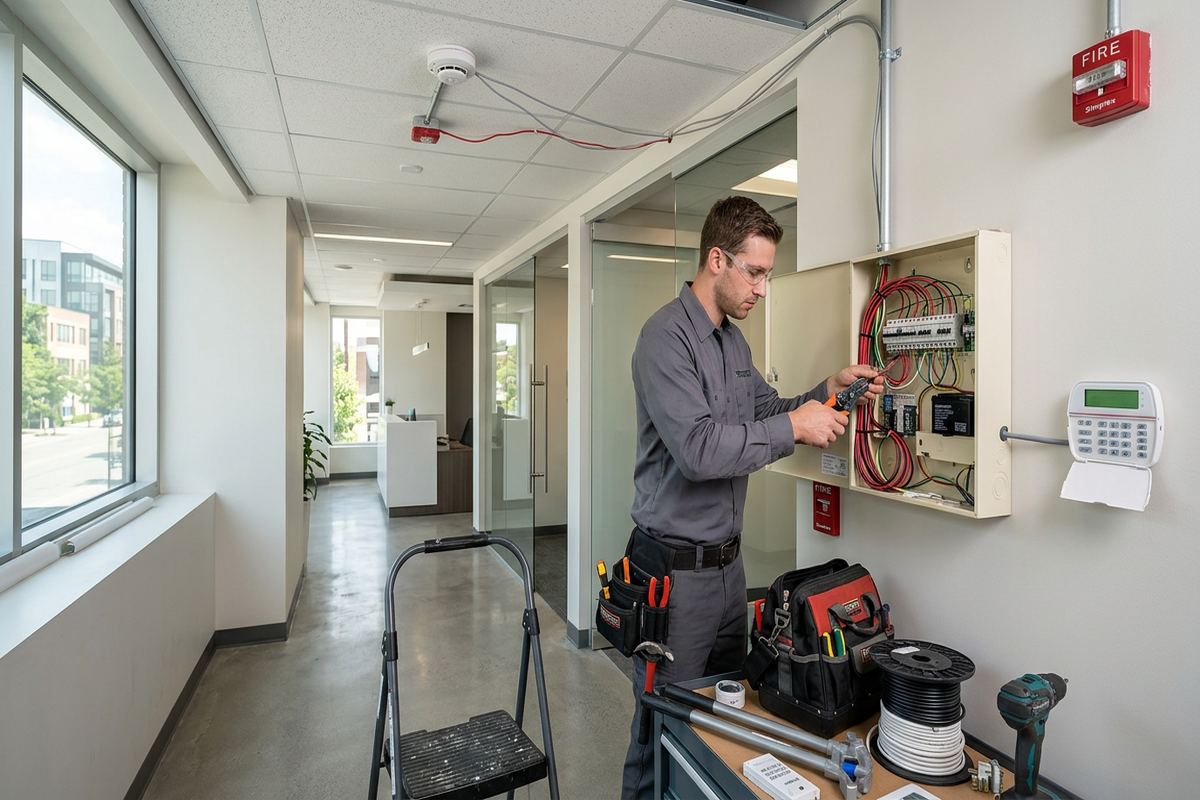
Where cameras share a network with business systems, segmentation, available switch capacity and power requirements should be reviewed before devices are added. A recorder should be placed somewhere secure but accessible for authorized maintenance, with suitable ventilation and dependable network connectivity. If a business also needs access control, Wi-Fi or structured cabling, those systems can be coordinated under one written scope while remaining clearly separated by function. UnifiedLink acts as one accountable contractor for the included low-voltage work, reducing gaps between camera placement, cable installation, network connection and final configuration.
- Cover entrances, deliveries and controlled work areas
- Account for masonry storefronts and industrial layouts
- Review network capacity, power and recorder location
- Coordinate related low-voltage work under one scope
Fort Erie Camera System Handover and Support
Installation is completed with on-site configuration rather than ending when cameras are physically mounted. We verify each image, adjust orientation, confirm the date and time, test recording and review remote access on approved customer devices. Exterior views are checked for avoidable obstructions and obvious glare within the conditions present during commissioning. Camera names are made understandable so recorded footage can be located without decoding generic device numbers. If the system includes notifications, we demonstrate schedules and detection areas while explaining that changing weather, lighting and property conditions may require later refinement.
The customer receives control through their own credentials. Administrative access is not left under an installer-owned account, and passwords should not be shared more broadly than necessary. Handover includes an as-built record showing device locations and relevant cable or equipment information, along with the agreed ownership and warranty details. We explain basic playback, clip export, notification management and system-status checks. This documentation is valuable for Fort Erie seasonal properties, rentals and businesses where responsibility may pass between family members, managers or authorized staff after the original installation is complete.
Requests sent during business hours are answered the same day, while after-hours requests are answered the next business day. Site assessment timing depends on the service and travel distance. When contacting UnifiedLink, describe the property type, approximate camera goals, whether the building is occupied year-round and any known access restrictions. Photos or plans may help with initial discussion, but they do not replace an on-site assessment where mounting surfaces, pathways and sightlines determine the work. After assessment, the written scope provides the basis for scheduling, installation and final acceptance of the Fort Erie camera system.
- Configure and test every installed camera on site
- Provide access using the customer’s own credentials
- Deliver an as-built record and documented scope
- Explain playback, exports, alerts and status checks
Fort Erie neighbourhoods we cover
- Bridgeburg
- Crystal Beach
- Ridgeway
- Stevensville
- Douglastown
Home security camera installation in Fort Erie — common questions
How many cameras does my Fort Erie home need?
The number depends on the entrances, driveway layout, side access, detached structures and level of detail required. A compact home may need fewer views than a lakefront or seasonal property with several approaches. UnifiedLink assesses the site before pricing, separates overview coverage from identification points and documents the proposed placement in a written scope.
Will outdoor cameras handle Fort Erie winters?
Exterior cameras should be weather-rated, but equipment rating is only part of a durable installation. Fort Erie freeze-thaw cycles, wind-driven precipitation and exposed lakefront locations also require suitable mounts, supported cable and properly sealed penetrations. We assess the mounting surface and exposure, then use exterior-suitable installation components and routing methods.
Can cameras be installed on brick or older homes?
Yes, subject to the condition and accessibility of the building. Older Fort Erie properties may combine brick, plaster, frame additions and finished spaces that complicate concealed routes. We review attachment points and pathways before pricing. The proposed scope identifies visible routing or exclusions where a concealed cable path is not practical without additional restoration work.
Do I need internet for security cameras?
Internet is generally needed for remote viewing, app notifications and cloud-connected functions. A properly designed local recorder may continue recording during an internet outage if the camera network and equipment still have power. We explain the dependencies of the selected Fort Erie system and test local recording, playback and approved remote access during handover.
Can you install cameras at a seasonal home?
Yes. For seasonal homes around Crystal Beach, Ridgeway and elsewhere in Fort Erie, we consider weather exposure, unattended operation, local recording and recovery after ordinary power or internet interruptions. The handover explains how to check system status, what stops working when services are disconnected and how the owner can confirm operation after reopening the property.
Do I need approval for a condo or rental property?
Possibly. Condo rules may control exterior equipment, common-element drilling, hallway views and cable routes. A tenant may also require landlord approval before mounting cameras or altering the building. UnifiedLink can document the proposed Fort Erie installation for review, but the customer is responsible for obtaining the necessary condominium, landlord or property-management authorization before work proceeds.
Coverage in Fort Erie is confirmed against the address before we quote. See everything we install in Fort Erie or the province-wide home security camera installation page.