UnifiedLink installs commercial access control systems for Fort Erie offices, shops, industrial units, multi-tenant properties and managed residential buildings. We assess each opening, plan suitable readers and locking hardware, install continuous labelled cabling, configure permissions on site and provide a documented handover. Exterior equipment is selected and mounted for Niagara Region weather, including winter freeze-thaw conditions.
Commercial Access Control Planning in Fort Erie
A reliable access control system starts with the door, not the software. During a Fort Erie site assessment, we review each opening, its frame, existing lock, door closer, hinges, traffic pattern and emergency-egress requirements. This identifies whether the site needs an electric strike, magnetic lock, electrified hardware or another suitable arrangement. We also locate power supplies, controllers and network connections before proposing cable routes. The resulting written scope defines equipment, device placement, exclusions, ownership and warranty, reducing uncertainty before work begins and preventing incompatible components from being installed.
Commercial properties around Bridgeburg, Ridgeway and Stevensville vary considerably in age and construction. An older masonry storefront may require surface raceway, careful drilling and a different strike arrangement from a newer frame-built office or industrial unit. Existing doors may also be misaligned, damaged or difficult to close consistently. Access control cannot correct every mechanical fault, so we identify door repairs or locksmith work that should happen first. Planning around the actual building keeps readers accessible, protects finishes and gives locking hardware a stable opening on which to operate.
The assessment also establishes who needs access, where and when. Staff may need scheduled entry through a main door, while managers require broader permissions and contractors receive temporary credentials. Multi-tenant buildings can require separate groups for shared entrances, offices, storage rooms and service areas. We document these operating requirements before configuration rather than applying one permission set everywhere. If a landlord, condominium corporation or property manager controls common doors, the necessary approvals should be confirmed before cabling, drilling or hardware changes begin. This avoids rework and unclear responsibility later.
- Door, frame and lock assessment
- Written equipment and placement scope
- Cable route and power planning
- Landlord or condominium approval review
- User-group and schedule planning
Fort Erie Door Hardware and Reader Selection
Selecting controlled-door hardware requires matching the lock to the opening, expected use and life-safety operation. Electric strikes are appropriate for many latch-equipped doors, while other openings may need electrified trim, cabinet locks or purpose-selected hardware. Magnetic locks require particular attention to release methods and applicable egress arrangements. We do not treat hardware as interchangeable. Each door is reviewed for fail-safe or fail-secure operation, available power, fire-alarm interfaces where required and behaviour during an outage. That door-specific approach produces a clearer scope and supports predictable daily operation.
Readers can support cards, fobs, mobile credentials or combinations determined by the selected platform. The appropriate format depends on user volume, credential administration, security expectations and whether existing credentials must remain usable. Keypads may suit locations where issuing a physical credential is impractical, but shared codes provide less individual accountability. For Fort Erie businesses with seasonal staffing, credentials that can be assigned and withdrawn individually simplify turnover. We configure named users, access groups and schedules on site, then show the designated administrator how to add, suspend and review credentials without relying on installer-owned accounts.
Request-to-exit devices, door contacts and monitored lock status add useful information beyond a basic reader and strike. A door contact can report whether an opening remains held or forced open, while a request-to-exit input distinguishes normal departures from unexplained activity. Where practical, we position these devices to avoid exposed wiring and physical interference. The design may also include accessible release controls, intercom integration or a receptionist-operated unlock function. Every option is identified in the scope so the customer understands what events the system records and what requires separate monitoring or response procedures.
- Electric strikes and electrified hardware
- Card, fob, mobile or keypad readers
- Door contacts and exit devices
- Fail-safe and fail-secure planning
- Temporary and scheduled credentials
Exterior Access Control for Fort Erie Weather
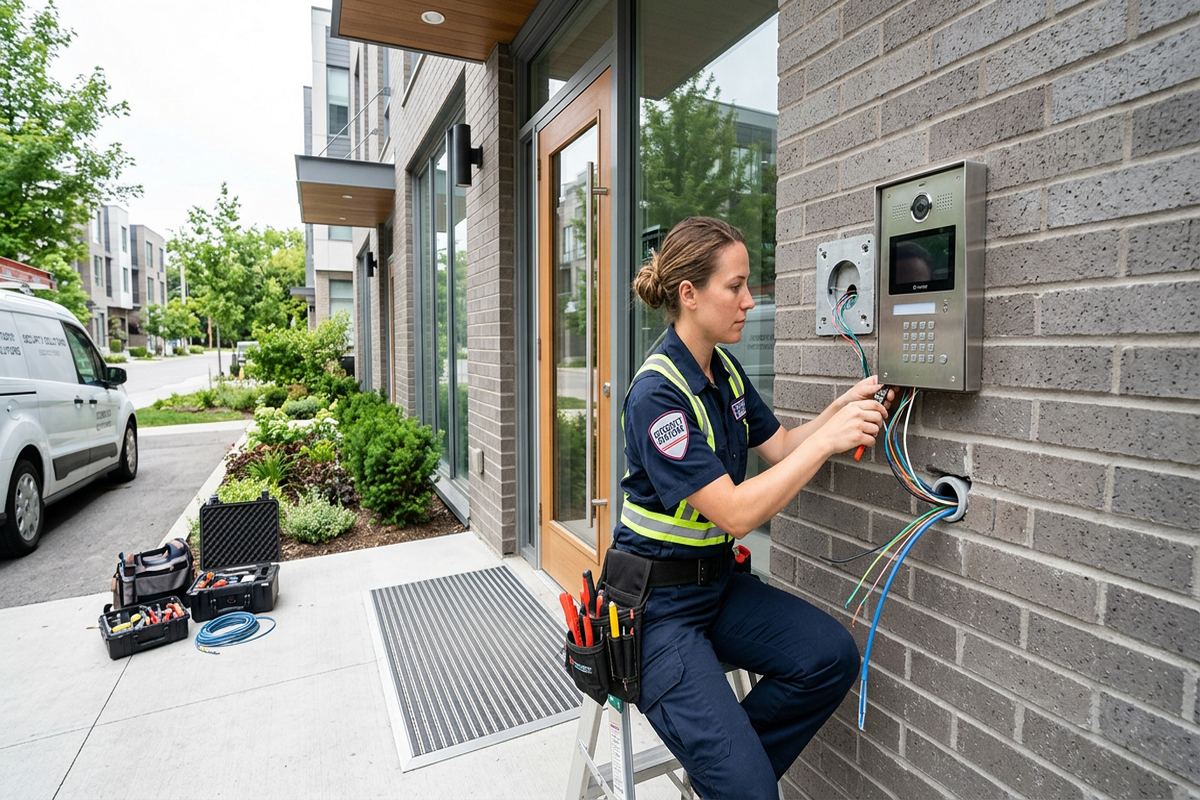
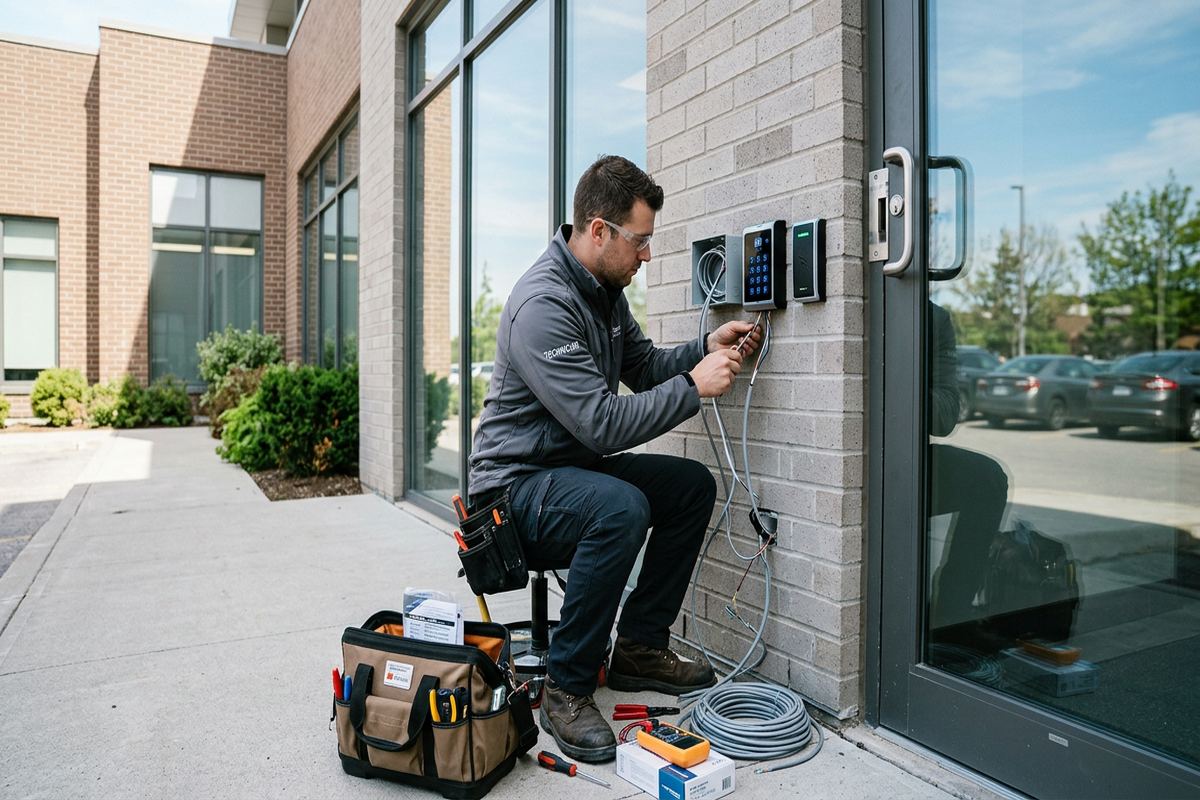
Border-adjacent businesses and lakefront or seasonal properties make weather-rated exterior gear a standard consideration in Fort Erie. Readers, enclosures and exposed accessories must suit moisture, wind-driven precipitation and repeated temperature changes. Product ratings matter, but installation details are equally important. We select stable mounting locations, limit unnecessary penetrations and protect cable entry points from water. Exterior junctions are sealed with materials compatible with the surrounding surface. Drip paths, conduit orientation and enclosure placement are considered so water is not directed toward electronics, connectors or the interior side of the opening.
Niagara Region winters place repeated freeze-thaw stress on masonry joints, sealants and exterior fasteners. A reader fixed to brick or block needs suitable anchors and a mounting surface that will remain stable as temperatures change. Penetrations should not be placed casually through deteriorated mortar, loose cladding or areas where water collects. On frame construction, mounting may require backing or a secure box rather than fastening only to siding. These decisions protect the device, reduce movement and help preserve the wall assembly around the installation over successive winters.
Seasonal occupancy introduces additional operational questions. A Crystal Beach property may have changing staff, vendors or maintenance personnel at different times of year, while a lakefront building may sit lightly used for extended periods. Access schedules and temporary credentials can reduce dependence on copied mechanical keys, but they still require an assigned administrator and a clear removal process. We discuss outage behaviour, remote-management dependencies and the physical key override where applicable. Owners should know how entry works when internet service is unavailable, power is interrupted or the property is closed for winter.
- Weather-rated exterior readers
- Sealed and protected cable entries
- Masonry-appropriate anchors and mounting
- Freeze-thaw-conscious exterior installation
- Planned seasonal access schedules
Fort Erie, Ontario
Commercial access control installation in Fort Erie, scoped in writing first
Book a site assessment and get equipment, routes, exclusions, and warranty on paper before anything is installed.
Cabling, Power and Network Infrastructure
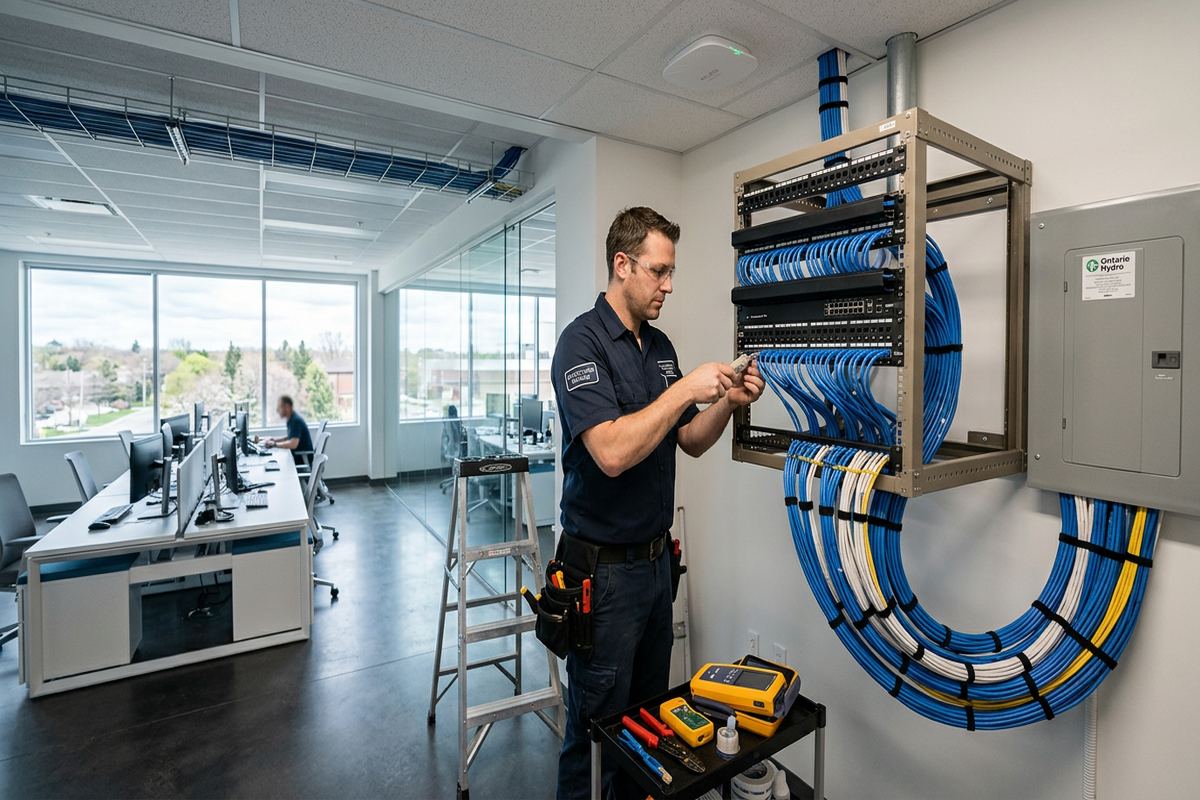
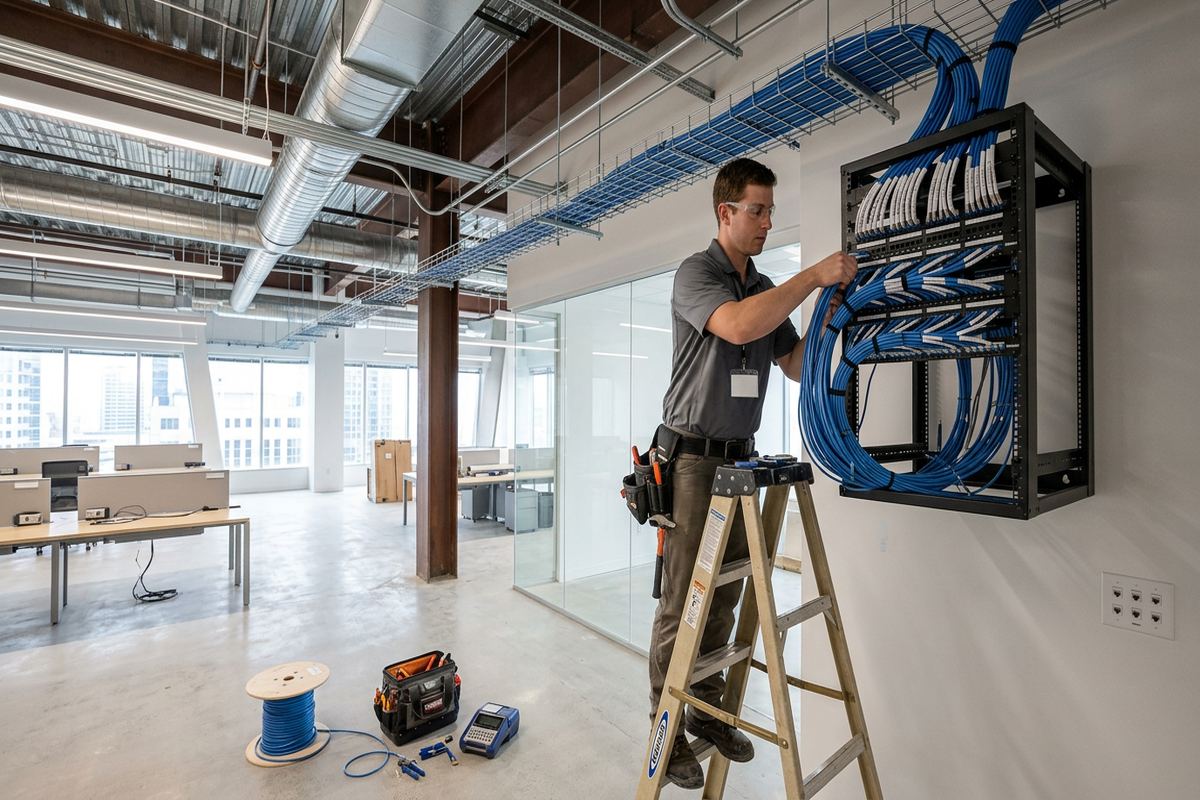
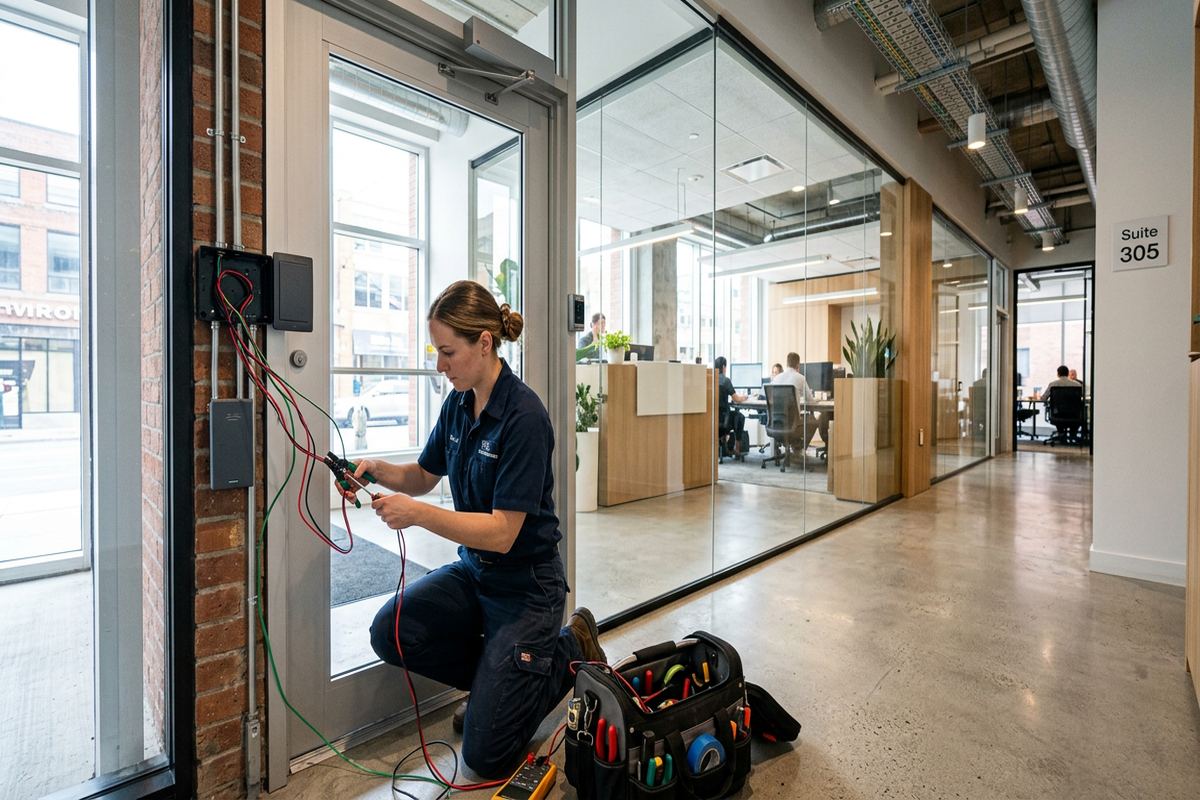
Access control depends on cabling that is routed, supported and identified for future service. UnifiedLink installs continuous labelled cable runs between controllers, doors, power equipment and network locations, avoiding hidden intermediate joins. Routes are planned around finished spaces, structural conditions and other building systems. In commercial strips, ceiling access may vary between units, while industrial spaces can require conduit or protected pathways near equipment and loading areas. Labels correspond with the as-built record, allowing a technician or property manager to identify each door circuit without tracing unmarked cables through the building.
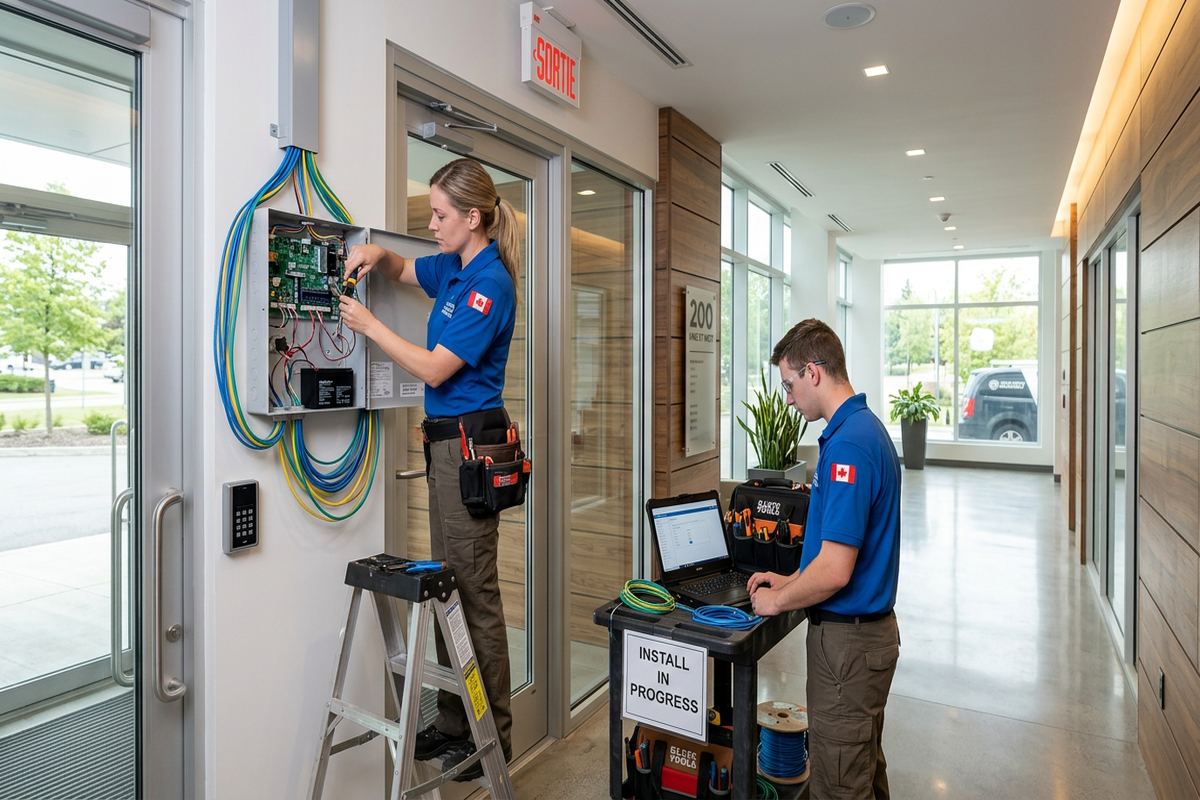
Controller and power-supply locations should be secure, accessible for service and suitable for the equipment. Placing critical components above an exposed door or in an uncontrolled public room creates unnecessary risk. We review available electrical service, enclosure space, cable distance and ventilation before confirming locations. Battery backup can keep selected components operating during a limited interruption, but runtime depends on connected loads, battery capacity and condition. The written scope identifies included power equipment and expected system behaviour, helping the customer distinguish between access control backup, building emergency power and internet availability.
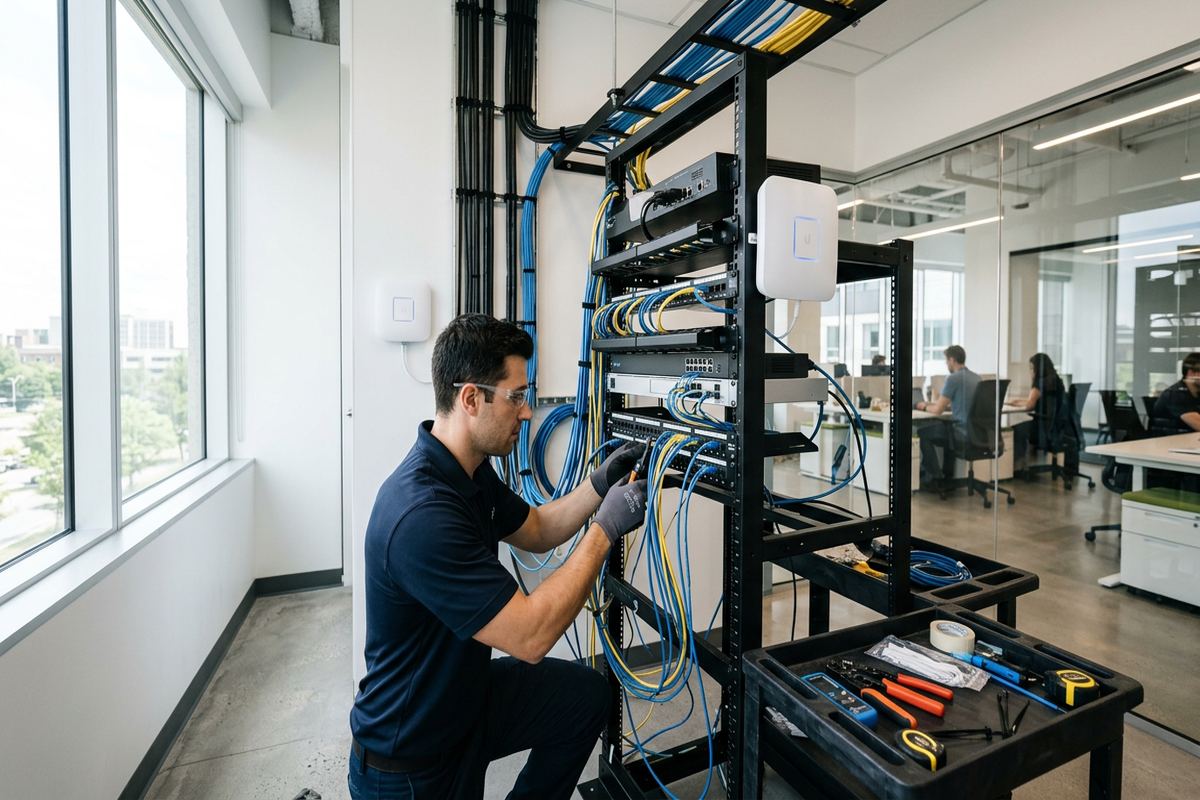
Network-connected systems need coordination with the customer’s IT environment. We document required connections and discuss addressing, outbound communication and remote administration with the appropriate contact. Access control equipment should not be attached to an unknown network port without considering security and ongoing support. Cloud-managed and locally managed platforms have different dependencies, account structures and update processes. During handover, the customer receives access through its own credentials rather than an account retained solely by the installer. That arrangement supports clear ownership if staff, IT providers or property managers change later.
- Continuous labelled cable runs
- Protected commercial cable pathways
- Secure controller and power locations
- IT coordination for connected systems
- Customer-owned administrative accounts
Installing Access Control in Fort Erie Buildings
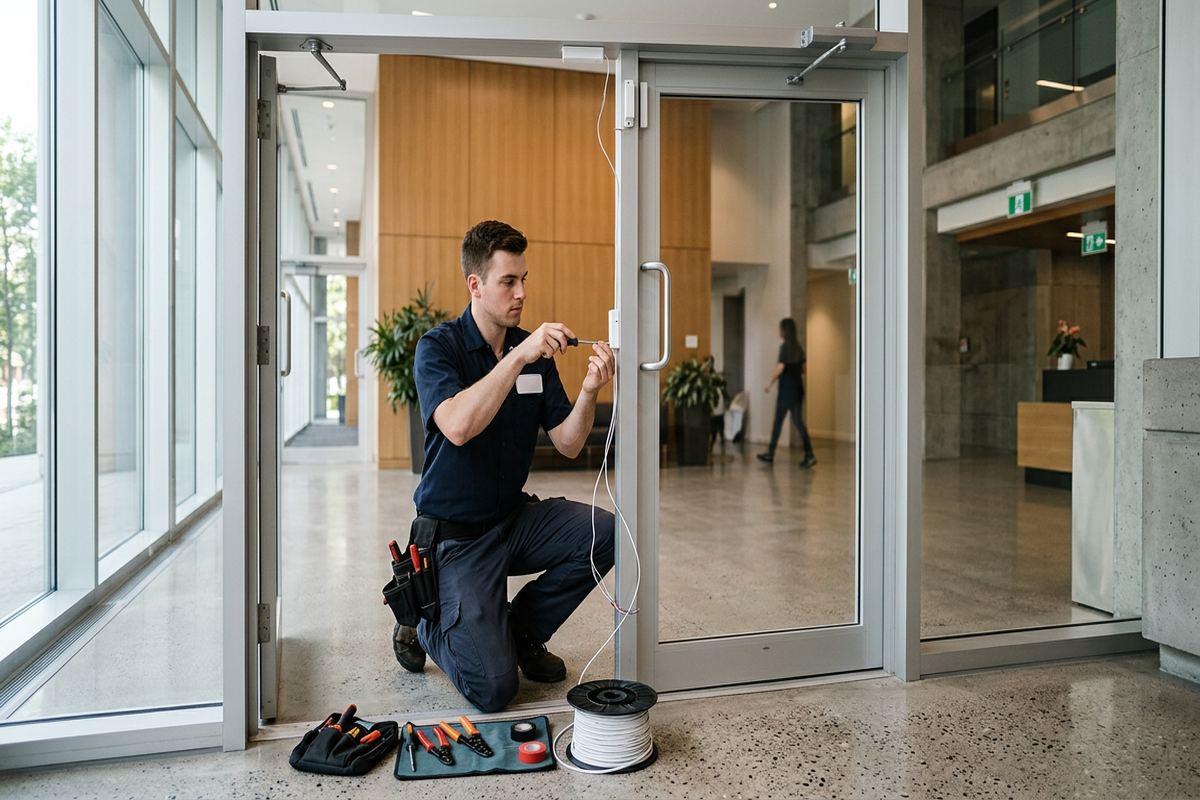
Installation is organized door by door to limit disruption and keep responsibilities clear. Before drilling, we confirm device positions, cable routes and the condition of the opening against the approved scope. Hardware is fitted carefully so the latch engages consistently and the door can close without being pulled or lifted. Readers are mounted at practical operating heights and positioned away from obvious impact hazards where possible. For occupied Fort Erie premises, work sequencing can preserve access through another entrance, subject to site rules and the number of available doors.
Older buildings may conceal conditions that were not visible during the initial assessment. Dense masonry, previous renovations, blocked pathways or non-standard frames can affect drilling and cable routing. If a concealed condition changes the agreed approach, it should be documented rather than covered by an improvised installation. Surface raceway may be the cleanest practical option in a finished Bridgeburg storefront, whereas an open industrial unit may allow supported cable pathways above. The objective is a serviceable installation that respects the building fabric, not a route chosen only because it is fastest.
Tenanted premises require agreement on who may authorize changes to doors, walls and shared infrastructure. A business owner may control interior office doors but need landlord approval for an exterior storefront entrance. Condominium properties can also require board or management approval before modifying common elements, fire-rated assemblies or shared vestibules. UnifiedLink can describe proposed equipment, penetrations and routes for that review, but the customer remains responsible for obtaining permissions. Confirming approval before installation protects all parties and reduces the chance that completed hardware must be moved, removed or refinished.
- Door-by-door installation sequencing
- Careful strike and latch alignment
- Routes suited to finished interiors
- Documentation of concealed conditions
- Coordination with property approvals
Fort Erie Access Control Configuration and Testing
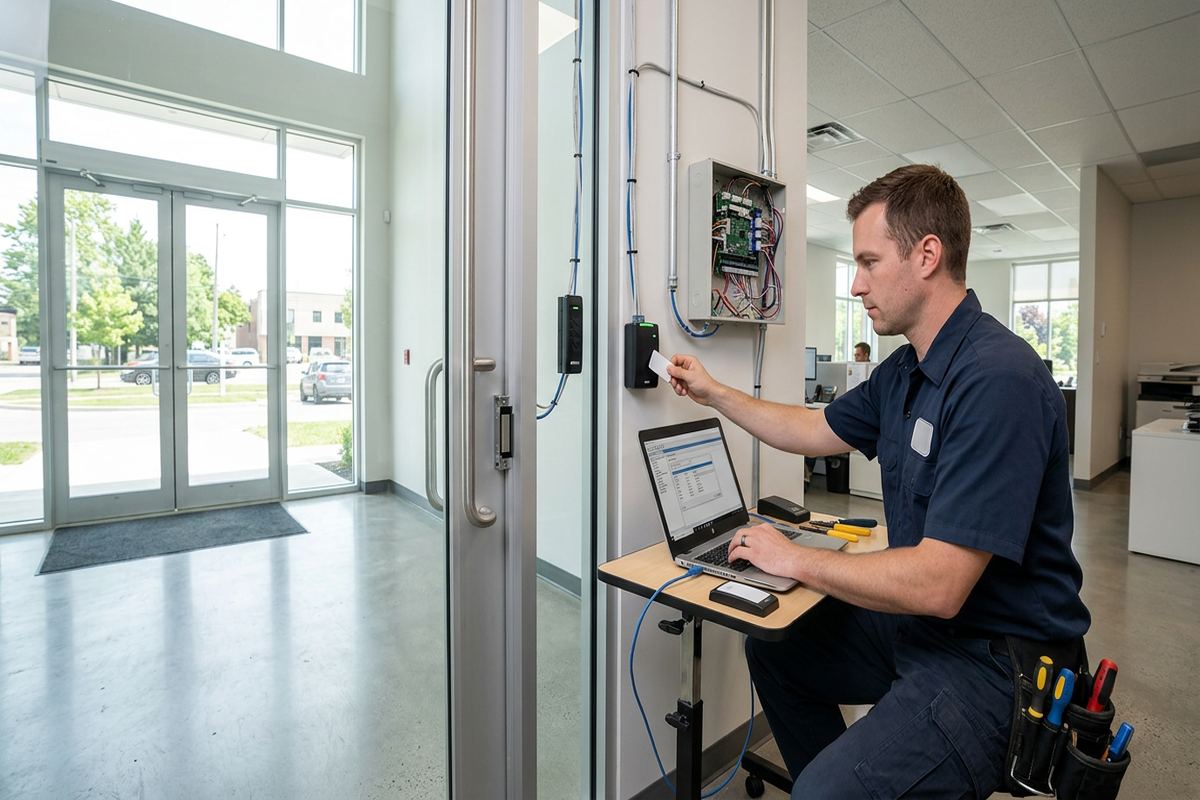
Once physical installation is complete, every controlled opening is configured and tested on site. We verify credential reads, lock operation, door contact status, exit requests and applicable release inputs. Testing includes normal entry, denied access and door-held or forced-door events where those functions are included. Schedules and user groups are checked against the approved operating plan instead of assumed from default settings. For Fort Erie sites with multiple departments or tenants, representative credentials help confirm that each group reaches only the doors and time periods assigned to it.
Door behaviour during power loss or a network interruption must be understood before handover. The response varies by lock type, controller design, power arrangement and management platform. We test functions that can be safely simulated and explain dependencies that are outside the access control system. A locally operating controller may continue making decisions without internet access, while remote administration or notifications may be unavailable. Mechanical override keys, emergency release devices and building procedures remain important. Electronic access control supports entry management, but it does not replace every physical or operational contingency.
Event records are useful only when users understand their limits. Logs can show credential activity, denied attempts and monitored door events, depending on the installed devices and configuration. They do not prove who physically carried a credential or explain why a door was held open. We configure retention and notification options supported by the selected system, then review them with the administrator. Businesses should pair electronic records with credential-issuance rules, prompt reporting of lost fobs and regular user reviews. Clear procedures make system information more reliable during everyday management or an incident review.
- Credential and permission testing
- Lock and door-contact verification
- Power and network dependency review
- Event and notification configuration
- On-site administrator instruction
Integrations for Commercial Sites
Access control can operate independently or exchange selected functions with alarms, video surveillance and intercom systems. A door event may help an authorized user find corresponding camera footage, while an intercom can support visitor verification before remote release. Integration should be planned around a defined operational need rather than added because two products advertise compatibility. We identify which system initiates an action, what happens during a fault and who maintains each component. Separate scopes may be appropriate when existing equipment comes from another provider or lacks supported integration options.
For a Fort Erie commercial strip or multi-unit property, shared entrances often need different treatment from individual suites. A main-door reader may serve several tenants, while suite access remains under separate administration. Visitor entry, delivery access and after-hours use should be defined without giving every tenant control over common equipment. Industrial units may instead prioritize staff entrances, shipping doors, secured cages or offices within a warehouse. The platform, controller capacity and credential structure should reflect these patterns, with room for specifically identified expansion rather than vague promises of unlimited growth.
Video verification can add context to an access event, but camera placement and retention remain separate design questions. A camera should capture a useful view of the doorway without being blocked by an opening door, strong backlighting or seasonal obstructions. If access and video systems share timestamps, time settings should be checked during commissioning. Businesses must also establish appropriate privacy, notice and record-access practices for their circumstances. UnifiedLink can provide technical configuration within the agreed scope, while the customer determines internal policies and seeks legal guidance where required.
- Alarm, video and intercom coordination
- Shared-entrance permission planning
- Visitor and delivery workflows
- Industrial area access groups
- Defined integration responsibilities
Handover and Support for Fort Erie Properties
A completed system is handed over with customer-controlled credentials and an as-built record. The record identifies installed devices, controller locations, labelled cable runs and relevant configuration details within the project scope. We also review routine tasks such as adding a user, suspending a lost credential, changing a schedule and checking door status. Equipment ownership and warranty terms are stated in writing before installation. This gives the Fort Erie customer a practical reference for administration and future service instead of leaving essential information in an installer’s undocumented account.
Ongoing reliability depends on both electronic equipment and the mechanical condition of each door. Seasonal movement, worn closers, loose hinges and ice accumulation can prevent a latch from engaging even when the reader and controller work correctly. Staff should report doors that drag, slam, fail to close or require unusual force. Exterior seals and mounting points should also be inspected after severe weather or building work. Periodic user reviews help remove former employees and expired contractors, particularly at seasonal businesses where access needs can change substantially within a year.
UnifiedLink provides one accountable contractor for the access control scope, including planned cabling, device installation, on-site configuration and documented handover. Pricing follows a site assessment because door hardware, construction, routing and integration requirements cannot be confirmed accurately from an address alone. Requests sent during business hours are answered the same day, while after-hours requests are answered the next business day. Site-assessment timing depends on the service and travel distance. The process begins by identifying the Fort Erie property, number of controlled openings and current door or credential concerns.
- Customer-owned system credentials
- As-built device and cable record
- Written ownership and warranty terms
- Administrator task walkthrough
- One accountable installation contractor
Fort Erie neighbourhoods we cover
- Bridgeburg
- Crystal Beach
- Ridgeway
- Stevensville
- Douglastown
Commercial access control installation in Fort Erie — common questions
Can you add access control to an older Fort Erie building?
Yes, subject to the condition of the doors, frames and available cable routes. Older Fort Erie buildings may have masonry walls, non-standard frames or previous alterations that affect hardware selection. We assess each opening before pricing and identify any locksmith, door repair, electrical work or property approval required before installation. Surface raceway may be proposed where concealed cabling would cause unnecessary damage.
What access credentials can our business use?
Depending on the selected platform, a Fort Erie business may use cards, fobs, mobile credentials, PINs or a suitable combination. The choice should reflect staffing changes, user accountability, operating conditions and administrative capacity. Individual credentials are usually easier to revoke than shared codes. We configure approved groups and schedules on site and provide the customer’s administrator with their own account during handover.
Will exterior readers work through Fort Erie winters?
Exterior readers are selected with weather exposure in mind, but product rating alone is not enough. In Fort Erie, mounting, sealing, cable entry, drainage and freeze-thaw movement all affect reliability. We use weather-rated equipment where exposed, choose stable mounting surfaces and protect penetrations. Door alignment, ice accumulation and worn closers also require property maintenance because electronic access control cannot compensate for a door that does not close properly.
Do I need landlord or condominium approval?
Approval may be required if the installation changes an exterior door, common entrance, wall, fire-rated assembly or shared building system. Fort Erie tenants should confirm authority with their landlord before work begins, while condominium owners may need approval from management or the corporation. We can provide the proposed device locations, cable routes and penetrations for review, but the customer is responsible for securing the necessary permission.
Can access control integrate with cameras or an intercom?
It may be possible to coordinate access events with cameras, alarms or an intercom, depending on product compatibility and the required workflow. For example, an intercom may support visitor verification before release, or an access event may help locate related video. We define the intended function, system dependencies and maintenance responsibility before including integration in a Fort Erie project scope.
How do you price a Fort Erie access control project?
UnifiedLink completes a site assessment before pricing because door type, frame condition, locking hardware, power, cabling and network requirements vary by property. The written scope covers equipment, routes, placement, exclusions, equipment ownership and warranty. Requests sent during business hours receive a same-day response; after-hours requests are answered the next business day. Assessment timing depends on the service and travel distance.
Coverage in Fort Erie is confirmed against the address before we quote. See everything we install in Fort Erie or the province-wide commercial access control installation page.