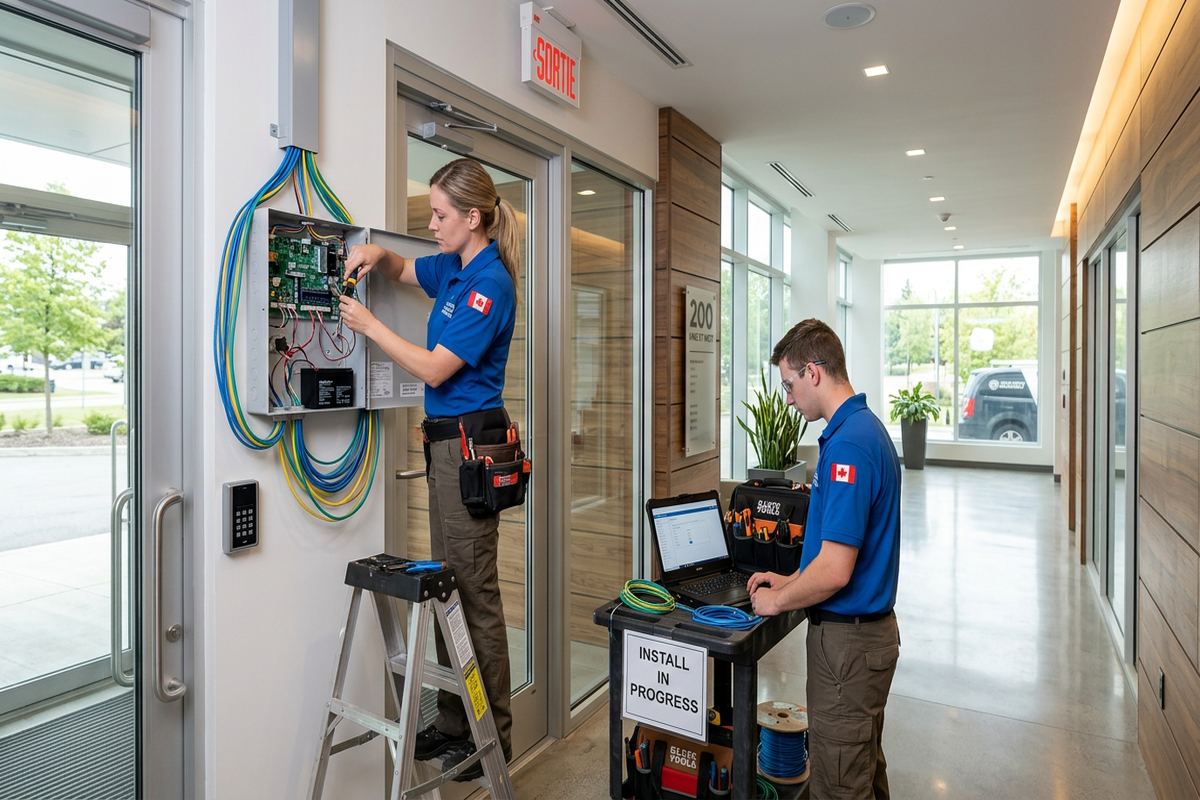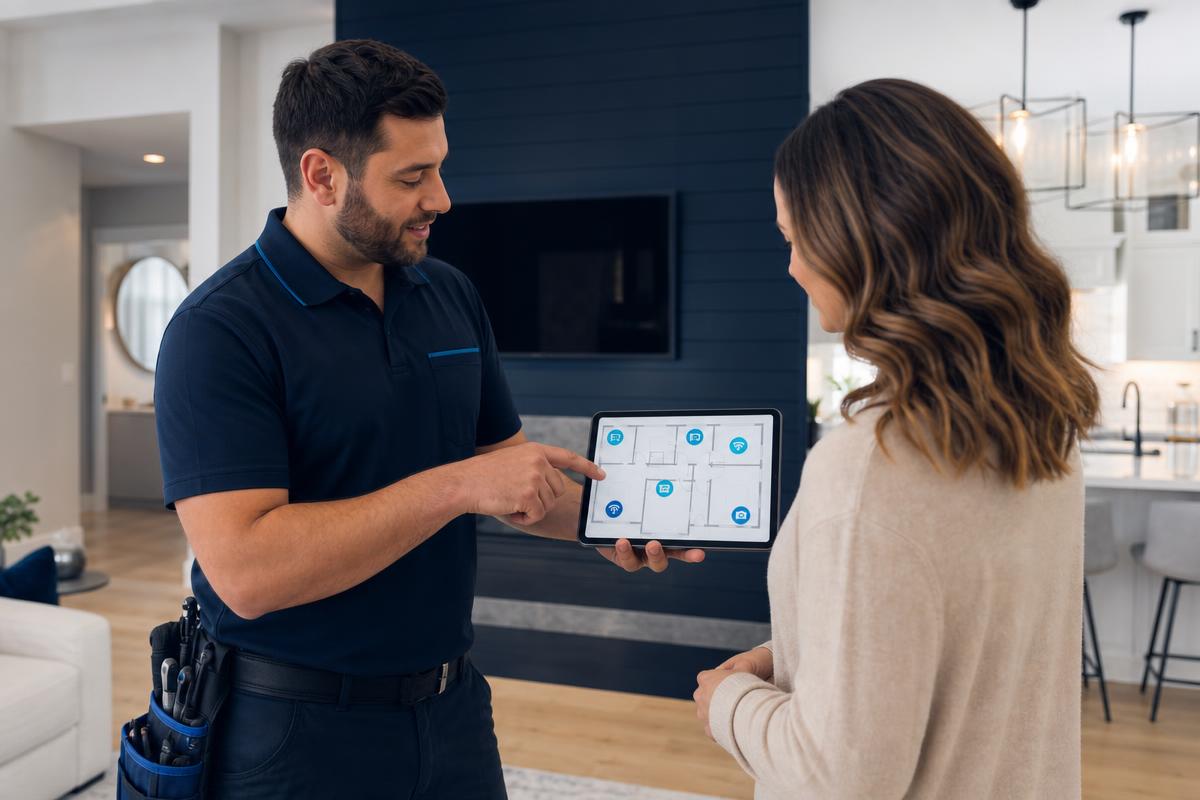
UnifiedLink plans and installs condo access control systems in Fort Erie, Ontario. We coordinate readers, credentials, controllers, door hardware and network connections around the property’s construction and operating needs. Each project starts with a site assessment, followed by a written scope covering device placement, cable routes, exclusions, equipment ownership and warranty.
Planning Condo Access Control in Fort Erie
Condo access control begins with how residents, visitors, contractors and property staff actually move through the building. During a Fort Erie site assessment, UnifiedLink reviews common entrances, vestibules, parking access, amenity rooms, service doors and management areas. We identify which openings need controlled entry, request-to-exit devices, door contacts or intercom integration. The assessment also considers fire and life-safety requirements, existing keys, accessible entry needs and daily management practices. Pricing follows the assessment, so the proposed system reflects the doors, construction, cable routes and administrative functions present at the property rather than a generic equipment list.
Older condominium buildings may have door hardware, electrical pathways and wall construction from several renovation periods. Newer developments may provide pathways, network rooms and compatible electrified hardware, but those details still require verification. Fort Erie properties can include masonry exterior walls, frame additions, concrete corridors and mixed-use ground floors, each affecting reader mounting and cable access. We inspect door condition, frame type, lock function, power availability and pathways before selecting equipment. Where existing hardware can remain, the scope states how it will interface. Where replacement or specialist door work is needed, that dependency is documented before installation begins.
Condo boards and property managers usually need a clear record before approving work in common areas. UnifiedLink provides a written scope describing equipment, cable routes, device placement, exclusions, equipment ownership and warranty. It can also identify expected shutdowns, access requirements, finishing responsibilities and coordination with locksmiths, electricians, network providers or fire-alarm contractors. This documentation helps owners compare the proposed work with condominium rules, reserve planning and current service agreements. For tenanted units or mixed-use properties, landlord approval may also be required before routes, penetrations or equipment locations are confirmed. Work proceeds against the accepted scope.
- Common entrance and vestibule assessment
- Door, frame and lock compatibility review
- Condo board approval documentation
- Defined equipment ownership and warranty
- Coordination requirements recorded in writing
Entry Hardware for Fort Erie Condo Buildings
Reliable access control depends on the complete opening, not only the card reader. The lock, closer, hinges, latch, frame and exit hardware must work together before electronic control can be dependable. A door that drags, fails to latch or moves in the wind can generate nuisance alarms and inconsistent locking. At Fort Erie condos, we review each opening under normal use and note mechanical defects separately from access control work. Equipment selection may include electric strikes, magnetic locks, electrified exit devices, door contacts and request-to-exit sensors, subject to the opening, applicable requirements and approved egress arrangement.
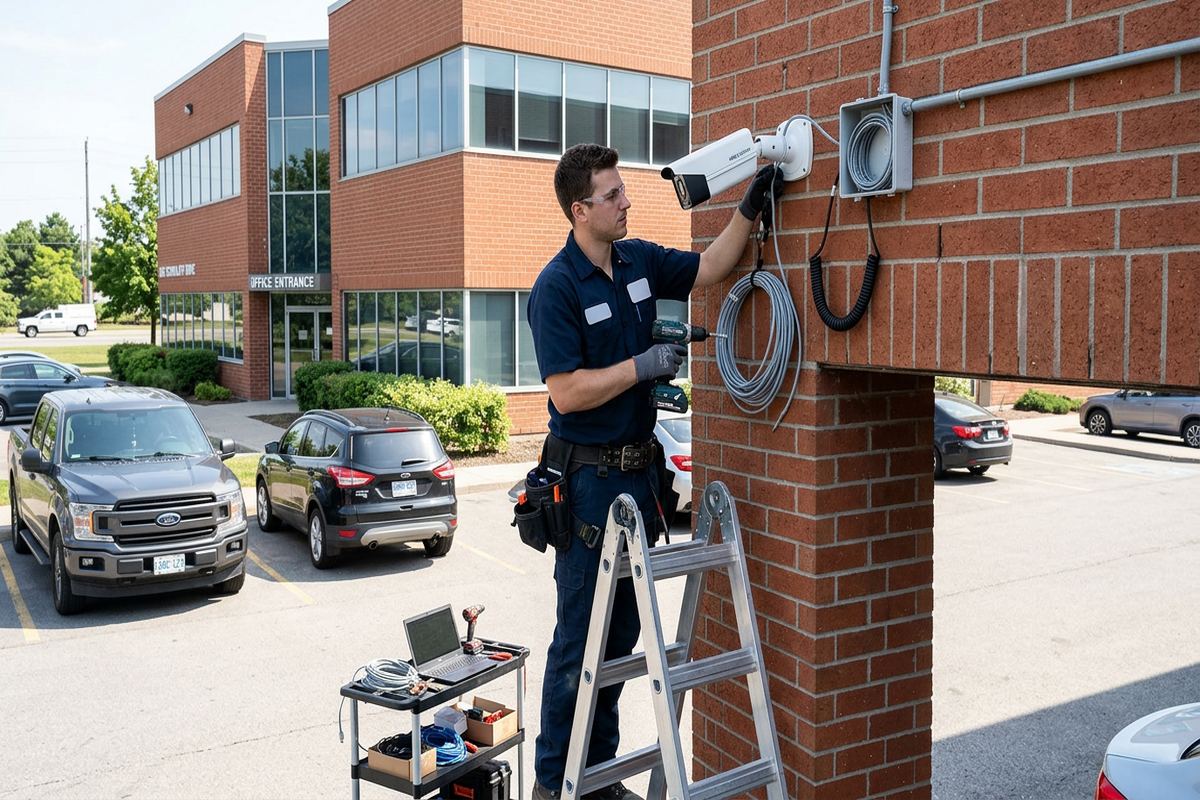
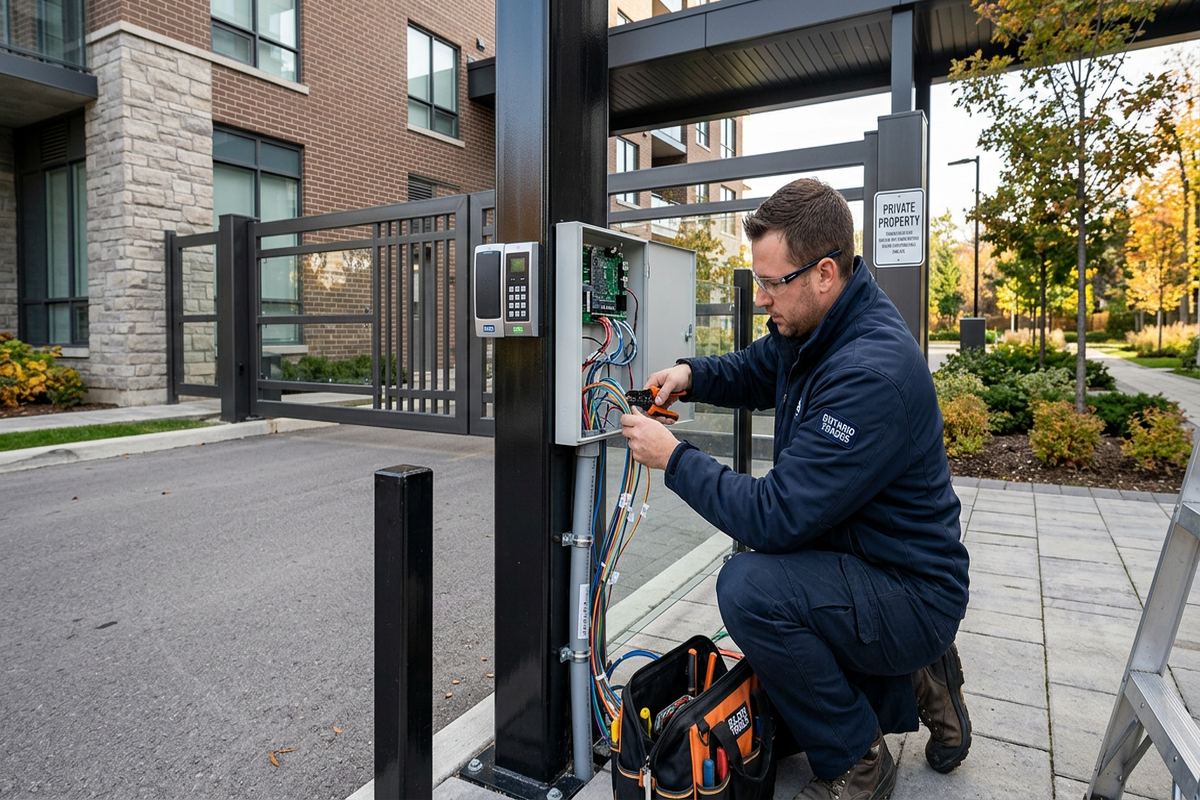
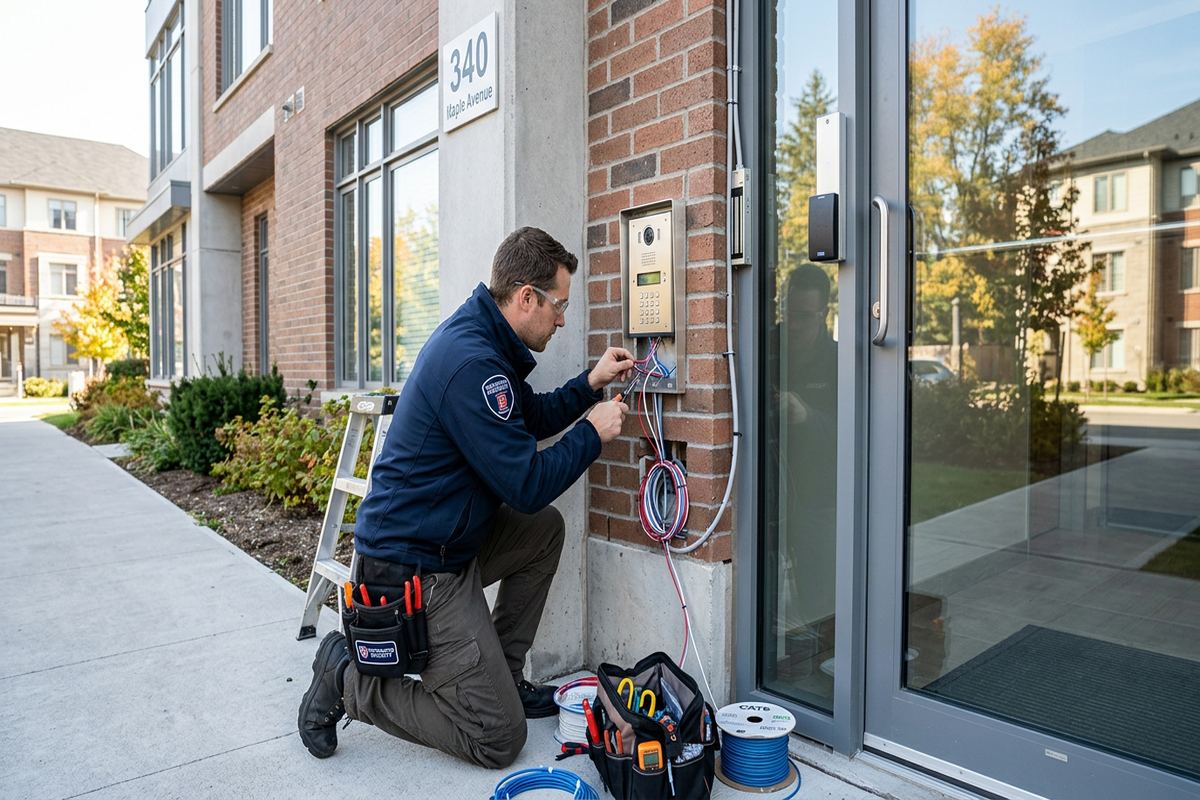
Exterior entrances near Lake Erie face moisture, wind, snow, road salt and repeated freeze-thaw cycles. Weather-rated exterior gear is standard for Fort Erie work because exposed readers, intercom stations, junction points and door contacts need appropriate protection. Mounting details matter as much as product ratings. Cable entries should be positioned and sealed to reduce water intrusion, while fasteners and boxes must suit the substrate. Surface-mounted equipment on uneven masonry requires a different approach from equipment installed on a modern frame wall. The assessment records exposure, drainage, mounting surface and sheltered or unsheltered conditions at every exterior-controlled opening.
Door hardware choices also affect accessibility and everyday resident use. Automatic operators, accessible push buttons and access readers may need coordinated logic so an authorized credential unlocks the opening before the operator cycles. Vestibules require careful sequencing to avoid residents being caught between controlled doors or both doors remaining unnecessarily unlocked. Emergency release, fire-alarm interface and free egress must be addressed according to the building’s design and applicable requirements. UnifiedLink defines the access control interfaces in the scope, while identifying work that belongs to other trades. Final testing confirms authorized entry, secure relocking, exit operation and monitored door status.
- Electric strike and lock integration
- Door contact and exit device planning
- Weather-rated exterior readers
- Accessible operator coordination
- Latch and closer condition checks
Credentials and Resident Administration
A condominium system should let authorized managers add, suspend and remove credentials without changing physical locks throughout the property. Cards, fobs or mobile credentials can be assigned by resident, unit, staff role or contractor, depending on the selected platform. Lost credentials can then be disabled individually instead of leaving an uncontrolled shared key in circulation. Before configuration, UnifiedLink discusses who will administer the system, which doors each group may use and whether schedules are required. The objective is a permission structure that staff can understand and maintain after handover, without relying on installer-owned accounts or unknown passwords.
Seasonal occupancy is particularly relevant for lakefront homes and condos around Crystal Beach and Ridgeway. Owners may be away for extended periods while cleaners, maintenance workers or family members need limited access. Separate credentials and time schedules provide more control than copied common-area keys, provided management follows a consistent issue-and-return process. Temporary permissions can be limited to appropriate doors and dates where the selected system supports them. Access control does not replace unit-door security or building policies, but it provides an auditable way to manage common entrances while reducing the need to distribute permanent credentials to every short-term service provider.
Management responsibilities should be established before the database is populated. The property needs a process for verifying residents, naming credentials, handling move-ins and move-outs, reviewing inactive users and responding to lost fobs. Privacy and record-retention decisions remain with the condominium corporation or owner. UnifiedLink configures agreed user groups and schedules on site, demonstrates routine administration and hands over access using the customer’s own credentials. The as-built record identifies installed devices and relevant connections. If remote administration is selected, network access, account recovery and subscription responsibilities are clarified in the scope rather than assumed after installation.
- Individual resident and staff credentials
- Lost fob deactivation
- Scheduled contractor permissions
- Customer-controlled administrator accounts
- Documented move-in and move-out workflow
Fort Erie, Ontario
Condo access control systems in Fort Erie, scoped in writing first
Book a site assessment and get equipment, routes, exclusions, and warranty on paper before anything is installed.
Cabling and Controllers in Fort Erie
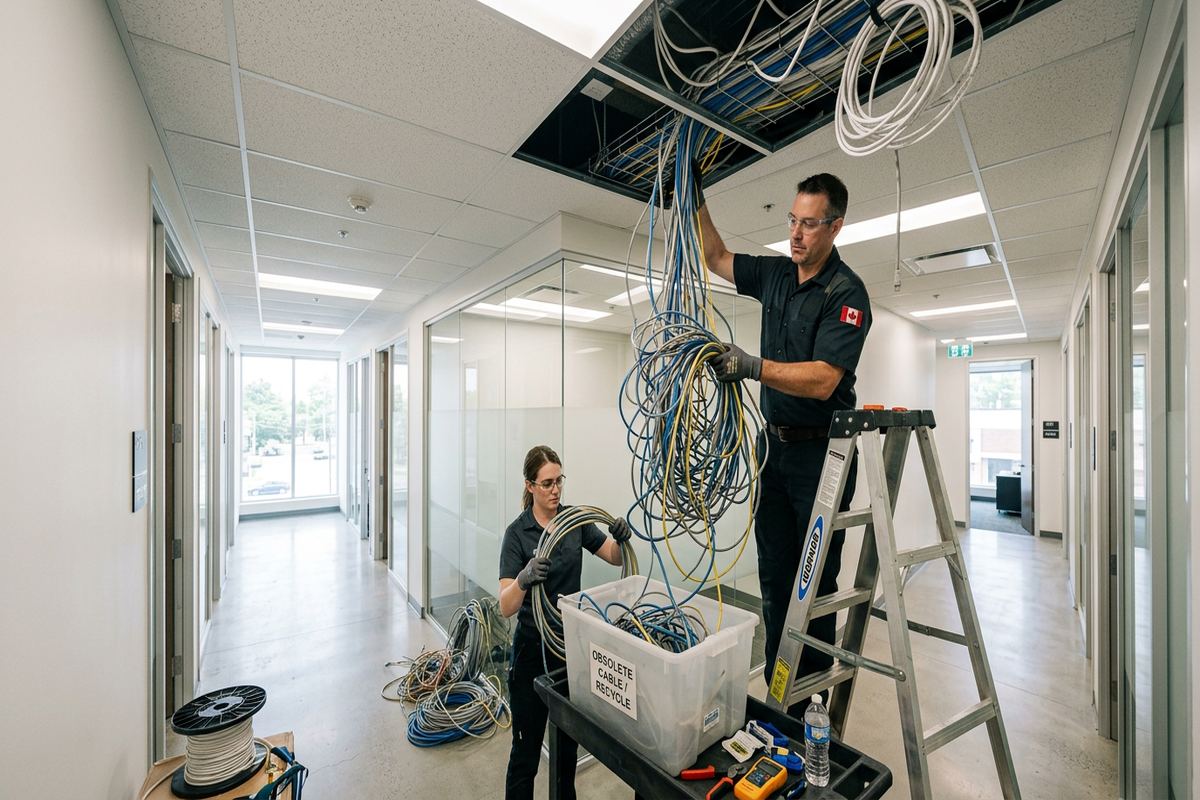
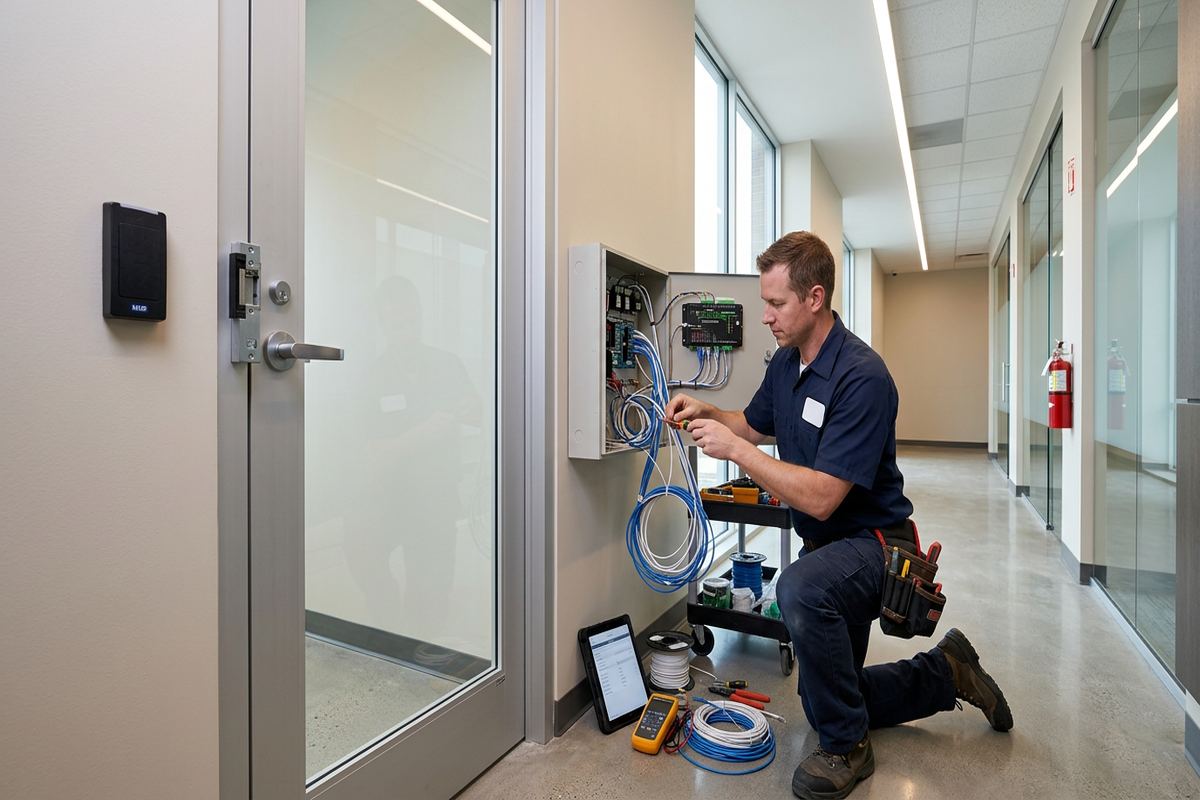
Access control cabling links readers, locks, contacts, exit devices and power supplies to the controller, so route quality directly affects serviceability. UnifiedLink installs continuous labelled cable runs within the agreed scope, avoiding undocumented splices that complicate troubleshooting. At Fort Erie condo properties, routes may pass through concrete utility areas, suspended ceilings, frame walls or existing risers. We verify pathway availability and obtain approval before penetrating common finishes. Cable type, support and separation are selected for the environment and connected equipment. Any firestopping, hazardous material concern or inaccessible concealed space is identified as a condition requiring appropriate coordination.
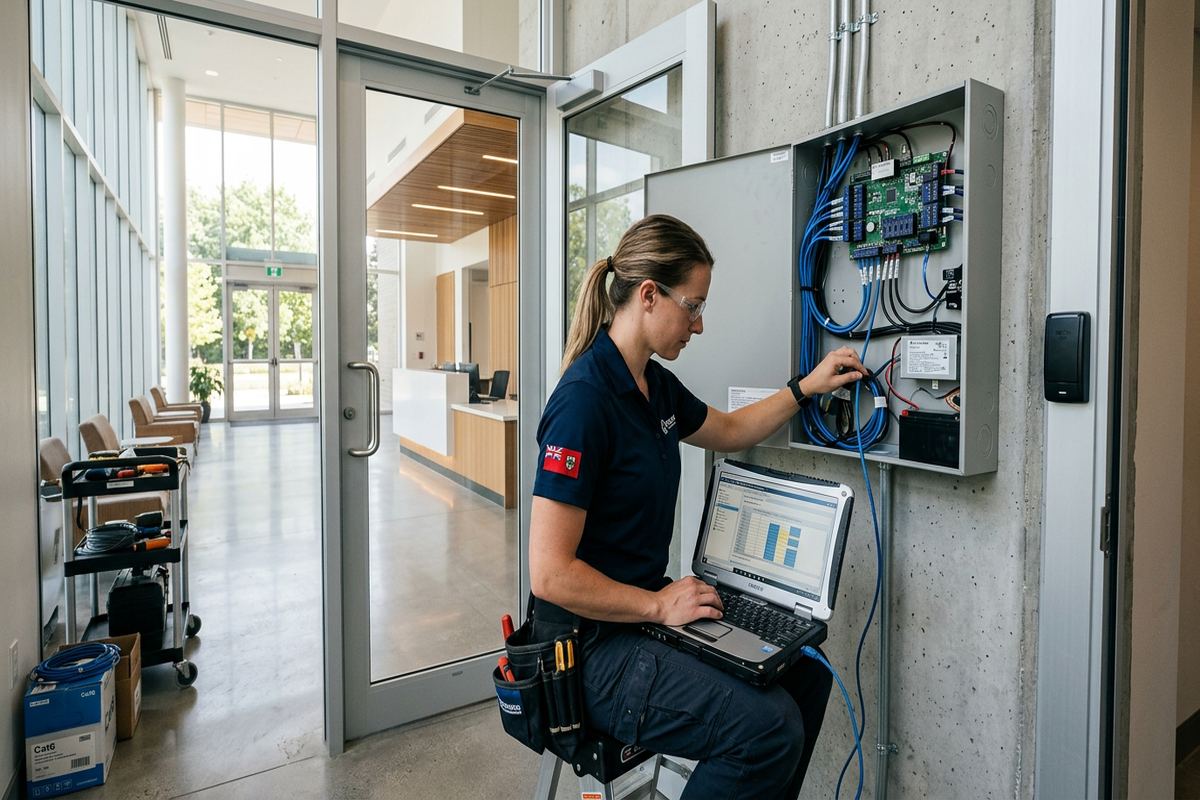
Controller placement requires secure access, suitable power, working space and a practical relationship to controlled doors. An electrical or communications room may be appropriate, but shared closets can introduce moisture, heat, accidental damage or unrestricted public access. The assessment reviews existing enclosures, network availability, grounding considerations and distances to field devices. Backup power requirements depend on system design, lock type and required operating period, so they are documented rather than presumed. Power supplies and controller cabinets are labelled, and field wiring is terminated consistently. Where existing cabling is proposed for reuse, testing determines whether its condition and conductor arrangement are suitable.
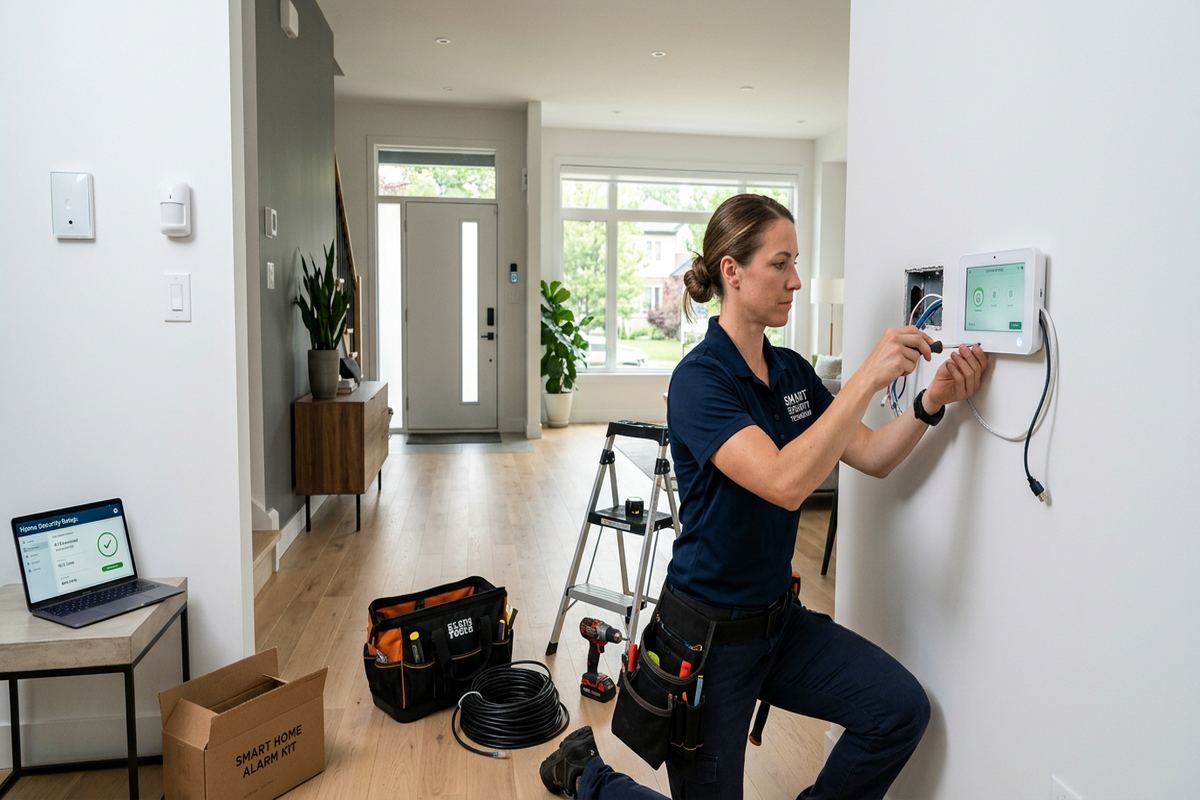
Network-connected platforms need coordination with the condominium’s internet provider or managed IT service. The access control network should not depend on an installer’s private account or an undocumented consumer router. UnifiedLink records required connections, addressing responsibilities and remote-access arrangements in the written scope. Cloud-managed products may involve manufacturer accounts, licences or subscriptions, while locally managed systems have different maintenance and backup needs. These distinctions are reviewed before equipment is approved. On-site configuration includes controller communication, door logic, schedules and credential testing. Handover provides customer credentials and an as-built record showing installed devices, controller locations and agreed network information.
- Continuous labelled cable runs
- Secure controller and power locations
- Existing cable testing before reuse
- Documented network responsibilities
- As-built connection records
Exterior Installation and Winter Conditions
Fort Erie’s border-adjacent businesses, lakefront properties and seasonal homes make exterior durability a routine design requirement. Condo entrances may be exposed to driven rain, blowing snow, temperature swings and salt carried from roads or parking areas. Readers and associated boxes are selected with the exposure in mind, but installation details remain critical. Exterior cable penetrations need suitable bushings, drip consideration and compatible sealant. Enclosures must remain serviceable without creating a path for water behind cladding. We also avoid placing equipment where snow storage, roof runoff or routine shovelling is likely to damage it.
Freeze-thaw movement can open gaps around surface boxes, conduit entries and masonry anchors. For properties in Bridgeburg, Crystal Beach or other exposed parts of Fort Erie, periodic inspection of exterior seals is a practical maintenance item. Brick, block and poured concrete require suitable anchors and careful drilling to avoid unnecessary cracking or spalling. Frame construction may require backing so readers and intercom stations remain secure rather than relying only on cladding. UnifiedLink records the proposed mounting method during planning and identifies cosmetic limitations, patching responsibilities or heritage considerations before work begins, particularly where original entrances have been altered repeatedly.
Cold-weather performance also depends on the door itself. Ice at thresholds, worn weatherstripping, pressure differences and stiff closers can prevent a latch from seating even when the access control command operates correctly. Management should address mechanical door problems promptly rather than repeatedly extending unlock times. During commissioning, we test credential entry, relocking and door status under available conditions, then explain how to distinguish a hardware fault from a credential or controller issue. Seasonal inspection is useful before winter and after major freeze-thaw periods. Exterior devices should be kept clear without using tools or chemicals that could damage seals, lenses or finishes.
- Weather-rated readers and enclosures
- Sealed exterior cable penetrations
- Substrate-specific anchors and backing
- Snow and runoff exposure review
- Seasonal door and seal inspection
Condo, Landlord and Site Coordination
Common-element work often requires more coordination than the installation itself. A Fort Erie condominium corporation may need board approval, property-management review, notice to residents and confirmation of who can authorize changes. Mixed-use buildings can add commercial tenants, separate utility spaces and differing hours of operation. UnifiedLink identifies decision-makers and site contacts before scheduling work. The written scope provides a common reference for door locations, equipment, cable routes, exclusions, ownership and warranty. It also states assumptions about access to locked rooms, ceiling spaces, parking areas and network equipment, helping prevent informal changes once installation is underway.
Commercial strips and industrial units near condominium properties can affect how shared parking gates, service entrances or delivery areas are used. A residential credential plan may not suit retail staff, cleaners, trades or loading access. Where a condo includes commercial units, permissions can be separated by door and schedule, subject to the selected platform. In Bridgeburg or Douglastown, older mixed construction may also mean neighbouring spaces do not share the same pathways or electrical service despite appearing connected. The assessment confirms practical boundaries and avoids routing through another tenant’s premises without documented permission from the appropriate owner or landlord.
Resident communication should explain what changes, when credentials will be issued and how existing keys or fobs will be handled. A cutover plan may keep current access available while new devices are tested, depending on hardware and site conditions. Management remains responsible for verifying recipients and distributing credentials securely. UnifiedLink can configure the approved database structure but does not determine who is entitled to enter the property. Where other contractors are involved, responsibilities are divided clearly: locksmith work, electrical supply, network changes, fire-alarm connections, patching and painting may require separate coordination. One accountable contractor manages the agreed access control scope.
- Board and landlord approval support
- Resident cutover planning
- Mixed-use permission groups
- Other-trade responsibilities identified
- One contractor accountable for scope
Commissioning Fort Erie Access Systems
Commissioning verifies that each controlled opening behaves as documented. UnifiedLink tests valid and invalid credentials, unlock timing, door contacts, request-to-exit devices, relocking and applicable schedules. Forced-door and held-door events are checked where configured, along with accessible operator sequences and approved interfaces. At exterior Fort Erie entrances, testing also includes physical latching and reader response from the normal approach. A successful software command is not enough if the closer leaves the door unsecured. Deficiencies involving mechanical hardware, network service or another trade are recorded so the responsible party can correct them without confusing the source of the problem.
Handover is intended to leave the condominium in control of its own system. Authorized representatives receive administrator access using customer-owned credentials, not an installer account that cannot be recovered internally. We review credential enrolment, suspension, schedule changes, basic event searches and routine checks appropriate to the platform. The as-built record identifies device and controller locations, labelled connections and material changes from the accepted plan. Equipment ownership, warranty terms and any manufacturer account requirements are reviewed against the written scope. Management should store records securely and nominate more than one authorized person for account continuity when staff or board roles change.
Ongoing care combines administrative review with physical inspection. Management should remove obsolete users, investigate repeatedly propped doors and confirm that scheduled access still reflects building operations. Exterior readers, seals and door hardware deserve attention after severe winter conditions or building maintenance. Interior cabinets should remain dry, powered and restricted to authorized personnel. If a renovation changes walls, ceilings, network equipment or entrances, access control pathways should be reviewed before demolition. For condos in Fort Erie, a small documented change is easier to manage than an undocumented temporary connection that later becomes permanent and difficult to trace.
- Every controlled door function tested
- Customer-owned administrator credentials
- Practical management training
- As-built device and connection record
- Administrative and physical maintenance guidance
Choosing a Condo System in Fort Erie
System selection should follow operational needs rather than a preferred credential format or brand name. A small condo in Stevensville may need straightforward common-door control, while a larger Fort Erie property may require multiple buildings, parking access, amenity schedules and integration with visitor entry. UnifiedLink compares practical factors such as door count, administrator workload, internet dependency, expansion needs, credential availability and reporting functions. Existing hardware and cabling are considered only after their suitability is verified. The resulting scope distinguishes included equipment from optional interfaces, future provisions and work by others, allowing the board or owner to make an informed decision.
Intercoms, cameras, automatic operators and parking controls can complement access control, but integration should have a defined purpose. A video intercom may support visitor entry, while cameras can provide visual context around an event; neither automatically proves who used a credential. Elevator or gate control introduces additional hardware, permissions and coordination. At lakefront or seasonal properties, remote management may be useful, although it also creates account, connectivity and subscription considerations. UnifiedLink documents supported integrations and avoids promising compatibility until model information, wiring and platform requirements are checked. This prevents separate systems from being connected through unsupported or unreliable methods.
The next step is a site assessment arranged according to the service and travel distance. Requests sent during business hours are answered the same day, while after-hours requests are answered the next business day. During the visit, we review doors, hardware, construction, exterior exposure, pathways, power, networking and management requirements. The proposal then provides a written scope covering equipment, cable routes, device placement, exclusions, ownership and warranty. Fort Erie condo boards, landlords and property managers can use that document for internal approval and contractor coordination before scheduling. Installation, on-site configuration, testing and documented handover follow the accepted scope.
- Needs-based platform comparison
- Verified integration compatibility
- Expansion and administration planning
- Site assessment before pricing
- Written scope before installation
Fort Erie neighbourhoods we cover
- Bridgeburg
- Crystal Beach
- Ridgeway
- Stevensville
- Douglastown
Condo access control systems in Fort Erie — common questions
Does our Fort Erie condo need board approval?
Work on common entrances, corridors, utility rooms or shared cabling pathways normally requires authorization from the condominium corporation or its designated manager. Individual owners should not approve common-element modifications on their own. UnifiedLink provides a written scope showing device locations, routes, exclusions, ownership and warranty so the Fort Erie board or manager can review the proposed work and coordinate any required notices or other contractors.
Will exterior card readers work through Fort Erie winters?
Exterior readers can operate reliably when they are selected and installed for the actual exposure. In Fort Erie, weather-rated exterior gear is standard because entrances face moisture, snow, salt and freeze-thaw cycles. Mounting, sealed cable entries, drainage and door condition are also important. Seasonal inspection should check seals, boxes, thresholds and latching, since a frozen or misaligned door can appear to be an access control failure.
Can we reuse our existing fobs and cabling?
Possibly, but compatibility must be confirmed before it is included in the scope. Existing fobs may use a credential technology unsupported by the proposed readers, and older cable may have unsuitable conductors, damage or undocumented splices. UnifiedLink tests accessible cabling and reviews reader and controller information during the Fort Erie assessment. Reuse is recommended only where the existing components can support reliable operation and practical future service.
Can seasonal residents give temporary building access?
The selected platform may support credentials with limited dates, schedules or door permissions. This can suit seasonal properties around Crystal Beach and Ridgeway where cleaners, contractors or family members need controlled common-area access. Condominium management should issue and revoke permissions through an approved process rather than allowing residents to share permanent credentials informally. Available functions depend on the platform and on the administrative rules adopted by the corporation.
Can access control work with our intercom and cameras?
Access control may integrate with an intercom, camera system, automatic operator, gate or other building equipment, but compatibility must be verified by model and connection method. In a Fort Erie condo, UnifiedLink reviews the purpose of each interface, existing wiring, network requirements and responsibilities of other contractors. The written scope states supported connections and exclusions so the board does not rely on an assumed integration that the equipment cannot provide.
What do we receive after installation?
UnifiedLink completes on-site configuration and functional testing of the access control work included in the accepted scope. The authorized customer representative receives the system through the customer’s own credentials, along with practical administration guidance and an as-built record of installed devices and relevant connections. Equipment ownership, warranty information and any account or subscription responsibilities are also reviewed, giving the Fort Erie property a documented basis for future changes and service.
Coverage in Fort Erie is confirmed against the address before we quote. See everything we install in Fort Erie or the province-wide condo access control systems page.