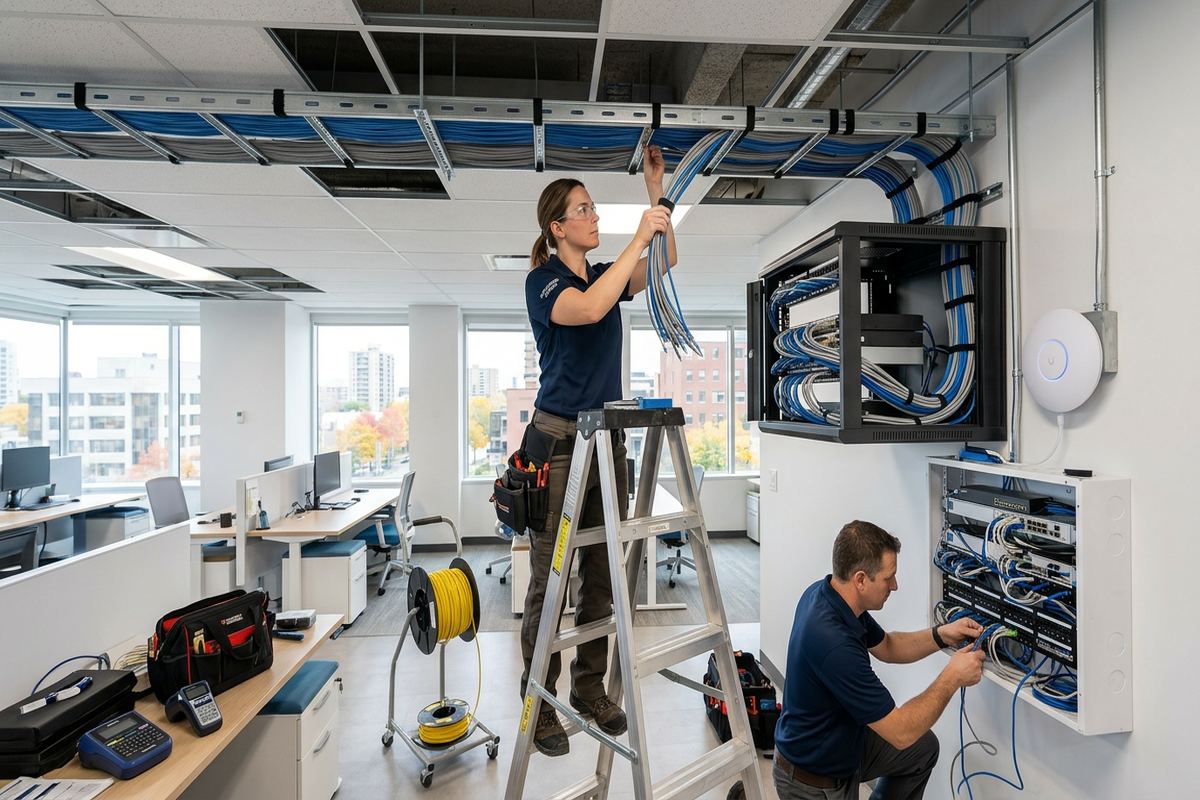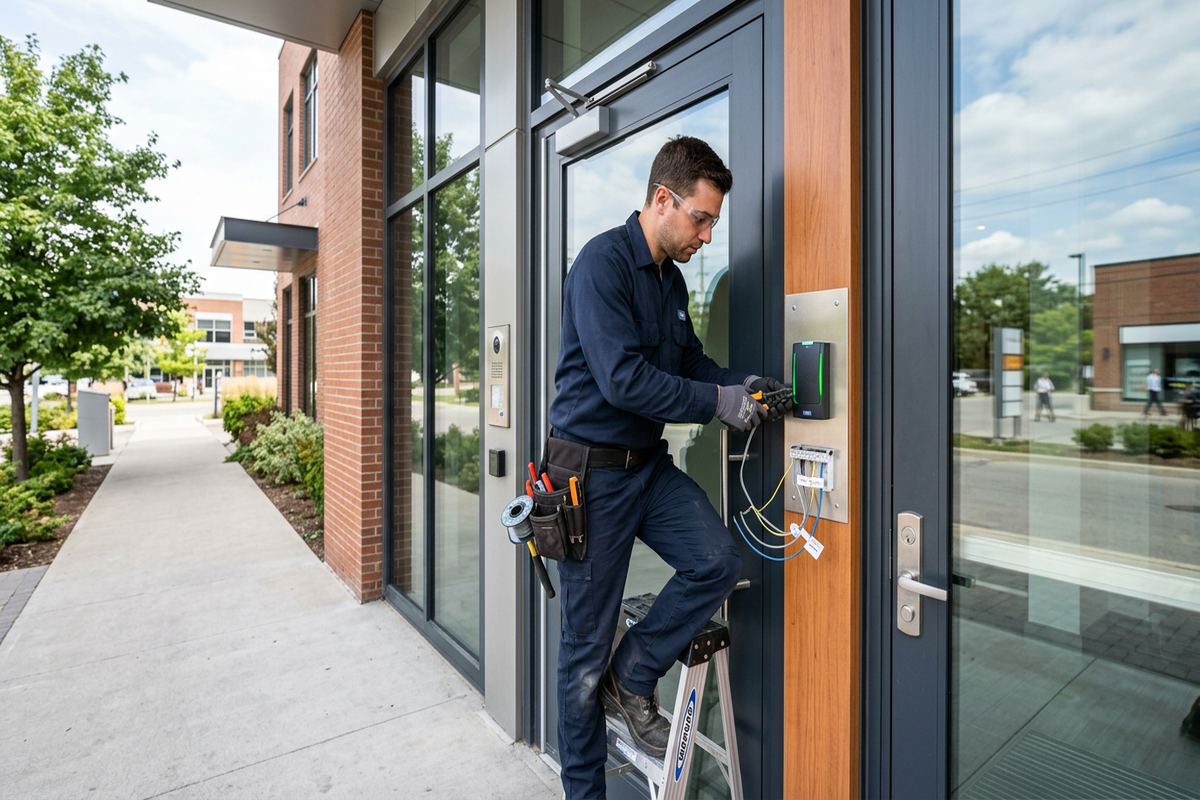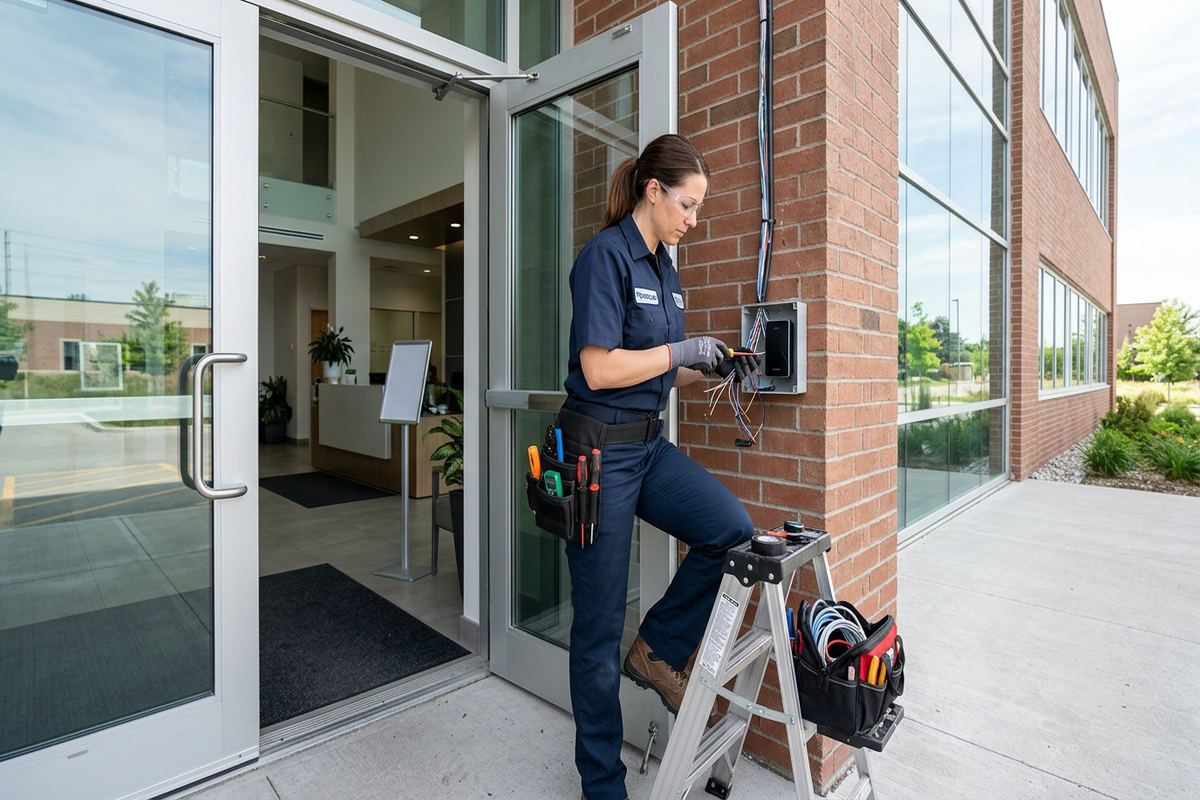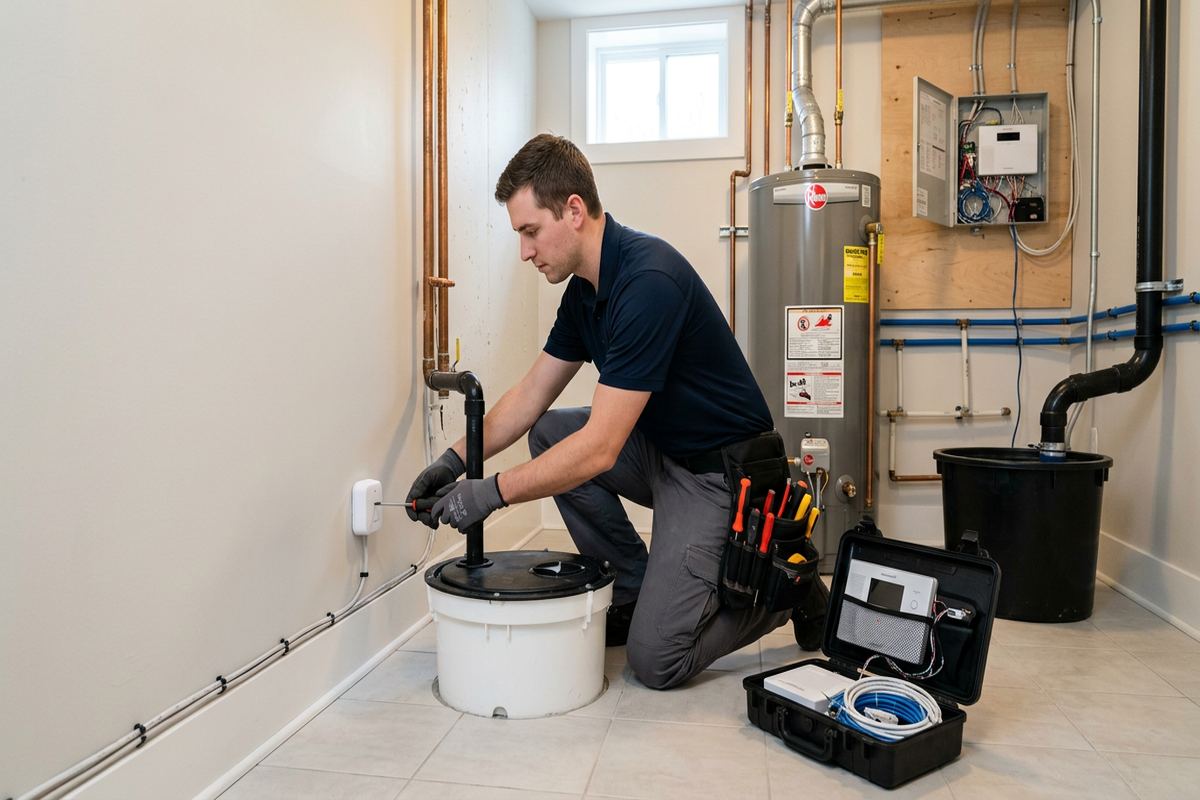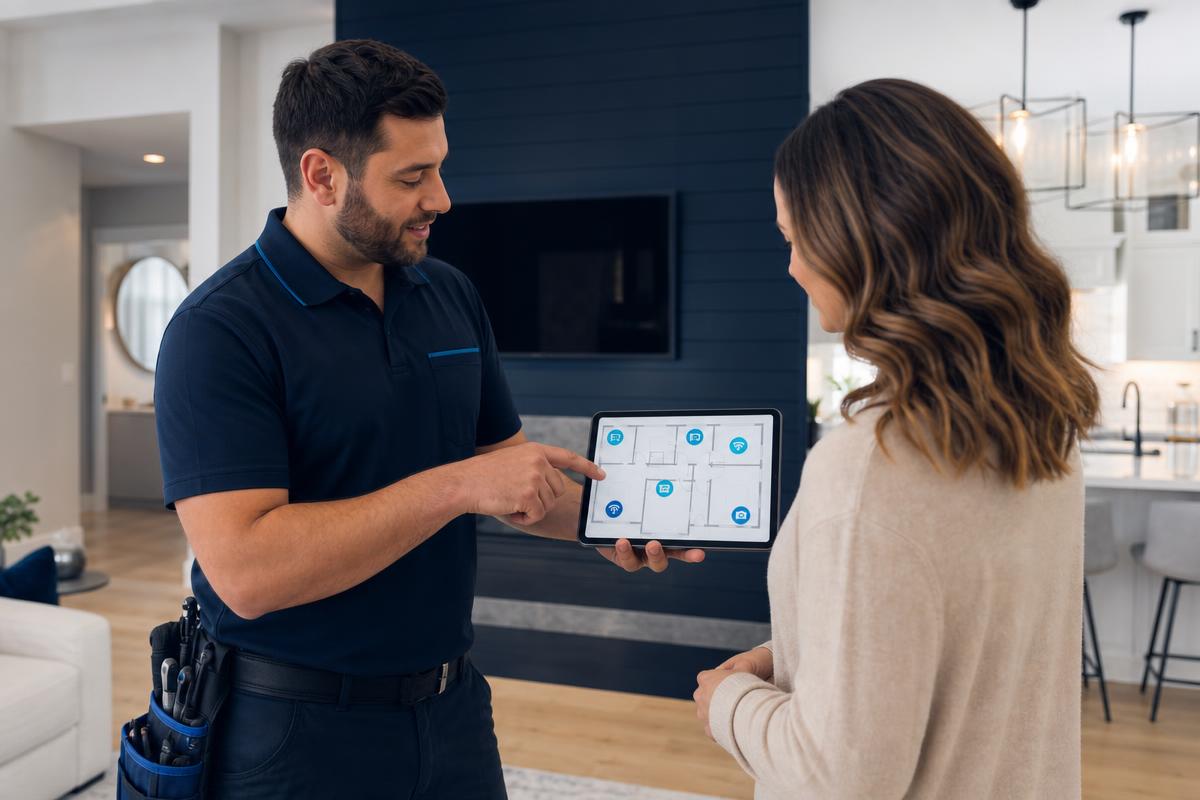
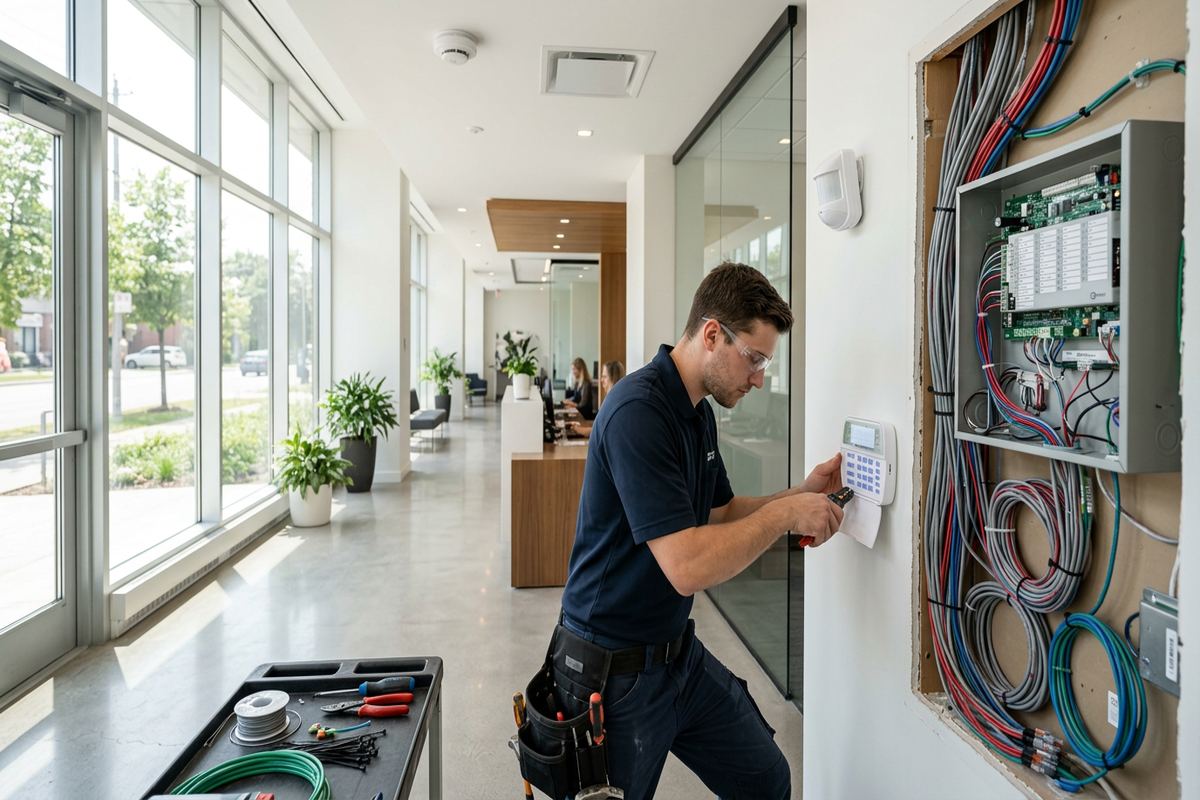
UnifiedLink installs wireless alarm systems for homes, commercial spaces and industrial units in Bolton. We assess the property, plan sensor and keypad locations, configure the system on site and document the completed installation. Each scope accounts for the building, intended use, exterior conditions, communication options and the people who will operate the alarm.
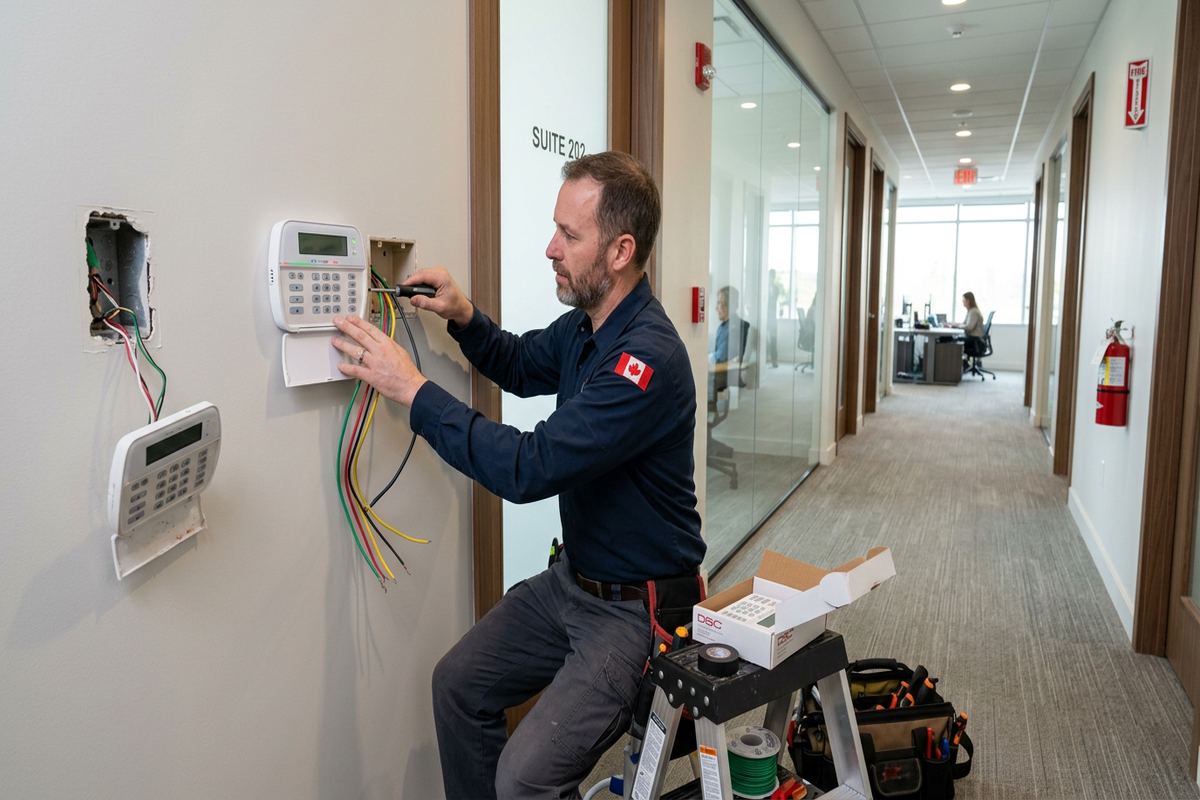
Wireless Alarm Planning for Bolton Properties
A wireless alarm still requires careful planning. UnifiedLink begins with a site assessment to identify likely entry routes, occupied areas, valuables, pets and daily access patterns. In Bolton, this may involve a valley-side home with several ground-level approaches, a storefront with rear delivery access or a unit in Bolton Industrial Park. The assessment also considers where the control panel, keypads, sirens and communication equipment can be installed securely. Pricing follows the assessment because device quantities, mounting conditions, system functions and cable requirements vary from one property to another.
Wireless technology reduces the need to open finished walls, but it does not remove every installation constraint. The main alarm panel generally needs reliable power, while some keypads, sirens, communicators or network devices may require wiring. Radio signals can also be affected by masonry, metal siding, concrete floors, mechanical equipment and the distance between buildings. We examine those conditions before selecting locations. This is especially relevant in older Old Bolton buildings, renovated homes with mixed construction and industrial units containing steel partitions, racking or large equipment.
The written scope sets out the proposed equipment, device placement, cable routes, exclusions, equipment ownership and warranty. It also defines whether monitoring, cellular communication, internet connectivity, automation or third-party integrations are included. Clear documentation prevents assumptions about services that are not part of the installation. Where wired connections are required, UnifiedLink installs continuous labelled cable runs. One accountable contractor handles the agreed alarm work, on-site configuration, testing and handover, making it easier for the owner or property manager to follow decisions from assessment through completion.
- Property use and entry-point review
- Wireless coverage and interference assessment
- Panel, keypad and siren location planning
- Written equipment and installation scope
- Monitoring and communication requirements confirmed
Choosing Wireless Alarm Devices in Bolton
Device selection should follow the risks and layout rather than a standard package. Door contacts protect regularly used entrances, while window contacts may suit accessible windows that can be opened. Motion detectors can cover larger interior areas, provided their field of view matches furniture, partitions and expected movement. Glass-break detectors, panic buttons, smoke-related devices and water sensors may be considered where compatible with the chosen platform and permitted by the scope. UnifiedLink explains the purpose of each proposed device so the customer can decide what belongs in the system.
Bolton homes differ considerably in layout and construction. A frame house in Bolton South Hill may allow straightforward radio communication between floors, while masonry, foil-backed insulation or a finished basement can weaken signals. Valley-side properties can also have walkout levels, side entrances, decks and detached structures that change how the perimeter should be covered. Rather than placing sensors solely on the front and back doors, we review practical access from grade, including basement doors, attached garages and windows that become reachable where the land slopes around the building.
Commercial and industrial alarms need a different device strategy. A small commercial strip may require separation between public, staff, storage and rear service areas. In Bolton Industrial Park, overhead doors, loading areas, offices, warehouses and fenced yards can create distinct alarm zones. Metal construction can affect wireless range, and normal movement from equipment or authorized workers must be considered when positioning detectors. The design can support separate user permissions and schedules where the selected system allows them, but operational rules are confirmed with the owner before configuration begins.
- Door and operable-window contacts
- Interior motion detection
- Compatible environmental sensors
- Separate commercial alarm zones
- User permissions matched to operations
Wireless Coverage, Power and Communications
Reliable wireless operation depends on more than the distance printed in product literature. Walls, floors, ductwork, appliances, electrical rooms and metal shelving can change how signals travel inside a real property. During the assessment, UnifiedLink considers the route between each sensor and the panel or compatible repeater. Devices are then enrolled and tested from their intended positions. If a proposed location is unreliable, the solution may be repositioning equipment, adding compatible signal support or choosing a different system arrangement rather than accepting inconsistent communication.
Power and communications also need a defined plan. Wireless door, window and motion sensors commonly use batteries, but the panel and certain accessories need a permanent power source. Internet-connected features depend on the customer’s network, while cellular communication depends on the selected equipment, service arrangements and available signal. An internet connection alone should not be assumed to provide every alarm function. The written scope identifies the intended communication path and any customer-supplied services so responsibilities are understood before installation. Backup operation is reviewed according to the capabilities of the proposed equipment.
Bolton winters can expose exterior equipment to cold, moisture and repeated freeze-thaw cycles. An indoor wireless device should not be placed outside simply because it fits the opening. Where an exterior-rated alarm component is included, its temperature range, enclosure, mounting surface and cable entry require review. Fasteners and sealing methods must suit masonry, siding or frame construction without trapping water behind the device. Exterior penetrations are sealed appropriately, and exposed cable is routed and protected according to the agreed scope. Seasonal movement around doors may also affect contact alignment.
- Signal testing at intended locations
- Panel power requirements documented
- Internet and cellular paths clarified
- Exterior-rated equipment where required
- Mounting penetrations properly sealed
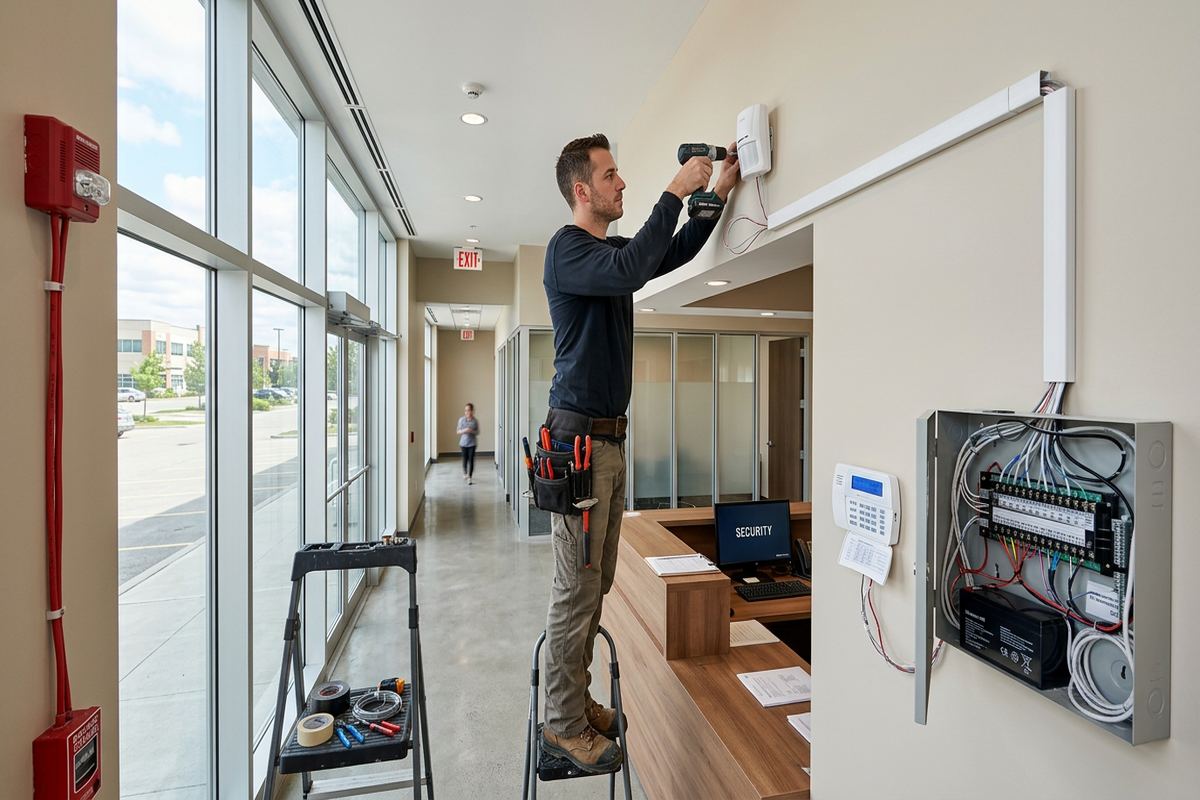
Bolton, Ontario
Wireless alarm installation in Bolton, scoped in writing first
Book a site assessment and get equipment, routes, exclusions, and warranty on paper before anything is installed.
Installation in Bolton Homes
Home alarm installation starts by matching protection to the household’s routine. We ask which doors are used every day, whether children or guests need codes, how pets move through the home and whether anyone requires a simple night setting. Keypads or app controls should be convenient without exposing the panel to easy tampering. Entry and exit delays are configured around realistic travel from the door to the control point. The aim is a system occupants can arm consistently, not a complicated arrangement that they avoid using.
Older homes in Old Bolton may contain plaster finishes, masonry additions, replacement windows and several generations of renovation. Wireless sensors can limit disturbance to those finishes, although mounting remains important. Contact alignment, trim profiles and door movement must be checked before fastening devices. Newer homes around Bolton North Hill can present different issues, including large open levels, attached garages and finished basements with utility spaces at the edge of radio coverage. Each property is assessed as built rather than categorized only by its age or neighbourhood.
Tenure and shared-property rules must be addressed before drilling or installing equipment. Condo owners may need approval for devices in common areas, exterior surfaces or shared entrances. Tenants should obtain landlord authorization for permanent mounting, wiring, panel power and any equipment that remains with the property. UnifiedLink can document proposed locations and installation details for the customer’s approval process, but the customer remains responsible for securing permission. Equipment ownership is stated in the written scope, which is particularly important where a landlord, tenant or property manager may change.
- Daily entry and exit routines reviewed
- Pet movement considered in detector placement
- Finished surfaces assessed before mounting
- Condo or landlord approval confirmed
- Equipment ownership recorded in writing
Alarm Design for Shops and Industrial Units
Business alarm systems must reflect how the site operates before, during and after working hours. A retail or service space may have a front customer entrance, rear staff door, stockroom and office requiring different protection. Staff turnover can make individual user credentials preferable to one shared code where the selected platform supports them. Schedules, entry delays and notification rules are discussed with the authorized decision-maker. UnifiedLink does not assume that every employee should have the same control over arming, disarming, user management or alarm history.
Industrial units on Bolton’s north end often combine warehouse areas with offices, loading doors and utility rooms. High ceilings, steel structure, moving equipment and stored materials can affect detector selection and wireless communication. Overhead doors also move differently from standard pedestrian doors and need suitable contact placement. We review whether spaces are heated, whether doors vibrate during normal operation and whether racking could block a detector’s view after installation. Zones can be organized around operational areas so authorized users can understand where an event originated without relying on unclear device names.
Commercial properties may involve landlords, tenants, facility managers, monitoring providers and network administrators. Their responsibilities should be settled before work begins. Landlord approval may be needed for exterior sirens, penetrations, equipment attached to the building or alterations to shared electrical and communication spaces. If the alarm uses the business network, the appropriate administrator may need to provide connectivity details or approve changes. The final scope records exclusions and customer dependencies. Device labels and zone names are chosen to remain useful to staff who were not present during the original installation.
- Front, rear and loading access coverage
- Individual users where supported
- Warehouse conditions assessed
- Clear zone and device naming
- Landlord and network approvals addressed
Bolton Installation, Configuration and Testing
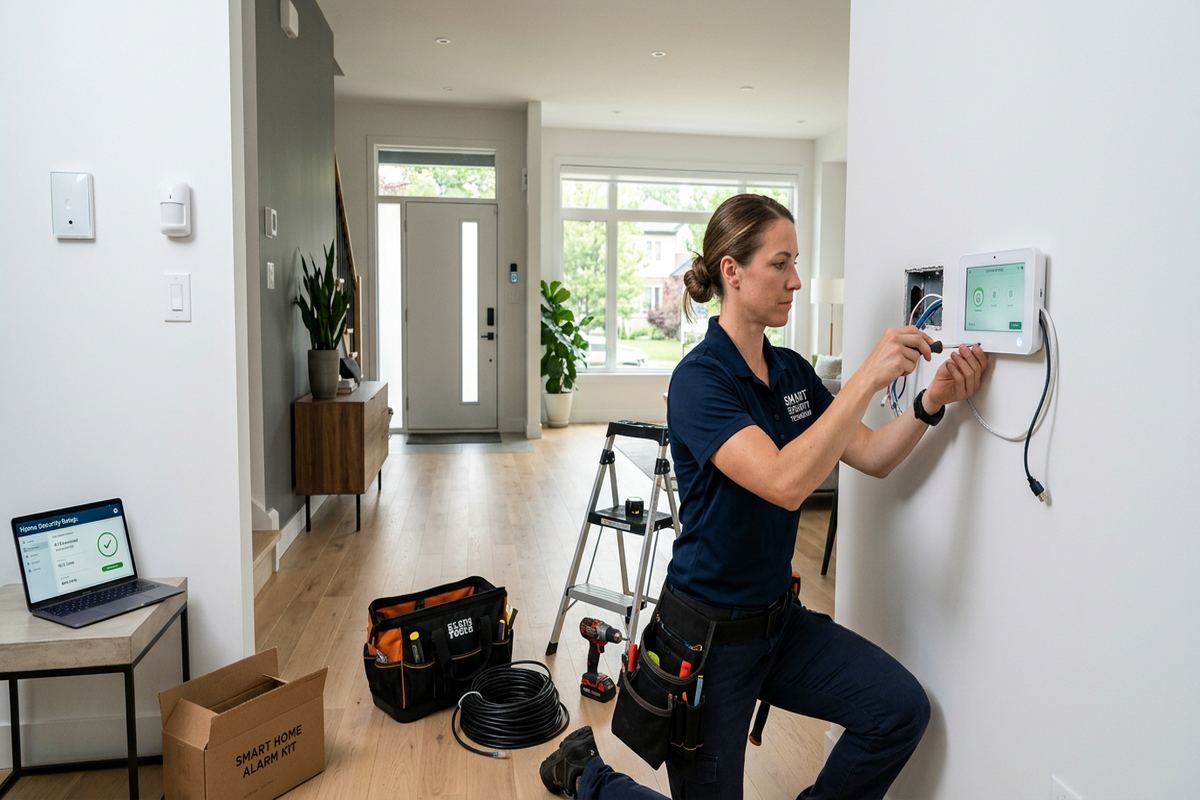
Installation follows the approved locations and documented scope. Sensors are mounted so their contacts, fields of view and tamper functions can operate as intended. Where wiring is part of the system, cable runs are continuous and labelled rather than pieced together from unidentified segments. The panel, keypads, sirens and communication devices are secured in suitable locations. Any necessary penetrations are made with regard to the wall material, concealed services and exposure. Work around masonry requires different anchors and sealing than mounting to wood framing, trim or interior drywall.
Configuration takes place on site because user needs and actual device behaviour must be verified at the property. UnifiedLink enrols the included sensors, creates understandable zone names, applies agreed delays and establishes authorized users. App access, notifications and communication features are configured only where included and supported by the selected platform. Customer credentials remain with the customer rather than being retained as a substitute for proper access arrangements. Where a monitoring provider is involved, testing and account responsibilities are coordinated according to the written scope rather than assumed to be part of every alarm installation.
Every included device is function-tested before handover. Doors and windows are opened to confirm contacts, motion areas are walked, audible devices are checked and communication functions are tested where applicable. Testing also looks for practical issues such as a loose door, misaligned magnet, blocked detector or weak radio path. The customer is shown how to arm, disarm, bypass an approved zone, manage ordinary users and identify basic trouble indications. Any limitations observed during commissioning are recorded instead of being hidden behind a successful initial activation.
- Secure mounting on suitable surfaces
- Continuous labelled wired connections
- On-site zone and user configuration
- Functional testing of included devices
- Operating limitations documented
Handover and Ongoing Alarm Use
A useful handover gives the owner control of the installed system. UnifiedLink provides access using the customer’s own credentials and reviews the functions included in the scope. The as-built record identifies installed equipment and final device locations, including any changes agreed during the work. Basic operating guidance covers arming modes, user administration, notifications and common trouble messages supported by the system. If third-party monitoring or communications are included, the customer is also shown which organization manages that service and what information should be kept available for future account changes.
Wireless devices require periodic attention because batteries, doors, windows and room layouts change over time. A low-battery warning should be investigated rather than ignored, and replacement batteries must match the equipment requirements. Renovations, new furniture, warehouse racking or changes to a commercial partition can affect motion coverage and radio paths. Exterior door movement after a Bolton freeze-thaw cycle can shift a contact out of alignment. Users should test the system according to manufacturer and service-provider guidance, especially after building work, network changes or an extended period when the alarm has not been used.
Changes in occupancy should trigger an access review. Homeowners can remove codes assigned to former cleaners, contractors or temporary occupants. Bolton businesses should disable credentials for departing employees and confirm that current managers have suitable permissions. Shared codes make accountability harder and should be avoided where the platform supports separate users. If ownership, tenancy, internet service or monitoring arrangements change, credentials and account contacts may also need updating. The as-built record provides a practical starting point for future service without replacing current passwords, monitoring details or equipment-specific documentation.
- Customer-controlled system credentials
- As-built device and location record
- Battery and trouble-warning guidance
- Post-renovation coverage review
- Former user credentials removed
Requesting Wireless Alarm Installation in Bolton
To request wireless alarm installation, provide the Bolton property address, building type and a short description of the areas requiring protection. Helpful details include the number of exterior doors, accessible windows, detached structures, commercial loading points and any existing alarm equipment. For a business, note operating hours and who is authorized to approve system design. Photographs or plans can support early discussion, but they do not replace an assessment where mounting conditions, radio coverage, power and communication paths need to be examined at the property.
Site assessment timing depends on the service and travel distance. Requests sent during business hours are answered the same day, while after-hours requests are answered the next business day. During the assessment, UnifiedLink reviews the physical layout, construction, likely device positions and customer requirements. This may be a valley-side residence near Bolton South Hill, an older mixed-material building in Old Bolton or an industrial unit at the north end. Conditions found on site determine the appropriate design and provide the basis for pricing rather than relying on an unsupported standard package.
After the assessment, the written scope identifies equipment, cable routes, device placement, exclusions, equipment ownership and warranty. The customer can review what is included before scheduling installation. Any landlord, condo, network or monitoring approvals should be completed as required. Once installed, the system is configured and tested on site, then handed over using the customer’s own credentials with an as-built record. Keeping assessment, installation and documentation with one accountable contractor reduces gaps between the proposed design, the mounted equipment and the final operating configuration.
- Same-day reply during business hours
- Next-business-day reply after hours
- Assessment completed before pricing
- Written scope provided for review
- Installation and handover kept accountable
Bolton neighbourhoods we cover
- Bolton North Hill
- Bolton South Hill
- Old Bolton
- Bolton Industrial Park
Wireless alarm installation in Bolton — common questions
Can a wireless alarm work in an older Bolton home?
Yes, but the building should be assessed first. Plaster, masonry additions, foil-backed insulation and finished basements can affect radio communication. Wireless devices can reduce the need to open older finishes, although they still require secure mounting and signal testing. In Old Bolton, we assess the home as it currently exists, including renovations, door alignment and any detached areas the owner wants covered.
Do wireless alarm systems need internet access?
Not every basic alarm function requires internet access, but app control, remote notifications or certain communication services may depend on internet or cellular connectivity. The requirements vary by platform and selected service. For a Bolton installation, the written scope identifies the intended communication path, customer-supplied network requirements and any third-party service. The system should not be designed on the assumption that internet connectivity alone provides every required function.
Will winter weather affect exterior alarm devices?
Cold, moisture and Bolton’s freeze-thaw conditions can affect unsuitable equipment, mounting surfaces and door alignment. Any device installed outdoors must be rated for its location and expected temperatures. Fasteners, enclosures, cable entries and sealants also need to suit masonry, siding or frame construction. We check exterior mounting conditions during the assessment and document whether an exterior device, protected cable route or alternative indoor detection method is proposed.
Can you install an alarm in a rented commercial unit?
Yes, subject to the required approvals. Bolton commercial tenants may need landlord permission for penetrations, exterior sirens, panel power, wiring or equipment attached to shared building elements. Network administrators or monitoring providers may also need to participate. We can document proposed equipment and locations for review, while the customer secures authorization. The written scope states equipment ownership and exclusions so tenant and landlord responsibilities are clear.
Can staff have separate alarm codes?
Where the selected alarm platform supports individual users, separate credentials can be configured for authorized staff. This is useful for shops and units in Bolton Industrial Park because permissions can reflect operational roles without relying on one shared code. User setup, schedules and management rights are agreed with the authorized decision-maker. Businesses should remove credentials promptly when employees leave or no longer require access to the alarm system.
What do I receive after installation?
Following installation at your Bolton property, UnifiedLink tests the included devices and reviews normal operation with the authorized users. Handover uses the customer’s own credentials and includes an as-built record showing installed equipment and final device locations. The customer is shown relevant arming modes, user controls, notifications and basic trouble indications. Any included monitoring or communication responsibilities, exclusions and observed operating limitations are also clarified.
Coverage in Bolton is confirmed against the address before we quote. See everything we install in Bolton or the province-wide wireless alarm installation page.