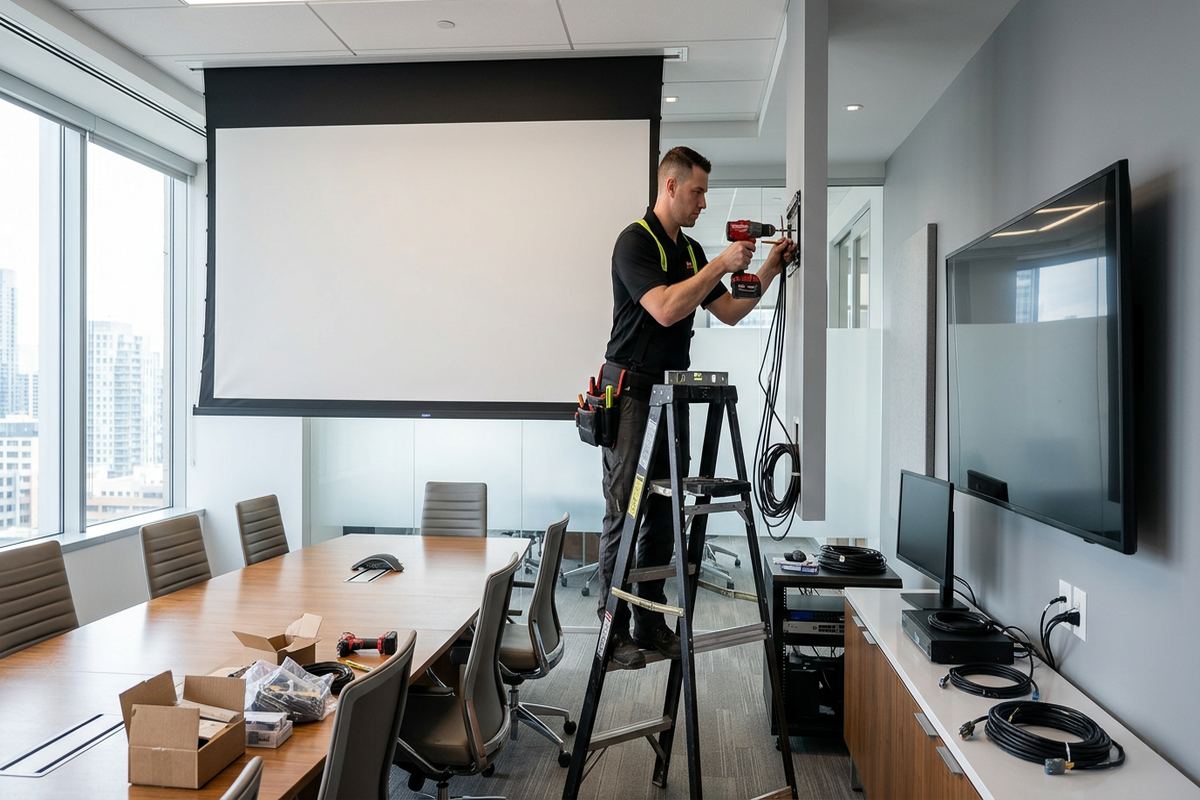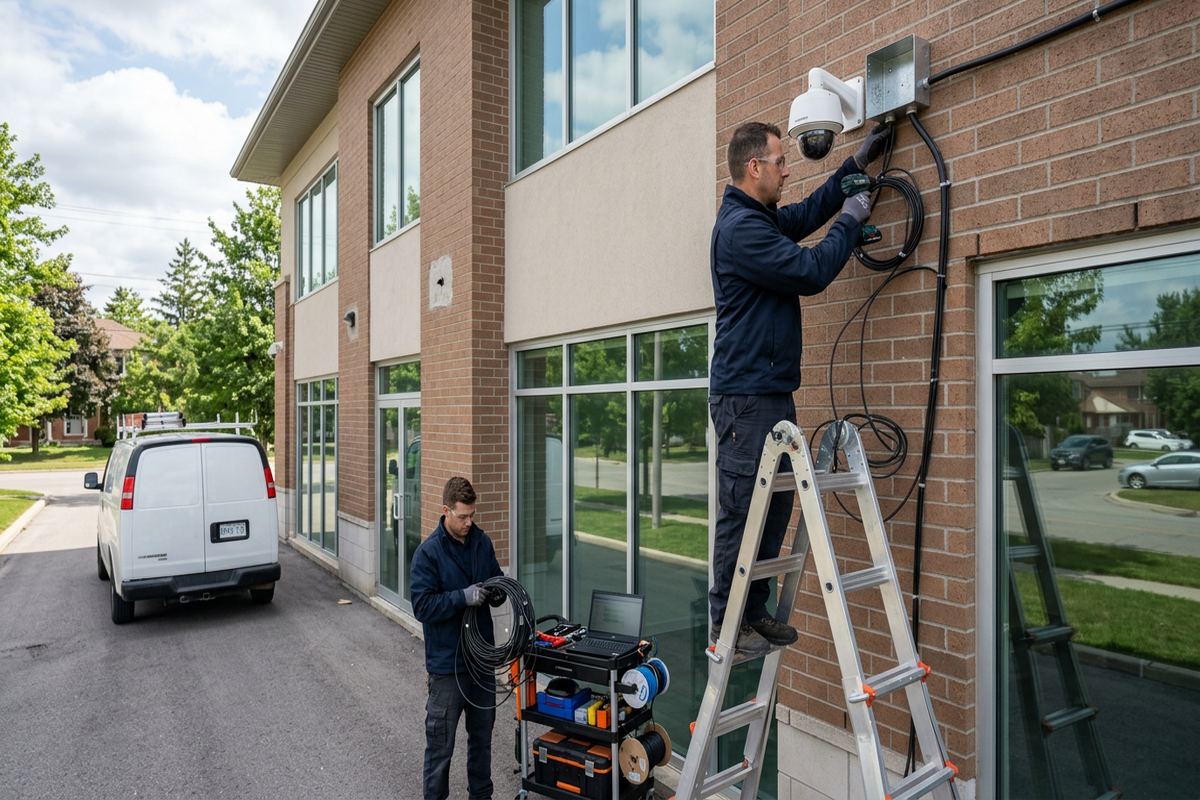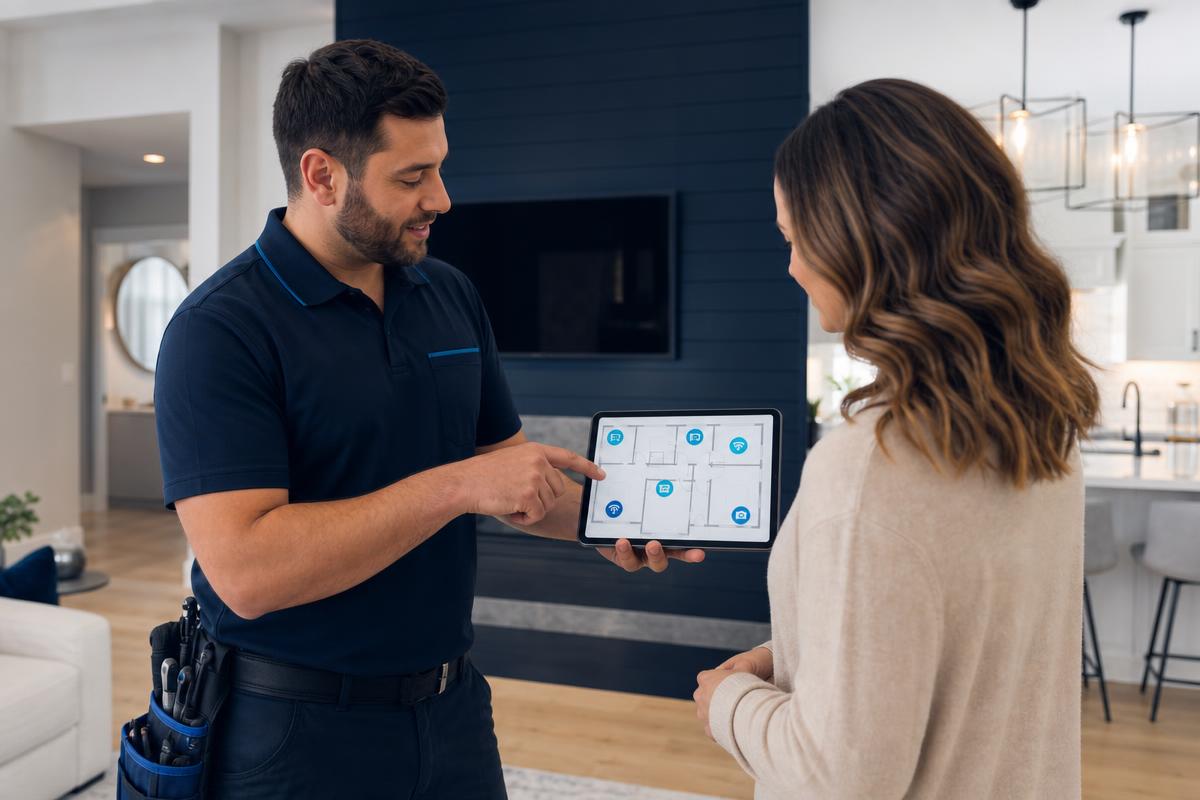
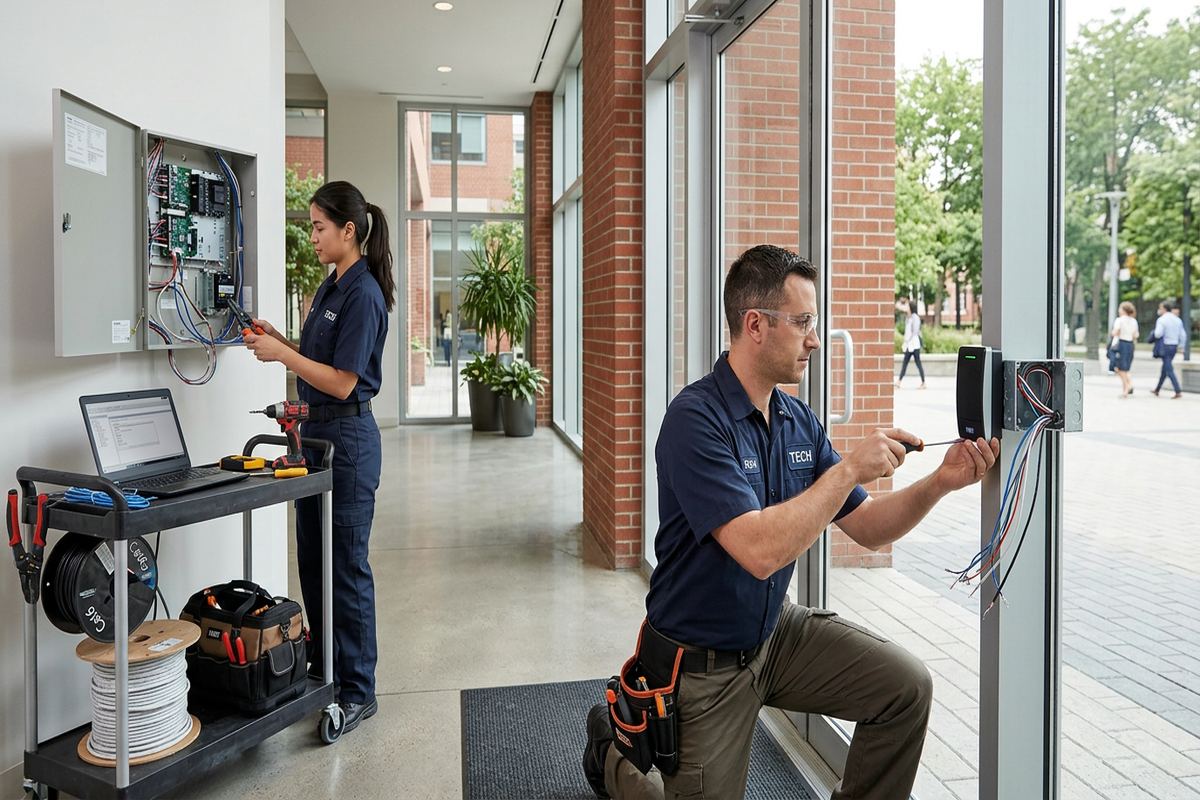
UnifiedLink installs condo access control systems in Bolton for common entrances, garages, amenity rooms and service areas. Each project starts with a site assessment and a written scope. We plan device placement, cable routes, credentials and door hardware integration around the building’s construction, management requirements and daily traffic.
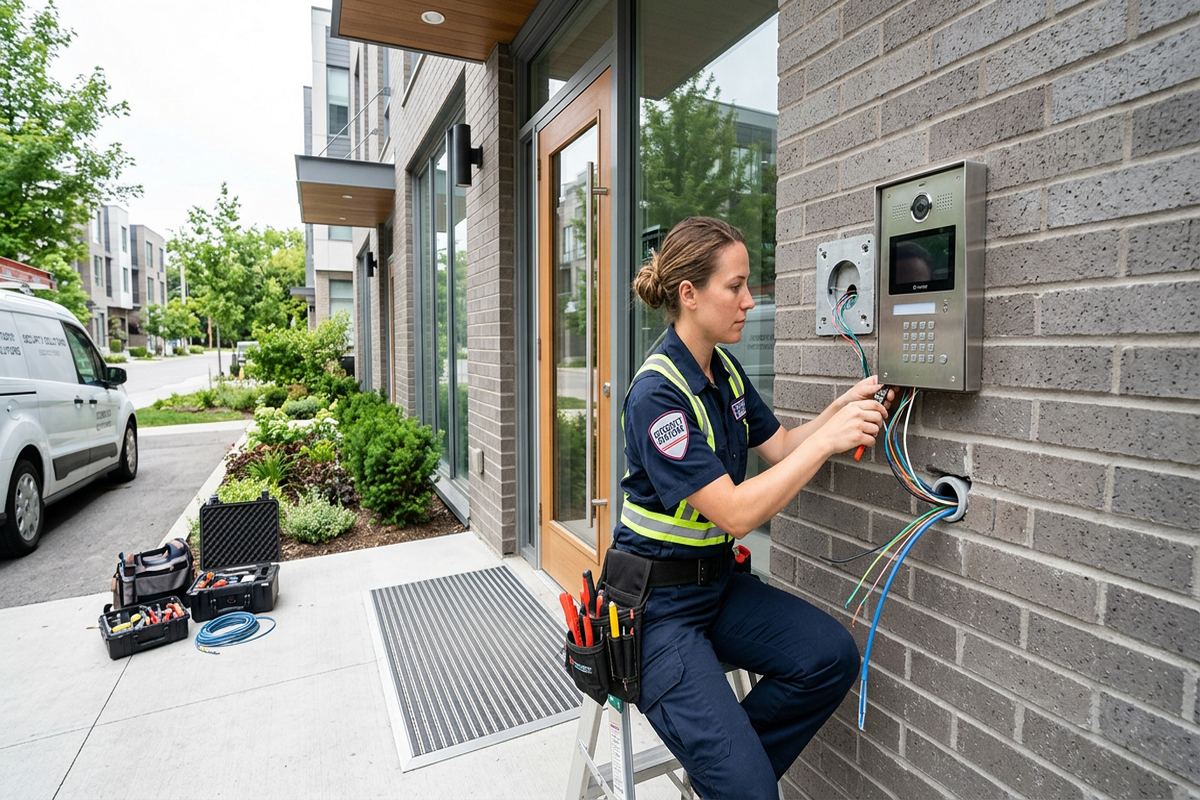
Condo Access Control Planning in Bolton
A condo access control project begins by identifying who uses each opening, when access is permitted and how the door should behave during normal operation or an emergency. In Bolton, the assessment may cover a small converted property, a multi-unit residential building or residential space connected to a commercial strip. UnifiedLink reviews entrances, vestibules, garages, elevators, amenity rooms and service doors before recommending equipment. The resulting design separates essential functions from optional features, helping the condo board, property manager or landlord understand what is being installed and why each controlled opening is included.
Existing conditions often determine more of the design than the reader or credential format. Older masonry around Old Bolton can limit concealed cable paths, while frame construction may offer easier routing but require careful fire stopping and protection from fasteners. The assessment checks door frames, hinges, closers, locking hardware, power availability and routes back to the controller. It also identifies where surface raceway, conduit or localized wall access may be required. These details are documented before pricing so decision-makers can review practical installation effects instead of approving a system based only on a device list.
UnifiedLink provides a written scope covering equipment, cable routes, device placement, exclusions, equipment ownership and warranty. That document can support condo or landlord review by showing which doors will change, where controllers and power supplies will sit, and what restoration remains outside the access control work. It also records dependencies such as locksmith adjustments, electrical circuits, network access or fire-alarm coordination. Site assessment timing depends on the service and travel distance. Requests received during business hours are answered the same day, while after-hours requests are answered the next business day.
- Door-by-door use and risk review
- Credential groups and schedules
- Controller and power-supply locations
- Cable routing and construction impacts
- Written scope before pricing
Entrances, Vestibules and Shared Doors in Bolton
Main entrances need to admit residents reliably without allowing visitors or deliveries to bypass building controls. A typical design may combine a credential reader, electric locking hardware, door position monitoring and a request-to-exit device. The exact arrangement depends on the door, egress requirements and existing intercom process. For Bolton properties with exposed vestibules, reader placement must also account for snow accumulation, wind-driven moisture and gloves. Equipment selection alone is not enough; the frame, closer and latch must work consistently so the electronic system can confirm that the door actually closed after each authorized entry.
Shared interior rooms benefit from narrower permissions than exterior entrances. A resident may need the lobby and bicycle room but not the mechanical room, management office or maintenance storage. Access groups make those differences manageable without issuing separate physical keys for every space. UnifiedLink maps each group to specific doors and schedules, then configures the system on site. Amenity-room rules can include permitted hours, while staff or contractors can receive limited access. Management should approve these rules before commissioning because software cannot resolve unclear policies about residents, tenants, cleaners, trades or short-term visitors.
Garage and pedestrian access should be planned as one operating sequence rather than unrelated devices. A vehicle credential might open the overhead gate, while the same resident uses a card or mobile credential at the interior garage door. Anti-passback, timed schedules or remote release may be appropriate in some buildings, but they add operational requirements that must be understood. In Bolton winters, exposed gate equipment, conduit entries and vehicle readers need suitable mounting and sealing. Freeze-thaw movement can also affect alignment, so physical gate condition and safety controls should be reviewed before connecting access control functions.
- Lobby and vestibule credential readers
- Door position and held-open monitoring
- Amenity-room access schedules
- Garage-to-building access sequences
- Restricted maintenance and service rooms
Choosing Credentials and Permissions
Credential choice affects daily administration long after installation. Cards and fobs are familiar, straightforward to issue and easy to deactivate when a resident moves. Mobile credentials can reduce physical distribution, but they depend on compatible phones, app processes and management policies. Keypad codes may suit limited applications, although shared codes provide less individual accountability. UnifiedLink discusses these trade-offs without assuming one format fits every Bolton condo. The selected platform should support the number of users, doors and schedules required today while leaving a practical path for approved additions.
Permissions should reflect roles rather than being assigned one person at a time without structure. Typical groups include residents, board members, property management, cleaners, maintenance staff and recurring contractors. Each group can receive access to defined doors during approved periods. Temporary credentials should have expiry dates where the platform supports them, reducing the chance that old contractor access remains active. Management also needs a documented process for lost credentials, resident turnover and after-hours changes. Clear responsibility matters because even a well-configured system becomes difficult to manage when several people make unrecorded changes.
Audit events can help investigate forced doors, repeated denied entries or a credential used outside its schedule, but records must be handled under the condo’s privacy and retention policies. Access control does not prove who physically passed through a door unless it is combined with other procedures or approved video coverage. During handover, UnifiedLink demonstrates user enrolment, deactivation, schedule changes and event searches using the customer’s own administrative credentials. The as-built record identifies controlled doors, devices and core equipment, giving authorized administrators a practical reference when future changes or service are required.
- Cards, fobs or compatible mobile credentials
- Role-based access groups
- Temporary access with defined expiry
- Lost-credential deactivation process
- Administrative event review
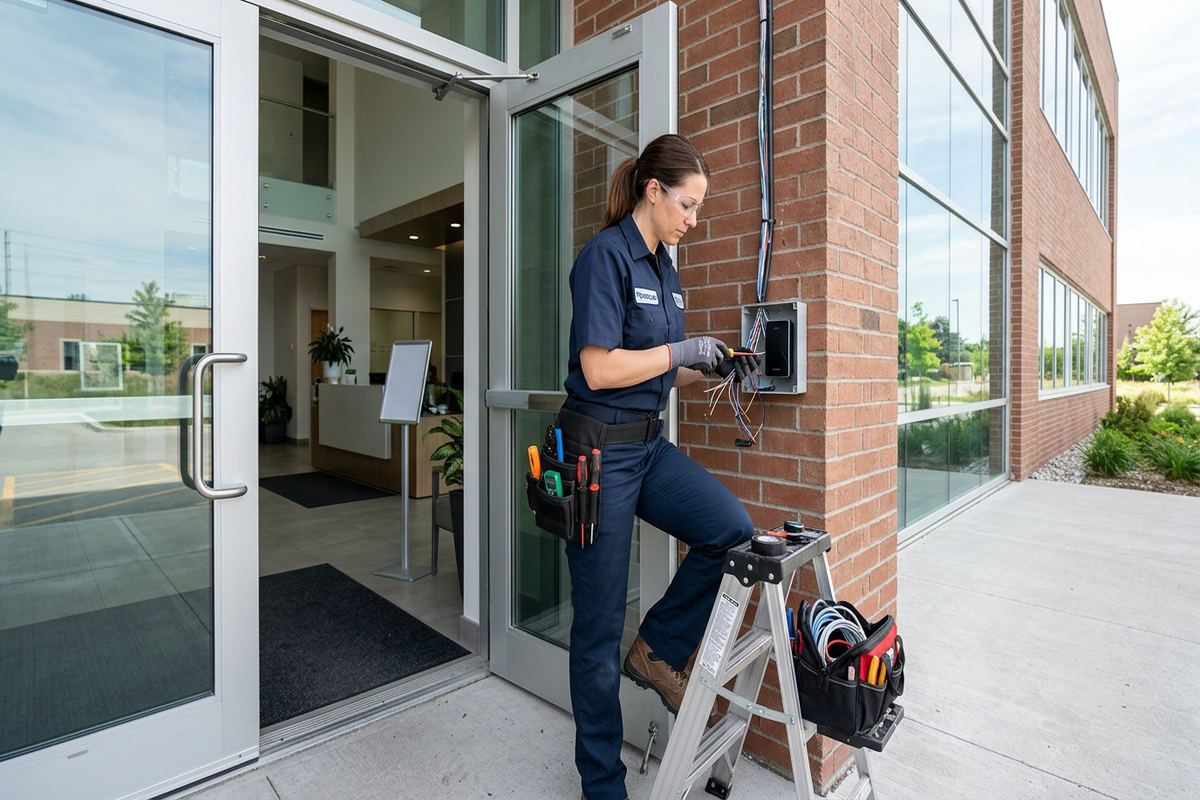
Bolton, Ontario
Condo access control systems in Bolton, scoped in writing first
Book a site assessment and get equipment, routes, exclusions, and warranty on paper before anything is installed.
Bolton Building Conditions and Cable Routes
Construction type changes how access control wiring reaches each opening. Masonry walls may require surface conduit, carefully placed penetrations or routes through accessible ceiling areas, while frame walls can conceal wiring where cavities remain open and suitable. Around Old Bolton, existing finishes and previous renovations can make routes less predictable than drawings suggest. Buildings near Bolton North Hill or Bolton South Hill may also have grade changes that place entrances, garages and utility spaces on different levels. A site assessment confirms practical pathways before equipment quantities and labour assumptions are put into the written scope.
Continuous labelled cable runs reduce avoidable joints and make future tracing more practical. UnifiedLink routes access control cable from the designated controller or power location to readers, door contacts, request-to-exit devices and locking interfaces as applicable. Cable type, support and separation are selected for the pathway and connected equipment. Penetrations are managed according to the surrounding assembly, with required fire stopping identified where rated walls or floors are involved. Labels are applied at useful termination points so a technician can match field devices to controller locations without relying on undocumented colours or improvised notes.
Not every route can be concealed without opening finished surfaces. Where access is limited, neatly planned raceway may cause less disruption than exploratory wall cutting. Exterior transitions need additional attention because water can follow cable, enter poorly sealed holes or collect behind mounted devices. In Bolton’s freeze-thaw cycles, small gaps can expand and contribute to loose fittings or damaged finishes. Penetrations, drip paths and mounting surfaces are therefore considered together. The written scope identifies expected routes and visible components, allowing the condo board or landlord to approve the installation approach before work proceeds.
- Masonry and frame route assessment
- Continuous labelled cable runs
- Surface raceway where concealment is impractical
- Rated-assembly and fire-stopping review
- Weather-managed exterior penetrations
Exterior Readers and Winter Reliability
Outdoor access devices face conditions that indoor readers do not. Reader housings, mounting hardware and connection methods must suit the location, but the supporting surface is equally important. Uneven masonry, thin cladding or deteriorated sealant can leave a device unstable or expose cable entries. UnifiedLink reviews sheltered and exposed positions around Bolton entrances, loading areas and garage approaches. Placement considers normal reach, snow clearing, vehicle movement and the possibility of impact. Exterior equipment is mounted and sealed for the selected surface rather than treated as an indoor installation with extra caulking.
Cold weather can expose mechanical problems that appear to be electronic faults. A door closer may lose effective control, weather stripping may stiffen, or ice may prevent a latch from seating fully. The access system can report a door held open, but it cannot correct a warped frame or unsuitable closer. Before commissioning, door operation is checked with the electronic lock released and secured. Items requiring locksmith, door contractor or property maintenance work are documented. This distinction helps Bolton managers address the actual cause instead of repeatedly changing software settings around a physical defect.
Vehicle entrances require coordination with gate operators and their safety devices. Access control provides an authorized activation signal; it should not bypass loops, photo eyes, edges or other controls intended to manage movement safely. Reader pedestals must be positioned for driver access without encouraging vehicles to strike curbs, equipment or the gate. At the Bolton Industrial Park and nearby mixed-use properties, loading traffic and larger vehicles can change the suitable mounting point. Conduit routes, drainage and snow-clearing patterns are reviewed before finalizing a pedestal or wall-mounted reader location.
- Surface-appropriate reader mounting
- Sealed cable and conduit entries
- Snow-clearing clearance around devices
- Door hardware condition checks
- Gate safety control coordination
System Integration for Bolton Condos
Access control often shares workflows with intercoms, cameras, alarms and building networks, but an integration should have a defined purpose. A visitor entry system may release the lobby door after resident approval. A camera system may help authorized staff review an event near a controlled entrance. An alarm input may monitor a forced service door. UnifiedLink identifies what information or control passes between systems, who administers it and what happens if one component is offline. This avoids vague integration expectations and makes testing criteria clear before the installation is accepted.
Network-connected controllers may require addressing, switch ports, internet access or remote-management rules supplied by the condo’s technology provider. The access control network should not be connected casually to resident, office or public Wi-Fi. During planning, UnifiedLink records network dependencies and confirms which party provides each item. On-site configuration includes controllers, readers, door behaviour, schedules and authorized credential groups within the approved scope. If cloud services or manufacturer accounts are used, ownership and administrative access should belong to the customer rather than remaining tied to an installer’s personal credentials.
Power design includes normal supply, controller demand, lock demand and the intended response during an outage. Fail-safe and fail-secure hardware behave differently when power is removed, so selection must consider egress, fire requirements and the function of each door. Battery backup can maintain selected components for a period determined by load and battery condition, but it does not make the whole building independent of utility power. Where fire-alarm interface or electrical work is required, responsibilities are identified in the scope and coordinated with the appropriate parties before final testing.
- Intercom door-release integration
- Camera views tied to entry areas
- Defined network and account ownership
- Lock and controller power planning
- Fire-alarm interface responsibilities
Approvals, Installation and Handover
Condo access control changes common property and therefore usually needs formal approval before devices, wiring or locking hardware are altered. The board or manager may need drawings, product information, route descriptions and confirmation of who handles wall repair, locksmith work or electrical supply. Landlord approval may also apply in rented or mixed-use premises. UnifiedLink’s written scope supports that review by stating included work and exclusions. Approval should also address credential policy, privacy, record retention and administrator roles, since those operating decisions belong to the property rather than the installer.
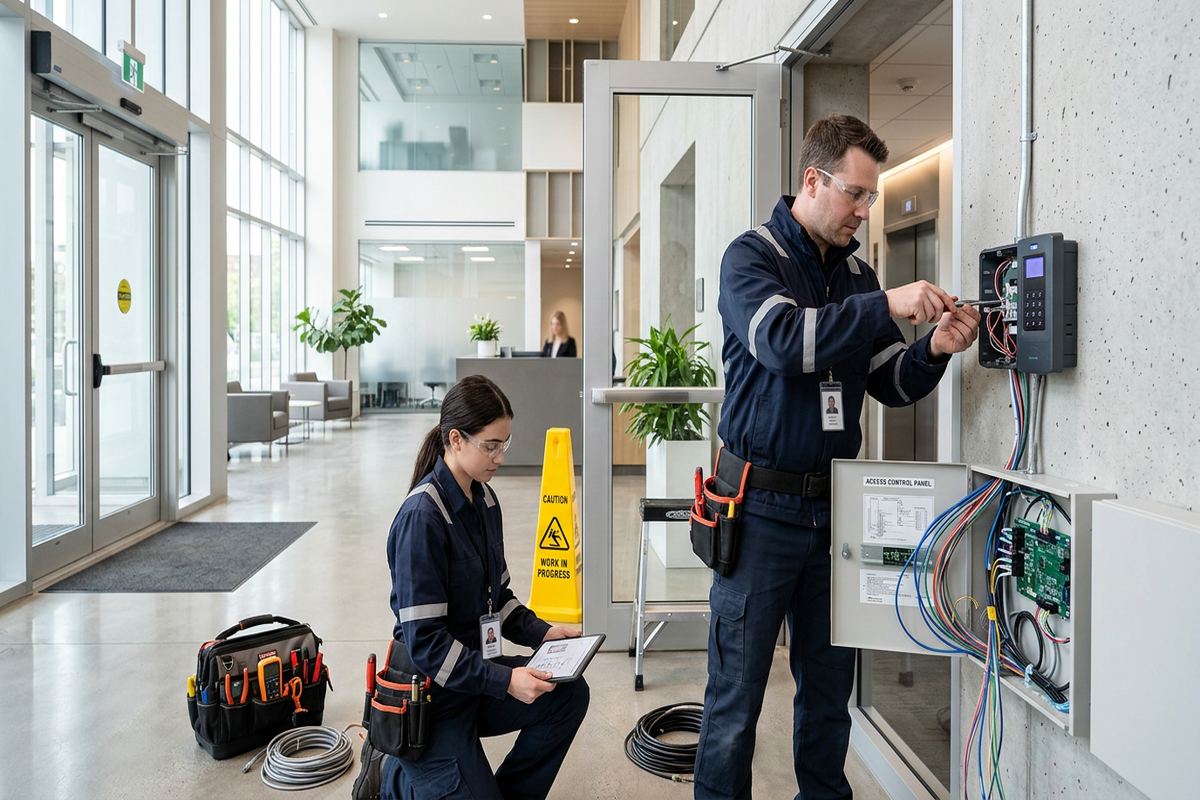
Installation is organized around occupied entrances and the need to maintain safe passage. Work may be phased by door so residents and staff know which opening is affected. Continuous labelled cables are pulled along approved routes, devices are mounted, and controllers are terminated in the designated secure location. Existing door operation is checked before electronic functions are tested. If hidden conditions differ from the assessed route, the change is documented for approval rather than concealed within the work. One accountable contractor coordinates the included low-voltage access control tasks and identifies dependencies involving other trades.
Handover turns installed equipment into a system the property can administer. UnifiedLink completes on-site configuration and tests authorized entry, denied entry, request to exit, door status and applicable schedules at each opening. Administrators receive access using the customer’s own credentials, not a shared installer login. The as-built record lists device locations, controlled doors and relevant equipment information. Management is shown routine tasks such as adding a resident, disabling a lost fob and reviewing events. Equipment ownership and warranty terms remain recorded in the written scope for later reference.
- Board or landlord approval support
- Occupied-building installation planning
- Documented changes for hidden conditions
- Customer-owned administrative credentials
- As-built record at handover
Maintaining Access Control in Bolton
Routine administration is as important as the original installation. Resident move-ins and move-outs should trigger prompt credential updates, while contractor access should be reviewed for expiry. Door-held-open and forced-door events need an assigned recipient who understands when follow-up is required. Property managers should also keep a current list of administrators and remove accounts that are no longer authorized. For Bolton condos with volunteer boards or changing management firms, documented procedures reduce reliance on one person’s memory and make responsibility clearer during transitions.
Seasonal inspection helps identify physical issues before they become repeated access complaints. After winter, exterior readers, pedestals, conduit fittings and seals can be checked for movement or moisture exposure. Doors should latch without residents pulling or pushing them into position. Before colder weather returns, closers, sweeps and weather stripping should be reviewed so they do not interfere with locking hardware. Valley-side properties can experience exposed wind and drifting snow at particular entrances, making local observation useful. Maintenance findings should distinguish access control faults from door, gate, network or power problems.
Changes to the property should be reflected in system documentation. A renovated lobby, replacement door, new management office or altered garage layout may affect wiring, hardware and permission groups. Commercial strips and industrial units near Bolton Industrial Park can also change tenants or divide spaces, creating new access boundaries. Before extending the system, UnifiedLink assesses controller capacity, cable routes, power and software requirements. The updated scope records additions and exclusions, while the revised as-built information preserves a usable account of what is installed rather than leaving later technicians to reconstruct undocumented changes.
- Move-in and move-out credential updates
- Seasonal exterior device inspection
- Closer, latch and gate condition review
- Administrator account housekeeping
- Updated records after renovations
Bolton neighbourhoods we cover
- Bolton North Hill
- Bolton South Hill
- Old Bolton
- Bolton Industrial Park
Condo access control systems in Bolton — common questions
Do we need condo board approval before installation?
Usually, yes. Readers, locks, controllers and cable routes can affect common property, finished surfaces and life-safety coordination. A Bolton condo board or property manager should approve device locations, visible raceway, door hardware changes and administrator policies. UnifiedLink provides a written scope covering equipment, routes, placement, exclusions, ownership and warranty to support that review. Landlord approval may also be required in leased or mixed-use premises.
Can access control be added to an older Bolton building?
Yes, subject to the door condition, available power and workable cable routes. Older masonry properties around Old Bolton may need surface raceway, conduit or limited access to finished areas. Frame construction may allow concealed routes, but cavities and fire-rated assemblies still require review. A site assessment identifies practical routes and any locksmith, electrical, network or restoration dependencies before pricing is prepared.
Which is better for residents, fobs or mobile credentials?
Neither option is automatically better for every Bolton condo. Fobs are familiar and do not depend on a resident’s phone, while mobile credentials can simplify distribution in a compatible platform. Management should consider resident demographics, replacement procedures, recurring service requirements and administrator workload. The system can sometimes support more than one credential type, but the approved platform and reader selection must be confirmed during design.
Will the system work during a power outage?
Operation depends on the power design, battery capacity, controller, locks and network dependencies. Battery backup may keep selected access control components operating for a limited period based on connected load and battery condition. Fail-safe and fail-secure locks react differently when power is lost. For a Bolton property, each door’s outage behaviour should be documented and coordinated with egress, fire-alarm and building operating requirements.
How do Bolton winters affect exterior readers and gates?
Freeze-thaw, wind-driven moisture, snow clearing and ice can affect mountings, seals, gate alignment and door latching. Exterior devices need suitable housings, secure attachment and properly managed cable entries. Mechanical problems can resemble access control faults when a closer or latch stops operating consistently. UnifiedLink reviews exposed locations, mounting surfaces, drainage and snow-clearing patterns during the site assessment and documents work required from other trades.
What do we receive when the installation is complete?
UnifiedLink completes on-site configuration and tests the functions included in the approved scope. The Bolton condo’s authorized administrator receives access through the customer’s own credentials, along with instruction on routine user and event tasks. Handover includes an as-built record identifying controlled doors, devices and core equipment. The written scope also records equipment ownership, warranty, exclusions and dependencies relevant to future service or expansion.
Coverage in Bolton is confirmed against the address before we quote. See everything we install in Bolton or the province-wide condo access control systems page.