UnifiedLink installs outdoor security cameras for homes, commercial properties and industrial units in Bolton. Each system is planned around the site, including useful viewing angles, lighting, cable routes, recording needs and remote access. We provide a written scope before work begins, configure the equipment on site and hand over the system using the customer’s own credentials.
Outdoor Camera Planning for Bolton Properties
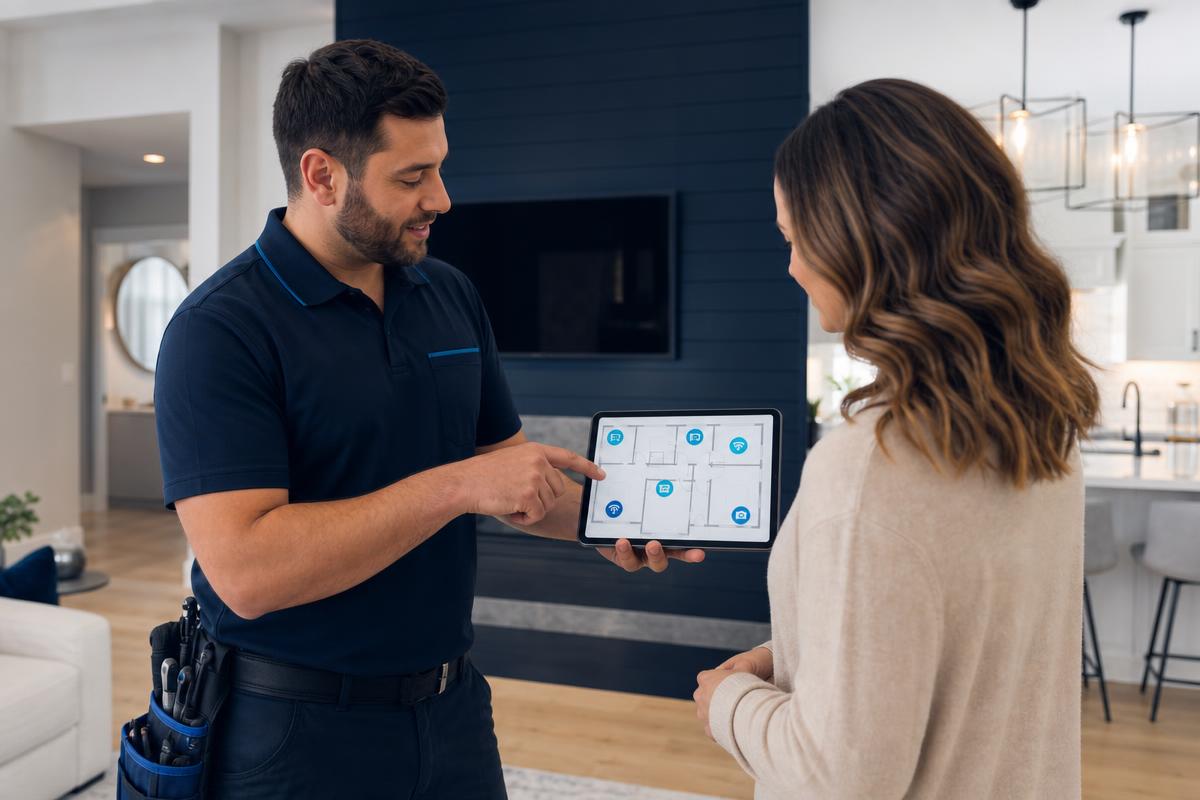
Useful outdoor video starts with a site assessment rather than a camera count. In Bolton, the property layout can vary considerably between valley-side homes, older buildings around Old Bolton, newer residential areas and north-end industrial units. We review entrances, driveways, loading areas, side passages and other practical observation points. The assessment also considers elevation, landscaping, exterior lighting and likely approach paths. This allows camera locations to be chosen for identification and incident review, instead of simply producing wide images in which people, vehicles or activity are too small to distinguish.
Before pricing, UnifiedLink prepares a written scope covering the proposed equipment, device placement, cable routes, exclusions, equipment ownership and warranty. That process gives the property owner a clear basis for reviewing the installation. It also identifies work that may require separate approval, such as mounting on a shared exterior, entering a leased unit’s ceiling space or using a condominium common area. Site assessment timing depends on the service and travel distance. Requests sent during business hours are answered the same day, while after-hours requests are answered the next business day.
Camera selection is tied to what each location must show. A camera intended to monitor general movement across a rear yard has a different purpose from one expected to capture a useful view at a front door or vehicle entrance. We discuss viewing distance, image detail, night conditions, glare, recording duration and remote access before specifying hardware. For Bolton properties with sloping lots, retaining walls or elevated entrances, mounting height and scene depth need particular attention. The objective is balanced coverage without relying on digital zoom to recover detail that was never captured clearly.
- Entrance, driveway and perimeter review
- Viewing-distance and image-detail planning
- Night lighting and glare assessment
- Written equipment and placement scope
- Approval requirements identified before work
Mounting Cameras for Bolton Winters
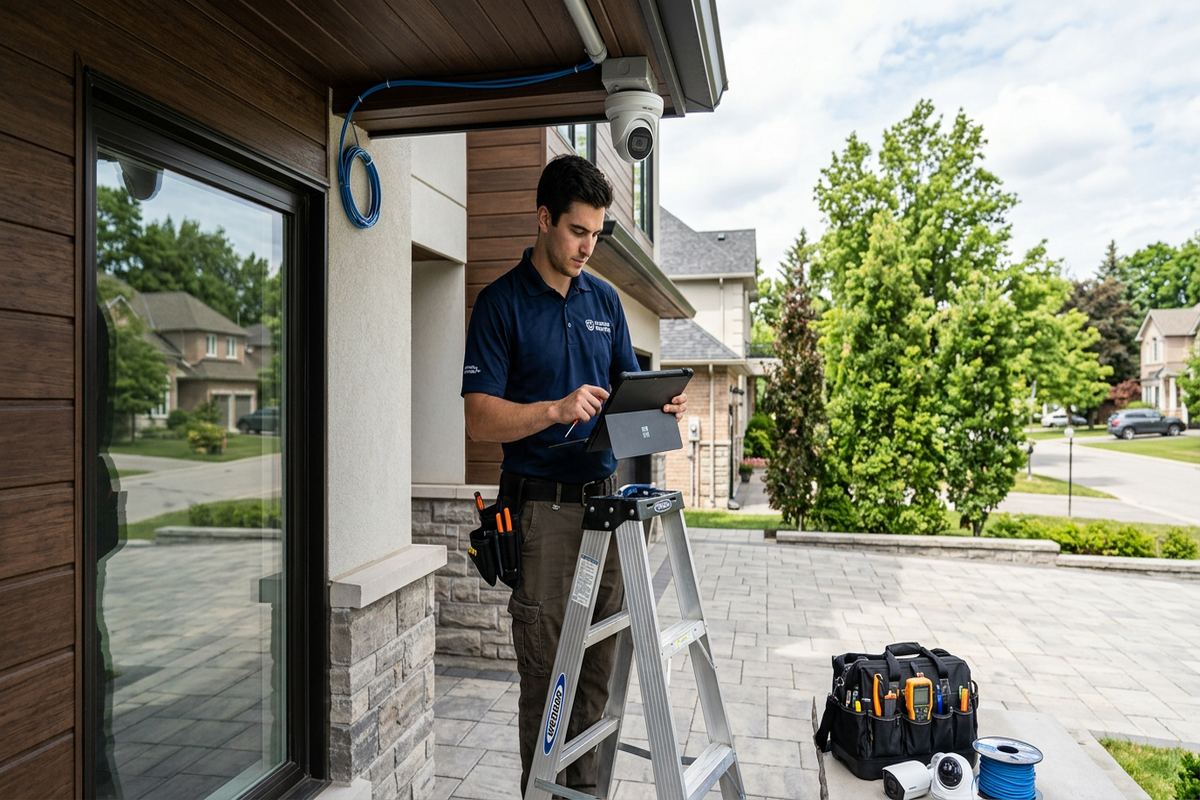
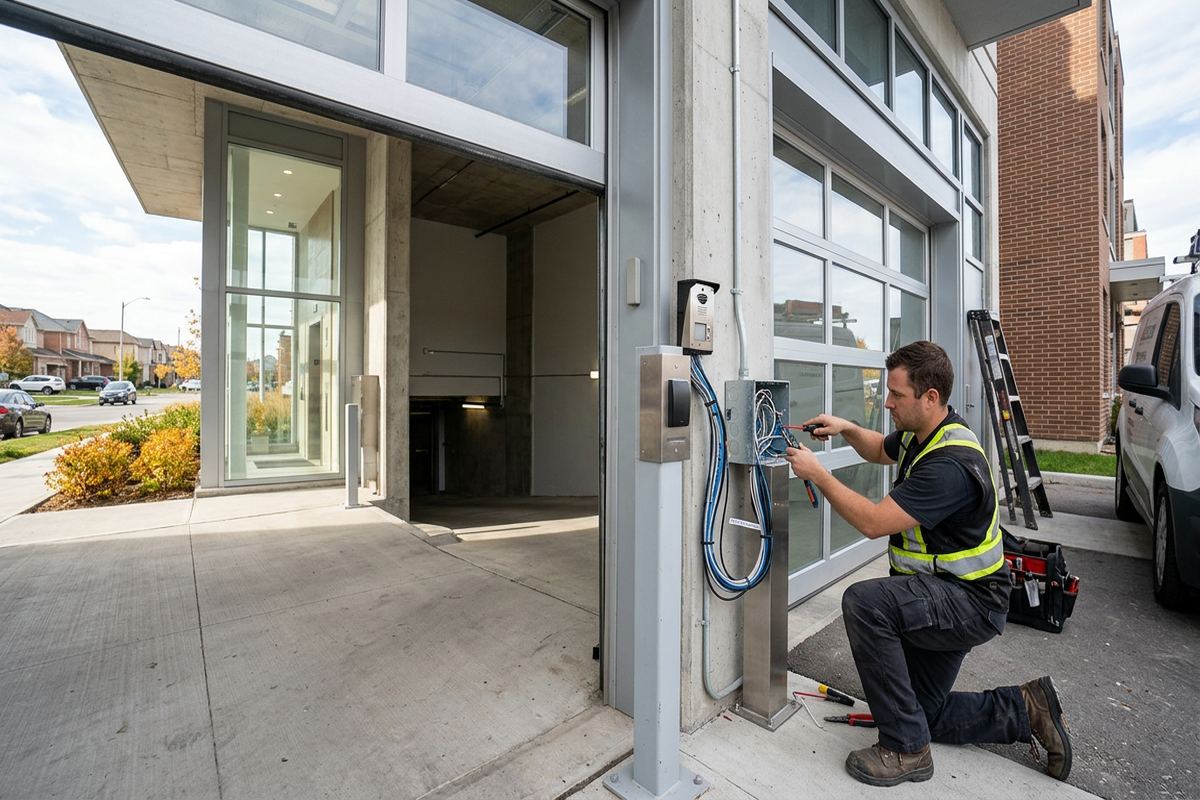
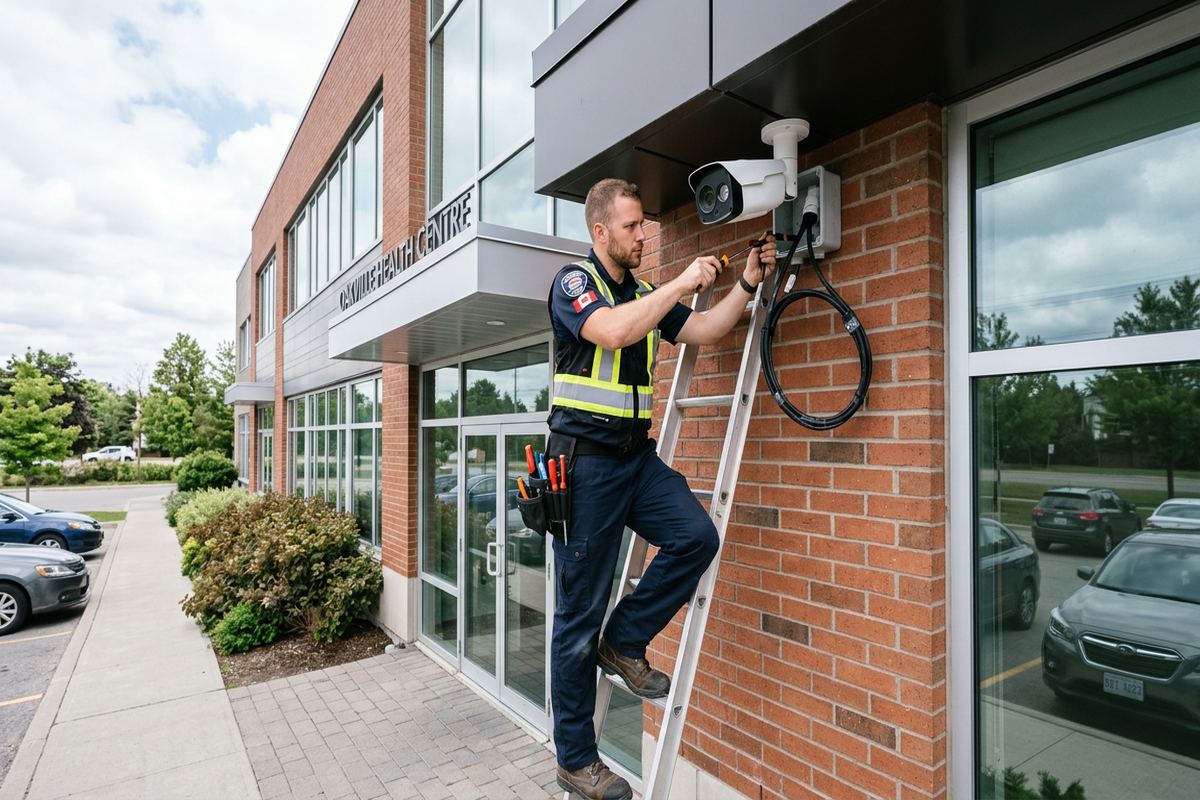
Exterior mounting in Bolton must account for winter cold, moisture and repeated freeze-thaw cycles. A camera can be weather-rated while the installation around it remains vulnerable, so brackets, junction points and wall penetrations need equal attention. We select stable mounting surfaces, keep exposed connections protected and seal penetrations using methods suited to the wall assembly. Cable entries are positioned to limit water tracking, and exterior cable is supported rather than left loose. These details help prevent shifting views, damaged connectors and moisture paths that may only become apparent after several changes in temperature.
Different exterior materials require different fastening and routing methods. Masonry walls may need carefully placed anchors and surface-mounted pathways, while frame construction often allows cable to enter through soffits, siding assemblies or accessible wall cavities. We do not treat brick veneer, concrete block, wood trim and vinyl or composite siding as interchangeable surfaces. During the assessment, we look for suitable structural backing, existing penetrations and signs of previous sealing work. The planned route should protect the building envelope while keeping cable runs direct, serviceable and visually orderly from the ground.
Snow, ice and low winter sun can affect image quality even when the camera itself continues operating normally. Reflective surfaces may overexpose part of a scene, while infrared light can bounce from nearby soffits, walls, downspouts or accumulated snow. In Bolton, seasonal vegetation can also change a view that appeared open during winter or fully shaded during summer. We account for these conditions by adjusting placement, field of view and night settings on site. Final configuration includes checking daytime and low-light images, not merely confirming that the camera appears in the application.
- Stable mounts suited to the wall
- Protected connectors and junction points
- Sealed, downward-managed cable entries
- Freeze-thaw exposure considered
- Day and low-light image checks
Camera Placement Around Bolton Homes
Residential camera layouts should follow how people actually reach the property. On Bolton North Hill and Bolton South Hill, that may include a front walk, garage approach, side gate, walkout level or rear entrance affected by the grade. Valley-side homes can have substantial differences between front and rear elevations, making one mounting height unsuitable for every side. We plan overlapping views where they add value, but avoid filling the exterior with cameras that duplicate the same scene. Each proposed location is connected to a defined purpose such as identifying visitors, reviewing vehicle activity or monitoring a secluded access point.
Older homes in Old Bolton can present routing limitations that are not obvious from outside. Finished basements, additions, solid masonry areas and previous renovations may interrupt expected cable paths. Rather than assuming cable can be concealed everywhere, we identify accessible routes and discuss visible pathway options where necessary. Continuous labelled cable runs are preferred over hidden couplers or improvised extensions. If a route passes near power, heating equipment or other building systems, separation and service access are considered. The written scope records the agreed approach so the homeowner knows where exterior and interior work will occur.
Camera placement also needs to respect neighbouring properties and public areas. A wide view is not automatically a better view if much of the image covers a neighbour’s windows, private yard or unrelated activity. We frame cameras around the customer’s entrances, parking areas and property boundaries, then use available privacy controls where appropriate. Doorways require enough detail at face level, while driveway cameras must account for parked vehicles, headlights and changing approach angles. During handover, the customer can review live and recorded images and request reasonable final adjustments to framing or notification areas.
- Front, side and rear access coverage
- Layouts adapted to sloped lots
- Routes planned around finished spaces
- Neighbouring privacy considered
- Final framing reviewed with owner
Bolton, Ontario
Outdoor camera installation in Bolton, scoped in writing first
Book a site assessment and get equipment, routes, exclusions, and warranty on paper before anything is installed.
Bolton Business and Industrial Camera Systems
Commercial camera work often involves more than watching a front door. Bolton’s commercial strips and Bolton Industrial Park include units with customer entrances, rear service doors, shared drive aisles, loading areas, fenced yards and interior network rooms. We separate the coverage objectives for each area, because a loading bay may require a broad operational view while an employee entrance needs closer identification detail. Camera locations are also coordinated with exterior lighting, signs, overhead doors and vehicle movement. This reduces blocked views and helps ensure recorded video corresponds to the incidents or operational questions the business expects to review.
Industrial units frequently have long exterior walls and greater distances between the building and the area being observed. Simply mounting a wide-angle camera high on a corner may show activity without providing enough detail. We assess target distance, lens choice, mounting height and available network pathways before specifying a design. Where cable routes cross warehouse or service areas, continuous labelled runs and appropriate support are important for maintenance. Recording equipment and network connections are placed in an agreed location, with access considered for authorised staff while reducing casual interference with power, cabling or storage hardware.
For leased premises, the business may need landlord approval before drilling exterior walls, attaching conduit, using rooftop routes or accessing shared communications rooms. Multi-unit properties can also have rules covering camera direction, common parking areas and exterior appearance. UnifiedLink identifies these dependencies during planning but does not replace the property owner’s approval process. The written scope can be provided for review, showing proposed device positions and routes. Once permissions are in place, one accountable contractor handles mounting, cabling, configuration and handover, reducing gaps between separate camera, network and electrical coordination tasks.
- Loading and service-door coverage
- Long-distance views planned by purpose
- Cable support through industrial spaces
- Leased-property approvals identified
- Recording access limited to authorised users
Cabling and Network Design in Bolton
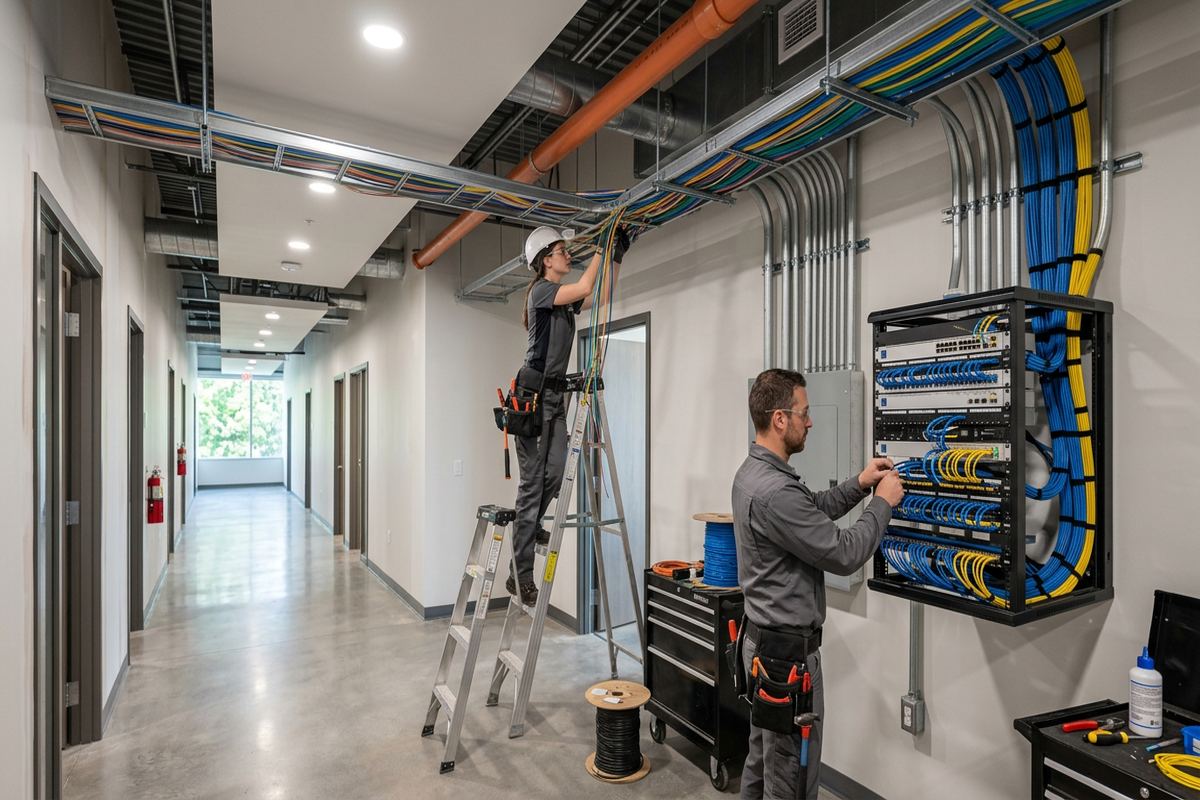
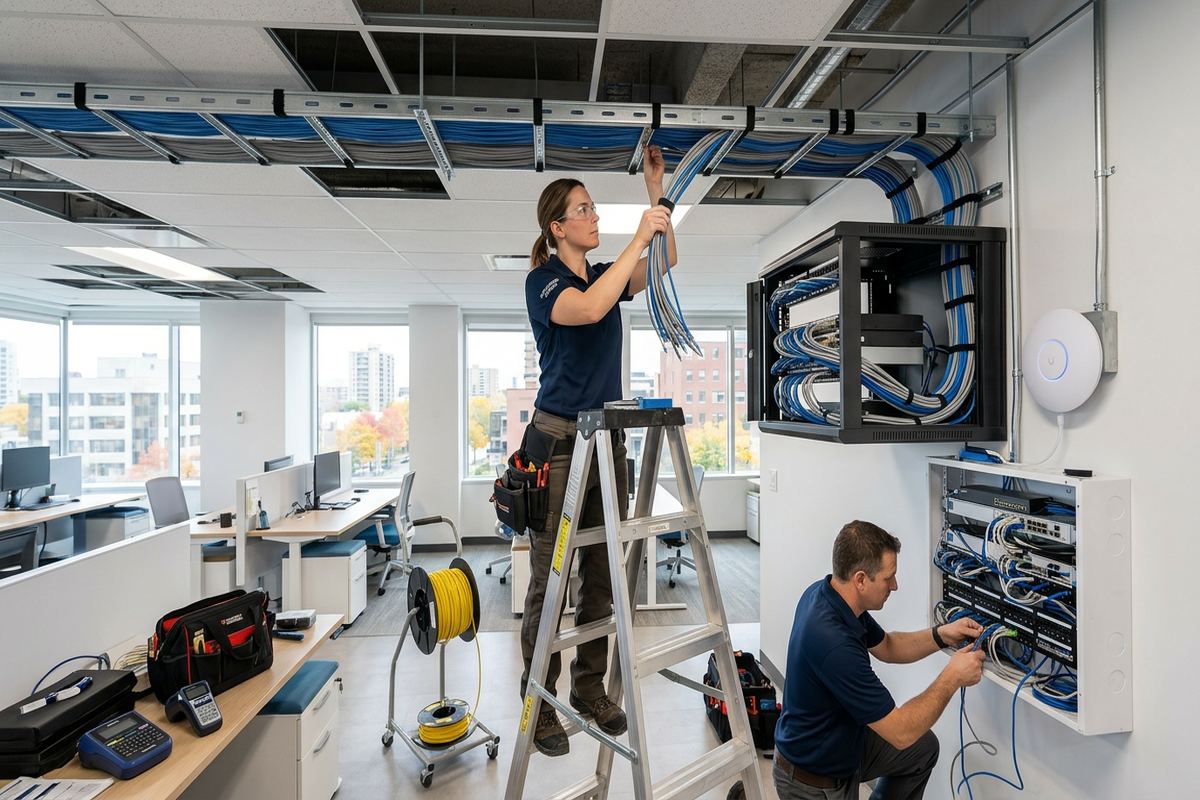
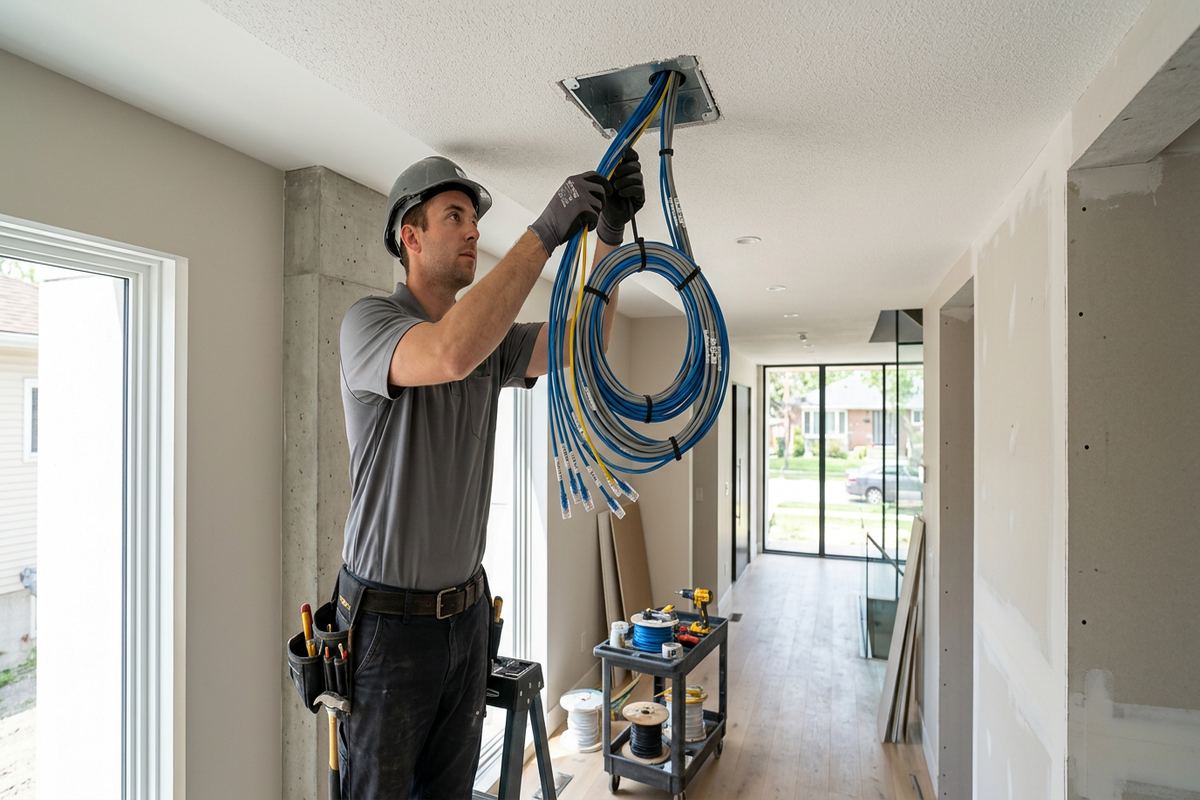
A dependable camera system relies on its cabling and network connection as much as on the camera hardware. For wired systems, we plan continuous labelled runs from each camera to the agreed network or recording location. Cable type is selected for the route, including whether sections are indoors, outdoors or exposed to environmental conditions. Exterior cable is not left unsupported across siding, roofs or open gaps. At the termination point, labels and orderly connections make future testing easier. This approach is especially useful in Bolton properties where additions, mixed construction or long industrial runs complicate troubleshooting.
Power over Ethernet can carry network data and power over one suitable cable, which simplifies many outdoor installations. It still requires correct switching capacity, cable distance, terminations and protection of the network equipment. We verify the proposed number of cameras and account for the recording device, network switch and remote viewing requirements. Existing customer networks are reviewed rather than assumed to be adequate. Where cameras use wireless connectivity, they still require reliable power and sufficient signal at the exterior location. Wi-Fi is not used merely to avoid planning a practical wired route.
Remote access depends on the customer’s internet service and local network, but ownership and security settings remain important. During on-site configuration, we create or transfer access using the customer’s own credentials rather than retaining a shared installer account as the normal method of entry. Users can be assigned according to the platform’s available controls, and the customer decides who should receive access. We also explain basic application use, recorded-video search and notification settings. The as-built record identifies camera locations and cable destinations, providing a practical reference if the network or recording system is changed later.
- Continuous labelled camera runs
- Route-appropriate cable selection
- Network and switch capacity review
- Customer-controlled remote access
- As-built cable and device record
Recording, Alerts and Night Views in Bolton
Recording design begins with how footage will be used and how long the customer expects to retain it. Storage needs vary with camera count, resolution, frame rate, scene activity and recording mode, so retention should not be promised from a simple drive-size label. We configure the selected system on site and review its estimated behaviour under the agreed settings. Customers can choose continuous or event-based approaches where supported by the equipment. In Bolton businesses, separate schedules may be useful for operating and closed hours, while homeowners may prefer different alert rules for entrances, yards and driveways.
Motion notifications require careful setup to remain useful. Trees, shadows, headlights, snow, insects and passing traffic can all create unwanted events, particularly for cameras facing a road or an open industrial yard. Available detection zones, object classifications and sensitivity controls are adjusted around the actual scene. No camera analytics should be treated as infallible, and important footage should be reviewed rather than relying only on a phone alert. We show the customer how to change notification schedules, locate events and export available clips, using functions supported by the selected recording platform.
Night performance is tested at the installed location because specification sheets cannot account for every wall, fixture or reflective surface. Existing floodlights may help colour imaging but can also create deep shadows or glare if placed poorly. Built-in infrared illumination can provide useful coverage, although nearby eaves, brickwork, cobwebs and precipitation may reflect light back toward the lens. We check the camera after dark or configure it with known night conditions in mind, then explain any limitations. For critical Bolton entrances, adding or repositioning suitable lighting may be more effective than increasing camera resolution alone.
- Retention planned around actual settings
- Continuous or event recording options
- Practical notification-zone configuration
- Recorded search and export walkthrough
- Night glare and reflection checks
Replacing Existing Outdoor Cameras
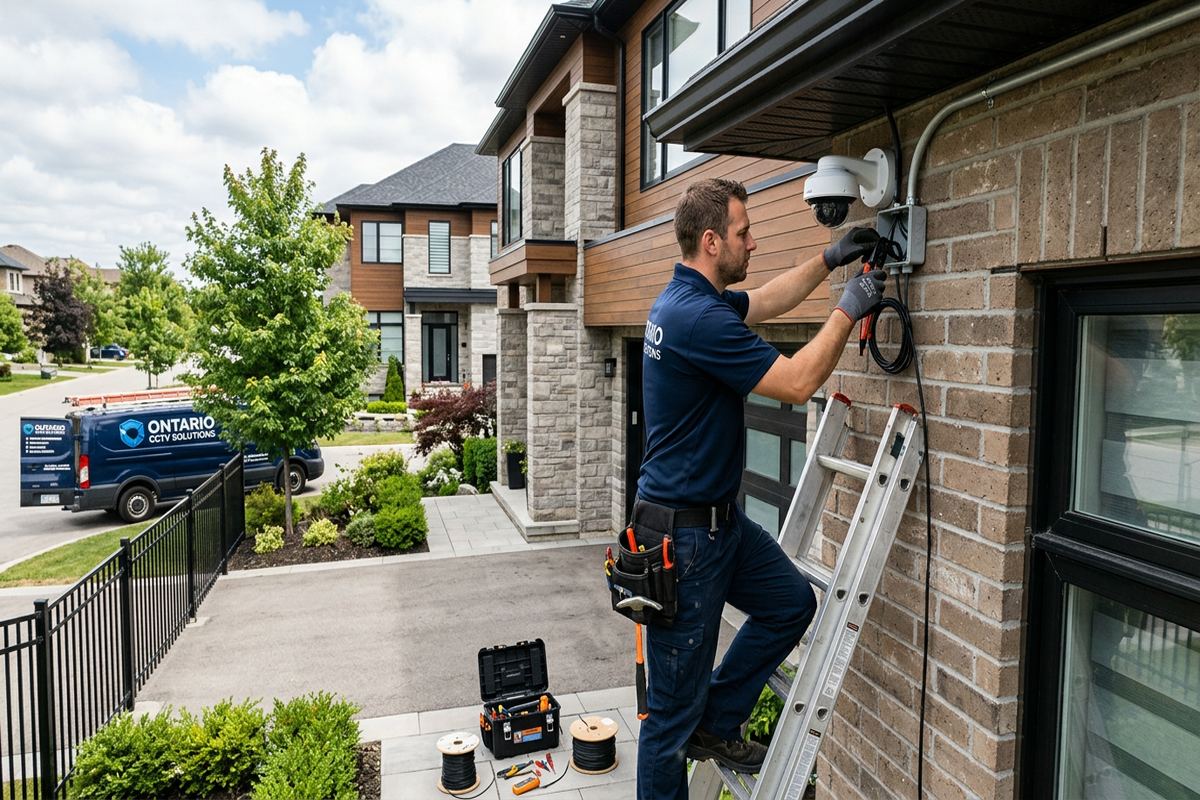
An existing camera system may be reusable in part, but compatibility needs to be confirmed before replacement equipment is selected. Older analogue cabling, network cable, connectors, power supplies and recording hardware can each impose different limits. We inspect accessible components, test routes where practical and identify what can remain without weakening the planned result. A camera that powers on is not necessarily producing dependable recordings, and an existing cable should not be accepted solely because it is already concealed. The written scope distinguishes retained customer equipment from new equipment and records exclusions where concealed conditions cannot be verified.
Common reasons for an upgrade include missing night detail, unstable connections, inaccessible applications, limited storage or camera views changed by renovations and landscaping. In Bolton, exterior mounts and seals may also have deteriorated after repeated weather exposure, even when the electronics still function. We review each location rather than automatically placing a new camera on the old bracket. A revised position may improve identification, avoid infrared reflection or shorten an exposed route. Removed equipment is handled according to the agreed scope, and the customer remains clear about which devices and recording components they own.
Changes to a camera platform can affect applications, user accounts and how older recordings are accessed. Before removing a recorder, the customer should identify any footage that must be preserved and export it using the existing system where possible. New equipment is configured with the customer’s credentials, current time settings and agreed users. We then confirm live viewing, playback and notifications on the intended devices. The as-built record is updated to show installed locations and cable destinations, avoiding dependence on the old system’s labels, assumptions or undocumented routes when future service is required.
- Existing cable and hardware reviewed
- Reusable components identified in writing
- Mounts and seals checked for deterioration
- Account migration planned before removal
- New system documented at handover
From Bolton Site Assessment to Handover
The installation process starts with a discussion of the property and the incidents or areas the customer wants to address. A site assessment then confirms construction, mounting surfaces, cable access, power, network location, lighting and approval requirements. Based on those findings, UnifiedLink provides a written scope covering equipment, cable routes, device placement, exclusions, equipment ownership and warranty. This is the point to resolve preferences about visible conduit, recording location or application access. Pricing follows the assessment rather than relying on an unsupported camera count that may overlook difficult routes, access equipment or unsuitable mounting positions.
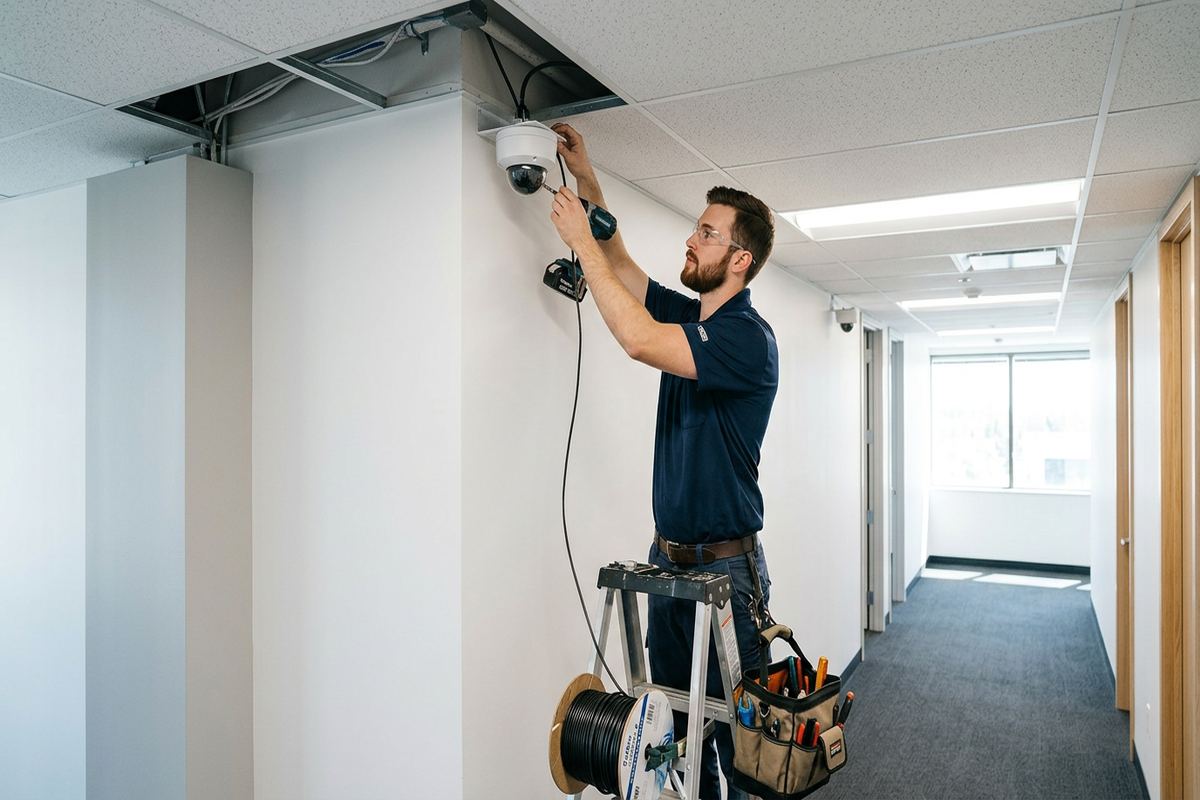
On installation day, work follows the agreed routes as closely as site conditions allow. Cameras are securely mounted, penetrations are sealed, and continuous cables are supported, terminated and labelled. If concealed construction reveals a material condition that changes the scope, it is discussed rather than covered over without explanation. Equipment is then connected and configured on site. Views, time settings, recording behaviour, network access and available alerts are checked. For occupied homes and operating Bolton businesses, work areas and service interruptions are coordinated so the customer understands when access to ceilings, network rooms or exterior areas is required.
Handover is intended to leave the customer able to operate the system without relying on undocumented installer access. We use the customer’s own credentials, review live and recorded viewing, and explain routine tasks supported by the platform. The customer receives an as-built record showing device locations and cable destinations, along with the agreed ownership and warranty information. One accountable contractor remains responsible for the camera installation, structured cabling and on-site configuration included in the scope. Requests during business hours are answered the same day; after-hours requests are answered the next business day.
- Assessment completed before pricing
- Detailed written scope provided
- Mounting, cabling and setup coordinated
- Customer credentials used at handover
- As-built system record supplied
Bolton neighbourhoods we cover
- Bolton North Hill
- Bolton South Hill
- Old Bolton
- Bolton Industrial Park
Outdoor camera installation in Bolton — common questions
How many outdoor cameras does my Bolton home need?
The number depends on entrances, property grade, sightlines and the detail required at each location. A Bolton valley-side home may need separate views for a high front entrance and lower walkout area, while a compact lot may need fewer cameras. We assess approach paths, driveway geometry, side access and rear doors before recommending locations. The goal is purposeful coverage, not the highest possible camera count.
Can cameras be installed on brick or siding?
Yes, but the fastening, cable entry and sealing method must suit the surface. Brick veneer, concrete block, wood trim and siding assemblies are handled differently. For Bolton’s freeze-thaw conditions, we also protect connectors and limit water paths around penetrations. The site assessment identifies suitable mounting points and whether concealed routing, soffit access or a visible exterior pathway is the more practical approach.
Do I need landlord or condo approval?
Approval may be required if the work affects a shared exterior, common area, leased unit, roof, communications room or building envelope. Bolton tenants and condominium owners should confirm applicable rules before installation. UnifiedLink can document proposed camera positions and cable routes in the written scope, but the customer remains responsible for obtaining the necessary permission from the landlord, condominium corporation or property manager.
Will outdoor cameras work during a Bolton winter?
Equipment intended for the installation is selected with exterior conditions in mind, but mounting and sealing are equally important. Bolton cold, snow and freeze-thaw cycles can expose weak cable entries, loose supports or unprotected connectors. We use stable mounting points, protect junctions and check image effects caused by snow reflection, low sun and infrared glare. Internet or power outages can still affect functions depending on the system design.
Can I view my cameras from my phone?
Remote viewing is available when supported by the selected platform and when the Bolton property has a suitable internet connection and network. We configure access on site using the customer’s own credentials and review live view, playback and notifications. Application features vary by equipment. The customer controls authorised users, and access may be affected by internet outages, account changes, mobile operating-system updates or modifications to the local network.
Can you reuse my existing camera wiring?
Possibly. Existing wiring must be identified, inspected and tested where practical before it is included in a Bolton camera upgrade. Cable type, condition, route length, terminations and compatibility with the new equipment all matter. We document which customer-owned components will remain and which will be replaced. Concealed cable that cannot be fully verified may require an exclusion, an alternate route or replacement to support a dependable installation.
Coverage in Bolton is confirmed against the address before we quote. See everything we install in Bolton or the province-wide outdoor camera installation page.