UnifiedLink installs outdoor speaker systems for homes and businesses in Bolton, Caledon. We plan speaker locations, amplification, controls and cable routes around the property, then configure the system on site. Each project begins with an assessment and a written scope, helping prevent weak coverage, exposed wiring, unsuitable equipment and avoidable changes during installation.
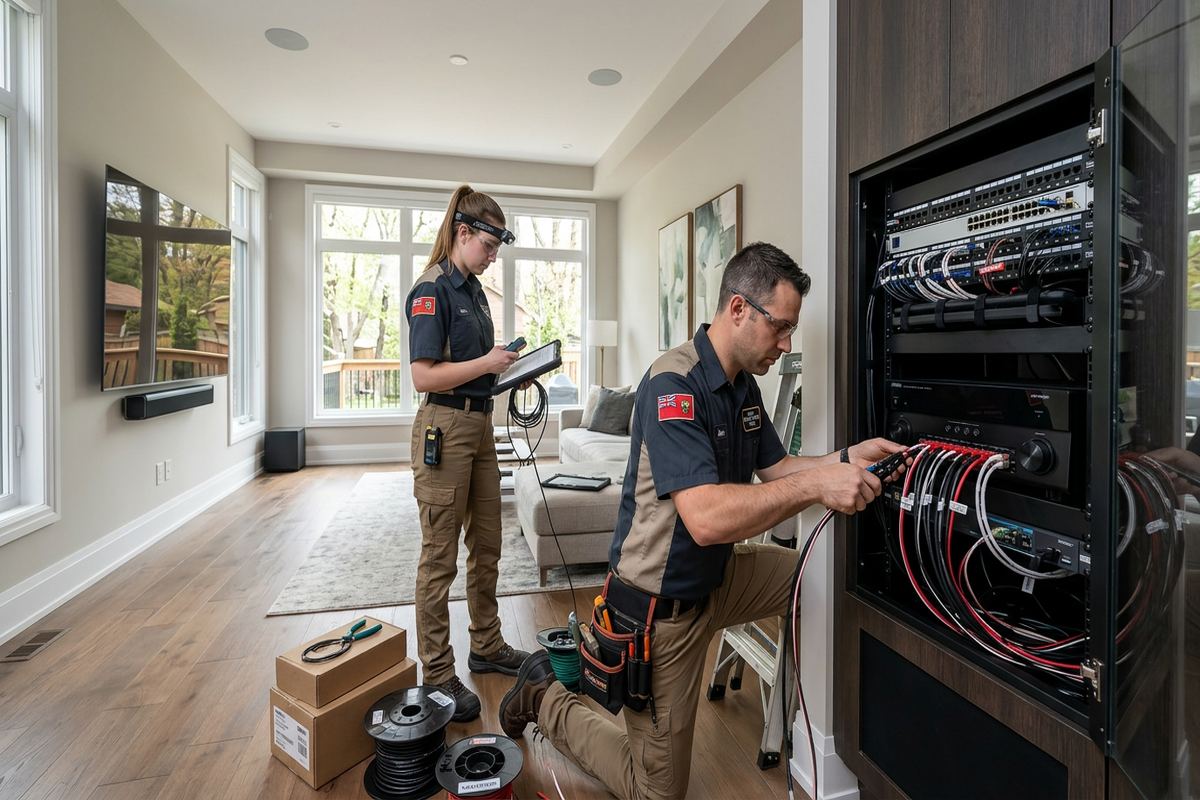
Outdoor Speaker Planning for Bolton Properties
A useful outdoor audio system starts with coverage planning rather than simply attaching speakers to the nearest wall. During a Bolton site assessment, we review the listening areas, nearby rooms, property boundaries, available power, control preferences and practical cable routes. Speaker quantity and placement depend on the shape of the patio, deck, yard or work area, not just its total size. The goal is consistent sound at moderate levels, reducing the temptation to turn one or two speakers up loudly enough to disturb adjacent properties or create harsh sound near the mounting points.
Valley-side homes around Bolton can have stepped yards, raised decks, retaining walls and listening areas at different elevations. Those features affect how sound travels and whether a wall-mounted speaker can reach the intended area without projecting beyond it. We consider mounting height, speaker direction, vegetation, fences, rooflines and seasonal use before defining locations. Where one pair cannot cover the space evenly, several speakers operating at lower volume may provide a better result. The written scope records proposed device placement and identifies any areas where landscaping or access limits the available installation options.
The same planning method applies to storefronts, service areas and industrial units, although operational needs are different. A business may require background audio at an entrance, break area, loading area or customer-facing patio, with controls kept away from general access. We confirm whether the system will carry music, paging or both, and whether separate zones are necessary. Commercial installations also require attention to opening hours, wall construction, cable protection and existing equipment. UnifiedLink provides one accountable contractor for cabling, mounting, amplification, configuration and system handover rather than dividing those tasks among unrelated trades.
- Patio, deck and yard coverage planning
- Speaker direction and boundary considerations
- Residential and commercial audio zones
- Amplifier and control location review
- Documented equipment and device placement
Choosing Weather-Rated Outdoor Audio Equipment
Outdoor speakers need to tolerate moisture, temperature changes and prolonged exposure, but an outdoor label alone does not make every product suitable for every position. A sheltered soffit location faces different conditions from an open garden, uncovered wall or loading area. We select equipment according to exposure, mounting surface, required output, listening distance and connection method. The assessment also considers whether snow accumulation, roof runoff, irrigation or wind-driven rain can reach the speaker. Equipment should be installed in the orientation intended by its manufacturer so drainage, brackets, grilles and connection points continue to work as designed.
Bolton winters introduce repeated freezing and thawing that can loosen poor fasteners, stress exterior sealant and allow trapped water to expand. Mounting hardware must suit the substrate and remain stable as exterior materials move through seasonal temperature changes. Cable entries are positioned and sealed to limit water migration while allowing the assembly to shed moisture. We avoid relying on exposed indoor connectors or improvised enclosures. Where connections must remain outside, their protection is included in the installation plan, along with service access for future inspection, speaker replacement or changes to the surrounding deck, siding or landscaping.
Amplifier selection matters as much as the speakers. The amplifier must support the planned load, number of zones, cable distances and expected listening level without being operated beyond its practical limits. Depending on the property, it may be installed in a utility room, communications area, office cabinet or protected entertainment space. Ventilation, electrical access and network connectivity are reviewed before placement. If the customer wants app control, streaming or integration with an existing audio system, compatibility is confirmed in the written scope. Final configuration uses the customer’s own credentials rather than an installer-controlled personal account.
- Equipment matched to actual weather exposure
- Corrosion-resistant mounting hardware where appropriate
- Amplification sized for the planned speaker load
- Protected exterior connections and cable entries
- Customer-owned control and streaming credentials
Speaker Placement Around Bolton Homes
Residential layouts vary considerably between Bolton North Hill, Bolton South Hill and Old Bolton, so placement should follow the building rather than a standard diagram. Newer frame construction may provide accessible basement or attic pathways, while older finished areas can require a more careful route to avoid unnecessary openings. Masonry walls, stone facades, soffits and additions each call for different anchors and penetration details. We identify the substrate before drilling and choose a route that keeps cable protected. Where concealed access is limited, a neat exterior pathway may be preferable to disruptive work through several finished rooms.
For a typical patio or deck, speakers are aimed toward the listening area and away from nearby homes where practical. Mounting them under an overhang can reduce direct exposure, but the roofline must not block sound or create an overly loud zone close to the wall. Large yards may benefit from landscape speakers or a distributed design instead of high-output wall speakers. Pools, hot tubs and outdoor kitchens add clearance, electrical and placement considerations that must be reviewed on site. Existing lighting, cameras, eavestroughs and retractable awnings can also affect where brackets and cables can be installed safely.
Condominium, rental and managed properties require approval before exterior surfaces or shared elements are altered. A unit owner may control the patio furnishings but not the exterior wall, soffit, railing or pathway used for cabling. Landlords may also set rules for drilling, visible conduit or equipment left with the property. UnifiedLink can document proposed locations and routes for the customer to submit, but the customer remains responsible for obtaining permission. Equipment ownership is stated in the written scope, reducing uncertainty when a tenant moves, a property is sold or shared-area rules later change.
- Placement for decks, patios and pools
- Mounting suited to masonry or framing
- Low-volume distributed coverage options
- Routes coordinated with existing exterior devices
- Approval requirements identified before drilling
Bolton, Ontario
Outdoor speaker installation in Bolton, scoped in writing first
Book a site assessment and get equipment, routes, exclusions, and warranty on paper before anything is installed.
Exterior Cabling, Mounting and Sealing in Bolton
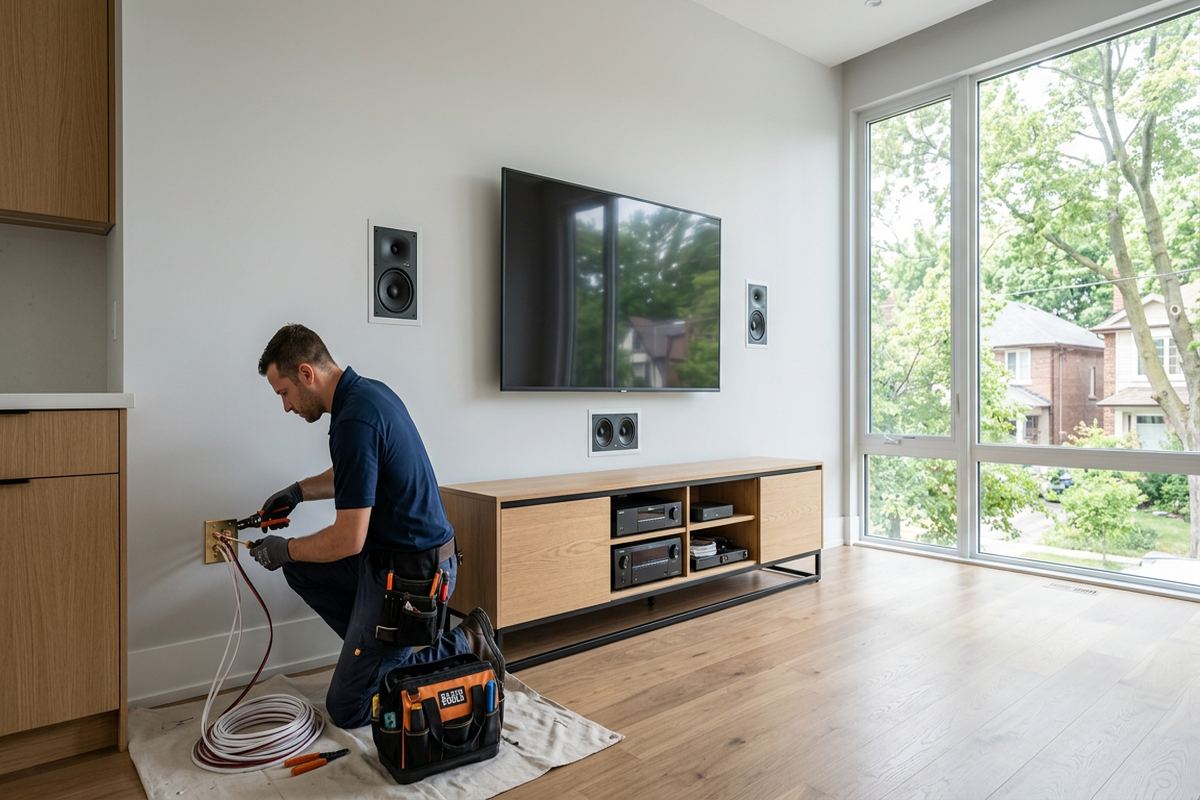
Cable is selected and routed for the environment in which it will operate. Indoor speaker wire should not be left exposed outside or placed underground without a suitable pathway and rating. We plan continuous labelled cable runs from the amplifier or connection point to each speaker wherever the design permits, avoiding hidden splices that complicate troubleshooting. Exterior sections are supported, protected from sharp edges and kept away from locations where ladders, garden tools or moving equipment can damage them. Any conduit or surface pathway is discussed before work begins so its location and appearance are understood.
Exterior penetrations require more than a bead of sealant over an untidy hole. The route should limit direct water entry, avoid trapping moisture and account for the wall assembly behind the visible finish. Brick veneer, solid masonry, siding and stucco require different drilling and fastening methods. On Bolton properties with mixed materials or later additions, the interior and exterior surfaces may not line up as expected. We examine accessible conditions, choose an appropriate entry point and seal around the cable or sleeve. Penetrations remain accessible enough to inspect rather than being hidden behind improvised trim or loose insulation.
Mounting brackets carry repeated wind, vibration and seasonal loads, so attachment to a suitable substrate is essential. Fasteners that work in wood framing are not interchangeable with anchors intended for brick or concrete. We also avoid placing unnecessary stress on thin cladding, fascia covers or decorative components that cannot support the speaker. After mounting, speaker angle and bracket tension are checked before cabling is terminated. The installation is then tested at normal operating levels. Photographs and an as-built record identify device positions, cable destinations and relevant access points for future service, renovations or equipment replacement.
- Continuous labelled speaker cable runs
- Exterior-rated pathways where required
- Substrate-specific anchors and fasteners
- Carefully sealed wall penetrations
- As-built cable and device record
Bolton Commercial and Industrial Speaker Systems
Commercial audio needs a defined purpose before equipment is selected. Along Bolton’s commercial strips, an exterior system may support a customer patio, entrance, seasonal display or staff area. In Bolton Industrial Park, common applications include loading zones, fenced yards, break spaces and building approaches. Ambient noise, operating hours and the distance between listeners can change the design substantially. A distributed system may provide clearer, more controlled coverage than a few loud speakers. We also identify who needs control, where volume changes should be permitted and whether public-facing and staff areas require separate zones.
Industrial units often combine concrete block, insulated metal panels, steel framing and finished office areas. Each material affects bracket attachment and cable routing. Exterior conduit may need mechanical protection near loading activity, while interior pathways must avoid interfering with racking, doors, machinery or future tenant improvements. The site assessment records accessible routes and areas requiring coordination with the owner, property manager or other trades. If a lift or special access is likely to be required, that condition is identified in the scope rather than treated as an unplanned installation-day change.
Business systems may connect to an existing amplifier, paging platform, network streamer or source device, but compatibility should be verified before new speakers are added. An amplifier can appear to have spare outputs while lacking the capacity or zoning needed for the proposed load. We document equipment intended for reuse and state whether it remains customer-owned. Configuration includes practical volume limits, source selection and zone testing where supported. At handover, the business receives its credentials and an as-built record, enabling staff or a future contractor to understand the system without tracing unidentified cables through the property.
- Customer, staff and loading-area audio zones
- Cable protection around commercial activity
- Existing amplifier compatibility checks
- Controls limited to appropriate staff
- Documented handover for property managers
System Controls, Sources and Audio Zones
Control should match how the outdoor space is actually used. A simple patio may need one source and one volume control, while a larger home could require independent deck, pool and indoor zones. Businesses may want scheduled background audio with restricted access to settings. We review whether controls will use a wall keypad, approved mobile application, network streamer, remote or existing automation platform. Reliable operation depends on compatible components and adequate network coverage, so wireless control is not assumed to work outdoors without verification. Physical control options can remain useful when phones are unavailable or staff change.
Streaming services and source devices introduce account, network and licensing considerations beyond the speaker wiring itself. UnifiedLink configures supported equipment on site using credentials supplied or created by the customer. We do not retain ownership of the customer’s audio account or make the installation dependent on an installer’s personal login. For commercial environments, the customer should confirm that its chosen music source is appropriate for business use. The written scope identifies included source equipment, integrations and exclusions, helping distinguish the installed audio infrastructure from third-party subscriptions, content services or customer-supplied devices.
Separate zones make sense when listening areas have different schedules, users or acoustic conditions. A quiet seating area should not be tied permanently to a louder work area, and indoor volume changes should not unexpectedly alter outdoor speakers. Zoning can be handled through dedicated amplifier channels, suitable speaker controls or a compatible audio platform. During configuration, we name zones clearly, confirm source selection and establish normal operating ranges. The system is demonstrated with the customer present, including startup, shutdown and basic troubleshooting. Any limitations caused by existing equipment or network conditions are recorded at handover.
- Independent outdoor and indoor audio zones
- App, keypad or physical volume control
- Customer-owned accounts and credentials
- Clearly named sources and listening areas
- On-site operation and troubleshooting review
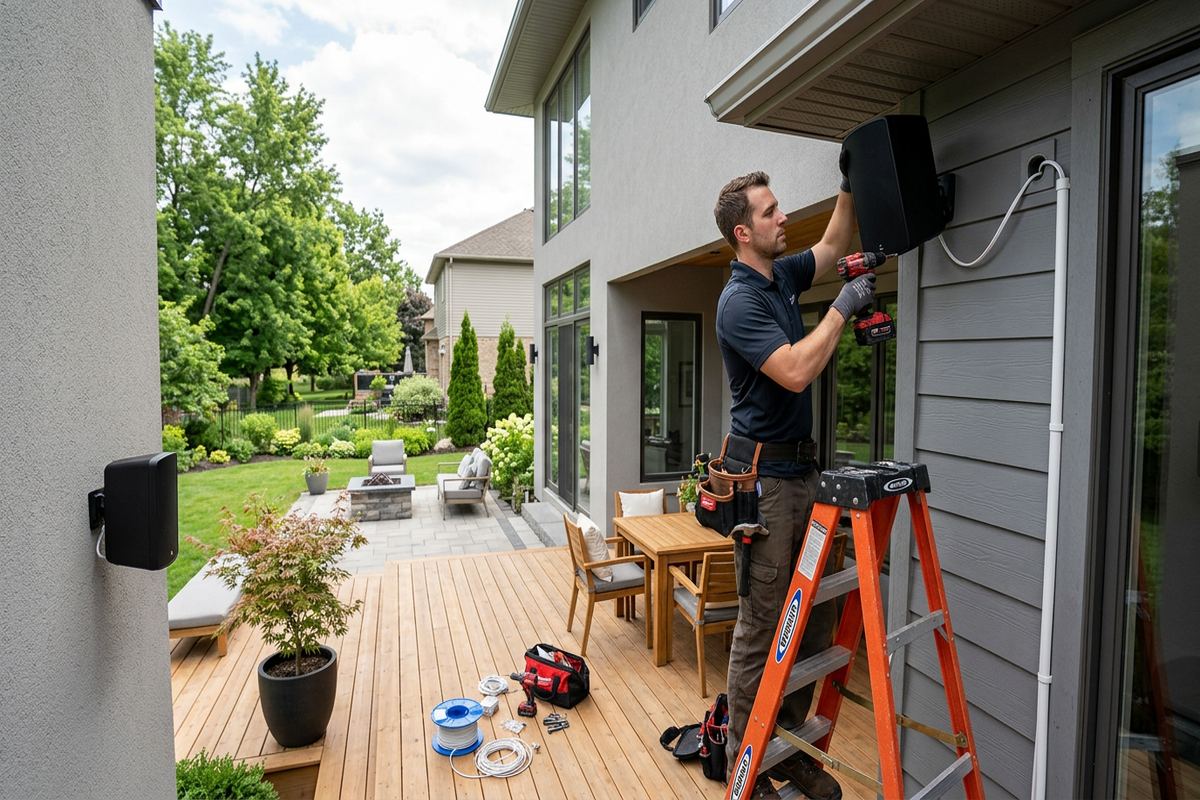
Installation Process for Outdoor Speakers in Bolton
Every project begins with a site assessment before pricing. We inspect the intended listening areas, likely mounting surfaces, cable pathways, equipment location, power availability and any existing audio or network components. For Bolton homes, that may include checking access through a basement, garage, attic or finished addition. For commercial and industrial properties, we also review working areas, ceiling heights, loading activity and property-management requirements. Site assessment timing depends on the service and travel distance. Requests sent during business hours are answered the same day; after-hours requests are answered the next business day.
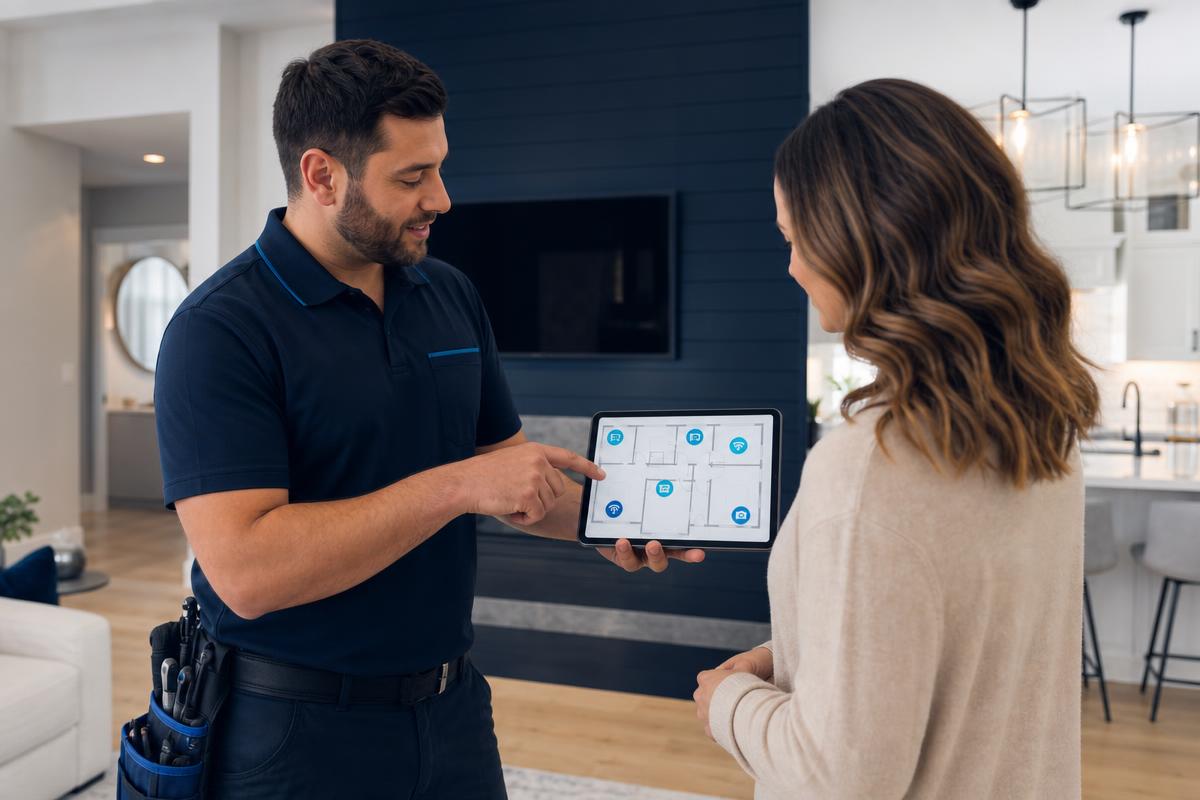
Following the assessment, UnifiedLink prepares a written scope covering equipment, cable routes, device placement, exclusions, equipment ownership and warranty. This is the point to resolve preferences about visible conduit, speaker colour, control locations, retained equipment and future expansion. The scope also identifies assumptions that require customer confirmation, such as landlord approval or access to locked utility spaces. Pricing follows the assessed scope rather than a generic package. If conditions change before installation, the route or equipment can be reviewed in writing, reducing the chance of informal substitutions or unexpected openings in finished surfaces.
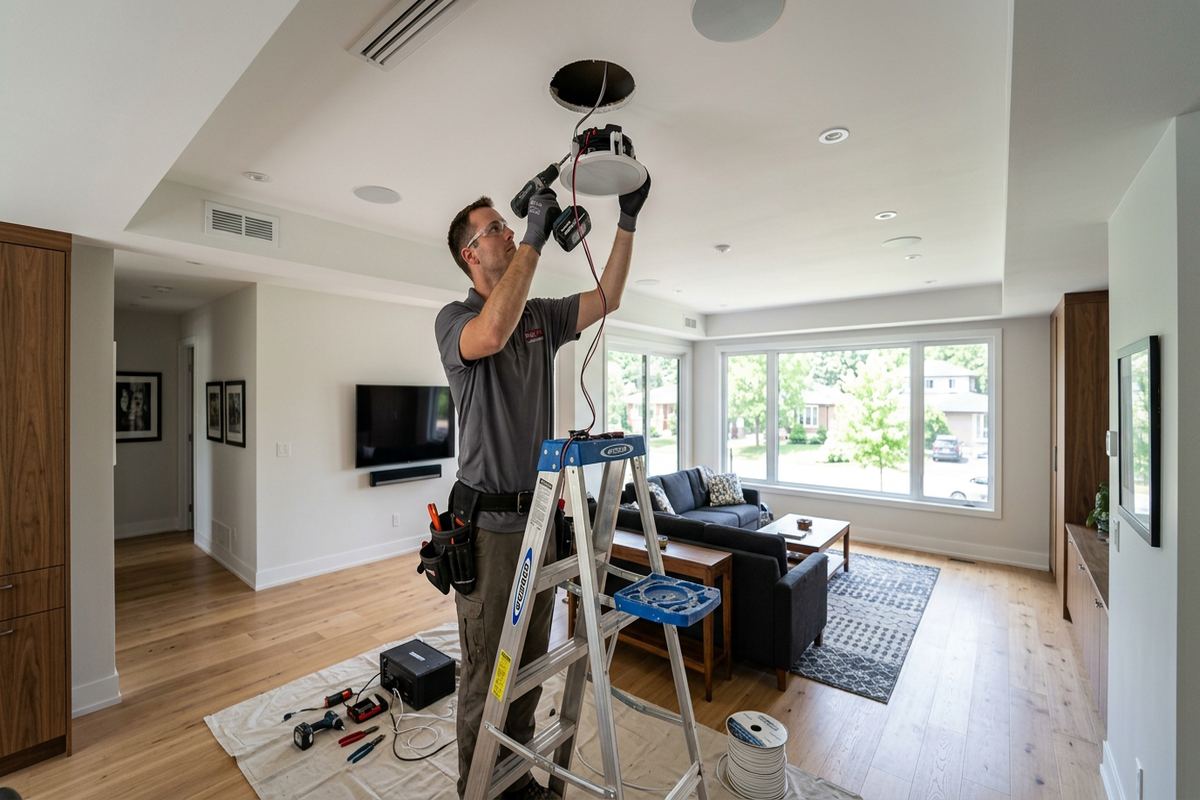
Installation includes cable placement, mounting, termination, on-site configuration and functional testing according to the agreed scope. We label continuous runs and keep amplifier connections understandable rather than leaving an unidentified bundle behind the equipment. Each speaker is checked for operation, orientation and balanced coverage, then controls and zones are tested from the customer’s normal devices. Handover includes the customer’s own credentials and an as-built record. With one accountable contractor handling the low-voltage work, questions about cabling, speakers and configuration do not have to be passed between separate installers.
- Assessment completed before project pricing
- Written equipment and route scope
- Installation coordinated around property access
- On-site configuration and coverage testing
- Credentials and as-built record at handover
Maintaining Outdoor Audio Through Bolton Seasons
Outdoor audio should be inspected periodically, especially after severe winter weather, exterior renovations or changes to landscaping. A visual check can identify a shifted speaker, loose bracket, damaged cable support or sealant that has separated from the surrounding surface. Freeze-thaw cycles around Bolton can expose small weaknesses that were not apparent during warmer months. Speakers should not be pressure-washed, painted over or used as supports for decorations. Snow and debris should be allowed to clear without striking grilles or forcing moisture into connection areas. Any movement at the mount should be addressed promptly.
Changes elsewhere on the property can affect system performance even when the speakers remain intact. New fences, privacy screens, awnings, trees or additions may block sound and create uneven coverage. Network replacements can also interrupt app-based control or streaming sources. Before moving speakers or extending cables, it is worth reviewing the original route and amplifier capacity. The as-built record helps locate cable destinations and equipment connections without reopening finished surfaces unnecessarily. If a deck is being rebuilt or cladding replaced, coordinating audio work early allows penetrations and pathways to be handled as part of the project.
A well-documented system can be adapted when outdoor use changes. A homeowner may add a covered seating area, while a Bolton business may divide a yard or change how a staff space operates. Expansion is not always a matter of connecting another speaker; the amplifier load, zone design, cable distance and control platform must still support the addition. We assess existing equipment before proposing changes and identify components that can reasonably remain. This approach preserves useful infrastructure while avoiding hidden splices, overloaded outputs or mismatched controls that make the expanded system difficult to operate and maintain.
- Seasonal bracket and seal inspection
- Checks after renovations or landscaping changes
- Network and streaming control review
- Capacity assessment before system expansion
- Existing infrastructure reused where practical
Bolton neighbourhoods we cover
- Bolton North Hill
- Bolton South Hill
- Old Bolton
- Bolton Industrial Park
Outdoor speaker installation in Bolton — common questions
Can outdoor speakers stay installed through a Bolton winter?
Yes, when the speakers are rated for the intended exposure and installed correctly. Bolton’s freeze-thaw cycles make mounting, drainage, cable protection and sealed penetrations important. A sheltered location can reduce direct exposure, but it does not replace suitable equipment. Periodic visual inspection is recommended after severe weather, especially if a bracket moves, sealant separates or snow and ice collect near the speaker.
How many speakers does my patio need?
The answer depends on the patio shape, listening distance, mounting options and neighbouring properties. Many Bolton patios sound better with several speakers at moderate volume than with one pair playing loudly from the house. During the assessment, we consider rooflines, fences, elevation changes and nearby seating. The written scope shows the proposed locations and explains whether separate zones or landscape speakers are appropriate.
Can you run the wiring without opening finished walls?
Often, but the available route must be inspected first. Bolton homes may provide access through a basement, garage, attic, soffit or existing utility pathway. Masonry, finished additions and inaccessible ceilings can limit concealed routes. Where necessary, we can plan a neat exterior pathway or conduit. The route, visible sections and expected openings are documented in the written scope before installation.
Do I need condo, landlord or property-manager approval?
Approval may be required whenever speakers, brackets, conduit or cable penetrations affect an exterior wall, railing, soffit or other shared element. This applies to many condos, rentals and managed commercial properties in Bolton. UnifiedLink can provide proposed equipment locations and cable routes for your submission, but the customer is responsible for obtaining permission before work begins. Equipment ownership is also recorded in the scope.
Can outdoor speakers connect to my existing audio system?
Possibly. We need to confirm the existing amplifier’s supported load, available zones, connection type and compatibility with the proposed speakers. Spare terminals do not necessarily mean spare capacity. We also review control and streaming requirements, including network coverage outside. Equipment intended for reuse is identified during the Bolton site assessment, and any limitations or required additions are included in the written scope.
Can you install speakers at a Bolton business or industrial unit?
Yes. Outdoor systems can be planned for customer patios, entrances, staff spaces, loading areas and fenced yards in Bolton, including Bolton Industrial Park. Commercial work may require protected cable routes, separate zones, restricted controls and property-manager coordination. We assess wall construction, ambient noise, operating conditions and existing equipment before pricing, then provide a written scope for the proposed installation.
Coverage in Bolton is confirmed against the address before we quote. See everything we install in Bolton or the province-wide outdoor speaker installation page.