UnifiedLink installs commercial access control systems for businesses and managed properties in Bolton. We assess each site before pricing, then define readers, credentials, locking hardware, cable routes and system responsibilities in writing. Installation includes labelled cabling, on-site configuration and handover using the customer’s own administrative credentials.
Commercial Access Control Planning in Bolton
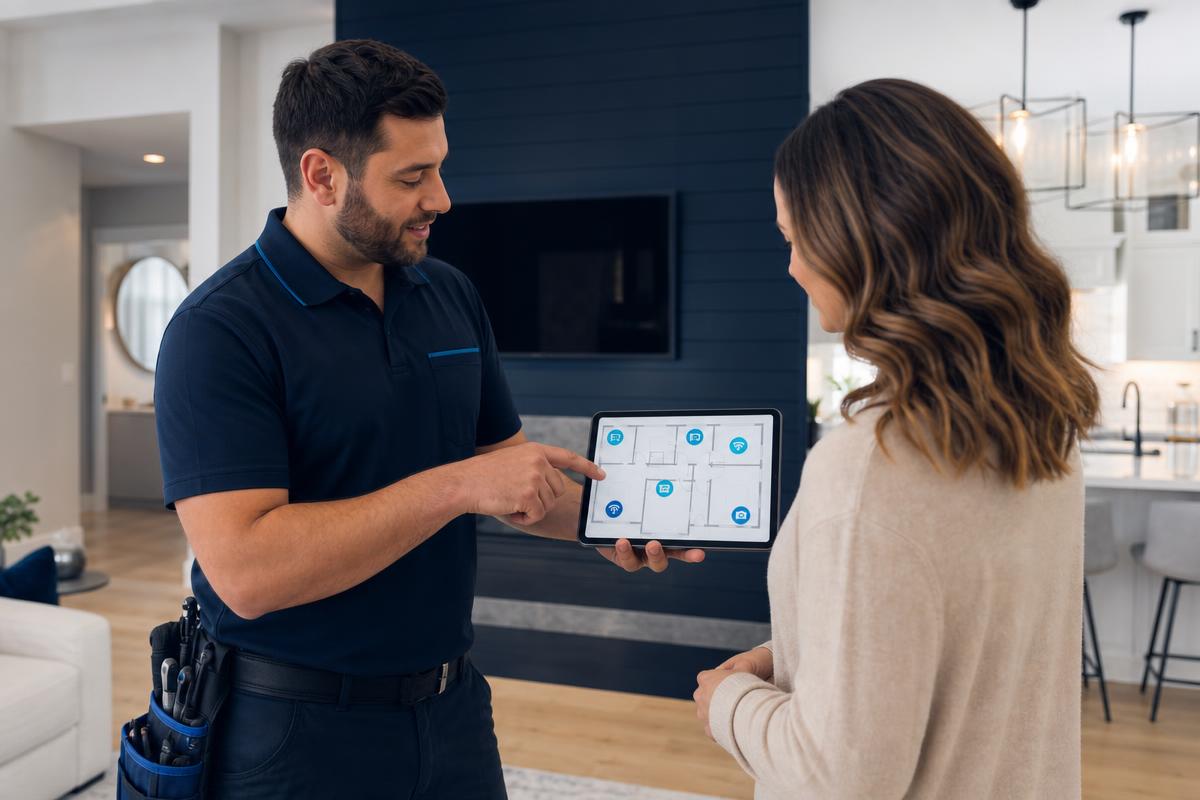
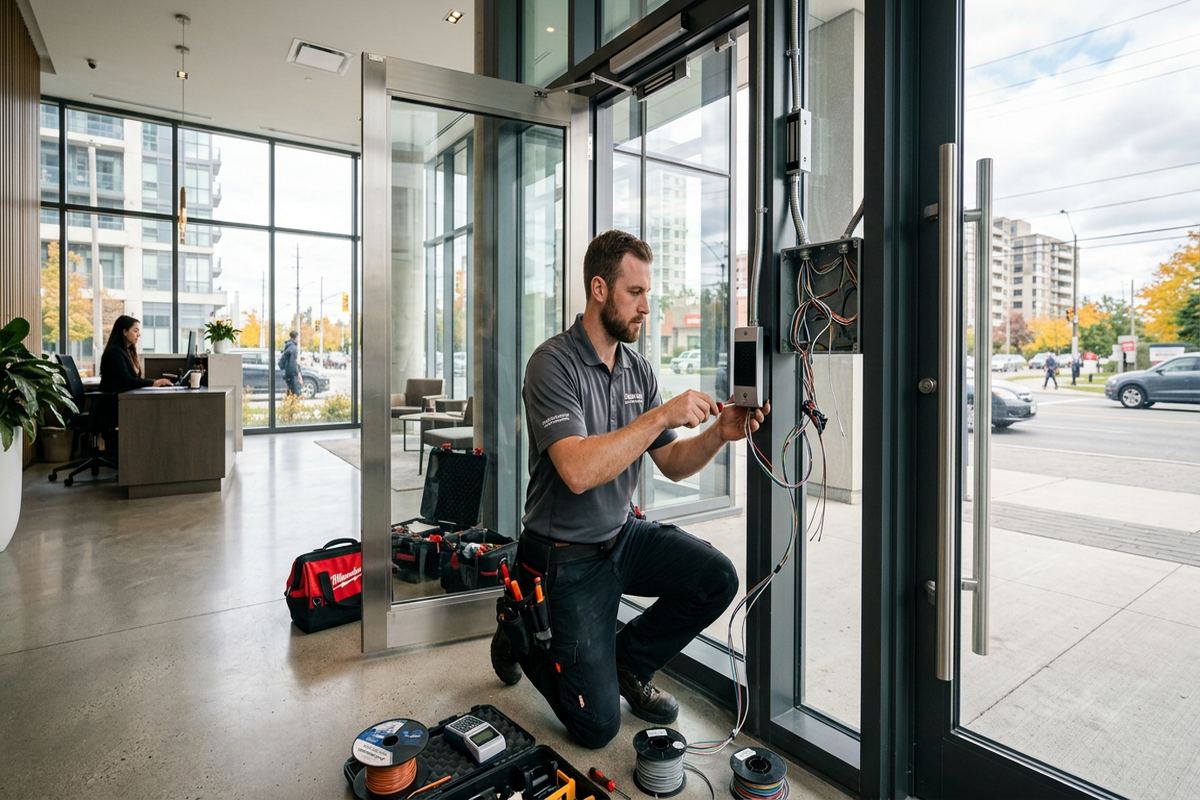
A commercial access control project starts with how people, deliveries and contractors actually move through the property. In Bolton, that may mean a front office entrance, a staff door, a shipping entrance and several internal areas requiring different permissions. UnifiedLink assesses each opening, existing lock, frame, power source and network connection before recommending equipment. The review also considers emergency egress, accessibility, reception procedures and what should happen during a power or network interruption. This produces a practical door schedule rather than a collection of readers installed without a clear operating plan or defined responsibilities.
Bolton’s mix of commercial strips and industrial units calls for site-specific design. A small professional office may need scheduled entry and simple card management, while a unit in Bolton Industrial Park may separate warehouse, office, shipping and restricted storage access. Shared vestibules, neighbouring tenants and landlord-controlled exterior doors can affect where equipment may be mounted. During assessment, we identify controlled boundaries, user groups and management needs. Where work touches common property or leased premises, the customer remains responsible for securing required landlord, condominium or property-management approvals before installation begins.
Before pricing, UnifiedLink provides a written scope describing the proposed equipment, cable routes, device placement, exclusions, equipment ownership and warranty. It also records assumptions about existing doors, network availability, electrical work and third-party systems. This matters because an access reader cannot correct a binding door, damaged closer or unsuitable frame. Defining those conditions early helps separate access control work from locksmith, door, fire alarm or electrical work that another trade may need to complete. The result is a coordinated installation plan with fewer unanswered questions when work begins on site.
- Site assessment before pricing
- Door, frame and lock condition review
- Defined users, schedules and access groups
- Written equipment and cable scope
- Landlord or condominium approval considerations
Choosing Readers, Credentials and Controllers
Credential choice affects daily administration as much as door security. Cards and fobs provide straightforward issuance and replacement, while supported mobile credentials may suit businesses that already manage staff through company phones. Keypads can add a second factor or provide controlled access where issuing a credential is impractical. The correct approach depends on turnover, visitor procedures, device policies and the consequences of shared codes. UnifiedLink configures named users and access groups where the selected platform supports them, helping managers revoke one credential without changing access for everyone who uses the same entrance.
Controllers may operate as a local system, through customer-managed software or through a supported hosted platform. The design should reflect who will administer it, whether remote management is required and what functions remain available when internet service is interrupted. Network-connected equipment belongs on an appropriate network segment with customer-approved addressing and account controls. UnifiedLink reviews these dependencies during planning and identifies recurring platform requirements without inventing them after installation. Administrative access is handed over using the customer’s own credentials, so a manager or authorized representative controls enrolment, schedules, reports and future changes.
Not every door requires the same authentication method or permission schedule. Public-facing entrances may unlock during business hours, staff doors may remain credential-controlled, and storage or technical rooms may be restricted to specific roles. In an industrial unit, shipping access can require different hours from office access. A useful design maps these operating rules before programming begins. It also identifies temporary credentials for contractors, procedures for lost cards and who may review event records. Clear policies reduce reliance on permanent exceptions, shared credentials and doors being propped open when access rules do not match daily operations.
- Cards, fobs, keypads or supported mobile credentials
- Role-based access groups
- Business-hour and after-hours schedules
- Temporary contractor credential options
- Customer-controlled administrator accounts
Door Hardware for Bolton Properties
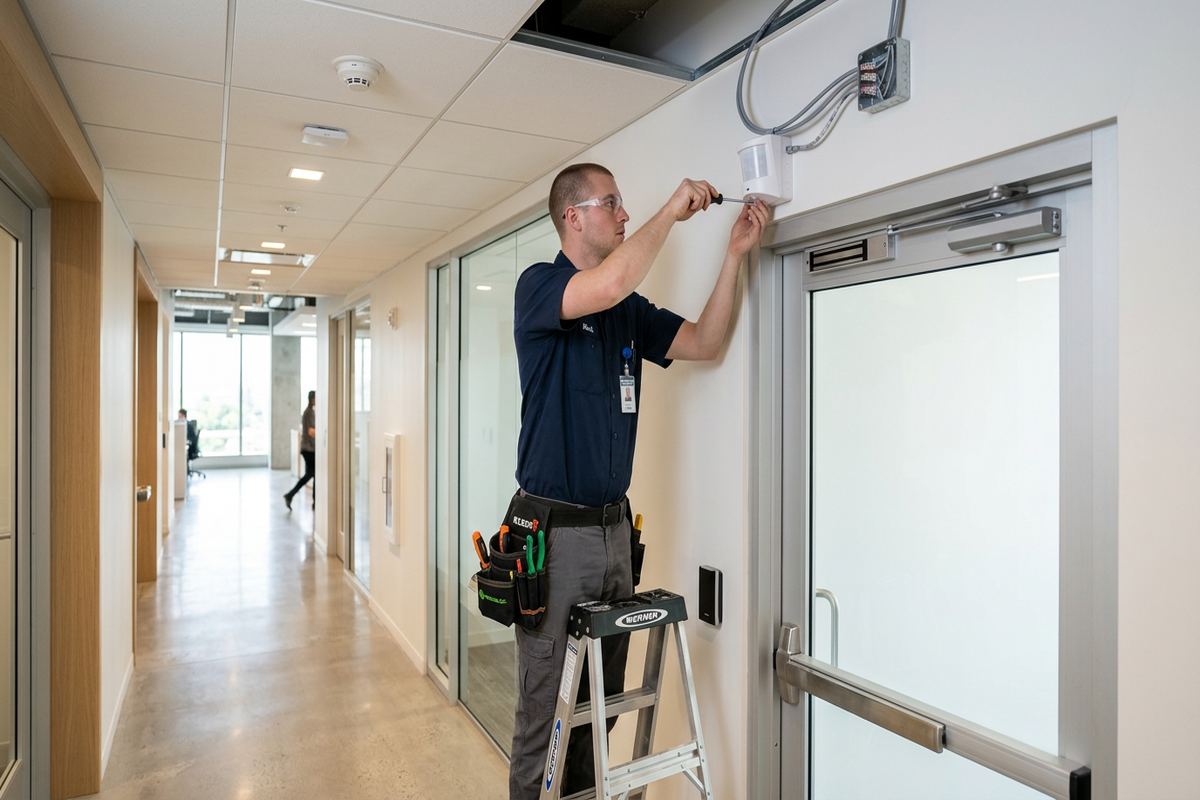
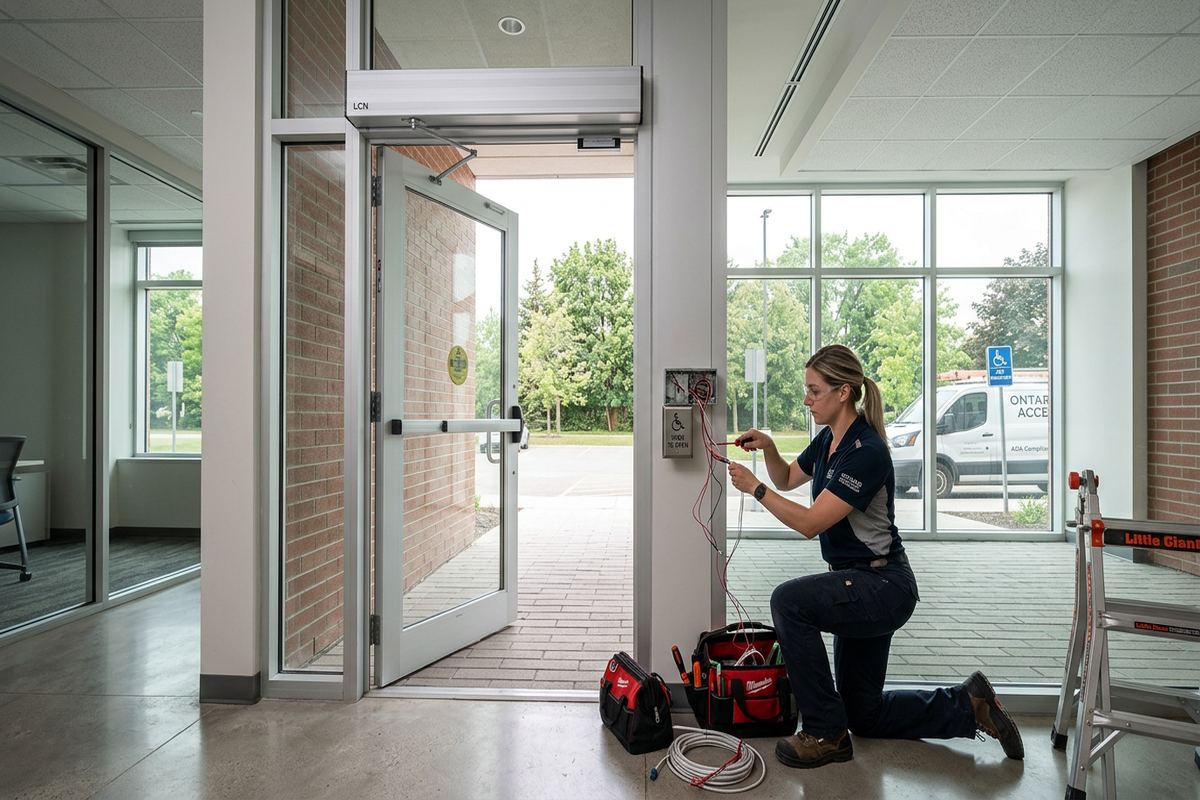
Access control operates through the physical opening, so reader selection cannot be separated from locking hardware. Existing commercial doors may use electric strikes, magnetic locks, electrified exit hardware or other compatible components, depending on the frame, egress requirements and intended operation. We inspect the door material, latch alignment, closer action, hinge condition and available cable path. If a door drags, fails to latch or moves in its frame, that issue should be corrected before electronic control is expected to work reliably. Hardware recommendations remain subject to applicable building, fire, accessibility and electrical requirements.
Construction type changes installation methods across Bolton. Masonry walls may require surface raceway, careful drilling or a route through an accessible ceiling, while frame construction can sometimes accommodate concealed low-voltage cabling. Older finishes in Old Bolton may limit intrusive routing or require coordination with a landlord before openings are made. Newer commercial interiors can still contain fire separations, insulated walls and blocked pathways that prevent a direct cable run. The site assessment documents a route that protects the cable, avoids unnecessary visible work and identifies penetrations requiring appropriate sealing or treatment by the responsible trade.
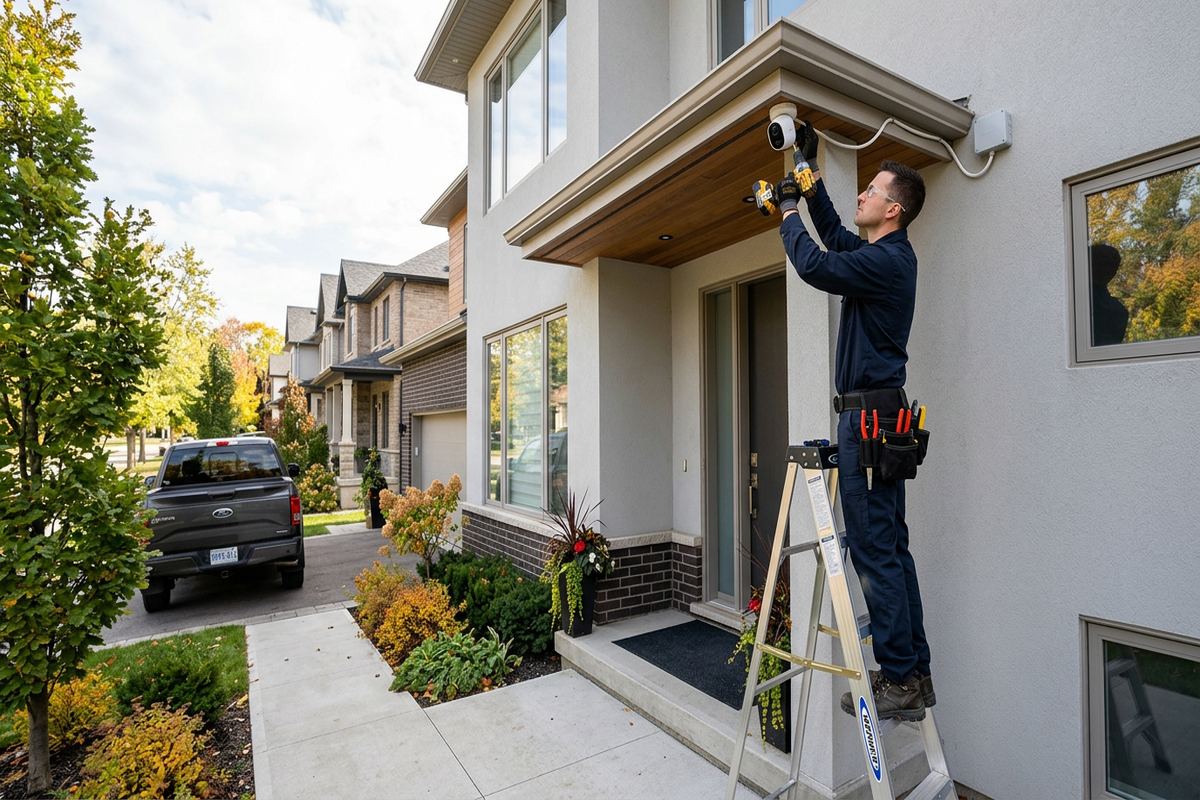
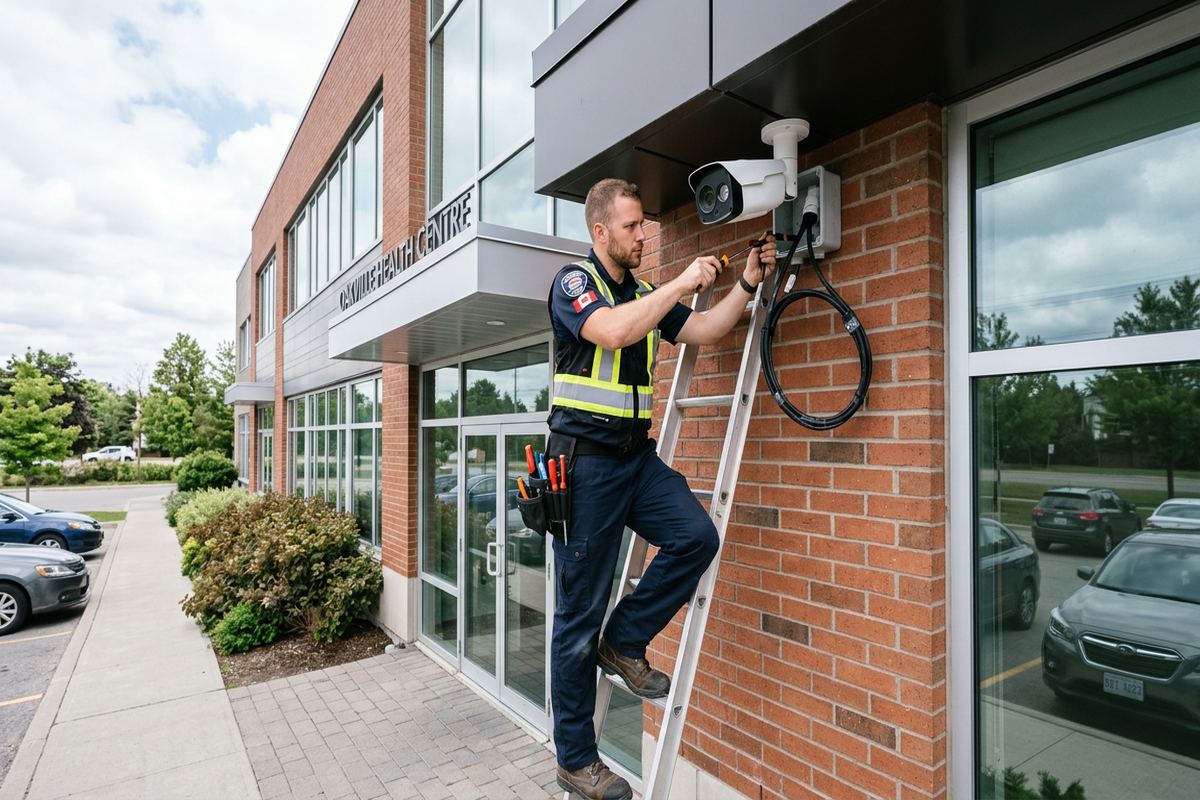
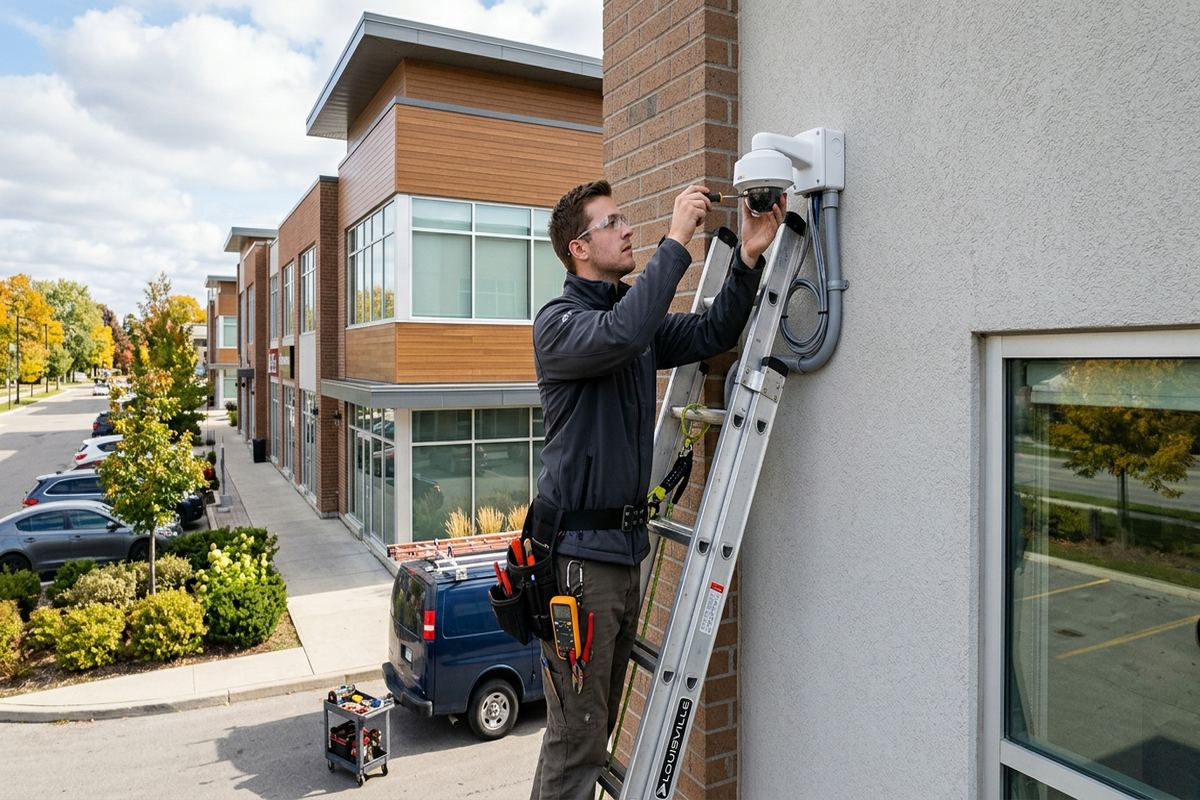
Exterior doors receive particular attention because Bolton winters expose hardware and cable entries to moisture, snow, ice and repeated freeze-thaw cycles. Readers and request-to-exit devices must be suitable for their mounting location, while penetrations need proper sealing to reduce water entry. Door movement can also change seasonally as frames, thresholds and seals respond to temperature. We consider sheltered versus exposed elevations, snow accumulation near low devices and the possibility of condensation. Exterior installations are planned with compatible mounting hardware and drip-resistant cable entry, without assuming that an indoor-rated component will remain dependable outside.
- Lock and frame compatibility checks
- Masonry and frame cable-route planning
- Exterior-rated devices where required
- Sealed outdoor cable penetrations
- Egress and accessibility considerations
Bolton, Ontario
Commercial access control installation in Bolton, scoped in writing first
Book a site assessment and get equipment, routes, exclusions, and warranty on paper before anything is installed.
Access Control Cabling in Bolton
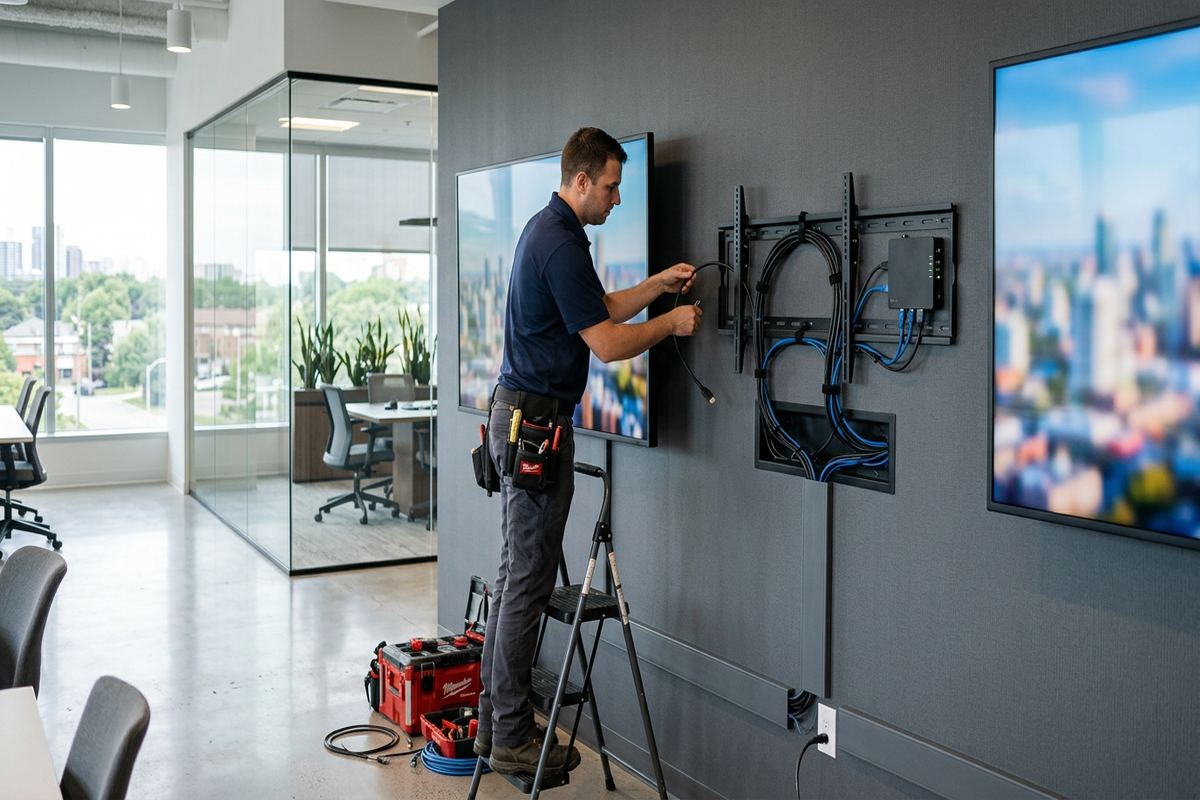
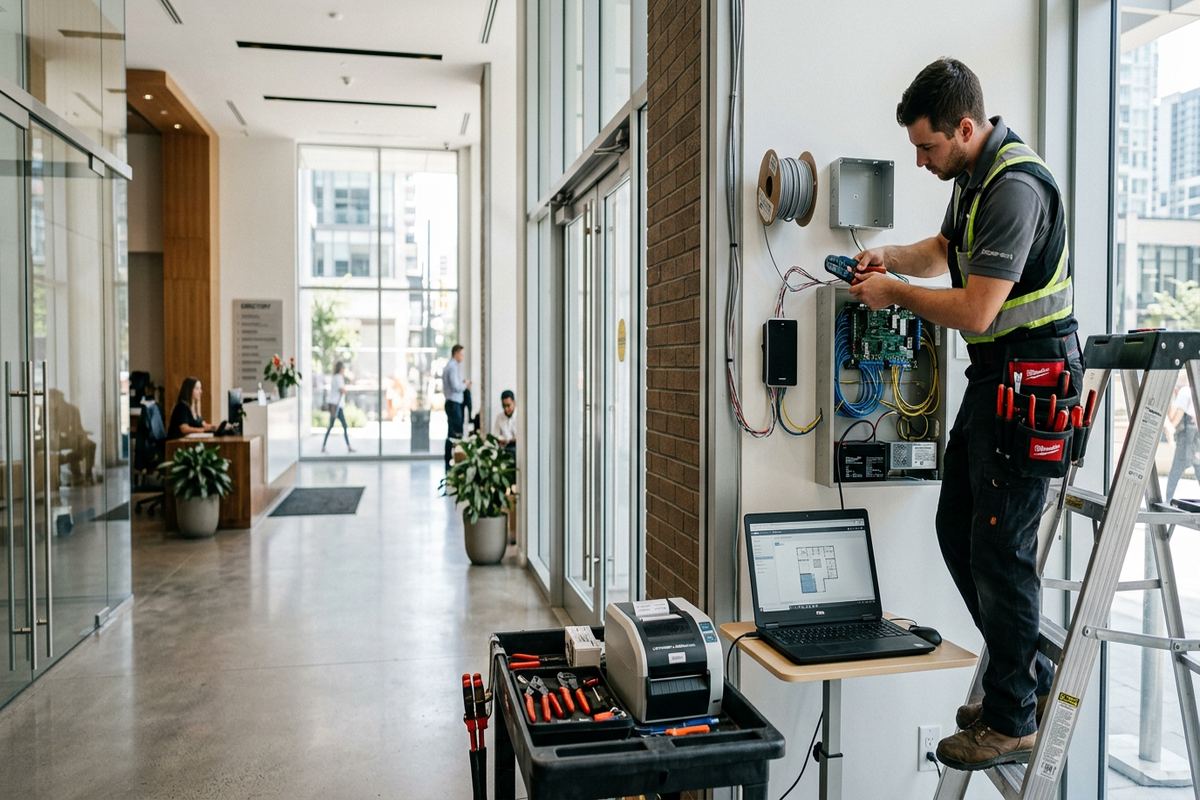
Reliable access control depends on continuous, identifiable cable runs between door devices, controllers, power equipment and network points. UnifiedLink installs labelled low-voltage cabling according to the approved route, avoiding undocumented splices that make future troubleshooting difficult. Reader, lock, contact and request-to-exit conductors are selected for the equipment and distance involved. At the head end, cables are organized and identified to match the door schedule. Where pathways pass through finished offices, warehouse ceilings or service rooms, mounting and support methods are chosen for the environment rather than leaving loose cable across building systems.
Bolton Industrial Park units often combine office ceilings with high warehouse spaces, concrete walls, loading areas and shared utility rooms. These conditions can make an apparently short door run more complex than a floor plan suggests. Lift access, protected pathways or surface-mounted raceway may be needed, depending on height and construction. We trace practical routes during assessment and state access assumptions in the written scope. If another contractor must provide conduit, electrical power, network service or fire stopping, that responsibility is identified before work proceeds instead of being treated as an undefined installation extra.
Power planning includes the controller, locking hardware and any required interface equipment. Lock current, cable distance, battery provisions and enclosure capacity must be considered together. A system should also have a documented response to power loss: some doors may need to remain secure, while life-safety and egress requirements govern how others release. We do not treat backup power as a universal substitute for proper door planning. The scope identifies proposed power arrangements and relevant dependencies, including customer-provided receptacles or work by a licensed electrical contractor where line-voltage changes are required.
- Continuous labelled cable runs
- Organized controller terminations
- Routes planned for warehouse heights
- Power and voltage-drop considerations
- Third-party pathway requirements documented
Installation and Configuration Across Bolton
Installation is coordinated door by door to limit disruption to staff, tenants and deliveries. Work typically includes mounting approved devices, pulling and terminating cable, connecting controllers and configuring the selected platform on site. Each opening is checked through normal entry, exit and locked states rather than testing only whether a reader beeps. Where a business must remain operational, the work sequence can prioritize public entrances, staff access or shipping doors according to the agreed plan. Any unexpected door, pathway or network condition is reviewed before changing the written scope or equipment selection.
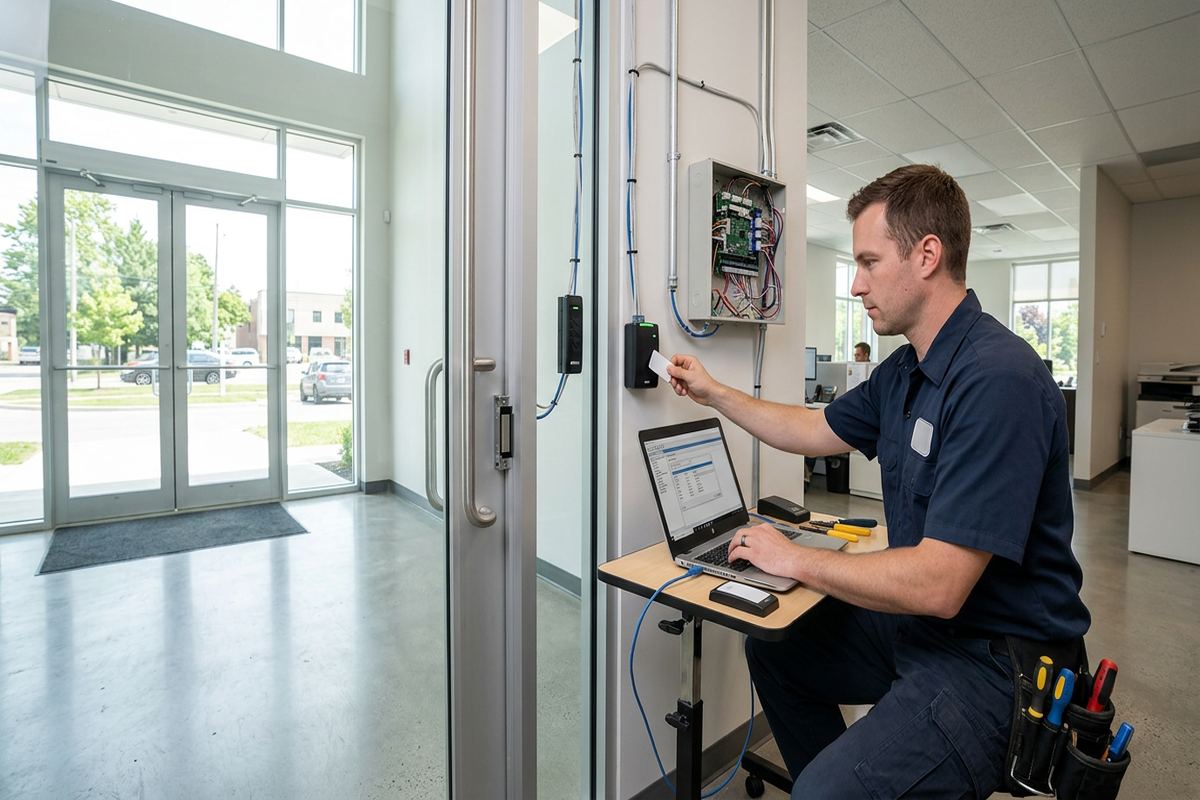
Configuration translates the access plan into user roles, schedules and door behaviour. We set up approved access groups, door names and time rules, then test valid and invalid credentials. Door contacts, request-to-exit devices and lock outputs are checked where included. Event records are reviewed to confirm that actions appear against the correct opening. For properties with separate office and warehouse operations, permissions can reflect those divisions without granting every employee access everywhere. Final settings are reviewed with the designated administrator so the operating rules are understood rather than hidden behind installer-only accounts.
Occupied commercial properties can involve landlord systems, shared entrances or existing alarm and video equipment. Integration is not assumed simply because products have network ports or similar labels. We confirm supported interfaces, required licences and responsibility for each connected system before including integration in the scope. A landlord may control the base-building entrance while a Bolton tenant controls only its suite door. In that case, separate credentials or administration may remain necessary. Clear boundaries prevent a new tenant system from interfering with common access, fire alarm functions or equipment owned by another party.
- Sequenced work around business operations
- On-site controller and reader setup
- Credential and schedule testing
- Supported integrations defined in writing
- No installer-only customer accounts
Bolton Industrial and Multi-Tenant Applications
Industrial properties frequently need more than a single controlled entrance. Shipping doors, employee entries, office-to-warehouse doors, tool rooms and network rooms may each have different users and operating hours. In Bolton Industrial Park, the design should also account for delivery traffic, shift changes and exterior doors exposed to weather. Access records can help authorized managers investigate when a credential was presented, but they do not prove who physically passed through a door. Where identity or vehicle context matters, separately scoped video coverage may complement access events without replacing sound credential procedures.
Multi-tenant buildings require an explicit division of control. A property manager may administer common entrances while each tenant manages its own internal doors, or one authorized administrator may handle the entire building. Reader placement, controller ownership and database access should follow that arrangement. Before installation, the scope identifies who owns the equipment, who approves users and who can request changes. Lease terms and landlord approvals may limit drilling, exterior mounting or connections to existing door hardware. Those decisions are particularly important where a shared vestibule serves several businesses but only one suite is being upgraded.
Smaller commercial locations in Bolton South Hill or near Old Bolton may need a focused system rather than a large enterprise platform. A front entrance, staff door and restricted room can still benefit from individually revocable credentials and scheduled access. The design should remain proportionate to the property, with enough controller capacity and documentation for foreseeable changes but no unnecessary complexity. If the business later adds a door, the existing platform, available inputs, enclosure space and cable pathways determine whether expansion is straightforward. We discuss likely additions during assessment so they can influence the initial layout.
- Warehouse and office permission separation
- Shift and delivery schedule planning
- Common-area administration boundaries
- Equipment ownership recorded
- Capacity considerations for later doors
Handover, Records and Staff Administration
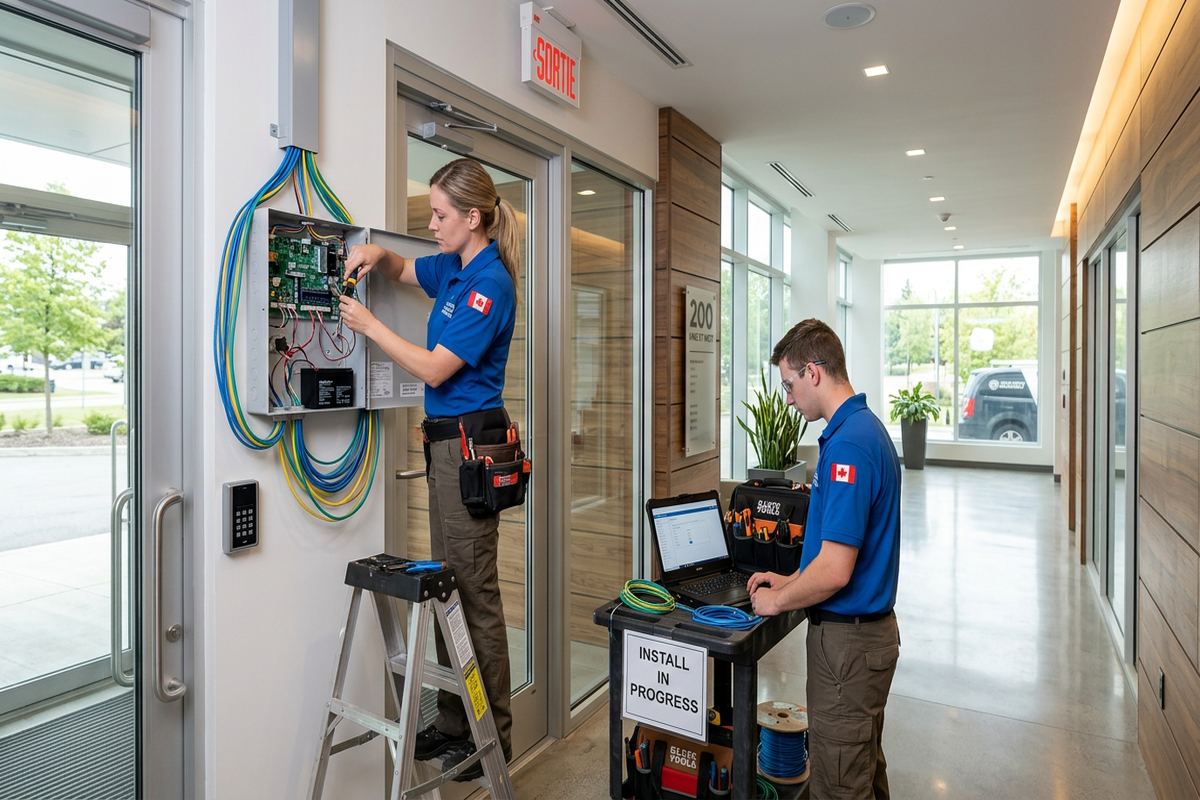
A completed system needs an operational handover, not only a demonstration that doors unlock. UnifiedLink provides the authorized customer representative with administrative access using the customer’s own credentials. We review adding and revoking users, assigning access groups, changing schedules and checking basic event records where supported. The handover also covers the agreed process for lost credentials, temporary access and administrator changes. Customers should maintain more than one authorized administrator when appropriate, while avoiding shared passwords. Any hosted account, software dependency or customer-maintained device is identified so ongoing responsibilities are understood.
The as-built record reflects what was actually installed, including device locations, controller details, labelled cable destinations and relevant network information. It records approved changes from the original scope and helps future service work begin with reliable information. Documentation is especially useful in leased Bolton units, where staff, tenants or property managers may change over time. Customers should store records and spare credentials securely, with access limited to authorized personnel. Sensitive administrator details are handed directly to the designated contact rather than embedded in drawings or labels that could be visible inside an unlocked service area.
Routine administration prevents old credentials and outdated schedules from accumulating. Businesses should promptly revoke departed staff, review contractor access, confirm holiday schedules and remove temporary permissions that are no longer needed. Physical doors also require attention: a failing closer, loose handle, shifting latch or damaged weather seal can create symptoms that appear electronic. Bolton’s freeze-thaw conditions make periodic inspection of exposed openings particularly important. A simple maintenance process should distinguish credential problems, network issues, power faults and mechanical door problems, allowing the correct contractor to address the actual cause.
- Customer-owned administrator credentials
- User-management walkthrough
- As-built device and cable record
- Secure documentation handover
- Ongoing credential review guidance
Requesting an Access Control Assessment in Bolton
To prepare for an assessment, identify the doors being considered, approximate staff and contractor groups, current key procedures and any recurring access problems. Floor plans, door schedules and landlord standards are useful when available, but they are not required to begin the discussion. Let us know whether the property is owner-occupied, leased or part of a condominium arrangement, since approvals may affect mounting and pathways. For an occupied site, provide suitable times to examine entrances, service rooms and ceiling routes without disrupting customers, production or scheduled deliveries.
During the Bolton site visit, we inspect openings and discuss who needs access, when access should apply and who will administer the system. We also review practical dependencies such as lock condition, network availability, nearby power, ceiling access and exterior exposure. The resulting written scope covers equipment, cable routes, device placement, exclusions, equipment ownership and warranty. Site assessment timing depends on the service and travel distance. Requests sent during business hours are answered the same day, while after-hours requests are answered the next business day.
UnifiedLink acts as one accountable contractor for the low-voltage access control scope, including planned cabling, device installation, on-site configuration and documented handover. Work requiring another regulated or specialist trade is identified rather than represented as included. This approach suits a range of Bolton properties, from a compact commercial unit to a larger office and warehouse operation. It also creates a clear basis for changes: additional doors, integrations or revised pathways can be assessed against the approved scope instead of relying on verbal assumptions made during installation.
- Assessment based on actual door conditions
- Written scope before installation
- Clear exclusions and trade responsibilities
- Business-hour requests answered same day
- One accountable low-voltage contractor
Bolton neighbourhoods we cover
- Bolton North Hill
- Bolton South Hill
- Old Bolton
- Bolton Industrial Park
Commercial access control installation in Bolton — common questions
Can you use our existing commercial door hardware?
Possibly. We assess each Bolton opening for lock type, frame condition, latch alignment, closer operation and available cable paths. Existing hardware may be reusable if it is compatible with the proposed system and operates correctly. Worn, binding or unsuitable components may require locksmith or door-specialist work before access control installation. Reuse assumptions and exclusions are recorded in the written scope.
Do I need landlord approval for access control?
Tenants should confirm their lease requirements and obtain any required landlord or property-management approval. This is particularly important for exterior readers, shared vestibules, common doors, masonry drilling and connections to base-building hardware. In a Bolton condominium or multi-tenant property, the controlled opening may be common property. We can document proposed device locations and cable routes to support the customer’s approval process.
Will the system work during an internet outage?
That depends on the selected controller and platform. Many systems can continue processing stored credentials locally, while remote administration or hosted reporting may be unavailable until connectivity returns. We define expected offline behaviour during planning and test supported functions during commissioning. For a Bolton business that depends on remote management, network design and outage procedures should be considered before equipment is selected.
Can access control handle warehouse shift schedules?
Yes, supported systems can assign credentials to access groups with defined days and times. A Bolton Industrial Park operation might separate office staff, warehouse employees, supervisors, cleaners and temporary contractors. We review shift overlaps, holidays, shipping access and exceptions before programming. Managers should still maintain a documented process for approving temporary changes and promptly revoking credentials when employment or contract access ends.
How do you protect exterior readers from Bolton winters?
Exterior devices are selected for the intended mounting environment, and cable penetrations are sealed to reduce moisture entry. We consider exposure to snow, ice, condensation and repeated freeze-thaw conditions, along with seasonal door and frame movement. The assessment also checks whether mounting height or location creates a snow-accumulation concern. Mechanical door maintenance remains important because electronic access control cannot correct a door that no longer closes or latches.
What do we receive when installation is complete?
Handover includes on-site configuration, testing, customer-owned administrative credentials and an as-built record for the installed scope. We review user enrolment, credential revocation, access groups, schedules and basic event lookup where the platform supports them. The record identifies device locations, controllers and labelled cable destinations. Any customer responsibilities, hosted services, third-party dependencies or approved changes are also documented for the Bolton property representative.
Coverage in Bolton is confirmed against the address before we quote. See everything we install in Bolton or the province-wide commercial access control installation page.