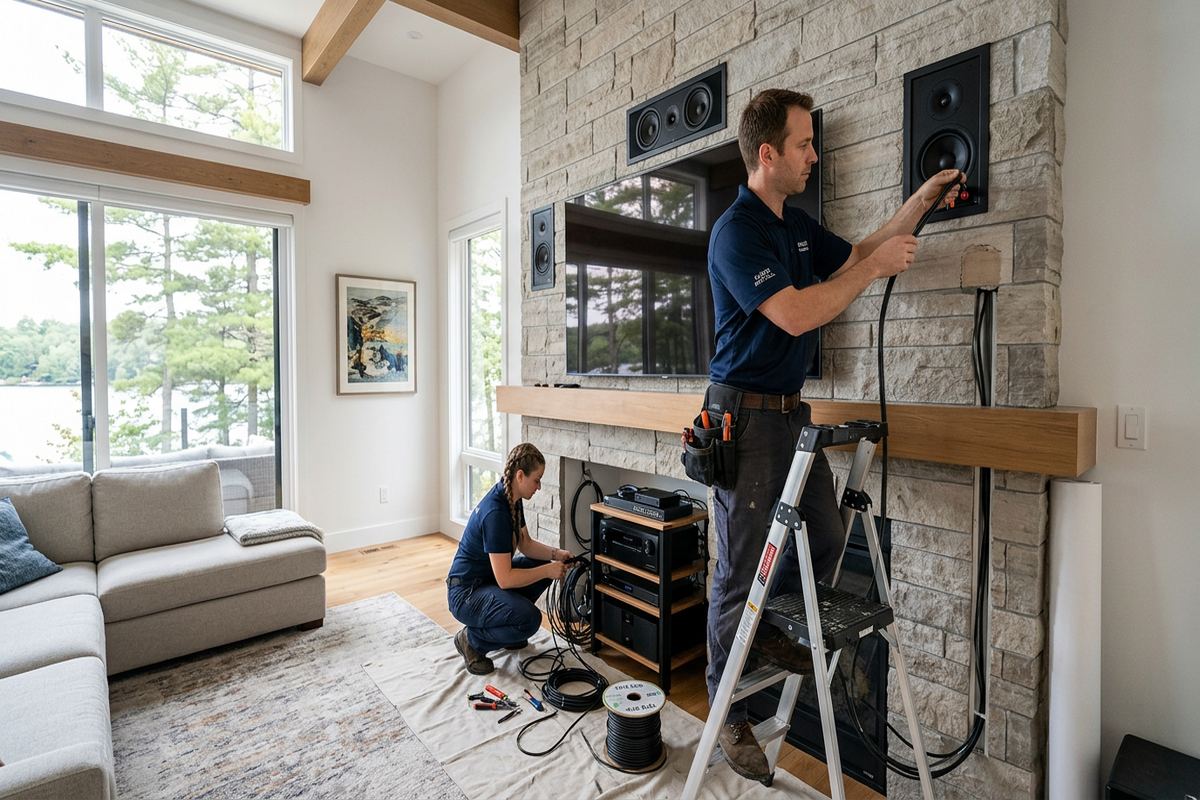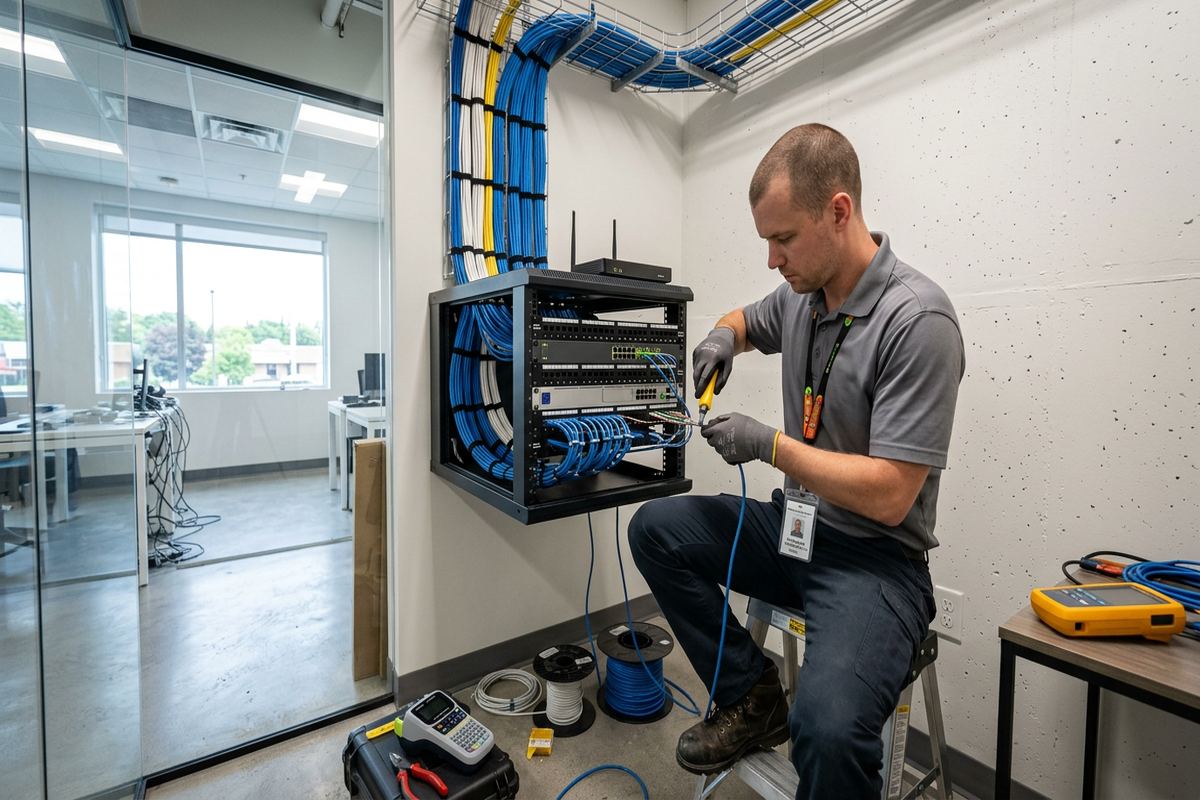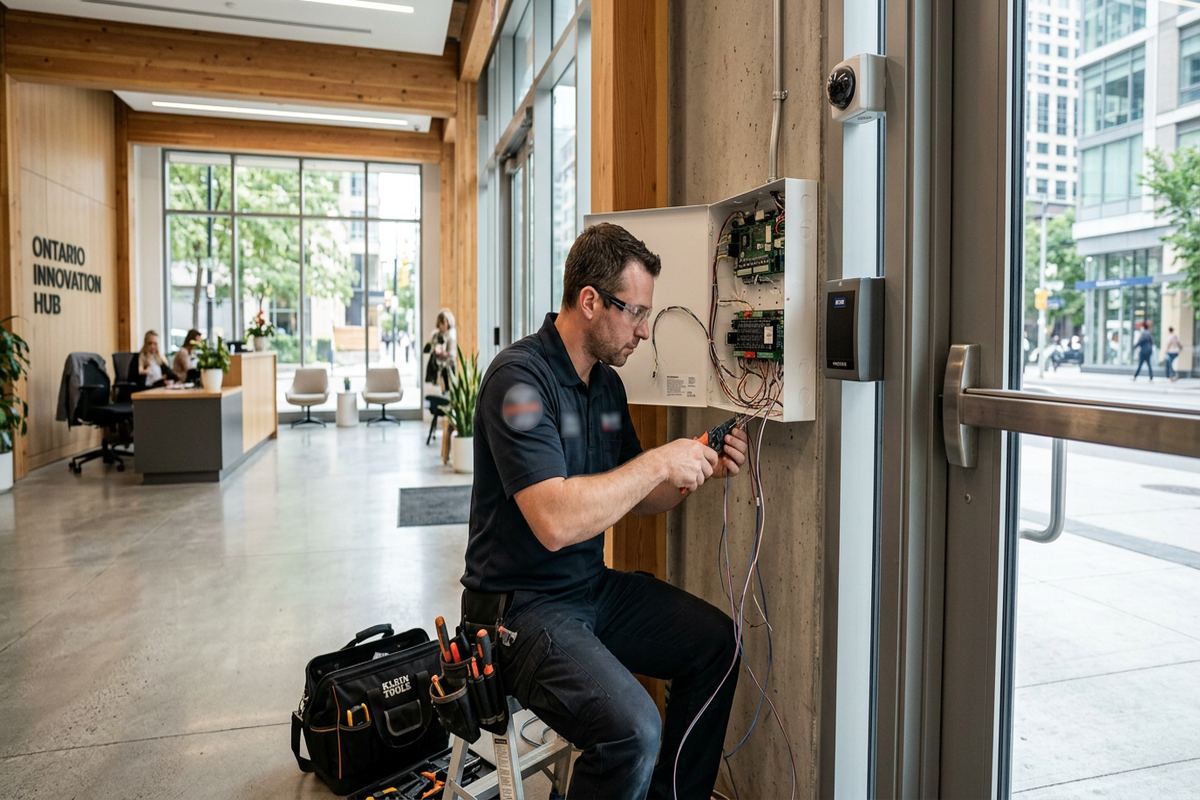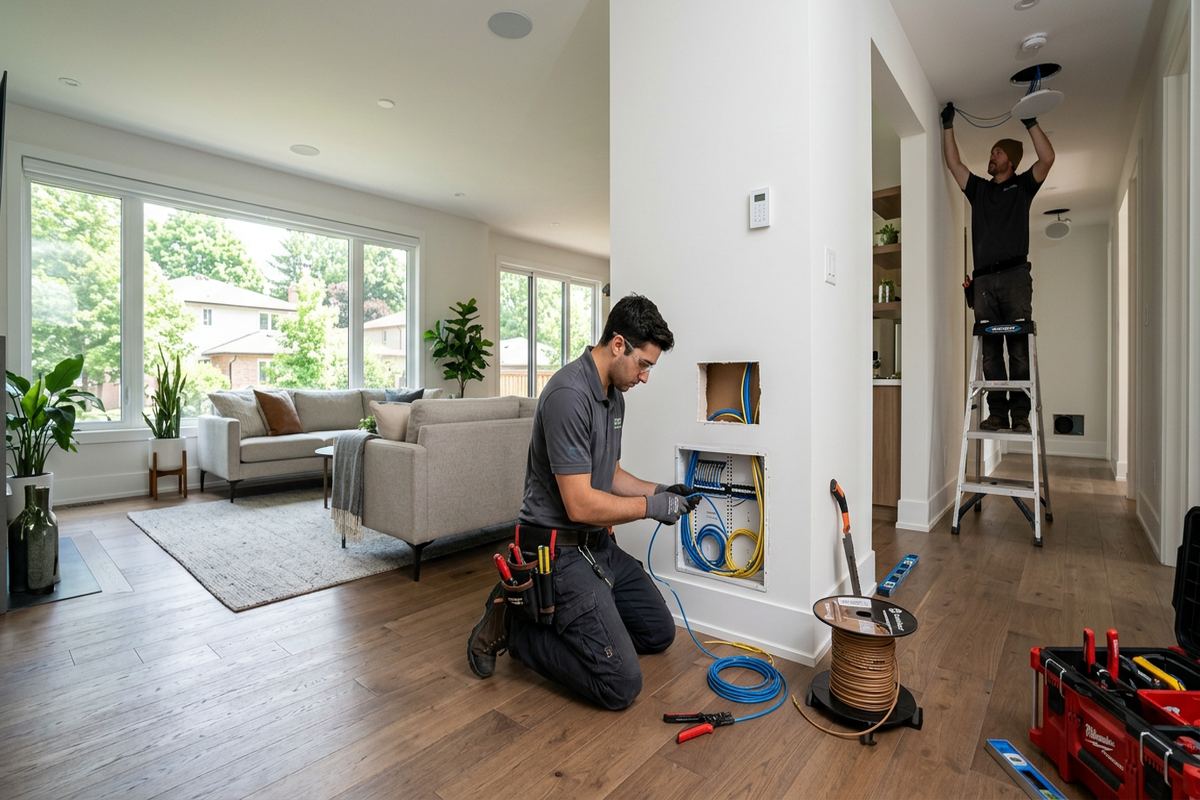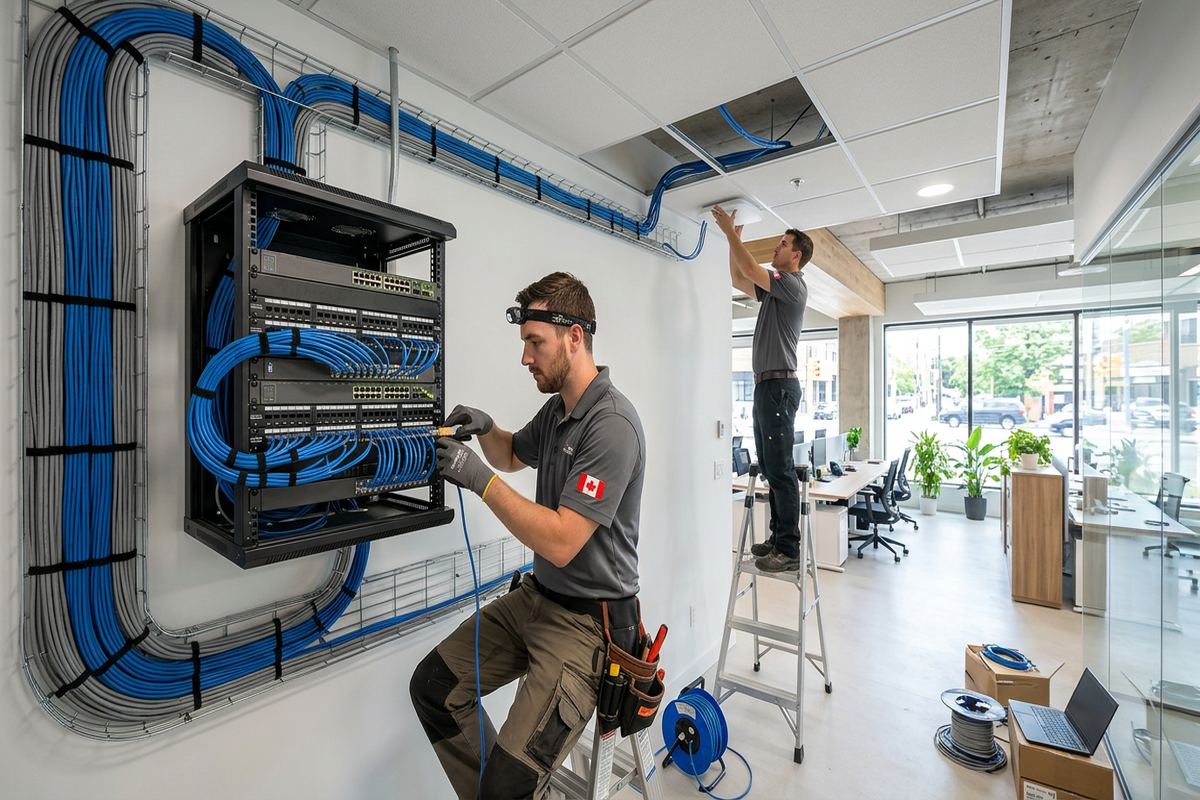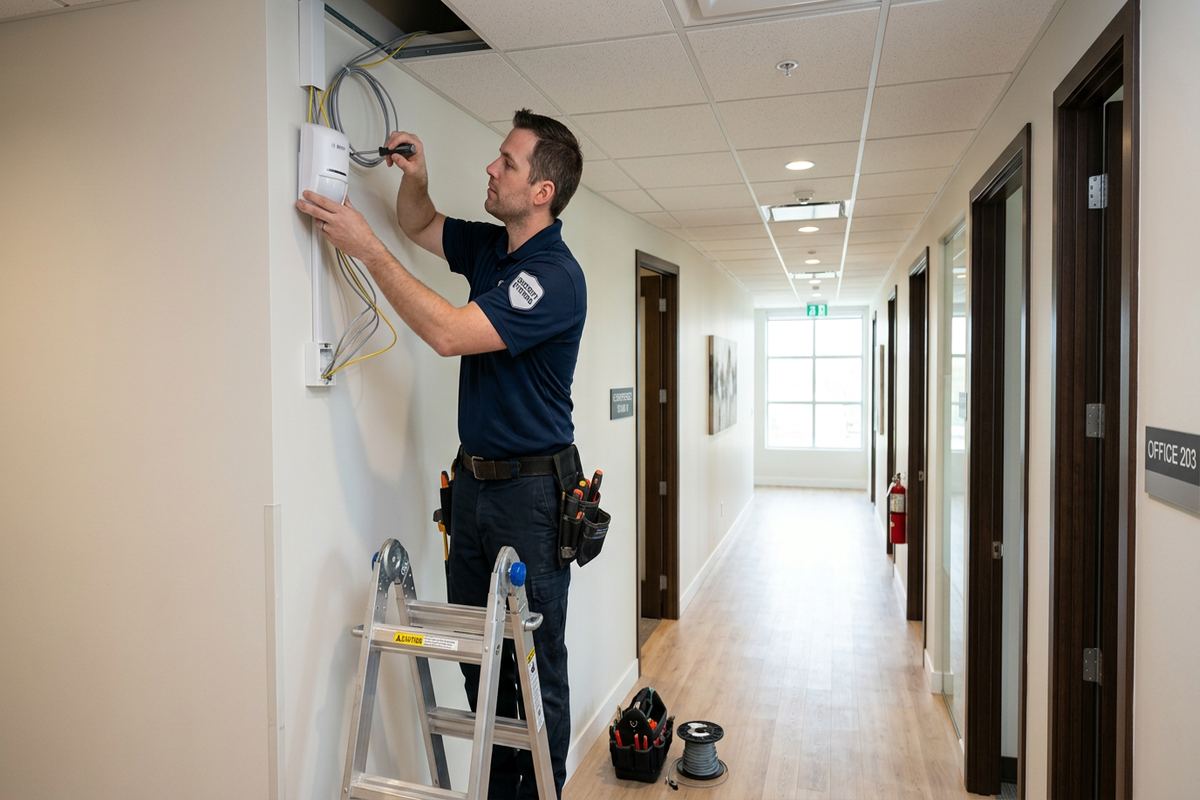
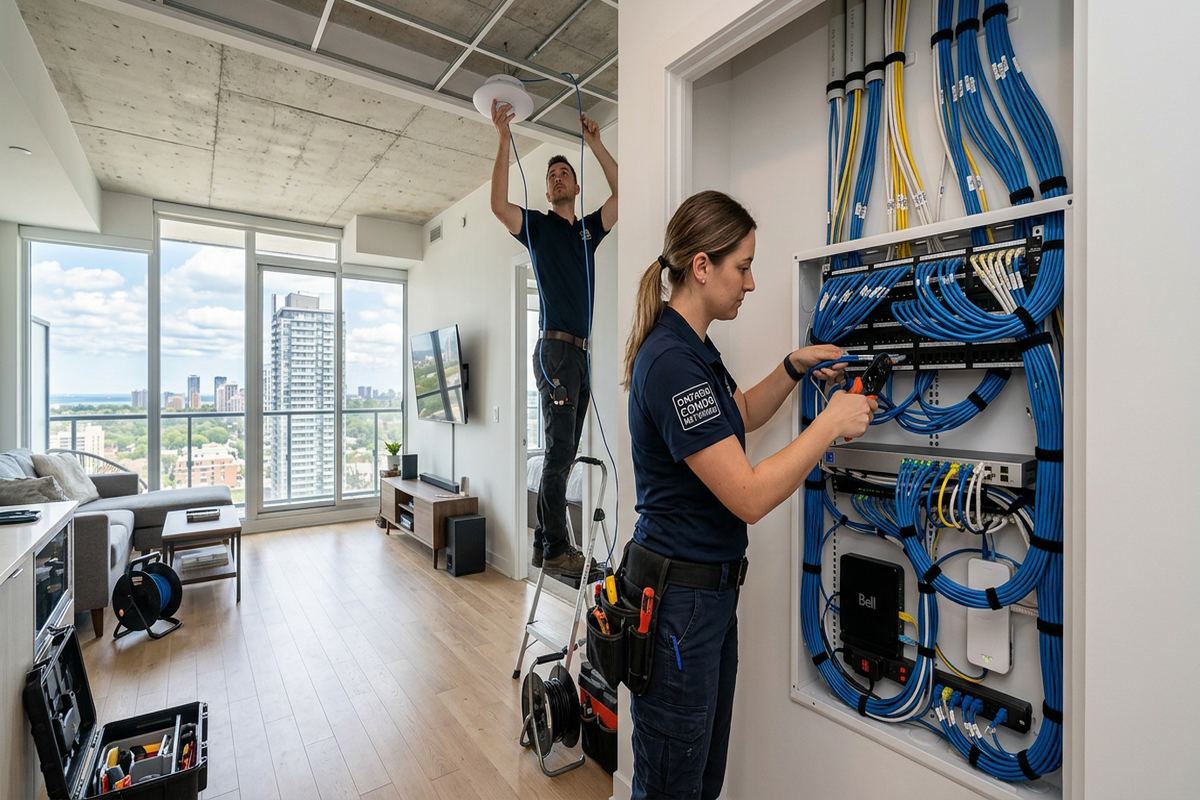
UnifiedLink installs structured cabling for homes, offices, commercial spaces and industrial units across Bolton. We plan cable routes, install continuous labelled runs, terminate and test connections, configure network equipment on site and provide an as-built record. Each project begins with a site assessment so the written scope reflects the building, intended devices and practical access conditions.
Structured Cabling for Bolton Properties
Reliable network cabling starts with the building rather than the cable category printed on a box. In Bolton, the work commonly ranges from valley-side homes to industrial units at the north end. Each setting affects pathways, cable lengths, equipment locations and access. UnifiedLink assesses the property before pricing, identifies the devices that need connections and plans routes around finished areas, mechanical systems and electrical infrastructure. This approach creates a practical foundation for internet service, local networking, Wi-Fi access points, cameras, phones, displays and other connected equipment without relying on improvised extensions.
Residential cabling in Bolton may involve finished basements, attached garages, masonry walls, wood-frame additions or rooms spread over several levels. A useful plan considers where the internet service enters, where network equipment can be secured and ventilated, and how cables can reach work areas or wireless access points. Routes may pass through accessible framing, utility spaces, ceiling cavities or surface-mounted raceway where concealed access is unavailable. The goal is not simply to hide cable, but to install serviceable runs that avoid sharp bends, unnecessary joints and locations exposed to moisture or physical damage.
Commercial and industrial projects require the same route discipline at a different scale. Offices, commercial strips and Bolton Industrial Park units may need drops for desks, production areas, shipping stations, access points, cameras or wall displays. Ceiling height, fire separations, machinery, electrical noise and future tenant changes all influence the design. UnifiedLink provides one accountable contractor for the cabling scope, terminations, on-site configuration and handover. The written scope identifies equipment, routes, placement, exclusions, ownership and warranty before installation begins, reducing uncertainty for owners, managers, landlords and other trades.
- Home and small office network drops
- Industrial unit and warehouse cabling
- Wi-Fi access point connections
- Camera and access control pathways
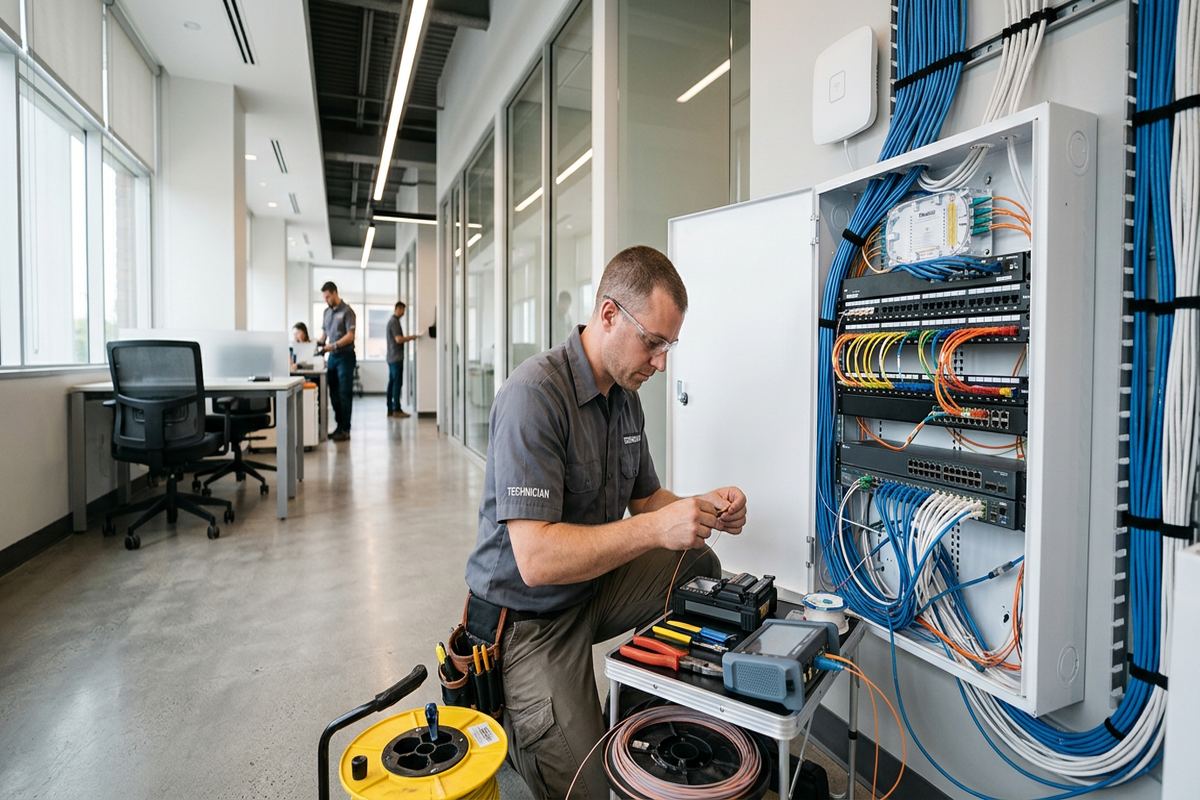
- Network rack and patch-panel installation
Planning Cable Routes in Bolton Homes
A home assessment begins by reviewing the modem or fibre terminal location, existing wiring, planned renovations and the rooms that need dependable connections. In Bolton North Hill and Bolton South Hill, layouts can include multiple floors, finished lower levels and garages separated from the main living space. The shortest route is not always the most maintainable route. We look for accessible vertical paths, sensible equipment locations and separation from electrical circuits. Device placement is discussed before openings are made, helping avoid outlets behind fixed cabinetry, inaccessible patching points or access points placed where coverage is restricted.
Older or altered homes around Old Bolton can require a different installation method from newer frame construction. Plaster finishes, masonry sections, narrow cavities and additions built at different times may limit concealed pathways. Where fishing cable would create unreasonable damage or uncertainty, neat surface raceway can provide a serviceable alternative. Masonry drilling is planned for the wall material and the intended anchor or sleeve. Penetrations are kept purposeful, cable is supported rather than left loose, and visible routes are aligned carefully so the finished work suits the room instead of appearing temporary.
Valley-side properties also deserve attention at transition points between conditioned rooms, garages, crawl spaces and exterior areas. Bolton winters and repeated freeze-thaw cycles can affect poorly sealed penetrations, exposed jackets and mounting surfaces. Exterior-rated materials are selected where a route genuinely must leave the building envelope, and openings are sealed to limit water entry. Cable should not be placed where snow, drainage or ice can load it. Whenever possible, indoor pathways are preferred because they offer better protection and make future inspection, replacement or expansion more straightforward for the property owner.
- Assessment of existing wiring paths
- Routes through basements and utility spaces
- Options for finished or inaccessible walls
- Careful masonry and frame-wall methods
- Sealed transitions at exterior penetrations
Cable Types, Terminations and Testing
Cable selection should follow the application, required distance, environment and connected equipment. Category-rated copper is commonly used for network drops, wireless access points, VoIP phones and Power over Ethernet devices, while fibre may suit longer links, building-to-building pathways or electrically challenging environments. The written scope states the proposed cable and termination method rather than leaving substitutions unclear. We also consider bend limits, pathway capacity and equipment compatibility. Installing a higher category does not correct poor terminations or unsuitable routes, so workmanship, testing and documentation remain as important as the nominal cable specification.
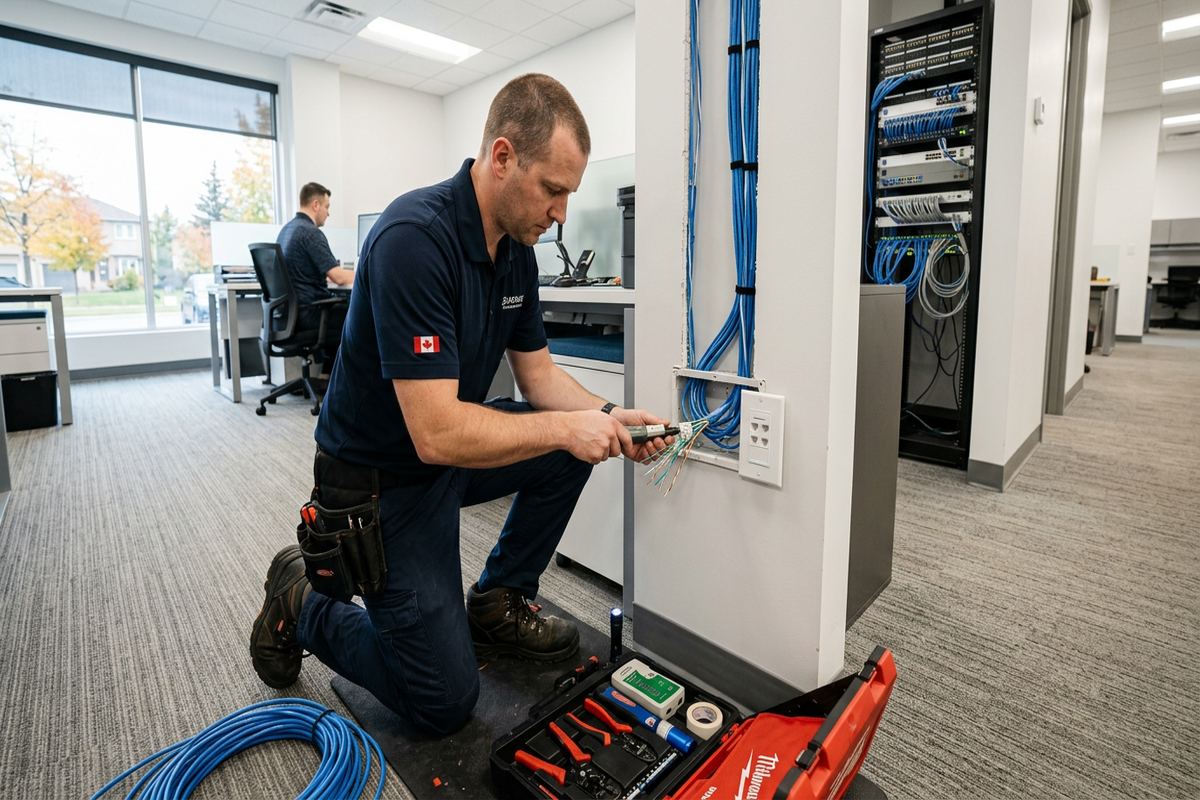
UnifiedLink installs continuous labelled cable runs between defined endpoints. Intermediate couplers and concealed splices are avoided because they create extra failure points and make troubleshooting difficult. At the equipment end, runs may terminate at a patch panel, enclosure or other approved connection point. At the room end, they may finish at a wall plate, surface box or device location. Labels are applied consistently so both ends can be matched. Proper support keeps cable away from ceiling grids, sharp edges, heat sources and electrical components that could damage the jacket or affect performance.
Testing confirms that each installed run is connected as intended before handover. The appropriate checks depend on the cable type and scope, but can include wire-map verification, continuity, pair condition and connection testing through installed network equipment. Results are used to correct termination issues before walls, ceilings or work areas are returned to normal use. The customer receives an as-built record showing labelled endpoints and relevant equipment locations. This record gives homeowners, facility staff and future contractors a practical reference when moving devices, tracing a fault or planning another network connection.
- Application-appropriate copper or fibre
- Continuous runs without concealed splices
- Consistent labels at both endpoints
- Patch panels and finished wall outlets
- Testing before project handover
Bolton, Ontario
Structured cabling installation in Bolton, scoped in writing first
Book a site assessment and get equipment, routes, exclusions, and warranty on paper before anything is installed.
Structured Cabling for Bolton Industrial Units
Industrial spaces at Bolton’s north end often combine offices, open warehouse areas, loading zones and equipment rooms within one unit. Cabling routes must account for long distances, high ceilings, structural members and active operations. A site assessment identifies practical pathways and determines whether existing trays, conduit or protected surface routes can be used. Device locations are reviewed from the floor as well as the ceiling because shelving, machinery and doors may block access or wireless coverage. Work sequencing can then be coordinated around occupants and other trades without assuming that every area is continuously available.
Electrical separation is particularly important in industrial environments. Data cable should not be bundled casually with power conductors or routed against motors, lighting equipment and other likely interference sources. Where pathways cross, the method and spacing are considered as part of the route plan. Fibre may be discussed where distance or electrical conditions make it appropriate. Physical protection also matters around loading areas, workshops and exposed walls. Conduit, raceway or higher mounting can reduce accidental damage, but endpoints still need to remain reachable for testing and service rather than being hidden behind permanent equipment.
Businesses in Bolton Industrial Park may need cabling for workstations, printers, wireless access points, cameras, access control panels, phones and operational displays. These systems can share pathways only where cable capacity, separation and serviceability permit. UnifiedLink can coordinate the low-voltage scope under one accountable contractor, helping avoid conflicting routes and unidentified cables. The final scope distinguishes included connections from customer or third-party equipment. At handover, network settings and device access are transferred using the customer’s own credentials, while cable labels and the as-built record show how the physical infrastructure is arranged.
- Warehouse and office data drops
- Protected routes in active work areas
- Long-distance fibre pathway options
- Connections for PoE network devices
- Coordination with property management and trades
Wi-Fi and Network Equipment Connections
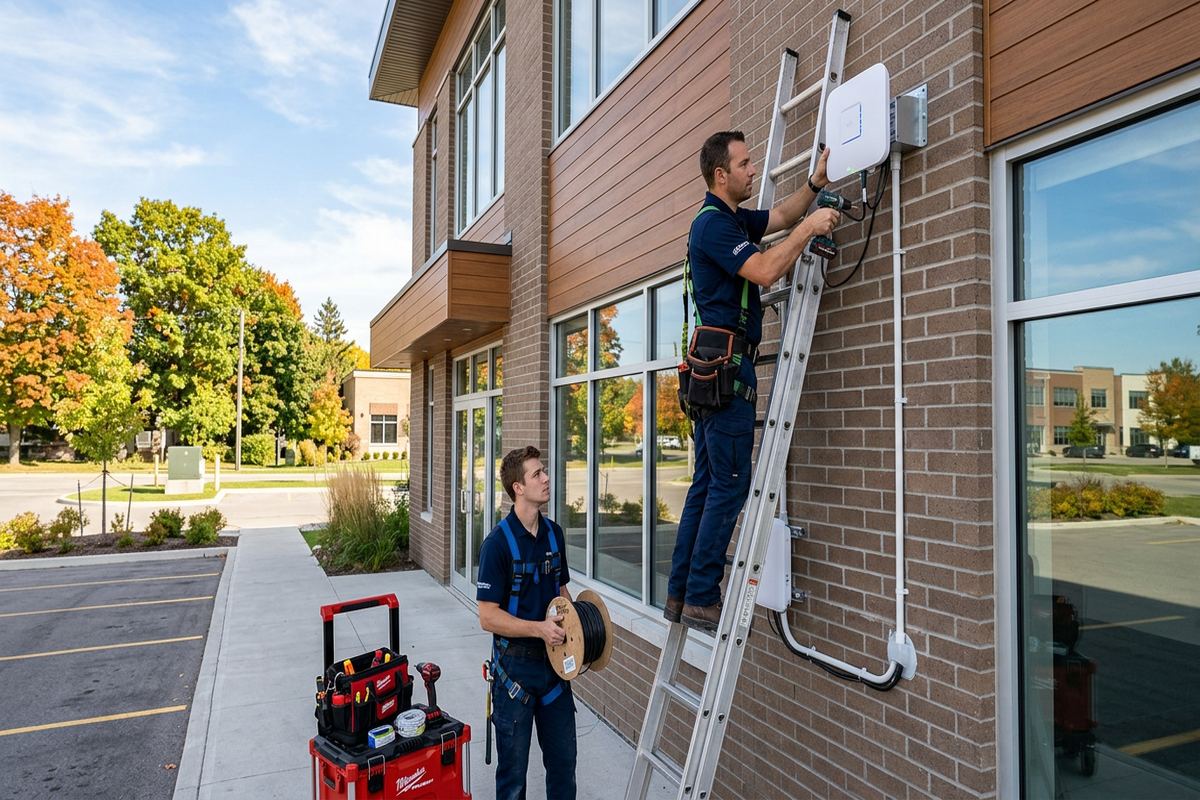
Structured cabling gives Wi-Fi access points a stable backhaul and allows placement to follow coverage needs rather than the nearest electrical receptacle. In a multi-level Bolton home, one centrally located router may struggle to serve lower levels, additions, garages or outdoor-facing rooms. During assessment, we review intended coverage areas, construction materials and feasible ceiling or wall locations. Masonry, ductwork and dense building assemblies can reduce signal movement. Dedicated cable runs let access points use wired connections and, where supported, Power over Ethernet, reducing visible adapters and avoiding wireless repeaters that depend on an already weak signal.
Commercial Wi-Fi planning also considers user density, floor layout and the separation of staff, guest and operational devices. Cable placement cannot guarantee radio performance by itself, but it provides the infrastructure needed for properly positioned access points. In offices or industrial units, proposed locations are checked against racks, tall storage, metal partitions and changing work areas. UnifiedLink can mount and connect compatible access points, then configure them on site within the agreed scope. Administrative access is established using credentials owned by the customer, ensuring the owner or designated manager retains control after handover.
The network equipment location should be secure, dry, ventilated and accessible for service. Placing a router, switch or patch panel in a cramped cabinet beside heat-producing equipment can shorten equipment life and make simple changes difficult. We review power availability, internet service entry, patching space and room for reasonable expansion. In Bolton homes, a utility room may work if moisture and access are suitable; in a business, a wall cabinet or rack may be appropriate. Clear labelling allows a device to be disconnected or moved without tracing an unmarked bundle through the building.
- Wired backhaul for access points
- PoE-capable device connections
- Practical equipment and rack locations
- Customer-controlled network credentials
- Labels for switches and patch panels
Exterior Runs and Bolton Weather
Taking network cable outdoors requires more than drilling through a wall and applying a bead of sealant. The route, cable jacket, support hardware, drip arrangement and penetration angle all affect durability. Bolton’s winters, moisture and freeze-thaw cycles can exploit small gaps around poorly prepared openings. Exterior cable must be rated for the exposure it will receive, while connectors generally need sheltered or purpose-built enclosures. We avoid leaving ordinary indoor cable exposed to sunlight or precipitation. Entry points are positioned away from obvious drainage paths and sealed using materials compatible with the surrounding masonry, siding or trim.
Detached structures and outdoor devices need careful pathway planning. A garage, gate, camera pole or accessory building may be beyond the practical limit of a copper connection or exposed to electrical differences between structures. Depending on distance and site conditions, fibre or a suitable protected pathway may be preferable. Direct burial, conduit and aerial routes each involve different risks and approvals, so no method is assumed before assessment. Property boundaries, landscaping, driveways and future excavation are also relevant. The scope defines who provides trenching, conduit, restoration and power where those elements are required.
Exterior mounting methods vary between brick, poured concrete, block, siding and wood-frame assemblies. Anchors and fasteners must suit the substrate, and penetrations should not create a path into cavities where water can collect unseen. On valley-side Bolton properties, grading and runoff can make low wall entries especially vulnerable. Cable loops should not trap water against an opening, and exposed lengths require secure support. For condos, leased premises or landlord-controlled exteriors, written approval may be needed before drilling, mounting raceway or crossing common areas. That approval remains part of planning rather than an after-installation concern.
- Outdoor-rated cable where required
- Weather-sealed building penetrations
- Masonry-appropriate mounting hardware
- Fibre options for detached structures
- Routes planned around drainage and snow
Approvals, Renovations and Occupied Spaces
Cabling in a condominium, leased commercial unit or managed property may require approval before work begins. Owners and tenants should confirm rules for common walls, corridors, exterior surfaces, ceiling spaces and telecommunications rooms. In Bolton commercial strips, a proposed route may cross an area controlled by the landlord even when both endpoints are inside the tenant’s unit. UnifiedLink can describe the planned low-voltage work for review, but the property owner or customer remains responsible for securing required permission. Confirming access early prevents a technically sound route from being delayed or rejected on installation day.
Renovations offer the easiest opportunity to build useful pathways, provided low-voltage work is coordinated before insulation and drywall close the framing. We review plans with the customer and, where appropriate, coordinate routes with the general contractor or electrician. Data cable is kept separate from power, protected at framing penetrations and left at clearly identified endpoints. Extra pathways or pull provisions may be more useful than installing speculative cables to undefined locations. Photographs and the as-built record preserve route information that would otherwise disappear once finishes are installed, making future changes less disruptive.
Occupied properties require practical controls for furniture, dust, ceiling access and temporary network interruptions. Before work starts, the customer should identify restricted rooms, business operating periods and equipment that cannot be disconnected. We sequence the work around the agreed access conditions and protect nearby surfaces during drilling or termination. In homes, pets, children and home offices can influence timing and cable access. In industrial units, lifts, stored goods or production activity may constrain routes. These conditions are included in the assessment so the written scope reflects actual access rather than an empty-building assumption.
- Condo and landlord approval planning
- Coordination before walls are closed
- Defined access to common areas
- Occupied-space work sequencing
- As-built route records after renovation
Bolton Site Assessment and Handover
Every Bolton structured cabling project starts with a site assessment before pricing. The visit confirms the number and purpose of connections, building materials, cable pathways, endpoint locations and equipment needs. Existing cabling is reviewed where accessible, but it is not assumed to be reusable without checking its condition and routing. Site assessment timing depends on the service and travel distance. Requests sent during business hours are answered the same day, while after-hours requests are answered the next business day. That response confirms the next step rather than promising an installation or assessment time without reviewing the project.
Following the assessment, UnifiedLink provides a written scope covering equipment, cable routes, device placement, exclusions, equipment ownership and warranty. This document helps the customer compare the proposed work with renovation plans, landlord requirements or internal information-technology needs. Changes should be resolved before installation where possible, especially if they affect pathways or endpoint quantities. For Bolton businesses, the scope can also identify customer-supplied switches, internet-provider hardware or third-party devices. Clear ownership matters because installed cabling, managed services and rented provider equipment may have different responsibilities after the project is complete.
Installation concludes with termination checks, on-site configuration included in the scope and a practical handover. Labels are matched against the as-built record, and the customer is shown the main equipment and patching locations. Accounts or device access configured by UnifiedLink use the customer’s own credentials, not installer-controlled credentials that become difficult to recover later. Any exclusions or follow-up items are documented. The result is a cabling system that can be understood and maintained by the owner, property manager or future service provider rather than an unidentified collection of wires hidden above ceilings and behind walls.
- Assessment completed before pricing
- Written equipment and route scope
- Documented exclusions and ownership
- On-site configuration where included
- Customer credentials and as-built handover
Bolton neighbourhoods we cover
- Bolton North Hill
- Bolton South Hill
- Old Bolton
- Bolton Industrial Park
Structured cabling installation in Bolton — common questions
Can you run network cable through a finished Bolton home?
Often, but the available method depends on framing, basement or attic access, masonry sections and the location of finished surfaces. During the Bolton site assessment, we look for practical concealed routes first. Where fishing cable would cause excessive damage or remain uncertain, we may recommend neatly installed surface raceway. The proposed pathway and any expected openings are documented in the written scope before work begins.
What cable category should I install?
The right cable depends on connection speed, run length, connected devices, environment and pathway. Category-rated copper is common for home and office drops, access points and PoE devices. Fibre may be more suitable for long distances, detached buildings or electrically challenging industrial areas. For a Bolton property, UnifiedLink recommends a cable type after inspecting the route rather than specifying a category without seeing the building.
Can existing wiring in my Bolton property be reused?
Existing cable may be reusable if its type, condition, length, route and terminations suit the intended network. Unlabelled cable, concealed joints, damaged jackets or wiring routed too closely with power can limit reuse. We inspect accessible portions and test relevant runs where practical. The written scope then identifies which existing connections will remain, which require retermination and which should be replaced with new continuous labelled runs.
Do I need landlord or condo approval?
Approval may be required when cabling crosses common areas, enters a shared telecommunications room, penetrates an exterior wall or changes a landlord-controlled ceiling or corridor. This can apply to Bolton condos, commercial strips and leased industrial units. Customers should obtain written permission before installation. UnifiedLink can provide a route description and equipment placement details for review, but property-specific approval remains the responsibility of the owner or tenant arranging the work.
Can you cable a detached garage or workshop?
Yes, subject to distance, pathways, power conditions and property access. A detached structure in Bolton may require outdoor-rated materials, conduit, fibre or another protected route rather than ordinary indoor copper cable. Freeze-thaw, drainage, driveways and excavation plans also affect the method. The assessment determines feasible entry points and clarifies responsibility for trenching, conduit, restoration and electrical work before the project is priced.
What do I receive after installation?
At handover, you receive labelled connections and an as-built record identifying relevant endpoints and equipment locations. Included network equipment is configured on site according to the written scope, using credentials owned by you or your designated administrator. UnifiedLink also documents exclusions or unresolved third-party items. This gives a Bolton homeowner, business owner or property manager a usable reference for troubleshooting, device moves and later network expansion.
Coverage in Bolton is confirmed against the address before we quote. See everything we install in Bolton or the province-wide structured cabling installation page.