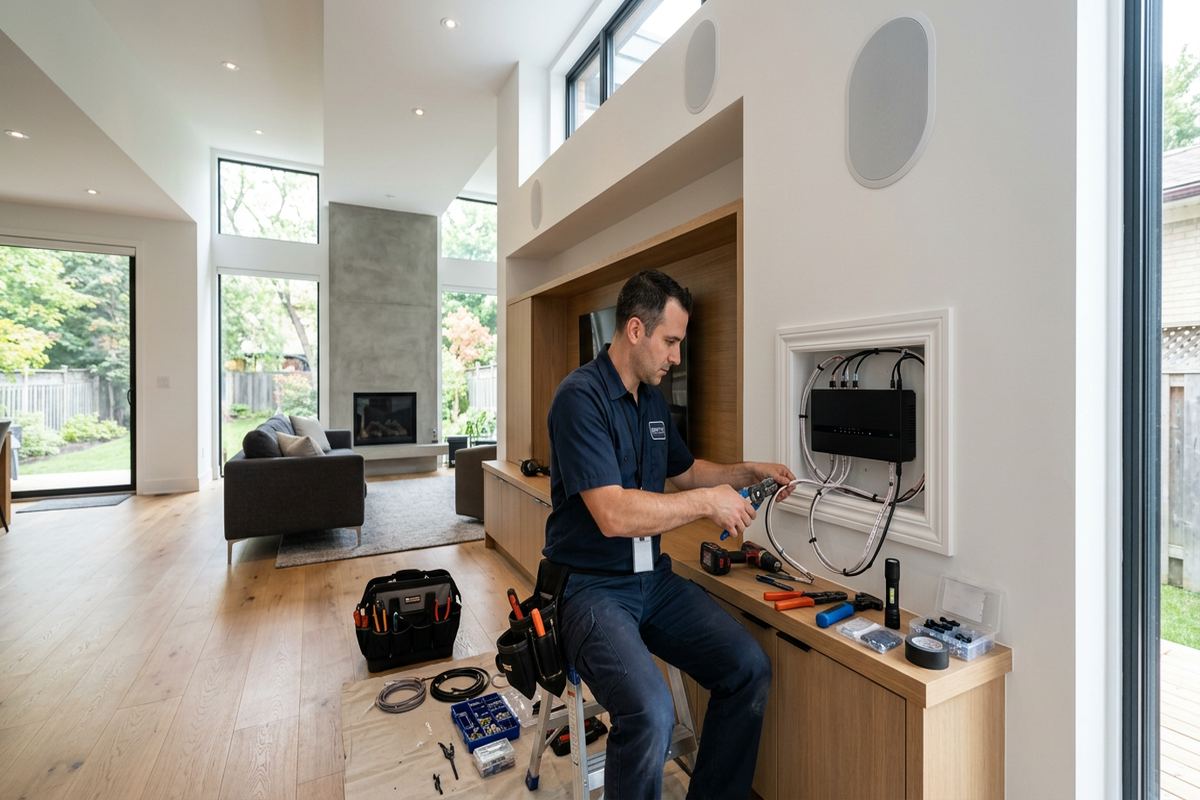
UnifiedLink plans and installs whole-home audio systems for houses, condominiums and small commercial properties in Ajax. We coordinate speaker placement, amplification, source equipment, network connections and concealed cabling around finished spaces. Each project starts with a site assessment, followed by a written scope that explains the proposed system, installation details, exclusions, ownership and warranty.
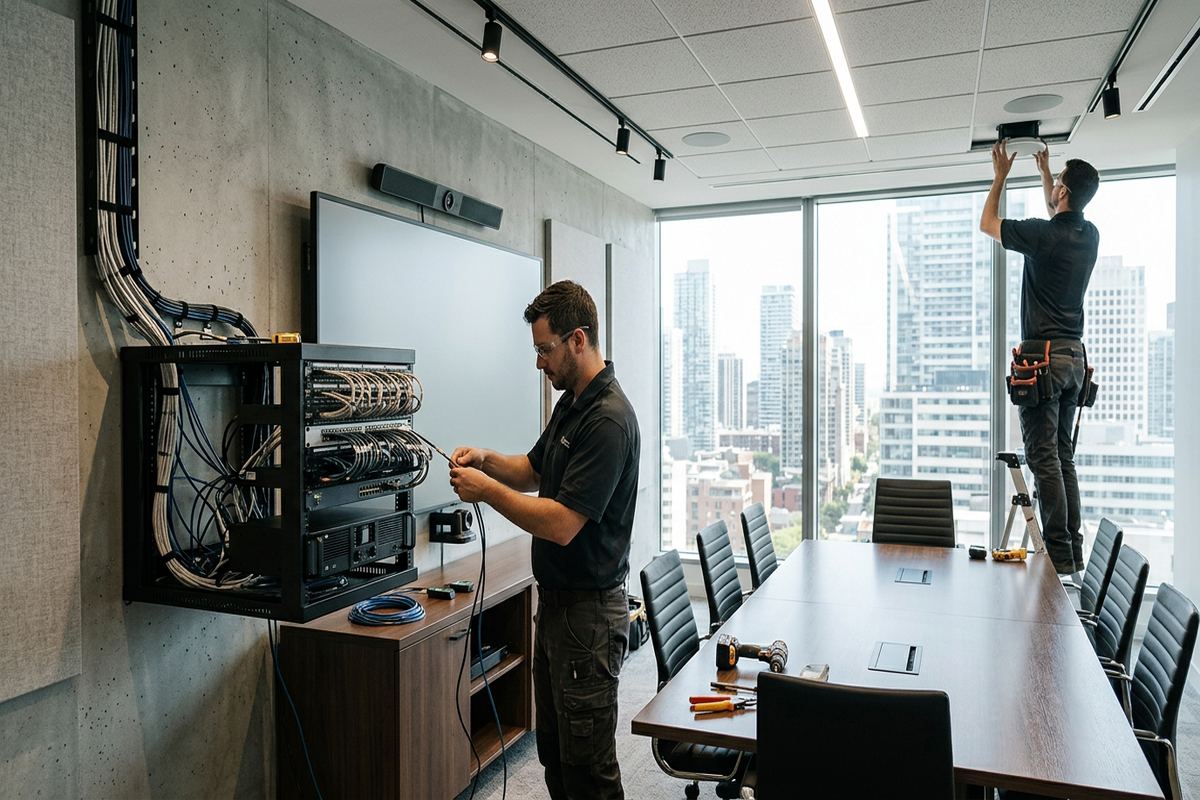
Whole-Home Audio Planning for Ajax Properties
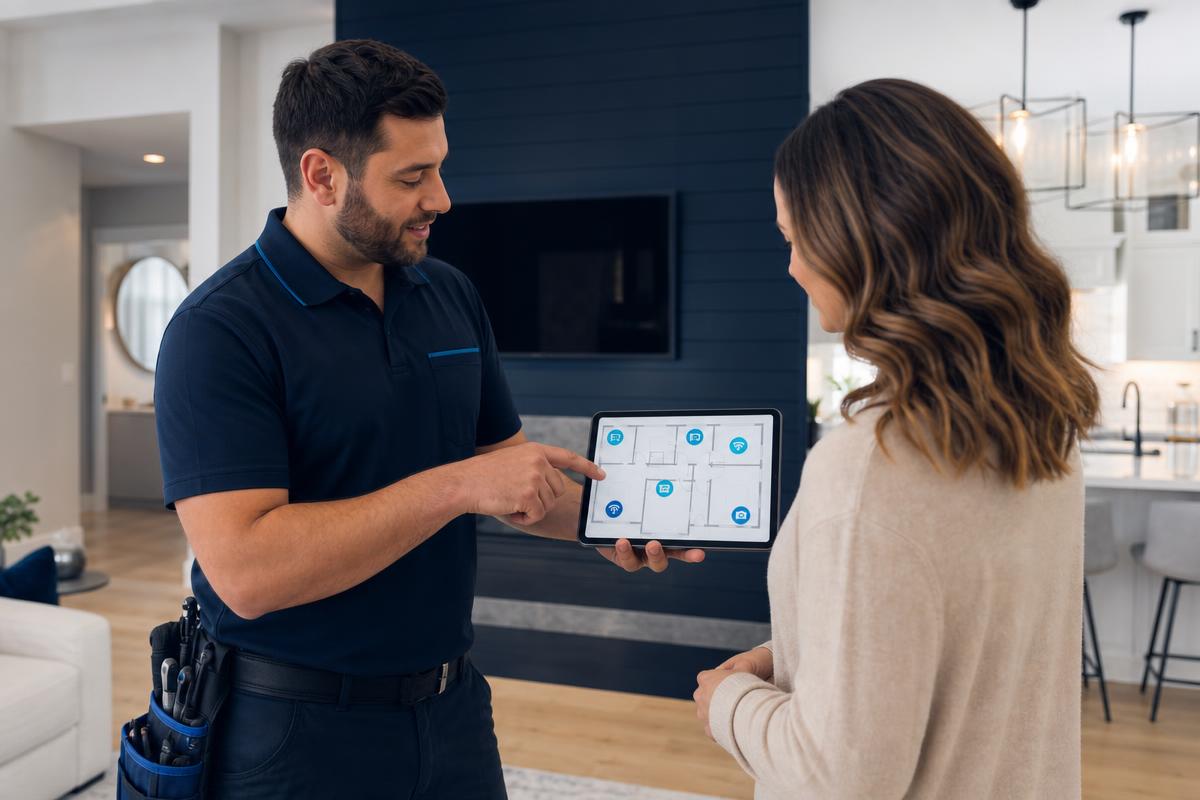
A useful whole-home audio system begins with decisions about how each room will be used, not with a speaker count. During an Ajax site assessment, we discuss listening habits, television integration, preferred music services, room groupings and the people who need control. A kitchen may need clear background music, while a basement media area may require stronger output and television audio. We also identify practical limits created by finished ceilings, cabinetry, mechanical systems, insulation and existing wiring before recommending equipment or cable routes for the installation.
Ajax has newer subdivisions, lakefront homes and many properties with finished basements. Those conditions often make retrofits straightforward in principle but detail-heavy in practice. Open floor plans can allow sound to travel between zones, while finished lower levels may restrict access to joists and wall cavities. Lakefront layouts can add outdoor listening areas and large glazed rooms that reflect sound. We inspect accessible ceiling spaces, utility rooms, bulkheads and closets to determine where cables, amplifiers and network equipment can be placed without disrupting everyday use or future maintenance.
The written scope records the agreed speaker locations, audio zones, source equipment, cable paths and control method. It also identifies exclusions, equipment ownership and applicable warranty information, reducing uncertainty before work starts. Where televisions, Wi-Fi equipment, voice assistants or existing receivers are involved, their role is documented as well. This planning is particularly important when several finished rooms must be connected through limited pathways. The objective is a system that remains understandable, serviceable and practical after walls, ceiling openings and equipment cabinets have been closed.
- Room-by-room listening requirements
- Proposed zones and control methods
- Speaker, amplifier and source locations
- Cable pathways through finished areas
- Equipment ownership and warranty details
Speaker Placement and Coverage in Ajax Homes
Speaker placement affects clarity, stereo balance and how evenly sound reaches a room. In-ceiling speakers are common where floor and wall space are limited, but they still need suitable separation from lights, ducts, plumbing and framing. In-wall models may provide a more direct listening position, while surface-mounted speakers can suit rooms where concealed installation is impractical. We review ceiling height, furniture orientation and likely listening positions, then mark proposed locations before cutting. Placement is adjusted when framing or hidden services make the initial position unsuitable or unsafe.
Open kitchens and family rooms in neighbourhoods such as Nottingham and Applecroft often need coverage planned across connected spaces. Simply increasing volume from one pair of speakers can create a loud area near the speakers and weak sound farther away. Multiple carefully positioned speakers, divided into sensible zones, can provide more consistent listening at lower levels. We also consider whether household members want the kitchen, dining area and family room to play together, separately or both. Those choices influence amplifier channels, wiring topology and the controls available from phones, tablets or wall-mounted keypads.
Bedrooms, offices and bathrooms require different treatment from larger gathering spaces. A bedroom may benefit from independent volume limits, while a bathroom speaker must be selected and positioned with moisture exposure in mind. Home offices need intelligible audio without interfering with calls or adjacent rooms. Before installation, we confirm whether each area needs stereo playback, a single stereo speaker or shared mono coverage. This avoids unnecessary hardware and helps maintain consistent operation. Final configuration includes zone naming that matches how the Ajax property is actually described and used.
- In-ceiling, in-wall or surface-mounted options
- Balanced coverage across open layouts
- Independent room and zone control
- Moisture-appropriate bathroom placement
- Clear, practical zone naming
Retrofit Cabling in Finished Ajax Houses
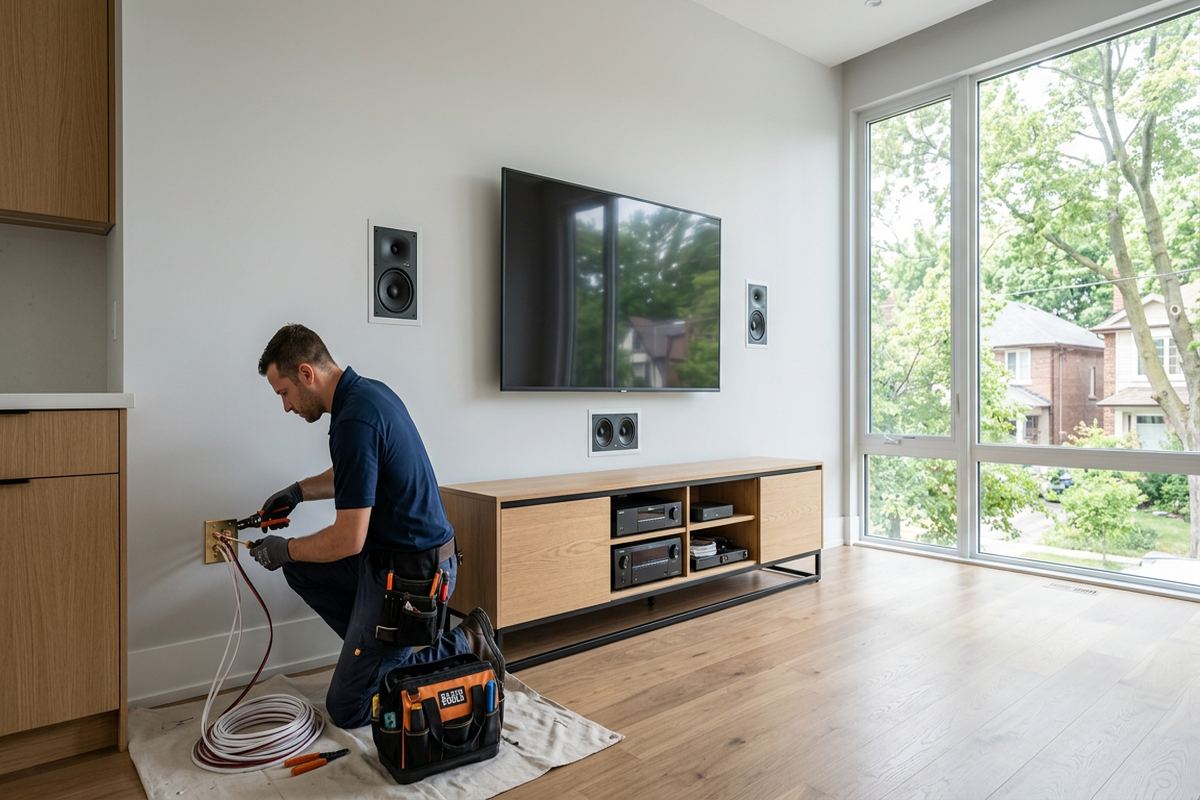
Finished basements can provide useful routes between utility spaces and upper floors, but they also conceal joists, beams, plumbing and heating ducts. We trace viable pathways before openings are proposed, using accessible unfinished areas, closets, return-air chases only where permitted, and existing service routes where appropriate. Continuous, labelled cable runs are installed between the equipment location and each speaker or control point. We do not rely on unexplained splices hidden behind finished surfaces. Any necessary access points are discussed so the homeowner understands where cutting, patching or third-party finishing may be required.
Construction type changes the installation method. Frame walls generally provide workable cavities, although insulation, fire blocking and tightly packed mechanical services can limit fishing routes. Masonry walls, fireplace surrounds and concrete areas may require surface raceway, adjacent framed sections or another agreed pathway rather than concealed drilling. In Southwood, Duffin's Bay and other established parts of Ajax, additions or past renovations can create transitions between materials that are not visible from the room. Careful route planning prevents avoidable damage and keeps audio cable separated appropriately from electrical conductors and sources of interference.
Cable selection is based on run length, speaker load, installation environment and applicable building requirements. Speaker wire, network cable and control wiring are labelled at both ends and organized at the central equipment point. Where future zones are likely, spare pathways or additional runs can be included if access permits and the written scope identifies them. We also document termination points and cable routes in the as-built record. This information is useful when equipment changes, a room is renovated or another contractor needs to understand the system without reopening walls unnecessarily.
- Continuous cable runs without hidden splices
- Labels at both cable ends
- Routes planned around finished ceilings
- Separation from electrical interference
- As-built cable and termination record
Ajax, Ontario
Whole-home audio installation in Ajax, scoped in writing first
Book a site assessment and get equipment, routes, exclusions, and warranty on paper before anything is installed.
Audio Zones, Sources and Everyday Control
Zoning determines which rooms play together and who can change them. A simple system may group the main floor while keeping bedrooms and the basement independent. A more flexible design can let each room select a source and volume level separately, subject to the capabilities of the chosen platform. We explain those differences before equipment is specified. The design also accounts for simultaneous users, because an amplifier that supports several speaker zones does not necessarily provide a different stream for every listener. Clear expectations prevent confusing controls and capacity problems later.
Music services, televisions, turntables and locally stored audio each have different connection requirements. Streaming platforms rely on stable network access and customer accounts, while a television may need an audio return connection, optical link or analogue output depending on its hardware. Turntables may require a suitable phono stage. We verify intended sources and place shared equipment where ventilation, power and network connectivity are available. If a source must be heard throughout an Ajax home, its location and distribution method are included in the design rather than treated as an afterthought.
Controls should be understandable to residents and guests without exposing administrative accounts. During on-site configuration, we create practical zone names, test grouping and confirm volume behaviour. Compatible mobile applications are connected using the customer’s own credentials, and ownership remains with the customer at handover. Where wall controls or keypads are included, their functions are reviewed room by room. We avoid undocumented shared logins that can complicate future service. The completed as-built record identifies core equipment, connections and zone assignments, providing a reference when devices or internet services are changed.
- Room grouping and independent playback
- Television and music-source integration
- Customer-owned account configuration
- Practical volume limits where supported
- Documented zone and equipment assignments
Outdoor Audio for Ajax Seasons
Outdoor listening requires equipment and installation methods suited to exposure, not indoor speakers placed under a convenient overhang. Ajax winters, wind-driven precipitation and repeated freeze-thaw cycles can affect enclosures, brackets, fasteners and cable entry points. We evaluate patios, decks, yards and covered seating areas to determine the intended coverage and mounting options. The aim is even sound near listeners rather than excessive volume projected toward neighbouring properties. Outdoor zones are planned with independent control so they can be turned off or limited without changing indoor playback.
Exterior mounting surfaces must be assessed before drilling. Brick and other masonry usually require appropriate anchors and carefully positioned penetrations, while frame construction requires secure attachment to structural material rather than cladding alone. Every exterior cable penetration needs a suitable route, drip consideration and weather-resistant sealing method. Cable should not be pinched through windows or left unsupported across siding. In lakefront areas such as Pickering Beach and Duffin's Bay, exposed conditions make fastening, corrosion resistance and sealing details especially important, even when a speaker appears sheltered by an eave.
Outdoor speakers can be mounted to a building, integrated into a landscape or placed under a covered structure, depending on the property and desired use. Landscape systems may distribute sound more evenly across a larger area, but they require suitable cable routes and careful placement around gardens, drainage and future maintenance. Before work proceeds, homeowners should confirm property boundaries and any applicable condominium, landlord or community requirements. We test the outdoor zone from expected seating locations and confirm that indoor controls do not accidentally leave exterior audio operating after the area is no longer occupied.
- Weather-suitable speakers and hardware
- Sealed exterior cable penetrations
- Masonry and frame mounting methods
- Independent outdoor zone control
- Coverage directed toward listening areas
Networks, Equipment Racks and Ajax Wi-Fi
Modern multi-room audio often depends on the property network for control, streaming and communication between devices. Reliable Wi-Fi at a phone does not automatically mean every amplifier or wireless speaker has a stable connection. We review router placement, wired network availability and coverage near audio equipment before configuration. Fixed equipment may use Ethernet where the design supports it, reducing unnecessary wireless dependence. Network changes are included only when agreed in the scope. The audio system should not be used to conceal unresolved internet service, coverage or account issues that require separate attention.
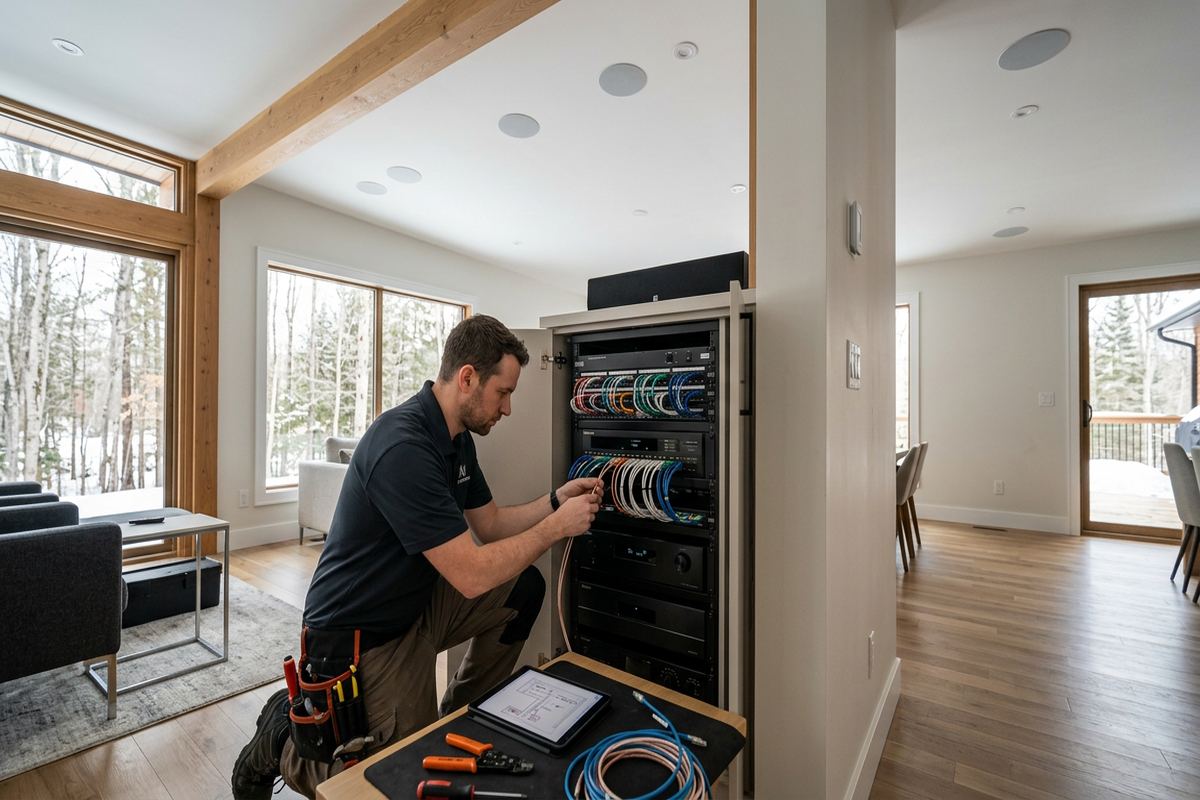
Central amplifiers, matrix devices, streamers and network switches need a suitable location with power, ventilation and service access. A utility room or dedicated rack can work well, but placing equipment in a sealed cabinet or crowded basement corner can cause heat and maintenance problems. In finished Ajax basements, we consider how the equipment can be reached without moving furniture or opening ceilings. Cables are dressed and labelled so individual zones can be identified. Power bars, shelves and rack components are selected according to the documented equipment layout rather than improvised during installation.
Wireless speakers can complement a wired system where concealed cabling is not practical, but they still require dependable power, Wi-Fi and platform compatibility. A mixed design may use installed ceiling speakers in primary rooms and wireless units in spaces that cannot be reached cleanly. We explain which functions depend on the local network or an external service, as well as what may stop working during an outage. On completion, network-connected components are added using customer-controlled credentials. Any default passwords that must be changed are addressed during handover rather than left active.
- Network review for streaming reliability
- Ethernet connections where practical
- Ventilated, accessible equipment placement
- Organized rack and cabinet cabling
- Customer-controlled system credentials
Approvals and Mixed-Use Audio Projects
Not every Ajax installation is a detached house. Condominium owners may need approval before modifying ceilings, common walls or exterior surfaces, and building management may restrict working hours or contractor access. Tenants need the landlord’s written permission for permanent cabling, speaker openings and equipment mounting. We can describe proposed routes and device locations for the customer’s approval process, but authorization remains the customer’s responsibility. Installation is scheduled only after relevant requirements are understood, helping avoid work that conflicts with building rules, lease conditions or shared services concealed within walls.
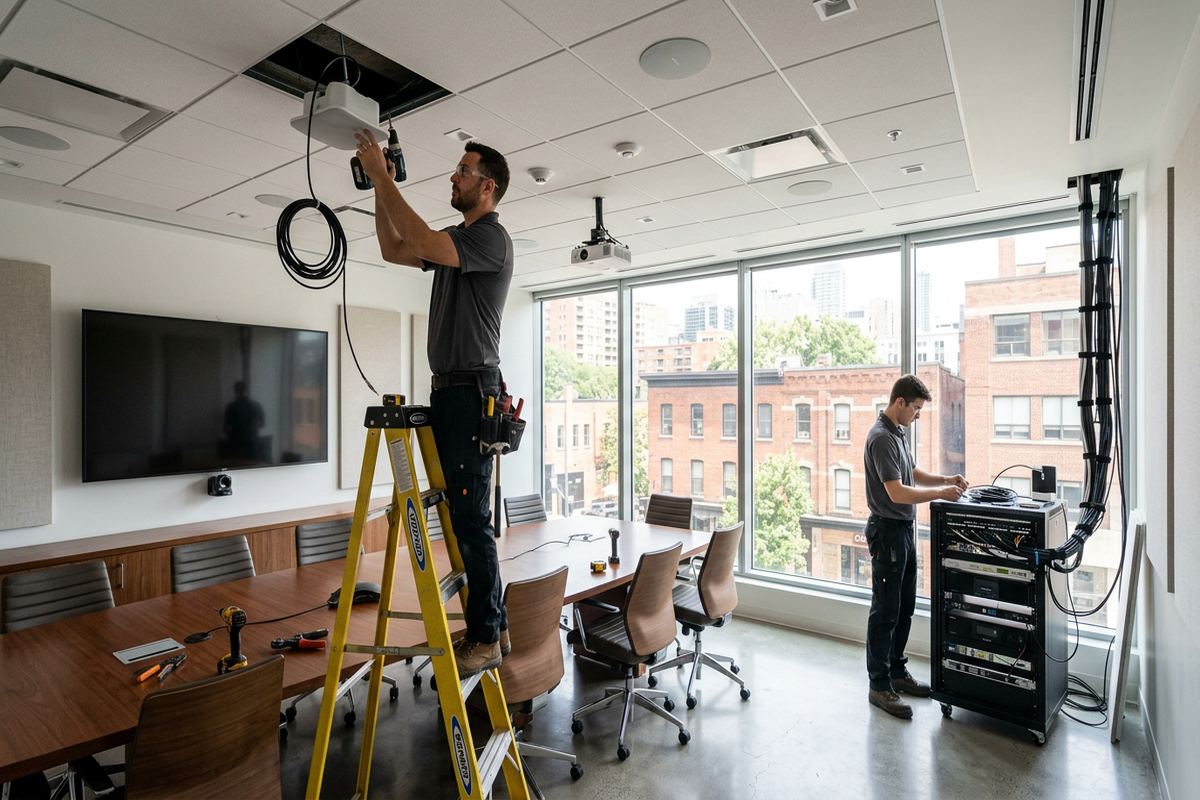
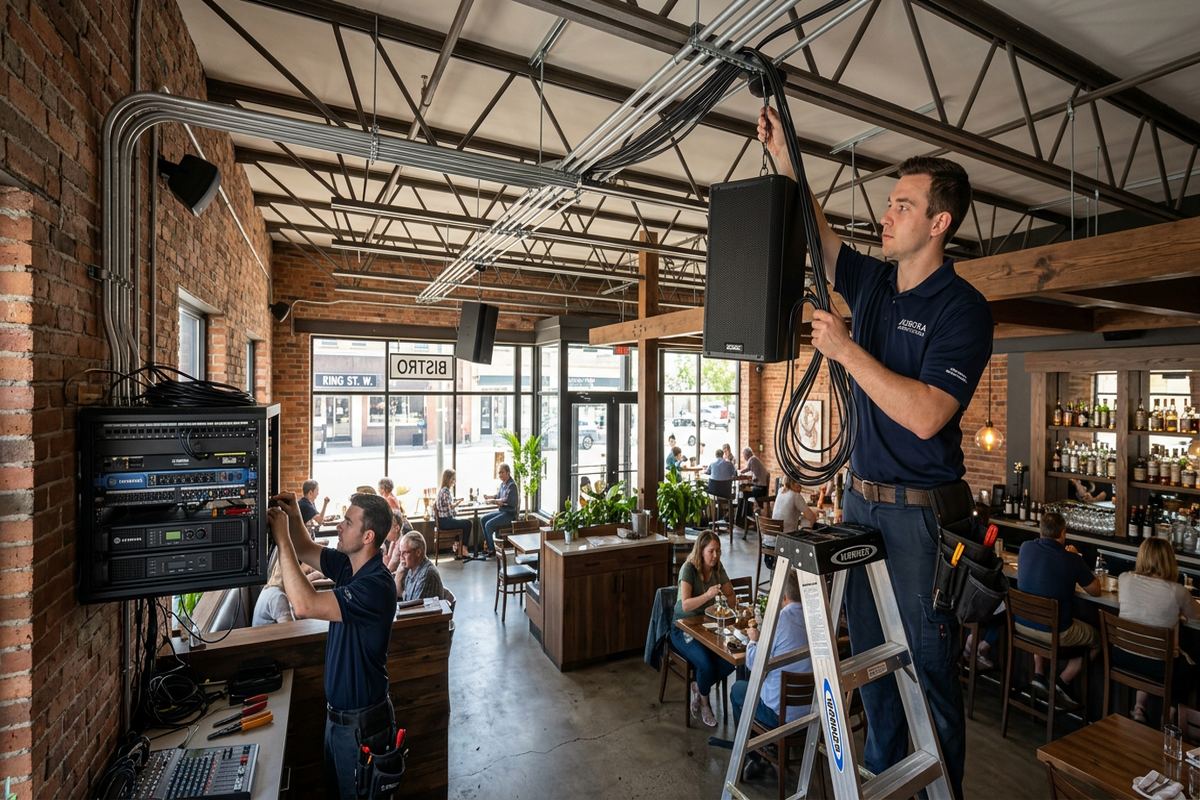
Small offices, storefronts along commercial strips and units in industrial areas may use distributed audio for background music, training rooms or customer areas. These properties need practical zoning, secure equipment placement and controls that staff can operate consistently. Ceiling type, fire separations, exposed structure and operating hours affect how cable can be routed. Commercial music use may also involve licensing or content obligations outside the installation scope. We identify technical responsibilities clearly and coordinate audio work with the customer, landlord or other trades where access to ceilings, electrical power or network services overlaps.
Mixed-use and commercial systems should separate everyday controls from administrative settings. Staff may need access to source and volume functions without receiving credentials that can reconfigure the entire platform. Where supported, we establish appropriate user access using accounts owned by the customer. Equipment locations are selected to discourage tampering while preserving ventilation and service access. The written scope lists affected rooms, cable routes, mounting conditions and exclusions. One accountable contractor manages the agreed low-voltage audio work, reducing confusion about responsibility for speakers, cabling, configuration and final system documentation.
- Condo and landlord approval planning
- Commercial background-audio zoning
- Coordination around fire separations
- Restricted staff control where supported
- Clearly assigned installation responsibilities
Installation, Testing and Handover in Ajax
Once the scope is approved, installation follows the recorded device locations and routes, with changes discussed when concealed conditions require an adjustment. Speakers are mounted securely, cable runs are labelled and terminations are checked before equipment is connected. We protect adjacent finished areas during the agreed work and keep access openings limited to what the route requires. If patching, painting, electrical work or another trade is excluded, that is stated in the scope. This keeps the Ajax homeowner or property manager informed about what the audio installation does and does not include.
Commissioning covers more than confirming that sound comes from every speaker. We test zone assignments, left and right channels, source selection, grouping, volume response and network communication where applicable. Outdoor and moisture-exposed devices receive a visual check of mounts, cable support and penetrations. Television audio is tested from the agreed inputs, and streaming sources are verified using customer accounts. Where equipment offers equalization or room settings, practical adjustments are made on site. Final listening checks are completed in the rooms themselves because performance cannot be assessed only from the central equipment location.
Handover gives the customer control of the installed system. We review normal operation, zone names, source selection, shutdown procedures and any limitations that depend on third-party applications or internet services. The customer receives an as-built record describing equipment, cable destinations and key connections, along with the documented ownership and warranty information. Requests sent during business hours are answered the same day; after-hours requests are answered the next business day. Site assessment timing depends on the service and travel distance, including the specific Ajax location and project conditions.
- Secure speaker mounting and termination
- Room-by-room operational testing
- On-site source and zone configuration
- Customer credential and ownership handover
- As-built system documentation
Ajax neighbourhoods we cover
- Southwood
- Nottingham
- Duffin's Bay
- Applecroft
- Pickering Beach
- Central Ajax
Whole-home audio installation in Ajax — common questions
Can you install audio in a finished Ajax home?
Yes, subject to a site assessment and the available pathways. Newer Ajax subdivisions and homes with finished basements often provide useful routes through utility spaces, closets or accessible ceiling areas, but the details vary. We identify likely cable paths, required access points and any excluded patching or finishing before installation. Surface raceway or wireless components may be considered where concealed wiring would cause unreasonable disruption.
How many audio zones should my house have?
The right number depends on how rooms are used and whether occupants want different sources at the same time. Many Ajax homeowners separate the main floor, basement, bedrooms and outdoor area, while others group connected kitchen and family spaces. During the assessment, we discuss listening patterns and control requirements before specifying amplifier channels. More zones provide flexibility but also affect equipment, cabling and interface complexity.
Can whole-home speakers play television sound?
They can when the television, audio platform and connection method are compatible. Depending on the equipment, the link may use HDMI audio return, optical, analogue or network-based distribution. We check whether television sound needs to stay in one Ajax room or reach other zones, since delay and synchronization can matter. The agreed connection, source behaviour and any limitations are documented in the scope.
Do I need approval in an Ajax condo?
Possibly. Condominium corporations may control changes to ceilings, common walls, exterior surfaces and shared building systems. They may also require advance documentation, restricted work hours or specific access arrangements. Landlord permission is needed for permanent work in a rental property. We can provide proposed speaker locations and cable routes for review, but the Ajax owner or tenant is responsible for securing approval before installation begins.
Will outdoor speakers withstand Ajax winters?
Outdoor-rated equipment and correct installation methods are important in Ajax because precipitation, cold weather and freeze-thaw cycles affect mounts, enclosures and penetrations. We select locations and hardware according to exposure, fasten speakers to suitable structural material and seal cable entries appropriately. No exterior device is maintenance-free, so mounts, seals and visible cable should be inspected periodically, particularly after severe weather or exterior renovations.
What do I receive when installation is finished?
UnifiedLink configures the agreed zones and sources on site, tests operation and reviews normal controls with you. Connected services are set up using your own credentials rather than an installer-owned account. You also receive an as-built record identifying equipment, cable destinations and key connections, together with ownership and warranty information from the written scope. This gives an Ajax property owner a practical reference for later service or renovation work.
Coverage in Ajax is confirmed against the address before we quote. See everything we install in Ajax or the province-wide whole-home audio installation page.