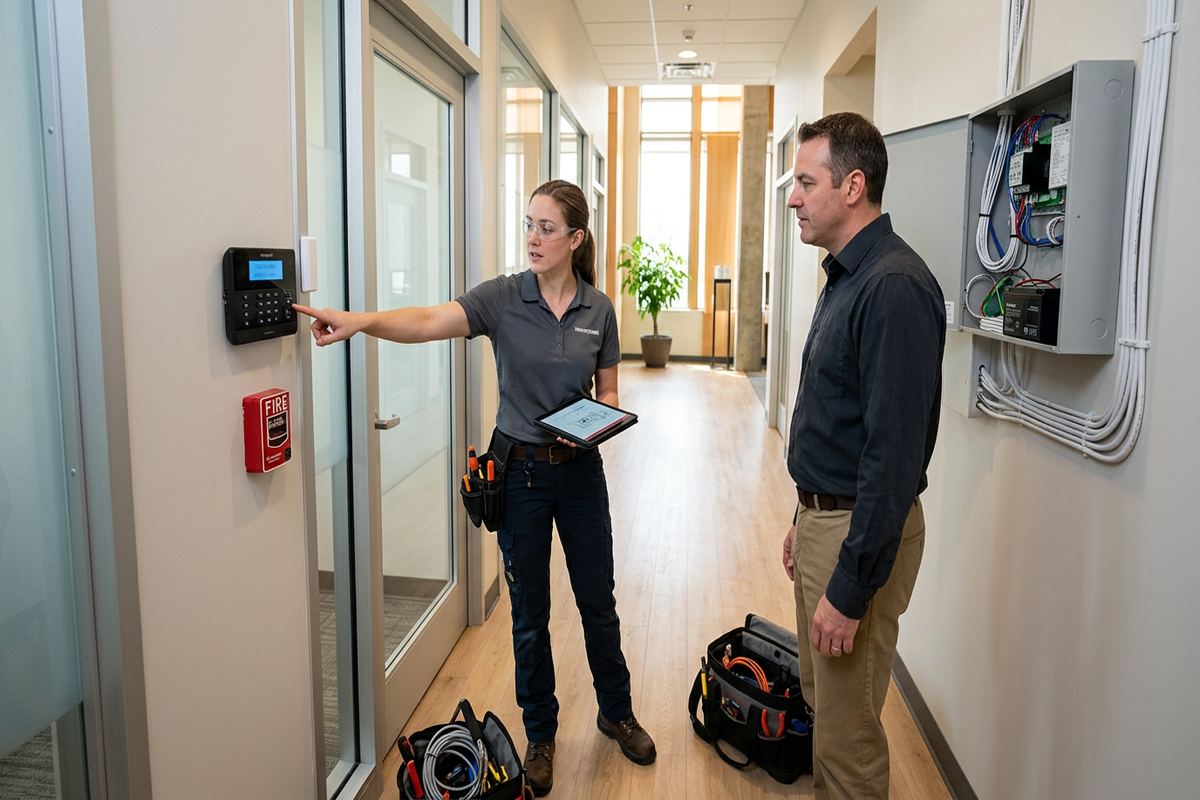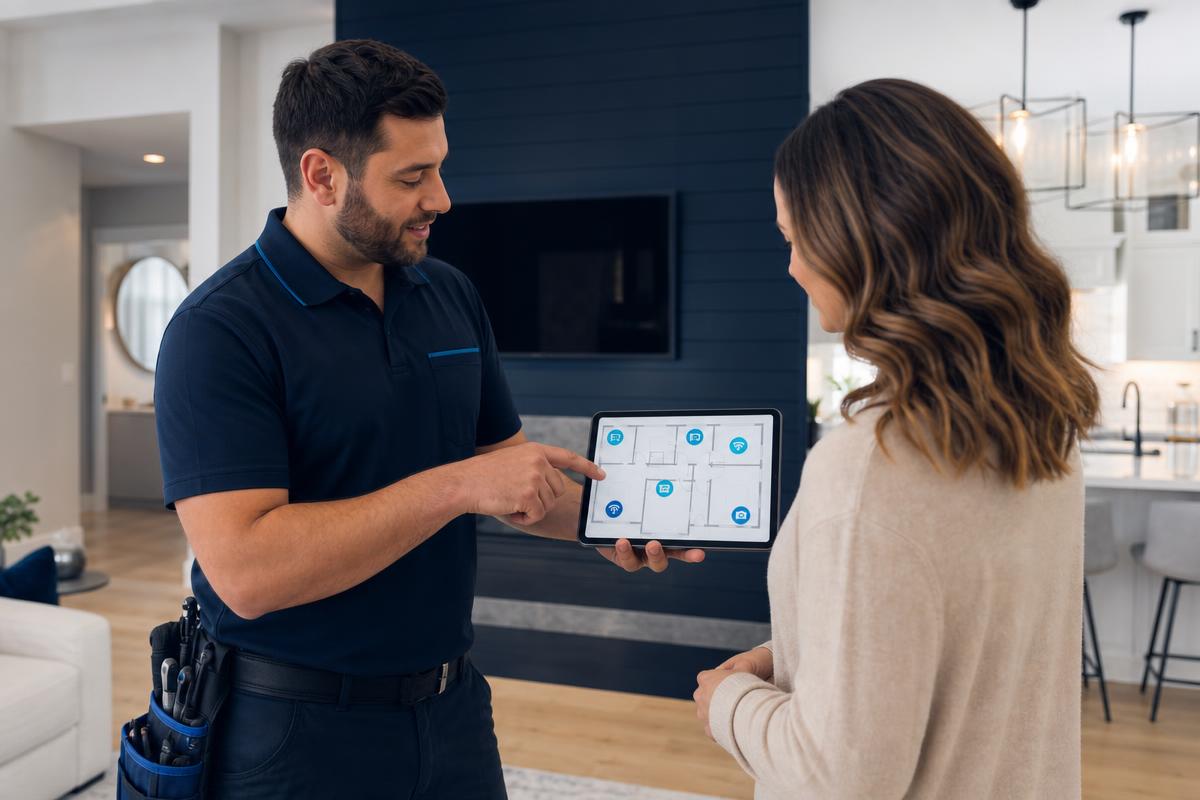
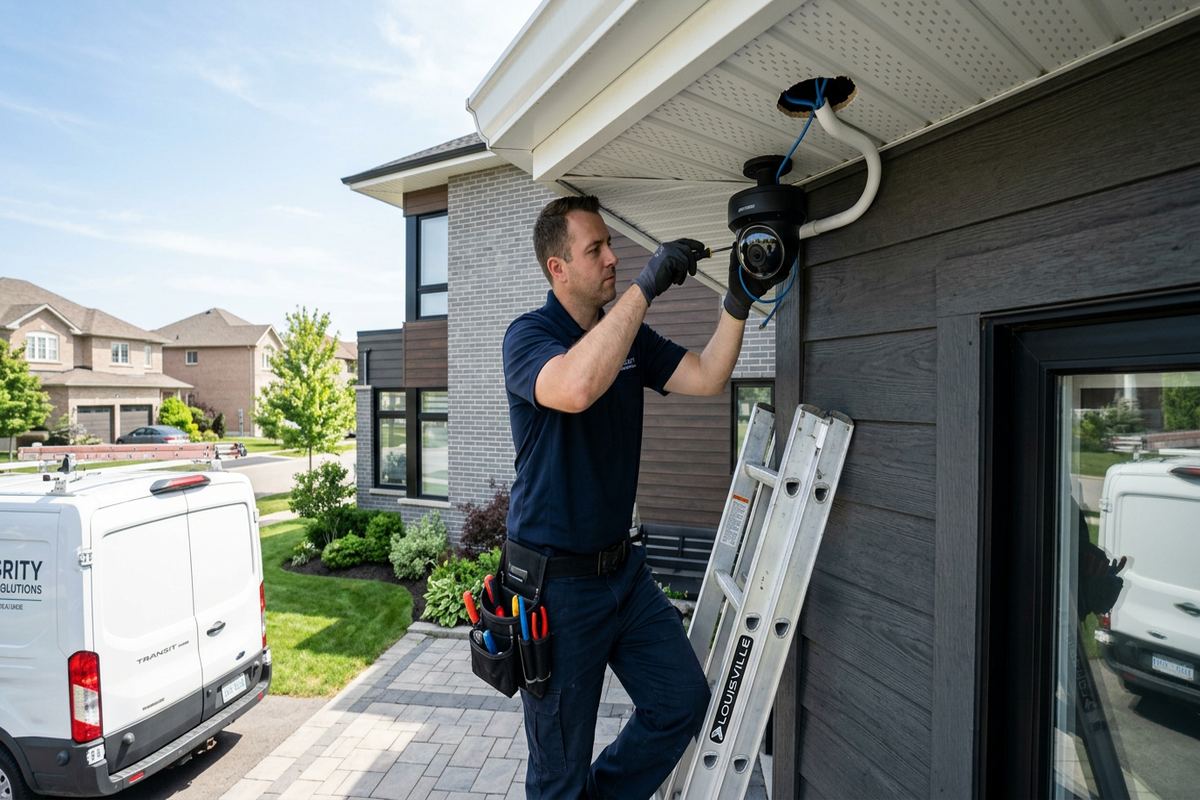
UnifiedLink installs wired home security camera systems across Ajax and Durham Region. We assess the property, plan camera views and cable routes, mount and seal exterior equipment, configure recording and remote access, and provide a clear handover. Installations are adapted to newer subdivisions, lakefront homes, finished basements and other properties where careful retrofit work matters.
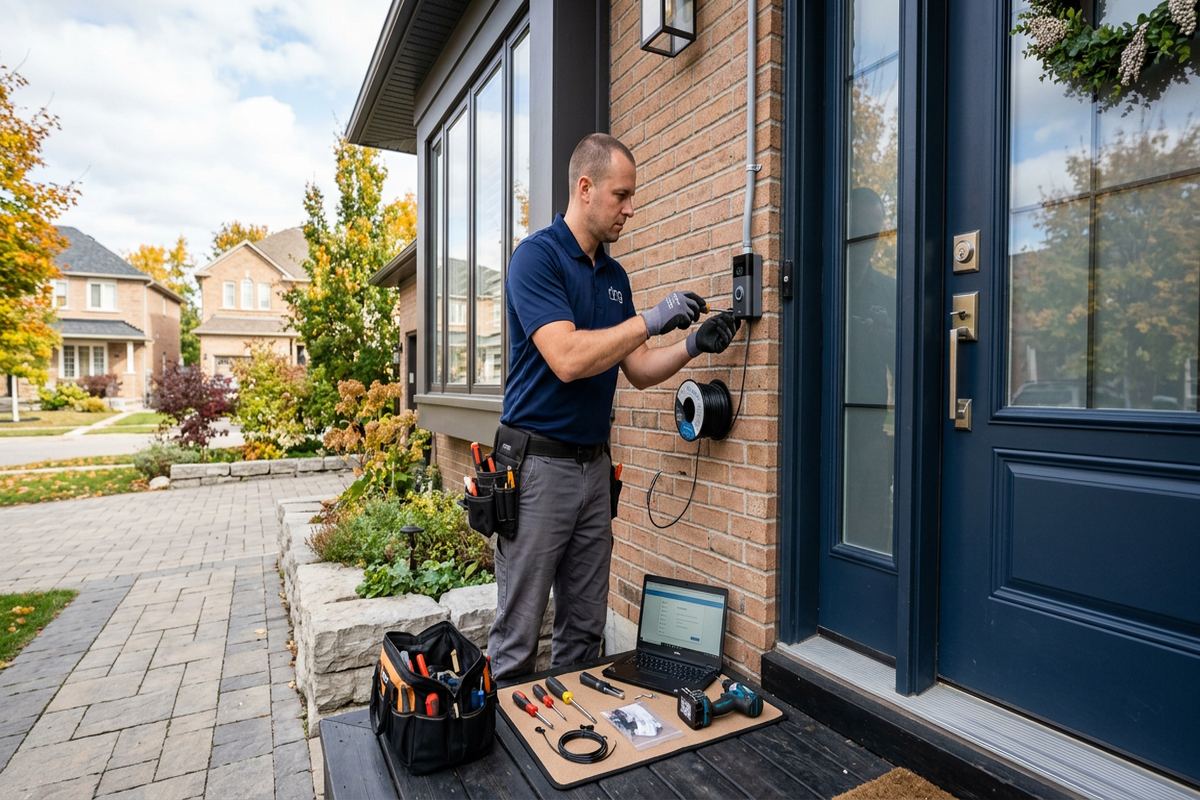
Home Security Camera Planning for Ajax Properties
A useful camera system starts with the property rather than a camera count. During an Ajax site assessment, we review doors, driveway approaches, side access, gates, walkways and other practical observation points. The goal is to identify views that help show activity clearly without creating unnecessary overlap or recording neighbouring private areas. We also examine possible recorder locations, network access, power availability and cable routes. This planning stage establishes what can be installed cleanly and what compromises may arise before equipment is selected or openings are made.
Newer subdivisions in Ajax often provide predictable framing and accessible attic areas, but finished basements can make vertical cable routes detail-heavy. A route that appears short outside may cross insulated walls, finished ceilings or fire-separated areas inside. We look for pathways through utility rooms, closets, garages, unfinished sections and existing service openings where appropriate. In lakefront homes or properties exposed to stronger weather, mounting surfaces and cable entry points need particular attention. The written scope records proposed routes, placements and exclusions so expectations are clear before installation begins.
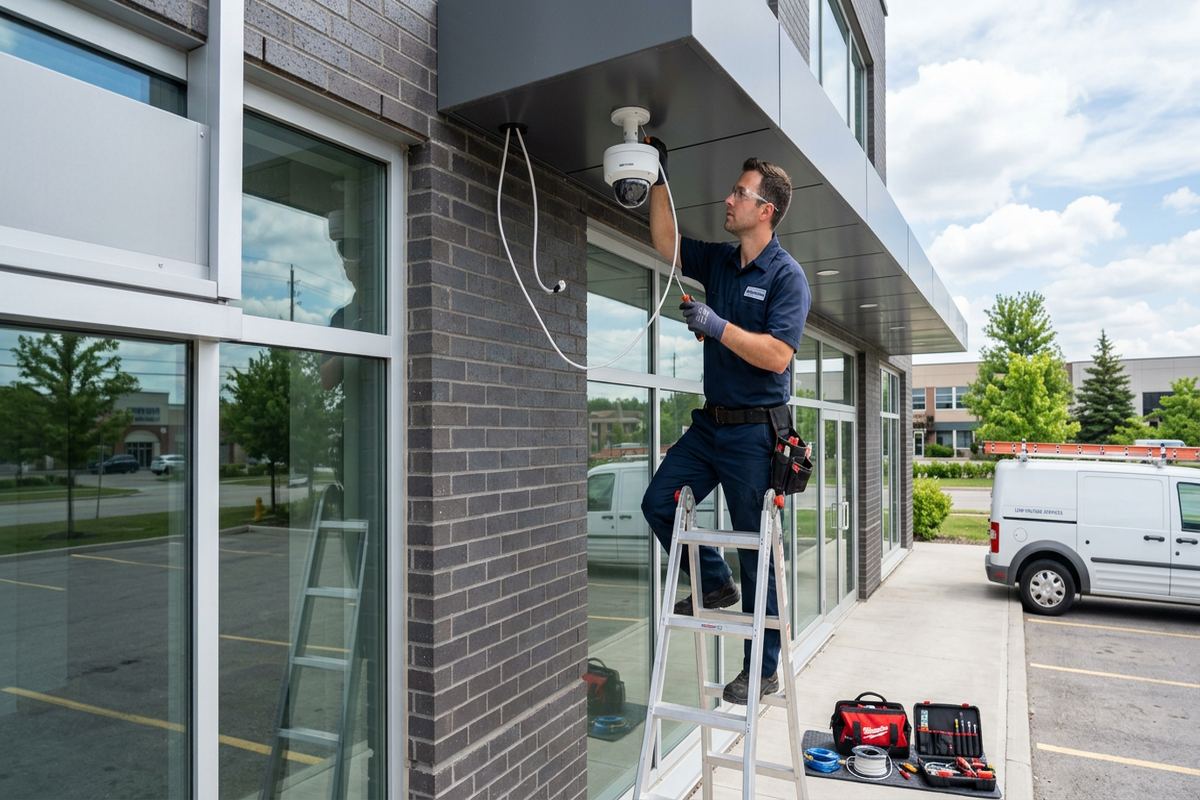
Camera placement should support a specific purpose at each location. A wide driveway view may establish general movement, while a more focused entrance view can provide useful detail near a door. Mounting too high can reduce facial detail, and mounting too low may make equipment easier to reach. Eaves, soffits, brick walls, siding and trim each affect the position and installation method. We discuss those trade-offs with the homeowner, including visible cable, landscaping, seasonal obstructions and lighting. Final placement is confirmed on site before permanent mounting work proceeds.
- Door, driveway and side-access coverage planning
- Recorder and network location review
- Cable-route assessment before pricing
- Privacy-aware fields of view
- Written equipment and placement scope
Wired Camera Installation Across Ajax
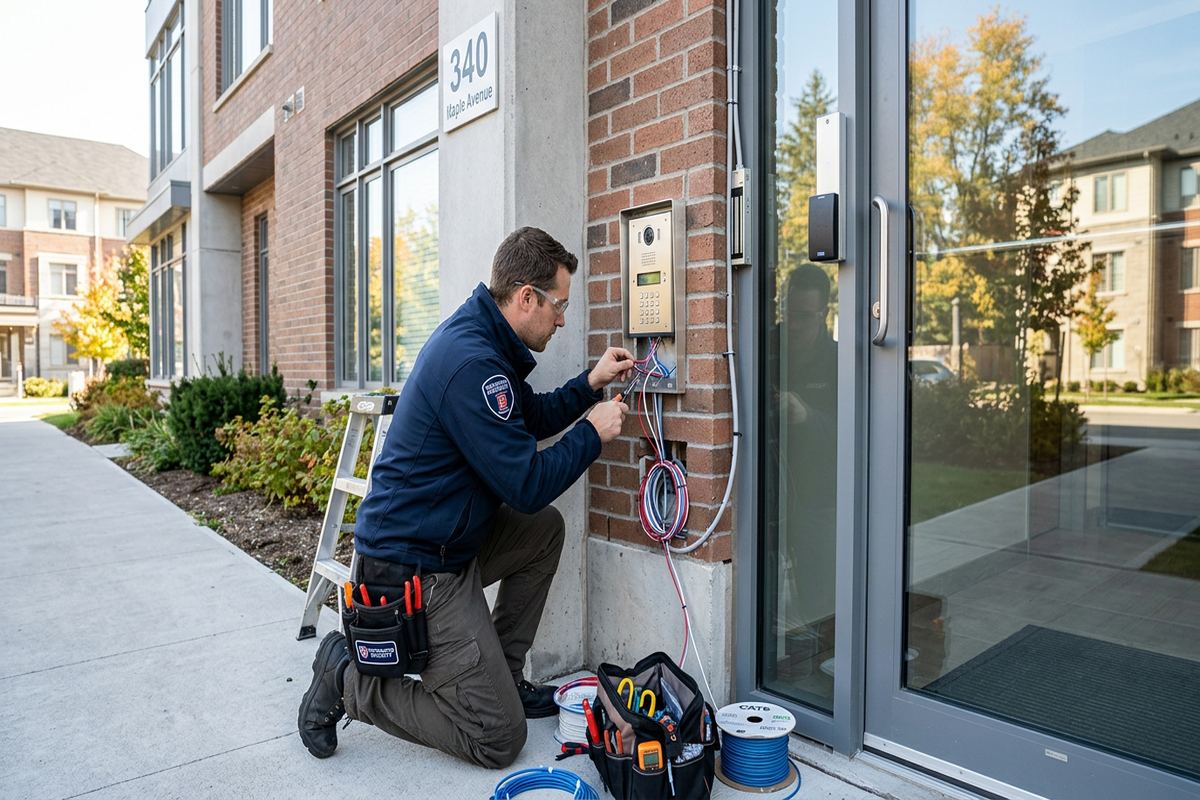
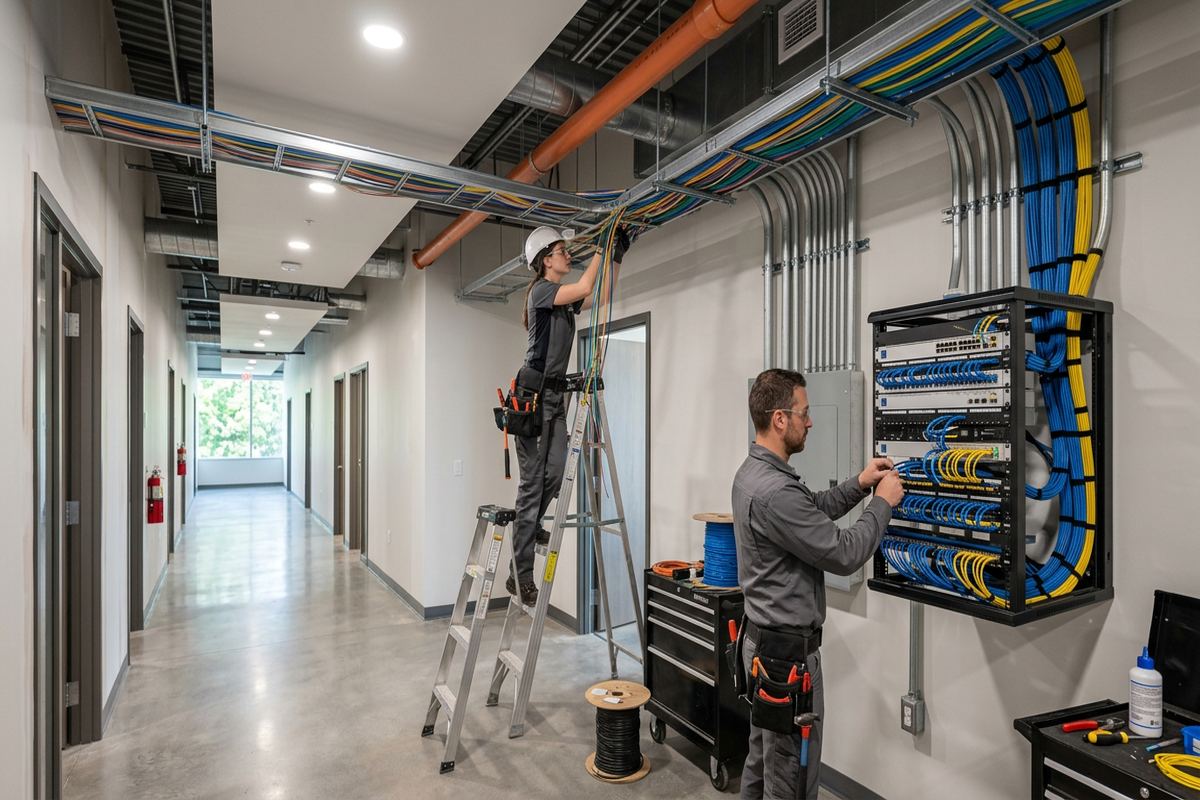
For many Ajax homes, a wired system provides a stable connection between each camera and the recorder or network equipment. UnifiedLink installs continuous labelled cable runs rather than relying on undocumented joins hidden in finished spaces. Routes are selected to protect the cable, limit unnecessary visibility and preserve access for future service. Where a pathway crosses framing, masonry or exterior assemblies, the opening is planned for the cable type and mounting method. Labels at both ends make identification easier during configuration, troubleshooting or later expansion without tracing every run again.
Retrofit conditions vary between frame construction, brick veneer and solid masonry details. Frame walls may permit concealed routing through cavities, although insulation, blocking and finished surfaces can restrict access. Masonry mounting requires suitable fasteners, controlled drilling and attention to the entry angle so water is not directed inward. In homes around Southwood, Nottingham or Applecroft, we do not assume that similar-looking elevations have identical wall assemblies. The installer verifies the surface and available route before drilling, then uses mounting and sealing methods appropriate to the actual condition encountered.
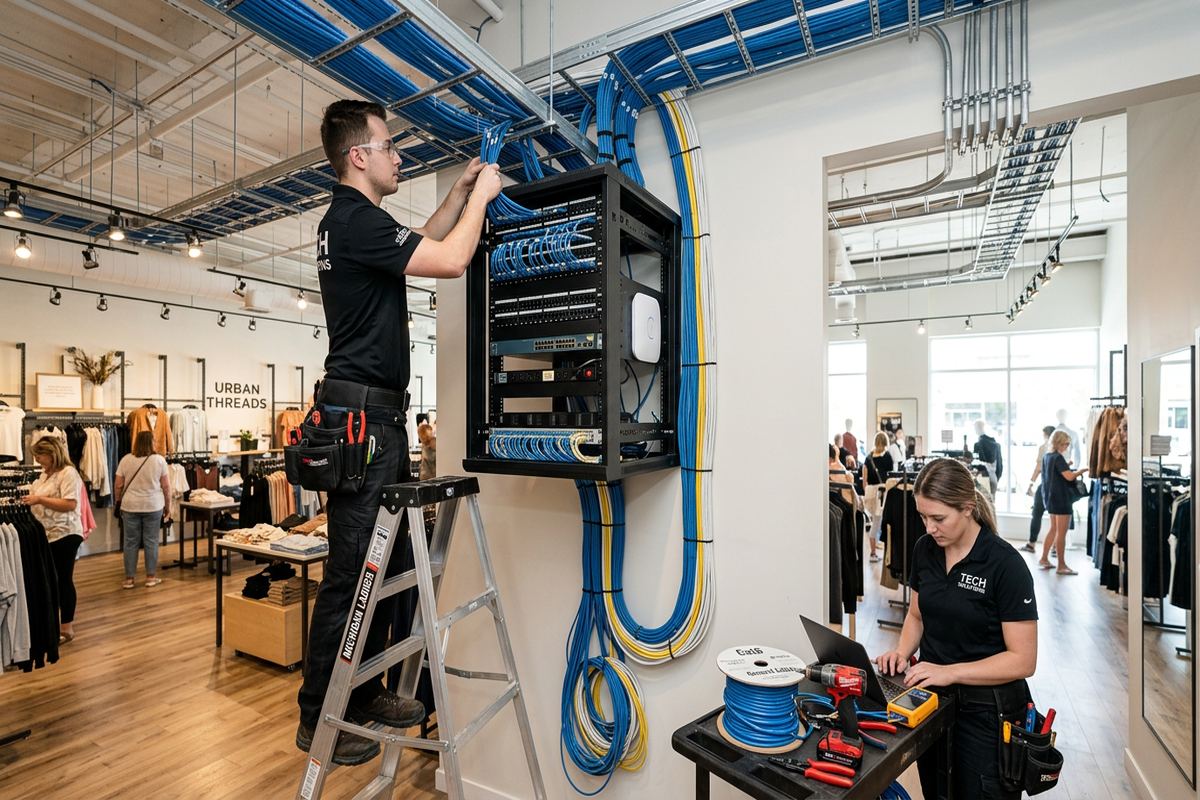
The recorder is normally placed where ventilation, network connectivity, service access and physical protection can be balanced. Finished basements may offer a utility area or communications location, but enclosing recording equipment in an unventilated cabinet can affect operation. Garages and attics can also experience temperature conditions that make them unsuitable for certain equipment. We review these factors during the assessment and state the proposed location in the scope. If network changes, electrical work or customer-provided equipment affect installation, responsibilities and exclusions are documented rather than left uncertain.
- Continuous cable from camera to endpoint
- Labels applied at both cable ends
- Concealed routes where construction permits
- Correct fixings for each mounting surface
- Recorder location planned for service access
Exterior Mounting and Ajax Weather Protection
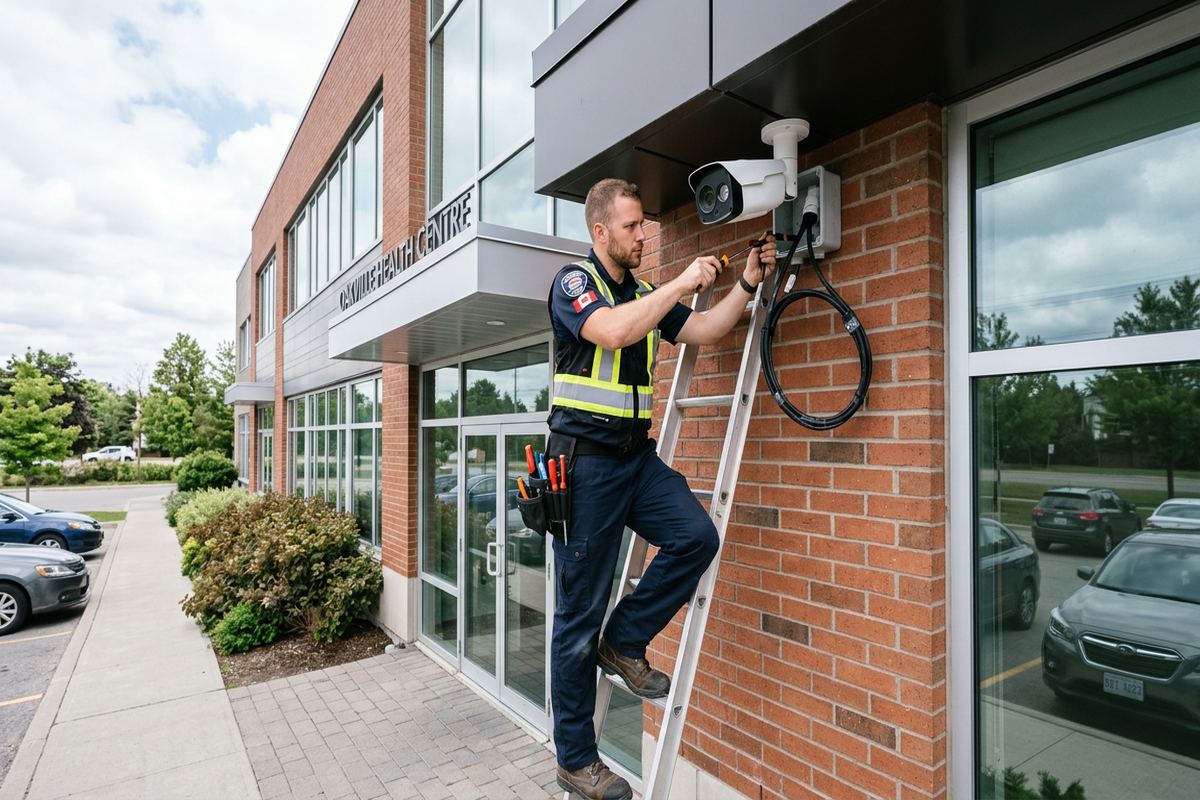
Exterior cameras in Ajax must remain securely mounted through rain, snow, wind and repeated freeze-thaw conditions. Installation details matter because a small unsealed opening can admit moisture behind siding, trim or masonry. We position cable entries to reduce direct exposure, form appropriate drip paths where needed and seal penetrations with materials suited to the surface. Junction points are kept protected and serviceable rather than buried where inspection is difficult. Camera ratings still need to match the installation location; an outdoor rating does not eliminate the need for sound mounting and cable-entry practices.
Winter changes more than temperature. Snow accumulation can block a low camera, ice can affect an exposed connector, and reflected infrared light can reduce the usefulness of a night image. Eaves, nearby walls, downspouts and light-coloured soffits may also create glare after dark. During placement, we consider expected snow lines, roof runoff and the camera’s relationship to exterior lighting. A position that looks clear during the day can perform poorly at night, so configuration includes checking exposure and infrared behaviour instead of assuming the default settings are suitable.
Lakefront properties near Duffin's Bay and Pickering Beach can have more exposed elevations, making secure mounting and protected cable transitions especially important. The aim is not to cover every surface with sealant, but to create a controlled, durable entry detail that can still be serviced. We avoid routing cable where roof drainage, moving gates or seasonal maintenance could damage it. If an existing penetration, conduit or mounting block is proposed for reuse, its condition and suitability are checked first. Unsuitable legacy openings are identified in the written scope.
- Weather-sealed exterior cable entries
- Mounting planned for freeze-thaw cycles
- Night-image glare checked during setup
- Cable protected from runoff and damage
- Serviceable exterior junction points
Ajax, Ontario
Home security camera installation in Ajax, scoped in writing first
Book a site assessment and get equipment, routes, exclusions, and warranty on paper before anything is installed.
Camera Coverage for Entrances, Driveways and Yards
Coverage design separates general awareness from identification. A camera overlooking the front yard can show when someone approaches, but it may not capture useful detail at the doorway. Conversely, a narrow entrance view may miss activity across the driveway. We determine which areas matter most and assign each camera a defined job. Common priorities include front doors, garage approaches, side passages, rear doors and gates. Sightlines are checked for parked vehicles, porch columns, shrubs and seasonal foliage that could obstruct the scene or trigger excessive motion alerts.
Driveways require careful positioning because headlights, shadows and vehicles can change the recorded image. A camera aimed straight toward the street may receive strong glare and can include more public space than necessary. An angled view from the garage or house may provide better context while keeping the homeowner’s property central. In Central Ajax and other areas with varied lot arrangements, mounting options can differ substantially between detached, semi-detached and townhouse properties. The assessment considers ownership boundaries, shared access and whether the proposed view could intrude on a neighbour’s private area.
Rear-yard coverage often involves lower light, wider spaces and fewer convenient cable routes. Deck roofs, additions, mature landscaping and sheds can create blind spots or block infrared illumination. We evaluate whether a house-mounted camera can provide the required scene before proposing detached mounting or extra infrastructure. Pool, patio and play areas also call for privacy-conscious placement, especially where neighbouring windows or yards are nearby. The objective is practical security coverage, not unrestricted surveillance. Camera masks, motion zones and recording schedules can be configured where supported by the selected system.
- Separate overview and identification views
- Driveway placement planned around headlight glare
- Blind spots checked before final mounting
- Motion zones adjusted to relevant areas
- Privacy masking configured where supported
Recording, Network and Remote Viewing Setup in Ajax
Recording settings determine how long useful footage remains available and how easily it can be found. Storage depends on camera quantity, resolution, frame rate, compression, recording mode and the amount of activity in each scene. Rather than promising a fixed retention period without those inputs, we configure the recorder according to the selected equipment and agreed priorities. Time, date, camera names and recording schedules are set on site. Each view receives a practical label, such as its door or driveway location, so exported footage and alerts are easier to understand.
Remote viewing relies on both the camera system and the home network. We connect supported equipment, configure the relevant application and confirm access using the customer’s own credentials. Passwords should not remain on installer-owned accounts, and the homeowner should retain control of recovery information and authorized users. Wi-Fi quality may affect phones and wireless devices, but wired cameras commonly communicate through cable to the recorder or network switch. Internet speed, router restrictions and third-party service changes can still affect off-site viewing, so dependencies are explained during handover.
Notifications need adjustment after basic connectivity is established. An Ajax driveway facing moving branches, passing traffic or changing shadows may generate too many alerts if the detection area is left at its default. Where the equipment supports it, we configure motion zones, sensitivity, schedules and available event filters around the intended scene. No detection method should be treated as infallible; lighting, weather, distance and obstructions influence results. We demonstrate how to review events, play recordings and export clips, allowing the owner to make informed adjustments as conditions change.
- Recorder time and camera names configured
- Customer-owned login credentials used
- Remote viewing tested on site
- Motion zones and schedules adjusted
- Playback and clip export demonstrated
Clean Retrofits in Finished Ajax Homes
Finished interiors require a route-first approach. Before cutting or drilling, we inspect accessible areas and identify where cables can move between floors, exterior walls and the recorder. Closets, mechanical rooms, garage transitions and unfinished ceiling sections may provide workable paths, while tiled surfaces, built-in cabinetry and finished basement ceilings can impose limits. Small access openings may sometimes be necessary, but they should be discussed rather than created without notice. The written scope distinguishes included low-voltage work from painting, broad drywall repair or other restoration that may require a separate trade.
Soffit routes can be useful, but soffits are not automatically open from one area to another. Framing, insulation, ventilation channels and changes in roofline may interrupt the path. Vinyl and aluminium components also require careful handling to avoid distortion and to support the camera independently where needed. For brick exteriors, routing behind the veneer is not always practical or appropriate. We select from concealed interior routes, protected exterior cable, conduit or other documented methods based on access, appearance and serviceability. The homeowner can review visible-route options before work starts.
Townhouses and condominium properties may have common elements, shared walls or exterior surfaces that the resident cannot alter without permission. Similarly, tenants need landlord approval before cameras, cabling or penetrations are installed. UnifiedLink can provide a proposed scope and placement information for the customer to submit, but approval remains the customer’s responsibility. Rules may also limit camera views, exterior conduit, equipment locations or work hours. Confirming those conditions before scheduling avoids an installation arriving on site without authority to drill or mount equipment.
- Cable routes reviewed before openings are made
- Finished-basement constraints documented
- Visible-route options discussed in advance
- Condo or landlord approval identified
- Restoration exclusions stated in writing
Replacing or Expanding Existing Camera Systems
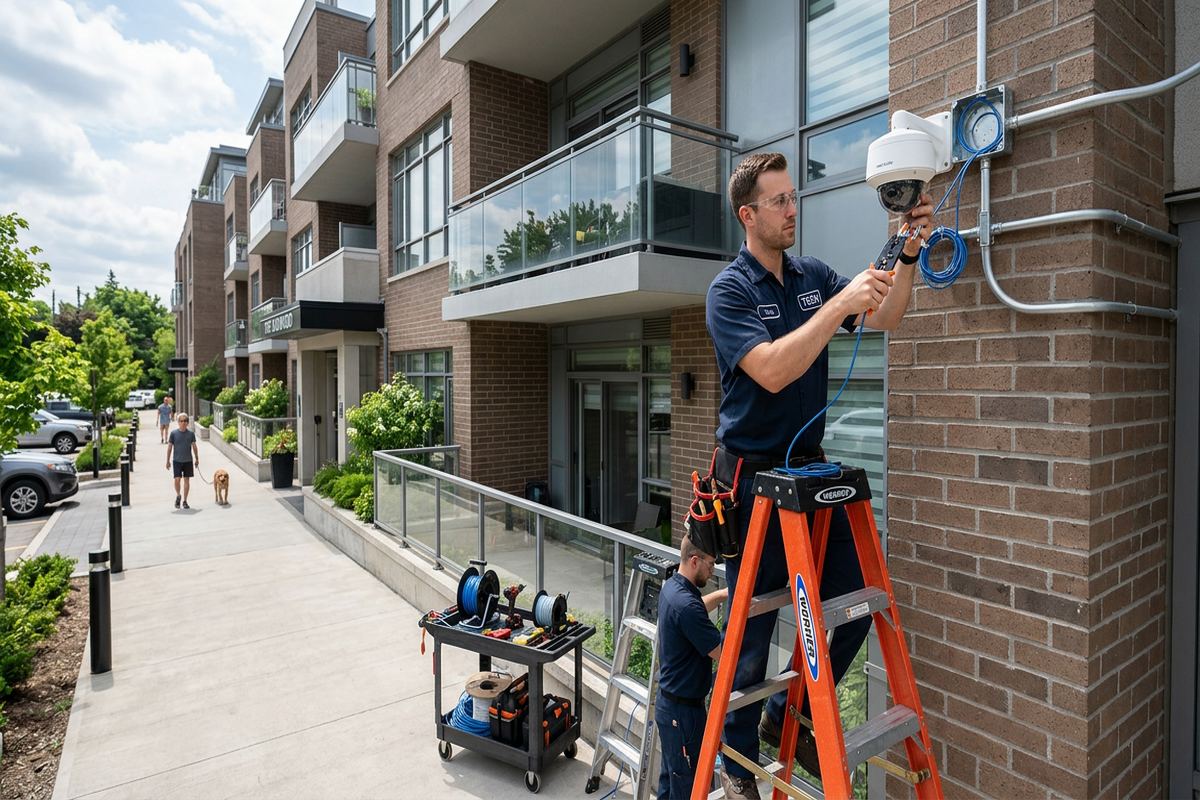
An existing camera system may be expandable, partly reusable or better replaced, depending on its cabling, recorder compatibility and condition. We inspect accessible cable ends, connector quality, power arrangements, mounting points and network connections before recommending reuse. A cable that carries video today is not automatically suitable for a new camera type or higher data requirement. Likewise, cameras and recorders from different platforms may not support the same features. The assessment separates confirmed reusable components from items that require testing or replacement, preventing assumptions from becoming part of the installation plan.
Older exterior installations sometimes show water entry, corroded connectors, loose junction boxes or cable exposed to sunlight and physical damage. Reusing a camera position can still make sense, but the penetration and mounting surface need inspection. We may recommend changing the entry detail, adding a serviceable box or rerouting the cable rather than attaching new equipment to a failing installation. In Ajax, freeze-thaw movement can worsen weak seals over time. Existing holes are not reused solely for convenience if their location or condition creates a foreseeable problem.
Expansion planning should account for recorder channels, network capacity, storage, power and future cable pathways. Adding one camera may require more than an open port if the recorder cannot support its resolution or the power source is already fully allocated. Homes that may later add coverage to a detached garage, gate or rear structure can benefit from identifying a pathway during the first project. Nearby commercial strips and industrial units use different coverage priorities and approval processes, so home equipment should not be selected on the assumption that every property has identical requirements.
- Existing cabling inspected before reuse
- Recorder and camera compatibility checked
- Damaged exterior entries corrected
- Storage and power capacity reviewed
- Future pathways considered during planning
Ajax Site Assessment, Installation and Handover
Every project begins with a site assessment before pricing. We review the requested coverage, construction, mounting surfaces, cable routes, network environment and equipment location. The resulting written scope covers equipment, proposed cable routes, device placement, exclusions, equipment ownership and warranty. This provides a common reference for the homeowner and installer, particularly on detail-heavy retrofits with finished basements or restricted exterior access. If site conditions later differ from what could reasonably be observed, the change is discussed before affected work continues rather than being treated as an undocumented addition.
During installation, one accountable contractor coordinates cabling, mounting, configuration and handover. Cameras are aligned on site using the actual scene rather than fixed only from a drawing. Cable runs are labelled, supported and terminated, exterior openings are sealed, and accessible work areas are left orderly. The recorder and remote-access functions are configured to the agreed scope. Where another trade, property approval or customer network change is required, that dependency is identified clearly. This approach keeps responsibility for the low-voltage work defined from assessment through completion.
Handover includes the customer’s own credentials, basic operating guidance and an as-built record. We show how to view live cameras, find recordings, export a clip and manage available notification settings. The record identifies installed devices and cable information relevant to future service. Ajax requests sent during business hours are answered the same day, while after-hours requests are answered the next business day. Site assessment timing depends on the service and travel distance. Final pricing follows the assessment and written scope rather than a generic camera count.
- Site assessment completed before pricing
- Written scope with ownership and warranty details
- On-site alignment and configuration
- Customer credentials used at handover
- As-built installation record provided
Ajax neighbourhoods we cover
- Southwood
- Nottingham
- Duffin's Bay
- Applecroft
- Pickering Beach
- Central Ajax
Home security camera installation in Ajax — common questions
How many cameras does my Ajax home need?
The number depends on the views you need, not simply the size of the house. An Ajax assessment typically reviews entrances, driveway approaches, side access, rear doors and gates. Some locations need an overview camera and a separate detail view. Building shape, landscaping, neighbouring properties and available cable routes also affect the design. We confirm proposed placements in a written scope before installation.
Can you install cameras in a finished basement home?
Yes, although finished basements make cable routing more detail-heavy. In newer Ajax subdivisions, possible routes may include utility areas, closets, garages, attic spaces or accessible ceiling sections. We inspect these options before pricing and explain any visible cable, conduit or access openings that may be required. Painting, extensive drywall repair and other restoration are identified as exclusions unless specifically included in the written scope.
Will exterior cameras handle Ajax winters?
Equipment must be suitable for its mounting location, but product ratings are only part of the installation. Ajax winters bring snow, moisture and freeze-thaw cycles that can expose weak mounting or sealing details. We use appropriate fixings, protect cable transitions, seal penetrations and consider runoff, snow accumulation and infrared reflection. Camera placement and settings are also checked on site for practical day and night performance.
Do I need permission for condo or rental installation?
Possibly. Ajax condominium properties may treat exterior walls, soffits, hallways or shared areas as common elements, and approval may be required before drilling or mounting. Tenants should obtain landlord permission for equipment, cabling and penetrations. UnifiedLink can document the proposed placement and route for submission, but the owner, condominium corporation or landlord controls authorization and may impose conditions on views, work hours or exterior appearance.
Can you reuse my existing camera cables?
Existing cables may be reusable after inspection and compatibility checks. We examine accessible cable ends, connector condition, route, type and exposure, then compare them with the proposed recorder and cameras. In Ajax properties, exterior cable and seals may have been affected by moisture or freeze-thaw movement. Reuse is included only where the existing infrastructure is suitable; uncertain or damaged components are identified in the written scope.
Will I control the camera system and recordings?
Yes. Supported equipment is configured using the customer’s own credentials, and equipment ownership is stated in the written scope. At handover, we demonstrate live viewing, playback, clip export and available notification controls. You also receive an as-built record. Remote access still depends on the Ajax property’s internet connection, network settings and any third-party application services associated with the selected system.
Coverage in Ajax is confirmed against the address before we quote. See everything we install in Ajax or the province-wide home security camera installation page.