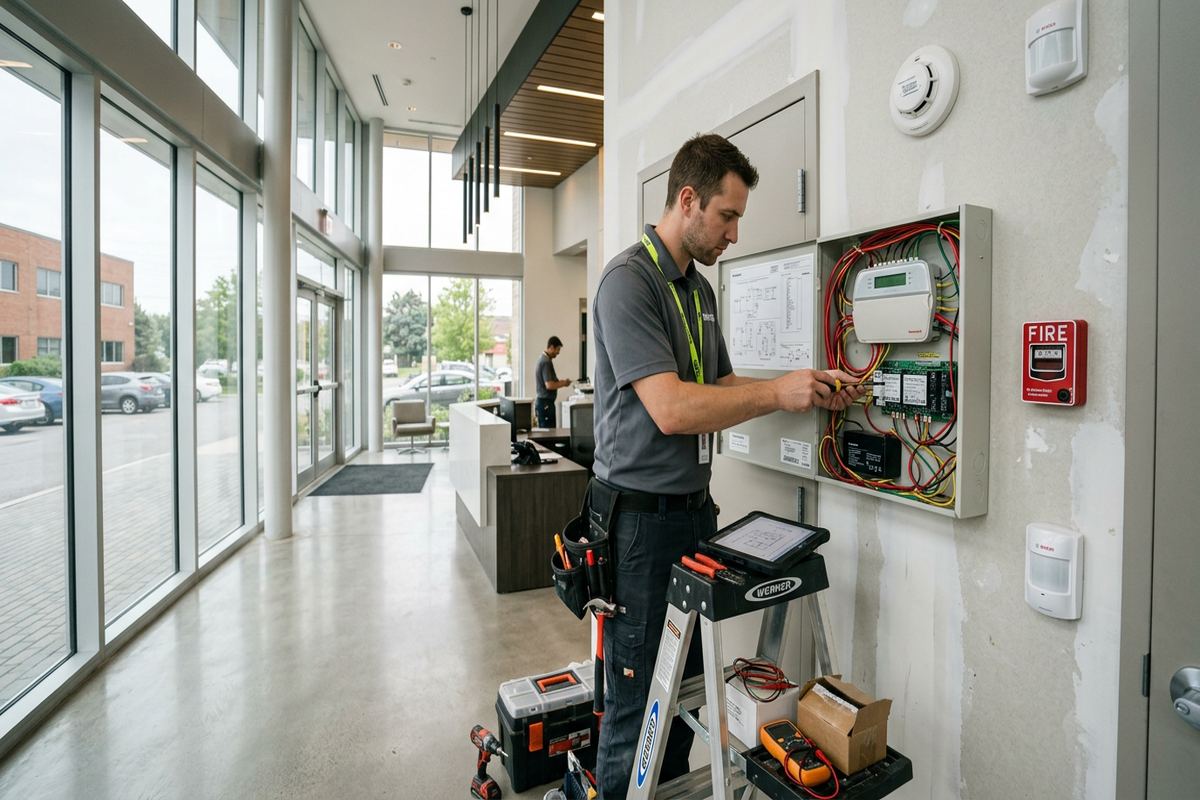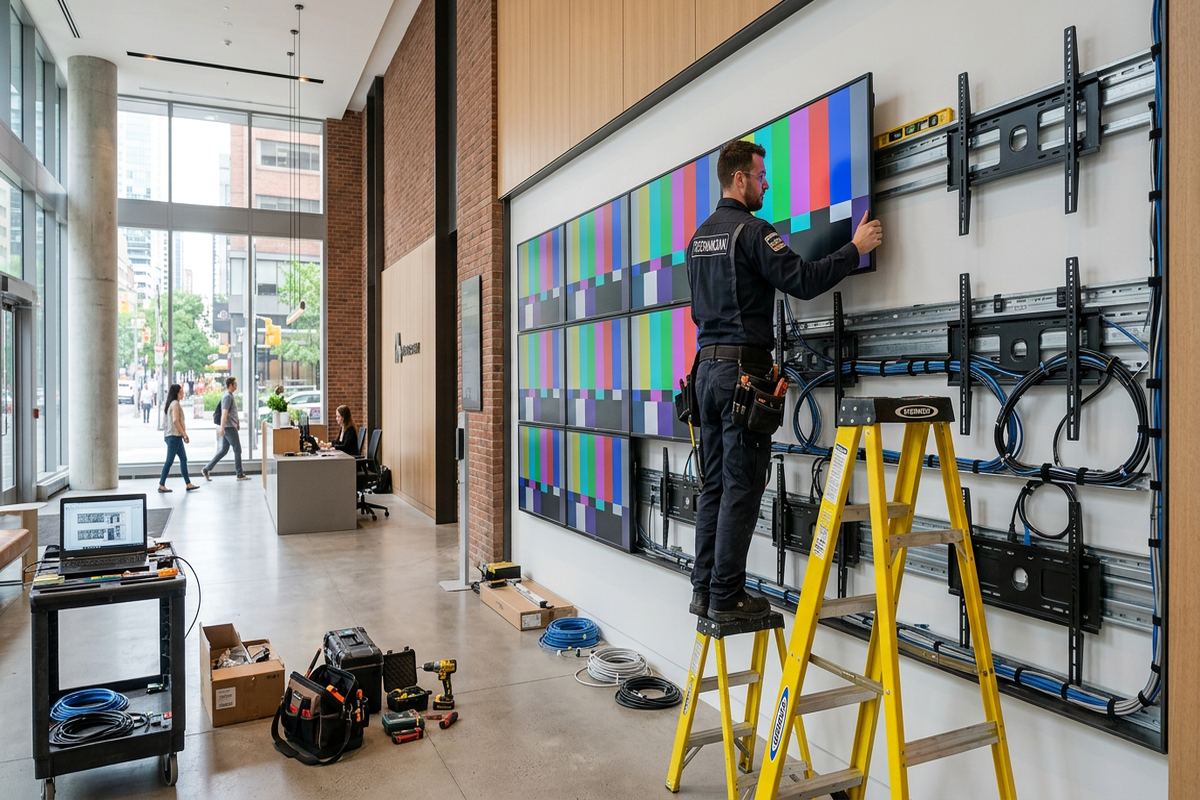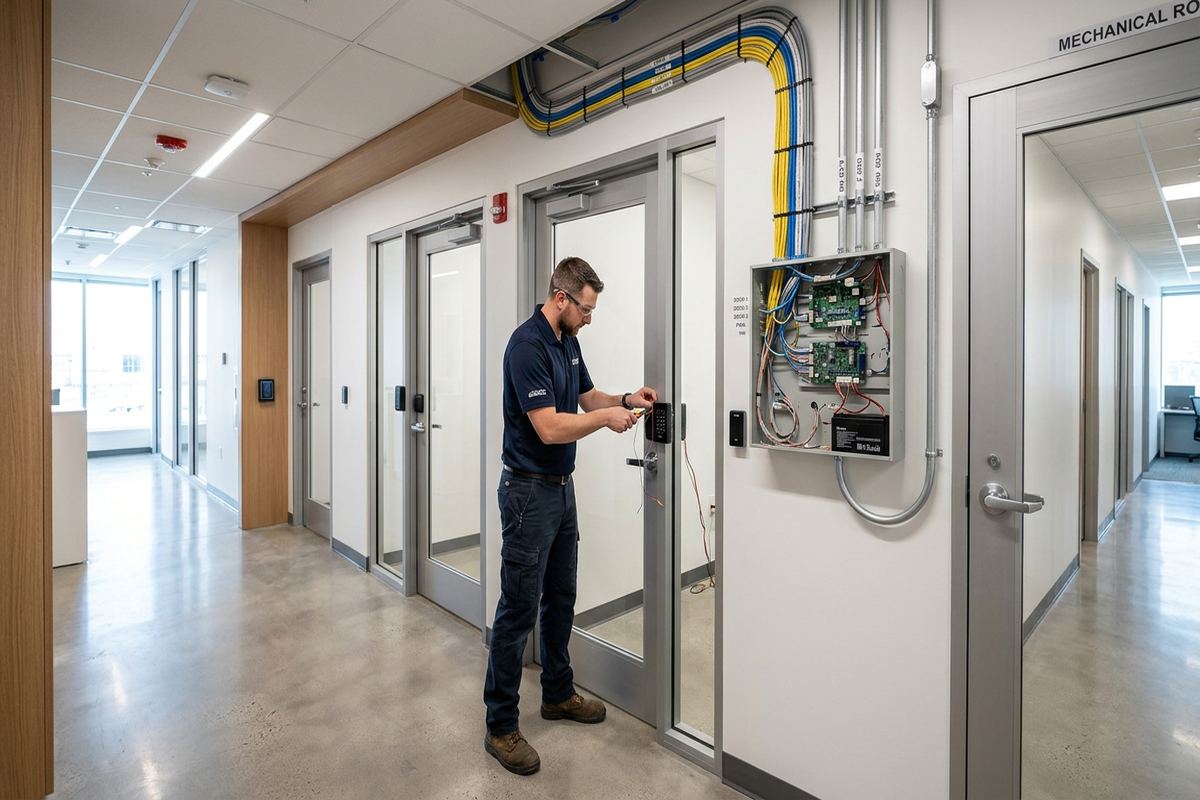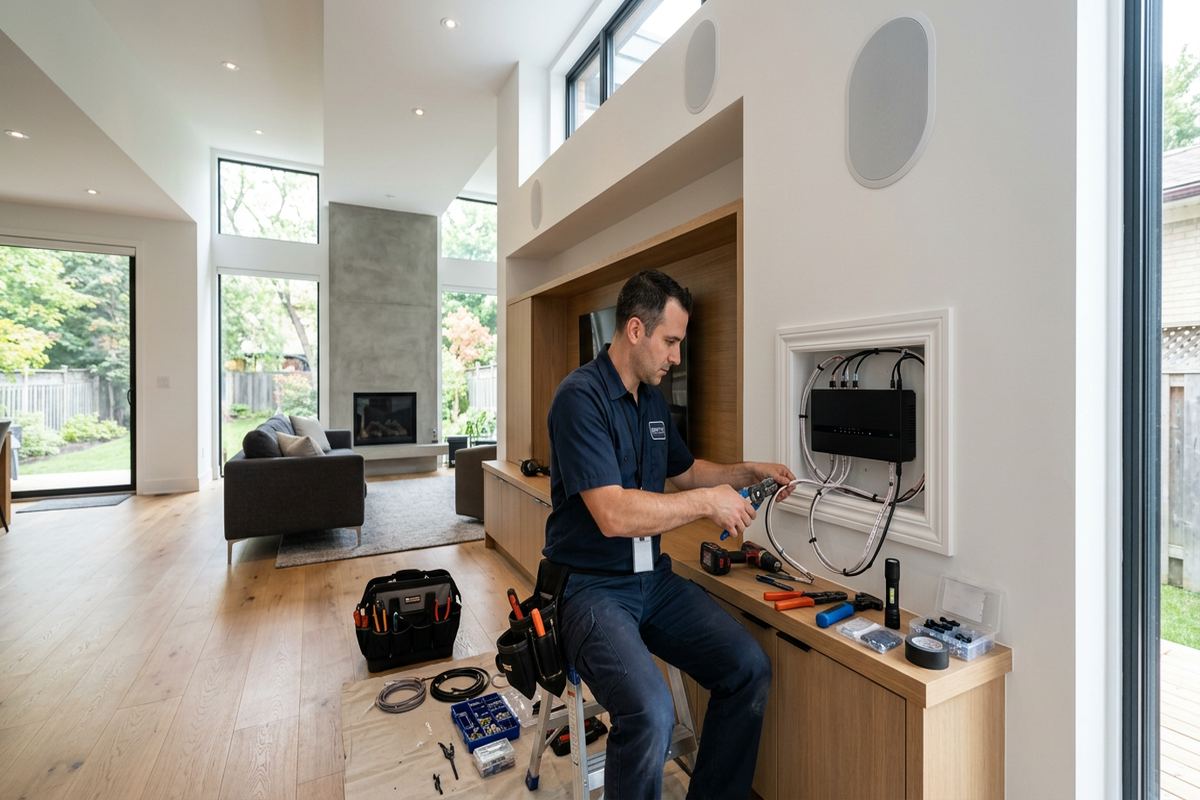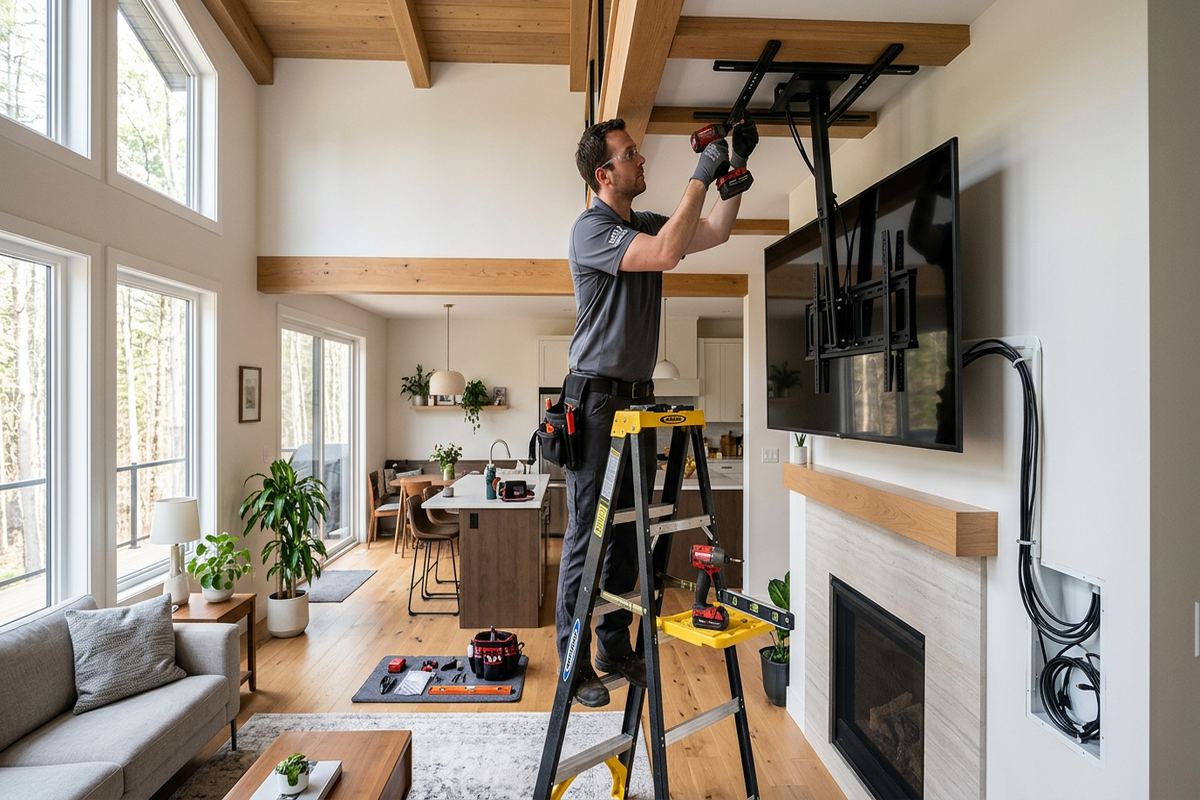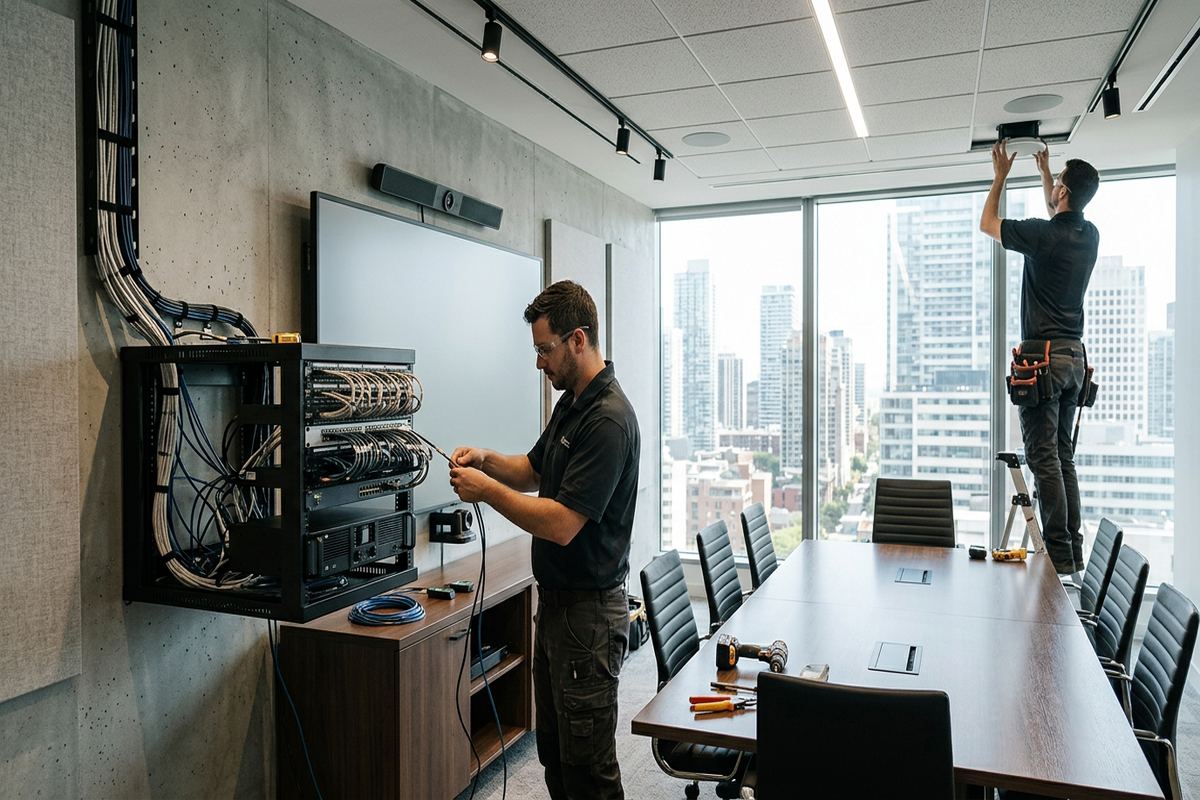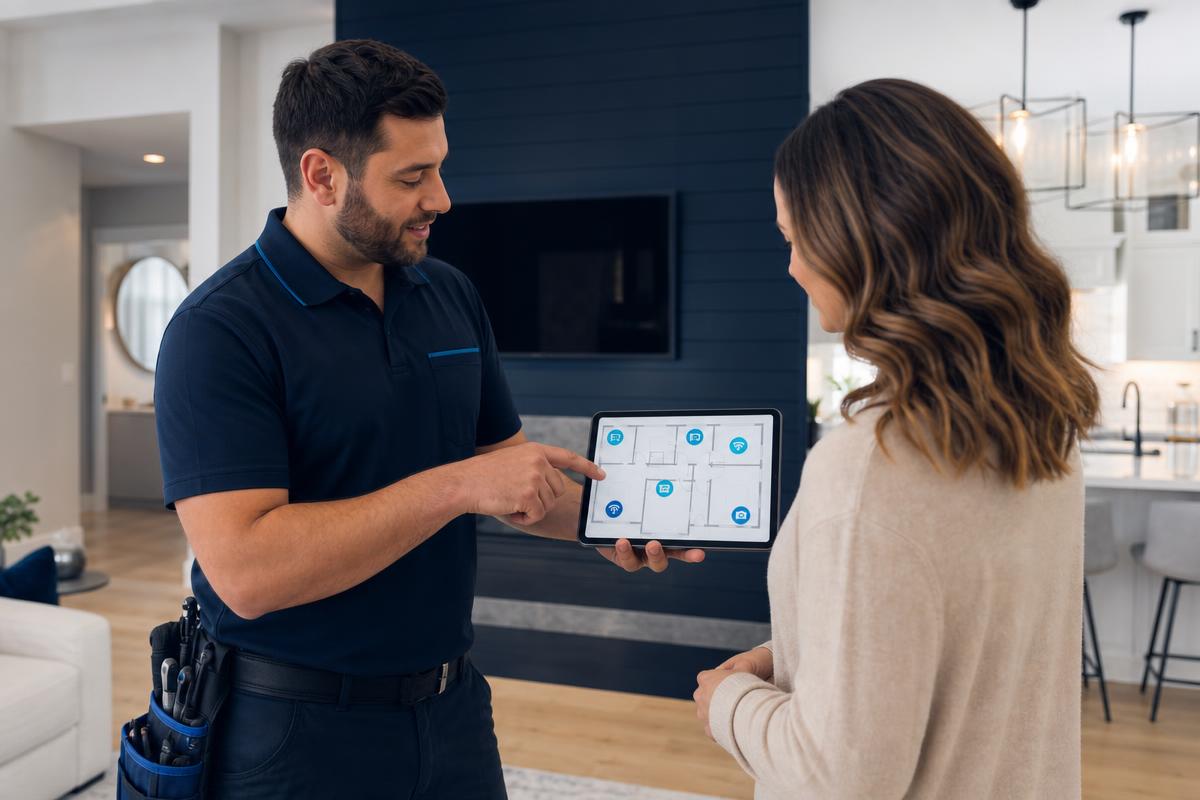
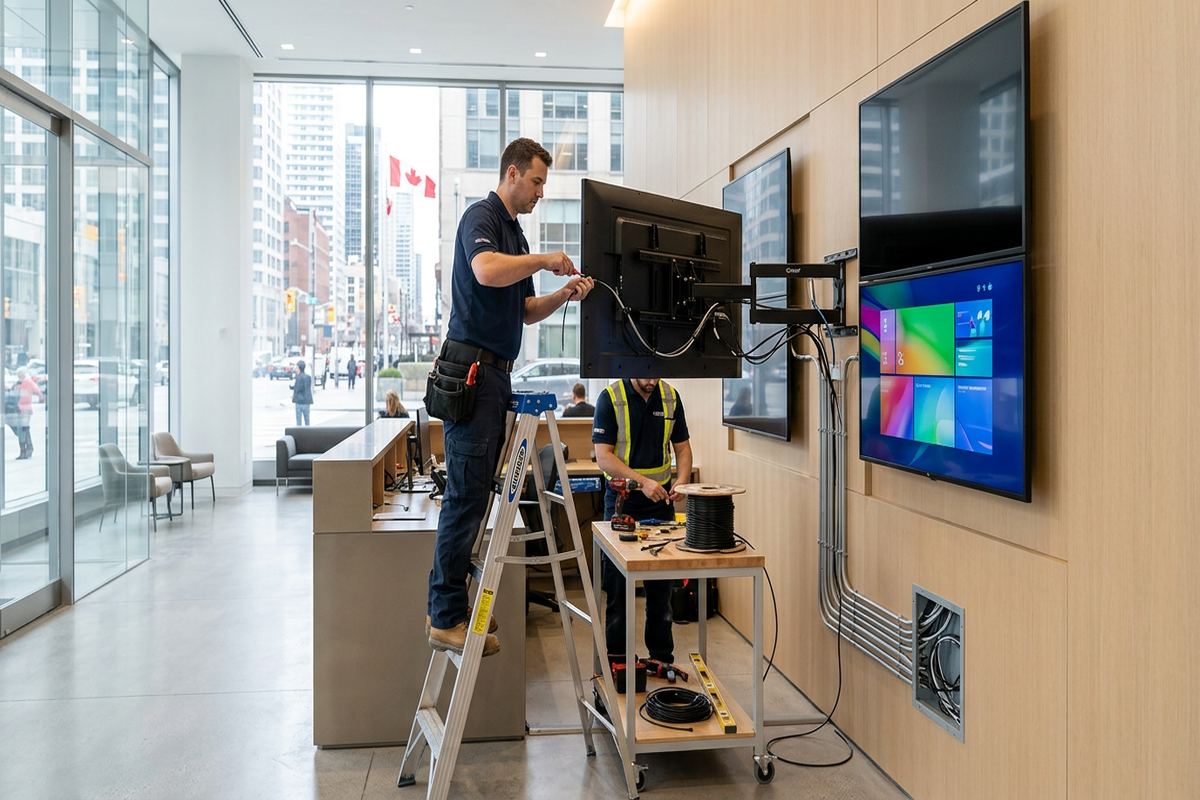
UnifiedLink plans and installs TVs above fireplaces in Ajax homes and commercial spaces. Each project starts with an assessment of heat exposure, wall construction, mounting height, power and cable routes. The result is a secure installation with concealed, labelled cabling, on-site configuration and a clear handover using the customer’s own credentials.
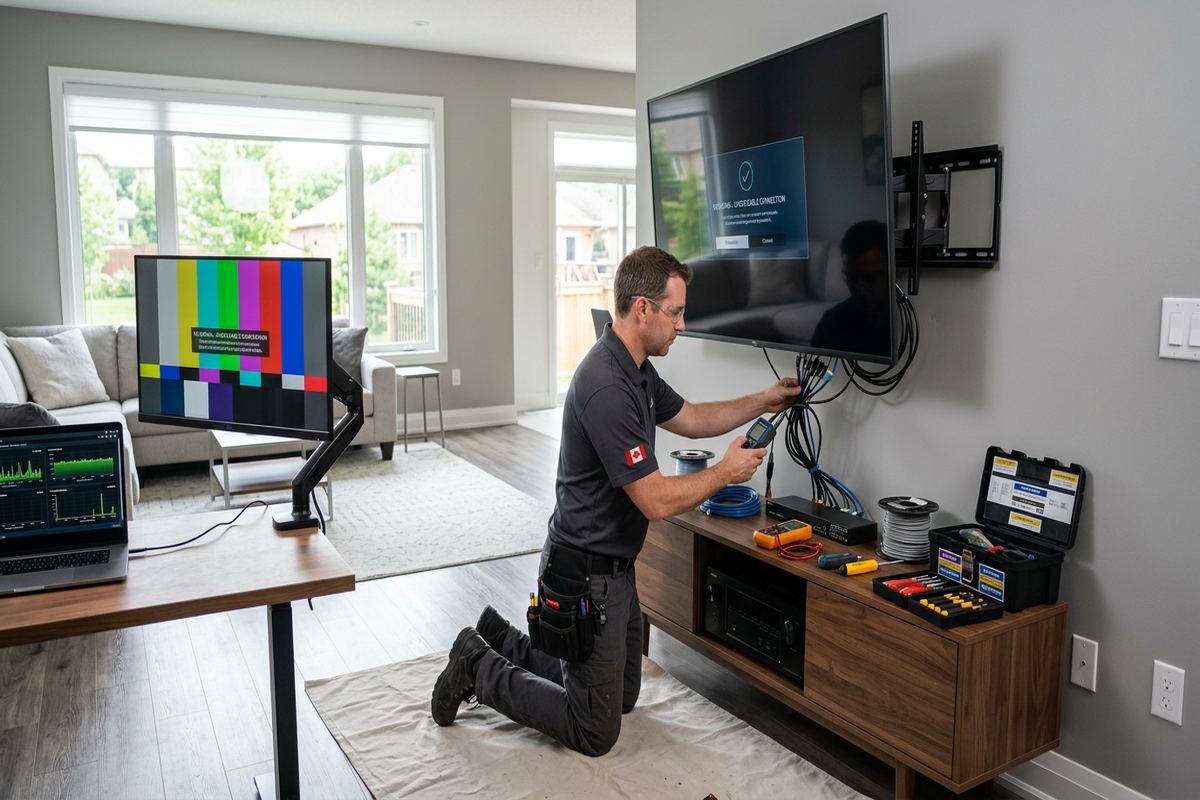
Fireplace TV Mounting Planning in Ajax
Mounting a TV above a fireplace requires more planning than attaching a bracket to an ordinary wall. In Ajax, newer subdivisions and lakefront homes often have finished rooms, built-in mantels and completed basements that limit access behind the wall. UnifiedLink assesses the fireplace type, wall assembly, available mounting surface, viewing position and possible cable routes before preparing a written scope. This process identifies practical constraints early and avoids relying on assumptions about studs, masonry, blocking or hidden services inside an otherwise finished feature wall.
Heat is the first issue to evaluate because televisions and cabling have operating limits. A mantel may redirect some rising heat, but its depth, the fireplace design and the TV position all affect exposure. During the assessment, we review how the fireplace is used and inspect the intended mounting area for vents, outlets and signs of concentrated heat. Where conditions are unsuitable, the scope can recommend a different position or other practical changes rather than placing equipment where regular fireplace operation could shorten its life or create unreliable performance.
Viewing comfort matters as much as structural support. Fireplace installations naturally place screens higher than standard media-console mounting, so room depth, seating position, screen size and bracket movement must be considered together. In homes around Nottingham, Applecroft and Central Ajax, open layouts can create several viewing angles from kitchens, dining areas and adjacent seating. We establish a workable screen position before drilling, then document the bracket location, device placement, cable route, exclusions, equipment ownership and applicable warranty in the written scope provided before installation.
- Fireplace type and heat path reviewed
- Studs, blocking or masonry identified
- Screen height checked from normal seating
- Written scope prepared before installation
Assessing Ajax Fireplace Walls
Feature walls in Ajax can look similar while being built very differently. One may have wood framing and drywall above a factory-built fireplace, while another uses brick, stone veneer, concrete board or a framed chase around a masonry unit. Fasteners and mounting methods must match the actual supporting material, not simply the visible finish. We examine accessible edges, outlets and service openings, and use appropriate detection methods to locate structure and hidden obstacles. Decorative cladding is treated as a finish unless its ability to carry the planned load is clearly established.
Newer subdivision homes often make cable retrofits feasible, but completed interiors make the work detail-heavy. A framed fireplace chase may provide a cavity for low-voltage cabling, yet fire stops, insulation, ducts or horizontal framing can interrupt the expected route. Finished basements can also remove access from below. Rather than promise invisible wiring before inspection, UnifiedLink maps a realistic path and explains any openings, surface raceway or access panels that may be required. Continuous labelled cable runs are installed wherever the approved route permits, avoiding unnecessary couplers hidden inside walls.
Lakefront properties near Duffin's Bay and Pickering Beach may include renovations, additions or custom fireplace surrounds completed at different times. That can produce mixed construction within one wall, such as original masonry beside newer framing or veneer over an altered chase. Freeze-thaw conditions also matter where an exterior chimney, wall penetration or outdoor-facing assembly is involved. Any approved exterior penetration needs a suitable route and careful sealing against moisture. We assess those details on site rather than treating an exterior wall like a standard interior partition.
- Frame, masonry and veneer distinguished
- Hidden obstructions considered in routing
- Finished basements included in access planning
- Exterior penetrations assessed for sealing
Heat, Clearances and Equipment Protection
A successful fireplace TV installation must preserve the fireplace manufacturer’s required clearances and avoid blocking ventilation. These requirements vary by appliance and surround, so the model information and installation documentation are useful during planning. UnifiedLink does not reduce a listed clearance simply to achieve a preferred screen height. We compare the proposed bracket, TV body, mantel and nearby components with available documentation and observable conditions. If information is missing or the arrangement remains uncertain, that limitation is identified before mounting proceeds and further confirmation may be required.
Cables, adapters and streaming devices also need protection from heat. An equipment box placed directly above a firebox can experience different conditions from the face of the wall, particularly inside a chase. Power cords should not be used as substitutes for permanent in-wall electrical wiring, and low-voltage cables must be suitable for their route. Our scope separates display, signal, network and electrical requirements so responsibilities are clear. Where electrical work is needed, the installation plan identifies it instead of hiding extension cords or power bars inside a finished wall cavity.
Mantels and pull-down mounts can sometimes improve an otherwise difficult arrangement, but neither automatically resolves excessive heat or clearance conflicts. A moving bracket changes the TV’s distance from the wall and may bring cables, connectors or the screen closer to hot surfaces during use. It also applies different forces to the supporting structure. In Ajax homes with deep hearths or narrow rooms, its movement can affect walkways and furniture. We evaluate the full range of motion, cable slack, latch position and stored height before recommending that style of hardware.
- Manufacturer clearances remain part of planning
- Ventilation paths kept unobstructed
- In-wall power shortcuts are not used
- Moving mounts checked through full travel
Ajax, Ontario
Fireplace TV mounting in Ajax, scoped in writing first
Book a site assessment and get equipment, routes, exclusions, and warranty on paper before anything is installed.
Concealed Cabling for Ajax Homes
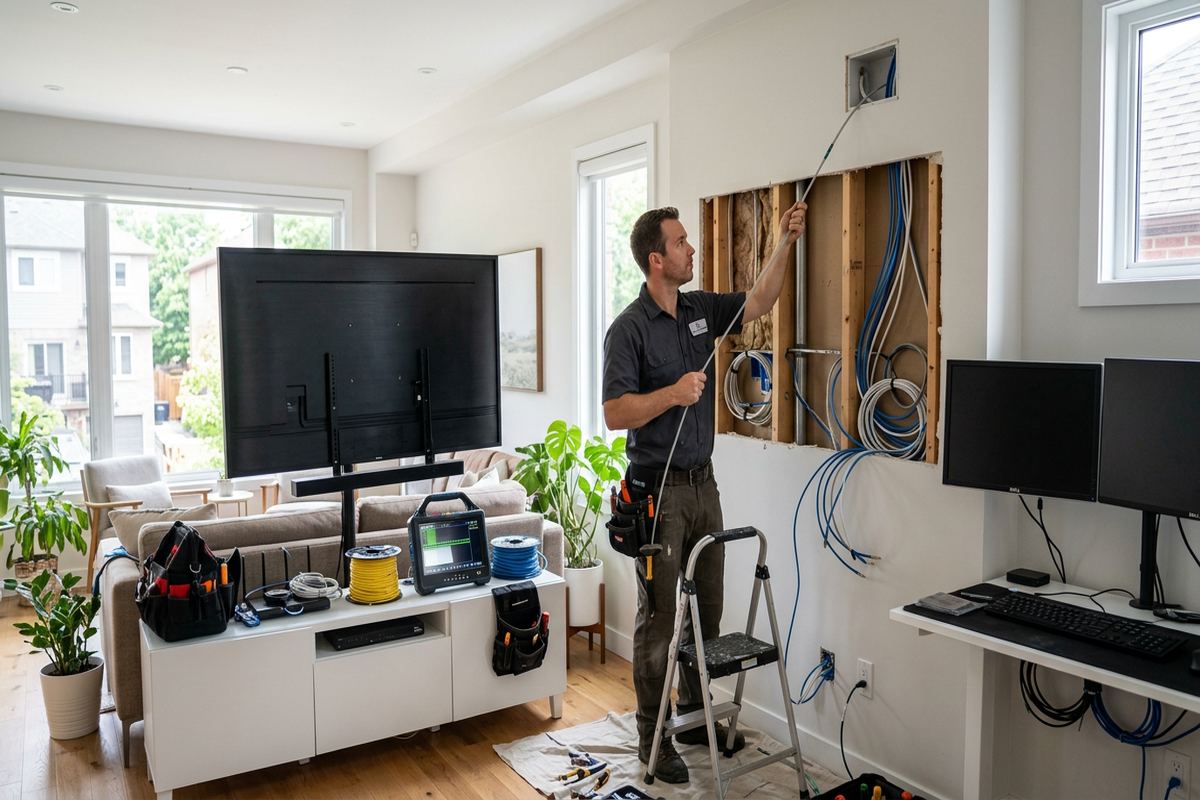
Clean cable routing is usually a central reason for mounting a television above a fireplace. The route may need to connect the display with a receiver, soundbar, network switch, game system or cabinet on another wall. UnifiedLink plans these connections as a system rather than feeding loose leads into the nearest opening. Cable types, connector space and future access are considered before the wall is opened. Installed low-voltage runs are continuous and labelled at both ends, making later troubleshooting or equipment replacement more direct for the homeowner or another service provider.
In Southwood and other established parts of Ajax, a fireplace wall may have been updated over older framing or masonry. Fishing cables can therefore involve plaster, added layers of drywall, metal lath or concealed blocking that cannot be confirmed from the room surface. In newer homes, vapour barriers and insulated exterior walls require equally careful treatment. The assessment determines whether an internal cavity is practical and whether disturbance can be limited. Where concealed routing is not reasonable, a neat surface raceway may be included as a clear, serviceable alternative.
Cable planning should account for changing equipment without filling the wall with unnecessary wiring. Depending on the system, the route may include rated HDMI cabling, network cable, speaker cable, control wiring or a pathway that supports later replacement. Connector dimensions and bend limits can determine whether a planned opening is usable. We also keep signal wiring separated from electrical conductors where required and avoid inaccessible joins. The written scope states what cabling is included, where it terminates and which patch leads or customer devices remain outside the permanent installation.
- Runs labelled at both endpoints
- No inaccessible low-voltage couplers
- Raceway offered where fishing is impractical
- Routes planned for connected equipment
Bracket Selection and Secure Attachment
The bracket must support the television while fitting the fireplace wall, mounting pattern and intended viewing arrangement. Fixed mounts keep the display close to the wall, tilting models help with higher positions, and articulated mounts allow side-to-side adjustment but place greater leverage on the attachment points. Selection begins with the TV model, weight, VESA pattern and connector locations. It also considers the mantel projection, wall finish and access needed for service. A bracket is not selected solely because its package lists a compatible screen-size range.
Secure attachment depends on reaching verified structure with hardware suited to that material. Wood framing, concrete, solid masonry and hollow masonry call for different methods. Stone or brick veneer may require careful drilling and suitable stand-offs so tightening the bracket does not crack or crush the finish. If the feature wall lacks adequate blocking for the selected mount, the scope can describe reinforcement or an alternative position. UnifiedLink confirms the mounting approach during assessment and does not treat drywall anchors as structural support for a fireplace television installation.
Accurate layout protects both appearance and function. Before drilling, we account for the TV’s actual dimensions, bracket offset, mantel centreline, nearby millwork and any soundbar. The mounting plate may not align with the visual centre of the screen, particularly on articulated or pull-down hardware. Connector access also needs space after the TV is installed. In Ajax rooms with built-ins or narrow fireplace columns, small layout errors are conspicuous. Measurements are checked against the planned viewing position and equipment arrangement before permanent attachment begins.
- Mount matched to TV specifications
- Attachment reaches verified supporting structure
- Veneer protected from crushing forces
- Screen and soundbar layout coordinated
Audio, Network and Display Setup in Ajax
Physical mounting is only part of a usable display system. Soundbars may need their own bracket, a direct wall position or attachment that moves with the television. Audio return, source switching and remote-control behaviour should be confirmed before cables disappear behind the screen. UnifiedLink reviews the connected equipment listed in the scope and configures it on site. This can include selecting inputs, checking basic picture settings, testing audio paths and confirming that the remote or control method performs the functions agreed for the completed Ajax installation.
Reliable streaming also depends on network coverage at the fireplace wall. Masonry, tile, metal framing and dense feature-wall materials can weaken Wi-Fi or isolate equipment mounted inside a recessed box. Where practical, a labelled network cable provides a stable connection and reduces dependence on wireless conditions. If Wi-Fi is required, signal conditions can be considered with the TV in its final position. We avoid assuming that strong reception at a nearby sofa means the recessed player, television or streaming device will have the same quality of connection behind the finished surround.
Handover is completed using the customer’s own accounts and credentials. We do not retain personal streaming, manufacturer or network passwords as part of the installation record. The customer receives an as-built record showing device placement and the installed cable routes and terminations, along with relevant operating notes. Equipment ownership and warranty responsibilities are stated in the written scope, including customer-supplied products. This gives an Ajax homeowner or business a practical reference when replacing a television, changing providers, renovating the room or requesting future service from UnifiedLink or another contractor.
- Soundbar placement coordinated with screen
- Network connection tested at final position
- Customer credentials used during setup
- As-built record supplied at handover
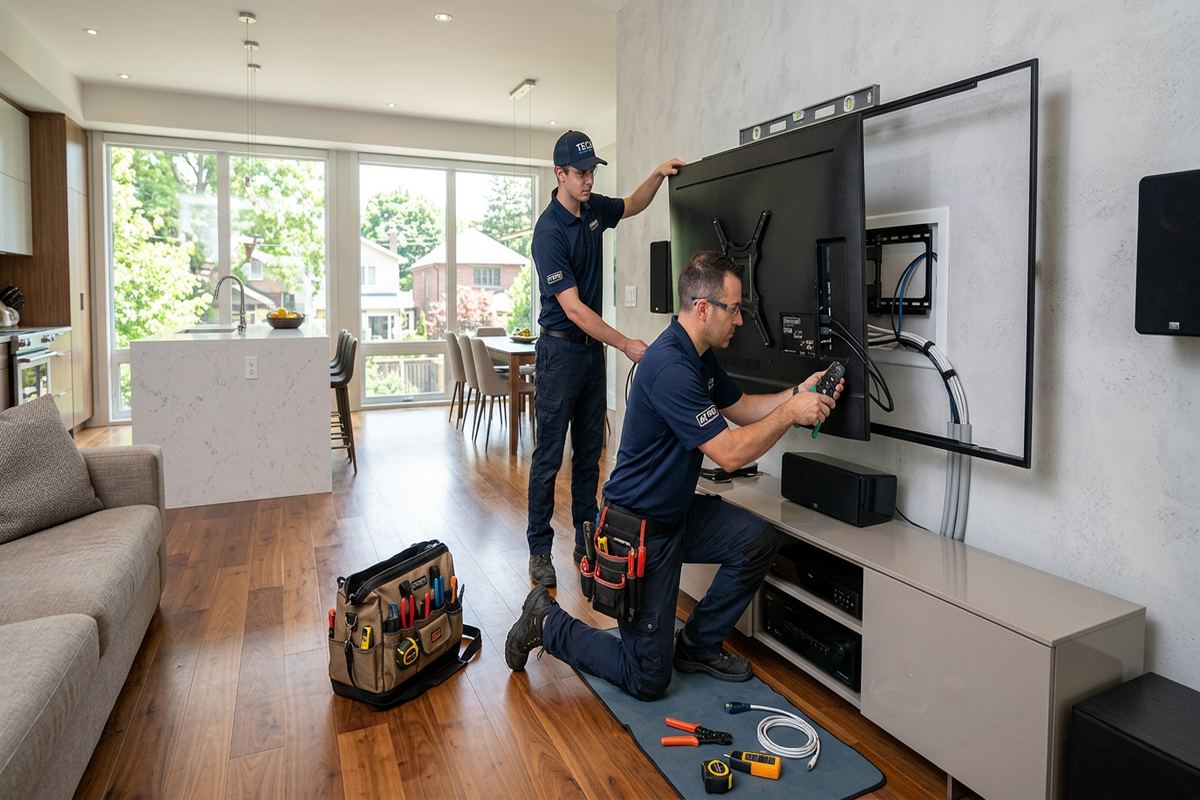
Ajax Approvals, Shared Walls and Commercial Sites
Not every fireplace wall is solely under the occupant’s control. Condo corporations may regulate penetrations, noise, working hours and changes affecting common elements. Tenants generally need landlord approval before mounting hardware, opening walls or routing cable. These permissions should be obtained before work is scheduled, particularly where a wall borders another unit or contains shared building services. UnifiedLink can describe the proposed device placement and cable route in the written scope, but the property owner, tenant or condominium representative remains responsible for securing the approvals that apply to the site.
Commercial strips and industrial units in Ajax sometimes use fireplace-style displays in reception areas, showrooms, hospitality spaces or staff rooms. These settings add considerations such as public reach, daily operating hours, cleaning access, source security and coordination with other trades. Wall construction may include concrete block, steel studs or demising assemblies rather than residential wood framing. We assess the actual location, mounting surface and cable path, then define exclusions and dependencies. Work can be coordinated through one accountable low-voltage contractor for the display, network and related signal cabling in scope.
Exterior installations require a separate assessment and should not be treated as indoor mounting with a weather cover added. Ajax winters, moisture and repeated freeze-thaw cycles affect brackets, fasteners, enclosures and wall penetrations. The display and accessories must be suitable for the intended exposure, while cable entries need proper routing and sealing. Overhangs can reduce direct precipitation but do not eliminate humidity, wind-driven moisture or temperature limits. Where an exterior fireplace or lake-facing patio is involved, we document environmental concerns and avoid routing that could direct water into the wall assembly.
- Condo and landlord approvals identified early
- Commercial mounting surfaces assessed on site
- Public-area device access considered
- Exterior entries routed and sealed carefully
Fireplace TV Mounting Process in Ajax
Every Ajax project begins with a site assessment before pricing. The visit confirms the television and fireplace details, wall construction, preferred viewing position, connected devices and available cable routes. Assessment timing depends on the service requirements and travel distance. After review, UnifiedLink provides a written scope covering equipment, cable routes, device placement, exclusions, equipment ownership and warranty. This gives both parties a common installation plan and makes any prerequisites, such as electrical work, reinforcement, approvals or customer-supplied hardware, visible before a mounting date is arranged.
On installation day, the planned positions are verified before openings or attachment points are made. The bracket is installed into suitable structure, low-voltage runs are completed and labelled, and the TV and included accessories are fitted. Cables are dressed to allow ventilation, connector access and any approved bracket movement. On-site configuration follows the agreed scope, including checks of sources, network connectivity and audio where included. The work area is then reviewed for remaining access needs, and any departure from the original route is documented rather than left as an unexplained change.
The final handover confirms operation with the customer and records what was installed. Customer-owned credentials are used for applicable setup, and the as-built record identifies cable paths, termination points and device locations. Basic operating steps and bracket movement are reviewed where relevant. Requests sent during business hours are answered the same day, while after-hours requests are answered the next business day. By keeping assessment, mounting, low-voltage cabling, configuration and documentation under one accountable contractor, Ajax customers have a clear point of contact for the completed scope.
- Site assessment completed before pricing
- Scope lists inclusions and exclusions
- Installation changes documented
- Operation reviewed during final handover
Ajax neighbourhoods we cover
- Southwood
- Nottingham
- Duffin's Bay
- Applecroft
- Pickering Beach
- Central Ajax
Fireplace TV mounting in Ajax — common questions
Can any TV be mounted above an Ajax fireplace?
Not automatically. The TV’s operating limits, weight, mounting pattern and connector layout must be considered with the fireplace type, mantel, clearances and wall structure. UnifiedLink assesses the Ajax installation before pricing. If the location exposes the display to unsuitable heat, lacks safe structural support or creates an impractical viewing height, the scope may recommend another position or required preparatory work.
Can you hide the cables behind my fireplace wall?
Often, but the route depends on framing, masonry, insulation, fire stops and access around the fireplace chase. Finished basements and completed feature walls in Ajax can make an apparently simple route more involved. We assess the cavity before committing to concealed wiring. Where fishing is practical, low-voltage runs are continuous and labelled. Where it is not, a neat raceway or another serviceable route can be specified.
Do I need an electrician before the TV is mounted?
That depends on whether suitable power already exists at the planned display location. UnifiedLink handles the low-voltage display, signal and network scope, but does not hide extension cords or ordinary power bars inside walls. If new permanent power or electrical changes are needed, that prerequisite is identified during the Ajax site assessment so it can be completed appropriately before or alongside the mounting work.
Will a pull-down mount solve a high fireplace position?
A pull-down mount can improve viewing height in some Ajax rooms, but it does not eliminate heat, clearance or structural concerns. Its movement also requires space above the mantel and suitable cable slack. We check the TV, wall support, hearth projection, walkway, stored position and full travel before specifying one. If the mount would conflict with fireplace operation or room circulation, another arrangement may be more practical.
Can you mount into brick or stone veneer?
Yes, where assessment confirms an appropriate supporting material and attachment method. Brick, solid masonry, hollow masonry and decorative stone veneer are not interchangeable. Veneer may need stand-offs or access to structure behind it to avoid cracking or crushing the finish. Ajax homes can also have mixed masonry and framing around one fireplace, so the final fastening plan is based on the actual wall rather than its appearance.
Do Ajax condo owners or tenants need approval?
Often. Condo rules may control penetrations, alterations to common elements, working hours and walls shared with neighbouring units. Tenants should obtain landlord approval before drilling, opening walls or adding cable routes. UnifiedLink can provide a written scope describing the proposed equipment, placement and route, but the Ajax customer is responsible for securing required condominium, landlord or property-management permission before installation proceeds.
Coverage in Ajax is confirmed against the address before we quote. See everything we install in Ajax or the province-wide fireplace tv mounting page.