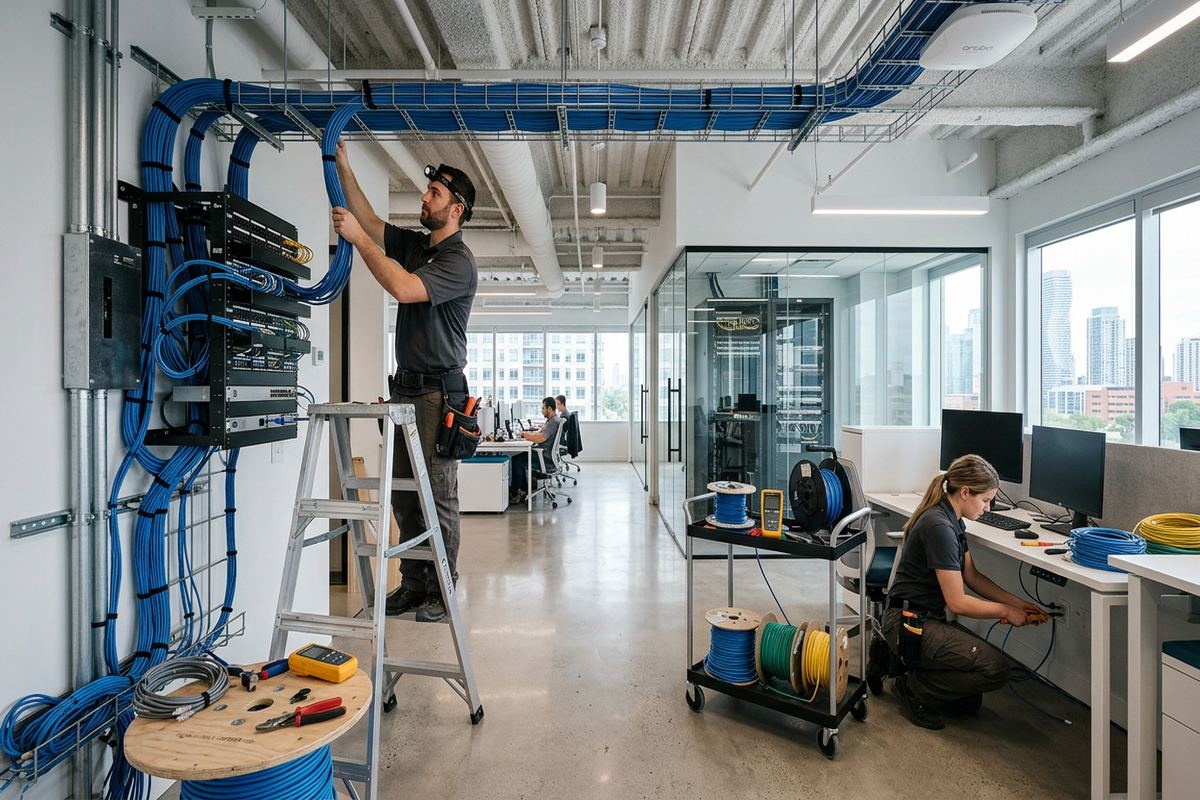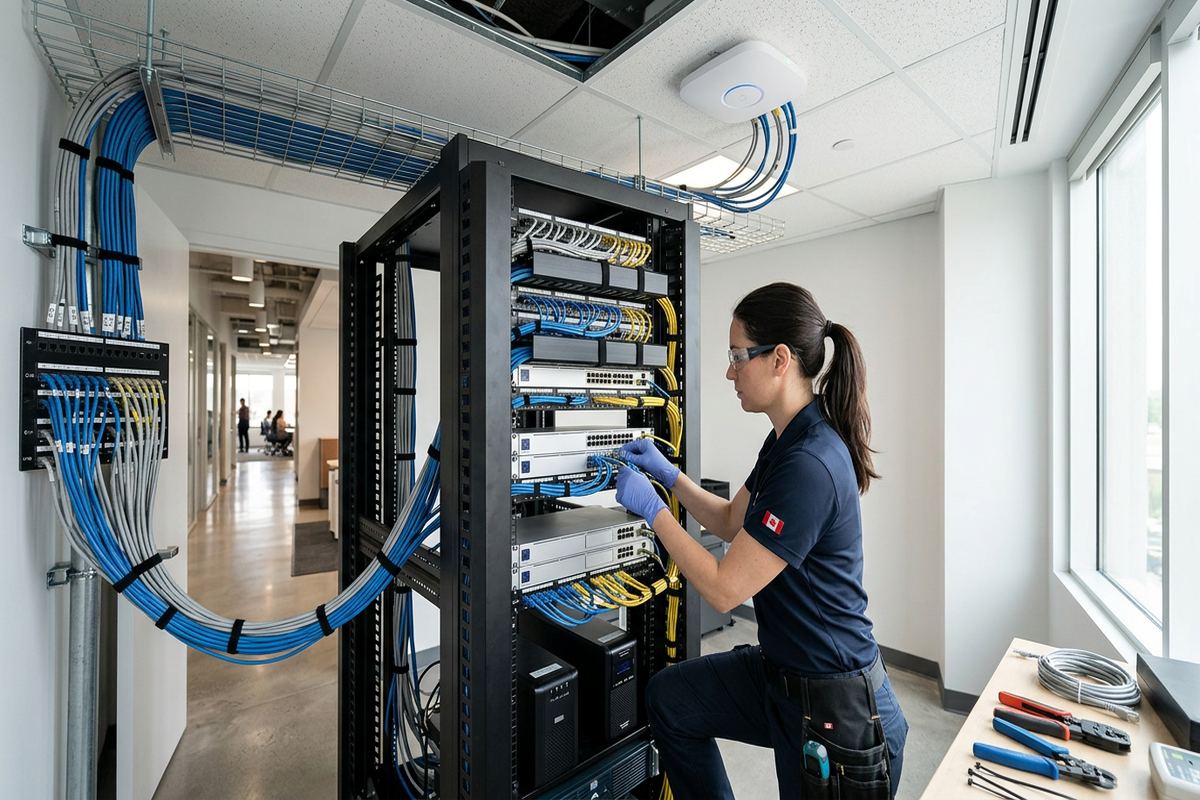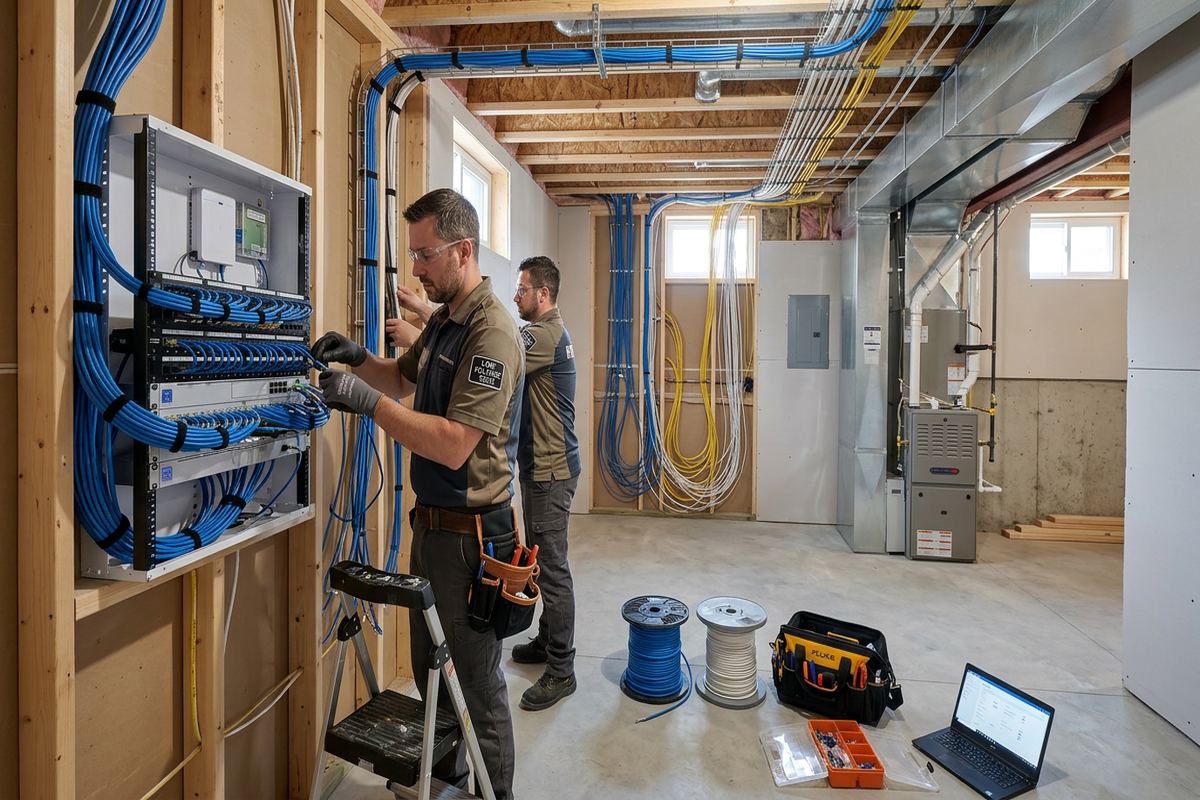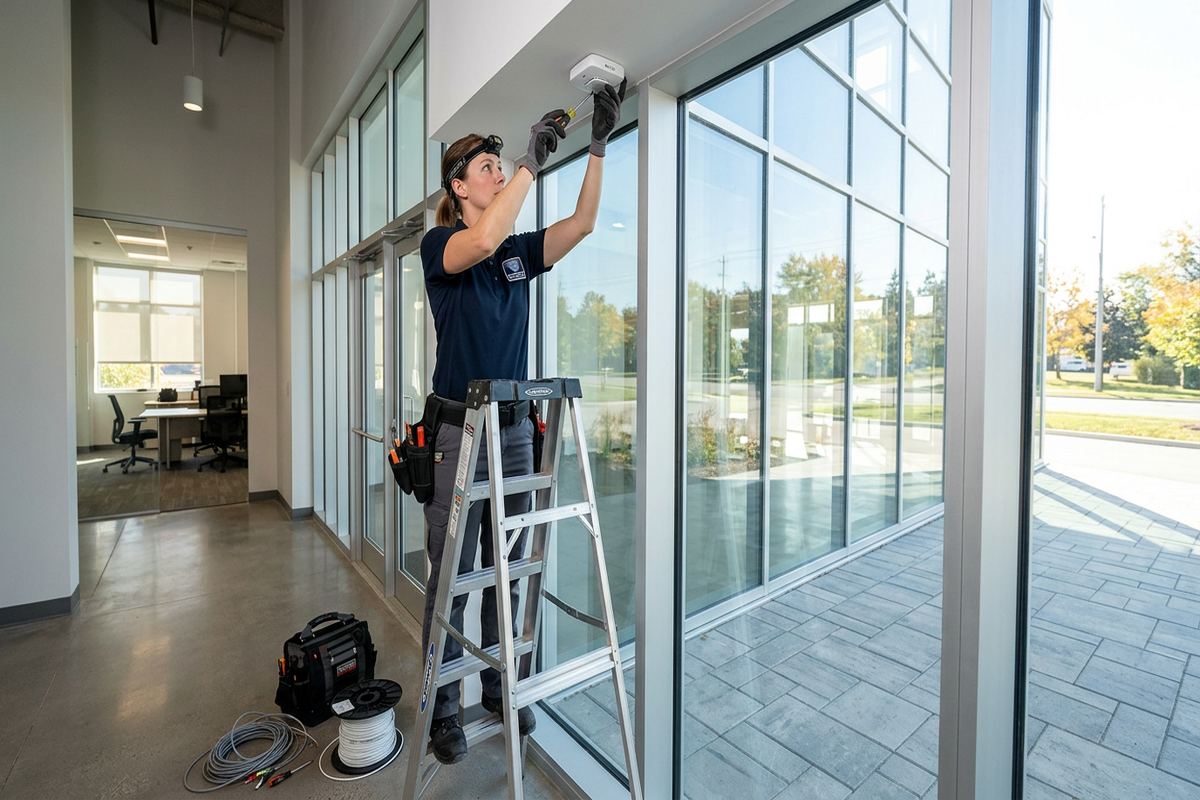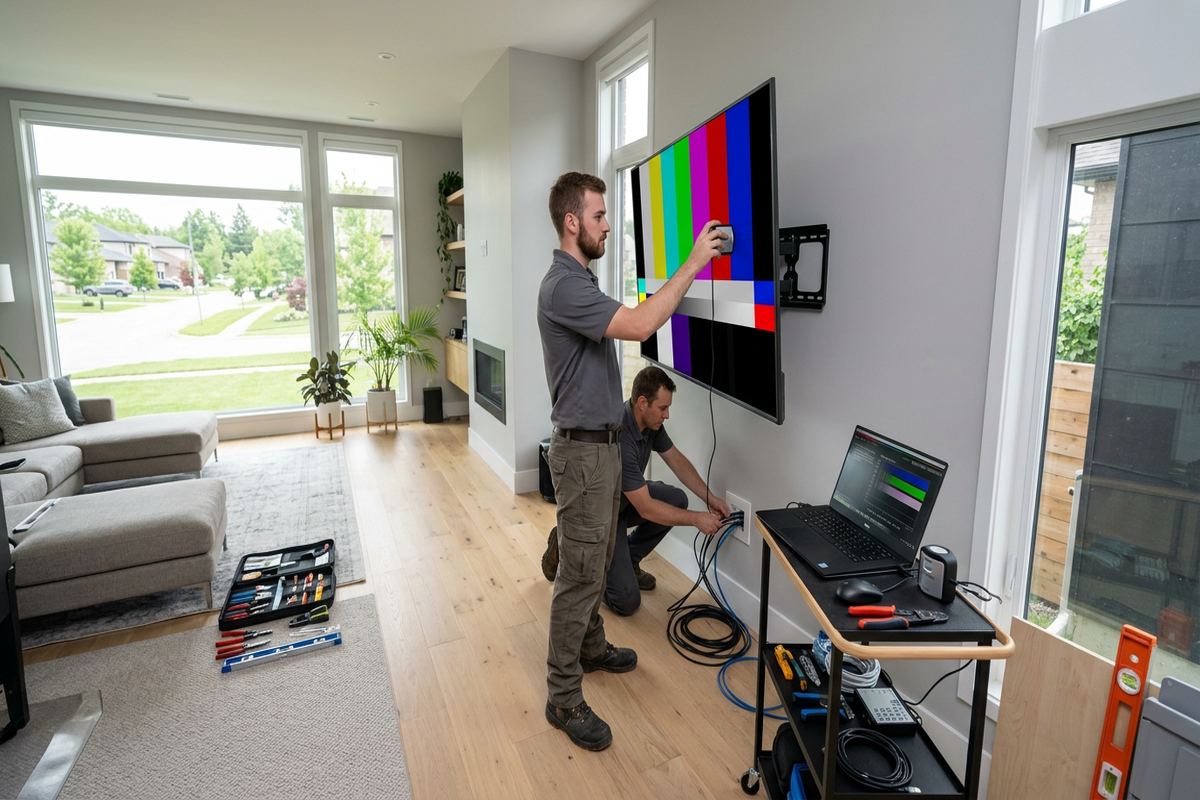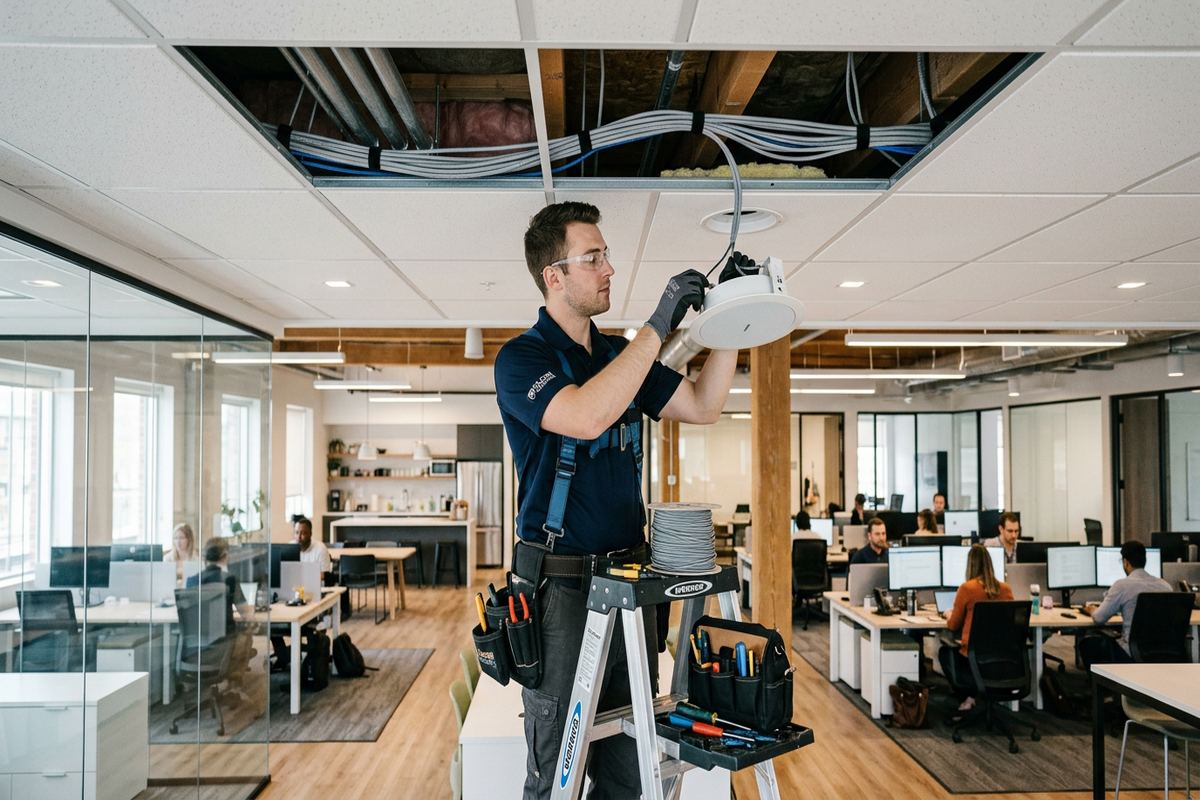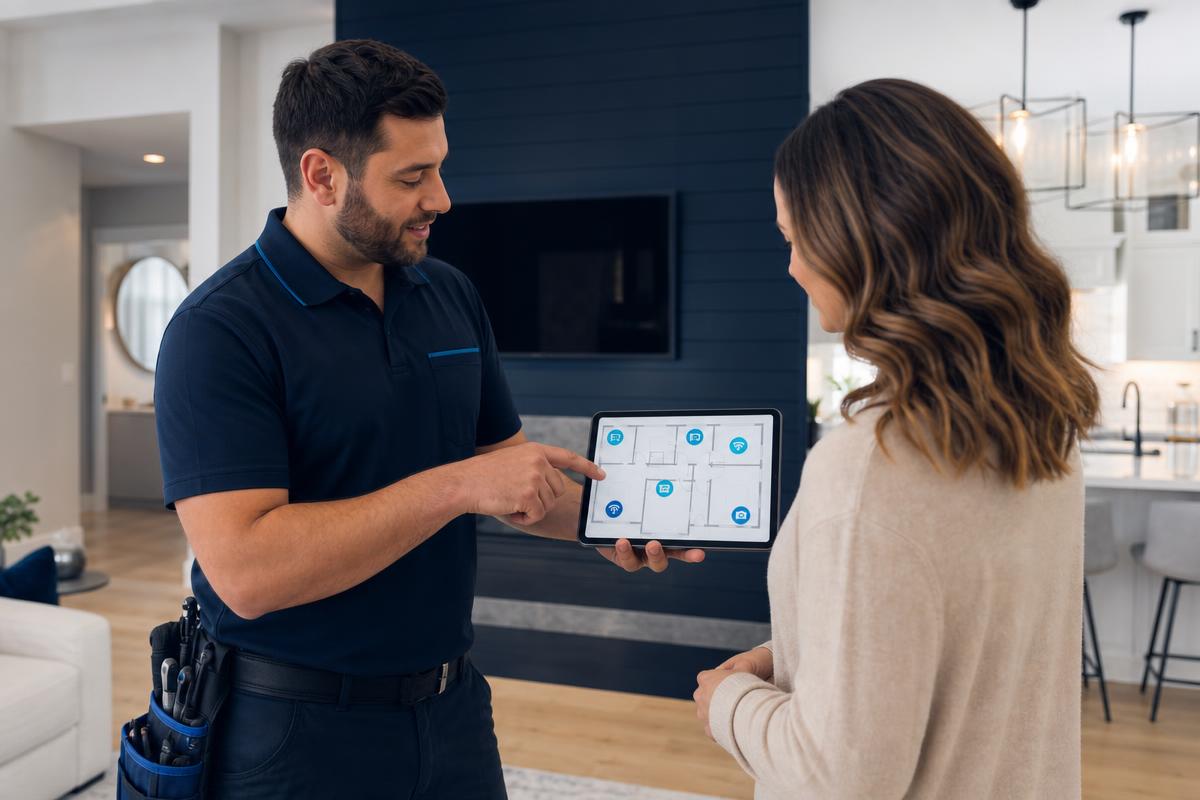
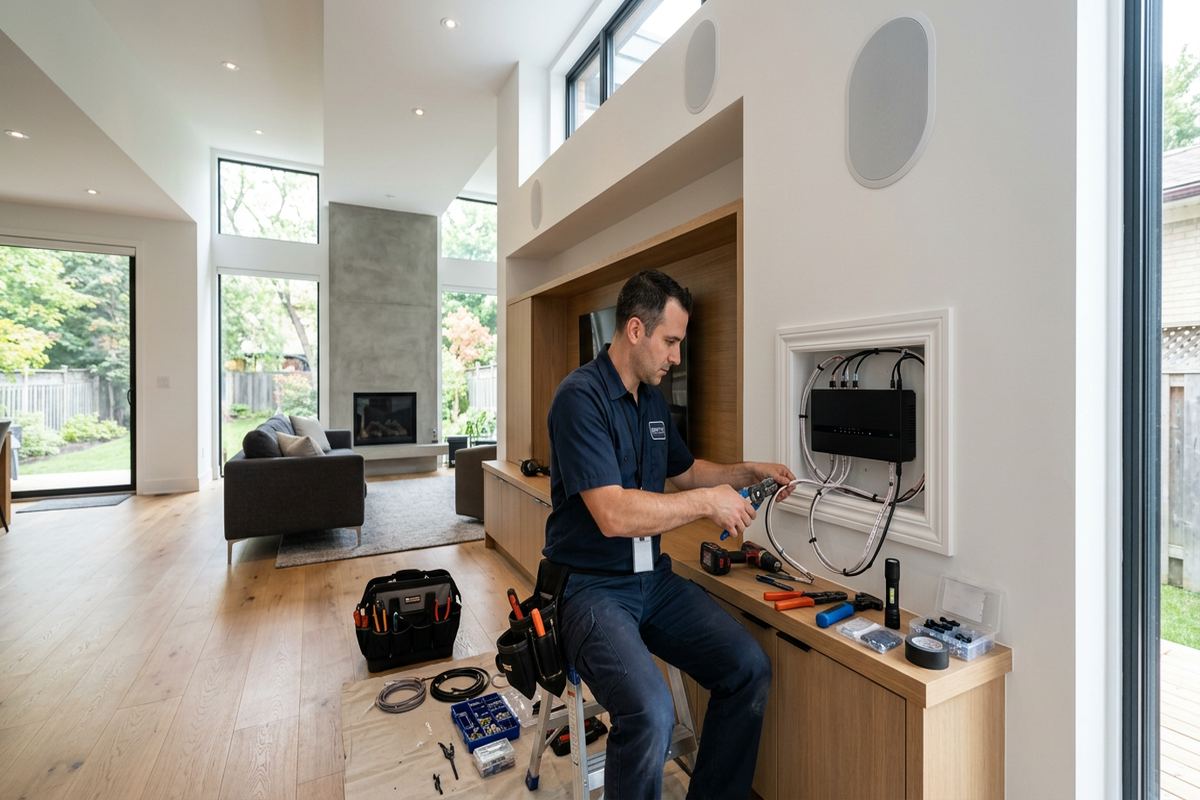
UnifiedLink installs in-ceiling speakers for homes and businesses across Ajax. We assess room construction, listening areas, cable routes, amplifier requirements and control options before preparing a written scope. Installation includes clean cut-outs, labelled cabling, on-site configuration, testing and a documented handover using credentials owned by the customer.
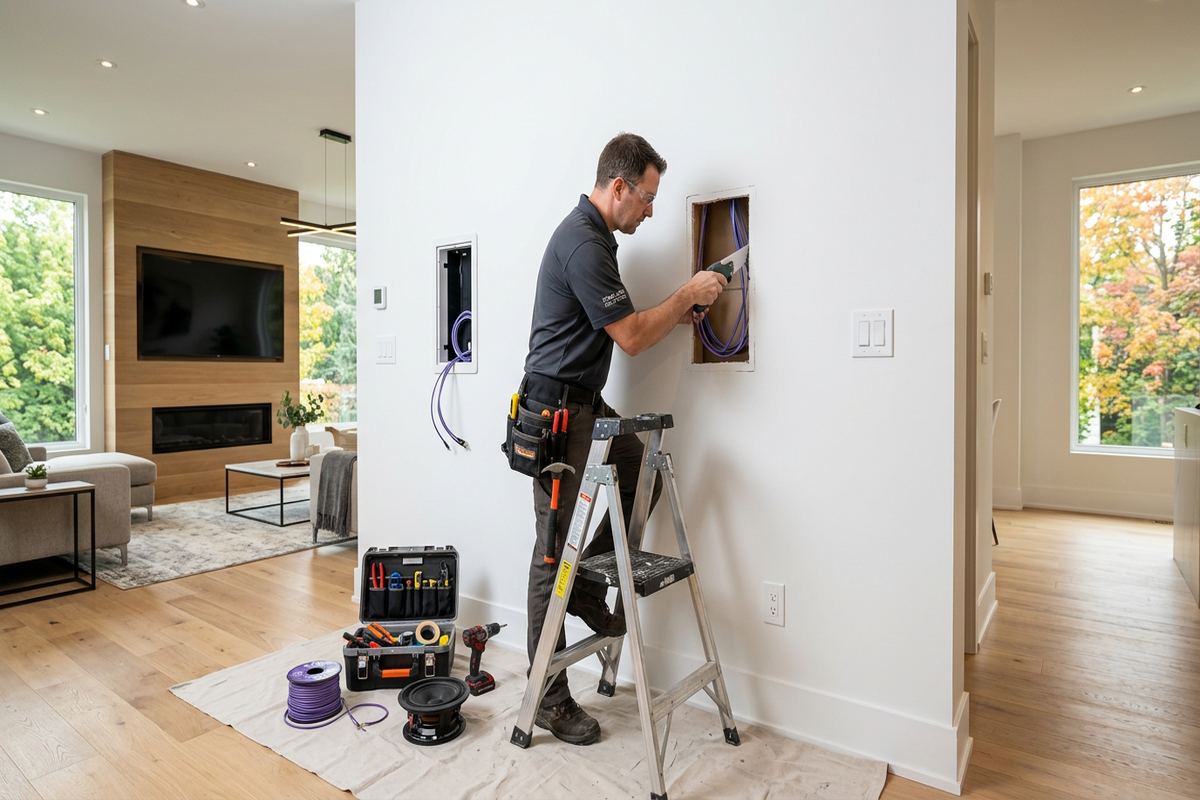
In-Ceiling Speaker Planning for Ajax Properties
A useful in-ceiling audio system starts with room use rather than speaker count. During an Ajax site assessment, we look at seating, television placement, ceiling height, room shape, ambient noise and the type of listening expected. Background music in a kitchen needs a different layout from television audio in a finished basement or clear announcements in a commercial unit. The assessment also identifies likely cable routes, amplifier locations, control points and access limitations before openings are proposed. This avoids treating evenly spaced ceiling fixtures as an automatically correct speaker plan.
Newer subdivisions in Nottingham and Applecroft often have open main floors, finished ceilings and mechanical systems packed into joist spaces. These conditions can support a discreet retrofit, but they make placement detail-heavy. Speaker positions must account for pot lights, ducts, plumbing, framing, smoke alarms and ceiling-mounted wireless access points. We use available drawings when reliable, inspect accessible areas and verify proposed cut-outs before proceeding. Where concealed conditions remain uncertain, the written scope identifies assumptions and exclusions so the homeowner understands what can and cannot be confirmed without opening the ceiling.
Lakefront homes around Duffin's Bay and Pickering Beach can include additions, renovated sections and finished basements built at different times. A single property may combine dimensional lumber, engineered joists, frame walls and masonry features, each affecting cable access. We plan around those differences instead of assuming one route will work throughout the building. The resulting written scope covers equipment, cable routes, device placement, exclusions, equipment ownership and warranty. It gives the customer a practical basis for approving the work before speakers, grilles or ceiling surfaces are disturbed.
- Room-by-room listening and coverage assessment
- Review of framing, lighting and mechanical conflicts
- Proposed amplifier and equipment locations
- Written equipment and installation scope
- Clearly identified assumptions and exclusions
Speaker Layouts for Ajax Homes
Speaker placement determines whether music sounds balanced at normal listening levels. For kitchens, dining rooms and open living areas in Ajax, we position speakers around occupied zones rather than simply centring them between walls. Spacing also considers stereo separation, nearby reflective surfaces and transitions between connected rooms. In a narrow room, one stereo-input speaker may be more practical than a widely separated pair. Larger rooms may need multiple speakers operated at lower levels. The goal is consistent, usable coverage without creating one loud spot beneath each grille or leaving primary seating outside the intended listening area.
Finished basements require particular attention because bulkheads, low ceilings and enclosed utility spaces can restrict routes. Many Ajax basements also combine television areas, exercise spaces, bars and play zones in one finished level. We determine whether the system should function as one audio zone or several independently controlled zones. Speaker back depth is checked against the available cavity, while placement avoids ducts and areas where vibration could transfer into adjacent rooms. If access through a storage room or unfinished mechanical area can reduce visible disruption, that route is incorporated into the plan.
Bedrooms, home offices and bathrooms call for quieter, more focused designs. A bathroom speaker must be suitable for the environment and located away from inappropriate wet-area positions. Office audio should not interfere with microphones or video calls, while bedroom controls should remain simple. We also consider sound transfer into rooms above or beside the installation. Back enclosures, insulation conditions and sensible volume limits can help, although an in-ceiling speaker opening does not provide soundproofing. These limits are discussed before installation so expectations match the building construction and selected equipment.
- Balanced coverage across occupied areas
- Layouts for open-concept main floors
- Separate planning for basement activity zones
- Appropriate speaker selection for humid rooms
- Consideration of sound transfer between rooms
Retrofitting Finished Ceilings in Ajax
Retrofit work is straightforward only when the concealed route supports the intended design. Before cutting, we assess accessible joist bays, unfinished rooms, mechanical spaces, closets and existing low-voltage pathways. Electronic detection and inspection can reduce uncertainty, but they cannot identify every concealed obstruction. Small exploratory access may sometimes be required and is discussed first. In finished Ajax homes, we aim to use routes that protect visible surfaces while maintaining proper cable support. The proposed method depends on whether joists run with or across the desired speaker positions and whether blocking interrupts the path.
Each speaker opening must fit the manufacturer’s template and remain clear of framing. Once a location is verified, the ceiling is protected, the cut-out is made carefully and loose material is controlled as practical. Continuous labelled cable runs are installed between the speaker and the designated equipment point, without concealed joins used merely to extend an undersized run. Cable type is selected for the installation environment and routed separately from electrical conductors where required. At the equipment end, labels correspond to rooms or zones, making later amplifier changes and troubleshooting substantially easier.
Ceiling repair and painting are different trades from low-voltage installation, so their inclusion or exclusion must be clear. A well-planned route can limit access openings, but no contractor should promise an invisible retrofit before confirming framing and obstructions. Where patching is likely, we identify the expected access areas in the scope and coordinate sequencing with the customer or finishing contractor. In Central Ajax homes with older renovated sections, ceiling layers may include plaster, drywall overlays or textured finishes. Those surfaces require additional caution and may change the recommended speaker location or installation approach.
- Verification before full speaker cut-outs
- Continuous cable runs without concealed extensions
- Room and zone labels at both ends
- Protection for finished floors and furnishings
- Clear identification of possible patching areas
Ajax, Ontario
In-ceiling speaker installation in Ajax, scoped in writing first
Book a site assessment and get equipment, routes, exclusions, and warranty on paper before anything is installed.
Audio Zones, Amplifiers and Controls
An in-ceiling speaker is only one part of the system. The amplifier must match the number of speakers, their impedance, expected listening level and required zones. We review existing receivers, streaming amplifiers and distributed-audio equipment before recommending reuse or replacement. Connecting too many speakers to an unsuitable output can cause unreliable operation or equipment protection shutdowns. For larger Ajax homes, separate amplification may be appropriate for main-floor music, basement entertainment and outdoor areas. The design documents which device serves each zone and where network, power and ventilation are required.
Control should match how the property is actually used. Some customers prefer app-based streaming, while others need wall controls, television integration or a simple source available to guests. Businesses may require staff access without exposing administrative settings. During configuration, we connect supported sources, name zones clearly, set practical volume limits where available and verify that each control operates the intended room. Customer accounts are created or transferred using the customer’s own credentials. UnifiedLink does not make a personal installer account the permanent owner of equipment that belongs to the customer.
Network performance matters when amplifiers and streaming sources rely on Wi-Fi or wired Ethernet. A speaker installation should not assume that an existing wireless signal is adequate inside a cabinet, basement utility room or distant commercial unit. We test connectivity at the proposed equipment location and identify when a wired network connection or Wi-Fi improvement should be considered. On-site configuration includes functional testing with agreed sources, channel and zone checks, and basic operating guidance. Handover includes an as-built record showing cable destinations, equipment locations and relevant configuration details for future service.
- Amplifier and speaker-load review
- Clearly named rooms and audio zones
- Customer-owned application credentials
- Streaming and television source testing
- As-built cable and equipment record
Ajax Commercial In-Ceiling Audio
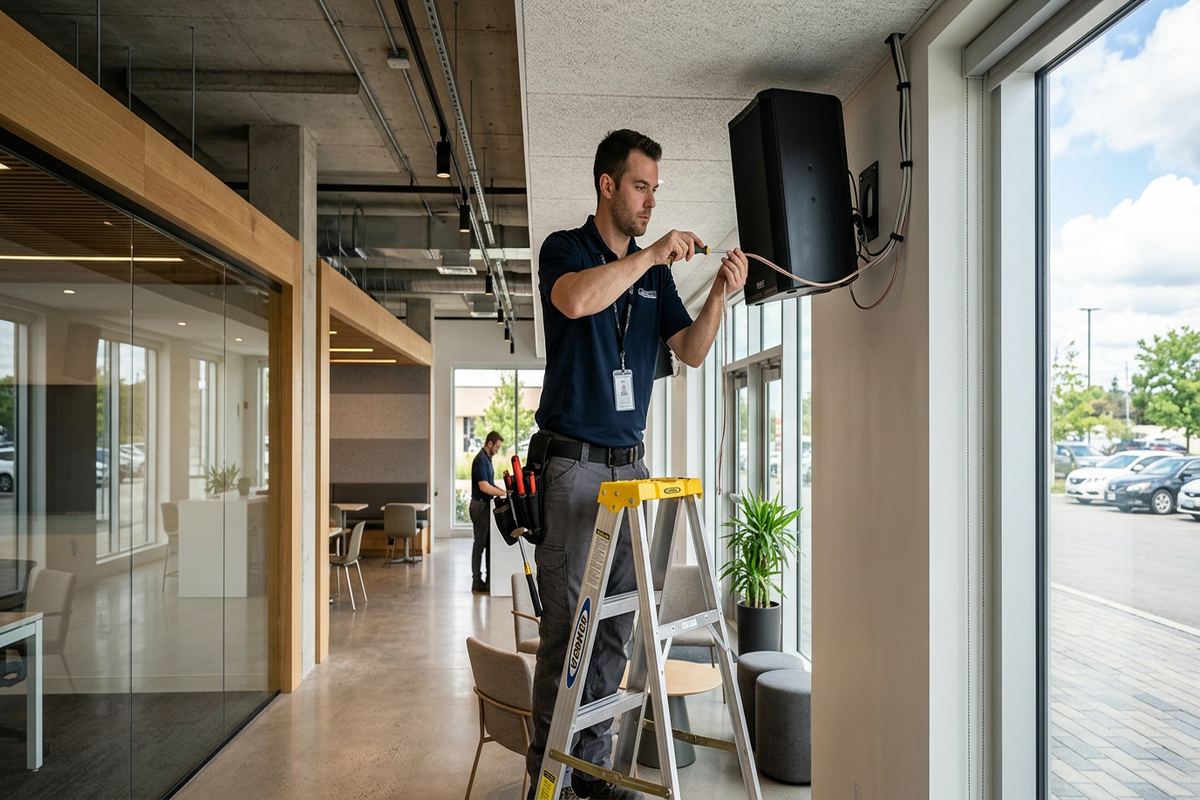
Commercial audio requires different decisions from a residential music system. Retail units, professional offices, clinics and service businesses need coverage that supports the space without making conversations difficult. We consider customer areas, staff zones, ceiling type, operating hours and permitted equipment locations. Commercial strips in Ajax may have suspended ceilings that simplify access, but shared walls, fire separations and busy ceiling spaces still constrain routes. A site assessment confirms whether the proposed system is for background music, paging, meeting-room content or a combination, since each use affects equipment and speaker selection.
Industrial units often combine front offices, boardrooms, showrooms and higher-noise work areas. One uniform speaker layout rarely serves all of them well. Ceiling height, machinery noise and room finishes affect intelligibility, while warehouse or production sections may require equipment designed for those conditions rather than standard residential ceiling speakers. We define where audio is needed and where it is not, then divide the system into manageable zones. Installation scheduling and access requirements are documented so work can be coordinated around occupants, deliveries, ceiling contractors or other trades without assuming unrestricted access.
Music sources used in a business must be managed by the business, including any subscriptions and content permissions applicable to commercial use. Our role is to install and configure the agreed audio infrastructure, not to provide legal clearance for programming. The written scope identifies speakers, amplification, controls, cable routes, rack or cabinet requirements and any work excluded from the project. Where paging or life-safety systems already exist, the new audio design must avoid inappropriate connections or interference. One accountable contractor handles the specified low-voltage audio work and provides the final system record.
- Background music and paging-use assessment
- Coverage planning for customer and staff areas
- Suspended-ceiling and open-ceiling cable routing
- Independent zones for mixed-use units
- Coordination with property management and trades
Approvals, Construction and Exterior Audio
Condo units, leased homes and commercial tenancies may require written approval before ceilings are opened or cable enters a common area. Ajax property owners and tenants should confirm alteration rules, permitted work hours, insurance requirements and responsibility for restoration before scheduling installation. In a condominium, the ceiling cavity may contain common building components even when it is directly above the unit. Landlords may also limit permanent speakers or require removal at the end of a tenancy. We can document the proposed low-voltage scope, but the customer remains responsible for obtaining required owner, board or property-management approval.
Frame construction generally offers more routing options than solid masonry, although engineered framing cannot be drilled or altered without regard to its design. Masonry walls, concrete ceilings and structural slabs often require surface pathways, bulkheads or an alternative speaker type instead of a conventional flush retrofit. Homes with masonry fireplaces or feature walls can also block otherwise direct routes between the ceiling and equipment cabinet. We assess practical pathways and do not cut structural members merely to preserve a preferred speaker position. Where another trade or engineering review is needed, that dependency is identified before the affected work proceeds.
Outdoor speakers connected to an indoor audio system need weather-appropriate equipment, mounting and cable entry details. Ajax winters, wind-driven precipitation and repeated freeze-thaw cycles can expose weak exterior penetrations and poorly selected hardware. We plan drip paths, suitable fasteners and sealed wall entries while avoiding locations where water or ice can collect. Exterior mounting differs on brick veneer, concrete and framed siding, so the fastening method must suit the substrate. Outdoor zones also require careful aiming and volume control to reduce unnecessary sound reaching neighbouring properties, particularly around closely spaced subdivisions.
- Condo, landlord and property-manager coordination
- Routing suited to frame or masonry construction
- No unapproved alteration of structural members
- Weather-suitable exterior speakers and hardware
- Sealed penetrations planned for freeze-thaw exposure
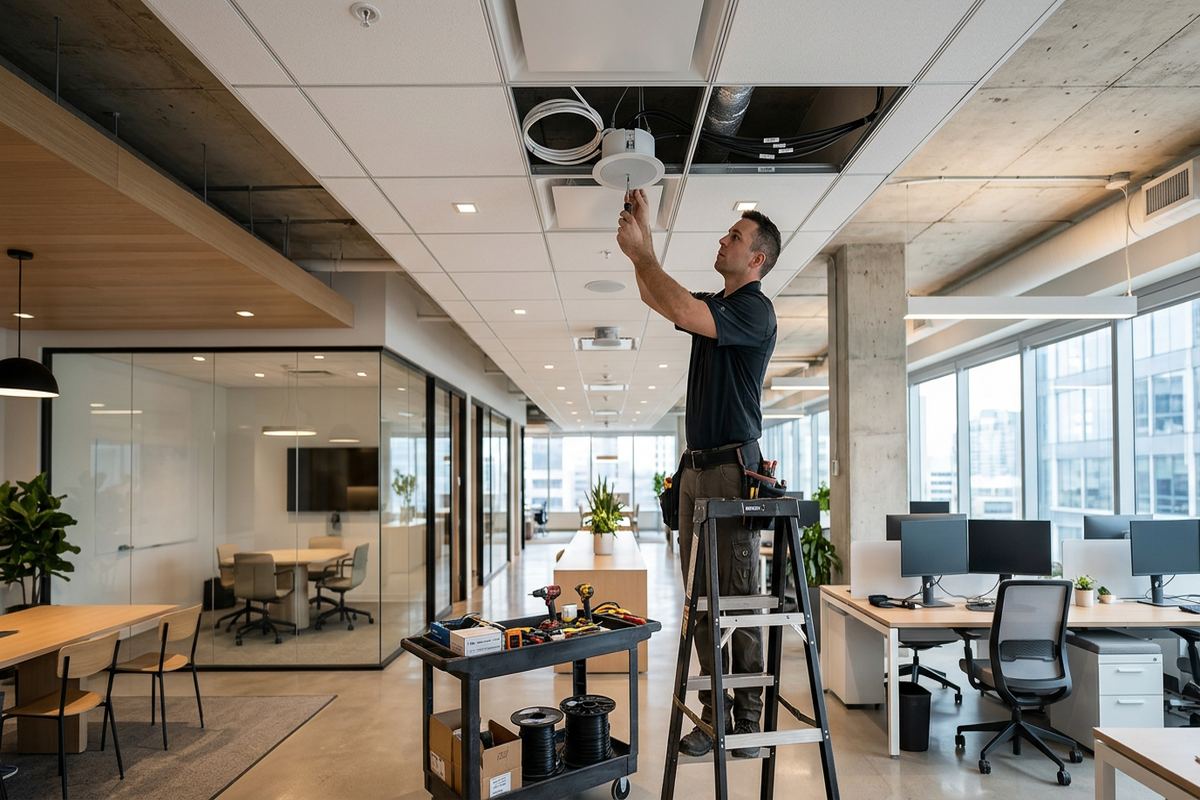
Installation and Testing Across Ajax
Once the scope is approved, installation follows the documented room list, cable routes and device positions. Work begins by confirming site conditions have not changed and checking final speaker locations against visible fixtures. Cable is pulled, supported and labelled before terminations are completed. Speakers are secured using their intended mounting system rather than improvised fasteners. Grilles are aligned consistently, and equipment is arranged with access for ventilation and future service. If a concealed condition prevents the agreed route, work pauses at that point so an alternative and any scope effect can be reviewed with the customer.
Testing covers more than confirming that sound is present. Each speaker is checked for correct zone assignment, channel operation, secure termination and obvious distortion at reasonable operating levels. Stereo pairs are checked for consistent polarity, and multi-zone controls are tested from the locations where customers will use them. In Ajax businesses, we verify staff control boundaries and agreed source behaviour. In homes, television audio, streaming sources and room grouping are tested where included. Results are compared with the approved design, while acoustic limitations caused by room finishes or furnishings are explained rather than hidden through excessive volume.
Handover provides the information needed to operate and maintain the installation. We review everyday controls, source selection, zone names and basic restart procedures with the customer. The customer receives their own credentials for supported connected equipment, along with an as-built record of speaker locations, cable destinations and installed components. Equipment ownership and warranty terms follow the written scope. This documentation is particularly useful when a finished basement is renovated again, a receiver is replaced or a commercial tenant changes its layout. It reduces the need to rediscover concealed cabling during future work.
- Final location confirmation before cutting
- Supported and labelled cable installation
- Polarity, source and zone testing
- Customer operation review on site
- Credentials and as-built record at handover
Arranging an Ajax Speaker Assessment
A site assessment is completed before pricing because speaker access, construction and system requirements cannot be determined reliably from room dimensions alone. To prepare, Ajax customers can identify the rooms involved, preferred listening sources, likely equipment location and whether any ceilings were renovated or lowered. Photos and plans are useful for initial discussion, but they do not replace inspection of accessible construction. Requests sent during business hours are answered the same day, while after-hours requests are answered the next business day. Assessment timing depends on the service requirements and travel distance.
During the visit, we review listening goals, visible construction, potential routes, electrical and network availability, and any existing audio equipment. Customers should mention radiant ceiling systems, known asbestos concerns, unusual ceiling finishes, prior water damage or areas that cannot be accessed. For commercial locations, we also discuss work-hour restrictions, ceiling access, landlord requirements and coordination with other trades. Properties in Southwood, Pickering Beach or Central Ajax may present very different combinations of original construction and later renovation, so recommendations are based on observed conditions rather than neighbourhood assumptions alone.
After assessment, the written scope sets out the equipment, cable routes, device placement, exclusions, ownership and warranty provisions for review. It also identifies customer responsibilities such as approvals, furniture access, network accounts or finishing work. Changes can then be resolved before installation rather than improvised after openings are made. UnifiedLink remains the accountable contractor for the low-voltage work described in the scope, including cable installation, speaker mounting, on-site configuration, testing and handover. This process gives Ajax homeowners and businesses a clear technical record of what will be installed and how the completed system is organized.
- Site assessment completed before pricing
- Review of existing equipment and intended sources
- Assessment timing based on service and travel
- Written scope provided for approval
- One accountable low-voltage contractor
Ajax neighbourhoods we cover
- Southwood
- Nottingham
- Duffin's Bay
- Applecroft
- Pickering Beach
- Central Ajax
In-ceiling speaker installation in Ajax — common questions
Can you install speakers without damaging my finished Ajax ceiling?
Many finished ceilings can be retrofitted with limited disruption, but the route depends on joist direction, blocking, ducts, plumbing and ceiling construction. We assess accessible areas before proposing cut-outs. If concealed obstructions make extra access openings likely, they are discussed and documented. Patching and painting are identified as included or excluded rather than assumed.
How many in-ceiling speakers does my room need?
The answer depends on room dimensions, ceiling height, seating, listening level and whether the space is open to adjacent rooms. An Ajax kitchen used for background music may need a different layout from a basement television area. We assess coverage and speaker spacing before specifying quantity, avoiding a design based only on square footage.
Can my existing receiver power new ceiling speakers?
Possibly, but its available channels, impedance limits, power capability and zone functions must be checked first. Adding speakers through unsuitable wiring or simple parallel connections can overload an amplifier. During the Ajax assessment, we review the receiver model, intended zones and control requirements, then document whether existing equipment can be reused.
Do I need condo or landlord approval in Ajax?
Approval may be required whenever installation alters a ceiling, enters a common cavity or permanently changes a leased property. Confirm the rules with the condominium board, property manager or landlord before work begins. We can provide a written description of the proposed low-voltage installation, but the owner or tenant is responsible for securing authorization.
Can indoor and outdoor speakers use the same system?
Yes, when the amplifier supports the required speaker load and separate control is planned appropriately. Outdoor equipment must be suitable for exposure, and exterior entries need substrate-appropriate fastening and sealing for Ajax freeze-thaw conditions. Independent volume control is usually helpful so outdoor sound can be managed without changing indoor listening levels.
What do I receive when the installation is complete?
Handover includes on-site operating guidance, testing of agreed sources and zones, customer-owned credentials for supported connected equipment, and an as-built record showing speaker locations and cable destinations. The written scope also records equipment ownership and warranty provisions. This information helps Ajax customers manage future receiver changes, renovations or service work.
Coverage in Ajax is confirmed against the address before we quote. See everything we install in Ajax or the province-wide in-ceiling speaker installation page.