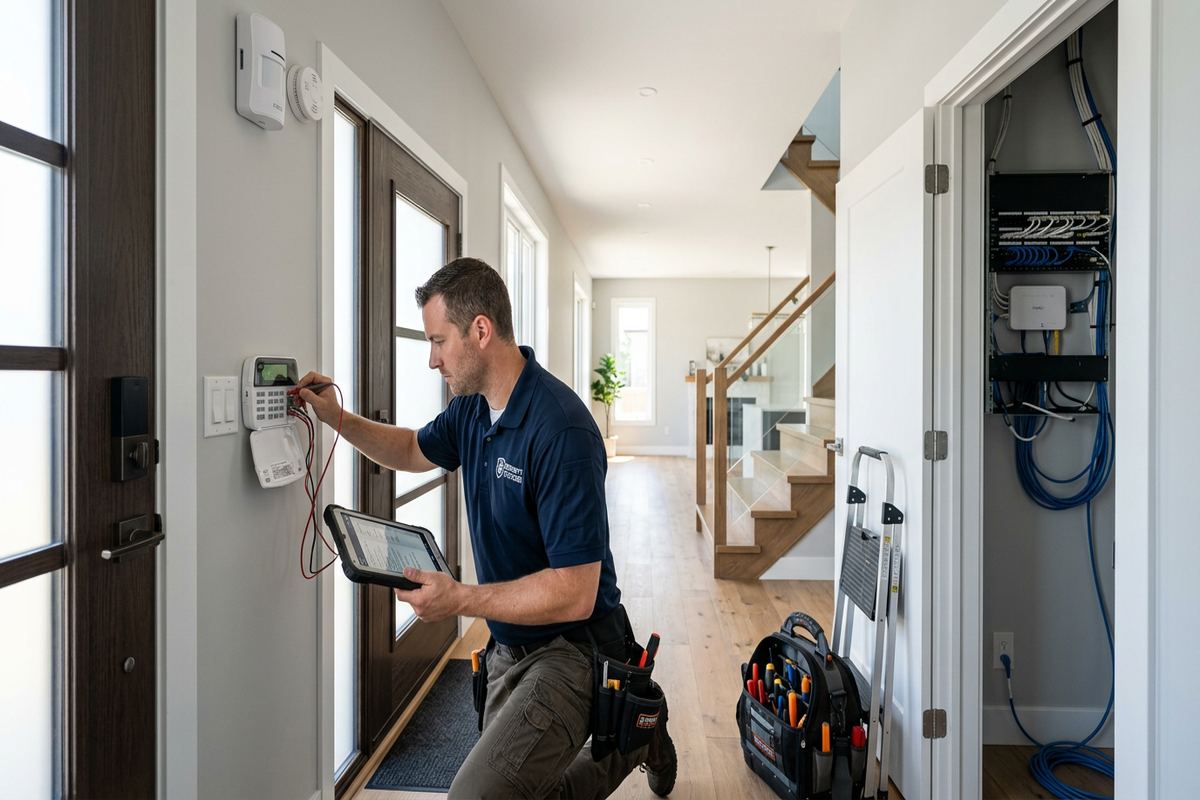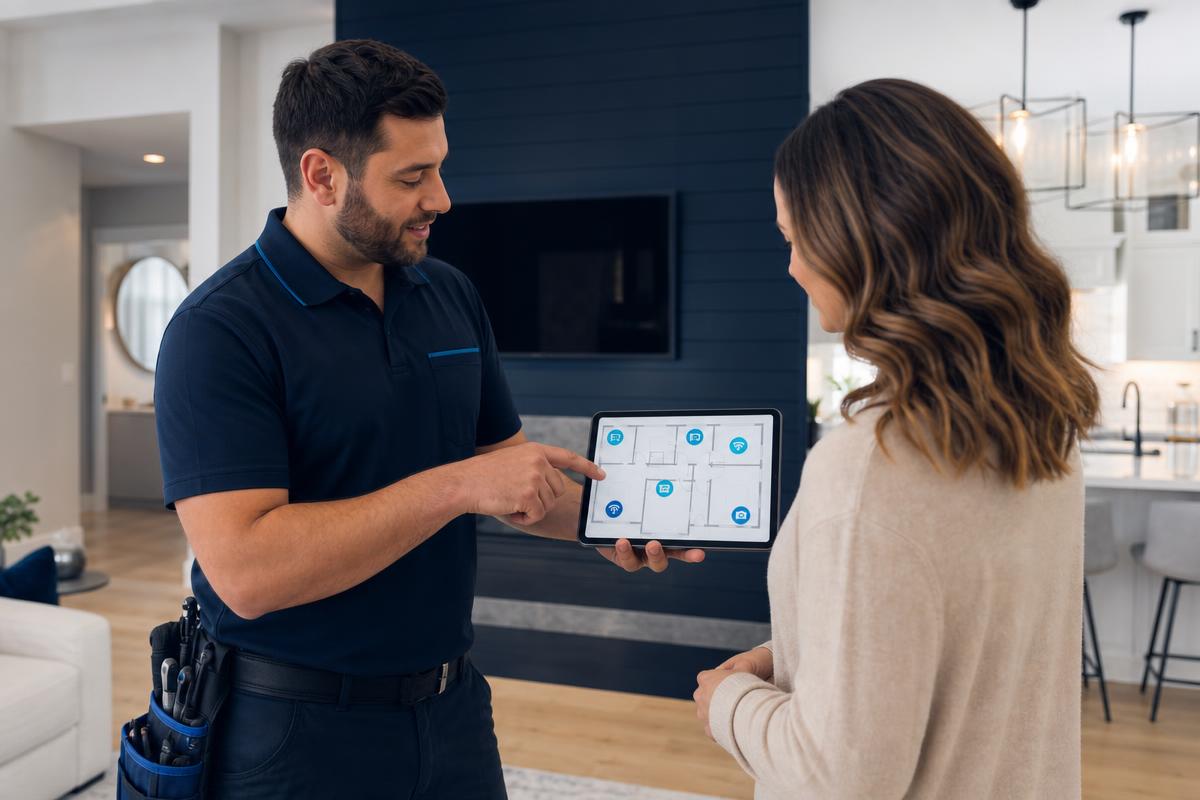
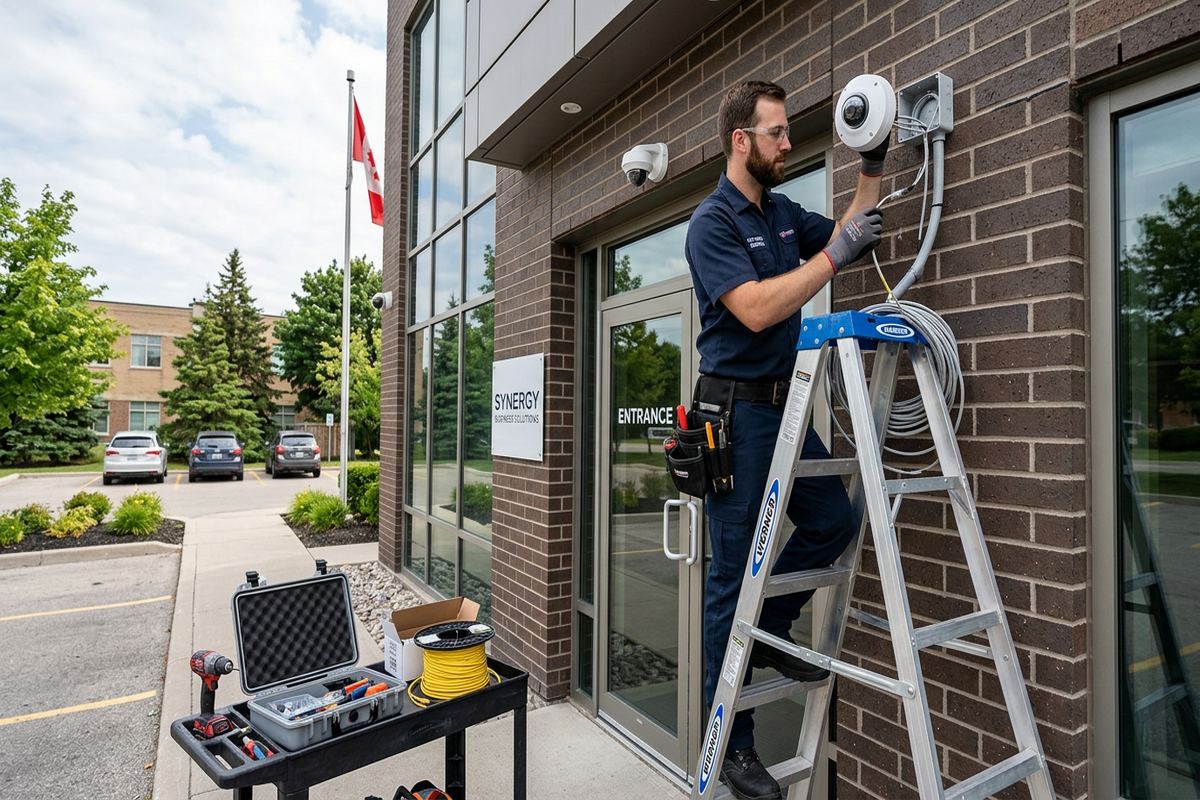
UnifiedLink installs outdoor security cameras for homes, commercial properties and industrial units across Ajax and Durham Region. Each project begins with a site assessment to identify useful views, practical cable routes and secure mounting points. We install, configure and document the system, then hand it over using credentials controlled by the property owner.
Planning Outdoor Camera Installation in Ajax
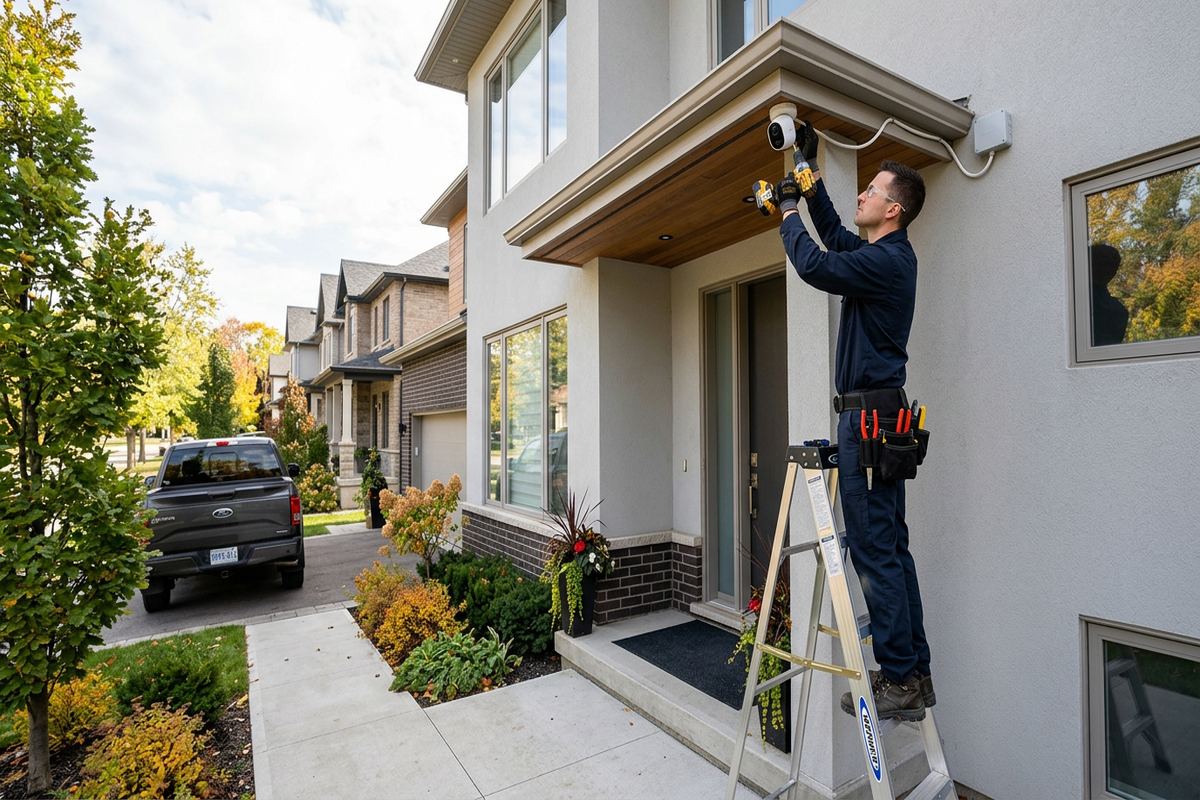
A useful outdoor camera system begins with the property rather than a standard equipment package. During an Ajax site assessment, we review entrances, driveways, side passages, yards, loading areas and other locations where recorded detail would be valuable. We also consider mounting height, sunlight, exterior lighting, nearby trees and places where a camera could be reached or obstructed. This process establishes what each view should accomplish before equipment, recording capacity or cable routes are specified. Site assessment timing depends on the service requirements and travel distance.
Newer subdivisions in Nottingham and Applecroft often have attached garages, finished soffits and completed basements. These features can support clean retrofits, but they also make route planning detail-heavy. A convenient-looking soffit may not connect to the attic, while a finished basement ceiling can limit access between the utility area and exterior walls. We inspect available paths instead of assuming that cavities are open. Where concealed routing is impractical, we explain surface-mounted conduit or other protected options before work begins, including how the finished installation will look.
Coverage is planned around identifiable activity, not simply the widest possible image. A camera watching a driveway may need enough detail at the vehicle approach, while a door camera must account for backlighting, porch columns and people standing close to the lens. Wide views can provide context but may sacrifice useful detail at a gate, walkway or loading door. We define these priorities in a written scope covering equipment, cable routes, device placement, exclusions, equipment ownership and warranty, so the intended result is clear before installation starts.
- Entrance, driveway and perimeter coverage review
- Mounting-height and field-of-view planning
- Lighting, glare and obstruction assessment
- Cable-route inspection before pricing
- Written scope with equipment and exclusions
Ajax Exterior Mounting and Weather Protection
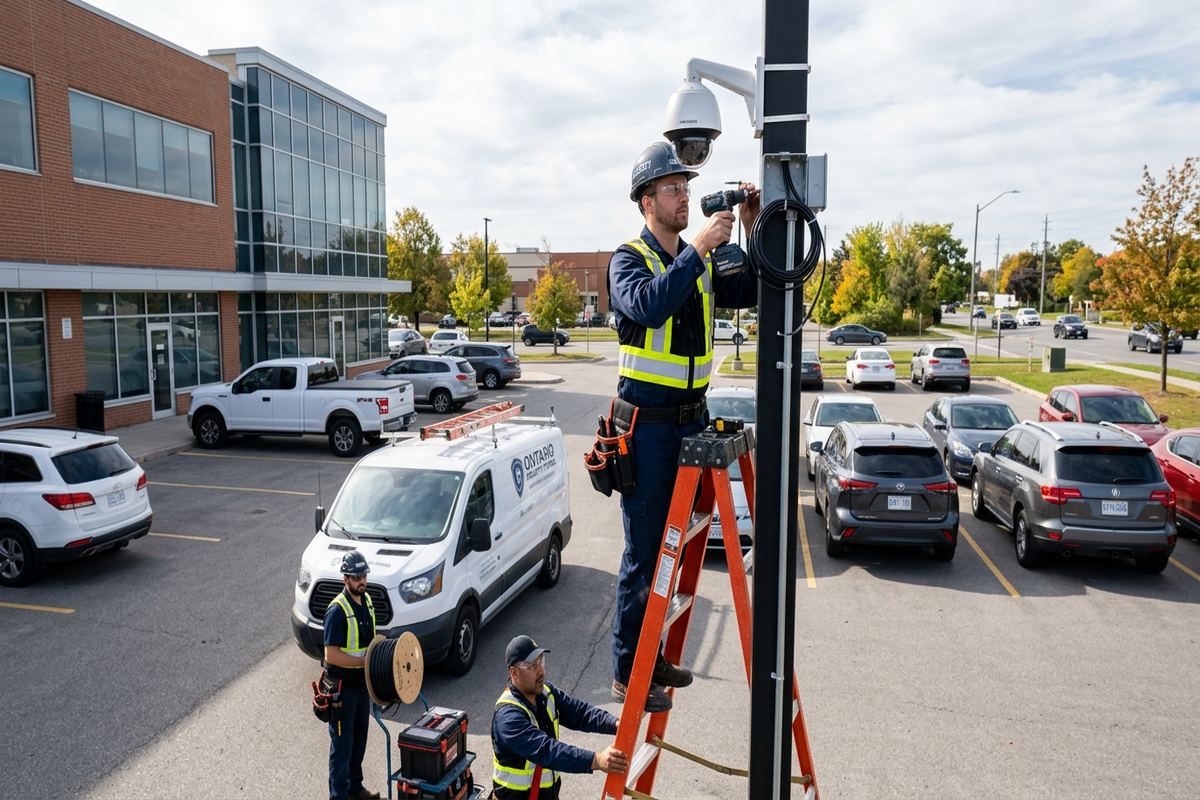
Ajax winters place repeated stress on outdoor mounting points, connectors and wall penetrations. Freeze-thaw cycles can open poorly sealed gaps, while wind-driven rain may reach connections that were left exposed behind a camera base. We use exterior-rated mounting methods suited to the surface and keep terminations protected from direct moisture. Cable entry points are positioned and sealed deliberately rather than hidden with a cosmetic bead alone. Drip paths, downward cable approaches and suitable junction boxes help prevent water from following a cable into the wall or collecting around a connection.
Material matters when selecting anchors and drilling methods. Brick veneer, poured concrete, concrete block, siding and wood framing each require different treatment. On masonry, the camera should be supported by appropriate anchors without damaging brick edges or relying on mortar that cannot hold the load. Frame construction requires a stable backing point or mounting block, especially where siding leaves an uneven surface. Around Duffin's Bay and Pickering Beach, lake exposure can increase wind and moisture concerns, making firm mounting, protected hardware and careful sealing particularly important.
Soffit mounting can produce a neat result, but only when the soffit and structure can support the camera securely. Thin aluminum panels alone are not a dependable base, and deep eaves may create infrared reflection or hide a person’s face beneath the viewing angle. Wall mounting can offer better identification, although cable access and exterior appearance must be considered. We compare the practical options during the assessment and document the planned location. The aim is a stable view with protected wiring, not merely the least visible mounting point.
- Surface-specific anchors and mounting hardware
- Sealed exterior cable penetrations
- Protected junctions and terminations
- Placement designed to reduce infrared reflection
- Mounting methods suited to lakefront exposure
Camera Placement for Ajax Homes
Residential placement should follow the ways people and vehicles actually approach the home. In Southwood or Central Ajax, that may include a front walk, driveway, garage door, side gate and rear patio rather than every section of the property line. Cameras are aimed to avoid spending most of the image on sky, walls or a neighbour’s yard. We also account for seasonal changes such as snow cover, low winter sun and summer foliage. Each position balances useful facial or vehicle detail with enough surrounding context to understand an event.
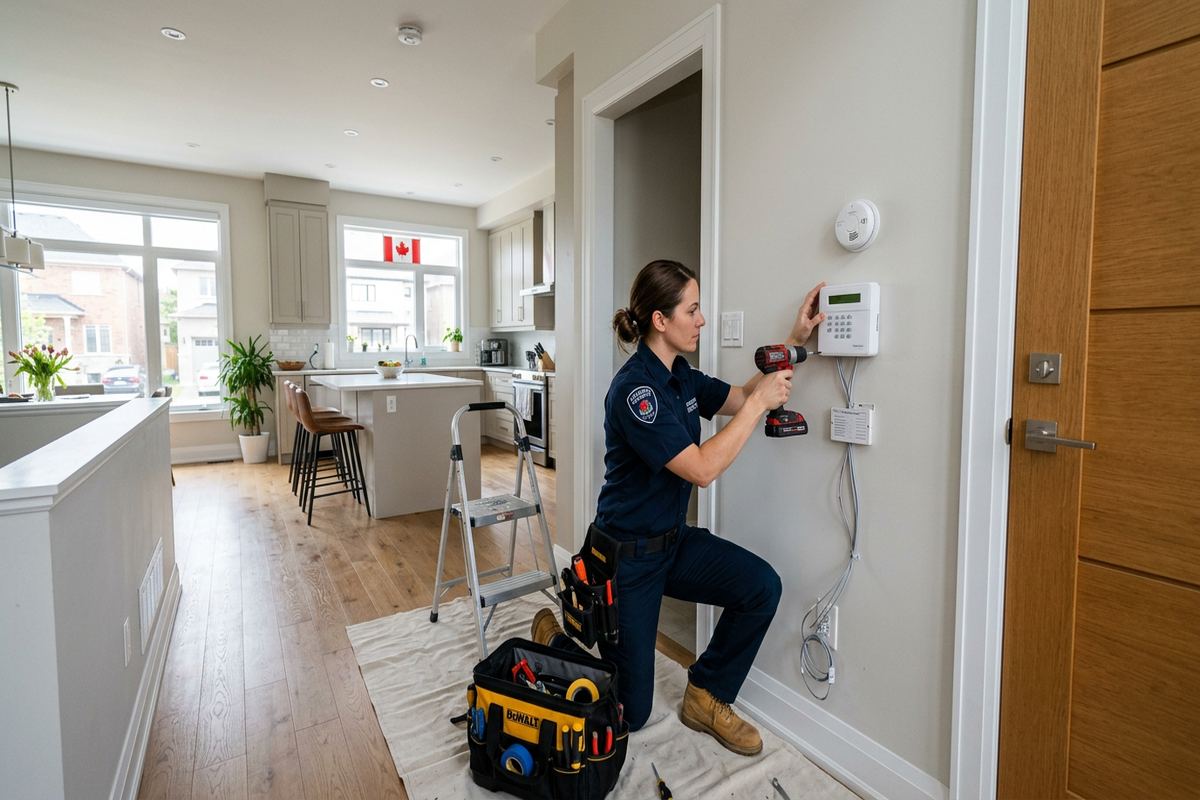
Finished basements common in newer Ajax homes can make a retrofit more involved than the exterior suggests. Running cable through finished ceilings without unnecessary openings requires investigation of joist direction, mechanical spaces, closets and existing utility routes. The shortest path is not always the least disruptive or most serviceable. We look for continuous routes back to the recorder or network location and discuss any visible conduit before proceeding. Cables are installed as continuous labelled runs, avoiding concealed couplers that can create difficult faults after walls and ceilings are closed.
Camera privacy deserves attention before final aiming. A homeowner may need coverage of a side passage while limiting the view into an adjacent window or private yard. Depending on the equipment, privacy masking can block selected areas from recording, but physical placement remains the first control. Doorways also require care because public sidewalks or shared drives can fall within a wide field of view. We configure practical viewing boundaries on site and encourage property owners to consider their responsibilities for notification, recording, retention and access to footage.
- Driveway and doorway views with useful detail
- Side-gate and rear-access coverage
- Routes planned around finished living spaces
- Privacy masking where equipment supports it
- Final camera aiming completed on site
Ajax, Ontario
Outdoor camera installation in Ajax, scoped in writing first
Book a site assessment and get equipment, routes, exclusions, and warranty on paper before anything is installed.
Outdoor Cameras for Ajax Businesses
Commercial camera work starts with operational risks and usable evidence. Retail and service units may require exterior views of public entrances, rear delivery doors, waste areas or parking approaches. Industrial units can add loading bays, fenced yards and vehicle gates. In Ajax commercial strips, signs, canopies and shared façades often restrict mounting positions, while nighttime lighting may vary across the property. We review where activity occurs, who needs access to recordings and how long footage must remain available before proposing camera types, recorder capacity and network requirements.
A business installation also has to fit around building ownership and daily operations. Tenants may need written landlord or property-manager approval before drilling, attaching conduit or placing equipment on a shared exterior. Condominium corporations can have similar rules for common elements, façade appearance and contractor access. UnifiedLink identifies approval dependencies in the scope, but the customer remains responsible for securing required permission. Work areas, lift access, ceiling access and acceptable installation hours should be confirmed in advance so the camera project does not interfere unnecessarily with customers, staff or neighbouring units.
Exterior cameras can support incident review, but they should not be treated as a replacement for locks, lighting, alarms or access control. A clear recording depends on the right angle, image scale and lighting at the exact point of interest. One panoramic view of a large yard may show movement without providing identification. We divide broad areas into specific objectives, such as capturing a person at a door and tracking vehicle movement across a lot. This produces a more defensible design than adding cameras solely to eliminate every visual gap.
- Coverage for entrances, loading areas and yards
- Recorder sizing based on operational requirements
- Planning for shared façades and leased premises
- Coordination around occupied business areas
- Defined user access to live and recorded video
Cabling and Network Design in Ajax
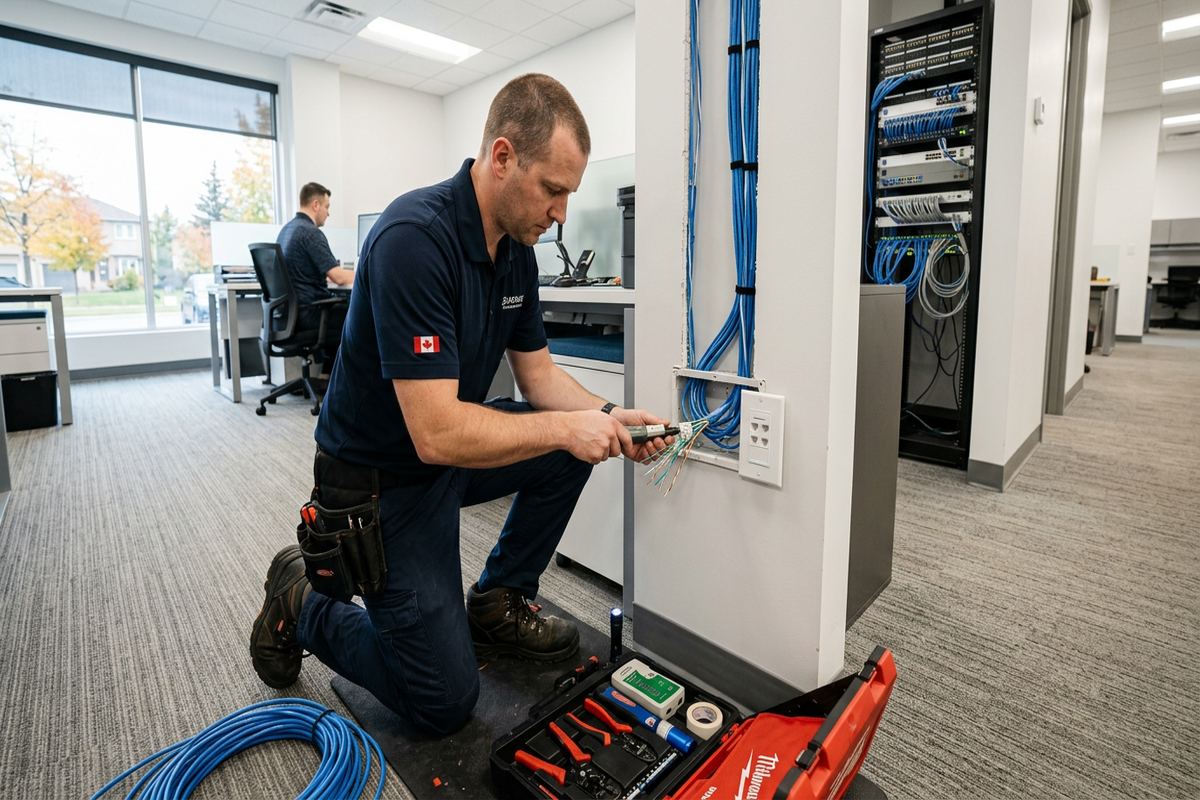
Wired cameras generally provide predictable connectivity and central recording when proper cable routes are available. We install continuous labelled runs from each camera to the designated network or recorder location, keeping connections accessible and protected. Cable type is selected for the environment, including outdoor or conduit use where required. Routes are planned to avoid sharp bends, heat sources, unsupported spans and unnecessary exposure. At the head end, labelling connects each physical run to its camera name, helping future troubleshooting and preventing confusion when equipment is moved or expanded.
Network capacity and power are reviewed as part of the design, not after cameras have been mounted. Power over Ethernet can carry data and power on one cable, but the switch must have suitable port capacity and an adequate power budget for the selected devices. Remote viewing also depends on the local network and internet connection, although recording can continue locally when configured for that purpose. We separate what the camera system requires from assumptions about existing Wi-Fi, routers or customer-managed networks and list relevant dependencies in the written scope.
Wireless cameras still require power and a dependable connection at the mounting location. Exterior walls, foil-backed insulation, masonry, neighbouring networks and distance from an access point can weaken coverage, particularly around finished Ajax homes where equipment cannot simply be relocated. Battery-operated products introduce charging, temperature and event-capture limitations that should be understood before selection. We assess whether wired, wireless or a mixed design matches the property and expected use. The recommendation is based on serviceability and recording needs rather than avoiding cable at any cost.
- Continuous cable runs with end-to-end labels
- Power and network capacity review
- Outdoor-rated cable or conduit where required
- Accessible, protected connection points
- Wired and wireless options assessed practically
Recording, Remote Viewing and Handover
Recording settings determine whether a system preserves the events a customer expects to find. Resolution, frame rate, motion detection, recording schedule and retention all affect storage use. Rather than applying one preset to every camera, we configure each view according to its purpose and the capabilities of the selected platform. Busy streets, moving trees, rain and snow can produce excessive motion events if detection zones are left broad. On-site testing allows us to adjust areas and sensitivity while confirming that important approaches still trigger recording as intended.
Remote access is configured with the customer’s own credentials instead of an installer-controlled personal account. Where the platform supports separate users, permissions can be assigned for administrators, household members, managers or staff. Customers should decide who can watch live video, export recordings or change system settings. We connect supported mobile or desktop applications, verify access and explain any reliance on vendor cloud services or subscriptions before handover. Password recovery details and multifactor authentication should remain under the property owner’s or authorized organization administrator’s control.
At completion, we check camera views during available lighting conditions, confirm recording and review basic footage retrieval. The handover includes an as-built record identifying camera names, cable destinations and relevant system details. We also explain normal maintenance, such as keeping lenses clear and checking views after exterior work or major landscaping changes. Equipment ownership and warranty terms are recorded in the written scope. Using one accountable contractor for cabling, mounting, configuration and handover reduces gaps between trades when a camera or connection needs attention.
- Purpose-based recording and motion settings
- Customer-owned administrator credentials
- Supported remote-viewing application setup
- Footage search and export demonstration
- As-built record provided at handover
Approvals, Privacy and Project Boundaries
Permission requirements vary with ownership and property type. A detached homeowner usually controls the exterior, subject to applicable rules, while a tenant may not. Condo townhouses and stacked units can treat walls, soffits, roofs and exterior conduits as common elements even when they adjoin a private unit. Before installation, Ajax customers should confirm any landlord, condominium or property-management approval needed for drilling and equipment placement. We can provide proposed device locations and routing details for review, but we do not represent that a property approval has been granted unless the customer supplies it.
Outdoor recording may capture employees, visitors, delivery workers, neighbours or public areas. Property owners and businesses are responsible for using their system lawfully and establishing appropriate policies for notice, access, retention and disclosure. For workplaces, cameras should have a defined security purpose rather than being positioned casually around staff activity. We can adjust fields of view and supported privacy masks to align with the customer’s direction, but we do not provide legal advice. Sensitive decisions should be reviewed with the organization’s legal or privacy adviser where necessary.
A clear scope prevents assumptions about repairs and connected systems. Camera installation may involve drilling and sealing small penetrations, but painting, major drywall restoration, custom millwork, electrical branch circuits or network remediation may require separate work unless expressly included. Existing customer equipment is assessed for compatibility, condition and available credentials before reuse is promised. The written scope identifies exclusions, equipment ownership, warranty, cable routes and device placement. If concealed conditions change the practical route, we discuss the alternative and obtain direction rather than proceeding with an undocumented change.
- Landlord or condo approval identified early
- Proposed placements available for property review
- Privacy controls configured where supported
- Exclusions documented before installation
- Route changes discussed before work proceeds
Arranging an Ajax Outdoor Camera Assessment
To prepare for an Ajax assessment, consider the events you want the system to capture and who will use it. Recent incidents can be helpful, but everyday movement patterns usually provide better design information. Note expected approaches, parked vehicle positions, gates, deliveries and areas affected by poor lighting. If plans, network details or existing camera credentials are available, having them ready can reduce uncertainty. For leased or condominium property, begin the approval process early because exterior mounting and cable routing may depend on written authorization from another party.
During the visit, we inspect candidate camera locations, accessible cable paths, the recorder or network area and available power or network infrastructure. We discuss visible and concealed routing, exterior surface conditions, recording objectives and customer access. The resulting price follows the assessment rather than a generic camera count. Customers receive a written scope covering the proposed equipment, device placement, cable routes, exclusions, equipment ownership and warranty. This allows competing priorities, such as appearance, coverage and future service access, to be considered before the installation date is arranged.
Requests sent during business hours are answered the same day, and after-hours requests are answered the next business day. Site assessment timing depends on the service and travel distance within Ajax and Durham Region. Once work is scheduled, access should be available to the relevant exterior walls, attic or basement routes, network area and recording location. UnifiedLink remains the accountable contractor for the included mounting, cabling, on-site configuration and documented handover, so responsibilities are clear from the initial assessment through system completion.
- Same-day reply to business-hours requests
- Next-business-day reply after hours
- Assessment timing based on service and distance
- Written scope completed before installation
- One contractor for installation and handover
Ajax neighbourhoods we cover
- Southwood
- Nottingham
- Duffin's Bay
- Applecroft
- Pickering Beach
- Central Ajax
Outdoor camera installation in Ajax — common questions
How many outdoor cameras does my Ajax home need?
The number depends on the views that must provide useful detail, not simply the property size. Many Ajax homes have front, driveway, side and rear approaches, but one camera may cover more than one objective when angles and lighting permit. A site assessment identifies priority locations, blind areas and practical cable routes before equipment is specified. Wide coverage and identification-level detail are considered separately.
Can you run cables through a finished basement?
Often, but the route must be inspected first. Newer Ajax homes frequently have finished basement ceilings, bulkheads and insulated exterior walls that restrict access. We look at joist direction, utility rooms, closets and existing pathways to find a practical continuous route. If concealed cabling would require avoidable damage, we discuss protected exterior conduit or another visible option before including it in the written scope.
Will outdoor cameras work through an Ajax winter?
Outdoor-rated equipment can operate in winter when selected, mounted and connected for local conditions. Ajax freeze-thaw cycles make sealing, protected terminations and secure surface-specific anchors important. Camera placement also needs to consider snow, low winter sun and infrared reflection from soffits or nearby walls. We review product operating requirements and install exterior penetrations so water is directed away from cable entries and connection points.
Do I need condo or landlord approval?
Possibly. Ajax condo corporations may control exterior walls, soffits, roofs and other common elements, while tenants generally need landlord permission before drilling or attaching equipment. Commercial tenants can also require approval for façade work or exterior conduit. Customers are responsible for obtaining required permission. We can provide proposed camera locations, cable routes and mounting details to support a property manager’s or owner’s review.
Can I view my Ajax cameras remotely?
Remote viewing is available when the selected system supports it and the property has a suitable network and internet connection. We configure supported applications on site using credentials controlled by the customer, then verify live and recorded access. The written scope identifies relevant vendor cloud services, subscriptions or network dependencies. Local recording may continue during an internet outage when the system is designed and configured for local storage.
What happens after the cameras are installed?
We complete on-site configuration, verify recording, adjust available motion zones and show the customer how to find and export footage. The system is handed over with the customer’s own credentials and an as-built record identifying camera names and cable destinations. Ajax property owners also receive the documented scope covering equipment ownership and warranty. Routine checks should include cleaning lenses and confirming views after landscaping or exterior construction.
Coverage in Ajax is confirmed against the address before we quote. See everything we install in Ajax or the province-wide outdoor camera installation page.