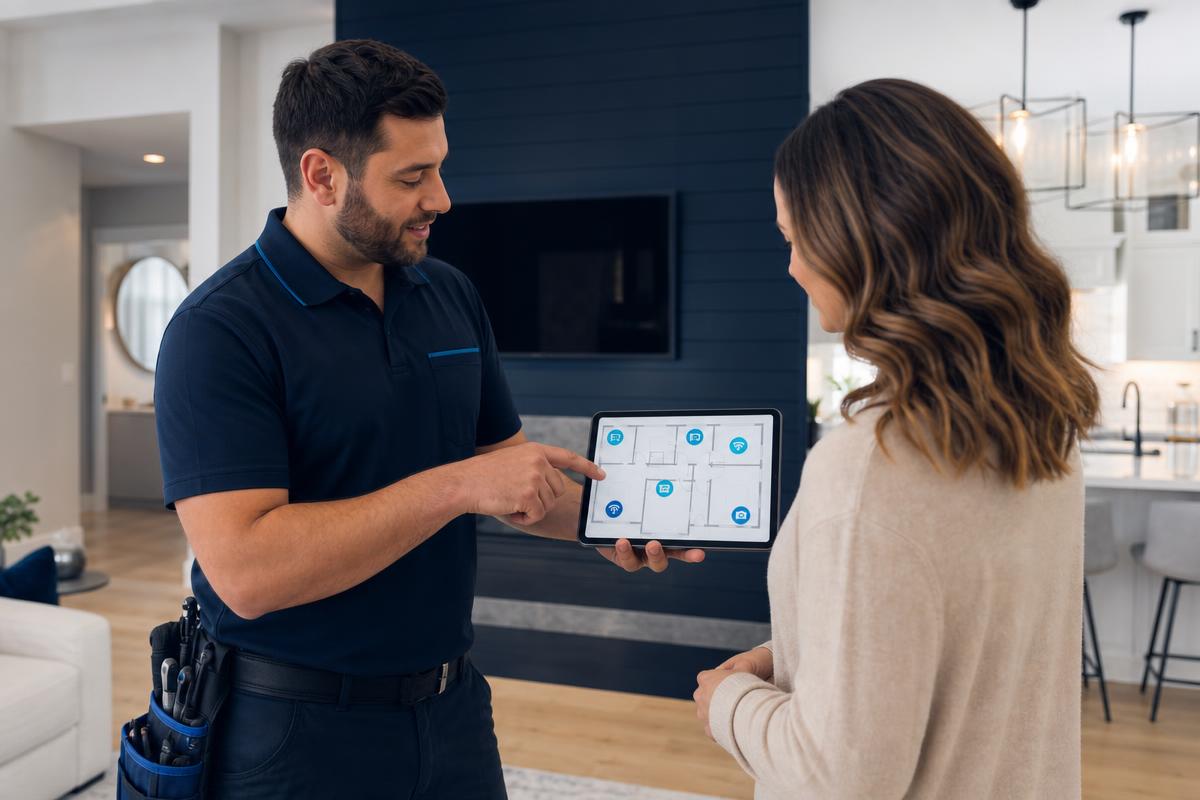
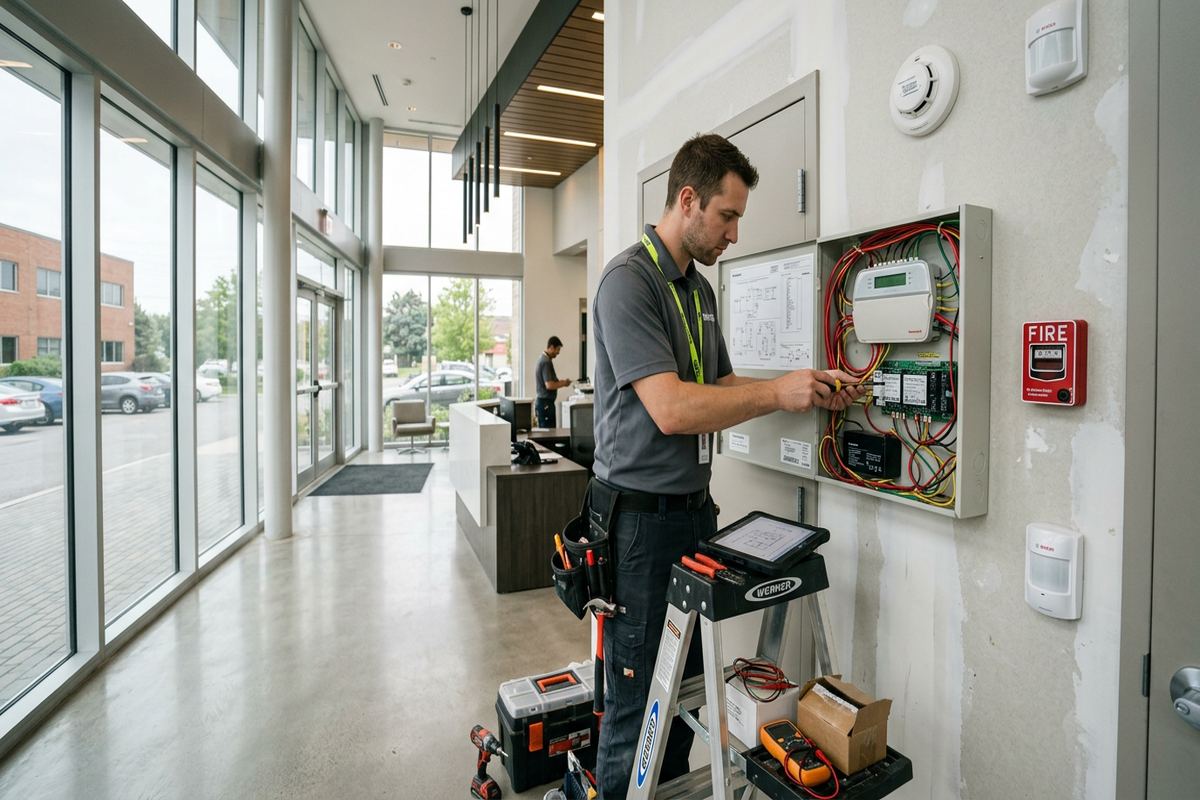
UnifiedLink installs wireless alarm systems for homes, rural properties and businesses across Caledon. We assess the building, entry points, detached structures and communication options before preparing a written scope. Installation includes device mounting, on-site configuration, testing and a documented handover using credentials owned and controlled by the customer.
Wireless Alarm Planning for Caledon Properties
A wireless alarm system still requires careful planning. During a Caledon site assessment, we review doors, accessible windows, interior movement paths, attached garages and likely approaches to the building. The assessment also considers construction materials, distances between devices and the control panel, available power and internet or cellular communication options. Rural acreages may need a different design from a compact Bolton home or a commercial unit in Mayfield West. The objective is to establish reliable detection without placing unnecessary devices in areas that add little practical security value.
Wireless equipment reduces the need to run cable to every sensor, but radio signals must pass through the actual building. Masonry walls, metal cladding, mechanical rooms, foil-backed insulation and multiple floors can weaken communication. Frame construction is generally more straightforward, although additions and renovated sections may contain unexpected materials. We test proposed positions rather than assuming that a device will communicate reliably. Where a detached garage, workshop or outbuilding is part of the scope, its distance and construction are assessed separately before any sensor is included in the system design.
Following the assessment, UnifiedLink prepares a written scope covering equipment, device placement, cable routes where required, exclusions, equipment ownership and warranty. This helps distinguish included alarm functions from optional cameras, gate controls, monitoring services or network work. It also records whether existing devices will be reused, replaced or left untouched. Site assessment timing depends on the service and travel distance. Requests sent during business hours are answered the same day, while after-hours requests are answered the next business day. Pricing is provided only after the relevant site conditions have been reviewed.
- Door, window and motion detection planning
- Wireless signal checks through finished building materials
- Separate assessment of garages and outbuildings
- Communication-path and power review
- Written equipment and placement scope
Alarm Devices Selected for the Building
Device selection begins with the type of event that needs to be detected. Door and window contacts protect defined openings, while motion detectors cover movement through selected interior areas. Glass-break detection may suit rooms with several accessible panes, and environmental sensors can identify conditions such as water leaks or low temperatures when compatible equipment is specified. Keypads, panic functions and audible warning devices are positioned around normal occupancy patterns. We explain what each device does, what it does not detect and how its batteries or other serviceable components will be maintained.
Caledon includes newer subdivisions, older village properties, rural houses and buildings that have been expanded over time. An older home in Inglewood may have thick masonry, irregular openings or finished surfaces that limit mounting choices. A newer frame-built property in Mayfield West may offer clearer device locations but can still have large open areas requiring careful motion coverage. In Bolton, mixed residential and commercial settings can create different entry schedules and user requirements. The installation approach is based on the building rather than applying one standard package to every address.
Pet movement, heating equipment and changing sunlight can influence motion detector performance. A detector facing a fireplace, strong air current or sunlit window may produce avoidable activity, while furniture or storage can obstruct its field of view. In garages and workshops, dust, temperature variation and vehicle movement must also be considered. We select suitable locations, adjust supported settings and test movement patterns on site. If a particular room is not appropriate for motion detection, the written scope can use perimeter devices or another method instead of forcing an unsuitable detector into the design.
- Door and window contacts
- Interior motion detectors
- Compatible glass-break detection
- Keypads and audible warning devices
- Optional environmental sensors
- Device choices documented before installation
Wireless Coverage Across Rural Caledon Sites
Long driveways, broad lots and detached buildings are common considerations on rural Caledon properties. A wireless alarm installed in the main house may not automatically communicate with a barn, workshop or gate area. Distance, terrain, trees, exterior walls and metal siding can all affect the result. We identify which structures require intrusion detection and test communication at the intended mounting locations. Where reliable coverage cannot be established with the proposed wireless equipment, we explain the limitation and revise the design rather than presenting an untested outbuilding connection as dependable.
Gate access and outdoor camera coverage often arise during alarm discussions, but they are separate functions that should be scoped clearly. A gate operator may control vehicle entry, a camera may provide recorded or live video, and an alarm sensor may report an intrusion event. Combining these systems can be useful when supported by compatible equipment, yet one does not replace another. For properties near Palgrave, Alton or Caledon East, we can assess the gate, driveway and outbuildings together while documenting which work belongs to the alarm, access control, network and camera portions.
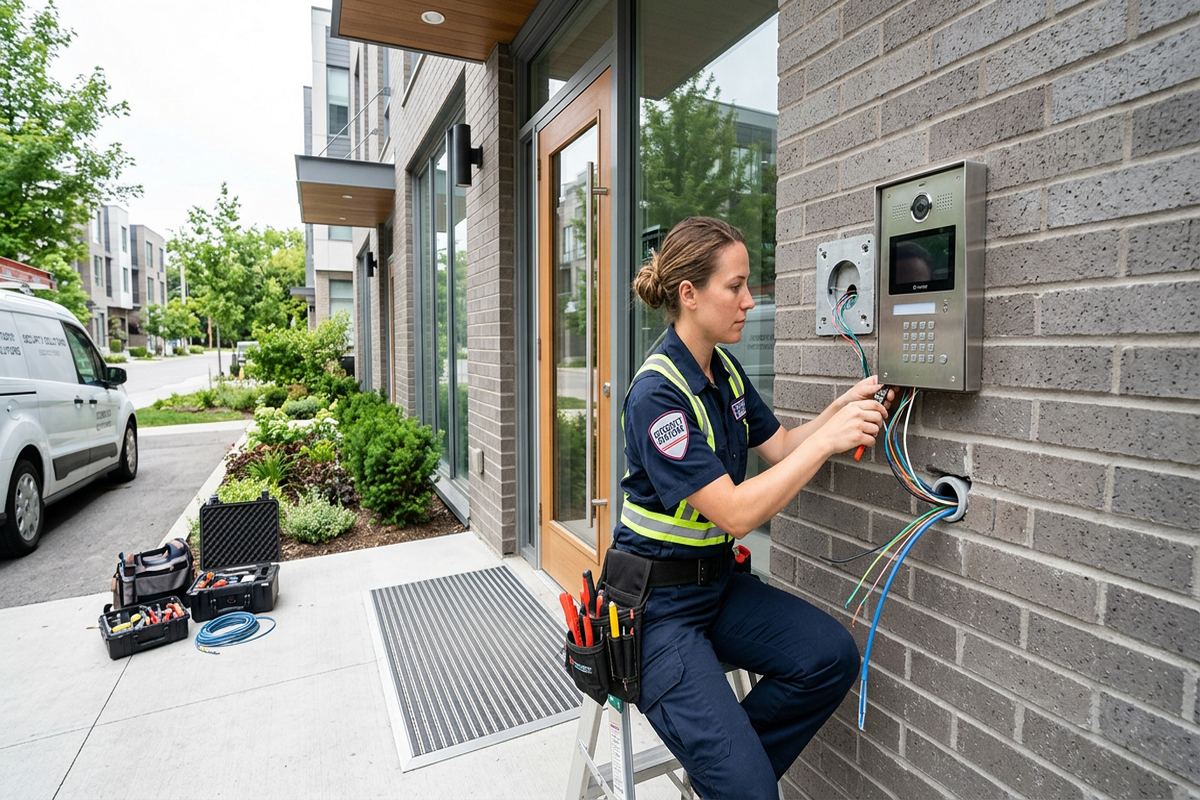
Outdoor installations must account for Caledon winters, moisture and repeated freeze-thaw cycles. Exterior devices require suitable environmental ratings, stable mounting and sealed cable penetrations where wiring is present. Fasteners and mounting surfaces must also suit masonry, wood, metal or composite cladding. We avoid relying on interior-rated equipment in exposed locations and explain any seasonal operating limits identified by the manufacturer. For unheated buildings, equipment and batteries must be appropriate for expected conditions. Exterior sealing is completed around new penetrations without concealing drainage paths or trapping water behind the mounted device.
- Signal testing at detached structures
- Outbuilding and workshop detection planning
- Gate, camera and alarm functions separated clearly
- Weather-suitable exterior device selection
- Sealed penetrations and stable exterior mounts
Caledon, Ontario
Wireless alarm installation in Caledon, scoped in writing first
Book a site assessment and get equipment, routes, exclusions, and warranty on paper before anything is installed.
Installation and Configuration in Caledon
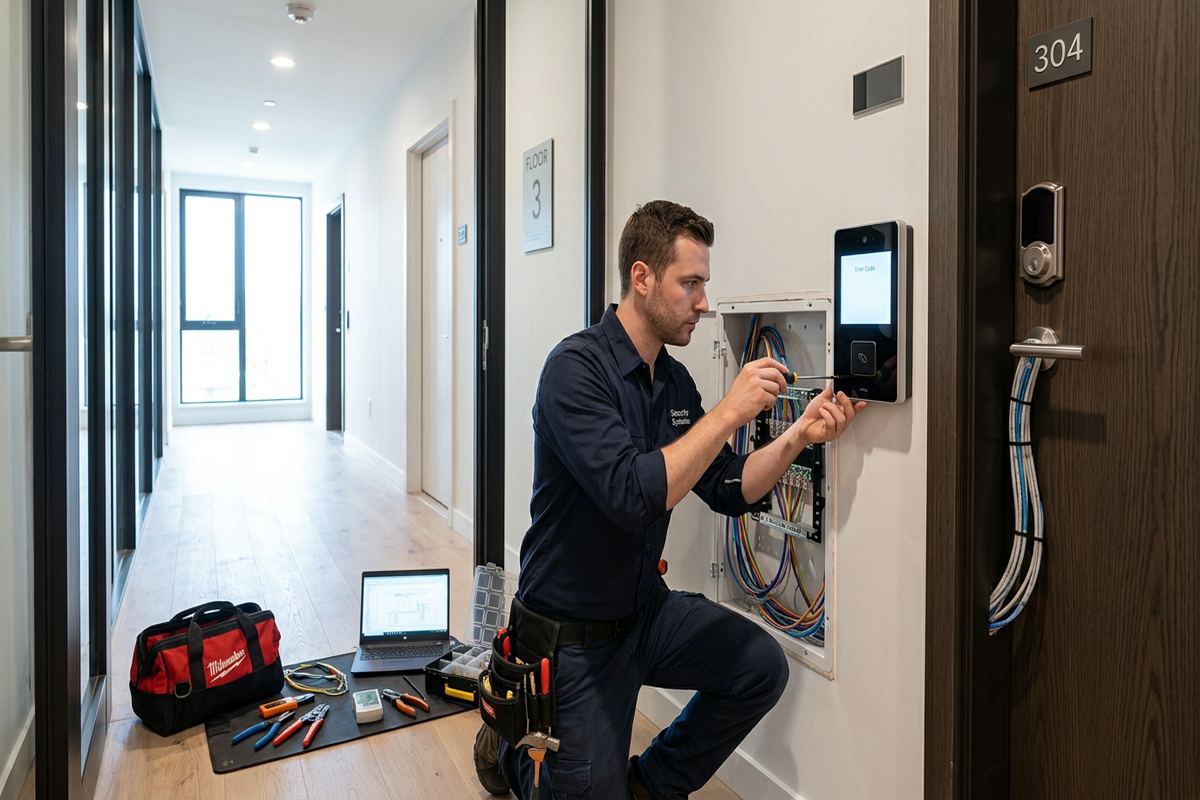
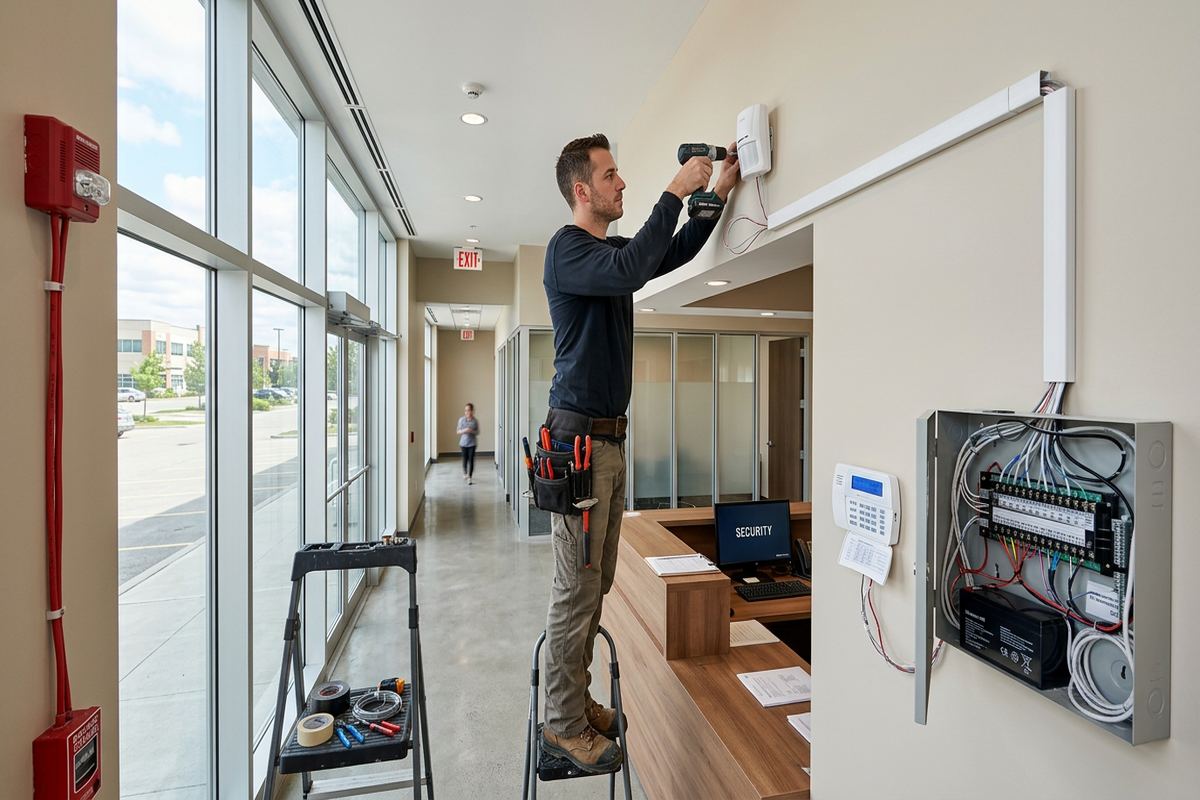
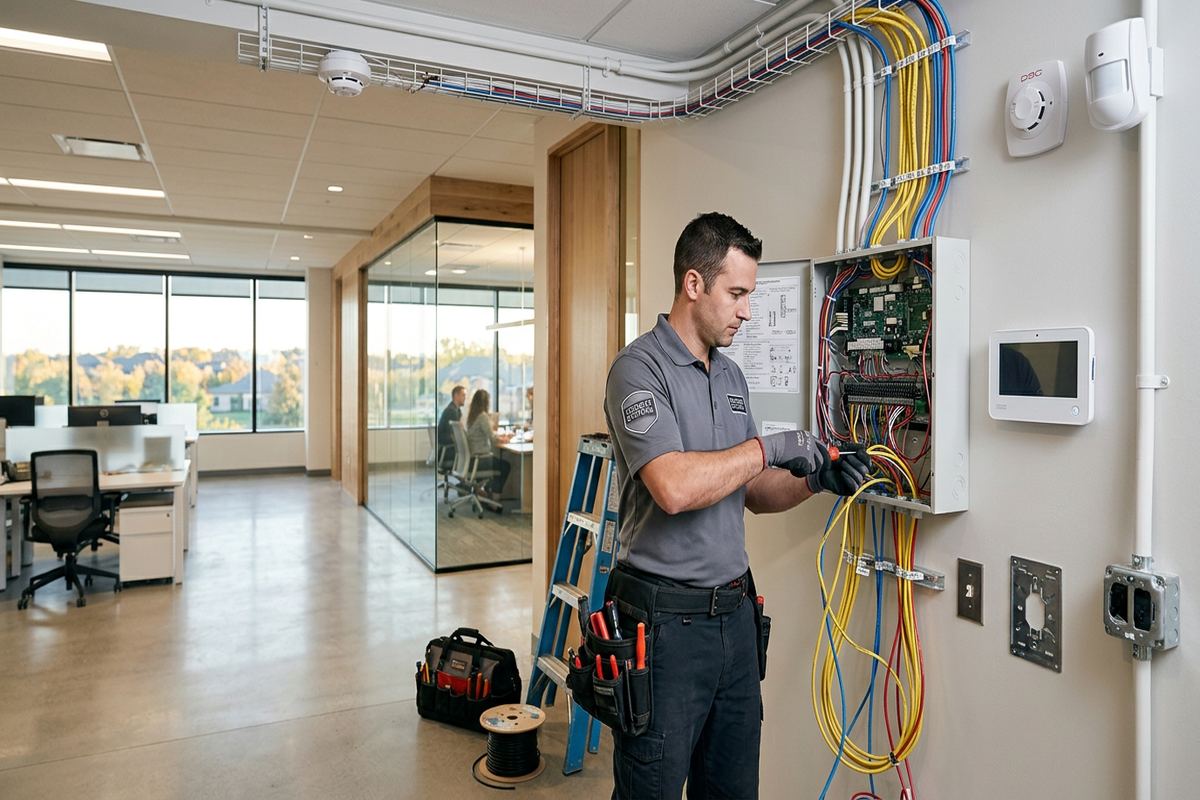
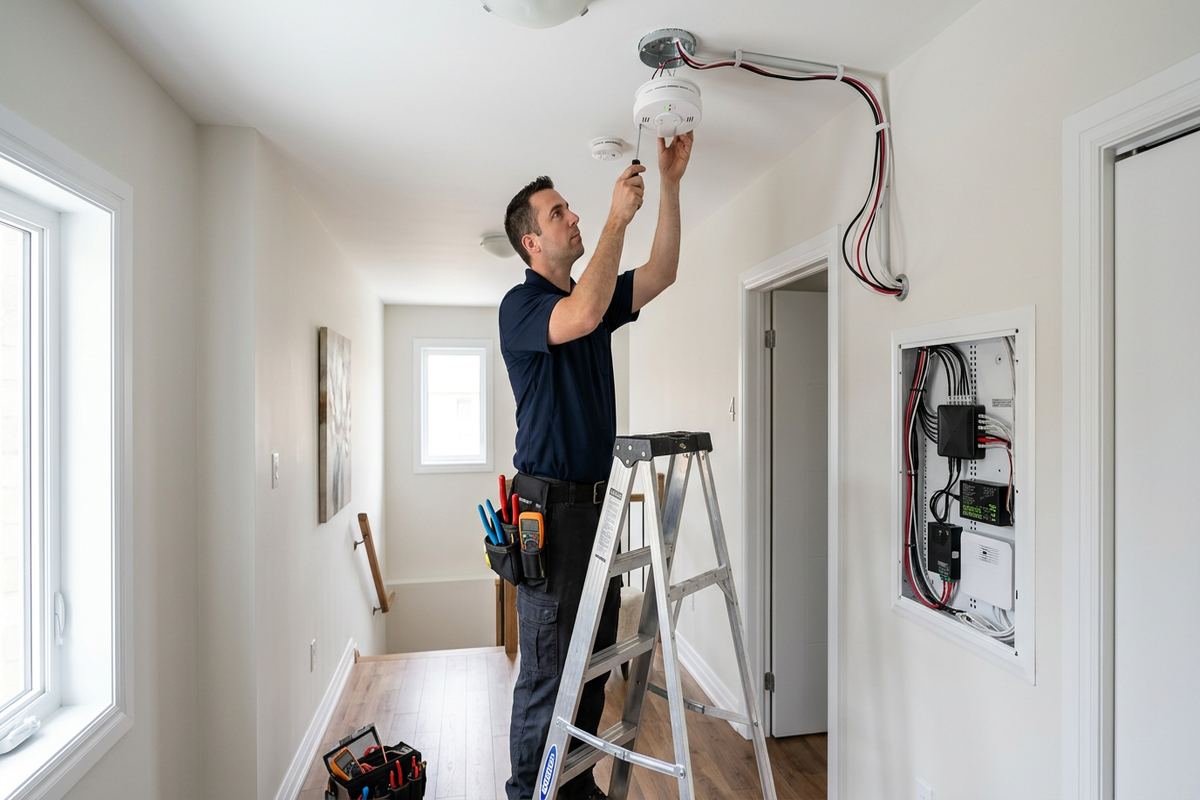
Installation starts after the scope and device locations are confirmed. Wireless contacts and detectors are mounted to stable surfaces, aligned correctly and enrolled with the control equipment. Keypads, hubs, sirens and communication modules may still require power or low-voltage cabling. Any new cable runs are continuous and labelled, with routes selected to protect the cable and limit unnecessary disturbance to finished areas. We use fastening methods appropriate to frame walls, masonry and other substrates. Changes caused by concealed conditions are discussed before the work moves beyond the agreed scope.
Configuration is completed on site using the final device positions. Each zone receives a clear name so users can identify the affected door, room or building instead of seeing an unclear number. Entry and exit functions, supported user permissions, audible behaviour and notification features are set according to the agreed operating plan. If remote access is included, it is established with the customer’s own credentials. UnifiedLink does not treat installer-controlled accounts as a substitute for proper ownership and handover. Administrative access and recovery details are reviewed before completion.
Testing covers device activation, communication with the panel, audible indications and available notification paths. Doors and windows are opened individually, motion areas are walked, and supported tamper conditions are checked. For detached structures, testing is performed from the installed location rather than beside the main panel. Users then receive a practical demonstration covering arming, disarming, bypassing an approved zone, recognizing alerts and managing common user functions. The final handover includes an as-built record showing installed devices and relevant system information, giving the property owner a useful reference for future service.
- Stable mounting on suitable surfaces
- Continuous labelled cable runs where needed
- Clear zone names and user permissions
- Customer-owned application credentials
- Functional testing at installed locations
- As-built record at handover
Renovations, Rentals and Shared Buildings
Renovated buildings often combine several construction periods and materials. A Caledon farmhouse may have a masonry original section, one or more frame additions and a detached garage served by a different electrical panel. Finished basements, replacement windows and enclosed porches can also change where contacts or motion detectors belong. We inspect these transitions because floor plans alone do not show signal barriers or practical mounting surfaces. Where future renovation work is planned, the alarm design can identify devices that may require relocation rather than placing them where new walls, doors or cabinetry will soon interfere.
Tenants and landlords should establish approval before devices are fixed to doors, windows, walls or common areas. The written scope can identify who owns the equipment, who receives administrative credentials and who is responsible for ongoing service. In a condominium property, approval may be needed for exterior doors, common walls, shared corridors or visible equipment. UnifiedLink does not assume that an occupant can authorize changes to every surface. Confirming permissions first reduces the risk of installing a device where a condominium corporation, property manager or landlord requires a different approach.
Shared homes and multi-user businesses need defined permissions rather than one code used by everyone. Supported systems can be configured with individual user access, allowing the owner or designated administrator to add or remove users without disclosing a master credential. The operating plan should also address cleaners, contractors, delivery access and staff who work different schedules. In rental or managed properties around Bolton and Caledon East, these details affect how alerts are investigated and who may change settings. We document the agreed administrator and provide handover information directly to the authorized customer representative.
- Assessment of mixed-age construction
- Planning around future renovation work
- Landlord or condominium approval confirmation
- Documented equipment ownership
- Individual user permissions where supported
Wireless Alarms for Caledon Businesses
Commercial strips, offices, shops and service businesses have different alarm patterns from occupied homes. Public entrances may remain active during business hours while stockrooms, rear doors or offices need controlled access. In Bolton commercial areas, the design may need to account for customer traffic, multiple staff shifts and adjacent units. Industrial units elsewhere in Caledon can include high ceilings, loading doors, metal partitions and equipment that affects wireless communication. A site assessment identifies operating hours, access points and interior areas before devices and arming partitions are proposed.
Warehouses and industrial bays require particular attention to detector location. Racking, stored material, vehicles and changing inventory can block a motion detector that appeared clear when the space was empty. Metal walls or fire separations may also restrict radio communication between the front office and rear service area. We assess the likely working layout and test wireless performance through the occupied unit. Where a wireless device is not appropriate, the scope can identify a wired or hybrid alternative. The practical requirement is reliable operation, not using wireless equipment in every location.
Business alarm administration should remain under the organization’s control. We configure supported user roles for owners, managers or designated staff and establish remote access with customer-owned credentials. Zone labels are written in terms employees can understand, such as a named rear door or stockroom, rather than installer shorthand. Handover includes operating guidance and an as-built record for future changes. If cameras, access control, structured cabling, Wi-Fi or displays are also required, UnifiedLink can coordinate the low-voltage scope as one accountable contractor while keeping each system’s function and exclusions clear.
- Retail and office entry planning
- Loading-door and stockroom detection
- Wireless testing around metal partitions
- User roles for managers and staff
- Coordinated low-voltage project scope
Communication, Monitoring and Power
An alarm must have a defined way to report events. Depending on the selected equipment and service arrangement, communication may use internet, cellular service or a supported combination. Rural connectivity varies by property, so an available Wi-Fi signal near the panel does not by itself confirm dependable remote communication. We review network placement, cellular conditions where applicable and account requirements during planning. Monitoring subscriptions or third-party services are identified separately in the scope, including who contracts for them. No notification method should be assumed until compatibility, coverage and account responsibility have been confirmed.
Wireless sensors rely on batteries, while hubs, keypads and communication equipment commonly need building power. The design therefore considers receptacle availability, power supply placement, battery supervision and access for future maintenance. Cold conditions can affect batteries, especially in unheated Caledon garages and outbuildings, so device specifications and mounting environments matter. Users are shown how the system indicates low-battery or communication trouble. Battery replacement remains a maintenance task rather than a system failure, and the as-built record helps identify device types and locations when service is required.
Internet outages, power interruptions and service-provider changes can affect connected features. Backup capability depends on the chosen panel, communication path, battery condition and active service arrangement; it should not be described as unlimited. During handover, we explain which functions are local, which depend on an external connection and what indicators require attention. If the customer changes routers, Wi-Fi credentials, internet providers or mobile devices, some settings may need to be updated. Clear account ownership makes those changes easier and avoids dependence on credentials held only by an installer or previous occupant.
- Internet and cellular path review
- Third-party monitoring responsibilities identified
- Power and backup capability explained
- Low-battery indications demonstrated
- Customer-controlled accounts and recovery details
Ongoing Alarm Use in Caledon
A well-installed alarm still depends on consistent daily use. Users should know which doors have entry delays, which areas can be bypassed and how to respond to trouble indicators. Changes to furniture, shelving, pets or room use can alter motion coverage and should prompt a review. Exterior doors may also shift as Caledon temperatures change, particularly through winter freeze-thaw cycles, affecting contact alignment. Routine visual checks can identify loose devices, damaged covers or blocked detectors. Any repeated alert should be investigated rather than routinely bypassed without finding its cause.
Property changes should be reflected in the alarm record. Replacing windows, adding an entrance, converting a garage, renovating a shop or constructing an outbuilding can leave the original protection incomplete. Network changes and staff turnover may also require updated credentials or user permissions. UnifiedLink can assess the affected portion and prepare a revised scope before carrying out additions. Existing equipment is evaluated for condition and compatibility; reuse is not assumed merely because a device remains mounted. Clear documentation helps distinguish current alarm coverage from old equipment that is no longer active.
For service requests, provide the property location, system make if known, a description of the issue and any recent building or network changes. Photographs of the panel, keypad or affected device can help define the next step, although they do not replace an on-site assessment when testing is required. Requests sent during business hours are answered the same day, and after-hours requests the next business day. Assessment timing depends on the service and travel distance. From initial review through handover, UnifiedLink remains one accountable contractor for the agreed wireless alarm installation scope.
- Practical user training at completion
- Review after renovations or layout changes
- Winter checks for exterior contact alignment
- Credential updates after staff changes
- One contractor accountable for the agreed scope
Caledon neighbourhoods we cover
- Bolton
- Caledon East
- Inglewood
- Alton
- Mayfield West
- Palgrave
Wireless alarm installation in Caledon — common questions
Will a wireless alarm reach my Caledon outbuilding?
It depends on distance, construction, terrain and the selected equipment. Metal siding, masonry and separation from the main building can reduce wireless performance. UnifiedLink tests communication at the intended device location during the assessment or installation process. If dependable coverage cannot be established, we will explain the limitation and may recommend a wired, hybrid or separately connected approach.
Do wireless alarm systems need internet service?
Local alarm functions may not require internet, but application access, notifications and some monitoring arrangements depend on an external communication path. Caledon properties with variable rural internet should have connectivity reviewed before these features are promised. Depending on compatibility and coverage, cellular communication or a supported combination may be considered. The written scope identifies the intended path and any third-party account responsibilities.
Can sensors be installed in an unheated garage?
Possibly, but the device must suit the expected temperature, moisture and dust conditions. Caledon winters can affect battery performance and materials in unheated garages or outbuildings. We review the manufacturer’s environmental limits, mounting surface and wireless connection before including a device. An interior-rated sensor should not be placed in an exposed or unsuitable location simply because it can communicate with the panel.
Can you install an alarm in a rental or condominium?
Yes, provided the person authorizing the work has the necessary approval. Landlords, property managers or condominium corporations may control exterior doors, common walls, corridors and visible equipment. Before installation in Caledon, customers should confirm applicable permissions. The written scope can document equipment ownership, administrative control, mounting limitations and the authorized recipient of system credentials and handover records.
Can my existing wireless alarm devices be reused?
Existing devices can be assessed, but reuse depends on condition, compatibility, account status, available documentation and whether the equipment still suits the property. A mounted sensor is not necessarily active or compatible with a replacement panel. UnifiedLink identifies which components are proposed for reuse, replacement or exclusion in the written scope, then tests reused equipment as part of the completed Caledon installation.
Can the alarm work with cameras or gate access?
Alarm, camera and gate systems can sometimes share events or user workflows when compatible products are selected, but they perform different functions. This is especially relevant on Caledon acreages with long driveways and outbuildings. UnifiedLink can assess them together and provide one coordinated low-voltage scope while documenting equipment, ownership, exclusions and the separate purpose of each system.
Coverage in Caledon is confirmed against the address before we quote. See everything we install in Caledon or the province-wide wireless alarm installation page.