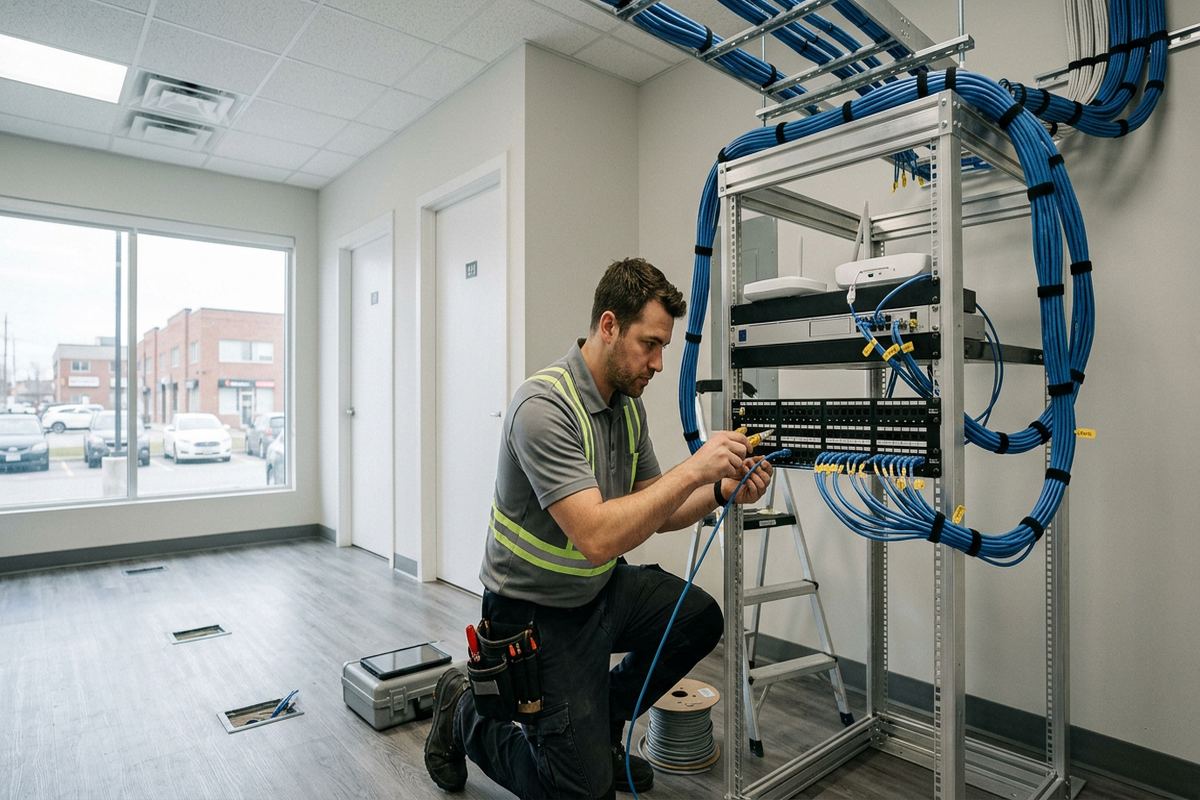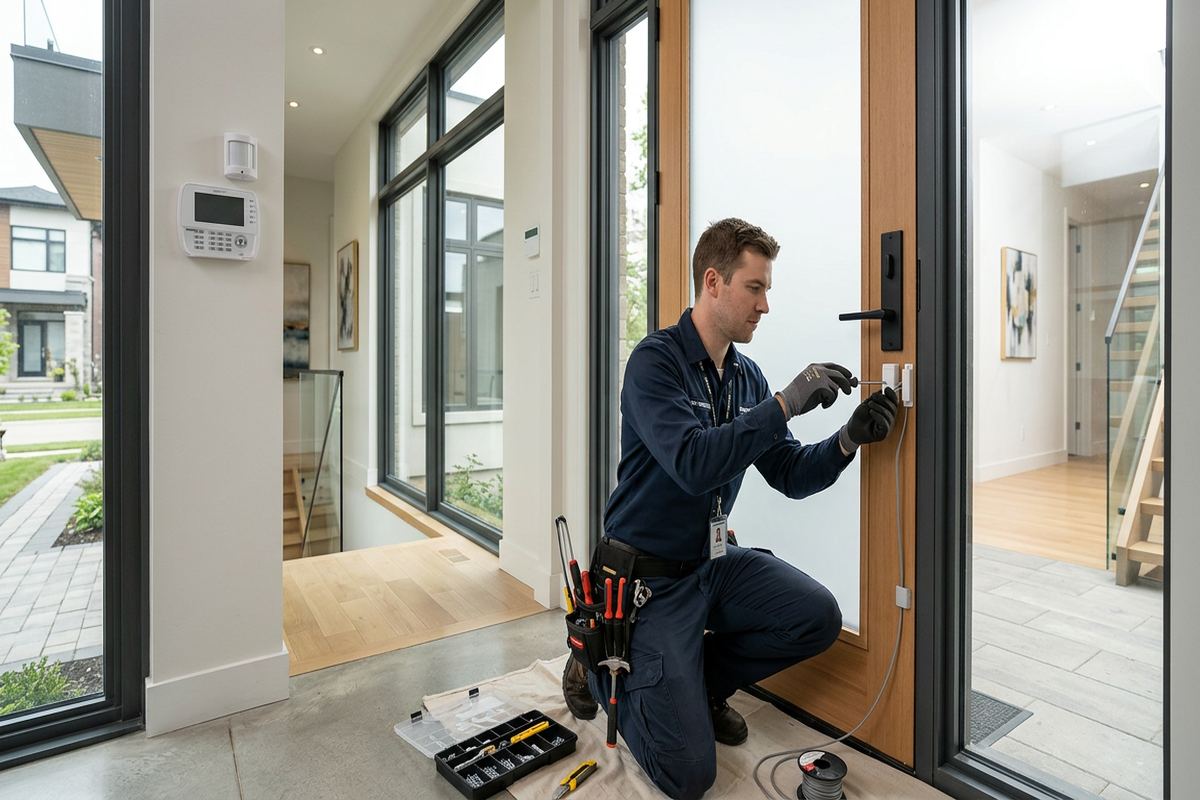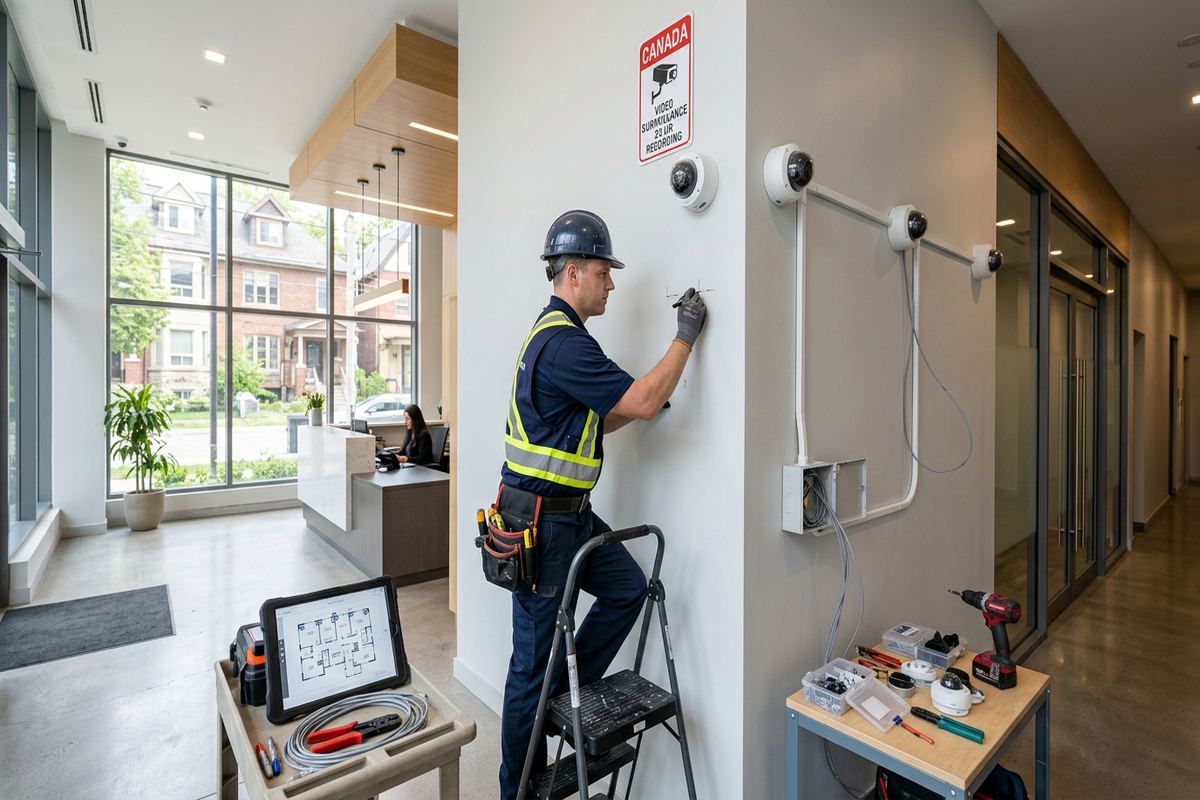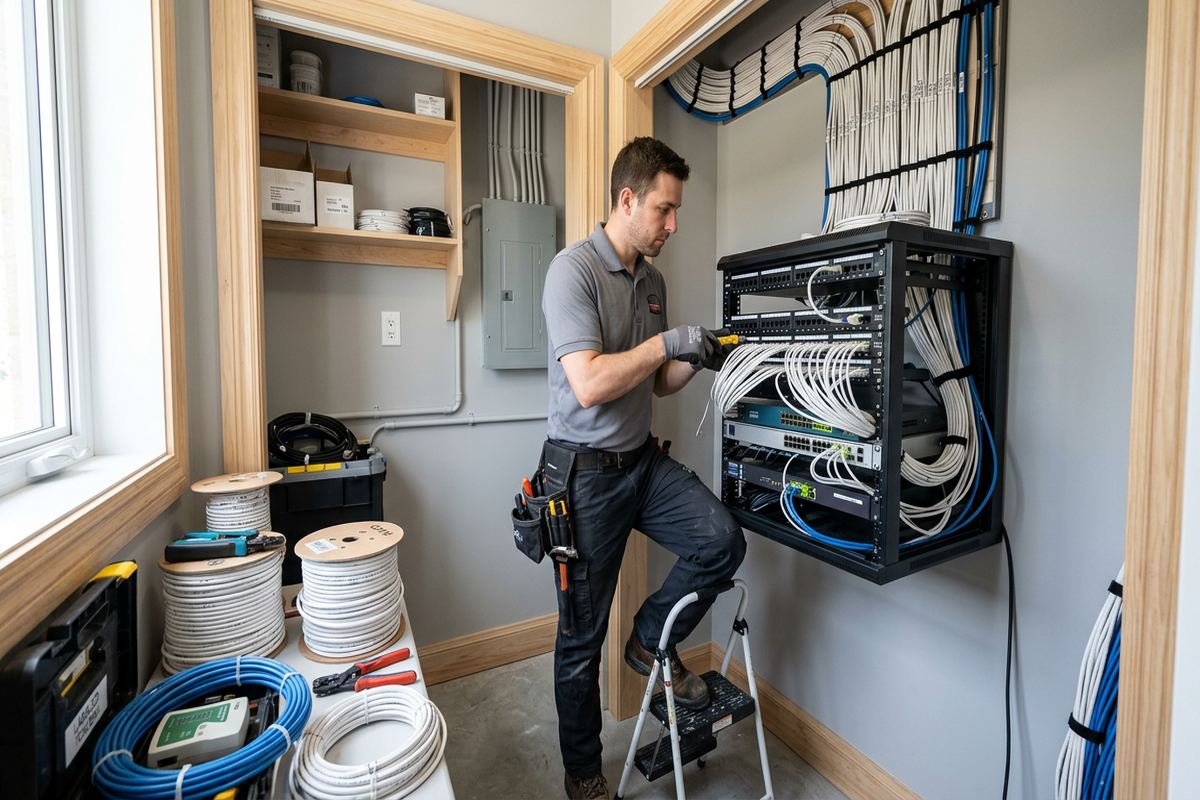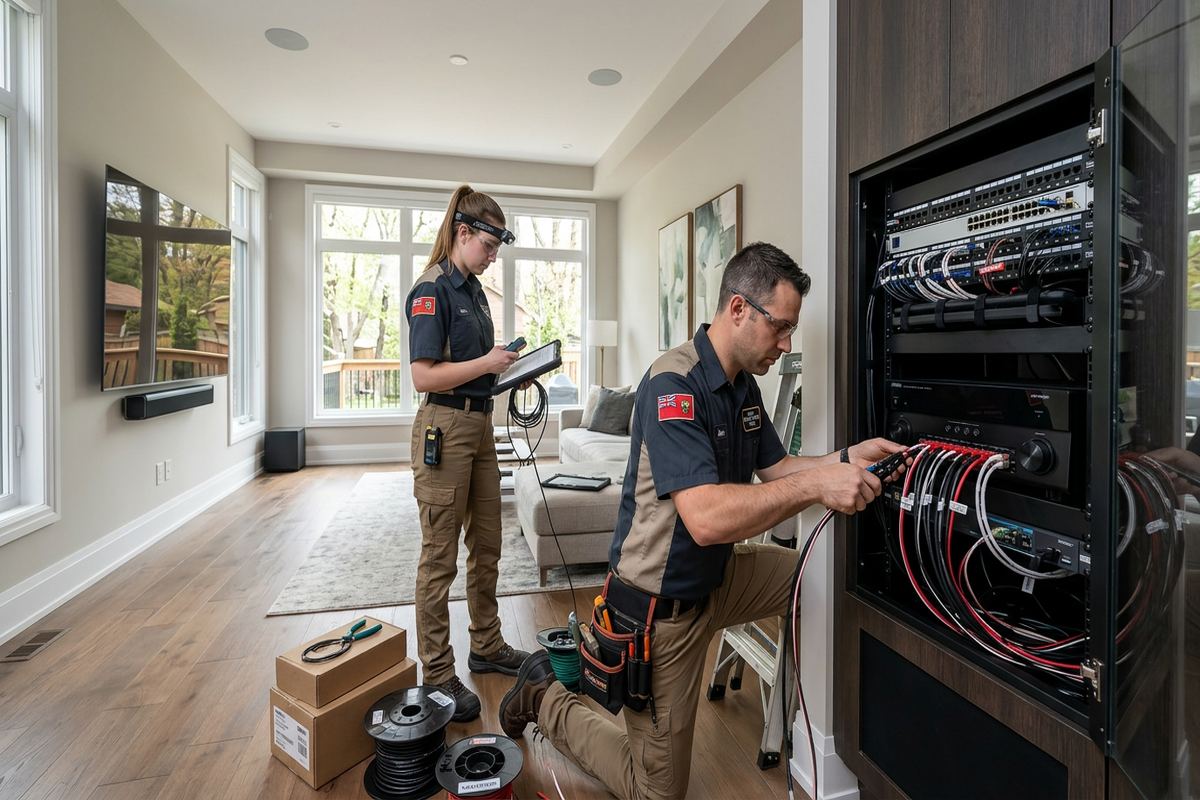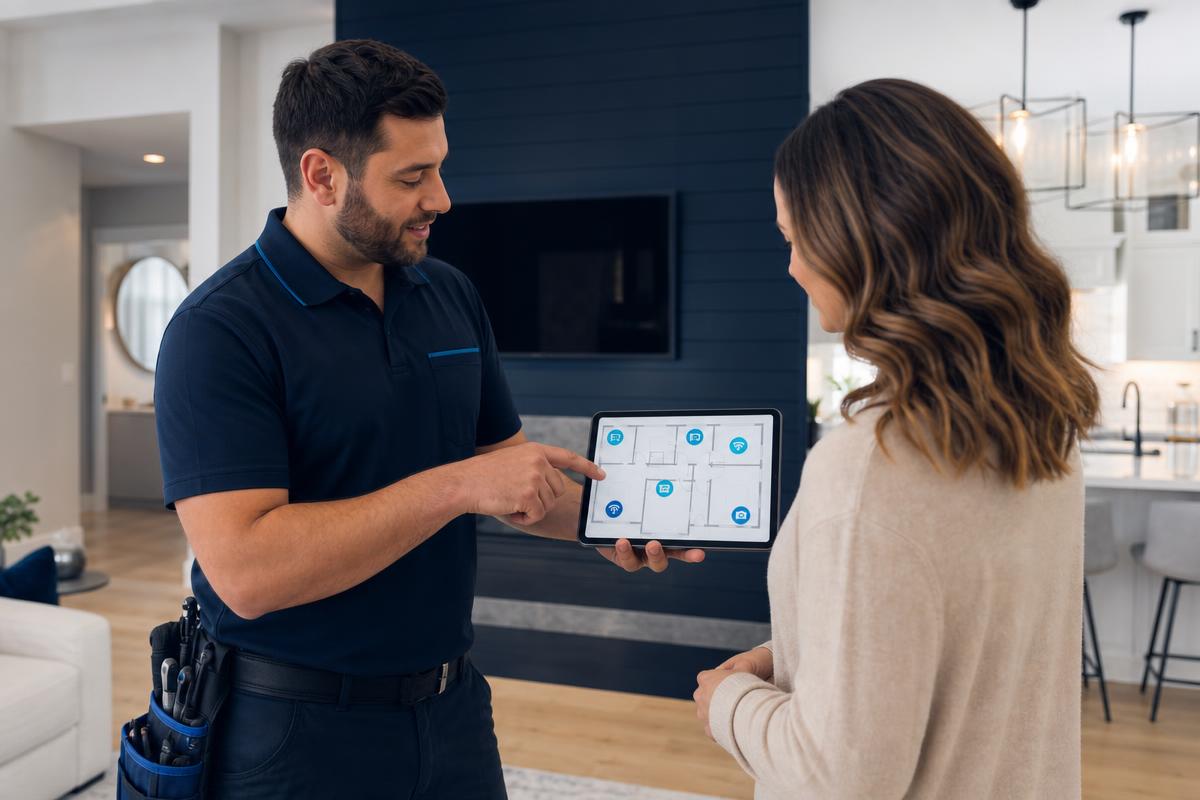
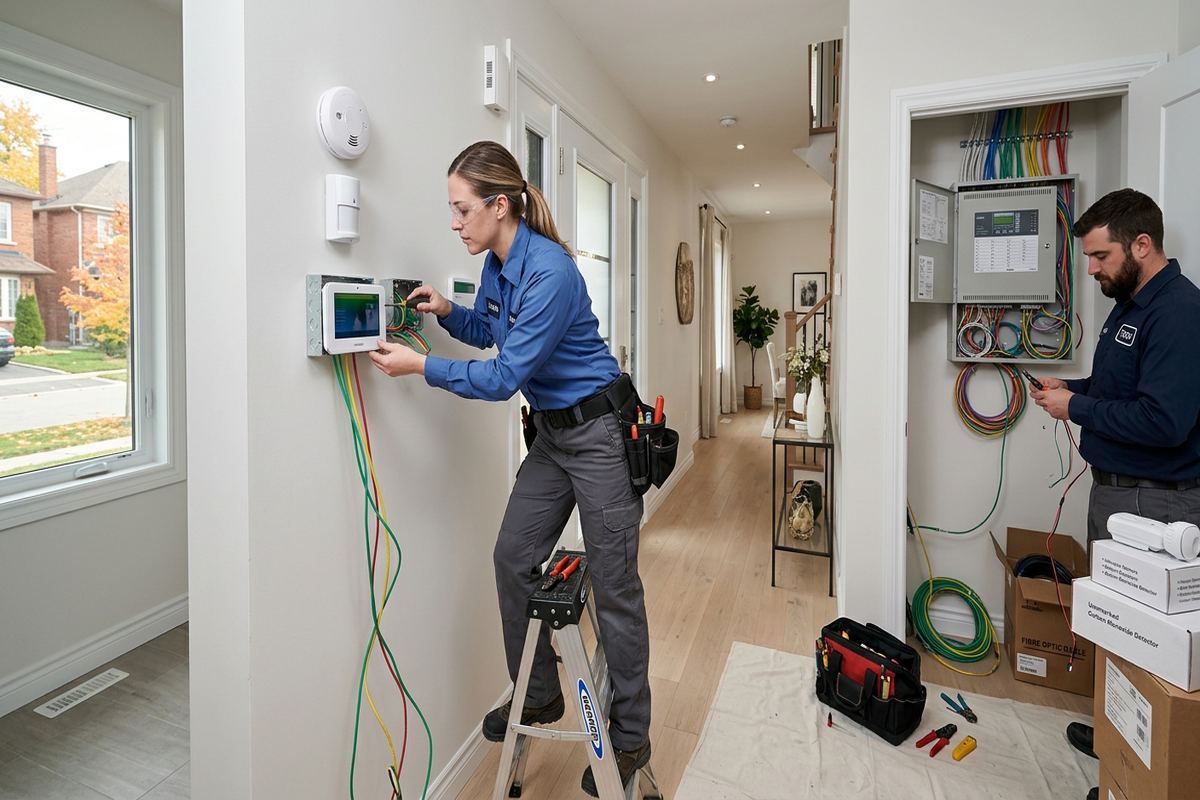
UnifiedLink installs home alarm systems across Caledon and surrounding Peel Region communities. We assess the property, identify practical detection points, plan cable routes and configure the system on site. Each project receives a written scope and documented handover, whether the property is a house in Bolton, a rural acreage near Palgrave or a newer home in Mayfield West.
Home Alarm Planning for Caledon Properties
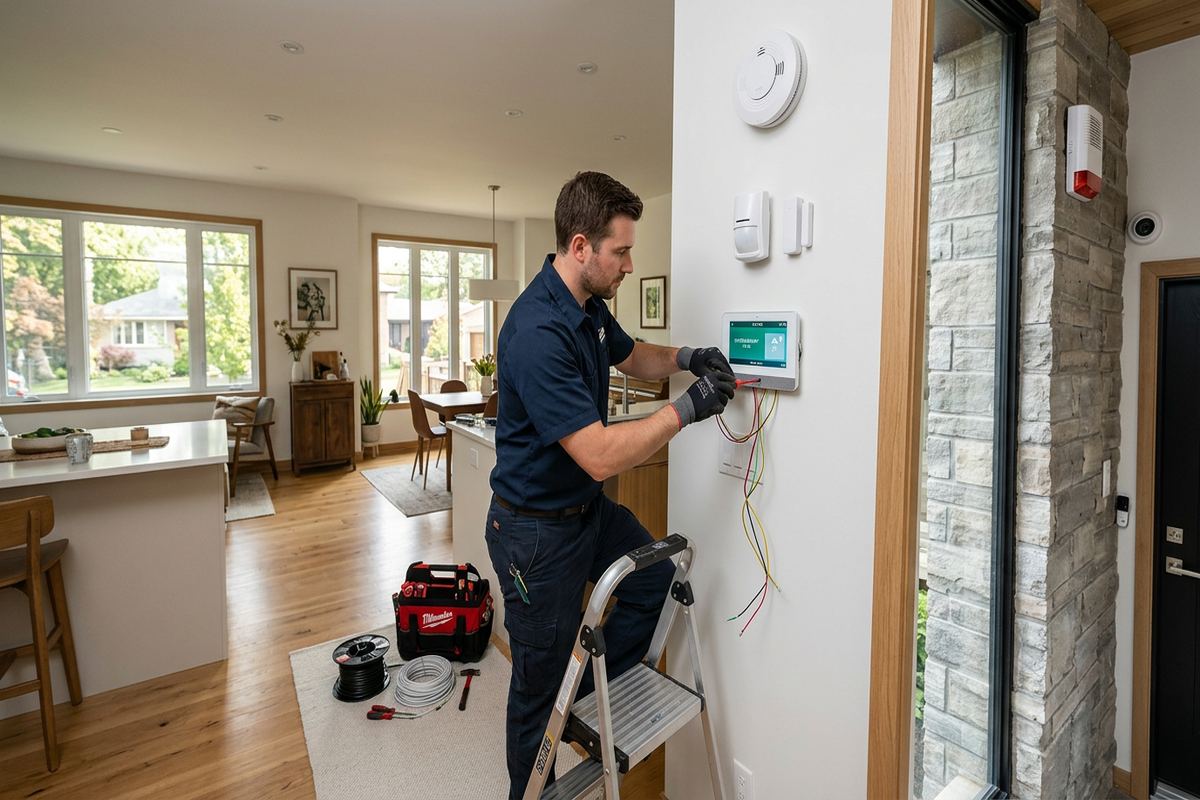
An effective alarm starts with the property layout rather than a standard equipment package. During a Caledon site assessment, we review exterior doors, accessible windows, attached garages, basement entries and the routes people normally use. We also discuss occupancy patterns, pets, detached structures and how the household wants to arm or disarm the system. This process helps determine whether door contacts, motion detectors, glass-break sensors, keypads, sirens or other devices are appropriate. Recommendations are based on practical detection coverage, installation access and the way each area is actually used.
Property types vary considerably between Bolton, Caledon East, Palgrave and the surrounding countryside. A compact subdivision home may need straightforward perimeter and interior detection, while a rural acreage can involve a long driveway, several entrances, a detached workshop and buildings beyond normal wireless range. The alarm design must account for those differences before equipment is selected. We assess communication paths, cable distances, available power and mounting locations. Where gate access or outdoor camera coverage is also being considered, those systems can be planned alongside the alarm without treating them as interchangeable forms of protection.
After the assessment, UnifiedLink provides a written scope describing the proposed equipment, device placement, cable routes and relevant exclusions. It also identifies equipment ownership and warranty terms, reducing uncertainty before installation begins. Pricing follows the site assessment because construction, distances and access can materially change the work involved. Homeowners can review the scope and ask for changes before work proceeds. This is particularly useful on larger Caledon properties, where a small change in an outbuilding location or communication route may affect trenching, wireless performance, power requirements or the overall system design.
- Door, window and interior detection planning
- Detached garage and outbuilding assessment
- Keypad, siren and control-panel placement
- Written scope before installation pricing
- Equipment ownership and warranty details
Choosing Alarm Devices for a Caledon Home
Alarm devices should match the opening, room and environmental conditions they monitor. Door contacts are commonly used on primary entries, patio doors, garage access doors and selected outbuilding doors. Motion detectors provide broader interior coverage, but their field of view, mounting height and relationship to pets, stairs, heating vents and direct sunlight require attention. Glass-break detection may suit rooms with larger areas of exposed glazing. We explain what each device detects, where coverage may be limited and how different layers work together, allowing Caledon property owners to make informed choices without filling every room with unnecessary hardware.
Wired, wireless and hybrid alarm systems each have practical uses. Existing houses may already contain reusable low-voltage cabling, although it must be inspected and tested rather than assumed serviceable. Wireless devices can reduce disruption where finished walls are difficult to access, while wired devices may be appropriate during renovations or where reliable cable routes are available. A hybrid panel can support both approaches. The decision depends on building construction, device distances, future plans and maintenance preferences. UnifiedLink does not select a format solely for convenience; the proposed arrangement must suit the property and provide manageable operation after handover.
Control equipment also needs a sensible location. The main panel should be protected from casual access while remaining serviceable, and keypads should be positioned where users can operate them without crossing unnecessarily large areas while the system is armed. Audible devices must be placed so alarm conditions can be heard without creating avoidable tampering risks. If cellular or internet-based communication is requested, signal conditions and network availability are reviewed at the site. Caledon’s rural areas can present different communication conditions from denser parts of Bolton or Mayfield West, so assumptions based on a city installation may not apply.
- Wired, wireless or hybrid system options
- Pet-aware motion detector placement
- Glass-break detection where appropriate
- Protected, serviceable panel locations
- Communication-path review at the property
Detection for Long Driveways and Outbuildings
Rural acreages often require decisions beyond the main house. A detached garage, barn, workshop or storage building may contain tools, vehicles or equipment, but distance and construction can complicate alarm coverage. Metal cladding, masonry walls and substantial separation can weaken wireless communication. Underground or overhead cable options may also be restricted by existing landscaping, driveways and utilities. We review each building individually, identify available power and determine whether it should be connected to the house system, assigned its own area or handled separately. The goal is dependable operation without suggesting that one device can cover every remote structure.
Long driveways create an early-awareness opportunity, but driveway notification is not the same as a building alarm. Vehicle detectors, gate contacts, intercoms and outdoor cameras may supplement an alarm by providing information before someone reaches the house. They require careful placement to limit nuisance activity from road traffic, snow movement, animals or routine deliveries. On Caledon properties with gate access, we can coordinate the alarm layout with access control or camera infrastructure where appropriate. Each system retains a clear function: the alarm detects configured conditions, while cameras provide visual context and gate equipment manages entry.
Outdoor and unheated locations require equipment selected for the actual environment. Temperature swings, moisture, dust and insects can affect devices that were designed only for conditioned indoor spaces. Caledon winters and repeated freeze-thaw cycles also place stress on exterior boxes, conduit joints, fasteners and cable entries. We use suitable mounting methods and seal penetrations to limit water entry while preserving required drainage and service access. Cable routes are protected from physical damage, snow-clearing activity and exposed edges where possible. Any limitations associated with an unheated or unusually remote building are documented in the proposed scope before installation.
- Detached-building communication assessment
- Gate and driveway device coordination
- Weather-suitable exterior mounting methods
- Protected routes for outdoor cabling
- Separate alarm areas where practical
Caledon, Ontario
Home alarm system installation in Caledon, scoped in writing first
Book a site assessment and get equipment, routes, exclusions, and warranty on paper before anything is installed.
Installing Alarms in Caledon Building Types
Installation methods depend heavily on how a building was constructed and altered. Older houses may contain plaster, finished basements, additions or concealed framing changes that restrict cable access. Newer frame construction can offer clearer routes, especially before walls are closed during renovation. Masonry buildings require different drilling, fastening and penetration methods than wood-frame walls. During the assessment, we identify practical routes through utility spaces, attics, basements and service chases. The aim is to place devices correctly while avoiding unnecessary surface wiring, although concealed installation cannot be promised where the structure provides no safe, accessible pathway.
Bolton and Caledon East include varied residential stock, while Mayfield West has many newer homes with different wiring and finishing conditions. Inglewood, Alton and Palgrave also include properties that have been expanded or converted over time. Existing alarm wiring may terminate in unexpected locations or use cable that is damaged, unlabelled or unsuitable for the proposed equipment. We test accessible conductors before including them in the design. Reusing sound cable can limit disruption, but new continuous labelled cable runs are installed where replacement or additional wiring is required. Hidden splices and undocumented shortcuts are avoided.
Condominiums, rental homes and properties with shared elements may require approval before drilling, running cable in common areas or mounting exterior devices. The homeowner, landlord, tenant or condominium corporation remains responsible for obtaining applicable permission. We can provide device locations and route information to support that process. Commercial strips and industrial units in Caledon may involve additional coordination with property managers, ceiling access rules or other contractors, even when the protected area includes a residential or mixed-use component. Approval requirements should be resolved before installation dates are confirmed, preventing avoidable changes after equipment and routes have been planned.
- Routes planned around finished surfaces
- Methods suited to masonry or framing
- Existing alarm cable testing
- Continuous labelled new cable runs
- Approval details documented before work
Caledon Alarm Installation and Configuration
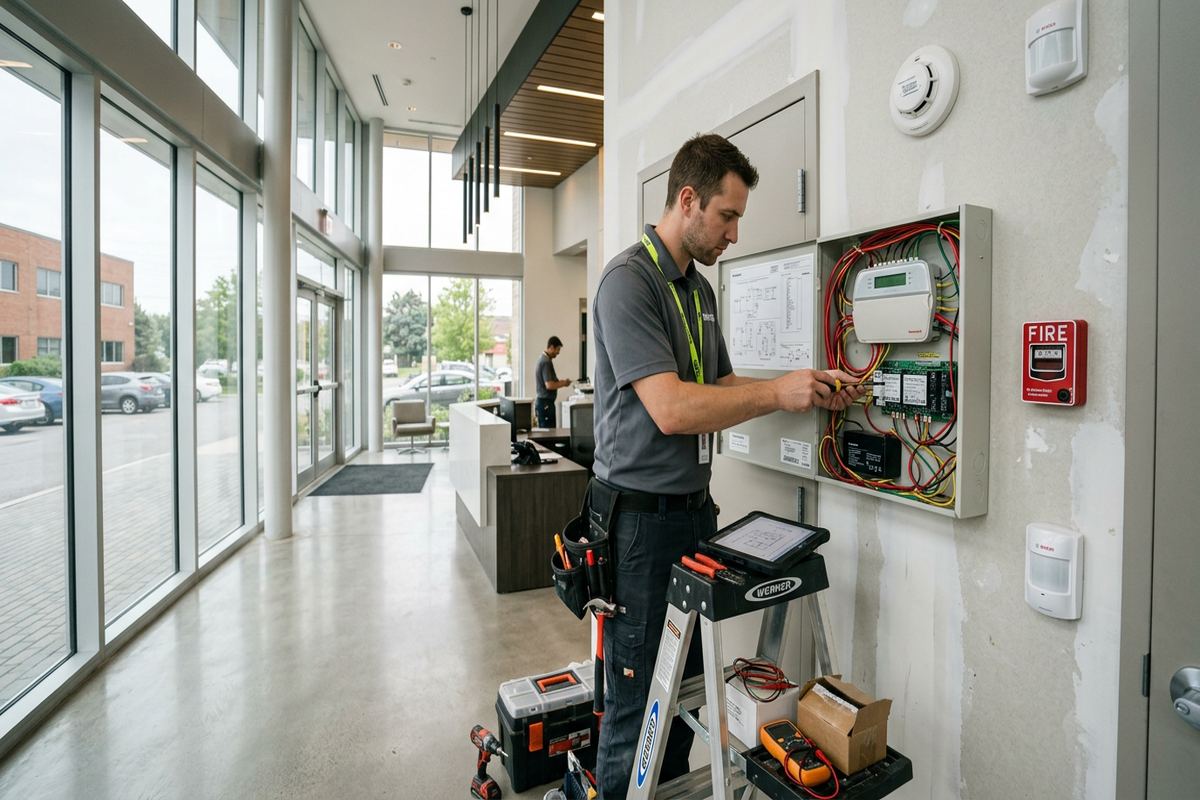
Once the approved scope is in place, installation follows the documented device positions and cable routes. Technicians mount contacts, detectors, keypads, sirens and control equipment using methods appropriate to the surface. New cable runs are continuous and labelled at service points to simplify testing and future maintenance. Penetrations are positioned carefully, and exterior entries are sealed using materials suited to the application. Work areas are kept organized, with device alignment and accessibility checked as installation proceeds. If site conditions reveal a route that cannot be used safely, the change is discussed rather than concealed behind an undocumented substitution.
Configuration is completed on site because device behaviour must reflect the finished installation. Zones are named clearly, entry and exit delays are reviewed, and applicable detector settings are adjusted for their locations. Separate areas can be configured when a garage, workshop or other space needs independent arming, provided the chosen system supports that arrangement. We also verify keypad operation, audible notification and the communication functions included in the scope. For Caledon households with several users, the operating plan should remain understandable; complexity that nobody can manage consistently can undermine an otherwise well-installed alarm system.
Testing includes opening protected doors and windows, activating detectors through controlled walk tests and confirming that zone descriptions correspond to physical locations. Where remote notifications or an app are included, connectivity and account access are checked with the customer. Alarm transmission to any separately selected monitoring service depends on that service, the communication path and the customer’s active agreement. We explain those boundaries during handover rather than presenting internet, cellular and monitoring services as infallible. Results, noted limitations and approved changes are reflected in the installation record so the completed Caledon system can be supported without relying on memory.
- Device installation to documented positions
- Zone names matched to actual locations
- Entry and exit timing configuration
- Functional testing before handover
- Changes recorded in the final documentation
Using and Maintaining Your Alarm System
A home alarm only helps when occupants understand how to use it. At handover, we demonstrate routine arming and disarming, review entry and exit behaviour, and explain how to identify the source of a trouble or alarm indication. The system is placed under the customer’s own credentials rather than an installer-controlled personal account. We also provide an as-built record showing the installed arrangement and relevant cable or device information. Household members should know which doors are designated for entry, how separate areas operate and whom to contact when a notification comes from a monitoring or communication service.
False alarms are often linked to user habits, unsecured openings, poorly placed objects or environmental changes rather than a panel defect. Furniture can block a detector, decorations can move in its field of view, and a door that no longer closes squarely may stop aligning with its contact. Seasonal movement is relevant in Caledon, where humidity changes and freeze-thaw conditions can affect exterior doors and detached structures. Users should investigate recurring events rather than repeatedly bypassing a zone. Clear zone names and the as-built record make it easier to identify the affected opening or room before requesting service.
Maintenance needs vary by equipment, power source and environment. Wireless sensors may report low batteries, while control panels commonly use standby batteries that eventually require replacement. Dust, renovations, new pets and changed room layouts can also affect detection performance. Exterior devices and cable entries should be inspected after building work or visible weather damage. We recommend periodic user tests in accordance with the equipment instructions and any monitoring-provider requirements. Before testing monitored functions, customers should follow the provider’s procedure to avoid unnecessary dispatch activity. Service findings and configuration changes should be documented so future troubleshooting begins with accurate information.
- Customer-controlled system credentials
- Operating demonstration at handover
- As-built device and cable record
- Guidance for routine user testing
- Documented service and configuration changes
Integrating Alarms with Cameras and Access
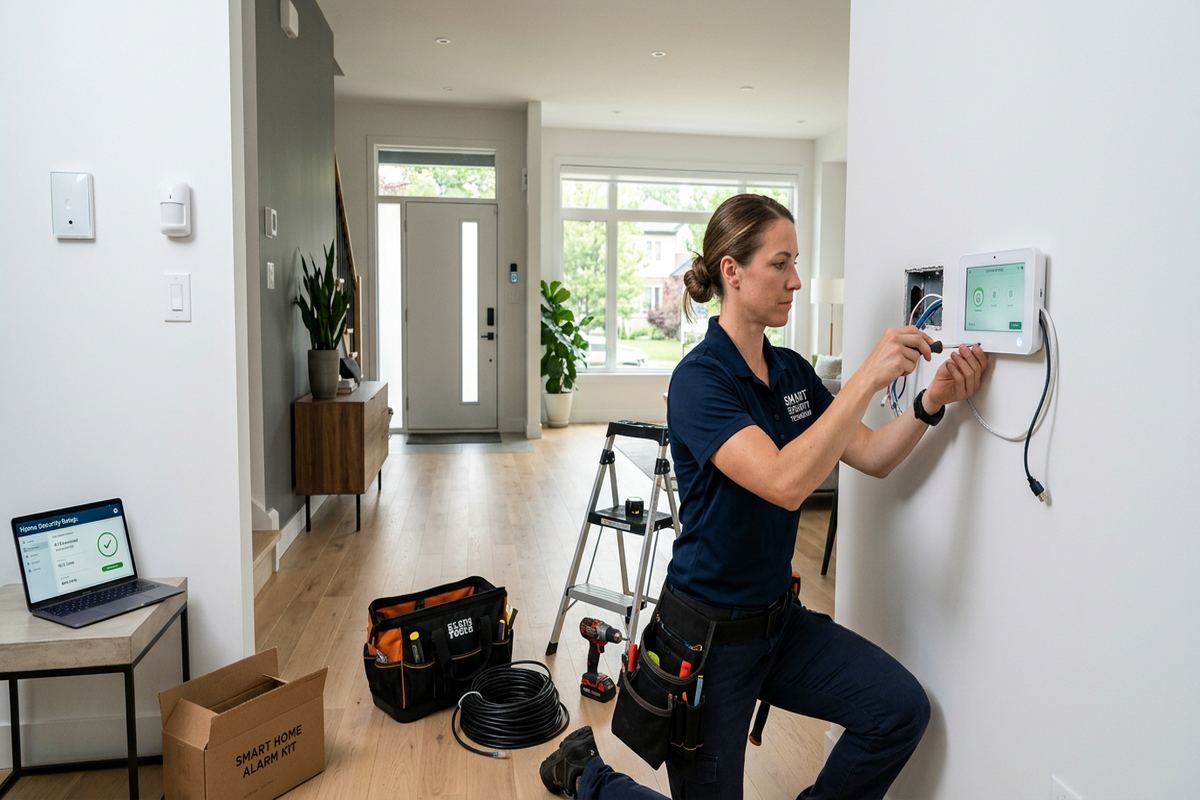
An alarm system can be coordinated with cameras, access control, intercoms or network infrastructure, but each component should have a defined role. Cameras can show activity at an entrance or outbuilding; they do not replace door contacts or interior detection. A gate system can manage authorized entry, but it does not confirm that every building opening is secure. During planning, we identify useful points of coordination without creating unnecessary dependence between systems. This approach is relevant to Caledon acreages, where the driveway, gate, house and workshop may be separated by distances that require shared conduit or carefully planned network links.
Outdoor camera coverage frequently comes up when assessing long driveways and detached buildings. Camera placement must consider identification goals, viewing direction, night lighting, seasonal vegetation and the distance to the subject. Mounting a camera high may reduce tampering but can produce a less useful facial view. Alarm events can sometimes support camera notifications or recording workflows, depending on compatible equipment and the agreed scope. We explain what integration can and cannot do. Network capacity, power availability and communications between buildings are assessed rather than assuming a household Wi-Fi signal will cover an entire rural Caledon property.
Planning related systems together can reduce duplicated cabling and poorly placed equipment. A structured route may carry separate alarm, network, camera or access-control cabling while maintaining appropriate separation and serviceability. Shared pathways do not mean that every system should share power, credentials or a single point of failure. UnifiedLink acts as one accountable contractor for the included low-voltage scope, coordinating device locations and documenting responsibility. If another provider handles monitoring, internet service or gate mechanics, those boundaries are identified. The customer receives a clearer record of what was installed, what remains external and who controls each account.
- Defined roles for alarms and cameras
- Gate and intercom planning where requested
- Network review for remote buildings
- Coordinated low-voltage cable pathways
- Clear responsibility for third-party services
Requesting Home Alarm Installation in Caledon
The first step is a conversation about the property and the conditions you want the alarm to detect. Useful details include the community, building type, number of entrances, presence of finished spaces, detached structures and any existing alarm equipment. Photographs or plans may help with initial context, but they do not replace a site assessment when routes and construction must be verified. Requests sent during business hours are answered the same day, while after-hours requests are answered the next business day. Site assessment timing depends on the service requirements and travel distance within Caledon or the surrounding area.
During the site visit, access should be available to the proposed panel location, utility areas, attic or basement routes where safe, and any garage or outbuilding included in the project. Let us know about pets, locked rooms, planned renovations, known hazardous materials or areas requiring special permission. If the property is rented, part of a condominium or subject to shared ownership, approval should be addressed early. For rural properties, information about underground services, private lanes, gates and snow-clearing patterns can help prevent unsuitable exterior routes or device positions. These details support a more accurate written scope.
UnifiedLink provides pricing after assessing the site and defining the work. The written scope covers equipment, routes, placement, exclusions, ownership and warranty, giving the customer a practical basis for approval. Installation includes on-site configuration, testing and handover under the customer’s credentials, together with an as-built record. Whether the project is in Bolton, Palgrave, Alton or another Caledon community, the process remains focused on the actual building and operating requirements. One accountable contractor manages the included alarm and low-voltage work, while responsibilities for internet, monitoring or other third-party services remain clearly identified.
- Same-day replies during business hours
- Site assessment before pricing
- Detailed written installation scope
- Customer credentials at handover
- One accountable low-voltage contractor
Caledon neighbourhoods we cover
- Bolton
- Caledon East
- Inglewood
- Alton
- Mayfield West
- Palgrave
Home alarm system installation in Caledon — common questions
Do I need a site assessment before receiving a price?
Yes. Caledon properties range from newer subdivision houses to rural acreages with long cable distances and detached buildings. A site assessment allows us to verify construction, device locations, communication conditions and practical cable routes. Pricing is then based on a written scope covering equipment, placement, routes, exclusions, ownership and warranty.
Can an alarm cover a detached garage or workshop?
Often, but the design depends on distance, power, construction and communication conditions. Metal siding, masonry and separation from the house can affect wireless performance. For a Caledon outbuilding, we assess whether wired connectivity, wireless equipment, a separate alarm area or an independent system is the practical approach.
Can you reuse my existing alarm wiring?
Existing wiring may be reusable if accessible testing confirms that it is in suitable condition and compatible with the proposed system. Older Caledon homes can contain unlabelled cables, concealed splices or wiring altered during renovations. We document usable conductors and install continuous labelled cable runs where new or replacement wiring is required.
Will the system work during an internet outage?
Local alarm functions may continue without internet, depending on the equipment and available standby power. App access, remote notifications or monitoring communication may be interrupted if they rely on the affected connection. Cellular communication can provide another path where supported, but coverage must be assessed, particularly on rural Caledon properties.
Do I need permission in a condo or rental property?
You may need written approval before drilling, changing wiring, entering shared spaces or mounting exterior devices. Requirements depend on the landlord, condominium corporation and affected common elements. Caledon tenants and condominium owners should confirm permission before installation. UnifiedLink can provide proposed device locations and cable-route information to support the approval process.
How quickly will UnifiedLink respond to my request?
Requests sent during business hours are answered the same day. After-hours requests are answered the next business day. The timing of a Caledon site assessment depends on the requested service and travel distance. Installation scheduling follows the assessment, written scope and customer approval, along with any required landlord or condominium permissions.
Coverage in Caledon is confirmed against the address before we quote. See everything we install in Caledon or the province-wide home alarm system installation page.