UnifiedLink installs wired and networked whole-home audio systems for houses, rural properties and small commercial spaces in Caledon. We plan speaker locations, cable routes, equipment storage, listening zones and controls around the building. Each project begins with a site assessment and ends with on-site configuration, customer-owned credentials and a practical as-built record.
Whole-Home Audio Planning for Caledon Properties
A useful whole-home audio system starts with how rooms are actually used, not with a fixed speaker count. During a Caledon site assessment, we review listening areas, ceiling construction, preferred control methods, equipment locations and possible cable paths. Kitchens may need even coverage without excessive volume, while family rooms may combine music with television sound. Bedrooms, offices, garages and patios can operate as separate zones. This planning establishes where speakers belong, which areas should share controls and how the system can remain understandable for everyone in the household.
Caledon properties range from newer subdivisions to renovated houses, rural acreages and buildings with additions completed at different times. Construction can therefore change from room to room. Open framing may permit straightforward cable routes, while finished basements, insulated exterior walls, masonry fireplaces or inaccessible ceiling cavities require another approach. We inspect these conditions before recommending equipment. Where concealed wiring is impractical, we discuss surface raceway, strategic access points or networked alternatives rather than assuming walls and ceilings can be opened without consequence. The written scope identifies the agreed routes and any finishing exclusions.
Room acoustics also influence the design. Hard floors, large windows and open stairwells can make sound carry farther than expected, while soft furnishings and irregular layouts absorb it. Instead of treating volume as the solution, we consider speaker dispersion, spacing and orientation. In larger Caledon homes, several moderate-output speakers often provide more consistent coverage than a small number driven loudly. The design can also separate quiet areas from entertaining spaces, allowing one person to listen in the kitchen while another uses a different source in an office or workshop.
- Room-by-room listening and control review
- Speaker placement based on coverage
- Practical cable-route assessment
- Written scope before installation
Wired Speakers, Streaming and Audio Zones
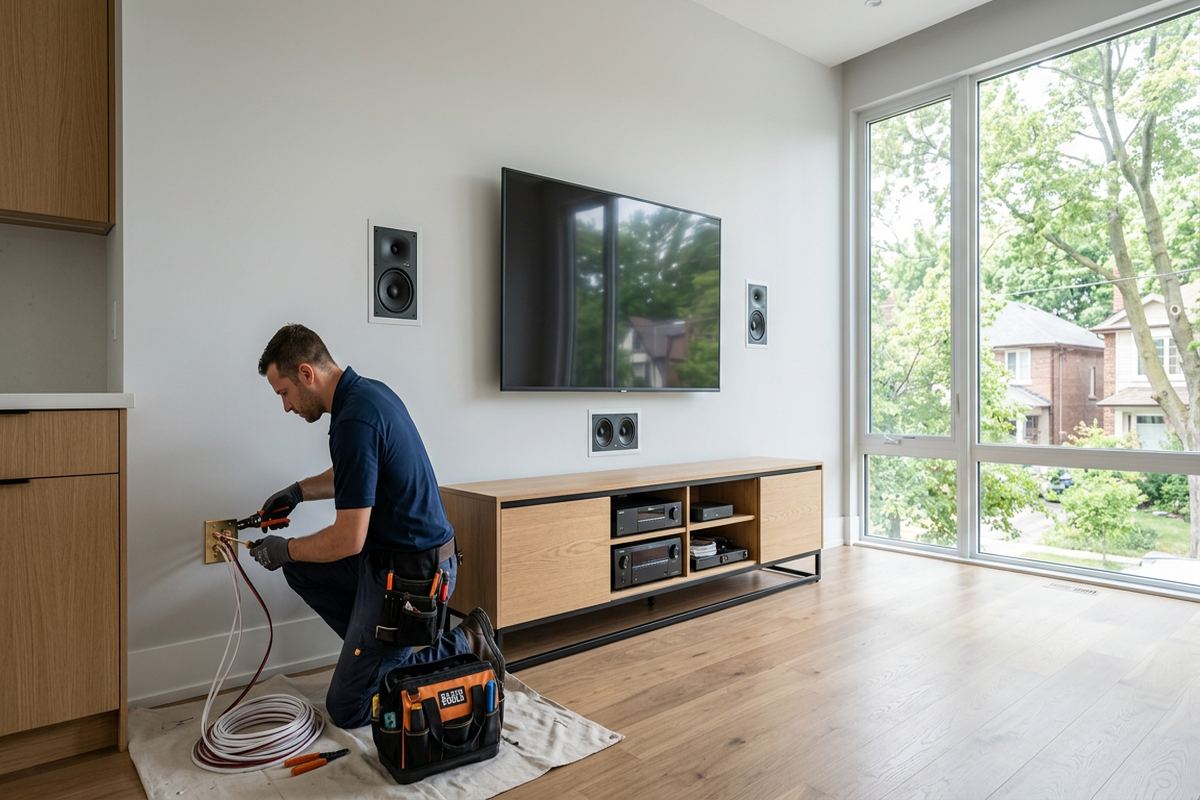
Whole-home audio can use ceiling speakers, in-wall speakers, surface-mounted models or a combination suited to the building. Wired speakers remain a practical choice for permanent rooms because amplification and source equipment can be kept in an accessible central location. Streaming interfaces then provide everyday control from phones, tablets or wall-mounted controls. We match the architecture to the number of zones, expected listening levels and preferred sources. The objective is not to add unnecessary hardware, but to build a system that starts reliably and does not require a complicated sequence each time music is played.
A zone is an area with its own source selection or volume control. One zone may cover a kitchen and breakfast area, while another serves a living room, patio or primary bedroom. Grouping zones allows synchronized playback during gatherings, and separating them prevents sound from carrying through the entire building when only one room is occupied. For Caledon families, detached garages and outbuildings may need independent operation rather than always following the house. Cable distance, network connectivity, grounding and the availability of conditioned indoor equipment space all affect how those remote zones should be connected.
Source compatibility needs to be settled before equipment is selected. Households may use subscription streaming services, locally stored music, television audio, radio or turntables, and not every platform supports every source in the same way. We confirm the intended services and control devices during planning. Where television sound is included, we also review delay, input switching and whether the room needs distributed music, dedicated surround sound or both. Clear decisions at this stage reduce duplicated equipment and help ensure that common functions remain accessible without relying on an installer account.
- Independent or grouped listening zones
- Ceiling, in-wall and surface speakers
- Streaming and local-source integration
- Central or distributed amplification options
Speaker Placement in Bolton and Mayfield West
Homes in Bolton and Mayfield West can include open-concept main floors, finished basements and multi-purpose rooms where visual alignment matters as much as sound coverage. Speaker positions should coordinate with lighting, joists, HVAC registers, sprinklers and ceiling features. We locate framing and review reflected ceiling layouts before making openings. In a kitchen, speakers must avoid being masked by tall cabinetry or concentrated directly above one work area. In a basement, low ceilings and bulkheads may require smaller speakers or carefully placed surface models to maintain coverage without creating an awkward pattern.
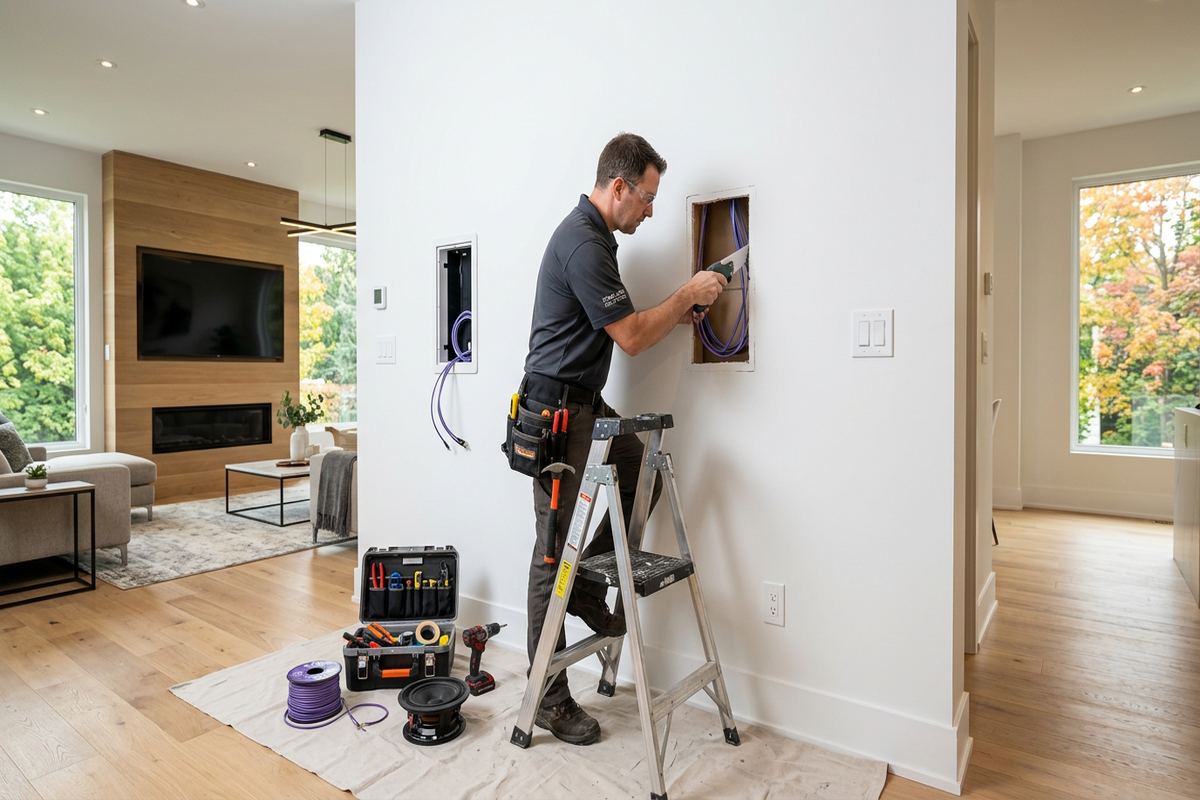
Renovations provide the easiest opportunity to install concealed speaker, control and network cabling, but finished homes can often be wired with limited access openings. Routes may use basements, attics, closets or aligned wall cavities, depending on fire blocking and insulation. Every route is reviewed on site rather than promised from drawings alone. UnifiedLink installs continuous labelled cable runs between planned termination points, avoiding hidden joins that complicate later service. If patching, painting or specialist carpentry is required, the written scope identifies whether that work is excluded or coordinated separately before installation begins.
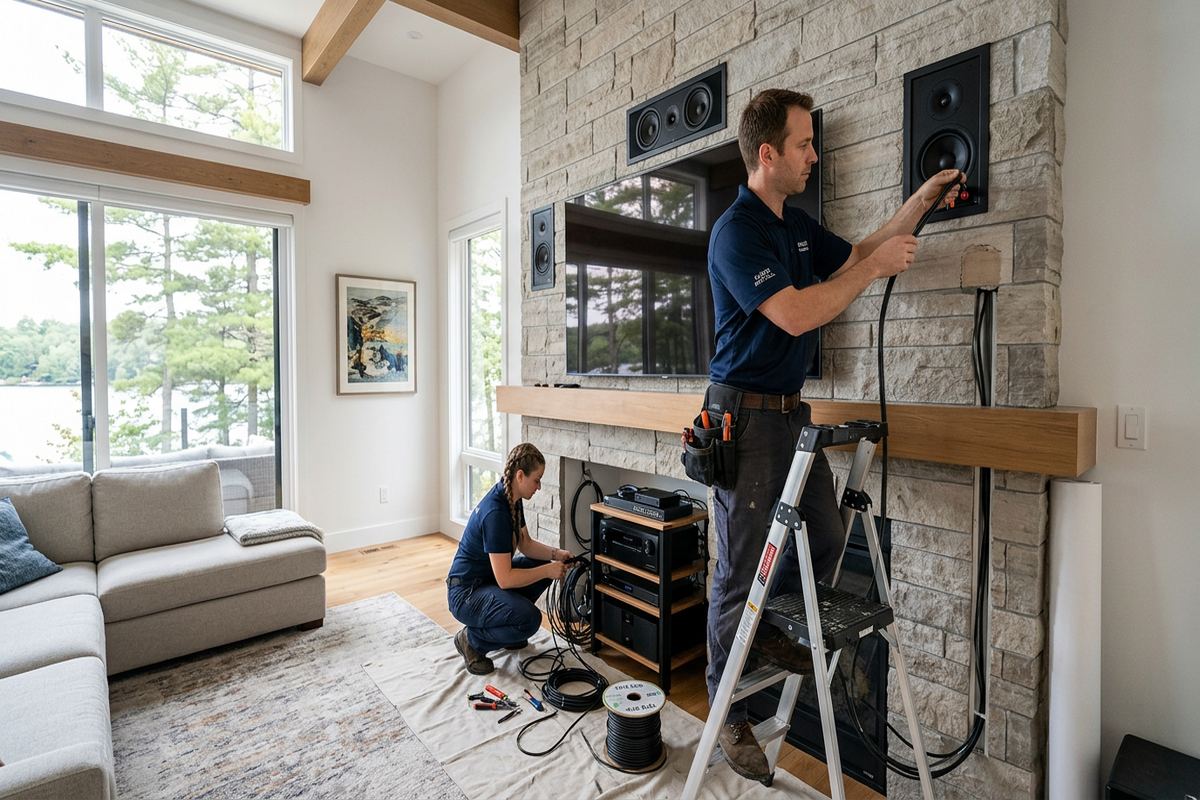
Speaker depth and back clearance are important in both newer and older construction. A ceiling position that looks suitable from below may contain ductwork, plumbing, wiring or engineered framing. Vapour barriers and insulated cavities require particular care because unnecessary penetrations can affect air sealing. We confirm suitable locations before cutting and use mounting methods appropriate to the surface. For masonry walls, the approach differs from frame construction and may involve surface mounting or planned chases. The final layout balances sound, access and the building envelope instead of prioritizing appearance at the expense of performance.
- Coordination with lights and HVAC
- Framing and cavity checks before cutting
- Continuous labelled cable runs
- Layouts suited to finished spaces
Caledon, Ontario
Whole-home audio installation in Caledon, scoped in writing first
Book a site assessment and get equipment, routes, exclusions, and warranty on paper before anything is installed.
Outdoor Audio for Caledon Acreages
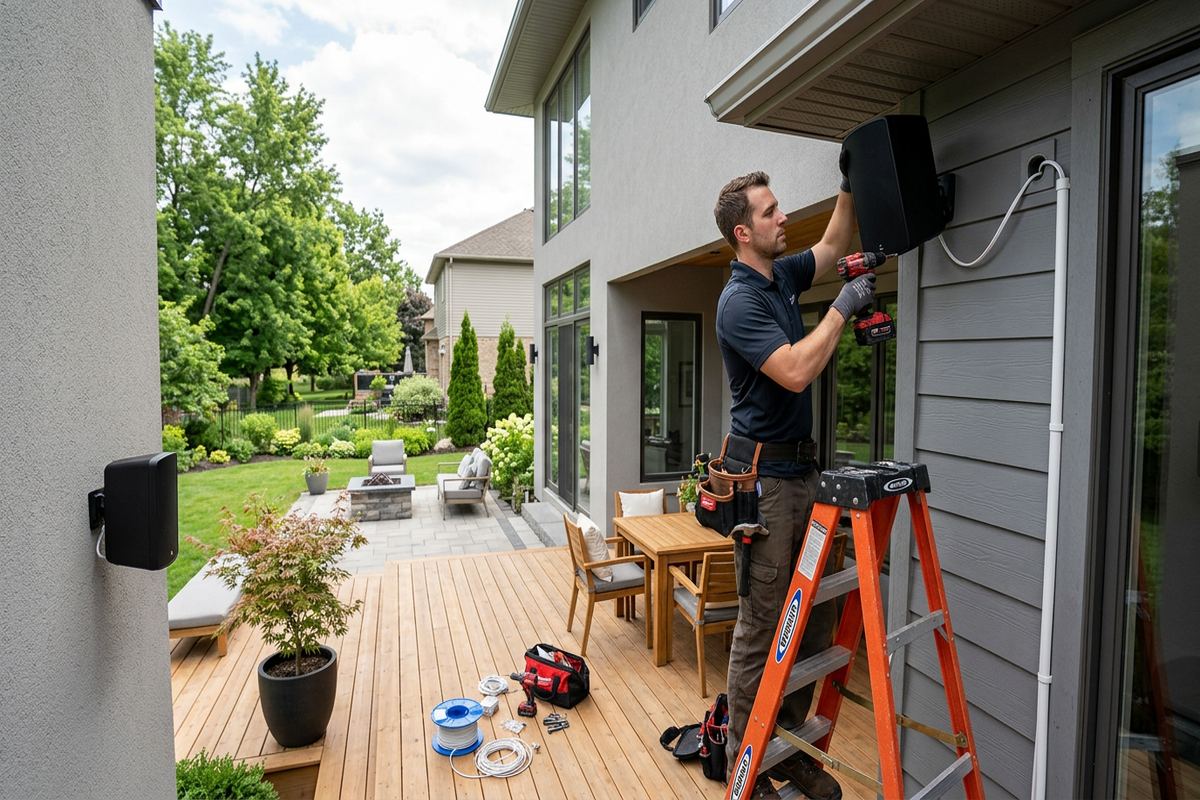
Outdoor listening areas in Caledon need equipment and installation methods chosen for seasonal exposure. Covered porches, open patios, pools, gardens and detached structures do not present the same conditions. Speakers under a deep overhang receive less direct moisture than units mounted on an exposed wall, yet both face temperature changes, condensation and wind-driven precipitation. We select locations that support useful coverage while limiting unnecessary exposure. Mounting height and direction also matter because sound should remain near the intended area rather than carrying toward neighbouring properties or across a quiet rural lot.
Freeze-thaw cycles can expose weak exterior details. Cable entries must be placed, supported and sealed so water does not collect around the penetration or follow the cable indoors. Fasteners and mounting surfaces are chosen with the substrate in mind, whether the wall is brick, concrete, siding or wood framing. Exterior cable also needs suitable protection from sunlight, physical damage and movement. We avoid treating sealant as a substitute for correct routing. Drip loops, weather-resistant fittings and accessible junction points help create an installation that can be inspected and serviced as conditions change.
Long driveways and outbuildings common around Caledon often raise questions about extending both audio and the supporting network. A barn, workshop or detached garage may be beyond a practical passive speaker-cable distance from the main equipment. In those cases, a local amplifier and network connection may provide better control and serviceability. Gate access and outdoor camera coverage also come up often on these properties, so shared pathways and equipment locations should be coordinated without mixing incompatible cabling or power. One planned low-voltage route can reduce duplicated trenching while keeping each system properly separated.
- Weather-aware speaker locations
- Sealed exterior cable penetrations
- Coverage directed toward listening areas
- Outbuilding and patio zone planning
Audio Cabling and Equipment Locations
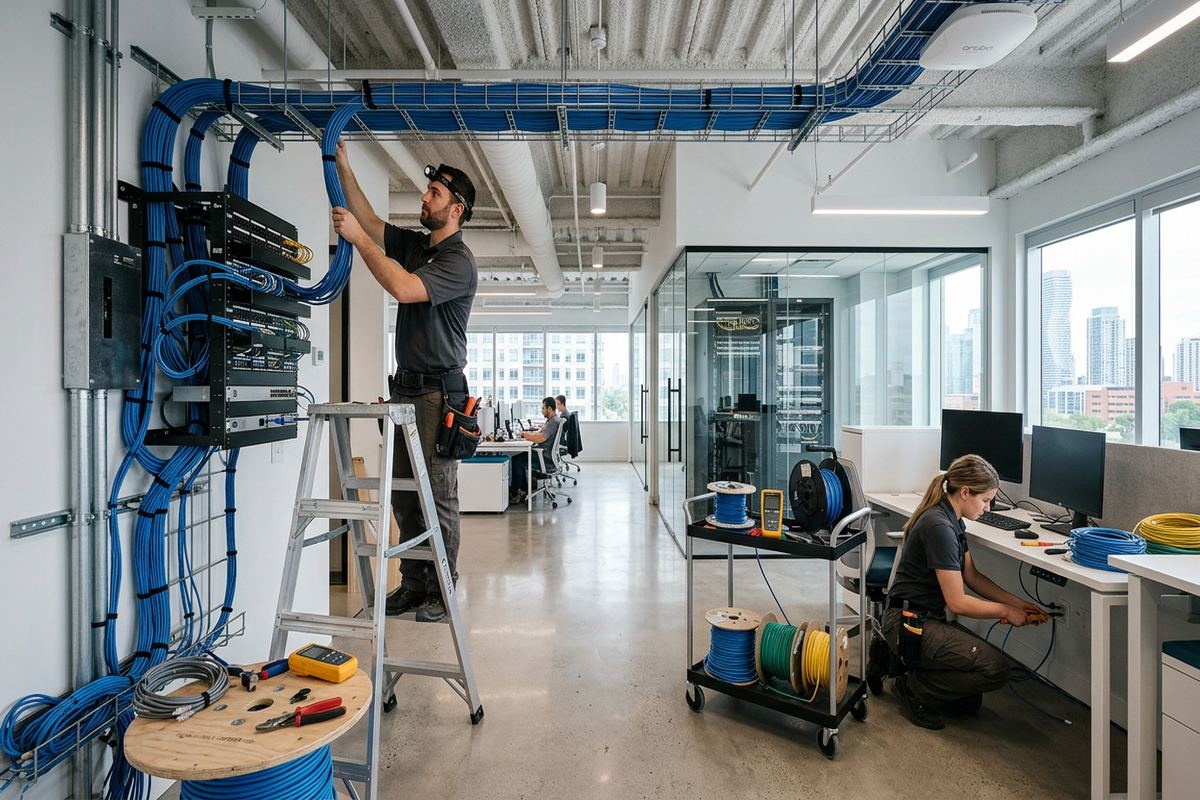
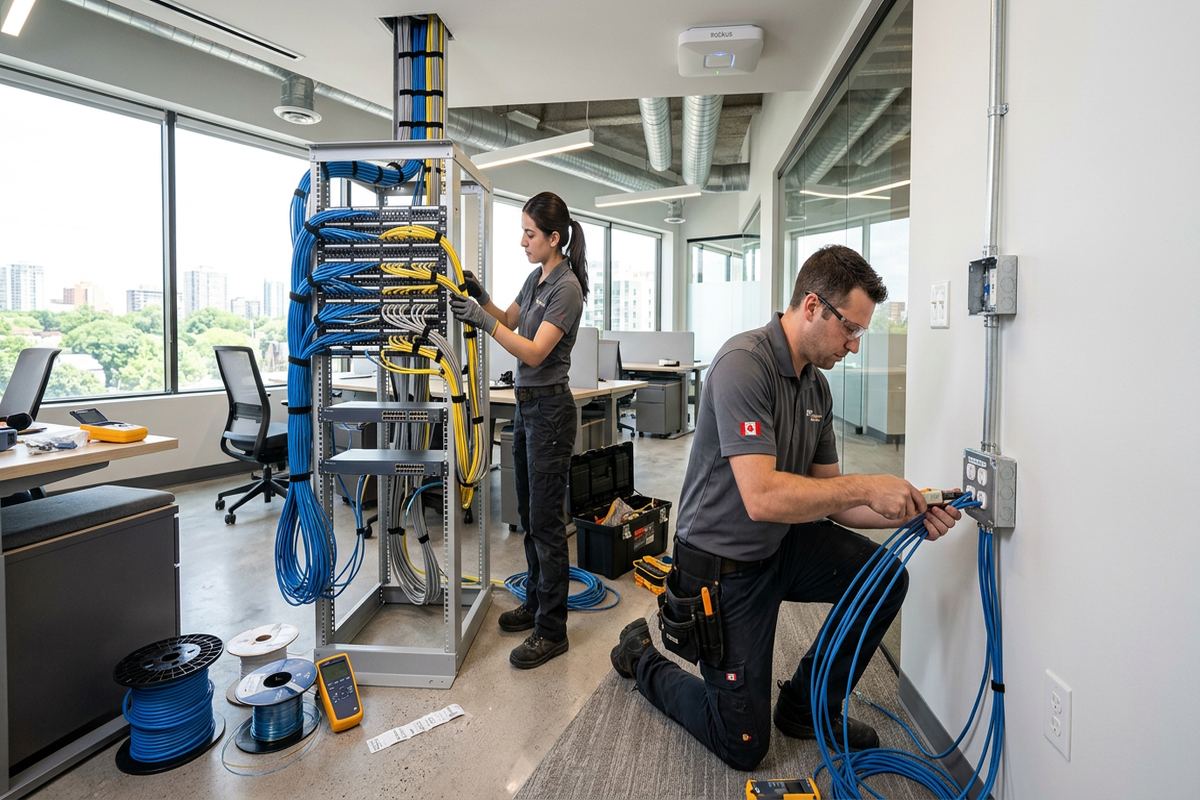
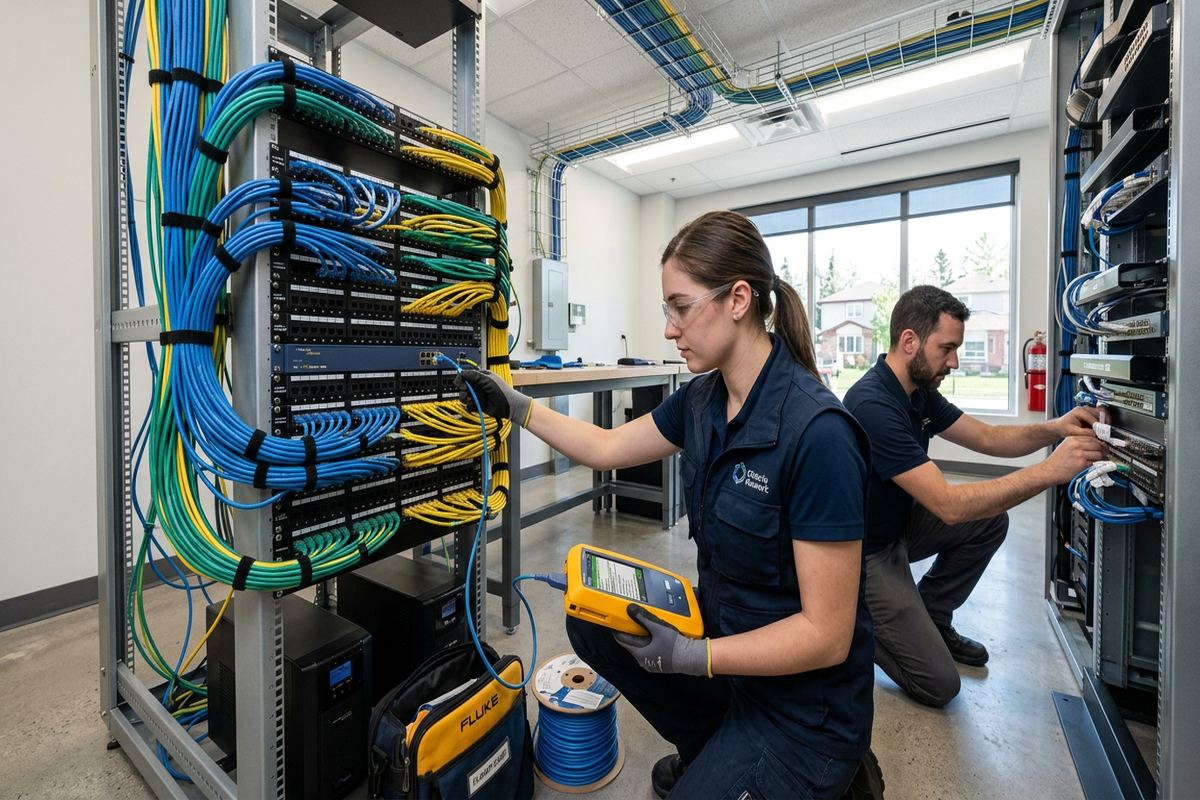
Cabling is the permanent foundation of a distributed audio system. Speaker wire must be sized for the run length, load and amplifier arrangement, while network cabling supports streaming devices, controllers and connected equipment. We plan home runs or approved zone layouts according to the selected system rather than improvising after walls are closed. Cables are supported, kept away from likely sources of interference and labelled at both ends. Each continuous run terminates at an accessible speaker, wall plate or equipment location, creating a system that another technician can understand without tracing undocumented joins.
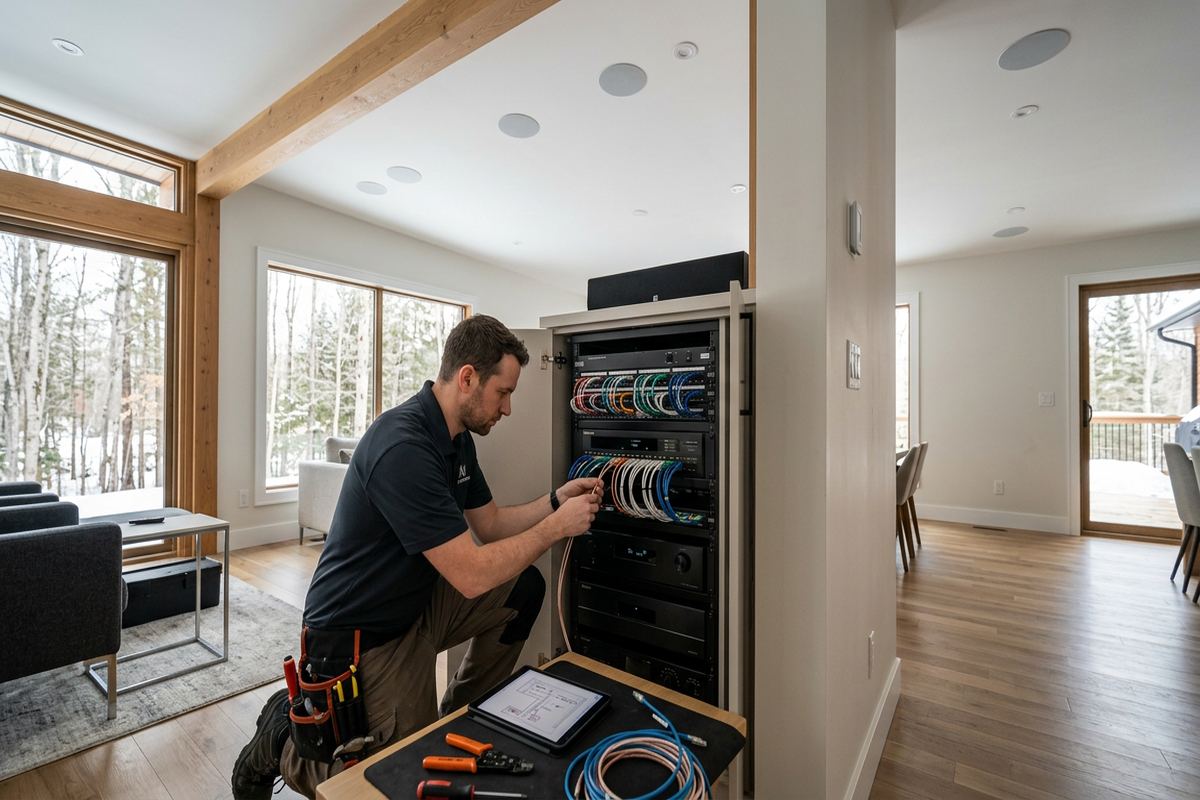
The main equipment location needs ventilation, power, network access and enough working clearance for connection and future service. Hiding amplifiers in a sealed cabinet can cause avoidable heat problems, while placing them in an exposed garage may subject electronics to dust and temperature swings. In Caledon houses with mechanical rooms or dedicated racks, we review access and environmental conditions before committing to the space. Equipment ownership is stated in the written scope, including any customer-supplied components. This avoids confusion about which devices are installed permanently and which items remain part of another provider’s service.
Existing wiring may be reusable, but it must be inspected rather than assumed to be suitable. Unlabelled cables, shared conductors, concealed volume controls and unknown splices can affect impedance or make troubleshooting difficult. We identify accessible terminations, test relevant runs and document limitations before connecting new amplifiers. In older houses around Inglewood, Alton or established parts of Bolton, prior renovations may have left several generations of cabling behind. Reuse can reduce disruption when the cable is appropriate, yet replacing a questionable run is often more dependable than building a new system around uncertain infrastructure.
- Cable sized for system design
- Labels at both cable ends
- Ventilated, serviceable equipment placement
- Existing-wire inspection and testing
Controls and Network Setup in Caledon
A modern audio system depends on the local network for source access, discovery and control, even when speakers themselves are wired. During installation, we confirm that audio components can communicate reliably where they are located. Large Caledon properties may have multiple wireless access points, thick masonry sections or detached buildings that complicate device discovery and roaming. Audio equipment should not be used to conceal a weak network design. If coverage or switching needs improvement, we identify the required network work separately and coordinate it with the audio scope so responsibilities remain clear.
Control should fit the people using the system. Phone applications are convenient, but they are not always the only useful interface. Physical volume controls, keypads or clearly assigned television remotes may be appropriate in regularly used rooms, guest areas or short-term rental spaces. We configure zone names that correspond to actual locations and remove ambiguous default labels. Access is established with the customer’s own credentials, not a permanent installer-owned account. This gives the owner direct control over subscriptions, household members, security settings and future changes after the project has been handed over.
On-site configuration includes source testing, zone grouping, volume checks and confirmation that normal controls operate as intended. We do not tune the system solely for one seat if the room is meant for general background listening. Instead, levels are checked across practical occupied areas, with adjustments made for balance and usable range. Network-connected components receive appropriate names and are recorded in the as-built information. Where internet service is interrupted, some streaming functions may be unavailable, so we explain which local inputs or controls remain usable and which features depend on external services.
- Customer-owned system credentials
- Clear room and zone names
- Network connectivity checked on site
- Everyday controls tested at handover
Renovations, Rentals and Commercial Spaces
Renovation sequencing affects both cost and finish quality. Before insulation and drywall, cable routes can be installed with fewer compromises and photographed for reference. After finishes are complete, access is more restricted and openings must be planned carefully. We coordinate speaker rough-ins with electrical, HVAC, cabinetry and ceiling work, while maintaining the boundaries of low-voltage installation. In additions or converted spaces, construction may transition from masonry to frame walls, requiring different fastening and routing methods. A written scope keeps those details visible to the owner and other trades before each stage proceeds.
Tenants, condominium owners and landlords should confirm alteration permissions before speaker openings, cable pathways or exterior mounting begins. While detached homes are common in Caledon, some properties have condominium rules, shared elements or lease terms that limit permanent changes. We can provide a proposed device layout and routing description for the approval process, but the property owner or authorized representative remains responsible for obtaining permission. Where penetrations are prohibited, surface-mounted speakers or less invasive networked options may be considered. Approval requirements should be resolved before equipment is ordered or installation dates are finalized.
Whole-home audio methods can also suit professional offices, commercial strips and light industrial units, although the operational priorities differ from a residence. A Bolton storefront may need controlled background music in customer areas without speakers in staff-only rooms. An industrial unit may need paging or durable surface-mounted speakers rather than discreet ceiling models. Business owners must also consider music licensing and source terms independently of the installation. We define zones, operating controls and equipment access around authorized staff, then document what the audio system includes and what remains outside the low-voltage scope.
- Pre-wire coordination during renovations
- Layouts suitable for approval requests
- Background audio for customer areas
- Clear residential and commercial scope boundaries
Caledon Installation, Testing and Handover
Every project begins with a site assessment before pricing. The visit confirms room dimensions, construction, cable access, equipment storage, network conditions and the intended listening experience. Site assessment timing depends on the service and travel distance. Requests sent during business hours are answered the same day, while after-hours requests are answered the next business day. After the assessment, the written scope covers equipment, cable routes, device placement, exclusions, equipment ownership and warranty. This gives Caledon property owners a defined basis for reviewing the installation before work proceeds.
Installation follows the accepted scope, with changes discussed when concealed conditions differ from what could reasonably be observed. Speakers are mounted securely, cable runs are labelled and equipment is connected in accessible locations. We test each channel for correct operation and polarity, confirm zone controls, and inspect penetrations and exterior seals included in the work. Where several systems share a rack or pathway, connections remain organized and identifiable. UnifiedLink acts as one accountable contractor for the agreed audio work, rather than leaving the owner to coordinate separate cabling, mounting and configuration providers.
Handover is focused on practical operation rather than a demonstration that disappears once the installer leaves. We show how to select sources, group or separate zones, adjust volume and reach the relevant settings. The system is handed over using the customer’s own credentials, along with an as-built record describing installed devices, cable destinations and equipment locations. We also identify warranty information covered by the scope and note any customer-supplied products. Owners in Caledon can then manage ordinary use directly and have a clear technical reference if the property is renovated, expanded or serviced later.
- Site assessment before pricing
- Written equipment and routing scope
- Channel and control testing
- Credentials and as-built record supplied
Caledon neighbourhoods we cover
- Bolton
- Caledon East
- Inglewood
- Alton
- Mayfield West
- Palgrave
Whole-home audio installation in Caledon — common questions
Can you install audio in a finished Caledon home?
Yes, depending on available cable routes and the construction of the house. Basements, attics, closets and aligned wall cavities may provide access with limited openings. Masonry, insulation, fire blocking and finished ceilings can restrict concealed routes. We assess the property first, then document proposed pathways and any patching, painting or specialist finishing work that is outside the installation scope.
Will outdoor speakers withstand Caledon winters?
Outdoor equipment must be selected and mounted for its actual exposure. Caledon winters, moisture and freeze-thaw cycles make location, fastening, cable protection and penetration sealing important. Covered and fully exposed areas require different approaches. We use weather-aware routing and mounting methods, but no exterior product is maintenance-free. Accessible connections and periodic inspection help identify seal or mounting issues before they affect the building.
Can the house and outbuilding play different music?
Yes. A detached garage, workshop or other Caledon outbuilding can be configured as an independent zone, provided suitable power, amplification and connectivity are available. Long distances may favour a local amplifier connected through the property network instead of long passive speaker runs. The site assessment considers distance, cable pathways, environmental conditions and whether trenching can be coordinated with other low-voltage services.
Do I need strong Wi-Fi for whole-home audio?
Most streaming systems need reliable network connectivity for control and online sources, even when the speakers use dedicated wire. Larger Caledon homes, masonry walls and rural outbuildings may require multiple access points or wired network links. We check connectivity around proposed equipment locations. If network improvements are needed, they are identified separately so the audio system is not expected to compensate for weak or inconsistent coverage.
Can existing speakers or wiring be reused?
Existing equipment may be reused when it is compatible, serviceable and appropriate for the new design. We inspect accessible speaker wiring, identify terminations and test relevant runs before connecting an amplifier. Older Caledon homes and renovated properties may contain hidden splices, unusual volume controls or unlabelled cables. Any limitations, customer-owned components and replacement recommendations are documented in the written scope before installation.
Do I need landlord or condominium approval?
Approval may be required for permanent speaker openings, shared-wall pathways, exterior mounting or work affecting common elements. Caledon tenants and condominium owners should check lease terms and property rules before installation. We can prepare a proposed layout and routing description, but the owner or authorized representative must obtain permission. If alterations are restricted, surface-mounted or less invasive options can be reviewed during the site assessment.
Coverage in Caledon is confirmed against the address before we quote. See everything we install in Caledon or the province-wide whole-home audio installation page.