UnifiedLink installs televisions above and around fireplaces in Caledon homes and commercial spaces. We assess wall construction, fireplace heat, viewing height, bracket requirements, power and cable routes before pricing. The installation includes secure mounting, on-site configuration and a documented handover using your own credentials.
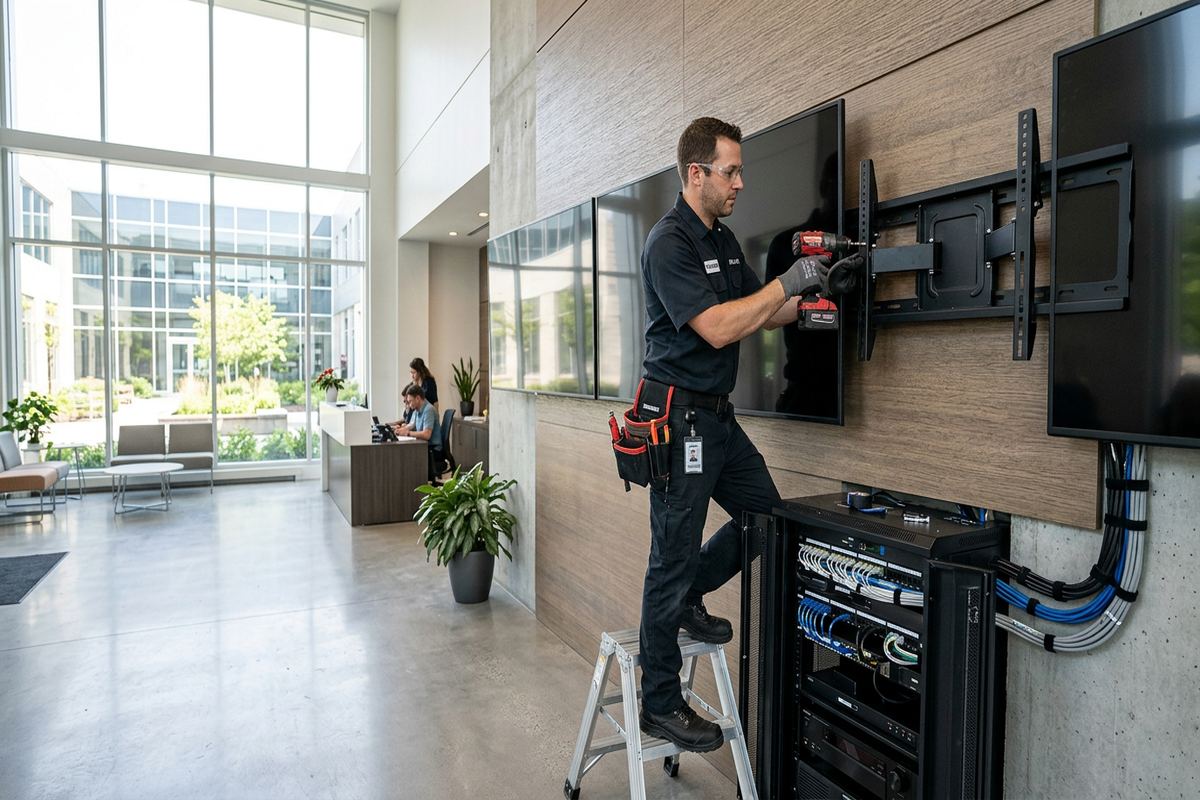
Fireplace TV Mounting Planning in Caledon
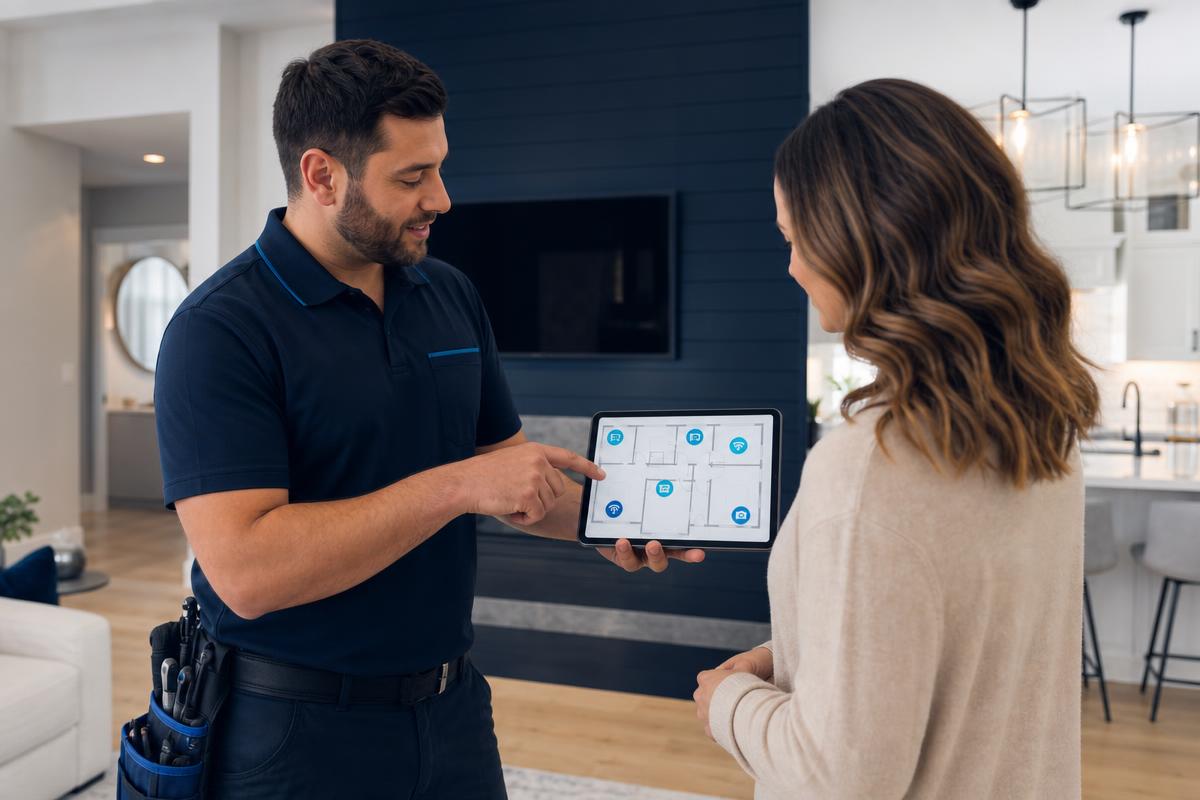
Mounting a television over a fireplace requires more planning than attaching a bracket to an ordinary interior wall. The installer must identify the wall structure, fireplace type, mantel projection, expected heat path and practical viewing position. In Caledon, houses range from older masonry buildings to newer frame construction, custom rural homes and renovated farm properties. Each presents different fastening and cable-routing conditions. UnifiedLink begins with a site assessment before pricing, allowing the proposed installation to reflect the actual fireplace, television, wall assembly and connected equipment rather than relying on assumptions or a generic mounting method.
The first assessment considers whether the proposed position is suitable for comfortable viewing and reliable equipment operation. A television placed too high can be uncomfortable from normal seating, while a screen installed close to rising heat may experience unsuitable operating conditions. We review manufacturer guidance for the television and fireplace, inspect the mantel or surround, and discuss how the room is used. If the requested location presents a concern, we explain the issue and consider alternatives such as an adjacent wall, a lower position, a projecting mantel or a suitable adjustable mounting system.
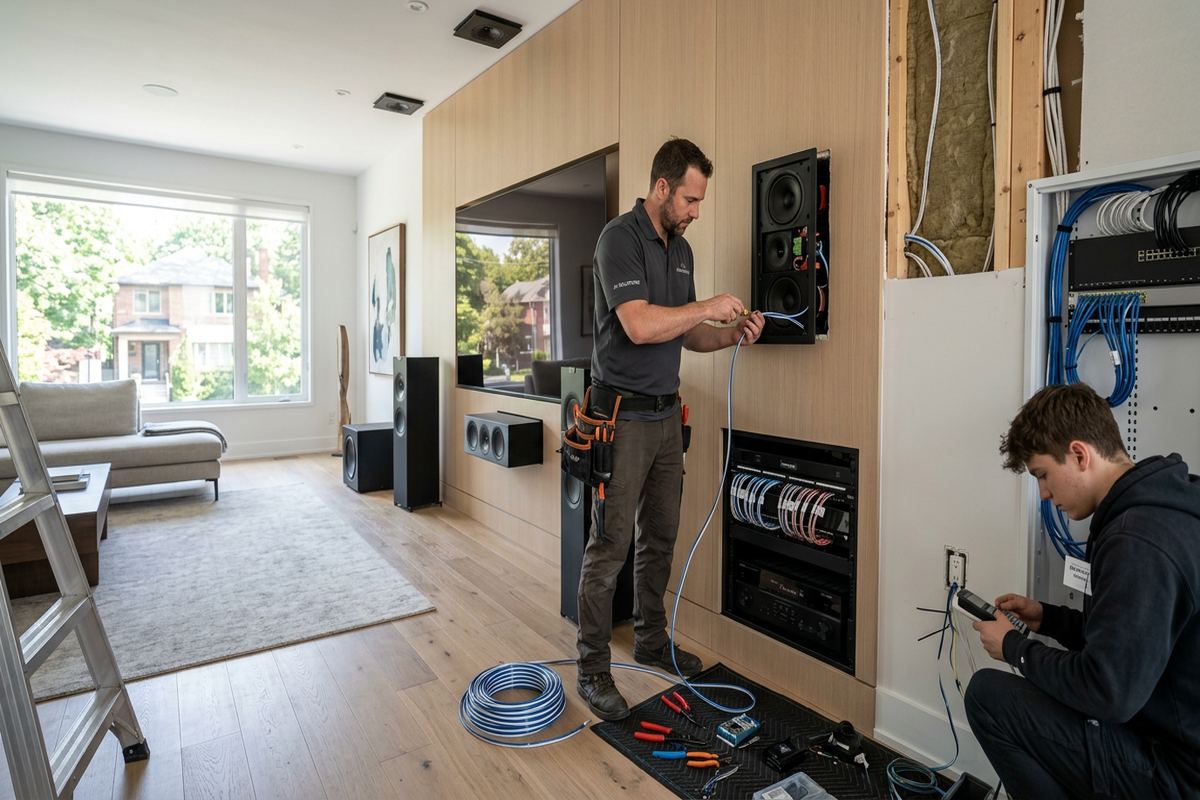
Planning also covers the equipment that must connect to the display. Streaming devices, receivers, soundbars, game systems and network connections all affect cable requirements and component placement. Some equipment can sit in nearby cabinetry, while other devices may need a recessed enclosure or a ventilated location. The written scope identifies equipment, device placement, proposed cable routes, exclusions, equipment ownership and warranty details. Caledon customers therefore know what will be mounted, what will remain visible and what preparation may be needed before installation begins.
- Fireplace type and heat path review
- Television height and sightline planning
- Bracket and fastener selection
- Connected-device placement
- Written scope before installation
Heat, Clearance and Viewing Height in Caledon
Fireplace heat does not behave identically in every room. Fireplace design, fuel type, insert configuration, mantel depth, fan operation and chimney layout can influence temperatures around a proposed screen location. Before mounting, we review accessible documentation and assess the area under realistic operating conditions where practical. We do not cover vents, service panels or required fireplace access. The television manufacturer’s environmental and clearance guidance remains important because heat exposure can affect performance and service life, even when the wall above the fireplace feels acceptable during a short visual inspection.
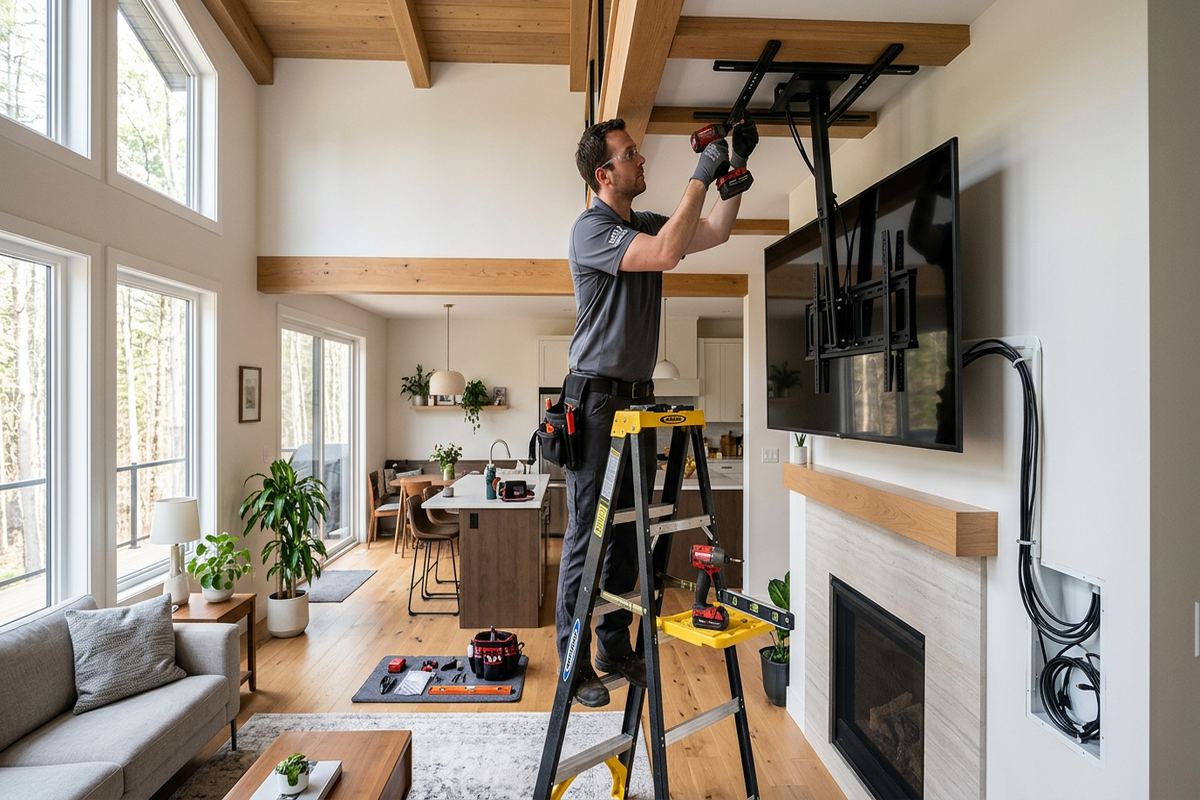
Viewing height deserves equal attention because fireplace installations naturally push screens upward. Room depth, sofa position, reclining seats and screen size determine whether that height is workable. A fixed bracket provides a close, simple installation when the sightline is already suitable. Tilting hardware can reduce reflections or improve the angle, while a purpose-designed pull-down bracket may bring the television forward and lower for viewing. We explain the movement, clearance and handling requirements of each option without assuming the most complex bracket is automatically the right one for a Caledon living room.
Seasonal operation can change the installation environment. Caledon winters often mean regular fireplace use, while the same unit may be inactive during a summer assessment. We ask how frequently the fireplace operates and whether it is a primary heat source, occasional feature or electric display. Temperature cycling can also expose weaknesses in unsuitable adhesives, loosely supported cables or poorly planned component enclosures. Secure mechanical fastening, appropriate cable support and adequate ventilation help create an installation that remains orderly as the fireplace and surrounding room move through normal heating seasons.
- Manufacturer guidance reviewed
- Mantels and vents kept clear
- Fixed, tilting or pull-down options
- Seating sightlines considered
- Seasonal fireplace use discussed
Mounting on Masonry and Frame Walls
Wall construction determines how the bracket must be supported. In frame homes, fastening should reach suitable structural framing or purpose-built backing rather than relying only on finished drywall. Stud spacing, fireplace framing and hidden flues can limit where anchors may safely go. Renovated properties may also contain layered finishes, patched openings or non-standard framing. UnifiedLink uses appropriate detection and inspection methods, but inaccessible conditions can still require a controlled exploratory opening. Any such work is discussed before proceeding, including who is responsible for patching, painting or other finish restoration outside the agreed scope.
Masonry fireplaces introduce different challenges. Brick, concrete block, stone veneer and full-depth stone do not accept the same anchors or drilling methods. Mortar joints, uneven faces and brittle decorative materials require careful evaluation, while a veneer may not provide structural support by itself. The bracket must transfer the television load to a suitable substrate without damaging the visible surround. Older properties in Inglewood or Alton may have construction details that are not obvious from the room, so the assessment focuses on both the finish material and what is likely to support it behind the surface.
Custom homes and rural acreages around Palgrave and Caledon East may combine timber framing, large stone surrounds, tall ceilings and built-in millwork. These features can complicate access behind the wall and make cable concealment more involved than the mounting itself. We plan drilling locations around trim, hearth materials and fireplace components, then confirm that the bracket can operate without striking stone projections or cabinet doors. Where concealed backing cannot be verified, the written scope records the proposed approach, assumptions and any conditions that could require a revised mounting location.
- Structural substrate identified
- Masonry-specific drilling and anchors
- Veneer limitations checked
- Hidden framing considered
- Finish-restoration responsibilities documented
Caledon, Ontario
Fireplace TV mounting in Caledon, scoped in writing first
Book a site assessment and get equipment, routes, exclusions, and warranty on paper before anything is installed.
Concealed Cabling for Caledon Fireplace Displays
A clean fireplace installation depends on an achievable cable route, not simply hiding loose leads behind the television. Power, HDMI, network, antenna and audio cables have different purposes and installation requirements. We inspect available wall cavities, nearby receptacles, cabinetry, basements and adjacent rooms before proposing a route. Continuous labelled low-voltage cable runs are used where new cabling forms part of the scope. Power work is kept distinct from low-voltage pathways, and any electrical changes requiring another qualified trade are identified rather than concealed within an unsuitable improvised solution.
Routing behind a fireplace can be restricted by masonry, fire-resistant assemblies, chimney components or tightly framed cavities. In those cases, alternatives may include a surface raceway, a route through adjacent millwork, access from a basement, or equipment placement in a nearby cabinet. The most concealed option is not always the least disruptive or most serviceable. For Caledon properties with finished lower levels or substantial stonework, we compare visible finish, drilling risk and future access so the customer can choose a practical route with understood limitations.
Long rural driveways and outbuildings are common in Caledon, and many properties already have network, camera or gate-access equipment distributed through the home. A fireplace television may therefore need dependable wired networking or integration with an existing equipment area rather than another isolated wireless device. We can assess whether a network cable, streaming connection or shared audio path should be included. The scope remains focused: unrelated gate access or outdoor camera work is not assumed, but coordinated cable planning can prevent duplicated pathways and congested equipment locations.
- HDMI and network routes planned
- Continuous labelled low-voltage runs
- Power and signal pathways separated
- Surface raceway options available
- Existing equipment locations considered
Brackets, Soundbars and Connected Equipment
Bracket selection starts with the television’s mounting pattern, weight, screen dimensions and the supporting wall. It also considers the desired movement and the space needed for plugs behind the screen. A low-profile fixed bracket can create a tidy result but may leave limited hand access. Tilting and articulating brackets need additional depth and must clear mantels, stone edges and nearby millwork throughout their movement. Pull-down systems introduce more mechanical travel and require suitable wall support. We confirm compatibility rather than selecting hardware based only on advertised screen size.
Soundbars can be mounted to the wall, attached to compatible television hardware or placed on a mantel when heat, clearance and acoustics permit. The right position depends on screen movement, bracket design, soundbar dimensions and access to controls. A soundbar attached to an articulating television follows the screen, while a wall-mounted unit remains stationary. We also consider cable slack, connector strain and whether an audio return connection is supported by the television and soundbar. Configuration and basic operational testing are completed on site within the agreed scope.
Streaming boxes and other source devices require accessible power, signal connections and ventilation. Hiding every component directly behind a fireplace-mounted television may produce heat, wireless or service-access problems. Equipment can sometimes be located in adjacent cabinetry and controlled through compatible wireless or remote-control systems. In Bolton homes with built-in family-room cabinets, or commercial settings with a nearby equipment closet, a short organized route may be preferable to crowded recessed storage. Customer-supplied devices are reviewed for compatibility, and ownership of all supplied equipment is recorded in the written scope.
- VESA pattern and load confirmed
- Bracket movement checked for obstructions
- Soundbar mounting coordinated
- Devices kept accessible and ventilated
- Connector strain reduced
Installation Day in Caledon
Before drilling begins, the installer confirms the agreed television position, bracket height and cable route with the customer. Floors, hearth surfaces and nearby furniture are protected as required for the work area. The wall is checked again for likely framing, masonry conditions and hidden services, then the bracket is levelled and mechanically secured to the approved substrate. The television is lifted using handling appropriate to its size and design. If site conditions differ materially from the assessment, work pauses so the revised method, visible impact and scope can be discussed.
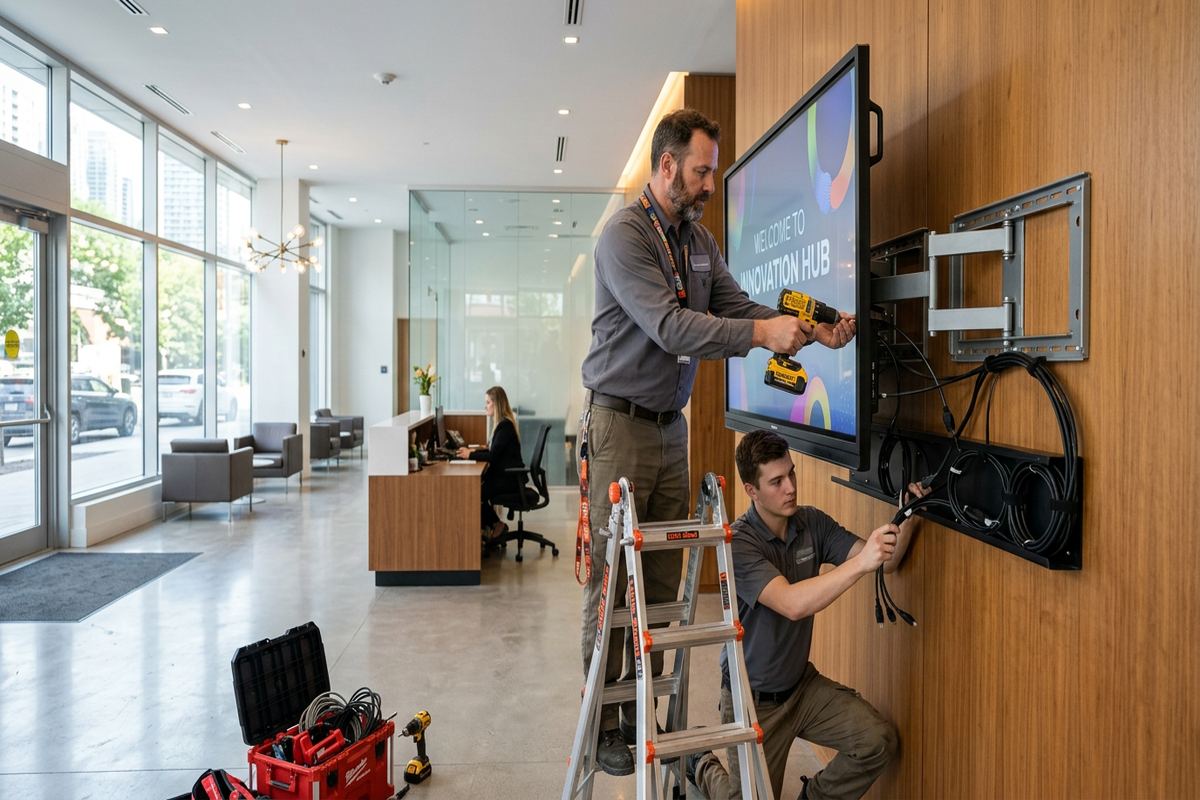
Cable installation follows the planned route, with low-voltage runs supported and labelled at their endpoints. Connections are arranged to avoid sharp bends, pinched leads and interference with bracket movement. Where the screen tilts or extends, adequate service loops are provided without leaving cables visible from normal viewing positions. The installer then connects scoped devices, checks input switching and verifies network connectivity where applicable. Packaging removal, wall repair or disposal is handled only as stated in the scope, preventing assumptions about tasks that may require separate materials or trades.
Handover is completed using the customer’s own accounts and credentials. UnifiedLink can assist with on-site configuration, but customers retain control of streaming, network and device access rather than receiving shared installer credentials. We demonstrate bracket movement, input selection and any soundbar or remote functions included in the work. The customer also receives an as-built record describing installed equipment and relevant cable routes. For Caledon properties with several buildings or distributed systems, clear records make future troubleshooting and additions easier for the owner or another authorized contractor.
- Final position confirmed before drilling
- Work surfaces protected
- Cables supported and labelled
- Customer-owned credentials used
- As-built record provided
Homes, Rentals and Commercial Spaces
Fireplace television mounting is common in detached homes, but approvals can matter in condominiums, rentals and managed properties. A tenant should obtain landlord authorization before drilling, opening walls or changing fixed wiring. Condominium owners may need to follow rules concerning common elements, noise, working hours or fireplace alterations. We can describe the proposed work for an approval request, but the property owner or occupant remains responsible for securing permission. The scope can also separate permanent mounting work from removable equipment so responsibilities remain clear at move-out.
Caledon’s mixed property character includes newer development in Mayfield West, established homes in Bolton, rural residences and converted older buildings. New construction may provide framing or conduit intended for a display, although its exact route and capacity still need verification. Older homes can contain plaster, masonry, renovations and concealed conditions that make exploratory work more likely. Rural properties may have additions completed at different times, creating transitions between framing types. The assessment identifies visible evidence and develops a mounting plan without pretending that every hidden condition can be known in advance.
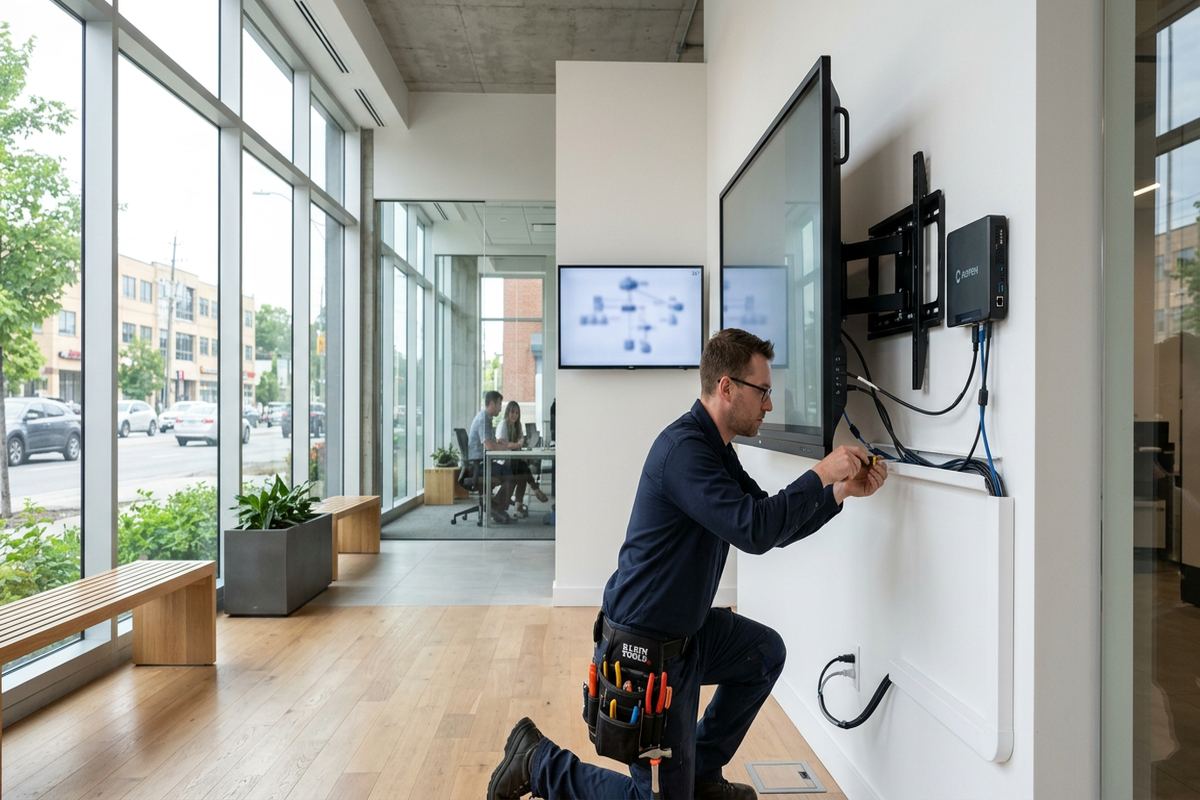
Commercial strips and industrial units may use fireplace-style feature walls in reception areas, restaurants, showrooms or staff spaces. These installations can involve longer daily operating periods, digital signage sources, scheduled power control or restricted access outside customer hours. Mounting must also account for public interaction, cleaning and service access. UnifiedLink provides one accountable contractor for the display, bracket and scoped low-voltage connections. Any work outside that scope, including required electrical changes, wall reinforcement or finish repairs, is identified so it can be coordinated with the appropriate party.
- Landlord approval considered
- Condominium rules reviewed
- Older and newer construction assessed
- Commercial operating needs discussed
- Other trades identified when required
Weather and Exterior Considerations in Caledon
Some Caledon properties include covered patios, screened rooms or outbuildings where owners want a display near an outdoor fireplace. These locations need a separate assessment from an indoor living-room installation. A roof does not necessarily prevent wind-driven moisture, condensation, dust or extreme temperatures from reaching equipment. The television, bracket, connectors and enclosure must be suitable for the actual exposure. Indoor-rated equipment should not be treated as weatherproof simply because it sits beneath an overhang, and installation decisions must follow the applicable product guidance.
Freeze-thaw cycles can affect exterior masonry, penetrations and sealants. Water entering an inadequately sealed hole may expand when frozen, contributing to material damage or loosening around a mounting point. Exterior cable entries should be positioned, formed and sealed to shed water while remaining serviceable. Stone veneer and brick must be assessed for structural suitability rather than used automatically as the load-bearing surface. In exposed rural settings, wind can also place additional force on a screen and articulating bracket, making placement and hardware selection particularly important.
Long driveways, detached garages and outbuildings may create practical access considerations for an appointment. Customers should advise us about gate controls, parking limits, animals, seasonal road conditions or building access when requesting an assessment. Requests sent during business hours are answered the same day, while after-hours requests are answered the next business day. Site assessment timing depends on the service and travel distance. Once conditions are understood, the written scope sets out the mounting approach, cable route, exclusions, ownership and warranty information before pricing is finalized.
- Outdoor equipment suitability checked
- Penetrations planned to shed water
- Freeze-thaw exposure considered
- Wind loading discussed
- Gate and outbuilding access confirmed
Caledon neighbourhoods we cover
- Bolton
- Caledon East
- Inglewood
- Alton
- Mayfield West
- Palgrave
Fireplace TV mounting in Caledon — common questions
Can any television be mounted above a fireplace?
Not automatically. The television’s manufacturer guidance, fireplace configuration, mantel, heat path, wall structure and viewing height all matter. For a Caledon installation, UnifiedLink assesses these conditions before pricing. If the proposed position is unsuitable, we explain why and discuss options such as another wall, a different bracket, adjusted placement or changes coordinated with another qualified trade.
How do you know whether fireplace heat is safe?
We review accessible fireplace and television documentation, inspect vents and clearances, discuss normal fireplace use and assess the proposed screen area under realistic conditions where practical. Caledon’s winter heating patterns make seasonal use important to discuss. No brief test can replace manufacturer requirements, so the mounting plan respects documented operating limits and keeps required fireplace access and ventilation unobstructed.
Can you hide the wires behind stone or brick?
Sometimes, but the route depends on what sits behind the visible masonry. Full-depth brick, stone veneer, chimney components and framed cavities require different approaches. In Caledon homes with substantial fireplace surrounds, a concealed route may require controlled access or may carry unnecessary finish risk. Alternatives include adjacent cabinetry, basement access or a neat surface raceway. The proposed route is documented before installation.
Do I need a special pull-down fireplace bracket?
A pull-down bracket can improve viewing when a fireplace forces the television high, but it is not required for every room. The wall must support the bracket and television through the full range of movement. We compare seating position, mantel clearance, screen size and handling needs. Fixed or tilting hardware may be more appropriate where the Caledon room already has a workable sightline.
Can you mount a soundbar with the television?
Yes, when the soundbar, television and chosen hardware are compatible. It may attach to the television bracket, mount separately on the wall or sit in another suitable location. We consider fireplace heat, screen movement, cable slack, controls and audio connections. On-site configuration and testing can be included in the Caledon scope, with customer devices and supplied equipment clearly identified.
How do I arrange a Caledon site assessment?
Provide the Caledon property address, fireplace type, television model and size, photographs of the wall, and details about connected devices or desired cable concealment. Mention gates, long driveways, outbuildings, parking restrictions, landlord permission or condominium rules. Requests sent during business hours are answered the same day; after-hours requests are answered the next business day. Assessment timing depends on the service and travel distance.
Coverage in Caledon is confirmed against the address before we quote. See everything we install in Caledon or the province-wide fireplace tv mounting page.