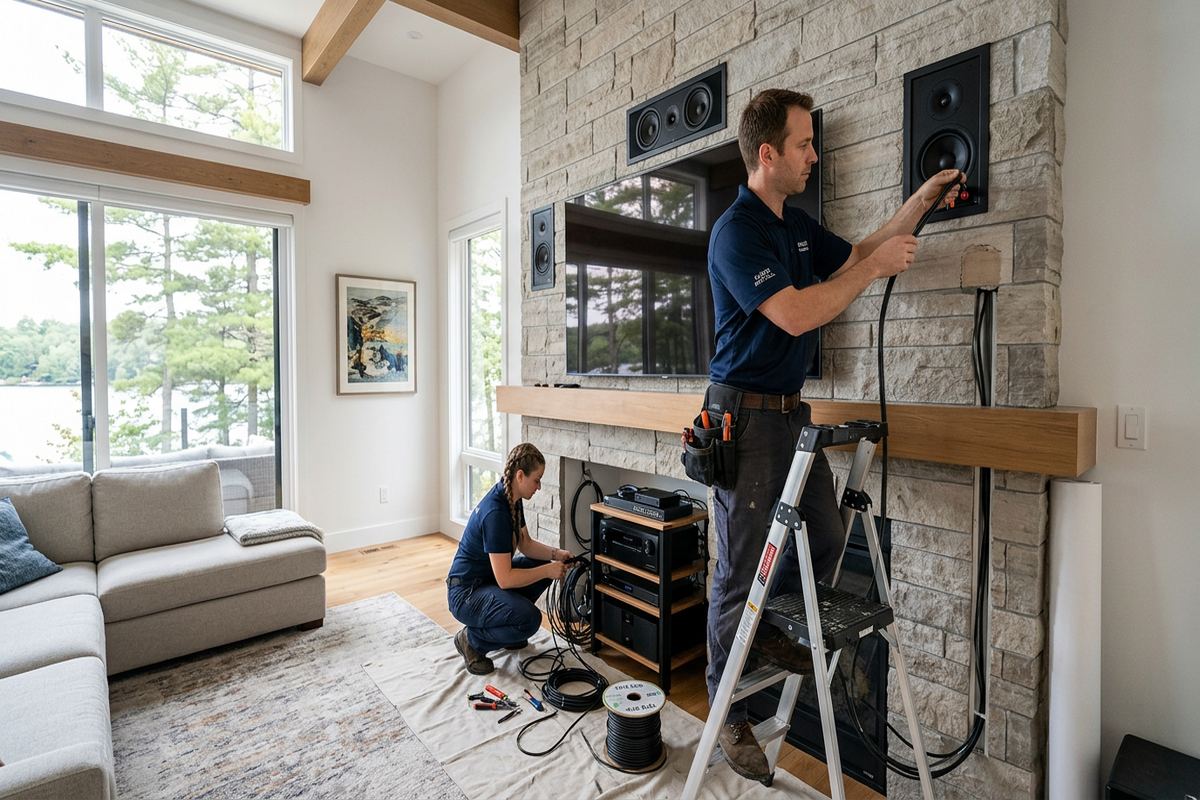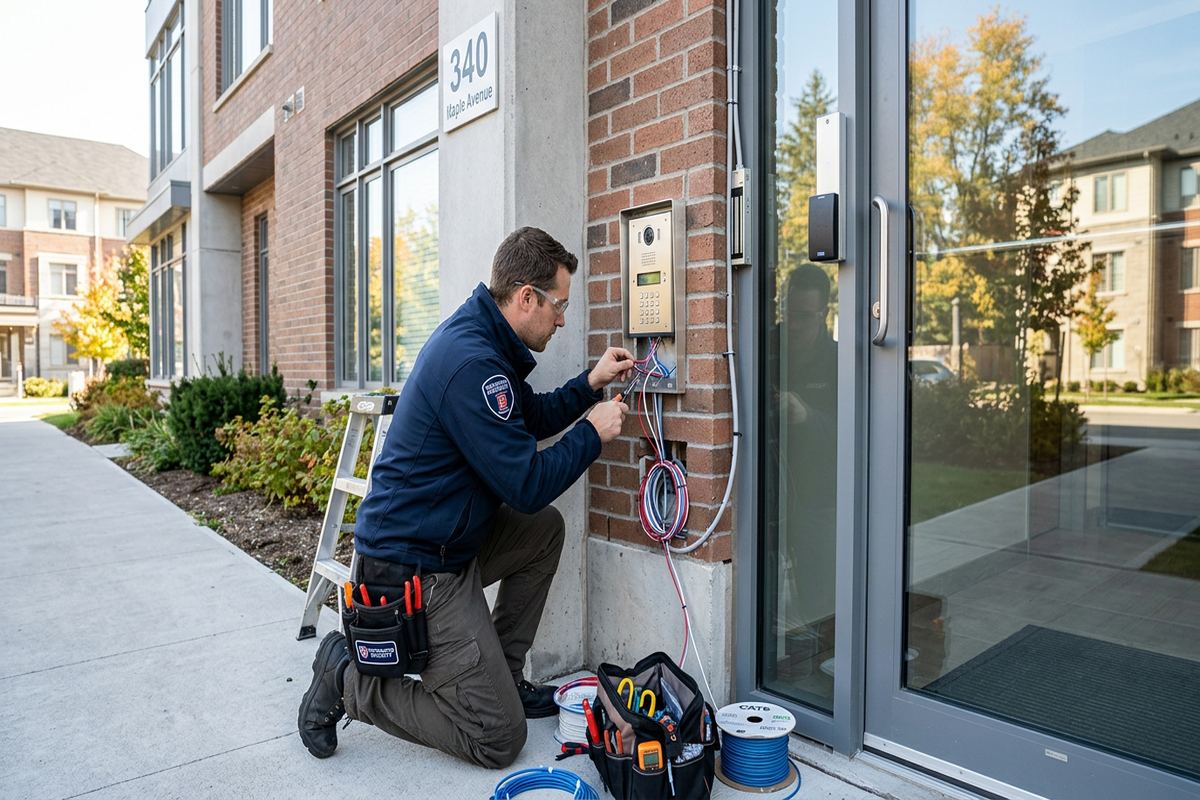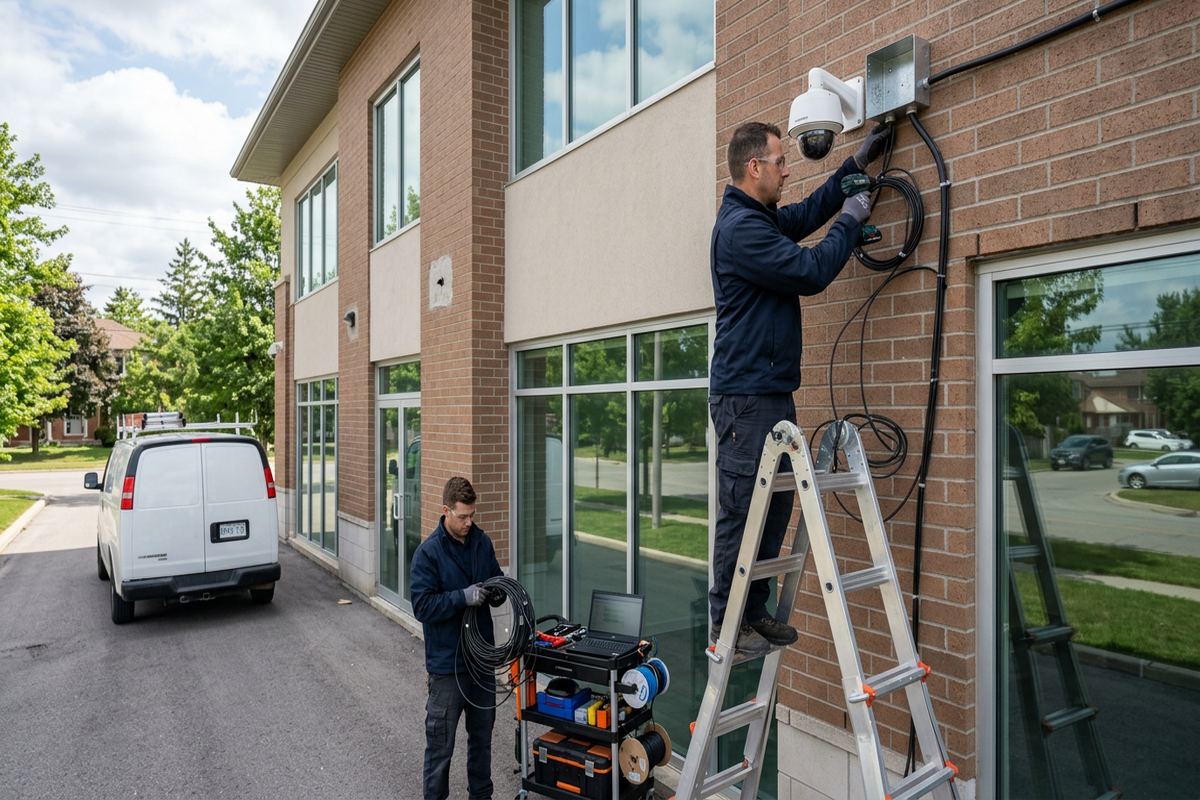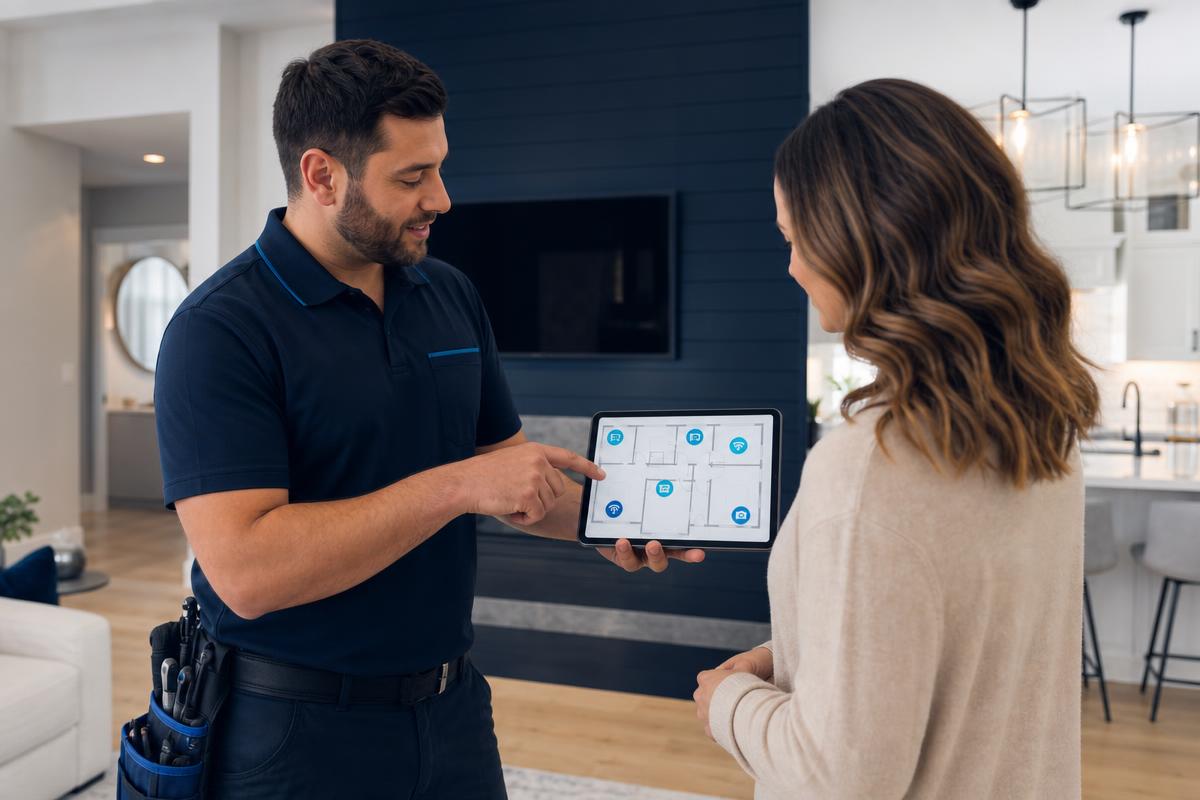
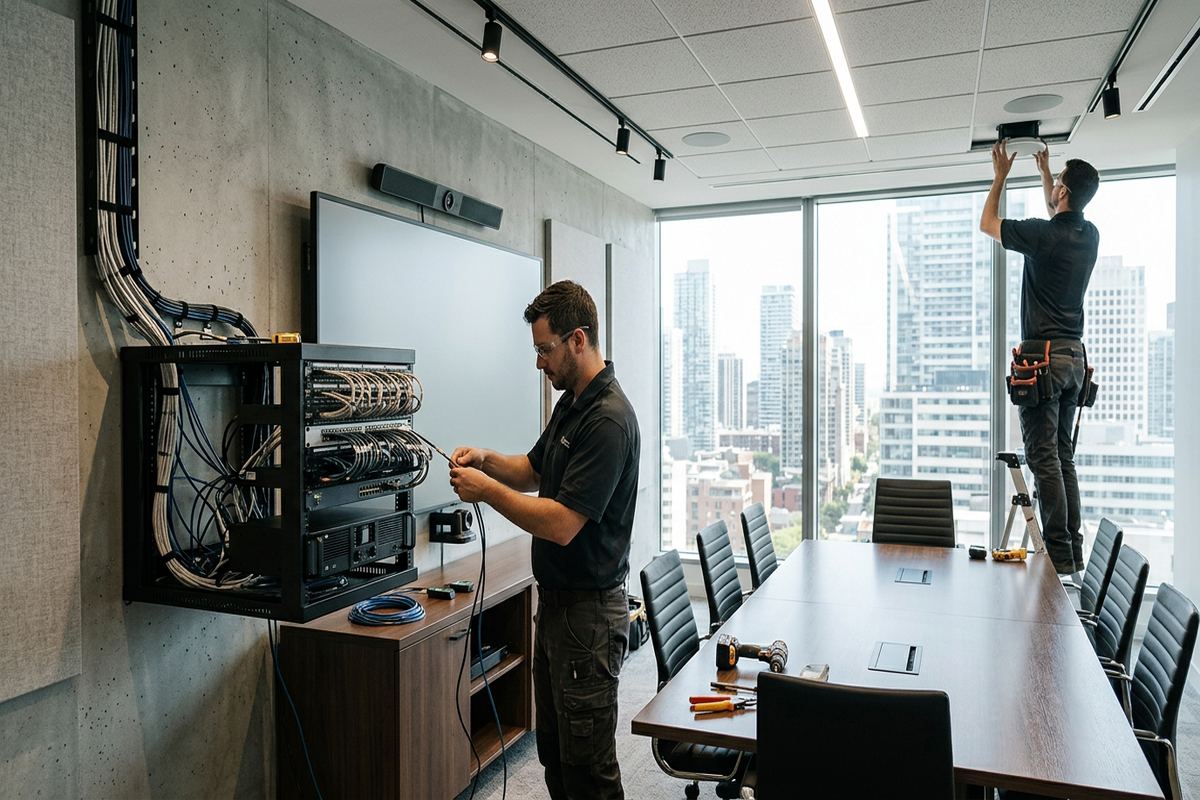
UnifiedLink installs outdoor speaker systems for Caledon homes, rural properties and businesses. We plan speaker placement, cable routes, amplifier capacity, listening zones and controls before installation. Each system is configured on site and handed over using the customer’s own credentials, with labelled cabling and an as-built record for future service.
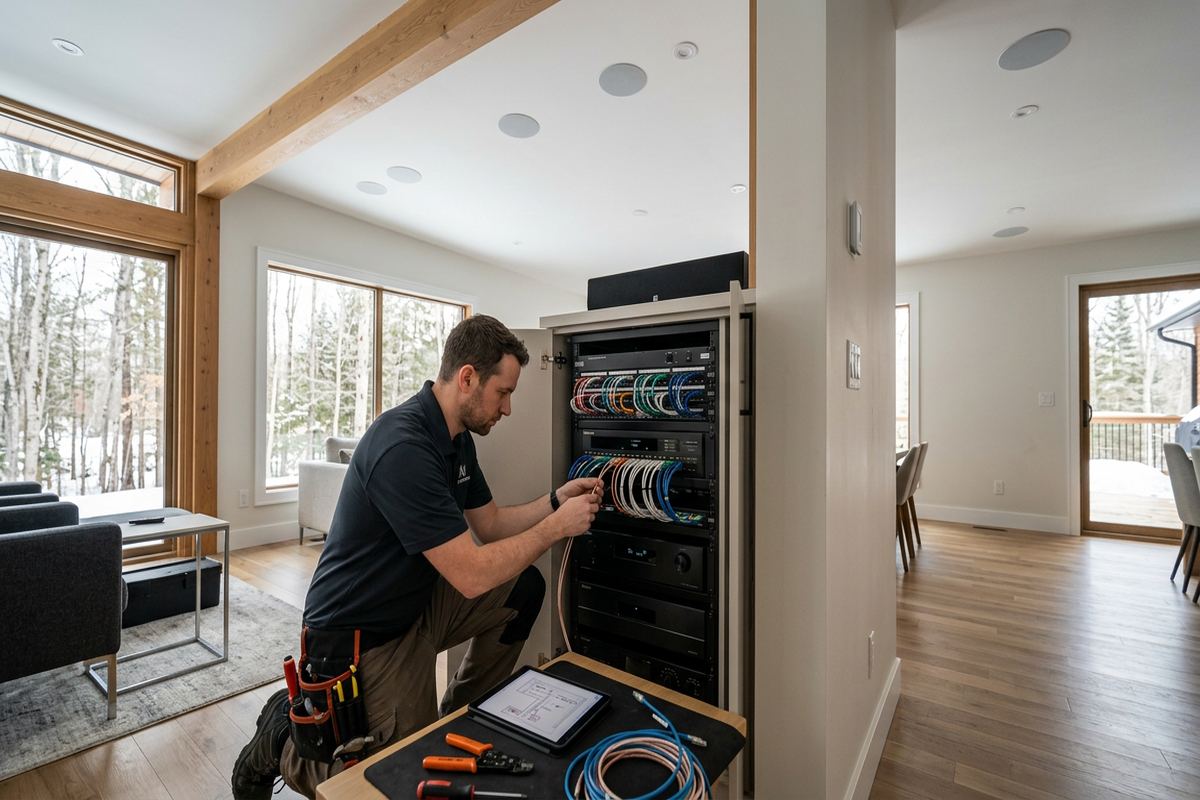
Outdoor Speaker Planning for Caledon Properties
Good outdoor audio begins with coverage planning rather than simply attaching speakers to a wall. On Caledon properties, listening areas may include a deck, pool, garden, detached garage or seating area well beyond the house. We assess where people will actually listen, the acceptable sound direction and the distance between each zone. Speaker quantity, mounting height and orientation are then chosen to produce even coverage at moderate volume, reducing the need to drive one or two speakers loudly across the entire property.
Rural acreages, long driveways and outbuildings create routing and control questions that are less common on compact urban lots. A speaker near a workshop may require a separate cable path, amplifier channel and local volume option from speakers serving the house. Gate access, existing outdoor camera coverage and buried services also affect where work can safely proceed. During the site assessment, we review practical routes through basements, garages, attics, conduits and exterior walls before defining the equipment and installation scope.
Every proposal is based on a site assessment before pricing. The written scope identifies equipment, proposed cable routes, device placement, exclusions, equipment ownership and warranty details. This is particularly useful where landscaping, finished ceilings or multiple buildings limit access. It gives the owner a clear basis for approving visible mounts, trenching or conduit before work begins. UnifiedLink remains one accountable contractor for cabling, speaker mounting, amplifier connections, configuration, testing and the final system handover.
- Deck, patio and pool-area coverage planning
- Separate zones for homes and outbuildings
- Amplifier and speaker-load assessment
- Documented routes, placement and exclusions
Choosing Outdoor Speakers for Caledon Weather
Caledon’s winters and repeated freeze-thaw cycles make equipment selection and mounting details important. Outdoor-rated speakers must suit their degree of exposure, whether they sit beneath a deep soffit, on an open masonry wall or beside a landscaped area. We consider enclosure construction, grille material, bracket design and connection protection instead of assuming that every weather-resistant product fits every location. A sheltered speaker generally experiences less direct rain and ice, but condensation, wind-driven moisture and seasonal temperature changes still need to be addressed.
Exterior mounting surfaces require different fasteners and sealing methods. Brick and concrete need suitable anchors, careful drilling and attention to joints, while frame construction requires secure attachment to structural material rather than cladding alone. Penetrations are positioned and sealed to limit water entry without creating an avoidable path behind siding or masonry. Cable entry should include an appropriate drip arrangement, and exposed cable must be mechanically protected. These details help preserve both the building envelope and the stability of the speaker’s aiming angle.
Landscape speakers and low-mounted units face another set of conditions, including snow accumulation, irrigation, gardening tools and shifting soil. Placement must provide useful sound without creating trip hazards or putting equipment directly in drainage paths. Where cabling crosses open ground, the route is discussed before installation because trenching may encounter hardscape, roots, utilities or future landscaping plans. We do not treat burial as an afterthought; conductor type, pathway, transitions and entry points are included in the written scope for the Caledon site.
- Weather-rated enclosures and mounting hardware
- Sealed penetrations through exterior walls
- Protected routes for exposed outdoor cable
- Freeze-thaw and snow exposure considered
Speaker Placement and Listening Zones
Even sound distribution is usually more useful than maximum volume. Several speakers operating at sensible levels can cover a patio or garden more consistently than a single pair aimed across a broad yard. We consider seating positions, neighbouring properties, reflective walls and changes in grade when laying out the system. In communities such as Bolton and Mayfield West, closer lot spacing may make controlled inward-facing coverage especially important. On larger properties, additional zones can keep sound near listeners instead of projecting it over unnecessary distance.
A zone is a listening area that can be controlled independently or grouped with others, depending on the selected amplifier and control platform. For example, a homeowner may want the deck linked with an outdoor kitchen while keeping pool or workshop speakers separate. A Caledon business might divide a customer patio from an entrance or staff area. We confirm whether each zone needs independent source selection, volume control, scheduling or simple shared playback, then match those requirements to the amplifier and speaker wiring design.
Speaker aiming also affects speech clarity and music balance. Mounting too high may send sound over seated listeners, while mounting too low can leave equipment vulnerable to impact. Corners sometimes reinforce bass but may create uneven results, and wide open areas often require more distributed coverage. We review these trade-offs during placement planning and test operation after installation. Final aiming and level adjustments are completed on site, based on the actual space rather than relying only on product specifications or a drawing.
- Balanced sound at moderate listening levels
- Independent control for selected outdoor areas
- Inward aiming to reduce unnecessary spill
- Final level and direction adjustments on site
Caledon, Ontario
Outdoor speaker installation in Caledon, scoped in writing first
Book a site assessment and get equipment, routes, exclusions, and warranty on paper before anything is installed.
Cabling Outdoor Audio Across Caledon Sites
Reliable outdoor audio depends heavily on the cable infrastructure behind it. UnifiedLink installs continuous labelled cable runs from the amplifier or distribution point to the intended speaker location, avoiding concealed intermediate joins. Cable type and conductor size are selected for the system design, route length and installation environment. Where an existing cable is proposed for reuse, we inspect its accessible condition and test it before relying on it. Unknown, damaged or undersized wiring can cause weak output, intermittent channels or future troubleshooting difficulty.
Older homes in Caledon East, Inglewood and Alton may have additions, finished basements or mixed construction that complicate concealed routing. Newer frame homes may offer attic or utility-room pathways, while masonry buildings can require surface conduit or carefully planned penetrations. We explain where cabling can remain hidden and where a visible pathway is the more serviceable option. Cable routes are kept organized around electrical, plumbing, alarm, network and HVAC infrastructure, with transitions supported and protected according to their location.
Detached garages, barns and other outbuildings need particular attention because distance and building separation affect the design. Existing underground conduit may be usable if its condition, capacity and route are suitable, but it should not be assumed available without inspection. New trenching or conduit work must be clearly identified in scope, including who is responsible for utility locates, excavation and restoration. For Caledon acreages, planning these responsibilities early prevents an audio installation from stalling after equipment has already been selected.
- Continuous cable runs without concealed splices
- Labels at amplifier and speaker ends
- Conduit options for exposed or detached routes
- Existing cable inspection and testing
Amplifiers, Sources and Audio Control
The amplifier must support the number of speakers, intended zoning and required listening levels without being operated beyond its suitable load. We calculate the connected speaker arrangement and confirm ventilation, power and physical space at the equipment location. Some systems use a conventional low-impedance design, while larger distributed layouts may benefit from a different commercial-style approach. The choice depends on cable distance, zone requirements and equipment compatibility. We present the practical option for the property rather than specifying unnecessary complexity.
Music can come from a streaming service, television, network player, commercial source or an existing audio system. Control may use a manufacturer’s application, physical volume controls or integration with compatible automation equipment. Before installation, we confirm what devices and subscriptions the customer already owns and which functions matter day to day. Wireless control still relies on adequate network coverage, so an outdoor audio project may reveal weak Wi-Fi near a patio, pool or detached structure that needs separate assessment.
Configuration is completed on site using the customer’s own credentials. We connect available services, name zones clearly, set appropriate level limits where supported and demonstrate normal operation. Credentials remain with the customer rather than being tied to an installer-controlled account. At handover, we provide an as-built record showing installed equipment and cable destinations, along with relevant operating information. This makes later changes easier if the owner adds speakers, replaces a network component or needs another contractor to understand the completed Caledon installation.
- Amplifier loading matched to speaker design
- Streaming and existing-source integration
- Customer-owned accounts and credentials
- Clear zone names and operating handover
Outdoor Audio for Caledon Homes and Acreages
Home outdoor audio should fit how the property is used rather than cover every square metre by default. A deck used for meals may need focused, low-level coverage, while a pool area or firepit farther away may need its own speakers and control. On rural Caledon acreages, trying to serve all areas from the house often creates excessive volume near the building and poor clarity at the destination. Distributed speakers allow the system to place sound closer to each listening area.
Outbuildings can operate as workshops, garages, recreation rooms or storage spaces, and each use changes the appropriate equipment. A fully enclosed finished building may use different speakers from an open-sided structure exposed to dust and moisture. If the building has a network connection, source control may be shared digitally; otherwise, dedicated cabling or a local source could be more practical. We review power, pathways, environmental exposure and how frequently the area is used before including it as part of the main system.
Property owners in Palgrave, Caledon East and other rural communities may already have gate access, cameras or network links running between buildings. Audio cable should be coordinated with that infrastructure without assuming pathways or conductors can be shared. Segregation, conduit capacity and service access still matter. When several low-voltage systems are being installed or upgraded together, one documented route plan can reduce conflicting penetrations and inaccessible cabling. The final scope identifies which systems are included and which remain separate.
- Focused audio for decks and outdoor kitchens
- Independent pool, firepit or workshop zones
- Coordination with gates and camera infrastructure
- Practical designs for detached buildings
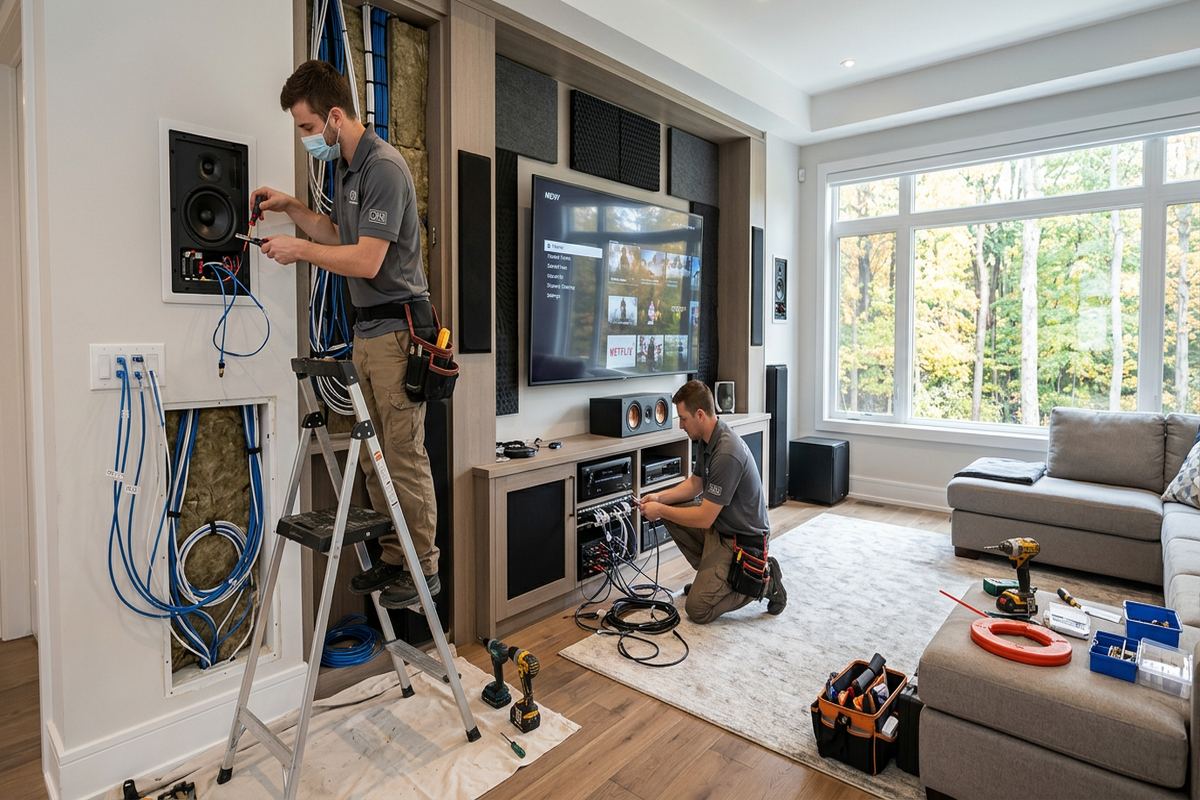
Commercial Outdoor Speaker Installation in Caledon
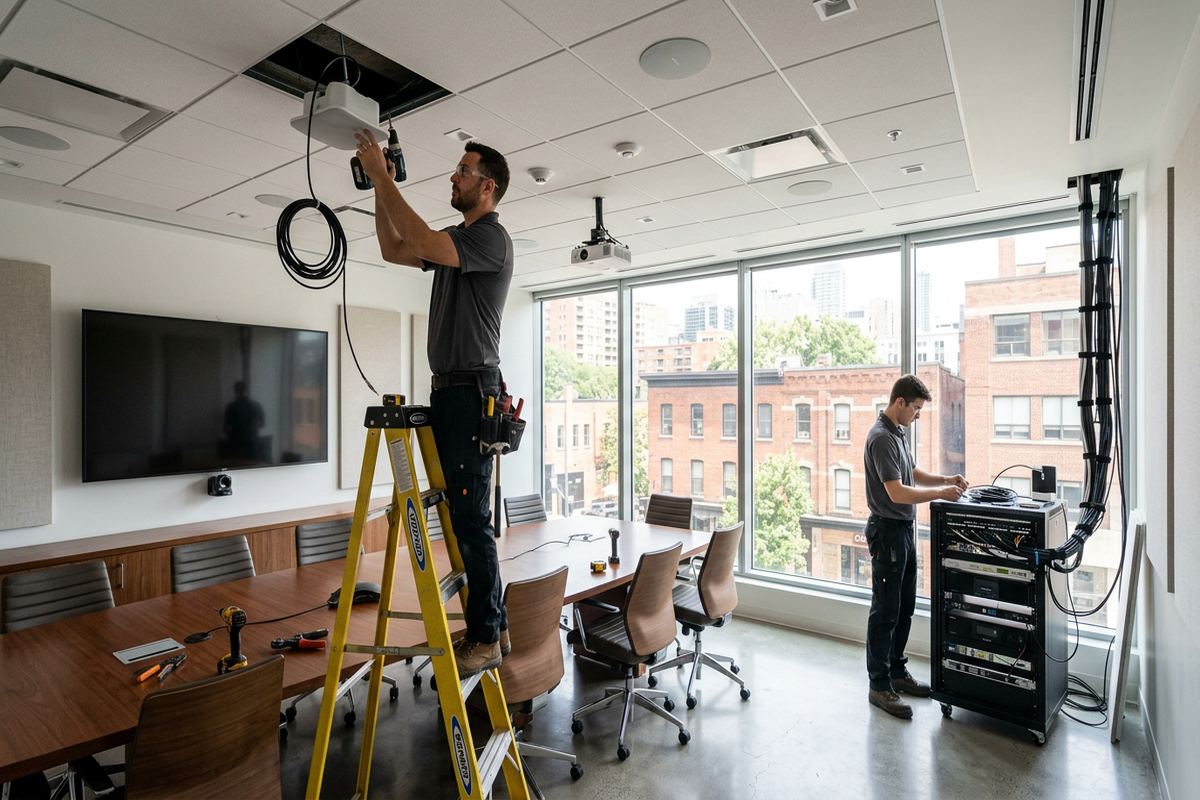
Commercial outdoor audio may support background music, announcements or customer-area sound, but the operating requirements differ from a residential patio. Restaurants, offices, commercial strips and industrial units may need defined hours, restricted controls and consistent levels across entrances or outdoor seating. We determine who will operate the system, where equipment can be secured and whether staff need simple physical control. Equipment selection also considers daily duty, environmental exposure and compatibility with existing business audio infrastructure.
Leasehold work requires approval before drilling, conduit installation or changes to common areas. Caledon business owners and tenants should confirm landlord requirements, while condominium properties may also require board or property-management permission for exterior equipment. We can document proposed device locations and cable routes to support that review, but the customer remains responsible for obtaining required approvals unless the written scope says otherwise. Work proceeds only after access, mounting authority and any restrictions on exterior appearance or operating hours are understood.
Industrial units often combine concrete block, steel framing, insulated panels and finished office areas, each requiring a different routing approach. A loading area may need rugged speaker placement protected from vehicles and material handling, while a customer entrance may prioritize discreet mounting and controlled volume. We assess ambient noise and intended use without promising that background speakers can overcome every operational sound source. Where paging or life-safety functions are involved, those requirements must be identified separately from ordinary music playback.
- Background music for approved outdoor areas
- Secure equipment and simplified staff controls
- Routes planned for mixed commercial construction
- Landlord and condominium approvals identified
Caledon Installation, Testing and Handover
Installation begins after the written scope and access arrangements are accepted. We confirm speaker positions before drilling, protect the work area and install the agreed cable pathways, brackets and equipment. Exterior penetrations are finished using methods appropriate to the wall assembly and exposure. Cables are supported, protected and labelled at service points. If concealed conditions differ materially from what was visible during assessment, the issue is reviewed with the customer before changing the route or adding work outside the approved scope.
Testing covers speaker operation, channel assignment, zone control and basic source playback. We listen for obvious level differences, distortion, vibration and incorrect polarity, then adjust aiming and supported configuration settings. Network-dependent controls are checked in the areas where they are expected to be used, subject to the available Wi-Fi coverage. The customer receives a practical demonstration covering source selection, volume, grouping and normal shutdown or restart steps. Equipment packaging or spare parts are handled as agreed during the Caledon handover.
The as-built record identifies installed components, cable destinations and relevant placement details so the system can be maintained without rediscovering hidden routes. Equipment ownership and warranty information follow the written scope, and customer accounts remain under customer control. Requests sent during business hours are answered the same day; after-hours requests are answered the next business day. Site assessment timing depends on the service and travel distance, which is relevant across Caledon’s dispersed communities and rural roads.
- Mounting locations confirmed before drilling
- Speaker channels and zones tested
- Customer demonstration using actual controls
- As-built record supplied at handover
Caledon neighbourhoods we cover
- Bolton
- Caledon East
- Inglewood
- Alton
- Mayfield West
- Palgrave
Outdoor speaker installation in Caledon — common questions
How many outdoor speakers will my Caledon property need?
The number depends on the size and shape of each listening area, mounting options, acceptable volume and whether separate zones are required. A compact Bolton patio may need fewer speakers than a rural Caledon property with a pool, firepit and outbuilding. We assess coverage on site before pricing, then document the proposed quantity, locations and amplifier arrangement.
Can speakers be installed on brick or stone walls?
Yes, provided the wall condition and proposed position allow secure mounting. Brick, concrete and stone require suitable anchors and carefully sealed penetrations. We avoid treating mortar, veneer and structural masonry as interchangeable. During the Caledon site assessment, we examine accessible construction details and explain any visible conduit or alternate mounting method needed to protect the exterior assembly.
Will outdoor speakers work during a Caledon winter?
Properly selected outdoor-rated speakers can remain installed through winter, but exposure matters. We account for snow, ice, freeze-thaw cycles, wind-driven moisture and drainage when choosing locations and hardware. Seasonal operation also depends on the manufacturer’s requirements and the rest of the system. Speakers should not be placed where snow clearing, roof runoff or accumulating ice can damage them.
Can you connect speakers at a detached garage or barn?
Yes, after assessing distance, pathways, power, environmental conditions and the intended control method. Caledon acreages may have existing underground conduit, but its route, condition and available capacity must be checked. If trenching or new conduit is needed, the written scope identifies responsibilities for utility locates, excavation, pathway installation and restoration before work begins.
Do I need landlord or condominium approval?
Approval may be required whenever speakers, brackets, cable or conduit attach to an exterior wall, balcony, common element or leased premises. Tenants and condominium owners should obtain written permission before installation. For Caledon commercial or residential properties, UnifiedLink can provide proposed locations and routing details for review, while approval responsibility is confirmed in the project scope.
Can I control different outdoor areas separately?
Yes, if the amplifier, wiring and control platform are designed for separate zones. A Caledon homeowner might divide deck, pool and workshop audio, while a business may separate a patio from an entrance. We confirm whether each area needs its own volume, source or schedule, then configure supported controls on site using the customer’s own credentials.
Coverage in Caledon is confirmed against the address before we quote. See everything we install in Caledon or the province-wide outdoor speaker installation page.