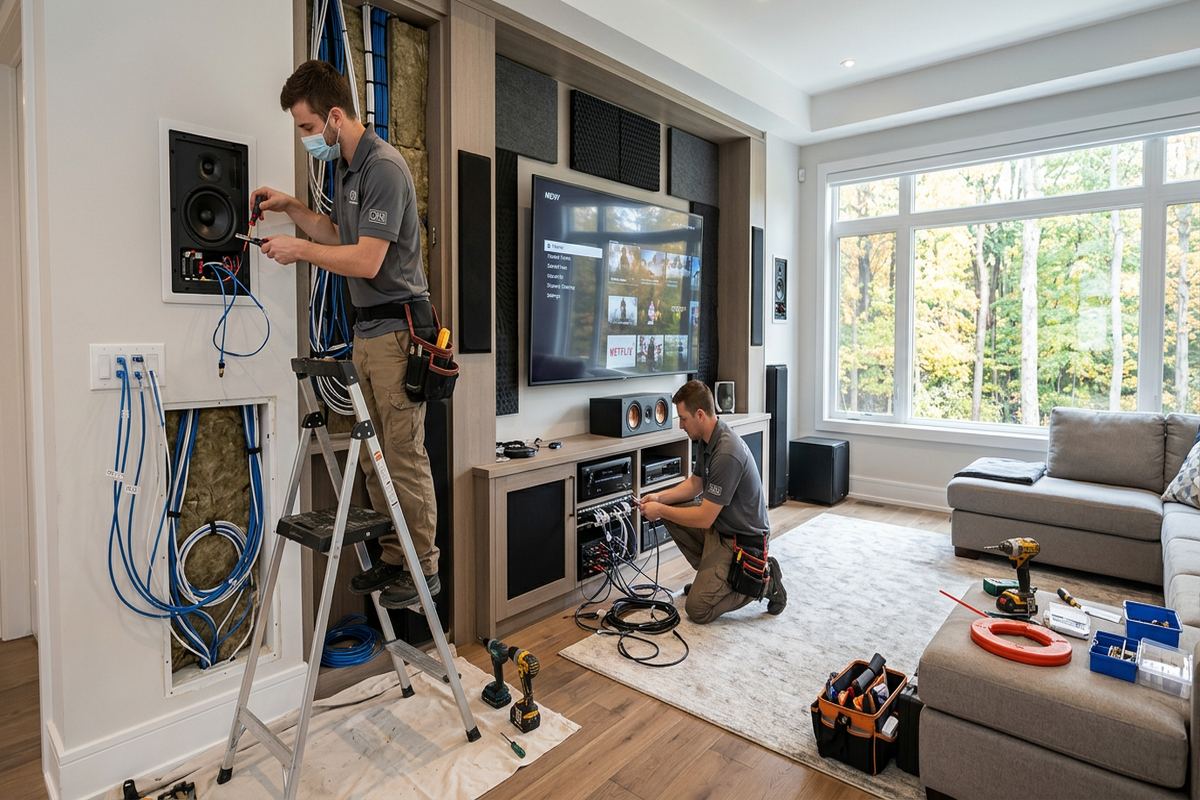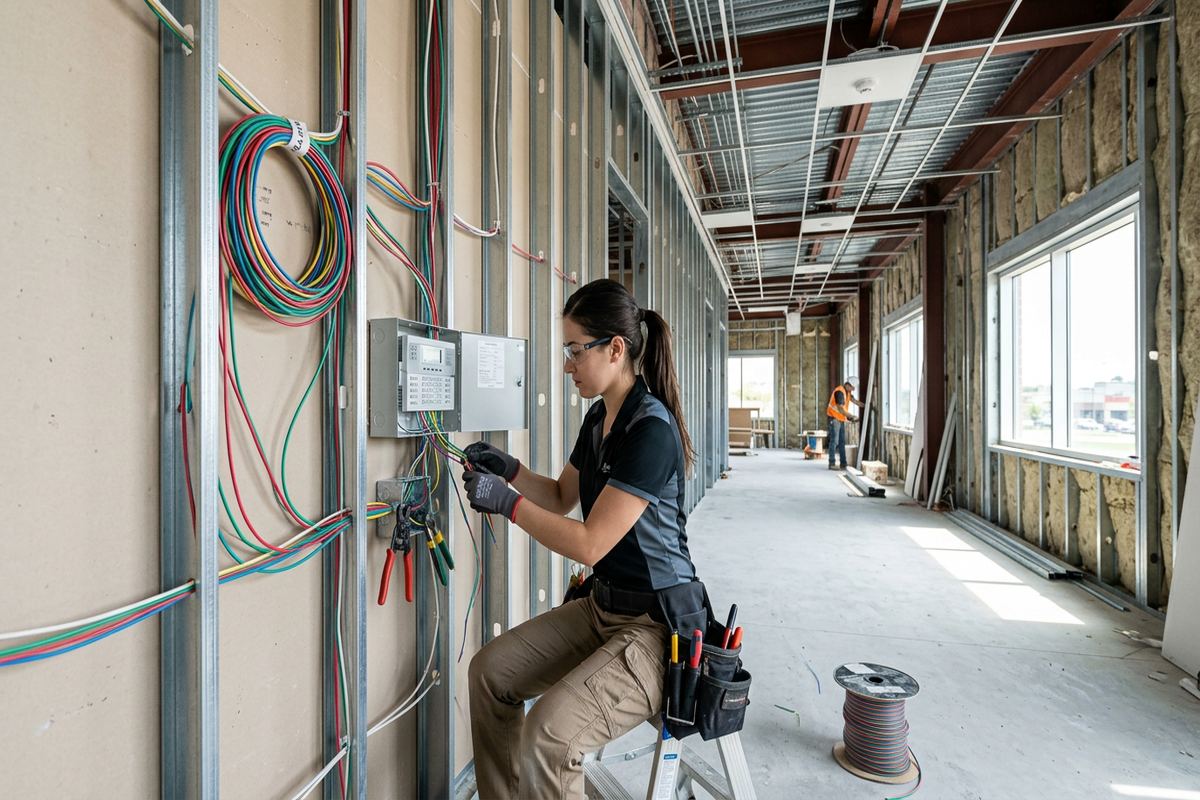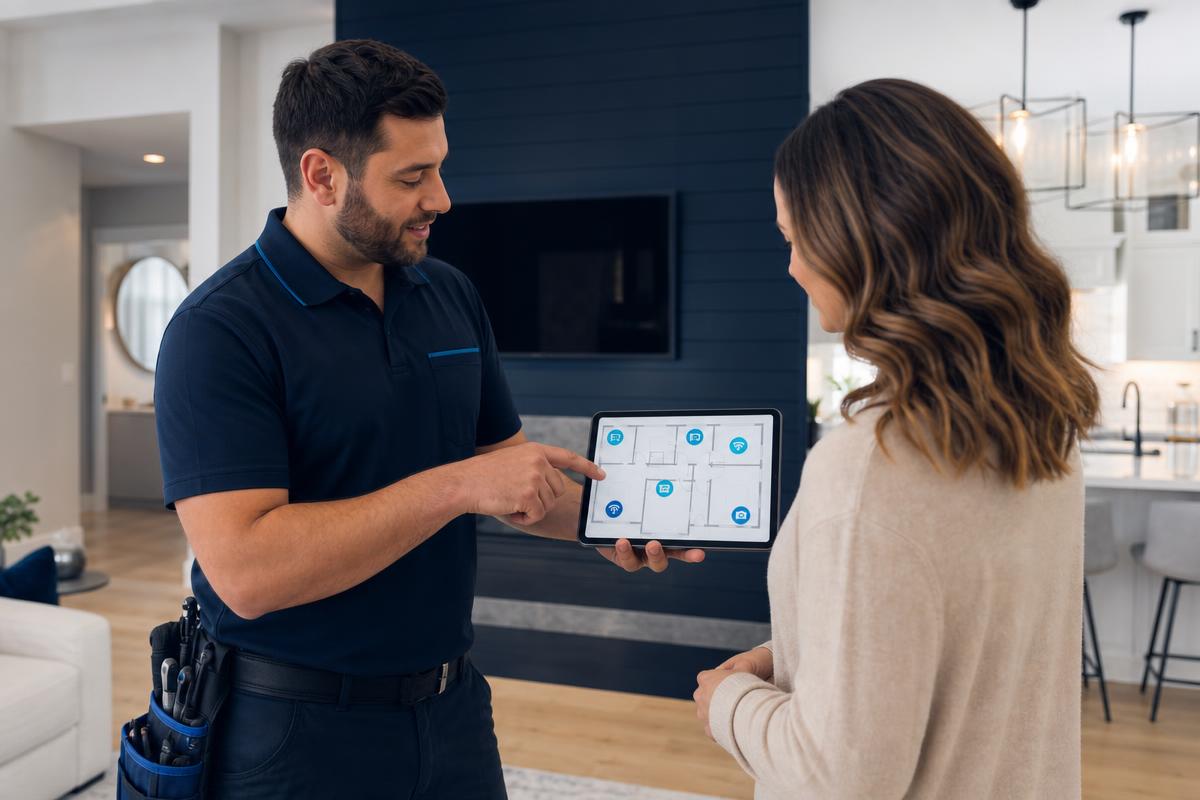
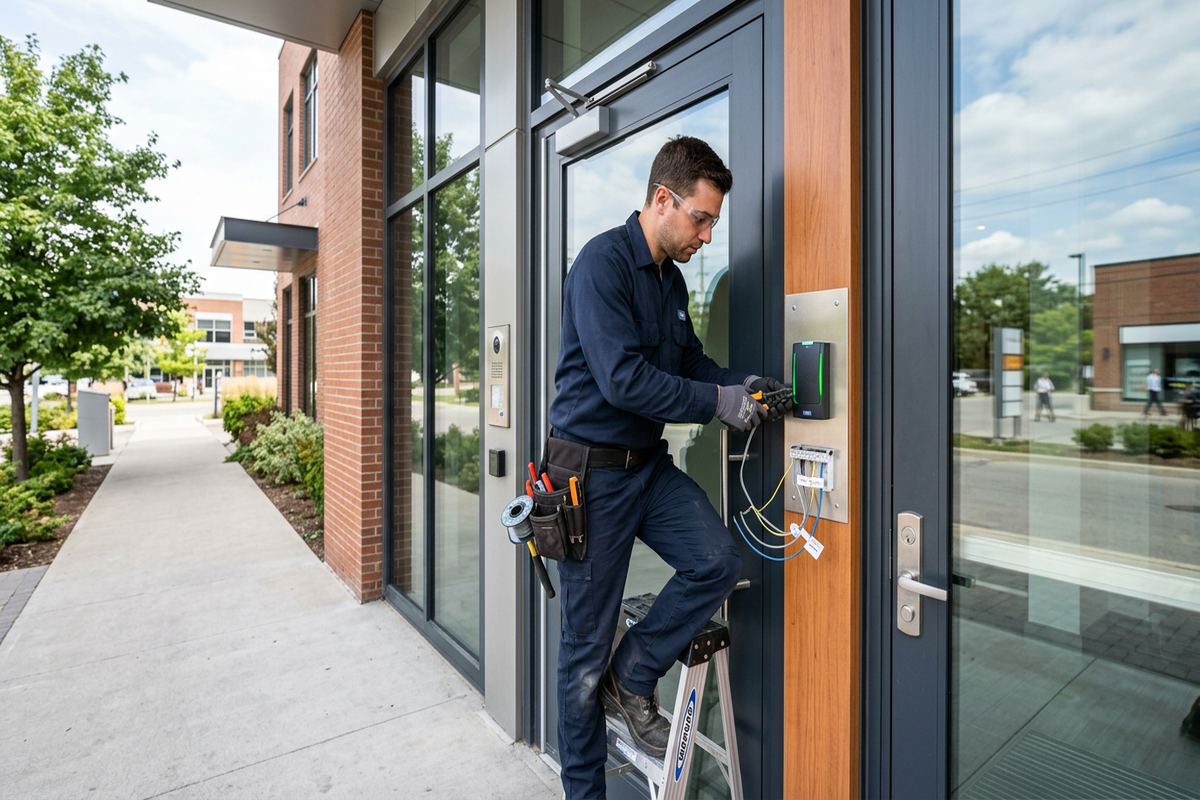
UnifiedLink installs commercial access control systems for offices, shops, industrial units, rural properties and multi-building sites in Caledon. We plan controlled doors and gates, run labelled cabling, configure credentials and document the completed installation. Every project begins with a site assessment so the written scope reflects the building, operating needs and local conditions.
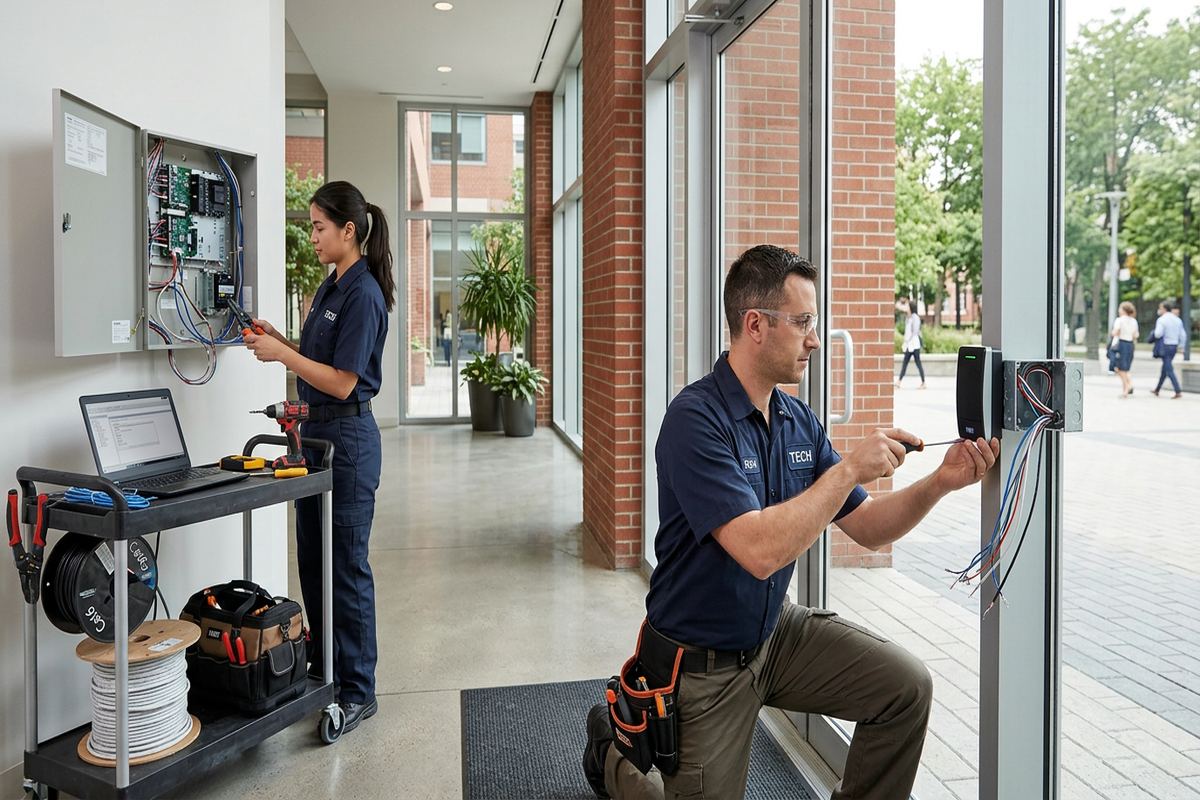
Commercial Access Control Planning in Caledon
A commercial access control installation starts with understanding who needs to enter, where they may go and when access should be allowed. During a Caledon site assessment, UnifiedLink reviews entrances, interior doors, gates, staff workflows, delivery activity and emergency egress requirements. We also identify existing locks, door hardware, alarm connections and network resources that could affect the design. The resulting plan distinguishes everyday operational needs from optional features, helping owners compare a practical base system with additions such as schedules, remote administration, intercoms or integrated camera views.
Building type has a direct effect on equipment selection and installation effort. A newer industrial unit in Bolton may offer accessible ceiling space and predictable frame construction, while an older commercial building can contain masonry walls, concealed renovations or limited pathways between floors. Rural properties may involve detached workshops, barns, storage buildings or a gate located far from the main structure. We inspect these conditions before recommending cable routes, readers, locking hardware, power supplies and communications links, rather than assuming that the same installation method will suit every Caledon property.
After the assessment, customers receive a written scope covering equipment, cable routes, device placement, exclusions, equipment ownership and warranty. This document also identifies work that may depend on a locksmith, electrician, door contractor, internet provider, landlord or property manager. Defining those boundaries early reduces uncertainty once installation begins. The scope can separate required access points from future provisions, allowing spare cable, enclosure capacity or software licences to be considered where appropriate. Pricing follows the assessment because door condition, distances, construction materials and operating requirements determine the actual work involved.
- Door, gate and user requirement review
- Existing hardware and pathway inspection
- Written equipment and installation scope
- Clear exclusions and trade responsibilities
- Options for future system expansion
Doors, Gates and Outbuildings Across Caledon
Long driveways and separated buildings make gate access a frequent consideration on Caledon commercial and rural properties. A gate reader, keypad, intercom or credentialed entry point must communicate reliably with the building while operating safely with the gate equipment. The design may use direct-burial pathways, existing conduit, fibre, wireless bridging or a combination, depending on distance and site conditions. Vehicle detection, visitor calling, manual release and emergency access also need to be addressed. UnifiedLink coordinates the access control components while clearly identifying where gate operators, trenching, electrical feeds or civil work fall outside the scope.
Outbuildings introduce different risks from doors within one connected structure. A detached office, workshop or storage building may have its own electrical panel, network connection and environmental conditions. Running ordinary indoor cable between buildings can create reliability and electrical protection problems, so pathway, grounding, surge exposure and communications media require review. For properties near Palgrave, Inglewood or Caledon East, we assess the actual route rather than presuming every remote door can join the main controller directly. Equipment enclosures must also remain accessible for service without being exposed to routine damage or unauthorized handling.
Gate access and outdoor cameras often serve related purposes, but they perform different functions. Access control decides whether a credential, schedule or staff action authorizes entry; video helps operators see vehicles, people and events. Where both systems are planned, camera position, intercom calling and gate release controls should support one clear workflow. A receptionist may need to view a visitor before opening the gate, while managers may require event records after hours. UnifiedLink can coordinate these low-voltage systems under one accountable contractor, while keeping permissions, ownership and documentation clearly assigned to the customer.
- Vehicle and pedestrian gate credentials
- Intercom and remote release planning
- Outbuilding communication pathway review
- Outdoor enclosure and surge considerations
- Camera views coordinated with entry points
Reader, Lock and Door Hardware Selection in Caledon
Readers and credentials are only part of a complete access-controlled opening. Each door also involves a lock or strike, door position monitoring, request-to-exit operation, power and appropriate release behaviour. Existing hinges, frames, closers and latches must operate correctly before electronic control can be dependable. UnifiedLink examines whether the opening is wood, hollow metal, aluminum storefront or another assembly, then documents the proposed hardware and related trade work. Fire-rated openings, panic hardware and designated exits require particular care so access restrictions do not interfere with safe egress or applicable building requirements.
Credential choices should reflect how the Caledon organization actually operates. Cards or fobs are practical for regular staff because permissions can be changed without replacing a mechanical key. Mobile credentials may suit some systems and users, but they depend on compatible devices, software and administrative policies. Keypads can support selected doors or temporary users, although shared codes provide less individual accountability. Rather than specifying every available method, we help customers define staff groups, visitor procedures, contractors, delivery access and after-hours rules, then select readers and software capable of supporting those requirements.
Locking hardware must match both the opening and its operational purpose. An electric strike may suit one frame, while another door may require electrified trim, a magnetic lock or specialized gate hardware. The appropriate choice depends on egress, security, door condition, monitoring and available pathways. Hardware should not be selected solely because it is easy to mount. If a locksmith or door contractor must repair alignment, prepare a frame or replace a closer, that dependency is recorded in the scope so the access system is installed on a functional opening.
- Card, fob, mobile and keypad options
- Door position and exit monitoring
- Lock hardware matched to each opening
- Staff, visitor and contractor permissions
- Egress and release requirements reviewed
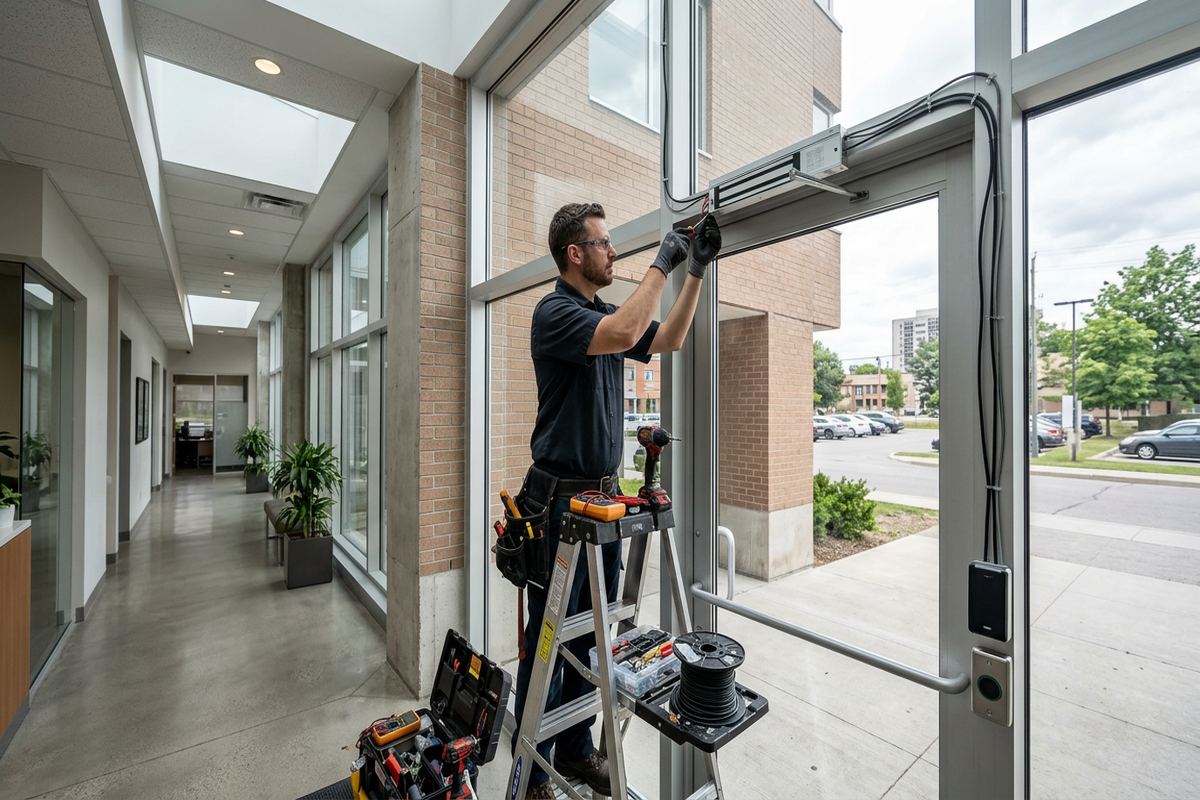
Caledon, Ontario
Commercial access control installation in Caledon, scoped in writing first
Book a site assessment and get equipment, routes, exclusions, and warranty on paper before anything is installed.
Exterior Installation for Caledon Winters
Outdoor readers and gate devices in Caledon face moisture, snow, ice, road salt and repeated freeze-thaw cycles. Equipment ratings matter, but mounting and cable entry methods are equally important. Water can follow an unsealed cable, collect behind a device or enter through poorly placed fasteners. UnifiedLink plans exterior-rated components, suitable boxes, drip arrangements and sealed penetrations according to the mounting surface. Cable transitions are protected from physical damage, and service loops are managed without creating pockets that hold water. The objective is a maintainable installation, not simply a device attached outdoors.
Masonry and frame construction require different fastening and sealing methods. Brick, block and poured concrete can provide solid mounting surfaces, but careless drilling may damage finishes, create water paths or place cable where replacement is difficult. Frame walls may provide easier routing while requiring attention to cladding, membranes, insulation and concealed structure. Older buildings in communities such as Alton or Inglewood can include additions completed with different materials. A site assessment helps determine how each penetration will be made, supported and sealed instead of applying one detail to every wall.
Temperature also affects locks, gates and doors mechanically. A reader may continue operating while a misaligned latch, frost movement or snow obstruction prevents the opening from functioning. Door closers can behave differently in cold weather, and gate hardware remains exposed to greater contamination and movement than indoor equipment. Access control cannot correct every mechanical condition, so the assessment identifies visible door or gate concerns that should be addressed by the appropriate trade. Monitoring can report a door held open or forced open, but reliable operation still begins with sound physical hardware.
- Exterior-rated readers and enclosures
- Sealed wall and cable penetrations
- Mounting suited to masonry or cladding
- Protected outdoor cable transitions
- Cold-weather door and gate review
Access Control Cabling and Network Integration in Caledon
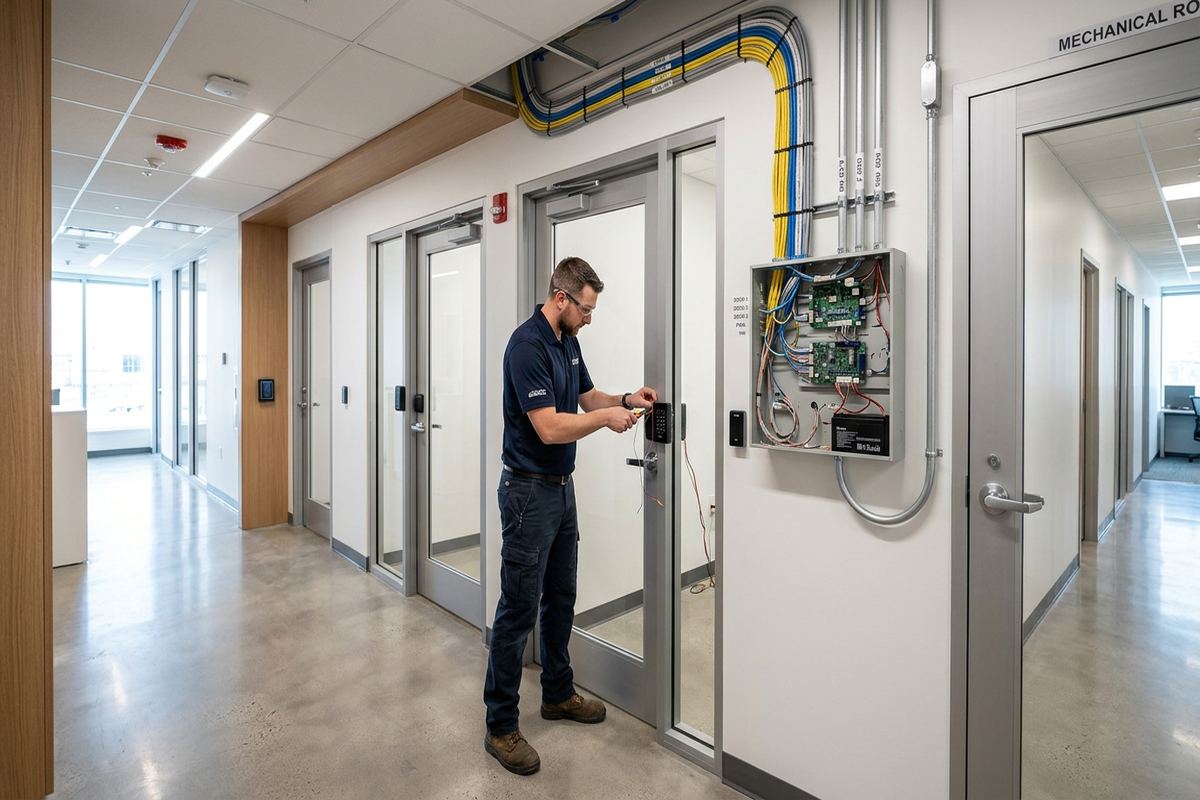
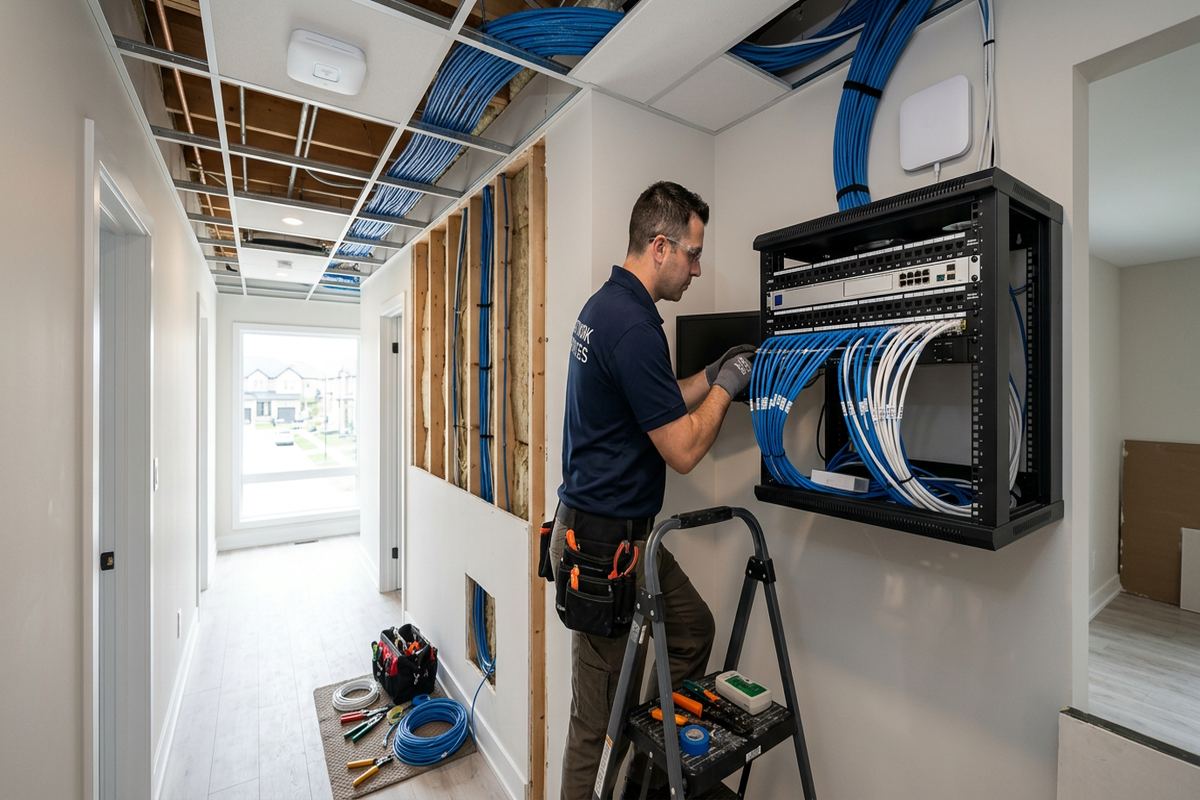
Access control relies on structured pathways for reader data, lock power, door monitoring, exit devices and network communications. UnifiedLink installs continuous labelled cable runs between defined termination points, avoiding hidden intermediate joints that complicate troubleshooting. Cable type and route are selected for the signal, distance, environment and applicable installation conditions. In finished offices, routes may use accessible ceilings or approved surface raceway. Industrial units can require conduit coordination or protected drops, while rural Caledon sites may need underground or building-to-building pathways planned before any cable is pulled.
Controllers and power supplies need secure, serviceable locations rather than whatever space remains near a door. We consider panel access, ventilation, electrical availability, network connections, cable entry and future maintenance. Battery-backed operation may be included where specified, but expected behaviour during an outage must be defined for each opening and its locking hardware. Network-connected systems also require coordination with the customer’s information technology provider for addressing, firewall rules, remote access and account policies. These responsibilities are documented so installation does not depend on unknown credentials or last-minute network changes.
Existing cabling is evaluated before reuse because appearance alone does not confirm suitability. Unlabelled conductors, mixed cable types, inaccessible splices or routes shared with unsuitable services can make old wiring difficult to support. Testing may show that some runs are reusable while others should be replaced. For a renovated Bolton commercial strip or an industrial unit near Mayfield West, tenant improvements may have left several generations of low-voltage work above ceilings. A documented, labelled installation gives future service personnel a clear starting point and reduces dependence on assumptions about concealed wiring.
- Continuous labelled cable runs
- Secure controller and power locations
- Network coordination with customer IT
- Existing cable inspection and testing
- Routes planned for service access
Configuration, Credentials and Daily Administration
Once devices are installed, the system must be configured around real operating rules. UnifiedLink creates agreed door schedules, access groups, unlock periods and event settings, then tests them at the controlled openings. Staff may need different permissions by department, location or shift, while cleaners, contractors and seasonal workers can require narrower time windows. Administrators should be able to add and remove credentials without changing physical keys throughout the property. We keep the configuration understandable, avoiding unnecessary complexity that makes routine changes harder for the Caledon customer to manage.
Event records can show credential use, denied attempts, forced openings and doors left open when the appropriate sensors are installed. These records support investigation and administration, but they should be used with clear internal policies concerning access, privacy and retention. Camera integration may help authorized users review a related view, subject to system compatibility and customer requirements. An event log does not prove every circumstance by itself, so access data and video should be treated as operational evidence rather than automatic conclusions. User permissions should limit who can view, export or change records.
Handover is completed using the customer’s own administrative credentials, not an installer account that leaves ownership unclear. We review routine tasks such as issuing a credential, disabling a departed user, changing a schedule and checking door status. The customer also receives an as-built record showing installed devices and relevant system information. Where remote services or software subscriptions apply, ownership and ongoing requirements are identified in the written scope. This approach gives the organization practical control of its Caledon access system and a documented basis for future additions, changes or troubleshooting.
- Configured schedules and access groups
- Individual credential administration
- Door events and alarm settings
- Customer-owned administrator credentials
- As-built record at handover
Approvals and Occupied Properties in Caledon
Commercial tenants should confirm authority before modifying doors, frames, common entrances or building cabling. A landlord may control exterior appearance, base-building systems, riser access and approved contractors, even when the tenant is responsible for its own security. In a Caledon plaza or multi-unit industrial property, an entrance can also form part of a shared fire or accessibility arrangement. UnifiedLink records known approval requirements during planning, but the property owner or tenant remains responsible for securing permission. Work is scheduled after the relevant parties agree on device locations, pathways and restoration expectations.
Condominium corporations and shared commercial properties may require board or management approval for changes involving common elements. Exterior readers, intercom stations, gate equipment, penetrations and cabling through shared spaces are typical examples. Drawings, product information or a defined scope may be needed before authorization is issued. Early review helps avoid ordering equipment for a location that management will not approve. The same principle applies to heritage-sensitive finishes or leased spaces where alterations must be reversible. UnifiedLink can describe the proposed low-voltage work clearly so decision-makers understand what will be mounted and routed.
Occupied installations require coordination around staff, customers, deliveries and door availability. Some openings can be completed during normal operations, while others may need a planned window because the door will be temporarily unavailable or unlocked. Dust, drilling, ceiling access and lift placement can also affect work areas. In busy Bolton storefronts or Caledon East offices, sequencing one opening at a time may reduce disruption. We identify expected access needs in the scope and coordinate dependencies with locksmiths, electricians, gate contractors, property representatives and customer IT rather than leaving those interfaces unresolved.
- Landlord and property approval review
- Common-element modification planning
- Occupied-site work sequencing
- Coordination with related trades
- Documented mounting and pathway details
Testing, Handover and Expansion in Caledon
Commissioning checks more than whether a card causes a click. Each controlled opening is tested for valid and invalid credentials, scheduled behaviour, door position reporting, request-to-exit operation and the specified response to power or communications loss. Gate and intercom workflows are tested from the user’s perspective, including how staff identify and release a visitor. Labels are checked against the documentation, and visible installation details are reviewed. Any dependency outside our work, such as a sticking door or incomplete network change, is recorded rather than hidden behind a software adjustment.
A structured handover helps Caledon owners operate the system after installation. Authorized administrators receive their own credentials and instruction on common tasks, while the as-built record provides a reference for panels, doors and cable terminations. The written scope establishes equipment ownership and warranty details, reducing ambiguity about hosted services, licences or customer-supplied components. If multiple low-voltage systems are included, UnifiedLink remains one accountable contractor for the defined work. Customers still know which external dependencies belong to an internet provider, electrical contractor, locksmith, gate company or property manager.
Expansion is easier when the original design accounts for likely changes without oversizing every component. A business may later add an interior stockroom, another tenant area, a detached building or a vehicle gate. Panel capacity, network availability, cable pathways and software limits should therefore be understood at the beginning. For growing operations in Mayfield West, Bolton or elsewhere in Caledon, the as-built information helps assess additions without reconstructing the original installation from scratch. New work still requires review because building use, door hardware and access policies can change after the first project is completed.
- Functional testing at every opening
- Power-loss and communication checks
- Administrator training and handover
- As-built system documentation
- Expansion capacity considered during design
Caledon neighbourhoods we cover
- Bolton
- Caledon East
- Inglewood
- Alton
- Mayfield West
- Palgrave
Commercial access control installation in Caledon — common questions
How does pricing work for a Caledon access control project?
UnifiedLink completes a site assessment before pricing. The number and condition of doors, lock hardware, cable distances, construction materials, gate requirements, software and network availability all affect the scope. You then receive a written document covering equipment, routes, placement, exclusions, ownership and warranty. Assessment timing depends on the service and travel distance.
Can you add access control to an existing commercial door?
Often, but the opening must be inspected first. Many Caledon properties have existing aluminum storefront, wood, hollow-metal or masonry-frame entrances with different hardware requirements. We review the lock, latch, closer, frame, egress operation and available cable route. A locksmith or door contractor may be required if the opening needs repair or specialized preparation.
Can one system control our gate and outbuildings?
Potentially. Caledon’s rural acreages, long driveways and detached buildings can require underground pathways, fibre, wireless links, surge protection or separate field equipment. We assess distances, power, communications and gate operation before selecting an approach. The scope will distinguish UnifiedLink’s access control work from trenching, electrical service, gate operator work or other required trades.
Will access control work during a power outage?
Outage behaviour depends on the lock, controller, power supply and egress requirements at each opening. Battery backup can support specified components for a period determined by the design, but gates and network equipment may have separate power needs. For a Caledon installation, we document the intended locked, unlocked and monitored states and test the configured response during commissioning.
Do I need landlord or condo approval?
If you lease space or the work affects common elements, approval may be required before installation. Caledon landlords, condominium corporations and property managers may control exterior devices, door modifications, shared pathways or base-building systems. Confirming authority early prevents delays. We can provide a clear scope describing proposed equipment, mounting locations, cable routes and related restoration responsibilities.
How quickly will UnifiedLink respond to my request?
Requests sent during business hours are answered the same day, and after-hours requests are answered the next business day. The timing of a Caledon site assessment depends on the service and travel distance. Installation scheduling follows the assessment, written scope and any required approvals or coordination with locksmiths, electricians, gate contractors, property managers or customer IT.
Coverage in Caledon is confirmed against the address before we quote. See everything we install in Caledon or the province-wide commercial access control installation page.