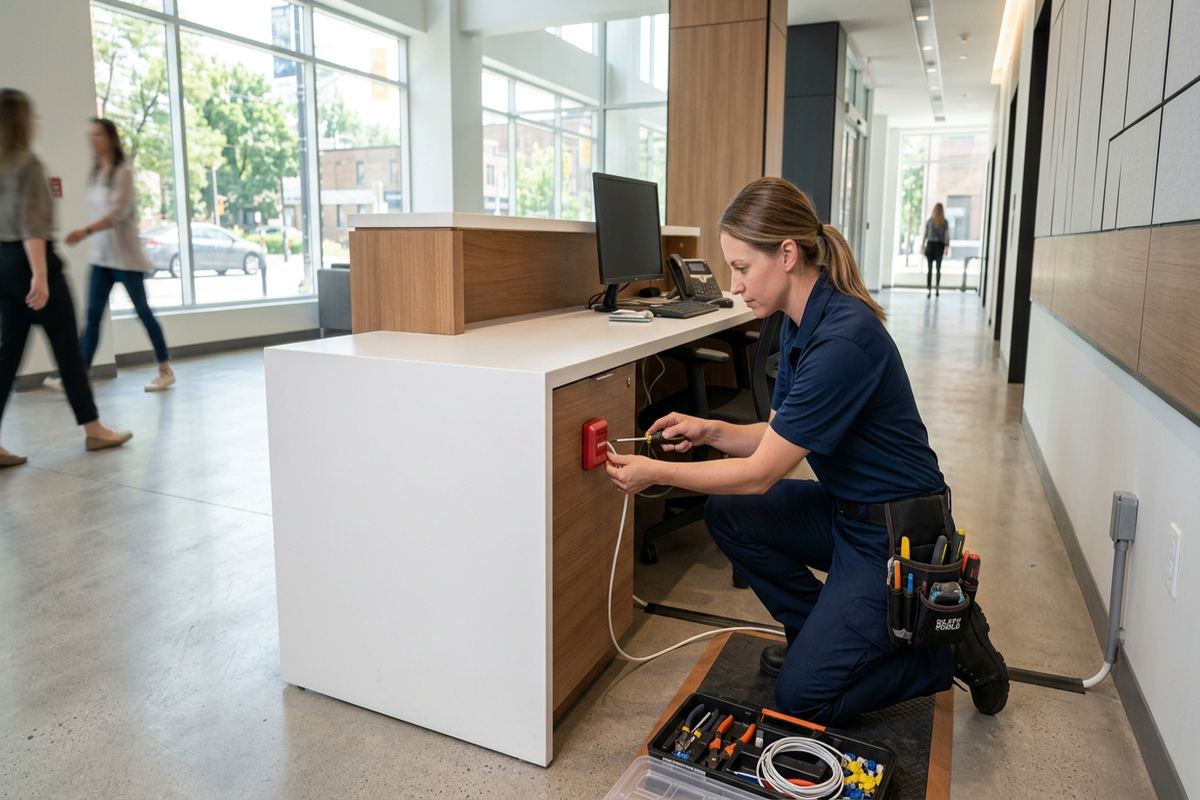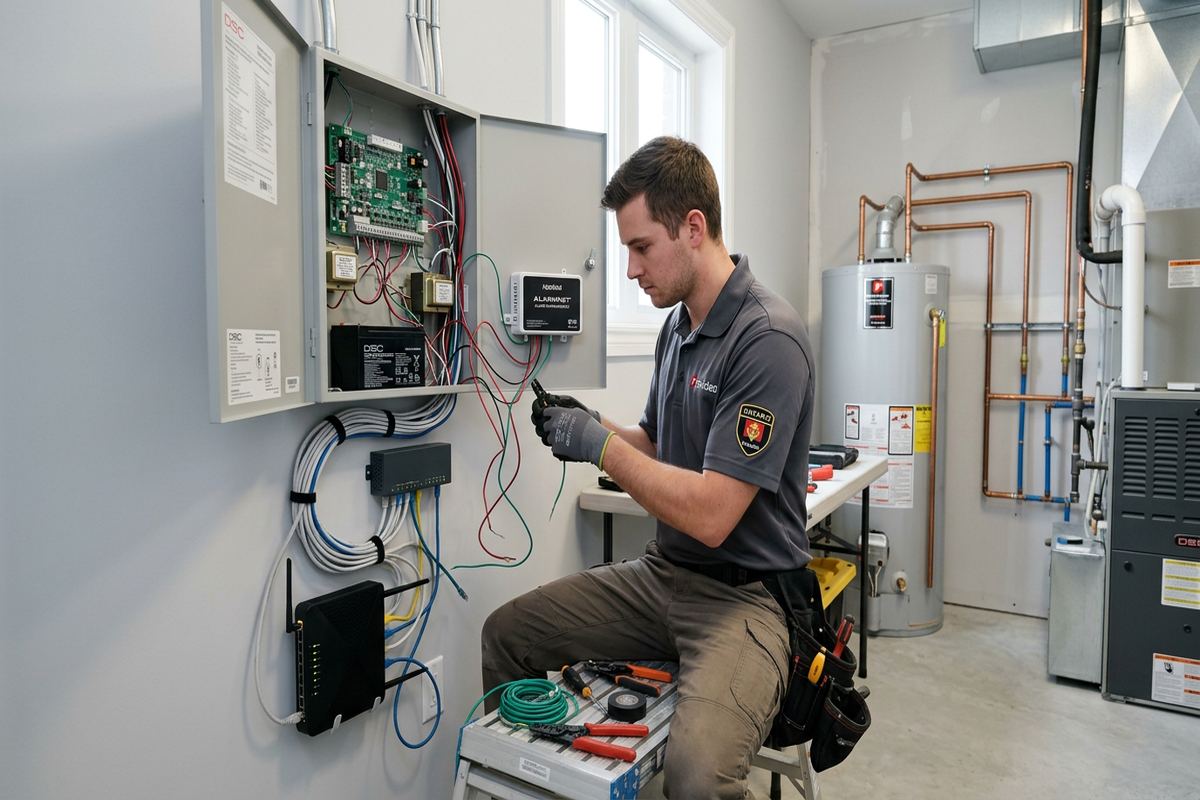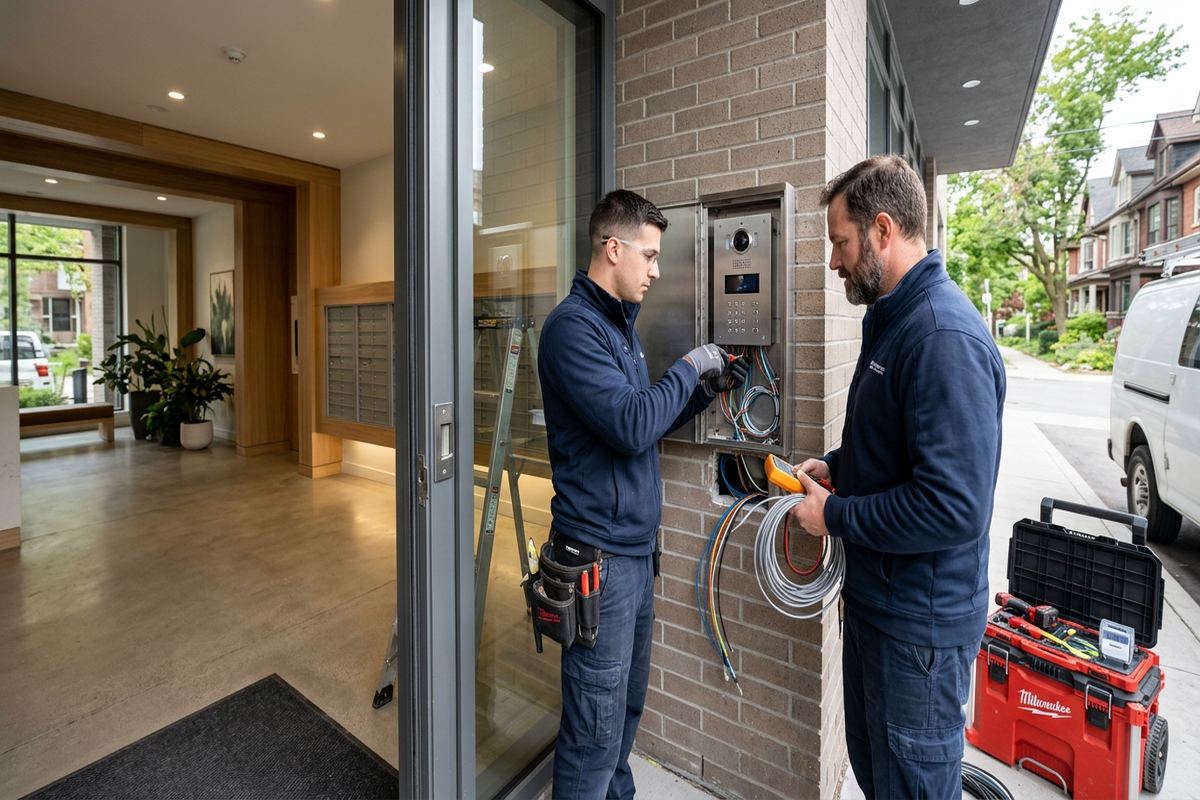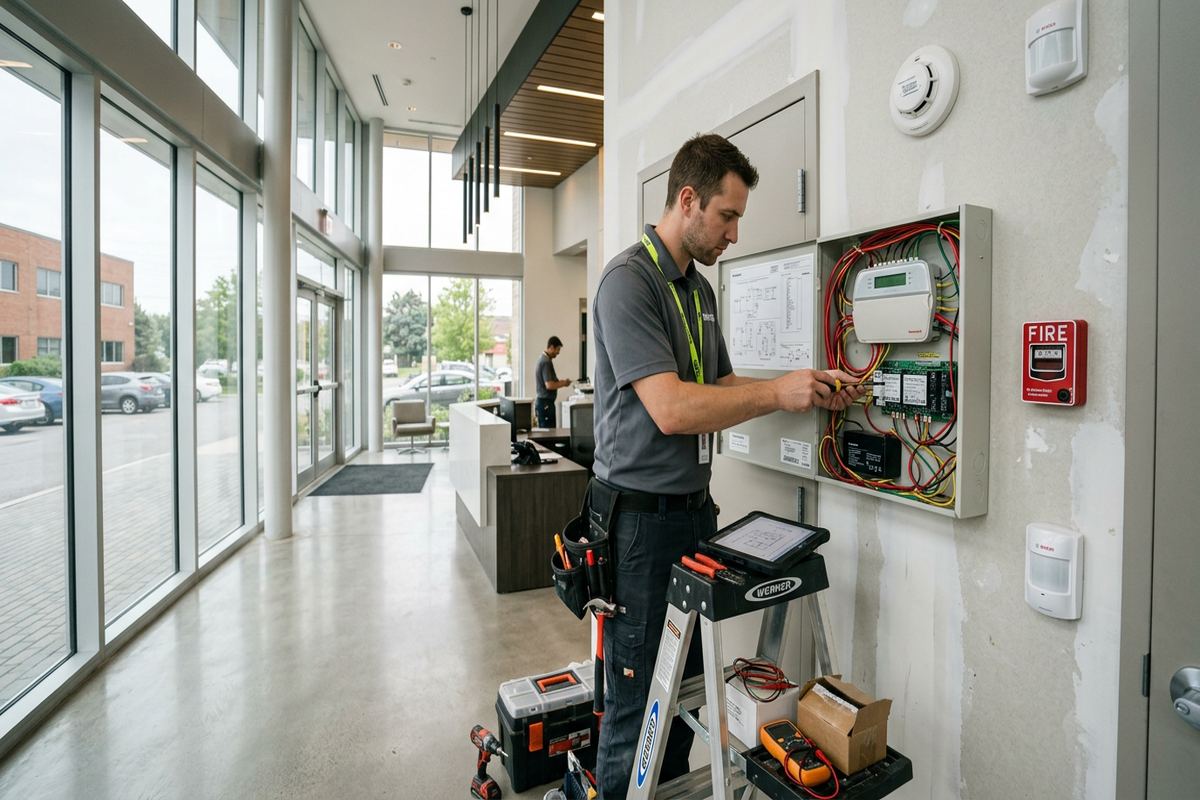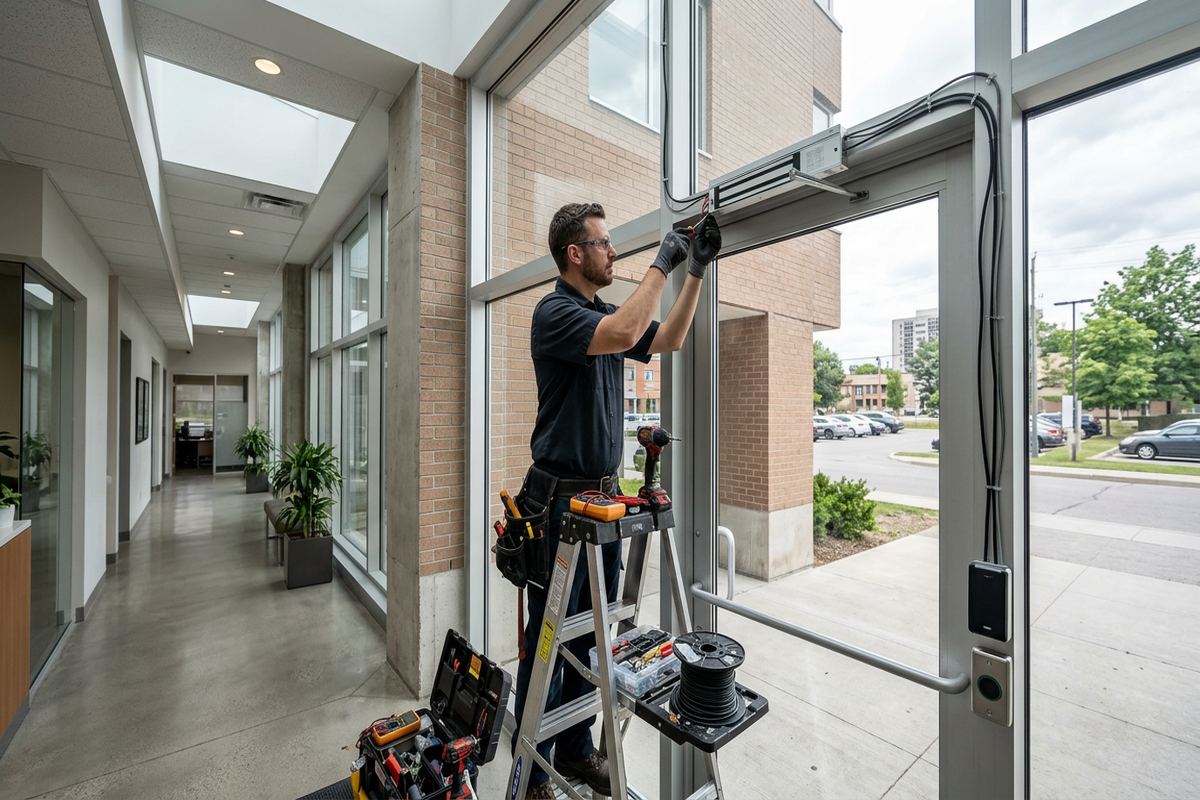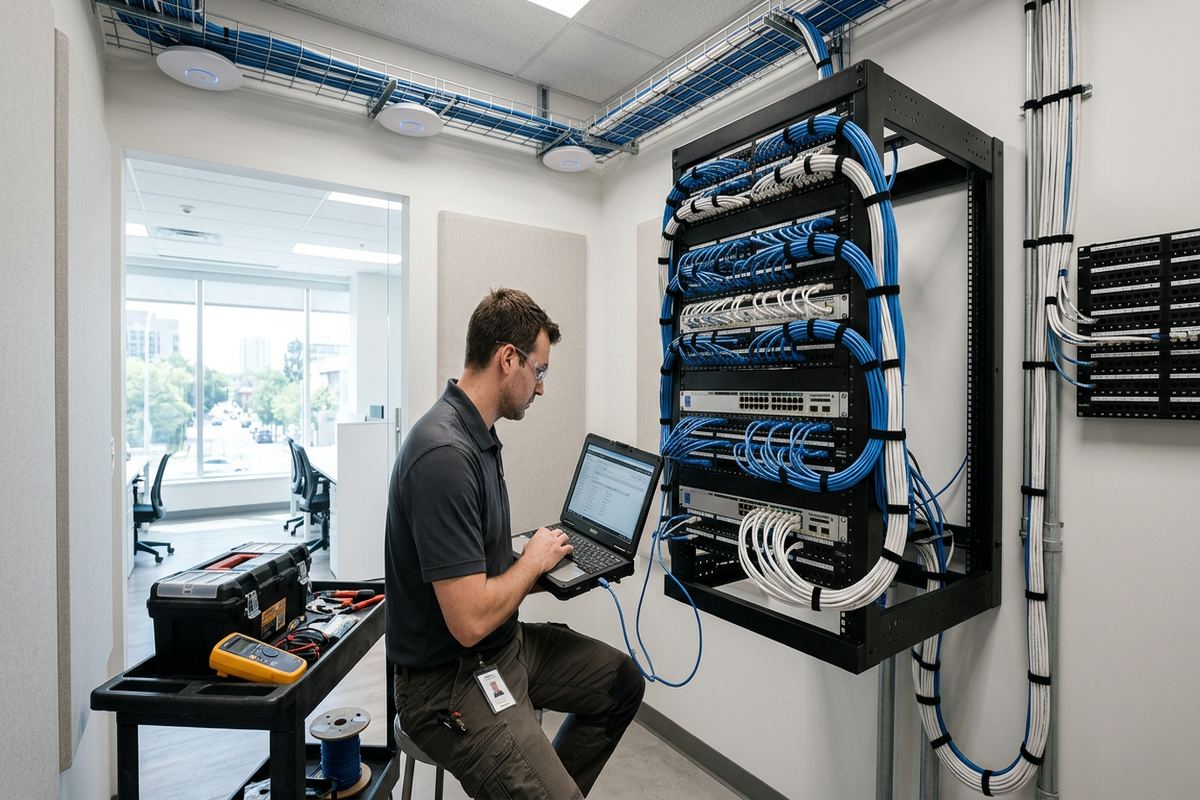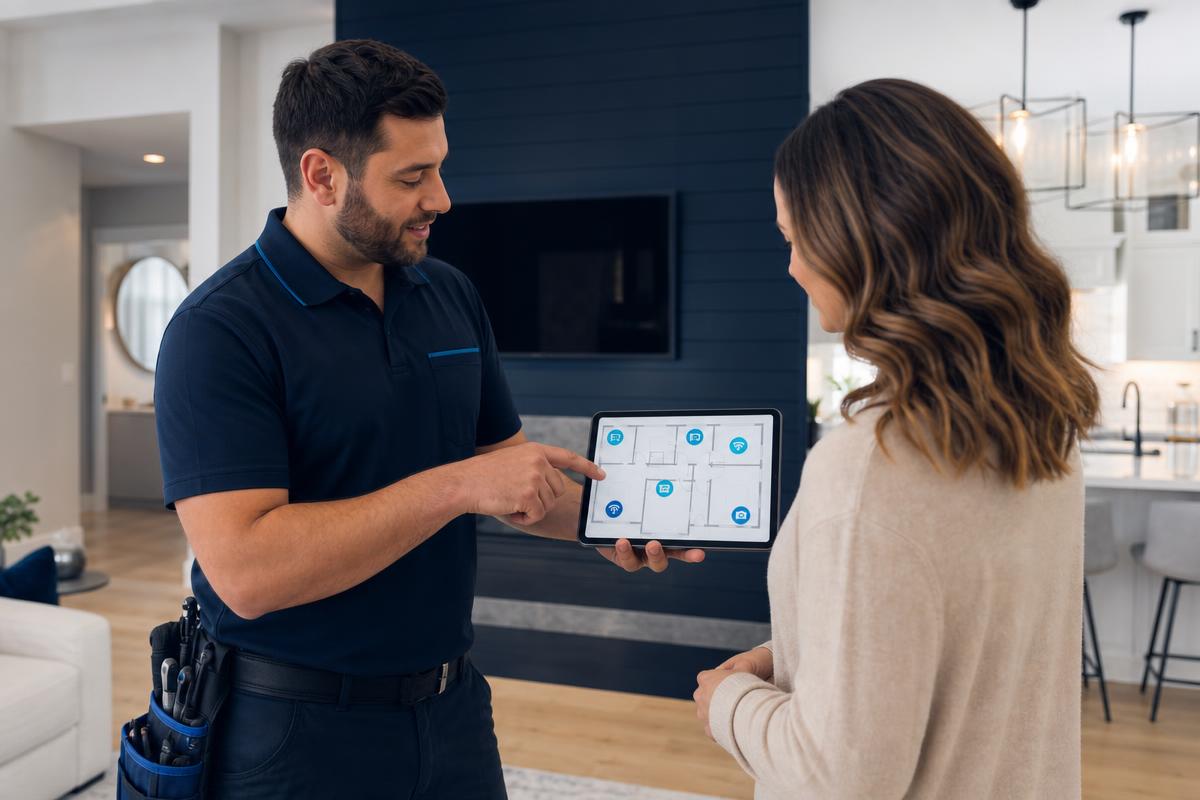
UnifiedLink installs wireless alarm systems for Bowmanville homes, commercial spaces and industrial units. We assess the property, identify practical sensor locations, configure the system on site and test each device. The completed installation includes customer-controlled credentials, clear operating instructions and an as-built record showing installed equipment and placement.
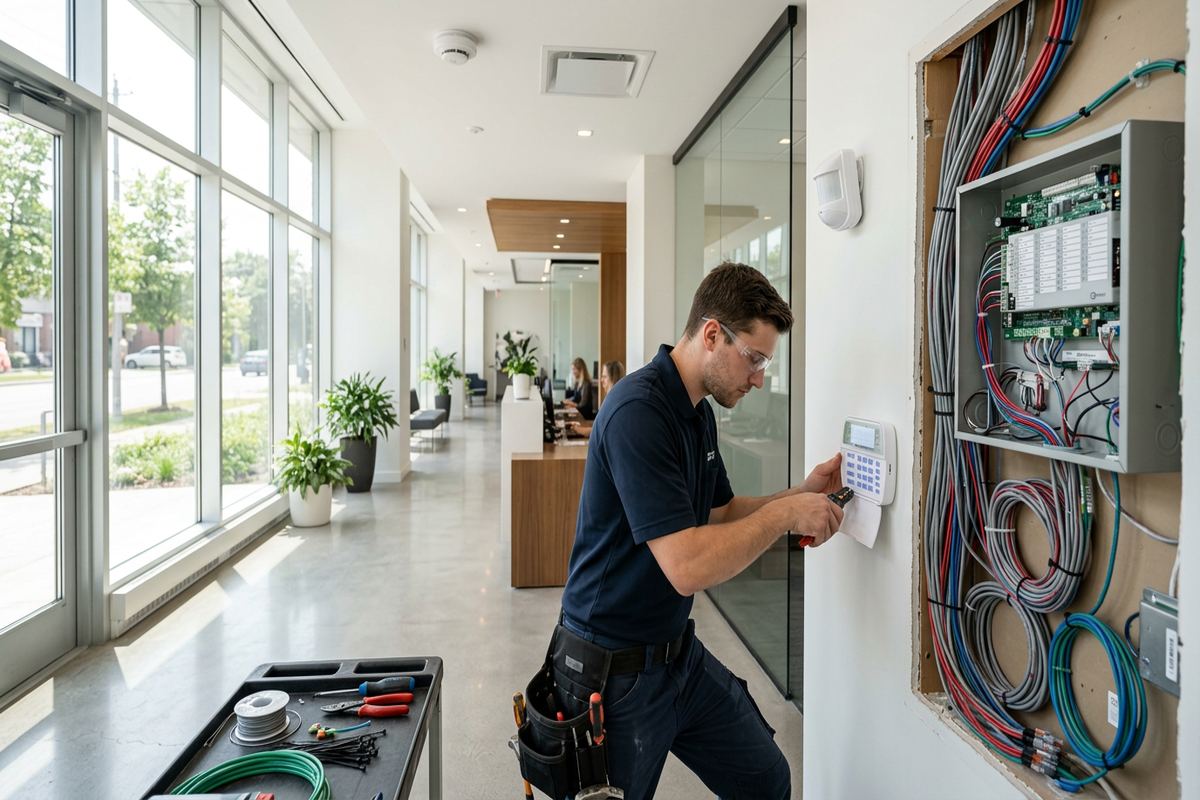
Wireless Alarm Planning for Bowmanville Properties
A wireless alarm should be planned around the building rather than selected from a generic equipment list. In Bowmanville, a historic main street and rapid subdivision growth on the west side create different installation conditions. Older properties may have additions, thick finished walls or limited cable access, while newer homes can offer cleaner routes for powered devices and network connections. We begin with a site assessment, review entrances and vulnerable areas, confirm how occupants use the property, and identify environmental conditions that could affect sensor placement, signal strength or dependable day-to-day operation.
Wireless does not mean every component operates without wiring. Door contacts, motion detectors and key fobs commonly communicate by radio, but the control panel, communicator, siren or touchscreen may still require power and, in some systems, an Ethernet connection. Backup batteries also need accessible, protected locations. The assessment separates wireless functions from required power and communication paths so that expectations are clear. This is particularly useful during renovations or pre-wire work, when selected cable runs can improve reliability without requiring wired sensors at every protected opening or room.
The written scope sets out equipment, proposed device placement, cable routes, exclusions, equipment ownership and warranty information before installation proceeds. It also records whether monitoring, cellular communication, internet features or local-only operation are part of the project. For Bowmanville landlords, condominium owners and commercial tenants, the scope can identify work that depends on property-management, owner or board approval. Keeping these details in one document reduces uncertainty about penetrations, exterior devices, shared areas, account control and responsibility for internet service or future battery replacement.
- Property use and occupancy review
- Door, window and motion coverage plan
- Power, network and cellular checks
- Written equipment and placement scope
- Approval requirements identified before work
Choosing Wireless Alarm Devices in Bowmanville
Device selection starts with the opening, room or condition being monitored. Standard magnetic contacts can suit many doors and windows, while recessed, surface-mounted or specialty contacts address different frames and clearances. Motion detectors require clear fields of view and must be positioned around stairs, heating sources, pets and moving objects. Glass-break sensors, water sensors, low-temperature devices, smoke or carbon monoxide interfaces and panic buttons may be considered where appropriate. Each device must be compatible with the chosen platform; similar-looking wireless products often use different frequencies, encryption methods or manufacturer-specific communication protocols.
Bowmanville winters make environmental ratings and placement important, particularly for detached garages, vestibules and exterior-facing doors. Cold conditions can reduce battery performance, while repeated freeze-thaw cycles can affect exposed seals, gaps and mounting surfaces. An indoor sensor should not be placed outside simply because it fits the location. Where exterior equipment is included, we review its rated operating range, mounting hardware and exposure to snow, water and direct sun. Penetrations are sealed appropriately, cables are protected, and devices are positioned to allow service without creating avoidable water-entry paths.
The alarm platform also determines how users arm, disarm and receive notifications. Options may include a keypad, touchscreen, app, key fob or individually assigned user codes. We discuss who needs access, whether temporary users require limited permissions, and how a business will handle opening and closing responsibilities. App features depend on the selected equipment, account arrangement and available internet or cellular service. During configuration, the customer receives credentials under their own control rather than relying on an installer-owned login, which supports orderly administration and future changes to users, schedules and notifications.
- Compatible contacts and motion detectors
- Environmental ratings checked for location
- Individual user permissions and codes
- App and communicator options reviewed
- Customer-controlled administrator credentials
Retrofit Alarm Work in Older Bowmanville Buildings
Downtown Bowmanville includes older building stock where finished trim, masonry walls and previous renovations can complicate otherwise simple alarm work. Wireless sensors reduce the need to open walls, but mounting still requires care. Uneven frames, deep mouldings, steel doors and settled openings may prevent a standard contact from aligning correctly. Masonry can also affect radio paths between sensors and the control panel. We inspect the actual surfaces, test communication from proposed positions and select mounting methods that protect existing finishes while keeping devices stable, accessible and properly aligned through normal door or window movement.
Older mixed-use properties may combine storefronts, offices, apartments, basements and rear service areas built at different times. Alarm zones should reflect these boundaries instead of treating the entire building as one space. A commercial tenant may need independent arming for its unit, while shared corridors, utility rooms or residential areas remain under separate control. Before installing equipment in leased or common areas, written landlord or property-management approval may be required. Fire separations, heritage-sensitive finishes and concealed conditions can also limit drilling or cable routes, so exclusions and approval responsibilities are recorded in the scope.
A retrofit often uncovers abandoned alarm parts, unidentified wiring or a panel connected to an account the current occupant cannot access. Existing components are not assumed to be compatible or serviceable. We identify visible equipment, test reusable wiring where it is included in scope, and explain which parts can integrate with the new platform. Any new wired sections use continuous labelled cable runs rather than hidden, undocumented splices. At handover, the as-built record distinguishes retained equipment from new devices and lists sensor locations, zone names and relevant cable destinations for future service.
- Non-invasive options for finished interiors
- Radio testing around masonry walls
- Separate zones for mixed-use spaces
- Existing equipment compatibility review
- Retained and new devices documented
Bowmanville, Ontario
Wireless alarm installation in Bowmanville, scoped in writing first
Book a site assessment and get equipment, routes, exclusions, and warranty on paper before anything is installed.
New Subdivision and Pre-Wire Options
Rapid subdivision growth on Bowmanville’s west side keeps pre-wire planning relevant even when the final alarm will use wireless sensors. Construction access allows cables to be installed for the control panel, keypads, sirens, network equipment or selected contacts before drywall closes the walls. This can reduce visible wiring and preserve wireless capacity for locations where cabling is impractical. The plan should be coordinated with framing, insulation, electrical work and cabinetry so that device boxes, cable exits and equipment locations remain accessible after finishes, built-ins and appliances are installed.
New construction does not automatically produce good alarm coverage. Large open layouts, attached garages, multiple exterior doors and finished basements still require deliberate zoning and sensor placement. In Northglen and other developing residential areas, the panel location should support radio communication without being placed beside large metal equipment, electrical infrastructure or other sources of interference. Motion detectors need useful views that are not blocked by future furnishings. Door contacts must also account for the final door and frame materials, because temporary construction openings may differ from completed assemblies and installed hardware.
Pre-wire documentation matters because cables can become difficult to trace once walls are closed. UnifiedLink installs continuous labelled cable runs within the agreed scope and records their endpoints. During final installation, cables are terminated, devices are configured on site, and wireless communication is tested under completed building conditions. If construction changes affect a planned location, the variation is reviewed rather than concealed behind an unsuitable placement. The final as-built record identifies installed devices, zone names and cable destinations, giving the property owner practical information for service, additions or later integration work.
- Panel, keypad and siren pre-wires
- Continuous labelled cable runs
- Coordination before drywall installation
- Final radio and device testing
- As-built cable and zone record
Alarm Coverage for Bowmanville Homes
Residential alarm design should follow how the household enters, leaves and sleeps. Perimeter contacts can identify an opened door or window, while interior motion detection provides another layer when the home is unoccupied. Entry delays must allow practical travel from the usual entrance to the keypad without leaving excessive time for other protected areas. In Liberty, Waverley and Port Darlington, layouts vary from established detached homes to newer townhomes and waterfront-area properties, so sensor quantities and locations should be based on the individual floor plan rather than neighbourhood assumptions.
Pets, children and multigenerational households can change how a system should operate. A motion detector described as pet-tolerant still needs correct height, orientation and environmental conditions; it is not a substitute for evaluating the animal’s size, movement and access to furniture. Bedrooms may require convenient arming modes that keep selected perimeter zones active while occupants move inside. We also discuss user codes for family, cleaners or caregivers, along with notification settings that avoid sharing one code among everyone. Clear zone names make alerts easier to interpret during routine use.
Garages, sheds and detached structures need separate consideration because distance, construction materials and temperature can affect wireless communication. A metal garage door or insulated steel cladding may reduce signal strength, and an unheated space can fall outside a device’s operating range during Bowmanville winters. We test proposed locations and determine whether compatible repeaters, wired links or differently placed equipment are appropriate. Water and low-temperature sensors may also be useful near mechanical areas, but they must be located where they can detect the intended condition without frequent accidental contact or damage.
- Perimeter and interior protection planning
- Practical entry and exit delays
- Pet and household movement review
- Detached structure signal testing
- Clear user codes and zone names
Business Alarm Installation in Bowmanville
Commercial alarm systems must match operating routines as well as physical risks. Along Bowmanville’s commercial strips, a shop may need contacts on front and rear doors, motion coverage after closing, and separate permissions for managers, employees or cleaners. Stockrooms and offices can be assigned distinct zones where the platform supports partitioning. Hold-up or panic devices require careful discussion about purpose, placement and response procedures. The written scope identifies included areas and exclusions so that loading spaces, shared corridors, outdoor storage or neighbouring tenant areas are not mistakenly assumed to be protected.
Industrial units introduce taller spaces, metal construction, overhead doors and changing storage layouts. Racking, machinery and partition walls can alter wireless paths or block motion-detector views after installation. We assess the intended finished arrangement and test devices in representative conditions where possible. Overhead-door contacts must accommodate movement, vibration and the door hardware without being exposed to routine impact. Offices within the same unit may need different arming schedules from warehouse areas. Where internet service is unreliable or controlled by a landlord, communicator options and account responsibilities are addressed before configuration.
Businesses also need controlled handover when staff roles change. Named users or unique codes provide clearer administration than one shared credential, and permissions can be limited where supported by the platform. UnifiedLink configures the installed equipment on site, tests each zone and reviews common operations with the designated customer contact. The customer receives its own administrator credentials and an as-built record rather than depending on an installer account. Monitoring arrangements, notification recipients and third-party response procedures remain clearly distinguished from the physical installation and are included only when stated in the written scope.
- Front, rear and overhead-door contacts
- Partitions for offices and stock areas
- Role-based users and permissions
- Wireless testing around metal construction
- Documented handover to designated contact
Installation, Testing and Handover
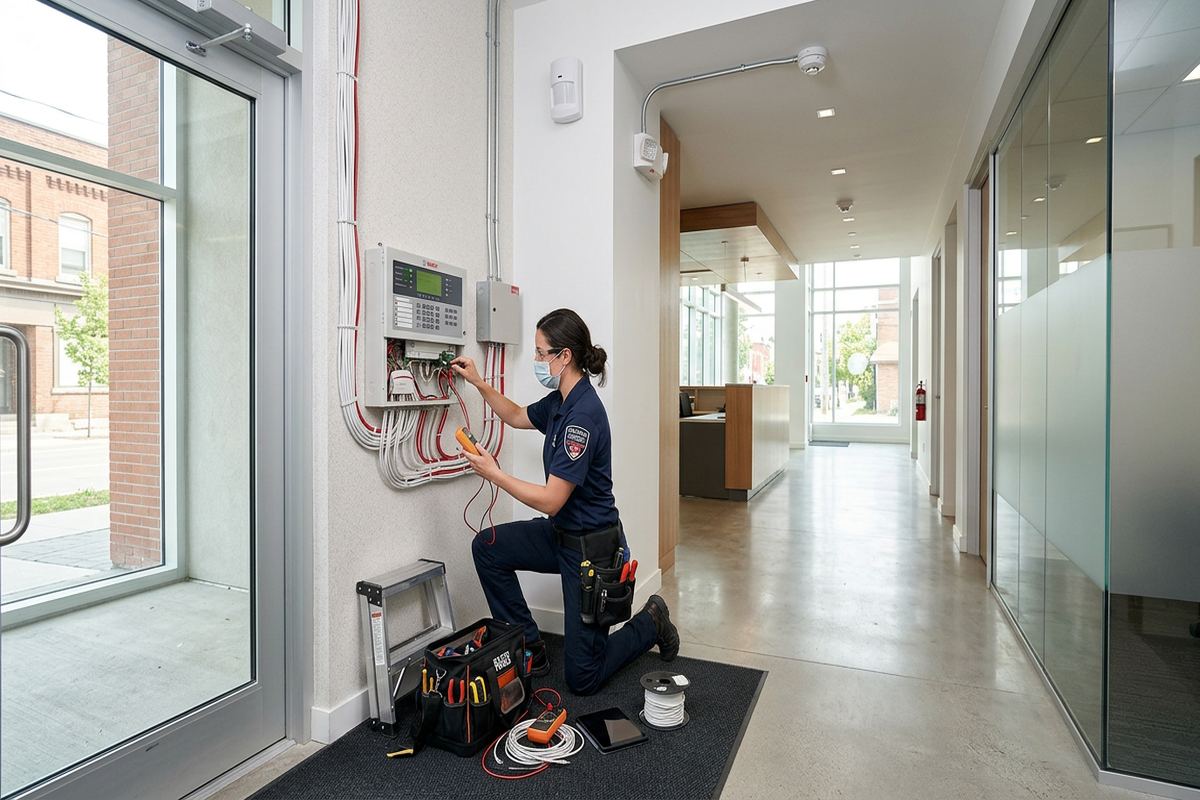
On installation day, device positions are confirmed before drilling or fastening begins. Mounting surfaces are checked for concealed services, trim movement and adequate clearance. In frame construction, fasteners are selected for the available substrate; in masonry, appropriate anchors and controlled penetrations are required. Exterior-facing work receives particular attention because poorly sealed holes can admit water during rain, snowmelt and Bowmanville freeze-thaw cycles. Cables included in the scope are routed continuously, labelled at useful endpoints and protected where exposed. Work areas are kept orderly while each completed device is added to the system.
Configuration turns installed hardware into a usable alarm. Sensors receive clear zone names, entry and exit behaviour is assigned, siren functions are checked, and user access is created according to the agreed plan. Wireless signal and device status are tested from installed positions rather than assumed from product range claims. App access, notifications and communication paths are verified where included and supported by active customer services. Testing also covers tamper conditions, low-battery reporting where practical, and restoration after an alarm event. Any limitation identified during commissioning is explained before the system is handed over.
Handover includes practical instruction for arming, disarming, bypassing an approved zone, reviewing events and responding to common trouble messages. The customer receives credentials under its own control, along with an as-built record showing device locations, zone names and relevant cable information. Equipment ownership and warranty details follow the written scope. UnifiedLink remains one accountable contractor for the installation rather than dividing responsibility among separate cabling and configuration providers. Requests sent during business hours are answered the same day; after-hours requests are answered the next business day.
- Mounting locations confirmed before drilling
- Exterior penetrations sealed appropriately
- Every installed zone function-tested
- Customer credentials transferred at handover
- As-built device and cable record
Arranging a Bowmanville Alarm Assessment
A site assessment is completed before pricing because alarm requirements depend on the property, coverage goals and available communication services. For a Bowmanville home, we review typical entry routes, accessible openings, sleeping areas and detached structures. For a business, the discussion also covers operating hours, staff roles, controlled areas and opening or closing procedures. Existing alarm equipment, network access, cellular conditions and suitable power locations are noted. Site assessment timing depends on the service and travel distance, so the appointment window is confirmed after the property details and requested scope are reviewed.
Before the visit, owners can gather floor plans, renovation information and details about any existing panel or monitoring account. Tenants should confirm whether landlord approval is required for drilling, exterior equipment, common-area work or changes to communications services. Condominium owners may need board or property-management approval even when most sensors are wireless, particularly for exterior doors, windows or shared building elements. Photos can help with initial discussion, but they do not replace checking construction, clearances, radio conditions and cable routes at the Bowmanville property before equipment and labour are defined.
Following the assessment, the written scope identifies equipment, placement, cable routes, exclusions, ownership and warranty information. It also states whether monitoring, app services, cellular communication, removal of old equipment or integration with existing devices is included. This gives the customer a practical basis for reviewing the proposed system without relying on assumptions. Once the scope is accepted and approvals are in place, installation can be scheduled. The work then proceeds through mounting, labelling, on-site configuration, testing and documented handover under one accountable contractor for the agreed alarm installation.
- Assessment completed before pricing
- Existing equipment and services reviewed
- Landlord or condo approvals identified
- Written scope before scheduling
- Installation and handover under one contractor
Bowmanville neighbourhoods we cover
- Downtown Bowmanville
- Waverley
- Northglen
- Liberty
- Port Darlington
Wireless alarm installation in Bowmanville — common questions
Will a wireless alarm work in an older Bowmanville home?
Often, but the building must be assessed. Masonry, additions, metal ductwork and older door frames can affect wireless communication or sensor alignment. UnifiedLink tests proposed locations and selects compatible mounting methods. Wireless equipment can reduce wall openings, although panels, communicators and some accessories still require power or cabling. Existing alarm wiring may be reused only when its condition and compatibility are confirmed.
Do wireless alarm sensors work during Bowmanville winters?
Indoor devices generally operate within their specified temperature range, but unheated garages and exterior locations need equipment rated for those conditions. Cold can affect battery performance, and freeze-thaw cycles can stress exposed mounts or seals. We check environmental ratings, mounting surfaces and radio performance before placing equipment in garages, vestibules or exterior areas. Indoor-rated devices are not installed outdoors simply because they communicate wirelessly.
Can you install an alarm in a condo or rental unit?
Yes, subject to the property’s rules and the owner’s approval requirements. Bowmanville tenants and condominium owners may need written authorization for drilling, exterior contacts, shared areas or communication equipment. Wireless sensors can limit invasive work, but they do not remove every approval requirement. The proposed device locations, cable routes and exclusions are documented so the customer can obtain any necessary landlord, board or property-management consent before installation.
Can my existing alarm sensors be reused?
Possibly. Reuse depends on the manufacturer, wireless protocol, device age, physical condition and compatibility with the proposed panel. Existing wired contacts may also be usable when the wiring can be identified and tested. At a Bowmanville assessment, visible components and accessible wiring are reviewed. The written scope distinguishes retained equipment from new equipment and does not assume that an old sensor will communicate with a current platform.
Will I control the alarm through my own account?
Yes. At handover, the customer receives credentials under their own control for the installed system and included app services. We can create individual users or codes where the selected platform supports them. The as-built record lists device locations and zone names. Monitoring or cellular accounts are handled according to the written scope, since app availability and remote notifications may depend on active third-party communication services.
How quickly can a Bowmanville assessment be arranged?
Timing depends on the requested service and travel distance. Requests sent during business hours are answered the same day, while after-hours requests are answered the next business day. During that response, we gather the Bowmanville property type, location, existing-equipment details and coverage goals. An assessment appointment can then be discussed. Pricing is prepared after the site assessment and definition of the written installation scope.
Coverage in Bowmanville is confirmed against the address before we quote. See everything we install in Bowmanville or the province-wide wireless alarm installation page.