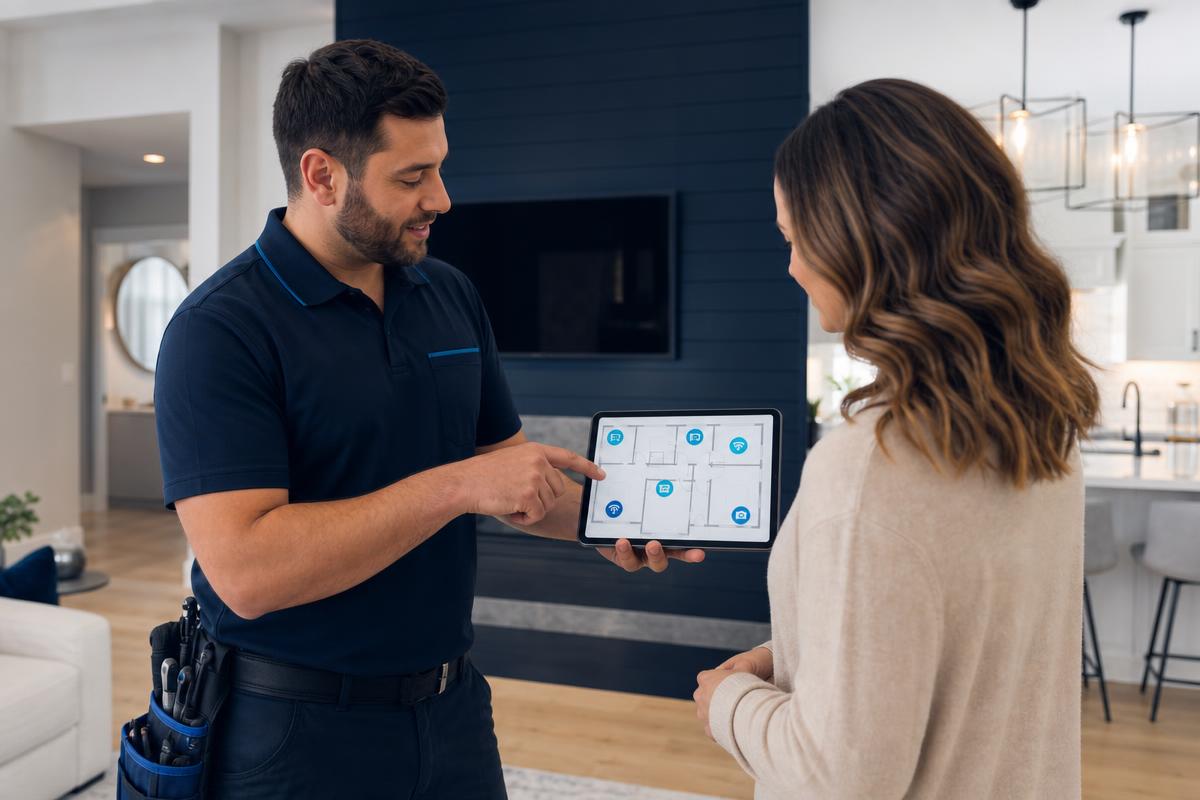
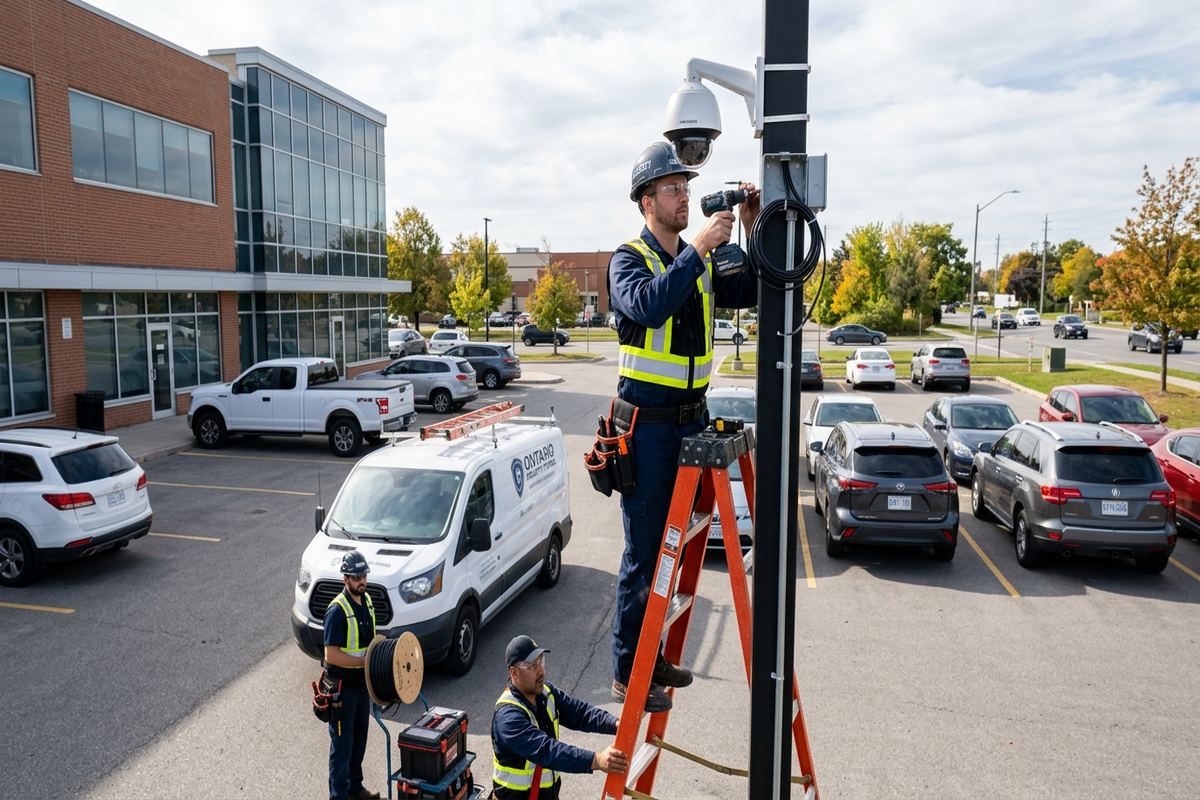
UnifiedLink installs wired and wireless security camera systems for homes, condos, rental properties and small businesses in Bowmanville. Each project starts with a site assessment covering sightlines, lighting, cable routes, mounting surfaces and network capacity. The result is a clearly scoped system configured on site and handed over using credentials controlled by the customer.
Security Camera Planning for Bowmanville Properties
Effective camera coverage starts with the property rather than a standard equipment package. During a Bowmanville site assessment, we review entrances, driveway approaches, side passages, garages, decks and other areas where useful identification or activity coverage is required. Camera height, lens angle, lighting and likely movement all affect the result. We also identify privacy concerns, possible obstructions and locations where trees, vehicles or seasonal decorations may block the view. This process creates a practical camera plan before equipment models, recording capacity and installation details are finalized in a written scope.
Bowmanville includes older properties around the historic main street and newer subdivision homes toward the west side. Those building types often require different installation methods. A finished older house may need discreet retrofit routes through basements, attics or utility spaces, while a new build may allow camera cable to be installed before insulation and drywall. We assess framing, masonry, soffits and accessible chases instead of assuming every wall can be approached the same way. Cable routes are discussed in advance so visible wiring, unnecessary penetrations and difficult future maintenance can be reduced.
Placement decisions should reflect what the homeowner needs to see, not simply where a camera is easiest to mount. A wide overview may confirm that somebody entered a yard, while a more focused view may be needed to identify a face or vehicle. We define the purpose of each position and check daytime and night-time conditions where possible. The written scope covers equipment, cable routes, device placement, exclusions, equipment ownership and warranty. That gives Bowmanville customers a clear reference for the installation and avoids relying on informal assumptions once work begins.
- Entrance, driveway and side-yard coverage review
- Day and night sightline planning
- Retrofit and pre-wire route assessment
- Privacy and neighbouring-property considerations
- Written equipment and placement scope
Wired and Network Camera Options in Bowmanville
A wired Power over Ethernet camera system is often the most stable choice for permanent home coverage. One network cable carries power and data between each camera and a recorder or network switch, reducing dependence on exterior power outlets and household Wi-Fi. For Bowmanville retrofits, the main question is whether continuous cable routes can reach the selected positions without excessive surface wiring or disruptive opening of finished areas. Where routes are practical, we install continuous labelled runs and terminate them at an accessible, planned location rather than joining short cable sections inside concealed spaces.
Wireless cameras can be appropriate where cable access is limited, but wireless does not always mean cable-free. Many devices still require local power, and performance depends on signal strength, interference, building materials and network configuration. Brick, masonry, foil-backed insulation and distance from the access point can weaken connectivity. Battery cameras also introduce charging and power-management requirements. We explain these trade-offs during the assessment so a Bowmanville homeowner can compare convenience with recording continuity, image access and maintenance. A mixed system may be considered when wired service is practical for critical views but not every location.
Recorder-based systems keep footage on equipment at the property, while cloud-connected products may store some or all video through a service provider. The appropriate design depends on retention needs, internet reliability, remote access preferences and who should administer the account. We review recorder placement, ventilation, storage capacity and network connections without promising a fixed retention period before camera count and recording settings are known. Configuration is completed on site, including time settings, recording modes and user access. The customer receives their own credentials rather than depending on an installer-controlled account after handover.
- Power over Ethernet camera systems
- Local recorder and remote-viewing setup
- Wireless feasibility and signal review
- Storage planning based on recording needs
- Customer-controlled administrator credentials
Camera Coverage Around the Home
Front-door coverage usually needs to balance facial detail with a wider view of the approach. Mounting too high can show only the top of a visitor’s head, while mounting too low can make the camera easy to reach. Door frames, porch roofs, columns and exterior lights can also create blind spots or night-time glare. In Downtown Bowmanville, older entrances may have decorative trim or masonry that limits straightforward mounting. We select a position and fastening method that respects the surface while still providing a useful angle across the doorway, steps and immediate approach.
Driveways and garages present different challenges because vehicles move through a broad scene and headlights can affect images after dark. A single wide camera may provide general activity coverage but lack detail at the street edge. We consider driveway length, garage projection, parked vehicles and the direction of morning or evening sun. In west-side subdivisions, closely spaced homes also require careful framing to avoid unnecessary coverage of neighbouring windows or yards. The goal is to capture relevant activity on the customer’s property while limiting views that do not serve the stated security purpose.
Side yards, gates and rear doors are often overlooked even though they may provide less visible routes around a home. Narrow spaces can produce strong infrared reflection from nearby walls, downspouts or light-coloured soffits. Backyard cameras may also face moving branches, patio lights and seasonal furniture that affect alerts. Properties near Port Darlington can have more exposed exterior conditions, making secure mounting and weather protection especially important. We test the intended field of view, adjust detection areas where supported and explain that environmental movement can require further tuning after the system has observed normal household activity.
- Front-door identification views
- Driveway and garage approach coverage
- Side gate and narrow passage planning
- Rear entrance and patio monitoring
- Neighbouring-property privacy masking where supported
Bowmanville, Ontario
Home security camera installation in Bowmanville, scoped in writing first
Book a site assessment and get equipment, routes, exclusions, and warranty on paper before anything is installed.
Exterior Camera Installation for Bowmanville Weather
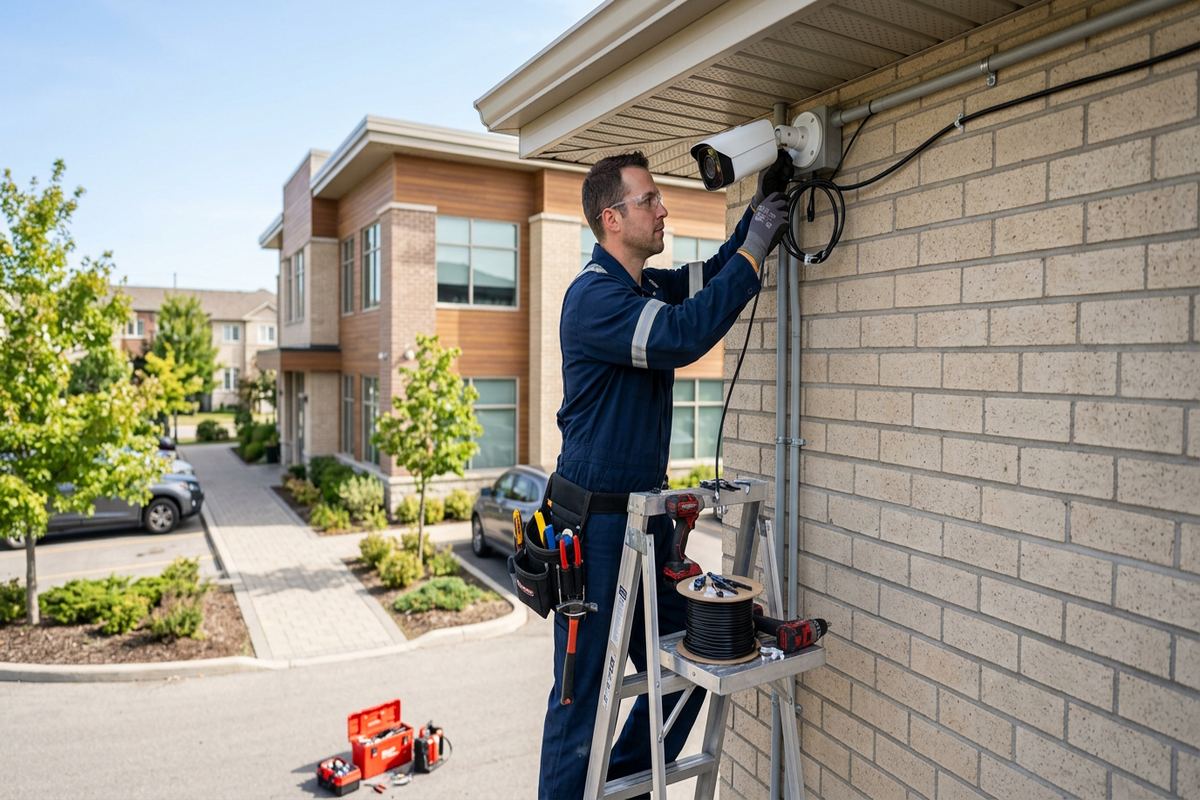
Ontario winters place repeated stress on exterior mounting points, connectors and cable entries. Bowmanville’s freeze-thaw cycles can enlarge poorly sealed penetrations as moisture freezes and expands. We use mounting methods appropriate to the surface, protect cable transitions and seal exterior entries without treating sealant as a substitute for proper flashing or mechanical support. Drip loops and suitable junction points help direct water away from connections. Cameras are positioned so routine snow accumulation, roof runoff and icicles are less likely to obscure the lens or place avoidable strain on the installation.
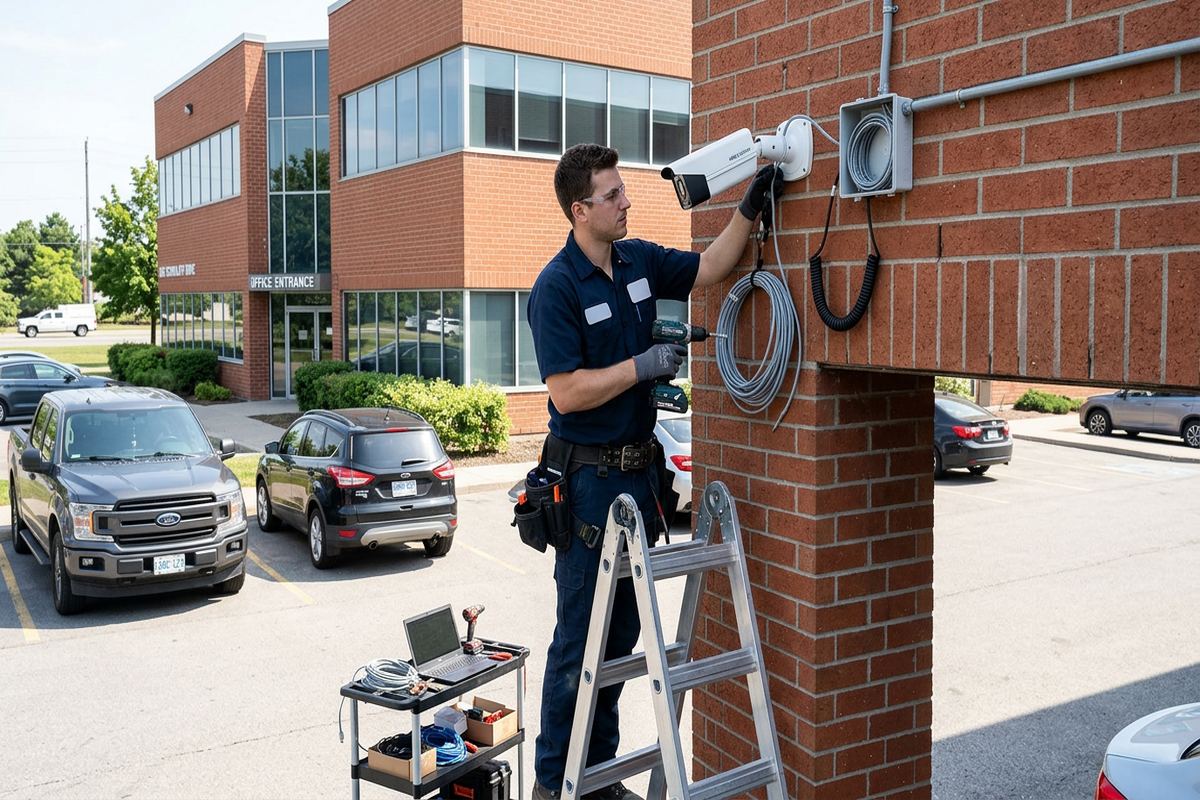
Masonry and frame construction require different fastening and routing techniques. Brick should not be treated like wood siding, and mortar joints, hollow areas or aged materials may affect the chosen anchor point. On frame homes, the installer must consider sheathing, siding profiles and what lies behind the exterior finish. Soffits can offer concealed access, but not every soffit is structurally suitable for direct mounting. During the Bowmanville assessment, we identify the visible surface and likely backing, then document any access limitations that could change the route or require an alternative mounting location.
Outdoor image quality is influenced by more than the camera’s weather rating. Rain, blowing snow, condensation, insects and direct sunlight can all affect useful footage. A position beneath suitable cover may reduce exposure, but deep overhangs can also block the intended view. Nearby exterior lighting may improve colour images or cause glare, depending on its direction and brightness. We configure available image and night settings on site, then verify that housings, junction boxes and cable entries are secured. Customers are shown basic lens cleaning and inspection steps so weather-related issues can be recognized early.
- Surface-specific exterior fasteners
- Sealed cable entry points
- Protected junctions and drip loops
- Freeze-thaw and snow exposure review
- On-site night image adjustment
Retrofits, Pre-Wires and Renovations
Retrofitting a finished Bowmanville home requires route planning before drilling begins. Basements, attached garages, attic spaces and mechanical rooms may provide access, although insulation, fire separations and finished ceilings can restrict movement. We look for a continuous path from each camera to the recorder or network location and identify where any cable must remain visible. Fishing cable blindly can damage finishes or cross unsuitable spaces, so uncertain routes are treated as constraints rather than assumptions. If access openings or other trade work may be needed, those items are stated in the scope before installation proceeds.
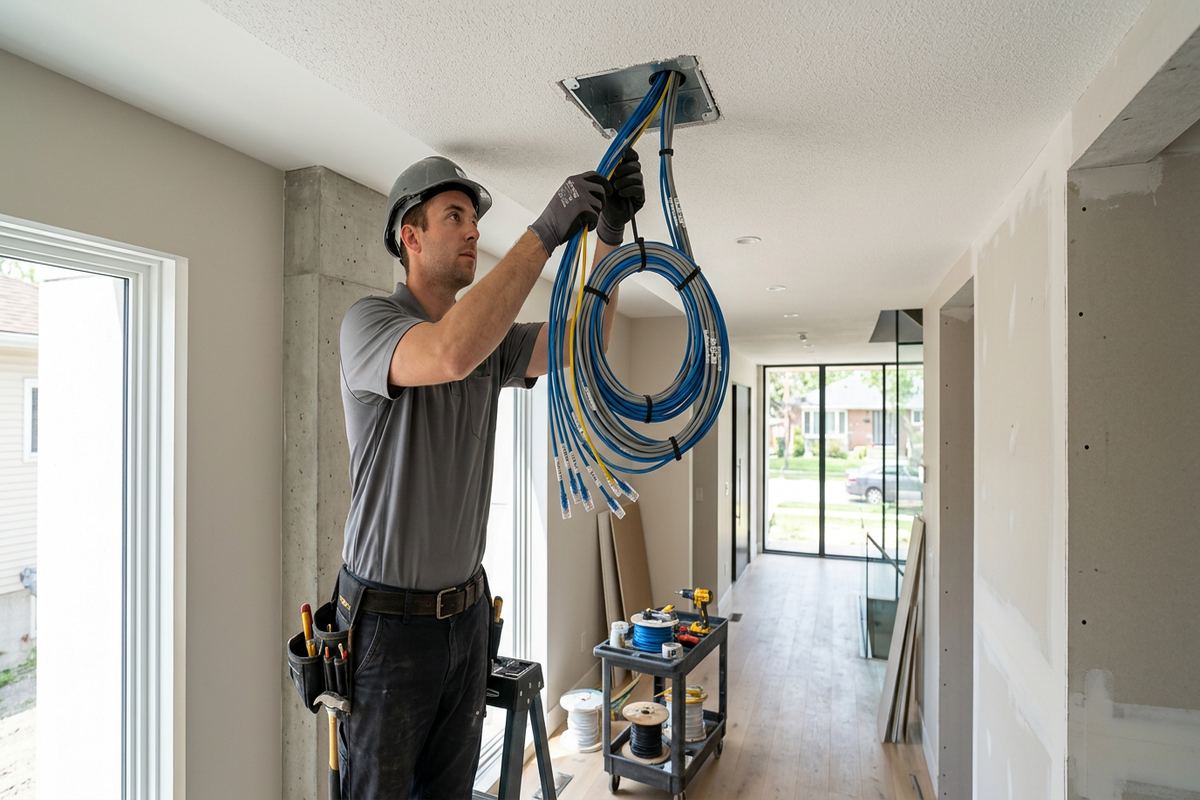
Pre-wire work is most effective when camera locations are coordinated with framing, soffits, electrical service and the planned network area. Rapid subdivision growth on Bowmanville’s west side keeps this type of work relevant for new homes and major renovations. Cable can be run before insulation and drywall, with service loops and labelled ends left at agreed positions. Device locations should still be selected for final sightlines, not simply placed wherever framing is convenient. We record cable destinations so the wiring can be found and terminated accurately when exterior finishes, network equipment and recording hardware are ready.
Renovations can combine new cable routes with existing infrastructure, but old wire should be identified before it is reused. Cable category, conductor material, damage, hidden splices and termination quality can affect power and data performance. We do not assume that an existing camera cable is suitable because its connector looks familiar. Testing and visual inspection help determine whether reuse is reasonable or replacement should be included. For homes in Northglen, Waverley or established central streets, this approach can preserve useful pathways while avoiding dependence on undocumented wiring that may create intermittent faults later.
- Finished-home cable route planning
- Construction-stage camera pre-wiring
- Continuous labelled cable installation
- Existing cable inspection and testing
- Coordination with renovation access
Recording, Networking and Secure Access in Bowmanville
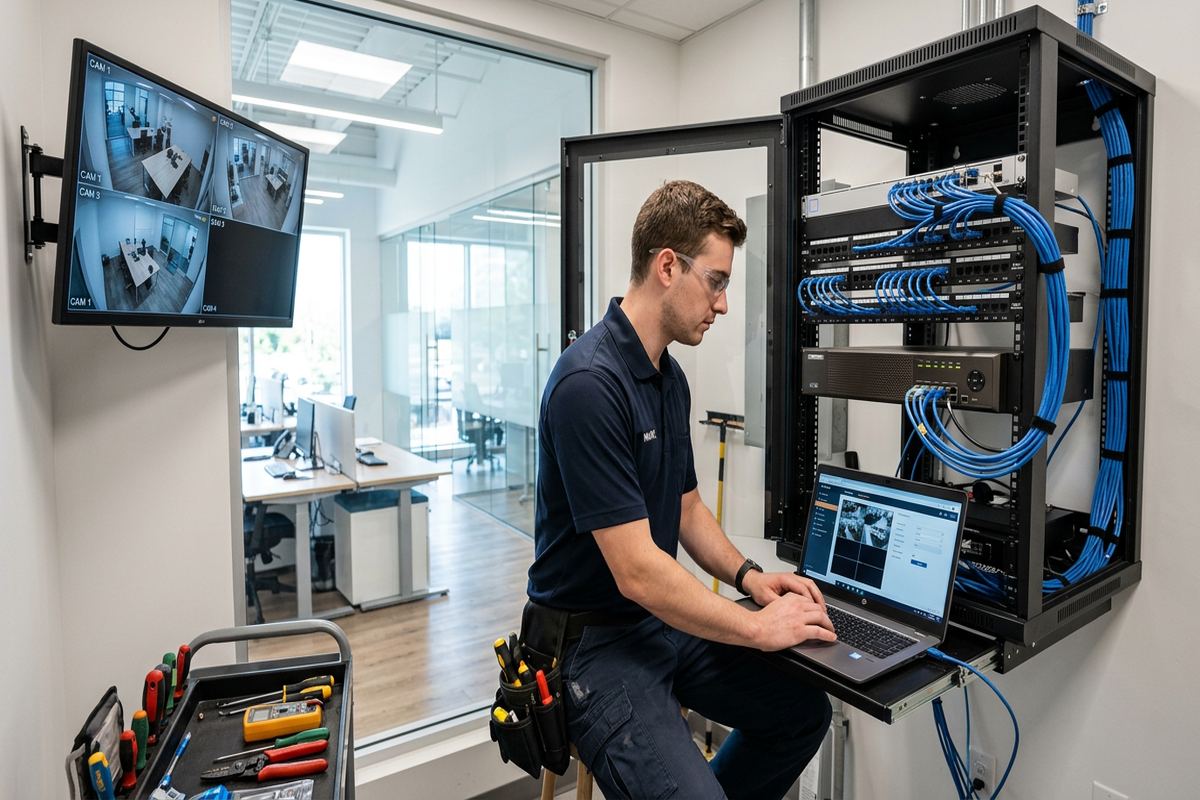
A camera system depends on the network and recording equipment behind it. We assess available switch capacity, router location, internet connection and the proposed recorder area before confirming the design. Recorders need stable power, ventilation and enough physical protection to avoid casual disconnection. Remote viewing may require manufacturer applications or cloud connectivity, but local recording should be configured according to the selected equipment and customer requirements. In Bowmanville homes with weak Wi-Fi areas, we separate the camera problem from the coverage problem rather than assuming a new camera will correct an unsuitable network connection.
Recording duration cannot be stated accurately without knowing the number of cameras, resolution, frame rate, compression, motion settings and installed storage. We discuss the events the customer wants to retain and select settings that balance detail with available capacity. Continuous recording may suit key entrances, while scheduled or event-based recording may be sufficient elsewhere. Detection features can reduce unnecessary review time, but they do not eliminate false alerts. Vehicles, shadows, snow, insects and moving branches can all trigger analytics, particularly during changing Bowmanville weather, so detection zones and sensitivity require practical adjustment.
Secure handover is part of the installation rather than an optional follow-up. We configure the system on site, help the customer establish their own administrator credentials and confirm access from agreed devices. Default passwords are changed where the equipment permits, and account ownership remains with the customer. The as-built record identifies camera names, cable destinations and installed equipment without exposing passwords in an insecure document. We also explain routine tasks such as viewing recorded events, exporting footage and checking camera status, allowing the owner to operate the system without relying on undocumented installer knowledge.
- Network and switch capacity review
- Recorder location and ventilation planning
- Recording schedule configuration
- Detection zone and alert tuning
- Documented, customer-controlled handover
Approvals for Condos and Rental Properties
Condo owners should confirm alteration requirements before exterior cameras or cable penetrations are approved for installation. Exterior walls, balconies, soffits and common hallways may be common elements even when they are beside the unit. A condominium corporation may restrict drilling, visible wiring, camera appearance or views into shared areas. We can provide proposed device positions and route details for the owner’s approval process, but the owner remains responsible for obtaining permission. In Bowmanville condo properties, confirming these conditions early avoids designing around a location that cannot legally or practically be used.
Landlords and tenants also need clear authorization. A tenant should not arrange permanent exterior penetrations or recorder placement without the property owner’s consent, while landlords should consider how footage, accounts and access will be managed between occupancies. Cameras must not be positioned in areas where people reasonably expect privacy. For multi-unit properties, shared entrances and parking areas can raise additional questions about notice, access and data handling. UnifiedLink installs to the approved scope, but property owners should obtain legal guidance when they are uncertain about surveillance obligations or the treatment of recorded footage.
Small commercial strips and industrial units in Bowmanville often combine customer entrances, loading areas, rear doors and shared parking. These sites may need camera coverage outside ordinary residential patterns, along with approval from a landlord or property manager. Cable routes can cross fire-rated assemblies, suspended ceilings or spaces controlled by another tenant, so access and responsibility must be confirmed first. We assess the physical route and operating need, then document exclusions and dependencies. One accountable contractor handles the camera cabling, mounting, on-site configuration and handover within the agreed low-voltage scope.
- Condo alteration requirements identified
- Landlord and owner authorization checks
- Common-area viewing considerations
- Commercial entrance and loading coverage
- Documented access and scope dependencies
Bowmanville Installation Process and Handover
The process begins with a request describing the property, desired coverage and any construction or renovation schedule. Requests sent during business hours are answered the same day; after-hours requests are answered the next business day. Site assessment timing depends on the service and travel distance. At the property, we review camera purposes, mounting surfaces, cable access, network conditions and recorder placement. Photos or drawings may support planning, but they do not replace inspection where concealed routes or exterior materials affect the work. Pricing follows the assessment rather than being based on an unsupported standard package.
After the assessment, the written scope identifies equipment, cable routes, device placement, exclusions, equipment ownership and warranty. This is particularly useful when a Bowmanville project includes both retrofit work and renovation-stage pre-wire. The scope establishes what is included before installation starts and records assumptions that depend on access or work by others. If site conditions differ materially from what could be observed, the change is discussed instead of being concealed in the installation. Customers can review the proposed locations and clarify how each camera supports the required view before authorizing the work.
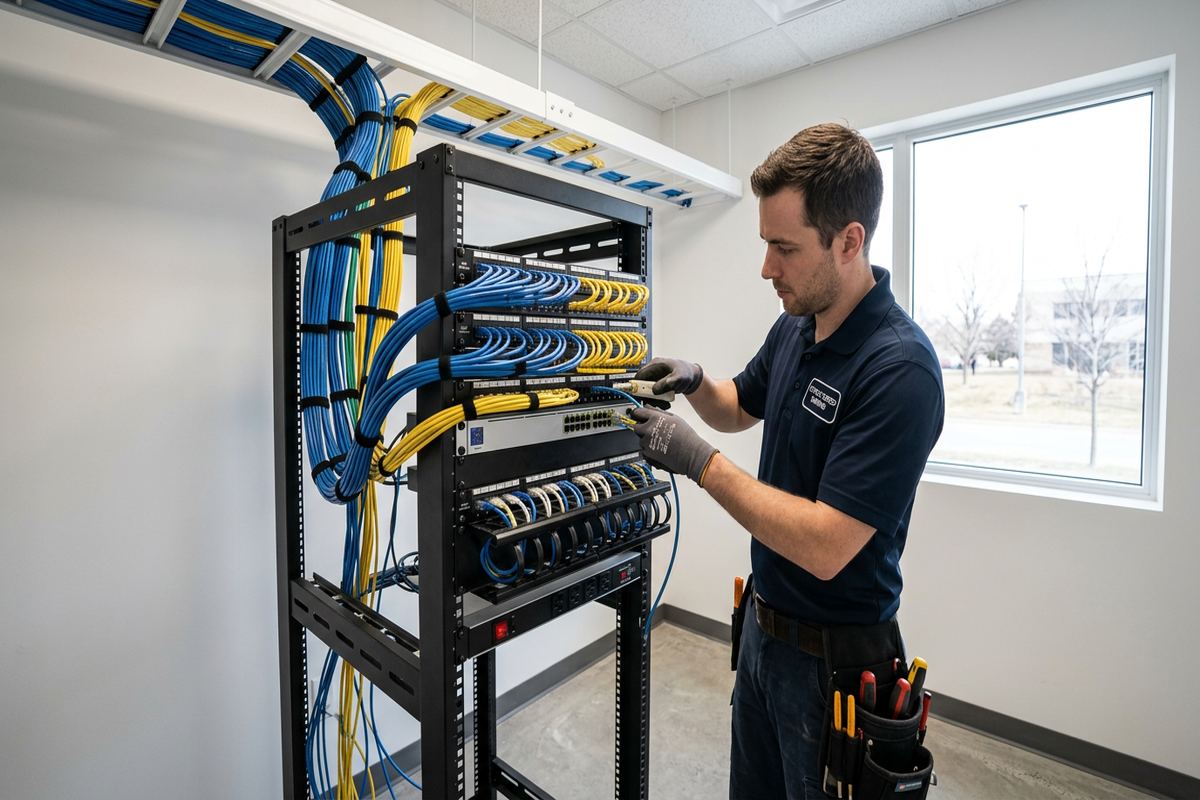
Installation includes cable placement, termination, mounting and on-site configuration within the approved scope. Runs are continuous and labelled, and camera names are set to make live and recorded views understandable. Before handover, we verify camera status, recording operation and agreed remote access. The customer receives credentials under their own control and an as-built record showing equipment and cable destinations. Basic operating steps are reviewed, including playback and footage export. This documented approach gives Bowmanville property owners one accountable contractor for the installed security camera system and its low-voltage connections.
- Site assessment before pricing
- Written scope before installation
- Continuous labelled cable runs
- On-site testing and configuration
- As-built record and operating handover
- One accountable low-voltage contractor
Bowmanville neighbourhoods we cover
- Downtown Bowmanville
- Waverley
- Northglen
- Liberty
- Port Darlington
Home security camera installation in Bowmanville — common questions
How many cameras does my Bowmanville home need?
The number depends on the views you need rather than the size of a standard package. A Bowmanville assessment typically considers front and rear entrances, driveway approaches, garages, gates and side passages. We check whether one camera can cover multiple areas without losing useful detail. Lighting, obstructions, privacy and recording goals also affect the final count and lens selection.
Can you install cameras on an older brick house?
Yes, subject to the condition of the masonry and available cable routes. Older Bowmanville properties may require different anchors, junction locations or interior paths than newer frame homes. We assess brick, mortar, trim, basement and attic access before proposing the route. Exterior penetrations are mechanically secured and sealed for local freeze-thaw conditions, with cable transitions protected from water exposure.
Should I choose wired or wireless cameras?
Wired Power over Ethernet cameras are generally suitable for permanent coverage when continuous cable routes are available. Wireless products can help where routing is impractical, but they still depend on power, signal quality and network stability. In Bowmanville homes with brick, masonry or distant garages, we test or assess connectivity rather than assuming Wi-Fi will be reliable at every proposed camera position.
Do I need condo or landlord approval?
Approval may be required before drilling, mounting equipment or viewing a shared area. Bowmanville condo owners should check whether exterior walls, soffits, balconies and corridors are common elements. Tenants should obtain written authorization from the property owner for permanent work. We can document proposed locations and cable routes for review, but the owner or tenant is responsible for securing the necessary permission.
How long will my camera system retain footage?
Retention depends on camera count, resolution, frame rate, compression, recording schedule and installed storage. It cannot be confirmed responsibly without those details. During planning, we discuss how far back you may need to review events and which views require continuous or event-based recording. The selected settings are configured on site, and the Bowmanville customer is shown how to check storage and export footage.
What do I receive when installation is complete?
You receive an installed and tested system within the written scope, using continuous labelled cable runs where cabling is included. UnifiedLink configures cameras and recording equipment on site, then hands over access using credentials controlled by you. An as-built record identifies installed equipment, camera names and cable destinations. We also review basic live viewing, playback, footage export and system-status checks before completing the Bowmanville project.
Coverage in Bowmanville is confirmed against the address before we quote. See everything we install in Bowmanville or the province-wide home security camera installation page.