UnifiedLink installs structured cabling for homes, offices, retail spaces and industrial units across Bowmanville. We plan cable routes, install continuous labelled runs, terminate and test connections, and configure connected network equipment on site. Every project begins with a site assessment before pricing and ends with clear documentation for future service or expansion.
Structured Cabling for Bowmanville Properties
Structured cabling provides a permanent wired foundation for internet access, Wi-Fi, computers, phones, cameras, access control and other connected systems. In Bowmanville, that foundation may be installed during construction or carefully added to an occupied property. UnifiedLink assesses the building before pricing, then develops a written scope covering equipment, cable routes, device placement, exclusions, equipment ownership and warranty. This process helps prevent assumptions about accessible ceilings, wall construction, electrical rooms or the number of connections required, while giving the owner a practical plan for the work.
Bowmanville has a historic main street and rapid subdivision growth on the west side, so cabling projects vary considerably. Older Downtown Bowmanville properties may have masonry walls, finished ceilings, additions and limited service spaces. Newer frame-built houses in Waverley, Northglen or Liberty can offer direct routes before drywall, but completed homes still require careful fishing and access planning. We select installation methods according to the actual structure rather than applying one standard route. The objective is dependable connectivity without unnecessary openings, exposed cable or avoidable disruption to finished areas.
A structured system also makes later changes easier to manage. Instead of relying on unlabelled cables added at different times, each run returns to an identified central location and is matched to a wall outlet, ceiling device or fixed endpoint. Patch panels, racks and enclosures can be sized for the current installation while leaving sensible room for approved expansion. At handover, the customer receives an as-built record and uses their own credentials for configured equipment. One accountable contractor handles routing, termination, testing, configuration and documentation, reducing gaps between separate trades.
- Home and business network cabling
- New-construction pre-wire planning
- Retrofit cable routing
- Patch panels, racks and enclosures
- Labelled outlets and equipment connections
Planning Cable Routes in Bowmanville Buildings
Good route planning starts with how the property is built and how each room will be used. During a Bowmanville site assessment, we review likely cable pathways, ceiling and wall access, equipment locations, electrical separation and potential drilling points. We also identify finished areas where surface raceway may be more appropriate than opening walls. The proposed scope records routes and exclusions so the customer can review visible components before installation. Where renovation or construction is underway, cabling is coordinated with framing, insulation, drywall, millwork and electrical work to keep pathways accessible at the correct stage.
Masonry and frame construction require different installation approaches. A historic commercial unit may have brick party walls, plaster finishes or several renovations concealing the original structure. A newer west-side subdivision property is more likely to use wood framing and engineered floor assemblies, but fire blocking and finished basements can still limit access. We choose suitable sleeves, supports, bushings and approved pathways for each condition. Penetrations are kept deliberate and properly finished, while cable bend limits and pulling tension are respected to protect performance. Unknown concealed conditions are discussed before the route changes.
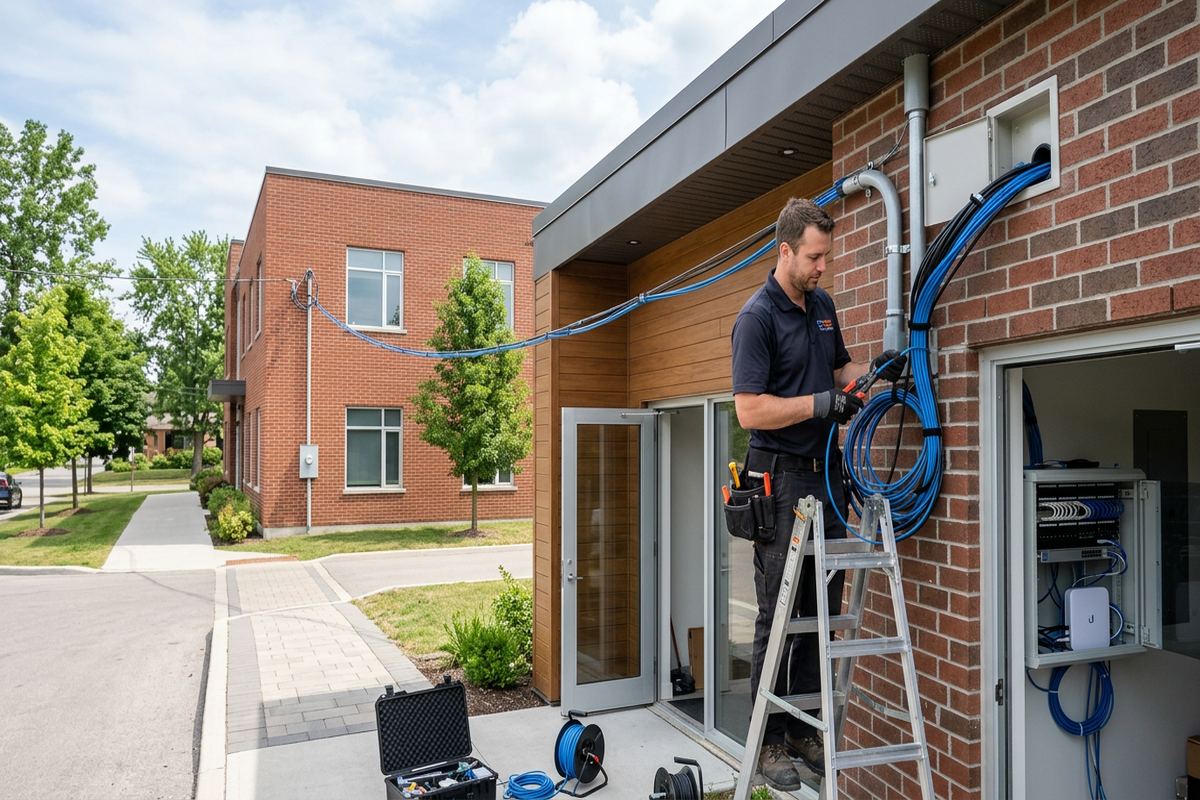
Exterior routes need particular attention because Bowmanville winters bring cold conditions and repeated freeze-thaw cycles. Any approved exterior cable must be rated for its environment, supported correctly and protected from physical damage. Entry points are positioned to reduce water exposure, formed to prevent water from following the cable indoors, and sealed with materials suited to the surrounding surface. Drilling through brick requires a different detail from passing through siding or a frame wall. Exterior mounting and sealing are included in the route discussion rather than treated as minor finishing steps after the cable is installed.
- Wall and ceiling pathway assessment
- Masonry and frame routing options
- Electrical separation considered
- Exterior penetrations properly sealed
- Construction-stage coordination
Pre-Wire and Retrofit Cabling in Bowmanville
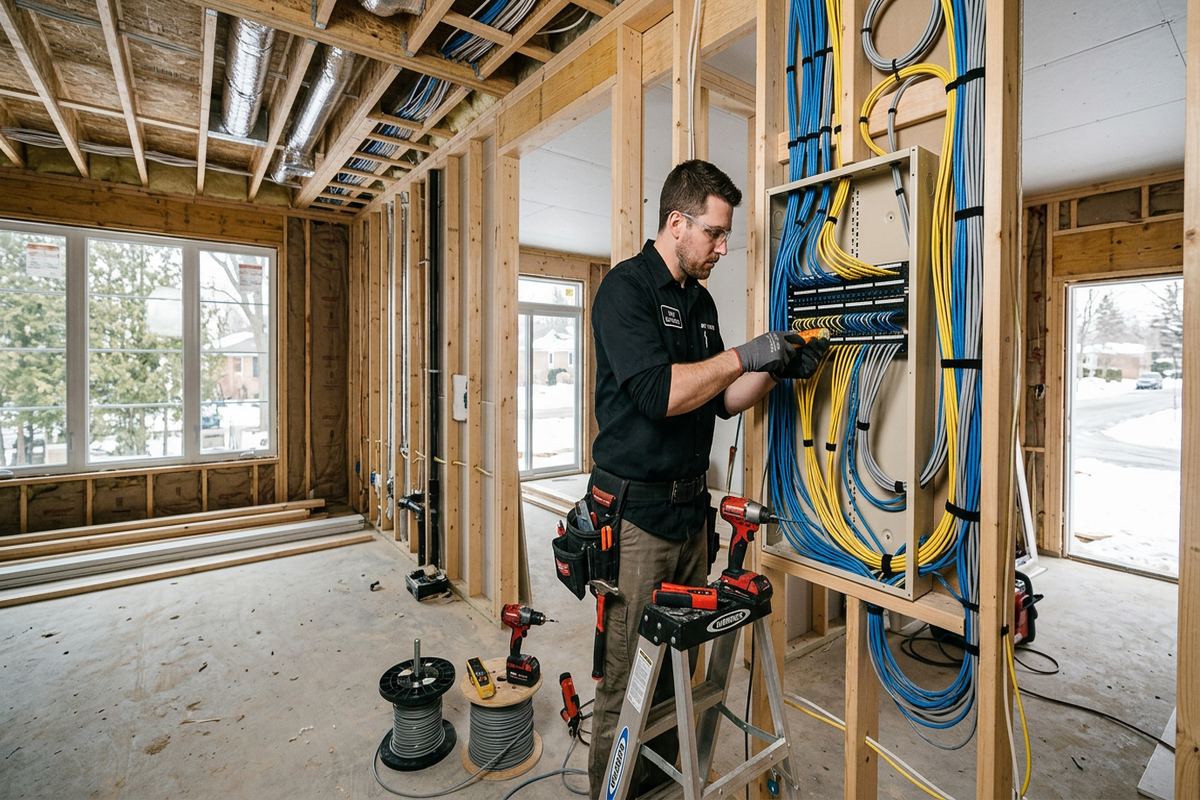
Pre-wiring is most efficient when device locations are settled before insulation and drywall. For Bowmanville additions, basement finishes and new subdivision homes, we can map data outlets, ceiling Wi-Fi access points, television locations, office connections and cabling for compatible security devices. Each run is brought back continuously to the planned network location and labelled at both ends. We also consider where internet service may enter the building and how the owner will reach network equipment for maintenance. Spare pathways can be more useful than speculative loose cables when future device requirements remain uncertain.
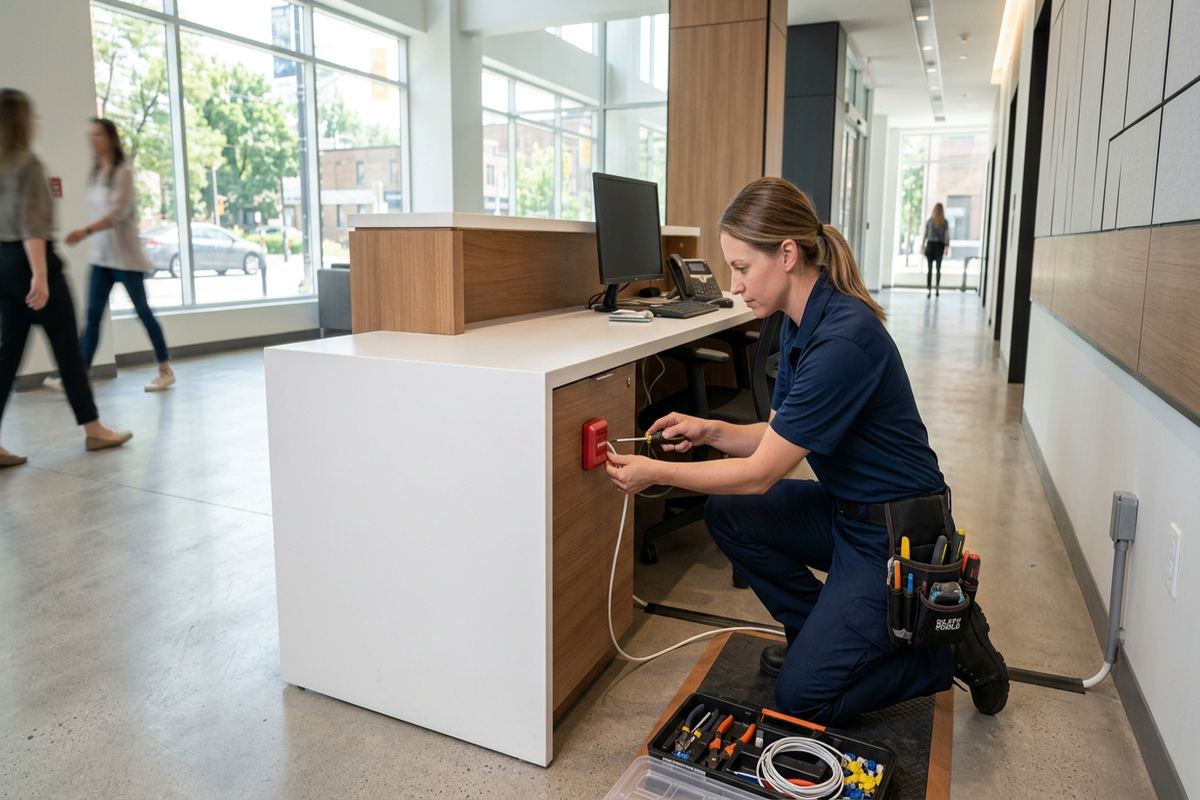
Retrofit work requires a different balance between access, appearance and labour. In occupied homes around Downtown Bowmanville or Port Darlington, possible routes may include unfinished utility areas, closets, attic spaces, basement ceilings and discreet surface raceway. We do not assume every outlet can be fished invisibly. The assessment identifies likely access points and areas where concealed obstacles could require an alternate route. Furniture, stored items and sensitive equipment may need to be moved before work begins. The written scope distinguishes included patching or finishing from work that remains the responsibility of another trade.
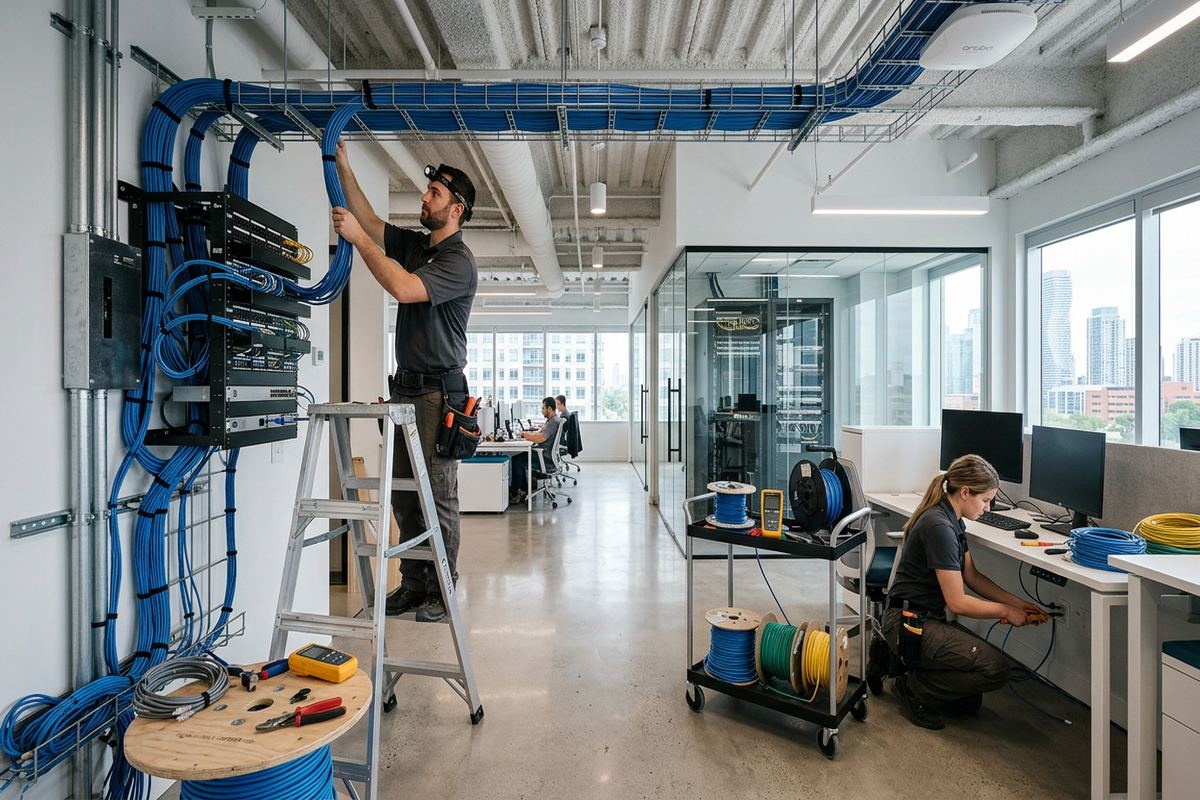
Commercial retrofits often have additional operational constraints. Shops along commercial strips may need work arranged around customer areas, while offices and industrial units can have active workstations, high ceilings or restricted service rooms. Cable routes must avoid creating trip hazards and should remain serviceable after fixtures, shelving or production equipment are installed. We review shutdown needs, access equipment and occupied zones before finalizing the scope. If an existing rack or patch panel will remain, its capacity and condition are checked so new cabling is not terminated into an unsuitable or undocumented arrangement.
- Open-wall pre-wire installations
- Finished-home retrofit routes
- Basement and attic pathways
- Commercial occupied-space planning
- Future conduit and pathway options
Bowmanville, Ontario
Structured cabling installation in Bowmanville, scoped in writing first
Book a site assessment and get equipment, routes, exclusions, and warranty on paper before anything is installed.
Network Outlets, Racks and Patch Panels
A cable run is only useful when its endpoints are positioned and terminated correctly. We confirm outlet heights, furniture layouts, desk locations and fixed equipment before drilling or cutting. Multiple connections may be appropriate at work areas, televisions, conference rooms or network equipment locations because they reduce dependence on small switches installed later. Ceiling outlets for wireless access points need structural support and a practical service position. In Bowmanville homes, the central network enclosure should be accessible, ventilated and large enough for the planned equipment rather than hidden in an unsuitable sealed or damp location.
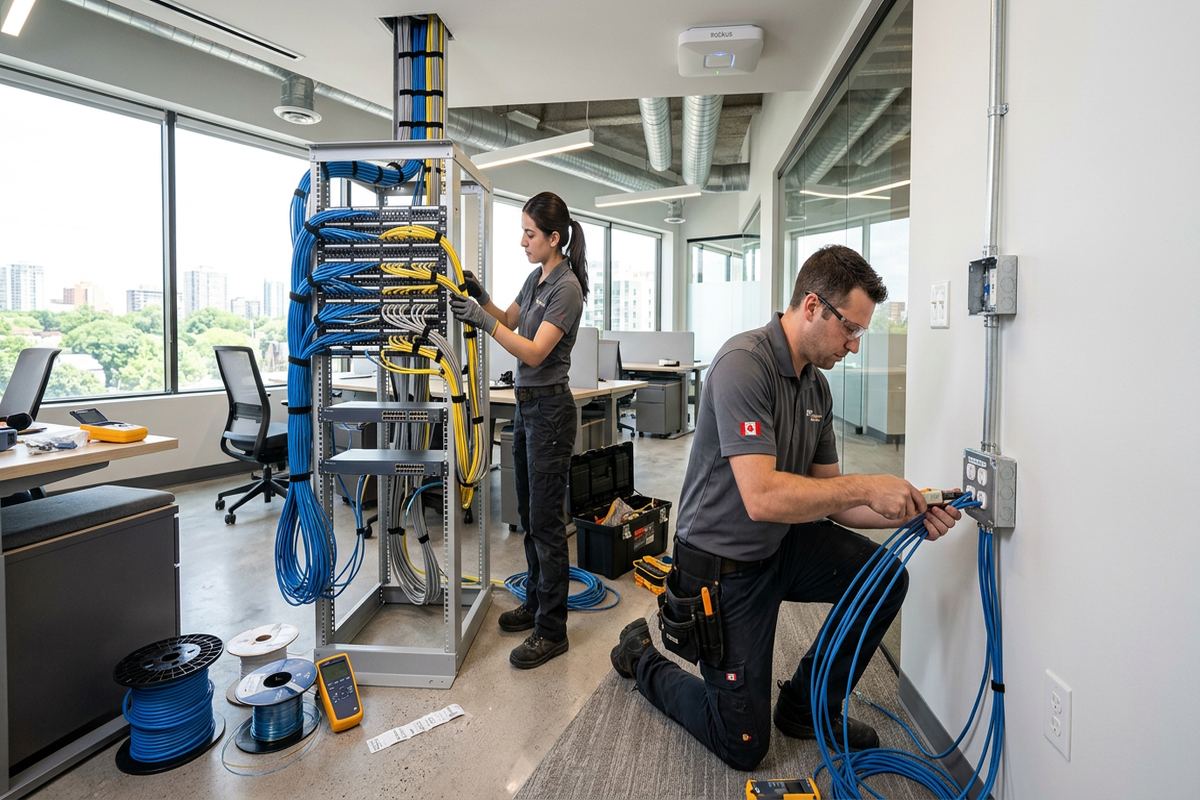
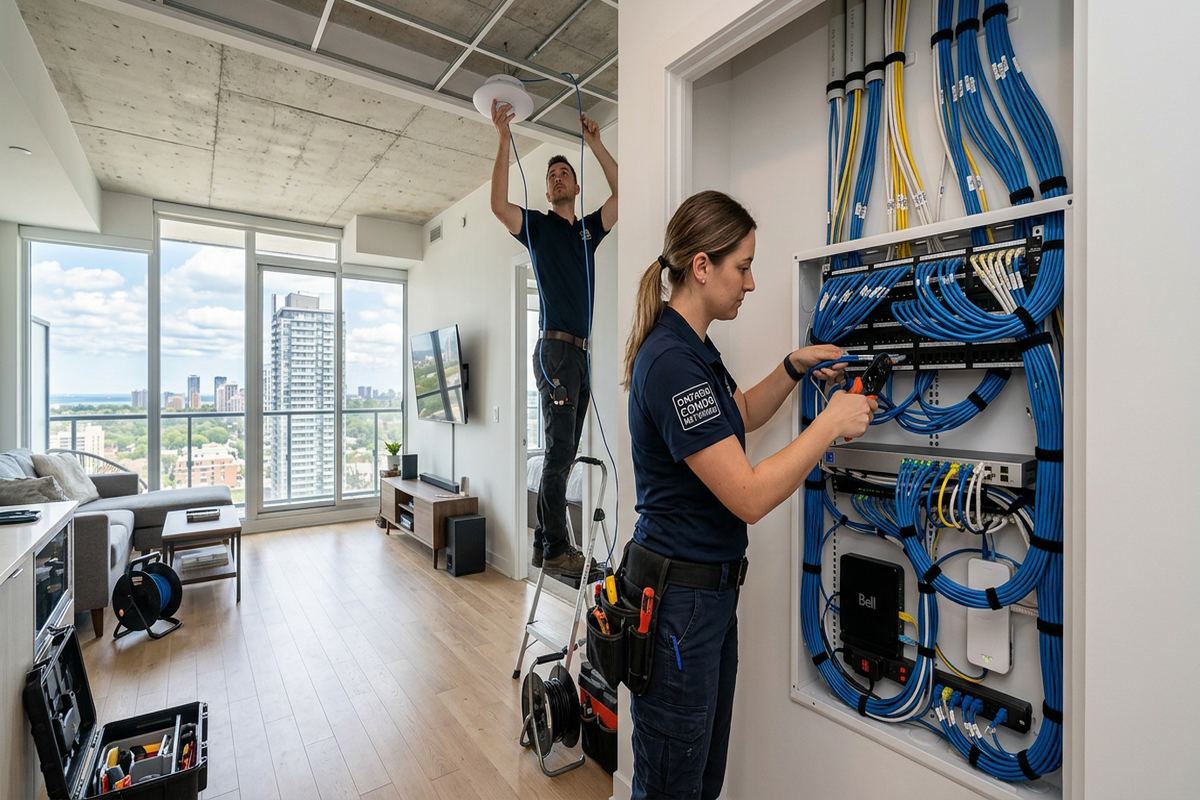
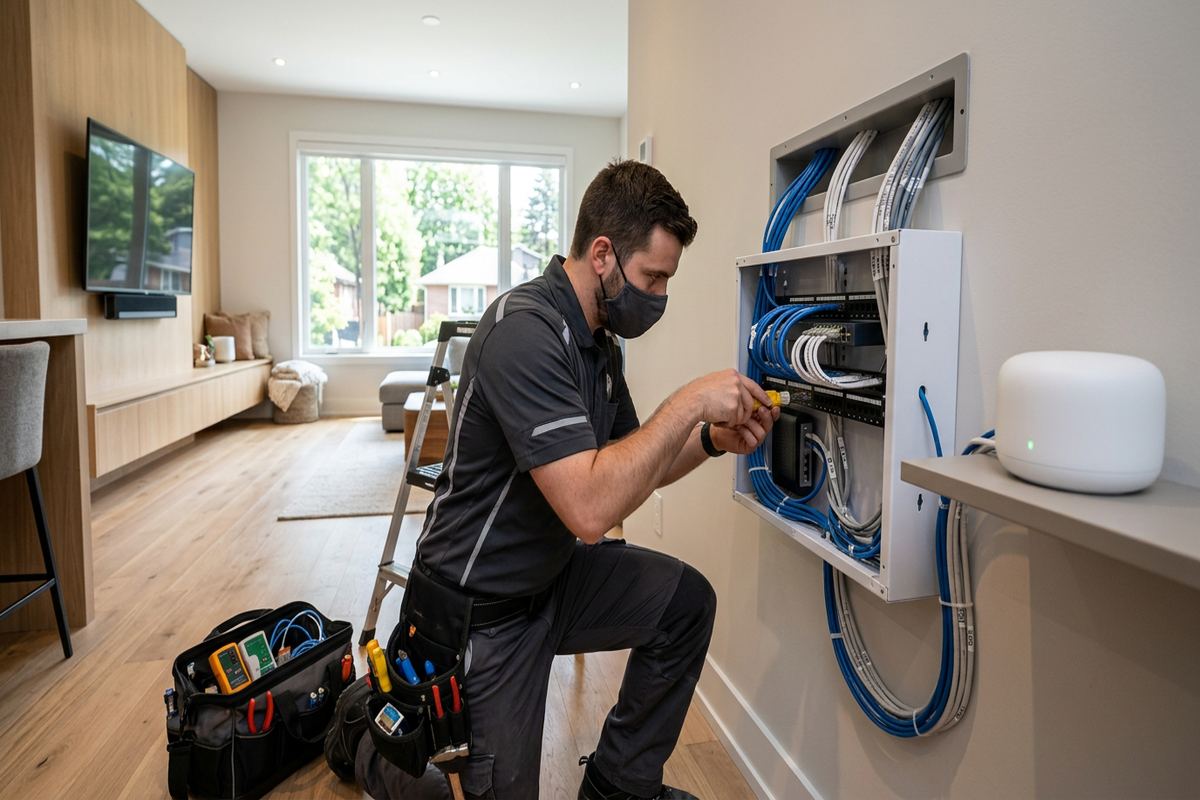
At the central point, cables can be terminated on a patch panel and organized within a wall-mounted enclosure, cabinet or rack appropriate to the project. Cable management keeps bend radius controlled and labels visible while allowing individual connections to be traced. Active equipment such as routers, switches and wireless controllers is arranged with power, ventilation and service access in mind. Equipment selection depends on the number of ports, required power delivery, internet service and expected network use. The written scope clearly identifies which components belong to the customer and which existing items will be reused.
Labels should remain understandable after the installer leaves. We use a consistent identification scheme linking each patch-panel position to its room, outlet or device endpoint, rather than relying on colour alone. Continuous runs avoid hidden couplers that complicate troubleshooting and can weaken reliability. At handover, the as-built record shows installed cable destinations and central terminations, including approved changes made during the work. This documentation is valuable when a Bowmanville property changes tenants, adds staff, rearranges rooms or introduces new systems, because another technician can understand the cabling without tracing every line from the beginning.
- Data outlets and keystone jacks
- Patch-panel termination
- Rack and enclosure organization
- Consistent endpoint labels
- Documented port assignments
Testing Bowmanville Structured Cabling
Every installed run is checked after termination rather than assumed to work because a link light appears. Testing verifies conductor continuity and wire-map order, helping identify opens, shorts, reversals, split pairs or termination mistakes. The test approach is matched to the agreed scope and cable category. Results are recorded where specified, and failed runs are corrected before handover. Visual inspection also confirms that jackets have not been stripped excessively, supports are secure and terminations remain protected. For Bowmanville projects with existing cabling, new and reused runs are identified separately to avoid implying unknown legacy cables were newly installed.
Network performance depends on more than cable category printed on a box. Route length, termination quality, bend radius, crushing, electrical interference and component compatibility all affect the finished channel. Patch panels, jacks and patch cords should suit the intended system, especially where higher network speeds or power over Ethernet are planned. We avoid tight bundles and unsupported runs that can create service problems. If a requested route introduces a technical limitation, it is discussed before installation proceeds. This provides a clearer choice between changing the pathway, adjusting the design or accepting a documented constraint.
On-site configuration connects the physical installation to the customer’s network requirements. Depending on scope, this may include switch port setup, wireless access point adoption, network naming and basic checks of connected devices. Administrative access is handed over using the customer’s own credentials, not an installer-owned account that leaves the customer dependent on a third party. Existing internet service and provider equipment may limit what can be configured, so those boundaries are stated clearly. Final checks confirm that labelled outlets correspond with the records and that included active equipment returns to normal operation.
- Continuity and wire-map checks
- Termination faults corrected
- Cable condition visually inspected
- Network equipment configured on site
- Customer-controlled credentials at handover
Cabling for Wi-Fi, Cameras and Connected Systems
Structured cabling can support several low-voltage systems without forcing them into one unmanaged bundle. Data runs commonly serve ceiling Wi-Fi access points, computers, printers, televisions, phones, cameras and access control components. Each system still needs appropriate design, network capacity and power planning. Power over Ethernet can simplify compatible device installation, but the switch must provide the required standard and available power budget. During a Bowmanville assessment, we review likely endpoints and identify where dedicated connections or network separation may be appropriate. Device installation is included only when it appears in the written scope.
Wi-Fi improves when access points are connected by cable and placed according to the building layout instead of relying entirely on wireless repeaters. Thick masonry in older Bowmanville properties can reduce signal movement between rooms, while larger frame-built homes may need coverage across several floors. Finished materials, mechanical equipment and neighbouring networks can also affect results. Cabling provides flexible access-point locations in ceilings or other practical positions, but final performance still depends on equipment and configuration. We plan the wired pathway first, then configure included devices on site and confirm that they are operating as intended.
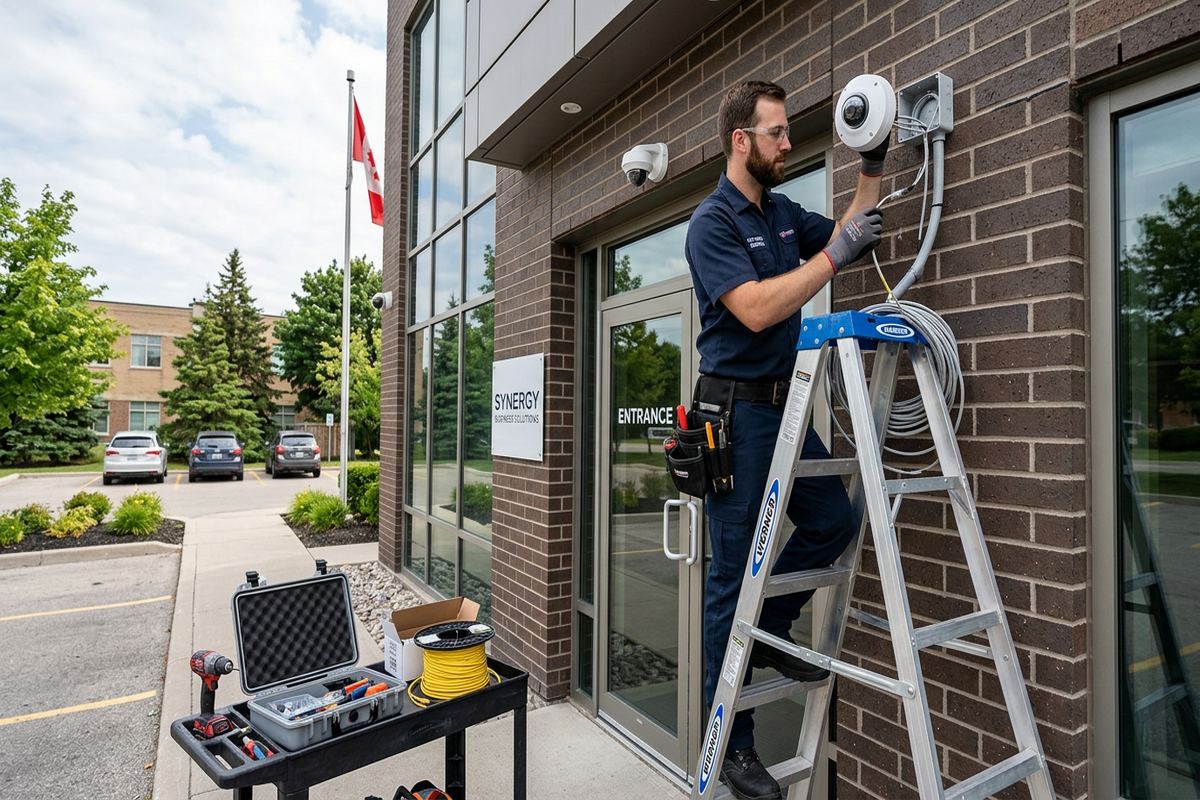
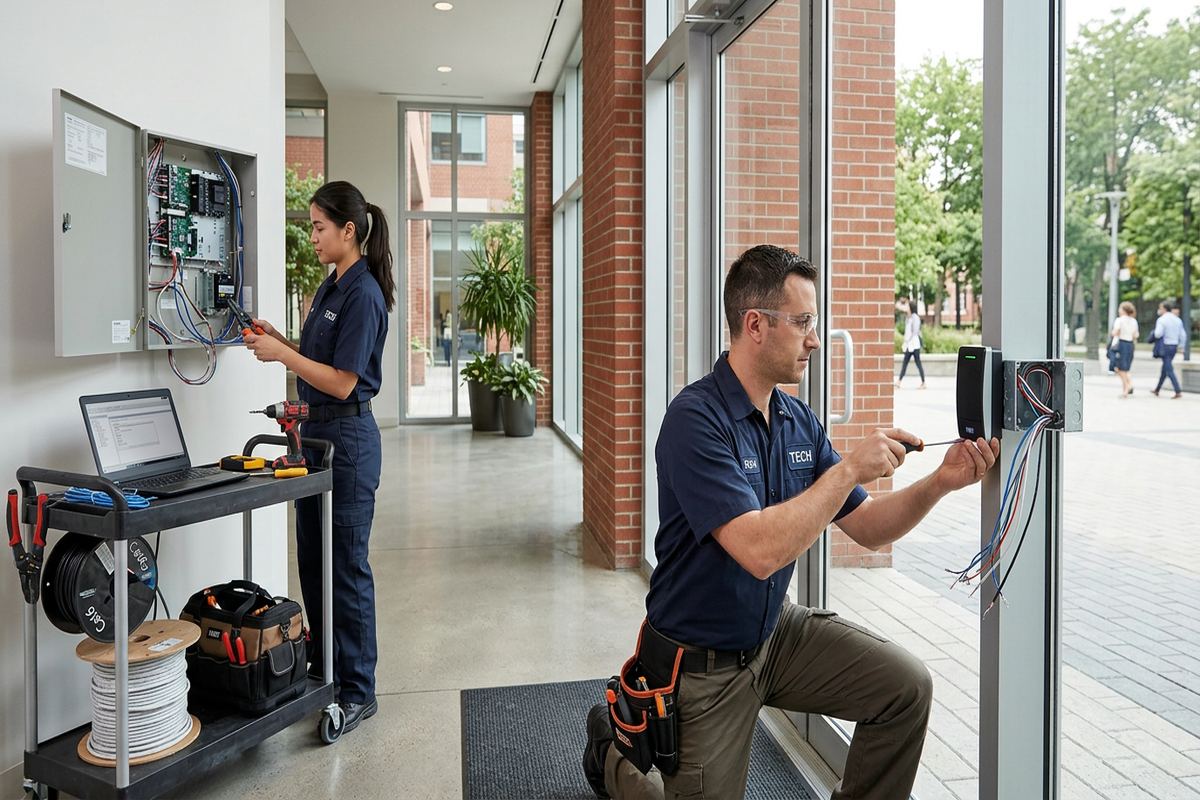
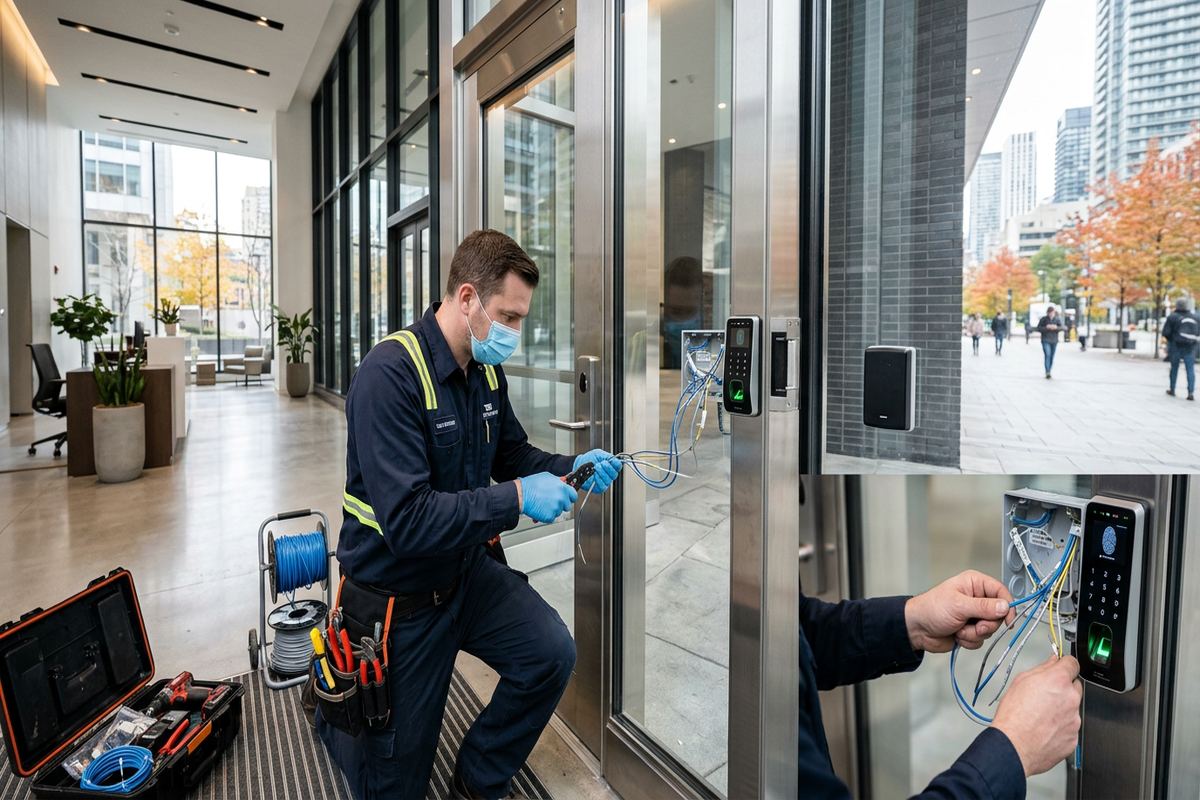
Camera and access control wiring requires attention to endpoint position, exposure and future service. Exterior cameras need suitable cable, protected entry points and sealing that can tolerate local winter conditions and freeze-thaw movement. Door devices may require coordination with frames, hardware and other trades before finishes close. Network cabling for displays or audio endpoints should likewise account for mounting locations and equipment connections. By coordinating these systems under one cabling plan, routes can be shared where technically appropriate while keeping labels, terminations and ownership clear. This avoids several unrelated installers leaving undocumented paths through the same building.
- Cabled Wi-Fi access point locations
- Power over Ethernet planning
- Security camera network runs
- Access control pathways
- Display and audio data connections
Approvals and Occupied Property Work
Permission requirements should be resolved before any drilling or common-area work begins. In a Bowmanville condominium, the unit owner may need approval for routes through shared walls, ceilings, risers or exterior surfaces. Tenants generally need landlord authorization before permanent cabling is installed, particularly where penetrations, raceway or a network cabinet will remain with the property. Commercial leases can also assign responsibility for restoration or base-building systems. UnifiedLink can provide a written scope showing proposed work, but the customer remains responsible for securing required owner, condominium or property-management approvals unless another arrangement is documented.
Occupied properties need an installation plan that protects normal use. Work areas may require temporary access restrictions, and drilling can create noise and dust even when collection methods are used. In homes, pets, children and valuable furnishings should be kept away from active work zones. Businesses may need desks, inventory or machinery cleared from cable paths. We discuss access, parking, ceiling restrictions and shutdown requirements before arrival. For industrial units, lift access or site-specific safety procedures can affect scheduling and scope. These conditions are reviewed rather than assumed, especially when the first assessment occurs outside operating hours.
Fire separations and shared building spaces cannot be treated like ordinary interior walls. Where an approved route passes through a rated assembly, the penetration and restoration requirements must be identified and handled with suitable systems and coordination. Plenum or other environmental cable ratings may also apply to specific spaces. We do not conceal cabling in an unapproved common pathway simply because it offers a shorter route. In multi-unit Bowmanville properties, clear responsibility between the unit owner, landlord, property manager and contractor helps prevent disputed work and ensures that access remains available for installation, inspection and future maintenance.
- Condo approval requirements reviewed
- Landlord permission confirmed by customer
- Occupied-area access planning
- Commercial shutdown needs documented
- Shared-space routes clearly identified
From Bowmanville Assessment to Handover
The process begins with a request describing the Bowmanville property, intended connections and preferred timing. Requests sent during business hours are answered the same day, while after-hours requests are answered the next business day. Site assessment timing depends on the service and travel distance. During the visit, we inspect accessible pathways, confirm device locations, review existing equipment and discuss visible route options. Construction drawings, furniture plans or photographs can help, but they do not replace verification on site. Concealed conditions remain subject to review if they differ from what could reasonably be observed beforehand.
After the assessment, the written scope sets out equipment, cable routes, device placement, exclusions, equipment ownership and warranty. It also records assumptions such as customer-provided power, internet service, access to locked rooms or completion of work by other trades. This document gives both sides a common reference before installation starts. If conditions change during a Bowmanville renovation, the route or device count is revised and approved rather than quietly substituted. Materials and scheduling can then be planned around occupancy, construction stages, approvals and any equipment that must remain operating while the new cabling is installed.
Installation concludes with termination, labelling, agreed testing and on-site configuration. The customer receives control of included managed equipment through their own credentials, along with an as-built record identifying cable destinations and central connections. We review the completed installation and note any excluded existing cabling or unresolved third-party issue. Using one accountable contractor for the defined work keeps pathway decisions, labels, network setup and documentation aligned. The result is a structured system that can be serviced or expanded without relying on memory, informal labels or credentials held by an installer after the project is complete.
- Site assessment before pricing
- Detailed written scope
- Installation changes documented
- Customer credentials used
- As-built record supplied at handover
Bowmanville neighbourhoods we cover
- Downtown Bowmanville
- Waverley
- Northglen
- Liberty
- Port Darlington
Structured cabling installation in Bowmanville — common questions
Can you add network cabling to a finished Bowmanville home?
Yes, subject to available pathways and the agreed level of visible finishing. Bowmanville retrofits may use basements, attics, closets, utility spaces or surface raceway. Masonry, fire blocking and finished ceilings can limit concealed routes. We assess the property before pricing and explain likely access points, visible components and exclusions before work begins.
When should cabling be installed during a renovation?
For a Bowmanville renovation or new build, cabling is normally planned after room layouts and device positions are known, then installed while framing remains accessible and before insulation and drywall. Coordination with electrical, HVAC, millwork and security work is important. Termination, testing and equipment configuration may occur later, once finishes and the central network area are ready.
Do I need condo or landlord approval?
Approval may be required if cabling affects common areas, shared walls, risers, exterior surfaces or permanent building finishes. Bowmanville condo owners should check their corporation’s requirements, while tenants should obtain landlord permission before installation. We can provide a written scope describing proposed routes and equipment, but the customer is responsible for obtaining approvals unless the scope states otherwise.
Can you reuse the cabling already installed?
Existing cabling can sometimes be reused if its route, condition, termination and performance are suitable for the intended network. We inspect accessible portions and test agreed runs, but concealed cable history may remain unknown. New and reused connections are documented separately. Damaged, unlabelled or unsuitable cable may need replacement rather than being incorporated into the Bowmanville installation.
Will exterior network cable survive Bowmanville winters?
Exterior work must use cable and fittings suited to the exposure, with proper support, physical protection and carefully sealed entries. Bowmanville’s cold weather and freeze-thaw cycles can stress poorly detailed penetrations. We account for the surrounding material, whether brick, siding or frame construction, and form routes that reduce water movement toward the interior.
What documentation do I receive after installation?
At handover, you receive an as-built record identifying installed cable destinations and central terminations, including approved route changes. Labels correspond with outlets, devices and patch-panel positions. Included managed equipment is handed over using your own credentials. The written scope also records equipment ownership, exclusions and warranty information, making future Bowmanville service or expansion easier to plan.
Coverage in Bowmanville is confirmed against the address before we quote. See everything we install in Bowmanville or the province-wide structured cabling installation page.