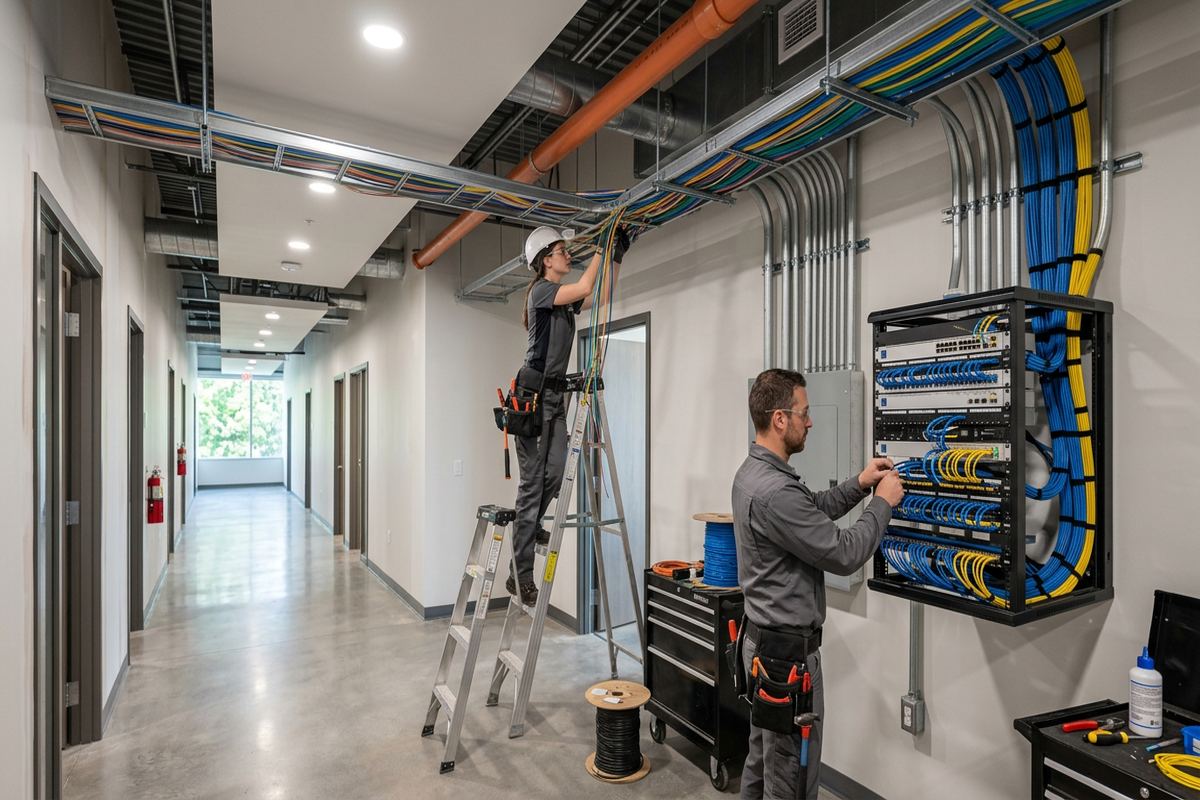
UnifiedLink installs low-voltage cabling for homes, commercial spaces and industrial units in Bowmanville. We plan routes, install continuous labelled runs, terminate and test connections, and document the finished system. Projects can support networks, cameras, alarms, access control, Wi-Fi, audio and displays, whether the work involves a new pre-wire or a careful retrofit.
Low-Voltage Cabling for Bowmanville Properties
Bowmanville contains a practical mix of older properties, newer subdivisions, commercial strips and industrial units. Its historic main street and rapid subdivision growth on the west side keep both retrofit and pre-wire work steady. Each setting calls for a different approach. Older spaces may have limited pathways, finished plaster, masonry walls or previous wiring with poor labels. New construction offers more direct access, but routes still need coordination with framing, insulation, electrical work, cabinetry and mechanical systems before walls and ceilings are closed.
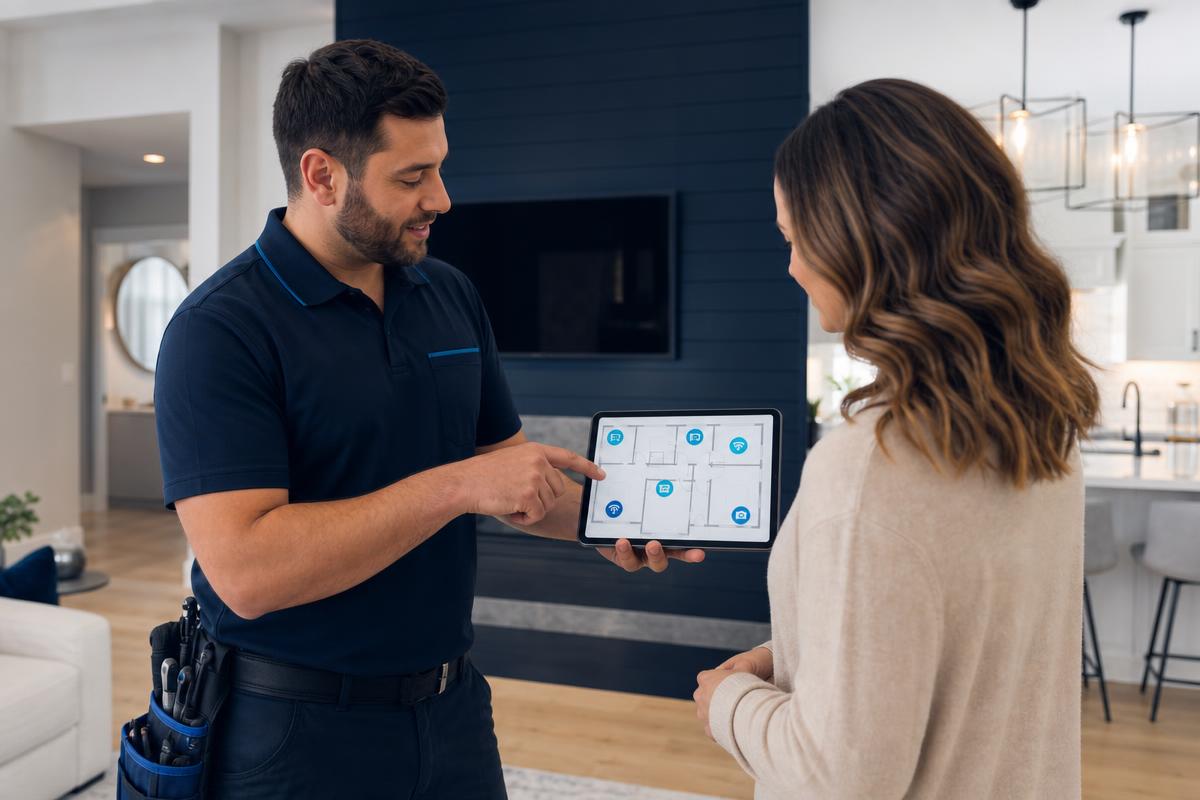
A low-voltage installation begins by defining what each cable must support, where equipment will sit and how the system may expand. Network outlets, wireless access points, surveillance cameras, alarm devices, card readers, speakers and displays have different placement and pathway requirements. UnifiedLink assesses the site before pricing, then prepares a written scope covering equipment, cable routes, device placement, exclusions, equipment ownership and warranty. That process helps prevent assumptions about concealed pathways, patching, electrical outlets, lifts, permits or customer-supplied hardware.
Careful installation matters after the route is approved. Cable should be supported correctly, separated from electrical conductors where required, protected at penetrations and kept within appropriate pulling limits. UnifiedLink installs continuous labelled runs rather than joining hidden cable sections. Each end is identified so future service does not depend on tracing an unknown wire through walls. Connections are terminated and tested for their intended application, with results and issues reviewed before devices are commissioned or the cabling is handed to another system contractor.
- Network and data cabling
- Camera and alarm wiring
- Access control pathways
- Wi-Fi access point cabling
- Audio and display connections
Retrofit Cabling in Downtown Bowmanville
Retrofit work around Downtown Bowmanville often requires more investigation than installation in an open frame. Older buildings can contain masonry, plaster, narrow floor cavities, multiple renovations and wiring that no longer serves an active system. A route that appears simple from one room may be blocked by structural members or inaccessible ceiling sections. Before work starts, practical pathways are compared against the finish level expected by the owner. Surface raceway, basement or attic routes, existing conduits and carefully placed penetrations may all be considered.
Masonry and frame construction require different fastening, drilling and sealing methods. Brick or concrete should not be treated like wood framing, and exterior penetrations need a planned slope, suitable sleeve or protection, and compatible sealant. On historic or visually sensitive façades, device position and cable exposure deserve particular attention. The objective is not to conceal every route at any cost, but to produce a durable installation without unnecessary disturbance. Any expected cutting, access opening or finish repair should be identified in the written scope before approval.
Occupied retrofits also require coordination with people and operations. In a home, that can mean protecting floors, controlling dust and keeping essential internet connections available until changeover. In a shop, office or restaurant, work may need to avoid customer areas or active equipment. UnifiedLink confirms access, shutdown limits and responsibility for moving furniture or merchandise. Where another trade must provide power, patching, painting or fire-stopping, that dependency is recorded rather than assumed. The result is a route plan that reflects the actual building.
- Existing pathway assessment
- Masonry and plaster route planning
- Surface raceway where appropriate
- Defined access and shutdown needs
- Exterior penetrations sealed against weather
Pre-Wire Planning for West Bowmanville Growth
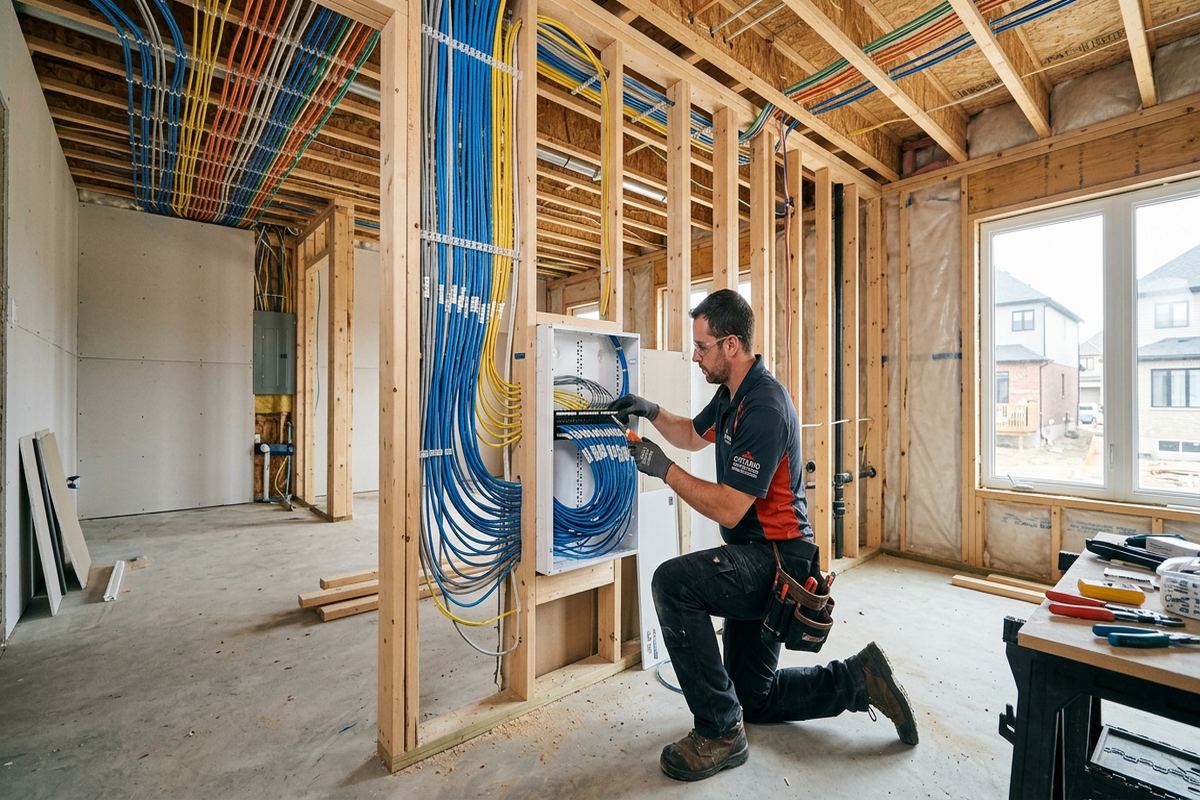
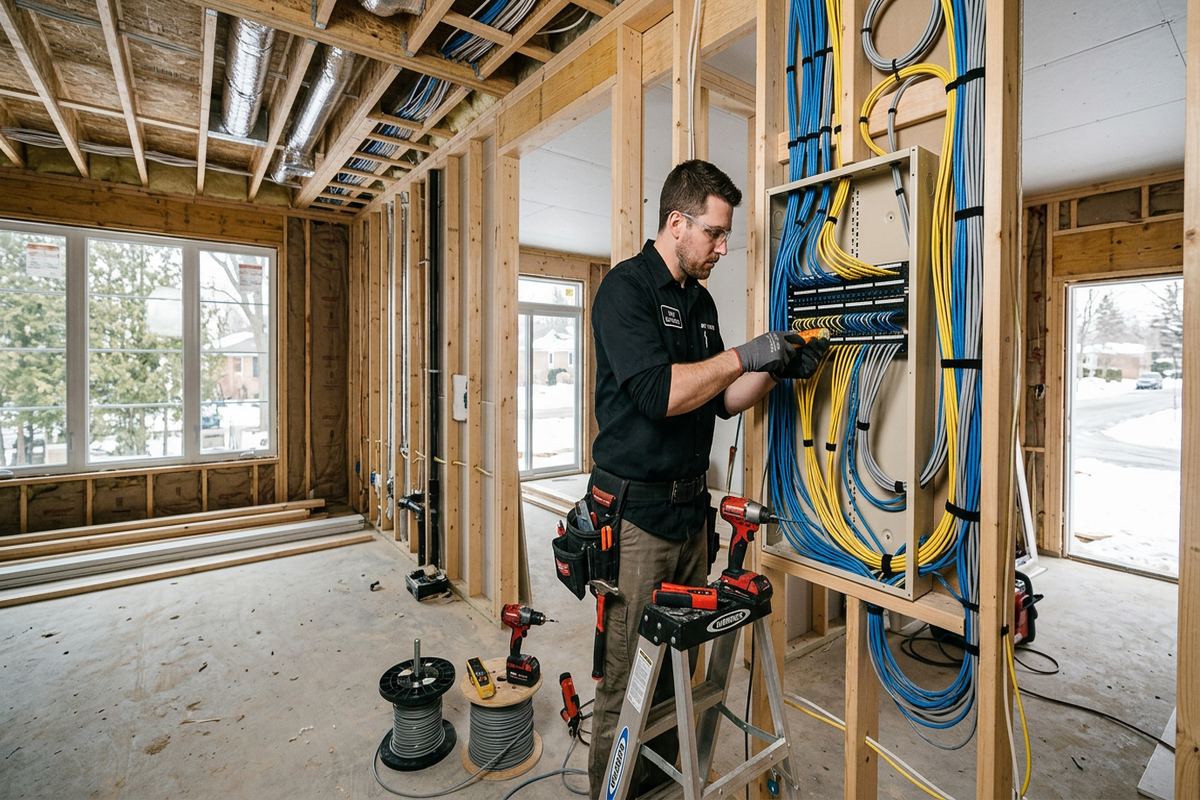
New subdivision construction on Bowmanville’s west side creates opportunities to install cabling before drywall, insulation and finished ceilings restrict access. Pre-wire planning should happen after room uses and equipment locations are reasonably clear, but early enough to coordinate with other trades. Drawings alone may not show cabinet depths, framing changes or mechanical conflicts. A site review helps confirm outlet heights, camera views, ceiling access points and the location of the central rack or enclosure. Photographs can record concealed routes before finishes cover them.
Residential pre-wires in Waverley, Northglen and Liberty may support wired network outlets, ceiling-mounted Wi-Fi access points, doorbell or perimeter cameras, alarm contacts, televisions and distributed audio. Cable selection should follow the application instead of using one cable type for every device. Spare pathways can be more useful than loose, undocumented cable because future standards and room uses change. Where conduit is included, bend count, diameter and pull access matter. Empty conduit without a pull string or an accessible destination offers limited practical value.
Commercial pre-wire work follows the same planning principles but often adds tenancy, ceiling and equipment-room considerations. The demarcation point, network cabinet, device locations and backbone routes should be established before several contractors occupy the site. UnifiedLink coordinates its low-voltage scope with available plans and site conditions while maintaining one accountable point of contact for the cabling work. Runs are labelled at both ends, protected during construction and checked again before final termination. Changes are documented so the handover reflects what was installed, not only the original drawing.
- Open-frame route coordination
- Outlet and device height confirmation
- Concealed-route photographs
- Spare conduit planning
- Construction-stage cable protection
Bowmanville, Ontario
Low-voltage cabling installation in Bowmanville, scoped in writing first
Book a site assessment and get equipment, routes, exclusions, and warranty on paper before anything is installed.
Cabling for Networks and Bowmanville Wi-Fi
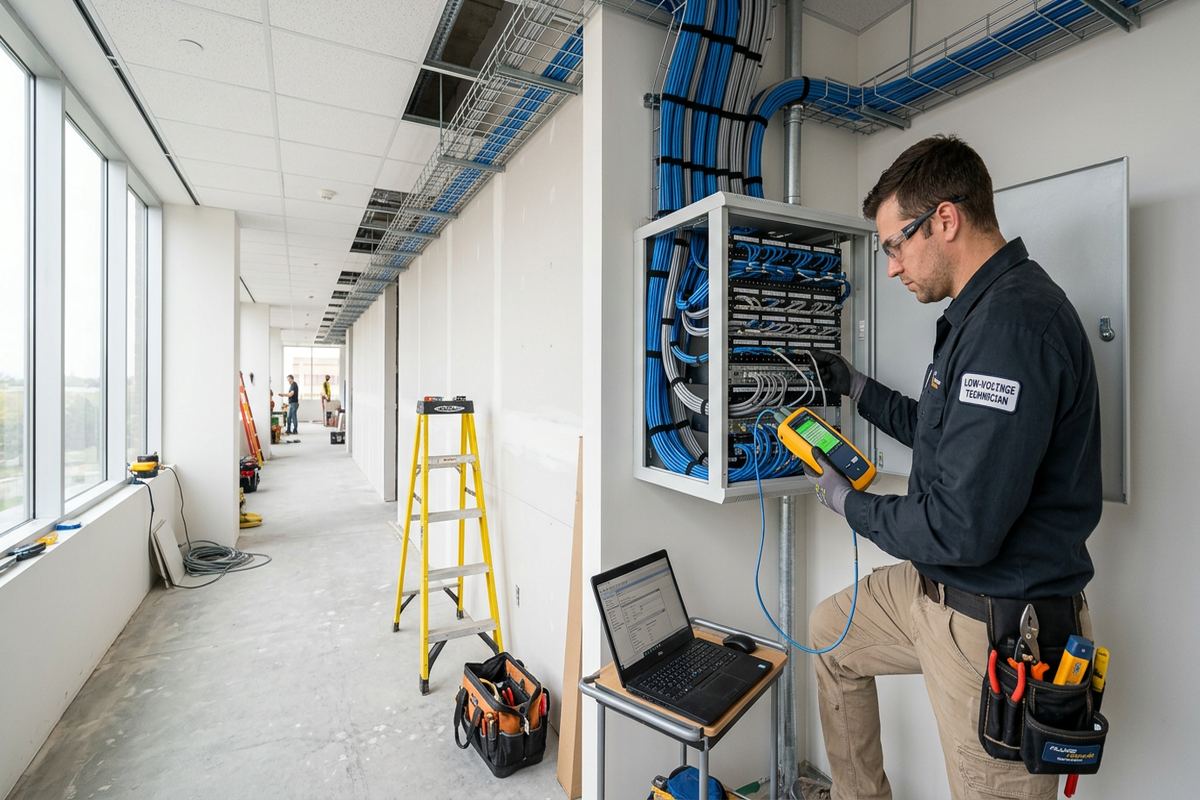
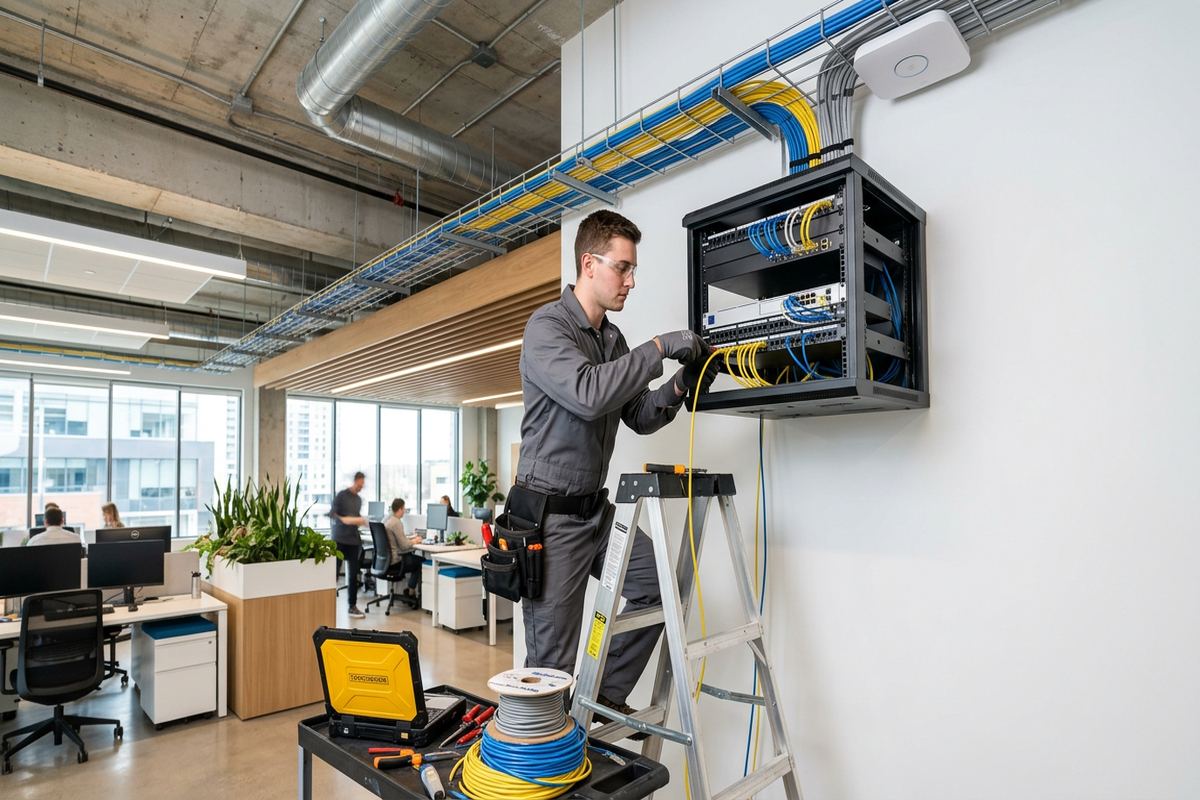
Reliable network cabling provides the fixed foundation for internet access, business systems and wireless coverage. The incoming service location does not automatically make a suitable equipment location; the network cabinet or enclosure also needs power, ventilation, physical access and enough space for termination and service. From there, individual cable runs can serve computers, printers, phones, televisions, cameras and ceiling access points. Home and business layouts in Bowmanville vary, so outlet counts and access point positions should follow construction and usage rather than a standard room-by-room template.
Wi-Fi performance depends on more than the speed supplied by an internet provider. Masonry, metal ductwork, concrete, mirrors, dense finishes and neighbouring networks can affect radio coverage. A large newer home in Northglen may need a different access point layout than a compact masonry property downtown. Installing cable to planned ceiling or wall locations allows access points to use a stable wired connection and, where compatible equipment is selected, receive power through the network cable. Device selection and final placement remain part of the defined project scope.
For commercial strips and industrial units, network routes may cross open ceilings, warehouse areas, offices and demising walls. Cable support, environmental exposure and pathway capacity need to suit each section. Long or complex routes should be assessed before promising that a standard copper connection will work. Fibre or an intermediate equipment location may be appropriate in some layouts, but that decision requires actual distances and system requirements. After installation, UnifiedLink terminates and tests included connections, configures included equipment on site, and explains the final patching and labelling arrangement.
- Data outlets and patch panels
- Ceiling access point runs
- Rack and enclosure planning
- Copper or fibre route assessment
- Clear port and cable labels
Bowmanville Security and Access Control Cabling
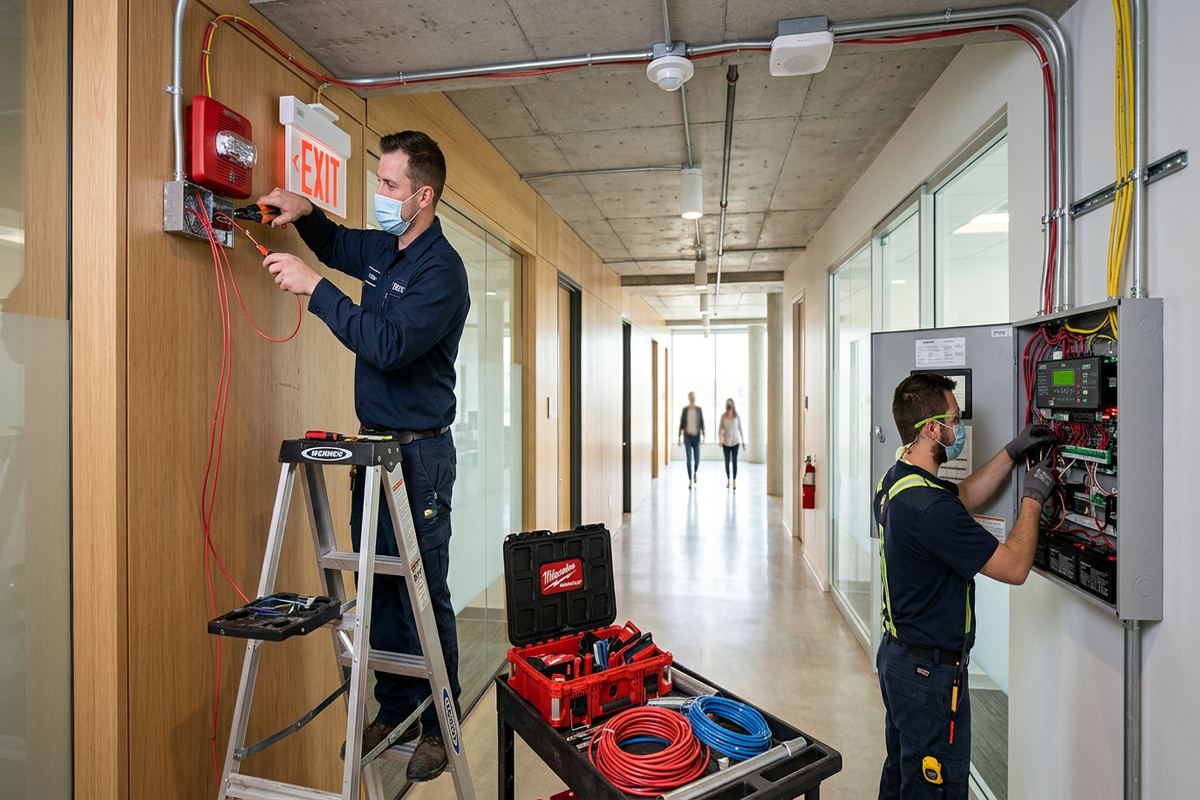
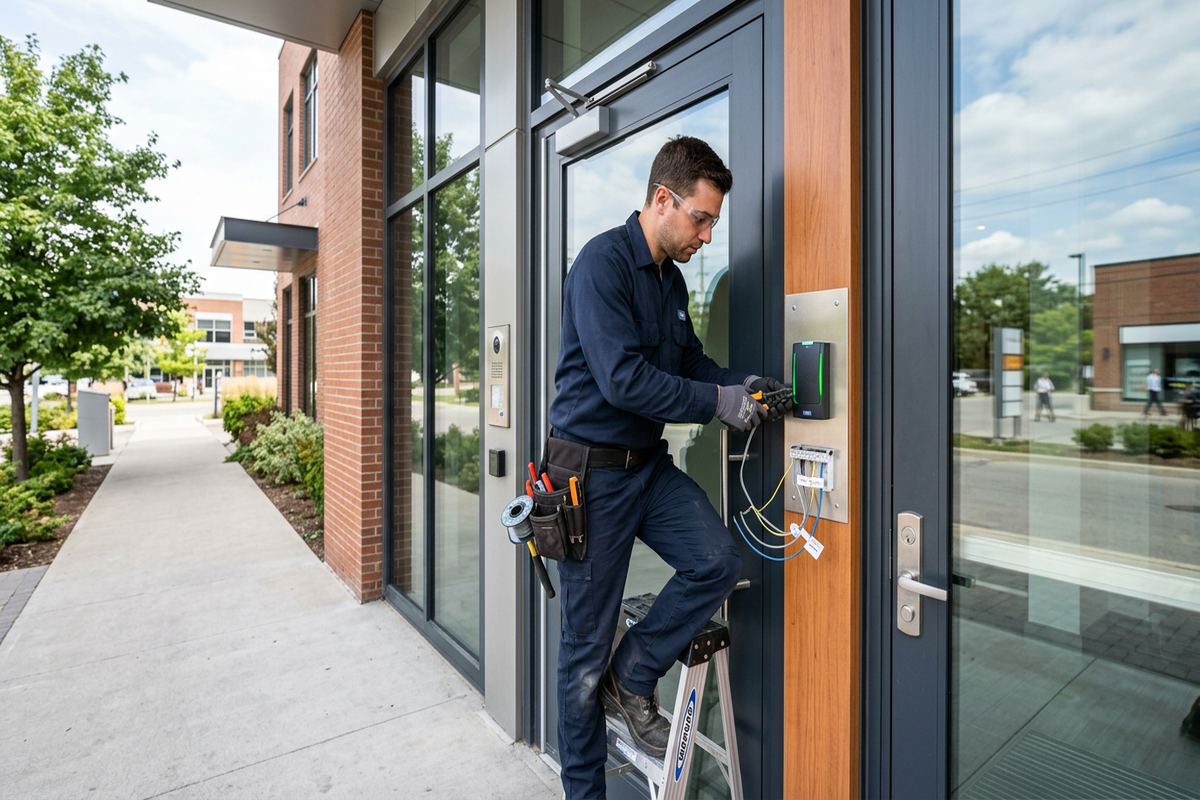
Security devices depend on cabling that matches their power, communication and location requirements. Camera cables need routes that reach useful views without creating avoidable exposure or service difficulty. Alarm contacts, keypads, motion detectors and sirens each have placement considerations. Access control adds readers, door contacts, request-to-exit devices, locks and controller connections. UnifiedLink can install the cabling as part of a complete included system or provide documented infrastructure for compatible equipment handled by others, with responsibilities defined before work starts.
Exterior camera and entry wiring in Bowmanville must account for winter conditions and repeated freeze-thaw cycles. A loosely sealed opening can admit moisture, while an exposed connector may deteriorate even if the device itself is weather-rated. Mounting surfaces also matter: siding, brick, concrete and soffit assemblies require different anchors and cable entry details. Exterior cable should be suitable for its environment, protected from physical damage where needed, and arranged to discourage water from following the cable into the building. Sealant must be compatible with the surrounding materials.
Door hardware projects require more than pulling a wire above a doorway. The opening, frame, lock type, life-safety operation, power supply and controller location must be reviewed as a coordinated system. In leased spaces or condominium properties, the owner, landlord or condominium corporation may need to approve drilling, common-area routes, exterior devices or modifications to doors. UnifiedLink records relevant exclusions and dependencies in the scope. Work proceeds only after the customer confirms required permissions, preventing cabling from being installed toward a device location that cannot be approved.
- IP and analogue camera pathways
- Alarm device cabling
- Reader and door contact runs
- Controller and power-supply routes
- Weather-conscious exterior entries
Audio, Display and Multi-Purpose Cabling
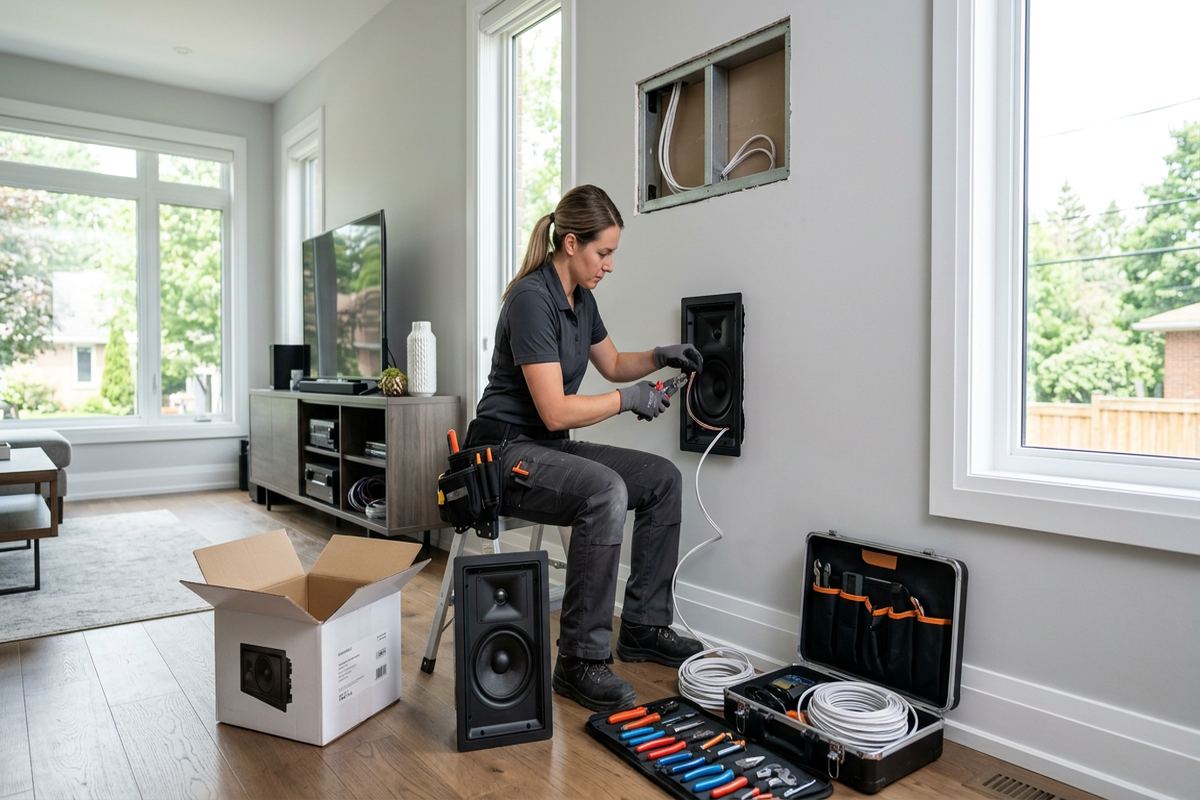
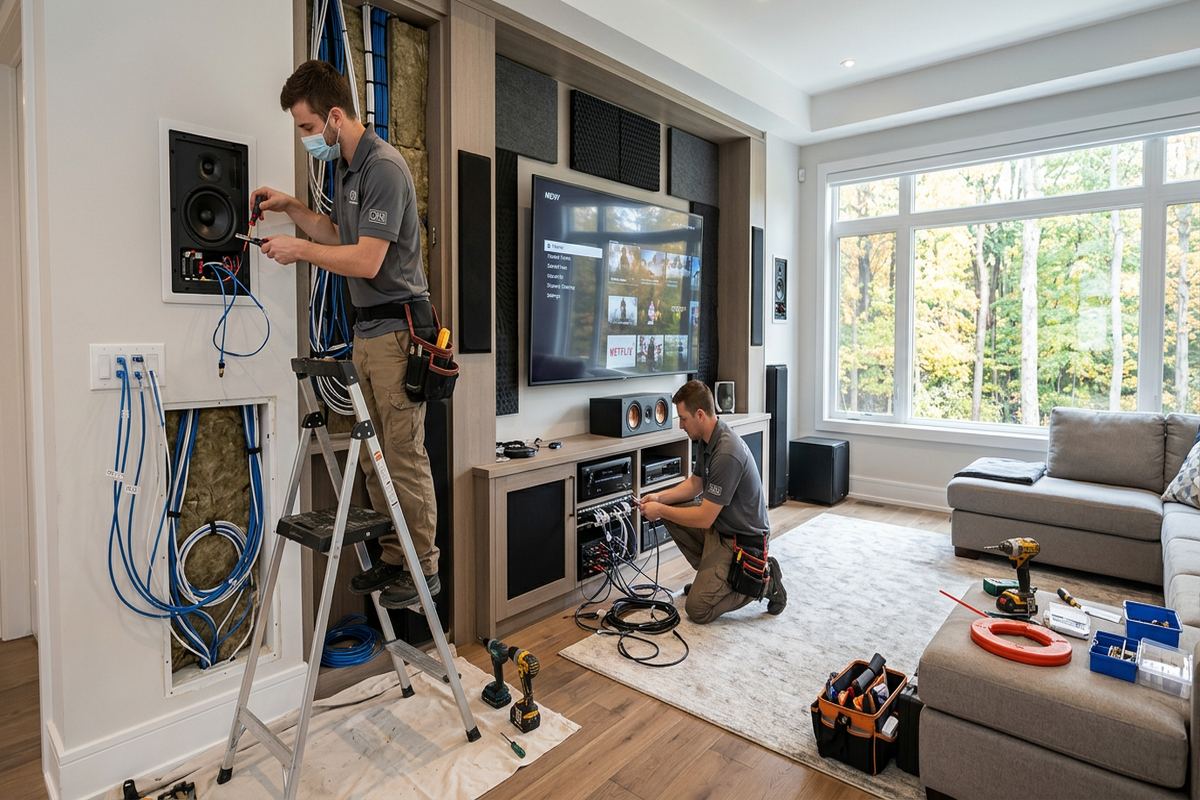
Audio and display wiring benefits from early decisions about equipment, control and furniture placement. A television location may require data, signal, control and power, but electrical work is separate from low-voltage cabling unless specifically arranged through the appropriate scope. Speaker runs need suitable cable and sensible routes back to the amplifier or local equipment point. In-wall connections should remain accessible at their terminations rather than being buried behind permanent finishes. UnifiedLink identifies the intended endpoints and labels them so later equipment changes are easier to manage.
Meeting rooms, restaurants, studios and customer-facing businesses often combine displays, speakers, network devices and control equipment. Signal distance and format influence whether a direct cable, extender system or network-based solution is appropriate. Simply placing an unverified cable behind a wall can leave the owner with a connection that does not support the chosen equipment. The site assessment reviews distances, device inputs, pathway access and equipment locations. Where customer-supplied products are involved, model information should be available before cable and termination choices are finalized.
Multi-purpose rooms in Port Darlington homes or Bowmanville commercial spaces may change after the initial installation. A clearly organized central location makes those changes more manageable. Patch panels, wall plates and labelled loose leads should correspond to the as-built record, and service loops should be controlled rather than piled into an enclosure. Cabling cannot make every future technology compatible, but accessible pathways and accurate records reduce unnecessary demolition. At handover, the customer receives their own credentials for included configured equipment, rather than an installer retaining control of the system account.
- Television and projector pathways
- Speaker and audio cabling
- Meeting-room connections
- Control and data runs
- Accessible, labelled endpoints
Installation Standards for Bowmanville Conditions
Low-voltage cable lasts longer when routes account for the building and surrounding environment. Bowmanville winters bring cold, snow, moisture and freeze-thaw movement, all of which affect exterior transitions and exposed hardware. Indoor cable should not be extended outdoors merely because the route is short. Likewise, an exterior-rated device does not remove the need to protect its connection and seal the building opening. The assessment identifies exposed sections, likely water paths, mounting surfaces and areas vulnerable to impact so appropriate materials and methods can be included.
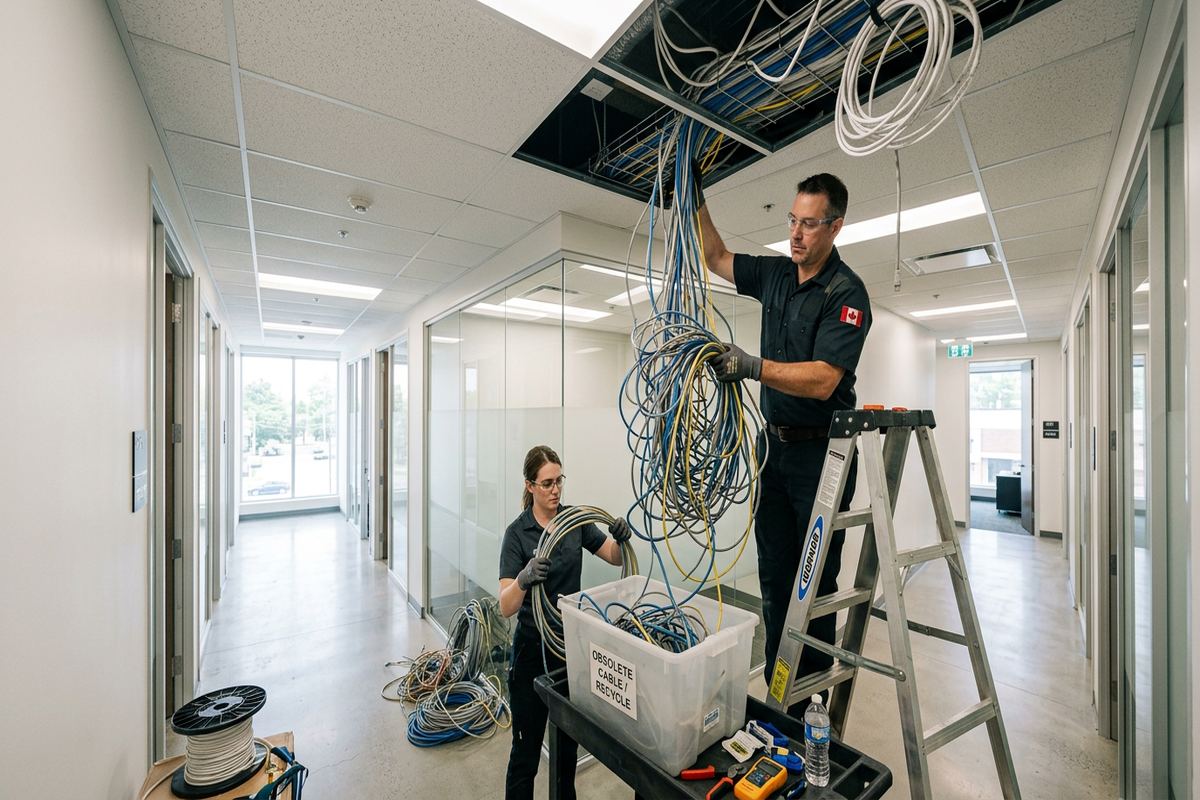
Inside a property, cable should not rest on ceiling tiles, hang from unrelated services or pass through sharp openings without protection. Supports and pathways need to fit the space, whether above a commercial ceiling, through wood framing or along a finished basement wall. Fire separations and other building assemblies must not be treated as ordinary partitions. Existing penetrations are not automatically suitable for additional cable. If specialized fire-stopping, access equipment or another trade is required, the written scope identifies who is responsible before the installation begins.
Testing is tied to the connection being installed and the agreed scope. A basic continuity check does not answer every performance question, while formal certification may not be required for every device cable. UnifiedLink states the intended testing approach instead of using vague claims that all cabling is tested the same way. Failed terminations or damaged runs within the included work are corrected before handover. Any limitations caused by customer equipment, inaccessible cable, existing infrastructure or an unready internet service are documented so the final record distinguishes new work from unresolved outside conditions.
- Suitable indoor and outdoor cable
- Protected and sealed penetrations
- Independent cable supports
- Defined testing method
- Documented site limitations
From Bowmanville Site Assessment to Handover
Every project starts with enough information to establish a realistic scope. Photos and plans can help with an initial discussion, but concealed routes, construction type and access may require an on-site assessment before pricing. Timing for that assessment depends on the service and travel distance. Requests sent during business hours are answered the same day; after-hours requests are answered the next business day. That response commitment concerns the request itself, not guaranteed arrival or completion. Scheduling is confirmed after the project needs and property access are understood.
Following the assessment, the written scope describes included equipment, cable routes, device placement, exclusions, equipment ownership and warranty. Customers can review assumptions before authorizing work. In a condominium, rental unit or leased storefront, approvals for common areas, exterior walls and building systems remain important. The scope can identify those dependencies, but the property owner or customer must obtain the required landlord or condominium permission unless another arrangement is written. This step protects both the finished property and the planned low-voltage system from preventable changes.
Installation concludes with termination, applicable testing, on-site configuration of included equipment and a practical handover. UnifiedLink provides the customer with their own credentials and an as-built record showing the completed cabling arrangement. Labels, port assignments and notable route details are explained so another technician can understand the system later. If site conditions required an approved change, the record reflects that change rather than repeating an outdated plan. One accountable contractor remains responsible for the included low-voltage scope, reducing gaps between route planning, installation, configuration and documentation.
- Assessment before pricing
- Detailed written scope
- One accountable low-voltage contractor
- On-site equipment configuration
- Customer credentials and as-built record
Bowmanville neighbourhoods we cover
- Downtown Bowmanville
- Waverley
- Northglen
- Liberty
- Port Darlington
Low-voltage cabling installation in Bowmanville — common questions
Do you assess my Bowmanville property before quoting?
Yes. UnifiedLink completes a site assessment before pricing when the route, construction or access needs to be verified. Photos and plans may support the initial discussion, but older masonry buildings, finished homes and commercial units often require an on-site review. Assessment timing depends on the service and travel distance. The resulting written scope identifies equipment, routes, device placement, exclusions, ownership and warranty.
Can you run cable through a finished home?
Usually, but the available routes depend on framing, masonry, attic or basement access, insulation and finished surfaces. In Bowmanville retrofits, options may include concealed cavities, existing conduit or neat surface raceway. UnifiedLink explains likely access openings and visible sections before work begins. Patching and painting are not assumed to be included; responsibility for finish repair is stated in the written scope.
What cabling should I install before drywall?
The answer depends on planned network outlets, Wi-Fi access points, cameras, alarm devices, televisions, speakers and future pathways. For new Bowmanville homes, cable should be selected for each application rather than applying one type everywhere. Device heights, central equipment space and conduit routes should be confirmed while framing is open. Concealed-route photographs and labels make the installation easier to understand after drywall is complete.
Can exterior cables handle Bowmanville winters?
Exterior runs require cable and connections suited to their environment. Bowmanville’s cold weather and freeze-thaw cycles make mounting, water management and penetration sealing especially important. UnifiedLink reviews whether cable needs conduit or physical protection, uses appropriate entry details, and avoids leaving connectors unnecessarily exposed. The surrounding surface also affects the method because siding, brick, concrete and soffits cannot all be drilled, anchored or sealed identically.
Do I need landlord or condo approval?
Possibly. Tenants and condominium owners may need written approval before drilling exterior walls, entering common areas, using shared pathways, mounting cameras or modifying doors. This applies to some Bowmanville homes, storefronts and commercial units. UnifiedLink can define the proposed route and device locations for review, but the customer remains responsible for obtaining required landlord or condominium authorization unless the written scope assigns that task differently.
What do I receive when installation is complete?
UnifiedLink terminates and tests the included cabling using the method defined in the scope. Included equipment is configured on site, and the customer receives their own system credentials. Handover also includes an as-built record showing the completed cable and port arrangement, including approved route changes. Labels and notable limitations are reviewed so the Bowmanville property owner can operate, maintain or expand the installation without depending on undocumented information.
Coverage in Bowmanville is confirmed against the address before we quote. See everything we install in Bowmanville or the province-wide low-voltage cabling installation page.