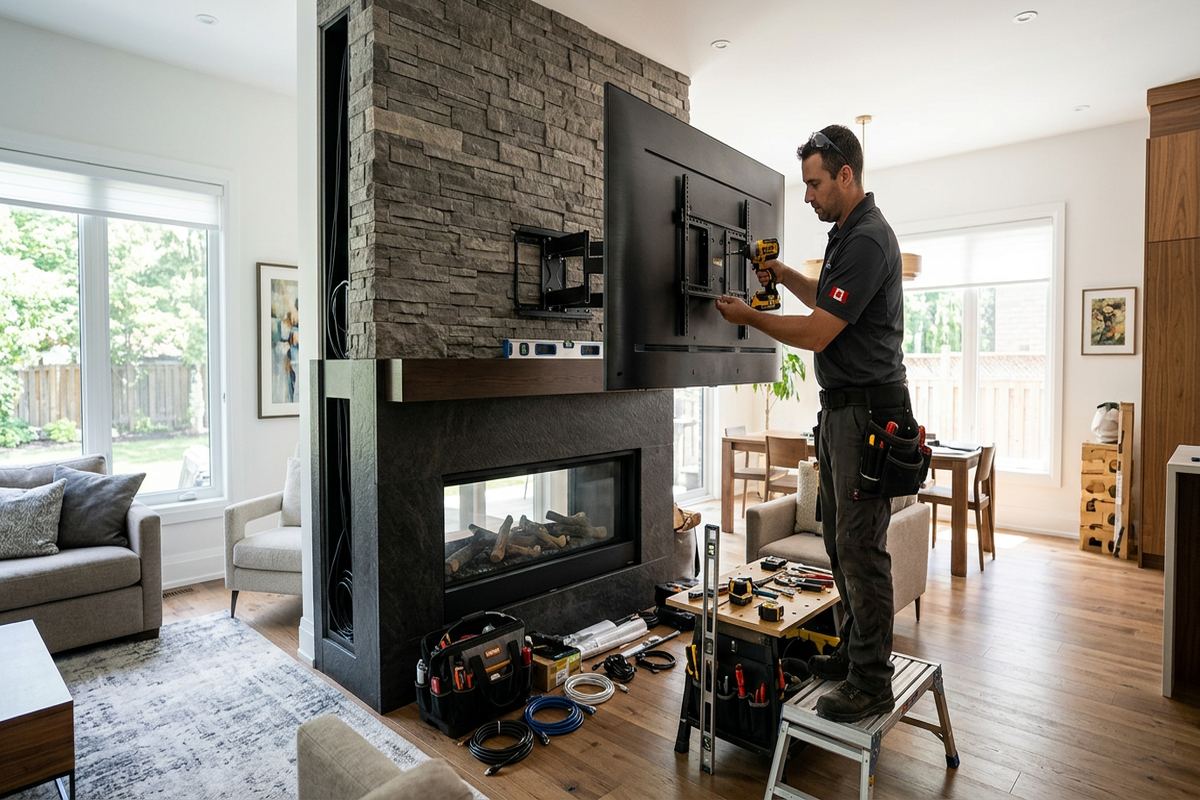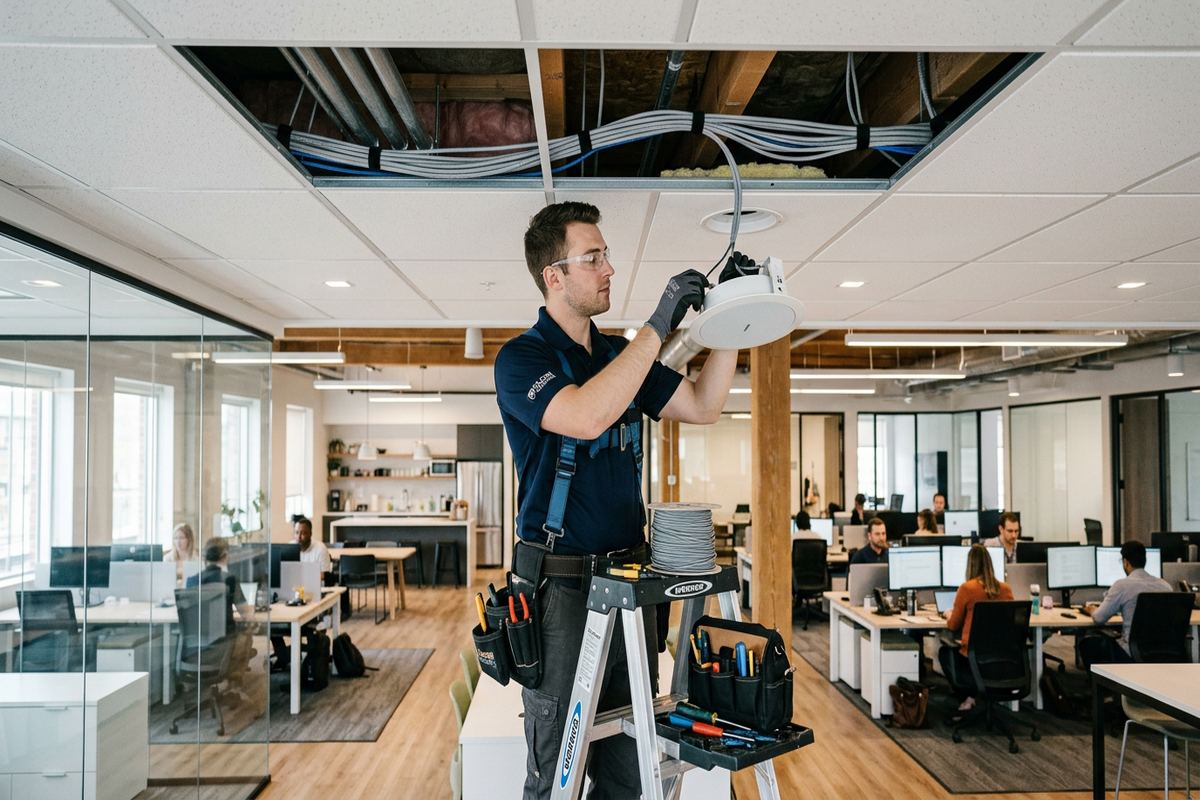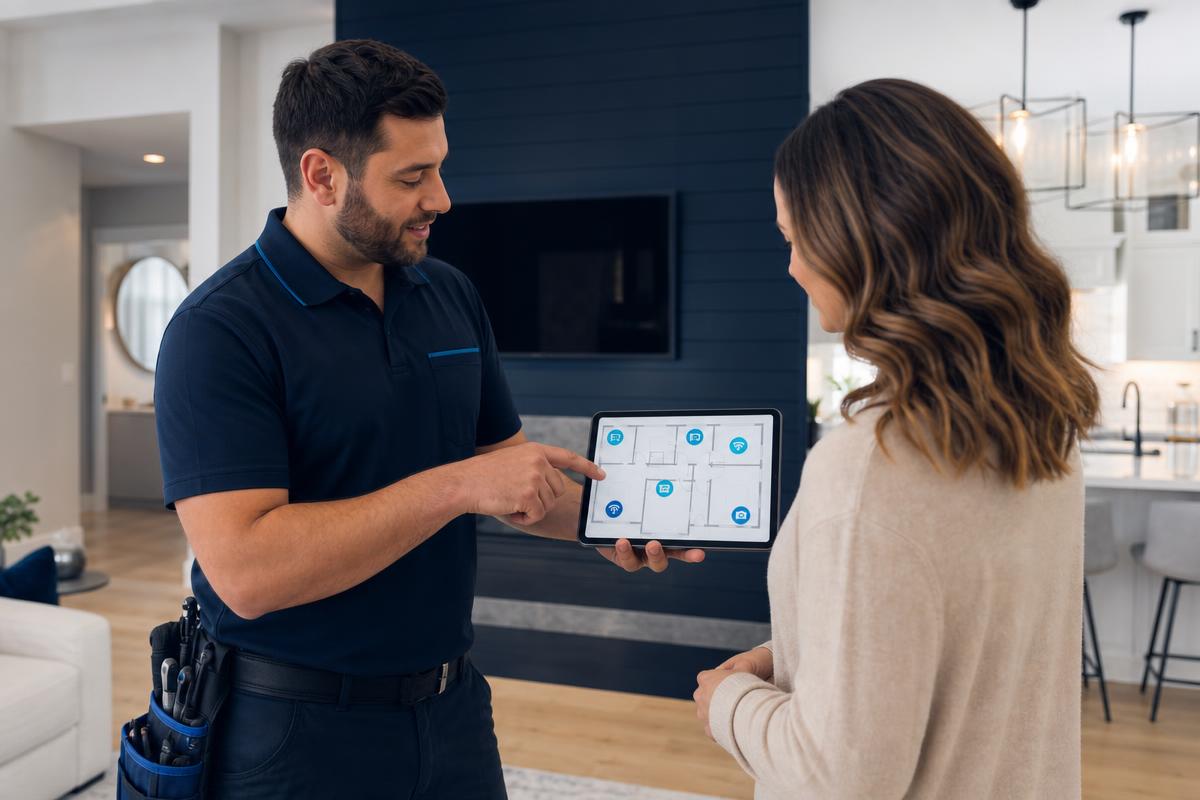
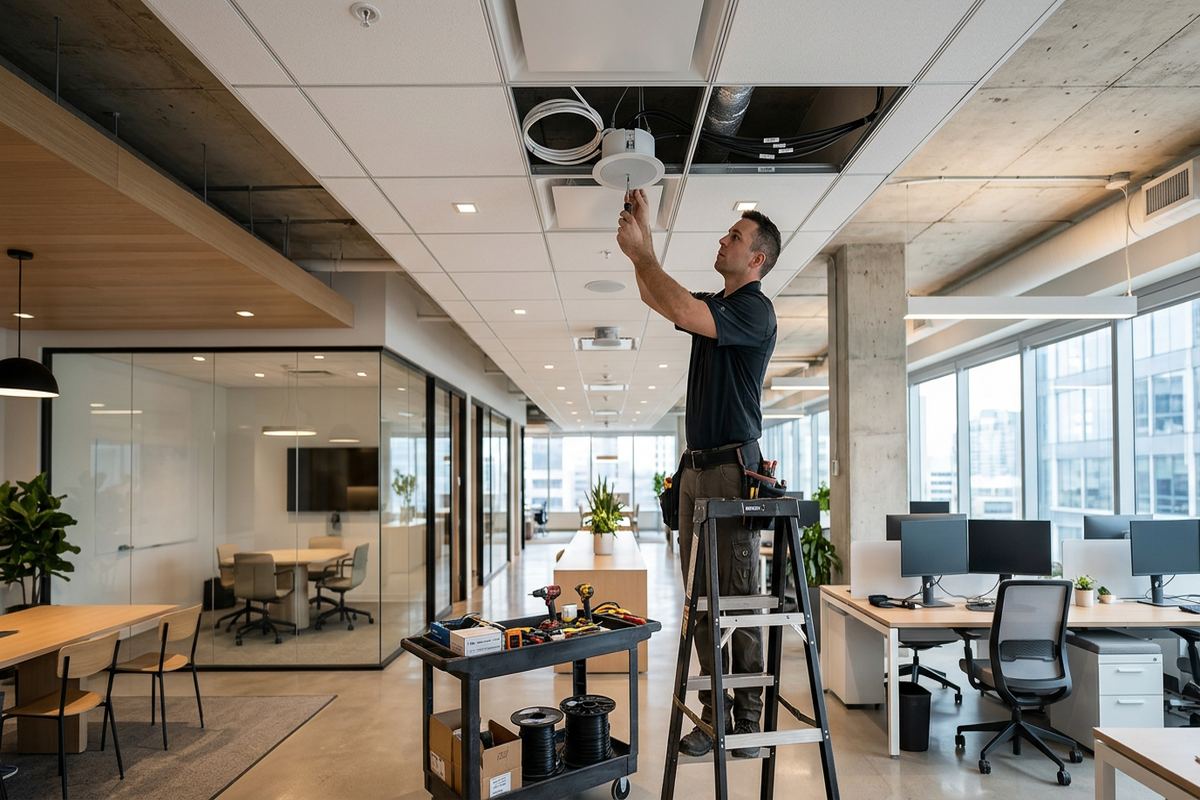
UnifiedLink installs outdoor speaker systems for homes and businesses across Bowmanville. We plan coverage, select suitable mounting locations, run labelled cabling and configure the system on site. Each project begins with an assessment that considers the property, listening areas, neighbouring spaces, weather exposure and how you want to control the audio.
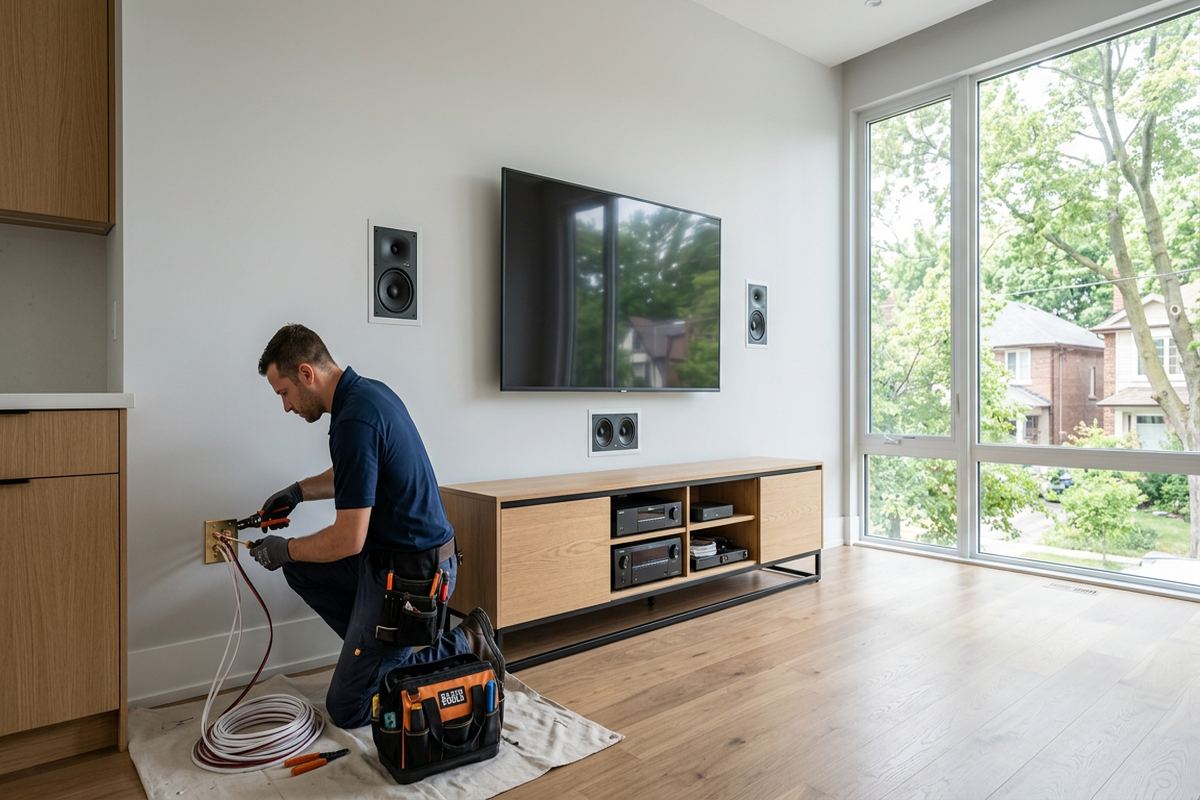
Outdoor Speaker Planning for Bowmanville Properties
Good outdoor audio starts with coverage planning rather than simply attaching speakers to the nearest wall. During a Bowmanville site assessment, we review the patio, deck, pool area, garden, storefront or staff space that needs sound. We also consider where people normally sit, walk or gather. Speaker quantity, direction and mounting height affect whether music remains even at comfortable levels. A planned layout reduces loud spots beside the building and weak areas farther away, while helping limit unnecessary sound toward neighbours, sidewalks and adjacent commercial or residential properties.
Bowmanville contains a mix of older buildings near its historic main street and newer subdivisions expanding on the west side. That combination creates different installation requirements. Older properties may need careful retrofit routes through finished walls, basements, soffits or masonry. Newer frame construction can provide accessible attic, utility-room or pre-wire paths, depending on how the house was built. We inspect rather than assume. The written scope identifies proposed equipment, cable routes, mounting locations, exclusions, equipment ownership and warranty information before installation work begins.
The intended use determines more than speaker size. Background music on a covered porch has different requirements from audio around a broad yard, a restaurant patio or an outdoor customer area. We ask which sources you use, who needs control and whether outdoor sound should operate independently from indoor rooms. Existing receivers, amplifiers and music systems are checked for suitable outputs and electrical capacity. Where new components are needed, we specify their purpose clearly, avoiding mismatched loads, awkward controls and equipment placed where heat, moisture or poor ventilation can shorten service life.
- Patio, deck and garden coverage planning
- Residential and commercial outdoor audio layouts
- Retrofit and pre-wire route assessment
- Neighbour-aware speaker direction
- Written equipment and installation scope
Weather-Ready Installation in Bowmanville
Ontario weather places real demands on outdoor audio equipment and every opening made during installation. Speakers must suit their degree of exposure, whether mounted beneath a deep overhang or directly exposed to rain, snow and sunlight. Bowmanville winters also bring repeated freeze-thaw cycles that can stress brackets, fasteners, cable jackets and poorly sealed penetrations. We select mounting methods for the surface and location, form drip paths where required, and seal exterior cable entries carefully. The objective is a secure installation that does not depend on indoor-rated connectors or unprotected wiring outdoors.
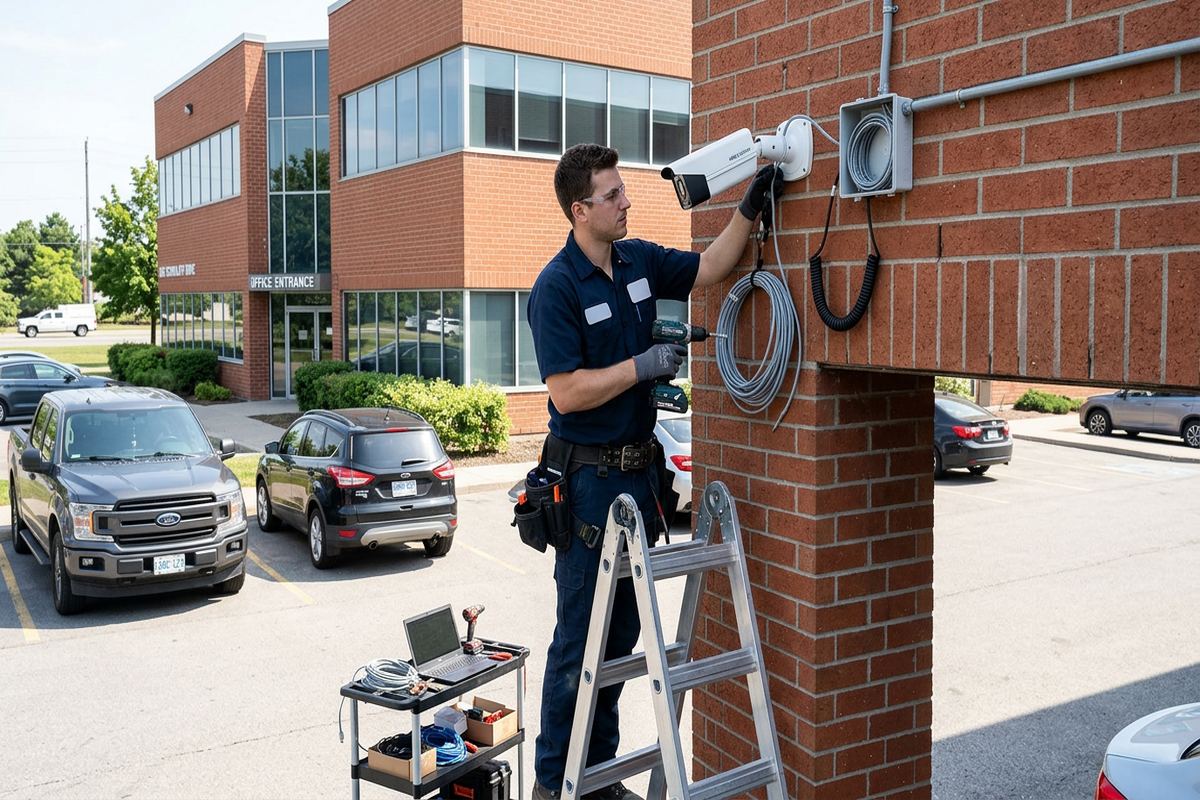
Exterior walls are not interchangeable. Brick, concrete block, stone veneer, siding and wood framing each require an appropriate fastening and penetration method. On masonry, mounting points must account for the substrate and avoid careless damage to brick faces or mortar joints. With sided frame construction, the bracket needs sound backing rather than relying on cladding alone. Cable entries are positioned and sealed to reduce water movement into the wall assembly. Before drilling, we review accessible interior conditions and likely services, then confirm the route and visible finish with the customer.
Equipment described as weather-resistant still benefits from sensible placement. Where possible, speakers are positioned away from roof runoff, drifting snow, sprinkler spray and areas where ladders, doors or seasonal furniture could strike them. Amplifiers and network components normally remain indoors in a dry, ventilated location with access for service. Outdoor volume controls, connection points and enclosures are selected for the environment when included. The written scope distinguishes customer-owned equipment from supplied components, explains relevant warranty coverage and records any existing devices that may limit performance or require separate replacement.
- Exterior-rated speakers and connection methods
- Sealed wall and soffit penetrations
- Surface-appropriate brackets and fasteners
- Protected indoor amplifier locations
- Freeze-thaw and runoff considerations
Speaker Placement and Coverage
Even coverage usually comes from several well-positioned speakers operating at moderate output, not one loud speaker projecting across the entire property. We consider speaker dispersion, distance between listening areas and physical obstructions such as fences, privacy screens, trees and rooflines. In a compact Downtown Bowmanville yard, inward-facing speakers can help keep sound within the property. A larger Northglen or Waverley lot may need distributed coverage for a deck and a separate seating area. Final placement also preserves practical clearance from doors, windows, eavestroughs and routine maintenance access.
Bass behaves differently outdoors because there are fewer walls to contain and reinforce lower frequencies. If fuller low-end response is important, the design may include a suitable outdoor subwoofer or landscape audio components rather than pushing wall-mounted speakers beyond their useful range. Placement must balance sound, drainage, landscaping and the possibility of garden work or snow clearing. We discuss these trade-offs before equipment is specified. The goal is clear, consistent listening in the intended zone, not excessive output that carries into neighbouring yards or creates vibration against the building structure.
Commercial outdoor areas require attention to operating patterns as well as acoustics. Along commercial strips, a patio may sit close to pedestrians, residences, traffic noise or neighbouring tenants. An industrial unit may need background audio near a staff entrance or loading-side break area without projecting toward operations. Speaker zones and control limits can make daily use simpler, but audio installation does not replace the owner’s responsibility to follow lease terms, municipal requirements or property rules. We document the intended coverage area and configure controls around the approved operating plan.
- Coverage mapped to occupied areas
- Inward-facing layouts where practical
- Separate zones for distinct spaces
- Landscape and wall-mounted speaker options
- Placement clear of routine maintenance
Bowmanville, Ontario
Outdoor speaker installation in Bowmanville, scoped in writing first
Book a site assessment and get equipment, routes, exclusions, and warranty on paper before anything is installed.
Cabling and Pre-Wire Work in Bowmanville
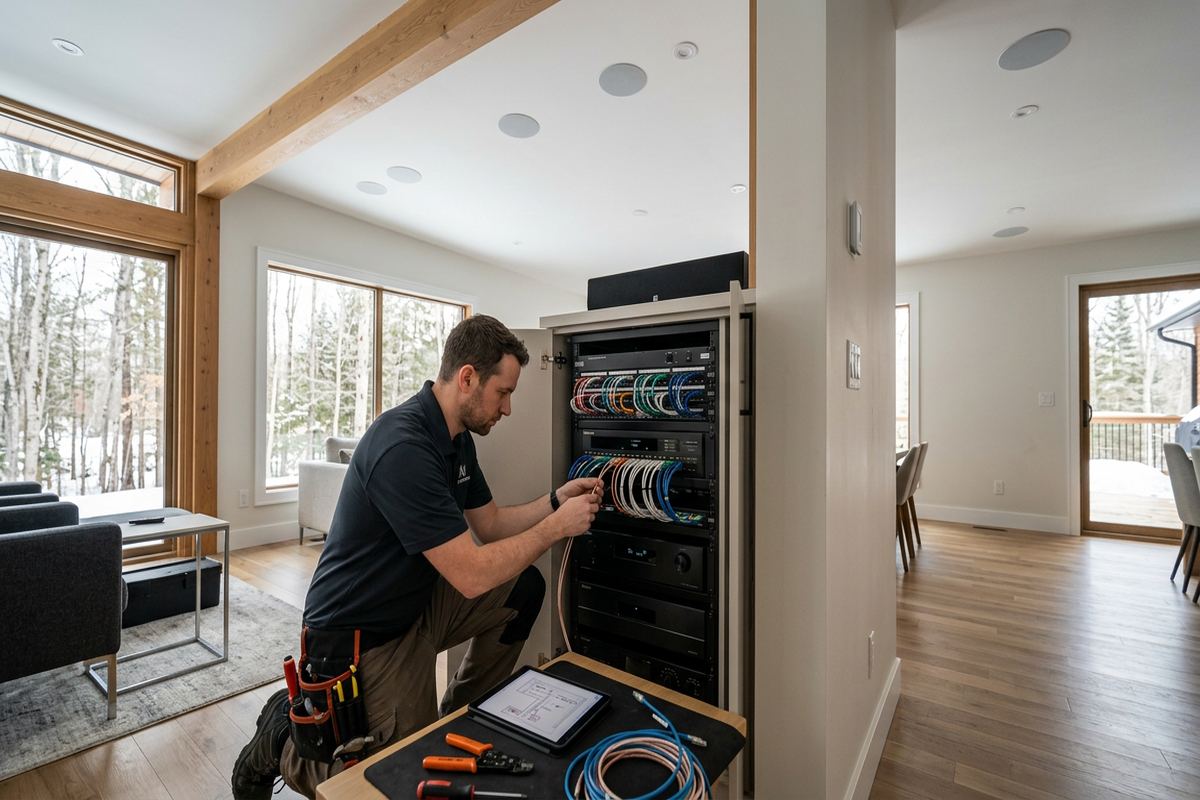
Cable is the permanent part of many outdoor speaker systems, so route quality matters. UnifiedLink installs continuous labelled cable runs between the equipment location and each speaker or approved termination point. Connections hidden behind inaccessible finishes are avoided where practical. Cable type is chosen for the route, including whether it passes through interior walls, unfinished utility spaces, conduit or an outdoor environment. Low-voltage wiring is kept organized and separated appropriately from electrical conductors. At the rack or amplifier, labels make future testing, changes and equipment replacement easier to manage.
Rapid subdivision growth on Bowmanville’s west side creates regular opportunities to pre-wire before basements, additions or covered patios are fully finished. Early coordination can place speaker cables, network cabling and control wiring while framing or service spaces remain accessible. However, a pre-wire should still be based on an equipment concept, because cable gauge, conductor count and termination locations depend on the future system. We record each run and leave suitable service length. If construction is active, responsibilities for backing, conduit, electrical receptacles and finish repairs are identified in the scope.
Retrofit work around Downtown Bowmanville, Liberty and Port Darlington can involve finished ceilings, older framing, masonry walls or previous renovations that conceal practical routes. We inspect basements, attics, closets, soffits and utility areas to find a path that limits disruption. Some routes may require visible exterior-rated cable or conduit; others may not be feasible without opening finishes. Those conditions are discussed before pricing. The scope states anticipated cable routes and exclusions, including patching or painting when they are not part of the low-voltage installation, so responsibilities remain clear.
- Continuous point-to-point cable runs
- Labels at equipment and speaker ends
- Pre-wire coordination before finishes close
- Retrofit routes through accessible spaces
- Cable schedule included in records
Audio Sources, Zones and Control
A useful outdoor system should be simple for the people who operate it. Control may come from a receiver, dedicated audio amplifier, wall control or network-connected music platform, depending on the property and required zones. We review whether the outdoor area should share a source with indoor speakers or play independently. For businesses, access can be limited to designated staff devices where the selected platform supports it. We configure source selection, zone names and practical operating levels on site, then demonstrate normal use rather than leaving unexplained menus or default settings.
Wireless control does not mean the speakers themselves should rely on weak wireless coverage. Many installed outdoor systems use speaker cable for dependable audio while an app or network interface handles control. If the patio or yard has poor Wi-Fi, commands may respond inconsistently even when the amplifier is working correctly. We test control from the intended operating locations and identify coverage concerns. Wi-Fi changes, access-point installation or network cabling can be included as a separate part of the written scope when needed, keeping audio and network responsibilities clearly defined.
Customers retain their own service accounts and credentials. During handover, the system is configured using customer-controlled logins rather than credentials held only by the installer. We can connect approved music sources and explain account-dependent features, but subscriptions, content rights and service availability remain with the customer and platform provider. For a Bowmanville restaurant, office or other commercial property, the owner is also responsible for appropriate music licensing. The as-built record notes equipment locations, cable destinations and relevant configuration details without recording private passwords in an insecure format.
- Independent or shared audio zones
- App, receiver or wall-based control
- Customer-owned accounts and credentials
- Wi-Fi checked at control locations
- On-site operating demonstration
Bowmanville Retrofits, Renovations and Approvals
Permission should be confirmed before any exterior surface is drilled. Condo corporations, landlords and commercial property managers may regulate visible speakers, cable routes, façade penetrations, working hours and equipment installed in common elements. Residents and tenants in Bowmanville should obtain written approval where required and provide any applicable installation rules before the assessment. UnifiedLink can describe proposed locations and routes for an approval request, but cannot authorize work on behalf of an owner or corporation. If approval changes the plan, the scope is revised before installation proceeds.
Renovation timing can affect both cost and finish quality even when the audio work is relatively contained. If siding, roofing, soffits, drywall or landscaping will change, speaker backing and cable paths should be coordinated before those surfaces are closed. Electricians may need to provide receptacles or circuits for indoor amplification equipment, while a general contractor may handle access openings and finish repair. We identify these interfaces during planning. One accountable low-voltage contractor manages the outdoor speaker portion, including cable installation, device mounting, configuration, testing and the final system record.
Existing audio equipment can sometimes be retained, but compatibility must be checked rather than assumed. An older receiver may lack independent zone control, suitable power, network features or the connections needed for a proposed layout. Existing speaker wiring may have hidden splices, damaged insulation, unclear destinations or unsuitable outdoor exposure. We test accessible components and explain limitations before they are included in the design. Reusing sound equipment can be practical when it fits the requirement; keeping it solely to avoid changing the plan can produce complicated controls and unreliable operation.
- Condo and landlord rules reviewed
- Façade penetrations documented for approval
- Coordination with active renovations
- Existing amplifier compatibility checks
- Responsibilities defined before installation
Installation, Testing and Handover
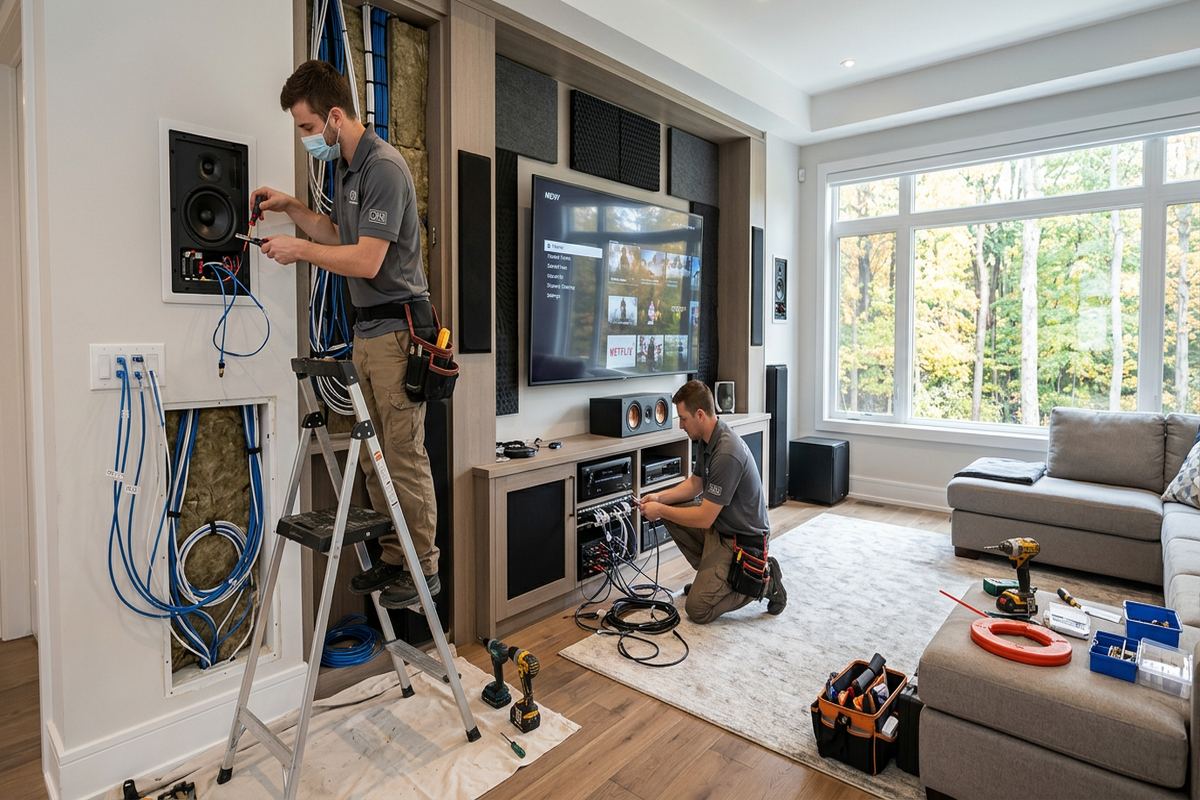
Installation follows the agreed device positions and cable routes unless site conditions reveal a conflict. If hidden framing, blocked cavities or unsafe access makes a planned route unsuitable, we stop and discuss the alternative rather than making an unapproved visible change. Speakers are mounted securely, aimed toward the listening area and connected with attention to polarity and strain relief. Cable runs are labelled at both ends. Exterior entries receive the specified sealing treatment, and indoor equipment is arranged so controls, ventilation and service connections remain reasonably accessible.
Testing includes every speaker, source and control method covered by the scope. We confirm left and right channels where applicable, check zones independently, listen for obvious distortion or rattling, and verify that controls respond from intended locations. Levels are balanced across the occupied area instead of being judged only beside one speaker. Outdoor acoustics vary with traffic, wind and seasonal landscaping, so testing establishes sensible operation rather than promising identical sound under every condition. Any limitation caused by customer equipment, network performance or an approved placement constraint is recorded and explained.
At handover, the customer receives an operating walkthrough and an as-built record for the installed work. The record identifies speaker positions, cable destinations, central equipment and relevant zone details. Customer-owned credentials are used for supported applications and services, allowing the owner to manage future access. Warranty information and equipment ownership are confirmed as set out in the written scope. A clear handover is particularly useful for Bowmanville businesses with changing staff and for homeowners who may later renovate, replace an amplifier or expand audio into another outdoor area.
- Secure mounting and final aiming
- Polarity and zone testing
- Balanced output across listening areas
- Customer credential-based configuration
- As-built record at handover
Arranging Outdoor Speaker Installation in Bowmanville
The process begins with a discussion of the property, listening areas, preferred sources and existing equipment. Photographs can help identify obvious conditions, but pricing follows a site assessment because exterior construction, access and cable routes affect the work. Assessment timing depends on the service requirements and travel distance. Requests sent during business hours are answered the same day; after-hours requests are answered the next business day. This response wording applies to the initial request and is not a promise that an assessment or installation will occur that day.
Following the assessment, UnifiedLink provides a written scope covering equipment, cable routes, device placement, exclusions, equipment ownership and warranty. The document also identifies assumptions such as access to utility spaces, available power, customer-provided network service or approvals that must be obtained. This step gives a Bowmanville homeowner, landlord or business owner a defined basis for review before work starts. If options are useful, they can be separated by coverage approach or control method without obscuring which parts are required for a complete, working outdoor audio system.
From a small Waverley deck to a Port Darlington outdoor seating area, the appropriate design depends on the building and how the space is used. Historic construction, newer subdivision framing, masonry façades and leased commercial units each present different constraints. UnifiedLink handles the low-voltage work as one accountable contractor, from assessment through cabling, mounting, configuration, testing and documentation. The result is a system planned for its actual environment, with clear controls, labelled infrastructure and records that support future service or changes without relying on guesswork.
- Site assessment before pricing
- Written scope before work begins
- One accountable low-voltage contractor
- Installation and configuration on site
- Documented handover for future reference
Bowmanville neighbourhoods we cover
- Downtown Bowmanville
- Waverley
- Northglen
- Liberty
- Port Darlington
Outdoor speaker installation in Bowmanville — common questions
Can outdoor speakers stay installed through a Bowmanville winter?
Yes, when the speakers and installation method suit the exposure. Outdoor-rated equipment, secure brackets, protected connections and carefully sealed cable entries are important. Bowmanville’s freeze-thaw cycles, snow and roof runoff all affect placement. Equipment under an overhang may face less direct weather than a fully exposed speaker, but the exact product and mounting method are selected after reviewing the location.
How many speakers does my patio need?
The answer depends on the patio dimensions, listening positions, surrounding walls and acceptable sound beyond the property. Several speakers at moderate levels often provide more even coverage than one loud unit. During a Bowmanville assessment, we review seating, doors, neighbouring yards and possible mounting surfaces, then propose a layout intended to cover occupied areas without directing unnecessary output toward adjacent properties.
Can you use my existing receiver or amplifier?
Existing equipment can be reused when it supports the proposed speaker load, zones, sources and control method. We check accessible connections, specifications and operating condition before including it in the design. Some receivers support a basic second zone, while others require additional amplification or do not provide practical independent control. Any compatibility limits are noted in the Bowmanville project scope before installation.
Do I need permission to install speakers outside?
Property owners can generally approve work on their own building, subject to applicable rules, but tenants and condo occupants may need written permission. Bowmanville condo corporations, landlords and commercial property managers can regulate façade penetrations, visible cable, equipment locations and working hours. Customers should provide those requirements before installation. UnifiedLink can document proposed routes and mounting locations to support an approval request.
Can speakers be installed on brick or siding?
Yes, but the fastening and sealing method must match the wall assembly. Brick, block, veneer, wood framing and siding cannot be treated the same way. A Bowmanville site assessment helps determine whether there is suitable backing, where cable can enter and how water should be managed. We confirm the visible location before drilling and use an installation approach appropriate to the accessible substrate.
Will I control the outdoor speakers from my phone?
Phone control is available with compatible network-connected receivers or audio platforms. The selected system must also have reliable network access where control is needed. We test operation from the intended areas and configure supported services using the customer’s own credentials. If Bowmanville patio or yard Wi-Fi is weak, network improvements can be identified separately rather than assuming an audio equipment fault.
Coverage in Bowmanville is confirmed against the address before we quote. See everything we install in Bowmanville or the province-wide outdoor speaker installation page.