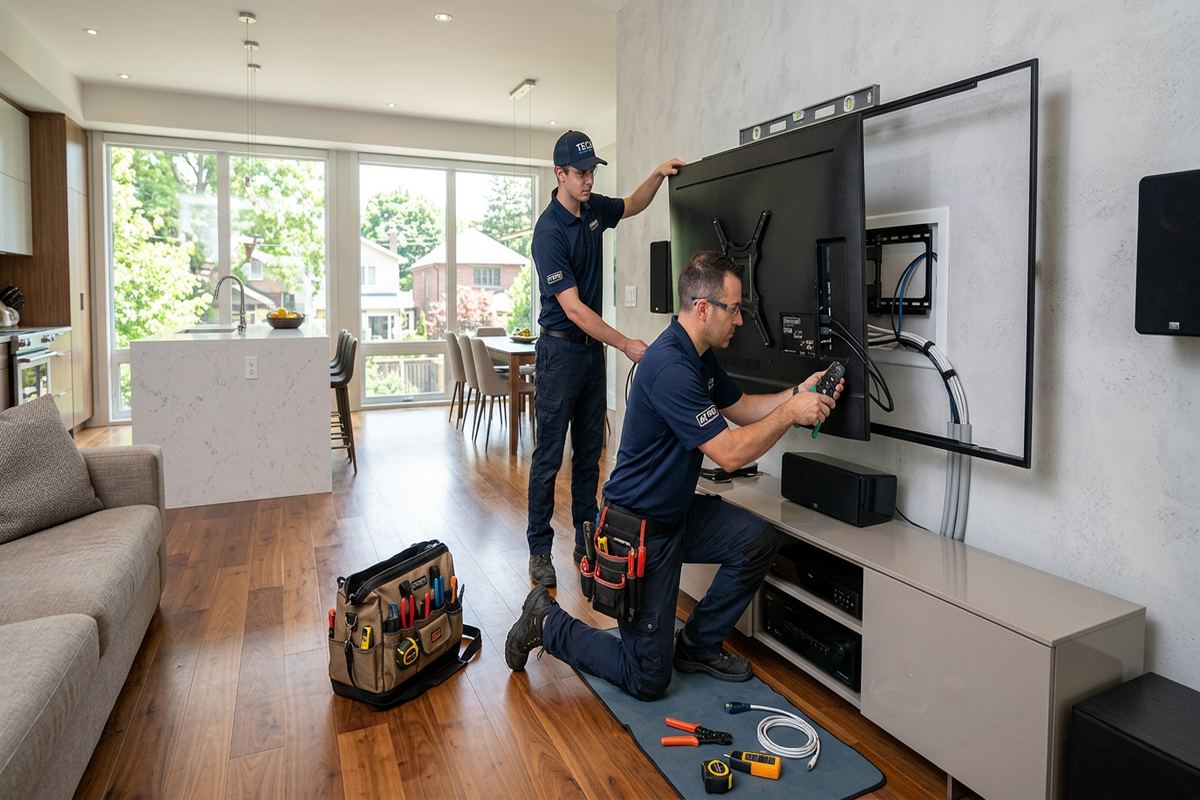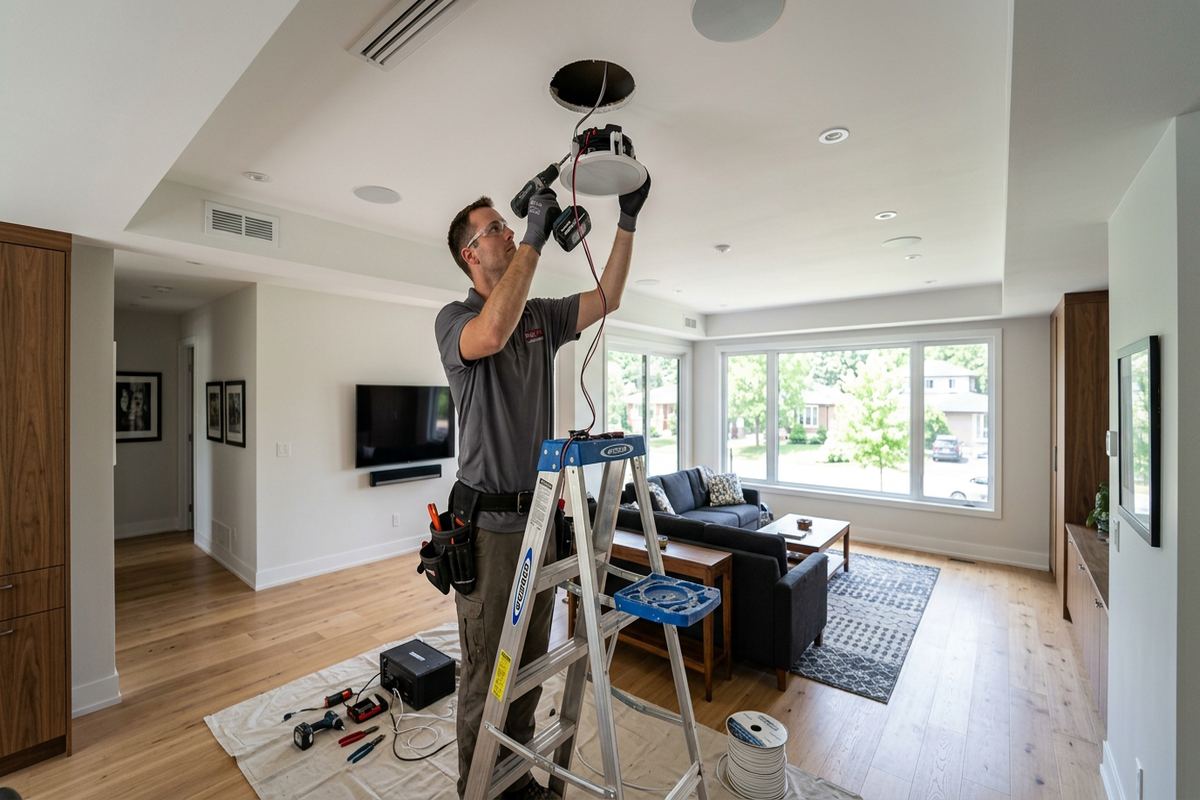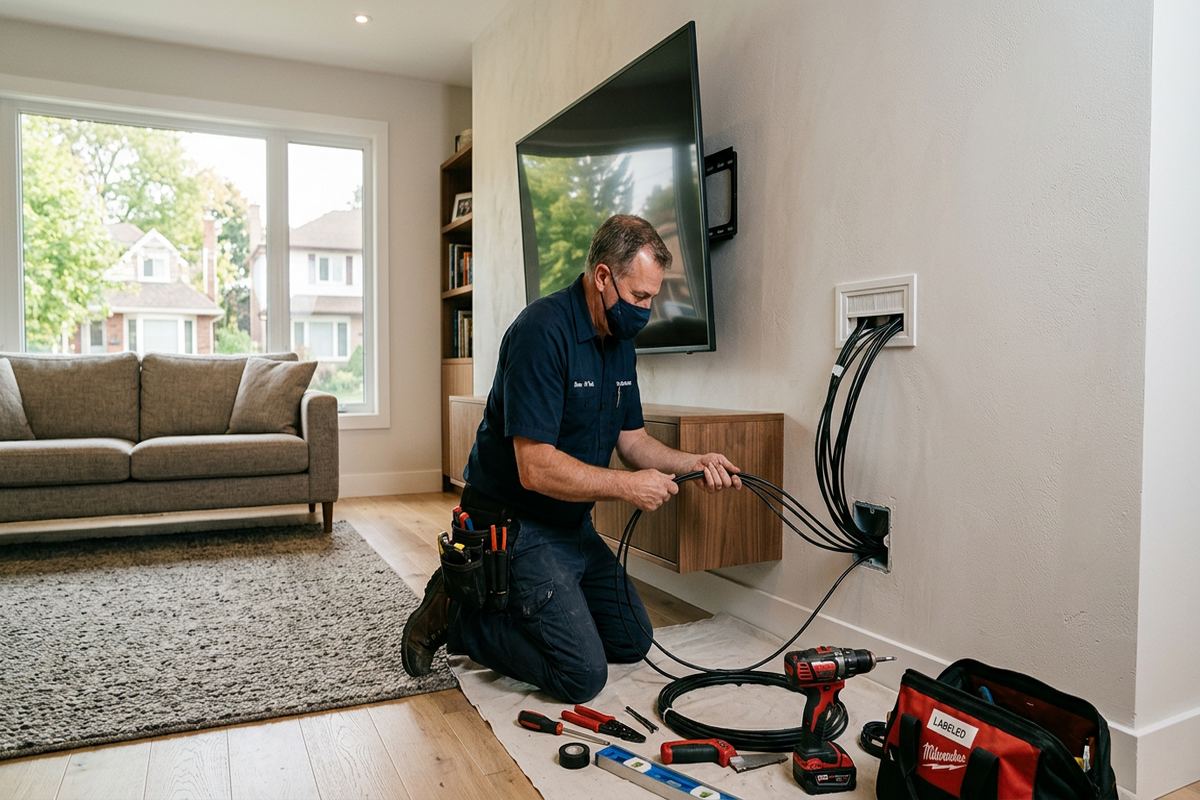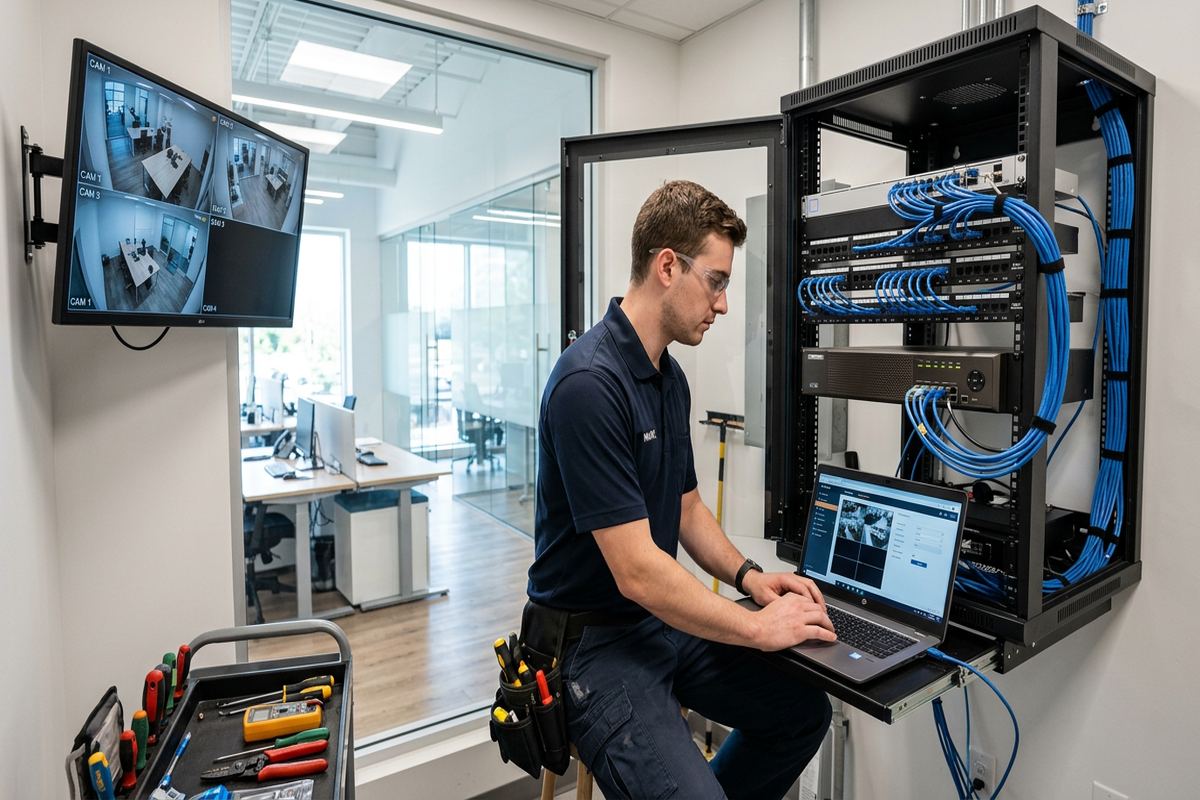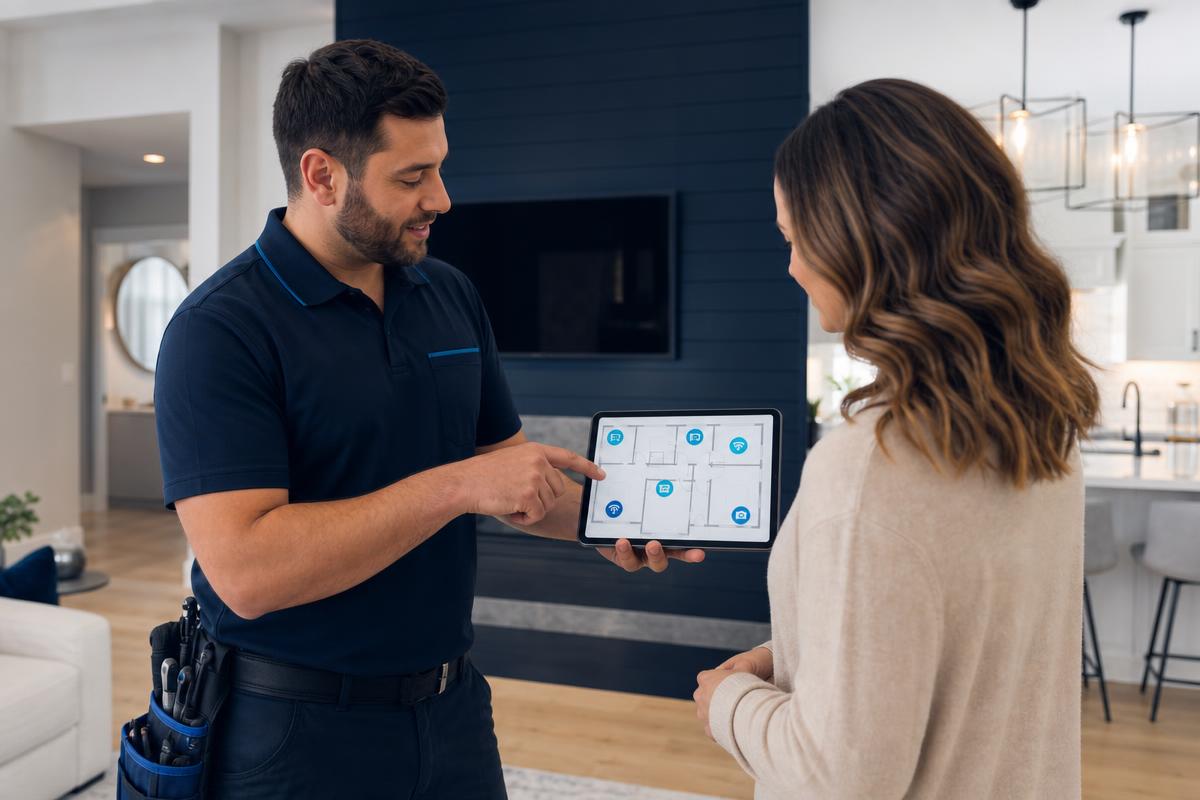
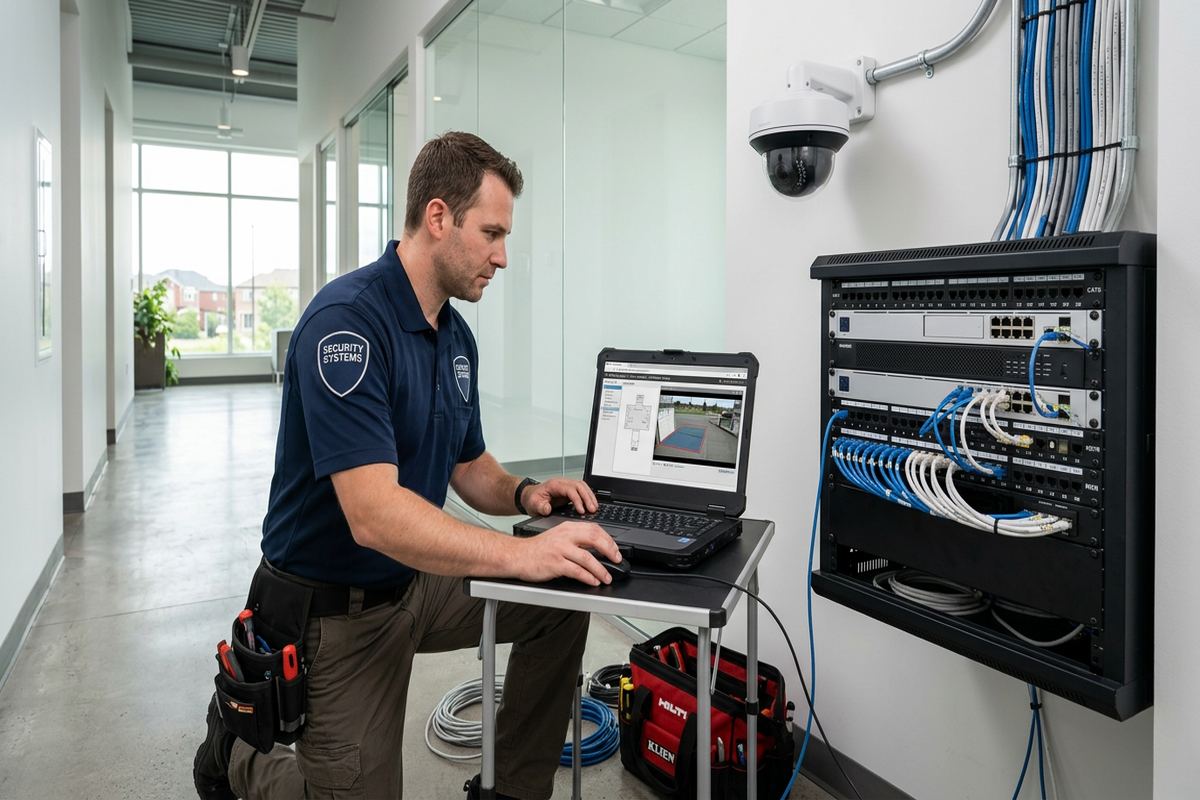
UnifiedLink installs commercial security camera systems for businesses, landlords and property operators in Bowmanville. We plan camera placement, cable routes, recording and remote access around the building, operating needs and site conditions. Every project begins with an assessment before pricing and concludes with on-site configuration, customer-controlled credentials, labelled cabling and an as-built record.
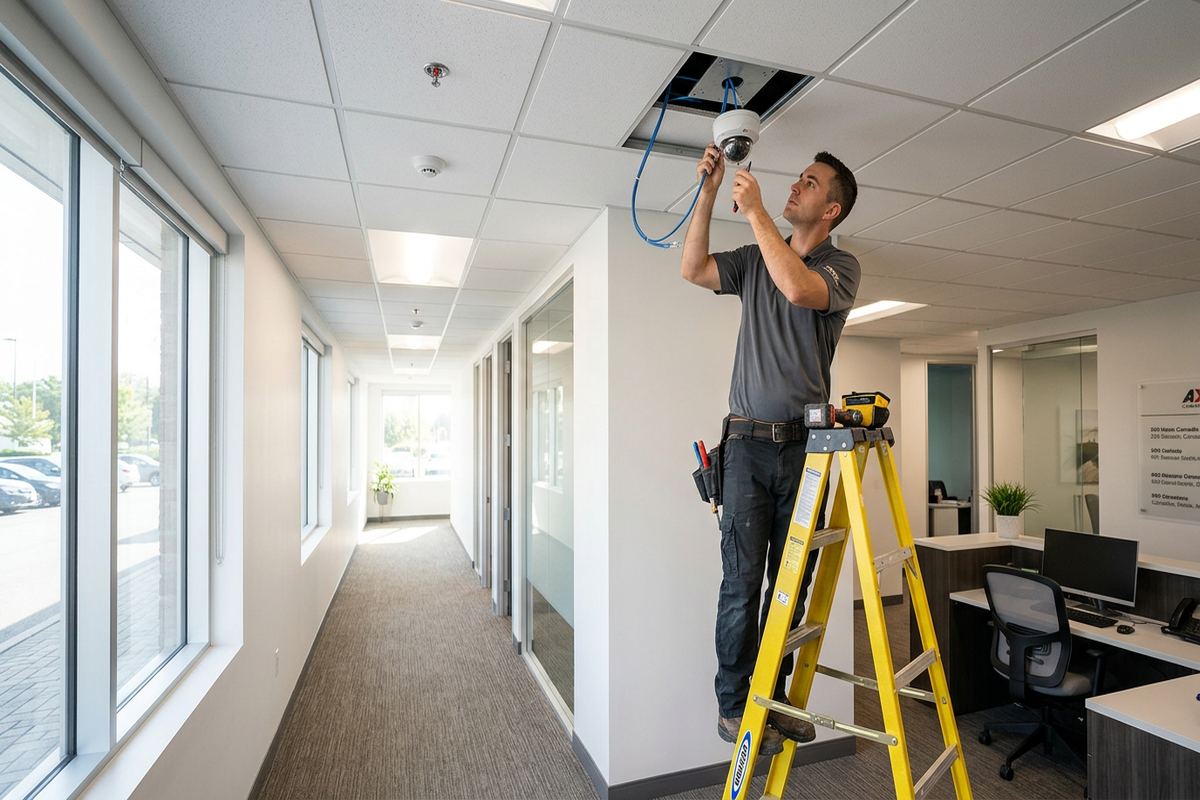
Commercial Camera Planning for Bowmanville Properties
A useful camera system begins with the reason for recording, not a device count. During a Bowmanville site assessment, we identify entrances, cash-handling points, shipping areas, parking approaches, interior circulation and locations where incidents are difficult to verify. The plan considers what each view must show, such as a person entering, a vehicle approaching or activity around stored materials. We also review available lighting, mounting height, obstructions and practical maintenance access. This process helps avoid cameras that technically record an area but cannot provide enough detail when footage is actually needed.
Bowmanville’s mix of older commercial premises and newer construction requires different planning methods. Buildings near Downtown Bowmanville may involve finished interiors, masonry walls, shared façades or limited ceiling access. Commercial units serving newer subdivisions on the west side may offer clearer pathways for pre-wire work before walls and ceilings close. We inspect construction rather than assuming that every cable can follow the shortest visible route. The written scope identifies expected pathways, device locations, penetrations, exclusions and any areas requiring coordination with a landlord, condominium corporation, builder or another trade.
Recording requirements shape the network, storage and camera selection. A business monitoring public entrances may have different retention and image-detail needs from an industrial unit tracking loading activity or a property manager reviewing after-hours access. We discuss expected recording schedules, motion events, remote viewing and who will be permitted to export footage. Available internet service affects remote access but does not need to determine whether local recording continues. The resulting design connects operational requirements with appropriate camera views, recording hardware, network capacity and account permissions without adding equipment that lacks a defined purpose.
- Entrance, parking and loading-area coverage planning
- Assessment of lighting, obstructions and mounting height
- Recording, retention and remote-viewing requirements
- Written equipment and cable-route scope
- Coordination points identified before installation
Camera Coverage for Bowmanville Businesses
Coverage should follow how people, vehicles and goods move through a property. In Bowmanville retail and office settings, that often means pairing an overview camera with a more focused entrance view rather than asking one wide-angle device to perform both jobs. Restaurants, clinics, service counters and commercial strips may also require carefully limited views around staff areas or customer queues. We position cameras to reduce backlighting from doors and windows, avoid unnecessary private areas and keep critical subjects within a useful part of the image throughout their path.
Parking lots and exterior yards introduce different constraints. Cameras may need to observe vehicle approaches, pedestrian routes, waste areas, equipment storage or doors that are not visible from the main counter. Distance, changing headlights, snowbanks and seasonal vegetation can reduce usable detail even when a location appears fully covered on a plan. We evaluate the scene from the proposed mounting position and consider whether supplementary lighting or a dedicated narrower view is appropriate. The objective is not simply to eliminate blank space, but to capture identifiable activity at the locations most relevant to the business.
Interior camera placement must account for shelving, displays, partitions and future changes to the floor plan. A camera installed above a tall fixture may lose much of its value after merchandise or storage arrangements change. Where practical, we establish views that remain useful without interfering with normal operations or creating avoidable blind spots. For multi-tenant properties in Liberty, Waverley or Northglen, the scope can distinguish common-area coverage from cameras serving an individual unit. That separation supports clearer equipment ownership, user permissions, maintenance responsibility and footage access after handover.
- Dedicated views for entrances and transaction areas
- Parking, yard and vehicle-approach coverage
- Placement that accounts for snowbanks and headlights
- Interior views planned around fixtures and partitions
- Permission separation for multi-tenant sites
Retrofitting Older Bowmanville Commercial Buildings
Retrofitting a historic or previously renovated property demands investigation before drilling begins. Around Downtown Bowmanville, wall depth, concealed masonry, multiple ceiling layers and undocumented alterations can restrict otherwise straightforward cable routes. We look for accessible basements, utility rooms, ceiling spaces and existing pathways, then compare them with the required camera positions. Surface raceway may be more suitable than disruptive opening work in some finished areas. Where heritage-sensitive finishes, shared walls or exterior façades are involved, approval remains the property owner’s responsibility and must be confirmed before affected work proceeds.
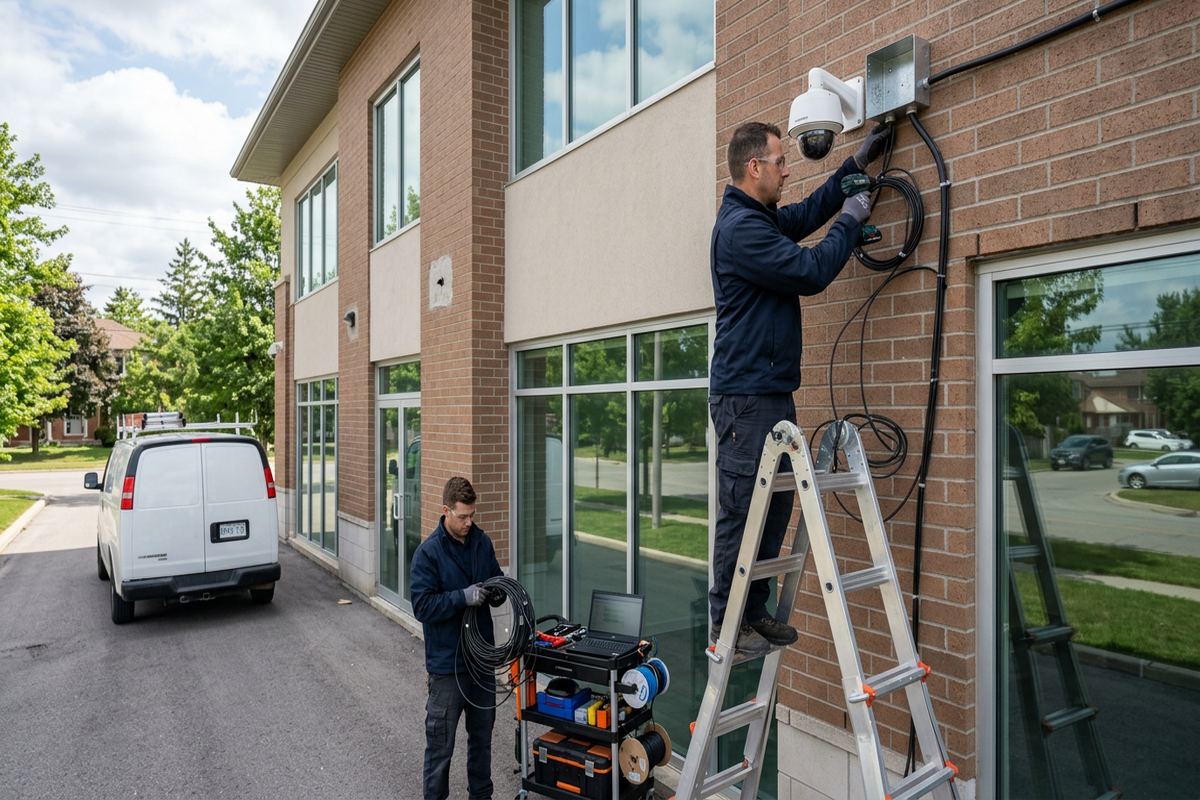
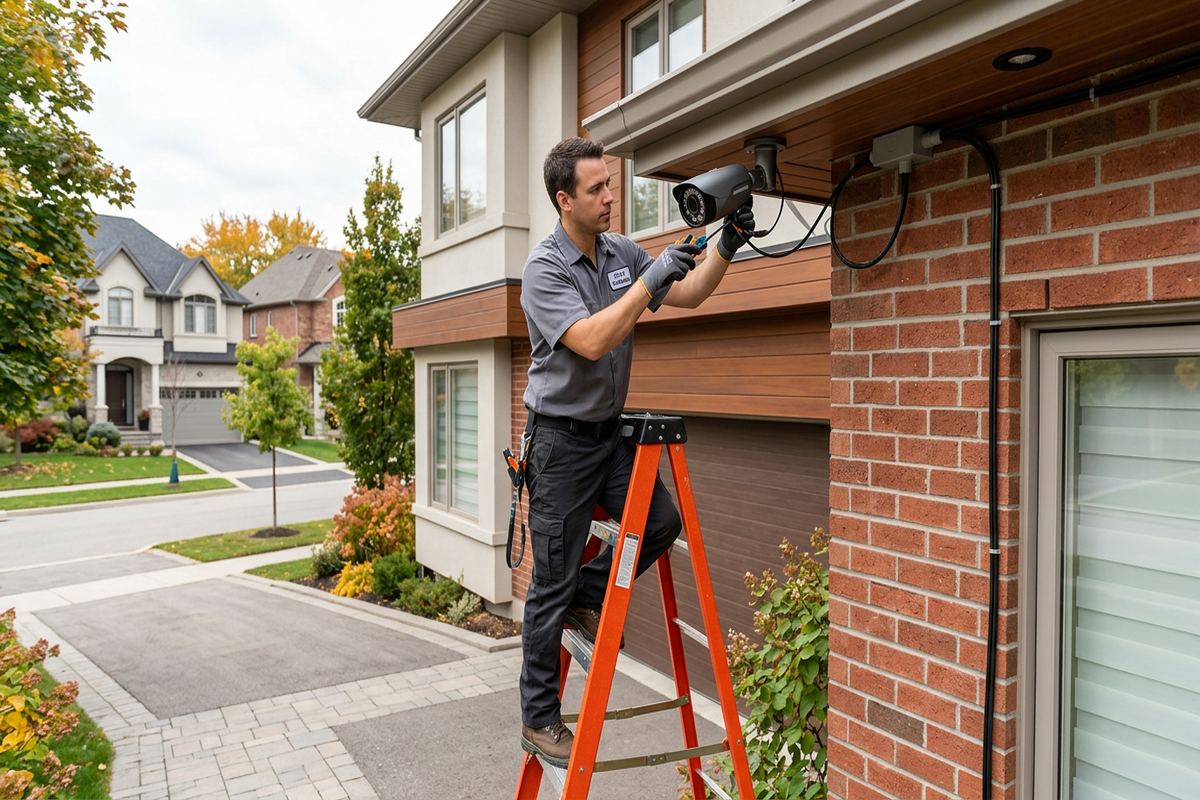
Masonry and frame construction call for different anchors, penetrations and cable protection. A brick wall cannot be treated like wood framing, and an exterior cladding system should not be punctured without understanding the assembly behind it. We select mounting locations that provide stable support and permit proper sealing around penetrations. Cable transitions are arranged to limit exposed sections and reduce opportunities for water entry or physical damage. If the proposed location presents an unknown substrate, inaccessible cavity or conflict with another building system, it is documented and resolved before installation continues.
Occupied retrofit work also requires practical scheduling and containment. Cable pulls through offices, shops and service spaces can affect customer routes, workstations or stock areas even when the final installation is discreet. The assessment identifies access requirements, furniture or inventory that the customer must move and areas that may need temporary isolation. We keep new network runs continuous and labelled rather than relying on hidden, undocumented joins. At completion, the as-built record shows installed device locations and cable destinations, giving the owner a usable reference for troubleshooting, renovation planning or later system expansion.
- Routes assessed before drilling or opening finishes
- Mounting suited to masonry or frame assemblies
- Exterior penetrations sealed against water entry
- Continuous cable runs without hidden joins
- As-built documentation for future work
Bowmanville, Ontario
Commercial security camera installation in Bowmanville, scoped in writing first
Book a site assessment and get equipment, routes, exclusions, and warranty on paper before anything is installed.
New Construction and Pre-Wire in Bowmanville
Rapid subdivision growth on Bowmanville’s west side continues to create commercial spaces where security cabling can be installed before finishes are complete. Pre-wire work allows camera locations, network-room requirements and pathways to be coordinated while framing and ceiling spaces remain accessible. That does not mean every visible corner needs a cable. We map likely entrances, service doors, parking approaches and interior control points against the planned layout. The scope can include spare pathways where future expansion is reasonably anticipated, while clearly distinguishing active devices from cable installed for later use.
Construction drawings are a starting point rather than a substitute for field coordination. Door swings, bulkheads, signage, mechanical equipment and lighting may move as work progresses, changing the usefulness of an originally selected camera position. We coordinate approved locations with the site contact and identify dependencies involving electrical power, internet service, network cabinets, lifts or finished mounting surfaces. Cable is kept separated and supported according to the pathway available for low-voltage work. Each run is labelled at both ends so cameras can be commissioned efficiently when equipment and network services are ready.
A phased commercial build may require rough-in, trim and final configuration at different times. Our written scope identifies which equipment is supplied, when installation can proceed and what must be complete before each visit. Cameras should not be mounted where ongoing construction exposes them to impact, dust or unauthorized handling. Once the site is ready, we terminate and test cabling, install approved devices and configure recording on site. The handover records final locations and account details, rather than relying on early plans that may no longer match the completed Bowmanville property.
- Pre-wire before walls and ceilings close
- Camera locations coordinated with construction changes
- Labelled cables prepared for final commissioning
- Phased rough-in, trim and configuration
- Spare pathways identified where appropriate
Exterior Camera Installation for Bowmanville Winters
Exterior cameras in Bowmanville must be installed for repeated winter exposure, not merely sheltered during the first season. Freeze-thaw cycles can open poorly sealed penetrations, while wind-driven precipitation can follow cables toward a wall opening. We plan drip loops where appropriate, protect cable entries and seal penetrations using methods suited to the mounting surface. Junction points are positioned to support inspection and service rather than buried behind inaccessible finishes. Device ratings matter, but the surrounding mount, fasteners, cable transition and building envelope details are equally important to a durable exterior installation.
Cold weather also changes what a camera sees. Snow can reflect infrared illumination, cover low-mounted devices and create bright foregrounds that leave distant areas dark. Icicles, drifting snow and plowed banks may obstruct a view that worked correctly during warmer months. We consider seasonal conditions when choosing height, angle and field of view, especially around loading doors, walkways and parking areas. A high mounting position may reduce tampering but can also make faces or licence plates too steeply angled, so mounting height is balanced against the evidence the customer needs.
Port Darlington properties and other exposed locations may experience stronger wind and moisture conditions than sheltered interior streets. Mounting to poles, parapets or exterior structures requires confirmation that the base is stable and that a protected cable route is available. We do not treat a wireless connection as a way to avoid power, mounting or weatherproofing requirements. Where a lift, traffic control or special access is needed, that requirement is identified during assessment. The written scope makes exterior installation assumptions and exclusions visible before equipment is ordered or work begins.
- Sealed penetrations suited to exterior surfaces
- Cable entries protected from water tracking
- Views planned for snow and infrared reflection
- Stable mounting with serviceable junction points
- Access equipment identified in the written scope
Recording, Networks and Remote Viewing
Commercial camera performance depends on the recording and network design behind the lenses. We review camera bandwidth, switch capacity, power availability and the route between devices and the recorder or network cabinet. Existing network equipment is assessed for suitability rather than automatically reused. Where practical, security cameras can be separated from ordinary business devices through appropriate network configuration. This helps organize access and reduces avoidable interaction with point-of-sale systems, office computers or guest Wi-Fi. Any network changes included in the project are described in the scope so responsibilities remain clear.
Storage planning begins with the customer’s operational requirements. Resolution, frame rate, scene activity, recording schedule and camera count all affect how much footage can be retained. Increasing every setting does not automatically create a better result if it shortens retention or exceeds available network capacity. We discuss which views require greater detail and whether continuous or event-based recording suits the location. The final settings are configured on site and checked using real scenes. Customers are shown how to locate, play and export footage rather than receiving a recorder left on factory defaults.
Remote viewing can be configured for authorized users on supported phones or computers, subject to the selected system and available internet service. Access is established using the customer’s own credentials, not a permanent shared installer account. We review basic user permissions so an owner can decide who may view live video, search recordings or administer the system. For Bowmanville landlords and multi-site businesses, separate user roles may be useful when managers need operational access without full control. Credential recovery information and administrative ownership are addressed during handover.
- Network and power capacity reviewed
- Storage settings matched to retention needs
- On-site testing with actual camera scenes
- Remote access using customer-owned credentials
- User permissions configured by role
Approvals, Privacy and Commercial Responsibilities
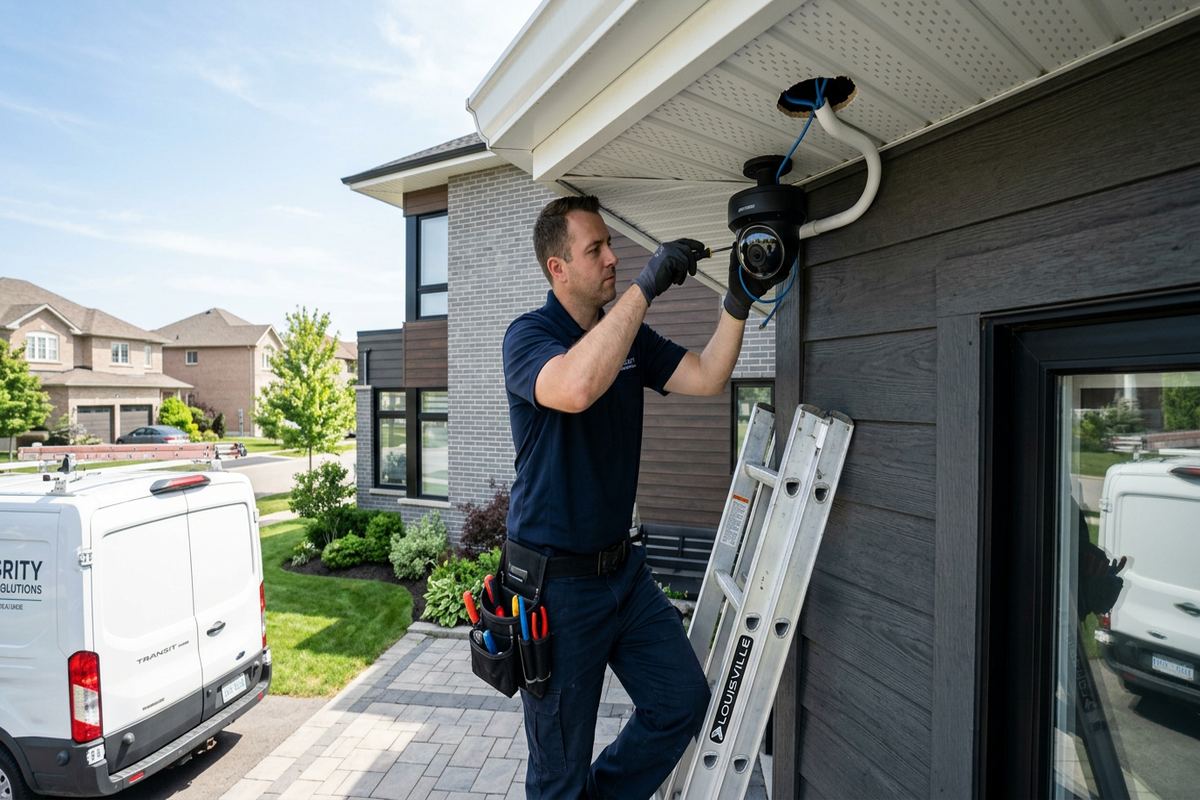
Before installation, the customer must confirm authority to mount equipment and run cables through the proposed areas. Tenants may need written landlord approval for exterior walls, common corridors, rooftops or shared utility spaces. Condominium commercial units can also be subject to corporation rules covering visible equipment, penetrations and work in common elements. In Bowmanville mixed-use properties, ownership boundaries may not be obvious from the interior layout. We identify where approval appears necessary, but the owner, tenant or property manager remains responsible for obtaining permission before affected work is scheduled.
Camera views should be limited to legitimate security and operational purposes. Positioning that unnecessarily captures neighbouring premises, private workspaces or areas beyond the property can create avoidable concerns. Audio recording involves separate legal and policy considerations and is not assumed to be part of a camera installation. Businesses should establish who may access recordings, how exports are handled and how long footage is kept. UnifiedLink can configure supported permissions and retention settings selected by the customer, but the organization remains responsible for its privacy notices, internal policies and legal obligations.
Equipment ownership and future access are clarified in the written scope. This is particularly important where a landlord supplies common-area cameras while tenants use separate recorders, or where a business occupies an industrial unit with shared exterior coverage. The scope identifies supplied equipment, excluded work, customer-provided infrastructure and warranty information. Handover uses the customer’s credentials and includes an as-built record of installed devices and cable destinations. These details reduce confusion when a lease changes, a manager leaves, another contractor performs network work or the system is expanded later.
- Landlord or condominium approval confirmed by customer
- Views limited to defined security purposes
- Audio recording never assumed
- Equipment ownership documented in writing
- Customer permissions established at handover
Bowmanville Installation, Testing and Handover
Once the scope is approved and site conditions are ready, installation follows the documented device positions and cable routes. New cable runs are continuous and labelled, with terminations placed in accessible locations intended for service. Cameras are securely mounted, aimed and focused using the actual scene rather than a rough direction from floor level. Recording, time settings and supported event functions are configured on site. If field conditions differ materially from the assessment, the change is discussed before proceeding instead of concealing the issue or moving equipment without the customer’s agreement.
Testing covers more than whether a live image appears. We verify each camera at the recorder, check the recorded view, confirm playback and review representative day or available low-light conditions. Network connectivity, power delivery and remote access are checked where included. Final angles are reviewed for obstructions and for the detail expected at entrances, counters, parking approaches or loading areas. Bowmanville exterior views are also considered for likely snow accumulation and seasonal change. Any limitation that cannot be corrected within the agreed scope is documented during completion.
Handover gives the customer practical control of the completed system. We provide access using the customer’s own administrative credentials, explain routine live viewing, playback and footage export, and identify the installed recording equipment. The as-built record lists camera locations and cable destinations so future service does not depend on memory. Equipment ownership, warranty information and exclusions remain tied to the written scope. UnifiedLink acts as one accountable contractor for the included camera, cabling and configuration work, reducing gaps between device installation, network connection and system commissioning.
- Secure mounting and final camera aiming
- Playback and representative scene testing
- Included remote access verified on site
- Customer credentials used for administration
- As-built record supplied at handover
Bowmanville neighbourhoods we cover
- Downtown Bowmanville
- Waverley
- Northglen
- Liberty
- Port Darlington
Commercial security camera installation in Bowmanville — common questions
How does pricing work for a Bowmanville camera installation?
UnifiedLink completes a site assessment before pricing because camera count alone does not show cable access, mounting conditions, recording requirements or exterior access needs. The written scope covers equipment, proposed cable routes, device placement, exclusions, equipment ownership and warranty information. Assessment timing depends on the service and travel distance. Requests received during business hours are answered the same day; after-hours requests are answered the next business day.
Can cameras be installed in an older Downtown Bowmanville building?
Yes, subject to access, approvals and the condition of the building. Older Downtown Bowmanville properties may contain masonry, layered ceilings, concealed renovations or limited pathways. We inspect likely routes before recommending concealed cable, surface raceway or another approach. Exterior façade work and penetrations may require landlord or other approvals. Those responsibilities, along with any inaccessible areas or finish repairs outside the low-voltage scope, are documented before installation.
Do commercial security cameras work during Bowmanville winters?
Appropriate exterior cameras can operate through local winter conditions when mounting, cable protection and sealing are handled correctly. We consider freeze-thaw movement, wind-driven moisture, snow reflection, drifting and plowed snow when selecting positions. A weather-rated camera alone does not correct a poor wall penetration or obstructed view. The assessment also identifies access requirements for high mounting locations and any site conditions that could affect maintenance.
Can I view my Bowmanville business cameras remotely?
Remote viewing can be configured when supported by the selected camera system and the site has suitable internet service. We set up access with the customer’s own credentials and can establish user roles for owners or managers. Remote access does not replace local recording, and performance depends partly on the business network and connection. At handover, we demonstrate supported live view, playback and footage export rather than leaving account setup incomplete.
Do tenants need landlord or condo approval?
Often, yes. A Bowmanville commercial tenant may need approval for exterior cameras, façade penetrations, common-area cable routes, rooftops or equipment installed in shared utility spaces. Condominium corporations may impose additional rules for common elements and visible devices. UnifiedLink can identify approval points during assessment, but the customer is responsible for securing permission. Installation affecting those areas proceeds only after the required authority has been confirmed.
Can you pre-wire cameras for a new Bowmanville unit?
Yes. Pre-wire work is useful in new commercial units and west-side Bowmanville developments while framing and ceiling spaces remain open. We coordinate proposed camera positions, network-room routes and construction dependencies with the designated site contact. Runs are continuous and labelled at both ends. Rough-in, final device installation and configuration can be scoped as separate phases, with readiness requirements and customer-provided services clearly recorded.
Coverage in Bowmanville is confirmed against the address before we quote. See everything we install in Bowmanville or the province-wide commercial security camera installation page.