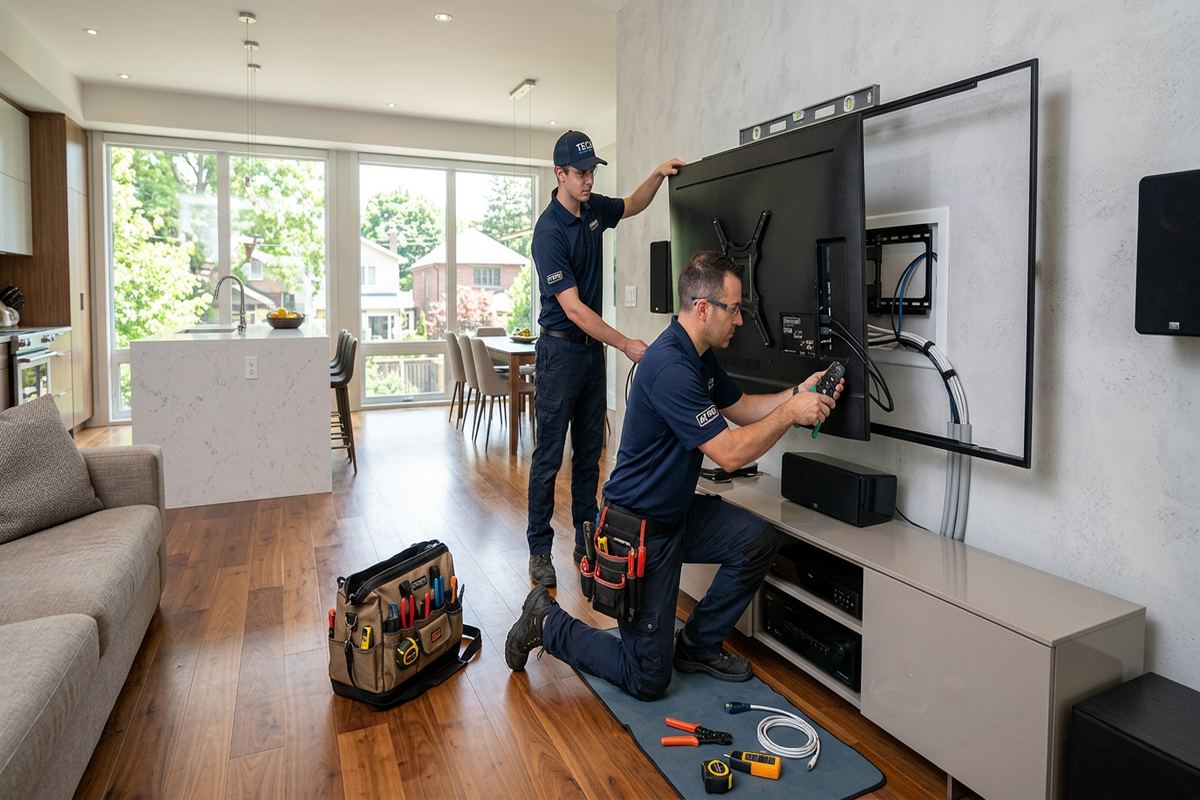
UnifiedLink installs TVs above and beside fireplaces in Bowmanville homes and commercial spaces. We assess wall construction, fireplace clearances, heat exposure, cable routes and viewing height before recommending a mounting plan. The work includes secure attachment, concealed low-voltage wiring where practical, on-site configuration and a documented handover using your own credentials.
Fireplace TV Mounting for Bowmanville Properties
A fireplace creates a strong visual centre, but it is not automatically a suitable TV location. Before mounting, we examine the fireplace type, mantel depth, wall temperature, viewing distance and available attachment points. Bowmanville properties range from older buildings near the historic main street to recently built subdivisions on the west side, so wall assemblies vary considerably. Some installations involve solid masonry, while others have framed feature walls, manufactured stone, tile or thin decorative finishes that cannot support a bracket without suitable backing. The assessment determines whether the proposed position is safe, serviceable and comfortable to watch.
Heat is only one part of the decision. A high mantel can push the screen above a reasonable viewing angle, especially in rooms with short seating distances. We consider the TV dimensions, bracket movement, screen centreline and where viewers normally sit. If an above-fireplace position would cause discomfort or expose the equipment to excessive heat, we explain practical alternatives such as an adjacent wall, a lower mounting point or a pull-down bracket where the structure and clearances permit one. Recommendations are based on the room and fireplace rather than a standard mounting height.
Retrofit and pre-wire requirements remain steady across Bowmanville because historic properties and rapid subdivision growth create very different starting conditions. A finished room may need a carefully planned cable route with limited openings, while a renovation or new feature wall allows power, HDMI, network and conduit to be positioned before closing. UnifiedLink provides one accountable contractor for the display mounting and associated low-voltage work. Pricing follows a site assessment, with timing based on the service requirements and travel distance rather than assumptions made from photographs alone.
- Fireplace type and heat exposure review
- Bracket and attachment-point planning
- Viewing-height and seating assessment
- Retrofit or pre-wire cable design
- Alternative locations when overhead mounting is unsuitable
Wall Structure, Masonry and Secure Attachment
Secure mounting begins behind the visible finish. In newer frame construction around Waverley, Northglen and west Bowmanville, a fireplace chase may contain wood studs, steel studs, plywood backing or an open cavity around a factory-built unit. Stud spacing and backing locations do not always align with the desired screen centre. We locate suitable structural attachment points and choose compatible hardware rather than relying on stone veneer, drywall or tile to carry the load. Where adequate support is absent, the written scope identifies the access, reinforcement or finish repair that another trade may need to complete before installation proceeds.
Older buildings in Downtown Bowmanville can present solid brick, layered plaster, irregular framing or previous alterations concealed behind a finished wall. Masonry attachment requires attention to substrate condition, anchor depth, mortar joints and the possibility of brittle finishes. Decorative brick or stone facing may sit in front of a separate structural wall, creating a gap that must not be compressed by overtightened hardware. We assess the actual assembly as far as practical and plan bracket spacing accordingly. Unknown or deteriorated material is treated as a condition requiring further investigation, not as permission to use larger anchors without evidence.
Bracket selection also affects the forces applied to the wall. A fixed or tilting mount generally stays close to the surface, while a full-motion arm creates greater leverage when extended. Pull-down fireplace mounts introduce movement, weight and clearance requirements that must suit both the wall and mantel. We verify the TV’s mounting pattern, weight information, connection locations and bracket compatibility before installation. The scope identifies the intended bracket type, device placement and relevant exclusions, helping avoid substitutions that change loading or prevent cables from bending safely behind the screen.
- Wood and steel stud assessment
- Masonry substrate and veneer review
- Compatible anchors and bracket hardware
- TV weight and mounting-pattern confirmation
- Backing requirements documented before work
Heat, Clearances and Viewing Height in Bowmanville
Fireplace heat must be evaluated under realistic operating conditions. Manufacturer clearance instructions for the fireplace, television and mount take priority, and a mantel does not guarantee that rising heat will bypass the screen. Gas, electric and wood-burning appliances produce different heat patterns, while fan settings and decorative surrounds can alter airflow. We look for vents, service panels and controls that must remain accessible. If the intended location conflicts with required clearances or appears likely to expose the TV to unsuitable temperatures, we do not solve the issue by concealing it behind a larger screen.
Bowmanville winters often mean fireplaces are used more frequently and for longer periods than they are during a mild-weather assessment. That seasonal use matters when judging a location. A wall that feels cool while the appliance is off provides little useful information, so available fireplace documentation and normal operating conditions should be considered. Freeze-thaw cycles are more relevant to exterior masonry and chimney condition, but cracks or moisture movement can still signal a building-envelope issue needing attention before interior finishes are drilled. Mounting work does not replace fireplace, chimney or masonry inspection by an appropriate trade.
Comfortable viewing is established from the seating area rather than from the fireplace proportions alone. We review sightlines from sofas, chairs, counters or commercial waiting areas and account for reclining positions where relevant. A tilting mount may reduce reflections and improve the angle, but it cannot fully correct a screen installed excessively high. In rooms where the fireplace dictates a high location, a compatible pull-down mount may help, provided its lowered path remains clear of the mantel, fireplace opening, décor and people moving through the room. Cable slack and connector strain must also be managed throughout its travel.
- Fireplace and TV clearances checked
- Seasonal heat use considered
- Mantel depth and airflow reviewed
- Seating sightlines measured
- Moving-mount cable travel planned
Bowmanville, Ontario
Fireplace TV mounting in Bowmanville, scoped in writing first
Book a site assessment and get equipment, routes, exclusions, and warranty on paper before anything is installed.
Concealed Cabling and Equipment Placement
A clean fireplace installation depends on planning the complete signal path, not simply hiding one cable behind the television. We identify where source devices, network equipment, speakers and power will be located, then determine practical routes for HDMI, data and control wiring. Low-voltage cables are kept separate from electrical conductors where required and are selected for the installation environment. Continuous labelled cable runs reduce hidden connection points and simplify future troubleshooting. Electrical receptacle additions or relocations must be completed by an appropriately qualified electrical contractor and can be coordinated within the project scope when needed.
Finished feature walls can restrict access because fireplace chases may contain venting, blocking, insulation or non-drill zones specified by the appliance manufacturer. Fishing blindly through that space can damage components or place cabling where heat is concentrated. We assess possible routes from above, below, beside or through adjoining cabinetry before proposing openings. In Liberty and Port Darlington homes with built-ins or media cabinets, equipment may be placed away from the screen to preserve a simple appearance. Ventilation, remote-control operation, cable length and future access are considered before the cabinet location is confirmed.
Pre-wire work offers more flexibility when a Bowmanville room is being renovated or a new fireplace wall is still open. Conduit can provide a replaceable pathway for future display connections, but its diameter, bends and termination points must support realistic connectors. We can plan labelled network and HDMI runs, equipment recesses and backing before drywall or finish stone is installed. The written scope records cable routes, device placement, exclusions, equipment ownership and warranty. That record helps the homeowner, builder and finish trades understand which spaces must remain clear and which components need access after construction is complete.
- Continuous labelled low-voltage runs
- HDMI, data and control planning
- Remote equipment-location options
- Conduit planning for future changes
- Electrical work requirements identified
Retrofits and Pre-Wires Across Bowmanville
Retrofit work around Bowmanville’s historic main street often requires a restrained approach. Plaster, brick, trim and completed millwork may make a direct hidden route impractical without visible damage. Rather than promise that every cable can disappear, we compare options such as internal fishing, an adjacent cabinet, a surface raceway or routing through an accessible basement or upper space. The chosen method depends on the wall assembly and permission to open finishes. Any expected access holes, finish repairs or work assigned to another trade are identified before work begins, reducing surprises after the bracket position has been committed.
Newer subdivision homes can look straightforward but still contain constraints. A framed fireplace bump-out may have minimal backing, closely fitted venting or a recessed electrical box placed for a smaller television. Builder-installed conduit may be narrow, sharply bent or terminated away from the intended equipment cabinet. During a site assessment, we verify accessible pathways rather than assuming that an existing blank plate solves the connection route. For west-side Bowmanville renovations, early coordination allows backing and conduit to be corrected while the wall is open, avoiding unnecessary cuts through tile, manufactured stone or finished drywall later.
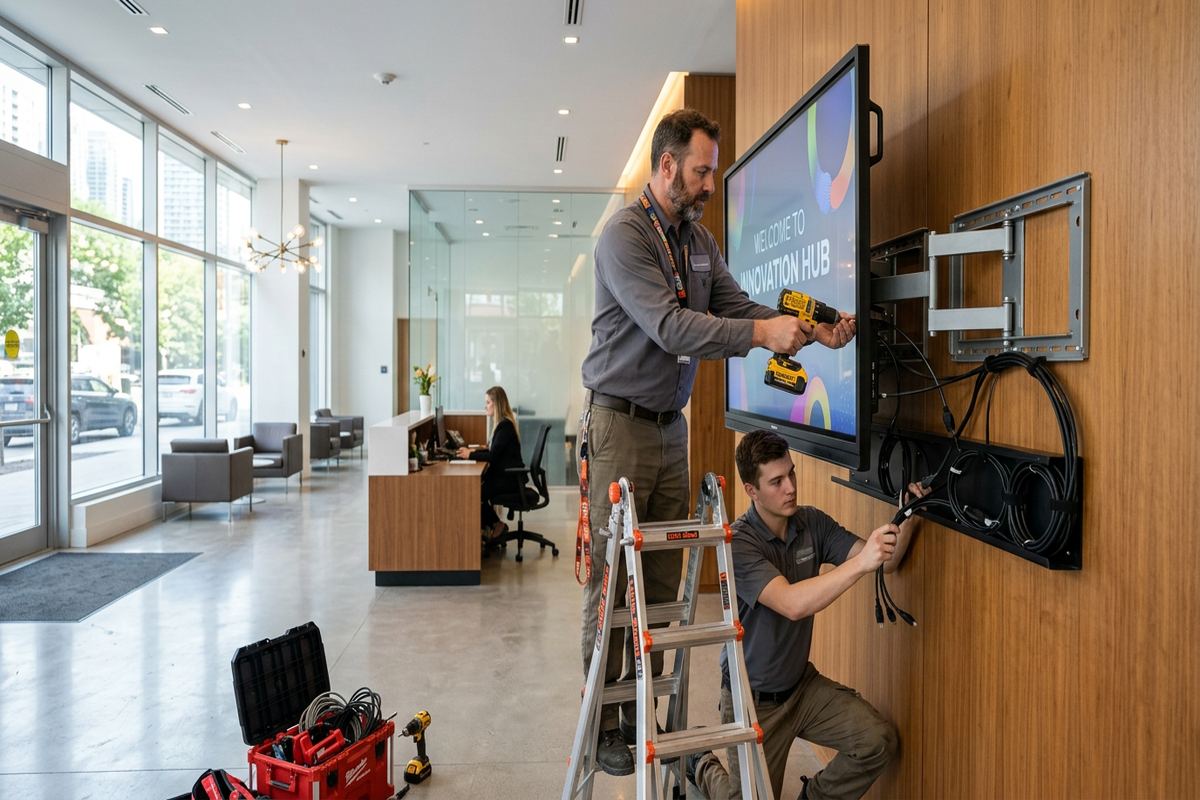
Commercial strips and industrial units may use fireplace-style feature walls in reception areas, customer lounges, boardrooms or staff spaces. These settings add considerations such as public reach, longer operating hours, glare, device security and cable protection. Steel stud framing and demountable wall systems may require backing or a different display location. We also consider how content sources and network connections will be serviced without disrupting operations. Landlord approval may be required before drilling masonry, modifying a leased partition or routing cables through common areas, and that authorization remains the customer’s responsibility unless the written scope states otherwise.
- Low-impact routes for finished rooms
- Open-wall pre-wire and backing plans
- Existing conduit checked before use
- Commercial display security considerations
- Landlord permissions identified early
Exterior and Semi-Outdoor Fireplace Displays
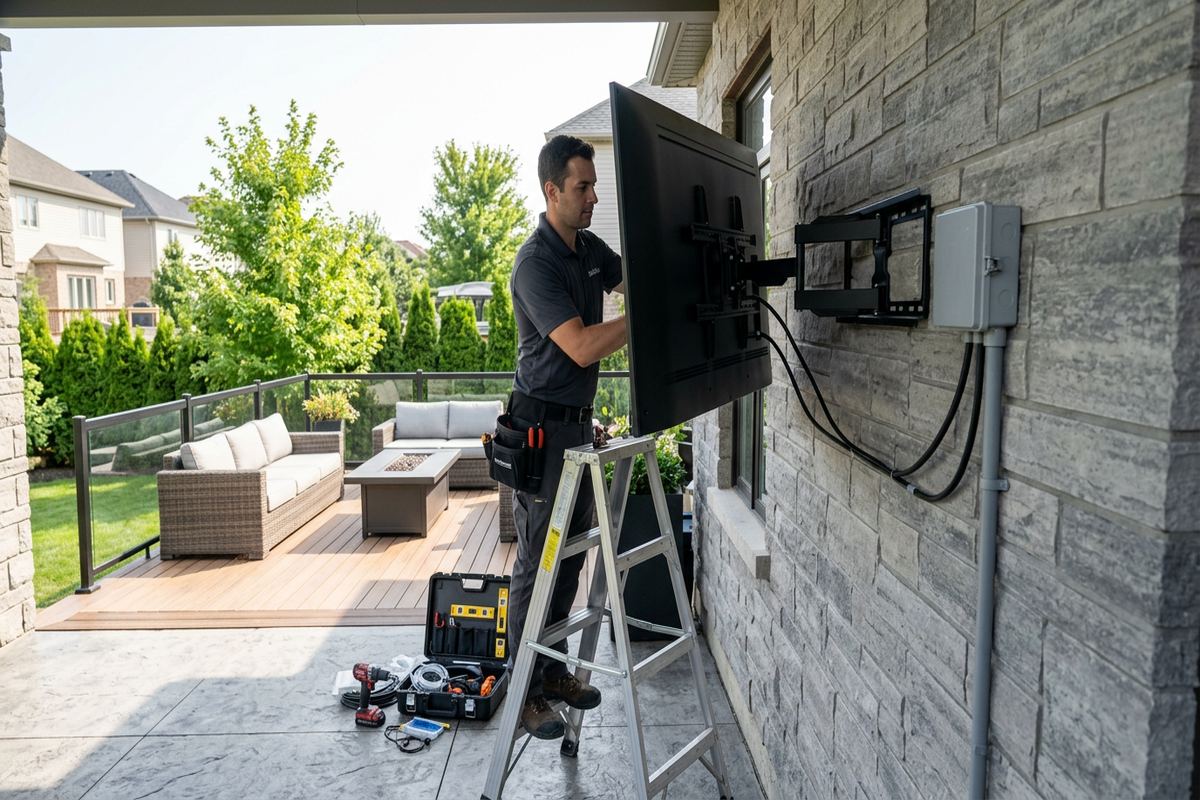
Mounting a display near an exterior fireplace, covered patio or seasonal room requires different equipment and cable planning from an indoor installation. Exposure can include wind-driven rain, humidity, condensation, dust and large temperature swings even when a roof is present. A standard indoor television is not automatically suitable for these conditions. We review the display’s stated environmental limits, bracket material, enclosure needs and the degree of weather protection at the actual location. The scope distinguishes between sheltered, damp and directly exposed areas so that equipment selection is based on conditions rather than the patio’s general appearance.
Bowmanville’s winter temperatures and repeated freeze-thaw conditions can affect exterior masonry, sealants and cable penetrations. Anchoring into cracked brick, loose veneer or deteriorated mortar may not provide a dependable base. Penetrations through an exterior wall must also be planned to shed water and avoid creating an easy path into the building envelope. We use appropriate exterior routing and sealing methods for the specified assembly, while recognizing that existing masonry or envelope defects may require repair by a qualified trade first. Cables are routed with suitable drip management and protected from abrasion where they enter fittings or enclosures.
Outdoor viewing introduces practical issues beyond weather resistance. Screen brightness, reflections and viewing direction can make a technically functional installation difficult to use during daylight. Source devices and network connections need protected, ventilated locations, and wireless performance should be checked where dense masonry or exterior walls separate the display from indoor equipment. We discuss seasonal removal only when the bracket and connectors support a repeatable process without exposing open cabling to moisture. Any required electrical supply, bonding or code-related electrical work is assigned to an appropriate contractor and documented as part of the overall installation plan.
- Exposure and equipment suitability review
- Freeze-thaw masonry condition considered
- Exterior penetrations sealed appropriately
- Protected cable and equipment routes
- Daylight glare and network checks
Bowmanville Installation, Configuration and Handover
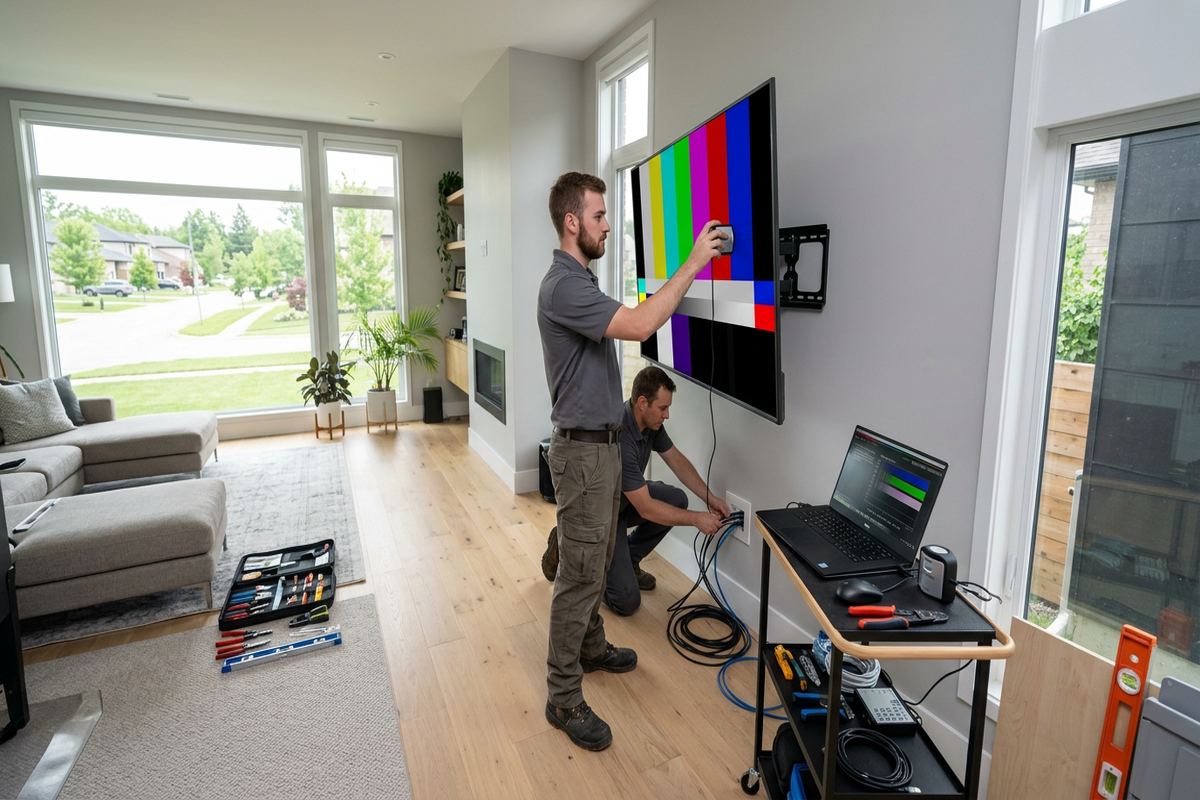
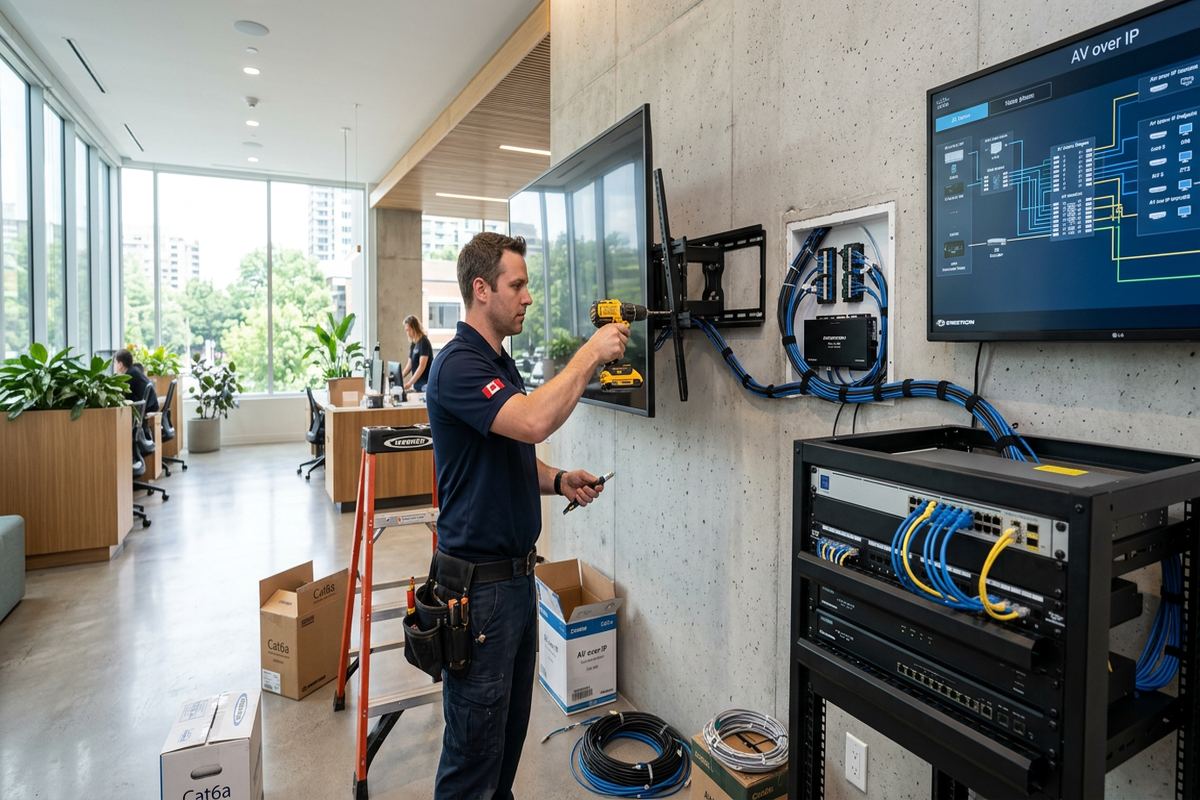
Once the mounting plan is approved, installation starts with protecting nearby floors, the mantel and finished surfaces. Attachment points are confirmed before drilling, and the bracket is levelled and secured to the assessed structure. The television is then fitted with appropriate mounting hardware, lifted into position and checked for clearance around vents, connectors and moving parts. Cables are dressed to avoid sharp bends, heat sources and pinch points. For articulated mounts, we test the expected movement range and verify that the screen, cabling and bracket do not contact the mantel or surrounding finish.
On-site configuration can include display input setup, network connection, source testing and basic adjustment of the customer’s selected equipment. Accounts are entered using the customer’s own credentials; UnifiedLink does not retain ownership of personal streaming or network logins. Where a soundbar, receiver, control device or remote equipment cabinet forms part of the scope, we test the agreed signal paths and confirm ordinary operation from the viewing area. Configuration cannot correct unsupported applications, expired subscriptions or unreliable services provided by third parties, and those boundaries are recorded when they affect testing or handover.
At handover, Bowmanville customers receive an as-built record showing the completed device placement and relevant cable information. We identify labelled runs, demonstrate bracket movement where applicable and explain how to access connections without placing strain on the screen. The written scope also covers equipment ownership, warranty information and exclusions, so responsibility remains clear if customer-supplied components are involved. Keeping mounting, low-voltage cabling and configuration under one accountable contractor reduces gaps between separate installers. It also provides a useful reference when the television, source equipment or room layout changes in the future.
- Finished surfaces protected during work
- Mount movement and clearances tested
- Customer-owned credentials used
- Agreed sources and connections verified
- As-built record provided at handover
Planning Your Fireplace TV Project in Bowmanville
A useful request begins with the property address, fireplace type, television model or size, wall photographs and a description of nearby equipment. Images can help identify obvious constraints, but they do not replace a site assessment where substrate, heat, access or concealed routes are uncertain. Tell us whether the room is finished, under renovation or awaiting a fireplace surround, because timing affects what can be installed cleanly. For a pre-wire, drawings and appliance documentation are particularly helpful. For a retrofit, note any known renovations, blocked conduit, previous mounts or areas where finish openings are not acceptable.
Approvals should be settled before drilling begins. Condo owners may need written permission for work affecting common walls, concrete, exterior assemblies or building services. Tenants and commercial occupants should obtain landlord authorization for mounting, cabling and finish openings. In Port Darlington condominiums or mixed-use properties, building rules may also govern contractor access, work hours, elevator use and debris handling. UnifiedLink can describe the planned low-voltage work for an approval request, but the customer or property representative remains responsible for securing permission and identifying building-specific restrictions before the scheduled installation.
Requests sent during business hours are answered the same day, while after-hours requests are answered the next business day. Site assessment timing depends on the service and travel distance. After assessment, we prepare pricing and a written scope covering equipment, cable routes, device placement, exclusions, equipment ownership and warranty. This process is important for Bowmanville fireplace installations because the visible finish often conceals the conditions that determine labour and hardware. A defined scope gives all parties a common plan before drilling, cable routing or coordination with electrical, fireplace, masonry and finish trades begins.
- Site assessment completed before pricing
- Photos and equipment details reviewed
- Condo or landlord approvals confirmed
- Written routes and exclusions provided
- Trade coordination requirements documented
Bowmanville neighbourhoods we cover
- Downtown Bowmanville
- Waverley
- Northglen
- Liberty
- Port Darlington
Fireplace TV mounting in Bowmanville — common questions
Can any TV go above a fireplace?
No. A suitable installation depends on the fireplace manufacturer’s clearances, heat at the proposed screen location, mantel depth, wall structure and TV specifications. In Bowmanville, seasonal fireplace use must also be considered rather than assessing the wall only while the appliance is off. If the location is too hot, too high or lacks support, we recommend another position or structural preparation.
Can you hide the wires in a finished fireplace wall?
Often, but not in every Bowmanville fireplace chase. Venting, blocking, insulation, masonry and manufacturer-designated non-drill zones can prevent a direct concealed route. We inspect practical paths and may recommend internal fishing, conduit, an adjacent cabinet or a neat surface raceway. The written scope identifies expected openings and any patching, electrical or finish work assigned to another trade.
Do I need a special fireplace TV mount?
Not always. A fixed or tilting bracket may suit a comfortable mounting height and provide the required clearances. A pull-down mount can help where the screen would otherwise sit high, but it adds wall loading, moving clearances and cable-management requirements. We check the Bowmanville property’s structure, television specifications, mantel projection and intended movement before specifying a bracket type.
Can you mount into brick or stone?
Yes, when the assessed substrate is sound and suitable for the required anchors. Decorative stone veneer, thin brick and mortar joints may not provide structural support by themselves. Older Downtown Bowmanville masonry can also be irregular or altered. We determine what is behind the visible finish and document any reinforcement, repair or further investigation needed before mounting proceeds.
What approvals are needed in a condo or rental?
Condo corporations or landlords may require approval before drilling common walls, concrete, masonry or exterior assemblies. Bowmanville condominium and mixed-use properties may also set access hours, elevator procedures and insurance requirements for contractors. Customers are responsible for obtaining authorization, although UnifiedLink can provide a description of the proposed mounting and low-voltage cable work to support the request.
What happens during the site assessment?
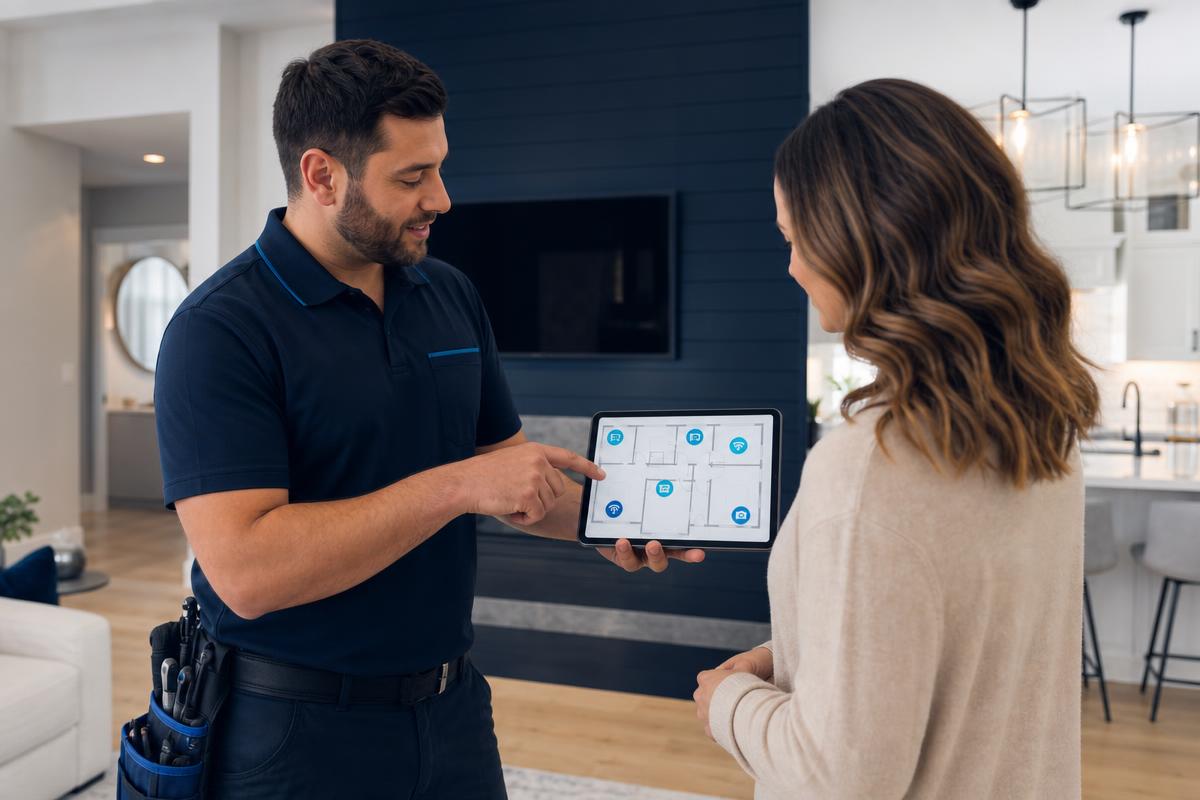
We review the fireplace type, manufacturer information, wall construction, heat exposure, mantel, viewing distance, bracket options and cable routes. We also identify equipment locations, electrical dependencies and approval requirements. For Bowmanville projects, pricing follows this assessment. The resulting written scope covers equipment, cable routes, device placement, exclusions, equipment ownership and warranty before installation is scheduled.
Coverage in Bowmanville is confirmed against the address before we quote. See everything we install in Bowmanville or the province-wide fireplace tv mounting page.