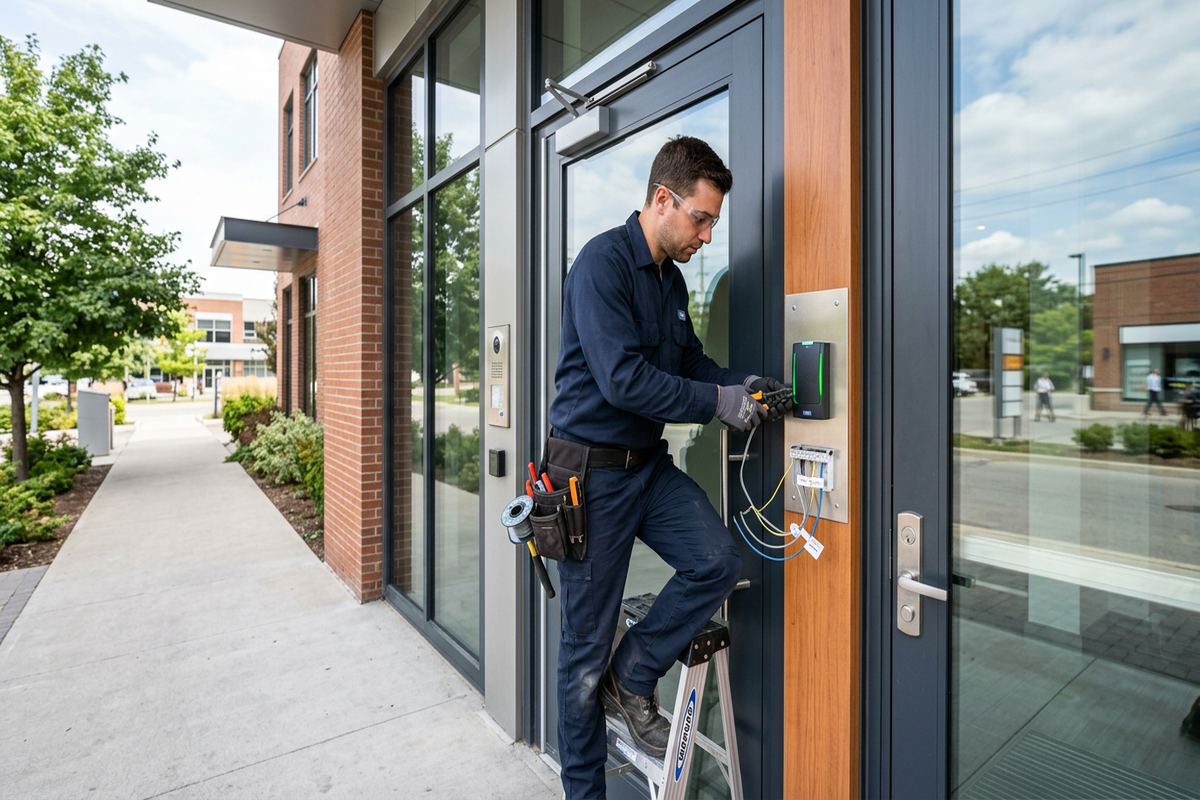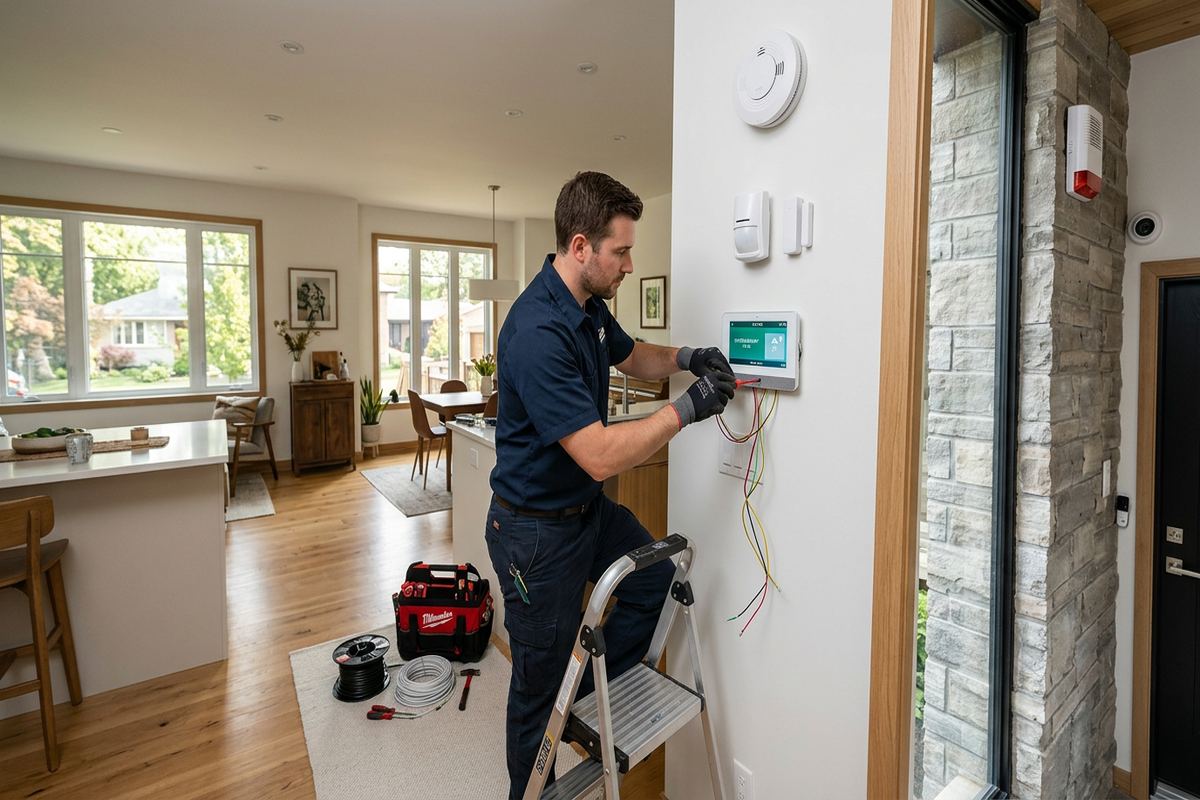
UnifiedLink installs commercial networks for offices, retail spaces, service businesses and industrial units across Bowmanville. Work can cover structured cabling, network racks, Wi-Fi access points, fibre links and connections for phones, cameras or access control. Every project starts with a site assessment, followed by a written scope suited to the building, users and operating requirements.
Commercial Network Installation for Bowmanville Properties
Commercial network installation involves more than pulling cable between rooms. A reliable system needs suitable cable pathways, correctly placed data outlets, an organized rack and network equipment configured for the way the property operates. UnifiedLink assesses each Bowmanville site before pricing, checking construction, available pathways, service entry points, equipment locations and expected device loads. That information becomes a written scope covering equipment, cable routes, device placement, exclusions, equipment ownership and warranty, so the customer can review the proposed work before installation begins.
Bowmanville combines a historic main street with rapid subdivision growth on the west side, creating different installation conditions within the same community. Older commercial properties may have masonry walls, finished ceilings, narrow service spaces or several generations of abandoned cable. Newer frame buildings and commercial units may offer open ceilings or accessible pathways, but still require coordination with electrical, mechanical and fire-protection systems. Planning around the actual structure reduces unnecessary openings and helps keep network cabling separated, supported and accessible for future service.
A commercial network may support computers, cloud applications, point-of-sale systems, printers, phones, security cameras, access control and building equipment. These devices do not all have identical bandwidth, power or security requirements. During assessment, UnifiedLink identifies what needs a wired connection, what can use Wi-Fi and which systems should be logically separated. Continuous labelled cable runs are installed from the network location to each endpoint, then terminated and tested. The result is a network foundation that can be understood, maintained and expanded without guessing where cables lead.
- Office, retail and industrial network installations
- Copper and fibre backbone options
- Data outlets for workstations and equipment
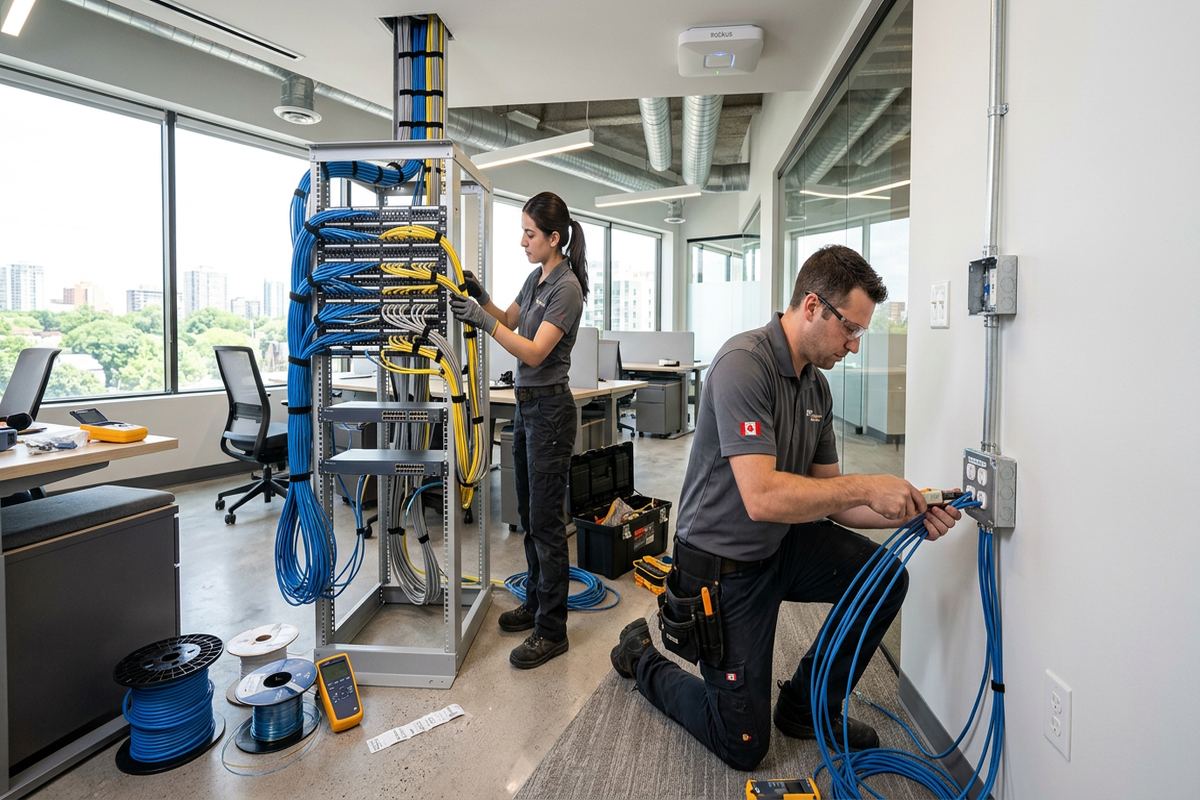
- Network racks, patch panels and cable management
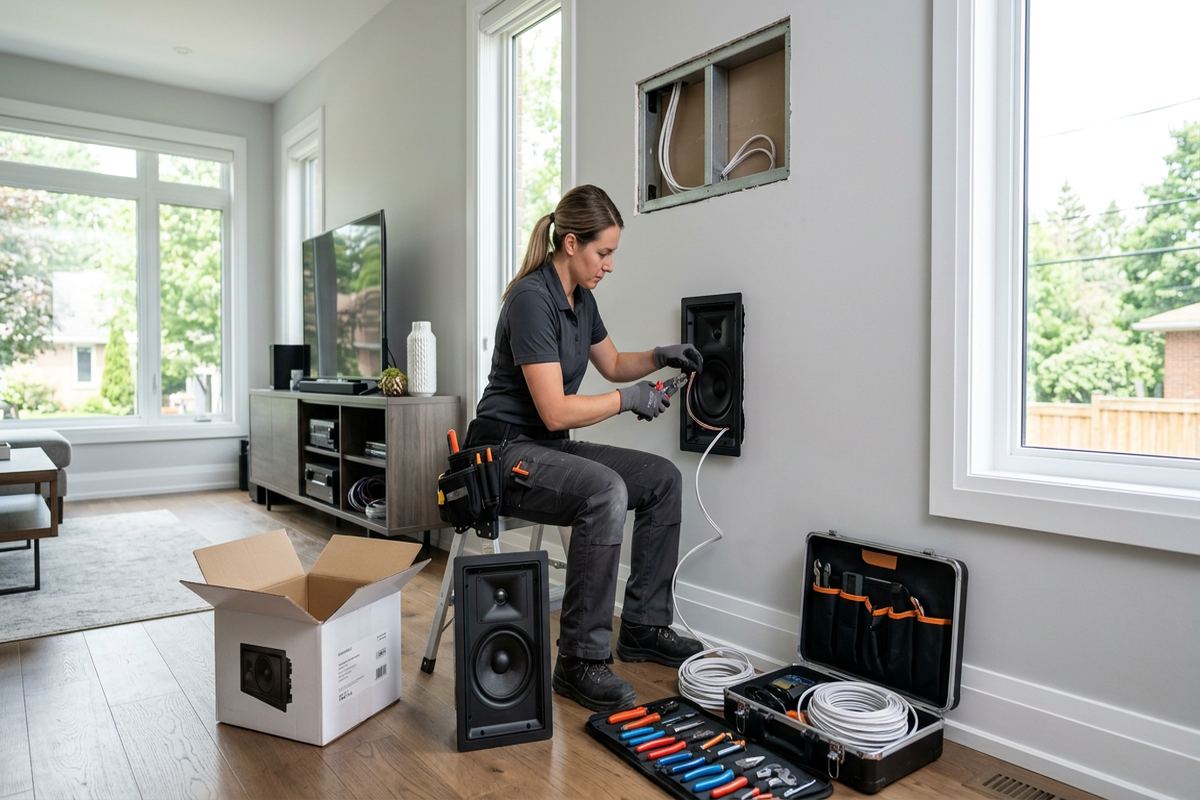
- Connections for phones, cameras and access control
Bowmanville Retrofit Cabling and Network Upgrades
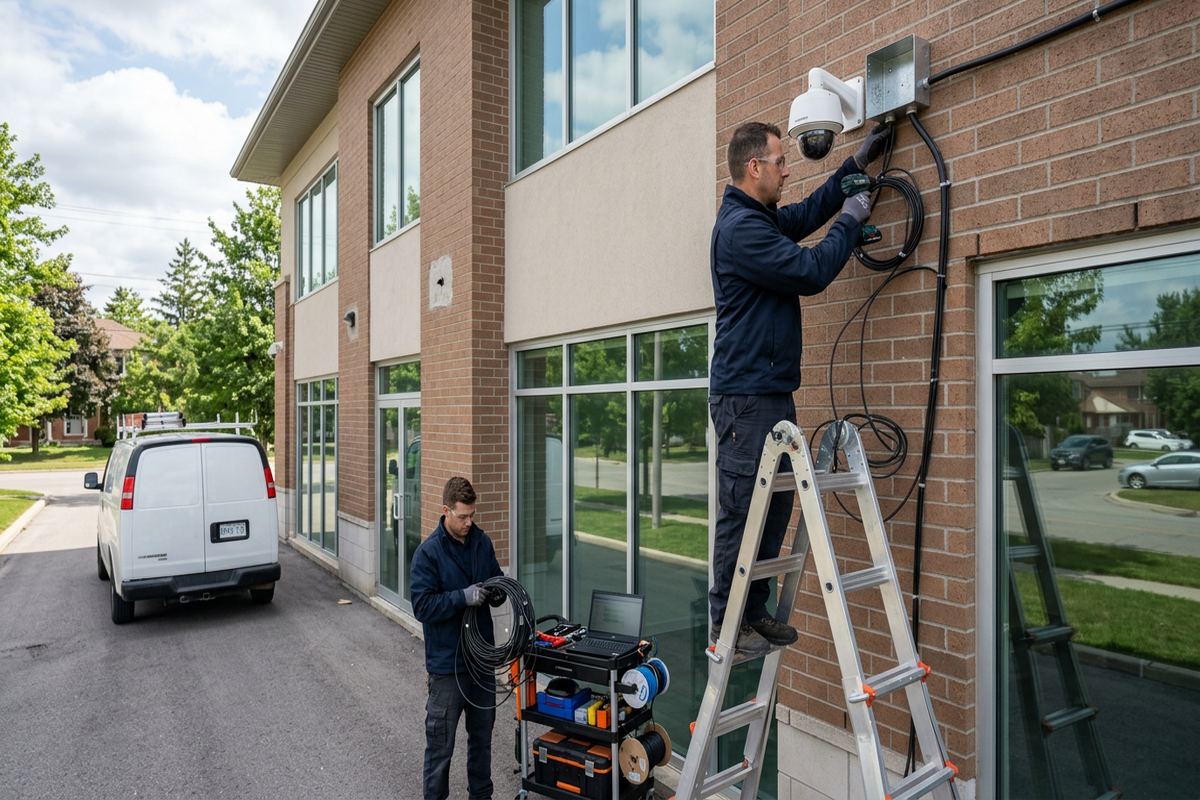
Retrofitting a network into an occupied Bowmanville property requires careful route planning. Downtown Bowmanville buildings may include masonry construction, additions completed at different times and finished areas that cannot be opened freely. Existing cables may be undocumented, unsupported or unsuitable for current network speeds. UnifiedLink traces usable infrastructure, identifies obsolete runs and selects routes that limit disruption. Where concealed access is impractical, properly selected surface pathways can provide a maintainable alternative while keeping cabling protected and organized around customer areas, offices, stockrooms and service spaces.
Operational scheduling is part of retrofit planning because network work can affect staff, tenants and connected systems. Cable pulls may need to be divided into stages so important workstations, payment systems or phones remain available. Before changing a rack or replacing network equipment, existing connections are documented and a cutover sequence is established. Labels are applied consistently at outlets, patch panels and equipment. On-site configuration follows installation, with testing performed before old infrastructure is removed or disconnected. Any conditions outside the written scope are discussed rather than treated as assumed work.
Commercial tenants should confirm landlord requirements before drilling, mounting pathways or using shared telecommunications rooms. Condo commercial units may also require approval from property management or a condominium corporation, especially when cabling crosses common areas or penetrates rated assemblies. UnifiedLink can define proposed routes and mounting locations clearly enough for the customer to submit them for review. Fire stopping, ceiling access restrictions and permitted work periods must be identified early. These details are particularly important in multi-unit properties where network work can affect spaces beyond the customer’s leased premises.
- Existing cable tracing and condition checks
- Staged migration from older network equipment
- Low-disruption routes for finished interiors
- Surface pathway options where appropriate
- Coordination with landlords or property management
Pre-Wire Planning for Growing Bowmanville Sites
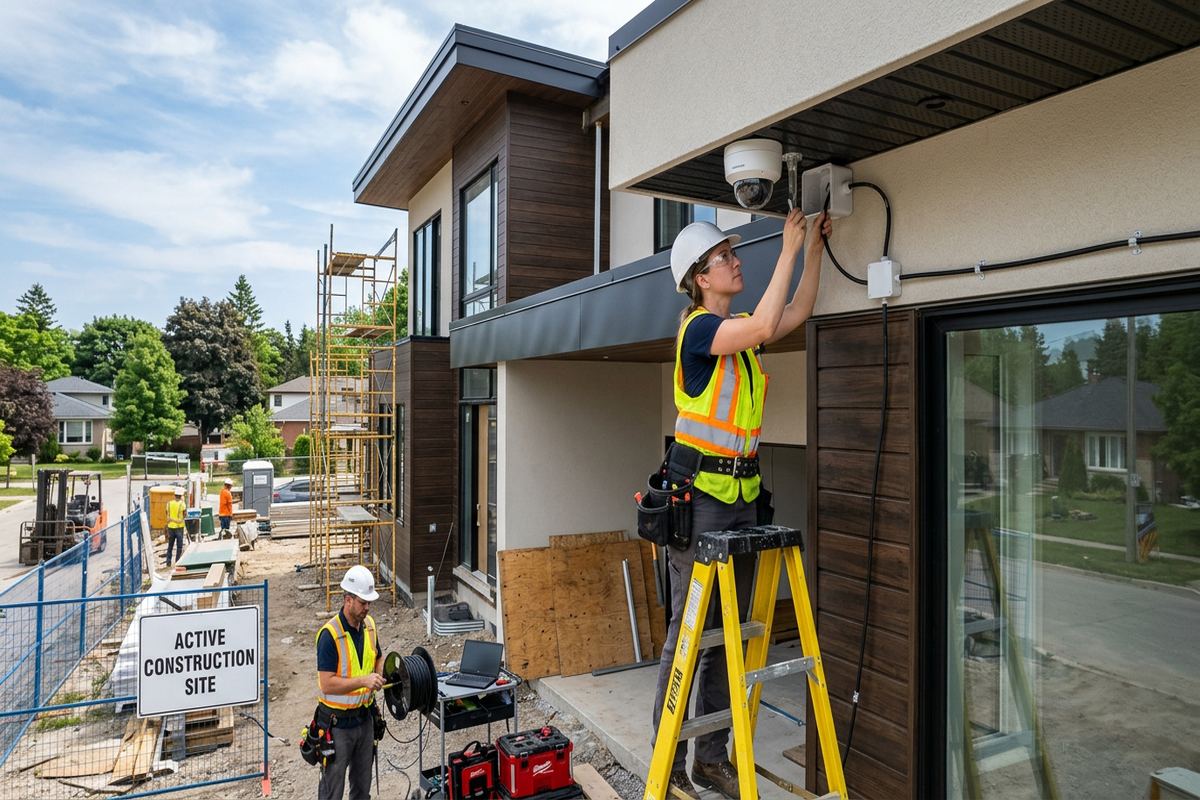
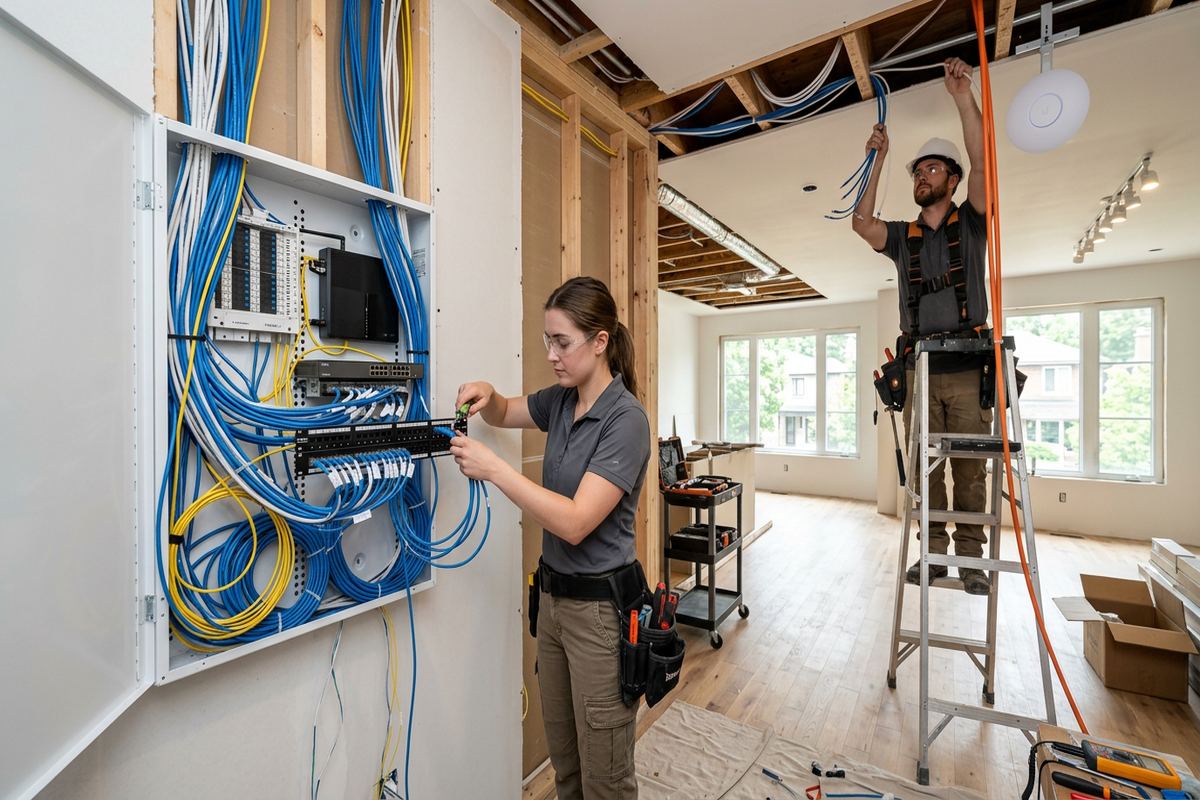
Subdivision growth on Bowmanville’s west side keeps pre-wire work active for offices, clinics, mixed-use spaces and other commercial properties. Installing cabling before walls and ceilings are closed usually provides more route choices and cleaner device placement. It also allows network outlets, wireless access points, displays, cameras and access-control devices to share a coordinated low-voltage plan. UnifiedLink reviews drawings alongside actual site conditions because framing, mechanical routes and equipment locations can change during construction. Cable is supported independently and kept clear of hazards before finishes conceal the pathways.
A useful pre-wire plan accounts for present devices without making every future change dependent on demolition. That may include spare pathways, additional cable to practical service points, sufficient rack capacity and sensible outlet distribution. The goal is not to install unsupported extras, but to avoid obvious limitations such as a single data outlet in a room expected to hold several workstations. Device locations are checked against cabinetry, ceiling features, displays and furniture layouts. Changes are documented so the final network record reflects what was installed rather than relying only on early construction drawings.
Coordination with other trades is essential during a Bowmanville pre-wire. Electrical conductors, ductwork, plumbing and fire-protection components often compete for the same ceiling and wall spaces. Low-voltage cable also needs appropriate separation from electrical sources and protection from sharp framing edges or future fasteners. UnifiedLink confirms the network location, service entrance and endpoint positions before pulling cable. After termination, runs are labelled and tested. Handover includes an as-built record and customer-owned credentials, allowing the finished system to be managed without depending on undocumented installer accounts.
- Pre-wire layouts reviewed before wall closure
- Pathways reserved for practical future expansion
- Coordination with electrical and mechanical trades
- Cable support, separation and endpoint protection
- As-built documentation reflecting site changes
Bowmanville, Ontario
Commercial network installation in Bowmanville, scoped in writing first
Book a site assessment and get equipment, routes, exclusions, and warranty on paper before anything is installed.
Business Wi-Fi Design in Bowmanville
Commercial Wi-Fi should be planned around the building rather than selected by floor area alone. Masonry, metal shelving, concrete, mechanical equipment and neighbouring wireless networks can change coverage substantially. A storefront near Downtown Bowmanville may need controlled coverage across narrow rooms and multiple floors, while a newer office in Waverley may have open areas with different capacity demands. UnifiedLink considers wall materials, user locations, device counts and roaming needs when placing access points. Wired connections remain preferable for fixed equipment where consistency, throughput or security is important.
Access points work best when they have suitable wired backhaul, power and mounting positions. Hiding an access point above a dense ceiling or placing it at one end of a long unit can create avoidable weak areas. Ceiling height, accessible cable routes and the visual requirements of customer-facing spaces all affect placement. Networks can be configured with separate access for staff, guests and connected equipment where supported by the selected platform. This helps prevent guest traffic from sharing the same access as business systems, although segmentation must be matched to operational and security requirements.
Exterior or semi-exterior coverage requires additional attention in Bowmanville because winters, moisture and freeze-thaw cycles can expose weak mounting and sealing. Equipment must be selected for its environment, and cable entries need suitable drip control, weather-resistant fittings and sealed penetrations. Mounting directly to masonry differs from mounting to frame construction or metal cladding, so fasteners and backing are chosen accordingly. Outdoor access points should not be treated as indoor devices placed under a small overhang. The route from the interior network to the mounting point also needs protection and grounding consideration where applicable.
- Access-point placement based on building materials
- Separate staff, guest and device networks
- Wired backhaul to installed access points
- Indoor and outdoor coverage planning
- On-site wireless configuration and validation
Network Racks, Switching and Fibre Links
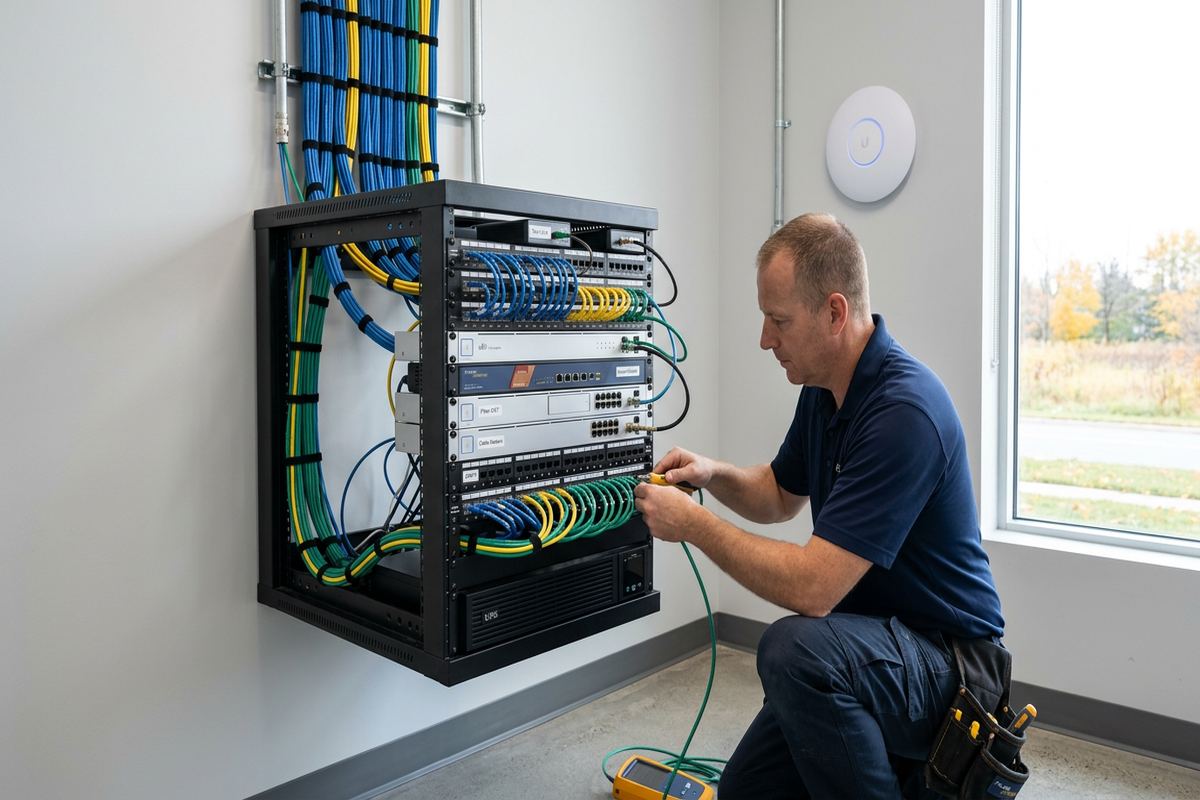
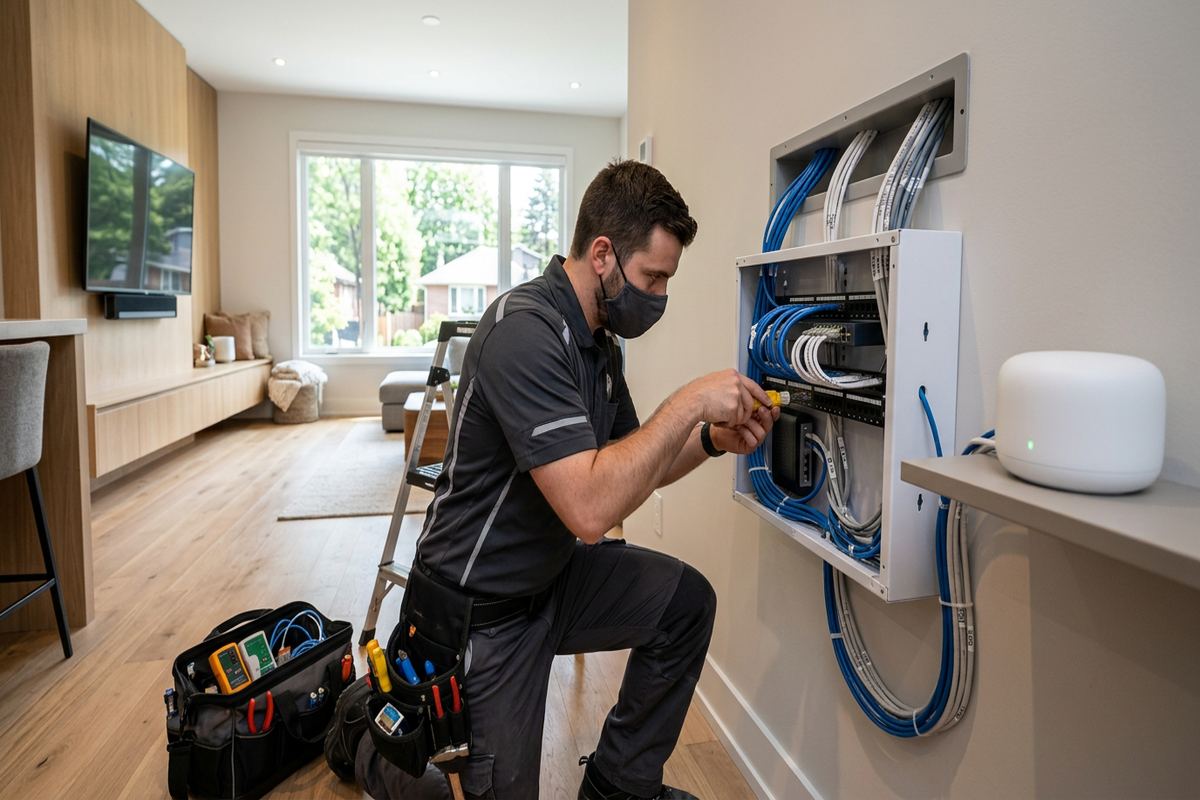
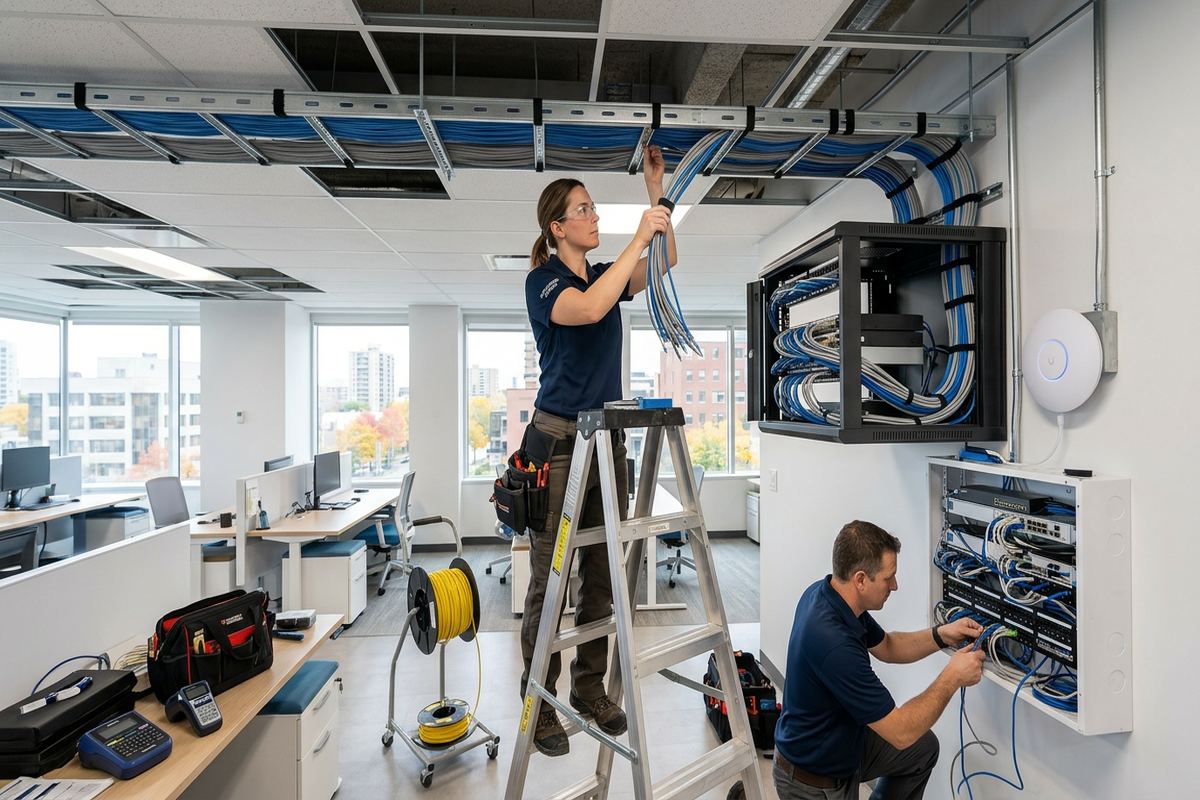
The network rack is the working centre of a commercial installation. Its location should provide reasonable cable access, ventilation, electrical service and protection from storage, moisture and accidental contact. A rack crowded into a mechanical corner may be difficult to service and exposed to heat or debris. UnifiedLink reviews wall strength, room use and available depth before specifying a wall-mounted cabinet or floor-standing arrangement. Patch panels, switches, power equipment and cable managers are laid out so connections remain visible, labelled and reachable rather than becoming a bundle of unsupported cords.
Switch selection depends on port count, expected traffic, power requirements and management needs. Devices such as phones, cameras, access points and access-control components may use Power over Ethernet, but their combined demand must remain within the switch’s available power budget. Uplink capacity also matters when several switches serve separate areas. UnifiedLink matches equipment to the documented device plan and configures it on site. Customer credentials are used or transferred at handover, preventing routine administration from being tied to an installer-controlled account that the business cannot access independently.
Fibre can be appropriate between floors, detached sections or areas where copper distance and electrical conditions create limitations. It is also useful as a backbone when several network cabinets serve a larger commercial or industrial unit. The fibre type, strand count, pathway and termination method must suit the equipment and likely expansion. In Bowmanville industrial spaces, routes may pass near machinery, loading areas or exposed structural elements, requiring additional protection. Fibre does not replace careful pathway design; connectors, enclosures and bend radius still need proper handling, labelling and documentation.
- Organized racks and patch-panel termination
- Managed and unmanaged switching options
- Power over Ethernet load planning
- Copper and fibre uplink design
- Ventilation and service-access checks
Network Installation for Bowmanville Business Types
Different businesses place different demands on a network. A professional office may prioritize dependable workstation, phone and meeting-room connections, while a retail location needs stable point-of-sale links, staff Wi-Fi and connectivity for security devices. Clinics and service businesses may require separation between administrative systems, guest access and connected equipment. UnifiedLink documents these operational needs before deciding outlet counts or equipment placement. In Liberty and Northglen, newer commercial units may be easier to cable physically, but the system still needs enough capacity and organization for the tenant’s actual workflow.
Commercial strips often contain narrow units, shared service corridors and demising walls that limit cable routes. Permission may be required before entering neighbouring or common spaces, and penetrations through rated walls must be handled appropriately. Industrial units present other concerns, including high ceilings, long distances, metal structures and active work areas. Lifts, production schedules or restricted zones can influence installation methods. UnifiedLink identifies these constraints during the assessment and includes agreed access assumptions in the scope, reducing uncertainty once cable installation and device mounting begin.
Port Darlington businesses and properties closer to exposed waterfront conditions can require particular care for exterior network equipment. Wind-driven moisture, temperature changes and corrosive exposure should influence enclosure, fastener and cable-entry choices. Even when equipment is mounted indoors, routes through exterior walls need durable sealing that tolerates seasonal movement. Freeze-thaw cycles can enlarge poorly sealed openings in masonry and allow moisture into the wall assembly. UnifiedLink selects mounting and pathway methods based on the substrate and exposure rather than applying one standard detail to every Bowmanville building.
- Networks for offices and professional services
- Retail and point-of-sale connectivity
- Commercial-strip and multi-tenant installations
- Industrial-unit cabling and backbone links
- Weather-aware exterior device connections
Testing, Documentation and Bowmanville Handover
Testing establishes whether installed cabling is terminated consistently and suitable for the intended connection. Each run is identified at both ends, checked after termination and matched to the outlet and patch-panel record. Problems such as split pairs, damaged conductors or incorrect labels are easier to correct before furniture and daily operations restrict access. Fibre links require their own verification and careful connector handling. UnifiedLink records installed endpoints so the customer receives an as-built reference that corresponds to the finished Bowmanville site, not merely a proposal prepared before construction or renovation changes.
On-site configuration can include switches, wireless access points, network names, guest access and supported segmentation. The exact settings depend on the selected platform and written scope. Where an internet service provider supplies the modem or gateway, access and compatibility may affect what can be configured. UnifiedLink identifies that boundary so responsibility for the local network is not confused with the provider’s outside service. Internet speed and uptime remain dependent on the provider, while internal cabling, switching and wireless configuration can be assessed separately when troubleshooting performance.
Handover should leave the business in control of its own network. UnifiedLink provides customer-owned credentials rather than retaining exclusive administrative access, along with an as-built record showing outlets, cable identifiers and relevant equipment locations. Equipment ownership and warranty terms are stated in the written scope. Staff can also be shown the basic physical layout, safe restart sequence and where to find labelled connections. If another technology contractor later services phones, cameras or computers, clear records reduce tracing time and lower the chance that an unrelated connection will be disconnected accidentally.
- Every installed run labelled at both ends
- Copper and fibre link verification
- Configuration completed at the Bowmanville site
- Customer-owned administrative credentials
- As-built outlet and equipment record
Planning a Commercial Network Project in Bowmanville
A practical project begins with a conversation about the property, current problems and planned uses. UnifiedLink then arranges a site assessment before pricing, with timing depending on the service and travel distance. During the visit, access above ceilings, wall construction, equipment locations and existing network infrastructure are reviewed. The customer should identify critical devices, planned renovations, landlord conditions and areas where work cannot occur during operating hours. This information supports a scope based on visible conditions rather than assumptions about cable routes or the state of concealed infrastructure.
The written scope defines equipment, cable routes, device placement, exclusions, ownership and warranty. It can also identify work by others, such as electrical receptacles, internet-provider changes, core drilling approval or restoration beyond agreed openings. For an occupied Bowmanville business, the scope should describe staging and any expected interruption during cutover. For construction projects, it should note dependencies such as framing completion, safe access and timing before ceilings close. Clear boundaries allow the network installation to be coordinated with the property owner, tenant, general contractor and other involved trades.
UnifiedLink acts as one accountable contractor for the agreed low-voltage network work, from pathways and cabling through equipment installation, configuration and handover. Requests sent during business hours are answered the same day; after-hours requests are answered the next business day. After reviewing the scope, the customer can confirm access arrangements, approvals and scheduling requirements. Whether the site is an older Downtown Bowmanville retrofit or a new west-side unit, the installation is planned around the building, the connected systems and the people who need to operate the network after completion.
- Site assessment completed before pricing
- Written scope with routes and exclusions
- Project staging for occupied businesses
- Coordination with owners, tenants and trades
- One contractor accountable for agreed network work
Bowmanville neighbourhoods we cover
- Downtown Bowmanville
- Waverley
- Northglen
- Liberty
- Port Darlington
Commercial network installation in Bowmanville — common questions
Can you install a network in an occupied Bowmanville business?
Yes. Retrofit work can be staged around staff, customers and critical equipment. During the Bowmanville site assessment, UnifiedLink reviews ceiling access, work areas and systems that must remain connected. The written scope identifies expected interruptions and an agreed cutover approach. Some drilling or cable pulling may still need to occur outside busy periods, depending on the building and approved access times.
Do I need landlord or condo approval?
Approval may be required when cabling crosses common areas, uses a shared telecommunications room, penetrates rated walls or changes the exterior. Bowmanville commercial tenants should check their lease and ask the landlord or property manager before work begins. Condo owners may need condominium corporation approval. UnifiedLink can document proposed routes and device locations, but the customer remains responsible for securing property approvals.
Can you reuse our existing network cabling?
Existing cabling can sometimes be reused, but it should first be identified and checked for condition, termination and suitability. Older Bowmanville properties may contain undocumented cable from previous tenants or renovations. A site assessment determines which runs are practical to retain and which should be replaced. Reuse is not assumed simply because a cable reaches the right room; its route, category and physical condition also matter.
Will the installation include business Wi-Fi?
Wi-Fi can be included with cabling, access-point installation and on-site configuration when listed in the scope. Placement is planned around Bowmanville building conditions such as masonry walls, metal shelving, multiple floors and outdoor exposure. Staff, guest and device networks can be separated where the selected equipment supports it. Fixed equipment may still receive wired connections when consistency or security makes Wi-Fi less appropriate.
Can exterior access points handle Bowmanville winters?
Exterior equipment must be selected and installed for the expected environment. Bowmanville winters and freeze-thaw cycles make sealing, cable entry, drainage and substrate selection important. UnifiedLink considers whether the mounting surface is masonry, frame construction or cladding and uses an appropriate installation method. Indoor equipment is not treated as outdoor-rated merely because it is placed beneath an overhang.
What documentation do we receive after installation?
Handover includes an as-built record showing installed cable identifiers, outlets and relevant equipment locations. Runs are labelled at both ends, and the customer receives its own administrative credentials for configured network equipment. The written scope also states equipment ownership and warranty terms. This documentation helps Bowmanville businesses manage future changes and allows another authorized technician to understand the installation without retracing every cable.
Coverage in Bowmanville is confirmed against the address before we quote. See everything we install in Bowmanville or the province-wide commercial network installation page.