UnifiedLink installs outdoor televisions for homes and businesses in Aurora. We plan the mount, viewing position, power coordination, signal path, network connection and weather sealing around the property. Each installation starts with a site assessment and ends with on-site configuration, customer-owned credentials, labelled cabling and an as-built record of the completed work.
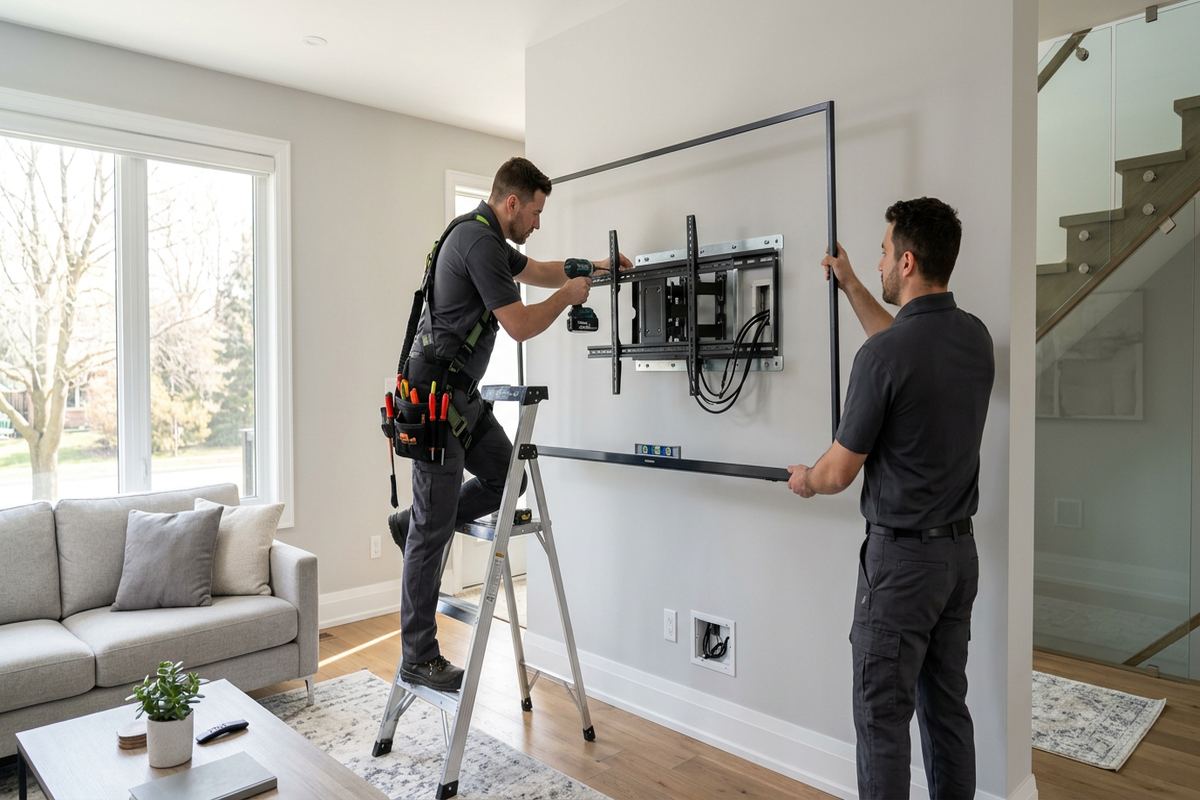
Outdoor TV Planning for Aurora Properties
An outdoor television installation starts with the location, not the screen. We assess where people will sit, expected viewing distances, sunlight direction, reflections, wind exposure and nearby cooking or heating equipment. The wall or structure must support the television and mount without relying on surface finishes alone. In Aurora, the same patio can face intense summer glare, blowing rain and winter freeze-thaw cycles. Those conditions affect screen selection, fasteners, mounting height, cable protection and sealing. Planning these details before equipment is ordered reduces avoidable changes once exterior surfaces have been opened.
Aurora’s housing stock calls for different installation methods. Heritage homes near Yonge Street may have older brick, layered renovations, limited service cavities or exterior details that should remain visually undisturbed. Larger estate properties east of town often involve longer cable routes, detached structures, covered terraces or outdoor kitchens. We inspect the actual assembly rather than assuming what is behind the finish. Masonry anchors, frame attachment, blocking and raceway selection are matched to the mounting surface, expected load and exposure. Cable routes are discussed before drilling so the finished work suits the building.
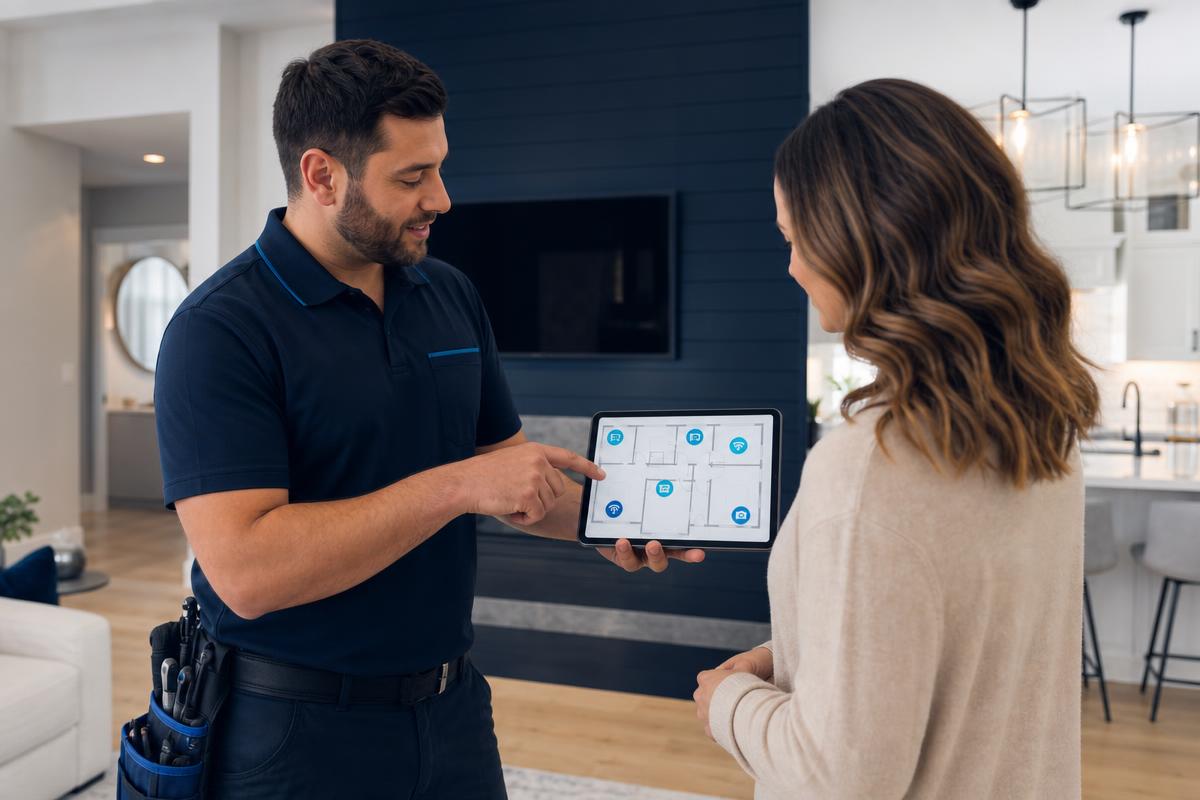
The site assessment also identifies how the television will receive content and connect to the network. Depending on the property, that may involve a hardwired data connection, Wi-Fi coverage, an equipment cabinet, a local source device or an HDMI extension system. We confirm where power is available and identify work that requires an appropriate electrical contractor. Before pricing, UnifiedLink provides a written scope covering equipment, cable routes, device placement, exclusions, equipment ownership and warranty. This gives the property owner a clear basis for approving the installation and any related trades.
- Viewing position and glare review
- Wall and structure assessment
- Power and signal route planning
- Mount and display compatibility check
- Written scope before installation
Weather-Resistant Installation in Aurora
Outdoor electronics need protection from more than direct rainfall. Aurora winters bring freezing temperatures and repeated freeze-thaw conditions that can stress seals, fasteners and exterior materials. Summer heat can also build up around a recessed display or enclosed cabinet. We consider drainage, ventilation, roof coverage, wind-driven moisture and snow accumulation when selecting the mounting position. An outdoor-rated television remains the appropriate starting point for exposed areas; an indoor model does not become outdoor-rated simply because it sits beneath an overhang. Manufacturer clearance and operating requirements remain part of the installation plan.
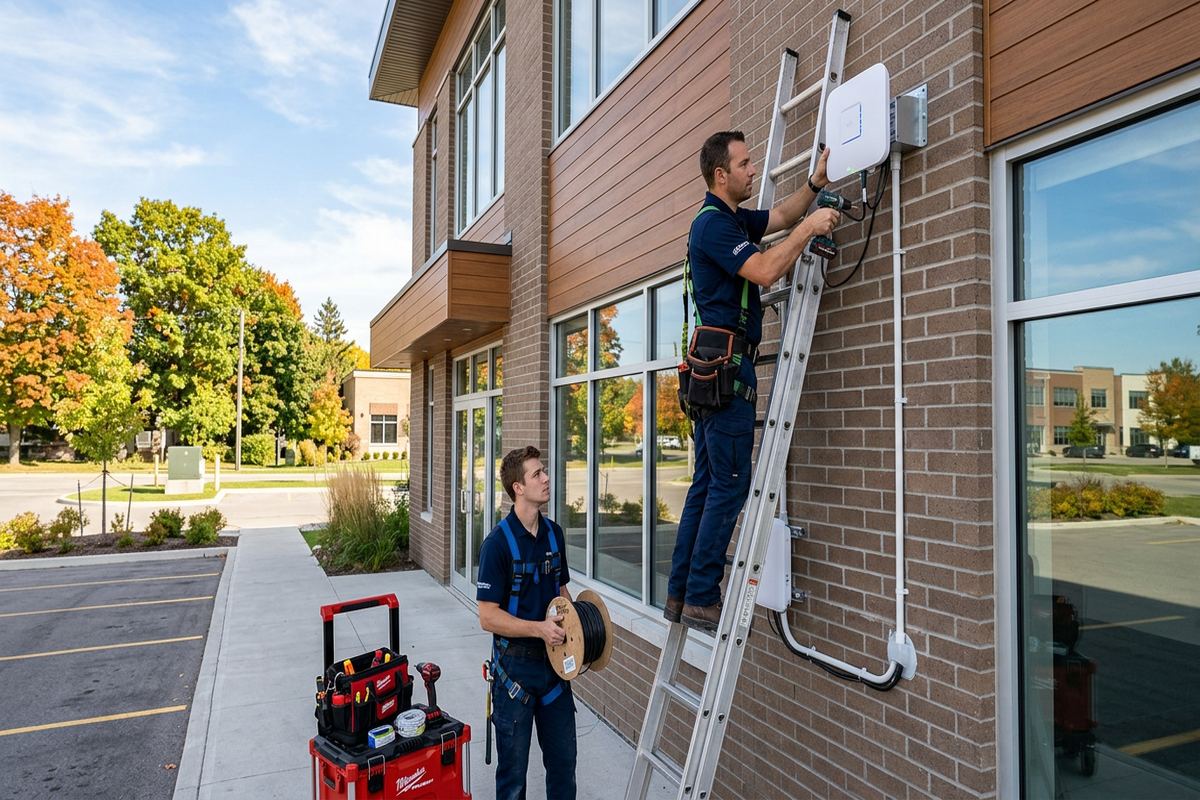
Every exterior penetration requires a deliberate sealing method. Cable holes are positioned to limit water entry, fitted with suitable bushings or sleeves, and sealed using materials compatible with the surrounding surface. Drip loops and protected entry angles may be used where exposed cable transitions are unavoidable. On brick walls, drilling is planned around the condition of the masonry and mortar. On frame construction, the attachment must reach suitable structure while preserving the exterior water-management layers. We do not treat caulking as a substitute for correct routing, fastening or flashing where those measures are required.
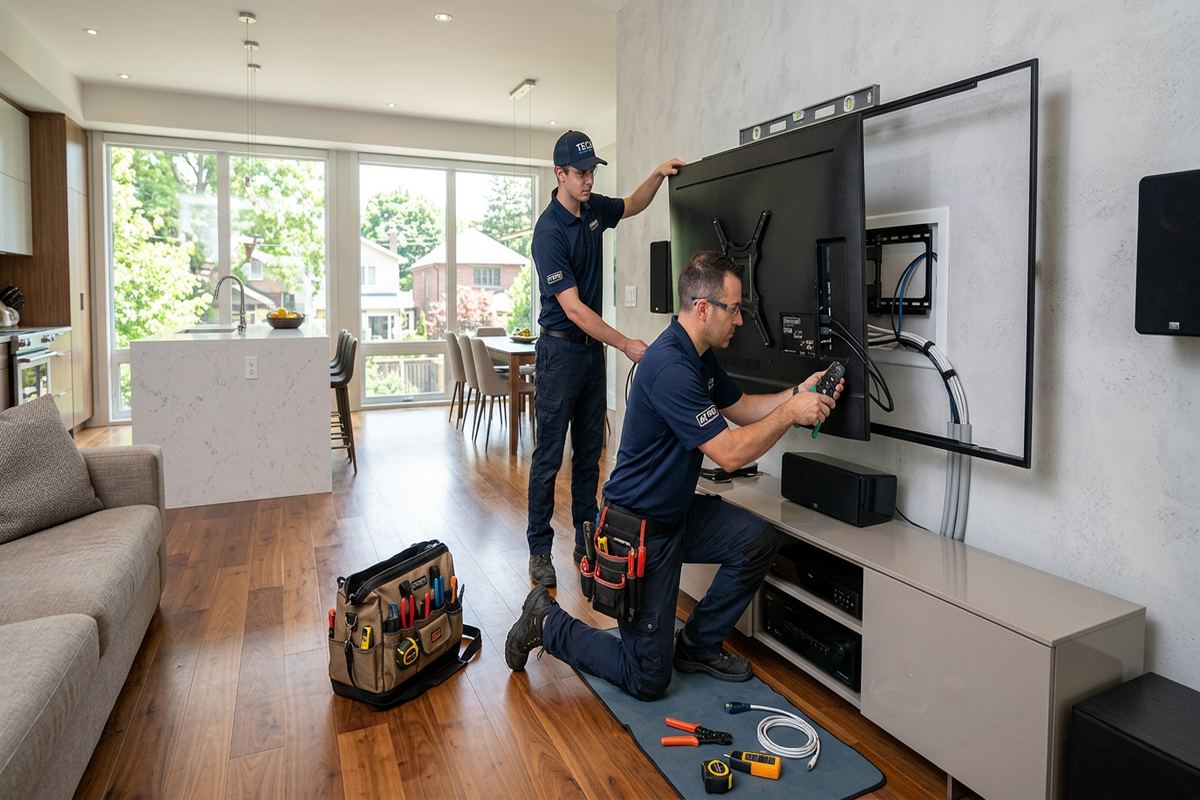
Equipment placement affects long-term serviceability. Source devices, network components, power supplies and signal extenders generally perform better when located in a protected, accessible area rather than behind an exposed screen. Where an outdoor cabinet is proposed, its environmental rating, ventilation and cable entries must suit the equipment inside. We also leave practical access for television removal, connection checks and future replacement. Continuous labelled cable runs reduce hidden junctions and simplify troubleshooting. At handover, the customer receives an as-built record showing installed devices and cable routes, which is useful when exterior finishes or landscaping are changed later.
- Outdoor-rated display guidance
- Freeze-thaw exposure considered
- Sealed exterior cable entries
- Protected equipment locations
- Service access retained
Mounting on Masonry and Frame Walls
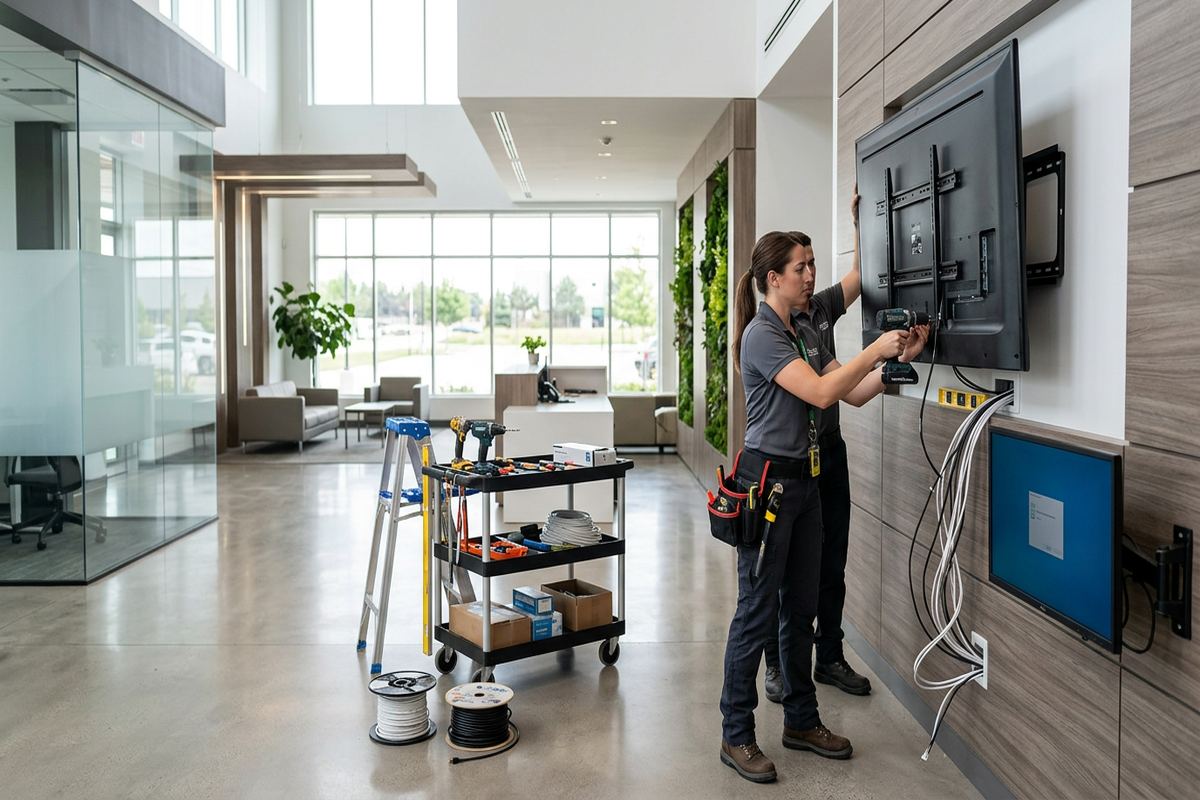
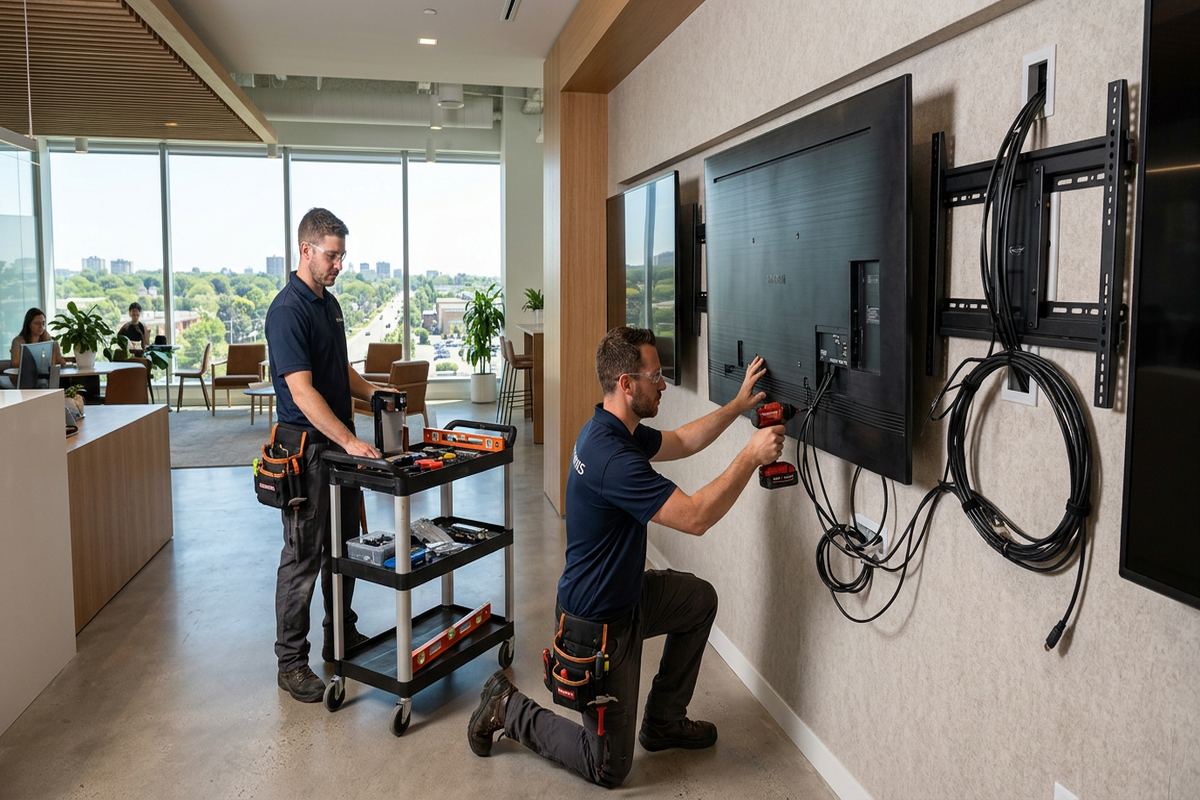
Mounting hardware must suit both the television and the substrate. Brick veneer, solid masonry, concrete, wood framing and finished columns behave differently under load. A large articulating mount creates additional leverage when extended, so its attachment demands more than checking the television’s weight. During assessment, we examine the mounting area, wall condition, available structure and desired range of movement. Fixed or tilting mounts are often appropriate where the viewing position is consistent, while articulating mounts can help with changing seating areas or glare. The final selection follows manufacturer limits and verified attachment conditions.
Heritage homes around Aurora Village can present special routing and fastening constraints. Older masonry may be uneven or brittle, and previous additions can make wall construction difficult to predict from the exterior. Surface raceway may sometimes be less disruptive than opening finished interiors, while another property may permit a concealed route through an accessible basement, attic or renovation cavity. We explain visible components before work begins. The aim is not to hide cabling at any cost; it is to select a route that protects the building envelope, remains serviceable and produces an orderly result.
Newer frame homes in Bayview Wellington or Rural Aurora may provide clearer wall cavities, but exterior cladding, insulation and vapour-control layers still require care. Mounting through siding or trim needs suitable spacing and compression control so finishes are not distorted. Columns and fireplace chases cannot be assumed to contain usable framing in the desired position. When blocking or structural modification is needed, it is identified in the scope rather than improvised during mounting. We coordinate related work where necessary, keeping responsibility clear while acting as one accountable low-voltage contractor for the display, signal and network portions.
- Fixed, tilt and articulating mounts
- Masonry-specific fastening plans
- Frame and blocking verification
- Cladding compression considered
- Visible raceways approved beforehand
Aurora, Ontario
Outdoor TV installation in Aurora, scoped in writing first
Book a site assessment and get equipment, routes, exclusions, and warranty on paper before anything is installed.
Concealed Cabling for Aurora Outdoor Displays
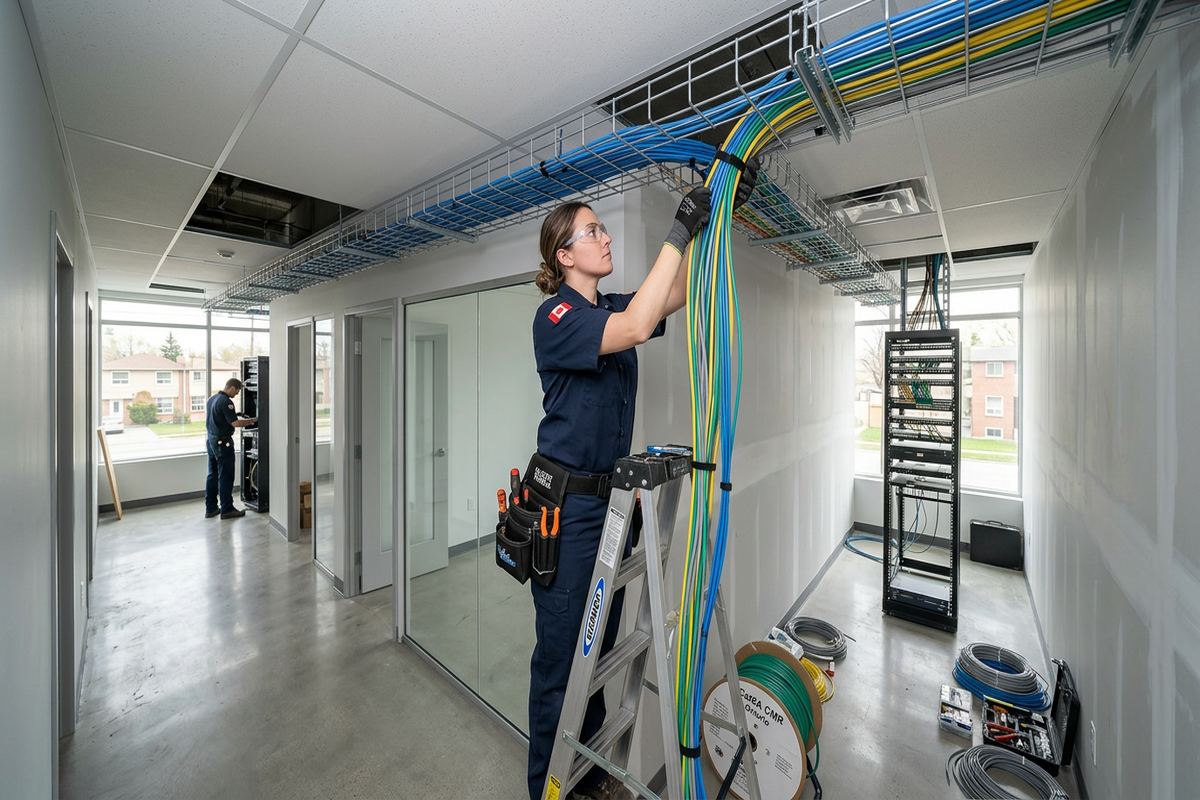
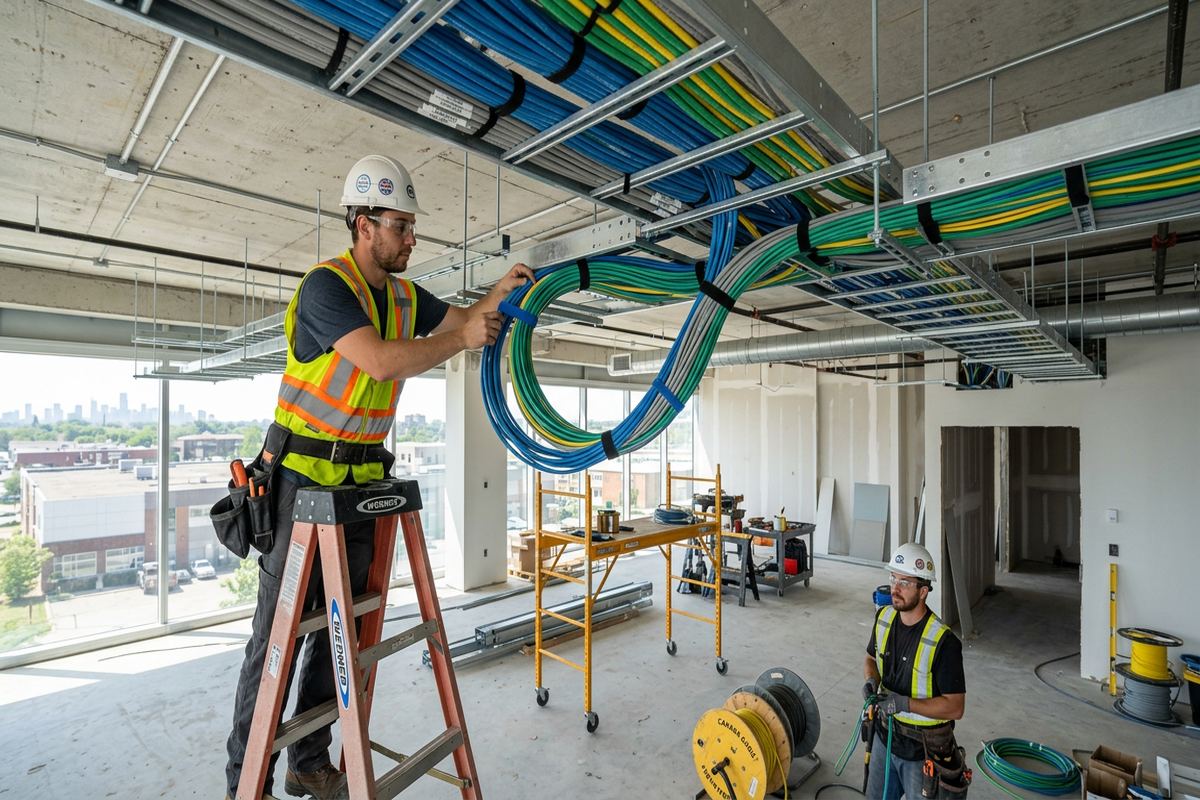
A clean outdoor TV installation depends on cable planning. Signal, data and control cables need routes that avoid sharp bends, unsupported spans, heat sources and unnecessary exterior exposure. UnifiedLink installs continuous labelled cable runs wherever the design permits, rather than burying inaccessible couplers behind finishes. Cable type is selected for the pathway and environment, including outdoor or conduit-rated products where required. We separate low-voltage cabling from electrical conductors according to applicable requirements and coordinate receptacle placement with an appropriate electrical contractor. Labels at both ends make later service and equipment replacement more straightforward.
Long cable distances are common on larger estate properties east of Aurora, especially when the outdoor television is on a detached pavilion, pool structure or terrace far from the main equipment location. Standard HDMI connections may not be suitable across those distances. Depending on resolution, source equipment and pathway, the design may use an active optical HDMI cable, a category-cable extension system or a network-based source. We verify compatibility as a system instead of selecting parts individually. Conduit with accessible pull points may also be recommended where future cable replacement would otherwise disturb finished landscaping or hardscape.
Not every property offers a fully concealed pathway. Finished basements, slab construction, masonry walls and completed outdoor kitchens can limit access. In those cases, we review discreet surface raceways, protected conduit or alternate equipment locations with the owner. Cable colour, entry points and transitions are agreed upon before installation. For tenanted properties, condominiums or managed commercial premises, landlord, condominium corporation or property-management approval may be required before drilling common elements or altering exterior finishes. Obtaining those permissions remains the owner’s responsibility, but our written scope can support the approval process.
- Continuous labelled cable runs
- Outdoor-rated pathway materials
- Long-distance signal options
- Conduit planning for future access
- Approval-ready written scope
Reliable Wi-Fi, Sources and Control
An outdoor television is only useful when its content sources and controls work consistently. Exterior walls, masonry, foil-backed insulation and distance from an indoor access point can weaken Wi-Fi at the patio. We test or review coverage at the proposed screen and source-device locations, then recommend a wired connection or additional network equipment where appropriate. A strong indoor signal near a window does not guarantee stable performance outside. In Aurora properties with large lots or detached structures, the network design may require a dedicated cable path rather than reliance on a consumer mesh node placed indoors.
Source planning should reflect how the television will actually be used. Streaming applications built into the display may reduce extra hardware, while cable boxes, media players or presentation devices require protected placement and a suitable signal link. We confirm expected resolution, control method and audio routing before selecting extenders or switches. Customer accounts are configured using the customer’s own credentials; passwords are not retained as installer-owned access. During handover, we demonstrate input selection, basic network connection and normal operation so the owner can use the system without depending on undocumented settings.
Remote controls and mobile applications can behave differently outdoors. Infrared commands may require direct line of sight, while Bluetooth or network control depends on pairing and reliable connectivity. Sunlight can make a screen appear dim even when the network and source are functioning normally, so brightness requirements must be considered separately from signal performance. Where several displays are planned for a hospitality patio, commercial strip unit or industrial facility, we can design centralized distribution and consistent source control. The scope identifies which content equipment and subscriptions are supplied by the customer.
- Outdoor Wi-Fi coverage review
- Wired network connection options
- Protected source-device placement
- Customer-owned account credentials
- Multi-display distribution planning
Audio Options for Outdoor Viewing
Television speakers may be adequate for a small covered seating area, but outdoor spaces absorb and disperse sound differently from rooms. Nearby roads, wind, conversations and cooking equipment can make dialogue difficult to hear. Raising television volume alone may spread sound farther than intended. We assess the seating layout and discuss outdoor-rated speakers, a compatible soundbar or a separate amplifier where appropriate. Speaker quantity and placement should provide even coverage at moderate levels. The design also considers where electronics can remain protected and how audio cables return to the equipment location.
In Aurora Highlands and the Hills of St. Andrew, outdoor living areas may sit close to neighbouring properties even when yards feel spacious. Speaker direction and mounting height can help keep sound focused on the intended patio rather than projecting across lot lines. We do not promise that equipment placement will resolve every noise concern, and owners remain responsible for appropriate use. The practical objective is clear sound across the listening area without creating excessive hot spots. Volume control can be provided through the television, an amplifier, a dedicated keypad or an approved mobile application.
Audio compatibility is confirmed before installation because televisions, soundbars and amplifiers support different connection standards. HDMI audio return, optical audio and analogue outputs are not interchangeable without suitable equipment. Long exterior routes may also require a different approach than a short connection behind the display. We document the selected pathway and identify which remote or application controls volume. If existing speakers or an amplifier are to be reused, their condition and compatibility are assessed but cannot be assumed. On-site configuration includes source testing, channel checks and a practical demonstration of normal controls.
- Outdoor-rated speaker options
- Even patio sound coverage
- Neighbour-aware speaker direction
- Audio format compatibility checks
- Configured volume controls
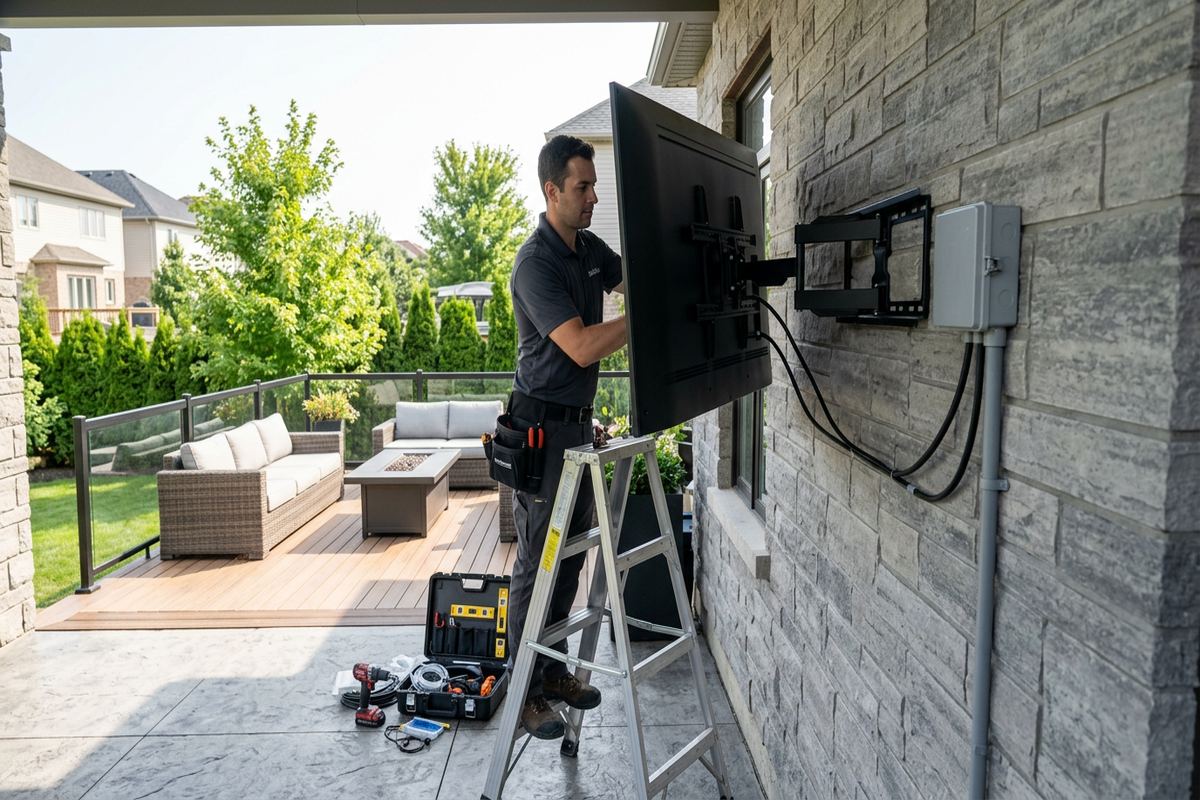
Outdoor TVs for Aurora Businesses
Restaurants, offices, recreation facilities and other Aurora businesses may use outdoor displays for entertainment, menus, schedules or customer information. Commercial installations require attention to operating hours, staff access, content sources and the possibility of accidental impact or tampering. We review the mounting height, sightlines and service access with the business owner or property manager. Outdoor brightness and environmental ratings remain important even under an awning. If a display is visible from a public area, cable pathways and equipment locations should be arranged to reduce casual interference without making routine maintenance unnecessarily difficult.
Commercial strips and industrial units can present construction conditions unlike houses. Demising walls, concrete block, steel framing, suspended ceilings and long service corridors affect fastening and cable routing. Exterior walls may also be controlled by a landlord, and signage or façade rules can restrict placement. We identify required approvals before work proceeds and provide a written scope describing penetrations, routes and visible components. Work scheduling can be planned around normal operations, but access, shutdowns and coordination with other contractors must be confirmed in advance. Any requested content-management functions are defined separately from the physical display installation.
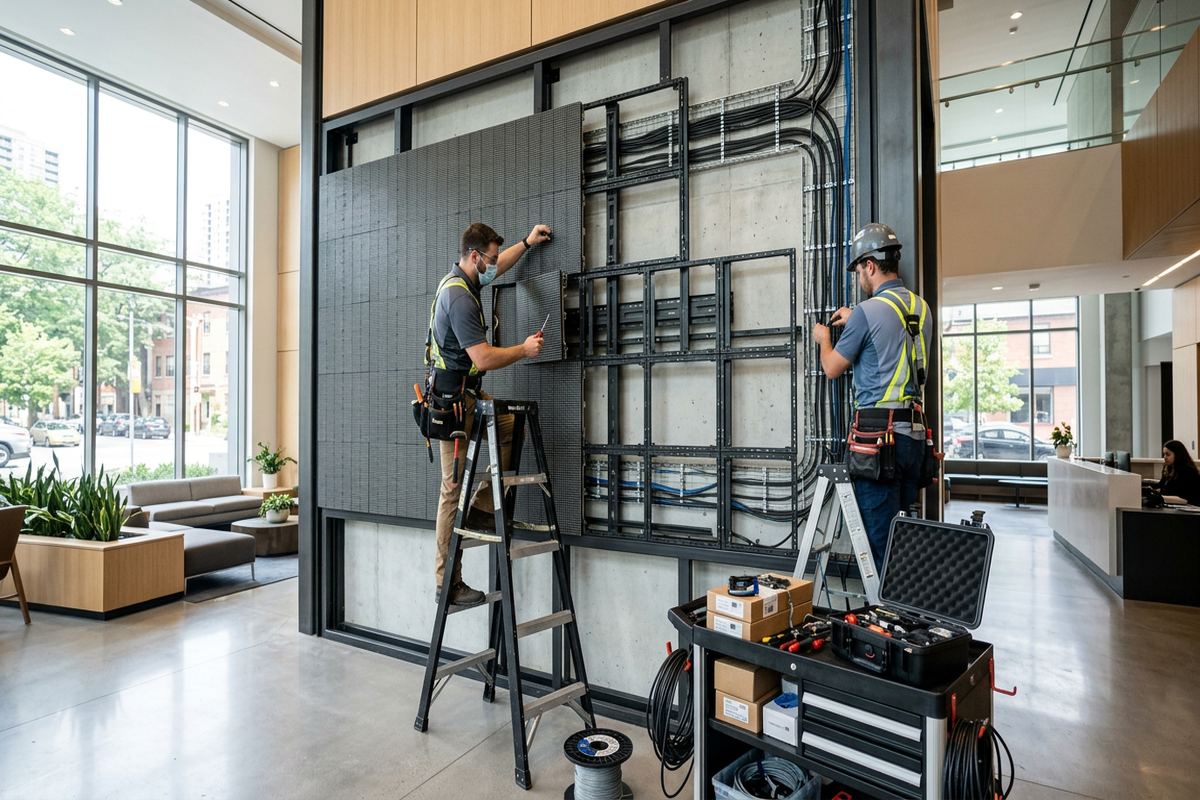
Multiple outdoor displays need consistent signal distribution rather than a collection of unrelated adapters. We can plan source switching, network connections and labelled home-run cabling back to an accessible equipment point. The system design accounts for intended resolution, cable distance and whether every screen shows the same or different content. Staff controls should be simple enough for daily operation while administrative credentials remain with the business. At completion, we configure installed equipment on-site, test each display and provide an as-built record. Equipment ownership and warranty responsibilities are stated in the approved scope.
- Commercial mounting and sightline review
- Tamper-conscious equipment placement
- Landlord and façade approval planning
- Multi-screen signal distribution
- Staff control handover
Aurora Installation Process and Handover
Each Aurora project begins with a request describing the property, preferred location and intended television. Photos can help with initial discussion, but pricing follows a site assessment because wall construction, cable access and exposure must be verified. Requests sent during business hours are answered the same day; after-hours requests are answered the next business day. Site assessment timing depends on the service and travel distance. During the visit, we review mounting, power coordination, network coverage, sources, audio and any approvals. We then prepare a written scope so the installation method and responsibilities are clear.
Before installation, the customer confirms the equipment list, placement and visible cable details. We verify that supplied televisions and mounts are compatible with each other and the planned environment. On site, work proceeds according to the approved route, with continuous labelled cable runs and protected exterior entries. Where concealed conditions differ materially from what could be assessed, we stop and discuss the required change rather than covering it. UnifiedLink remains the accountable low-voltage contractor for the agreed display, cabling, network and configuration work, including coordination points identified for electrical or structural trades.
Handover is part of the installation rather than an optional final step. We test picture, source selection, network connection, audio and the normal control method in the customer’s presence where practical. Accounts are left under the customer’s own credentials, and supplied documentation identifies installed equipment and cable routes. The as-built record helps future technicians understand the system without reopening finished surfaces simply to locate wiring. We also review basic care, including keeping ventilation openings clear and checking exposed areas after severe weather. Manufacturer instructions govern operation, cleaning and seasonal temperature limits.
- Site assessment before pricing
- Detailed written project scope
- On-site installation and configuration
- Customer-owned credentials at handover
- As-built cable and device record
Aurora neighbourhoods we cover
- Aurora Village
- Bayview Wellington
- Aurora Highlands
- Hills of St. Andrew
- Rural Aurora
Outdoor TV installation in Aurora — common questions
Can any television be installed outdoors in Aurora?
An indoor television is not designed for Aurora’s moisture, temperature changes, condensation and freeze-thaw conditions. A covered location may reduce exposure, but it does not change the product’s rating. We recommend selecting a television approved by its manufacturer for the intended outdoor environment and installing it with the required clearances, mount and protected connections.
Can you mount an outdoor TV on brick?
Yes, when the brick or masonry is in suitable condition and the fastening plan matches the wall assembly and mount loads. Aurora’s heritage and renovated homes can have variable masonry conditions, so we inspect before pricing. We also plan cable entries and compatible sealing rather than relying on surface caulking to correct a poorly positioned penetration.
Do I need an electrician for outdoor power?
A suitable outdoor receptacle may already be available, but new or modified line-voltage wiring must be handled by an appropriate electrical contractor. During the Aurora site assessment, we identify the preferred receptacle location and coordinate it with the television mount and cable pathway. Electrical work and any exclusions are identified clearly in the written scope.
Will Wi-Fi work at my Aurora patio?
It depends on distance, exterior wall construction, interference and access-point placement. Masonry and some insulation systems can reduce the signal substantially. We review coverage at the proposed television and source locations. Where Wi-Fi is unreliable, a labelled wired data connection or properly planned additional network equipment can provide a more stable option.
Are condo or landlord approvals required?
They may be. Condo corporations, landlords and commercial property managers can restrict drilling, mounting, visible raceways and changes to exterior or common elements. The property owner or tenant is responsible for obtaining approval before work begins. UnifiedLink can provide a written scope showing device placement, cable routes, penetrations and visible components to support the request.
What do I receive after installation?
Your Aurora installation includes on-site configuration and testing of the agreed display, sources, network connection, audio and controls. Accounts are handed over using your own credentials. You also receive an as-built record identifying installed devices and cable routes. Equipment ownership, warranty responsibilities and exclusions are documented in the approved written scope.
Coverage in Aurora is confirmed against the address before we quote. See everything we install in Aurora or the province-wide outdoor tv installation page.