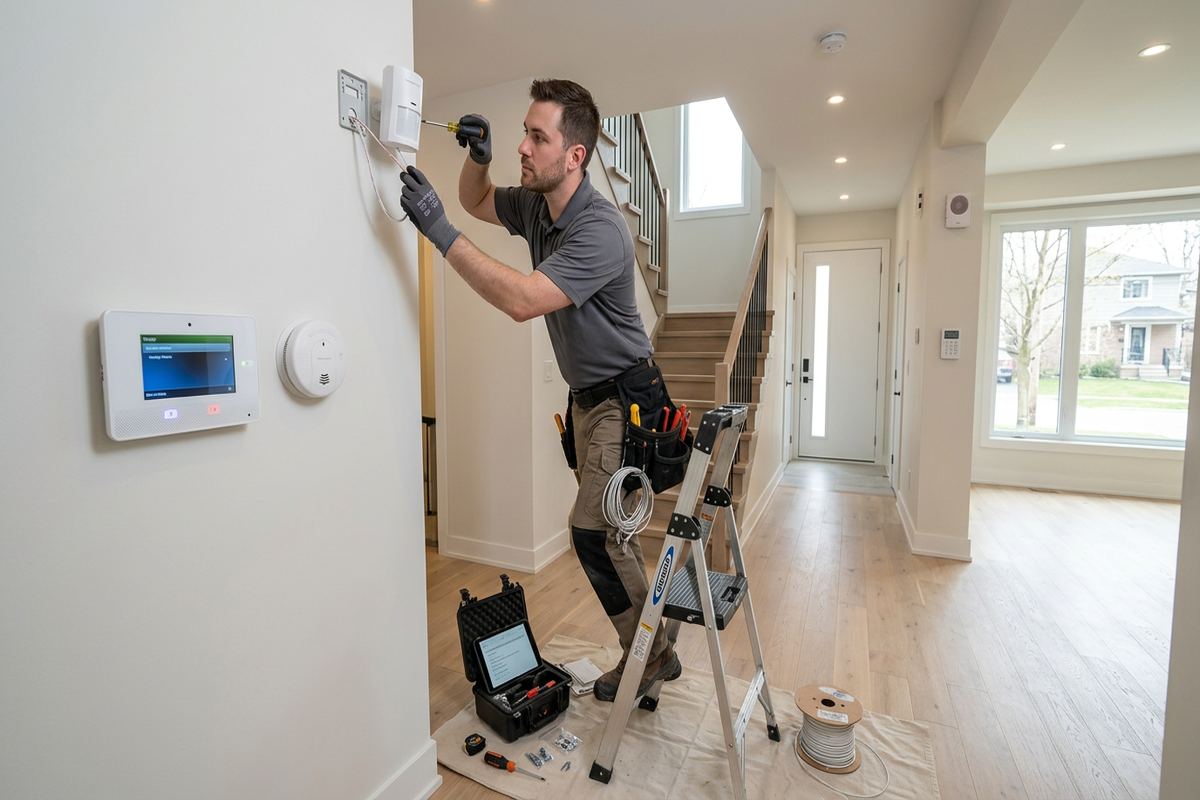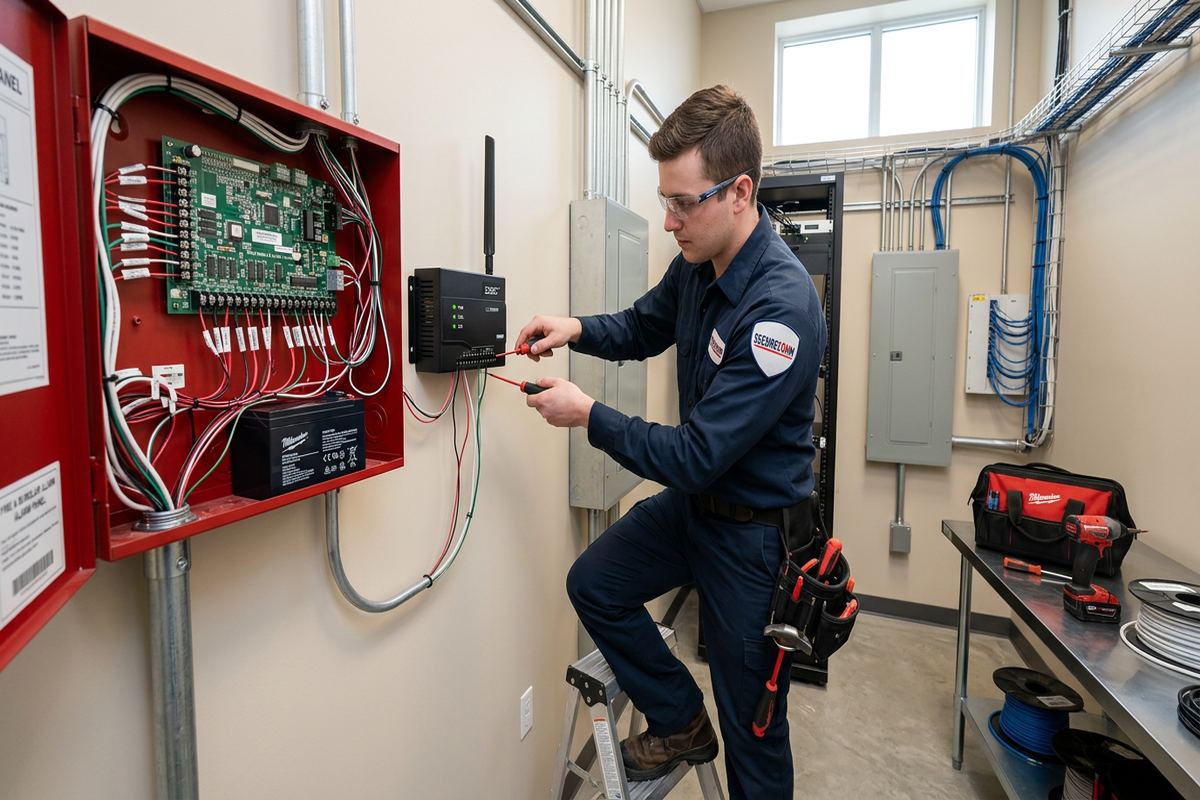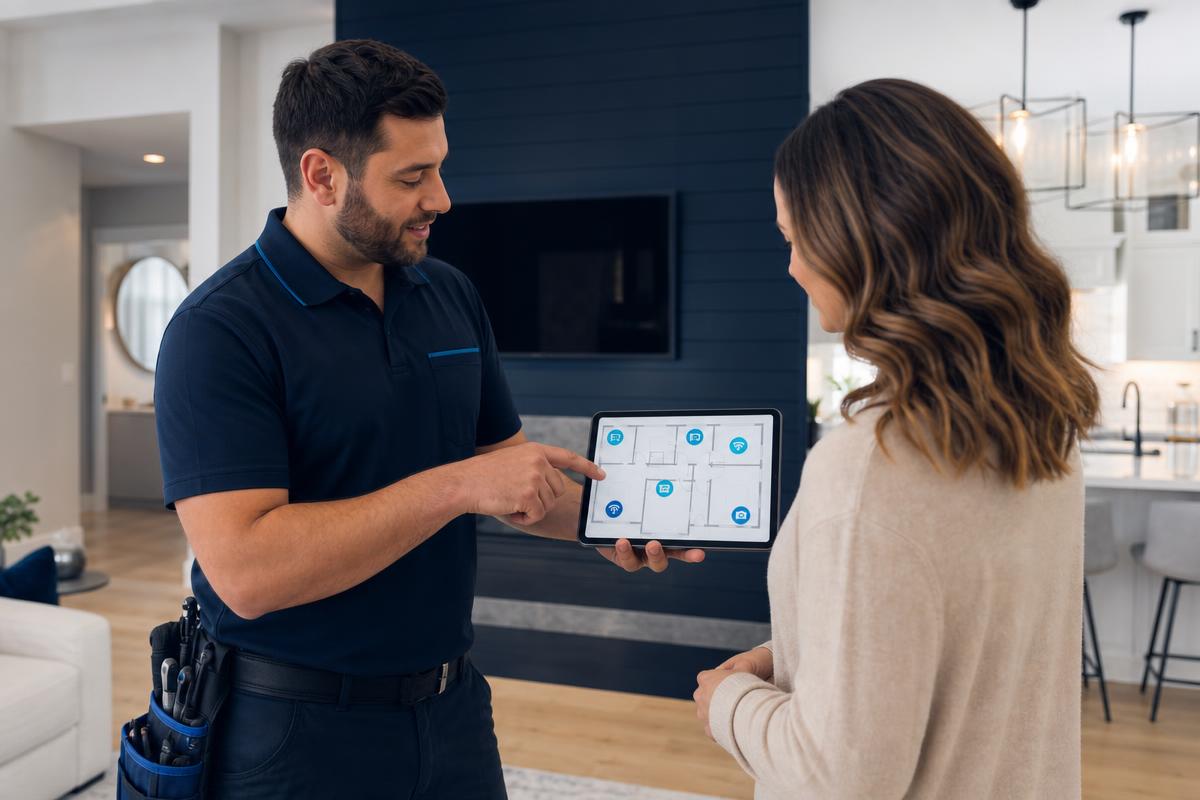
UnifiedLink installs low-voltage cabling for homes, commercial spaces and industrial units across Aurora and York Region. We plan routes, install continuous labelled runs, terminate and test connections, and document the finished system. Each project begins with a site assessment so the written scope reflects the property, intended equipment, access requirements and practical installation conditions.
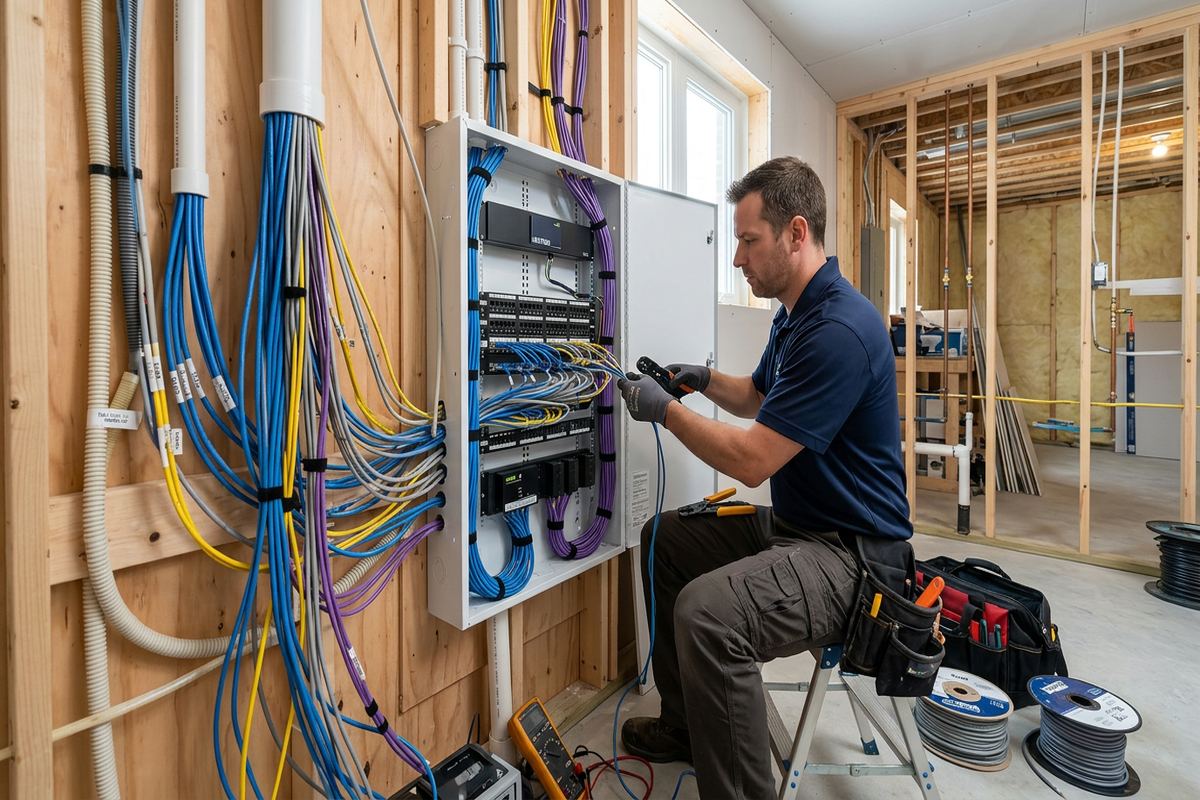
Low-Voltage Cabling for Aurora Properties
Low-voltage cabling provides the physical connection for data networks, security cameras, alarm devices, access control, Wi-Fi access points, audio systems and commercial displays. A dependable installation starts with selecting cable suited to the application, distance and environment. UnifiedLink plans each run around the equipment it must support rather than treating every outlet alike. We consider pathway capacity, separation from electrical wiring, termination locations, service access and future maintenance before cable is pulled. This approach applies to single-room additions, renovations and complete low-voltage systems throughout Aurora.
Aurora’s property mix makes route planning especially important. Heritage homes near Yonge Street may have finished plaster, narrow wall cavities, masonry sections or additions built at different times. Larger estate properties east of town can involve long runs, detached buildings and broad exterior coverage areas. Before proposing a route, we examine accessible basements, attics, utility spaces, ceiling areas and exterior transitions. The objective is to reach each device without unnecessary openings while still keeping cable protected, serviceable and within the performance limits of the selected cable type.
Every project begins with a site assessment before pricing. The resulting written scope identifies equipment, cable routes, device placement, exclusions, equipment ownership and warranty details. This gives the property owner a practical basis for reviewing the work before installation starts. It also helps identify tasks that may require another trade, building management or landlord approval. Requests sent during business hours are answered the same day, while after-hours requests are answered the next business day. Site assessment timing depends on the requested service and travel distance.
- Data and network cabling
- Security and alarm wiring
- Access control connections
- Wi-Fi access point cabling
- Audio and display cabling
Planning Cable Routes in Aurora Homes
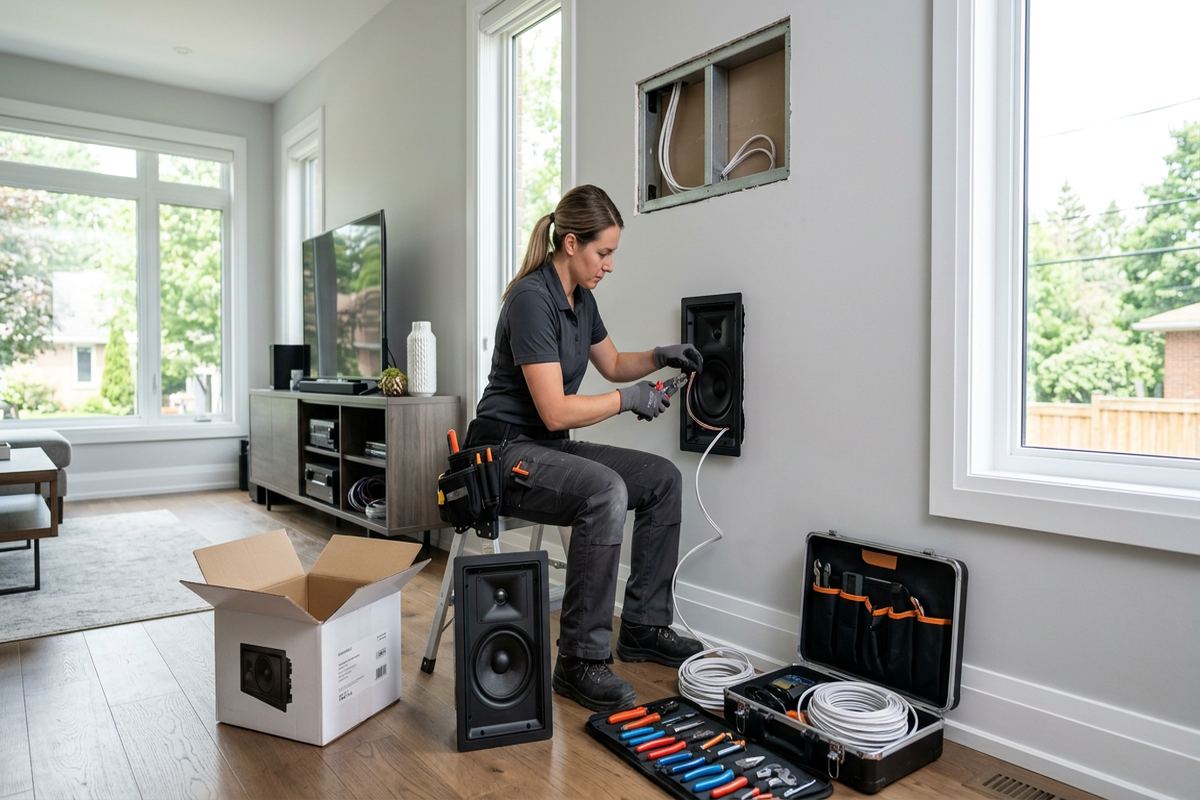
Residential cabling should follow the building rather than force a standard layout onto it. In Aurora Village, older homes can combine original framing with renovated kitchens, finished basements and later additions. A route that appears direct on a drawing may encounter masonry, blocking, ductwork or inaccessible ceilings. We inspect likely pathways and choose locations that balance appearance, cable performance and future access. Where concealed installation is practical, runs are routed through wall and ceiling spaces. Where it is not, neatly installed surface pathways may provide a less disruptive result.
Frame construction often permits cable to pass through joist spaces and stud cavities, although insulation, fire blocking and finished surfaces can limit access. Masonry construction requires a different method because cable cannot simply be fished through solid walls. Depending on the site, the route may use an interior chase, basement pathway, attic transition or suitable surface raceway. Penetrations are kept deliberate and appropriately sealed. In heritage properties, we also discuss visible device placement and drilling locations with the owner before work begins to reduce avoidable changes to established finishes.
Estate properties in Rural Aurora and east of town introduce other design questions. Longer distances can affect copper cable suitability, while detached garages, gates and outbuildings may need fibre, protected pathways or dedicated network equipment. Outdoor links must account for moisture, temperature changes and differences in electrical potential between buildings. We identify where cable changes environment and specify suitable protection at those transitions. Spare capacity may be included where the route is difficult to revisit, but only when it serves a clear purpose and is documented in the agreed scope.
- Basement, attic and ceiling routes
- Options for finished wall areas
- Masonry and frame construction planning
- Detached building pathway assessment
- Documented drilling and penetration locations
Commercial Cabling Across Aurora
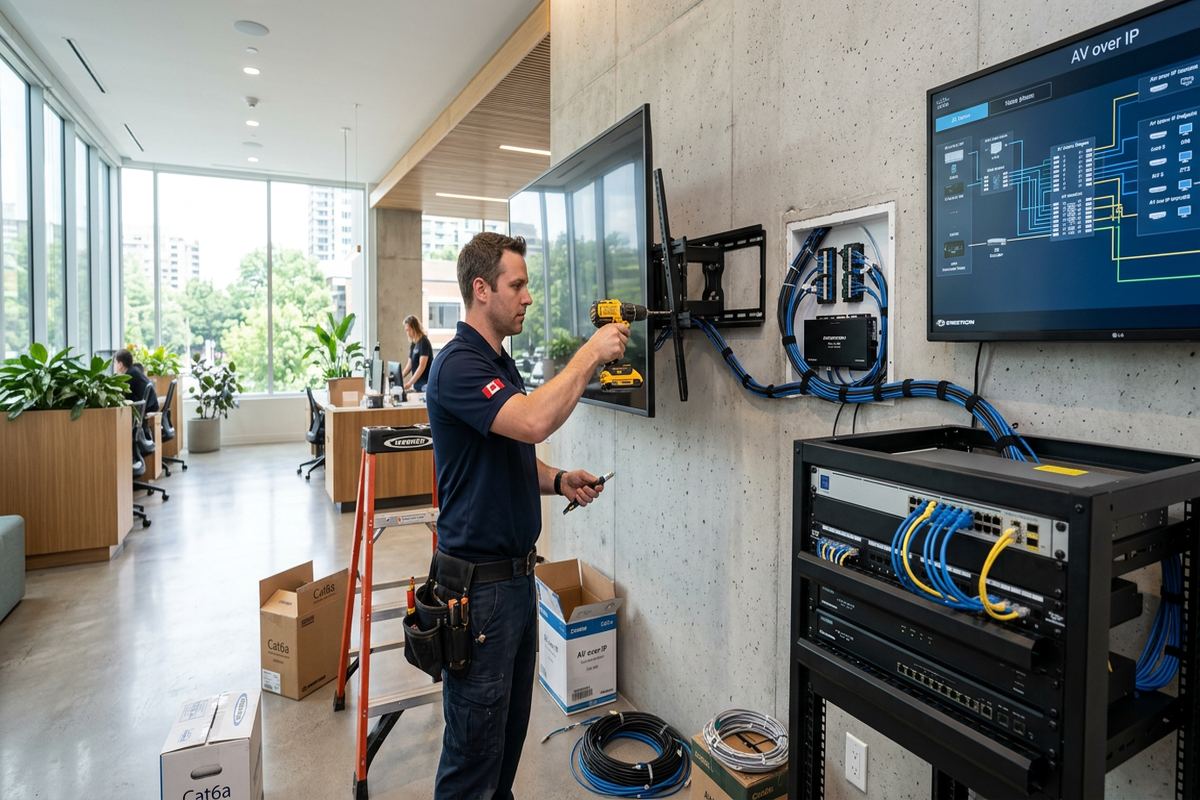
Businesses need cabling that supports daily operations without creating an unmanageable patchwork above ceilings or behind equipment. Aurora’s commercial strips may contain retail units, offices, clinics and restaurants with existing wiring from several previous occupants. We trace useful infrastructure where practical, identify abandoned or unsuitable runs, and plan new pathways around lighting, electrical distribution, mechanical systems and fire separations. Device locations are coordinated with counters, desks, racks, cameras, access-controlled doors and wireless coverage needs so connections end where equipment will actually be installed and maintained.
Industrial units often have open ceilings, long interior distances, warehouse racking and separated office areas. These conditions can simplify access while increasing the need for proper support, pathway planning and cable protection. Runs should not rest loosely on ceiling systems, lighting or unrelated services. Where cable descends to equipment, the transition needs protection from routine activity and possible impact. We also consider dust, temperature variation and future layout changes. Clear labels at both ends allow staff or service providers to identify circuits without repeatedly tracing cable across the unit.
Tenant improvements require responsibilities to be settled before installation. A landlord, condominium corporation or property manager may need to approve penetrations, common-area routes, exterior devices or work in shared telecommunications rooms. UnifiedLink can define the proposed pathway and device locations for the customer’s approval process, but the customer remains responsible for obtaining required permissions unless the written scope states otherwise. We coordinate our work with general contractors and other trades when applicable. Exclusions are recorded so there is no assumption that patching, painting, electrical work or permit-related tasks are included.
- Office and retail network drops
- Warehouse and industrial pathways
- Telecommunications room organization
- Tenant-improvement cable planning
- Coordination with landlords and contractors
Aurora, Ontario
Low-voltage cabling installation in Aurora, scoped in writing first
Book a site assessment and get equipment, routes, exclusions, and warranty on paper before anything is installed.
Choosing Cable for Aurora Conditions
Cable selection depends on function, distance, bandwidth, power requirements and installation environment. Category cable may serve computers, phones, cameras, access points and controllers, while fibre is useful for longer links, backbone connections or electrically isolated building-to-building routes. Coaxial, speaker, control and composite cables address other equipment requirements. We do not substitute a familiar cable simply because it is available. The selected construction, rating and termination method must fit the pathway, connected hardware and expected use, including whether the run passes through return-air spaces or exposed areas.
Power over Ethernet can carry network data and device power on one category cable, but successful operation still depends on cable quality, distance, bundle conditions and the connected network equipment. Cameras, wireless access points, phones and access-control devices do not all draw the same power. We review the intended endpoints and switching equipment when those details are available. Cable routes are planned with appropriate separation from electrical conductors and sources of interference. Excess cable is managed at service locations rather than hidden as tight coils or sharp bends inside inaccessible spaces.
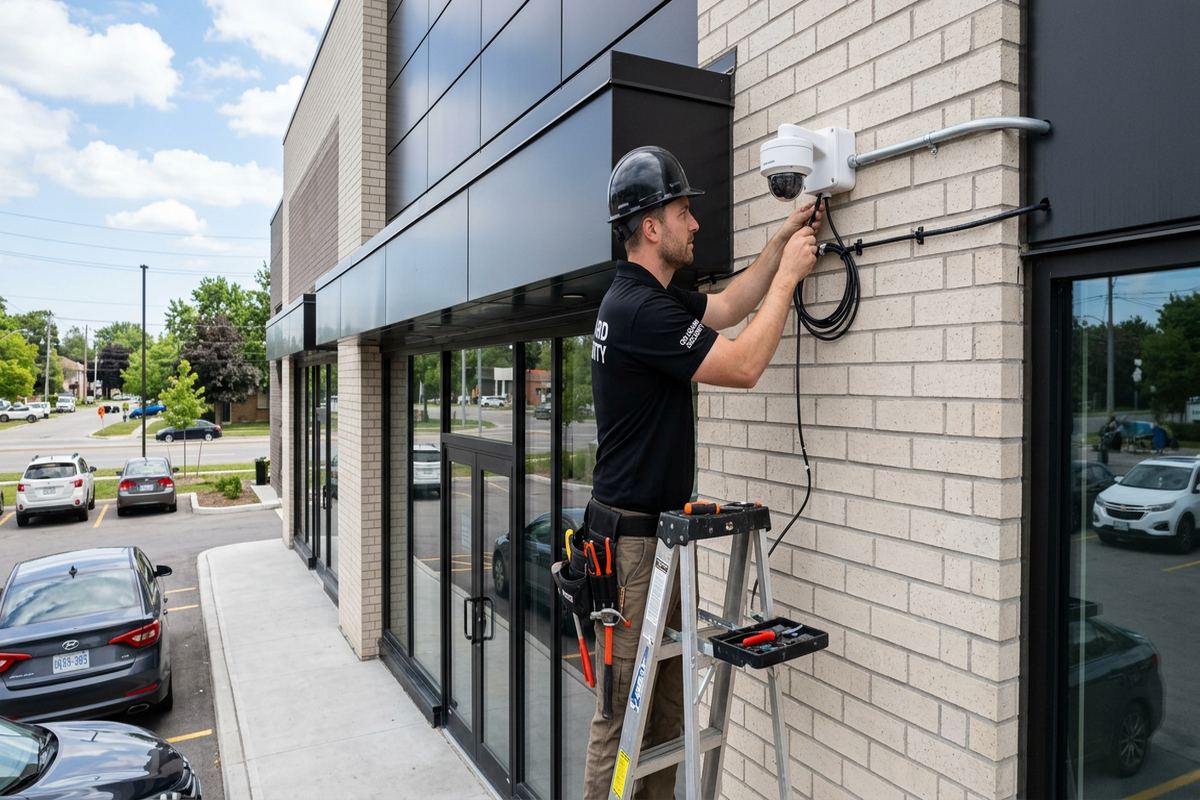
Aurora winters make outdoor cable transitions a design issue rather than a finishing detail. Freeze-thaw cycles can open poorly sealed penetrations, and water can follow cable toward an interior space if entry points are incorrectly arranged. Exterior-rated cable, suitable conduit or other protection may be required depending on exposure. Penetrations are positioned and sealed to resist moisture entry, with drip paths considered where relevant. Exterior cable also needs support and protection from sunlight, snow, ice and physical contact. Indoor-rated cable is not used outside merely because the exposed section is short.
- Category and fibre options
- Application-specific cable ratings
- Power over Ethernet review
- Electrical separation and bend control
- Weather-resistant exterior transitions
Installation Standards for Aurora Cabling
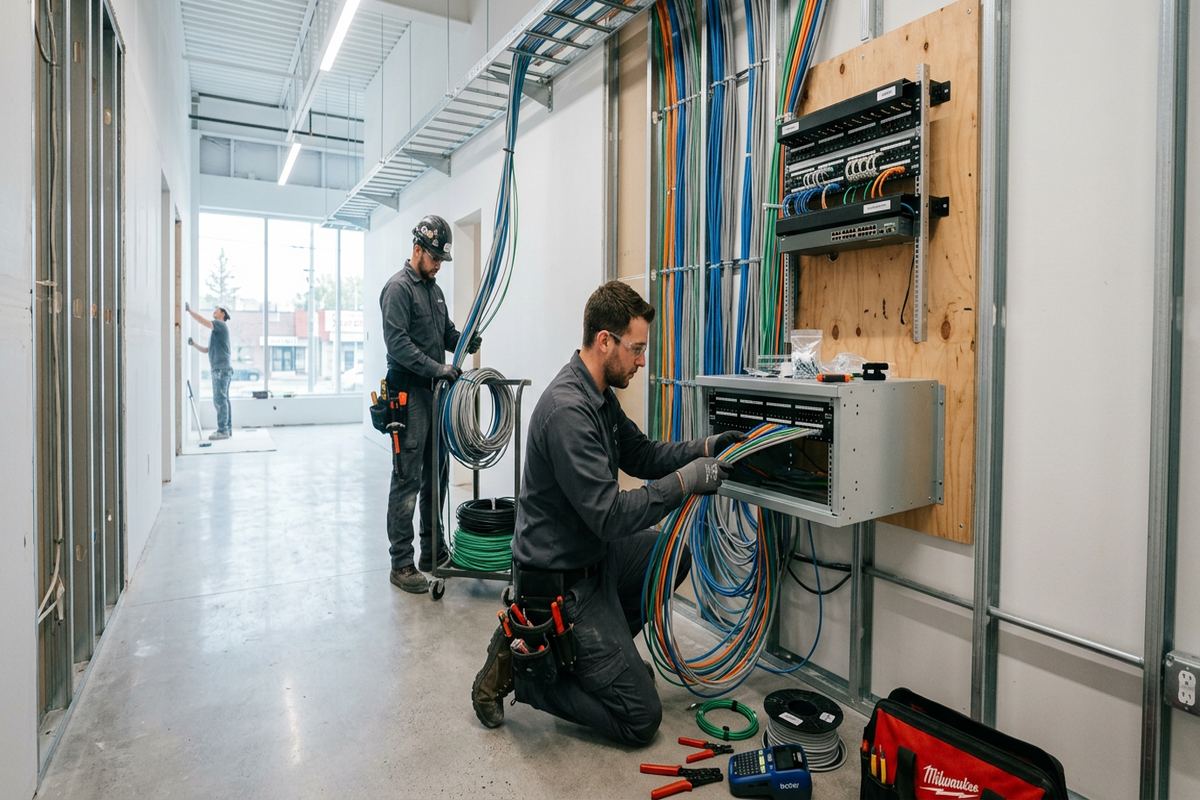
A tidy cable route is easier to inspect, terminate and service. UnifiedLink installs continuous labelled cable runs between the agreed endpoints, avoiding hidden couplers or improvised joins. Cables are supported using suitable pathways or fastening methods and are kept away from sharp edges, heat sources and moving equipment. Pulling tension and bend radius are controlled during installation. At racks, cabinets and panels, enough service length is retained for orderly termination without leaving unmanaged bundles. Labels correspond to outlet, device or panel references that can be understood after handover.
Penetrations require attention to both the material and the space being crossed. Drilling through wood framing differs from passing through brick, concrete block or poured concrete. Before proceeding, we assess accessible evidence of utilities and concealed obstacles, although no visual assessment can reveal every hidden condition. Openings through fire separations or rated assemblies may require specific treatment and coordination within the broader project. Exterior holes are sealed using methods suited to the surface and exposure. Cable entry points are arranged to reduce water migration toward the building interior.
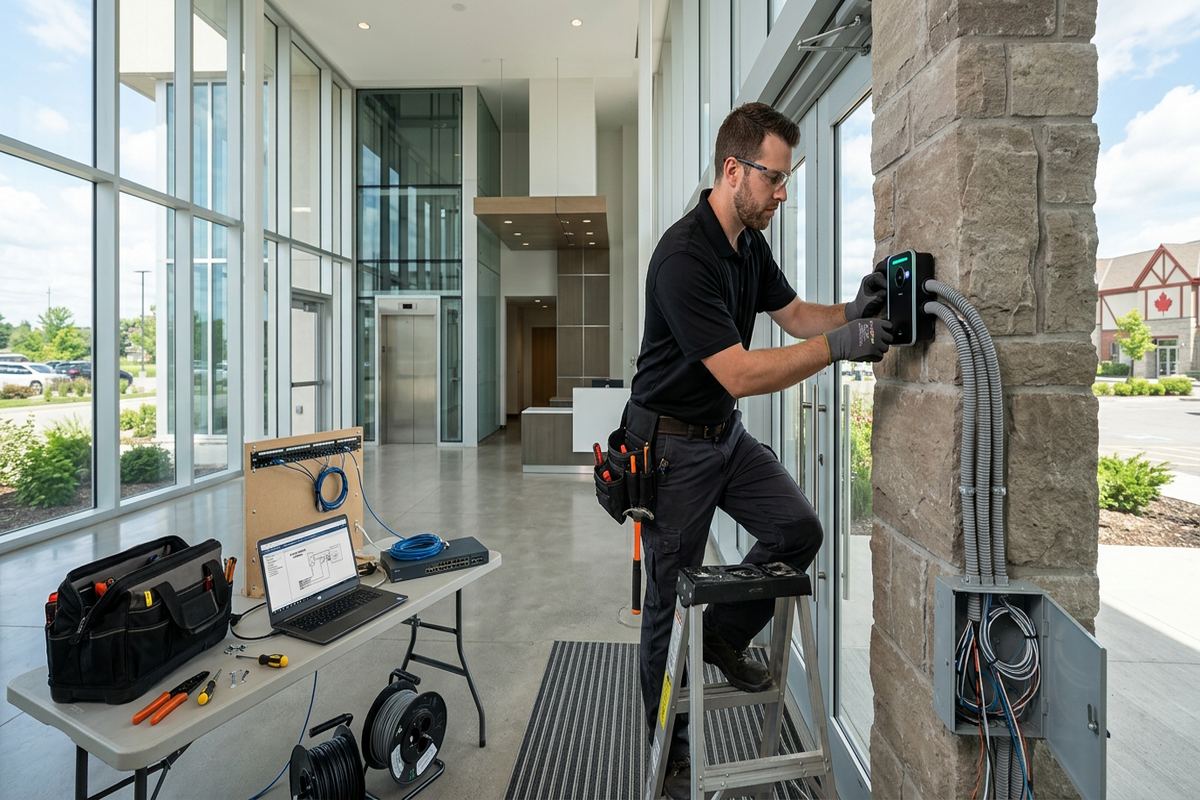
Installation is followed by termination, labelling and checks appropriate to the connection. For data runs, this includes verifying continuity and wire mapping and reviewing the result against the intended service. Fibre and specialized control cabling require different tools and checks. Testing confirms the installed link at that time; it does not establish the health of customer equipment or an outside service unless those items are included in the scope. Results, endpoint references and noted limitations are incorporated into the project record so later troubleshooting starts with useful information.
- Continuous runs without hidden joins
- Labels at both cable ends
- Supported, protected pathways
- Material-appropriate penetrations
- Termination and connection checks
Cabling for Security, Wi-Fi and Controls
Low-voltage pathways frequently support several systems within one property. Camera locations need suitable viewing angles and service access, while wireless access points perform best when placement follows coverage needs rather than the nearest easy ceiling route. Access-control cabling may connect readers, door contacts, request-to-exit devices, locks and controllers. Alarm wiring can link sensors, keypads and communication equipment. We plan each cable around its endpoint and controller relationship, then label it accordingly. Shared pathways are considered carefully because different systems can have distinct cable, separation and ownership requirements.
In Aurora Highlands or Bayview Wellington, a home network project may combine ceiling access points, exterior cameras, television connections and a central equipment area. Consolidating routes can reduce repeated disruption, but every proposed run still needs an identified purpose. The central location should provide ventilation, electrical access and enough working space for patching and equipment service. We discuss which equipment belongs to the customer and which may belong to an internet or monitoring provider. That distinction matters when planning handover, replacement access and responsibility for future troubleshooting.
Commercial systems also benefit from coordinated cabling. A storefront may need network drops at sales positions, ceiling Wi-Fi, display feeds, cameras and door-control connections, all terminating in different equipment or service panels. During planning, we separate physical cabling needs from subscriptions, monitoring agreements and software administration. UnifiedLink can complete on-site configuration when included in the scope, but external accounts and provider services remain subject to their own terms. Customer credentials are used for handover so ongoing system control does not depend on an installer-owned account.
- Camera and recorder connections
- Wireless access point cabling
- Alarm device home runs
- Access-control door wiring
- Audio and display pathways
Renovations, Additions and Occupied Spaces
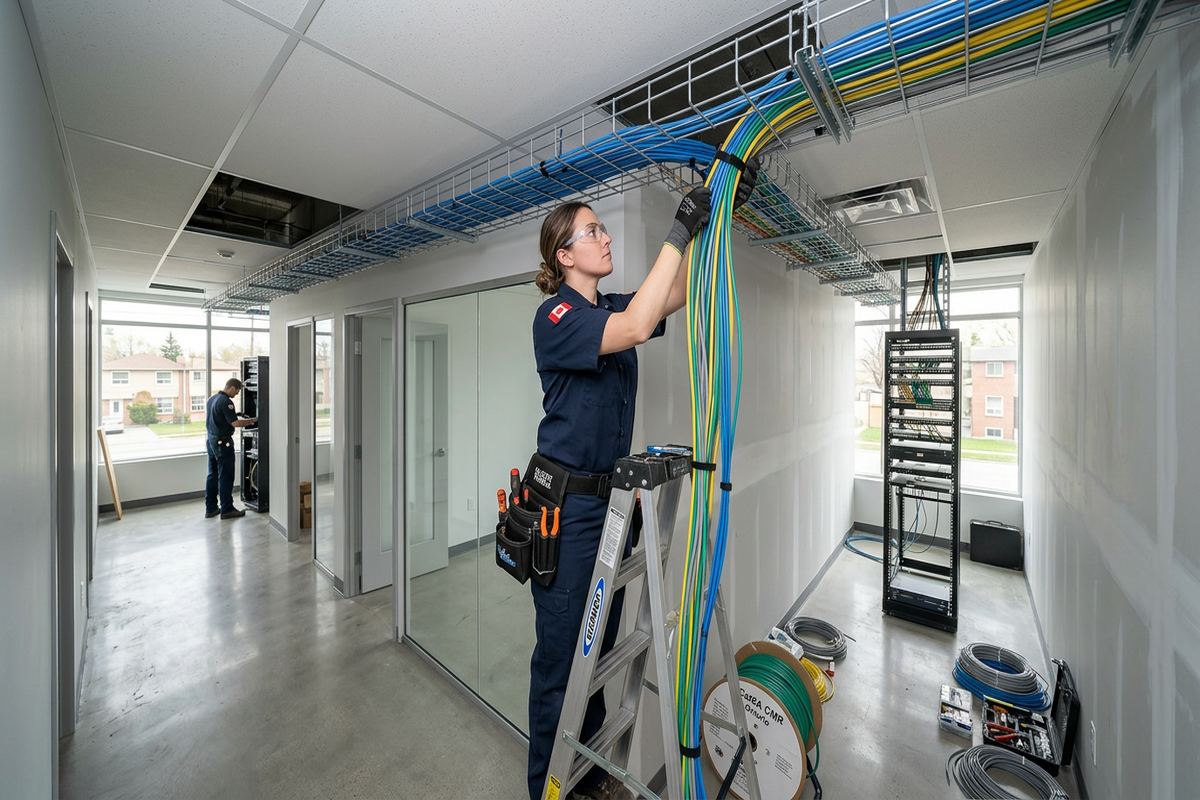
Renovation work offers opportunities to install cable before walls and ceilings close, but timing must be coordinated with framing, electrical, insulation and drywall work. We review drawings where available and confirm device locations on site because room layouts and cabinet dimensions often change during construction. Cable is protected until final termination, and endpoints are identified so they are not buried by later work. If another trade changes a pathway or wall assembly, the low-voltage plan may also need revision. Those changes should be documented rather than resolved through undocumented rerouting.
Occupied Aurora homes and businesses require a different sequence. Furniture, merchandise, finished surfaces and normal operations can restrict access, so work areas and route options are discussed during assessment. Some tasks may require temporary access to rooms, ceiling tiles, network equipment or shared utility areas. We identify expected interruptions before starting and avoid disconnecting active services unless that work is part of the agreed plan. Dust control, drilling locations and cleanup expectations are included where relevant. Restoration beyond minor installation finishing is identified as included or excluded in writing.
Condominium and rental properties can limit where an owner or tenant may install cable. Common walls, corridors, exterior façades, risers and shared equipment rooms may fall under building management control. Before work is scheduled, customers should confirm applicable rules and obtain landlord or condominium approval for affected areas. We can provide route descriptions and equipment locations to support that review. In multi-unit buildings, we do not assume that an accessible ceiling or closet is available for private use. Approved access and a defined pathway are necessary before installation proceeds.
- Pre-drywall rough-in cabling
- Occupied-space work planning
- Coordination with renovation trades
- Condo and landlord approval support
- Written restoration responsibilities
Aurora Project Handover and Future Service
Completion should leave the customer with a system they can identify and control. At handover, UnifiedLink provides an as-built record showing installed cable runs and endpoint references based on the final work. Labels on outlets, devices, patch panels or control points correspond with that record. Where on-site configuration is included, systems are handed over using the customer’s own credentials rather than an account retained by the installer. Equipment ownership and warranty information follows the written scope, helping distinguish customer-owned components from hardware supplied or managed by another provider.
Changes sometimes become necessary after walls are opened, ceilings are accessed or concealed conditions are discovered. A blocked cavity, undocumented masonry section or unavailable shared pathway can make the planned route impractical. When this occurs, we explain the condition and propose an alternative before proceeding with materially different work. The scope can then be updated to reflect route, placement or exclusion changes. This process is particularly useful in older Aurora Village properties, where several generations of renovation may sit behind finished surfaces and original construction details may no longer be visible.
Using one accountable contractor for the defined low-voltage scope reduces gaps between cable routing, termination, device connection, configuration and documentation. It does not remove the need for internet providers, electricians, locksmiths or monitoring companies when their work is required, but it clarifies who is responsible for the listed installation tasks. Future additions are easier to assess when existing runs are labelled and recorded. For Aurora owners planning another camera, access point, workstation or controlled door, the as-built information provides a practical starting point for evaluating available pathways and capacity.
- Customer-owned login credentials
- As-built cable record
- Equipment ownership documented
- Warranty details in writing
- One accountable low-voltage contractor
Aurora neighbourhoods we cover
- Aurora Village
- Bayview Wellington
- Aurora Highlands
- Hills of St. Andrew
- Rural Aurora
Low-voltage cabling installation in Aurora — common questions
Can you run cable through an older Aurora home?
Yes, subject to an on-site assessment of the available routes. Older homes near Yonge Street may contain plaster, masonry, fire blocking or additions with different framing. We inspect accessible basements, attics and utility spaces before proposing concealed or surface-mounted pathways. The written scope identifies planned routes, drilling locations, exclusions and any restoration responsibilities before installation proceeds.
What types of low-voltage cable do you install?
We install cabling for networks, Wi-Fi access points, security cameras, alarms, access control, audio systems and displays. Depending on the application, that may include category cable, fibre, coaxial, speaker or control cable. Selection for an Aurora property depends on distance, connected equipment, pathway conditions, power requirements and whether any portion of the run is exposed outdoors.
How do you protect exterior cabling during Aurora winters?
Exterior routes are planned for moisture, sunlight, snow, ice and freeze-thaw conditions. Depending on exposure, we use appropriately rated cable, conduit or other mechanical protection. Exterior penetrations are deliberately positioned and sealed, with cable entry direction and drip paths considered. The exact method depends on whether the surface is brick, siding, concrete or another material and is documented in the project scope.
Do I need condo or landlord approval?
Approval may be required when cabling crosses common areas, shared walls, corridors, risers, exterior façades or building telecommunications rooms. Aurora condominium owners and commercial tenants should confirm property rules before installation. UnifiedLink can provide proposed cable routes and device locations to support the approval process, but the customer is responsible for securing permission unless the written scope specifically assigns that task elsewhere.
Will my new cable runs be tested and labelled?
Yes. UnifiedLink installs continuous labelled runs and checks terminations using methods appropriate to the cable and intended connection. Labels are applied at both ends and matched to the as-built record supplied at handover. Testing covers the installed link as defined in the scope; customer devices, internet service and third-party systems are only assessed when they are expressly included.
How soon can you assess my Aurora property?
Requests sent during business hours are answered the same day, and after-hours requests are answered the next business day. Site assessment timing depends on the service and travel distance. During the assessment, we review device locations, accessible pathways, construction materials, exterior transitions and approval requirements. Pricing follows the assessment and is based on a written scope rather than an unsupported remote estimate.
Coverage in Aurora is confirmed against the address before we quote. See everything we install in Aurora or the province-wide low-voltage cabling installation page.