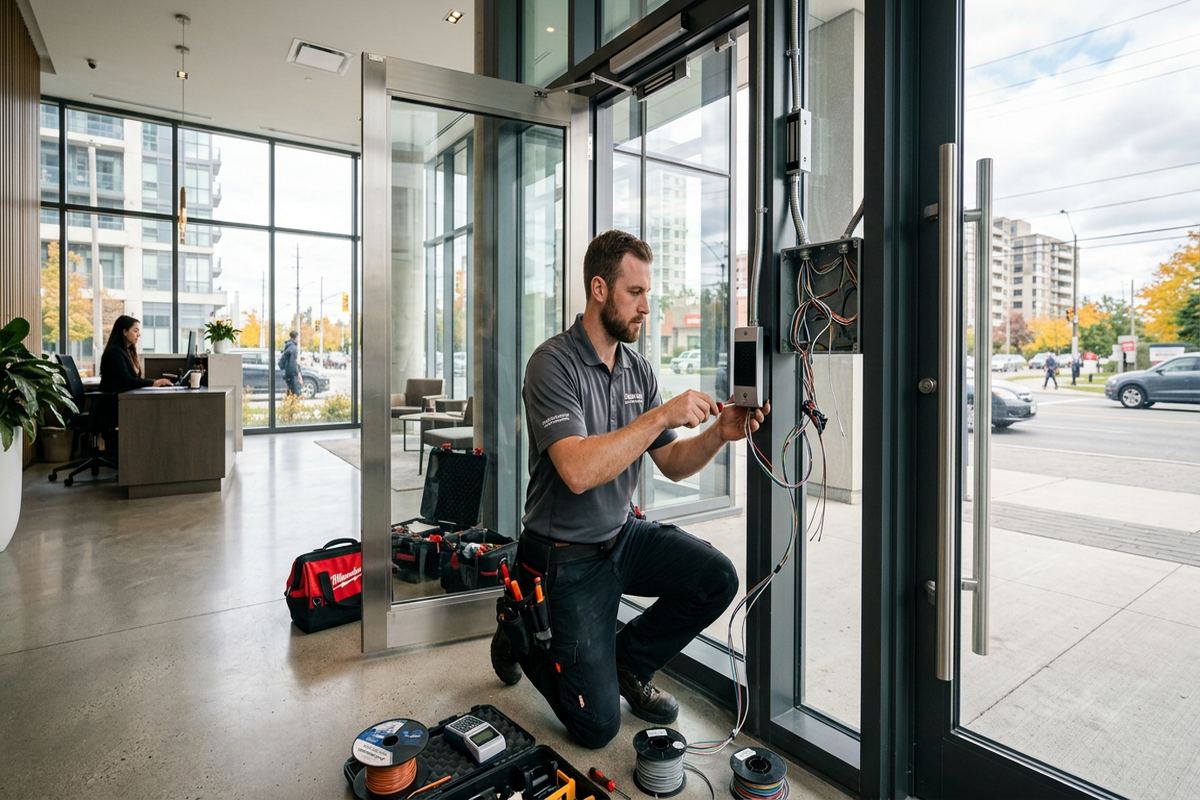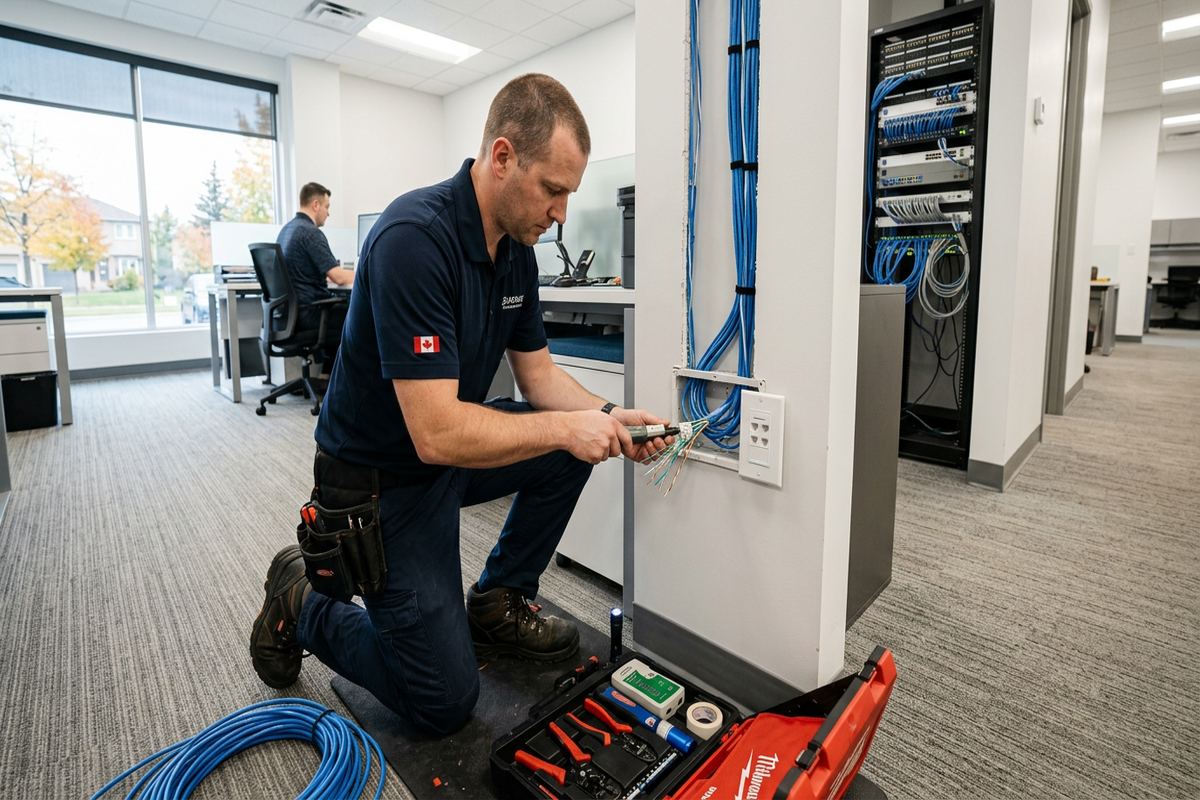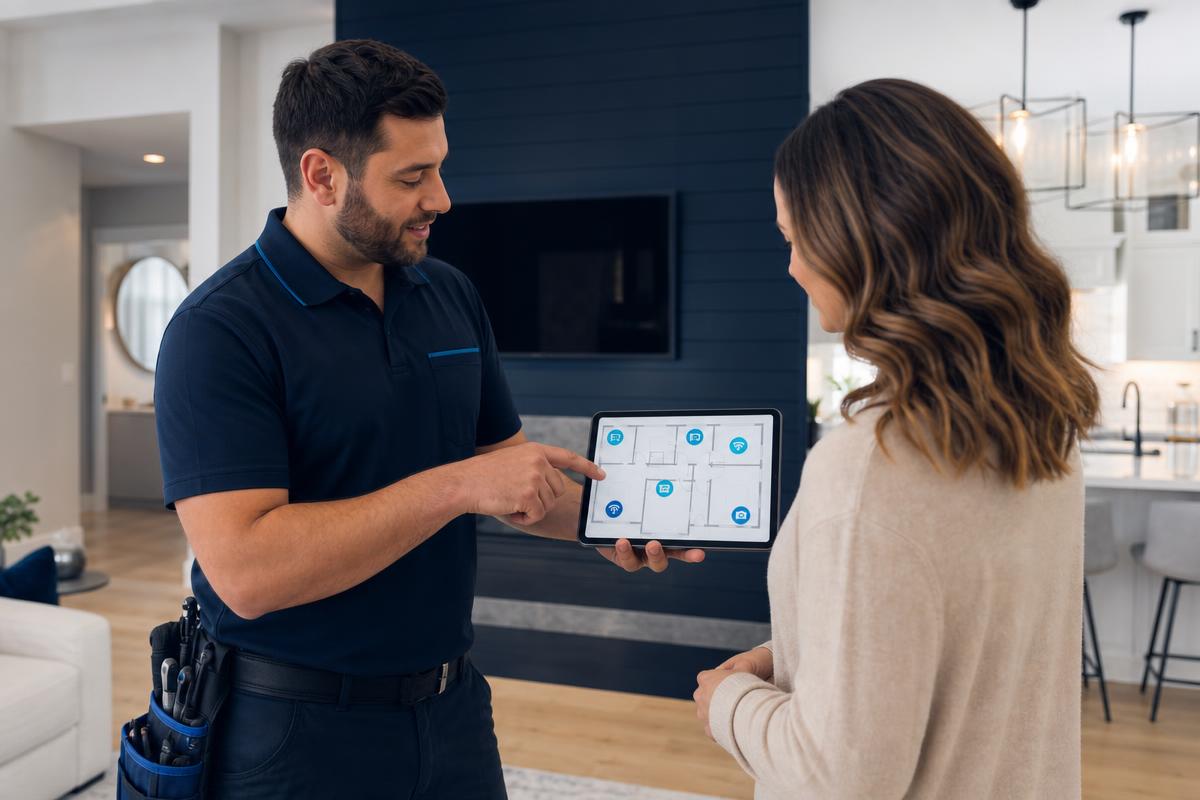
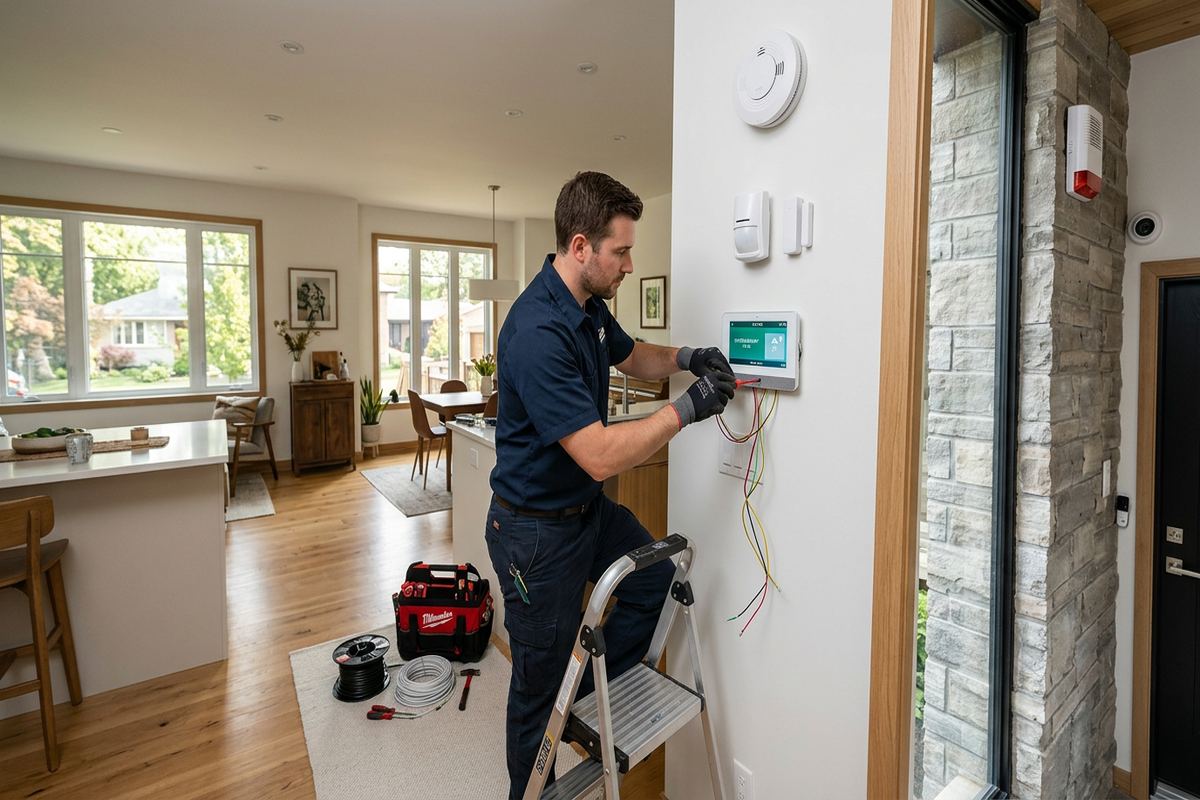
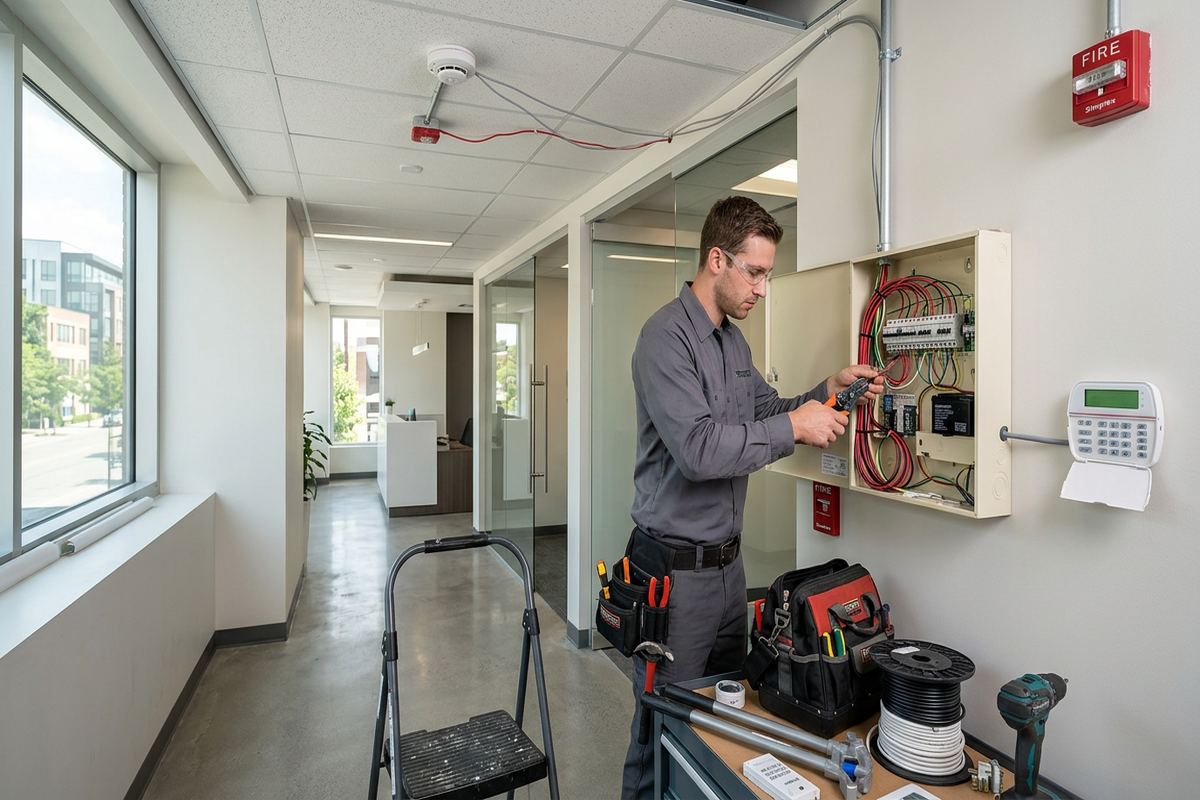
UnifiedLink installs home alarm systems for Aurora properties, from heritage houses near Yonge Street to larger estate homes east of town. Each project starts with a site assessment and a written scope. We plan sensors, keypads, sirens, communications and cable routes around the building, then configure the system on site and document the completed installation.
Planning a Home Alarm System in Aurora
A useful alarm system begins with the building, not a standard equipment package. During an Aurora site assessment, we review exterior doors, accessible windows, basement entries, attached garages, interior circulation routes and likely equipment locations. The assessment also identifies existing wiring, available power, internet service and cellular signal considerations. Heritage homes near Yonge Street can require restrained cable routes and careful work around original finishes, while larger estate properties east of town may need broader detection coverage, additional partitions and longer communication paths between buildings or distant entrances.
The written scope turns those observations into an installation plan. It identifies proposed equipment, device placement, cable routes, exclusions, equipment ownership and applicable warranty information. This gives the homeowner a clear basis for reviewing the work before installation begins. It also separates essential intrusion detection from optional functions such as environmental sensors, remote notifications or integration with compatible cameras. If part of the property cannot be covered reliably without repairs, network improvements or another trade, that condition is recorded rather than concealed behind a general system description.
System design should reflect how the occupants actually use the property. A frequently used garage entrance may need a nearby keypad, while a side door that is rarely opened may only require monitored contact protection. Households with pets, overnight movement or regular service visitors need appropriate zone programming and arming options. We discuss who will operate the system, which areas should arm independently and how alerts should be delivered. These decisions reduce nuisance alarms and make daily operation practical instead of forcing residents to adapt to poorly planned device locations.
- Door and window opening review
- Basement and garage entry assessment
- Power, internet and cellular checks
- Written equipment and placement scope
- Clear exclusions and ownership terms
Alarm Equipment for Aurora Homes
An alarm installation can combine perimeter contacts, motion detectors, glass-break detectors, keypads, sirens and a central control panel. The right combination depends on the construction and exposure of the home. In Aurora Village, older window assemblies and renovated additions can create different mounting surfaces within one property. Bayview Wellington homes may have attached garages, patio doors and open main-floor layouts that affect detection choices. We select locations based on likely entry routes, room geometry, heating sources, pets and furniture rather than simply placing one detector in every visible corner.
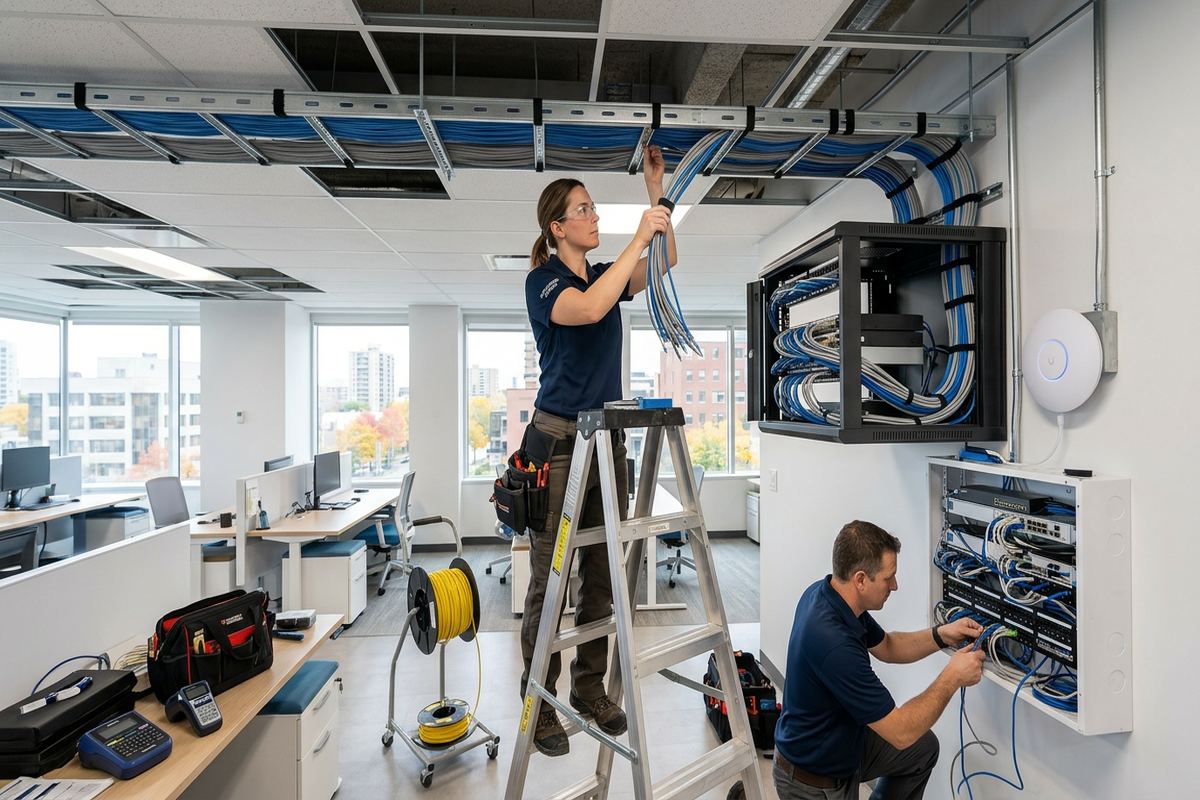
Wired devices are often suitable where existing alarm cable is usable or where new routes can be installed without unnecessary damage. Wireless devices can solve access limitations, but they still require deliberate placement, battery planning and reliable communication with the control panel. Hybrid systems may retain serviceable wiring while adding wireless protection in renovated areas. UnifiedLink tests available pathways and does not assume that an old cable is correctly labelled or electrically sound. Where new wiring is included, cable runs are continuous and labelled to support testing, maintenance and future changes.
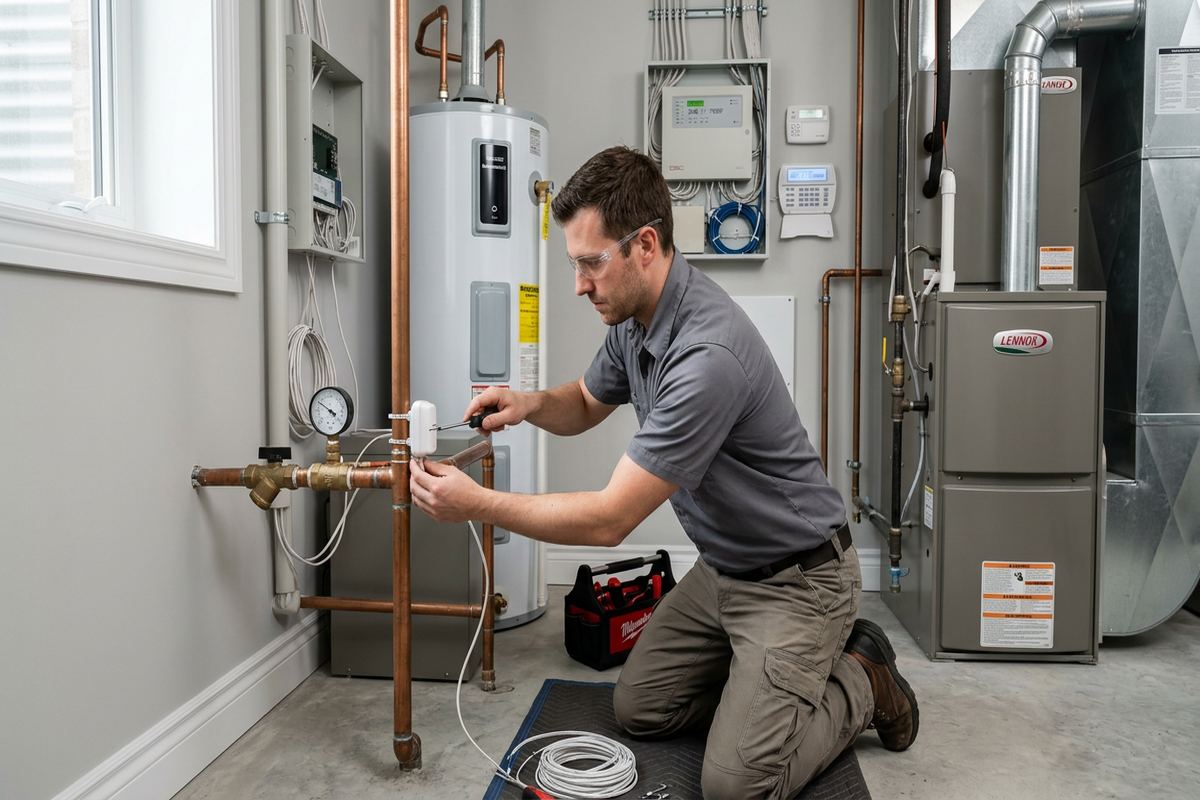
Environmental detection can extend the system beyond intrusion events. Compatible smoke, heat, carbon monoxide, low-temperature and water sensors may be included where the selected platform and installation conditions support them. These devices must be chosen and located according to their intended function; an alarm accessory is not a substitute for required building safety equipment. Aurora winters make low-temperature monitoring relevant for some basements, mechanical rooms and seasonally occupied areas. Water detection may also be useful near sump systems, laundry equipment, water heaters or other identified leak risks.
- Perimeter door and window contacts
- Interior motion or glass-break detection
- Wired, wireless or hybrid configurations
- Keypads and audible notification devices
- Compatible environmental sensing options
Wired and Wireless Choices in Aurora
Construction type strongly influences whether wired, wireless or hybrid equipment is appropriate. Frame construction often provides workable routes through basements, attics and interior partitions, although finished renovations can limit access. Masonry walls, stone details and dense older assemblies may reduce radio performance or make concealed cabling more complex. We examine these conditions before specifying equipment. A convenient wireless location is not useful if communication is unstable, and a wired route is not appropriate when it would require avoidable disruption to heritage trim, finished ceilings or other significant surfaces.
Existing alarm wiring can be valuable, but only after it is traced and tested. Previous renovations sometimes leave splices, abandoned contacts, unlabelled conductors or cables that no longer reach the intended panel location. We verify continuity and inspect accessible terminations before incorporating old wiring into a new Aurora alarm system. Reusable cable may reduce new routing, while defective or inaccessible sections are excluded or replaced as defined in the scope. This approach prevents unknown legacy conditions from becoming hidden weak points in an otherwise current control panel and device installation.
Wireless systems still need physical installation work and ongoing maintenance planning. Contacts must align correctly, motion detectors need stable mounting, and every device must communicate reliably under normal household conditions. Battery-powered devices also require periodic replacement, so locations should remain reasonably accessible. For larger Rural Aurora properties, distance between the main house, detached structures and perimeter entries may exceed the practical limits of a basic wireless layout. In those cases, we assess cable pathways, compatible expansion equipment or separate protection strategies rather than assuming every building can share one radio network.
- Existing cable tracing and testing
- Radio coverage checked on site
- Hybrid expansion where appropriate
- Accessible battery-powered device locations
- Options for detached structures
Aurora, Ontario
Home alarm system installation in Aurora, scoped in writing first
Book a site assessment and get equipment, routes, exclusions, and warranty on paper before anything is installed.
Exterior Devices and Aurora Weather
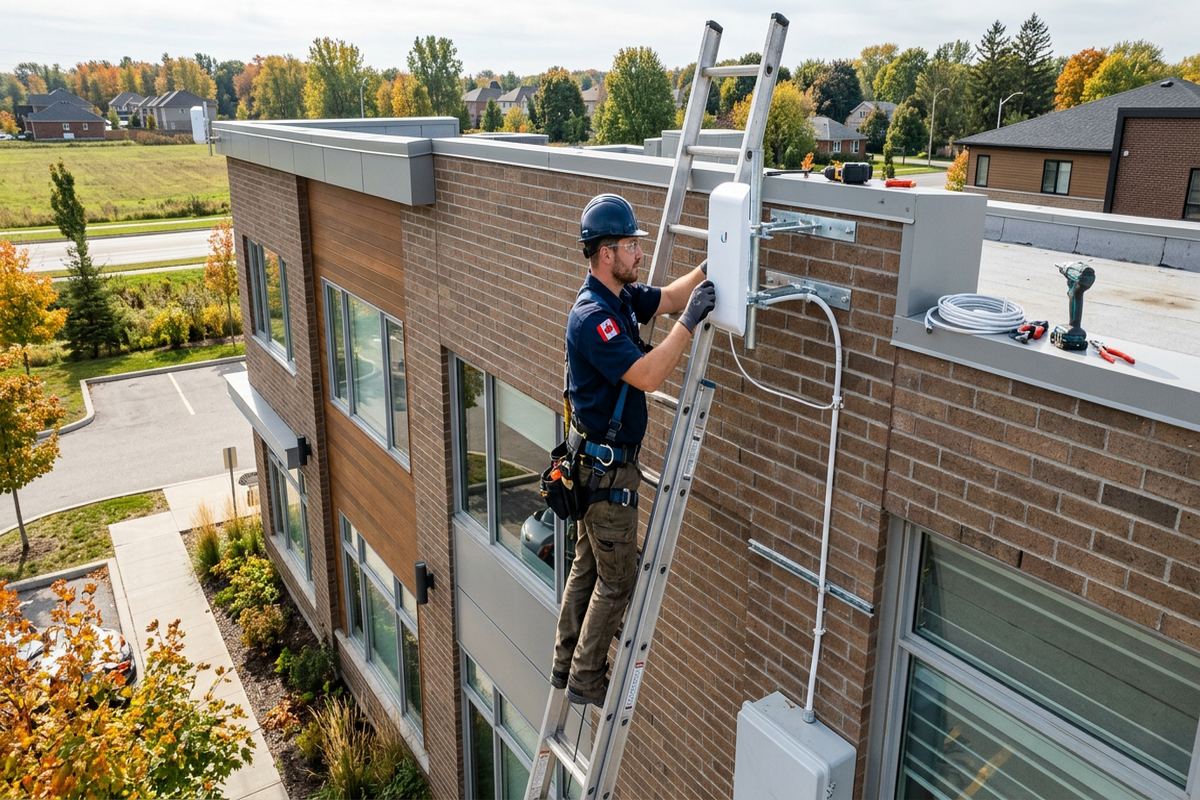
Outdoor alarm components must be selected and installed for their environment. Aurora winters bring cold temperatures, snow, ice and repeated freeze-thaw cycles that can affect exposed housings, joints and cable entry points. Equipment intended only for indoor use should not be placed under an eave and treated as weatherproof. When an exterior siren, contact or other compatible device forms part of the design, we review its environmental rating, mounting surface, exposure, cable protection and service access before confirming the location in the written scope.
Exterior mounting differs between masonry and frame construction. Brick and stone require suitable anchors and carefully positioned penetrations, while siding installations need stable backing that does not crush or distort the finish. Any approved exterior cable entry must be routed to limit water travel and sealed with material appropriate to the surrounding surface. We also consider snow accumulation, roof runoff and areas where ice can strike or cover a device. These details help protect the building envelope and reduce failures caused by movement, moisture or poor mechanical support.
Detached garages, garden suites and estate-property outbuildings introduce additional design questions. A structure may need local detection, an audible device, a communication path and independent arming control. Underground or overhead cable routes must be assessed rather than assumed, and wireless links depend on distance, construction and obstructions. East of town, larger lots can make convenient-looking device locations impractical once actual signal paths are tested. The final design records which structures are included, how they communicate and what limitations or future work remain outside the alarm installation.
- Weather-suitable exterior equipment
- Sealed and protected cable entries
- Mounting suited to masonry or siding
- Freeze-thaw exposure considered
- Detached-building communication review
Installation and Configuration Across Aurora
Installation follows the approved device plan while allowing for conditions discovered after access begins. Technicians confirm mounting points, protect work areas and route cables through agreed pathways. New wired runs are continuous and labelled rather than assembled from avoidable hidden joints. Devices are mounted securely, terminations are checked and the control equipment is located where power, communications, servicing and tamper protection can be addressed. If a concealed obstruction changes a proposed route, the alternative is discussed before work proceeds beyond the agreed scope or affects a finished surface.
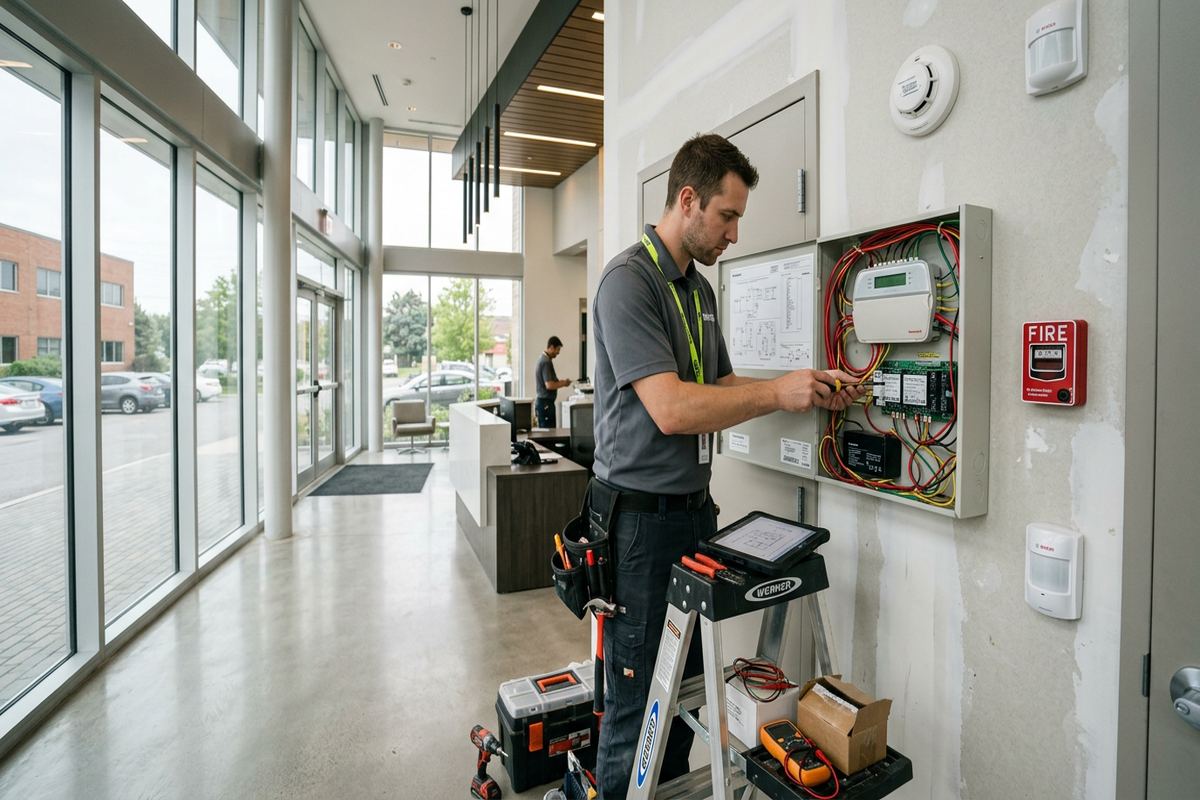
Configuration determines how the physical devices behave. We assign zones with clear names, set entry and exit delays, establish stay and away modes, and create partitions where independently controlled areas are required. Users can be given separate codes when the platform supports them, reducing the need to share one household credential. Siren operation, communication paths and notification settings are tested on site. In Hills of St. Andrew or Aurora Highlands homes with multiple levels and entrances, descriptive zone naming is especially useful when an alert must be understood quickly.
Testing includes more than confirming that the panel powers on. Each included contact and detector is activated from its installed location, and the resulting zone status is checked at the control equipment. Keypads, audible devices, tamper functions and configured communication features are also verified. Doors and windows are tested for reliable alignment through normal operation. Where remote access is included, the homeowner uses their own credentials during setup. Any identified limitation, deferred item or excluded opening is documented so the completed coverage is not misrepresented.
- Protected, agreed cable pathways
- Continuous labelled new cable runs
- Descriptive zone and partition setup
- Individual user codes where supported
- Functional testing from each device
Alarm Handover and Daily Use
A homeowner should leave the project knowing how to operate the alarm without relying on an installer-controlled account. UnifiedLink completes handover using the customer’s own credentials for included applications and services. We demonstrate routine arming, disarming, bypassing, user-code management and alert review on the installed platform. The customer also receives an as-built record showing the completed system arrangement and relevant device information. This documentation is useful when troubleshooting, planning renovations or discussing future additions, particularly in Aurora homes that may change ownership or undergo phased improvements.
Daily routines are reviewed before final programming is accepted. Families may need a stay mode that protects perimeter openings while allowing movement inside, while a home office may require a separate schedule or partition. Pet movement, cleaners, contractors and extended absences can each influence user codes and notification choices. We explain what happens during power, internet or communication interruptions according to the installed equipment. Clear operating expectations help users distinguish a security event from a low battery, open zone, connectivity message or maintenance condition that needs attention.
Ongoing ownership includes keeping contact information current, replacing device batteries where applicable and testing the system at appropriate intervals. Changes to doors, windows, internet equipment or interior layouts can affect devices that previously worked as designed. Homeowners should arrange a review before a renovation covers cable routes or removes protected openings. In Aurora, seasonal movement around exterior doors and gates may also change alignment over time. The as-built record provides a starting point for service, but current site conditions still need to be checked before modifications are made.
- Customer-controlled accounts and credentials
- Practical operating demonstration
- As-built system record
- Maintenance and battery guidance
- Documented limitations and deferred work
Approvals for Aurora Condos and Rentals
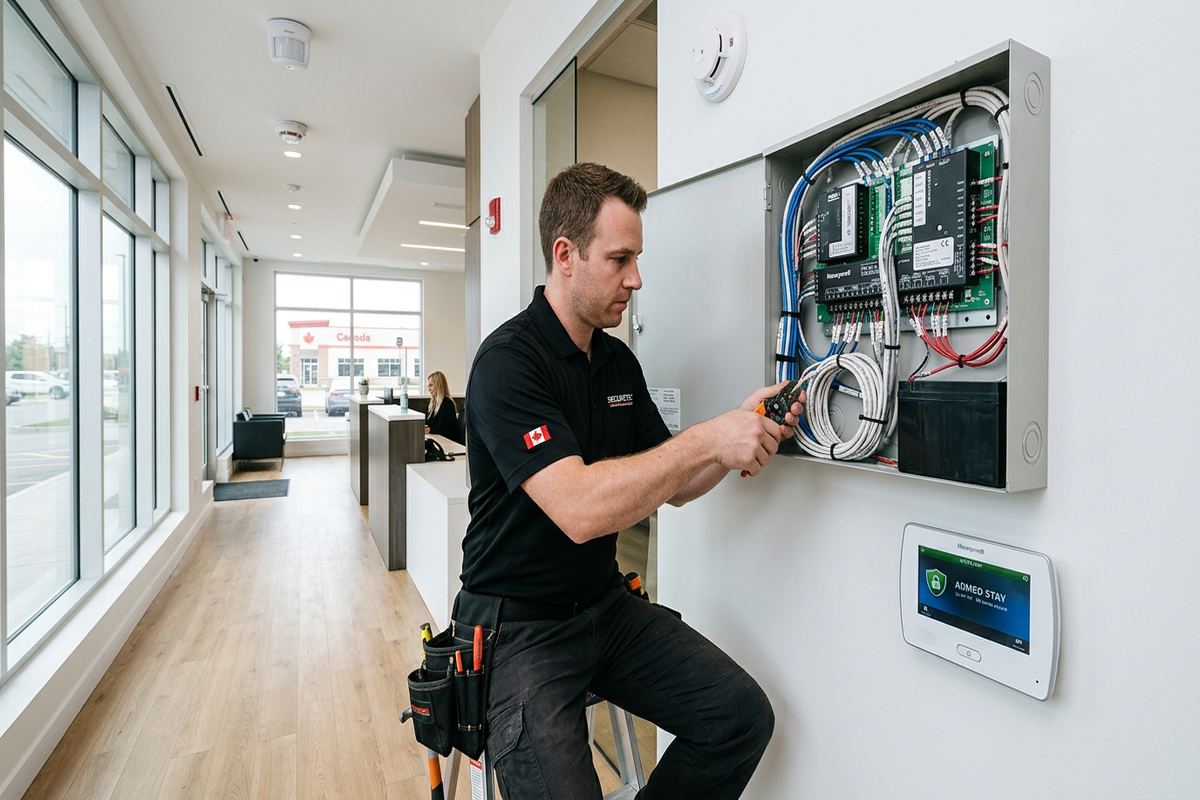
Condominium and rental installations require authority to be confirmed before drilling, cable routing or equipment attachment begins. A condo corporation may regulate work affecting common walls, corridors, exterior doors, windows, communications rooms or shared electrical spaces. Tenants normally need landlord approval for permanent equipment and alterations. UnifiedLink can define the proposed devices and routes for the customer’s approval process, but the property owner or authorized representative remains responsible for securing permissions. Work does not proceed on restricted building elements simply because a device can be mounted there.
A condo alarm design may need to remain entirely within the unit boundary. Entry-door contacts, interior detectors and local control equipment can often be considered without entering common areas, subject to the building’s rules and the specific construction. Concrete ceilings and masonry demising walls may limit concealed routes or wireless communication, so those conditions are assessed on site. If building management requires contractor documentation, work-hour restrictions or elevator arrangements, they should be identified before scheduling. The written scope can then reflect accessible areas, approved methods and exclusions.
Commercial strips and industrial units in Aurora sometimes contain residential, office or mixed-use areas that need alarm protection, but they introduce different access and operating patterns. Shared vestibules, rear service doors, loading areas, suspended ceilings and landlord-controlled utility spaces affect device placement and cable routes. The responsible owner or tenant must clarify which areas are included and who can authorize alterations. We can coordinate one defined alarm scope, while fire alarm, life-safety, locksmith, electrical or building-system work outside that scope remains clearly identified as excluded or separately required.
- Condo corporation requirements reviewed
- Landlord authorization confirmed by customer
- Unit boundaries respected
- Building access restrictions documented
- Mixed-use areas scoped separately
Requesting Aurora Alarm Installation
To begin, provide the Aurora property address, building type, approximate number of entrances and any known existing alarm equipment. It also helps to describe attached or detached garages, accessible basement windows, pets, planned renovations and desired remote access. Photographs can support an initial discussion, but they do not replace a site assessment where construction, routes or radio performance must be verified. Requests sent during business hours are answered the same day, and after-hours requests are answered the next business day. Assessment timing depends on the service and travel distance.
During the assessment, we review priorities and distinguish required coverage from optional additions. The resulting written scope covers equipment, cable routes, device placement, exclusions, equipment ownership and warranty information. Pricing is provided after the relevant site conditions are understood rather than based on an incomplete device count. This process is suitable for a focused Aurora Village installation, a family home in Bayview Wellington or a wider Rural Aurora property with multiple structures. Each design reflects what can be installed, configured and supported within the agreed work.
UnifiedLink acts as one accountable contractor for the defined alarm installation. That includes planning, supplied equipment, included cabling, device mounting, on-site configuration, functional testing and customer handover. If another trade or approval is needed, the dependency is identified rather than folded into an unclear promise. At completion, the customer receives control through their own credentials and an as-built record of the installed system. This provides a practical reference for operation, maintenance and future changes without leaving essential account access under the installer’s identity.
- Same-day reply during business hours
- Next-business-day after-hours reply
- Assessment timing based on service and travel
- Written scope before installation
- One accountable alarm contractor
Aurora neighbourhoods we cover
- Aurora Village
- Bayview Wellington
- Aurora Highlands
- Hills of St. Andrew
- Rural Aurora
Home alarm system installation in Aurora — common questions
Do you assess my Aurora home before pricing?
Yes. UnifiedLink carries out a site assessment before pricing the installation. We review entrances, windows, existing wiring, construction, internet availability and possible device locations. Assessment timing depends on the service and travel distance. Afterward, you receive a written scope covering equipment, cable routes, placement, exclusions, equipment ownership and warranty information.
Can you reuse an older alarm system’s wiring?
Existing alarm cable in an Aurora home may be reusable if it can be traced, accessed and tested successfully. We check continuity and available terminations before including it in the design. Unlabelled, damaged or inaccessible wiring is not assumed to be serviceable. The written scope identifies what will be reused, replaced or excluded.
Should I choose a wired or wireless alarm?
The choice depends on the property. Wired devices can suit accessible basements, attics and existing cable routes, while wireless equipment may reduce disruption in finished or heritage interiors. Masonry, larger floor plans and detached structures can affect radio performance. Many Aurora homes are better served by a hybrid design after site conditions are tested.
Can you install alarms in Aurora condos or rentals?
Yes, subject to the necessary approvals. Condo corporations may control work involving exterior doors, common walls, corridors or shared spaces, and tenants generally need landlord authorization for permanent alterations. We can document proposed equipment and routes, but the customer or authorized property representative must obtain required permissions before restricted work begins.
Will I control the alarm account myself?
Yes. Included applications and services are handed over using the customer’s own credentials rather than an installer-controlled login. We demonstrate normal operation, user codes, arming modes and alert review. You also receive an as-built record describing the completed installation, which supports future service, renovations or system expansion at the Aurora property.
Can an alarm cover a detached garage or outbuilding?
Potentially. Rural Aurora and larger estate properties often require a separate review of distance, power, construction and communication paths. A detached structure may use compatible wiring, wireless expansion or an independent approach. We test relevant conditions and state exactly which buildings and devices are included, along with any limitations or additional work required.
Coverage in Aurora is confirmed against the address before we quote. See everything we install in Aurora or the province-wide home alarm system installation page.