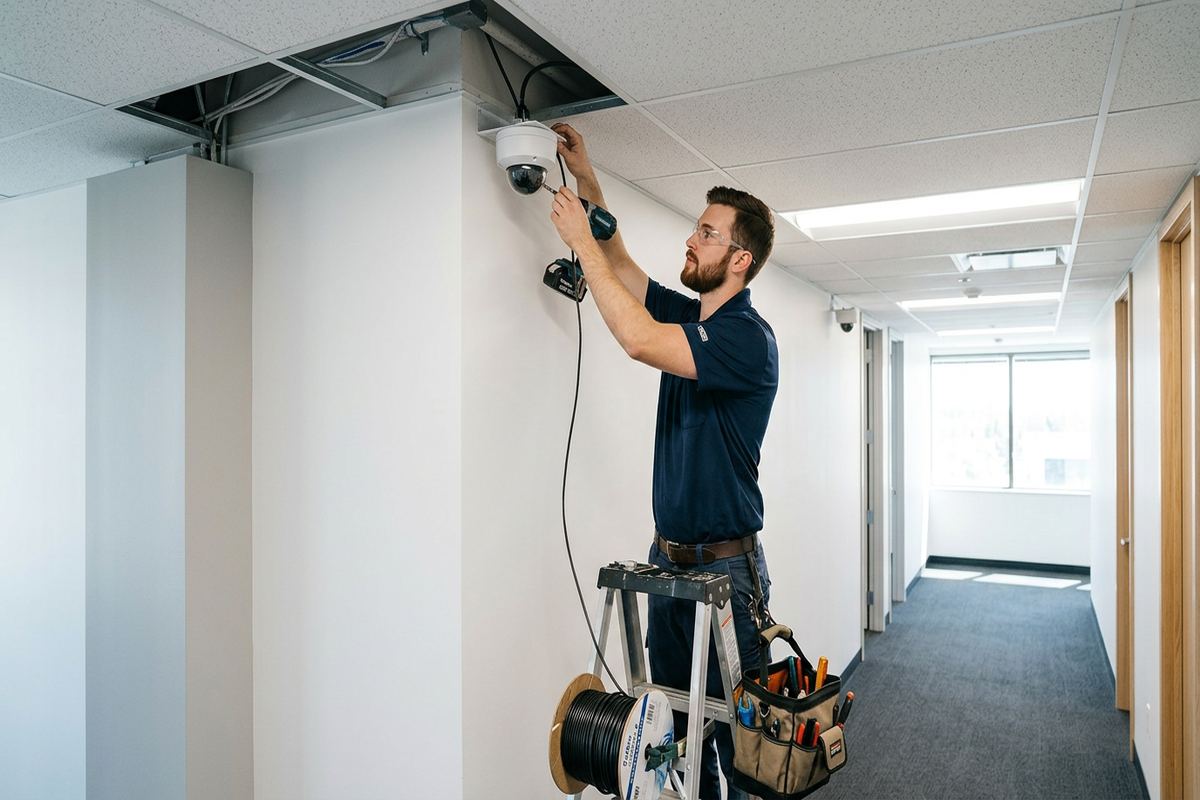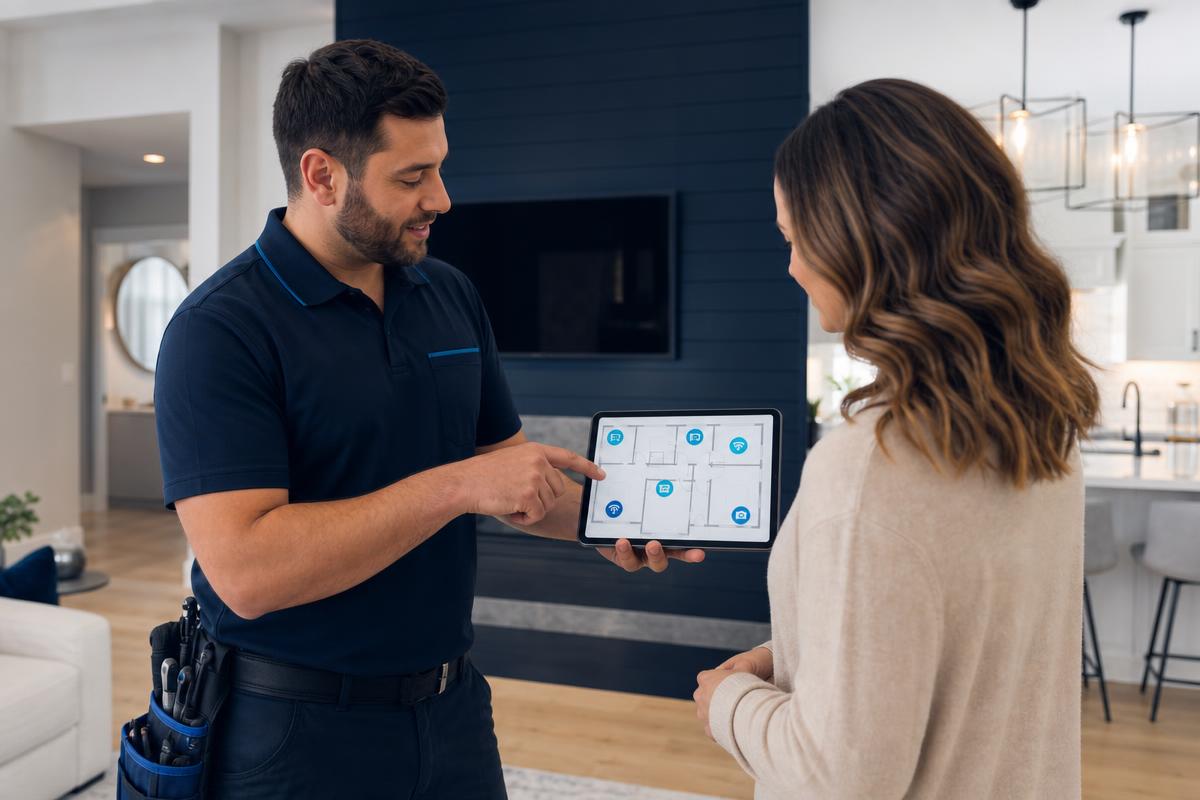
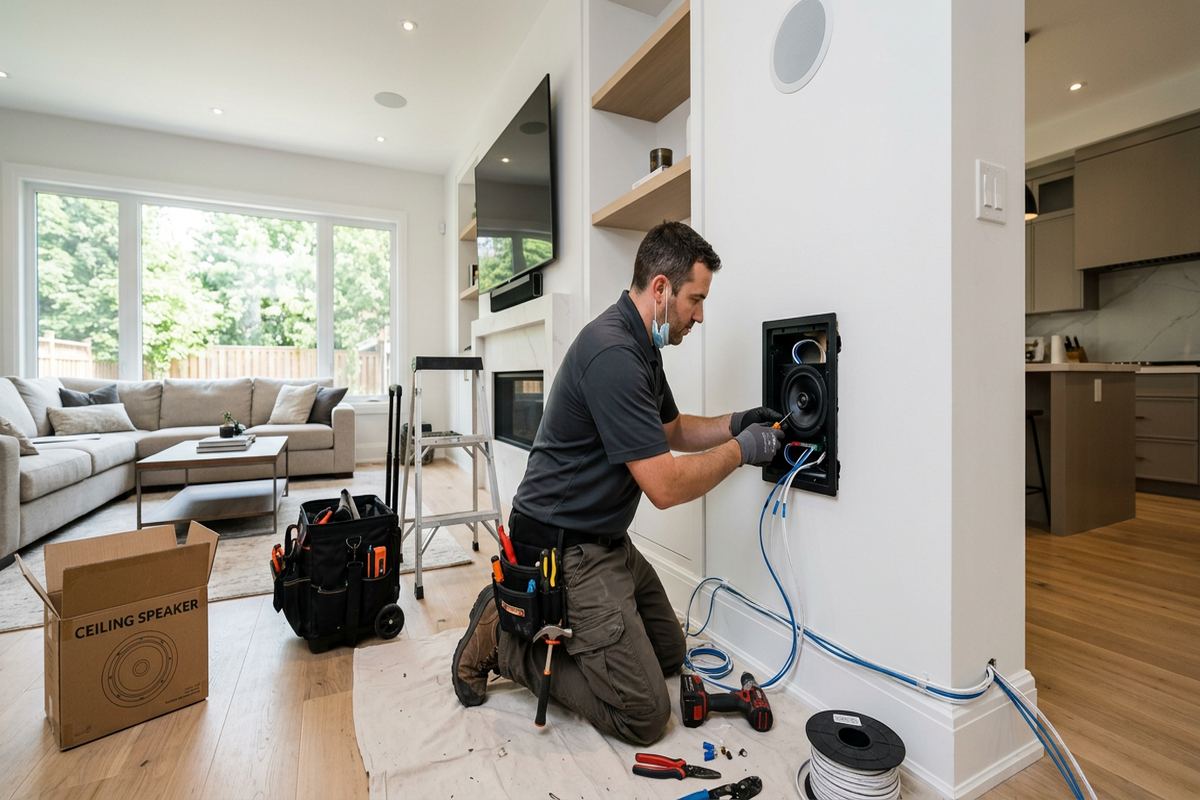
UnifiedLink installs whole-home audio systems for houses, condos and mixed-use properties across Belleville and the Bay of Quinte. We plan speaker locations, cable routes, equipment storage, controls and network requirements around the building. Each project begins with a site assessment and ends with configured zones, customer-owned credentials, labelled cabling and a practical as-built record.
Whole-Home Audio Planning in Belleville
Good whole-home audio begins with room use, not a speaker count. During a Belleville site assessment, we review where people listen, how loudly each area should play and whether rooms need independent sources. Kitchens, living rooms, bedrooms, workshops and patios behave differently because their surfaces, dimensions and background noise vary. We also identify suitable locations for amplifiers, network equipment and source devices. This planning establishes practical zones and helps prevent uneven coverage, intrusive equipment placement or controls that become confusing once the system is in daily use.
Belleville properties do not support one standard installation method. Older downtown buildings may have masonry walls, layered renovations, narrow cavities or limited access between floors. Frame homes in East Hill or West Park Village can offer easier routes, although insulation, plumbing and finished basements still affect cable access. Waterfront homes may require added attention to humidity, exterior penetrations and equipment placement. The assessment documents these conditions before pricing, allowing the written scope to reflect actual routes, mounting surfaces, access work and restoration responsibilities rather than assumptions.
The system design also considers how audio will be controlled. A household may want simple wall-mounted volume controls, app-based selection, television audio integration or separate streams for different rooms. We confirm compatible sources, network dependence and the limits of each control method before equipment is selected. Where several users share the system, straightforward naming and permissions matter. For rental, condominium or mixed-use properties, we identify required landlord, condominium board or property-management approvals before drilling, routing common-area cable or installing exterior speakers. Those approvals remain the customer’s responsibility unless otherwise stated.
- Room-by-room listening and coverage review
- Defined audio zones and control methods
- Amplifier, source and network location planning
- Documented cable routes and mounting surfaces
- Approval requirements identified before work
Speaker Placement for Belleville Homes
Speaker position determines whether a room sounds balanced or patchy. Ceiling speakers are often appropriate for open living areas, but their spacing must account for seating, lighting, joists, ducts and ceiling height. Wall speakers may provide better direction in television rooms or spaces where ceiling access is limited. We plan coverage to reduce obvious loud and quiet areas without placing speakers where doors, cabinets or furnishings will obstruct them. Before cutting finished surfaces, proposed locations are checked with the customer and reviewed against accessible framing, mechanical services and the agreed room layout.
Open-concept spaces need particular care because one physical area may serve several listening purposes. A kitchen can require useful coverage above appliance noise, while an adjoining dining or sitting area needs lower, more even output. Rather than forcing every speaker onto one volume setting, the design can divide these areas into practical zones or use suitable local controls. In smaller Belleville homes, fewer carefully positioned speakers may work better than filling every room. The objective is intelligible, consistent listening at normal levels, not unnecessary equipment or excessive volume throughout the property.
Bedrooms, bathrooms and home offices introduce different constraints. Speakers must avoid shower zones, exhaust fans, dense cabinetry and locations directly above pillows or workstations where concentrated sound can become distracting. Moisture-rated equipment may be required in damp locations, while office audio should not interfere with calls or adjoining rooms. In Downtown Belleville conversions, ceiling assemblies may separate occupancies or form part of a fire-rated construction. We do not cut or penetrate those assemblies without confirming the applicable building requirements, property permissions and an installation method that preserves required barriers.
- Ceiling and wall speaker layouts
- Coverage matched to furniture and room use
- Joist, duct and lighting conflict checks
- Moisture-aware bathroom planning
- Fire-rated assembly considerations
Audio Zones, Sources and Controls
A zone is an area that shares a source and volume setting, and sensible zoning makes the system easier to operate. Common arrangements separate main living spaces, bedrooms, outdoor areas and lower-level recreation rooms. Larger rooms can contain several speakers while remaining one zone; conversely, adjacent rooms may need separate zones when occupants use them differently. We explain how the proposed amplifier handles simultaneous sources, grouping and maximum connected load. The written scope lists each zone, its speakers and intended controls so customers can understand the system before installation begins.
Source planning covers more than choosing a music app. Televisions, streaming devices, turntables, network libraries and commercial background-audio sources have different connection, delay and control requirements. Television sound may need an audio return path, while a turntable can require a suitable phono stage and a location protected from vibration. Streaming depends on account access and reliable networking. UnifiedLink configures approved sources on site using the customer’s own credentials. We do not retain passwords, and ownership of accounts, subscriptions and supplied equipment is identified in the project documentation.
Controls should remain understandable for residents, guests or staff who were not present during installation. We use clear zone names and demonstrate ordinary tasks such as selecting a room, changing volume, grouping areas and shutting down outdoor zones. Physical controls can reduce dependence on phones in frequently used rooms, while apps can provide broader source selection and grouping. If automation or voice control is requested, compatibility and privacy implications are reviewed beforehand. The handover records installed components and key settings, but account recovery information remains under the customer’s control.
- Clearly named rooms and listening zones
- Independent source and volume options
- Television and streaming source integration
- Physical or app-based control choices
- Customer-owned account credentials
Belleville, Ontario
Whole-home audio installation in Belleville, scoped in writing first
Book a site assessment and get equipment, routes, exclusions, and warranty on paper before anything is installed.
Concealed Audio Cabling in Belleville
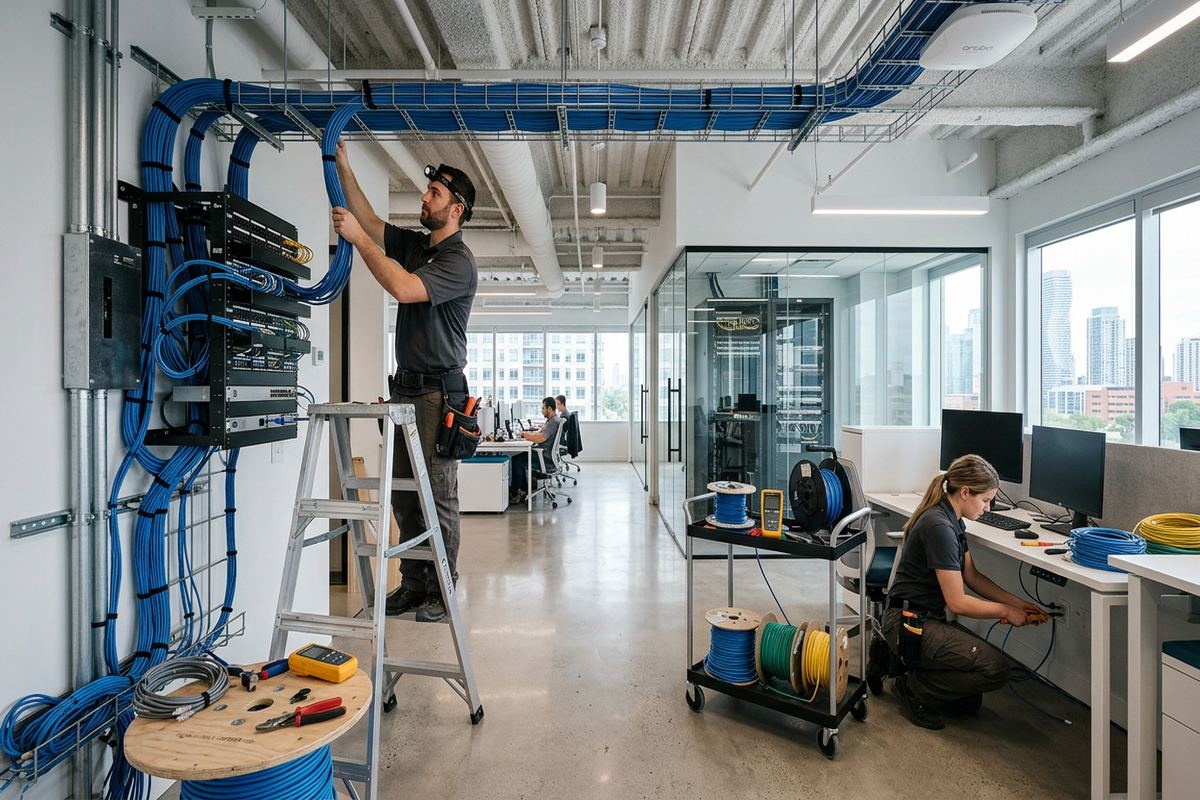
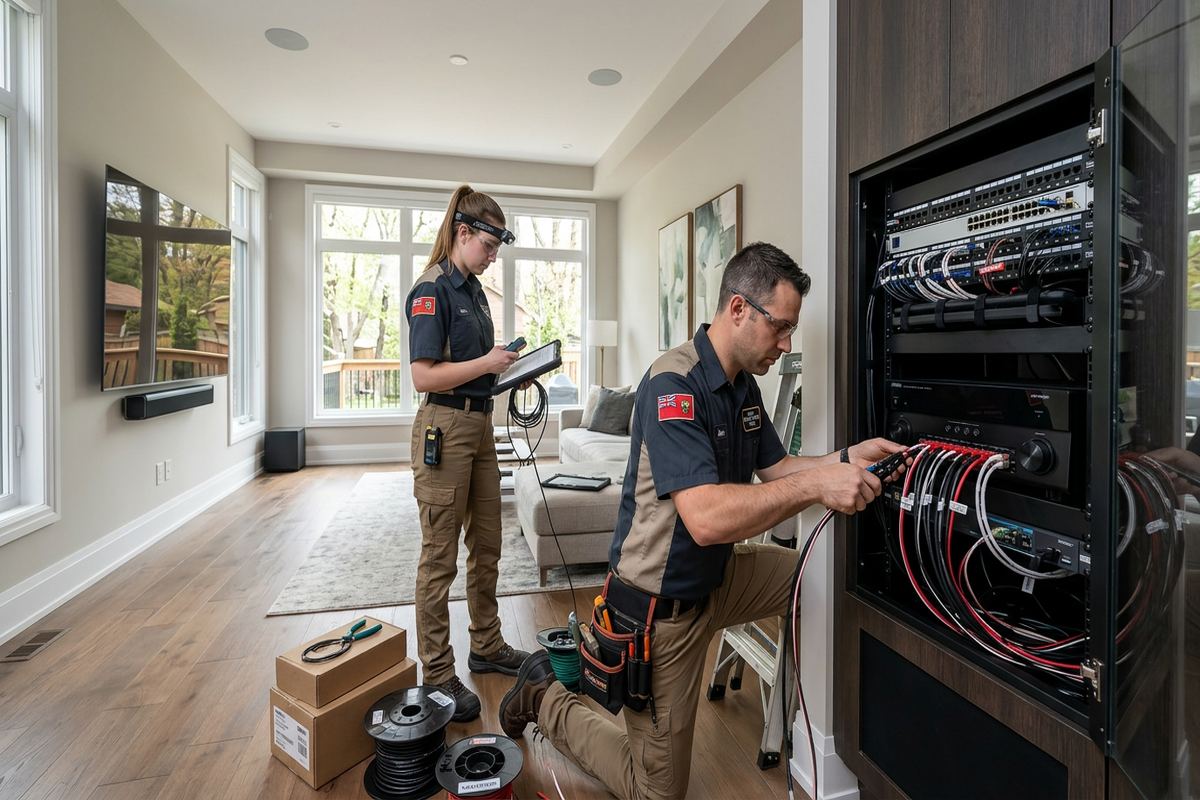
Reliable audio distribution depends on cable routes that suit both the equipment and the building. UnifiedLink installs continuous labelled runs between the equipment location and each speaker or control point, avoiding hidden splices that complicate testing and future service. Cable type and conductor size are selected for the route length, speaker load and installation environment. We keep low-voltage audio wiring appropriately separated from electrical conductors and protect it at framing penetrations. Each end is labelled consistently, then terminated and tested before the connected equipment is configured.
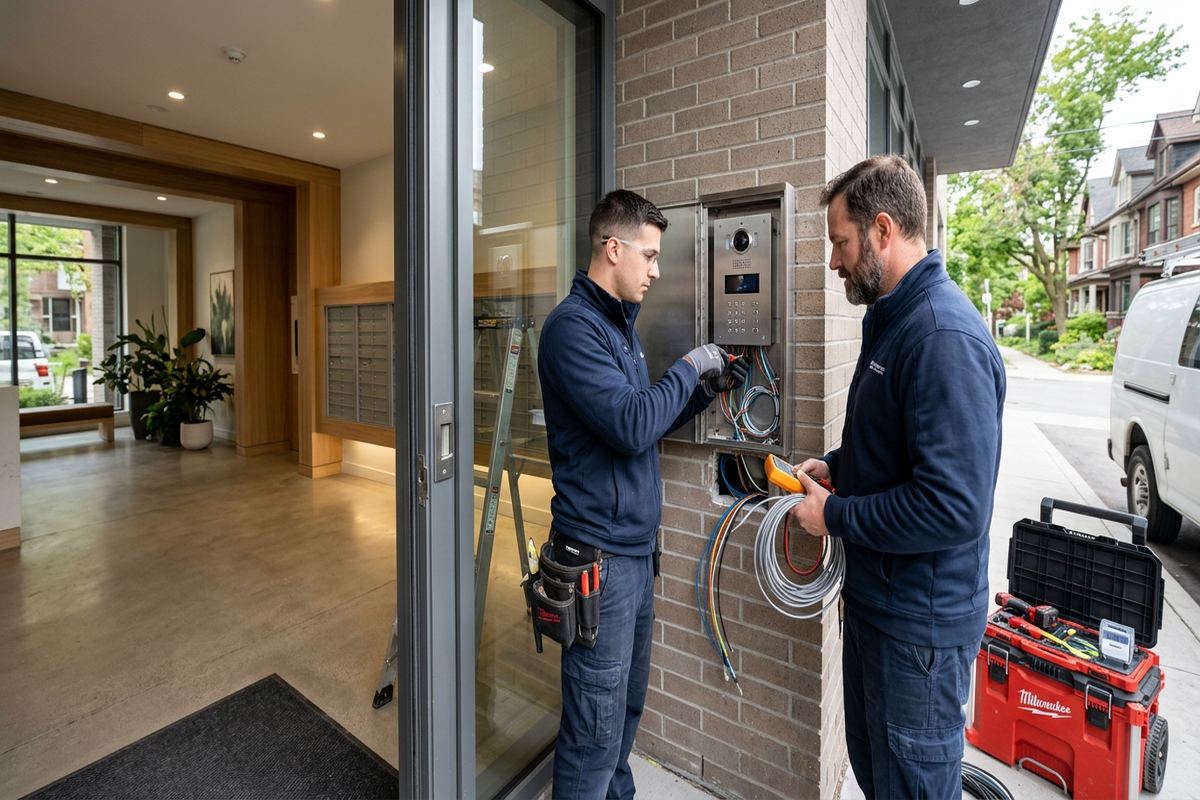
Older Belleville construction can make concealed cabling more involved than plans suggest. Masonry exterior walls may have no usable cavity, plaster can be fixed to lath or masonry, and previous renovations may block vertical routes. Frame construction generally provides more options, but fire blocking, insulation and structural members still limit access. We assess attic, basement, closet and service-chase routes before proposing openings. Where fully concealed wiring is impractical, the scope can identify discreet surface raceway, accessible trim routes or localized openings, along with who is responsible for patching and finishing.
Equipment placement affects cable length, ventilation, noise and future maintenance. Amplifiers and network devices should not be buried behind fixed cabinetry or crowded into an unventilated enclosure. We look for a dry, accessible location with suitable power, network connectivity and space for safe terminations. In waterfront properties around the Bay of Quinte, damp utility areas or locations vulnerable to water entry may be inappropriate. The as-built record identifies cable destinations and equipment locations, giving the owner useful information when rooms are renovated, components are replaced or another contractor needs to inspect the installation.
- Continuous point-to-point speaker cabling
- Labels at both cable ends
- Separation from electrical wiring
- Routes adapted to masonry or framing
- Accessible, ventilated equipment locations
Outdoor Audio for Belleville Conditions
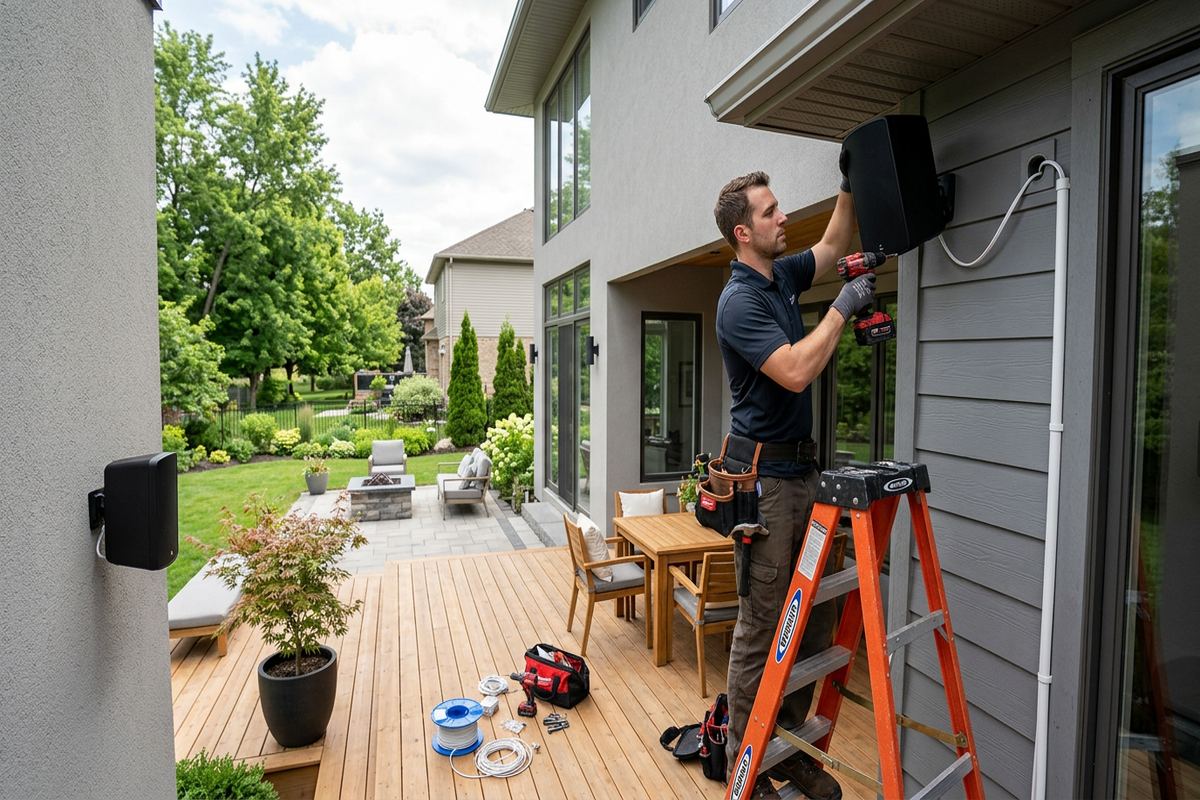
Outdoor listening areas require equipment and installation methods intended for weather exposure. A covered porch, open deck and waterfront yard do not experience the same wind, moisture or sound dispersion. We position speakers to direct useful coverage toward the property rather than neighbouring homes or public areas. Mounting surfaces, eave access and cable entry points are inspected before selection. Outdoor zones are normally controlled separately so they can be turned off without affecting indoor rooms, and volume can be managed for the immediate seating or activity area.
Belleville winters place repeated stress on exposed mounts, seals and cable entries. Freeze-thaw cycles can open poorly prepared penetrations, while wind-driven moisture can reach connectors that appear sheltered. Exterior cable must be suitable for its environment, supported correctly and routed to avoid standing water or physical damage. Penetrations are sealed using methods compatible with the cladding or masonry, with drip management where needed. Fasteners and brackets are selected for the mounting surface and exposure. Indoor-only speakers, connectors and ordinary interior cable are not substituted for products required in exterior locations.
Waterfront homes and properties near Point Anne may also need a conservative approach to equipment exposure and coverage. Amplifiers and source equipment generally belong indoors in a dry, serviceable location, with only appropriately rated speakers and wiring placed outside. Long open areas can tempt owners to use excessive volume when better speaker distribution would provide more controlled coverage. We discuss neighbouring properties, seasonal use and whether audio is needed on a dock, patio or covered structure. Any route crossing detached structures or underground areas requires separate review before it enters the scope.
- Weather-suitable speakers and exterior cable
- Sealed wall and masonry penetrations
- Mounts selected for freeze-thaw exposure
- Separate outdoor zone controls
- Coverage directed toward the listening area
Networks and Streaming Audio
Many modern audio systems depend on the local network for source discovery, control and synchronized playback. Strong internet service alone does not guarantee dependable Wi-Fi in every listening area. Masonry, foil-backed insulation, multiple floors and distant patios can weaken local coverage even when a speed test near the router looks acceptable. During planning, we identify where amplifiers, wireless speakers and control devices will connect. Wired network connections are preferred for fixed equipment when practical because they reduce wireless congestion and provide a stable path for updates and streaming.
Network design becomes especially important when audio shares infrastructure with cameras, televisions, work devices and guest access. We review available switch ports, equipment location and whether the existing router can support the proposed components. This is not permission to alter customer networks without agreement; any network changes are listed in the written scope. Where Wi-Fi improvements are needed, access-point placement should follow the building layout rather than decorative convenience. In larger Thurlow homes or detached work areas, additional cabling or equipment may be required to reach the intended audio zones reliably.
Configuration is completed on site so device names, grouping and source access match the installed rooms. Firmware updates and account sign-ins may be required, but the system is handed over using the customer’s own credentials. We demonstrate what happens if internet access is interrupted, since some local inputs or controls may continue while cloud-based services do not. The customer also receives an as-built record showing relevant wired connections and component locations. Future subscription terms, application changes and third-party service availability remain controlled by their respective providers, not by the installer.
- Wired connections for fixed equipment where practical
- Wi-Fi coverage reviewed at audio locations
- Network capacity and port availability checks
- On-site device naming and grouping
- Customer-controlled streaming accounts
Audio for Belleville Commercial Properties
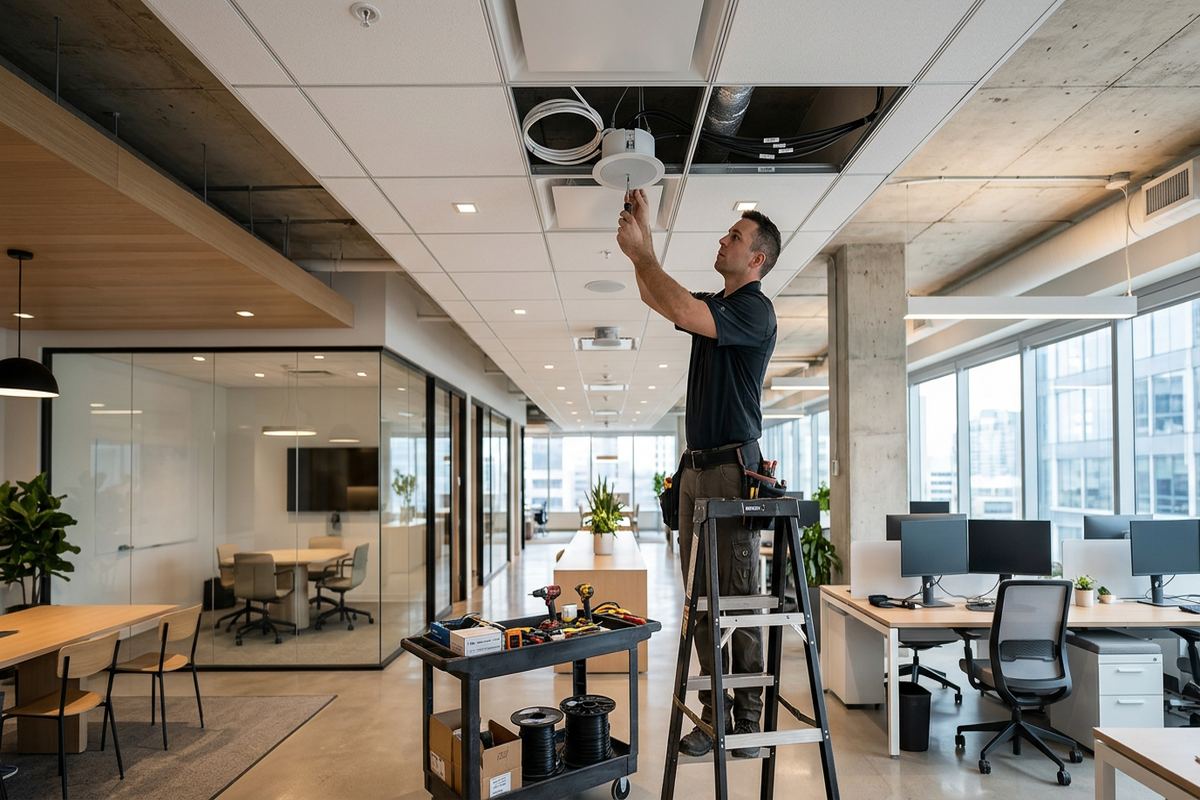
Whole-building audio can also support offices, studios, shops, hospitality spaces and other commercial properties. The design begins with operational needs: background music, paging integration, staff control, public-area volume or different content in separate rooms. Commercial strips in Belleville may combine retail frontage with offices or residences above, making sound transfer and cable routing important considerations. We define who can control each zone and where equipment will be secured. Any requirements involving emergency communications, life-safety systems or regulated announcements must be identified separately and are not assumed to be part of ordinary audio distribution.
Older downtown buildings and industrial units often need different installation strategies. Masonry party walls, exposed ceilings, tenant separations and limited service pathways can affect speaker mounting and wiring. Food-processing plants add operational, cleaning and environmental considerations that ordinary residential products may not meet. Equipment selection and installation areas must be reviewed with the property operator, including restrictions around production zones. UnifiedLink does not treat a plant, waterfront home and finished office as interchangeable spaces; each receives a site-specific scope based on access, environment, intended use and applicable approvals.
For leased premises, the tenant should confirm landlord permission for penetrations, surface raceway, equipment mounting and work in common areas. Condominium businesses may also require board or property-management approval and specified working procedures. The scope records exclusions, equipment ownership and responsibilities for access or restoration. Scheduling must account for occupied spaces and any site rules communicated before work. At handover, authorized staff receive practical instruction on source selection, zone control and normal shutdown, along with an as-built record that can support later changes or lease-end discussions.
- Background audio and separate business zones
- Controls limited to authorized users
- Plans for masonry and exposed ceilings
- Landlord or condominium approval checks
- Operational constraints documented before installation
Belleville Installation Scope and Handover
Every project starts with a site assessment before pricing. We inspect the proposed rooms, cable pathways, mounting surfaces, equipment area, network access and any exterior work. Assessment timing depends on the service and travel distance. Afterward, the written scope covers equipment, cable routes, device placement, exclusions, equipment ownership and warranty. This gives the customer a defined basis for approving the work. Requests sent during business hours are answered the same day; after-hours requests are answered the next business day. Those response terms do not represent a guaranteed installation or site-visit time.
Installation follows the approved scope, with changes discussed when concealed conditions or site restrictions make the original route unsuitable. Speakers and controls are mounted, continuous cables are labelled and terminated, and connected equipment is configured on site. We test each zone for correct channel assignment, basic operation and control response. Where another trade is responsible for power, cabinetry, patching or network service, that dependency remains visible in the documentation. One accountable contractor coordinates the listed low-voltage audio work, reducing uncertainty about responsibility for the installed system and its records.
Handover is part of the installation rather than an optional final step. The customer receives control using their own credentials, a review of normal operation and an as-built record showing the installed arrangement. We explain zone names, sources, volume control and relevant equipment locations. Warranty information and ownership are handled as stated in the written scope. For Belleville homeowners or businesses planning later renovations, the record helps identify cable destinations and components before walls or ceilings are changed. It does not replace investigation where future construction may have altered concealed routes.
- Site assessment completed before pricing
- Written equipment and route scope
- On-site configuration and zone testing
- Handover using customer-owned credentials
- As-built installation record provided
Belleville neighbourhoods we cover
- Downtown Belleville
- East Hill
- West Park Village
- Thurlow
- Bayside
- Point Anne
Whole-home audio installation in Belleville — common questions
Can you install audio in an older Belleville home?
Yes, subject to a site assessment. Older Belleville homes can contain masonry, plaster and lath, blocked wall cavities or alterations that are not visible from the room. We inspect likely basement, attic, closet and service routes before pricing. The scope will identify concealed routes where practical and any surface raceway, access openings, patching responsibilities or exclusions needed for the proposed installation.
Can each room play different audio?
It depends on the selected amplifier, source services and number of planned zones. A Belleville home can be divided so bedrooms, living areas and outdoor spaces have independent source and volume control. Some zones can also be grouped for shared playback. We define these functions before equipment selection because simultaneous streaming, television integration and app control vary between systems and may depend on network access or subscriptions.
Do outdoor speakers stay installed through Belleville winters?
Properly selected outdoor speakers can remain installed, but the entire installation must suit Belleville weather. That includes rated speakers and cable, secure brackets, compatible fasteners, protected connections and carefully sealed penetrations. Freeze-thaw cycles and wind-driven moisture make ordinary indoor wiring methods unsuitable outside. We inspect the mounting surface and route first, then document equipment placement and any seasonal operating considerations in the scope.
Will you connect the system to my television?
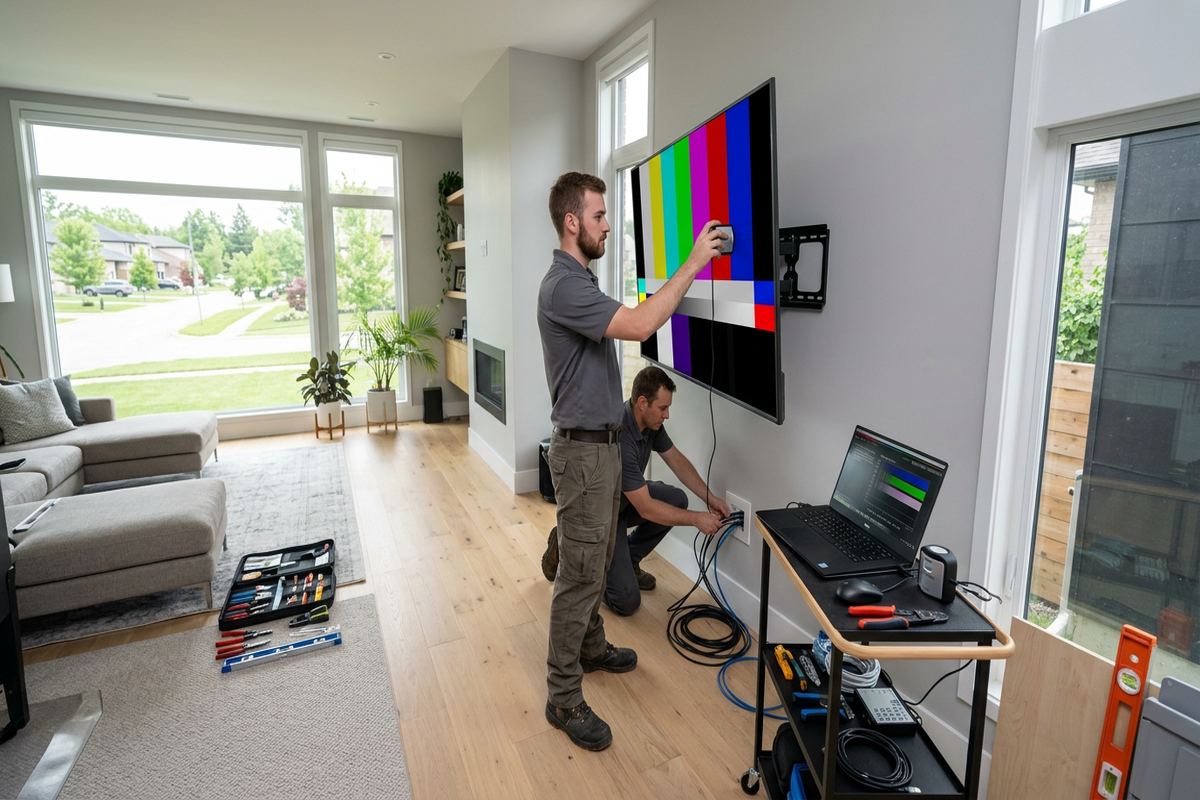
Television integration is possible when the selected audio equipment and television provide compatible connections and control behaviour. During the Belleville assessment, we review the television location, available cable path, desired speakers and whether delay could affect lip synchronization. The written scope identifies required interfaces and exclusions. Television audio can sometimes share whole-home speakers, although a dedicated room arrangement may provide simpler control for daily viewing.
Do I need better Wi-Fi for whole-home audio?
Not always, but streaming audio and app controls require dependable network access where devices operate. Belleville properties with masonry walls, several floors or distant outdoor areas may have weak coverage despite adequate internet service. We assess fixed equipment locations and prefer wired network connections where practical. If access points, switching or new network cabling are needed, those items are documented separately rather than assumed within the audio installation.
Can you work in a condo or rented property?
Yes, once the required permissions are established. Belleville condominium boards, landlords or property managers may restrict drilling, common-area access, work hours, exterior mounting or penetrations through rated assemblies. The customer should obtain written approval before installation unless the scope assigns another arrangement. We can document proposed speaker locations and cable routes to support that process, but property authorization remains separate from technical feasibility.
Coverage in Belleville is confirmed against the address before we quote. See everything we install in Belleville or the province-wide whole-home audio installation page.