UnifiedLink provides TV wall mounting for homes, offices, shops and industrial facilities in Belleville and the Bay of Quinte. We assess the wall, viewing position, equipment and cable route before pricing. Each installation is planned for the building type, whether the site has timber framing, masonry, finished commercial walls or an exterior mounting location.
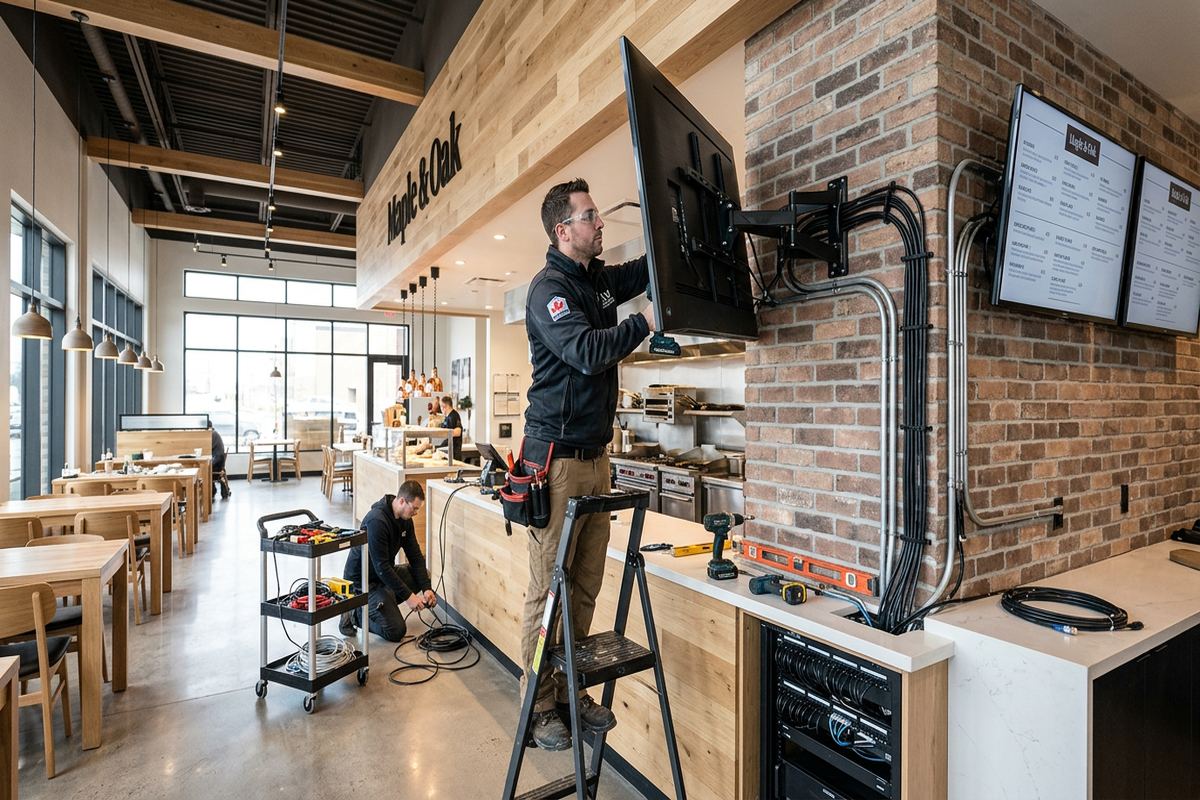
TV Wall Mounting for Belleville Properties
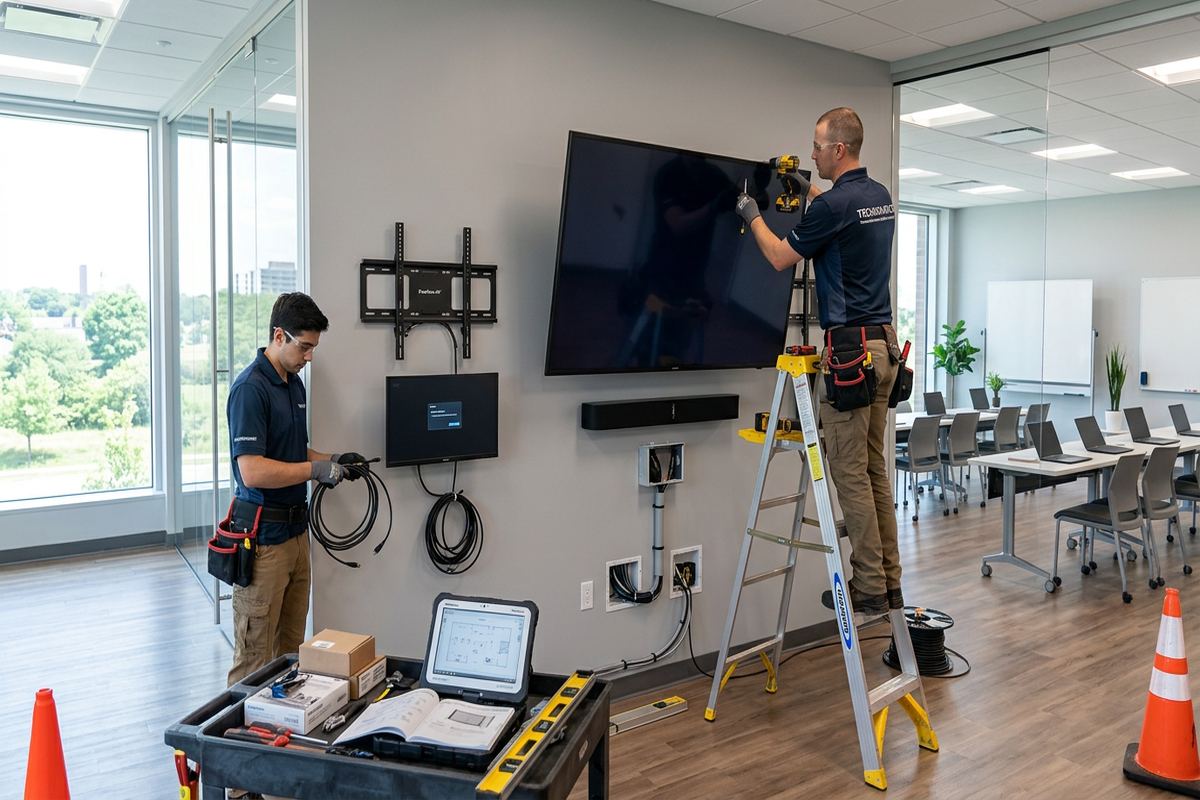
A secure TV installation starts with the wall rather than the screen. Belleville includes older downtown buildings, waterfront homes and food-processing plants, and each setting requires a different plan. We check wall construction, surface condition, stud or masonry locations, screen dimensions, mount specifications and nearby services before drilling. The assessment also considers seating, glare, viewing height and access for future maintenance. This avoids treating every wall as standard drywall when it may conceal plaster, masonry, steel framing, blocking, pipes, electrical wiring or an uneven substrate that changes the required fastening method.
Older properties in Downtown Belleville and East Hill may have plaster, lath, solid masonry, renovated wall assemblies or finishes that should not be disturbed unnecessarily. A stud finder alone does not provide enough information for every building. The proposed mounting area is reviewed for available structure, wall flatness and practical cable access. Where the surface cannot safely support the intended mount, we discuss alternatives such as another wall, added backing or a different display position. Decisions are made before installation so the screen, bracket and wall assembly work together as one supported system.
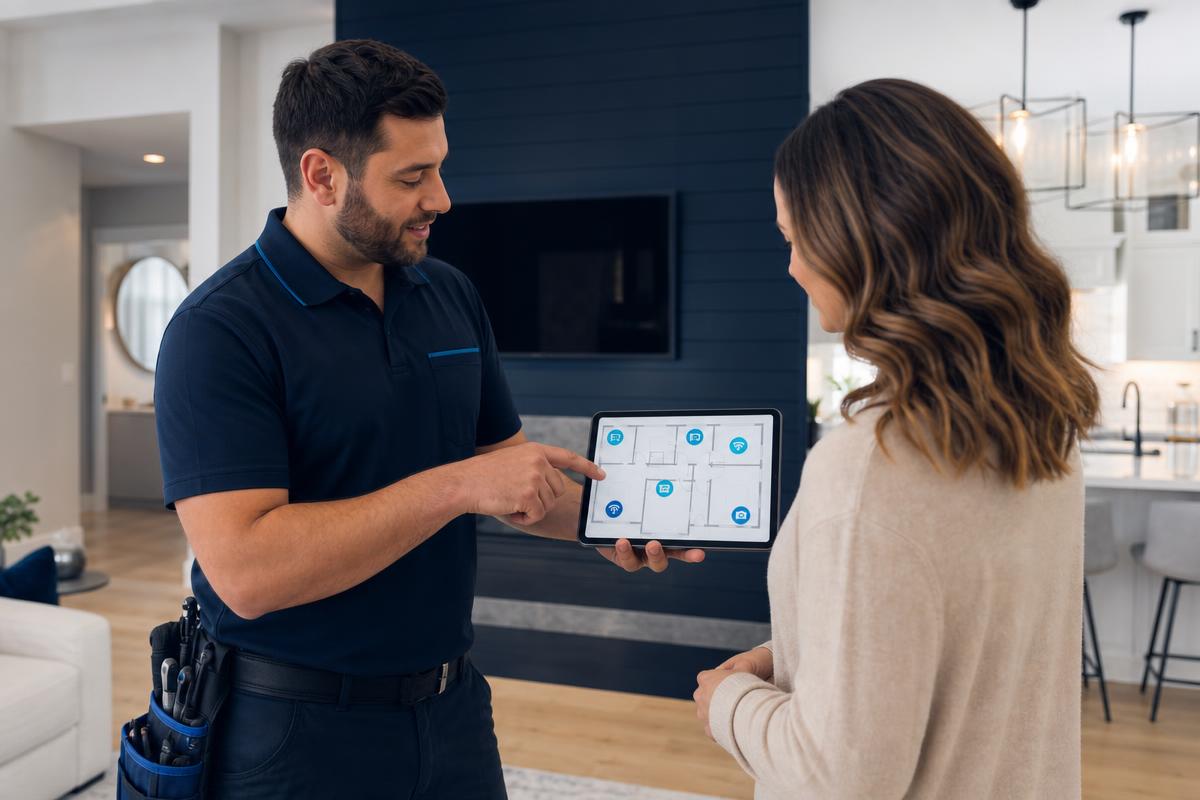
Newer frame construction in West Park Village, Thurlow and surrounding residential areas can still present challenges. Stud spacing, fireplace chases, insulated exterior walls and builder-installed conduits affect bracket placement and cable routing. Waterfront homes may also have large windows, open layouts and changing daylight that influence glare and viewing angles. During assessment, we balance the preferred screen location with structure, power, source equipment and room use. The resulting written scope identifies equipment, cable routes, device placement, exclusions, equipment ownership and warranty, giving the customer a clear installation plan before work proceeds.
- Fixed, tilting and full-motion mount planning
- Stud, masonry and backing assessment
- Viewing-height and glare review
- Written scope before installation
Choosing a Mount and Viewing Position in Belleville
Mount selection depends on how the room is used, not only on television size. A fixed mount keeps the screen close to the wall and suits straightforward viewing positions. A tilting bracket can improve sightlines when a screen must sit higher, while a full-motion arm supports angled viewing or service access. Full-motion hardware also places greater leverage on wall fasteners, making structural assessment especially important. We compare the television’s mounting pattern and weight with the bracket specifications, then review the wall assembly to determine whether the proposed combination can be installed as intended.
Comfortable viewing height varies between a living room, bedroom, boardroom, restaurant or production area. Instead of applying one standard measurement, we consider seating distance, typical eye level, furniture, counters, standing viewers and screen content. In Belleville commercial strips, a customer-facing display may need visibility from an entrance without obstructing circulation or emergency routes. Within an industrial unit, the priority may be readable production information from several work positions. These practical conditions guide the screen centreline, tilt and orientation before final holes are marked, reducing avoidable repositioning after installation.
Fireplace mounting requires additional checks because heat, wall depth and viewing height can affect the result. We review the fireplace type, mantel, clearances, manufacturer information and possible cable route rather than assuming the space above it is appropriate. A high location may require tilt, but tilt does not fully correct an uncomfortable viewing angle. In some Belleville homes, an adjacent wall provides a better arrangement for structure, screen height and equipment access. If fireplace mounting remains practical, the written scope records the selected location, mounting method and any limitations identified during the site assessment.
- Mount compatibility checked against the television
- Viewing position marked before drilling
- Full-motion leverage considered during planning
- Fireplace locations assessed separately
Cable Concealment and Equipment Connections
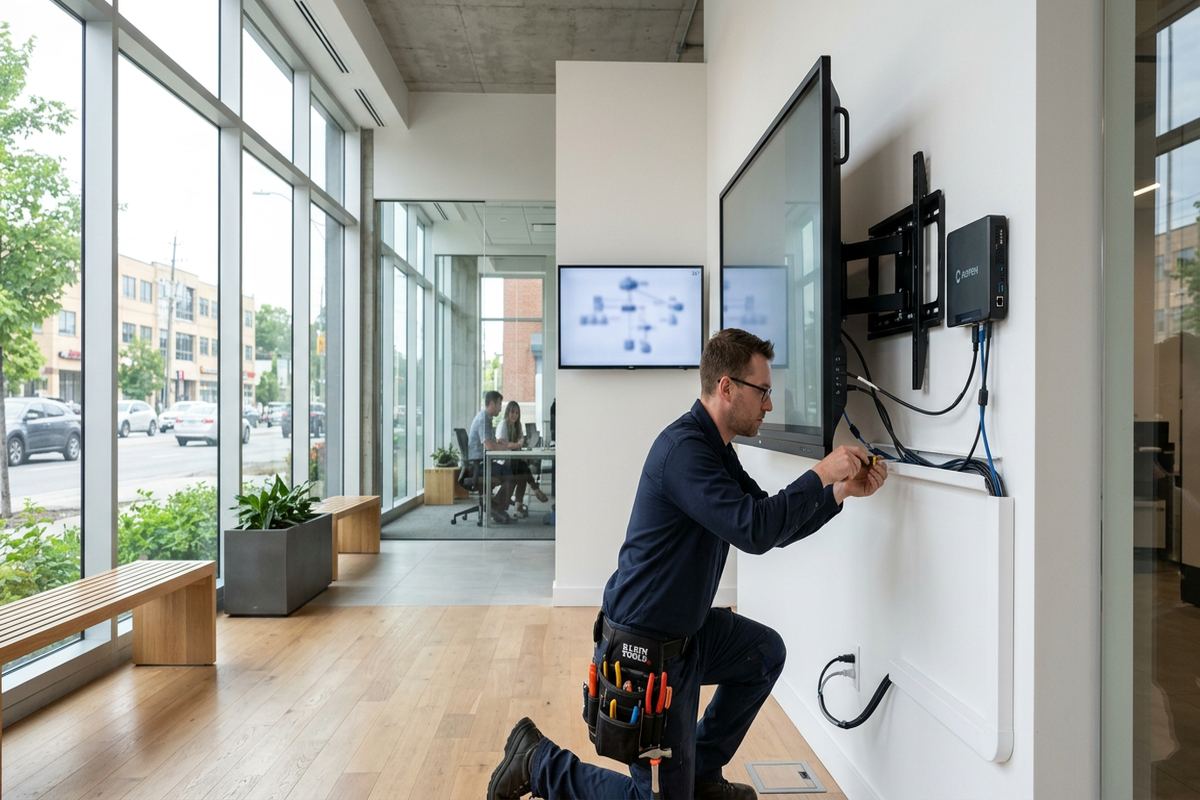
A wall-mounted television looks organized when power and signal connections are planned with the bracket. We identify which devices will connect, where they will sit and whether the display needs HDMI, network, coaxial, audio or control cabling. Cable routes may pass through an accessible wall cavity, surface raceway, cabinet or purpose-built conduit, depending on construction and permissions. Power cords and low-voltage cables are handled according to their intended use; an ordinary flexible power cord is not simply hidden inside a wall. Any required electrical work is separated from the low-voltage installation scope.
Continuous labelled cable runs simplify setup and later troubleshooting. Where new low-voltage cabling is included, we avoid inaccessible joins and route cables with appropriate support and bend management. Service slack is planned so the television can be connected without crushed plugs or strained ports, particularly on slim fixed mounts. Full-motion installations need enough controlled movement for the arm without allowing cables to pinch in its joints. Labels at useful endpoints identify each run, while the as-built record documents routing and connections that may otherwise disappear behind finished walls, cabinets or the mounted screen.
Source equipment also needs ventilation, power, network access and a practical control path. Streaming players, receivers, media boxes and small computers should not be placed where heat accumulates or wireless remotes cannot function. In a Belleville office or shop, the display may connect to a dedicated computer, digital-signage player or network service. We confirm the intended arrangement before selecting cable lengths and mounting accessories. On-site configuration can include input selection, basic picture settings, network connection and source testing, with the system handed over using the customer’s own accounts and credentials rather than installer-controlled access.
- In-wall or surface cable-route options
- Continuous labelled low-voltage runs
- Service slack for screen removal
- Source devices tested on site
Belleville, Ontario
TV wall mounting in Belleville, scoped in writing first
Book a site assessment and get equipment, routes, exclusions, and warranty on paper before anything is installed.
Belleville Masonry, Framing and Older Walls
Masonry and frame walls require different anchors, tools and installation methods. Solid brick or concrete can provide substantial support when sound material and suitable fasteners are available, but mortar joints, hollow units and deteriorated surfaces require careful evaluation. Timber framing typically relies on correctly located studs or installed backing, while light-gauge steel framing may need a different support strategy. In older Belleville buildings, multiple finish layers can make the structural surface difficult to identify. We assess the actual assembly instead of choosing hardware only from the visible paint, drywall, panelling or plaster finish.
Downtown Belleville renovations sometimes combine original masonry with framed service walls added during later alterations. The visible wall may therefore sit several centimetres in front of brick, leaving a cavity that affects anchor loading and bracket stability. Drilling blindly through layers can damage finishes or produce an insecure result. We determine whether fastening into framing, masonry or purpose-installed backing is practical, then select a route that limits unnecessary openings. If exploratory access or repair by another trade is required, that condition is identified as an exclusion or prerequisite within the written scope before mounting begins.
Frame homes can contain obstacles that are less obvious but equally important. Plumbing vents, electrical cables, insulation, vapour barriers and fireplace components may occupy the intended area. Exterior-facing walls deserve particular care because uncontrolled openings can compromise air sealing or moisture management. In East Hill, Thurlow or Bayside, additions and remodelled rooms may not match the construction of the original building. The site assessment considers these variations, and cable routes are selected to preserve building assemblies wherever possible. Where access is limited, a neat surface raceway may be more appropriate than extensive cutting and repair.
- Fasteners matched to confirmed structure
- Plaster and masonry assessed before drilling
- Hidden wall layers considered
- Surface raceway available where appropriate
Exterior TV Mounting Around Belleville
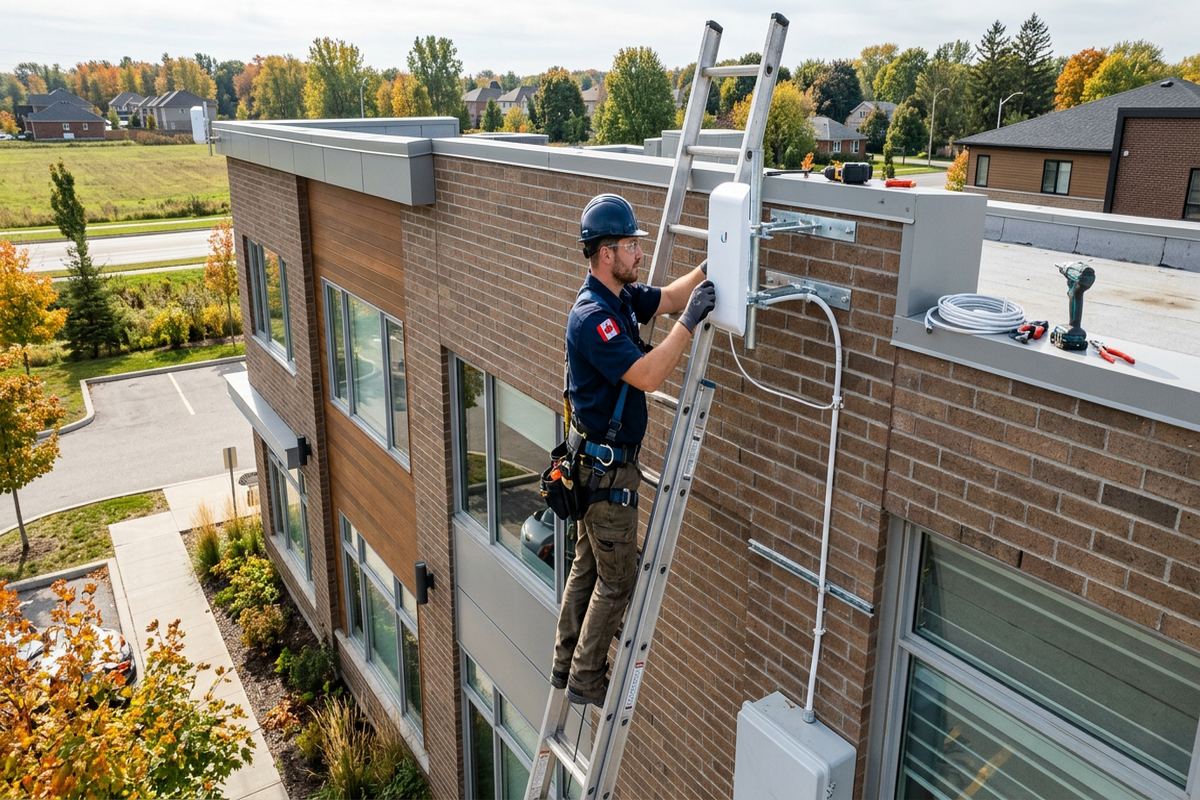
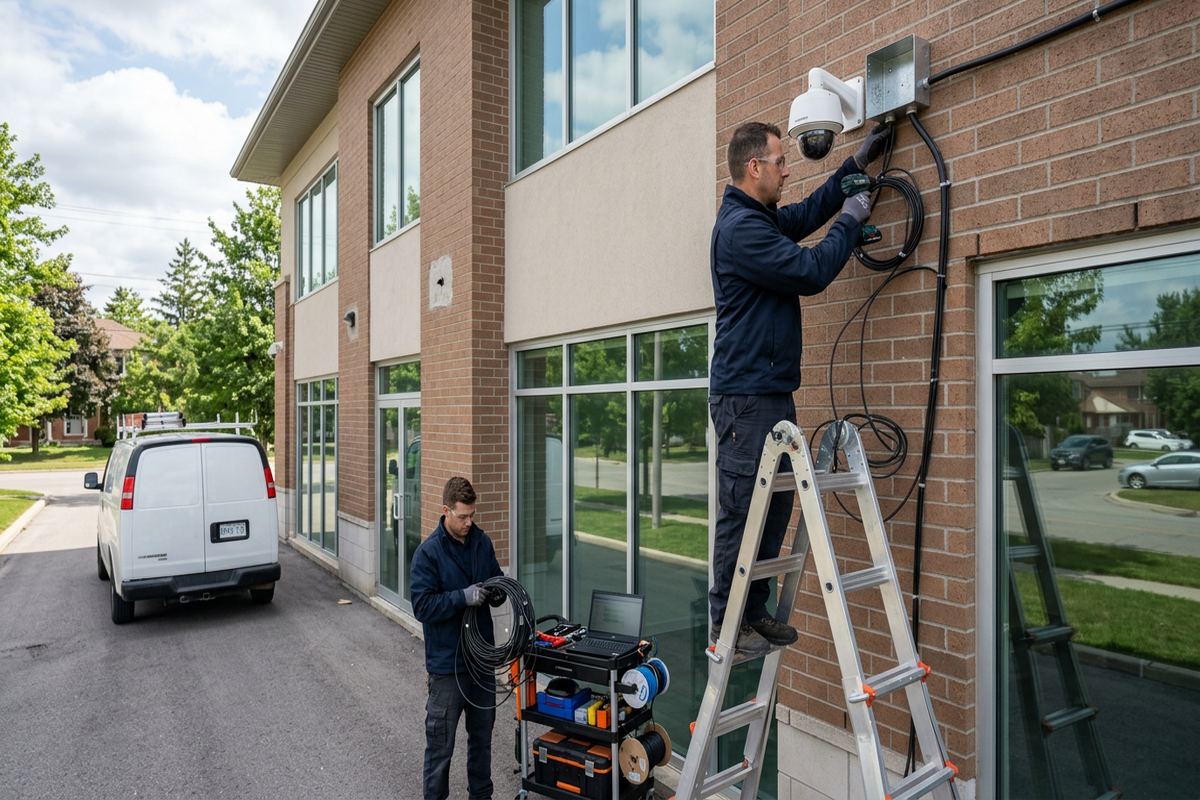
Outdoor television mounting around the Bay of Quinte needs planning for moisture, wind, temperature changes and seasonal use. An indoor television is not automatically suitable for an exposed wall, even beneath a roof overhang. We review the display and mount manufacturer’s intended environment, the degree of shelter, viewing direction and access to power and signals. Exterior installations also require attention to wind loading and bracket movement. If the equipment or location is not suitable, we explain the limitation rather than mounting a screen where weather exposure could create unreliable operation or premature equipment damage.
Belleville winters and repeated freeze-thaw cycles make exterior penetrations and sealing important. Water entering around a fastener or cable can expand when frozen, damage masonry or travel into the wall assembly. We plan penetrations to shed water, use materials suited to the substrate and exposure, and avoid relying on interior-only products outdoors. Cable entry points require appropriate routing and sealing without trapping water. The condition of brick, siding, concrete and trim is checked first because cracked masonry, loose cladding or deteriorated joints may need repair before a bracket can be securely installed.
Waterfront homes and exposed properties near Point Anne may have fewer wind breaks than sheltered residential lots. Screen placement should account for prevailing exposure, reflections from the water and low seasonal sun, as well as the ability to remove or protect equipment when necessary. A covered porch can reduce direct precipitation but does not eliminate humidity, cold or wind-driven moisture. The written scope identifies exterior-rated components, proposed penetrations, cable routes and exclusions. Equipment ownership and warranty details are also recorded, since manufacturer coverage may depend on correct environmental use and approved mounting arrangements.
- Exposure and equipment suitability reviewed
- Exterior penetrations sealed appropriately
- Freeze-thaw effects considered
- Wind and glare included in placement
Commercial TV Installation in Belleville
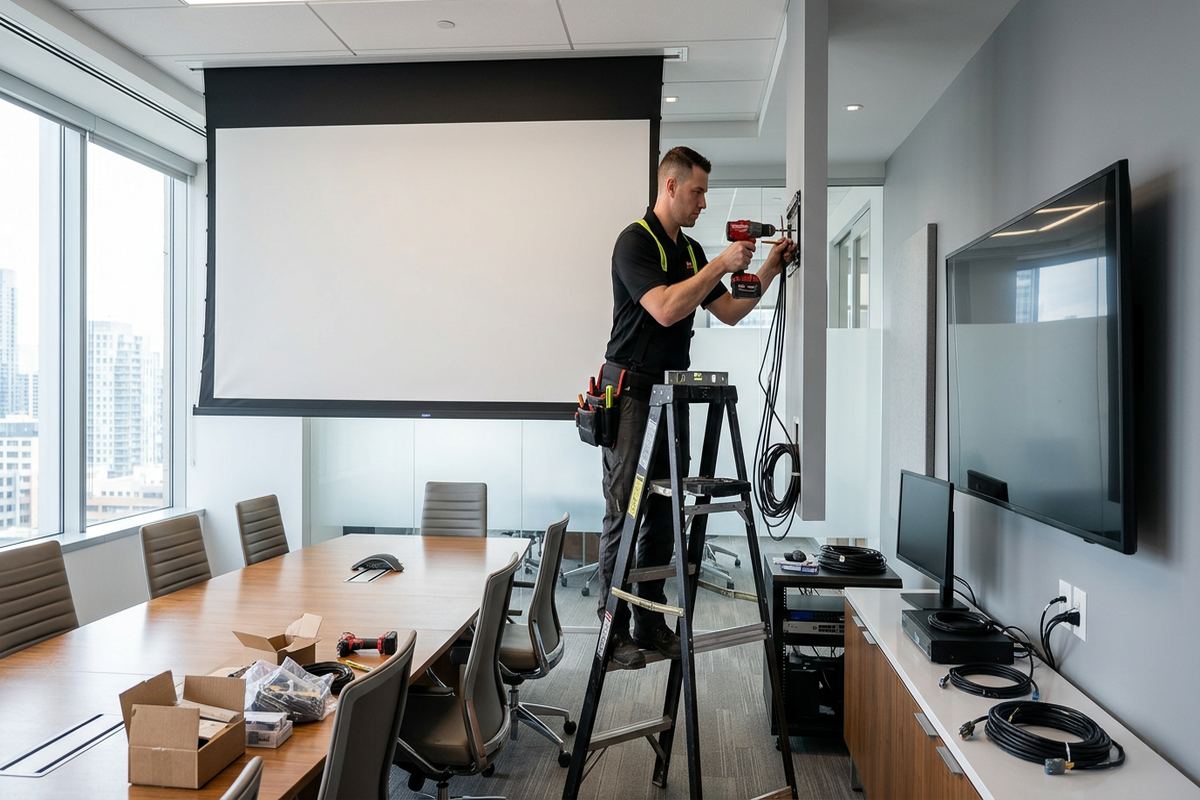
Commercial displays often serve a defined operational purpose, such as menus, customer information, presentations, schedules, monitoring or staff communications. We begin by confirming the content source, viewing area, operating routine and responsibility for updates. A restaurant may prioritize clear menu visibility, while a boardroom needs reliable input switching and camera sightlines. Retail units along Belleville commercial strips may have limited wall depth or landlord-controlled finishes. These requirements affect bracket type, screen position, cable concealment and service access, so they are documented before equipment is ordered or installation work starts.
Food-processing plants and industrial units require a different plan from homes or offices. The mounting location may be affected by washdown zones, dust, vibration, cleaning procedures, temperature, equipment movement or controlled access. We review the proposed environment and whether the display, enclosure, bracket and cabling are appropriate for it. Installation scheduling may also need coordination with production, safety rules and designated site contacts. UnifiedLink remains one accountable low-voltage contractor for the defined work, while any required structural, electrical, fabrication or building repairs are identified for coordination rather than included without clear responsibility.
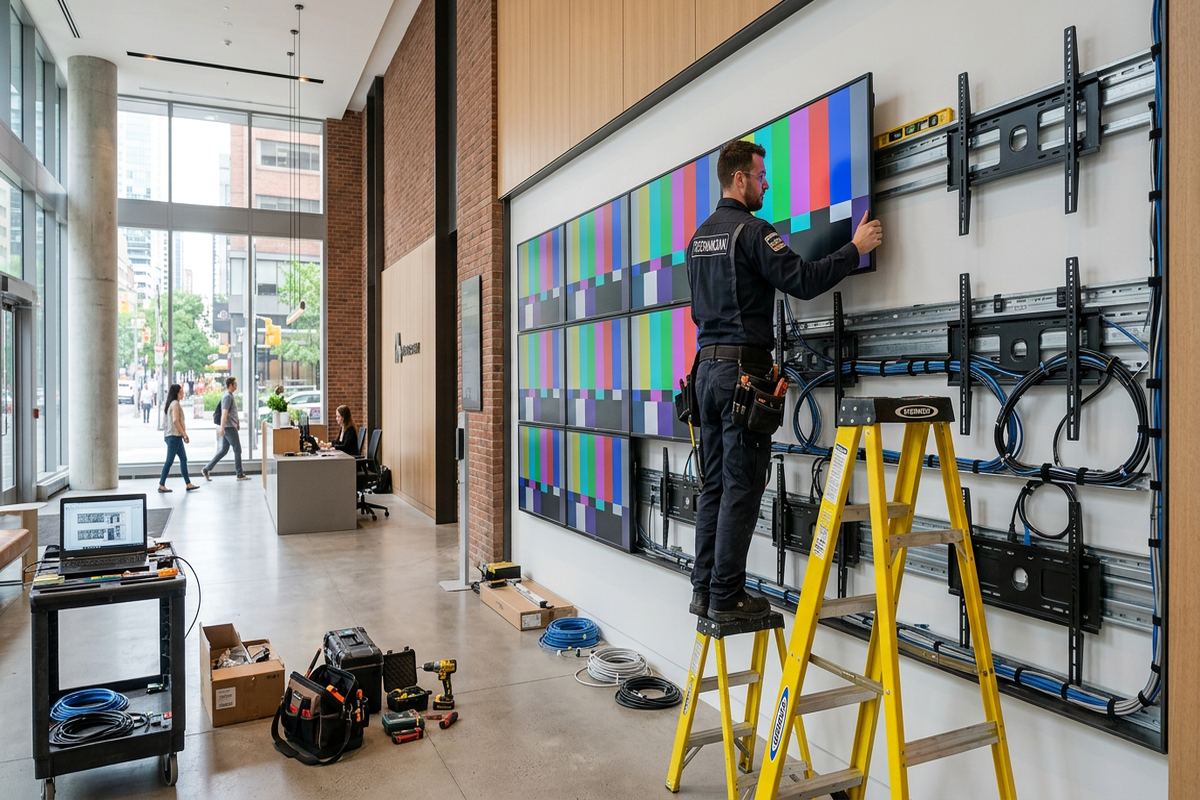
Multi-display installations need consistent alignment and a serviceable connection plan. Small differences in bracket position become noticeable when screens are arranged side by side, so wall flatness, display dimensions and bezel spacing are checked before drilling. For digital signage, each player needs dependable power, network access and a documented connection to its assigned screen. On-site configuration verifies that displays start correctly, receive the intended source and can be operated by authorized staff. Handover uses the customer’s own credentials and includes an as-built record showing device placement, cable routes, labels and relevant configuration notes.
- Menu and information display mounting
- Boardroom screen and source setup
- Industrial location assessment
- Multi-screen alignment and documentation
Approvals, Scope and Installation Planning
Permission should be confirmed before any holes are made in a rented, managed or shared property. Belleville tenants may need written landlord approval, while condo owners may have rules covering common elements, exterior walls, sound transmission or working hours. Commercial occupants can face lease conditions for penetrations, signage and restoration. We ask who controls the wall and whether approvals are already in place. The property owner or authorized customer remains responsible for obtaining permission, but the proposed mounting method and cable route can be documented clearly to support that process.
Every project is assessed before pricing because screen size alone does not define the work. Mount type, wall construction, access, cable length, equipment location, finish protection and configuration requirements all affect the scope. After reviewing the site, we provide a written description covering equipment, cable routes, device placement, exclusions, equipment ownership and warranty. This makes clear whether the customer is supplying the television or bracket, whether cable concealment is included, and what preparation must be completed by others. Changes discovered or requested later can then be reviewed against an agreed starting point.
Installation preparation reduces disruption and protects equipment. Customers should keep the television packaged or safely supported until mounting, confirm that required accounts are accessible and identify any devices that must remain connected. In an occupied Belleville business, the work area may need to be isolated from customers or coordinated around operations. In a home, furniture and fragile items should be moved from the immediate area. We confirm practical access, parking or loading considerations when relevant, while site assessment timing depends on the service requested and travel distance within the Bay of Quinte area.
- Landlord or condo approval considered
- Site assessment completed before pricing
- Ownership and exclusions documented
- Work coordinated with occupied spaces
TV Setup and Handover in Belleville
Mounting is not complete until the screen is level, connections are tested and the customer can operate the intended sources. During on-site configuration, we verify bracket movement, cable clearance, inputs, connected devices and basic network functions included in the scope. For full-motion mounts, the screen is moved through its expected range to check for wall contact, connector strain or cable pinching. Fixed and tilting mounts are checked for secure engagement with their locking system. Packaging, unused accessories and customer-owned parts are handled according to the agreed site arrangements.
Handover keeps system control with the customer. Streaming services, display management tools and network connections are configured using the customer’s own credentials, and passwords are not replaced with installer-owned accounts. We explain normal operation, source selection and any mount movement or access procedure relevant to the installation. The as-built record identifies the display, connected equipment, labelled cable runs and known routes. For a Belleville business with multiple screens, documentation can distinguish each display and player so staff or future service providers can locate the correct connection without tracing every cable again.
Support requests are easier to assess when the installation has a clear scope and record. If a screen later loses signal, the cause may be a source device, cable, network service, input selection or the television itself rather than the wall bracket. Labels and configuration notes provide a logical starting point. Requests sent during business hours are answered the same day, while after-hours requests are answered the next business day. Site assessment timing depends on the required service and travel distance. Any follow-up work is reviewed before changes are made to the original Belleville installation.
- Bracket movement and locking checked
- Inputs and connected sources tested
- Customer-controlled credentials used
- As-built record provided at handover
Belleville neighbourhoods we cover
- Downtown Belleville
- East Hill
- West Park Village
- Thurlow
- Bayside
- Point Anne
TV wall mounting in Belleville — common questions
Can you mount a TV on plaster or brick in Belleville?
Yes, when the underlying wall assembly and its condition support the proposed installation. Belleville properties may have plaster over lath, solid masonry, framed service walls or several renovated layers. We assess the wall before pricing, identify a suitable fastening method and explain if backing, repairs or another mounting position is required.
Can cables be hidden inside the wall?
Often, but the available route depends on framing, insulation, masonry, fire stops and other concealed services. In older Belleville buildings, a surface raceway may be less disruptive than opening plaster or drilling through uncertain wall layers. Power and low-voltage cabling are treated separately, and ordinary flexible power cords are not simply concealed inside walls.
Do I need landlord or condo approval?
You may need written approval if you rent, occupy a condo or plan to use an exterior or shared wall. Belleville property managers and landlords can set conditions for penetrations, working hours and restoration. The owner or authorized customer obtains permission, while our written mounting and cable-route scope can help document the proposed work.
Can you mount a television above a fireplace?
Possibly, after checking the fireplace type, heat exposure, mantel, wall construction, viewing height and cable path. Some Belleville homes have fireplace chases that limit secure fastening or concealment options. We may recommend tilt, an adjacent wall or another arrangement if the proposed position would be too high, too warm or difficult to service.
Do you install outdoor televisions near the waterfront?
Exterior mounting is assessed for equipment suitability, shelter, wind, glare, moisture and freeze-thaw exposure. Waterfront locations around Belleville and Point Anne can require additional attention to weather exposure and sealing. We document exterior-rated components and penetrations, but will not treat an indoor television or interior-only mount as suitable for an exposed location.
What information do you need before pricing?
We need the television model and size, preferred wall, mount type, connected devices, desired cable concealment and property details. A site assessment confirms wall construction, access and routing conditions before pricing. You then receive a written scope covering equipment, placement, cable routes, exclusions, ownership and warranty rather than a price based only on screen size.
Coverage in Belleville is confirmed against the address before we quote. See everything we install in Belleville or the province-wide tv wall mounting page.