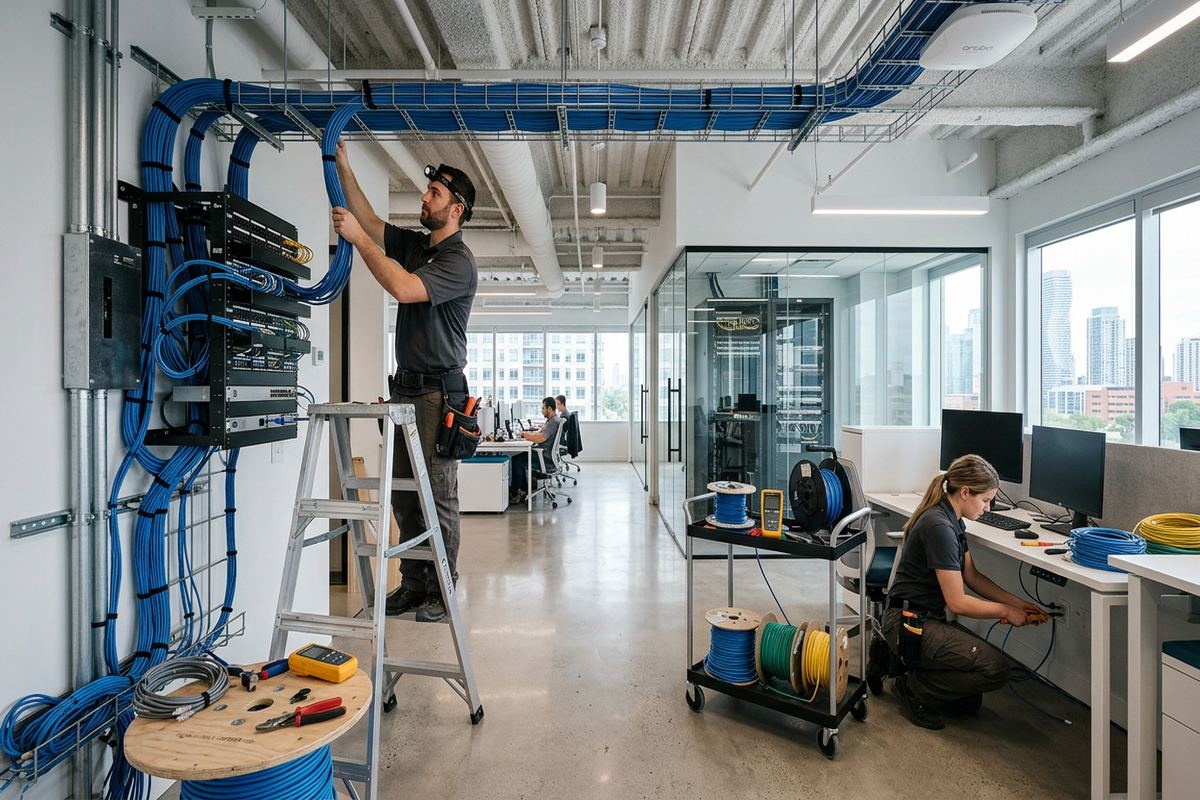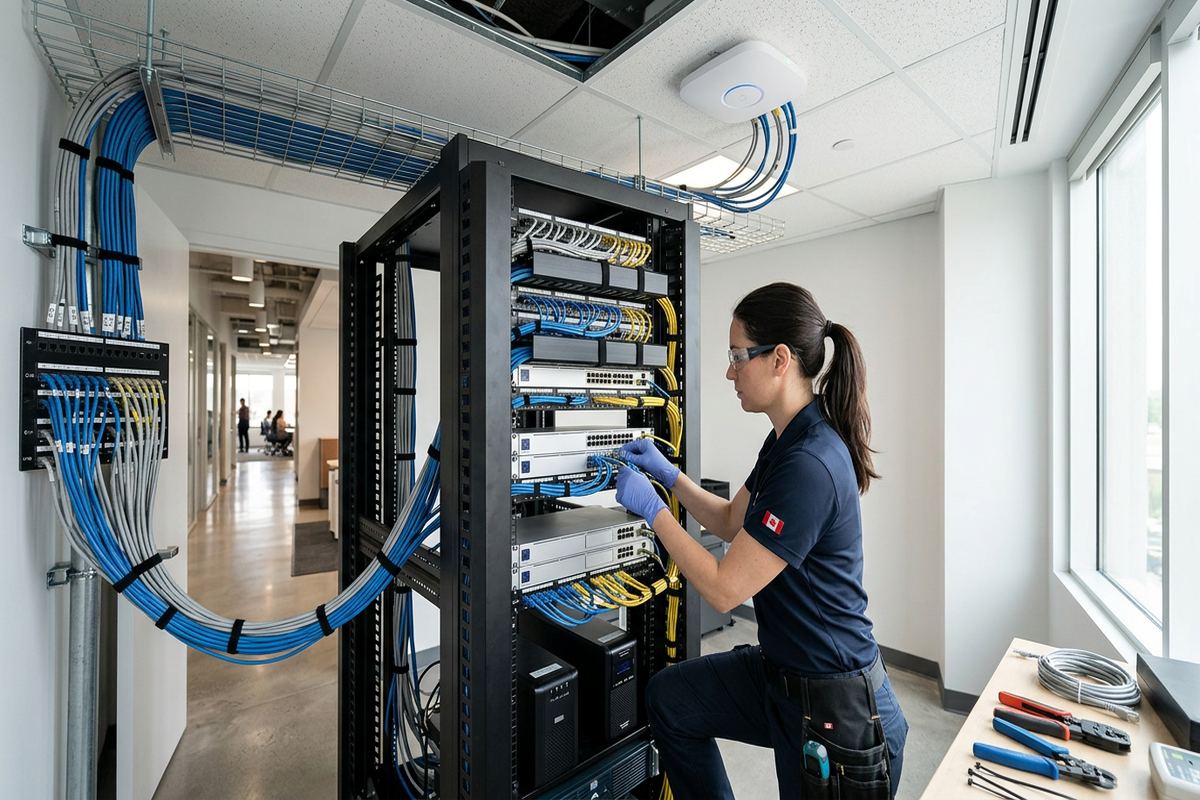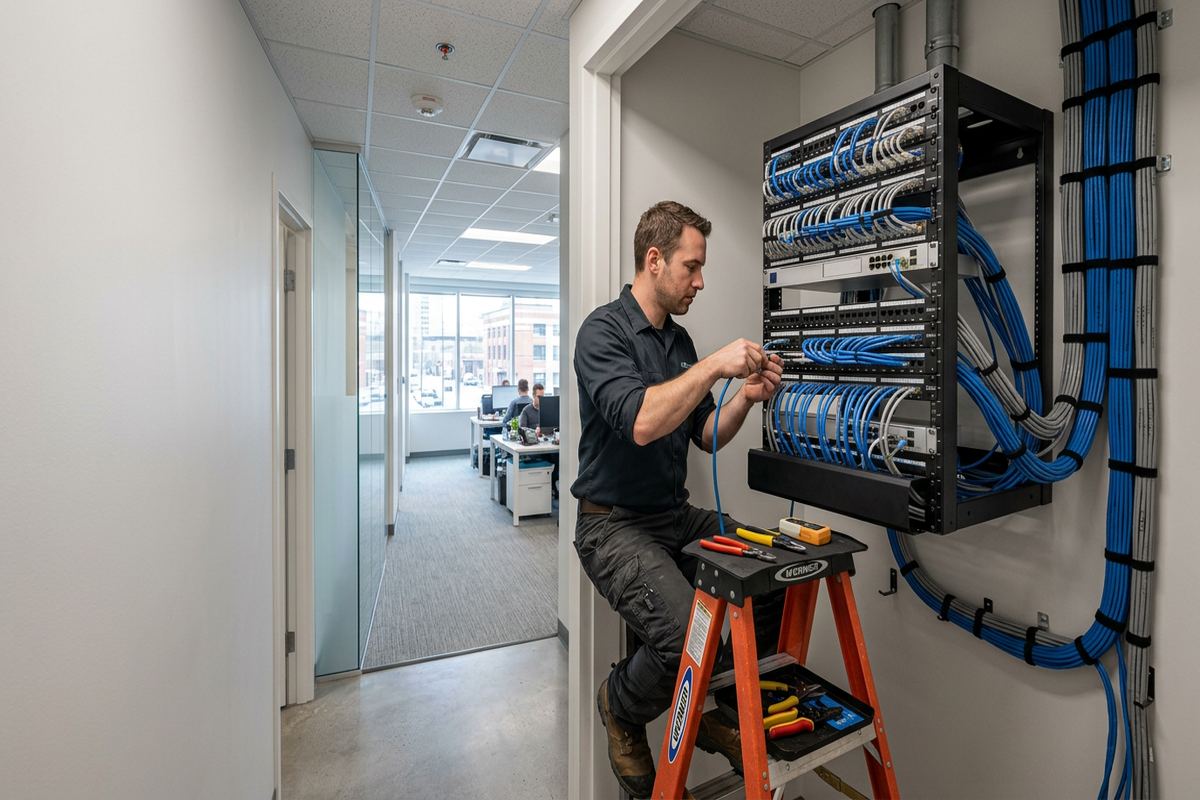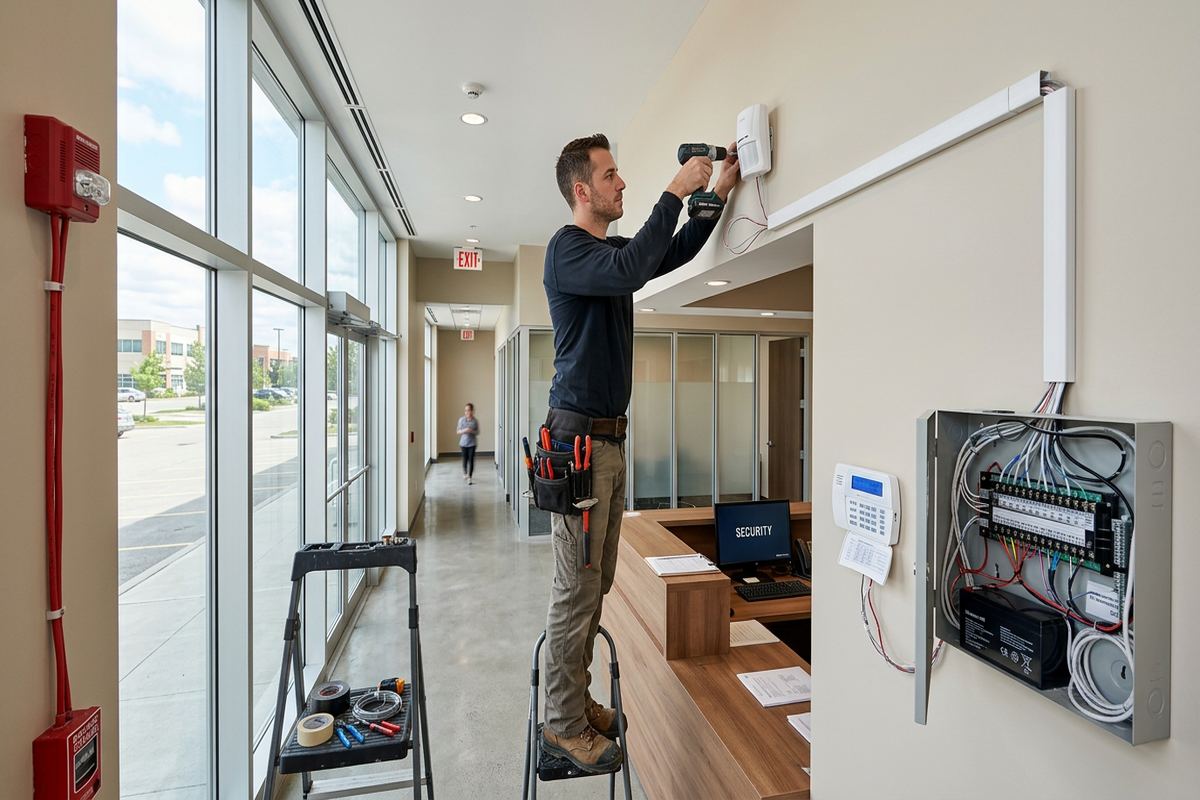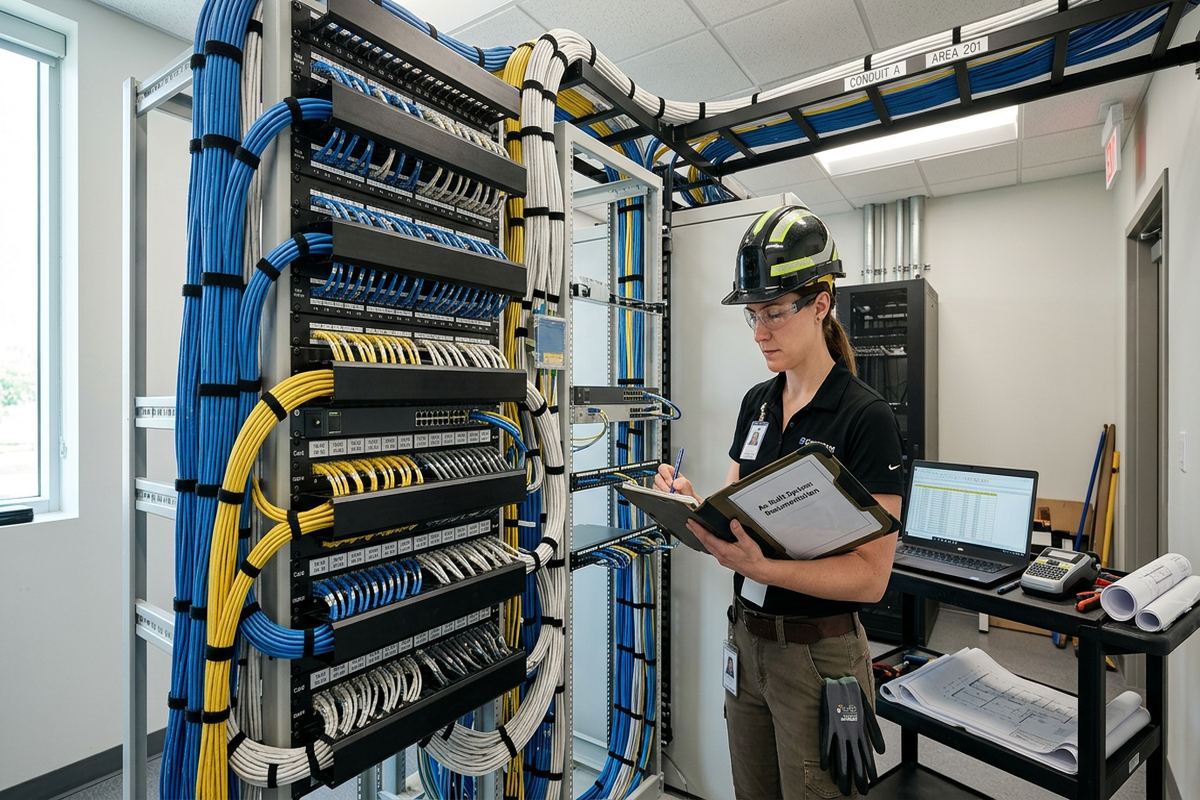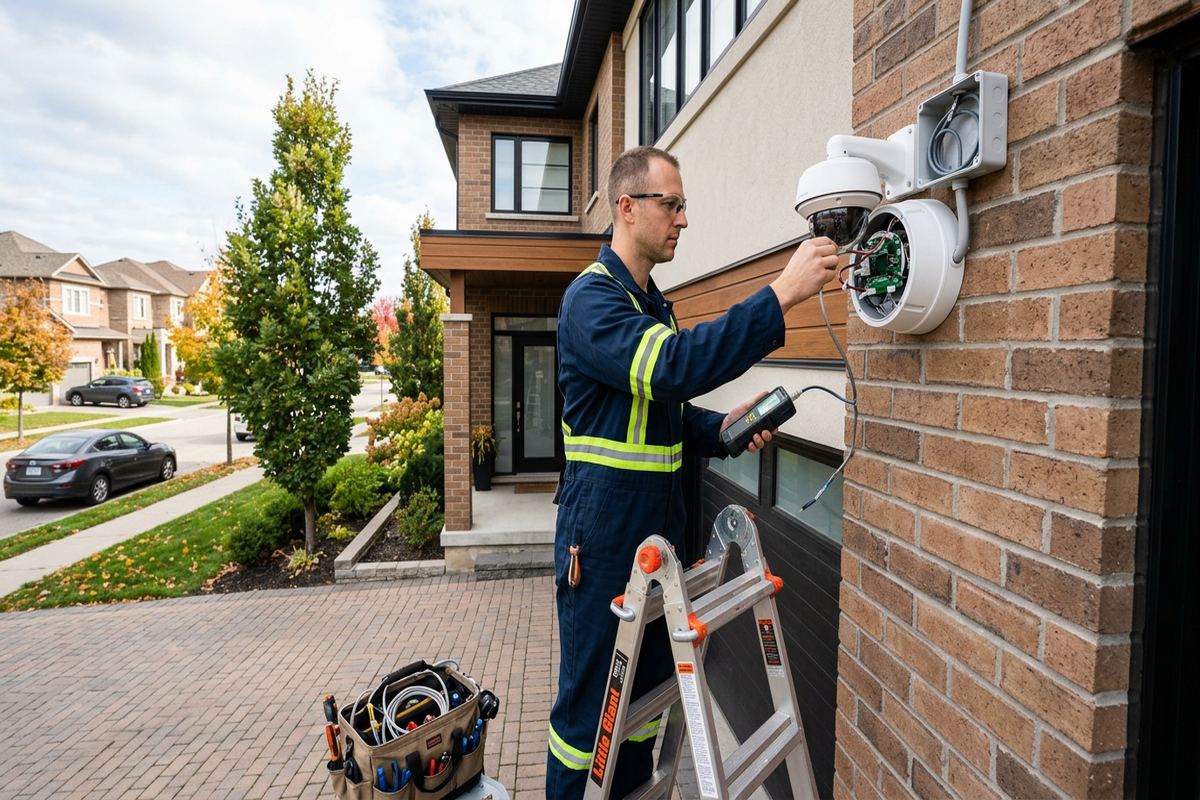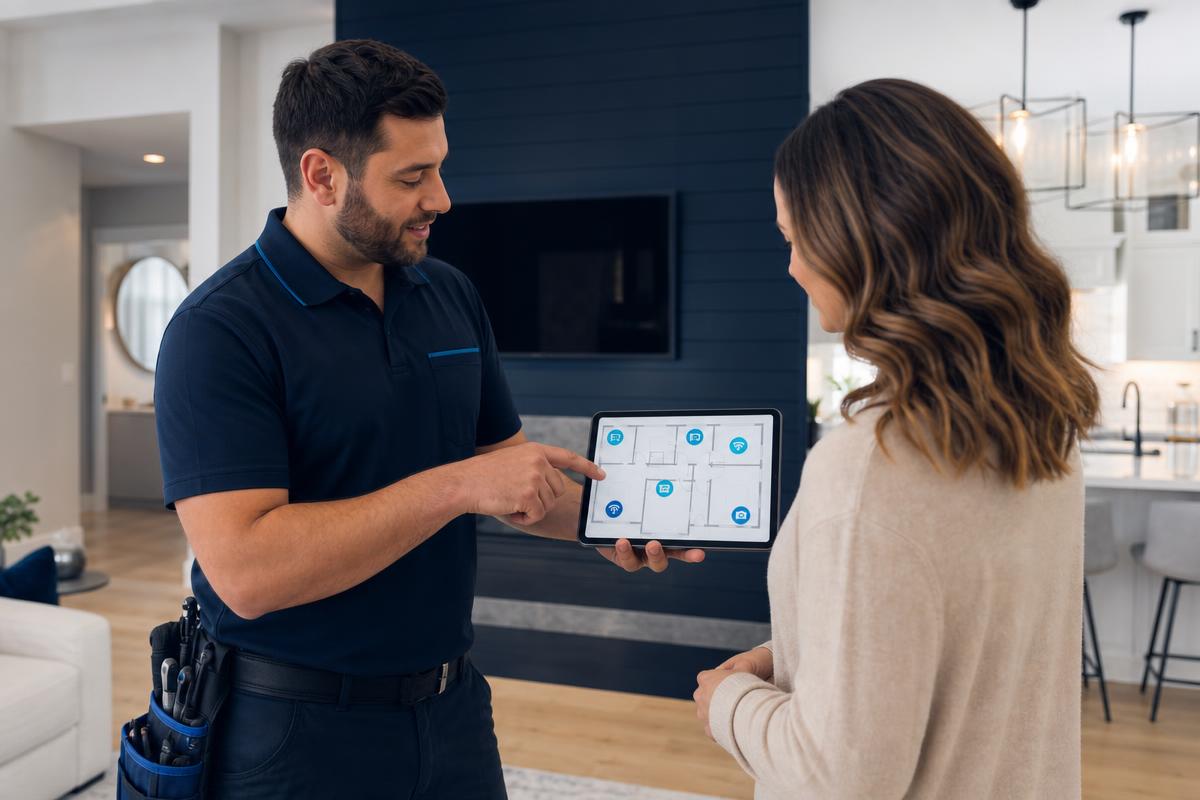
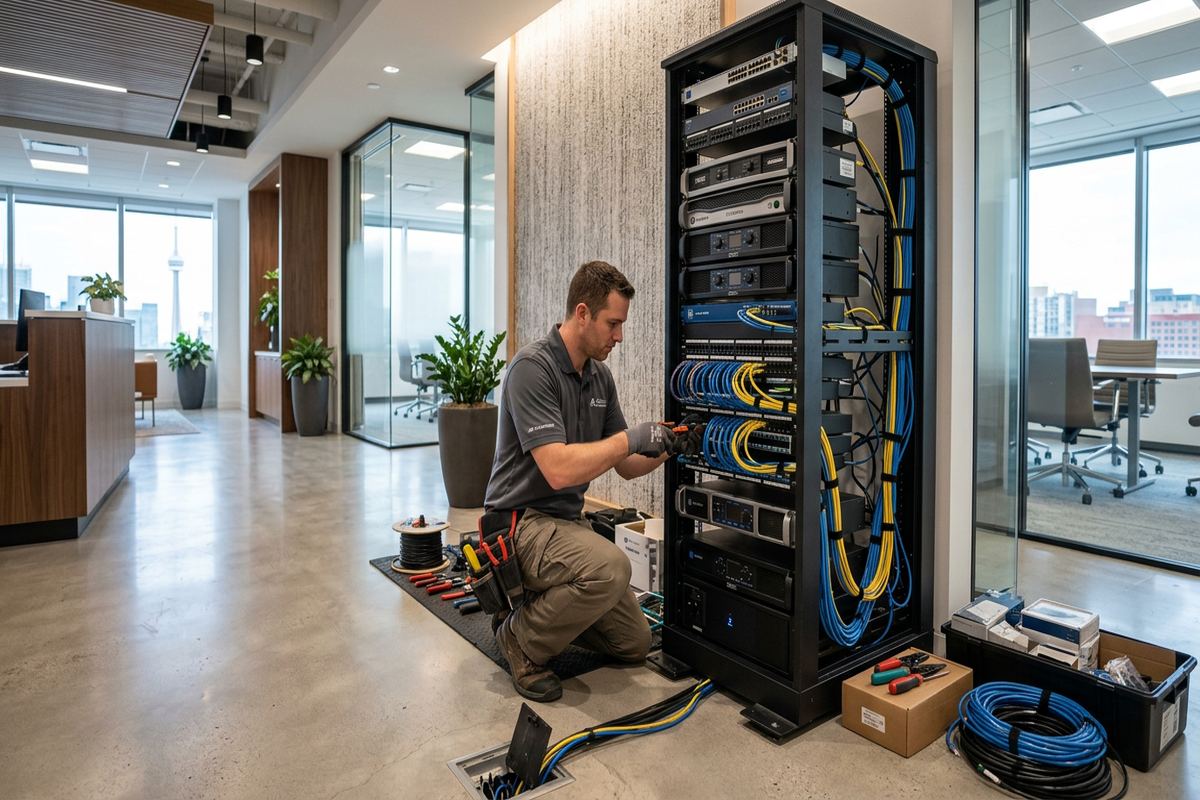
UnifiedLink installs in-ceiling speakers for homes, offices, restaurants, shops and industrial properties across Belleville and the Bay of Quinte. Each project starts with a site assessment to confirm ceiling construction, listening areas, cable routes, controls and equipment needs. The result is a documented system designed around the building rather than a generic speaker layout.
In-Ceiling Speaker Planning for Belleville Properties
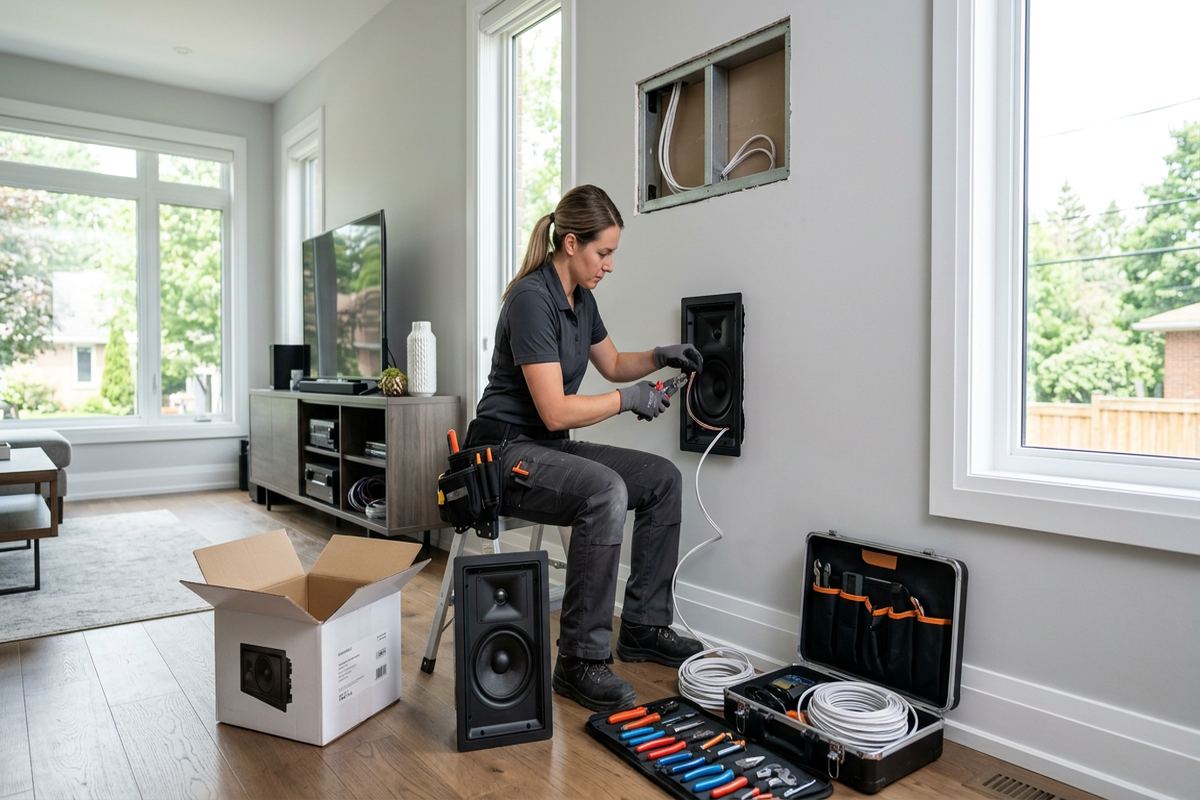
A useful in-ceiling audio system begins with the room, not the speaker model. During a site assessment, UnifiedLink reviews room dimensions, ceiling height, seating or work areas, ambient noise and the type of content being played. Music in a waterfront living room requires a different layout from announcements in a food-processing plant. The assessment also identifies practical limits, including framing direction, ductwork, plumbing, lighting and accessible cable routes. These details determine speaker quantity, spacing, amplification and control options before holes are cut or equipment is ordered for the Belleville property.
Belleville has a varied mix of buildings, and each type changes the installation method. Older downtown buildings may have plaster, lath, masonry walls, renovated ceilings or concealed services that cannot be treated like modern drywall construction. Frame homes in East Hill or West Park Village may provide clearer attic or joist access, although insulation and previous renovations can still restrict routes. Commercial strips can include suspended ceilings, open structures and shared service areas. A written scope records known conditions, intended cable paths, speaker positions, exclusions and any exploratory work required before installation proceeds.
The intended use also shapes the design. Background music generally calls for balanced coverage at moderate levels, while television audio, presentations or detailed listening may require defined left and right channels. Multi-room systems need clear zoning so occupants can select sources and adjust volume without affecting unrelated areas. In businesses, staff access may need to remain simple while administrative controls stay restricted. UnifiedLink documents equipment ownership, device locations, control points and warranty information, giving the customer a clear basis for operating, maintaining or expanding the completed system later.
- Room dimensions and listening positions
- Ceiling structure and service conflicts
- Speaker spacing and coverage areas
- Amplifier, source and control requirements
- Written installation scope before pricing
Speaker Layout and Sound Coverage in Belleville
Speaker spacing should produce consistent coverage without creating noticeably loud and quiet areas. Placement is calculated around the speaker’s dispersion, mounting height and primary listening plane rather than arranged only for visual symmetry. Kitchens, meeting rooms and open commercial areas often contain hard surfaces that reflect sound, while carpet, furnishings and acoustic finishes absorb it. Those differences affect both speaker selection and positioning. In Belleville homes, layouts must also account for cabinets, ceiling fans and lighting. Commercial plans may need to avoid sprinklers, detectors, access panels and equipment clearances while maintaining useful coverage.
Stereo and distributed audio systems solve different problems. A focused room used for television or attentive music listening usually benefits from deliberate left-right orientation relative to the seating area. Distributed systems prioritize even coverage across kitchens, corridors, dining areas, offices or sales floors. Some properties need both approaches, with dedicated listening zones alongside general background audio. Ceiling speakers must also suit the available depth and enclosure conditions. Shallow cavities, insulation, open plenums and rooms above or below can influence whether back cans, acoustic treatment or another speaker format should be considered during design.
Volume controls and zones are planned around how people actually use the space. A homeowner may want separate control for a kitchen, patio-adjacent room and lower level, while a business may divide reception, customer areas, offices and staff spaces. Combining too many unlike areas on one zone makes everyday adjustment difficult. Too many unnecessary zones add complexity without improving operation. UnifiedLink reviews source selection, app control, wall controls and equipment location with the customer. The final arrangement balances straightforward use, service access and enough flexibility for normal changes in occupancy or activity.
- Coverage based on mounting height
- Stereo or distributed layout options
- Separate zones for distinct spaces
- Controls placed where they are useful
- Coordination with lights and life-safety devices
Ceiling Construction and Cable Routes
Before any opening is made, the proposed position is checked against visible and reasonably detectable obstructions. Joists, resilient channel, ductwork, plumbing, electrical cable and recessed fixtures can all occupy the intended location. Finished ceilings do not always reveal previous alterations, especially in older Downtown Belleville buildings where multiple renovation layers may be present. Where access is limited, the plan may require small investigative openings or adjusted positions. These possibilities are identified in the written scope, along with repair responsibilities and exclusions, so the customer understands what can be confirmed before work begins and what remains concealed.
Cable routes are selected to protect the building and keep future service practical. UnifiedLink installs continuous labelled cable runs rather than relying on hidden, undocumented splices. Routes may pass through an attic, basement, service chase, open ceiling or accessible wall cavity, depending on construction. Penetrations are planned with attention to structural members, vapour barriers, fire separations and other building systems. In masonry properties, surface raceway or carefully placed access points may be more appropriate than forcing a route intended for frame construction. Cable type is matched to the application and installation environment.
Insulated ceilings require particular care because cutting the finish can disturb insulation and air-control layers. In Belleville winters, uncontrolled air leakage into a cold attic can contribute to condensation and comfort problems. Speaker placement and mounting details should therefore respect vapour barriers and ceiling assemblies instead of leaving rough, unsealed openings. Freeze-thaw conditions also matter where a route approaches an exterior wall or connects to outdoor audio equipment. Suitable cable, protected transitions, drip management and exterior sealing help prevent moisture entry. Indoor ceiling speakers themselves should not be placed in exposed exterior conditions unless specifically suitable.
- Checks for joists and concealed services
- Continuous labelled speaker cabling
- Routes suited to masonry or framing
- Care around insulation and vapour barriers
- Documented penetrations and access needs
Belleville, Ontario
In-ceiling speaker installation in Belleville, scoped in writing first
Book a site assessment and get equipment, routes, exclusions, and warranty on paper before anything is installed.
Home Audio Installation Across Belleville
Home installations often involve several priorities at once: useful sound, discreet appearance, simple controls and minimal disruption to finished rooms. In East Hill, West Park Village or Thurlow, construction may range from older framed homes to newer additions with different joist directions and ceiling assemblies. A site assessment confirms whether attic, basement or wall access can support the preferred layout. Speaker grilles are aligned consistently, but structural and mechanical conditions take priority over perfect geometric spacing. The customer reviews proposed locations before cutting begins, including any compromise needed to avoid framing, lighting or concealed utilities.
Waterfront homes around the Bay of Quinte may combine large windows, open rooms and hard surfaces that change how sound behaves. Those properties can also expose exterior walls, soffits and transition points to wind-driven moisture and seasonal temperature changes. If an indoor system extends toward a covered deck or other outdoor zone, exterior-rated equipment and correctly sealed penetrations are considered separately from standard in-ceiling speakers. Point Anne and Bayside properties may present different access conditions, but the same principle applies: cable routes and mounting methods must suit the actual structure, exposure and intended use rather than a standard package.
Renovations are usually the most efficient time to install speaker cable because framing and service routes may already be open. Finished homes can still be served, although the available path may require attic access, basement routing, closets, raceway or limited openings for fishing cable. UnifiedLink sets out those methods before pricing after the assessment. If painters, drywall contractors, electricians or cabinet installers are involved, speaker rough-in and final installation can be coordinated with their work. Clear responsibility for cutting, patching and finishing avoids assumptions and helps preserve the planned speaker locations throughout the renovation schedule.
- Single-room and multi-room audio
- Layouts for renovations or finished homes
- Indoor and exterior zones planned separately
- Coordination with other renovation trades
- Controls configured for household use
Approvals for Condos and Rental Properties
In-ceiling speaker work in a condominium may require approval before installation because ceilings can contain common elements, fire-rated assemblies or services shared with other units. Building rules may also restrict drilling times, contractor access, elevator use and material movement. UnifiedLink can describe the proposed equipment, cable route and installation method for the customer’s approval process, but the owner remains responsible for obtaining required permission. No cutting should begin until relevant conditions are understood. Where ceiling access is prohibited, wall-mounted, surface-mounted or furniture-based speakers may provide a workable alternative without altering restricted assemblies.
Rental properties require similarly clear authorization. A tenant’s preference for concealed speakers does not replace the landlord’s written consent to cut ceilings, route cable or mount equipment. The scope should also state who owns the speakers, amplifier, controls and installed cable when the tenancy ends. This is particularly important when equipment is purchased by one party but becomes physically integrated into the building. For Belleville landlords, a documented installation can simplify later maintenance and turnover by identifying speaker locations, cable labels, equipment connections and any credentials used for network-connected audio components. Approval conditions are incorporated before work is scheduled.
Shared commercial properties can add another approval layer. A shop, clinic or office may occupy leased space below another tenant or beneath residential units, making sound transfer and ceiling penetrations significant concerns. Property management may require drawings, insurance documents from contractors, work-hour coordination or confirmation of restoration responsibilities. Speaker levels should support the intended activity without depending on excessive volume, and zoning can keep quieter rooms separate. The assessment identifies neighbouring uses, accessible service spaces and likely approval requirements. Final permission remains with the customer, landlord, condominium corporation or property manager as applicable.
- Condo rules reviewed before cutting
- Landlord permission confirmed by customer
- Equipment ownership stated in writing
- Alternatives for restricted ceiling assemblies
- Work coordinated with property management
Commercial Speaker Systems in Belleville
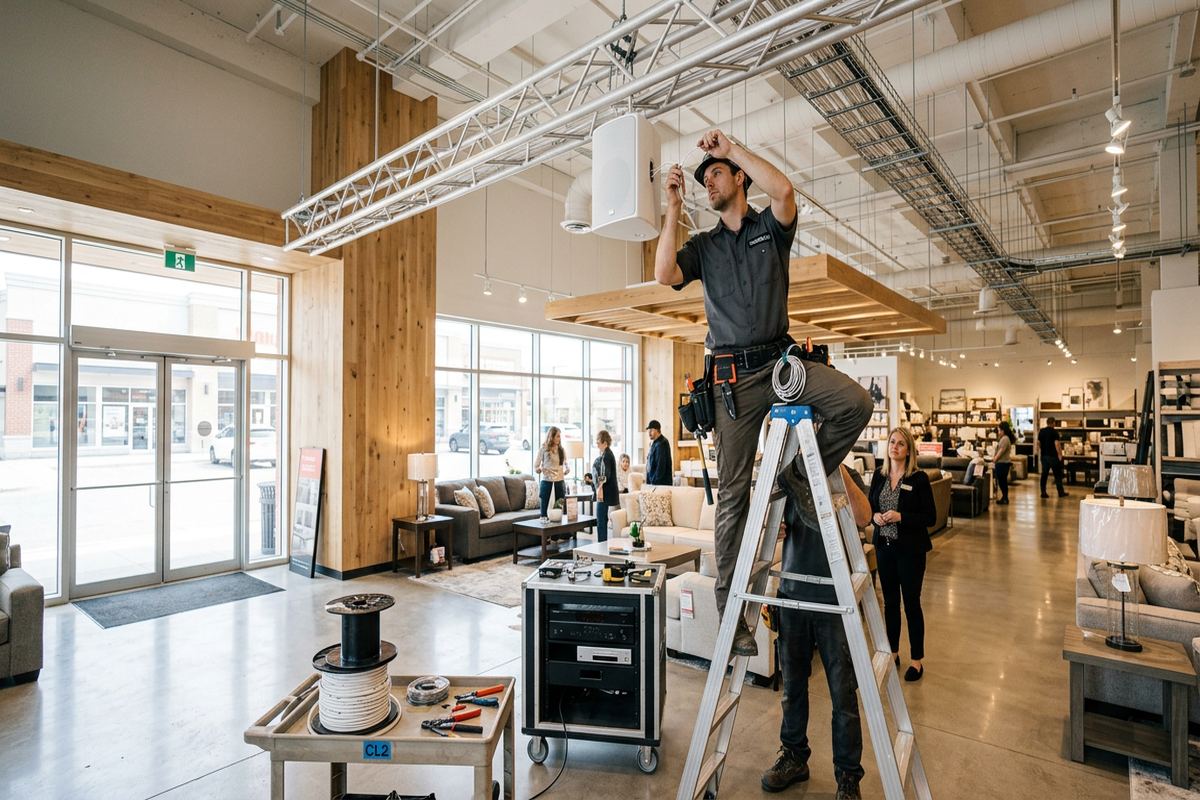
Restaurants, retail units, offices and customer-service spaces use ceiling audio to create consistent background sound or deliver routine announcements. The design must account for occupancy patterns, ceiling height, equipment noise and the way staff control the system. One loud speaker near a counter is not a substitute for properly distributed coverage. In Downtown Belleville storefronts, older construction and renovated service areas may limit concealed cabling. Commercial strips and newer units may offer suspended ceilings, although those spaces still require coordination with lighting, ventilation, sprinklers and ceiling supports before speaker positions are finalized.
Food-processing plants need a plan distinct from homes and ordinary offices. Equipment noise, cleaning practices, room finishes, production boundaries and restricted areas can affect speaker choice, mounting and cable pathways. A standard residential ceiling speaker may be inappropriate for spaces exposed to moisture, dust, washdown or demanding sanitation procedures. During assessment, the customer identifies environmental conditions, operational rules and areas where work cannot occur during production. UnifiedLink then defines suitable zones and infrastructure within the project scope. Any connection to emergency or regulated communication systems must be treated separately and cannot be assumed to be part of background audio.
Industrial units in Belleville may have open structures, high ceilings, masonry walls and long cable distances. These conditions can favour different loudspeaker types or distributed system designs rather than conventional low-ceiling residential products. Equipment rooms and amplifier locations need ventilation, power, network access where required and safe service clearance. Cable routes should remain supported, protected and identifiable through production or storage areas. The written scope records mounting methods, access equipment assumptions, shutdown requirements and excluded work. This allows the customer to compare the proposed system with operational needs before equipment selection and final pricing are confirmed.
- Background music and routine announcements
- Zones for customer and staff areas
- Planning for noisy industrial spaces
- Equipment selected for room conditions
- Installation coordinated around operations
Audio Equipment, Controls and Networking
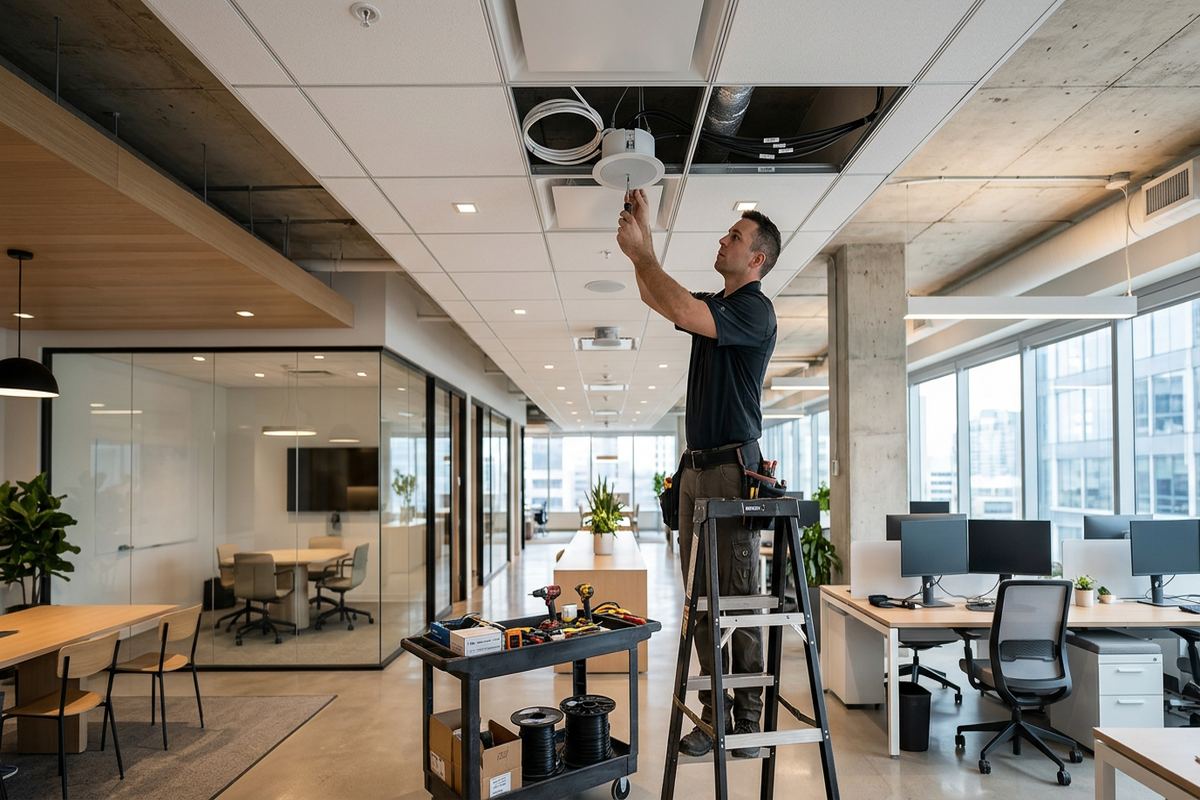
An in-ceiling speaker system includes more than the visible speakers. Amplification must suit the speaker load, number of zones and expected operating level. Sources may include streaming services, televisions, local media players, paging inputs or existing audio equipment. Compatibility is checked before the scope is finalized, particularly when the customer wants to retain an older receiver or integrate new speakers with an existing control platform. Equipment is placed where ventilation, power and service access are available. Concealing an amplifier in a sealed cabinet can create avoidable heat and maintenance problems, so location is considered during the site assessment.
Network-connected audio depends on stable wired or wireless connectivity and properly managed customer accounts. UnifiedLink can configure supported equipment on site, but the system is handed over using the customer’s own credentials rather than an installer-owned account. Where practical, fixed audio components can use structured cabling to reduce dependence on variable wireless coverage. For Belleville properties with detached areas, masonry partitions or long floor plans, Wi-Fi conditions should be evaluated instead of assumed. Network improvements, additional access points or data cabling are identified as separate scope items when they are necessary for dependable control or streaming.
Controls should remain understandable to the people who use them daily. A home may rely on an app with a few convenient wall controls, whereas a restaurant or office may need restricted staff access and clearly defined default settings. Naming zones consistently, setting safe operating ranges and documenting source selection can prevent routine confusion. At handover, UnifiedLink confirms basic operation, reviews installed components and provides an as-built record showing cable destinations and device locations. Passwords and account recovery remain under customer control. The result is a system that another qualified technician can understand without tracing every concealed cable again.
- Amplification matched to speaker load
- Existing equipment checked for compatibility
- Customer-owned accounts and credentials
- Wired network connections where practical
- As-built record supplied at handover
Belleville Installation Process and Written Scope
Every project starts with a request and an initial discussion about rooms, intended use, construction and existing equipment. Requests sent during business hours are answered the same day, while after-hours requests are answered the next business day. Site assessment timing depends on the service and travel distance. At the Belleville property, UnifiedLink checks accessible ceiling areas, likely routes, equipment locations and control needs. The assessment is also the time to discuss building permissions, working hours, furniture protection, access equipment and coordination with other trades. Pricing follows the assessment rather than relying on assumptions about concealed conditions.
The written scope identifies equipment, cable routes, speaker placement, exclusions, equipment ownership and warranty. It can also record whether cutting, patching, painting, electrical work, network changes, permits or approvals fall outside the audio installation. This detail matters in older downtown properties and mixed-use buildings, where a seemingly direct cable path may cross masonry, inaccessible cavities or shared spaces. Proposed substitutions or route changes can then be reviewed before work proceeds. One accountable contractor manages the defined low-voltage work, reducing uncertainty about who installed, labelled and configured each part of the speaker system.
Installation includes mounting, continuous labelled cable runs, connection and on-site configuration within the agreed scope. Speaker openings are made only after positions are checked, and visible components are aligned with the room where construction permits. The system is tested by zone for source selection, control and consistent operation. Handover uses the customer’s own credentials and includes an as-built record of installed device locations and cable destinations. For Belleville homeowners and businesses, that documentation supports future troubleshooting, renovations and expansion. Any limitations discovered during installation are recorded rather than hidden behind the finished ceiling.
- Site assessment completed before pricing
- Scope records routes, placement and exclusions
- One contractor accountable for defined work
- On-site testing and configuration
- Customer credentials and as-built handover
Belleville neighbourhoods we cover
- Downtown Belleville
- East Hill
- West Park Village
- Thurlow
- Bayside
- Point Anne
In-ceiling speaker installation in Belleville — common questions
Can you install speakers in an older Belleville home?
Yes, subject to a site assessment. Older Belleville homes may contain plaster, lath, dense framing, added insulation or previous renovations that restrict access. UnifiedLink checks practical cable routes and speaker positions before pricing. The written scope identifies expected openings, exclusions and whether patching or finishing is handled by another trade.
How many in-ceiling speakers does my room need?
The quantity depends on room size, ceiling height, speaker dispersion, listening positions, surface finishes and intended volume. A Belleville kitchen used for background music needs a different layout from an open commercial dining area. Placement is planned for useful, even coverage rather than based only on room area or visual symmetry.
Can speakers be installed below an insulated attic?
Often, but the ceiling assembly must be treated carefully. Belleville winters make air sealing and vapour control important where openings connect to a cold attic. The assessment checks available depth, insulation and access. Suitable mounting details are planned to avoid leaving rough openings that may allow air movement or disturb the assembly unnecessarily.
Do I need condo or landlord approval?
Usually, approval should be confirmed before any ceiling is cut in a condo or rental property. Belleville condominium rules and lease terms can restrict penetrations, work hours or alterations to common assemblies. The customer obtains the required permission, while UnifiedLink can provide a written description of proposed equipment, routes and installation methods.
Can my existing receiver power new ceiling speakers?
Possibly, but compatibility must be checked. The receiver needs suitable outputs, load capacity, channel configuration and control options for the proposed speakers and zones. During the Belleville site assessment, UnifiedLink reviews accessible model information and existing wiring. If the equipment is unsuitable, the written scope identifies the required amplification or system changes.
Can indoor speakers connect with an outdoor zone?
Yes, the zones can often share sources or controls, but outdoor equipment requires separate planning. Around Belleville and the Bay of Quinte, moisture, winter temperatures and freeze-thaw cycles affect cable transitions, mounting and sealing. Exterior-rated speakers and suitable wiring should be used, with penetrations protected against water entry rather than treated as indoor openings.
Coverage in Belleville is confirmed against the address before we quote. See everything we install in Belleville or the province-wide in-ceiling speaker installation page.