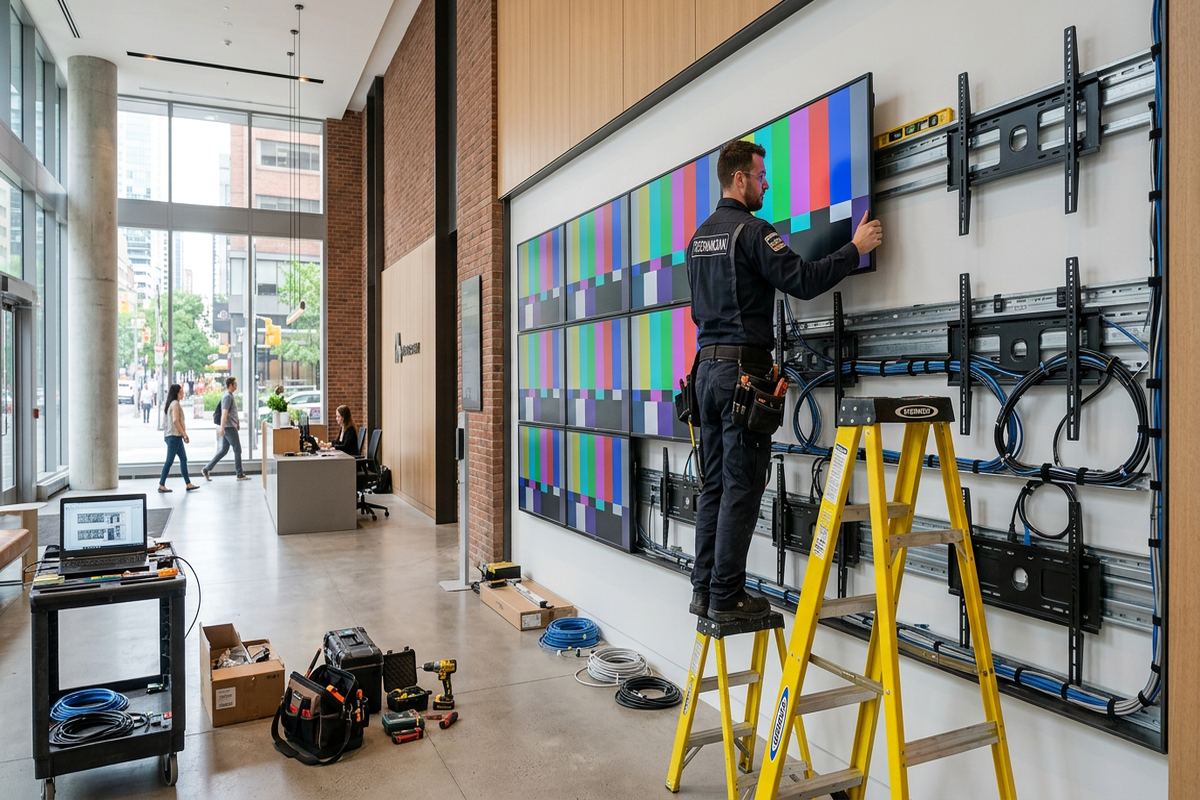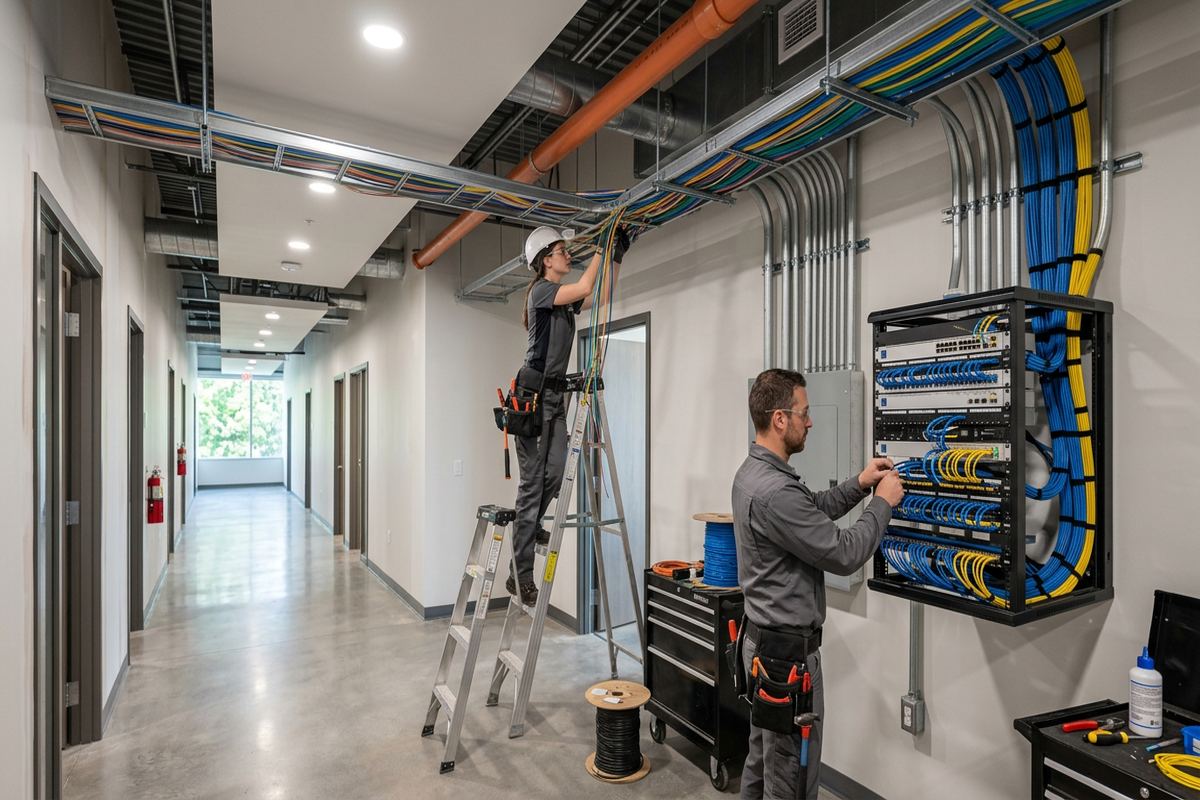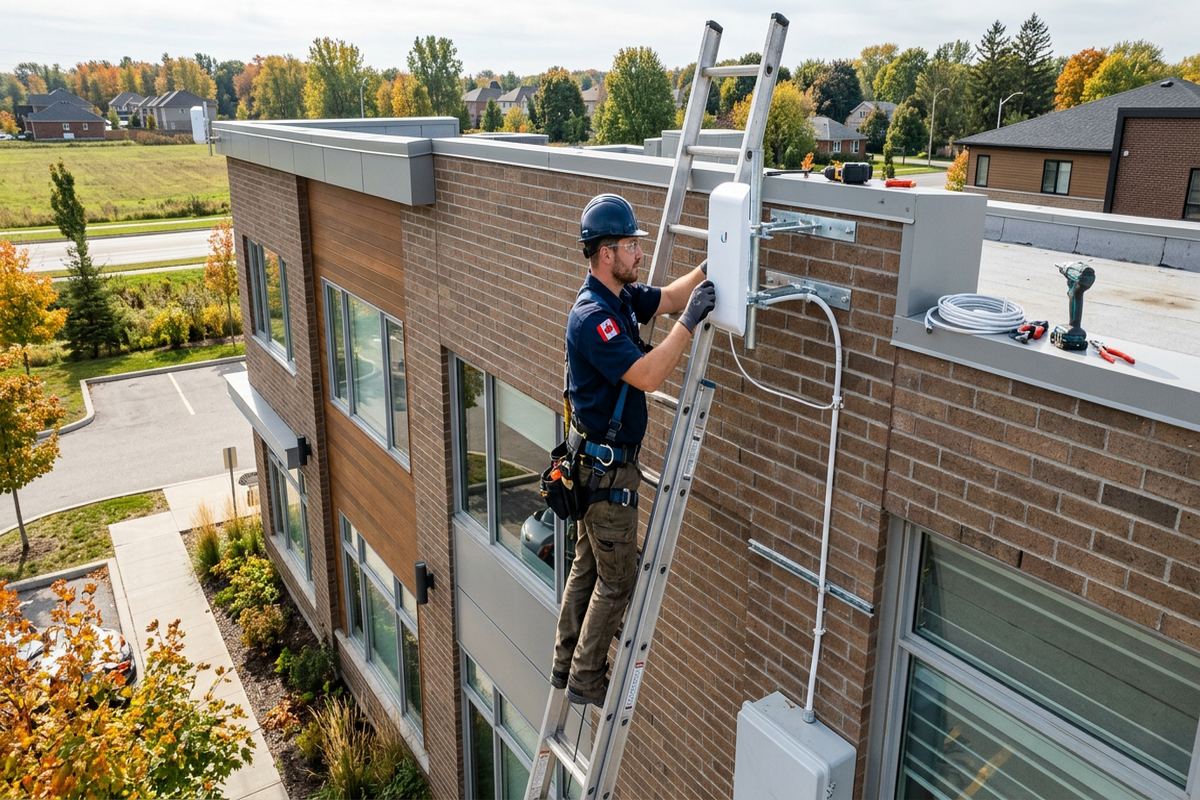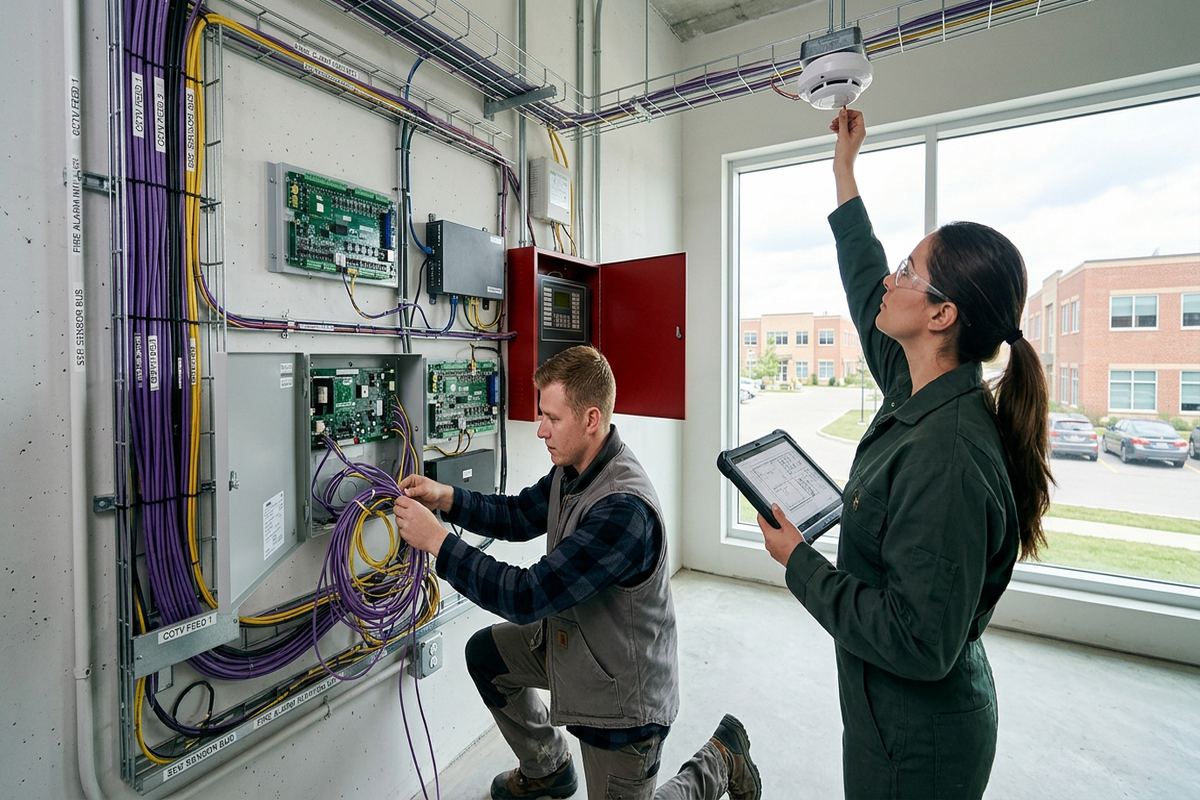
UnifiedLink provides TV wall mounting for Cobourg homes, offices, shops and other commercial spaces. We assess the wall, viewing position, equipment and cable route before pricing. Installation can include the bracket, concealed or surface-run cabling, connected devices, on-site configuration and a documented handover using credentials that remain under your control.
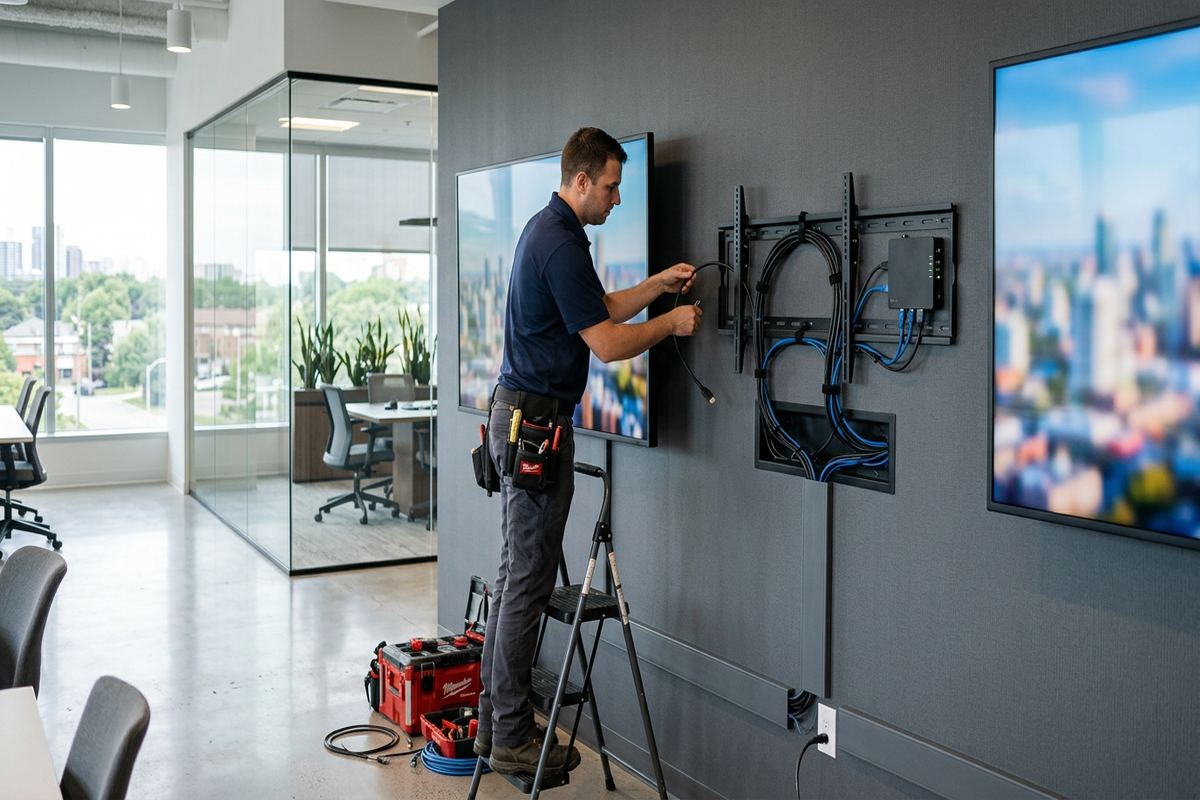
TV Wall Mounting for Cobourg Properties
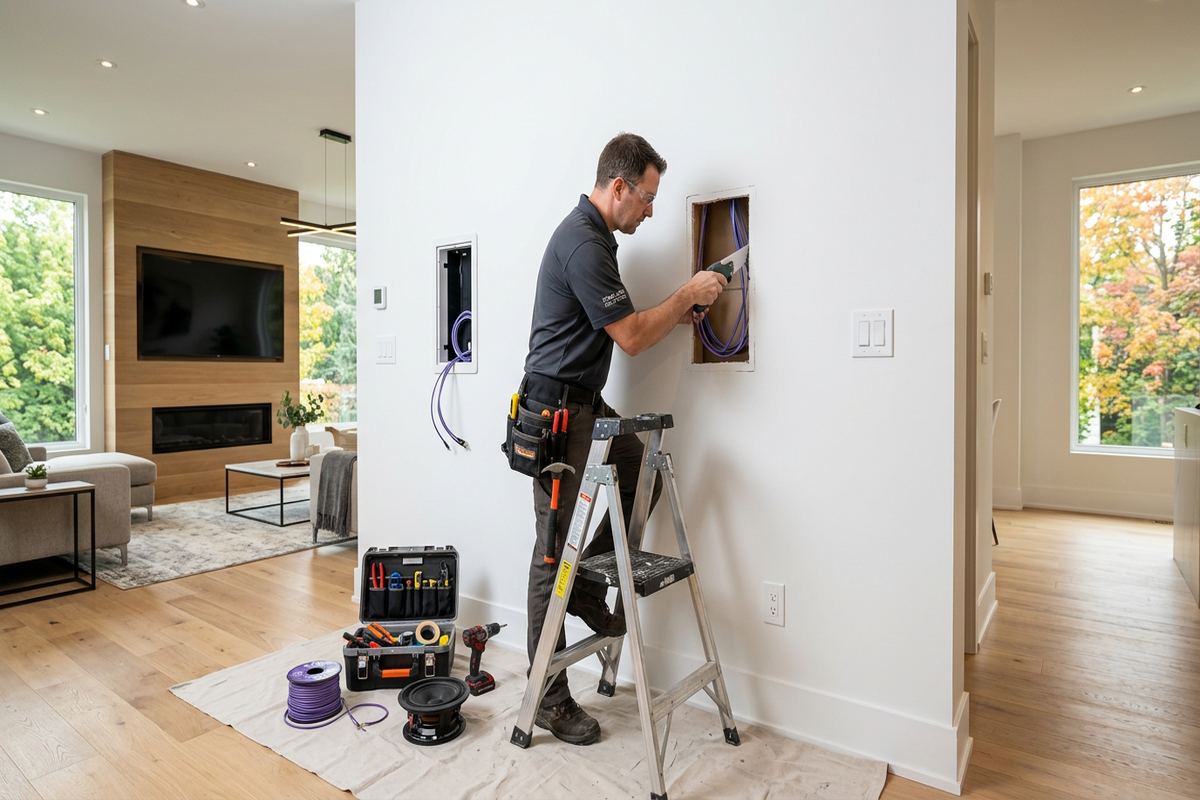
A secure installation begins with the wall rather than the television. Cobourg properties include heritage homes near the beach, newer houses in New Amherst, condominium units and small downtown businesses, so the same fixing method does not suit every site. We identify whether the mounting surface is wood framing, metal studs, solid masonry, brick veneer, concrete or another assembly. The assessment also considers television weight, bracket type, stud spacing, wall condition and hidden services. This work determines a suitable mounting approach before holes are drilled or cable openings are made.
Viewing height and bracket position should reflect how the room is actually used. We consider seating distance, eye level, glare, window locations, room circulation and whether the display needs to turn toward another area. A television above a fireplace may face heat, an unusually high viewing angle and limited cable access. Bedrooms, meeting rooms, reception areas and restaurants each require different placement decisions. We mark the proposed position with the customer and confirm clearances for ventilation, connectors and future service before mounting. That review helps prevent a technically secure installation from becoming uncomfortable or inconvenient.
Cobourg’s older building stock can require a careful, reversible approach, particularly near Downtown Cobourg and Cobourg Beach. Decorative plaster, original trim, masonry walls and previous renovations may conceal irregular framing or fragile finishes. Where preservation matters, we look for routes and fixing points that limit unnecessary disturbance and can be repaired later. A written scope records device placement, expected cable routes, exclusions, equipment ownership and warranty details. If concealed conditions prevent the planned method, we discuss the alternative before proceeding rather than expanding openings or moving the television without approval.
- Wall construction and condition checked before drilling
- Viewing height marked and confirmed with the customer
- Bracket movement and connector clearance reviewed
- Written scope identifies routes, equipment and exclusions
Planning a Cobourg TV Installation
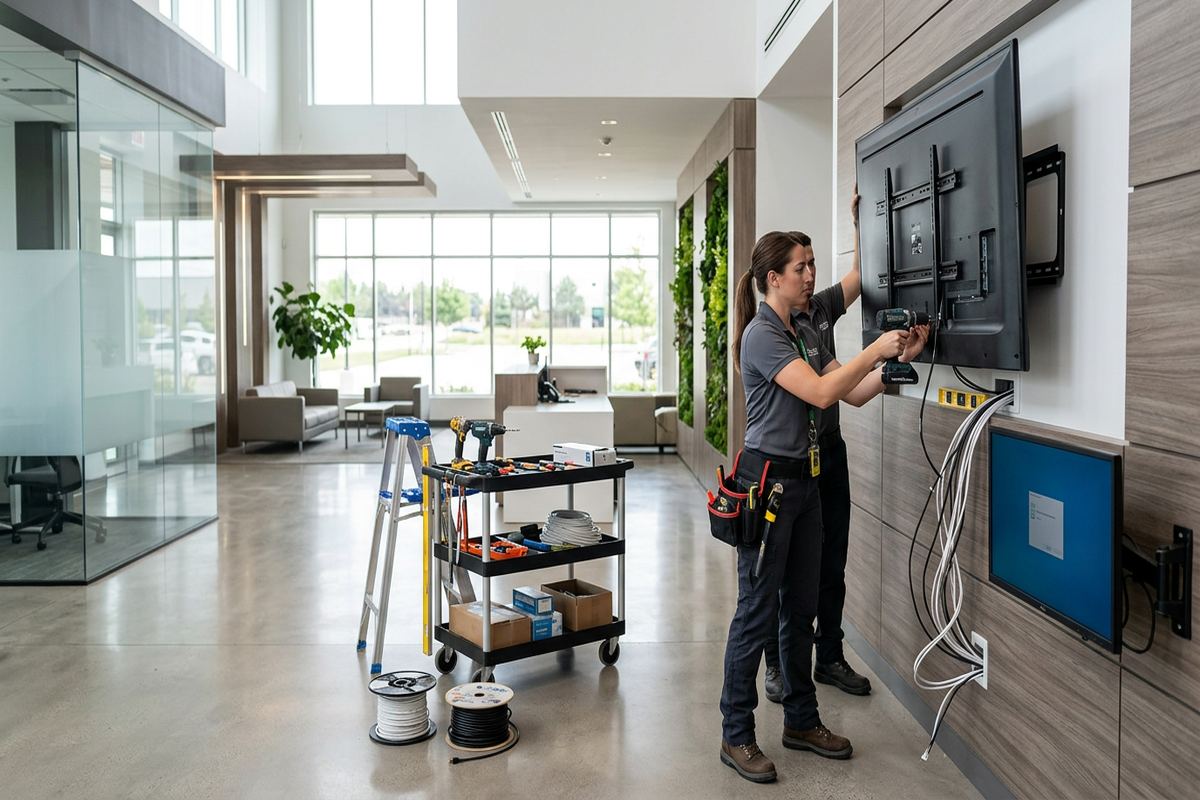
Before pricing, UnifiedLink completes a site assessment appropriate to the service and travel distance. The visit or project review covers television dimensions, weight, VESA mounting pattern, desired movement and the equipment that will connect to the display. We also examine receptacle placement, network availability and possible pathways for HDMI, optical, coaxial or data cable. Existing customer-supplied brackets can be assessed for compatibility and condition, but they are not assumed suitable. Planning these details together produces a defined scope and reduces surprises when the television is lifted into its final position.
Cable planning is part of the installation, not an afterthought. A recessed route may be possible in an open frame wall, while solid masonry, insulated exterior walls and shared condo walls may call for low-profile surface raceway. Power wiring must remain separate from low-voltage cabling and must be handled according to the applicable requirements. Extension cords and ordinary flexible power leads are not concealed inside walls. Where an electrical receptacle must be added or relocated, that work is identified separately and coordinated with an appropriate electrical contractor rather than improvised during display installation.
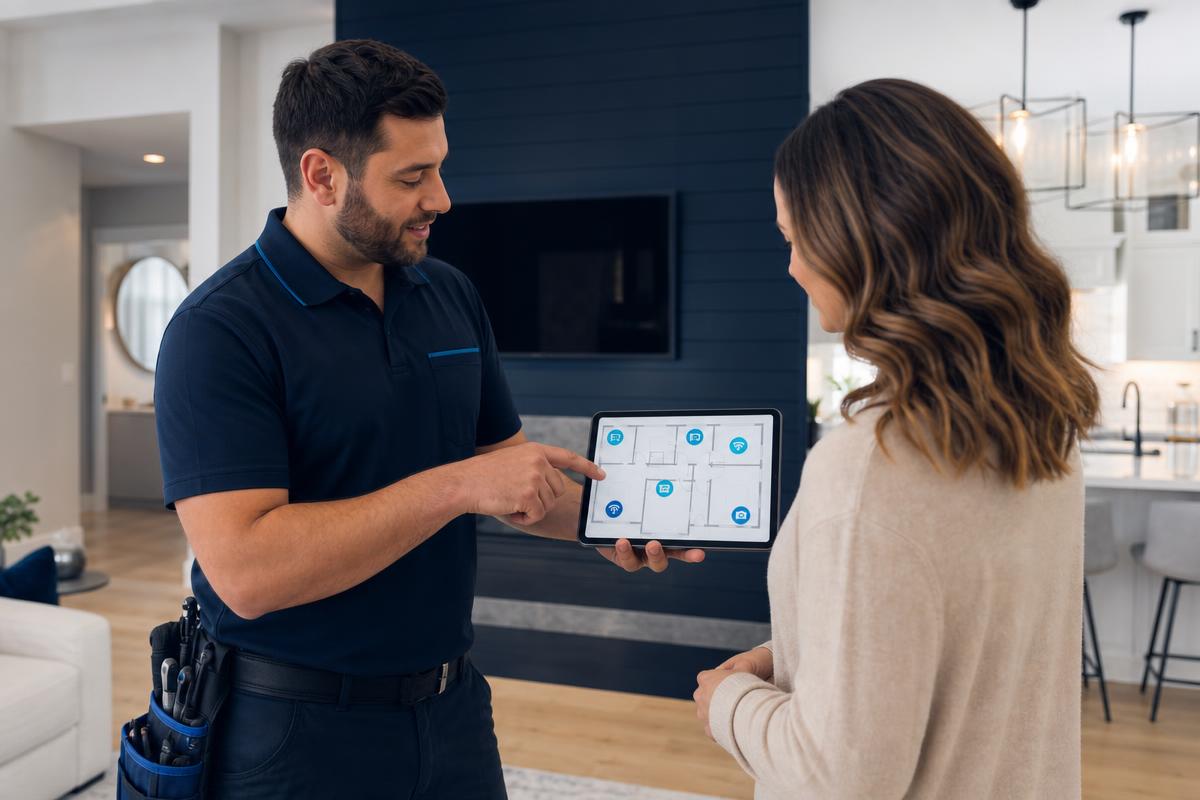
Customers often want room for a streaming player, soundbar, game console, receiver or commercial media device. We confirm where each component will sit, how it will receive power and whether its remote or wireless connection will function after concealment. Cable lengths and connector orientation are checked before the display covers the wall openings. If equipment will be located in cabinetry or another room, ventilation, control and service access also matter. The completed plan should allow a failed cable or media device to be reached without removing finishes or dismantling more of the installation than necessary.
- Site assessment completed before pricing
- VESA pattern and television weight confirmed
- Power and low-voltage routes kept distinct
- Connected equipment included in placement planning
Mounting on Masonry, Plaster and Framed Walls
Wall type determines which anchors, fasteners and drilling methods are appropriate. Modern wood framing generally allows the bracket to be secured to studs or installed backing, provided their locations align with the selected mount. Metal-stud walls require a method suited to the stud gauge, wall assembly and display load. Drywall alone is not treated as structural backing for a heavy television without an approved anchoring approach. We also check for bowed surfaces and uneven finishes because a bracket tightened against an irregular wall can distort, sit out of level or damage the finished surface.
Brick, block and concrete introduce different concerns. A masonry wall may be structural, a veneer over framing or an older assembly with soft mortar and variable material behind the finish. Drilling locations are selected after considering edge distances, joints, wall condition and the bracket’s load pattern. In some Cobourg homes, plaster or masonry has been covered during renovations, making the visible surface a poor guide to what lies behind it. Test findings are used to confirm the fixing method, and decorative brick or heritage material is not drilled casually merely to simplify cable concealment.
Older plaster walls deserve controlled drilling and limited vibration. Lath may be wood, metal or gypsum, and cracks can spread if a bracket is pulled tightly against a weak section. We look for sound structure behind the finish and discuss visible raceway when opening the wall would create disproportionate damage. For heritage homes near the beach or downtown, a reversible route may be preferable to deep channels or extensive patching. The objective is not simply to hide every cable; it is to achieve a stable, serviceable installation while respecting original materials and surrounding finishes.
- Fasteners matched to the verified wall assembly
- Masonry condition assessed before anchor locations are selected
- Plaster drilling planned to limit cracking and vibration
- Reversible routes considered for heritage finishes
Cobourg, Ontario
TV wall mounting in Cobourg, scoped in writing first
Book a site assessment and get equipment, routes, exclusions, and warranty on paper before anything is installed.
Concealed Cabling and Equipment Connections
A clean result depends on knowing exactly which cables the television and source devices need. HDMI versions, connector sizes, audio return requirements, network connections and control leads are reviewed before any pathway is prepared. Tight bends, crushed cables and inaccessible couplers can cause intermittent faults that appear only after the television is mounted. UnifiedLink uses continuous labelled low-voltage cable runs where the route and equipment permit, avoiding hidden joins that are difficult to troubleshoot. Service loops are controlled so connectors are not strained, while excess cable is kept clear of bracket arms and ventilation openings.
Not every wall is suitable for concealed cabling. Exterior walls may contain insulation, vapour-control layers, blocking or masonry that should not be disturbed without a clear method. Shared walls in condominiums can have fire, acoustic or structural requirements, while leased premises may restrict penetrations. In those cases, paintable surface raceway can provide an orderly and reversible alternative. The route is planned around trim, corners, shelving and access points rather than simply taking the shortest visible path. Any patching or finish work included in the project is stated in the written scope, along with relevant exclusions.
Equipment is connected and configured on site after the television is secured. This can include input naming, network connection, basic display settings, audio output selection and confirmation that connected sources operate through the intended ports. Customer accounts are entered using the customer’s own credentials; passwords do not become contractor-owned access. We test the television, soundbar and listed source devices within the agreed scope, then explain normal operation. The handover includes an as-built record describing cable routes and installed components, which supports later troubleshooting, renovations or equipment replacement without guesswork.
- Continuous low-voltage runs labelled at accessible ends
- Surface raceway offered where concealment is unsuitable
- Inputs, network and audio paths tested on site
- Customer retains control of account credentials
TV Mounting in Cobourg Condos and Rentals
Condominium installations require more than permission from the person occupying the unit. Building rules may control drilling hours, elevator use, wall penetrations, debris handling and work on shared or exterior walls. Some walls contain concrete, metal framing, plumbing risers or fire-rated assemblies that cannot be treated like ordinary residential partitions. We ask the owner or tenant to obtain required approvals before work begins and to provide relevant building requirements. The installation scope can then reflect permitted routes, acceptable mounting locations and any documentation the property manager expects from the occupant.
Tenants should also confirm written landlord approval before permanent fixings or cable openings are made. If penetrations are limited, a freestanding solution, furniture-mounted display or restrained surface route may be more appropriate than a fully concealed installation. In East Village or West Park rental properties, wall construction can vary between units because of additions and past renovations. We do not assume that a method used elsewhere in the building will be suitable. The actual mounting surface is assessed, and equipment ownership is documented so there is no confusion when a tenant moves or a property changes hands.
Reversibility is especially useful where a television may later move to another room. A bracket can sometimes remain with the property while the television and source equipment belong to the occupant, or every component may need to be removed. The written scope identifies ownership and describes what is included at handover. It can also note visible cable covers, wall plates and penetrations that would remain after removal. UnifiedLink does not promise that mounting will leave no trace, but planning can limit avoidable damage and make future patching more straightforward for the owner or property manager.
- Condo rules reviewed before drilling or routing cable
- Landlord approval confirmed by the tenant or owner
- Equipment ownership recorded in the written scope
- Reversible options considered for restricted walls
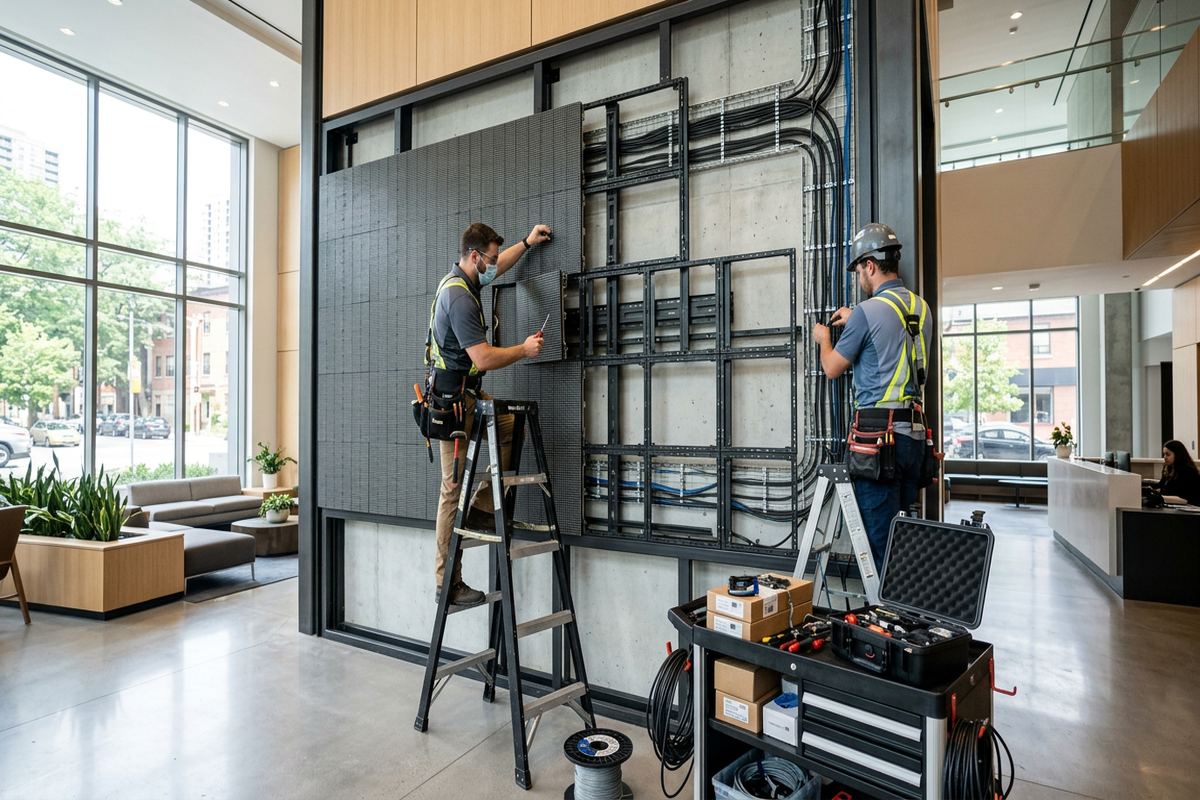
Commercial Display Mounting in Cobourg
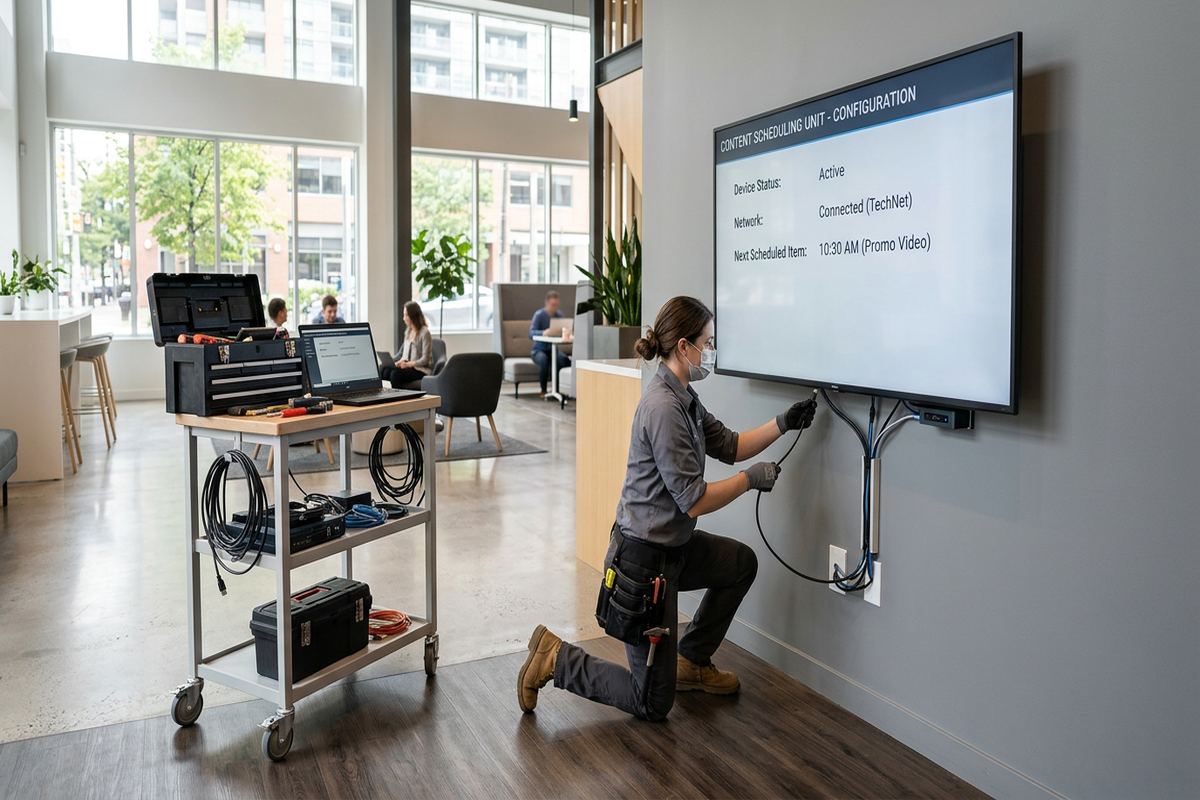
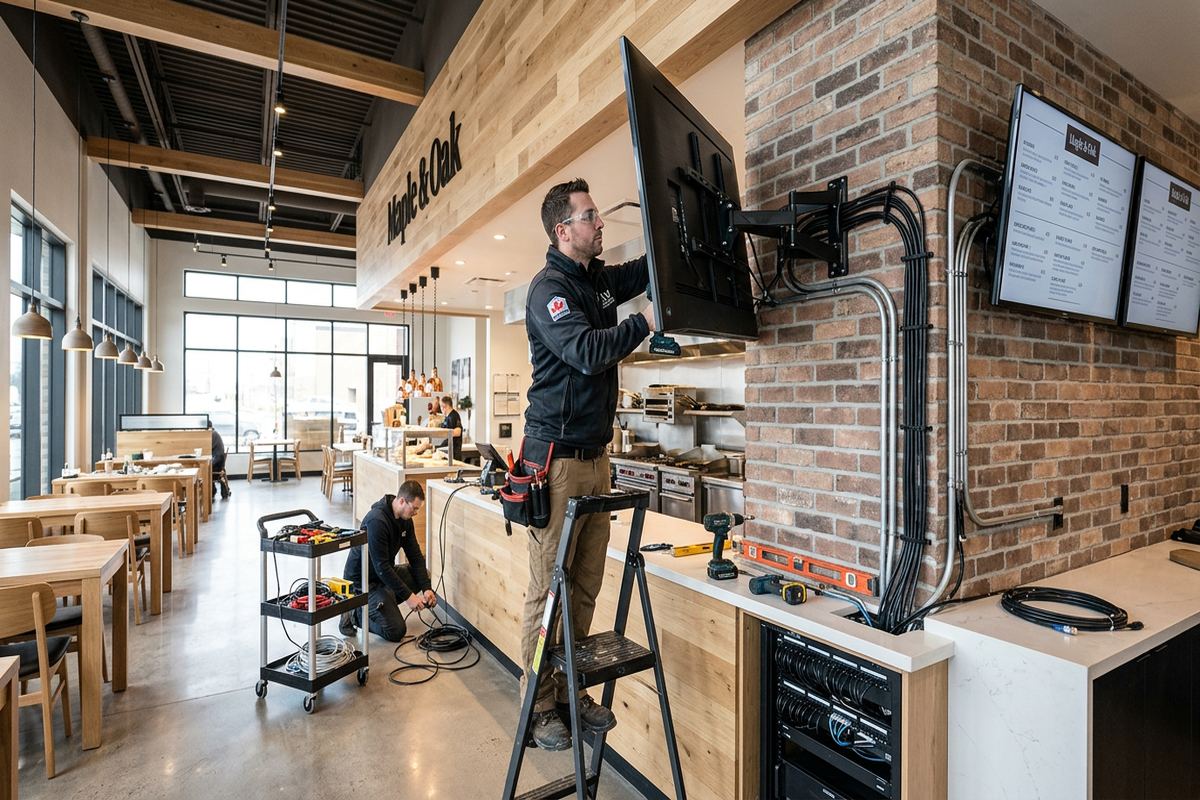
Small businesses in Downtown Cobourg often work within narrow storefronts, older mixed-use buildings and finished customer areas. A display may present menus, promotions, schedules, security views or meeting content, but it still needs safe placement and practical service access. We assess sightlines from the intended audience, glare from front windows, circulation paths and the risk of contact near counters or entrances. Heritage finishes and leased premises favour careful, reversible installations. Cable routes can follow existing service areas or discreet raceway where opening original walls would be unsuitable or prohibited.
Offices, clinics and professional spaces may need a meeting-room display connected to a table input, wireless presentation system, camera or soundbar. The mount must leave enough clearance for these devices and allow staff to reach required controls without pulling on cables. For commercial strips and industrial units elsewhere in Cobourg, walls may be concrete block, steel framing or insulated panels rather than conventional house construction. Dust, vibration, loading activity and higher mounting positions can also affect bracket choice, equipment protection and the safe method used to lift and secure the display.
Commercial work is planned to reduce interference with normal operations, but access and timing must be agreed in advance. The scope identifies work areas, customer responsibilities, equipment to be mounted and any excluded electrical, finish or network work. Displays are configured for the stated use, then tested with available source equipment. Staff receive a practical handover covering inputs, basic operation and shutdown. If several contractors are otherwise involved, UnifiedLink can remain the one accountable low-voltage contractor for display mounting, associated structured cabling, Wi-Fi connections and compatible audio work included in the project.
- Customer sightlines and public circulation considered
- Mounts selected for the actual commercial wall type
- Source, audio and network connections tested
- As-built information provided for future service
Exterior and Seasonal Display Considerations
An exterior television installation must be assessed as an outdoor system, not an indoor display placed under a shallow overhang. Equipment suitability, temperature range, moisture exposure, sunlight, ventilation and mounting hardware all require review. Cobourg winters bring freezing conditions and repeated freeze-thaw cycles that can affect masonry, sealants and exposed penetrations. Wind-driven rain near the lake can reach areas that appear sheltered in calm weather. The display manufacturer’s installation requirements remain important, and a proposed location may be declined if exposure or structure makes reliable mounting impractical.
Penetrations through exterior walls need deliberate routing and sealing. Openings should shed water, avoid trapping moisture and use materials compatible with the wall assembly. Brick veneer, solid masonry, siding and framed walls each manage water differently, so a bead of sealant alone is not a complete strategy. Cable entries are positioned to reduce direct exposure, and exterior-rated components are used where the agreed design requires them. We also consider thermal movement and future access because sealants and covers remain maintenance items rather than permanent guarantees against every weather condition.
Seasonal equipment may be removed before winter or protected when not in use, depending on its rating and the owner’s plan. The bracket and cable terminations still need inspection after severe weather, building movement or visible sealant failure. Near Cobourg Beach, airborne moisture and exposure can increase the importance of checking hardware and enclosures for deterioration. The handover identifies accessible connection points and the route through the building envelope. Any ongoing inspection or maintenance responsibility is explained so the owner understands which conditions could affect the installation after the initial work is complete.
- Outdoor equipment ratings checked before installation
- Freeze-thaw exposure considered for masonry fixings
- Exterior penetrations routed and sealed for the assembly
- Maintenance points identified during handover
What to Expect From Cobourg TV Wall Mounting
The process starts with a service request describing the property, television, preferred wall and connected equipment. Photos can help with initial discussion, although they do not replace verification where structure or routing is uncertain. Requests sent during business hours are answered the same day, while after-hours requests are answered the next business day. Site assessment timing depends on the service and travel distance. Before pricing, we gather enough information to define the mounting method, cable approach, equipment responsibilities and conditions that could change the planned work.
Following the assessment, the written scope covers equipment, cable routes, device placement, exclusions, equipment ownership and warranty. Customers should review it for assumptions about the bracket, electrical work, patching, painting, source devices and network availability. On installation day, the work area and proposed television position are confirmed again before drilling. Cables are routed as specified, labelled where accessible and tested before final closure. The bracket, television and listed accessories are then installed and checked for level, clearance, movement and secure engagement with the mount’s locking system.
Handover is completed with the customer’s own credentials and an as-built record of the installation. We demonstrate the agreed inputs, connected sources, audio path and bracket movement, including any limits needed to protect cables or nearby finishes. Packaging, spare parts and manufacturer materials are handled as set out in the scope. For Cobourg homeowners and businesses, this documented approach is particularly useful when older walls, leased premises or multiple connected systems are involved. It leaves a clear account of what was installed, where cables run and which party owns each component.
- Same-day reply to requests sent during business hours
- Written scope issued before installation work proceeds
- Mount, connections and movement tested on site
- As-built record supplied at handover
Cobourg neighbourhoods we cover
- Downtown Cobourg
- Cobourg Beach
- New Amherst
- West Park
- East Village
TV wall mounting in Cobourg — common questions
Can you mount a TV on an old plaster wall?
Often, but the supporting structure must be verified first. Many older Cobourg homes have plaster over wood, metal or gypsum lath, and previous renovations can further complicate the wall. We assess the condition, locate suitable support and choose controlled drilling methods. If concealed routing could cause extensive damage, we may recommend discreet surface raceway instead.
Can cables be hidden inside an exterior wall?
Sometimes, although exterior walls in Cobourg may contain insulation, vapour-control layers, masonry or blocking that restricts the route. We inspect the assembly before proposing concealment. Power leads are not simply placed inside the wall, and low-voltage cable must follow an appropriate pathway. Where concealment is unsuitable, low-profile surface raceway can provide a cleaner, reversible option.
Do I need condo or landlord approval?
Usually, the owner or occupant must confirm any required approval before drilling. Cobourg condo rules may address shared walls, concrete, fire-rated assemblies, work hours and contractor access. Tenants should obtain written landlord permission for bracket fixings and cable openings. UnifiedLink can provide a proposed scope, but responsibility for securing property or condominium approval remains with the customer.
Can you mount a TV above a fireplace?
A fireplace location is assessed for heat, viewing height, wall construction, mantel clearance, power and cable access. Some Cobourg homes have masonry chimneys or renovated fireplace surrounds that make anchoring and routing more complex. We may recommend another position if temperatures, structure or viewing angle are unsuitable. Manufacturer clearance requirements also need to be respected.
Can you install my existing bracket?
An existing bracket can be considered if it matches the television’s VESA pattern, weight and intended movement. We also inspect its condition, hardware and wall plate. Missing fasteners, unknown load ratings or damaged locking parts may make it unsuitable. The Cobourg site assessment identifies whether the customer-supplied mount can be used or should be replaced.
What happens after the TV is mounted?
We connect and test the equipment included in the written scope, configure agreed inputs and audio settings, and demonstrate normal operation. Accounts use the customer’s own credentials. Cobourg customers receive an as-built record showing the cable route and installed components. We also explain bracket movement limits, accessible connection points and any exterior or seasonal maintenance considerations relevant to the installation.
Coverage in Cobourg is confirmed against the address before we quote. See everything we install in Cobourg or the province-wide tv wall mounting page.