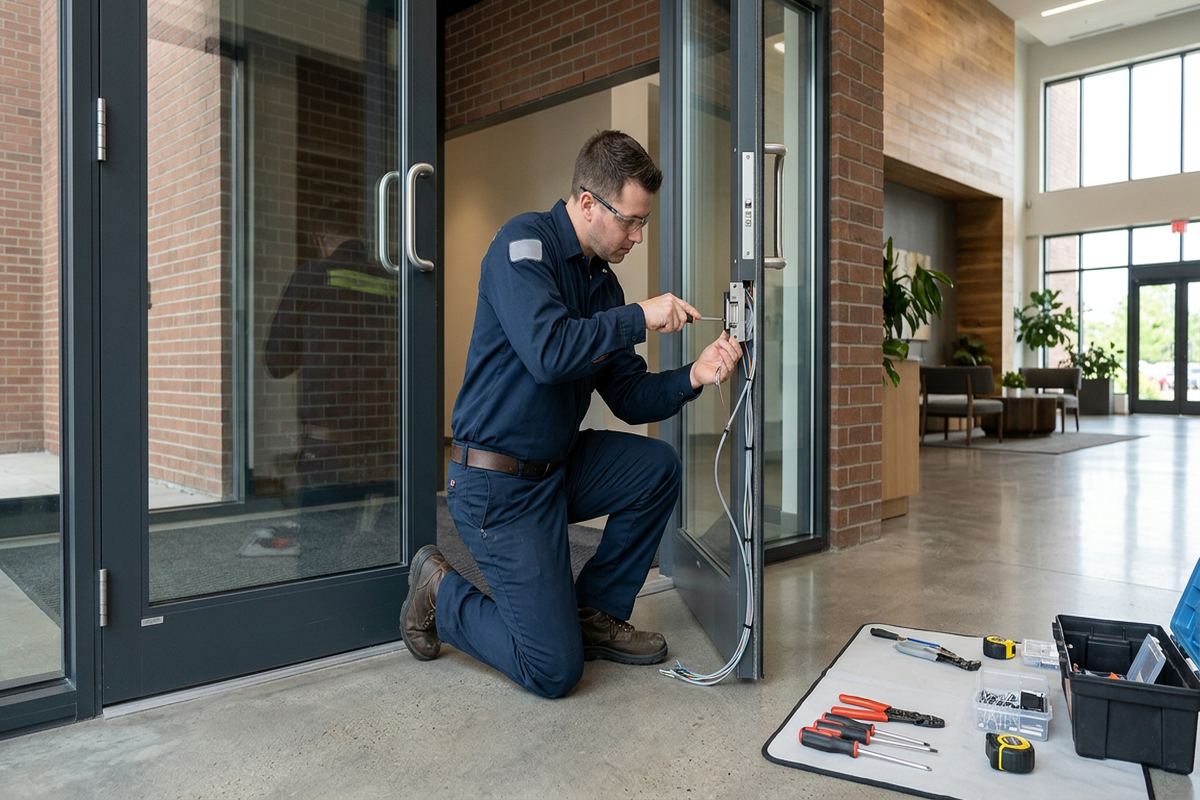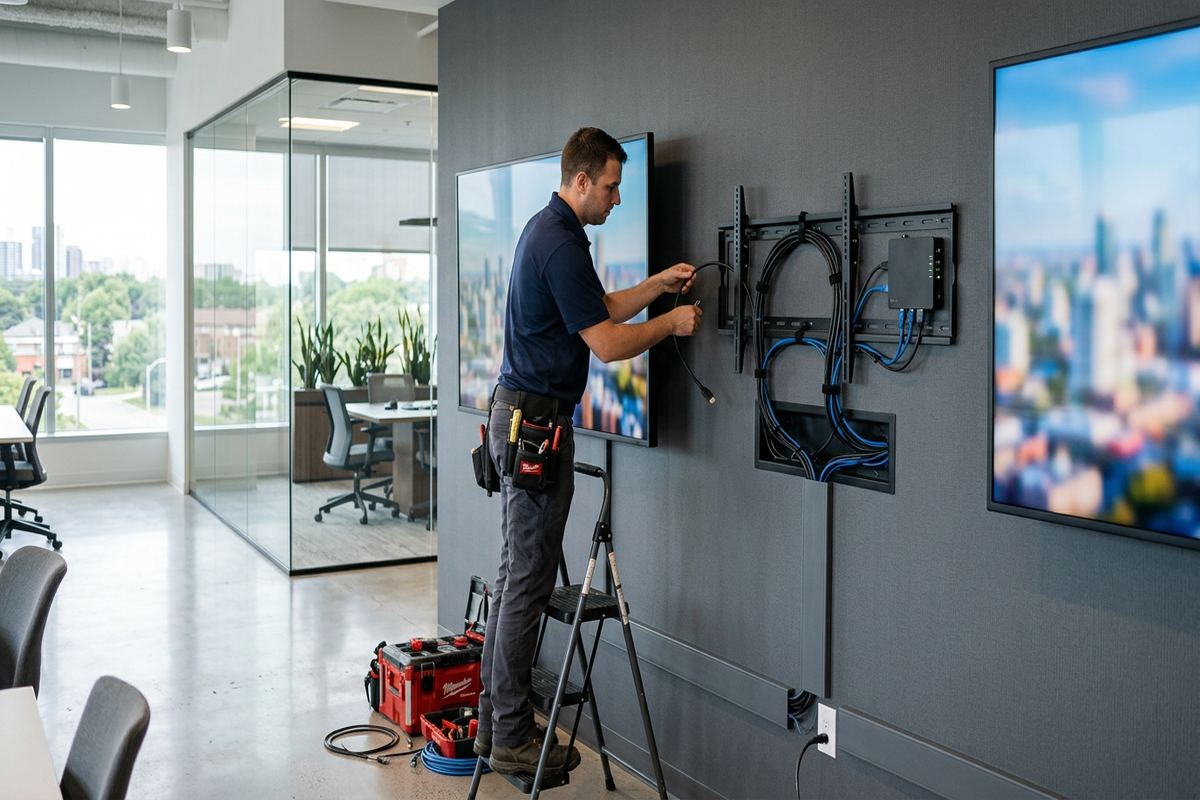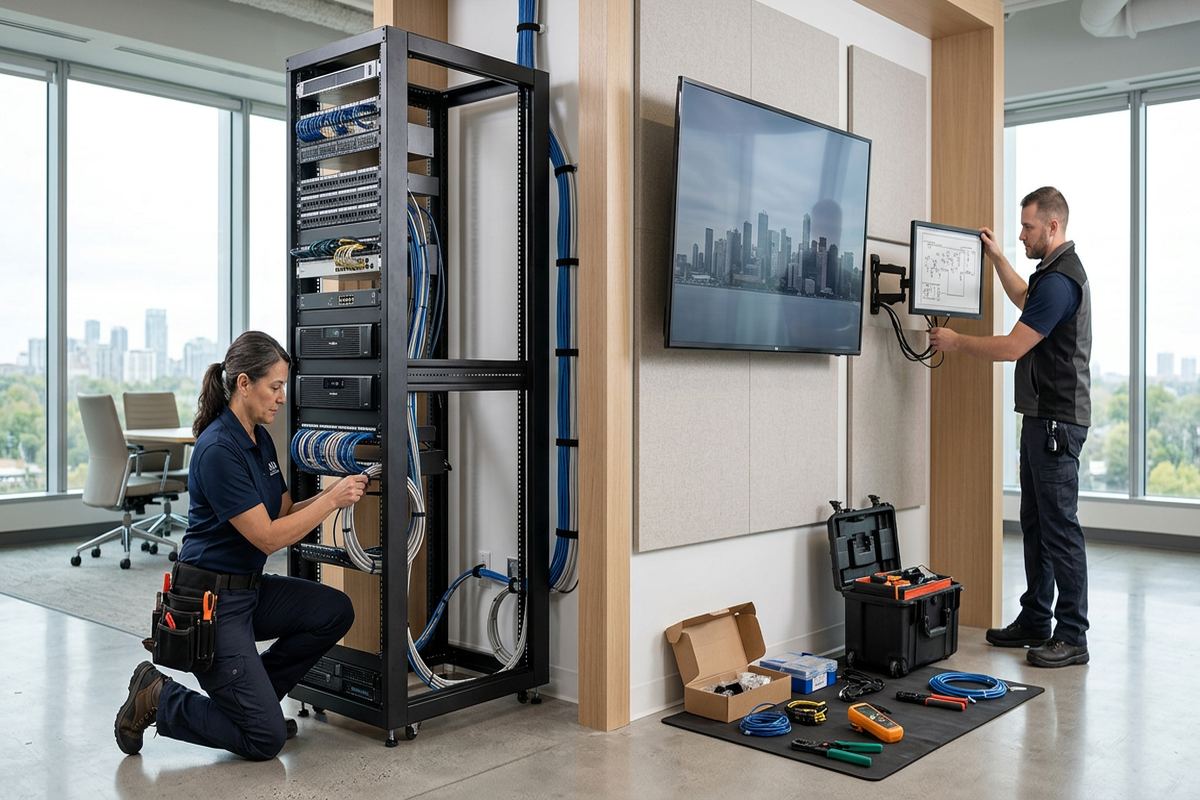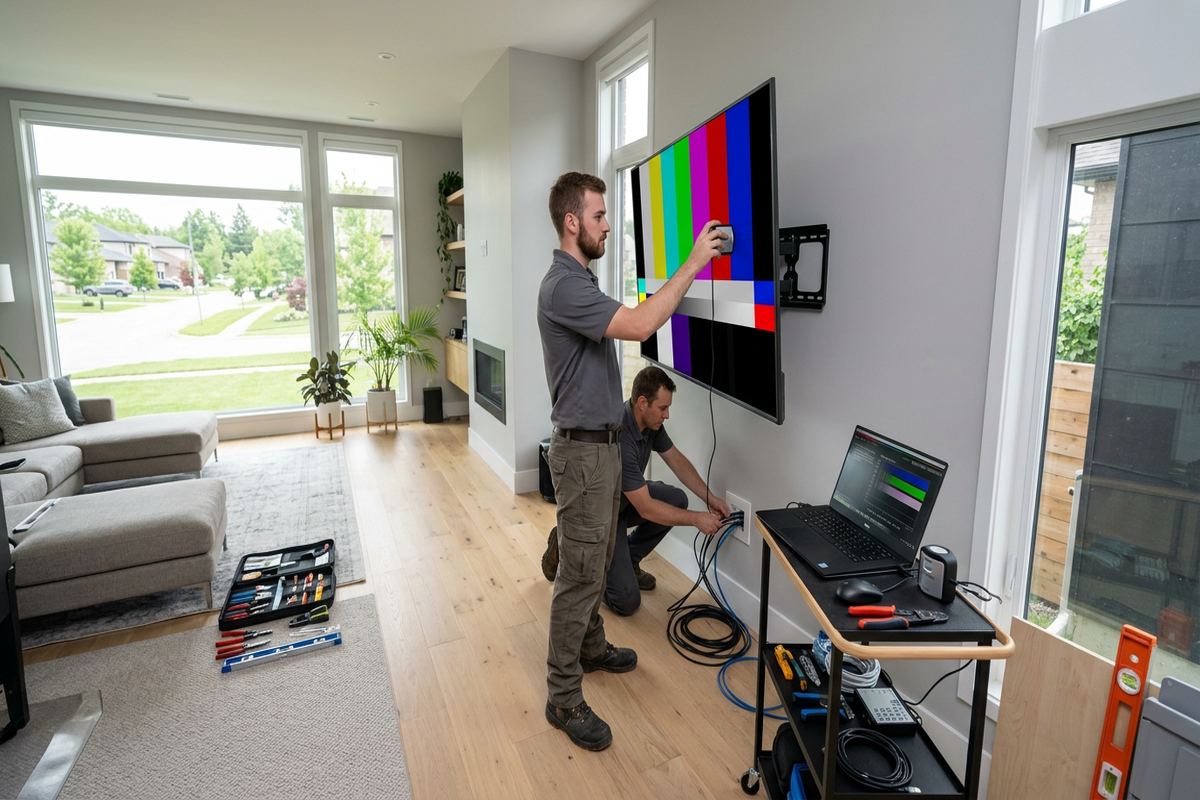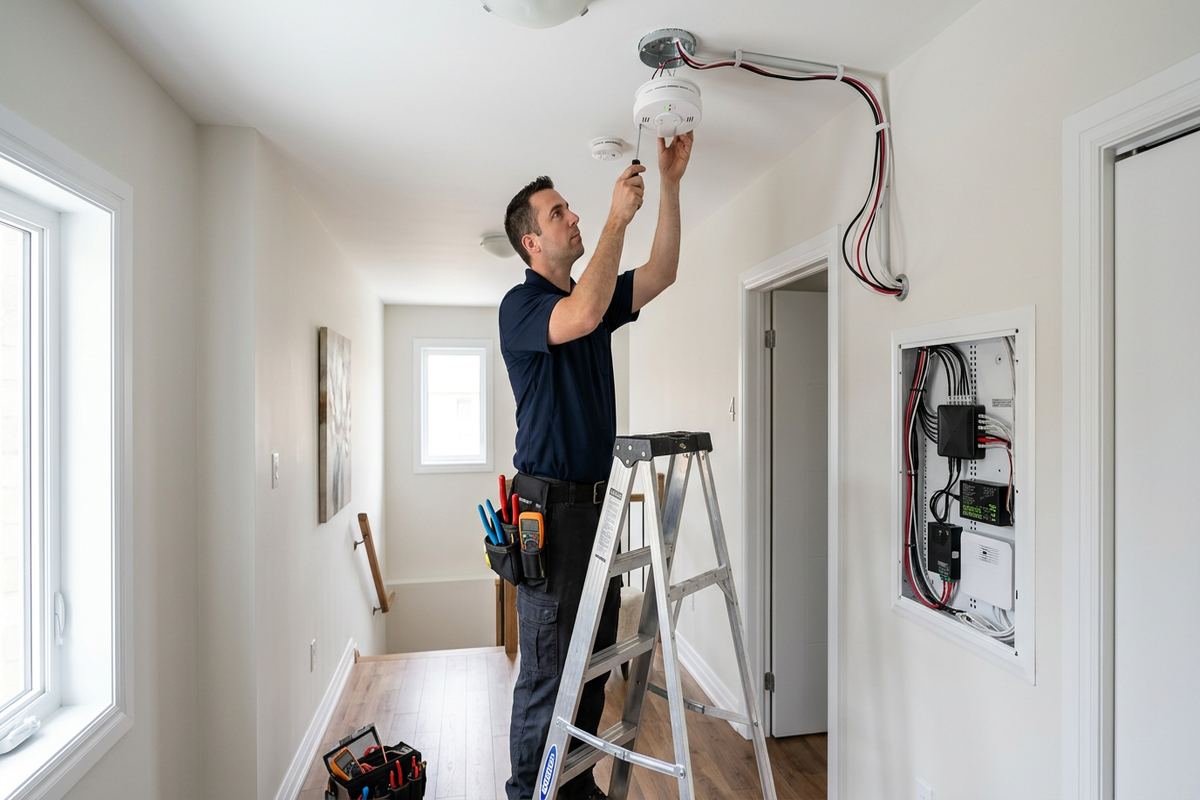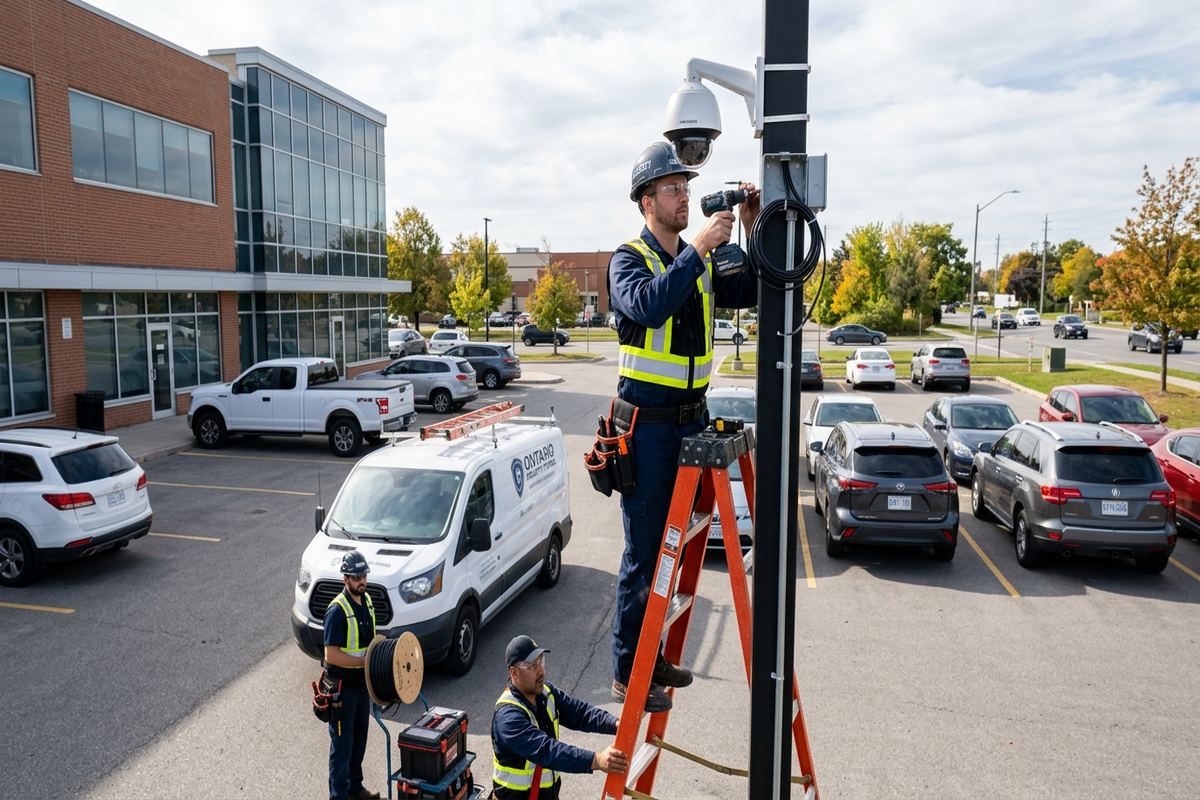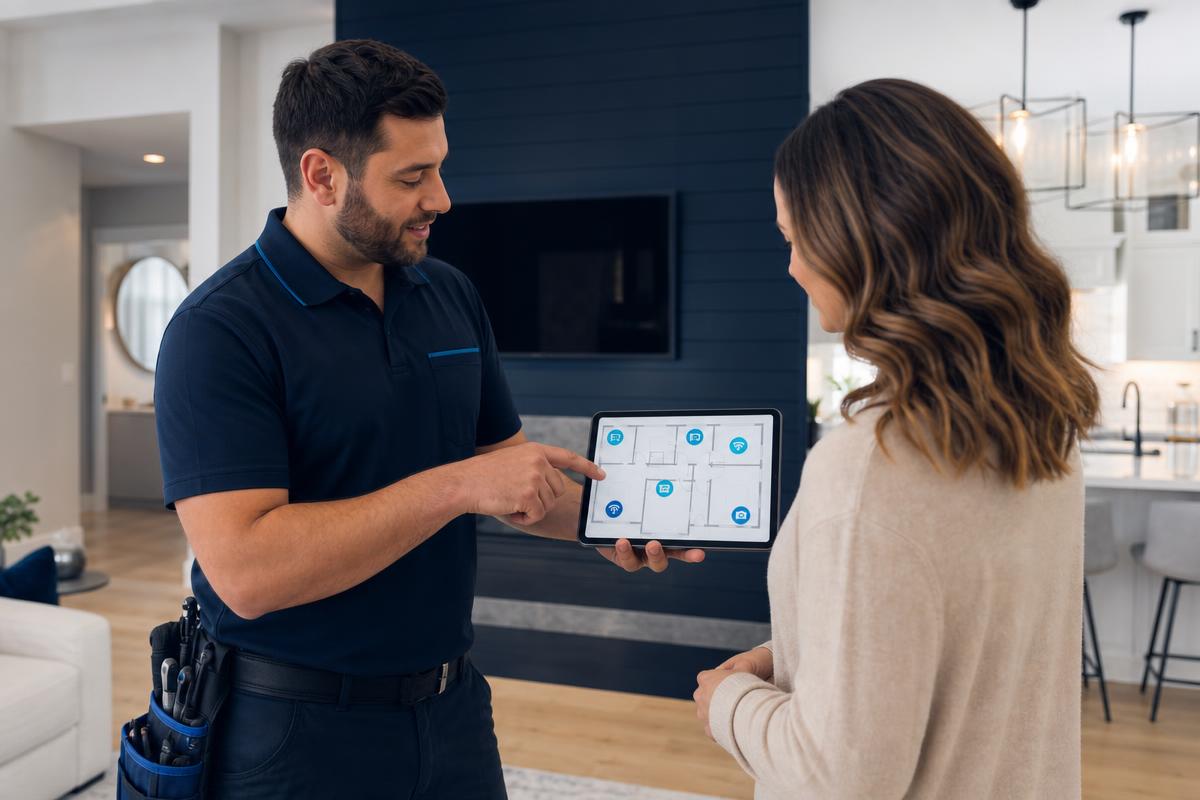
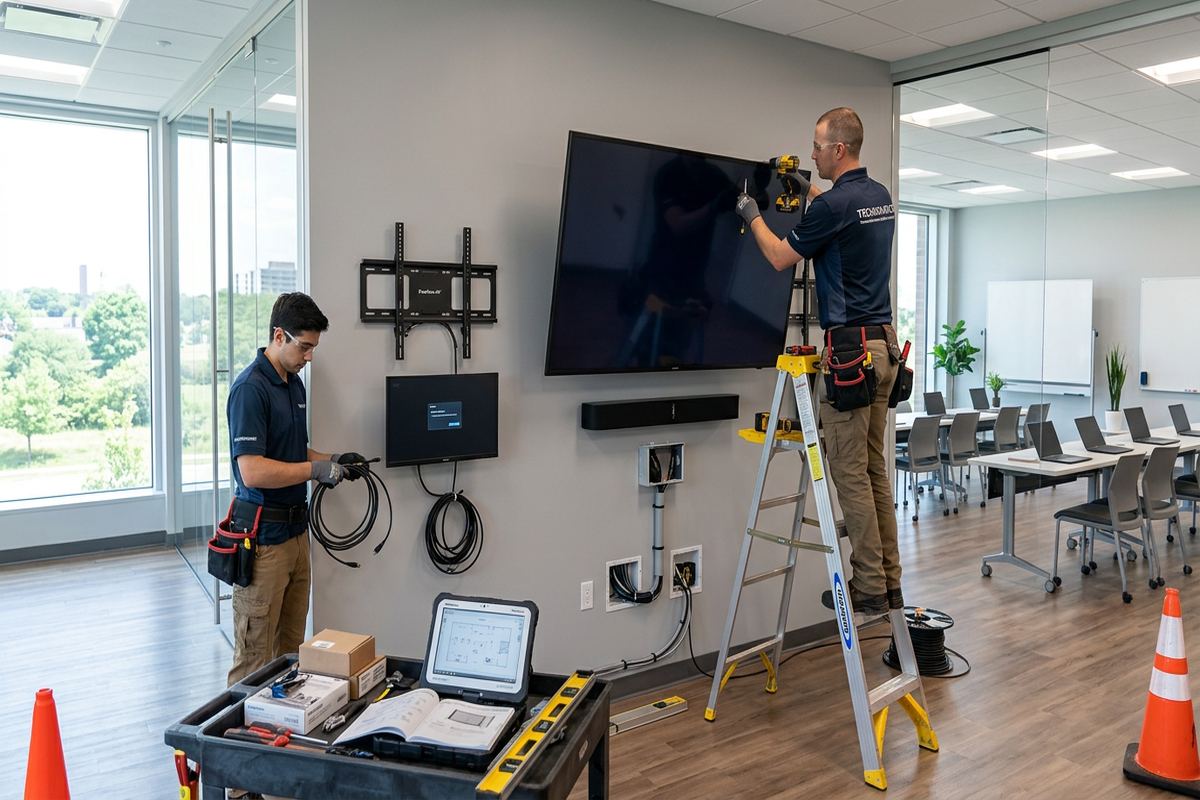
UnifiedLink installs outdoor televisions for homes and businesses in Cobourg, Ontario. We assess the wall, viewing area, power, signal path and exposure before preparing a written scope. The installation accounts for local building materials, seasonal weather and practical service access, with labelled cabling, on-site configuration and a documented handover using your own credentials.
Outdoor TV Planning for Cobourg Properties
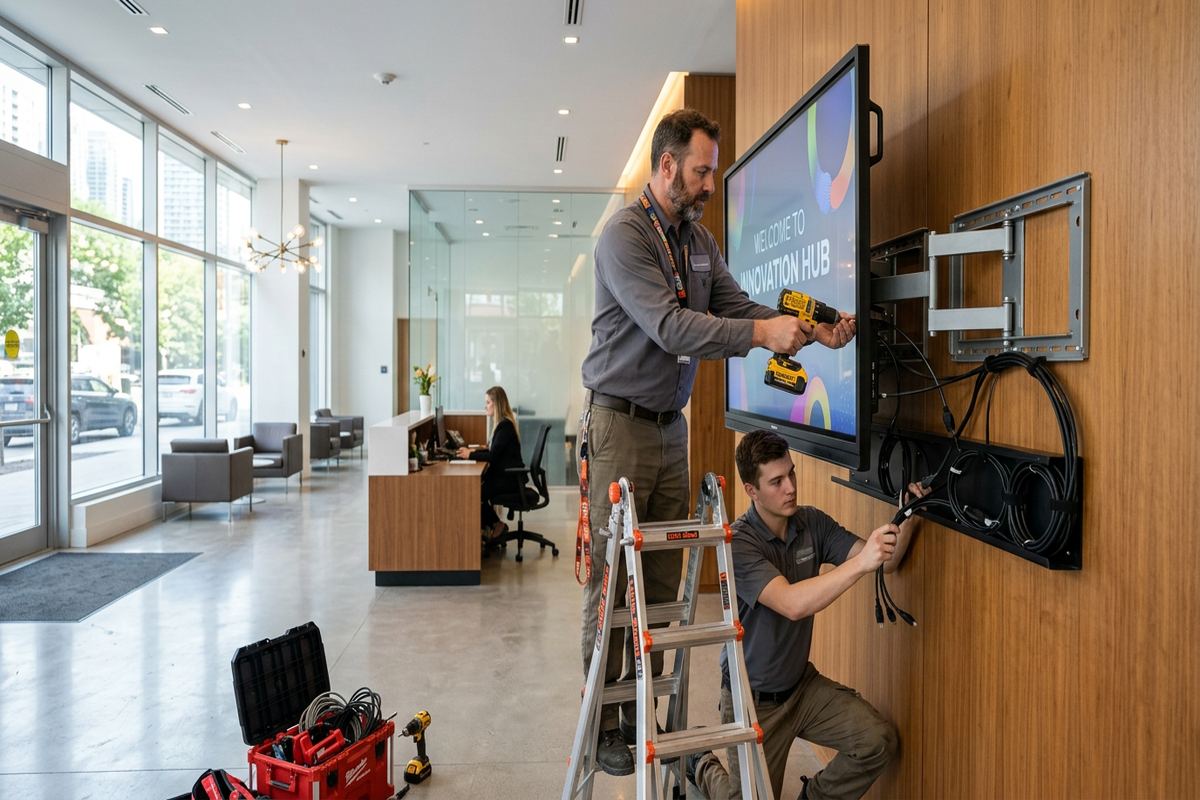
A reliable outdoor TV installation starts with the location rather than the screen size. During a Cobourg site assessment, we review seating positions, expected viewing times, sun direction, glare, nearby lighting and exposure to wind-driven precipitation. We also check whether the proposed wall provides sound structural support and enough room for a suitable mount. These details determine viewing height, bracket type, cable route and service access. The assessment happens before pricing, so the written scope reflects actual site conditions instead of assumptions based on photographs or a general description.
Cobourg properties vary considerably, from heritage homes near the beach to newer frame construction in New Amherst and mixed-use buildings downtown. Brick, stone veneer, concrete and wood framing require different anchors and drilling methods. Older finishes may also conceal irregular framing, previous alterations or fragile masonry. We favour careful, reversible work where practical, especially around heritage materials and leased premises. Mounting decisions account for the building surface, television weight, bracket movement and environmental loads rather than relying on general-purpose fasteners that may not suit the wall.
The written scope identifies the equipment, proposed cable routes, television and accessory placement, exclusions, equipment ownership and applicable warranty. It also records any preparatory work that must be completed by an electrician, property manager or another trade. This helps distinguish the low-voltage installation from electrical work and prevents ambiguity about who supplies the television, mount, streaming device or enclosure. For Cobourg homeowners and businesses, a defined scope also makes it easier to review exterior changes, obtain approvals and understand which surfaces may be opened or penetrated.
- Viewing-height and glare assessment
- Wall construction and anchor review
- Proposed cable routes documented
- Equipment ownership clearly identified
- Required approvals noted before work
Choosing Equipment for Cobourg Outdoor Conditions
Outdoor-rated displays are designed differently from ordinary indoor televisions. Their enclosures, ventilation, operating range and screen brightness are intended for more demanding locations, but product ratings still vary. We help match the display to a covered patio, partially exposed wall or brighter open area without representing one model as suitable everywhere. Placement remains important even with outdoor-rated equipment. Shade, roof coverage and orientation can reduce glare and direct weather exposure, while adequate clearance supports ventilation and future service. Manufacturer instructions and environmental limits guide the installation details.
Cobourg winters introduce cold temperatures, snow, ice and repeated freeze-thaw cycles. Exterior penetrations therefore need compatible sealing methods that keep water from following a cable into the wall while allowing the assembly to remain serviceable. Cable jackets, connectors, junction points and accessories must be appropriate for their location. Drip loops and sensible entry-point placement help manage moisture. We avoid leaving vulnerable couplers or power accessories exposed behind the display, where trapped water and limited airflow can cause avoidable problems as conditions change through the year.
Brightness is only one part of outdoor picture quality. A screen facing afternoon sun may remain difficult to watch even when its specifications appear adequate, while a shaded location can often provide better results with less visual impact on the building. We assess reflections from windows, pale masonry, water and nearby lighting, particularly around Cobourg Beach. The mounting angle and bracket movement must also avoid creating a sail-like projection in windy conditions. These practical considerations shape recommendations for screen location, bracket style and whether a protective cover is useful.
- Outdoor-rated display suitability review
- Sun and glare evaluation
- Cold-weather operating limits considered
- Weather-resistant accessory placement
- Manufacturer clearances maintained
Mounting on Masonry and Frame Walls
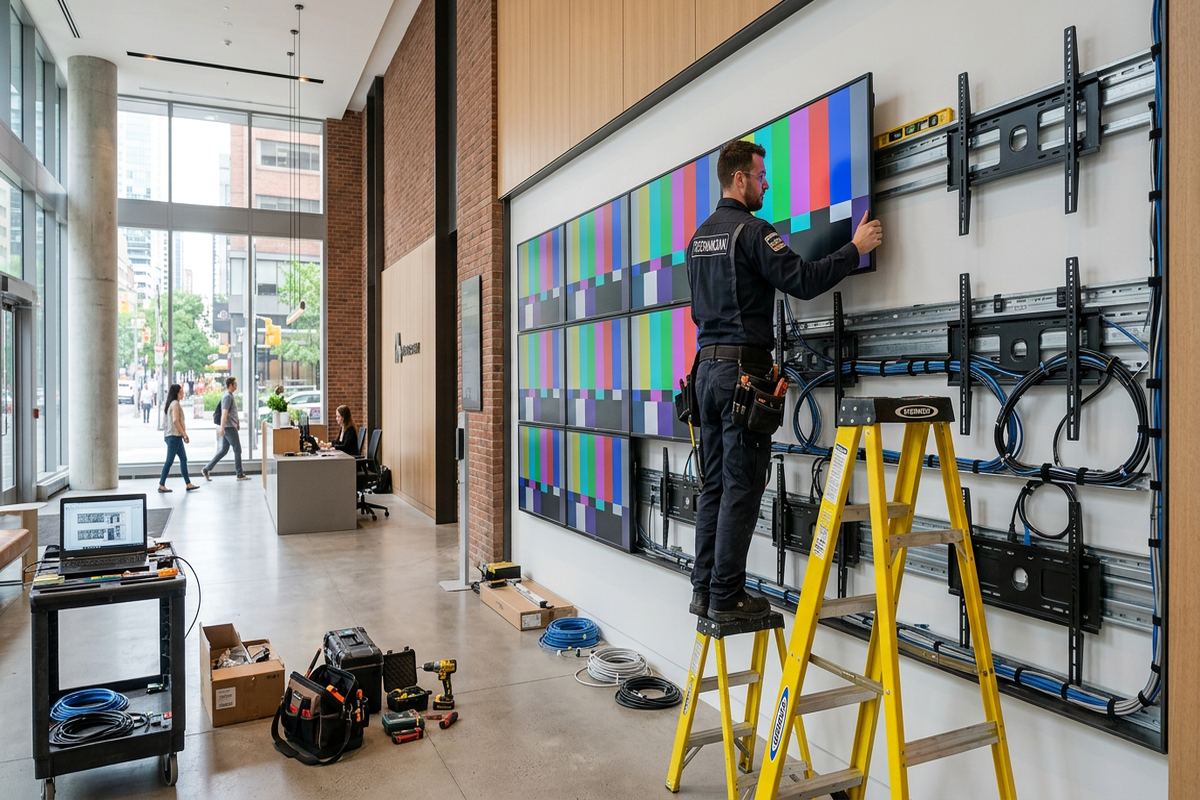
Brick and masonry mounting requires more than selecting an anchor with a sufficient published load. The condition of the brick, mortar joints, wall thickness and cavity behind the surface all affect the approach. On older Cobourg homes, masonry may be softer or less uniform than modern veneer, and decorative details should not be treated as structural support. We identify suitable fixing locations, control drilling and avoid unnecessary holes. Where the proposed position is unsuitable, we explain alternatives rather than forcing an installation that could damage the finish or provide unreliable support.
Frame construction presents different challenges. The bracket normally needs to engage sound structural framing or suitable blocking, not exterior cladding alone. Siding profiles, drainage planes and wall cavities must be respected so mounting hardware does not crush the finish or create uncontrolled water paths. Homes in New Amherst and West Park may have modern assemblies, but wall composition should still be verified at the intended location. Spacers, flashing details and sealants must be compatible with the surface, with penetrations positioned so they can be inspected and maintained after installation.
Freestanding structures, pergolas and covered decks need their own structural review. A decorative post may not be designed for a moving television bracket, and mounting to it can introduce twisting loads that were not anticipated. We assess accessible framing and coordinate when added backing or carpentry is required. The final position must leave enough space for bracket operation, ventilation, connectors and removal of the display. Any limitations are documented in the scope, including surfaces we will not penetrate or structural preparation that falls outside the installation work.
- Masonry condition checked before drilling
- Structural framing or blocking confirmed
- Cladding and drainage layers protected
- Bracket movement clearance verified
- Unsupported decorative surfaces avoided
Cobourg, Ontario
Outdoor TV installation in Cobourg, scoped in writing first
Book a site assessment and get equipment, routes, exclusions, and warranty on paper before anything is installed.
Outdoor TV Cabling in Cobourg
A clean installation depends on planning power, network and video connections together. UnifiedLink installs continuous labelled low-voltage cable runs between suitable termination points, avoiding hidden joins that complicate troubleshooting. Routes may pass through basements, utility rooms, attics or accessible wall cavities depending on the building. Exterior sections require cable rated for the environment and physical protection where damage is possible. We document the route and label both ends, allowing the television, network equipment and source devices to be identified later without tracing unmarked cables through finished areas.
Electrical receptacles and line-voltage wiring must be suitable for the outdoor location and completed by the appropriate electrical trade. During assessment, we note whether usable power is already available near the proposed display and whether its placement conflicts with the mount. We do not conceal extension cords inside walls or treat an indoor power bar as an outdoor solution. When electrical work is needed, the written scope identifies that dependency so it can be coordinated before installation. This reduces last-minute changes to screen height, bracket placement or the intended cable route.
For streaming and connected television features, a stable network path is often more useful than simply adding another wireless extender. We test the intended area and consider nearby access-point placement, building materials and network ownership. Brick walls, foil-backed insulation and distance from the router can weaken Wi-Fi outside. Where practical, a wired network connection offers a consistent option for compatible equipment. Configuration is completed on site using the customer’s own accounts and credentials, without creating installer-controlled logins that could complicate future access or equipment changes.
- Continuous labelled low-voltage runs
- Outdoor-rated cable where required
- Power dependencies identified in writing
- Wired and wireless network options assessed
- No installer-controlled customer accounts
Careful Work on Heritage and Leased Properties
Heritage homes near Cobourg Beach and Downtown Cobourg often call for minimal, reversible intervention. Original brick, stone, trim and interior finishes can be difficult to repair once altered. We look for cable routes that use accessible service areas, existing openings or less prominent elevations where appropriate. Reversibility does not mean compromising support or weather sealing; it means limiting unnecessary disturbance and selecting a method that can be removed with manageable repair. If the desired position would put significant historic material at risk, we present another location or mounting approach.
Tenants and landlords should confirm written permission before exterior drilling, cable routing or equipment attachment. The same principle applies to condominium owners, who may need approval for changes to common elements, balcony walls or exterior-facing surfaces. We can provide a defined proposed scope showing device placement and routes for review, but approval remains the customer’s responsibility. Installation is scheduled after the necessary permissions are in place. This avoids work being reversed later because a property manager, condominium corporation or owner did not authorize visible equipment or penetrations.
Small downtown businesses may need an outdoor display for a patio, customer area or sheltered entrance while preserving storefront details and pedestrian clearance. We consider sightlines, bracket projection, tampering risk and whether the television could obstruct doors, signs or maintenance access. Cable routes are planned to remain orderly in public-facing areas. If the property is leased, the scope can separate permanent building work from customer-owned equipment. This makes equipment ownership and removal responsibilities clearer when a tenancy changes or the display is replaced.
- Reversible methods considered where practical
- Historic finishes disturbed as little as possible
- Condo and landlord approvals required
- Public clearances reviewed
- Ownership and removal responsibilities documented
Outdoor Displays for Cobourg Businesses
Commercial outdoor televisions need to fit operating requirements as well as the building. A restaurant patio may prioritize viewing from several tables, while a service business may use a sheltered display for information or monitored content. We review viewing distance, ambient light, sound expectations, opening hours and staff control. The proposed installation also accounts for cleaning, seasonal furniture changes and access to connectors. Downtown Cobourg sites may have limited routing options, so assessment is important before equipment is ordered or a wall position is promised.
Commercial strips and industrial units can offer more accessible structure and cable pathways, but they still require proper planning. Metal cladding, concrete block, steel framing and high ceilings each affect anchoring and route selection. Loading areas and shared exterior walls may expose equipment to impact, vibration or unauthorized access. We identify practical mounting zones and protect accessible cabling where needed. If lifts, building access arrangements or work-area controls are required, they are identified in the scope rather than treated as incidental details on installation day.
Audio can be included where an outdoor television’s built-in speakers do not suit the space, subject to property rules and the intended use. The design may involve a weather-appropriate soundbar, distributed speakers or a connection to an existing audio system. We review control methods so staff can operate the display without relying on personal accounts or an unclear collection of remotes. Volume expectations should also reflect nearby residences and shared premises. Equipment placement aims to support intelligibility without creating unnecessary sound spill beyond the customer area.
- Commercial viewing needs assessed
- Industrial wall types considered
- Tampering and impact exposure reviewed
- Staff controls planned
- Optional outdoor audio integration
Installation, Configuration and Handover
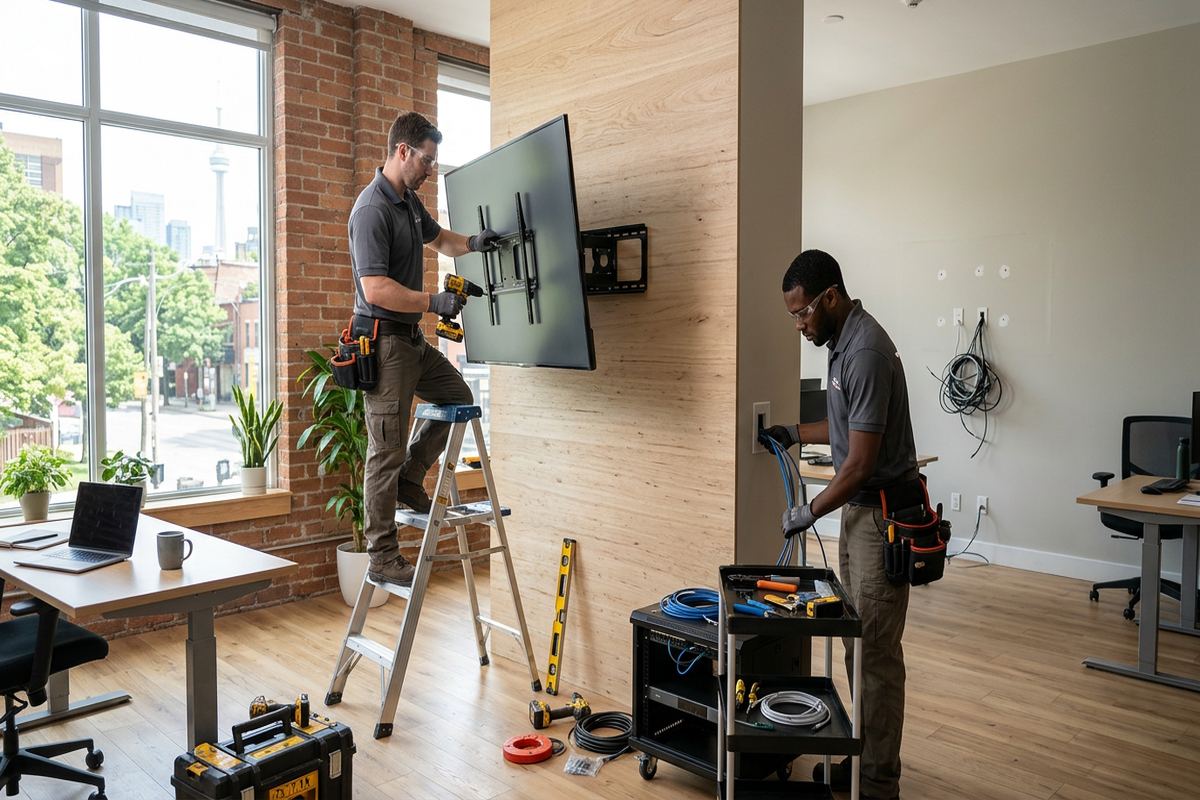
Installation follows the agreed placement and cable routes in the written scope. The wall area is checked again before drilling, and the bracket is assembled and fixed using hardware appropriate to the verified substrate. Cables are routed, supported and labelled, with exterior entries sealed for the surface and exposure. The television is mounted with required clearances and checked through the bracket’s intended range of movement. Work areas are kept orderly, and any site condition that conflicts with the scope is discussed before a material change is made.
On-site configuration covers the functions included in the scope, such as network connection, source selection, streaming-device setup, display settings and control testing. Customers enter or provide access to their own credentials as appropriate, retaining ownership of accounts and subscriptions. We confirm that connected equipment communicates properly and that controls are understandable for the people who will use them. If network performance is inadequate, we explain the observed limitation and available cabling or Wi-Fi options rather than presenting a temporary connection as a completed long-term solution.
At handover, the customer receives an as-built record showing the installed devices and relevant cable information. We review normal operation, input selection, bracket movement, shutdown procedures and any seasonal precautions associated with the selected equipment. Warranty information included in the scope is clarified, along with equipment ownership. One accountable contractor coordinates the low-voltage installation, configuration and documentation, reducing gaps between mounting and connectivity work. Electrical, structural or other excluded work remains clearly identified so there is no confusion about responsibilities after completion.
- Agreed placement verified before drilling
- Exterior entries sealed and inspected
- Display and source devices configured
- Customer retains account credentials
- As-built record supplied at handover
Arranging Outdoor TV Installation in Cobourg
To begin, provide the Cobourg address, photographs of the proposed wall and seating area, the television model if already selected, and details about available power and internet service. Mention whether the site is a home, condominium, rental property or business, since access and approval requirements differ. Photographs help with initial discussion but do not replace assessment of structure, exposure and cable access. Requests sent during business hours are answered the same day; after-hours requests are answered the next business day.
Site assessment timing depends on the service and travel distance. At the visit, we examine the mounting surface, likely cable route, exterior exposure, viewing conditions and access constraints. For properties in East Village, West Park, Downtown Cobourg or other parts of Northumberland County, the same process applies while details vary by construction and location. We also identify whether the customer must obtain landlord, condominium or heritage-related approval. Recommendations are then based on observed conditions rather than a standard package that may not fit the property.
After assessment, the written scope provides a practical basis for approval and scheduling. It covers equipment, cable routes, device placement, exclusions, equipment ownership and warranty, along with dependencies such as electrical work or added structural backing. Customers can review the scope before committing to the installation. This staged process is particularly useful for outdoor work because screen selection, sun exposure, wall construction and sealing details are connected. Resolving those points first helps produce an installation that remains accessible, understandable and appropriate for Cobourg’s changing seasonal conditions.
- Site assessment completed before pricing
- Business-hour requests answered same day
- After-hours requests answered next business day
- Assessment timing varies by service and travel
- Written scope provided for review
Cobourg neighbourhoods we cover
- Downtown Cobourg
- Cobourg Beach
- New Amherst
- West Park
- East Village
Outdoor TV installation in Cobourg — common questions
Can I use a regular indoor TV outside in Cobourg?
An indoor television is generally not designed for Cobourg’s outdoor moisture, temperature swings, condensation or winter cold. Even under a roof, exposure can exceed its operating limits and affect warranty coverage. We review the exact location, manufacturer requirements and expected seasonal use before recommending equipment. Placement, ventilation and protection still matter when an outdoor-rated model is selected.
How do you seal cables through an exterior wall?
The method depends on whether the Cobourg property has brick, stone veneer, siding, concrete or another wall assembly. We choose a controlled entry point, use cable suitable for the location, provide a drip arrangement where needed and apply compatible sealing materials. The goal is to limit water entry through freeze-thaw cycles while keeping the cable route identifiable and reasonably serviceable.
Do I need condominium or landlord approval?
Usually, approval should be confirmed before drilling into exterior walls, balcony surfaces or other areas the condominium corporation or landlord controls. Cobourg tenants and condo owners should obtain written permission for the proposed television, bracket and cable route. We can document the intended placement and work in the scope for review, but securing formal authorization remains the customer’s responsibility.
Can you improve Wi-Fi for an outdoor TV?
Yes, network performance can be assessed as part of a Cobourg outdoor TV project. We consider distance from the router, masonry, insulation and the availability of structured cabling. Depending on the findings, the practical option may be a labelled wired connection, a properly positioned access point or changes to existing Wi-Fi equipment. Configuration is completed using credentials and accounts owned by the customer.
Who provides the television and mounting bracket?
The customer may already own suitable equipment, or equipment selection can be included in the proposed scope. Before installation, we confirm the television model, environmental rating, weight, mounting pattern and bracket compatibility. The written scope states who owns and supplies each item, what warranty applies and whether accessories such as a streaming device, cover or audio equipment are included.
How soon can you assess my Cobourg property?
Requests received during business hours are answered the same day, while after-hours requests are answered the next business day. Site assessment timing depends on the service and travel distance. When contacting UnifiedLink, include the Cobourg address, property type, proposed installation area and any approval constraints. Those details help determine what must be reviewed on site before pricing and scheduling.
Coverage in Cobourg is confirmed against the address before we quote. See everything we install in Cobourg or the province-wide outdoor tv installation page.