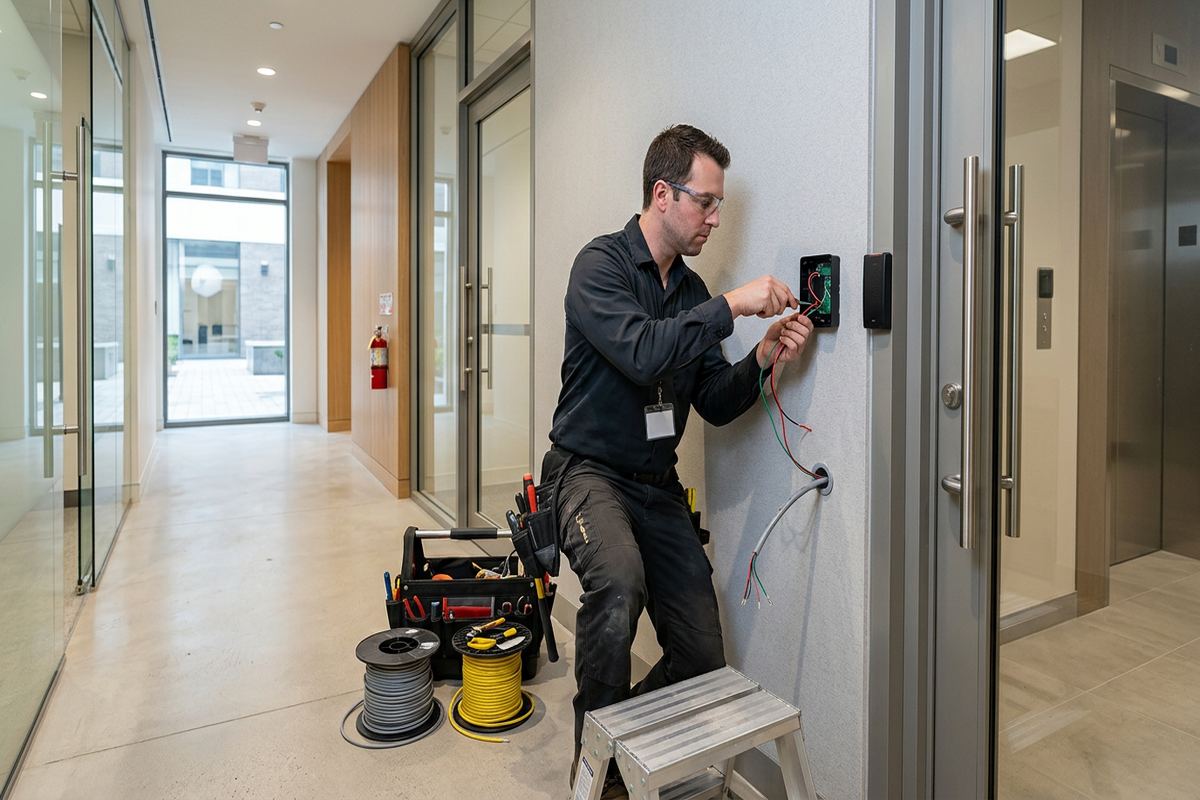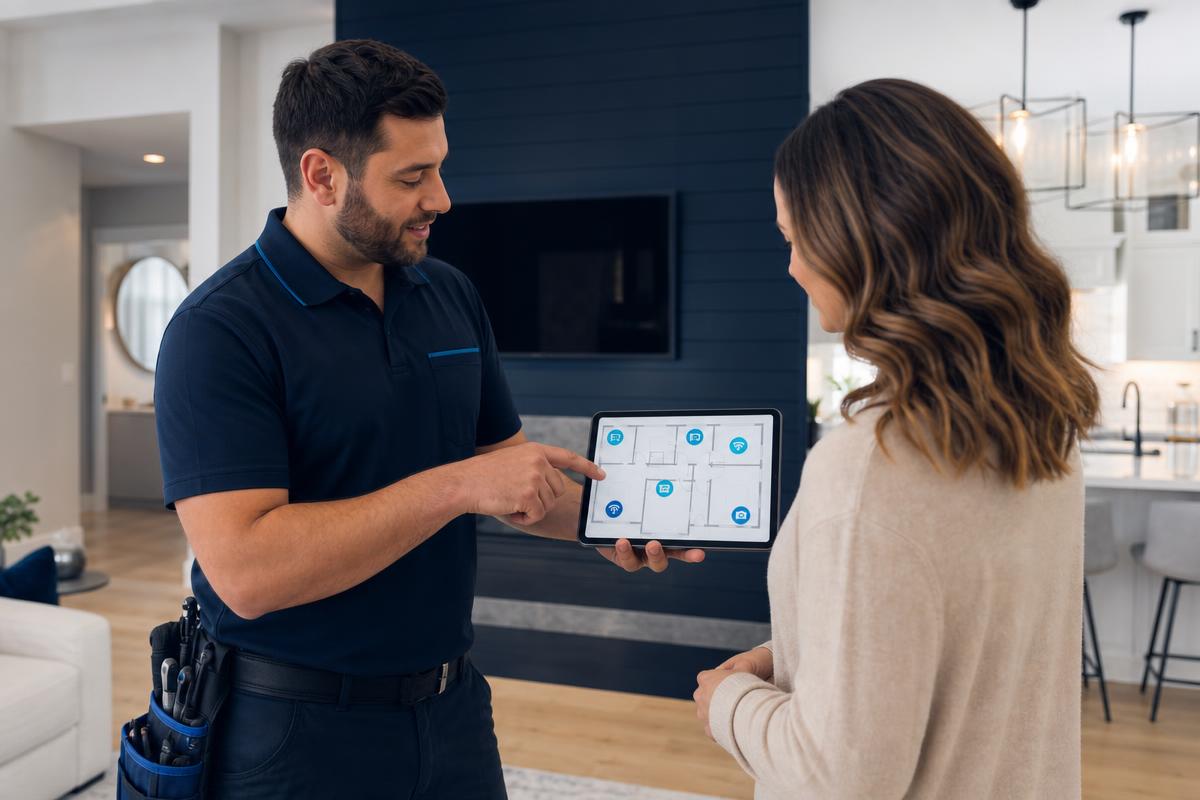
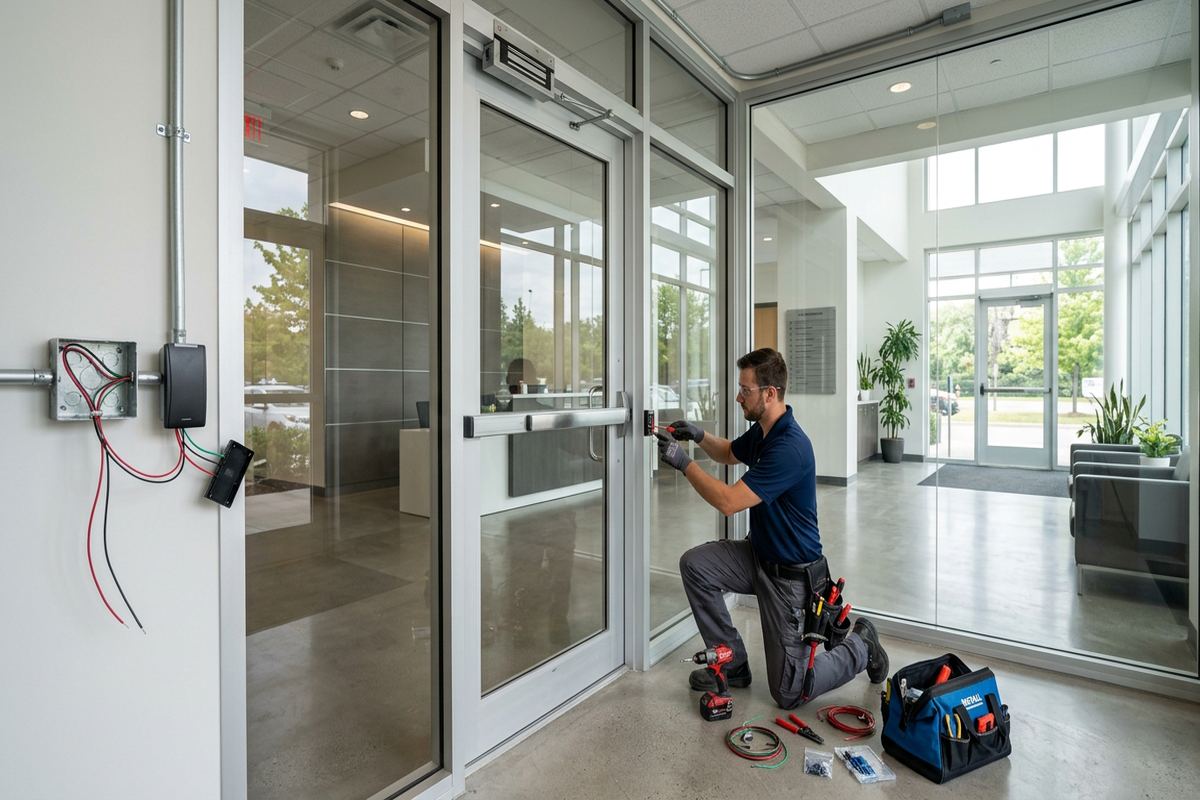
UnifiedLink designs and installs condo access control systems in Cobourg for main entrances, garages, amenity rooms and staff areas. Each project begins with a site assessment and a written scope. We plan device placement, cable routes, door hardware integration and credential management around the building’s construction, operating needs and approval process.
Condo Access Control Planning in Cobourg
A condo access system has to fit the property’s governance, daily traffic and existing door hardware. In Cobourg, that may mean a converted building near Downtown Cobourg, a newer development in New Amherst or a multi-residential property close to Cobourg Beach. We assess each controlled opening, identify who uses it and determine what must happen during normal operation, a power interruption or an emergency. This prevents a generic equipment package from being applied to doors that have different hardware, construction, accessibility or life-safety requirements.
Before pricing, UnifiedLink completes a site assessment suited to the service and travel distance. The assessment reviews electrical rooms, communications spaces, available pathways, door frames, locking hardware, fire alarm interfaces and network availability. We also discuss how residents, property managers, contractors and delivery personnel should enter. Where condo board, landlord or property-management approval is required, the proposed work can be documented clearly enough for review. Unknown conditions, inaccessible spaces and work assigned to other trades are identified rather than hidden inside a broad allowance.
The resulting written scope covers equipment, cable routes, device placement, exclusions, equipment ownership and warranty. It also distinguishes access control work from locksmith, electrical, fire alarm, glazing or door-repair work where another qualified trade may be needed. A defined scope matters in occupied condos because installation affects residents, common areas and scheduled access to suites or service rooms. It gives the board or owner a practical basis for comparing options while keeping responsibilities, restoration limits and expected system operation clear before installation begins.
- Site assessment before pricing
- Door-by-door operating requirements
- Condo and landlord approval documentation
- Clearly assigned trade responsibilities
- Written equipment and installation scope
Selecting Credentials and Controlled Openings in Cobourg
Credential selection should reflect how the building is managed, not simply which reader looks newest. Cards and fobs remain practical for many Cobourg condos because management can issue, suspend and replace them without changing mechanical locks. Mobile credentials may suit buildings whose residents are comfortable using phones, while keypads can support limited staff or service access when codes are managed carefully. We review administration workload, recurring platform requirements, internet dependency and ownership of the credential database so the selected approach remains usable after the installer leaves.
Main vestibules, resident entrances, parking areas, bicycle rooms and amenity spaces rarely need identical rules. A front door may allow residents at all times while restricting contractors to scheduled periods. A garage reader may activate a gate operator, but the system still needs a defined response when the gate fails or a vehicle tailgates. Interior rooms can follow separate schedules and permissions. Mapping these requirements by door helps avoid excessive access, confusing schedules and credentials that continue working after a tenant, employee or contractor should have been removed.
Smaller mixed-use properties along commercial strips may combine residential entrances with retail, office or service areas. Those users often require separate groups, schedules and reports even when they share a controller. Industrial units elsewhere in Northumberland County can add overhead doors, fenced gates or staff-only areas to the same planning exercise. UnifiedLink separates permissions according to operational need and confirms which party will administer changes. The objective is controlled, understandable access without giving one tenant or business visibility into records that belong to another occupant.
- Fob, card, keypad and mobile options
- Separate resident and contractor permissions
- Door-specific schedules and access groups
- Credential ownership defined in writing
- Practical removal of lost credentials
Door Hardware and Safe Egress
Access control does not correct a dragging door, damaged frame or unsuitable lock. Every proposed opening is reviewed for door type, swing, latch condition, closer operation and the hardware needed to secure it reliably. Electric strikes, electrified locks, magnetic locks and gate interfaces each have different power, mounting and egress implications. Existing mechanical keys may remain available for authorized use. When adjustment, replacement hardware or specialty fabrication is required, the scope identifies whether UnifiedLink or another qualified door, locksmith, glazing or electrical contractor will complete that portion.
Safe exit from the building remains essential regardless of how entry is controlled. The locking method, request-to-exit device, emergency release arrangement and applicable fire alarm interaction must be considered together. A resident should not need an electronic credential to leave through a required exit. Accessible operation, door-opening force and automatic operators also affect the design where present. UnifiedLink documents intended operation and coordinates defined interfaces, but approval from the condo, landlord or authorities may still be required before changes are made to common entrance or life-safety-related hardware.
Older masonry buildings near Downtown Cobourg can present different mounting conditions from frame-built properties in West Park or newer construction in New Amherst. Brick, stone, wood trim, hollow metal frames and aluminum storefront systems require different anchors, pathways and reader locations. Heritage character near the beach and within older streetscapes calls for careful, reversible work where practical. Surface pathways may be preferable to destructive chasing, provided they are placed neatly and do not interfere with door operation, architectural details or required clearances.
- Door and frame condition review
- Locking hardware matched to each opening
- Free egress considered in system design
- Fire and automatic-door interfaces identified
- Reversible mounting where practical
Cobourg, Ontario
Condo access control systems in Cobourg, scoped in writing first
Book a site assessment and get equipment, routes, exclusions, and warranty on paper before anything is installed.
Cabling Condo Access Systems in Cobourg
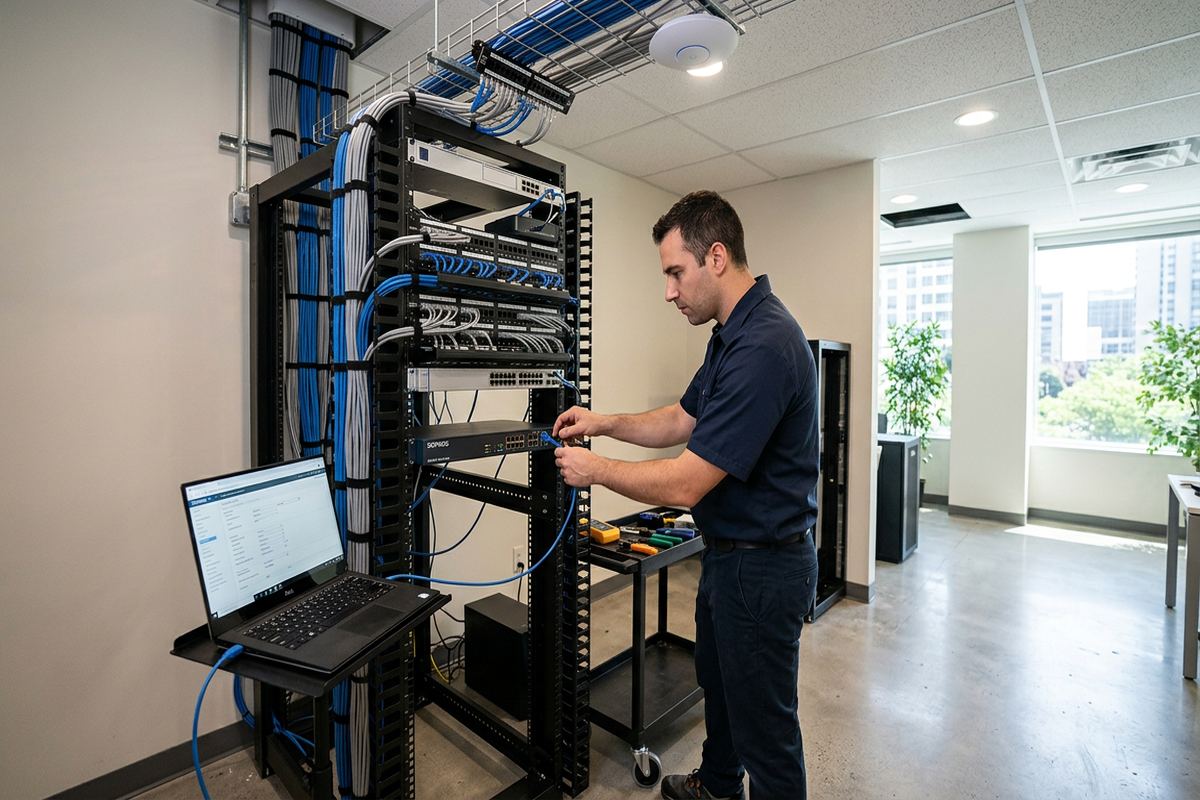
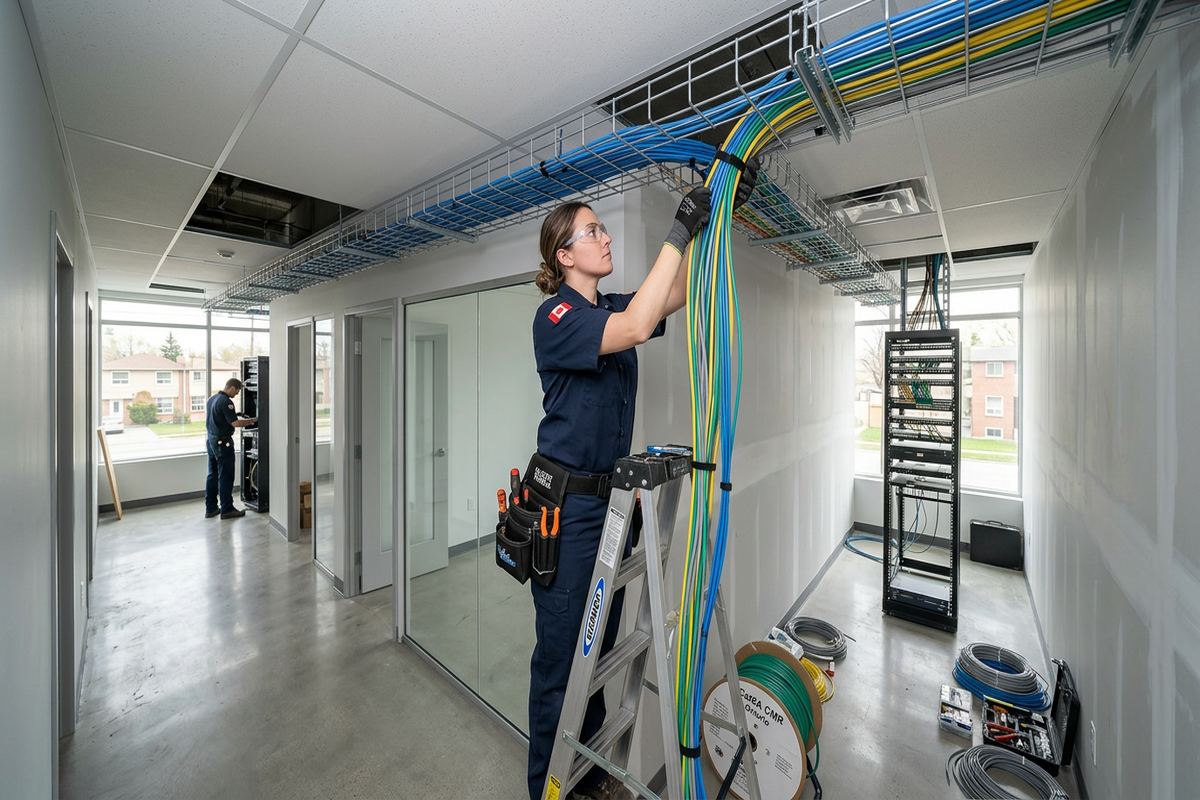
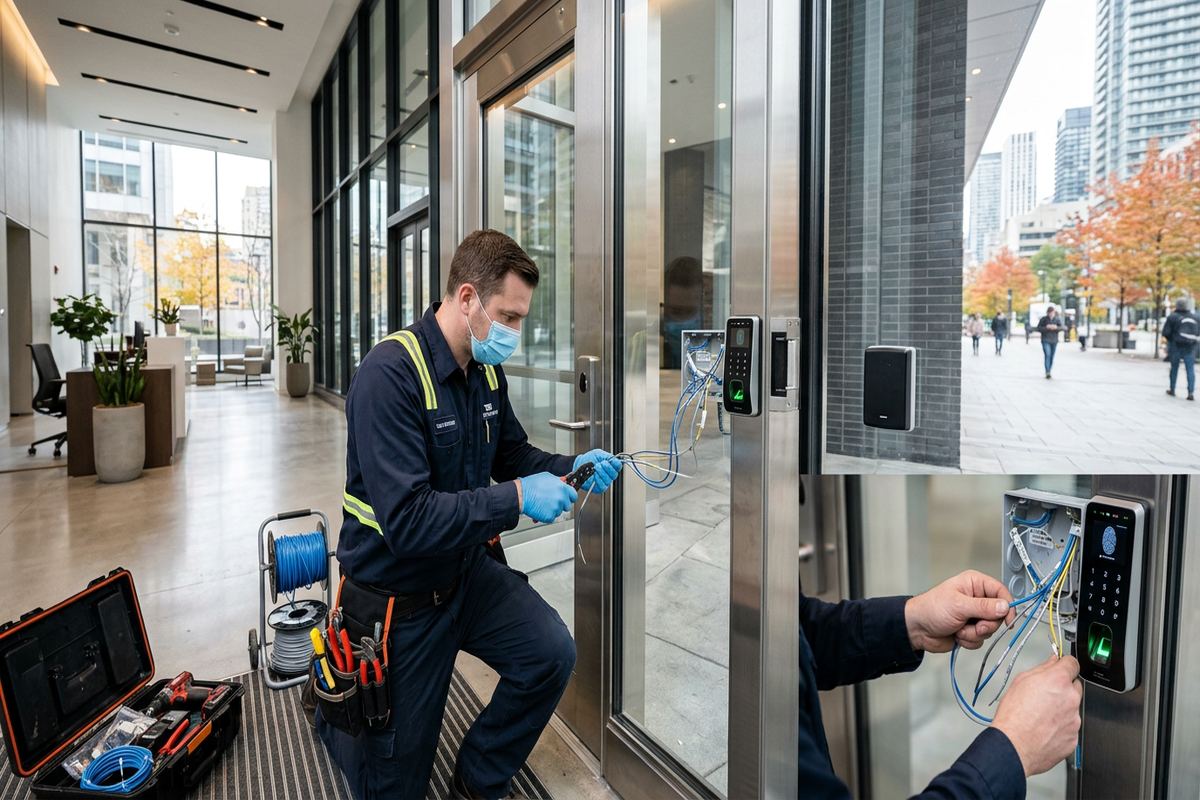
Reliable access control depends on cable routes that are planned before walls are opened or devices are mounted. Condo buildings can include finished lobbies, concrete floors, concealed ceiling spaces, masonry partitions and shared utility rooms with restricted access. We trace practical routes from controllers and power supplies to readers, locks, door contacts and request-to-exit devices. Continuous labelled cable runs reduce unnecessary connection points and make future testing easier. Penetrations, exposed pathway and restoration expectations are shown in the scope so management understands where work will be visible.
Masonry construction often requires surface raceway, existing conduit or carefully selected penetrations, while frame construction may permit concealed routing through accessible wall or ceiling cavities. Neither approach should be assumed from the exterior appearance of a Cobourg property. The assessment checks both sides of each opening, nearby services and the route back to a secure equipment location. Where fire separations are crossed, suitable methods and coordination are required. Cabling is kept organized, supported and labelled rather than draped above ceilings or joined through undocumented splices.
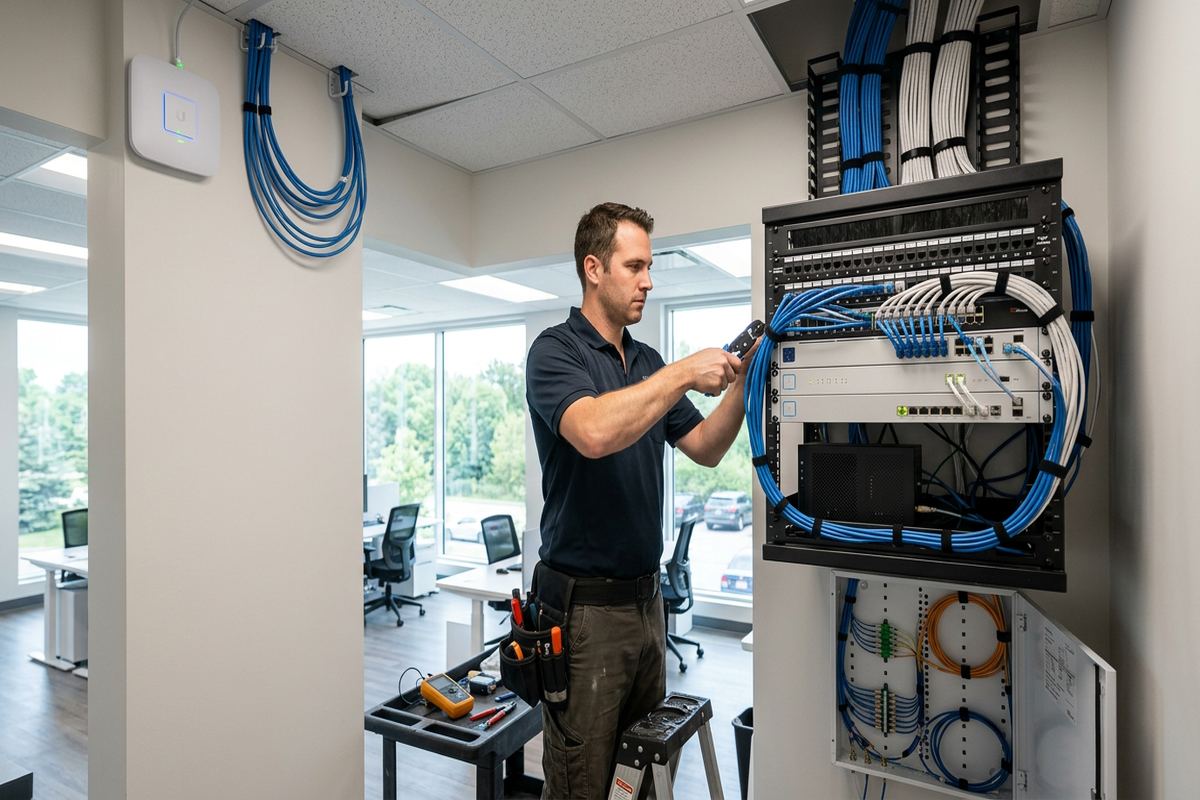
Controller and power-supply locations need controlled access, ventilation, service clearance and suitable electrical and network connections. They should not be placed where residents can casually disconnect equipment or where moisture and stored materials create avoidable risk. Networked systems also require an agreed connection to the building’s infrastructure, including addressing, remote-access policy and responsibility for firewall changes. If an elevator, intercom, gate, automatic operator or fire alarm interface is involved, the cable and contact requirements are confirmed with the responsible vendor before final terminations are planned.
- Continuous labelled cable runs
- Routes planned around finished common areas
- Masonry and frame methods assessed separately
- Secure controller and power-supply locations
- Interfaces coordinated before termination
Cobourg Weather and Exterior Readers
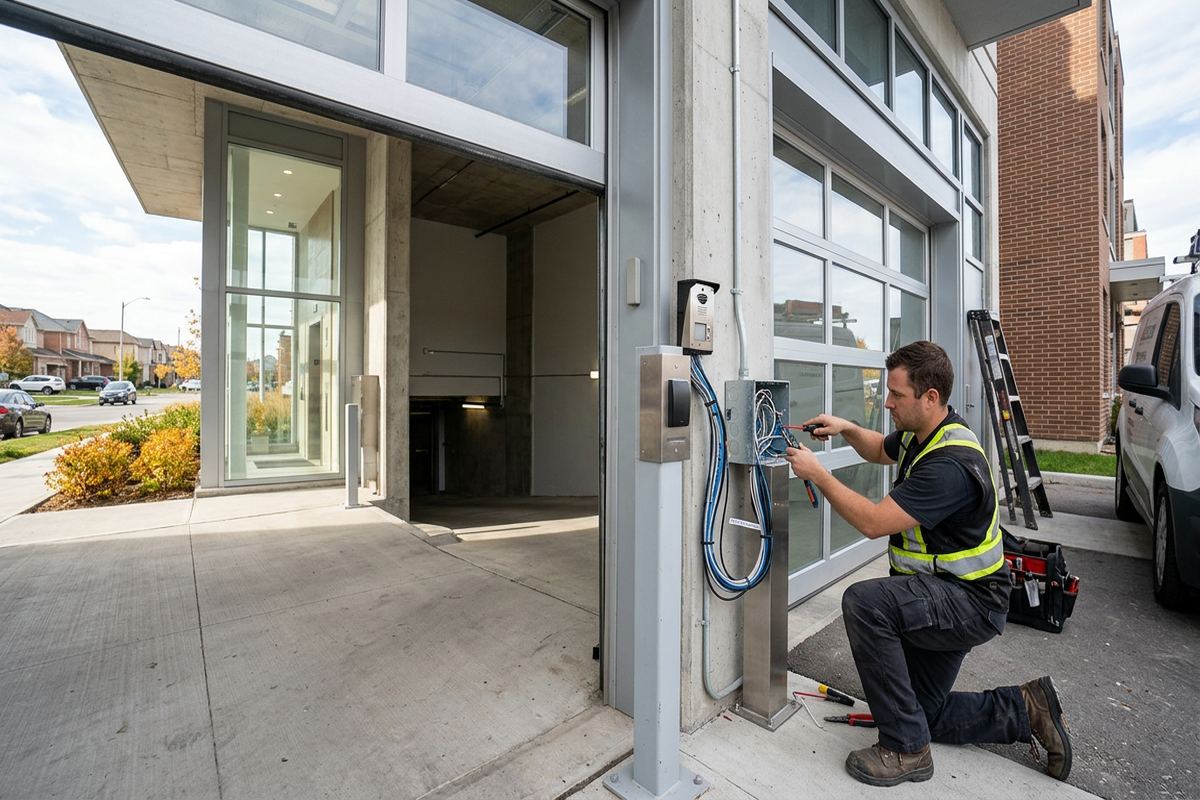
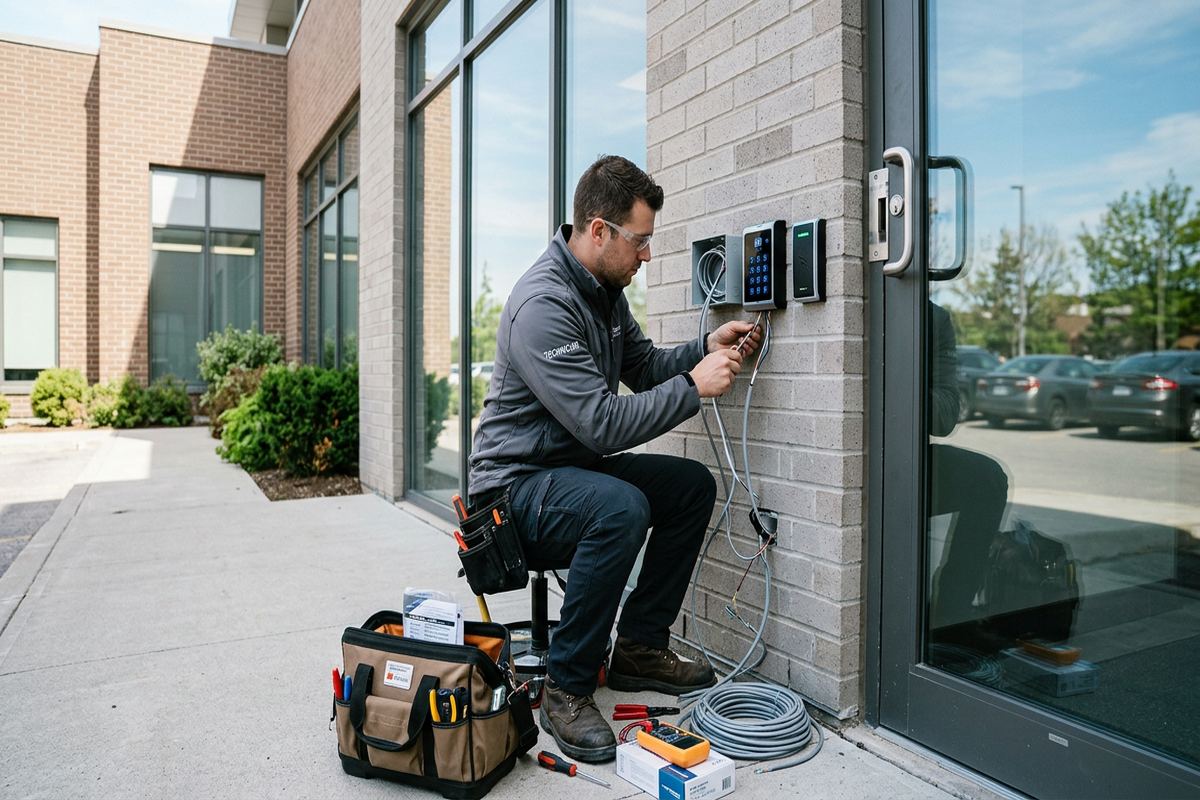
Exterior readers, gate equipment and door contacts in Cobourg face winter cold, wind-driven precipitation and repeated freeze-thaw cycles. Water entering behind a reader or through an unsealed penetration can affect wiring, finishes and long-term operation. We select locations that limit direct exposure where possible, use equipment suited to the intended environment and seal exterior penetrations with compatible materials. Cable entries are arranged to discourage water travel, and mounting surfaces are checked for movement, cracking or deterioration before hardware is fastened.
Properties near Cobourg Beach can experience exposed conditions that deserve additional attention even when a device is installed beneath an overhang. Moisture, wind and airborne contaminants can reach trim, fasteners and enclosures, while snow accumulation may obstruct low-mounted equipment or gate sensors. Reader placement must remain convenient and accessible without sitting in a likely impact or shovelling zone. The scope can identify deteriorated masonry, loose cladding or failed sealant that should be repaired before installation rather than using access equipment to cover an existing building-envelope problem.
Cold weather also changes how doors behave. Weather stripping stiffens, closers respond differently, thresholds collect ice and misaligned latches may stop engaging consistently. An access event can be recorded correctly even though the door never closes and secures. Door contacts can report that condition, but they do not repair it. We test controlled openings during commissioning and explain observed hardware issues to management. Ongoing snow clearing, door adjustment and envelope maintenance remain important parts of keeping an exterior access system dependable through Cobourg winters.
- Weather-suited exterior equipment
- Sealed cable and mounting penetrations
- Reader placement above snow hazards
- Corrosion-conscious fasteners and enclosures
- Door-closed monitoring where specified
Installation in Occupied Cobourg Condos
Working in an occupied condo requires coordination beyond the technical installation. Residents still need safe entry while readers, locks or controllers are being changed. We establish the planned work sequence, identify doors that may be temporarily affected and confirm who can authorize shutdowns or mechanical access. Notices and resident communication normally remain the responsibility of property management unless the scope says otherwise. Deliveries, noise, ceiling access and use of shared hallways are considered so equipment and tools do not create unmanaged obstructions in common areas.
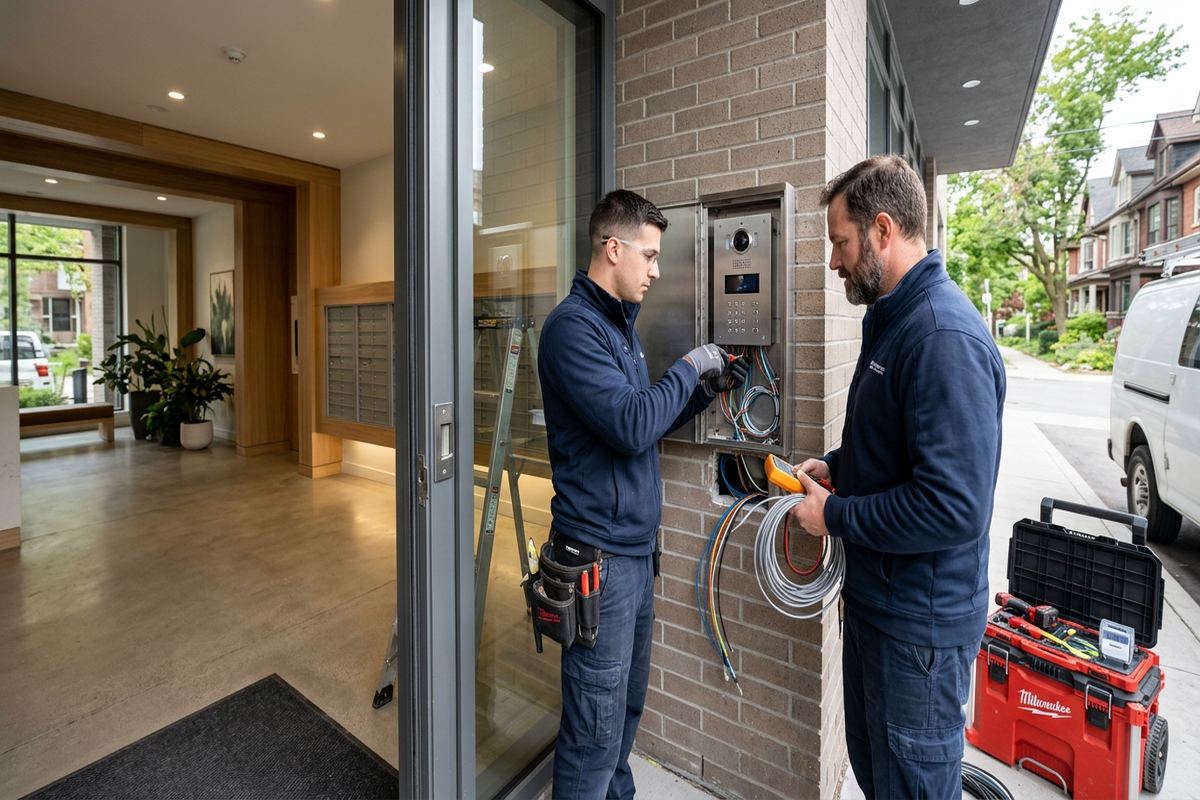
Retrofit projects can often retain suitable components, but compatibility must be verified rather than assumed. Existing readers, lock power, cabling and door contacts may use different voltages, communication formats or wiring arrangements. Labels may be missing, and prior alterations may not match available drawings. UnifiedLink tests relevant circuits and documents what can reasonably remain. Reuse is included only when condition and compatibility support it; otherwise, replacement or corrective work is identified. This approach reduces the chance that a new controller inherits an unexplained fault from an older field device.
Careful installation is particularly important in heritage homes converted to multiple units and in small downtown businesses sharing an entrance or service corridor. Reversible mounting methods and neat surface raceway can protect finishes where concealed work would damage plaster, masonry or architectural trim. In East Village and other established areas, access may also be constrained by narrow utility spaces or occupied rooms. The installation plan addresses these realities directly, while condo or landlord approval determines which visible routes and mounting methods are acceptable.
- Phased work around occupied entrances
- Temporary access arrangements defined
- Existing components tested before reuse
- Common-area protection and cleanup
- Visible routes submitted for approval
Configuration, Records and Handover
Once devices are installed, the system is configured on site using the agreed door names, schedules, access groups and alarm conditions. Clear naming matters when a manager must quickly disable a lost fob or investigate a door that was held open. We test credentials at each relevant opening and verify expected responses from locks, contacts and exit devices. Where integrations are included, their defined inputs and outputs are also checked. Testing is based on the written scope rather than assumptions about features that were not selected or connected.
Handover is completed with the customer’s own administrative credentials, not an installer account that leaves the condo dependent on an unknown password. Authorized representatives receive practical instruction on adding and removing users, assigning permissions, reviewing relevant events and responding to common alerts. The as-built record identifies installed devices, controller locations and labelled cable information at an appropriate level for the project. Equipment ownership, warranty information and exclusions remain documented so future managers can distinguish owned hardware from any hosted or subscription-based service.
Access records need an internal policy as well as technical capability. A condo board or property manager should determine who may review events, why information can be accessed, how long it is retained and how requests are handled. UnifiedLink can configure available retention and permissions within the selected platform, but does not create the organization’s privacy policy. For Cobourg mixed-use properties, administrator roles can be separated where supported so residential management and commercial occupants only reach functions and records appropriate to their responsibilities.
- On-site door and credential testing
- Customer-owned administrator credentials
- Practical management instruction
- As-built system record
- Documented equipment ownership and warranty
Service and Expansion for Cobourg Properties
An access control system should be reviewed when doors, tenants, staff responsibilities or building operations change. Management may need to remove dormant credentials, update schedules, check door-held-open reports and confirm that administrators still require their assigned privileges. Physical inspection also matters because loose hardware, damaged cables and doors that no longer latch cannot be corrected through software. A clear service record helps identify whether a problem originates in the access platform, the network, electrical supply, locking hardware, gate operator or the building itself.
Future expansion is easier when the original design reserves appropriate controller capacity, power and pathways, but unused capacity should not be promised without verification. A condo may later add bicycle storage, package rooms, parking gates or amenity spaces, while a commercial property could require staff areas or an industrial-unit entrance. We document current use and discuss foreseeable additions during planning. If expansion occurs later, the existing as-built record provides a starting point, followed by assessment of current conditions, product availability and platform compatibility.
UnifiedLink provides one accountable contractor for the defined access control scope, including assessment, cabling, device installation, on-site configuration and documented handover. Work assigned to locksmiths, electricians, fire alarm companies, elevator contractors or other vendors remains clearly identified and coordinated as applicable. Requests sent during business hours are answered the same day; after-hours requests are answered the next business day. Site assessment timing depends on the service and travel distance within Cobourg or elsewhere in Northumberland County, and pricing follows the assessment and written scope.
- Credential and permission reviews
- Troubleshooting across system components
- Expansion based on verified capacity
- Coordination with related trades
- One accountable access control contractor
Cobourg neighbourhoods we cover
- Downtown Cobourg
- Cobourg Beach
- New Amherst
- West Park
- East Village
Condo access control systems in Cobourg — common questions
Do we need condo board approval?
Usually, work affecting common doors, wiring routes, finishes or shared equipment needs approval from the condo corporation or its authorized manager. Cobourg properties with heritage details or shared commercial entrances may require closer review of visible raceway and mounting methods. UnifiedLink provides a written scope showing equipment, routes, placement and exclusions so the decision-makers can review the proposed work before installation.
Can you use our existing fobs?
Possibly, but compatibility must be verified. Existing fobs, readers and controllers may use a format or encryption method that does not work with the proposed platform. UnifiedLink checks available system information and tests relevant components during assessment. For a Cobourg retrofit, the written scope states which equipment can remain, which must be replaced and who will own the credential database after handover.
Will exterior readers work through winter?
Exterior equipment can be selected and installed for Cobourg conditions, but placement and door condition remain important. We consider cold, precipitation, freeze-thaw cycles, snow accumulation and sealing around penetrations. A reader may operate correctly while a door fails to latch because of ice, weather stripping or alignment. Routine door and building-envelope maintenance therefore remains necessary alongside access control service.
Can access control connect to our intercom?
Integration may be possible if the intercom provides a suitable relay, network interface or supported platform connection. We identify the intended operation, available contacts, cabling and responsibility for each system. In Cobourg condos, older intercoms may offer only a basic door-release output, while newer systems may support broader integration. Compatibility is confirmed before either system is represented as connected.
What happens during a power outage?
The answer depends on the lock type, power supply, backup arrangement and required door operation. Some locks release without power, while others remain secure, subject to the opening’s egress and life-safety requirements. During the Cobourg site assessment, UnifiedLink documents intended behaviour and any specified battery backup. Mechanical entry, emergency release and fire alarm interaction are addressed where applicable to the project.
Who controls the system after installation?
The customer does. At handover, authorized representatives receive their own administrative credentials, practical instruction and an as-built record. The written scope identifies equipment ownership and any hosted or subscription-based elements. A Cobourg condo board or property manager should also establish internal rules for issuing credentials, reviewing events, retaining records and removing access when residents, employees or contractors leave.
Coverage in Cobourg is confirmed against the address before we quote. See everything we install in Cobourg or the province-wide condo access control systems page.