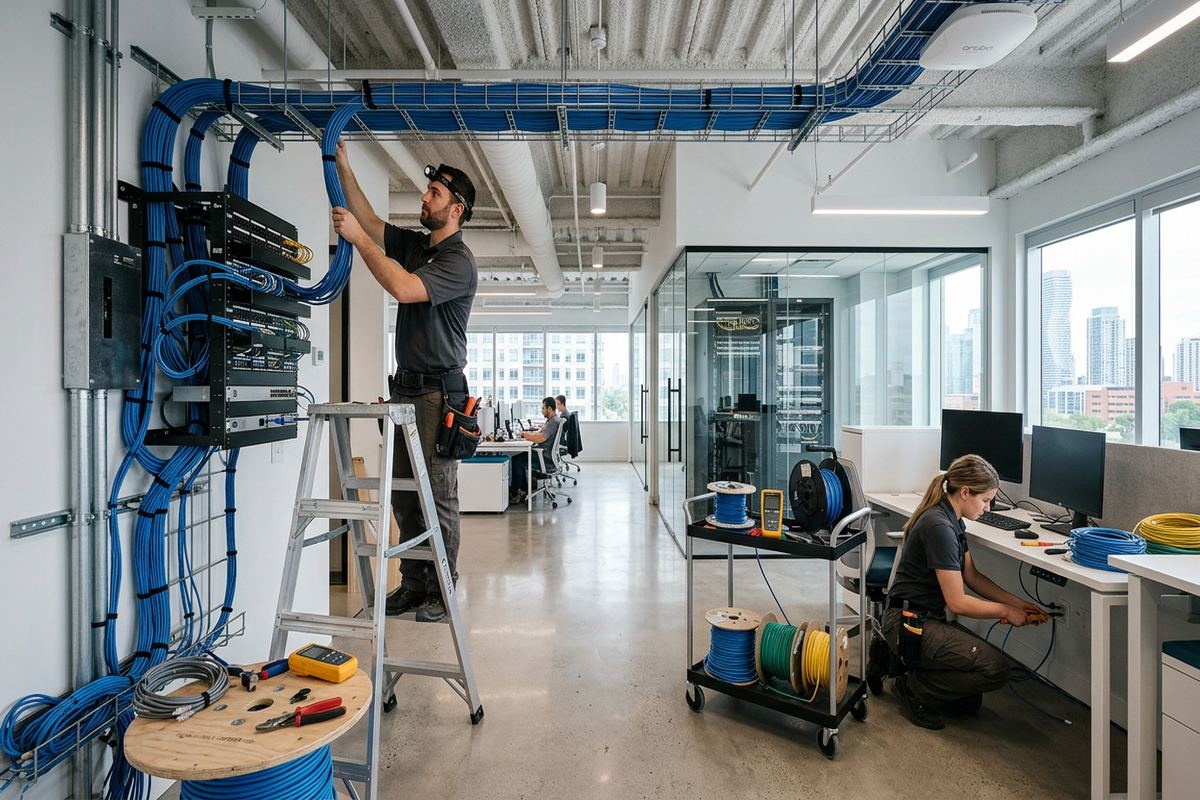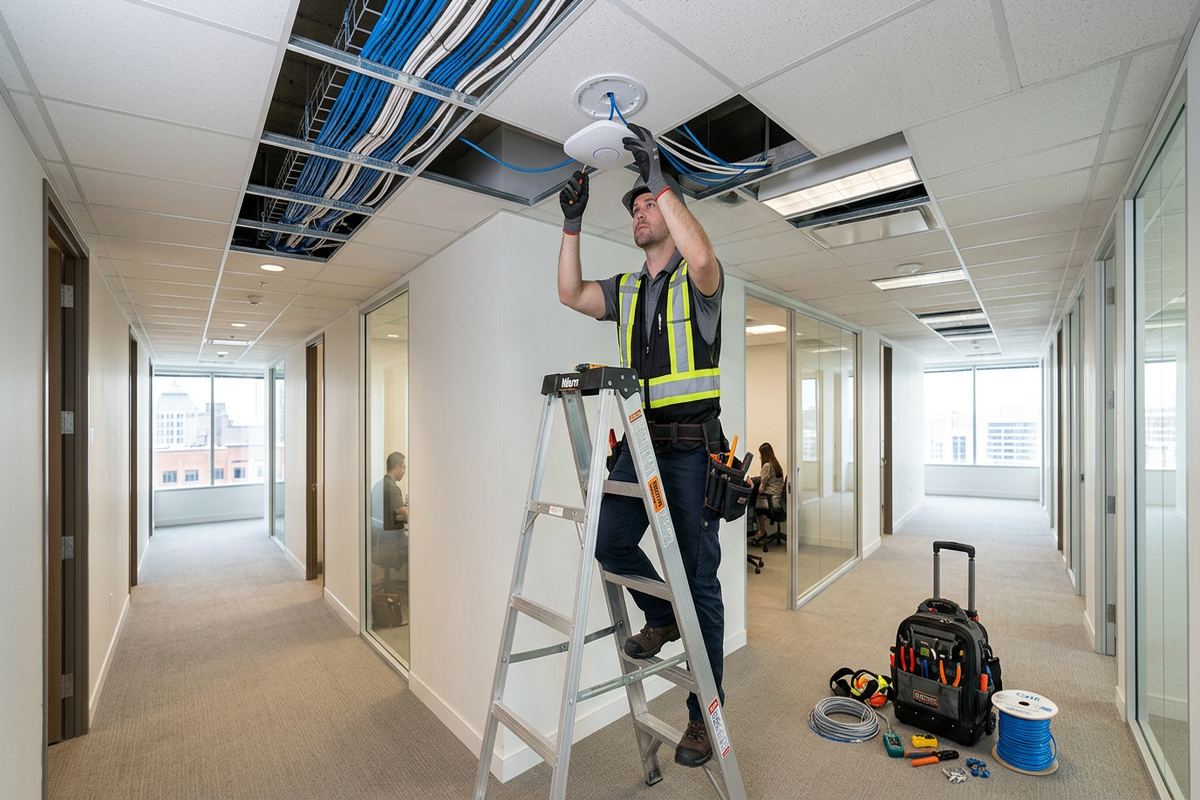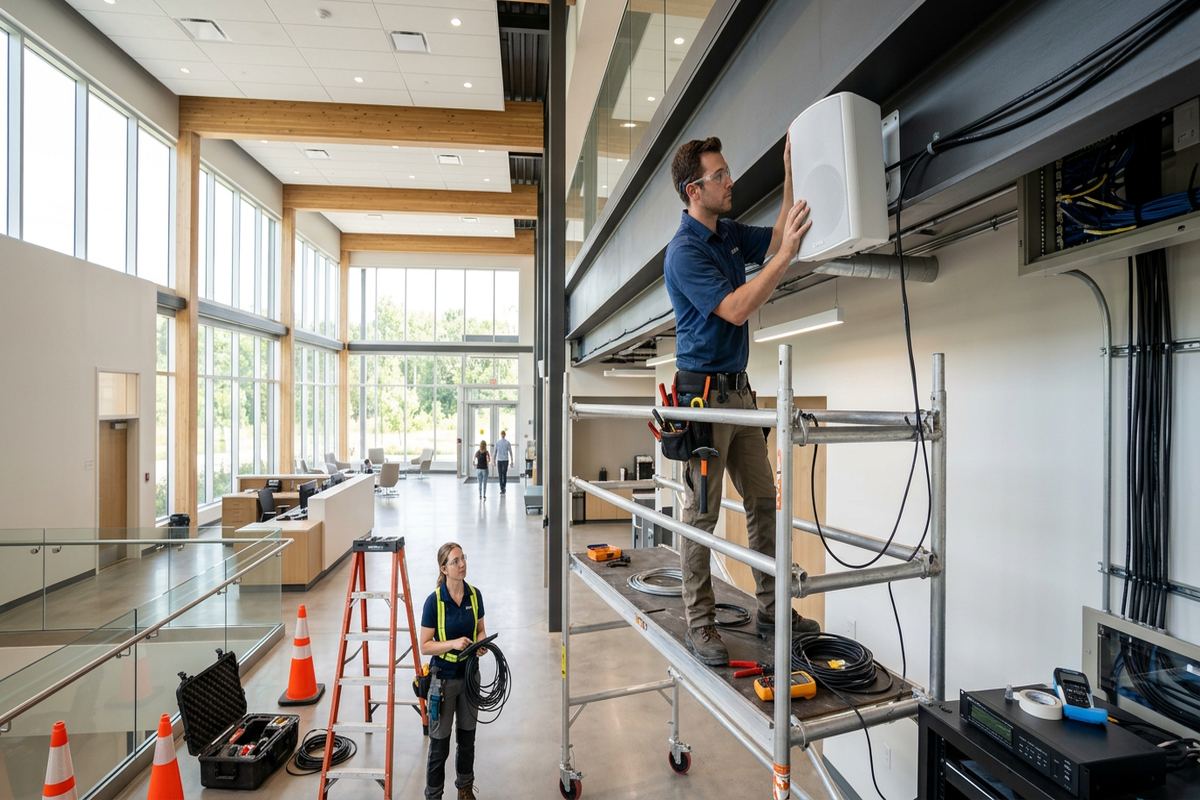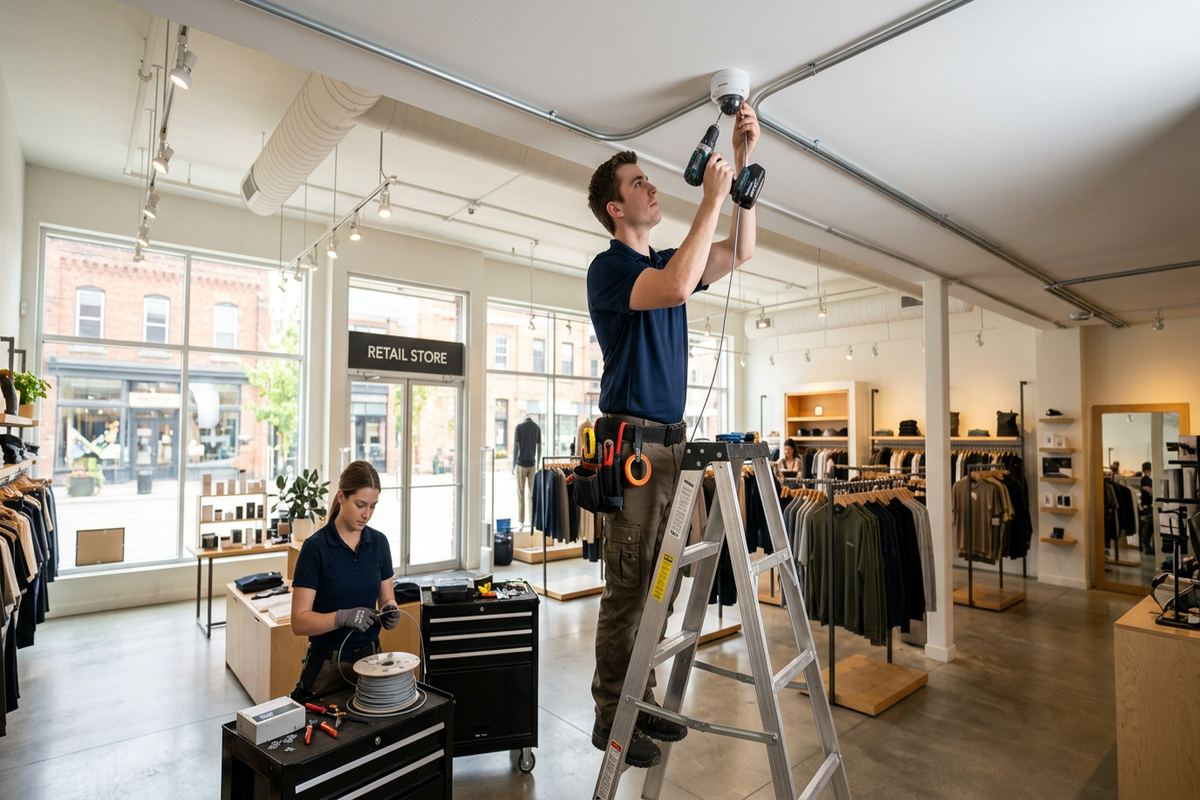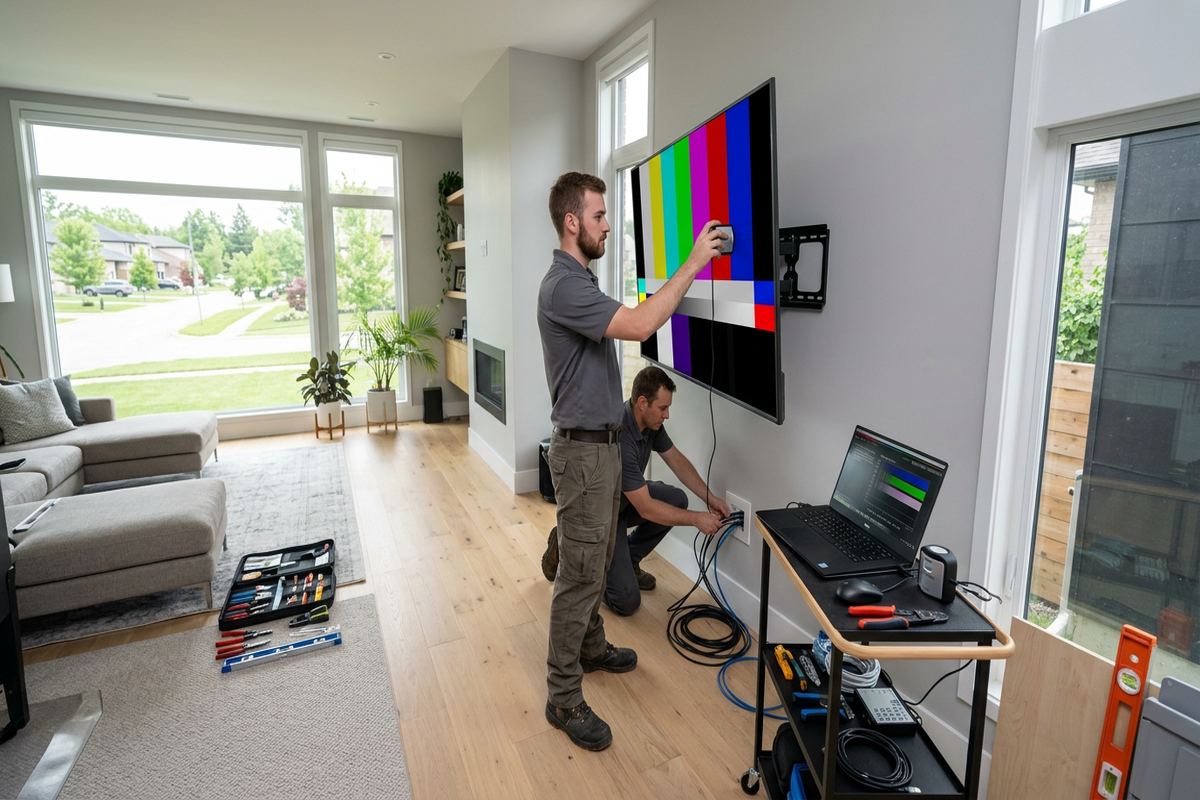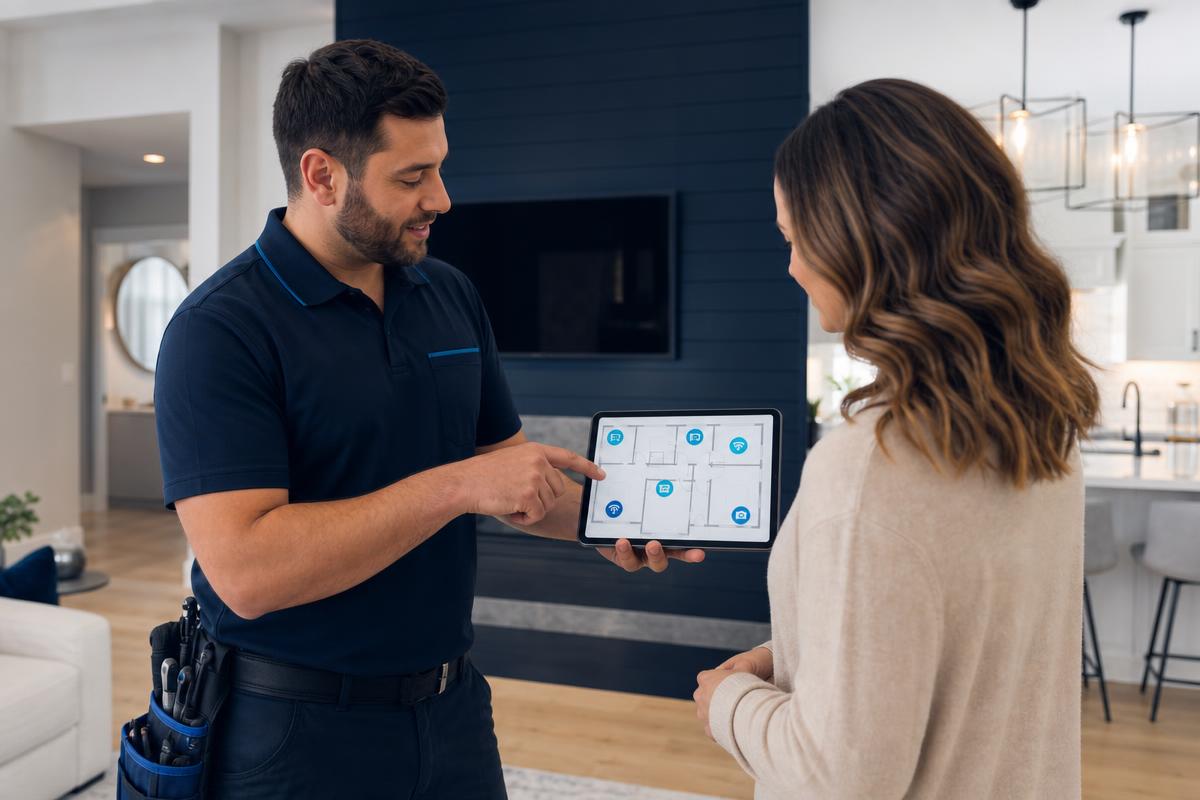
UnifiedLink installs in-ceiling speakers for homes and businesses across Cobourg and Northumberland County. We plan speaker placement, cable routes, amplification and controls around the room, building construction and intended use. Installations include labelled wiring, on-site configuration, system testing and a practical handover using the customer’s own credentials.
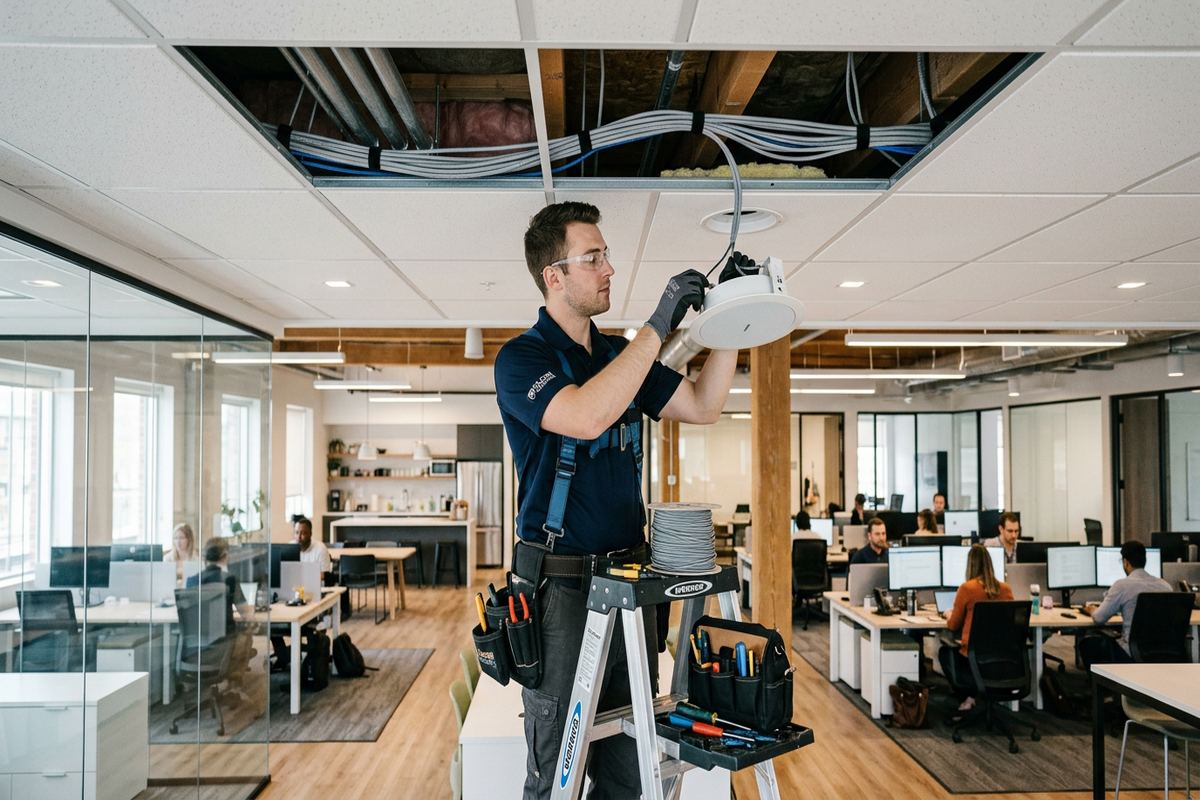
In-Ceiling Speaker Installation for Cobourg Properties
An in-ceiling audio system should provide even, useful sound without making speakers and cables the focus of the room. UnifiedLink installs systems for kitchens, living areas, basements, offices, shops, meeting rooms and shared commercial spaces in Cobourg. Planning begins with how each room will be used, where listeners usually sit or move, and how loud the system must operate. Speaker type, quantity, spacing and aiming are considered together. This avoids layouts that sound strong directly beneath one speaker but weak elsewhere, or systems that require excessive volume to cover a poorly planned area.
Cobourg properties vary from older frame and masonry buildings near Downtown Cobourg and Cobourg Beach to newer homes in New Amherst and West Park. Ceiling access, joist direction, insulation, vapour barriers, plaster, ductwork and existing electrical systems can differ substantially between these buildings. We assess those conditions before cutting openings or confirming a cable route. Where the structure has heritage character or finished surfaces that should remain intact, the installation plan prioritizes discreet and reversible work. The objective is to fit the audio system to the building rather than force a standard layout into unsuitable construction.
A complete installation involves more than cutting circular openings and connecting speakers. Amplifier capacity, speaker impedance, cable length, source equipment, room controls and ventilation all affect reliability. UnifiedLink provides a written scope covering equipment, cable routes, device placement, exclusions, equipment ownership and warranty. Continuous labelled cable runs are installed wherever the agreed route permits, followed by speaker termination, amplifier configuration and listening tests. At handover, the customer receives control access using their own credentials and an as-built record showing the installed devices and cable destinations for future maintenance or changes.
- Homes, offices, shops and meeting rooms
- Ceiling speaker placement and coverage planning
- Amplifier and impedance matching
- Continuous labelled speaker cable
- Configuration, testing and documented handover
Planning Audio Coverage in Cobourg Rooms
Speaker placement starts with the room’s dimensions, ceiling height, furnishings and listening pattern. A dining area used for background music needs different coverage from a television room, exercise space or commercial waiting area. We consider whether listeners remain seated, move throughout the space or need clear announcements above normal activity. Speaker dispersion and output must overlap without creating obvious loud and quiet zones. In open-concept Cobourg homes, separate kitchen, dining and living areas may still require distinct volume control, even when they share one ceiling and one source system.
Room finishes change how an audio system sounds. Hardwood, tile, glass and bare masonry reflect sound, while rugs, upholstered furniture and acoustic ceilings absorb it. Heritage homes near the beach may also have irregular room shapes, decorative plaster or renovations completed in several stages. Those details influence speaker quantity and aiming. Before installation, we identify practical listening positions and obstacles such as beams, pot lights, smoke alarms and ceiling fans. The final layout should look orderly, maintain suitable separation from other devices and deliver balanced coverage without placing speakers where the ceiling cavity cannot safely accommodate them.
Audio zones provide practical control when several rooms share a system. A Cobourg homeowner may want independent volume in a kitchen, patio-adjacent room and basement, while a downtown business may need separate settings for customer and staff areas. We determine whether each zone requires local wall control, application-based control, a central matrix or simple amplifier channels. The design also accounts for future expansion where practical. Spare capacity is discussed in the written scope rather than assumed, because adding zones later may require more amplifier channels, additional cabling or different control equipment than the original installation supports.
- Room-by-room listening and coverage review
- Independent audio zone planning
- Speaker spacing around ceiling obstructions
- Volume control and source selection options
- Allowance for practical future expansion
Careful Installation in Older Cobourg Buildings
Older buildings require investigation before speaker locations are finalized. Downtown Cobourg and areas near Cobourg Beach include heritage homes and small commercial premises where plaster ceilings, wood lath, masonry walls and concealed renovations may restrict access. Decorative finishes can also make repair work difficult if an unsuitable opening is made. We use available access points and non-destructive observations to assess cavities, then discuss limitations with the owner. When a route cannot be confirmed without exploratory work, that uncertainty is documented so the customer understands what is included, what is excluded and which decisions may be required on site.
Reversible installation methods are especially important where original trim, plaster or masonry should be preserved. Depending on the building, a suitable solution may use accessible attic or basement routes, existing service chases, surface raceway in a secondary area, or carefully positioned equipment cabinetry. The goal is not to promise invisible wiring in every structure. Instead, we identify a route that balances appearance, access and building protection. Any required openings are planned around framing and services, and speaker cut-outs are made only after checking clearances as far as site conditions reasonably allow before work begins.
Masonry and frame construction call for different routing methods. Frame walls and ceilings may offer joist or stud cavities, although blocking, insulation and vapour barriers can interrupt them. Masonry walls generally provide no open cavity, so cable may need to approach from above, below or through an agreed raceway. Cobourg’s winters also make the building envelope important. We avoid unnecessary penetrations through insulated assemblies and do not treat a speaker opening as permission to disturb vapour control layers. Where a proposed route affects those layers, the scope identifies the required sealing or an alternative path.
- Plaster, lath and masonry route assessment
- Reversible options for sensitive finishes
- Use of accessible attics and service spaces
- Documented exploratory work and exclusions
- Building-envelope considerations for insulated ceilings
Cobourg, Ontario
In-ceiling speaker installation in Cobourg, scoped in writing first
Book a site assessment and get equipment, routes, exclusions, and warranty on paper before anything is installed.
Speaker Wiring and Equipment Selection in Cobourg
Speaker cable must suit the system design, route length and installation environment. UnifiedLink installs continuous labelled runs between the amplifier or distribution point and each speaker wherever the agreed route permits. Avoiding hidden splices reduces troubleshooting points and makes future service clearer. Cable is supported, protected from sharp edges and kept appropriately separated from electrical wiring. Labels identify destinations at the equipment end and, where practical, at speaker locations. The as-built record then gives a Cobourg property owner or future contractor a usable reference instead of requiring completed ceilings to be investigated again.
Equipment selection depends on the intended sound level, number of zones and available space for electronics. Residential systems commonly use low-impedance speakers, while some larger commercial layouts may be better served by distributed audio designs. These approaches are not interchangeable without proper amplifier and speaker matching. We review impedance, channel loading, power handling and control requirements before specifying equipment. Ventilation and service access are also considered because amplifiers should not be sealed into a crowded cabinet. Customer-owned equipment can be assessed for compatibility, but its inclusion and any limitations are recorded clearly in the written installation scope.
Speaker construction matters in kitchens, bathrooms and other humid areas, although an indoor moisture-rated product is not automatically appropriate outdoors. For covered exterior areas, equipment and cable entries must suit exposure, temperature changes and condensation risks. Cobourg’s freeze-thaw cycles can open poorly sealed penetrations and allow water into exterior assemblies. Any exterior mounting or cable transition therefore needs suitable hardware, drip management and sealing compatible with the surface. If speakers are proposed in soffits or porch ceilings, we first consider access, insulation, ventilation and whether the location is truly protected from wind-driven moisture.
- Cable sized for length and system load
- Labels at equipment and speaker destinations
- Low-impedance and distributed audio options
- Ventilated, serviceable amplifier locations
- Suitable equipment for damp or exterior areas
Home Audio for Cobourg Neighbourhoods
In newer Cobourg neighbourhoods such as New Amherst and West Park, accessible basements or unfinished utility spaces may make cable distribution more straightforward, but each ceiling still requires verification. Engineered joists, dense insulation, plumbing and heating ducts can limit apparently simple routes. Open-concept plans also create acoustic challenges because one large space may contain several activities. We place speakers to support those activities without crowding ceilings already occupied by lights, sprinklers or ventilation grilles. Where construction drawings are available, they help planning, but on-site observations remain necessary because finished conditions and later alterations may differ.
East Village and established residential areas can include additions where old and new construction meet. A speaker route that works in the original house may stop at a former exterior wall, doubled framing or changed ceiling level. Rather than assuming all rooms can connect through one cavity, we map each proposed run and identify transition points. Homeowners can then compare options such as localized amplification, a central equipment location or limited surface routing in a concealed area. The chosen approach should remain understandable and serviceable, especially when audio equipment, television systems and network devices share the same cabinet.
Condominiums and rental properties require approval before work affects ceilings, common elements or building systems. A Cobourg condo board, property manager or landlord may have rules governing working hours, contractor access, sound transmission, fire separations and penetrations. The customer is responsible for obtaining required authorization, while UnifiedLink can provide a proposed scope and device layout for review. Ceiling speakers must not compromise rated assemblies, and some buildings may require specific methods or third-party work. Confirming those conditions early avoids ordering equipment or cutting openings before the permitted installation method is understood.
- Layouts for open-concept living spaces
- Routing across additions and changed framing
- Shared cabinet planning for audio equipment
- Condo and landlord approval coordination
- Respect for fire-rated ceiling assemblies
Commercial In-Ceiling Audio in Cobourg
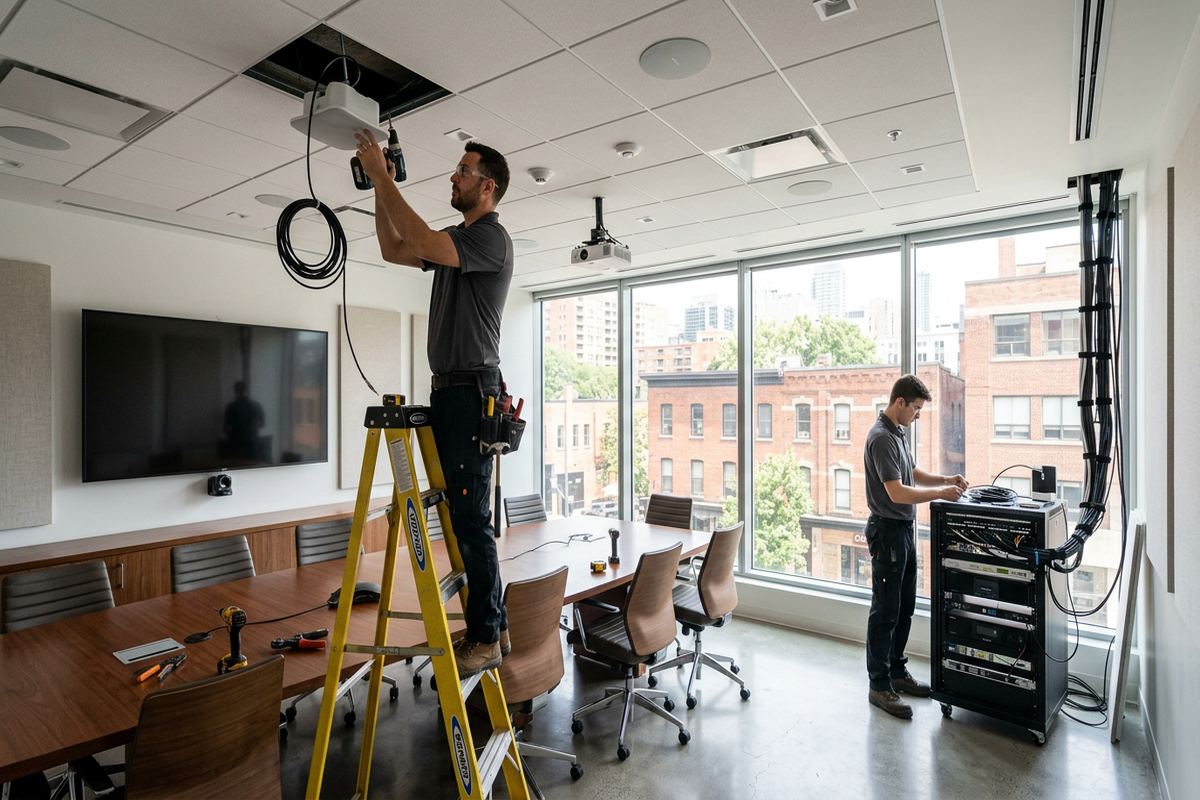
Small downtown businesses often need consistent background music or speech coverage without large wall-mounted speakers competing with displays and signage. In-ceiling speakers can suit shops, professional offices, cafés, treatment rooms and reception areas when ceiling construction allows. Commercial planning considers customer circulation, staff work zones, ambient noise and operating hours. A narrow storefront may need a different layout from an open office or divided service space. In heritage commercial buildings in Downtown Cobourg, reversible cable routes and careful treatment of plaster, tin, wood or masonry finishes may be more important than achieving a completely concealed installation.
Commercial strips and industrial units around Cobourg present another set of conditions. Suspended ceilings can provide routing access, but tiles, support grids and the structure above must be checked before speakers are installed. Warehouses and industrial units may have high ceilings, exposed steel, louder mechanical systems or changing floor layouts. Standard residential ceiling speakers may not provide suitable output or coverage in those environments. We assess the actual use of the space and select an appropriate mounting and distribution approach. Paging integration, microphone inputs or multiple business zones can be included when specifically defined in the scope.
Business audio controls should be straightforward for authorized staff while preventing accidental changes. Depending on the system, controls may be placed at a reception desk, equipment cabinet or secured application account. Source licensing and permission to play content in a commercial setting remain the business owner’s responsibility. UnifiedLink configures the installed equipment, tests each zone and explains normal operation at handover. Credentials are established in the customer’s name rather than retained as installer-owned access. The as-built record identifies equipment, speaker zones and cable destinations so future changes can be planned without relying on staff memory.
- Retail, office and reception area audio
- Coverage planning for suspended ceilings
- Systems suited to higher-noise workplaces
- Staff controls and separate business zones
- Documented equipment and cable locations
Cobourg Installation Process and Handover
Every project begins with a site assessment before pricing. We review the rooms, ceiling construction, possible equipment locations, cable routes, controls and expected listening use. Access above and below the ceiling is checked where available, and visible constraints are recorded. Assessment timing depends on the service and travel distance within Cobourg or elsewhere in Northumberland County. Afterward, the written scope identifies equipment, cable routes, device placement, exclusions, equipment ownership and warranty. This gives the customer a defined basis for approval and reduces assumptions about patching, painting, electrical work or access that may involve others.
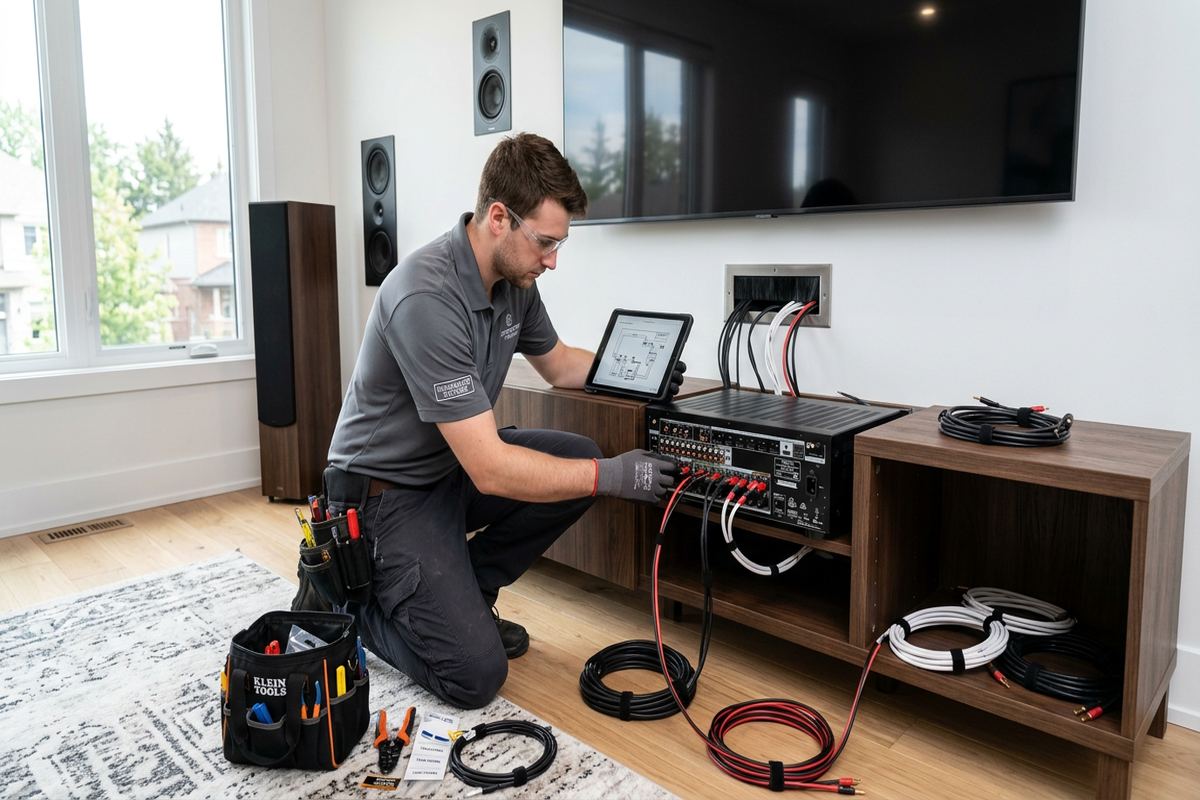
On installation day, speaker positions are measured against the approved layout and checked for visible obstructions. Where practical, cavities are reviewed again before full openings are cut. Cable runs are installed, supported and labelled, followed by speaker mounting and connection at the amplifier. Work areas are protected and kept organized, particularly in occupied homes or operating businesses. If concealed conditions differ from the assessment, we explain the issue before changing the agreed route or device location. This is important in Cobourg’s older properties, where framing, masonry or previous renovations may remain hidden until access is available.
Configuration includes zone naming, source setup, level adjustment and functional testing. We confirm that each speaker operates on the intended channel and listen for obvious imbalance, vibration or connection problems. The customer is shown how to select sources, adjust normal volume and access the controls. Accounts are handed over using the customer’s own credentials, not a permanent installer login. An as-built record identifies installed equipment and cable destinations. With one accountable contractor managing assessment, cabling, device installation, configuration and handover, responsibility remains clear if a question arises about the completed speaker system.
- Site assessment before project pricing
- Written equipment and routing scope
- Measured cutting and protected work areas
- On-site configuration and listening tests
- Customer credentials and as-built record
Maintaining In-Ceiling Speakers Through Cobourg Seasons
Indoor in-ceiling speakers usually need little routine maintenance, but the surrounding building conditions still matter. Roof leaks, plumbing failures, condensation or movement in ceiling materials can affect speaker grilles, cones and wiring. A new stain, grille corrosion or distorted sound should be investigated rather than covered with higher volume. In Cobourg homes near the lake, seasonal humidity changes may also expose loose grilles or minor vibration around finished openings. Cleaning should follow the equipment manufacturer’s instructions, using gentle methods that do not push moisture or debris through the perforated grille into the speaker assembly.
Exterior and semi-exterior audio requires more frequent visual review because Cobourg winters expose materials to cold, moisture and freeze-thaw movement. Check soffit, porch and wall penetrations for cracked sealant, displaced covers or signs of water tracking. Sealants must remain compatible with masonry, siding, metal and cable jackets; adding an unsuitable layer over failed material can trap moisture rather than solve the cause. Speaker hardware should also remain secure after seasonal movement. If water has entered a device or cable pathway, disconnecting affected equipment and arranging an inspection is safer than repeatedly resetting the amplifier.
Future renovations should account for installed audio wiring before ceilings are opened or new fixtures are added. The as-built record helps identify routes, but concealed conditions should still be verified because records cannot show every framing detail. Painters should remove or mask grilles correctly rather than sealing their perforations with paint. Electricians, HVAC contractors and cabinet installers should know where speakers and cables are located before drilling. When a Cobourg room changes use, the existing speaker system can be reassessed for new coverage, zoning or source needs instead of assuming the original settings remain appropriate.
- Visual checks after leaks or condensation
- Seasonal inspection of exterior penetrations
- Cleaning that protects grilles and drivers
- Cable records for future renovation work
- Reconfiguration when room use changes
Cobourg neighbourhoods we cover
- Downtown Cobourg
- Cobourg Beach
- New Amherst
- West Park
- East Village
In-ceiling speaker installation in Cobourg — common questions
Can you install speakers in an older Cobourg home?
Yes, subject to a site assessment and a workable route. Older Cobourg homes may contain plaster, lath, masonry, blocking or previous renovations that limit ceiling access. We examine available cavities and discuss reversible options before pricing. The written scope identifies the planned route, visible components, exclusions and any exploratory work that may be needed before openings are approved.
How many ceiling speakers does my room need?
The quantity depends on room size, ceiling height, speaker dispersion, furnishings, listening positions and intended volume. A kitchen used for background music needs different coverage from a media area or busy Cobourg storefront. We plan spacing to reduce loud and quiet zones rather than selecting a fixed number based only on floor area.
Can speakers be added without damaging finished ceilings?
Some cutting is normally required for true in-ceiling speakers, but careful planning can limit disruption. In Cobourg heritage properties, we assess plaster, framing, access and cable routes before confirming locations. If concealed wiring is not practical, we may discuss an alternate route, localized equipment or discreet raceway. Patching and painting responsibilities are defined in the written scope.
Do I need condo or landlord approval?
Usually, approval should be confirmed before any ceiling openings or cable work begins. Cobourg condo corporations and landlords may regulate common elements, fire-rated assemblies, noise, access and working hours. The customer obtains the required authorization, while UnifiedLink can provide a proposed equipment layout and scope for review. Installation proceeds only within the approved conditions.
Can my existing amplifier be used?
Possibly. We need to confirm its channel count, impedance limits, power capability, inputs, control options and physical condition. The proposed speakers and zone arrangement must be compatible with those limits. If customer-owned equipment is included in a Cobourg installation, its role and any known limitations are documented in the scope before work proceeds.
How quickly will you answer my request?
Requests sent during business hours are answered the same day, while after-hours requests are answered the next business day. Site assessment timing in Cobourg and Northumberland County depends on the service and travel distance. Pricing follows an assessment because ceiling construction, cable access, speaker placement and equipment requirements need to be understood before a written scope can be prepared.
Coverage in Cobourg is confirmed against the address before we quote. See everything we install in Cobourg or the province-wide in-ceiling speaker installation page.