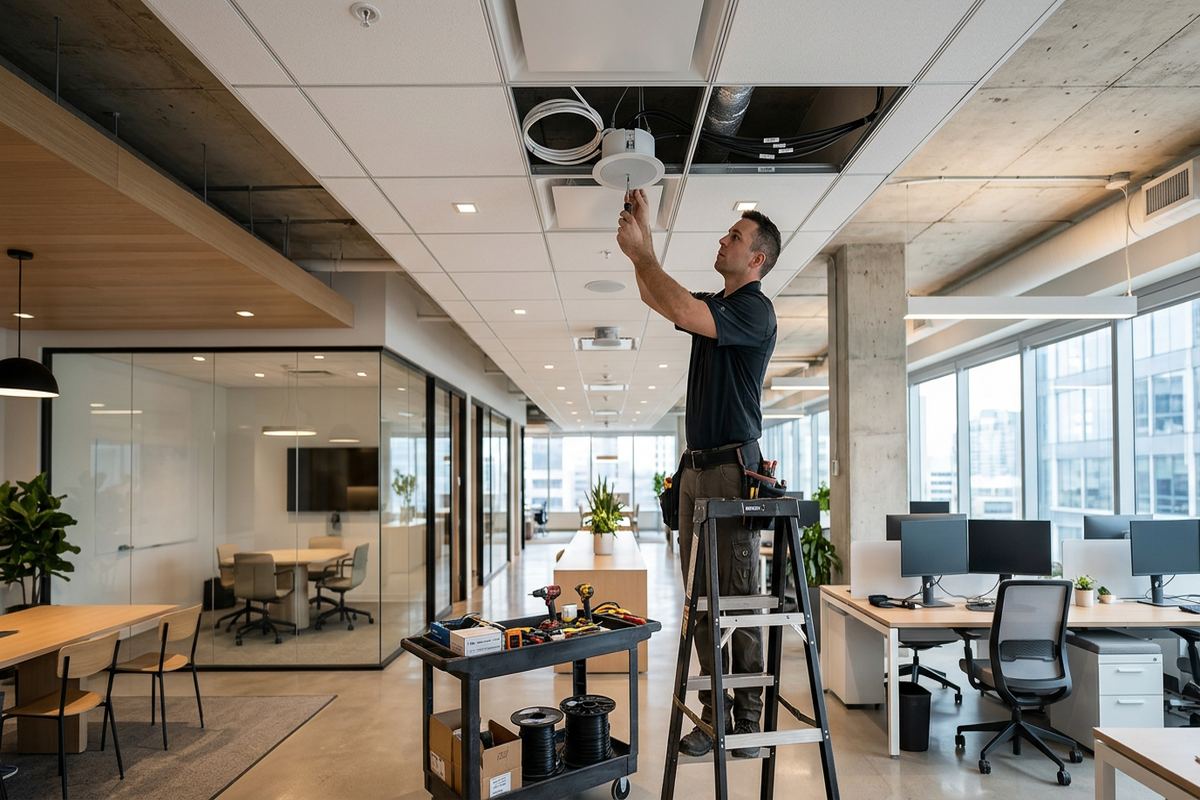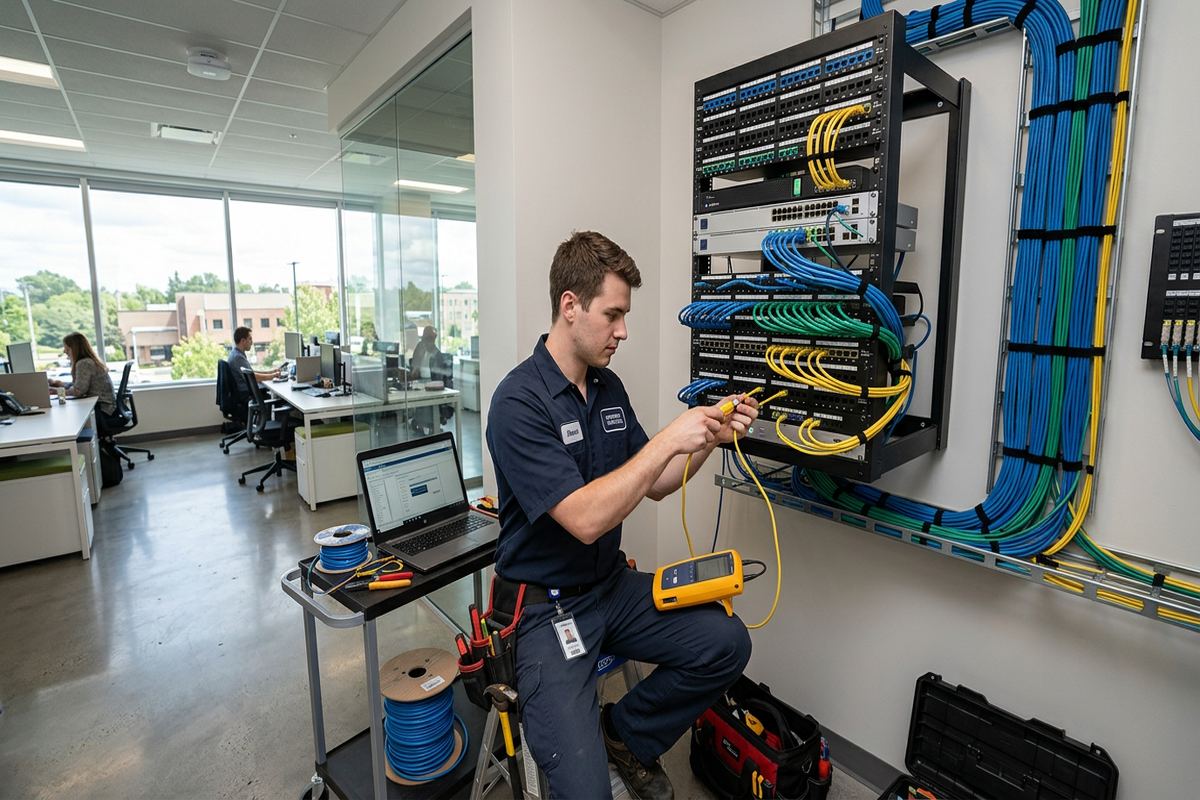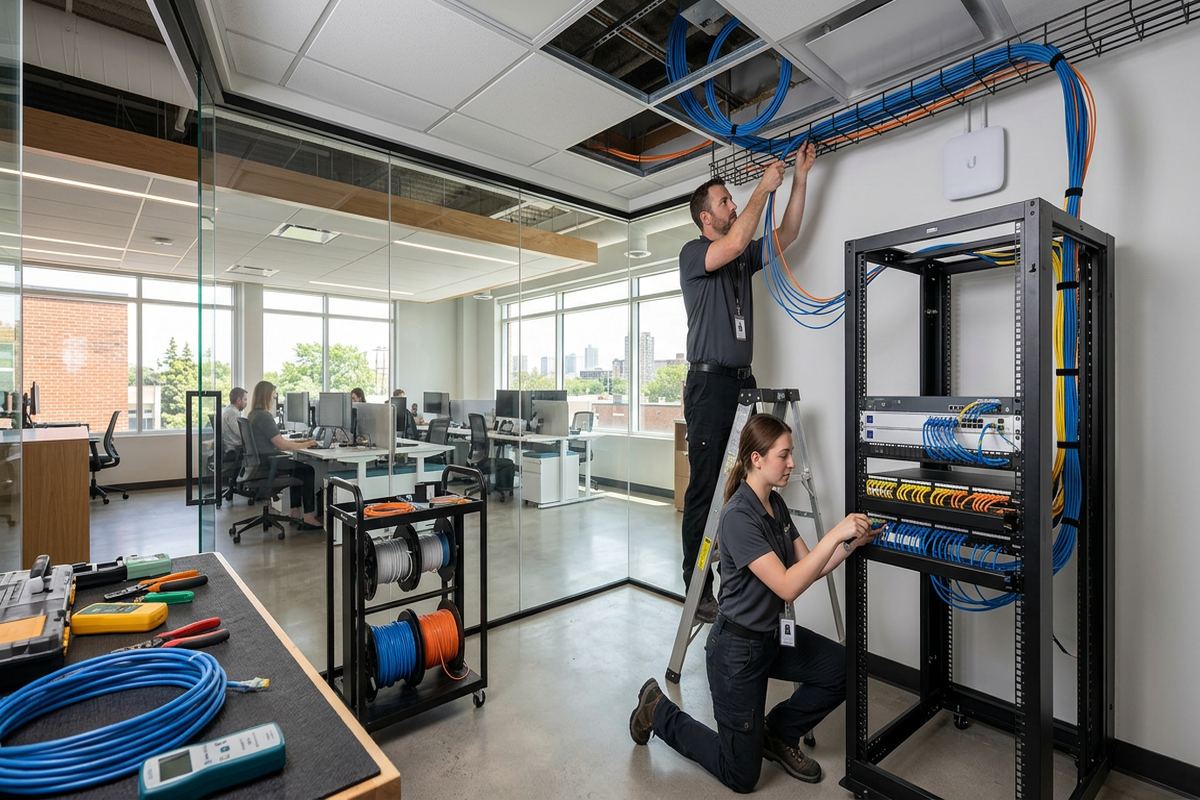
UnifiedLink installs commercial alarm systems for offices, shops, industrial units, chalets, short-term rentals and resort properties in Collingwood. We assess the site, identify entry points and operating risks, then provide a written scope before pricing. Installation includes labelled cable runs, on-site configuration, customer-controlled credentials and practical system documentation.
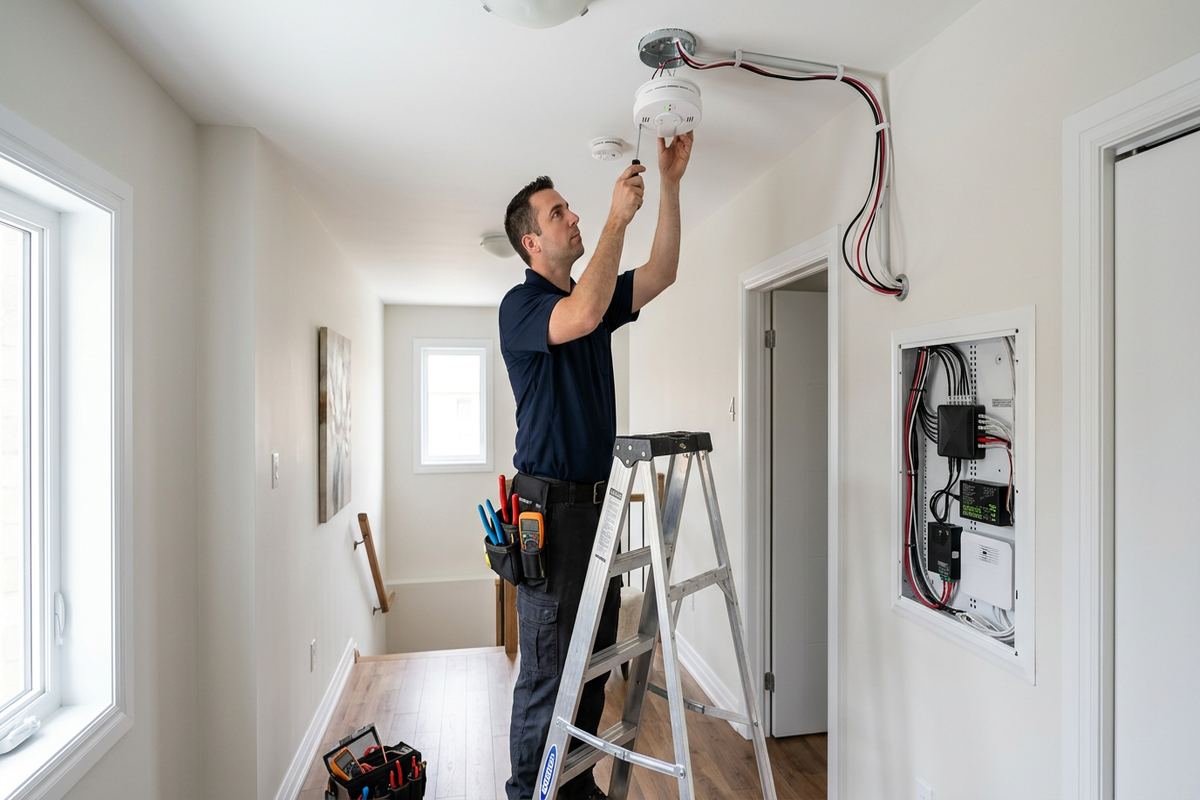
Commercial Alarm Planning for Collingwood Properties
A commercial alarm should reflect how a Collingwood property is built, occupied and managed. A Downtown Collingwood storefront has different entry points from an industrial unit, resort property or multi-building site. During the site assessment, we review doors, accessible windows, loading areas, shared corridors, utility rooms and locations containing valuable equipment. We also discuss normal opening procedures, staff access, after-hours contractors and any spaces that should remain armed while other areas are occupied. This information determines the appropriate zones, devices, keypads and communication paths for the installation.
Older commercial buildings can include additions, concealed renovations and mixed construction. Masonry exterior walls may require different drilling, fastening and cable-routing methods than modern frame walls. Finished ceilings, exposed joists, service basements and inaccessible wall cavities also affect the installation plan. Rather than assuming that every sensor can use the same route, we identify practical paths before preparing the scope. Where cables must remain visible, routes can be planned to follow structural lines or use suitable raceway, helping protect the wiring while keeping service access reasonably straightforward for future testing or changes.
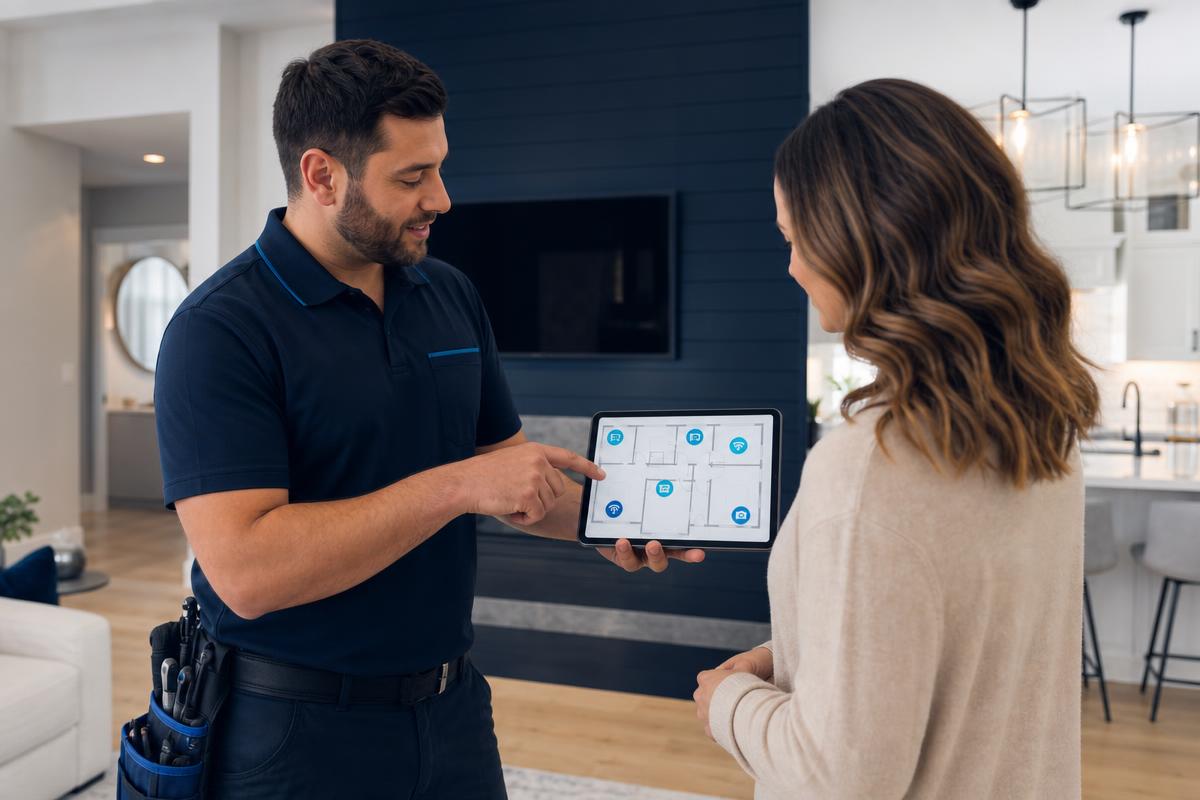
Every proposal follows an assessment and written scope. The document identifies the intended equipment, sensor and keypad placement, cable routes, included configuration, exclusions, equipment ownership and applicable warranty information. It also notes assumptions that could affect the work, such as access above ceilings, landlord permission, available electrical service or coordination with another contractor. This gives property managers and business owners a clear basis for reviewing the system before installation begins. UnifiedLink remains the accountable contractor for the low-voltage scope, reducing gaps between cabling, device installation, configuration and handover.
- Door, window and interior detection planning
- Defined alarm zones and operating schedules
- Documented cable routes and device placement
- Clear exclusions, ownership and warranty terms
Alarm Devices and Detection Methods in Collingwood
Device selection starts with the risk and environment, not a standard package. Door contacts can protect regular entrances, rear service doors, overhead doors and storage areas. Motion detectors provide interior coverage where movement should not occur after closing, while glass-break detection may suit exposed glazed areas. Hold-up devices, sounders and visual indicators can be considered where operations require them. For larger Collingwood premises, separate partitions allow independently operated areas to share a control platform without forcing every tenant, department or building section to follow the same arming schedule.
Placement matters as much as the detector type. Motion sensors should avoid heating outlets, direct sunlight, moving displays and other conditions that can produce unwanted activity. Contacts need secure alignment and mounting appropriate to the door material, whether it is wood, aluminum, steel or part of an overhead assembly. In warehouses and industrial units, ceiling height, racking and equipment movement can change the effective detection pattern. We confirm practical mounting positions on site and configure zones with meaningful names, allowing users and service personnel to identify an alarm location without decoding vague panel labels.
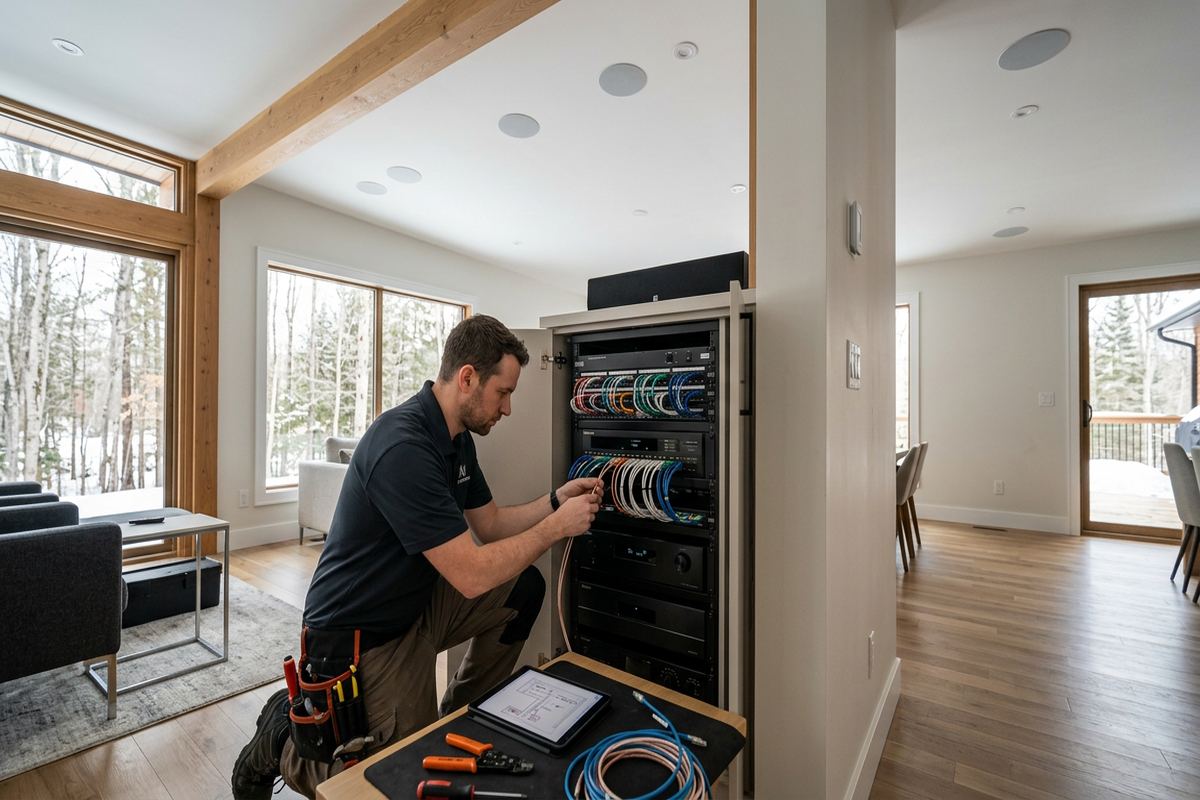
Commercial alarm controls can support local notification, remote app access and connection to a compatible monitoring service, depending on the selected equipment and account arrangement. The written scope states which communication hardware and services are included and which require a separate agreement. Cellular or internet communication should be chosen with the property’s available coverage and network reliability in mind. Collingwood chalets, short-term rentals and resort properties often benefit from remote status information, but remote access depends on stable connectivity, careful permissions and account credentials controlled by the property owner.
- Contacts for doors and accessible windows
- Motion and glass-break detection options
- Clearly named zones and partitions
- Compatible monitoring communication hardware
- Local sounder and notification planning
Remote Access for Chalets and Resort Properties
Chalets, short-term rentals and resort properties around Collingwood often change occupants frequently while owners or managers work elsewhere. An alarm system can be arranged so authorized users see system status, receive supported notifications and manage access without sharing a single permanent code. Staff, cleaners and maintenance contractors can receive separate credentials where the selected platform allows it. Permissions should match each person’s role and be removed when no longer needed. This approach improves accountability and avoids the common problem of a master code circulating among guests, vendors and former workers.
Reliable remote alarm functions depend on the site network and communication path. In the Blue Mountain area and larger resort properties, equipment rooms, detached buildings and thick construction can complicate Wi-Fi or cellular performance. Alarm communications should not be assumed to work merely because a phone connects near the front desk. We assess where the control equipment will sit, what wired network connection is available and whether communication hardware receives dependable service. If broader Wi-Fi improvements are required, they can be identified as a related scope rather than hidden inside alarm installation assumptions.
Remote administration also requires clear ownership. At handover, the customer receives access using their own credentials rather than an installer’s permanent shared account. We review user creation, arming procedures, supported notifications and basic steps for removing access. The as-built record identifies device locations, zone names and relevant equipment details, while sensitive account information remains under customer control. Property managers should also establish an internal process for changing permissions when staffing or rental arrangements change. Technology supports that process, but it does not replace regular review of users, emergency contacts and operating procedures.
- Individual credentials for authorized users
- Remote status and supported notifications
- Connectivity review before remote configuration
- Customer-controlled administration at handover
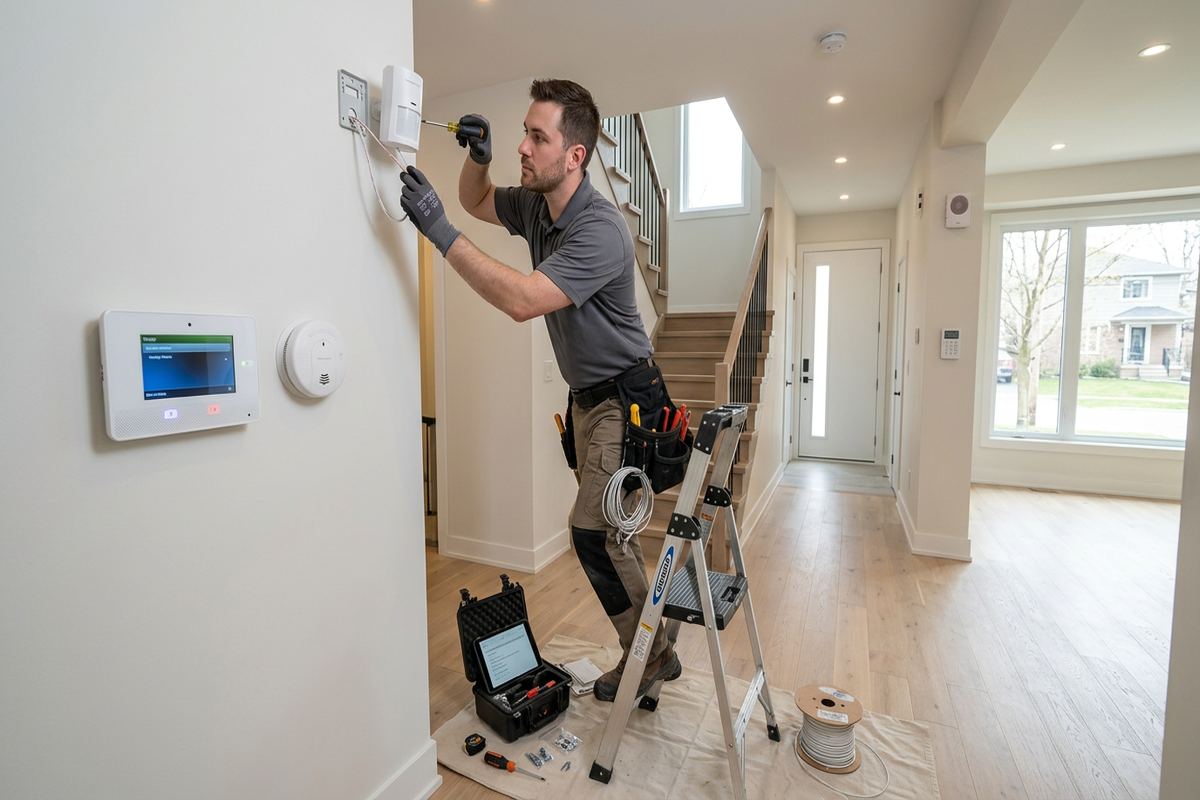
Collingwood, Ontario
Commercial alarm system installation in Collingwood, scoped in writing first
Book a site assessment and get equipment, routes, exclusions, and warranty on paper before anything is installed.
Cabling and Installation Across Collingwood
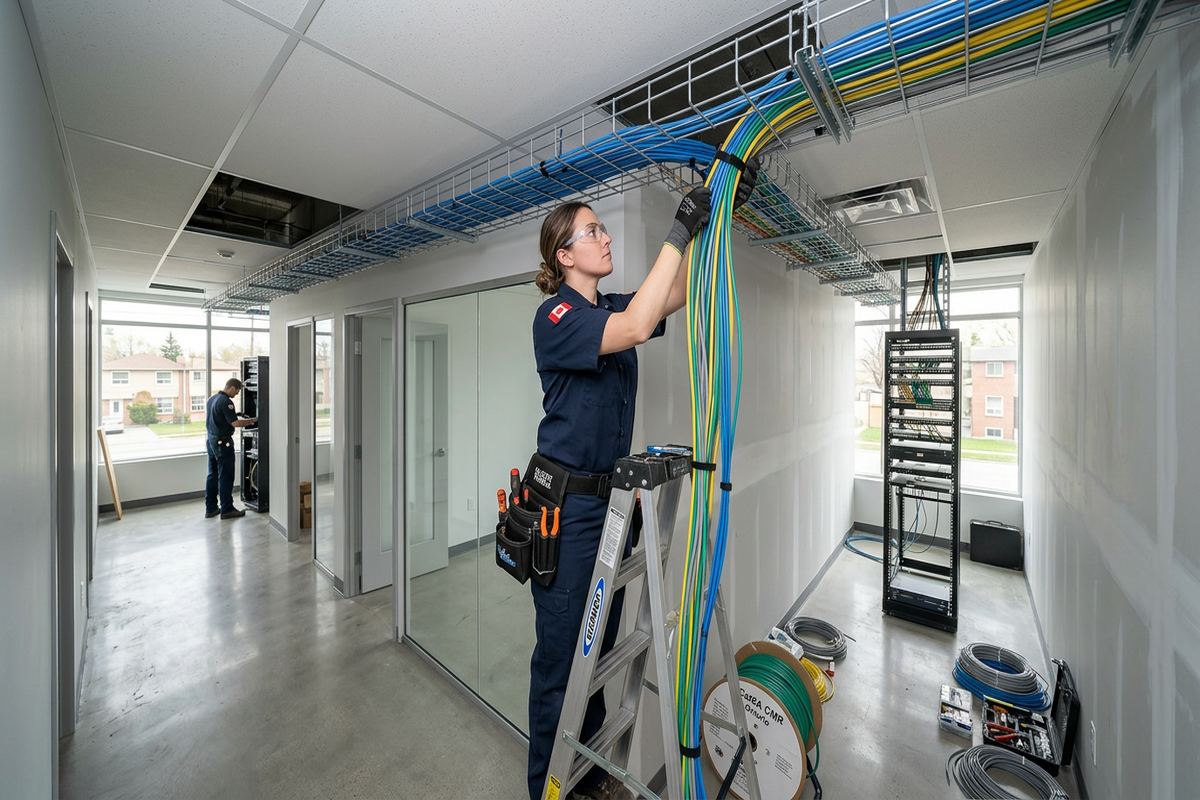
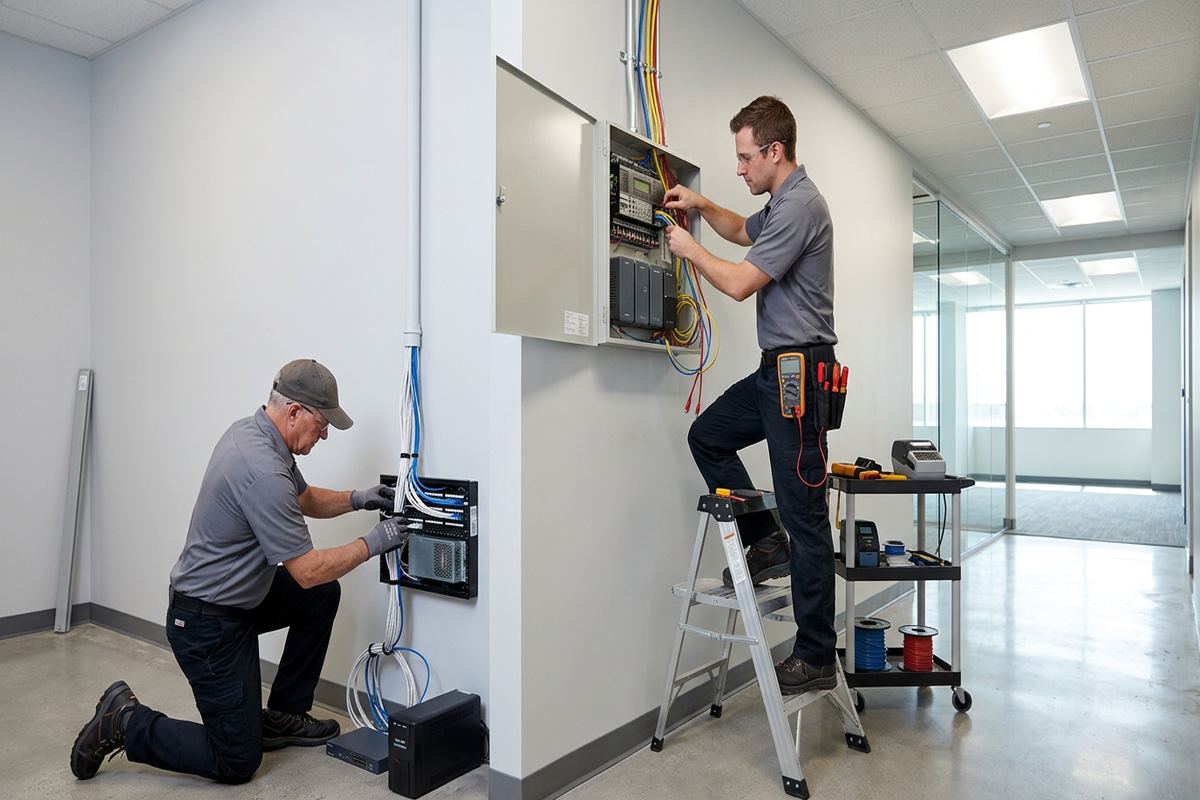
Hardwired alarm devices require cable routes that remain serviceable and protected. UnifiedLink installs continuous labelled cable runs between devices and their designated termination points, avoiding concealed intermediate joins that make troubleshooting difficult. Routes are selected according to the building, using accessible ceiling spaces, utility areas, conduit or suitable surface raceway where required. Each end is labelled consistently, and terminations are checked during commissioning. For occupied Collingwood businesses, installation sequencing can be discussed during assessment so drilling, ceiling access and temporary work areas are understood before technicians arrive on site.
Winter and freeze-thaw conditions deserve particular attention wherever alarm equipment or cabling reaches an exterior surface. Penetrations must be positioned and sealed to reduce water entry, and hardware must suit the mounting material and exposure. Brick, concrete block, siding and frame construction each require different anchors and penetration details. Exterior contacts or devices should not be placed where snow, ice, moving doors or routine maintenance will damage them. Cable should also be protected from sharp edges and exposed routes. These details help prevent physical installation faults that software configuration cannot correct.
Existing alarm wiring may sometimes be reusable, but only after its route, condition and conductor suitability are checked. Unknown cables can be damaged, spliced above inaccessible ceilings or labelled for devices that no longer exist. We do not assume that a cable is serviceable because it produces continuity during a basic test. The assessment considers visible condition, termination quality, device requirements and practical access. When replacement is appropriate, the written scope distinguishes new runs from retained infrastructure. That record gives the customer a clearer understanding of what remains from the previous system and what UnifiedLink installs.
- Continuous labelled low-voltage cable runs
- Suitable fasteners for masonry or framing
- Protected and sealed exterior penetrations
- Documented reuse of acceptable existing wiring
- Accessible terminations for future service
Approvals for Condos, Tenants and Landlords
Commercial tenants should confirm what they are permitted to alter before alarm installation begins. A landlord may restrict drilling through exterior walls, work in shared ceilings, devices on common doors or cabling through another tenant’s space. Condominium properties can also require management approval, contractor documentation or defined working hours. These conditions are relevant in mixed-use buildings, resort developments and locations such as Lighthouse Point. We can document proposed routes and device locations for review, but the property owner, tenant or manager remains responsible for obtaining required permissions before the affected work proceeds.
Shared entrances and common corridors require careful scope boundaries. A tenant alarm should not interfere with building access systems, fire alarm equipment, elevator controls or another occupant’s security devices. Where a door is controlled by a property manager or condominium corporation, approval may be required before adding a contact or routing cable through the frame. The assessment identifies these interfaces so responsibilities can be assigned in writing. Fire alarm work is treated separately from intrusion alarm installation, and no connection to life-safety equipment should be assumed unless it is specifically designed and authorized by the appropriate parties.
Landlords managing multiple Collingwood units may need consistent operation without giving every occupant administrative control. Supported systems can separate user permissions, partitions and notification settings, provided those requirements are established before equipment selection. For short-term rentals, management should also consider who responds to alarms, who may change codes and how access is removed between staffing changes. The handover record documents the installed arrangement, but operational policies remain the customer’s responsibility. Clear decisions at the planning stage reduce confusion among owners, tenants, cleaners, maintenance personnel and outside monitoring contacts after installation.
- Proposed routes documented for approval
- Shared-area responsibilities identified in writing
- Tenant and administrator permissions separated
- Fire alarm interfaces excluded unless authorized
- Working-hour restrictions reviewed before scheduling
Commercial Alarm Upgrades in Collingwood
An alarm upgrade may involve more than replacing the control panel. Older systems can have unsupported communicators, damaged contacts, incomplete zone lists or user codes that were never removed. Businesses may also inherit equipment without documentation when moving into a unit. We assess the existing panel, power supply, communication method, detectors, sounders and available wiring before recommending what should remain. In Downtown Collingwood commercial spaces, renovations and changing tenant layouts can leave devices protecting former rooms while new entrances or stock areas receive little useful coverage.
Georgian Meadows and Creekside properties may include newer frame construction, while established commercial areas can contain masonry buildings or several phases of renovation. The upgrade plan must account for those differences instead of treating every existing cable as equivalent. A panel replacement can also change resistor requirements, power calculations, keypad compatibility and communication options. We identify retained devices and new components in the written scope, including exclusions. This prevents an apparent upgrade from becoming an undocumented mixture of old and new equipment with unclear service responsibility or inconsistent naming at the control panel.
Commissioning verifies that the installed system reflects the agreed operating plan. Devices are activated individually, zones are checked against their descriptions, user functions are reviewed and supported communication paths are tested. Where monitoring is arranged, coordination requirements and account responsibilities are confirmed according to the scope. Users should understand entry and exit procedures, bypass functions and what to do after an alarm event. At handover, UnifiedLink provides an as-built record and customer-owned credentials. This creates a practical baseline for future changes, even if the property layout, tenant or designated administrator later changes.
- Assessment of existing panels and wiring
- Removal of obsolete user permissions
- Accurate zone names after renovations
- Retained and replacement equipment identified
- Commissioning and documented handover
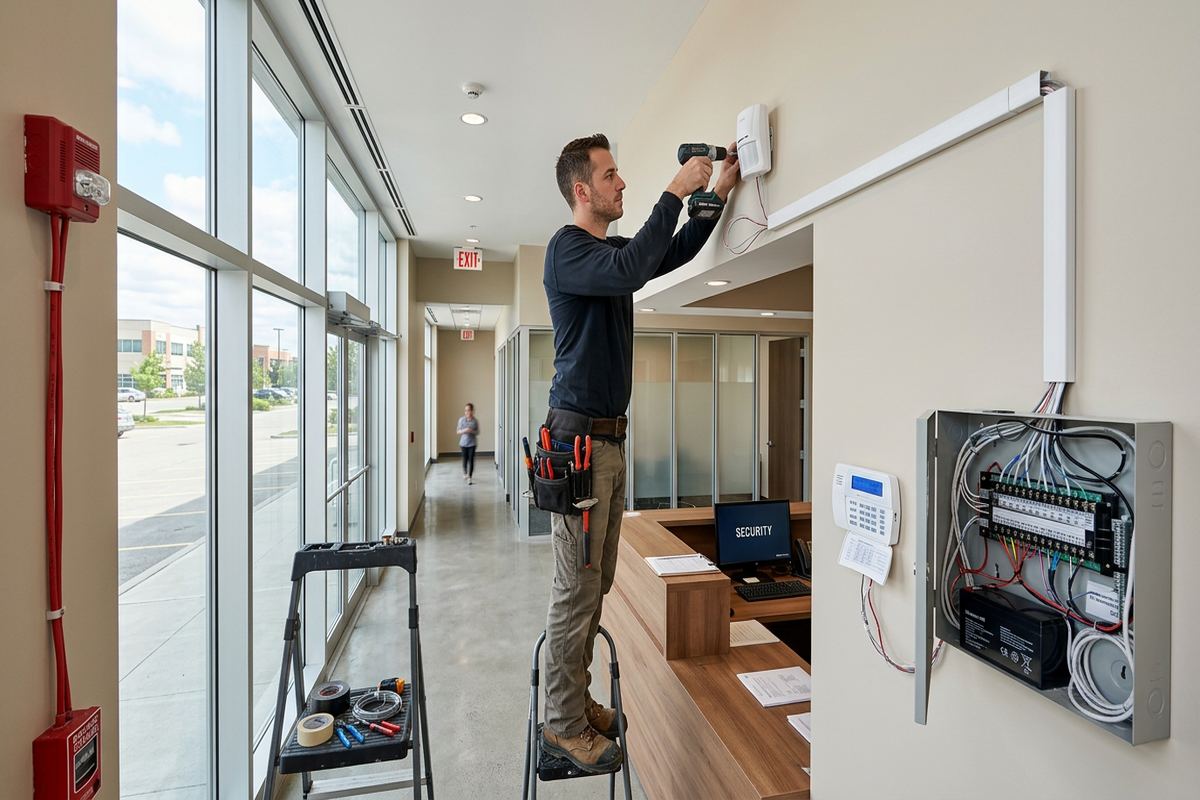
Alarm Integration With Cameras and Access
Alarm systems often operate beside cameras, access control, intercoms and building networks, but useful coordination requires defined boundaries. An alarm event may provide a reason to review camera footage, while access records can help determine who entered a controlled area. That does not mean every platform can or should be merged into one interface. During planning, we identify supported integration options, separate subscriptions, network requirements and responsibility for each system. The written scope states what will communicate directly, what remains independent and what actions users must perform through separate applications.
For Collingwood retail, office and industrial sites, coordinated device placement can reduce duplicated cabling work and crowded equipment areas. Alarm panels, network switches, camera recorders and access-control enclosures still need appropriate power, ventilation, clearances and service access. Low-voltage cables are routed and labelled according to their function rather than bundled without identification. If multiple systems are installed together, UnifiedLink acts as one accountable contractor for the agreed low-voltage work. Equipment ownership, credentials and warranty information are documented so the customer knows which components belong to each system and who administers them.
Network dependence should be reviewed before adding cloud-managed functions. A reliable internet connection at reception does not confirm coverage in a rear warehouse, detached chalet or mechanical room. Some alarm devices use dedicated wired connections or purpose-built wireless protocols rather than ordinary Wi-Fi, while remote applications still depend on internet or cellular communication. Collingwood resort properties often need a broader connectivity plan because of building size, guest networks and separated structures. We assess these conditions and explain related network work separately, allowing the customer to approve an alarm scope without overlooking its communication requirements.
- Defined alarm, camera and access boundaries
- Coordinated equipment and cable locations
- Separate ownership and administration records
- Network requirements identified before configuration
- One contractor for agreed low-voltage work
From Collingwood Assessment to Handover
The process begins with a discussion about the Collingwood property, operating schedule and reason for installing or replacing the alarm. We then arrange a site assessment, with timing based on the service and travel distance. On site, we examine entry points, construction, communication availability, equipment locations and accessible cable routes. We also identify approval requirements and coordination with landlords, property managers, electricians or internet providers. This information supports a written scope rather than an estimate based only on floor area, photographs or a generic device count.
After approval, installation follows the documented routes and placement plan, subject to any concealed conditions identified in the scope. Continuous cables are labelled, devices are mounted using methods appropriate to the surface, and exterior penetrations are sealed where included. The system is configured on site using the agreed zones, partitions, user roles and communication settings. If a condition requires a material change, it should be reviewed rather than quietly substituted. This keeps the finished system aligned with the customer’s operational needs and provides a record of decisions made during installation.
Handover covers practical use, not only confirmation that the panel powers on. We demonstrate normal arming and disarming, user management, supported remote functions and basic alarm-event procedures. The customer receives their own administrative credentials and an as-built record showing installed devices and zone information. Requests sent during business hours are answered the same day, while after-hours requests are answered the next business day. Future additions can then be discussed against an established scope and system record, whether the Collingwood property expands, changes tenants or adds another controlled area.
- Site assessment completed before pricing
- Written scope reviewed before installation
- On-site configuration and operational testing
- Customer credentials provided at handover
- As-built device and zone record supplied
Collingwood neighbourhoods we cover
- Downtown Collingwood
- Blue Mountain area
- Georgian Meadows
- Creekside
- Lighthouse Point
Commercial alarm system installation in Collingwood — common questions
Can you reuse the alarm wiring already in my Collingwood building?
Possibly, but existing wiring must be assessed before it is included in the scope. We check visible condition, labelling, termination quality, conductor suitability and accessible routes. Older Collingwood buildings may contain abandoned or concealed splices from previous renovations. The written scope identifies which cables will be retained, which will be replaced and any areas where concealed conditions limit verification.
Will the alarm work remotely at a chalet or rental property?
Remote status, supported notifications and user management can be configured when the selected alarm platform and communication service support them. Collingwood chalets and short-term rentals also need dependable internet or cellular communication. We assess the proposed equipment location and available connectivity before defining the scope. Customer-owned credentials are provided at handover, allowing the owner or manager to control authorized users.
Do I need landlord or condo approval before installation?
Approval may be required if installation affects exterior walls, common corridors, shared ceilings, door frames or other managed property. This is particularly relevant for leased commercial units, resort developments and condominiums in Collingwood. We can document proposed device locations and cable routes for review, but the customer is responsible for securing landlord, condominium corporation or property management permission before restricted work proceeds.
Can you connect the alarm to a monitoring service?
Commercial alarm equipment can be selected with compatible monitoring communication options. The final arrangement depends on the panel, available internet or cellular service and the monitoring account. Our written scope states which communication hardware and configuration are included, along with any separate service responsibilities. We do not assume that an existing Collingwood monitoring account or communicator will be compatible without checking its details.
How do you protect exterior alarm wiring during Collingwood winters?
Exterior routes and devices are planned for the mounting surface, exposure and normal building use. Penetrations are positioned and sealed to reduce water entry, with suitable anchors for masonry, concrete block, siding or frame construction. We also consider snow, ice, freeze-thaw movement and possible impact from doors or maintenance equipment. The exact method is documented where exterior installation forms part of the scope.
What do we receive when the alarm installation is finished?
At handover, we review normal operation, user management, zone names, supported remote functions and basic alarm procedures. The Collingwood customer receives administrative access using their own credentials, along with an as-built record of installed device locations and zone information. Equipment ownership and warranty details are covered in the written scope, providing a clear reference for future service, tenant changes or system expansion.
Coverage in Collingwood is confirmed against the address before we quote. See everything we install in Collingwood or the province-wide commercial alarm system installation page.