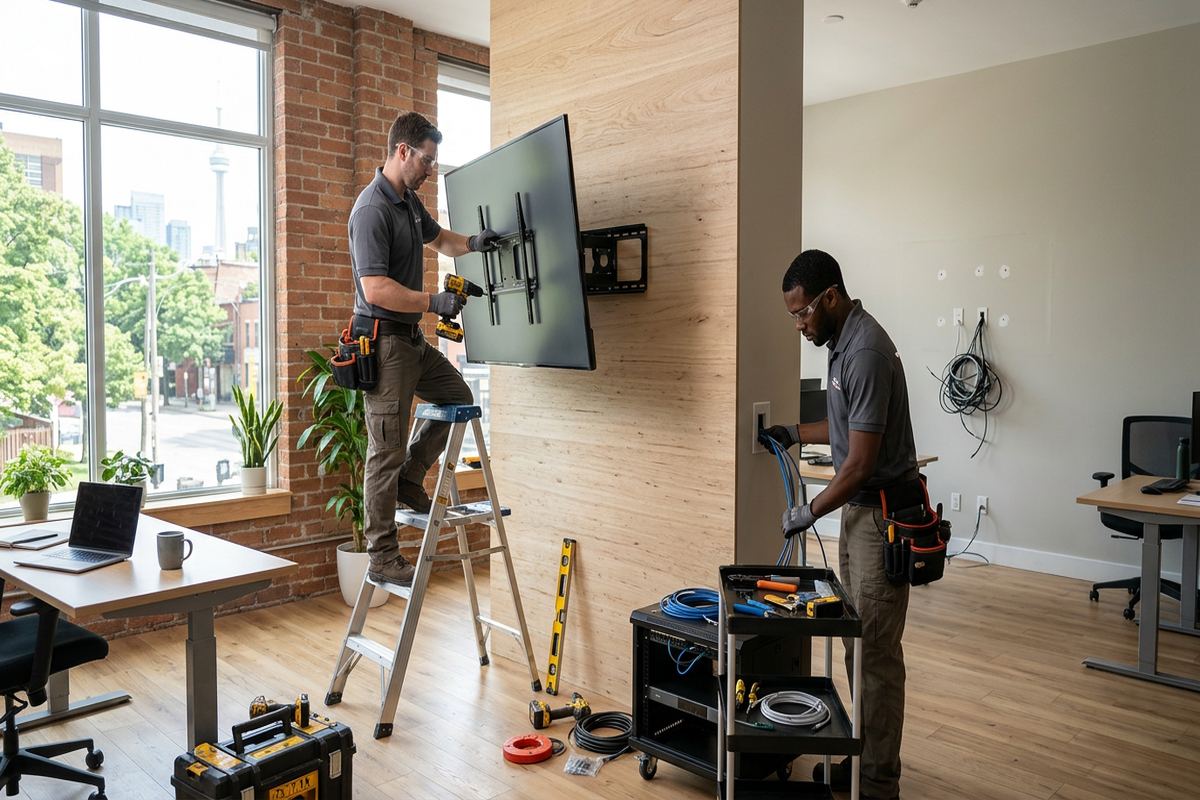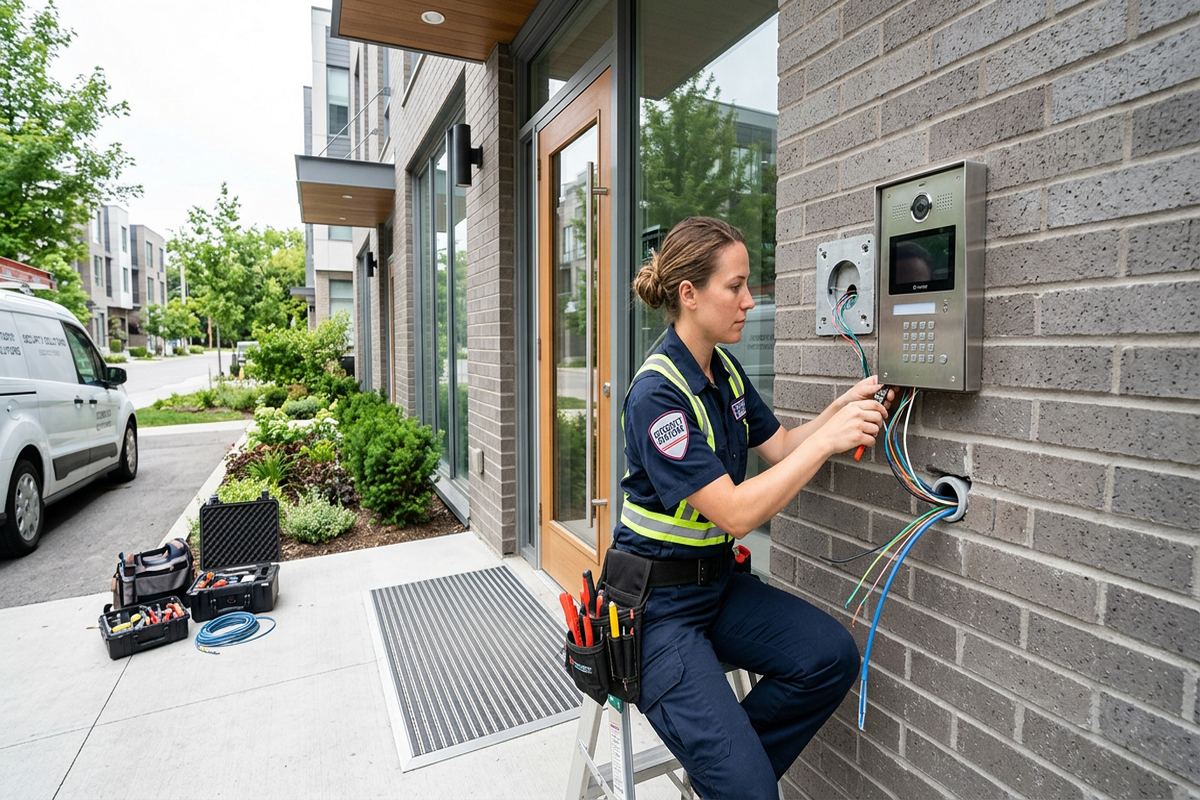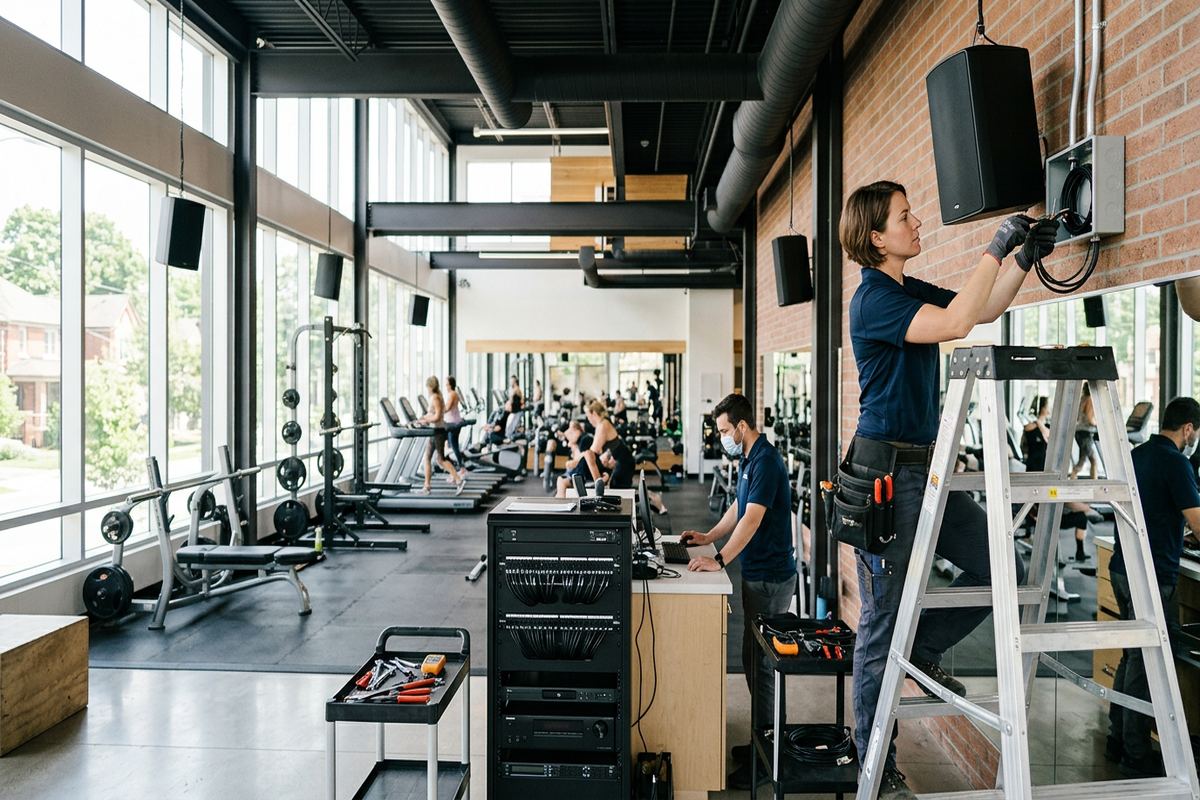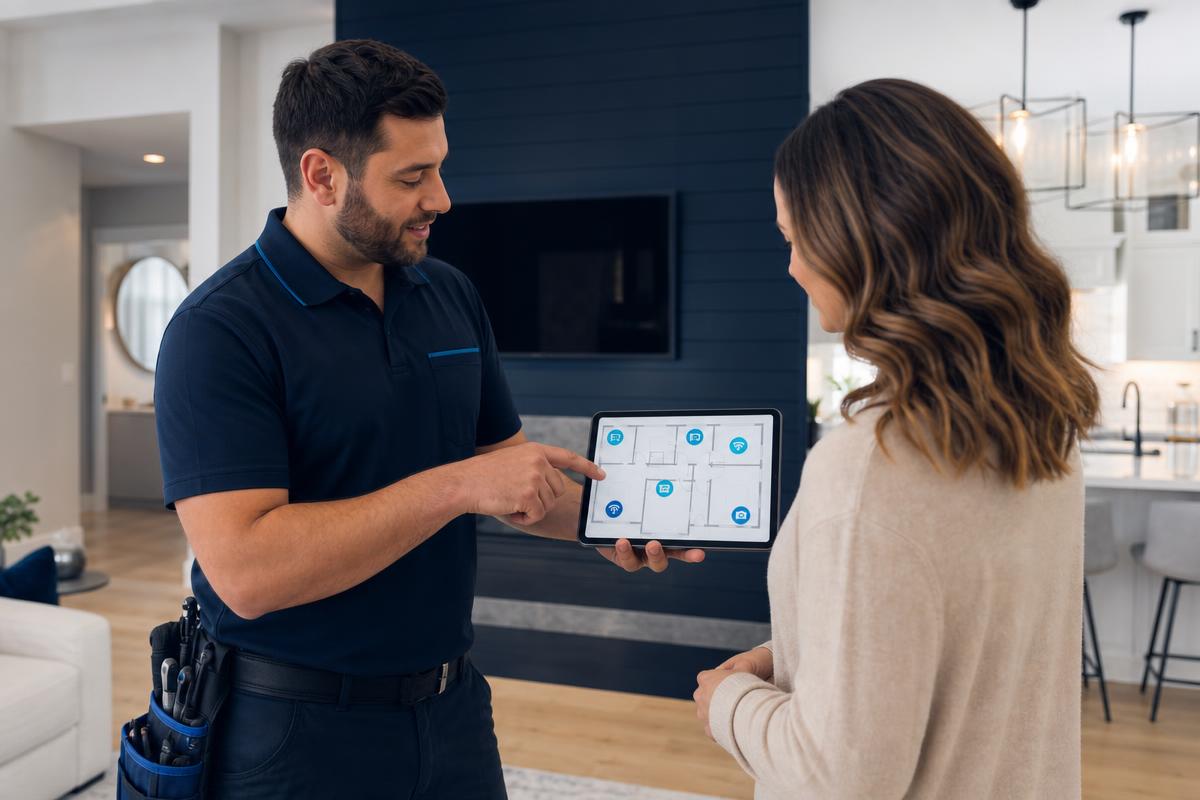
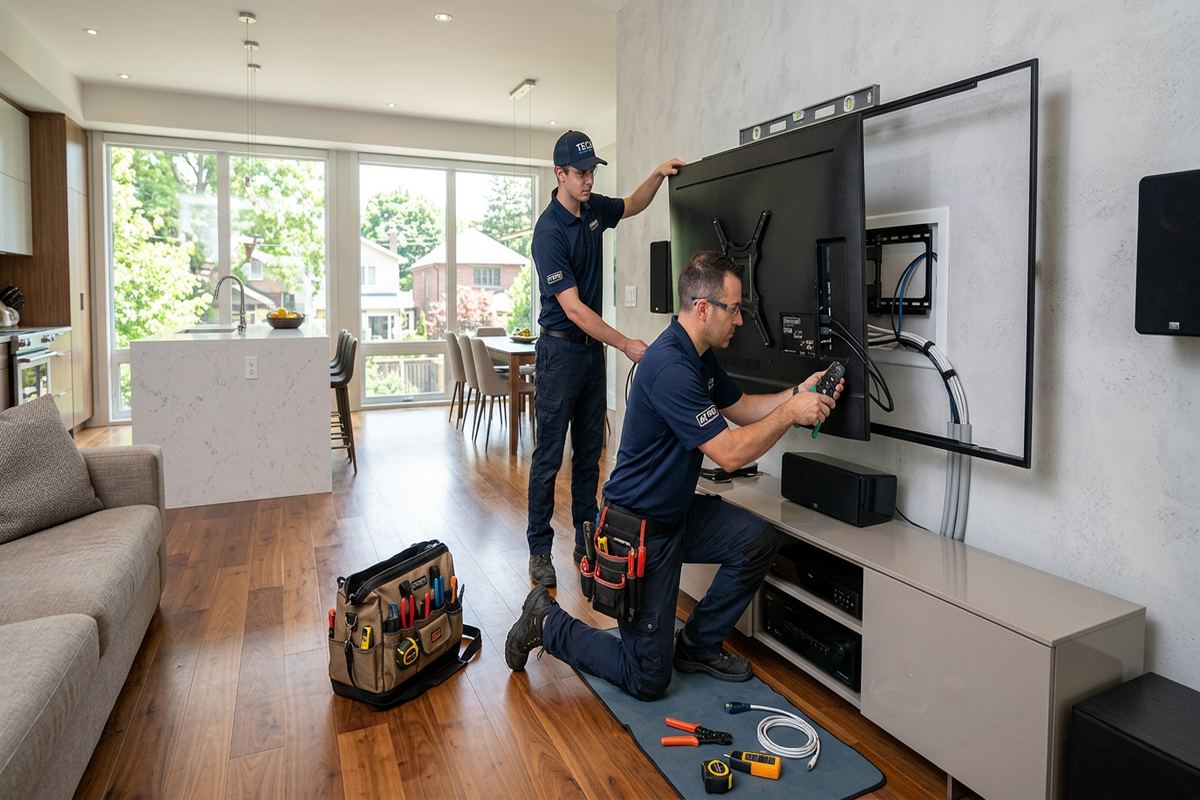
UnifiedLink provides TV wall mounting for homes, offices, shops and facilities across Chatham and nearby Chatham-Kent communities. Each installation starts with the wall structure, screen size, viewing position and cable path. We install suitable mounting hardware, route and label low-voltage cabling, connect source equipment, configure the display and provide a clear handover using your own credentials.
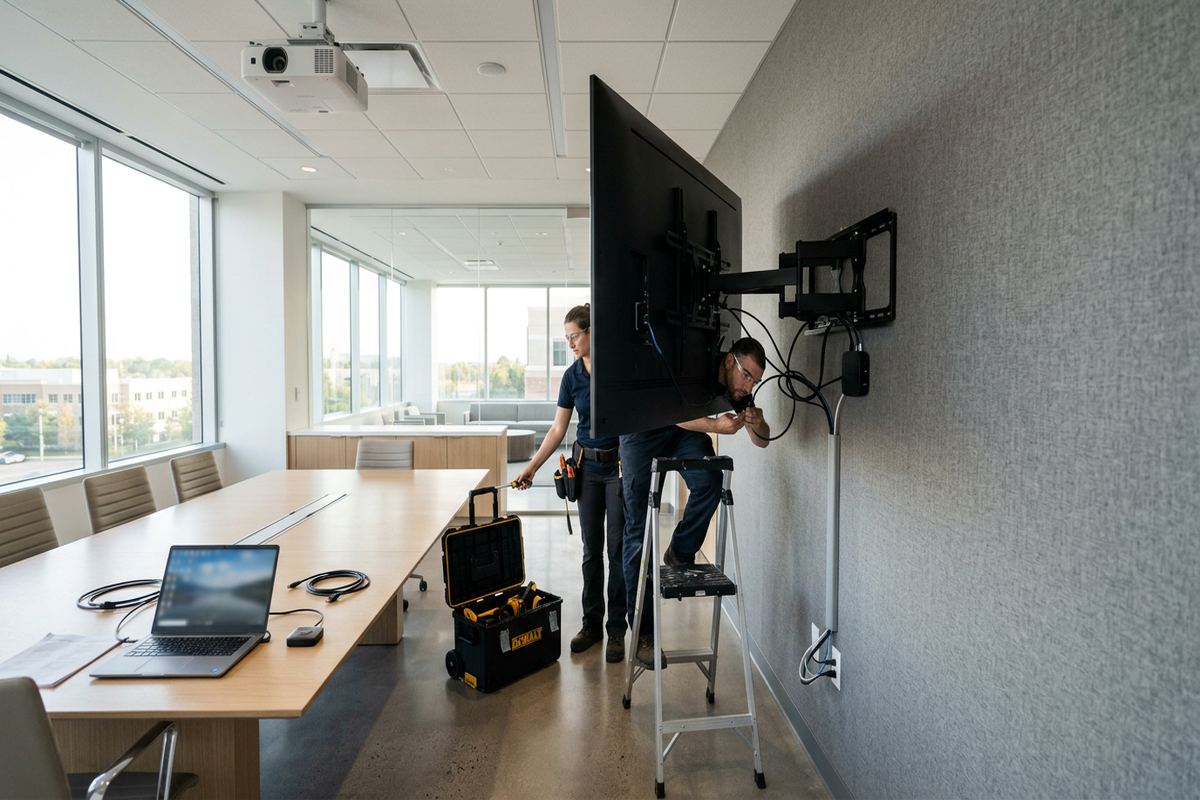
TV Wall Mounting for Chatham Properties
TV wall mounting in Chatham begins with more than choosing an open section of wall. Screen weight, bracket design, viewing distance, glare, furniture and wall construction all affect placement. Older town housing may have plaster, irregular framing or previous alterations hidden behind the finish. Newer homes can include steel studs, shallow service cavities or tightly planned electrical layouts. We inspect the proposed position before drilling, confirm usable attachment points and discuss practical cable routes. The objective is a level, stable display placed for comfortable viewing without avoidable wall damage or exposed wiring.
Chatham-Kent properties vary from Downtown Chatham houses and commercial units to farm properties, grain facilities and newer residential areas such as Prestancia. Those settings require different mounting decisions. A living-room television may need concealed HDMI and network cabling, while a staff display in a food facility may require a location that supports cleaning, visibility and controlled access. We account for nearby power, connected equipment, ventilation and future service needs. Where mounting conditions are uncertain, the scope identifies what can be verified during assessment and what may only become visible after careful access begins.
UnifiedLink handles the display, mount, low-voltage pathways and connected system as one coordinated installation. This reduces conflicts between bracket placement, electrical access, cabinetry, speakers, network connections and source devices. We provide a written scope before work proceeds, covering equipment, proposed cable routes, device placement, exclusions, equipment ownership and warranty. If electrical work or structural repair outside our scope is required, that requirement is identified rather than concealed. Customers receive a practical plan for the complete installation, not simply a bracket fixed to a wall without consideration for how the television will operate.
- Fixed, tilting and full-motion mount installation
- Residential and commercial display placement
- Low-voltage cable routing and labelling
- Source device and network connection
- Written scope before installation
Assessing Walls and Mounting Surfaces in Chatham
Wall finishes do not reliably indicate what lies behind them, particularly in older Chatham housing. Drywall may cover wood studs, steel framing, masonry, strapping or previous repairs. Plaster and lath require controlled drilling to reduce cracking, while brick and concrete need compatible anchors, correct embedment and careful positioning around mortar joints. During the site assessment, we consider the television’s weight, the mount’s leverage and the intended range of movement. A full-motion arm places different forces on a wall than a fixed mount, so attachment details must reflect how the screen will actually be used.
Frame construction usually provides straightforward mounting when stud locations and spacing can be confirmed. Complications arise when the desired screen centre does not align with framing, when plumbing or wiring occupies the cavity, or when decorative panels conceal the structural surface. We can discuss backing, alternative bracket designs or a revised position instead of relying on inappropriate hollow-wall fasteners. In Maple City and the Thames Campus area, renovations and mixed construction can produce unexpected layers. A measured approach helps preserve finished walls while ensuring loads transfer to a suitable structure rather than only to drywall or panelling.
Masonry installations require equal attention to the substrate and the finished appearance. Brick condition, block cavities, concrete density and edge distances affect anchor selection. In commercial strips or industrial units, walls may also carry conduits, mechanical services or insulated panels that limit drilling locations. We review accessible information, inspect both sides where possible and establish a controlled drilling plan. If the surface cannot safely support the proposed bracket, we explain the limitation and outline alternatives. These may include structural backing, a different wall, ceiling-compatible equipment where appropriate, or a freestanding commercial display solution designed for the space.
- Wood and steel stud assessment
- Brick, block and concrete mounting
- Plaster and lath considerations
- Full-motion load evaluation
- Alternative placement where structure is unsuitable
Planning Viewing Height and Placement
Comfortable placement depends on how a room is used, not on a standard height applied to every Chatham installation. We consider seated eye level, viewing distance, screen size and whether viewers will watch from a sofa, bed, counter, waiting area or production floor. A television above a fireplace often sits higher than ideal, so bracket tilt, mantel depth and heat exposure must be reviewed. In open commercial spaces, sightlines may matter more than seated comfort. We document the agreed screen centre and bracket position before drilling, allowing the customer to confirm the practical result.
Glare can make an otherwise secure installation difficult to use. Windows, overhead lighting, polished floors and glass storefronts influence screen orientation throughout the day. Downtown Chatham businesses may need displays visible from several customer positions without creating reflections at service counters. At home, a modest shift from the room’s visual centre can improve viewing and leave space for curtains, shelving or speakers. Full-motion mounts offer adjustment but require clearance for the screen, connectors and nearby objects. We assess movement through the intended range so the display does not strike walls, cabinetry or trim.
Room layout also determines where source equipment should sit. Game consoles, receivers, media players, computers and cable boxes need ventilation, power and accessible controls. Placing everything inside a closed cabinet may create heat or remote-control problems, while leaving devices below the television can undermine a clean installation. We review available furniture, in-wall cable options and possible equipment shelves. For meeting rooms, the plan may include a conferencing computer, camera or presentation connection. The resulting layout keeps frequently used connections reachable and avoids short, strained cables that can loosen when an articulated mount moves.
- Viewing height based on room use
- Glare and window assessment
- Clearance for articulated mounts
- Fireplace and mantel review
- Accessible source equipment placement
Chatham, Ontario
TV wall mounting in Chatham, scoped in writing first
Book a site assessment and get equipment, routes, exclusions, and warranty on paper before anything is installed.
Concealed Cabling for Chatham TV Installations
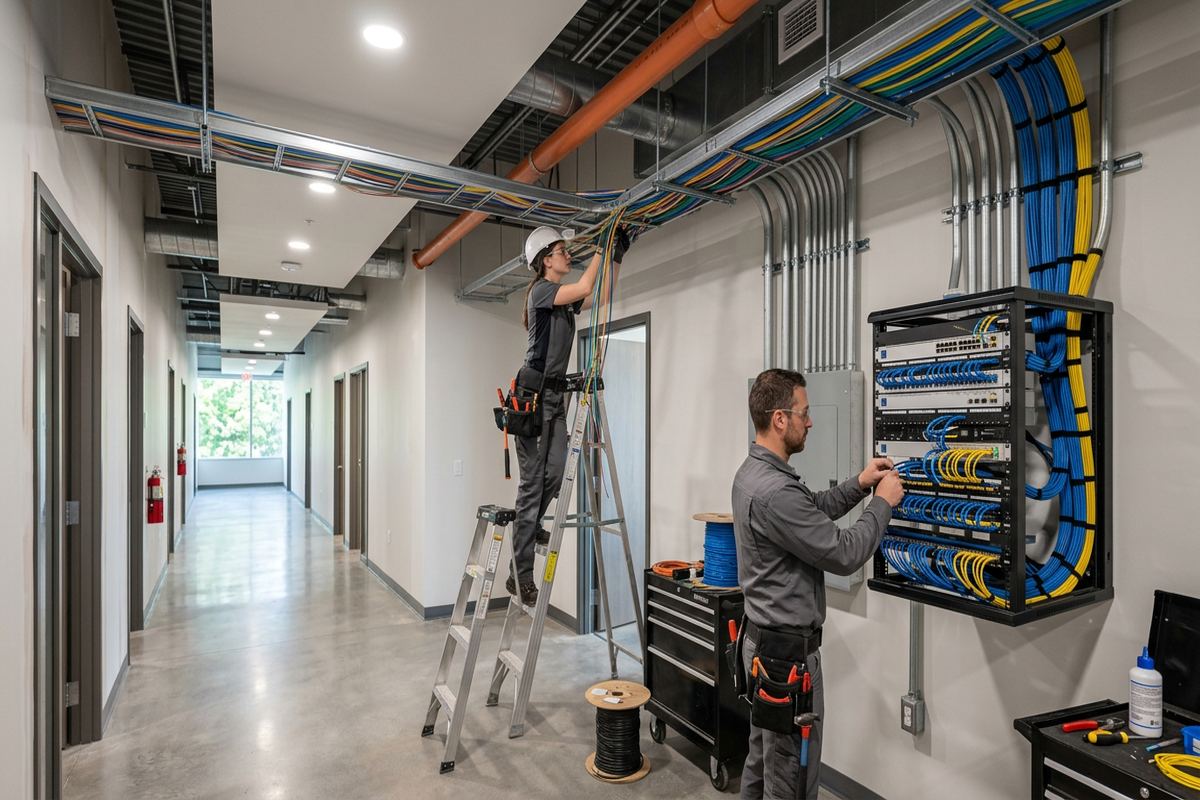
A wall-mounted screen looks complete only when its cabling is planned properly. UnifiedLink installs continuous labelled low-voltage cable runs where the building and agreed scope permit. Routes may connect the television to network equipment, speakers, a receiver, a presentation table or source devices in nearby cabinetry. We avoid burying ordinary detachable power cords or extension cords inside walls. Existing receptacle location and electrical requirements are reviewed during assessment, and work requiring a licensed electrical trade is identified separately. This keeps the low-voltage installation orderly while respecting the limits of each cable and pathway.
Concealment options depend on wall access and construction. Open wood-framed cavities may support an in-wall route, while insulated exterior walls, masonry or fire-rated assemblies can require surface raceway or another approach. Older Chatham homes may contain blocking, diagonal bracing or plaster keys that prevent a direct drop. Rather than making unnecessary openings, we test likely routes and explain the trade-offs between concealment and finish disruption. On exterior-facing walls, penetrations can also affect air sealing and insulation. Any approved access point must be handled carefully to avoid creating drafts, moisture paths or damaged vapour-control layers.
Cable selection matters when signals must travel farther than the short leads supplied with consumer equipment. HDMI format, resolution, refresh rate, device compatibility and pathway length all influence the appropriate solution. Network cabling can provide a stable connection for smart television applications, managed content or commercial displays where Wi-Fi is inconsistent. We keep low-voltage lines arranged, supported and separated appropriately from power. At handover, cable labels and an as-built record show the route and connected endpoints. That documentation is useful when equipment changes, a wall is repainted or another contractor later works near the installation.
- Continuous labelled low-voltage runs
- HDMI and network pathway planning
- Surface raceway where concealment is impractical
- No in-wall extension cord routing
- As-built cable record at handover
Exterior and Semi-Exposed Displays in Chatham
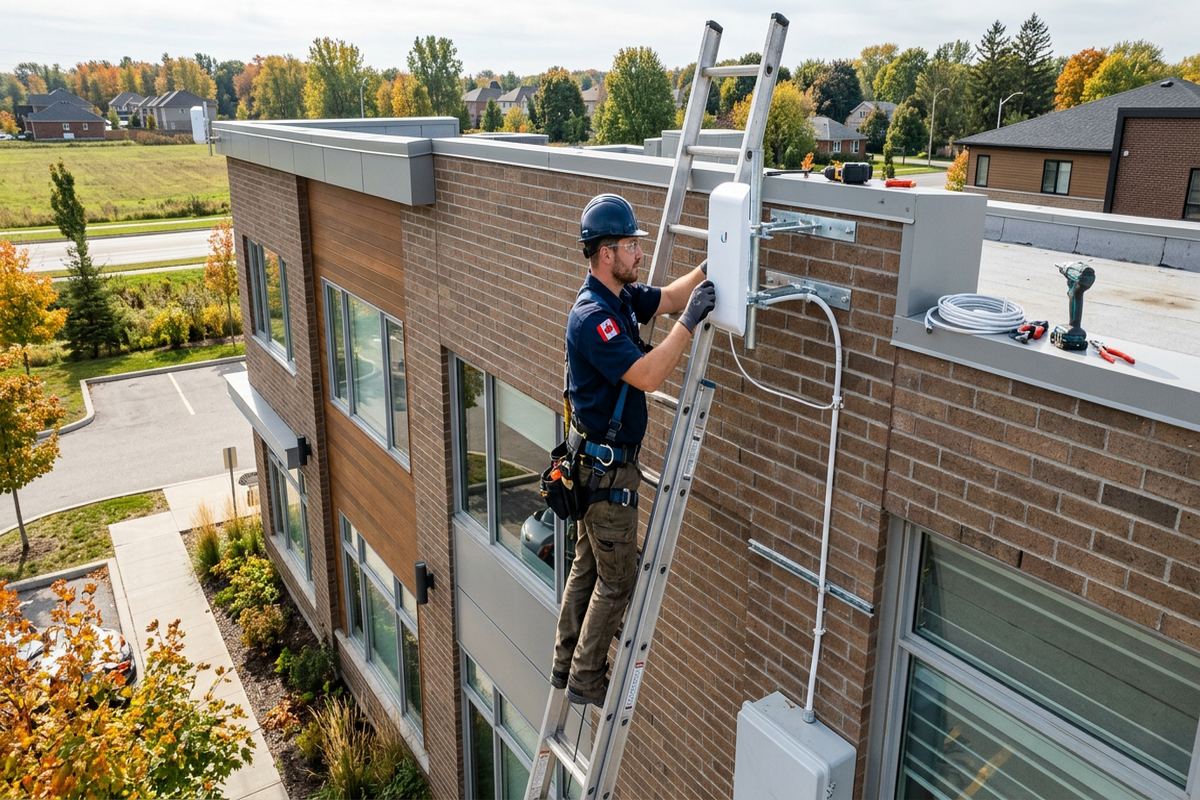
Outdoor and semi-exposed television mounting requires equipment and methods suited to the location. Chatham winters, summer humidity and repeated freeze-thaw cycles affect brackets, fasteners, seals and wall penetrations. A standard indoor television placed under a shallow overhang may still encounter condensation, wind-driven precipitation and large temperature changes. We review exposure, operating conditions, manufacturer requirements and seasonal use before recommending a mounting approach. The written scope distinguishes weather-rated equipment from ordinary indoor products and records any environmental limitations. This helps customers understand what the proposed location can reasonably support before equipment is installed.
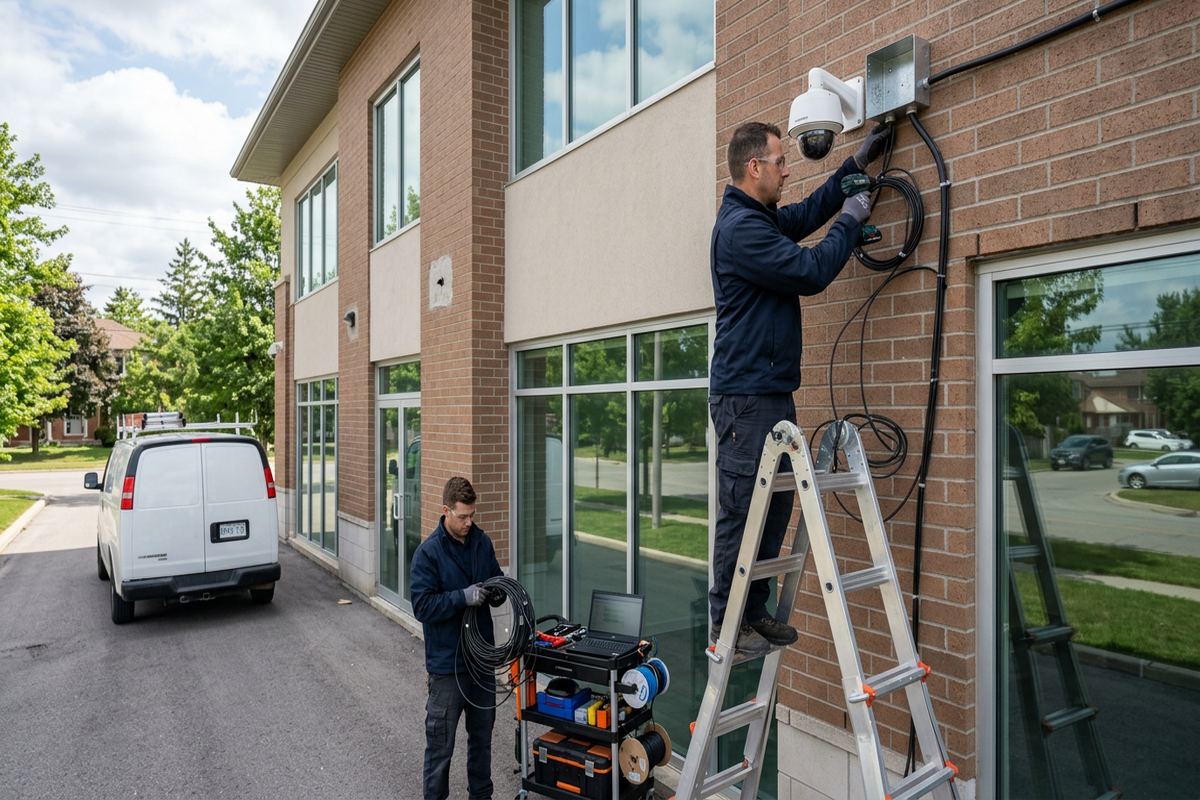
Exterior attachment points must prevent water from following fasteners or cables into the building envelope. Brick veneer, siding, concrete and insulated wall systems each require different detailing. Penetrations are positioned and sealed for the specific surface, while cable entries are arranged to shed water rather than collect it. Freeze-thaw movement can open poorly prepared gaps, so exterior sealing is treated as a functional part of the installation. On farm properties or industrial units, dust, vibration and vehicle movement may add further constraints. Locations near washdown activity or processing areas require especially careful equipment review.
Covered patios, barns and loading areas can also present visibility and security concerns. The display should not obstruct doors, equipment routes or emergency information, and the mount must be protected from casual impact where possible. Bright ambient light may require a display designed for higher visibility rather than a larger residential screen. We consider access for seasonal removal, service and cable replacement, since exterior installations should not depend on dismantling finished surfaces for routine maintenance. Where the environment is unsuitable, we state that clearly and may recommend an indoor-facing window display or protected enclosure instead.
- Exposure and temperature review
- Exterior-compatible brackets and equipment
- Sealed wall and cable penetrations
- Freeze-thaw movement considered
- Service access planned before mounting
Commercial TV Wall Mounting Across Chatham-Kent
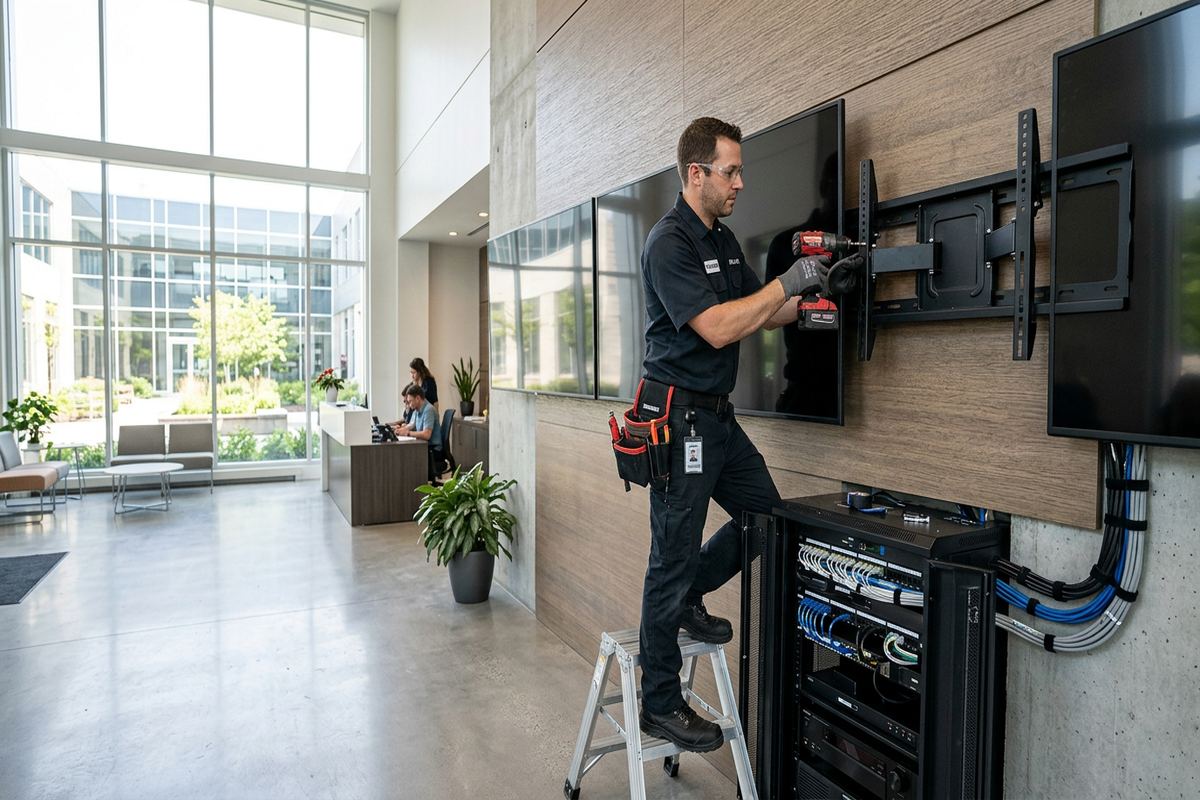
Commercial displays often serve a defined operational purpose: menus, schedules, presentations, safety information, dashboards or customer entertainment. In Chatham offices, retail units and food facilities, placement must support that purpose without interfering with staff movement or maintenance. We confirm who needs to see the screen, what content source will be used and who will control it. Screen orientation, mounting height and cable security are then planned around the space. A display intended for continuous information use may have different ventilation, scheduling and warranty requirements from a residential television used for occasional viewing.
Grain and food facilities introduce practical conditions that ordinary residential mounting guidance may not address. Dust, cleaning procedures, temperature variation, vibration and restricted areas can influence both equipment choice and cable routing. We coordinate proposed work with the site contact and identify access, shutdown or hygiene requirements before arrival. Mounting surfaces are checked for structure and nearby services, while device placement allows cleaning and inspection where required. We do not assume that a convenient wall is an approved location. The written scope records responsibilities, exclusions and any preparation the facility must complete before installation.
Multi-display projects benefit from consistent measurements and documented connections. In a Wallaceburg business, Chatham commercial strip or larger Chatham-Kent facility, screens may need aligned heights, common content sources or separate network connections. We can assess the complete system rather than treating each display independently. One accountable contractor coordinates mounts, low-voltage cabling, connected devices and on-site configuration within the agreed scope. During handover, authorized staff receive operating information and customer-owned credentials remain with the customer. An as-built record identifies display locations, cable endpoints and relevant equipment for later service or replacement.
- Office and retail display mounting
- Menu and information screen placement
- Industrial and facility installation planning
- Aligned multi-display layouts
- Documented commercial handover
Configuration, Testing and Handover in Chatham
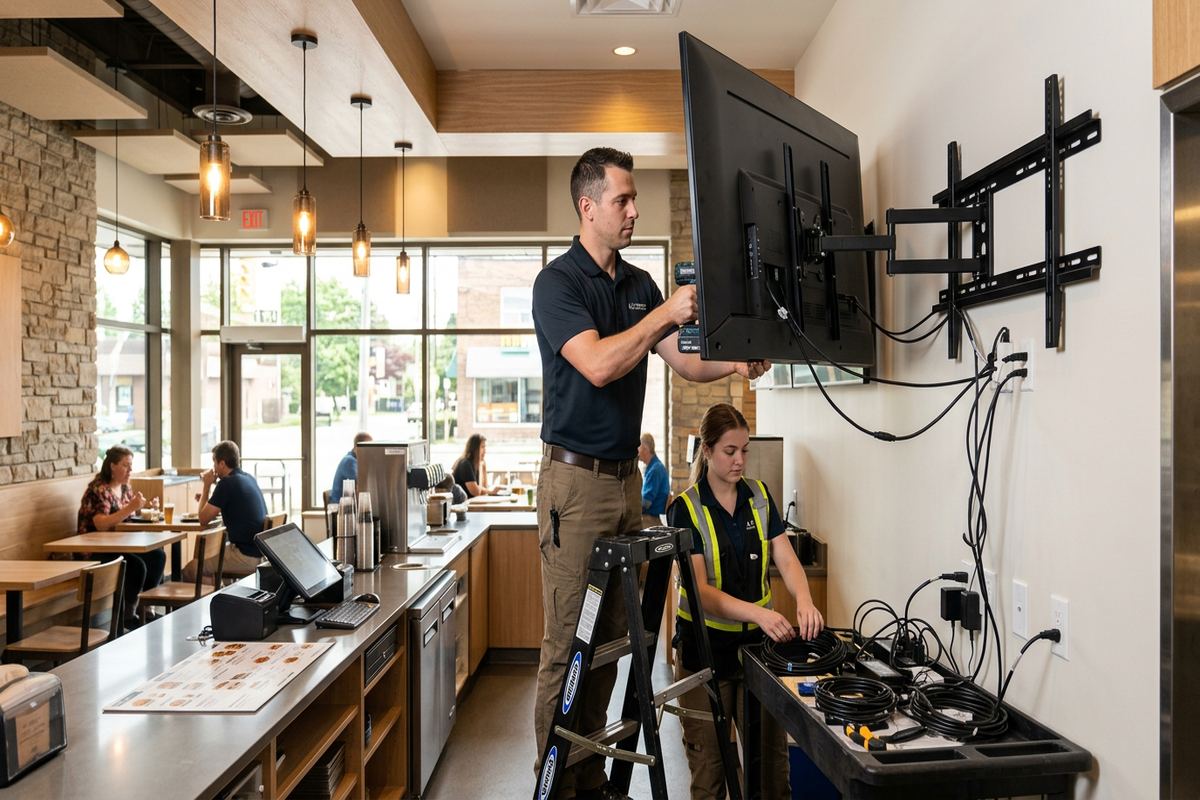
Physical mounting is only one part of a working display installation. After the television is secured, we connect the agreed source devices and configure practical settings on site. This can include input naming, network connection, basic picture mode selection, audio output and control checks. We test each documented signal path rather than assuming a connected cable is functioning correctly. For articulated mounts, testing also includes moving the screen carefully through its expected range while observing cable slack and connector clearance. Any limitations caused by customer equipment, subscriptions or third-party services are explained during handover.
Smart television setup should leave control with the Chatham customer. Accounts are created or accessed using the customer’s own credentials, and those credentials are not presented as installer-owned access. We can guide the customer through network connection and application sign-in, but service availability and account terms remain with the relevant provider. In commercial settings, an authorized representative should be present to confirm content sources, user access and operating schedules. Where remote management is included, ownership and administrator roles are recorded clearly so future staff or service providers can understand who controls the system.
Handover includes a review of normal operation, mount movement and connected equipment. We identify which cables serve each device, demonstrate accessible inputs and explain any precautions related to weight, adjustment or ventilation. Customers receive an as-built record reflecting the installed layout and labelled low-voltage runs. If the display is later replaced, that record helps determine whether the existing bracket, cables and pathway remain suitable. Equipment ownership and warranty details are also addressed in the written scope, reducing uncertainty about which party should be contacted if a product or installation issue develops.
- On-site input and network configuration
- Signal testing at installed resolution
- Customer-owned account credentials
- Mount movement and cable-slack checks
- As-built record and operating review
Booking TV Wall Mounting in Chatham
Requests for TV wall mounting in Chatham start with a short discussion about the property, display and intended location. Useful details include the television make and model, screen size, proposed mount, wall photographs and a list of connected devices. For commercial work, we also ask about operating hours, access rules and the display’s purpose. These details help define what must be checked in person, but photographs do not replace confirmation of the mounting surface. A site assessment is completed before pricing, with timing depending on the service requirements and travel distance.
Following assessment, UnifiedLink prepares a written scope covering equipment, cable routes, device placement, exclusions, equipment ownership and warranty. The scope can also identify customer-supplied products and any work required from another trade. This is particularly important in condos, leased homes and commercial units, where drilling, common walls, exterior surfaces or visible raceway may require approval. Customers are responsible for obtaining condo board, landlord or property-manager permission when applicable. We can provide mounting and route details for review, but we do not assume permission has been granted simply because equipment is already on site.
Scheduling accounts for site access, equipment availability and any preparation identified during assessment. Requests sent during business hours are answered the same day, while after-hours requests are answered the next business day. Site assessment timing depends on the service and travel distance, including work outside central Chatham in communities such as Wallaceburg. Before installation, the area should be accessible and fragile items removed where practical. At completion, we review the system with the customer, provide the agreed documentation and leave control of accounts and credentials with the customer or authorized site representative.
- Site assessment before pricing
- Written equipment and installation scope
- Condo or landlord approval considered
- Business-hour requests answered same day
- One accountable installation contractor
Chatham neighbourhoods we cover
- Downtown Chatham
- Thames Campus area
- Maple City
- Prestancia
- Wallaceburg
TV wall mounting in Chatham — common questions
Can you mount a TV on plaster walls in Chatham?
Yes, when the underlying structure can support the television and bracket. Many older Chatham homes have plaster and lath, strapping, masonry or altered framing behind the visible surface. We assess the wall, locate suitable attachment points and choose a drilling method intended to limit cracking. If reliable support cannot be confirmed, we discuss backing, another bracket or an alternative location before proceeding.
Do you hide TV cables inside the wall?
We can conceal labelled low-voltage cables where the Chatham property’s construction and the agreed route permit it. Insulated exterior walls, masonry, fire-rated assemblies and blocked framing may require surface raceway or limited access openings. Ordinary extension cords and detachable power cords are not routed inside walls. During assessment, we review power location, HDMI or network needs, wall access and the likely effect on finishes.
Can you install a TV above a fireplace?
A fireplace installation may be possible, but we first review mounting structure, mantel depth, heat exposure, viewing height and cable access. In Chatham homes with masonry fireplaces or renovated chimney breasts, the visible finish may not reveal a suitable attachment surface. We also consider whether the final height will be comfortable. If heat or structure makes the location unsuitable, we recommend another position rather than forcing the installation.
Do I need condo or landlord approval?
Approval may be required when mounting in a Chatham condo, rented home or leased commercial unit, especially for common walls, exterior surfaces or visible cable raceway. The customer is responsible for obtaining permission from the condo board, landlord or property manager. UnifiedLink can provide the proposed bracket position, cable route and penetration details to support that review before drilling begins.
Can you mount displays in Chatham businesses and facilities?
Yes. We install displays in offices, retail spaces, commercial strips, industrial units, grain operations and food facilities where site conditions allow. The assessment considers visibility, mounting structure, cleaning, dust, vibration, access restrictions and source equipment. We coordinate the documented scope with an authorized site contact and provide on-site configuration, labelled low-voltage runs and an as-built record at handover.
How soon will you respond to my request?
Requests sent during business hours are answered the same day. After-hours requests are answered the next business day. The timing of a Chatham or Chatham-Kent site assessment depends on the service requirements and travel distance. We assess the site before pricing, then provide a written scope covering equipment, placement, cable routes, exclusions, ownership and warranty before installation is scheduled.
Coverage in Chatham is confirmed against the address before we quote. See everything we install in Chatham or the province-wide tv wall mounting page.