UnifiedLink installs commercial access control systems for Chatham properties, including offices, retail units, farm buildings, grain and food facilities, and multi-tenant sites. We assess doors, credentials, cable routes, network requirements and operating procedures before pricing. Each installation is configured on site and handed over using the customer’s own administrative credentials.
Commercial Access Control Planning in Chatham
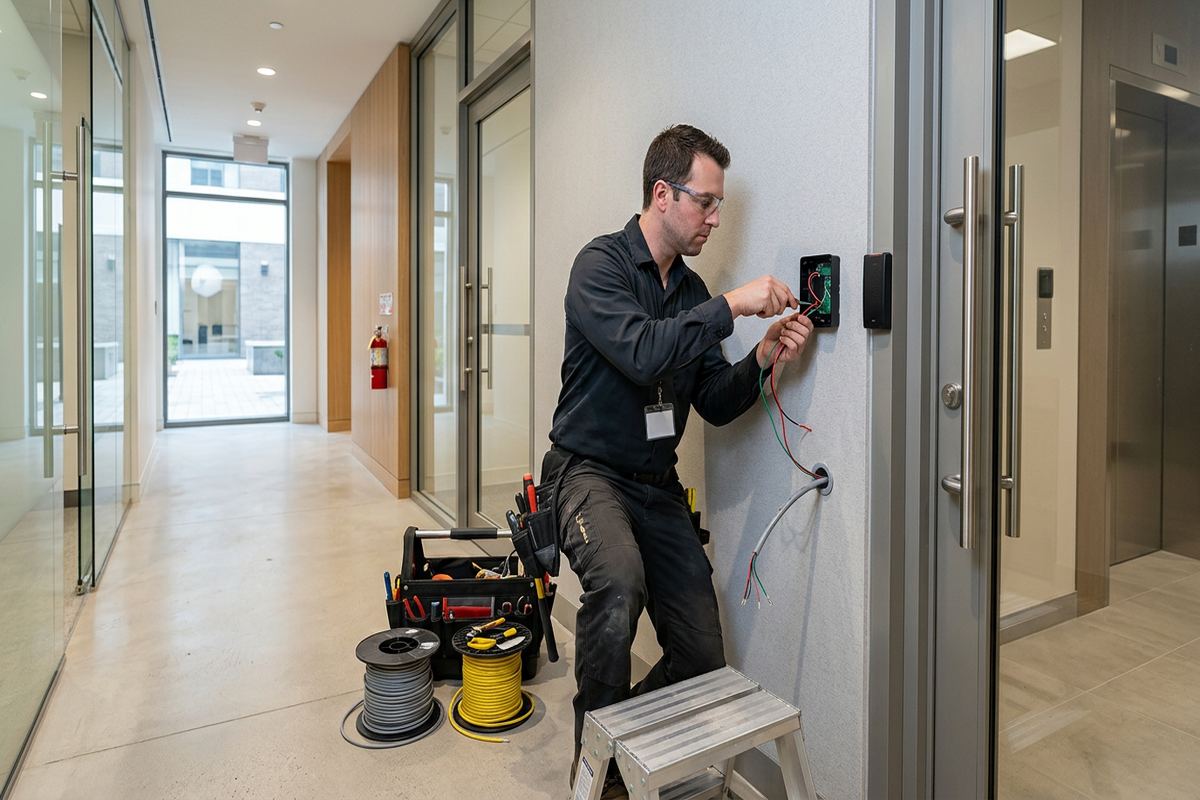
A commercial access control system should begin with the way people actually use the property. In Chatham, that may involve a public storefront entrance, employee doors, loading areas, farm outbuildings or controlled rooms inside a grain or food facility. UnifiedLink reviews who needs access, when they need it and how doors should behave during normal operations. The assessment also considers visitors, contractors, deliveries and staff changes. This operating information guides the choice of readers, locking hardware, door contacts, request-to-exit devices, controllers and management software rather than forcing every opening into the same design.
Existing doors and frames often determine more of the project than the credential technology. Older town properties may have shifted frames, non-standard hardware, thick masonry walls or previous alterations hidden beneath surface finishes. Newer commercial and industrial units can present different constraints, including demising walls, suspended ceilings, fire-rated assemblies and shared entrances. We inspect each proposed controlled opening before preparing a price. That review identifies practical cable paths, power requirements, network connections and hardware compatibility while noting where locksmith, electrical, fire-alarm or door-repair work may fall outside the access control scope.
The written scope sets out the proposed equipment, device placement, cable routes, exclusions, equipment ownership and warranty. It also identifies the doors included, the intended credential type and any integration work that has been discussed. This matters on Chatham projects where several parties may be responsible for a property, such as a landlord, tenant, condominium corporation, farm operator or facility manager. A clear scope gives each party a common reference before installation begins and reduces uncertainty around wall penetrations, door modifications, network access and the responsibility for supplying approvals or related trades.
- Door and frame condition review
- Credential and schedule planning
- Proposed controller and reader locations
- Cable, power and network requirements
- Written inclusions and exclusions
Choosing Hardware for Chatham Doors
Door hardware must suit the opening, occupancy requirements and expected traffic. Electric strikes can be appropriate for some latch arrangements, while magnetic locks, electrified panic hardware or other locking methods require different design considerations. The correct choice cannot be made from a photograph alone because frame construction, door swing, egress hardware and available space all affect installation. UnifiedLink documents existing conditions and coordinates the access control components with compatible door hardware. Any opening that forms part of a required exit must continue to support safe egress and applicable release functions after electronic control is added.
Exterior entrances in Chatham need particular attention because winter temperatures and repeated freeze-thaw cycles can expose weaknesses in mounting and sealing. Readers should be positioned to limit water entry, physical impact and unnecessary cable exposure. Exterior penetrations require suitable sealing, drip management and fastening methods for the wall material. A reader mounted on masonry needs different anchors and routing than one installed on a frame wall or metal-clad industrial unit. Door alignment, weather stripping and ice accumulation must also be considered because access software cannot compensate for a door that does not close or latch reliably.
Credential selection should reflect administration as much as daily convenience. Cards and fobs are straightforward to issue and revoke, while mobile or keypad options may suit specific workflows when the selected platform supports them. Separate permissions can be established for employees, managers, cleaners, contractors or seasonal workers. For farm properties and food or grain facilities around Chatham-Kent, credentials may also need to reflect shifts, restricted processing areas and buildings that are not continuously occupied. The final design should avoid granting broad access simply because the system was not organized around actual roles.
- Electric strike compatibility checks
- Reader placement and protection
- Exterior penetration sealing
- Role-based credential planning
- Egress and release considerations
Cabling and Controller Installation
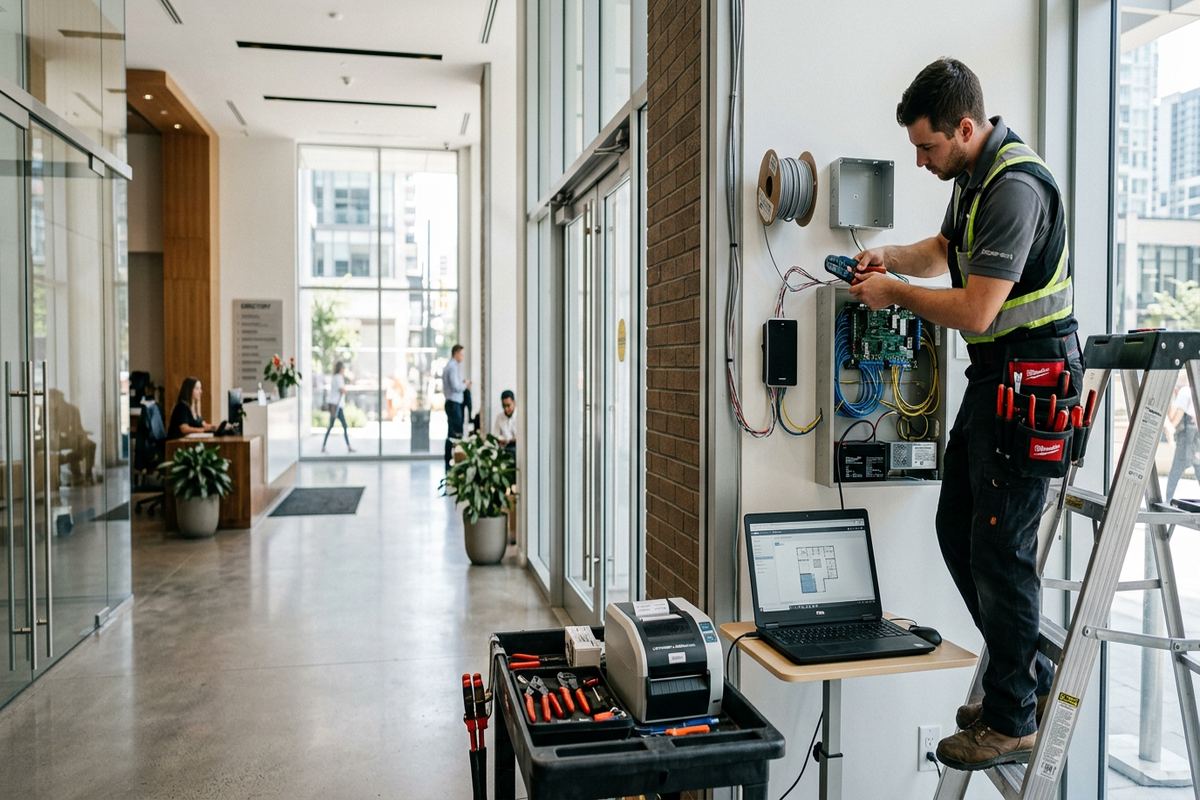
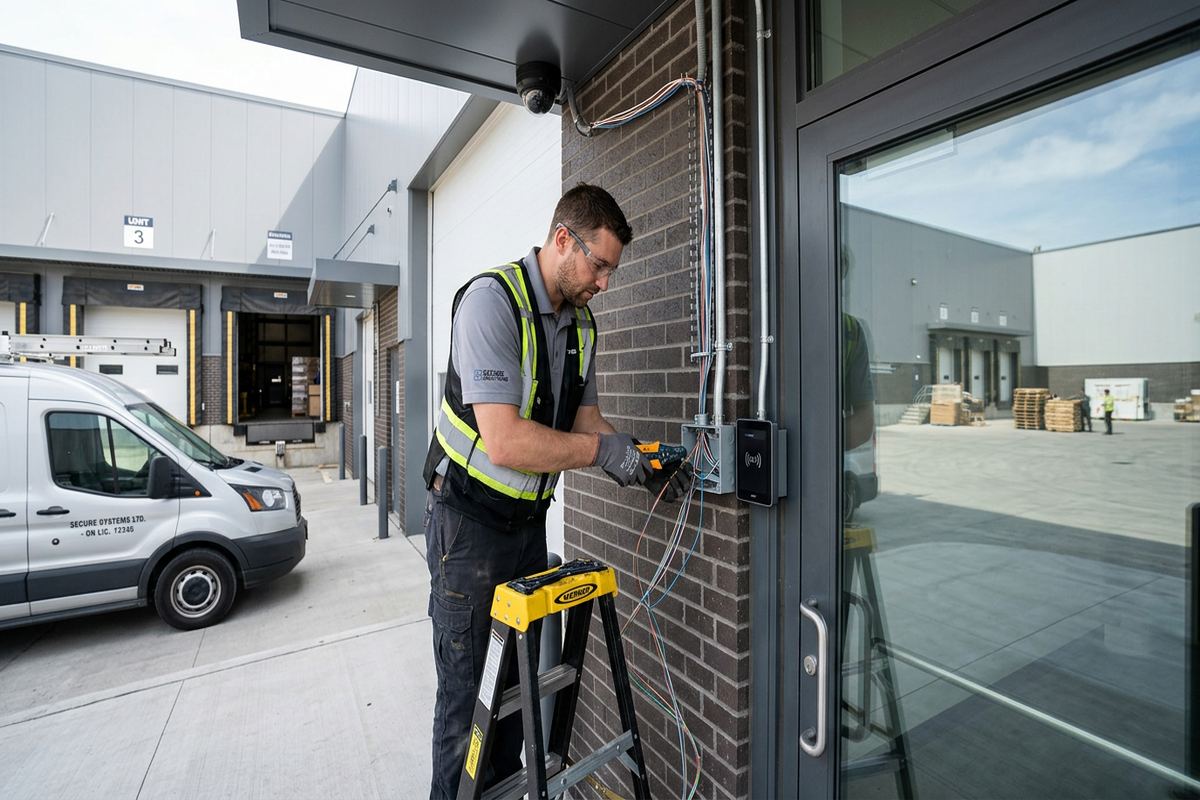
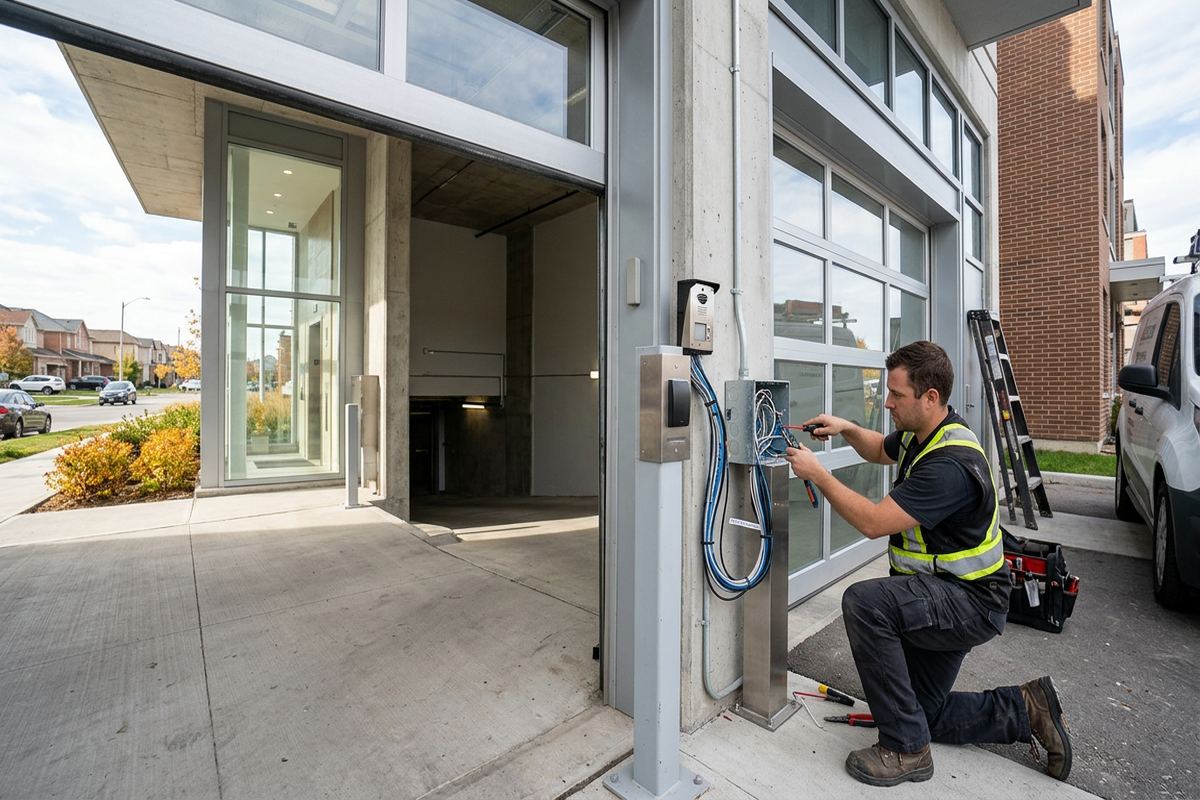
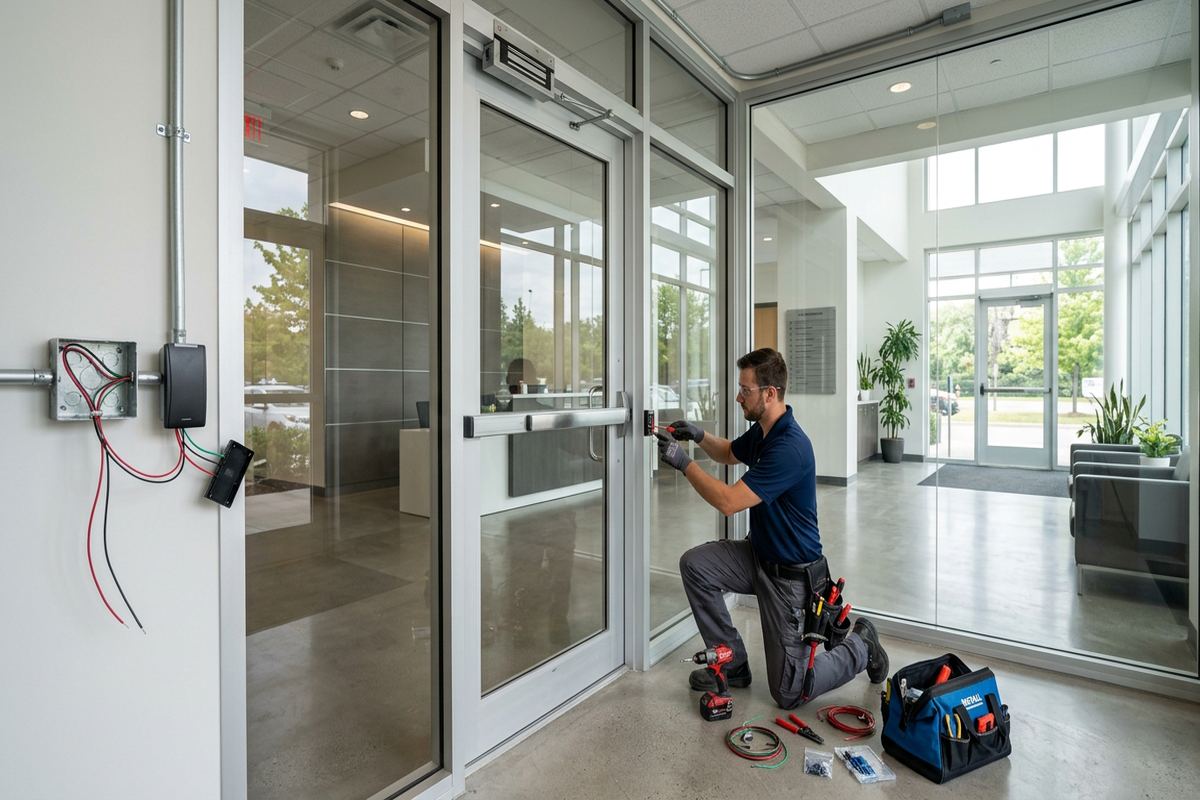
Reliable access control depends on the cabling behind every reader and door device. UnifiedLink installs continuous labelled cable runs between field devices and the designated controller or termination point, avoiding undocumented joins that complicate future troubleshooting. Cable type and conductor count are selected for the reader, lock, door contact, request-to-exit device and any supervised circuits in the approved design. Routes are planned around finished areas, mechanical spaces and existing services. Where cable must remain visible, the scope can identify suitable pathway or conduit responsibilities instead of leaving routing decisions until work is underway.
Construction type changes the installation method. Masonry buildings in Downtown Chatham may require carefully selected penetrations and surface pathways where wall cavities are unavailable. Frame construction can offer concealed routes, although insulation, blocking and previous renovations may limit access. Commercial strips often involve shared ceiling spaces or landlord-controlled service areas, while industrial units may need longer runs through open structure. Before drilling or mounting equipment, required landlord, condominium or property-management approvals should be confirmed. The written scope records assumptions about access above ceilings, permitted penetrations and restoration so responsibilities remain clear.
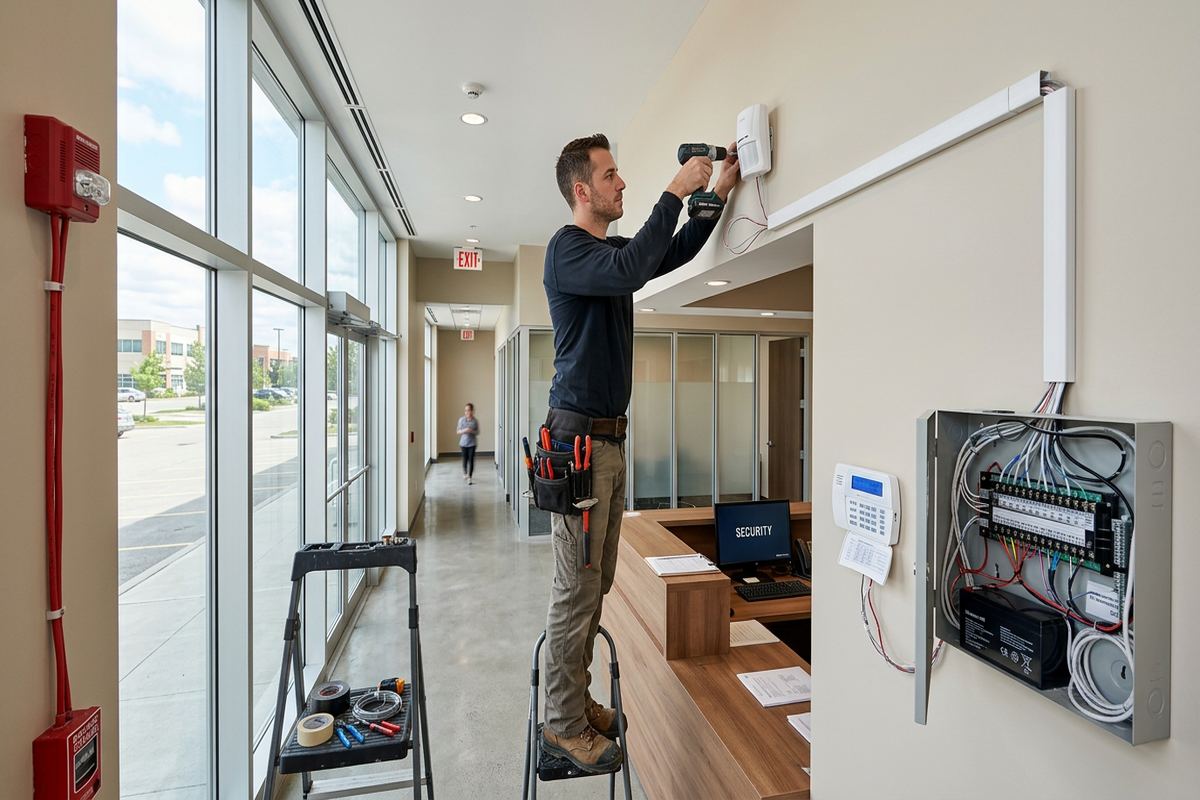
Controllers, power supplies and network-connected equipment should be installed in a location that is secure, serviceable and appropriate for the environment. A convenient wall beside a door is not always suitable if the area is publicly accessible, damp, dusty or exposed to temperature extremes. On agricultural and processing properties, equipment placement may need additional separation from washdown, grain dust, vibration or vehicle movement. We review available communications rooms, electrical spaces and protected interior locations, then document the proposed mounting point. Dedicated electrical circuits or other line-voltage work are identified for coordination where required.
- Continuous labelled cable runs
- Documented controller locations
- Routes suited to building construction
- Secure equipment mounting areas
- Coordination of related electrical work
Chatham, Ontario
Commercial access control installation in Chatham, scoped in writing first
Book a site assessment and get equipment, routes, exclusions, and warranty on paper before anything is installed.
Access Control for Chatham Workplaces
Different workplaces need different permission structures. An office may separate public reception areas from employee space, records rooms and server rooms. Retail units may need staff entry, stockroom protection and opening or closing schedules. Industrial sites can require controlled gates, production zones, tool rooms and loading access. In Chatham’s surrounding agricultural economy, farm buildings and grain or food facilities may add seasonal workers, drivers and contractors to that list. The design should support these differences without making routine administration unnecessarily complicated for the person responsible for issuing and removing access.
Downtown Chatham properties can combine street-level commercial space with offices or residential areas above. These layouts require careful separation of tenant, staff and common-area access, particularly where entrances, corridors or utility spaces are shared. In the Thames Campus area, a business may also need to account for changing users, scheduled rooms or visitors who should not receive unrestricted credentials. UnifiedLink maps proposed access groups to specific openings and schedules. This creates a practical permissions structure that can be reviewed before configuration rather than improvised after cards or fobs have already been distributed.
Commercial units in Maple City, Prestancia and Wallaceburg can vary from newer frame construction to older masonry or adapted buildings. A system design should account for the actual door condition, communications infrastructure and authority to alter the premises. Tenants should obtain landlord approval for drilling, cabling, door hardware and equipment mounted in common or exterior areas. Condominium properties may require board or management approval even when the controlled door serves one business. Confirming these requirements early helps prevent a technically valid design from conflicting with lease terms, common-element rules or planned building work.
- Employee and contractor access groups
- Time-based door schedules
- Restricted stock and records rooms
- Shared entrance permission planning
- Tenant and landlord coordination
On-Site Configuration and Chatham Handover
Once installation is complete, the system must be configured around the approved operating plan. UnifiedLink sets up controllers, readers, doors, access levels and schedules on site, using the functions supported by the selected platform. Door operation is checked under normal entry, denied entry and request-to-exit conditions. Where door contacts are included, their status is verified through the management interface. This process also confirms that lock timing and door behaviour make sense for the opening. Configuration is not treated as complete merely because a reader accepts one test credential.
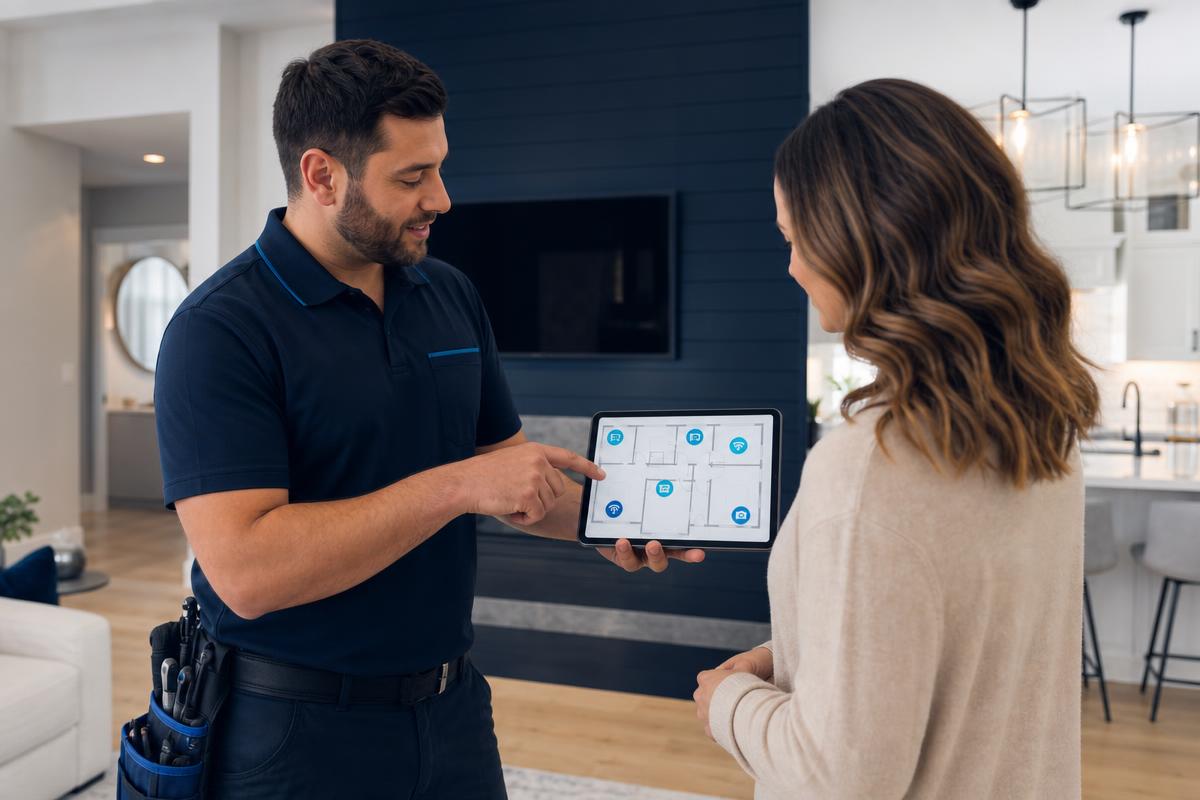
Administrative control belongs with the customer. At handover, the access control platform is provided using the customer’s own credentials rather than an installer account that remains the only route into the system. The responsible administrator can review how to add or remove users, assign permissions, check door status and handle common changes. If remote or cloud management is part of the selected system, account ownership and subscription responsibilities are identified in the written scope. These details are particularly important for Chatham landlords and multi-tenant operators when staff, tenants or property managers change.
The handover includes an as-built record showing the installed system rather than only the original proposal. It identifies controlled openings, device and controller locations, and relevant cable or termination information available within the project scope. Labels used in the software should correspond clearly with physical doors so an administrator can understand events and permissions without guessing. Any exclusions, outstanding related-trade work or operational limitations are documented. This record provides a practical starting point for future service, door changes or expansion across another part of the Chatham property.
- On-site reader and lock testing
- Access levels and schedule setup
- Customer-owned administrator credentials
- Operational guidance for designated staff
- As-built system record
Integrating Access Control With Other Systems
Access control can operate independently or exchange useful information with other building systems when compatible products and a defined scope are available. A door event may help an authorized user review associated video, while an intrusion system may use access activity as part of an opening or closing procedure. Integration should not be assumed simply because products connect to the same network. The assessment identifies the required outcome, supported interfaces, account permissions and responsibility for third-party programming. This avoids selecting equipment based on a feature that cannot be implemented in the existing environment.
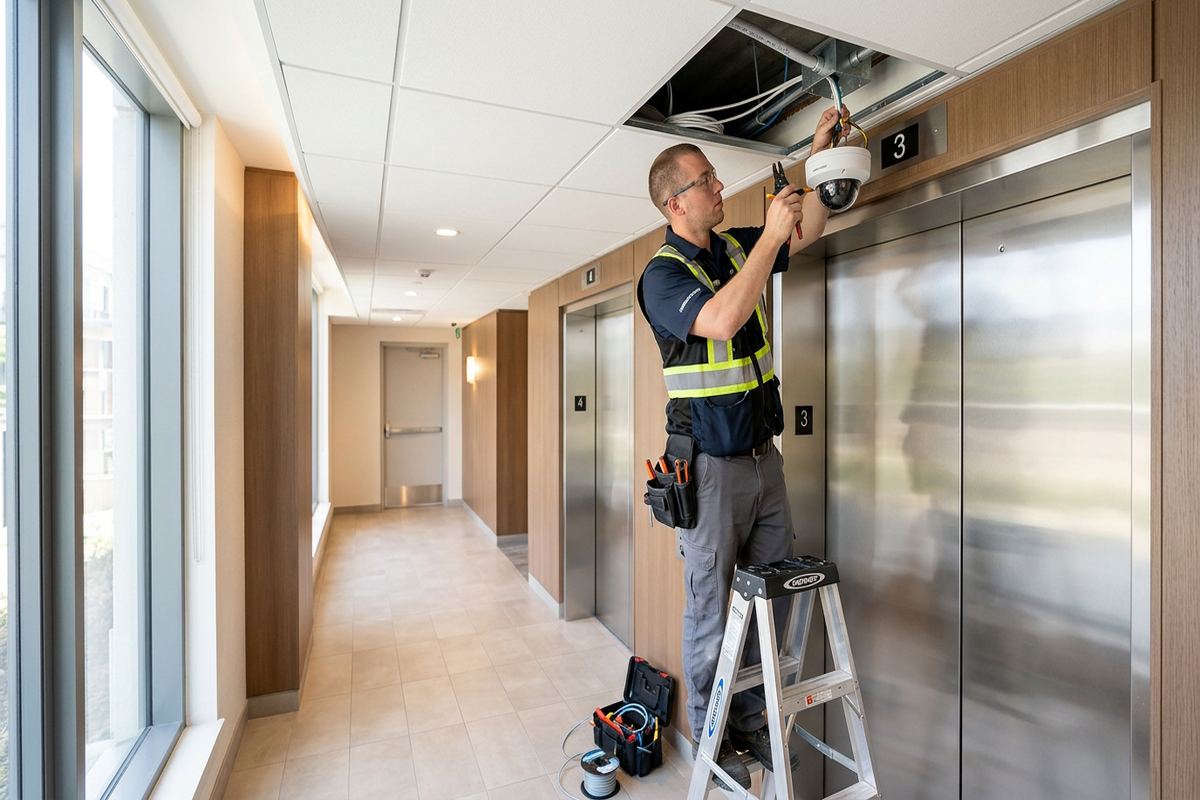
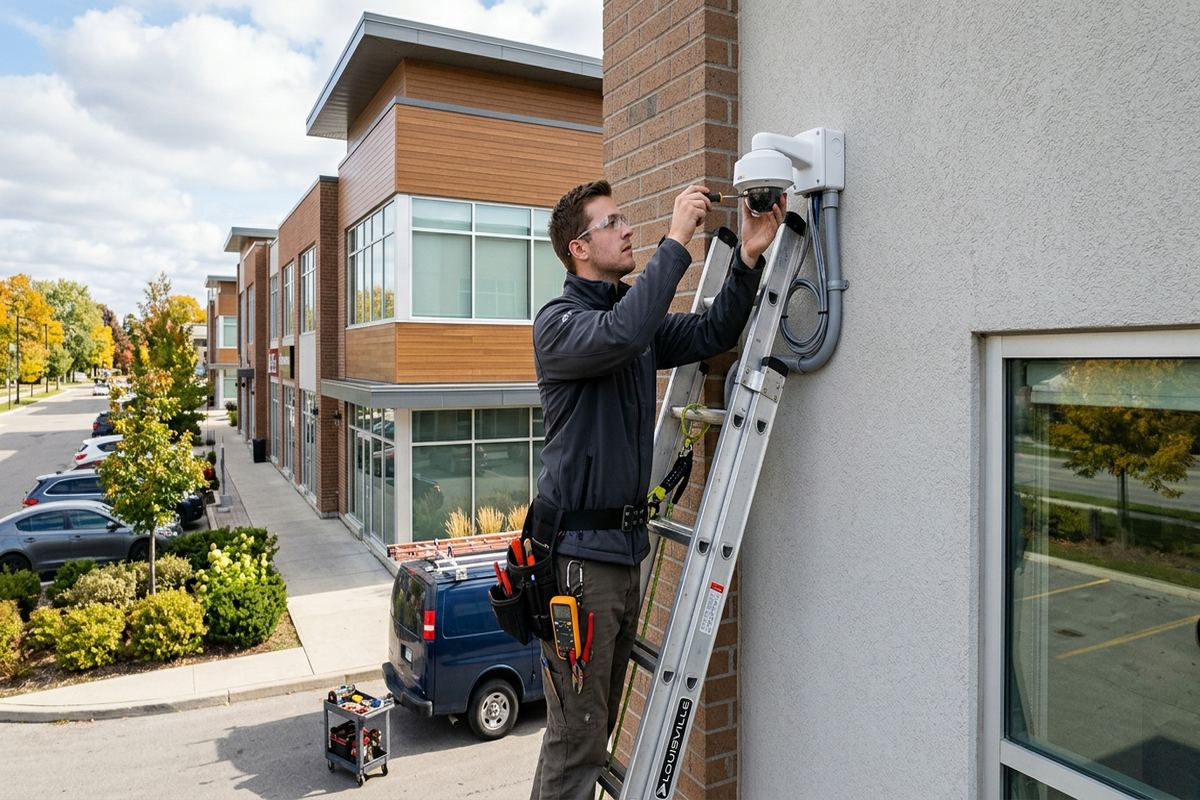
Video integration is most useful when camera placement provides a clear view of the person or vehicle using the controlled opening. A reader event alone does not show whether a credential was shared, whether someone followed another user inside or whether a delivery remained outside. For Chatham commercial strips and industrial units, cameras may be planned around staff entrances, loading doors or controlled gates without obstructing the access hardware. Storage, image quality, lighting and privacy considerations remain part of the camera scope, while the access control scope defines how users move between door and video records.
Network planning is also necessary for controllers, management workstations and any cloud-connected components. The customer or their IT provider may need to supply network addressing, internet access, firewall changes or a suitable virtual network. Access control devices should not be connected casually to an unknown switch or shared tenant network. UnifiedLink documents known network dependencies and configures the access control equipment included in the scope. If an older Chatham building lacks usable pathways or network coverage near the controller location, structured cabling requirements can be addressed as part of the overall plan.
- Compatible video event linking
- Alarm workflow coordination
- Documented network dependencies
- Defined third-party responsibilities
- Structured cabling where required
Replacing or Expanding Chatham Access Systems
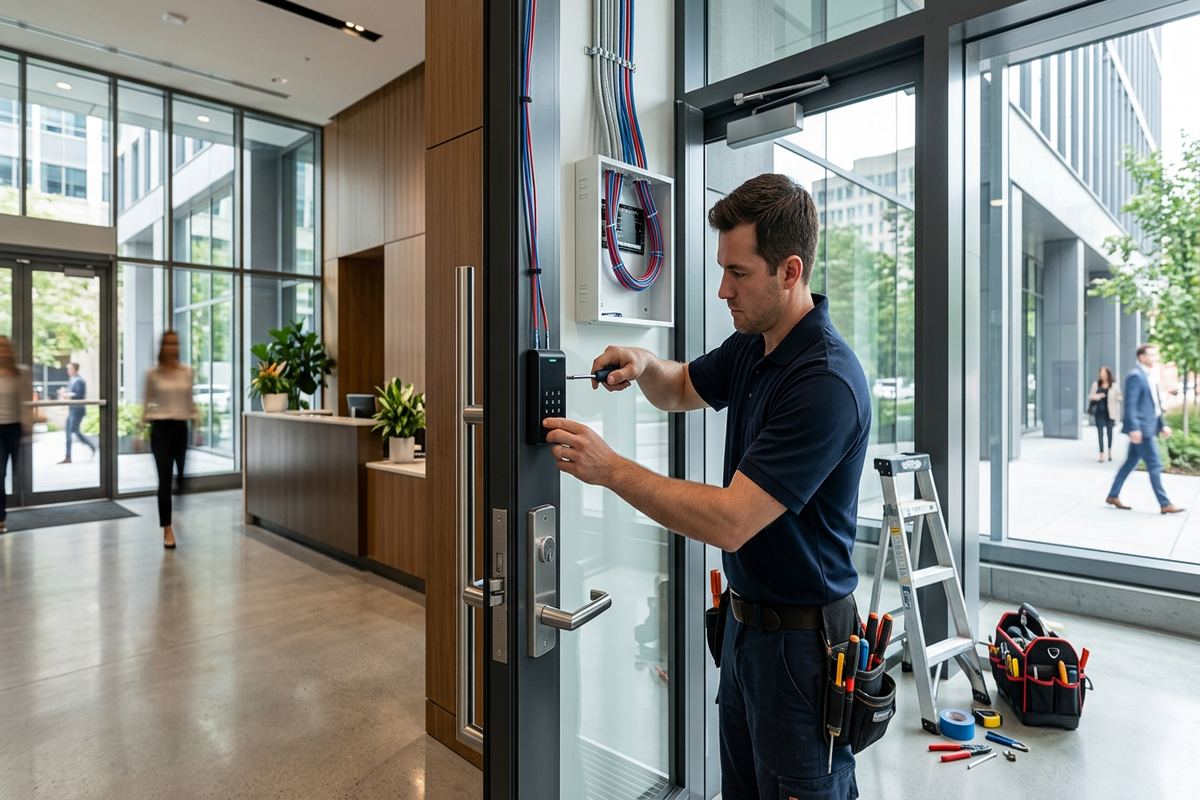
An older access system does not always need complete replacement, but every retained component should be assessed for compatibility and condition. Existing cable, readers, locks, power supplies and door contacts may use different signalling methods or have incomplete documentation. Reusing them without testing can transfer hidden faults into the new platform. UnifiedLink reviews available model information, cable condition and current operation before proposing reuse. The written scope states what will remain, what will be replaced and what cannot be verified until work begins, helping Chatham owners compare phased work with a full system change.
Expansion planning should consider controller capacity, power, network availability and the route to each additional opening. Adding one door may require more than installing another reader if the current enclosure has no spare inputs, lock power or physical space. Separate buildings on a farm or industrial property can also raise distance, pathway and environmental issues. Wireless credentials do not eliminate the need to power and monitor most controlled doors. We map the proposed expansion against the installed infrastructure, then identify any new cable, controller, enclosure or communications requirements before pricing the work.
System replacement also requires a transition plan. Employees may need new credentials, door schedules may need to be recreated and critical entrances must remain usable while panels or locks are changed. For food, grain and other operational facilities in Chatham-Kent, the sequence may need to account for deliveries, sanitation periods, production schedules or restricted zones. The scope can divide work by door or area and identify temporary operating arrangements. At completion, outdated administrator access should be removed where possible, and the new system should be handed over with current records and customer-controlled credentials.
- Existing component compatibility review
- Phased replacement options
- Controller capacity assessment
- Credential transition planning
- Updated records after expansion
Arranging a Chatham Site Assessment
Pricing follows a site assessment because door construction, hardware and cable access cannot be confirmed reliably from a general description. Before the visit, it helps to prepare a list of doors, current keys or credentials, desired user groups and any recurring access problems. Available floor plans, network information and details of an existing system can also support the review. For a Chatham business with several buildings or entrances, identifying priorities helps separate essential control points from possible future phases. The assessment timing depends on the service requirements and travel distance.
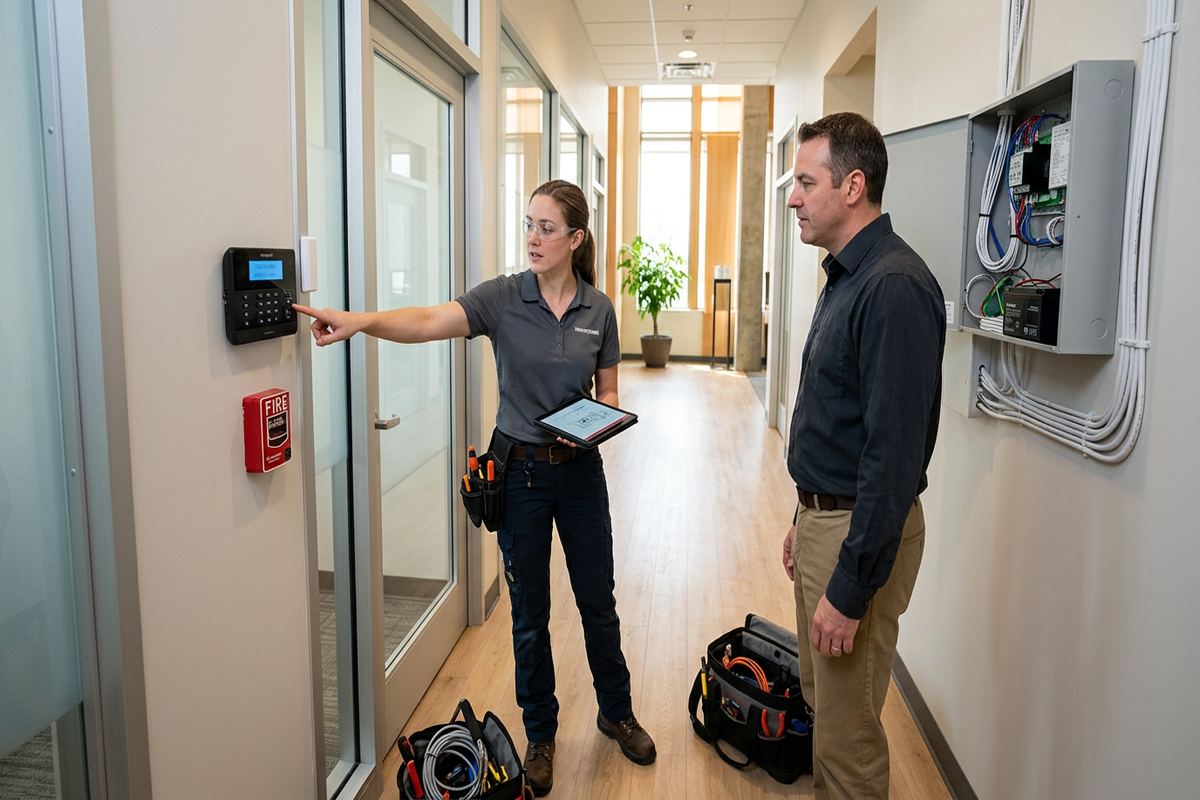
During the assessment, UnifiedLink examines each proposed opening and the surrounding wall, ceiling and service areas. We discuss daily traffic, visitor handling, staff turnover, delivery routines, after-hours use and the person who will administer the system. Exterior locations are reviewed for weather exposure, fastening surfaces and sealing requirements, with attention to Chatham’s winter and freeze-thaw conditions. The visit also identifies likely coordination with locksmiths, electricians, IT providers, landlords or condominium management. Findings are converted into a written scope rather than an unsupported equipment list.
One accountable contractor manages the included low-voltage access control work from planning through on-site configuration and handover. Requests sent during business hours are answered the same day, while after-hours requests are answered the next business day. That response wording refers to the initial request, not a guaranteed site visit or repair time. After assessment, the proposal records equipment, cable routes, device placement, exclusions, ownership and warranty information. This gives Chatham property owners and managers a defined basis for approving the installation, coordinating other trades and understanding what they will receive at handover.
- Assessment before project pricing
- Door and cable-route review
- Written equipment and installation scope
- Coordination needs identified early
- Defined configuration and handover process
Chatham neighbourhoods we cover
- Downtown Chatham
- Thames Campus area
- Maple City
- Prestancia
- Wallaceburg
Commercial access control installation in Chatham — common questions
Can access control be installed on an older Chatham building?
Yes, but older doors, masonry walls, altered frames and limited ceiling access must be inspected first. UnifiedLink assesses the opening, locking hardware, cable route and mounting surface before pricing. Some Chatham properties may need surface pathway, door repair, locksmith work or related electrical work. Those requirements and responsibilities are identified in the written scope rather than assumed during installation.
Which doors should my business control first?
Most Chatham businesses begin with employee entrances, public-to-staff transition points, stockrooms, records rooms, loading doors or spaces containing sensitive equipment. The right priority depends on traffic, key-management problems and operating procedures. A site assessment maps user groups and schedules to each opening, allowing essential doors to be addressed first while keeping future expansion practical.
Will the system work during a power outage?
Outage behaviour depends on the lock type, power-supply design, battery provision and required egress operation. Some components can be supported for a limited period when suitable backup equipment is included, but duration cannot be assumed without calculating the connected load and battery condition. The Chatham site assessment documents the intended fail-safe or fail-secure behaviour and any related life-safety coordination.
Do I need landlord or condo approval?
Tenants should obtain approval before drilling, running cable, changing door hardware or mounting readers on exterior or common areas. Chatham condominium properties may also require board or management approval for work affecting common elements. UnifiedLink can document proposed device locations and routes in the scope, but the customer remains responsible for securing property approvals unless another arrangement is specifically stated.
Can access control connect with our cameras?
It may be possible when the access control and camera platforms support a suitable integration. The required result should be defined first, such as finding video associated with a door event. UnifiedLink reviews compatibility, network access and account requirements for the Chatham property. Camera position, lighting, storage and privacy considerations must also be addressed separately from the door hardware.
What will we receive after installation?
UnifiedLink configures the included system on site and hands it over with the customer’s own administrative credentials. The designated administrator is shown the main user, permission and door-management functions. An as-built record identifies installed openings, equipment locations and relevant cabling details within scope. Any exclusions, outstanding related-trade work or operational limitations at the Chatham site are documented.
Coverage in Chatham is confirmed against the address before we quote. See everything we install in Chatham or the province-wide commercial access control installation page.