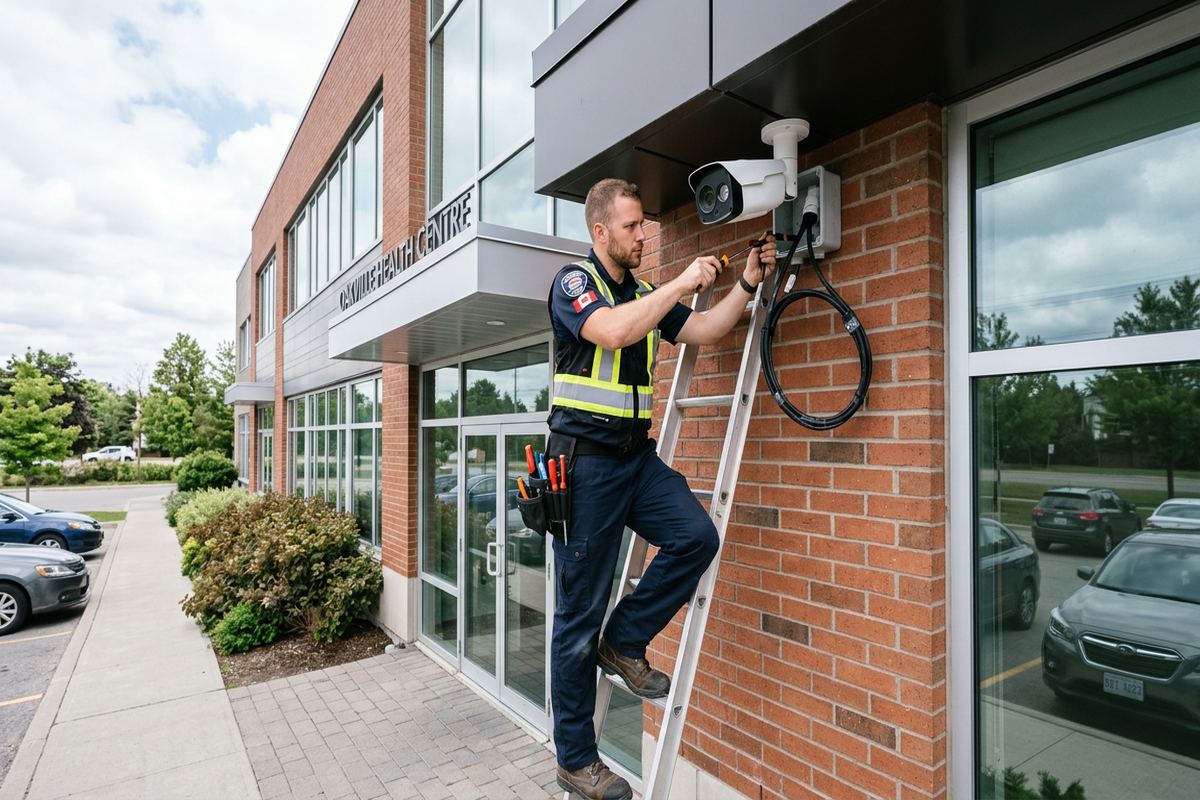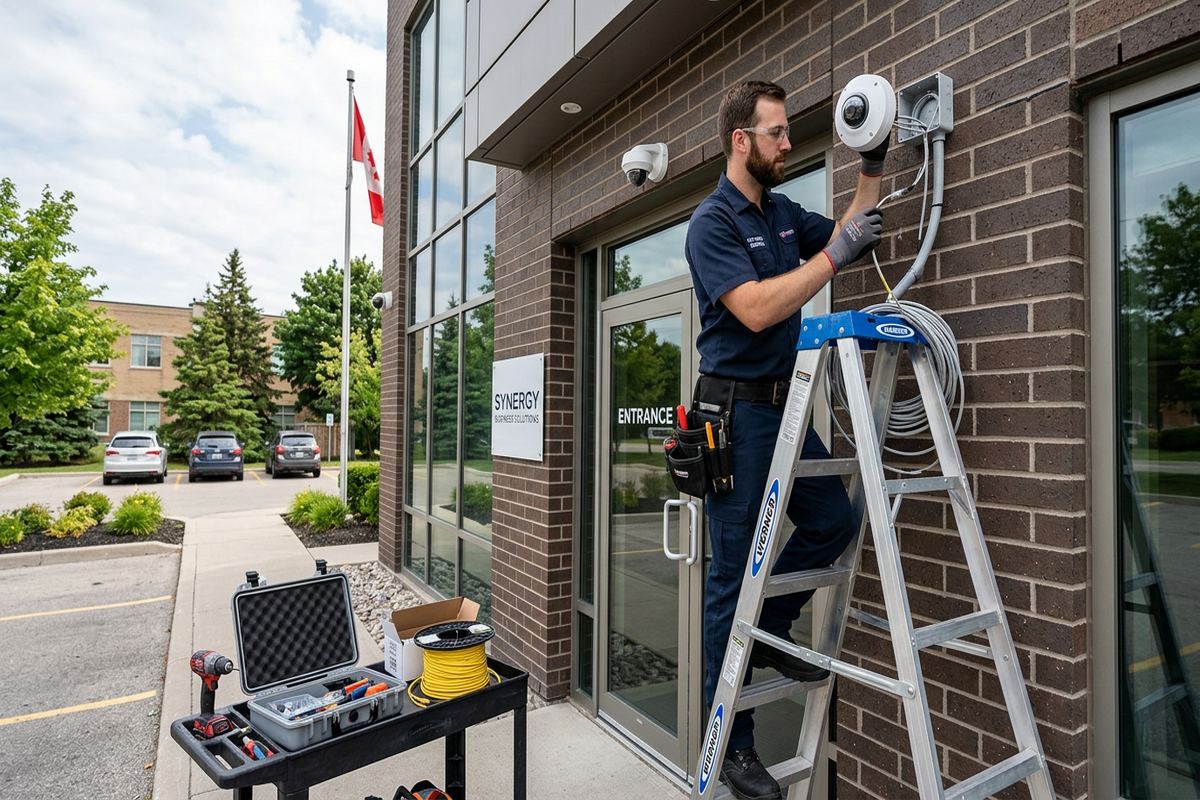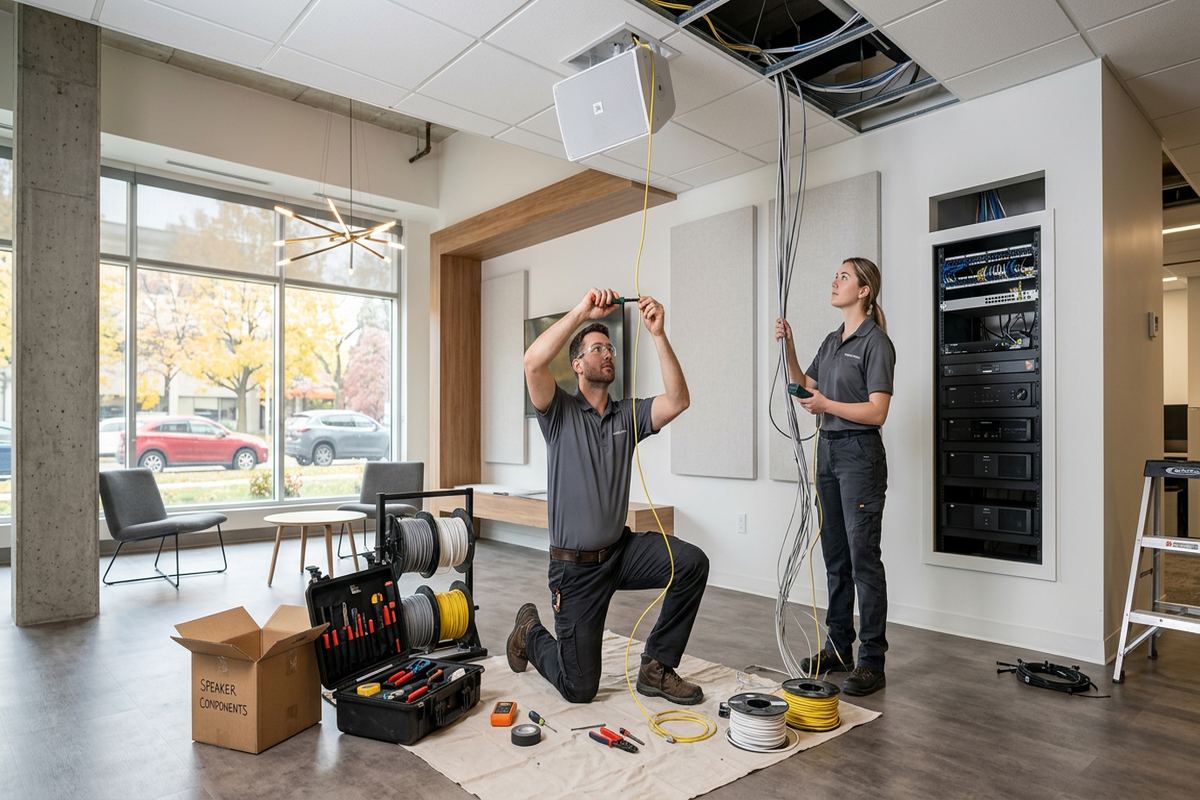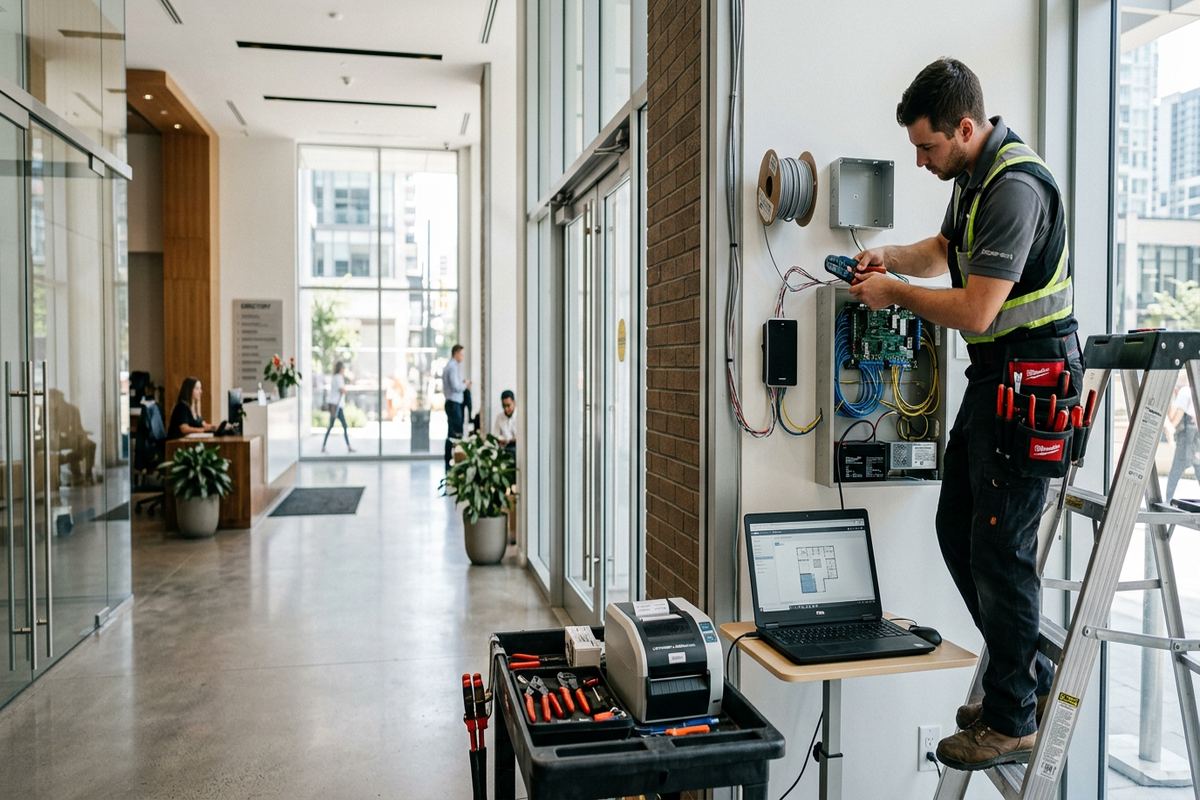
UnifiedLink installs structured cabling for homes, farms, offices, food facilities and industrial spaces across Chatham-Kent. Each project starts with a site assessment to confirm cable routes, construction conditions, network locations and future requirements. We install continuous labelled runs, configure connected equipment on site and provide clear handover records using credentials controlled by the customer.
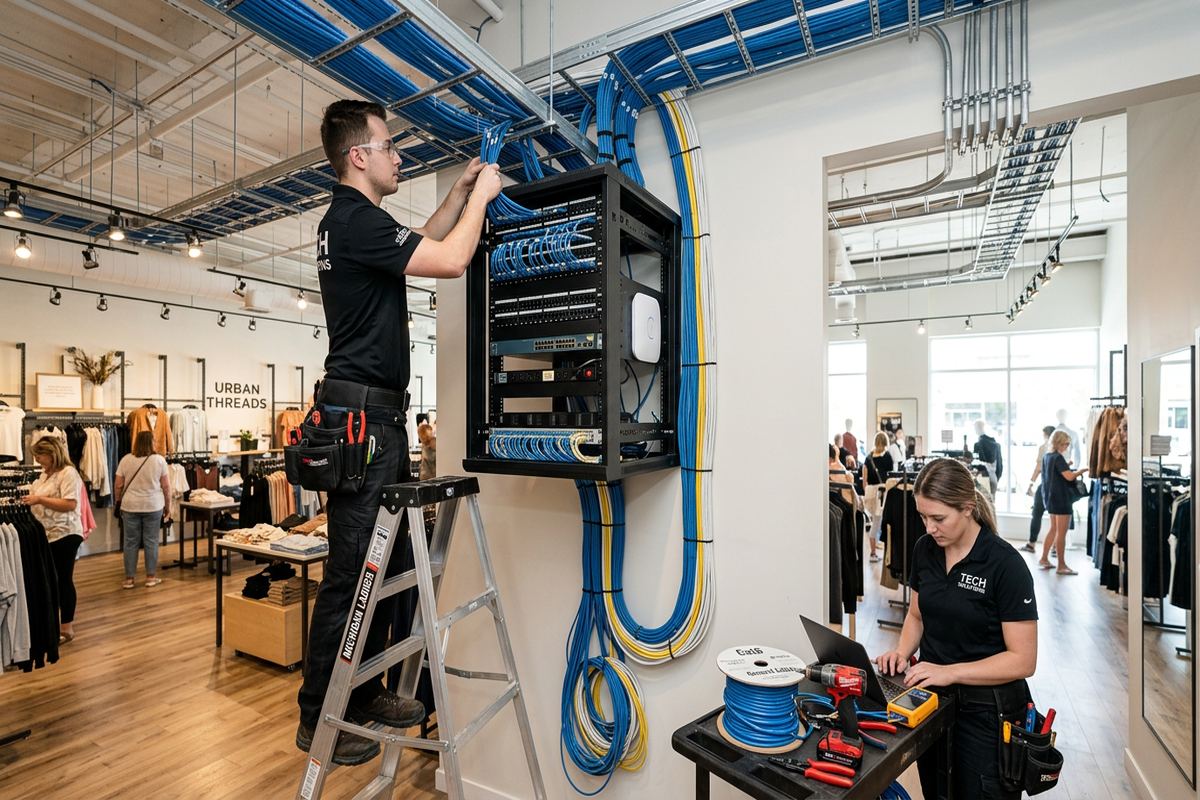
Structured Cabling Planning for Chatham Properties
A structured cabling project begins by understanding how the property is built and how its rooms, equipment and occupants use the network. In Chatham, that can mean tracing routes through older town housing, planning long links between farm buildings or working around active production areas. UnifiedLink assesses service entry points, wall and ceiling access, network equipment locations, electrical interference and expected device loads. The resulting design identifies suitable cable categories, outlet positions, rack or cabinet space, pathway requirements and practical provisions for expansion before holes are drilled or materials are ordered.
The site assessment also separates immediate needs from useful future capacity. A homeowner may need reliable connections for workstations, televisions, wireless access points and security cameras, while a commercial unit may require dedicated runs for phones, displays, access control and point-of-sale equipment. We review where equipment will be mounted, whether power is available and how cables can remain serviceable. Site assessment timing depends on the service and travel distance. Pricing follows the assessment, rather than relying on assumptions about concealed construction, route length or the condition of existing wiring.
Before work starts, UnifiedLink provides a written scope covering equipment, cable routes, device placement, exclusions, equipment ownership and warranty. That document is particularly important where several parties are involved, such as a landlord, tenant, general contractor or technology provider. It establishes which pathways can be used, who provides network hardware and where responsibility changes between internet service, internal cabling and connected devices. One accountable contractor coordinates the low-voltage work, reducing unclear handoffs between cable installers, equipment suppliers and the people who configure the finished network for daily use.
- Site assessment before pricing
- Cable routes and device locations documented
- Capacity planned for current and future devices
- Equipment ownership and exclusions stated clearly
Cabling for Chatham Homes and Older Buildings
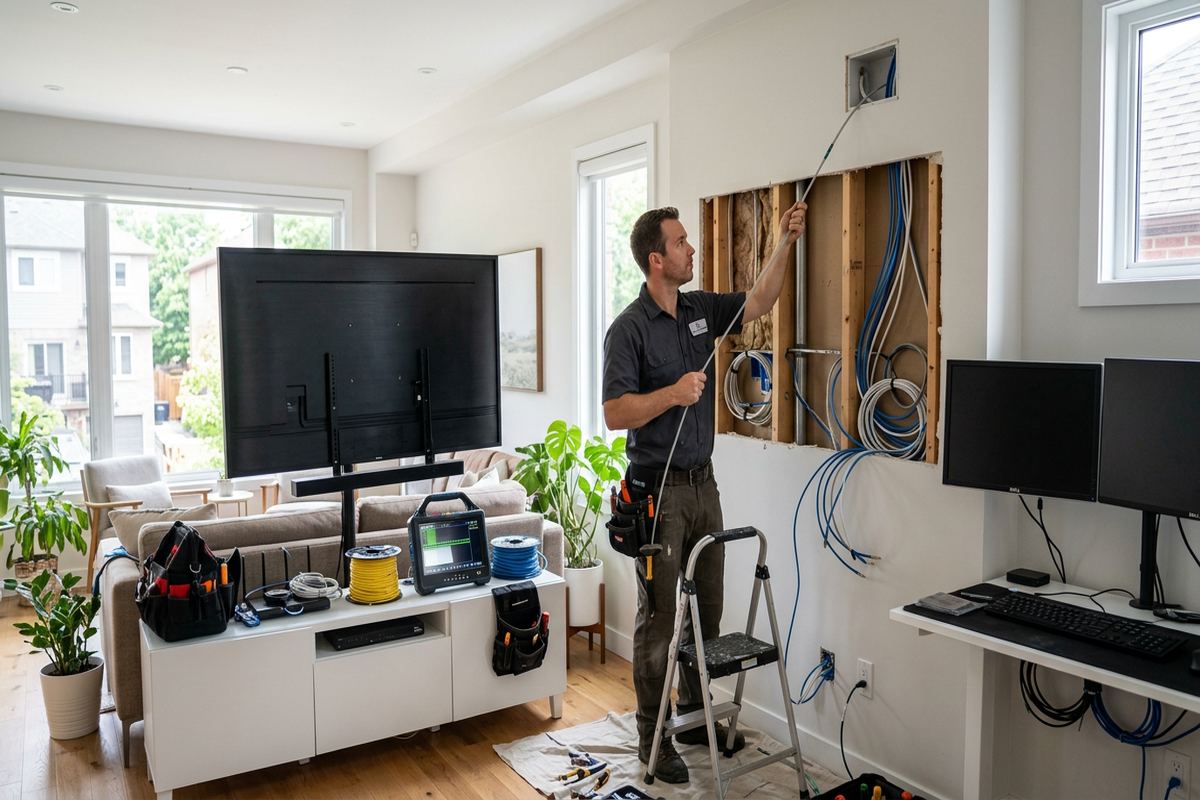
Older Chatham houses often need careful route planning because additions, renovated basements and mixed wall construction can interrupt an otherwise direct cable path. Some areas may be wood frame, while foundations, party walls or exterior sections may involve masonry. We inspect accessible basements, attics, closets and utility spaces before selecting routes. The goal is to avoid unnecessary surface cable while preserving finished walls where practical. When concealed access is limited, we explain options such as discreet raceway, targeted openings or alternate outlet locations instead of promising an invisible route that the building cannot reasonably support.
Homes around Downtown Chatham and the Thames Campus area may combine original construction with later electrical, heating or communication upgrades. Existing telephone or coaxial wiring does not automatically provide a suitable pathway or reliable network connection. We check what is actually installed, whether it can be reused and whether abandoned cable should remain in place. New data runs are continuous and labelled from the central termination point to each outlet. This avoids hidden couplers and makes future troubleshooting easier when rooms change use, equipment is replaced or another owner needs to understand the installation.
For houses in Maple City or Prestancia, structured wiring can support wired work areas, ceiling-mounted Wi-Fi access points, televisions, cameras and smart-home equipment without placing every device on wireless service. Outlet placement is based on furniture, expected equipment and accessible pathways rather than a generic room count. Condo owners and tenants should obtain any required board, property manager or landlord approval before routing cable through common areas, exterior walls or shared service spaces. We can document the proposed route and mounting details so the approving party can review a defined plan.
- Data outlets placed for actual room use
- Attic, basement and utility routes assessed
- Masonry and frame construction handled appropriately
- Condo and landlord approvals identified early
Farm and Rural Network Cabling Near Chatham
Farm properties around Chatham-Kent create different cabling questions from a typical house or office. Distances between the residence, shop, storage building and operating areas may exceed normal copper Ethernet limits, while overhead routes can face weather and equipment clearance concerns. Underground pathways require suitable conduit, separation and entry sealing. We assess each building connection individually and determine where fibre, copper or a wireless bridge is appropriate. The design also considers network cabinet locations, dust exposure, temperature changes and the need to isolate sensitive communication equipment from machinery and electrical sources that may introduce interference.
Inside barns, workshops and utility buildings, cable needs mechanical protection and suitable support rather than being draped across framing or fastened beside power conductors. Device locations may include access points, computers, cameras, controllers and internet-connected monitoring equipment. We map these endpoints before selecting cable and pathway materials. Where a route enters from outdoors, penetrations must be placed and sealed to limit water, pests and air movement. Chatham winters, wind-driven moisture and repeated freeze-thaw cycles make exterior mounting and sealing part of the network design, not a cosmetic step added after installation.
Rural internet performance can be limited by the incoming service, but properly installed internal cabling prevents avoidable losses and instability within the property. We distinguish provider-side limitations from local wiring, switch, access-point or device issues during planning. Where several buildings share a connection, the layout should allow each link to be identified and serviced without taking apart unrelated sections. Labels at both ends, an organized central termination point and an as-built record help owners trace connections later. They also support phased expansion when another building, camera group or work area is added.
- Copper, fibre or wireless links selected by distance
- Protected pathways for barns and workshops
- Exterior entries sealed against local weather
- Separate building links clearly identified
Chatham, Ontario
Structured cabling installation in Chatham, scoped in writing first
Book a site assessment and get equipment, routes, exclusions, and warranty on paper before anything is installed.
Commercial Structured Cabling in Chatham
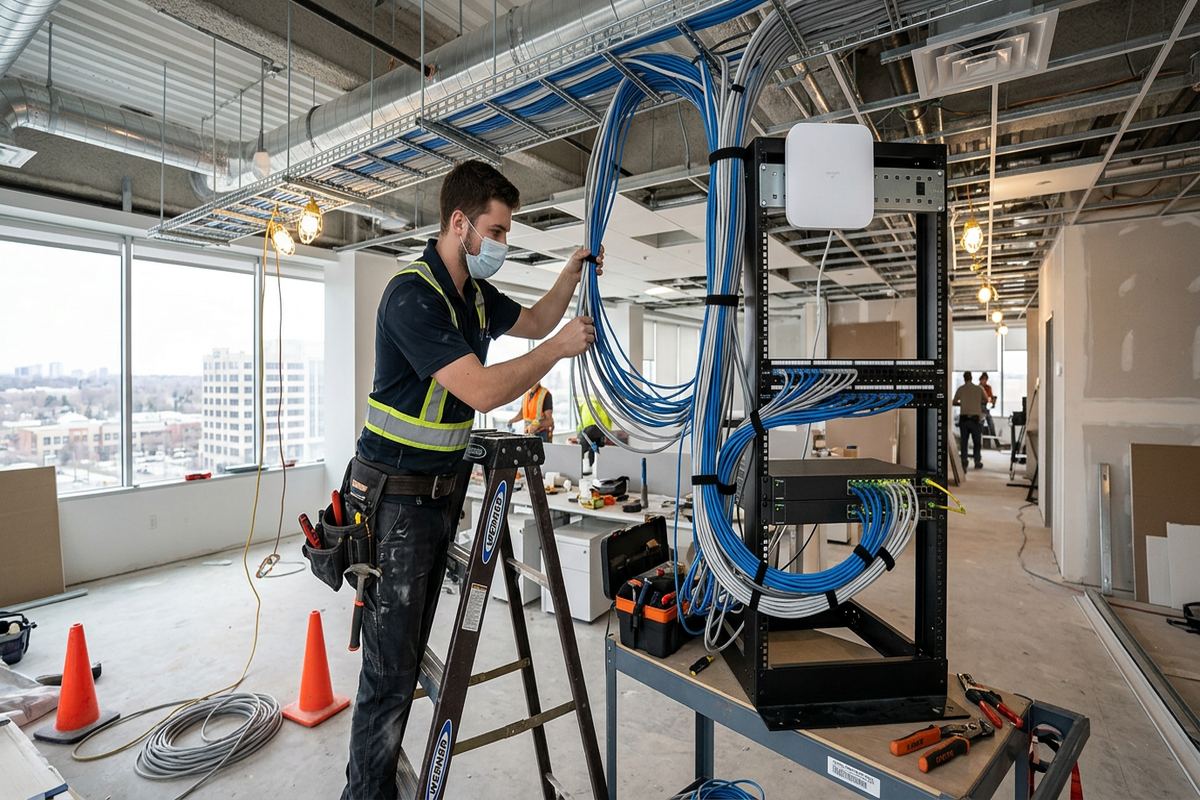
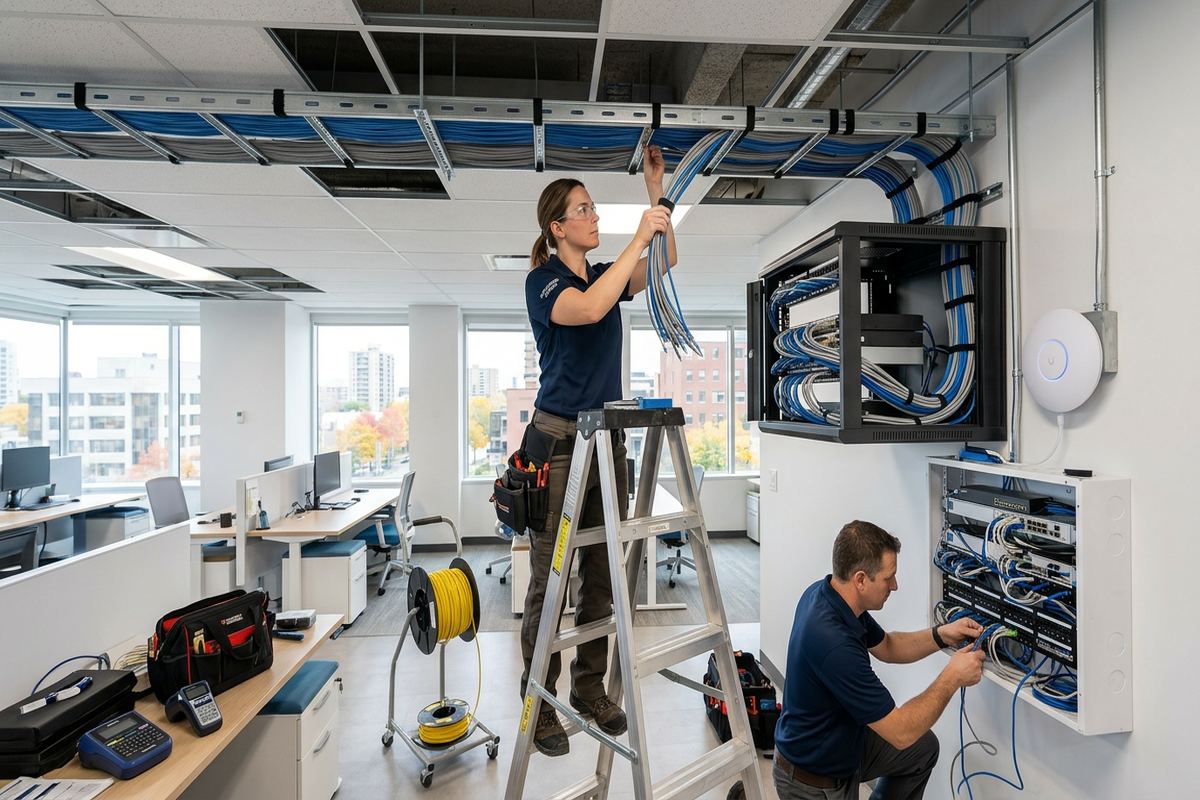
Commercial strips and industrial units in Chatham commonly contain cabling left by previous occupants, including unidentified data lines, telephone wire and disconnected equipment above ceilings. A new installation should not assume those runs are usable. UnifiedLink traces accessible wiring, identifies termination points and confirms what belongs in the new scope. We then plan outlets for staff workstations, printers, phones, wireless access points, displays, cameras and operational equipment. Work can be staged around occupied areas where practical, with routes selected to keep ceiling spaces organized and preserve access for future maintenance.
Tenant improvements require coordination because the business may own its network equipment while the landlord controls walls, ceilings, roof areas or common communication rooms. Before cabling begins, required permissions should cover penetrations, surface raceway, cabinet mounting and any pathway through shared space. Industrial units may also have high ceilings, exposed structure, machinery and electrical distribution that affect access and separation. We document these conditions during the assessment and identify work that depends on another trade, building representative or lift arrangement, preventing concealed assumptions from becoming changes after installation has already started.
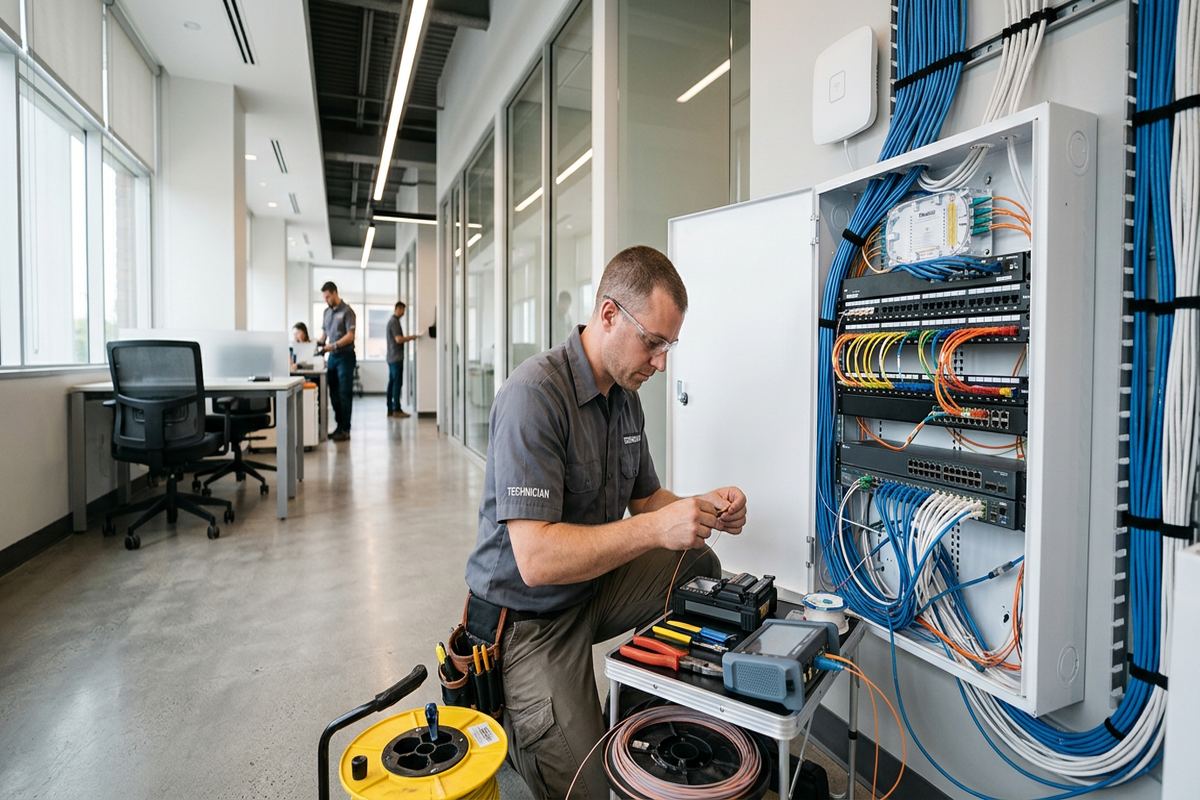
A structured commercial system should remain understandable after desks move and technology vendors change. Patch panels, faceplates and cable ends receive consistent identifiers, while rack layouts separate active equipment from cable management where space permits. We test completed links and correct termination issues before handover. The customer receives an as-built record showing outlet identifiers and their corresponding termination locations. Equipment is configured on site where included, using credentials owned by the customer. This approach gives the business control of its network and provides future technicians with practical information instead of an undocumented bundle of cables.
- Existing commercial cabling traced and assessed
- Workstation and equipment outlets planned together
- Patch panels and faceplates labelled consistently
- As-built outlet records supplied at handover
Cabling Grain and Food Facilities
Grain and food facilities require routes that respect operations, cleaning practices, dust and equipment movement. Cable should not cross service areas without proper support or protection, and network hardware should be located where it can be accessed without creating an avoidable operational conflict. During the Chatham site assessment, we review production zones, storage areas, offices, loading points and available communication spaces. The scope identifies suitable pathways and any restrictions provided by the facility. It also clarifies whether shutdown coordination, special access arrangements or work by another contractor is required before low-voltage installation can proceed.
Electrical noise is another practical concern around motors, variable-frequency drives, conveyors and larger power distribution. Data cable routes need appropriate separation, and fibre may be a better choice where distance, building links or interference make copper unsuitable. We do not select media solely from a requested speed. The complete route, connected equipment and environmental conditions matter. Where cables descend to equipment or exposed work areas, pathway design should reduce physical damage from carts, tools and routine activity. Clear labelling lets maintenance personnel identify network connections without disturbing nearby control or communication wiring.
Facilities often expand in stages, so a cabling plan should leave a manageable foundation without installing undefined infrastructure. We review likely additions such as access points, cameras, office stations, displays or networked production-support devices and reserve practical rack capacity or pathways where the scope supports it. Every installed run is tied to a known endpoint and recorded at handover. This is more useful than leaving loose, unidentified cable for an assumed future purpose. When later work occurs, the owner can compare new requirements with documented capacity and extend the system deliberately rather than tracing the entire site again.
- Routes planned around active operating areas
- Separation considered near motors and power
- Protected drops for exposed equipment locations
- Expansion capacity documented, not assumed
Outdoor Routes and Chatham Weather Conditions
Exterior cabling in Chatham must account for sunlight, moisture, wind and winter temperature changes. Indoor cable is not suitable simply because it fits inside an outdoor conduit. Material selection depends on the pathway, exposure and transition points, while every building penetration needs suitable placement and sealing. We avoid routes that encourage water to follow cable into a wall or equipment enclosure. Drip loops, weather-rated fittings and protected entries are used where applicable. Mounting surfaces are also reviewed because brick, concrete, siding and wood each require different anchors and penetration details.
Freeze-thaw movement can loosen poorly selected fasteners, open gaps around penetrations and expose marginal conduit work. Exterior routes are therefore secured to stable surfaces with support spacing and fittings appropriate to the installation. On older masonry, drilling locations must be selected carefully to avoid unnecessary damage, while frame construction requires attention to cladding, sheathing and hidden utilities. Routes near roofs, eaves or foundations may also present water-management concerns. The written scope identifies planned exterior sections so the customer can understand where cable will be visible and how it will enter the Chatham property.
Connections between separate buildings require more than choosing an outdoor cable. Distance, electrical grounding differences, lightning exposure, conduit condition and future service access can affect whether fibre is preferable to copper. Existing underground conduit may be useful, but only after its route, capacity and condition are assessed. If a pathway is blocked or contains water, the installation plan may need to change. We explain those dependencies before pricing whenever they can be observed. The finished route is labelled at both buildings and added to the as-built documentation, making later inspection or replacement more direct.
- Outdoor-rated materials selected by exposure
- Penetrations sealed against moisture and air
- Fasteners matched to masonry or frame surfaces
- Building-to-building routes documented at both ends
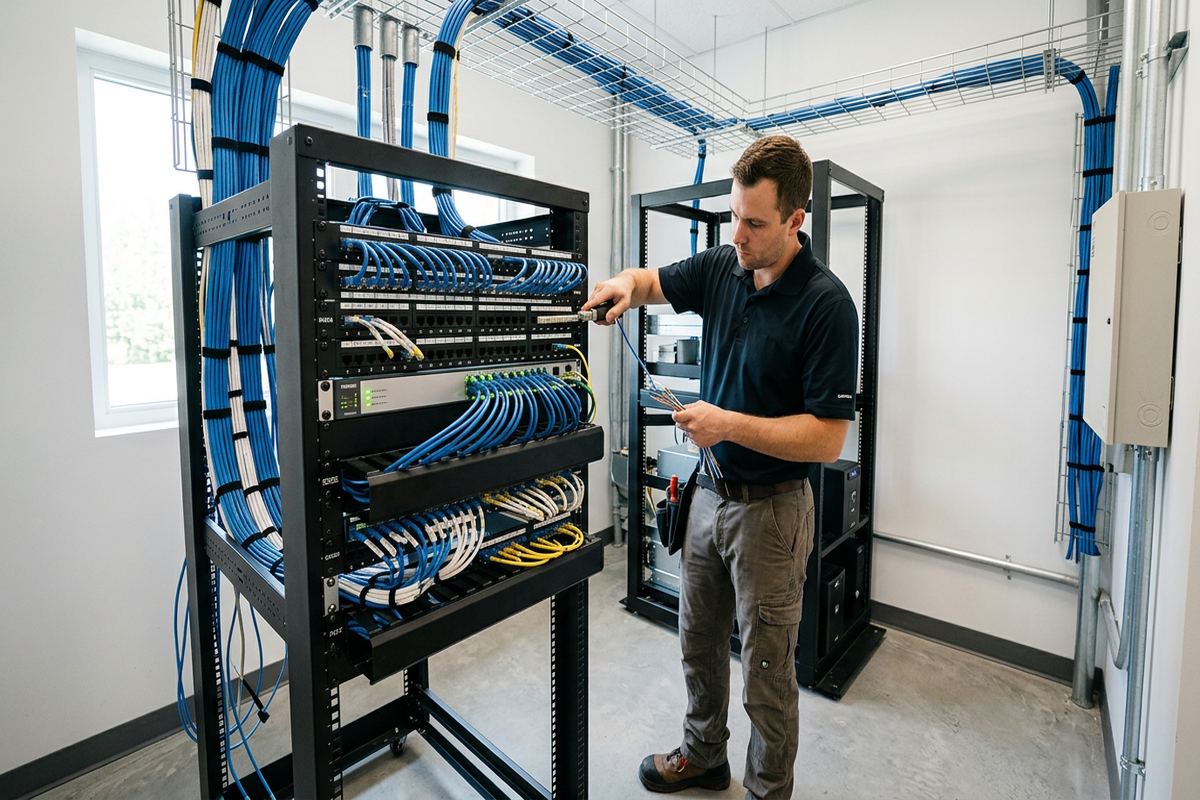
Testing and Handover for Chatham Networks
Termination is only one part of completing a structured cabling installation. Each run must correspond with the intended outlet, patch-panel position and device location. UnifiedLink checks identification, termination and basic link performance before the system is handed over. Any failed or inconsistent connection is investigated while routes and work areas remain accessible. Patch cords and active network equipment are distinguished from permanent building cabling in the documentation. This helps a Chatham owner understand which components can be replaced easily and which installed links form part of the property’s long-term low-voltage infrastructure.
On-site configuration can include supported switches, wireless access points or other included network equipment defined in the written scope. Configuration is completed using the customer’s own administrative credentials rather than retaining control under an installer-only account. Where a manufacturer platform or internet provider account is required, the customer should own the account and recovery information. We review basic equipment locations, labels and operating access during handover. If another managed service provider will maintain the network, the records can be shared with that provider so responsibilities remain clear and duplicate configuration work is avoided.
The as-built record reflects the installation completed on site, including labelled outlet locations, central termination points and significant route information available within the scope. It is not a substitute for architectural drawings, but it provides a practical reference for moves, additions and fault finding. Owners should store it with network credentials, equipment details and warranty information in a controlled location. For leased Chatham premises, the tenant and landlord may need separate copies depending on equipment ownership and lease terms. Those handover expectations are confirmed before project closeout so records reach the appropriate parties.
- Completed runs checked before handover
- Customer retains administrative credentials
- Outlet and termination identifiers recorded
- Equipment ownership remains clearly documented
Arranging Structured Cabling Service in Chatham
To request structured cabling service, provide the Chatham-Kent property address, building type, approximate number of required connections and a short description of current network problems. Photos of communication rooms, unfinished areas or existing cabinets can help establish the assessment requirements, although they do not replace an on-site review. Requests sent during business hours are answered the same day, while after-hours requests are answered the next business day. Site assessment timing depends on the service and travel distance, including work in Chatham, Wallaceburg and surrounding rural communities.
During the visit, we confirm access, construction type, proposed endpoints and the location of internet or network equipment. For occupied houses, this includes discussing finished surfaces and acceptable visible pathways. For commercial or industrial sites, we review operating restrictions, ceiling access, shared spaces and coordination with other trades. Customers should identify landlord, condo board or facility approval requirements before work is scheduled. If the final route cannot be confirmed until an area is opened by another contractor, that dependency is stated as an exclusion or condition rather than being hidden within a general installation allowance.
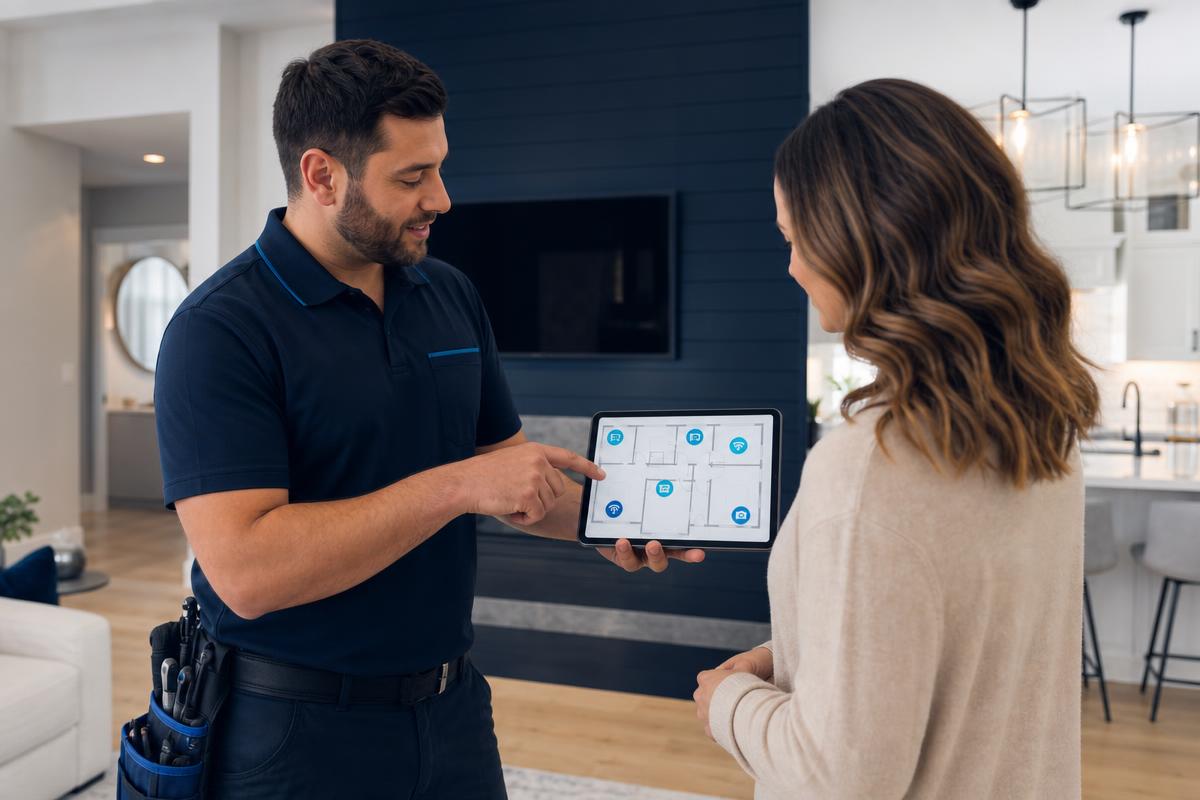
Following assessment, the written scope sets out equipment, routes, device placement, exclusions, ownership and warranty. Customers can review the proposed layout and ask for changes before approving the work. Installation then follows the agreed plan, with continuous labelled cable runs, organized terminations and on-site configuration where included. At completion, UnifiedLink provides the customer with access under their own credentials and an as-built record of the installed system. This creates a clear point of responsibility from assessment through handover, whether the project involves one Chatham home, a farm property or a multi-area commercial facility.
- Same-day reply during business hours
- On-site conditions reviewed before pricing
- Written scope supplied for approval
- One contractor accountable through handover
Chatham neighbourhoods we cover
- Downtown Chatham
- Thames Campus area
- Maple City
- Prestancia
- Wallaceburg
Structured cabling installation in Chatham — common questions
What cable type should I install in my Chatham property?
The appropriate cable depends on required speed, run length, environment, pathways and connected equipment. Copper data cable suits many indoor runs, while fibre may be preferable between buildings, over longer distances or near electrical interference. UnifiedLink reviews the complete Chatham route during a site assessment before recommending cable, connectors and termination hardware.
Can you reuse the cabling already in my building?
Existing cabling can sometimes be reused if its type, route, condition and terminations suit the planned network. In older Chatham homes and commercial units, unidentified telephone, coaxial or data wiring may not meet current needs. We inspect and trace accessible runs, then identify what can remain, what needs re-termination and what should be replaced.
Do I need landlord or condo approval?
Approval may be required when work affects common areas, shared communication rooms, exterior walls or building finishes. Chatham tenants and condo owners should check their lease, building rules or alteration process before scheduling installation. UnifiedLink can provide proposed cable routes and mounting details for review, but authorization remains the responsibility of the property owner or approving body.
Can you connect a house to a barn or shop?
Yes, subject to route, distance and site conditions. Chatham-Kent farm properties may need fibre, outdoor-rated copper or a point-to-point wireless connection between buildings. We assess available conduit, electrical conditions, weather exposure and equipment locations before selecting an approach. Exterior entries are planned with suitable protection and sealing against moisture and freeze-thaw conditions.
Will you test and label every installed cable?
Installed runs are labelled at both the outlet and central termination point, then checked before handover. Labels correspond with the supplied as-built record so a Chatham owner or future technician can identify each connection. Testing and documentation requirements are included in the written scope, along with any equipment configuration or special link requirements applicable to the project.
How quickly will you respond to my request?
Requests sent during business hours are answered the same day. After-hours requests are answered the next business day. The timing of a Chatham site assessment depends on the requested service and travel distance. After the assessment, UnifiedLink prepares a written scope covering equipment, routes, placement, exclusions, ownership and warranty before installation pricing is finalized.
Coverage in Chatham is confirmed against the address before we quote. See everything we install in Chatham or the province-wide structured cabling installation page.