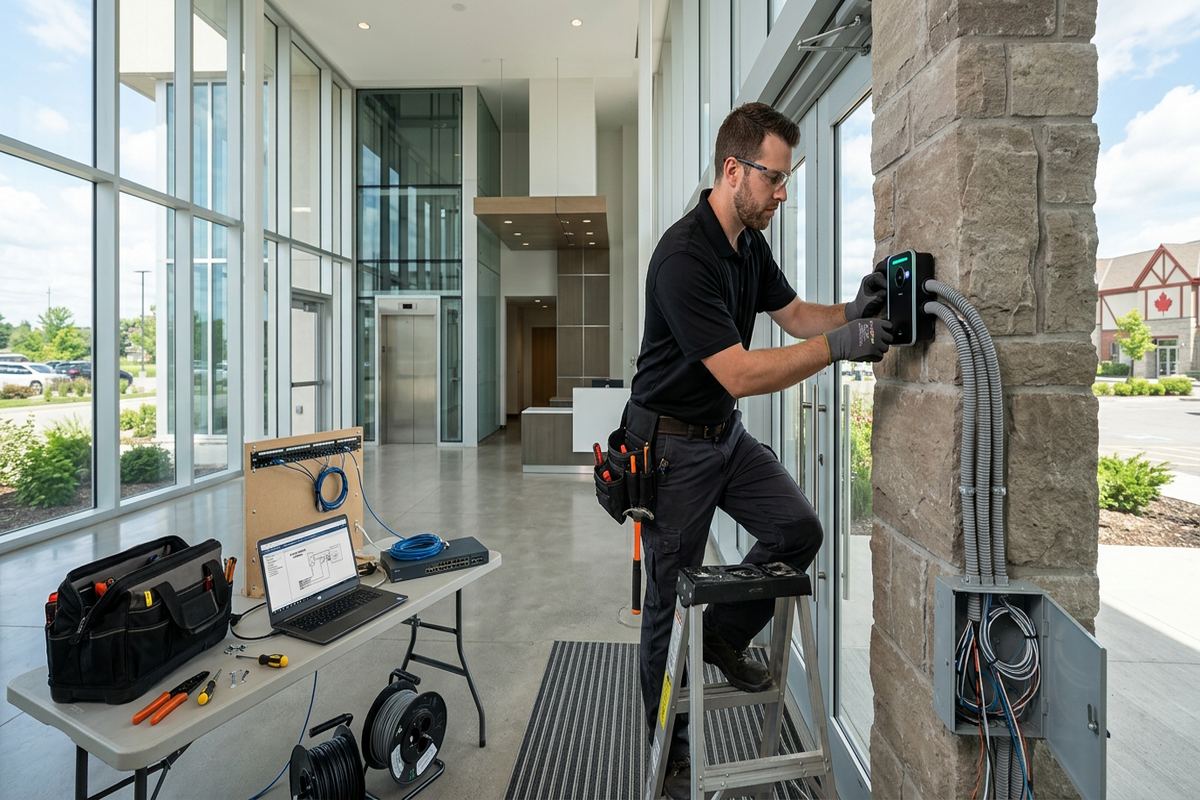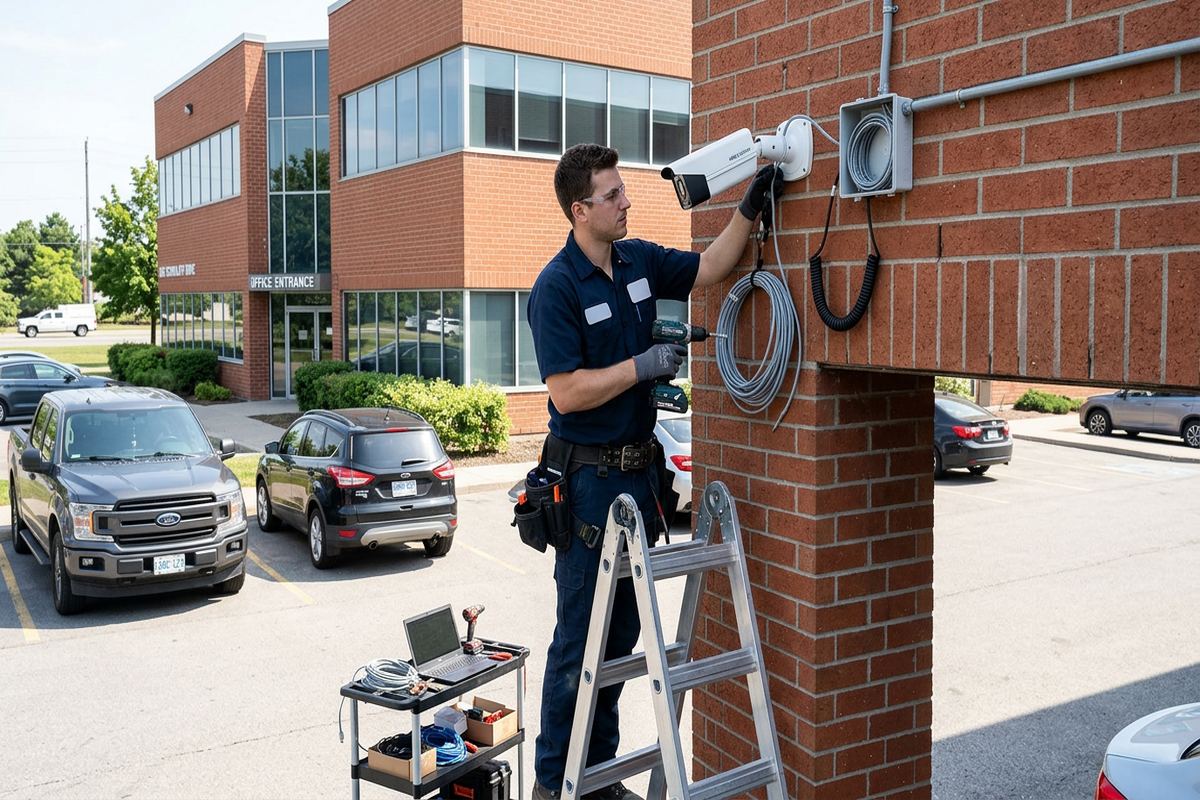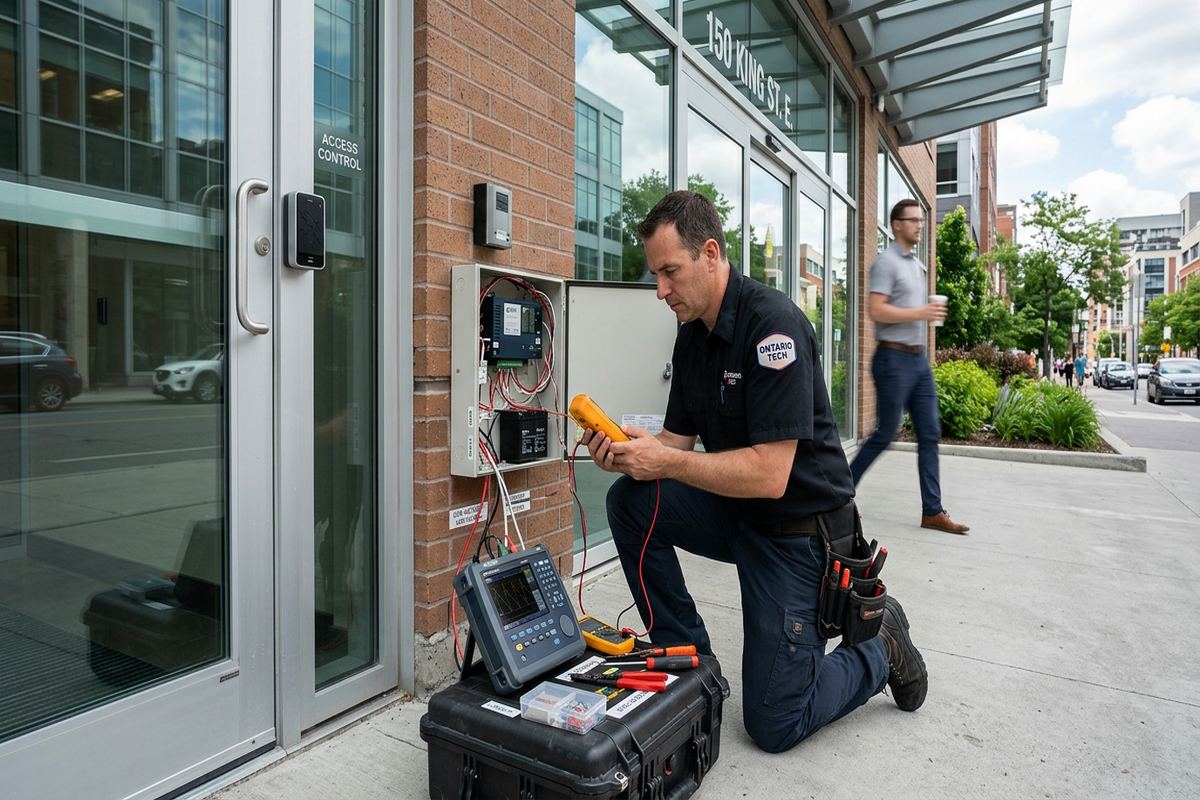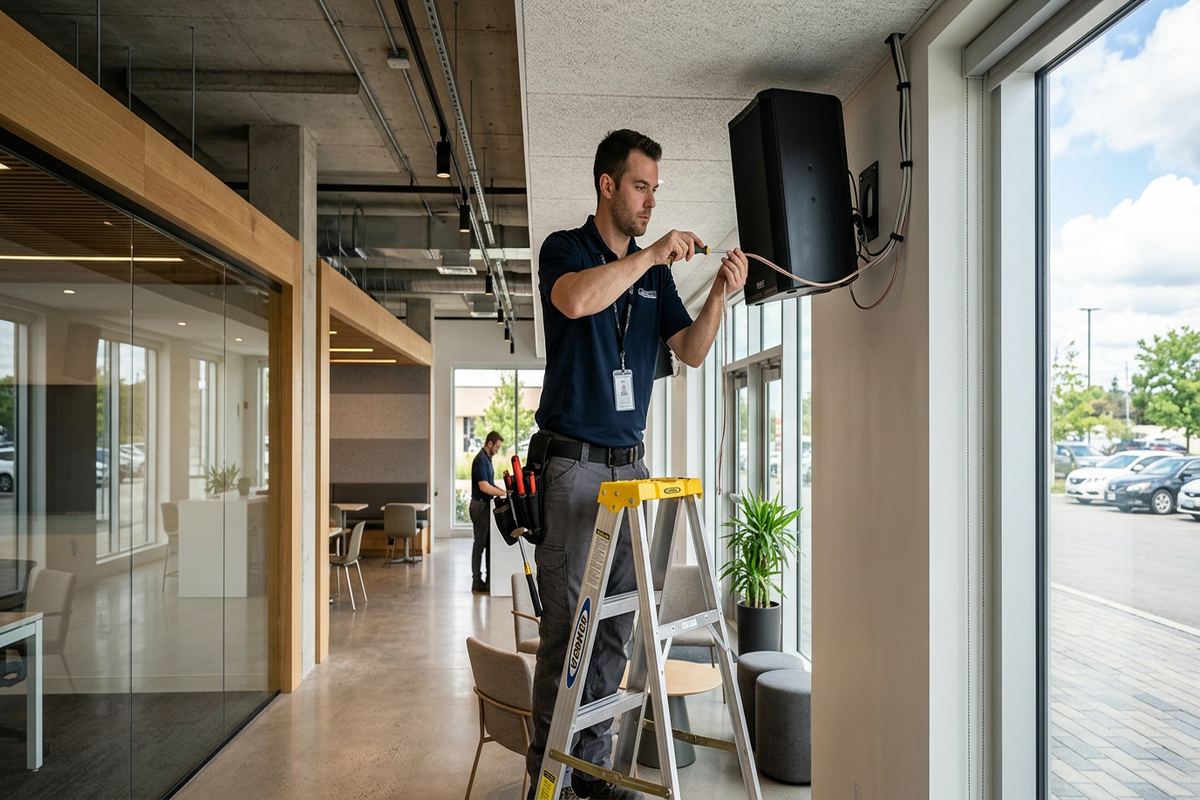
UnifiedLink installs outdoor speaker systems for homes, farms, commercial properties and industrial sites across Chatham and nearby Chatham-Kent communities. Each installation is planned around the listening area, building construction, cable routes, weather exposure and operating requirements. The result is a practical system with suitable coverage, secure mounting, protected connections and controls configured for the people who will use them.
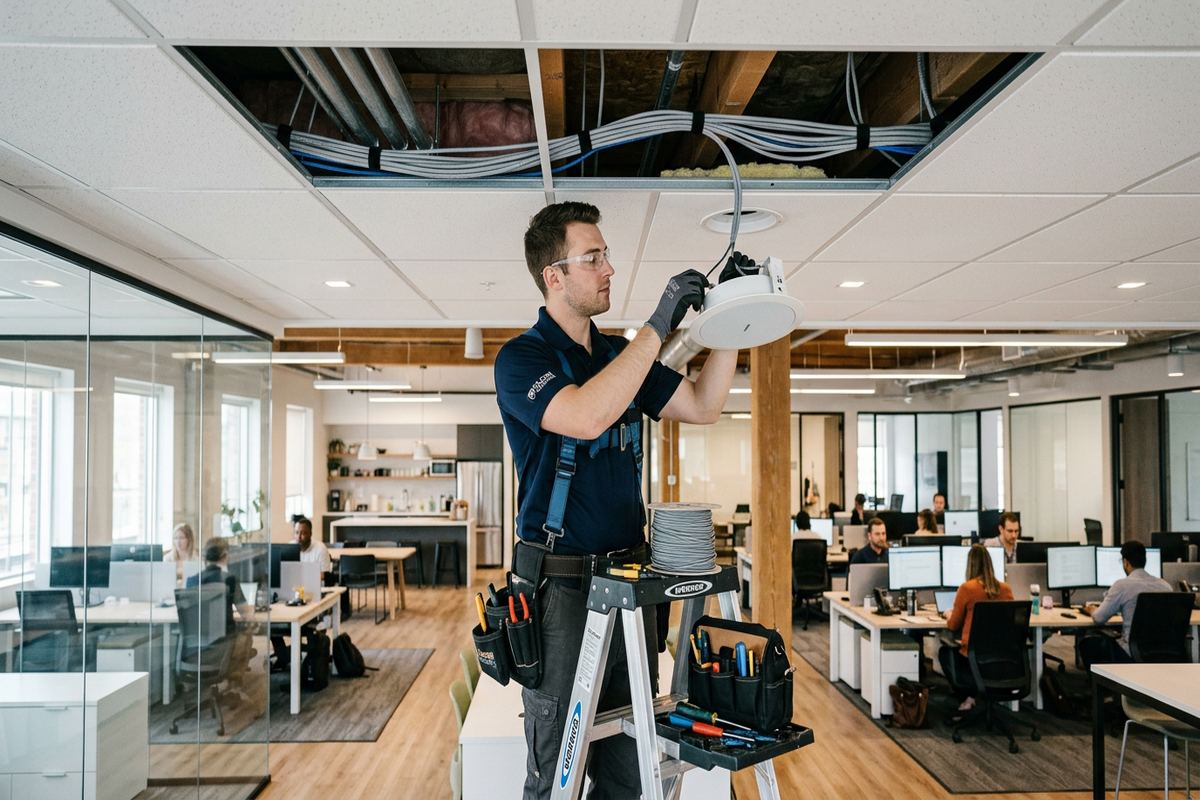
Outdoor Speaker Planning for Chatham Properties
A useful outdoor audio system starts with the area that needs sound, not simply the number of speakers. During a Chatham site assessment, we review patios, pools, gardens, loading areas, work yards or agricultural buildings and identify where people will actually listen. Speaker direction, mounting height and distance between devices affect clarity and volume consistency. We also consider nearby properties, occupied rooms and public areas so the design keeps sound focused where it is required instead of relying on excessive volume from one location.
Property type changes the installation approach throughout Chatham-Kent. Farm properties may need audio around a house, shop, covered work area or several outdoor zones. Grain and food facilities often require careful separation from production operations, vehicle routes and washdown areas. Older town housing can present limited wall cavities, finished basements and additions built with different materials. A site assessment helps determine practical cable routes, safe mounting surfaces and suitable equipment locations before pricing or committing to a final system layout.
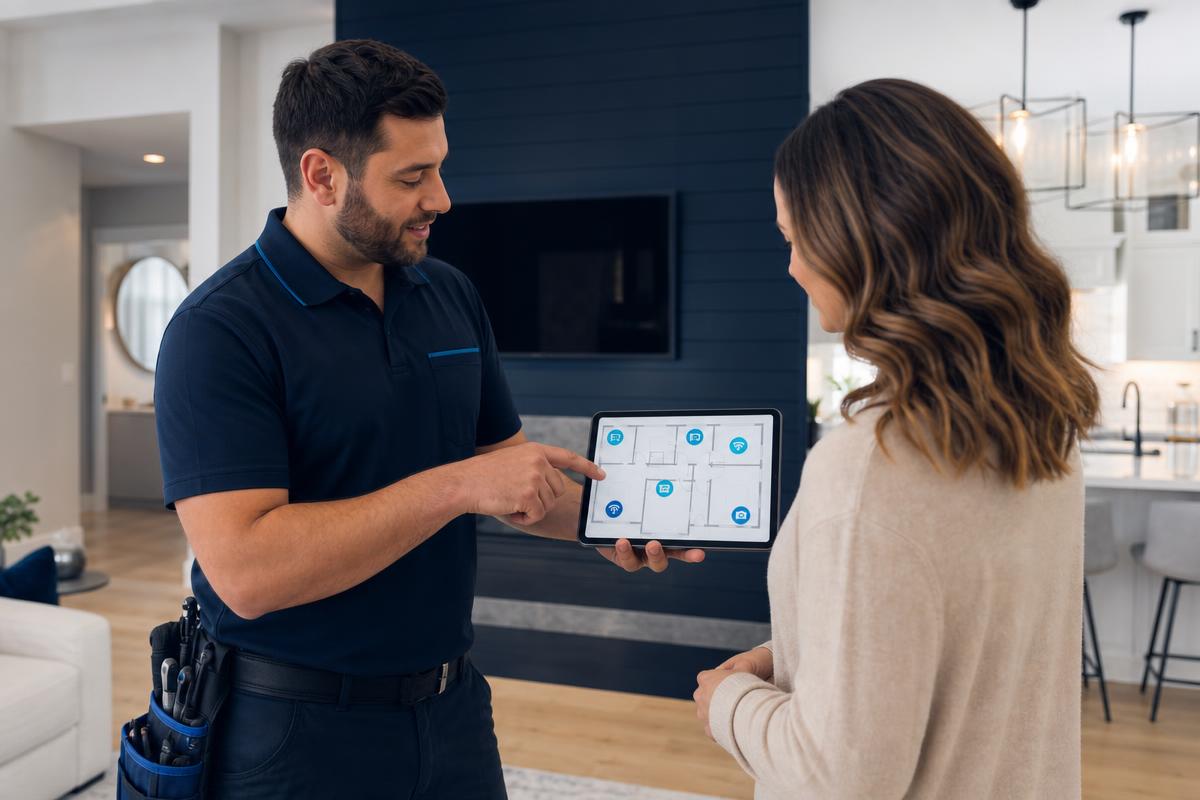
The written scope identifies the proposed speakers, amplification, controls and required cabling. It also records device placement, cable routes, exterior penetrations, exclusions, equipment ownership and applicable warranty details. This is especially important when an installation crosses several structures or combines indoor and outdoor zones. A clear scope lets a Chatham property owner understand which surfaces may be opened, where equipment will be housed and what electrical, network or building work must be completed by others before installation can proceed.
- Listening-area and coverage review
- Speaker location and mounting plan
- Amplifier and source selection
- Documented cable routes and exclusions
Weather-Resistant Installation in Chatham
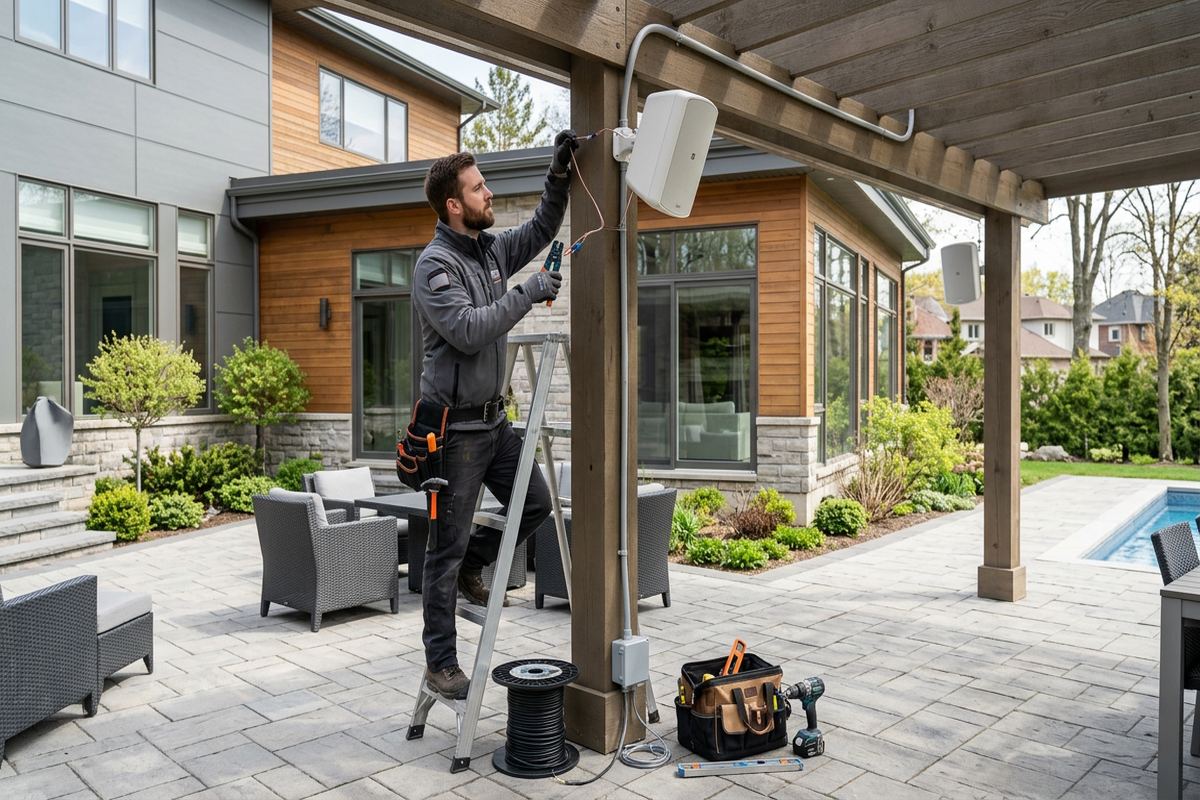
Outdoor-rated equipment still depends on correct placement and installation. Chatham winters, wind-driven precipitation and repeated freeze-thaw cycles can expose weak seals, loose fasteners and poorly supported cable. We select mounting positions that limit direct weather exposure where practical while preserving useful sound coverage. Speaker brackets must be secured to structural material rather than siding alone. Cable entries are positioned and sealed to reduce water migration, and exterior cable is supported without creating low points that collect water or place strain on terminations.
Moisture can enter through the cable route even when the speaker enclosure is weather-rated. Exterior penetrations require suitable sleeves, drip loops and sealants compatible with the surrounding material. Connections should remain protected and accessible for inspection instead of being left against an exposed wall. Where cables travel underground or between buildings, the pathway and cable type must suit the environment. We assess drainage, frost movement, vehicle traffic and future landscaping before recommending a route, particularly on larger rural properties around Chatham-Kent.
Sun exposure and temperature swings also affect long-term performance. Dark enclosures mounted on an unshaded wall can experience substantial heat, while exposed brackets and fasteners need materials suited to exterior use. Equipment such as amplifiers, streaming devices and network hardware generally belongs in a dry, ventilated indoor location, not an outdoor cabinet chosen only for convenience. The installation plan separates weather-facing speaker components from sensitive electronics and provides service access without requiring repeated disturbance of finished walls, ceilings or sealed building surfaces.
- Weather-rated speakers and appropriate hardware
- Sealed penetrations with drip loops
- Protected and accessible cable terminations
- Indoor placement for sensitive electronics
Speaker Coverage and Noise Control
Even coverage usually comes from several speakers operating at moderate levels rather than one speaker playing loudly across the entire property. On a residential patio, this may mean positioning speakers around the listening zone and directing them inward. Larger farmyards, commercial strips and industrial units may need separate coverage areas with independent level control. The objective is understandable, balanced audio in the intended space while limiting spill toward neighbours, roads, offices or production areas where music or announcements could become distracting.
Downtown Chatham and older residential areas can place outdoor living spaces close to adjacent homes. Speaker direction matters in these settings because walls, fences and hard patios reflect sound. Mounting a speaker high and pointing it across property lines often creates unnecessary spill without improving sound near the listener. Lower, inward-facing positions or distributed landscape speakers can provide more controlled results. We review the physical boundaries and expected use, but the property owner remains responsible for following applicable condominium rules, lease conditions and local noise requirements.
Audio coverage should match how a space changes throughout the day. A restaurant patio may need background music near occupied tables without sending the same level toward the street. A loading or work area may require clear spoken audio rather than strong bass. Residential systems may serve dining, pool and garden zones at different times. We configure zones and level controls so users can operate only the required area. This reduces unnecessary sound and makes the system easier to manage than a single amplifier output serving every speaker.
- Distributed speakers for consistent coverage
- Inward aiming to reduce sound spill
- Independent controls for separate zones
- Layouts suited to music or speech
Chatham, Ontario
Outdoor speaker installation in Chatham, scoped in writing first
Book a site assessment and get equipment, routes, exclusions, and warranty on paper before anything is installed.
Cabling for Chatham Homes and Businesses
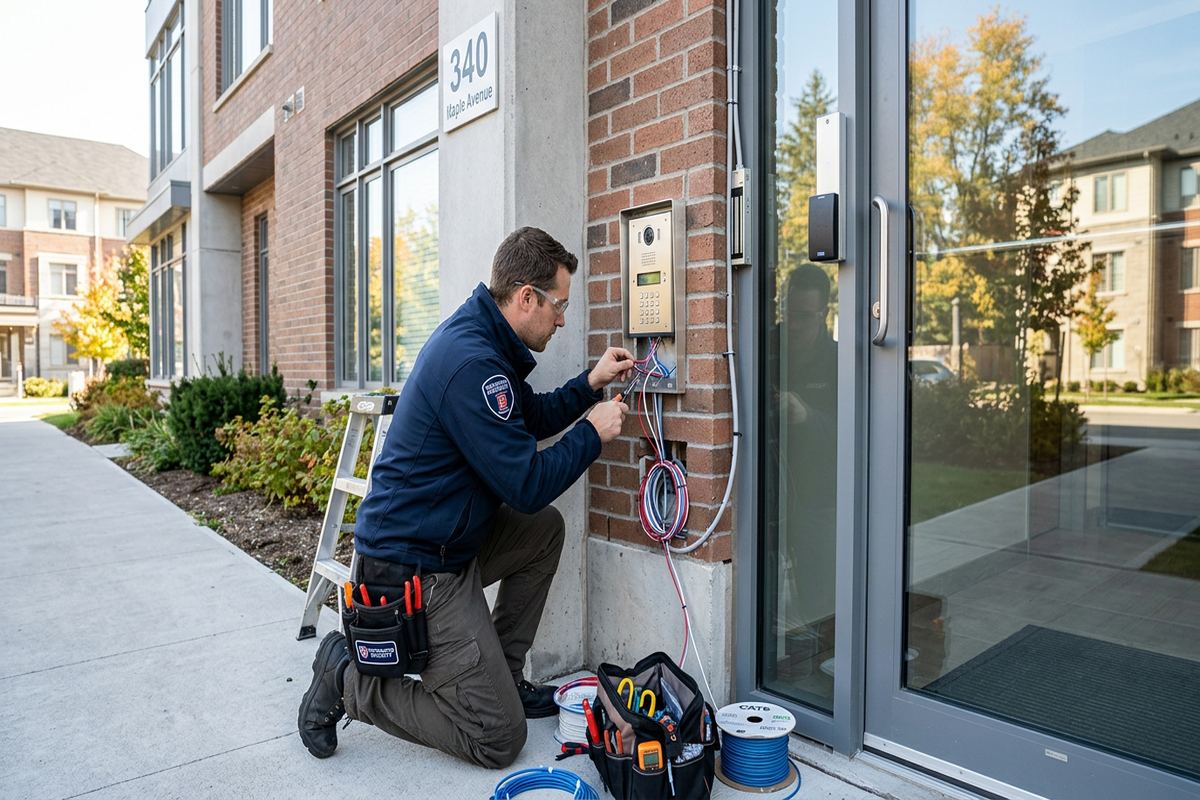
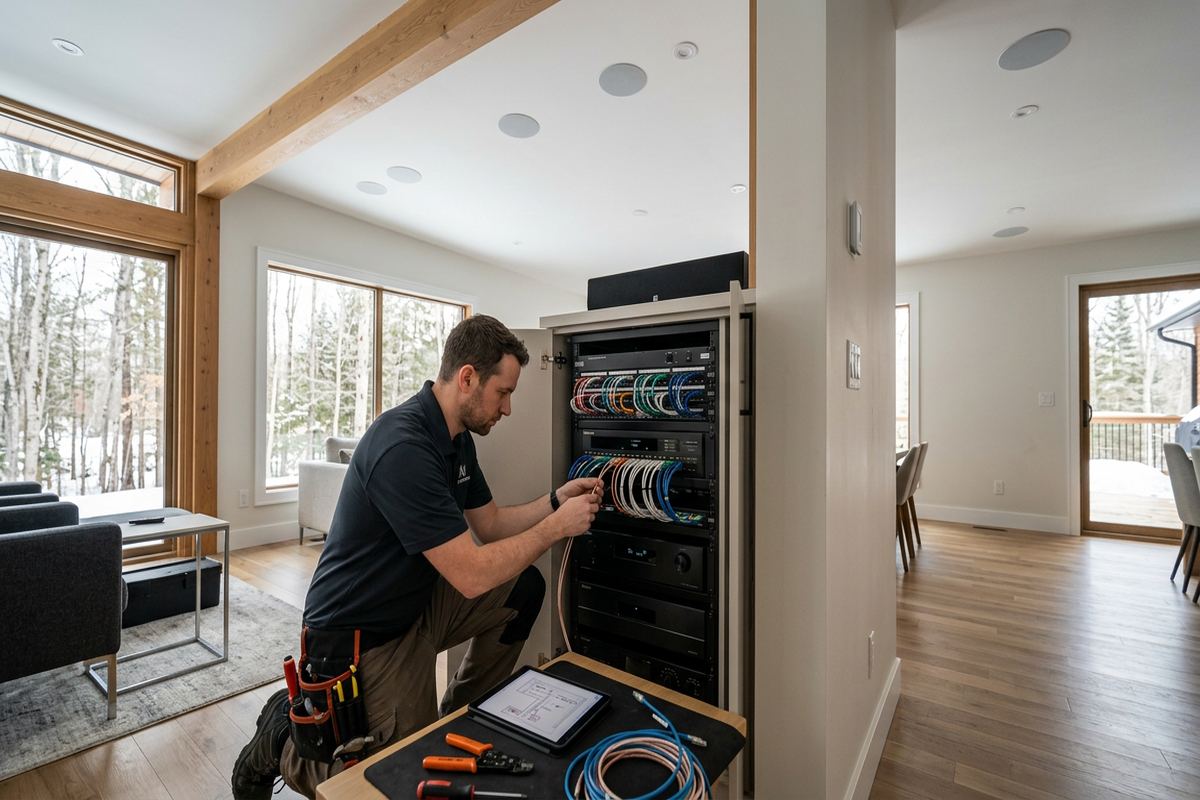
Cable condition directly affects reliability, especially when runs pass through exterior walls, crawl spaces, attics or outbuildings. UnifiedLink installs continuous, labelled cable runs from the equipment location to each speaker or approved junction point. Hidden splices are avoided because they complicate testing and can become failure points when exposed to moisture or movement. Cable type and conductor size are selected for the system design, run length and installation environment. Labels at both ends support future troubleshooting, equipment changes and accurate identification during handover.
Older town housing in Downtown Chatham and around the Thames Campus area may combine masonry foundations, wood framing, plaster finishes and later renovations. A route that appears direct from outside may encounter blocked cavities or inaccessible ceilings. We look for paths through basements, utility areas, closets and existing service penetrations before proposing surface raceway or selective access openings. Where restoration is outside the installation scope, it is identified in writing so the owner can arrange appropriate finishing work after the speaker cabling and testing are complete.
Commercial and industrial buildings require equal attention to pathway use and separation from other systems. Cables may need to follow existing trays, conduit or designated low-voltage routes while avoiding hot surfaces, moving equipment and areas subject to impact. Grain and food facilities can add sanitation, dust and operational constraints that affect when and where work occurs. We coordinate the proposed route with the property contact and document assumptions. Any requirement for lifts, shutdowns, permits or work by another trade is addressed before the installation is scheduled.
- Continuous cable runs without hidden splices
- Labels at both cable ends
- Routes planned around existing construction
- Commercial pathway and access coordination
Mounting on Masonry and Frame Buildings
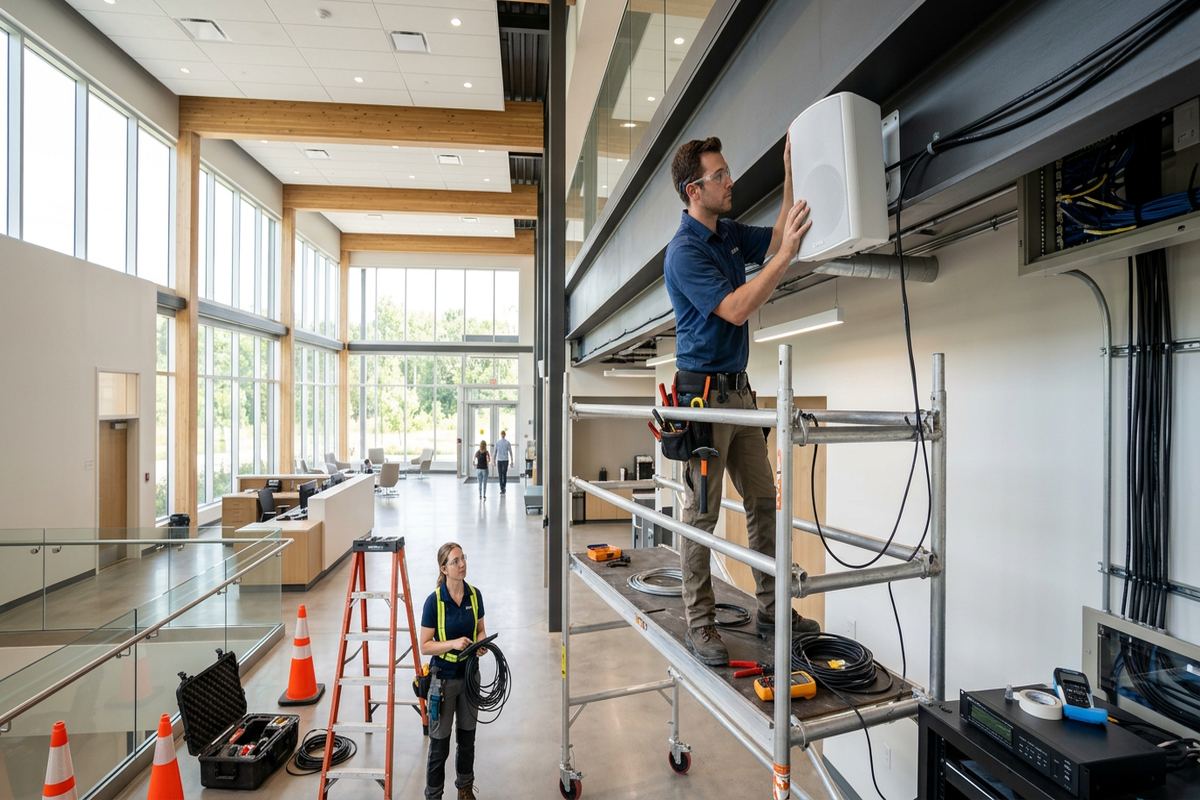
A speaker bracket is only as dependable as the material supporting it. Brick, concrete block, poured concrete and wood framing require different anchors and drilling methods. On masonry buildings, we assess the condition of the surface and avoid treating mortar, veneer or deteriorated material as structural support. On frame construction, mounting points should reach suitable backing or framing rather than relying on vinyl, aluminum or fibre-cement cladding. The speaker weight, bracket leverage and local wind exposure are considered when selecting mounting hardware.
Exterior sealing must protect both the wall assembly and the cable. Drilling through brick veneer, siding or stucco without understanding the layers behind it can direct water into cavities or damage membranes. We plan the penetration location, use a downward or protected approach where appropriate and seal around the cable with compatible materials. Penetrations are kept separate from drainage paths and obvious problem areas. This work is particularly relevant on Chatham homes that combine an original structure with newer additions, decks or enclosed porches.
Not every surface should receive a mounted speaker. Decorative masonry, unstable soffits, thin metal panels and areas hiding electrical or mechanical services may require another location or a purpose-built support. Freestanding landscape speakers can be considered where building mounting would produce poor coverage or unnecessary wall penetrations. For commercial strips and industrial units, landlord approval may also define acceptable attachment points. We record approved locations in the scope and confirm changes before drilling, helping avoid unplanned damage or disputes over alterations.
- Anchors matched to structural material
- No mounting to cladding alone
- Compatible exterior sealants
- Alternative supports for unsuitable walls
Audio Sources, Zones and Chatham Wi-Fi
Outdoor speakers may connect to a conventional amplifier, a multi-zone audio platform or a network-based streaming system. The right arrangement depends on the number of zones, desired sources and how users want to control playback. We confirm whether the customer needs local inputs, television audio, streaming services, paging or integration with existing indoor speakers. Equipment capacity must match the connected speaker load. Controls are then organized so routine use does not require access to exposed wiring or repeated adjustment of technical settings.
Wireless control does not remove the need for reliable infrastructure. If an amplifier or streaming device depends on Wi-Fi, its equipment location must have stable network coverage. Outdoor control from a patio, yard or pool area may also require suitable Wi-Fi coverage at the user’s location. Properties in Maple City, Prestancia or rural areas around Chatham can differ widely in layout and building separation. We test relevant locations and identify whether cabling, an access point or network changes should be addressed as a separate part of the scope.
For farms or facilities with multiple buildings, extending audio between structures requires more than selecting a wireless speaker. Distance, wall materials, power availability and network design all affect reliability. A wired connection, fibre pathway or properly designed wireless link may be more appropriate than relying on indoor Wi-Fi through exterior walls. We do not assume an existing network will support the proposed system. Required connectivity is assessed before equipment is finalized, and ownership of network hardware, accounts and subscriptions is documented for the customer.
- Amplifiers matched to speaker loads
- Simple control for each audio zone
- Wi-Fi checked at control locations
- Network requirements documented before installation
Approvals and Worksite Coordination
Outdoor speaker work in a condominium, leased unit or managed commercial property may require written approval before cables are routed or surfaces are drilled. Owners and tenants should confirm rules covering exterior appearance, common elements, sound, working hours and equipment placement. UnifiedLink can provide a proposed scope and location information for review, but approval remains with the customer and property authority. This step is relevant for condominium developments, commercial strips and landlord-controlled premises in Chatham where exterior walls or shared service areas are not solely controlled by the occupant.
Active businesses need installation planning that respects customers, staff and production. In food or grain facilities, access restrictions, cleaning requirements and operating schedules may influence cable routes and work periods. Industrial units may contain vehicle lanes, storage racks, overhead doors or equipment that limit safe mounting access. We identify these constraints during assessment and include known coordination requirements in the scope. If another contractor must provide power, conduit, structural support or access equipment, the sequence of work is established before the audio installation begins.
One accountable contractor can coordinate the low-voltage portion of a broader project, including speaker cabling, network connections, equipment mounting and configuration within the agreed scope. Where electrical work, structural modification or finish restoration falls outside that scope, the division of responsibility is stated clearly. Changes discovered after access begins are reviewed rather than completed without authorization. This approach gives a Chatham homeowner, property manager or business operator a defined record of what is included and who is responsible for related work.
- Condo and landlord approval review
- Coordination around active operations
- Clear responsibilities for other trades
- Documented changes before extra work
Chatham Testing, Configuration and Handover
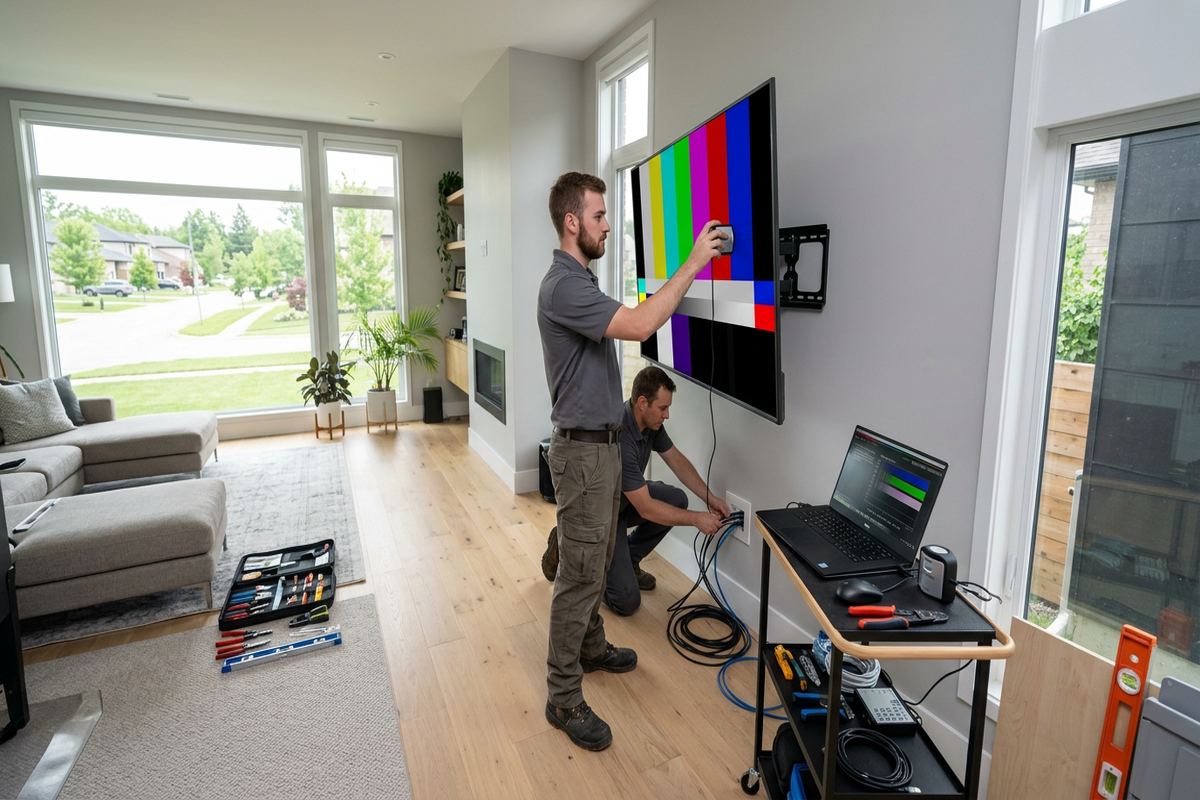
Installation is followed by testing at practical listening levels. Each speaker is checked for correct channel assignment, polarity, stable output and unwanted vibration. Zone controls, source selection and volume limits are configured on site based on the agreed use. We also listen from representative positions rather than testing only beside the equipment rack. Where adjustments are possible, speaker aiming and level balance are refined to improve consistency. Testing cannot eliminate every acoustic reflection, but it confirms that installed components operate together as intended.
The customer receives control through their own credentials where accounts or applications are required. We do not make personal installer accounts the permanent basis of system operation. During handover, we review source selection, zone control, normal startup and shutdown, and basic checks for a speaker that is not producing sound. An as-built record identifies installed equipment and cable destinations, including relevant changes from the original plan. This information supports future service without forcing another technician to rediscover concealed routes throughout the Chatham property.
Outdoor audio systems should be inspected when physical damage, water entry, distorted output or loose hardware is noticed. Property renovations, landscaping and network changes can also affect previously working equipment. Customers should avoid painting over speaker grilles, burying accessible connections or redirecting sprinklers toward devices. Requests sent during business hours are answered the same day, while after-hours requests are answered the next business day. Site assessment timing depends on the service and travel distance, including work in Wallaceburg and other Chatham-Kent communities.
- On-site speaker and zone testing
- Configuration with customer-owned credentials
- Operating review at handover
- As-built equipment and cable record
Chatham neighbourhoods we cover
- Downtown Chatham
- Thames Campus area
- Maple City
- Prestancia
- Wallaceburg
Outdoor speaker installation in Chatham — common questions
Can outdoor speakers stay installed through Chatham winters?
Yes, when the speakers are rated for the location and installed with suitable brackets, cable and protected connections. Chatham freeze-thaw conditions make secure mounting and exterior sealing important. Sensitive equipment such as amplifiers and streaming devices should normally remain in a dry, ventilated indoor location. Speaker condition and hardware should be checked if movement, water entry or physical damage becomes visible.
How many speakers does my patio need?
The number depends on the patio dimensions, listening positions, nearby properties and desired volume. Several well-positioned speakers often provide more even sound than one loud unit. During a Chatham site assessment, we review boundaries, reflective surfaces and mounting options before proposing quantities and locations. Separate zones may be useful when a patio, pool and garden are not normally used together.
Can you install speakers on an older brick home?
Often, but the masonry condition and wall assembly must be assessed first. Older Chatham housing may include brick veneer, solid masonry, wood framing, additions or repaired sections that require different anchors and cable routes. We avoid assuming mortar or cladding can carry the bracket. The scope identifies mounting locations, planned penetrations and any restoration work that must be handled separately.
Do outdoor speakers need Wi-Fi?
Passive outdoor speakers connected by cable do not require Wi-Fi, but a streaming amplifier or app-based controller may depend on the network. We check coverage where the equipment and users will be located. Larger Chatham properties or separate farm buildings may require network cabling, an access point or a dedicated building link rather than relying on an indoor router through several walls.
Do I need condo or landlord approval?
Approval may be required before drilling exterior walls, using common elements or changing the outside appearance of a building. Chatham condo owners and commercial tenants should confirm applicable rules with the corporation, landlord or property manager. UnifiedLink can document proposed locations and cable routes for review, but the customer is responsible for securing authorization before installation work begins.
What is included in the handover?
We test the installed speakers and zones, configure controls on site and review normal operation with the customer. Accounts and applications are handed over using the customer’s own credentials. The customer also receives an as-built record identifying equipment and cable destinations. The written scope records ownership, exclusions and warranty information so future service does not depend on undocumented installation details.
Coverage in Chatham is confirmed against the address before we quote. See everything we install in Chatham or the province-wide outdoor speaker installation page.