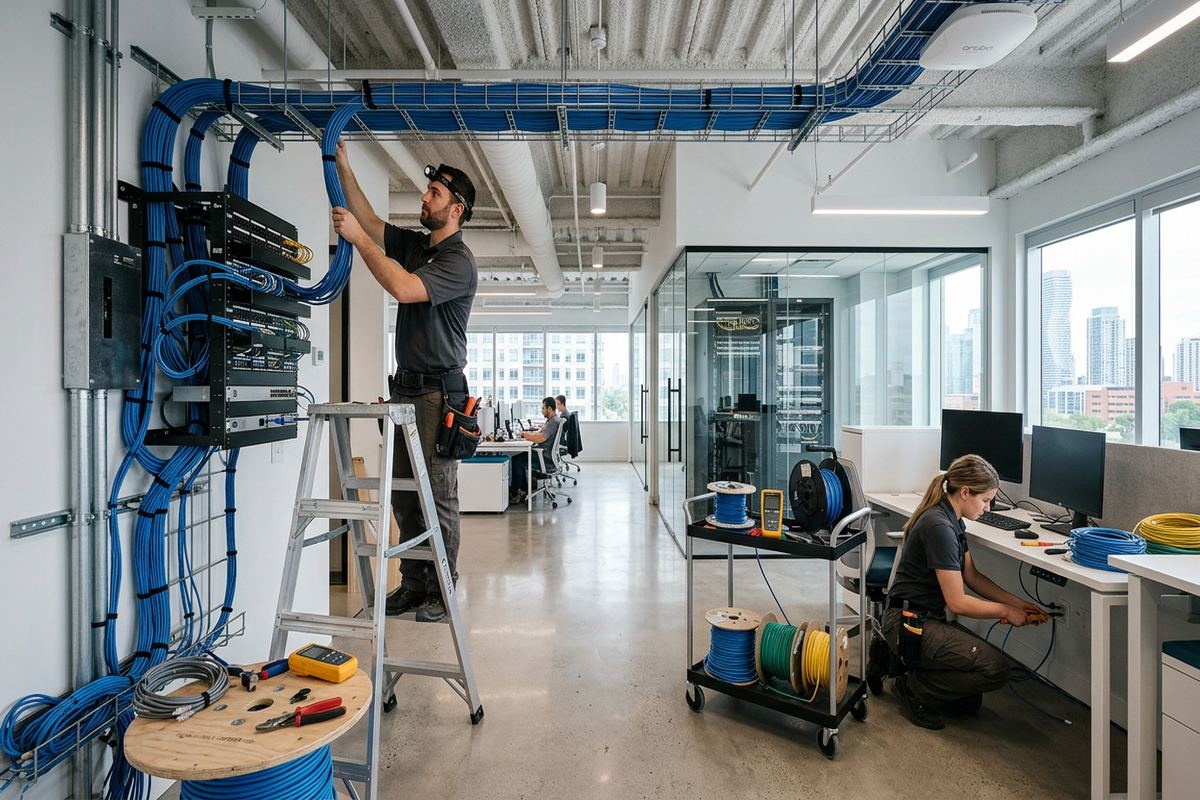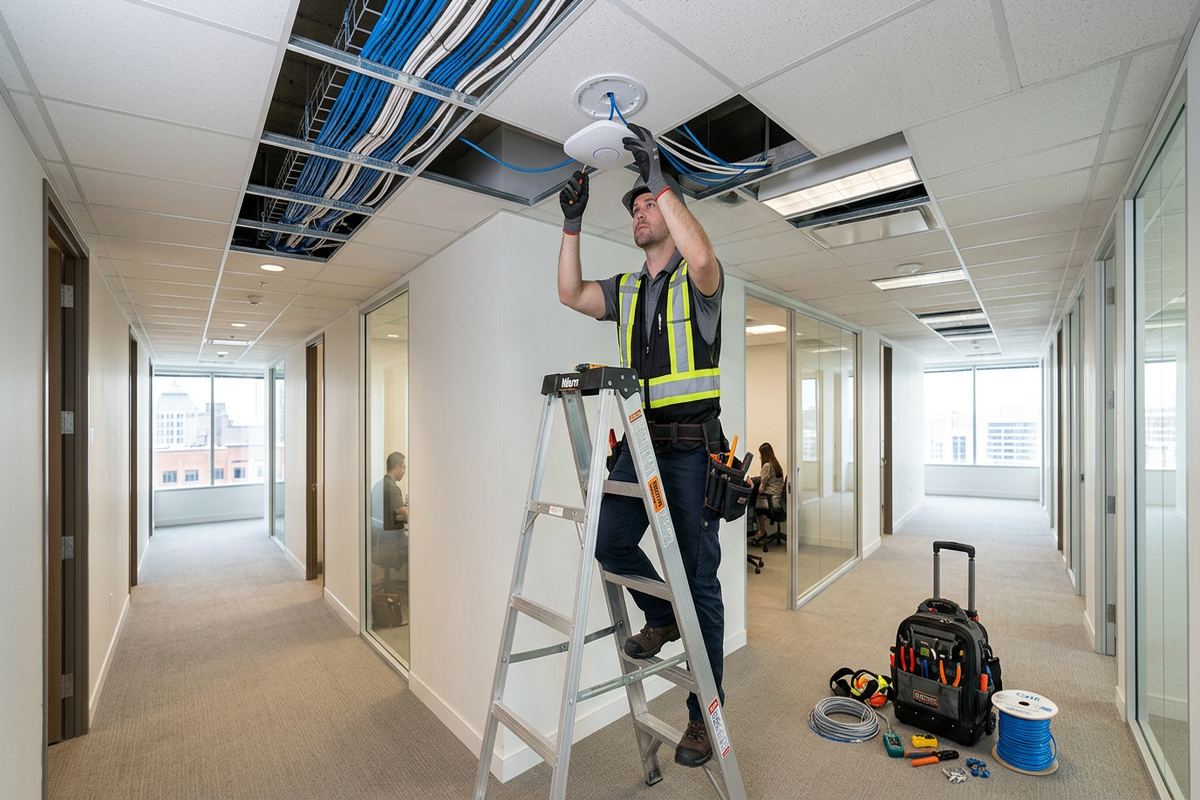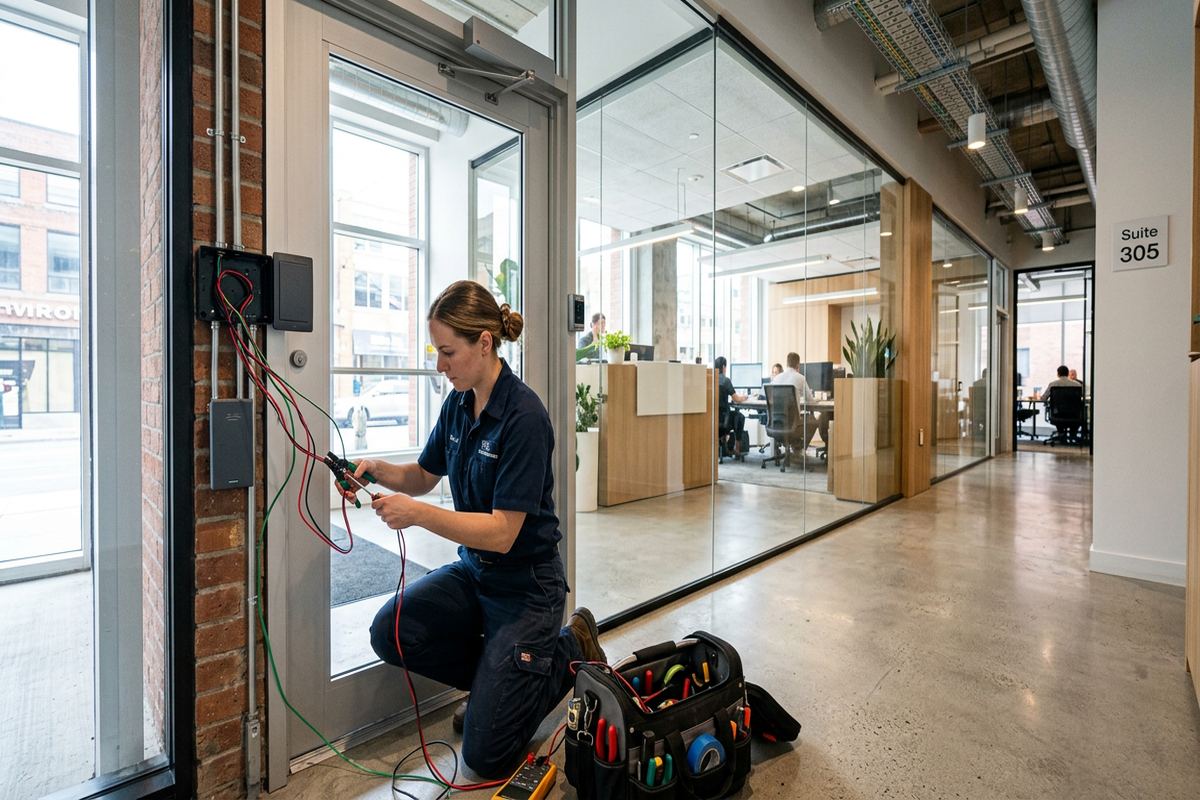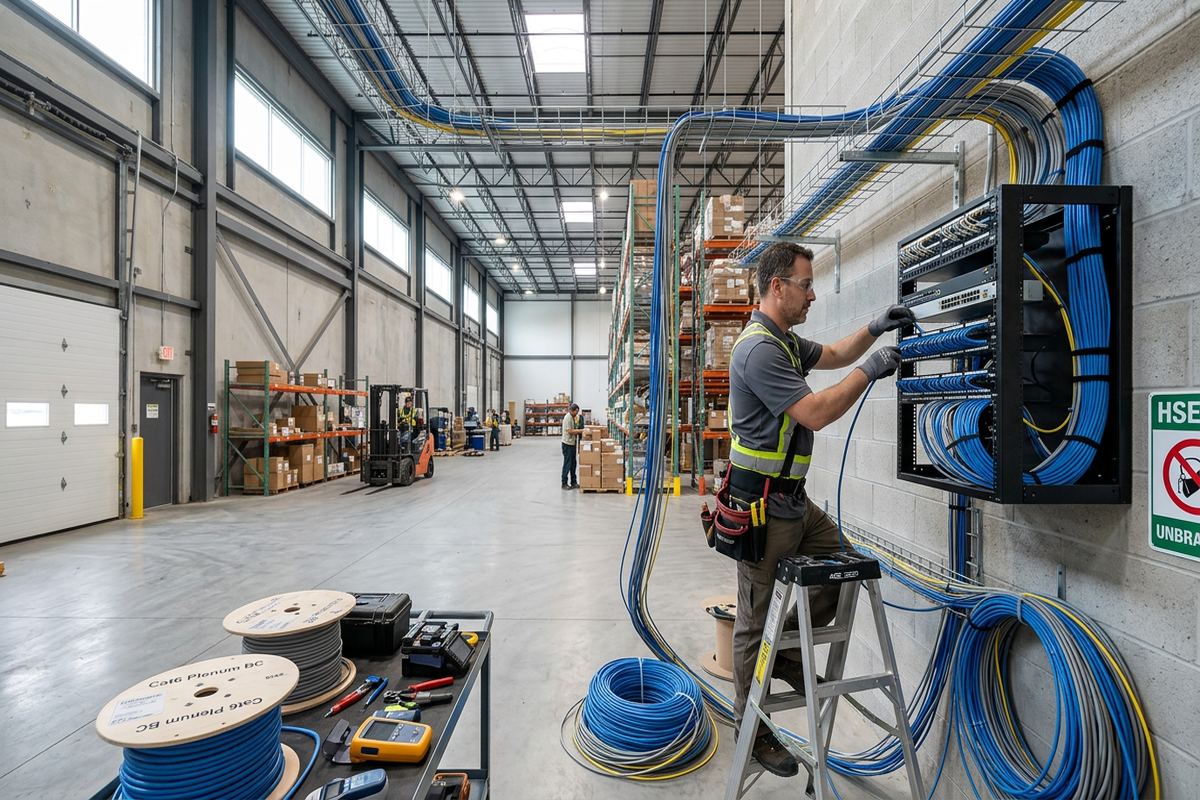
UnifiedLink installs in-ceiling speakers for homes, offices, shops and operational facilities across Chatham and nearby Chatham-Kent communities. Each project starts with a site assessment to confirm ceiling construction, cable routes, listening areas and control requirements. We provide a written scope, install continuous labelled cable runs, configure the system on site and document the completed layout.
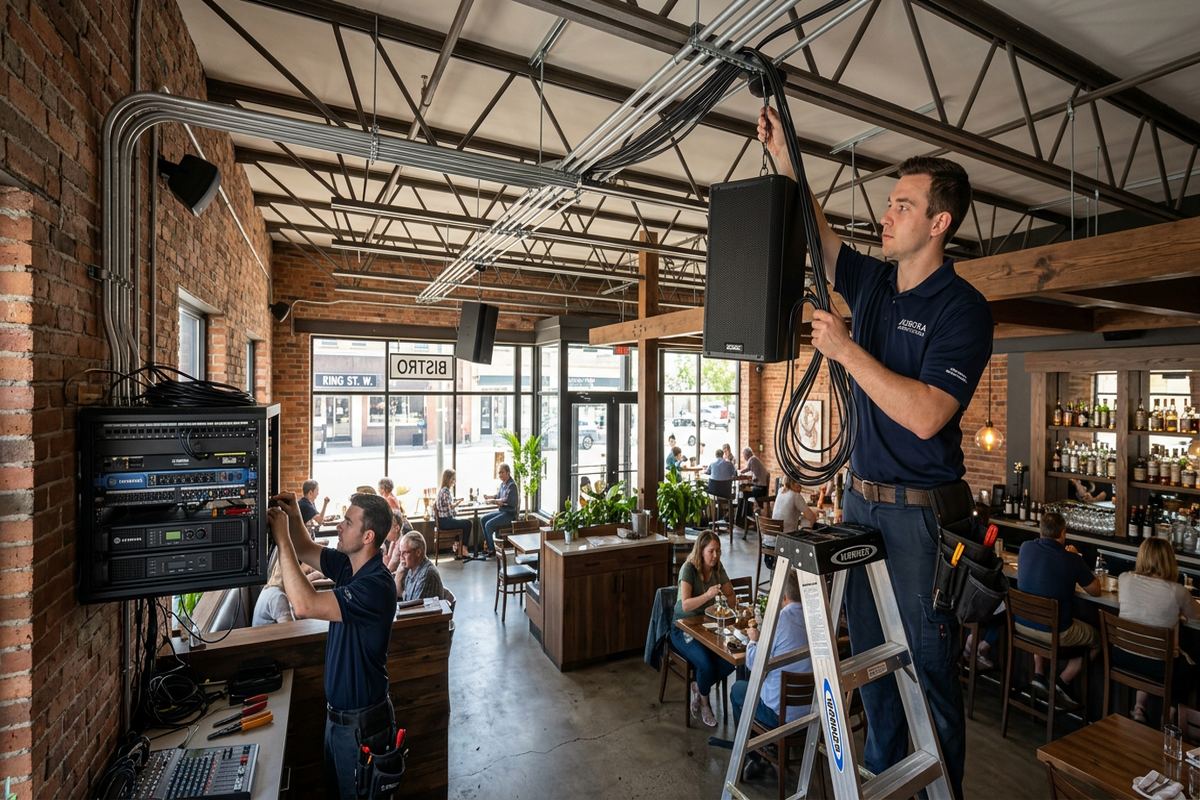
In-Ceiling Speaker Installation for Chatham Properties
In-ceiling speakers provide room-filling sound without occupying shelves, counters or floor space. In Chatham, the correct design depends on much more than choosing a speaker diameter. Ceiling height, joist direction, insulation, ductwork, lighting and room shape all affect placement. UnifiedLink assesses those conditions before proposing equipment or making openings. The goal may be background music, television audio, paging or independent audio zones. Each use requires different coverage, volume control and amplifier capacity, so the system is planned around how the room will actually operate.
Older town housing, newer subdivisions, farm properties, commercial strips and industrial units present different installation constraints. A frame house may offer accessible joist cavities, while masonry walls can limit routes from the amplifier to the ceiling. Grain and food facilities may also require equipment locations that avoid operational areas, dust exposure or washdown zones. We review accessible basements, attics, service rooms and existing conduits, then identify practical cable paths. This avoids unnecessary wall openings and clarifies where limited access could affect the final scope.
Every quotation follows a site assessment, with timing based on the service and travel distance. The written scope identifies equipment, cable routes, proposed speaker positions, exclusions, equipment ownership and warranty details. It also distinguishes customer-supplied components from equipment included by UnifiedLink. Requests submitted during business hours are answered the same day; after-hours requests are answered the next business day. This process gives Chatham property owners a clear installation plan before ceiling cuts, cable pulls or equipment configuration begins.
- Single-room and whole-property audio layouts
- Background music, television audio and paging
- New construction and retrofit installation options
- Written equipment and cable-route scope
- Assessment completed before project pricing
Planning Speaker Coverage in Chatham Rooms
Good coverage begins with listening positions rather than simply centring speakers between light fixtures. Kitchens, open living areas, boardrooms and retail floors often need multiple speakers operating at moderate levels instead of one source playing loudly. We consider ceiling height, reflective surfaces, furniture, counters and expected occupancy when setting spacing. Stereo pairs can suit focused listening areas, while mono or distributed layouts are often more consistent for background audio. In Chatham homes and businesses, the design can also separate quiet rooms from active work or entertainment areas.
Speaker locations must share ceiling space with pot lights, smoke alarms, plumbing, heating ducts and structural framing. During assessment, we inspect accessible areas and use suitable locating methods before openings are made. Exact concealed conditions cannot always be confirmed until work begins, particularly in renovated or older housing. The scope therefore records known access limits and assumptions. Where a preferred location is blocked, we discuss an adjusted position that preserves useful coverage, maintains reasonable symmetry and avoids cutting structural members or interfering with required building systems.
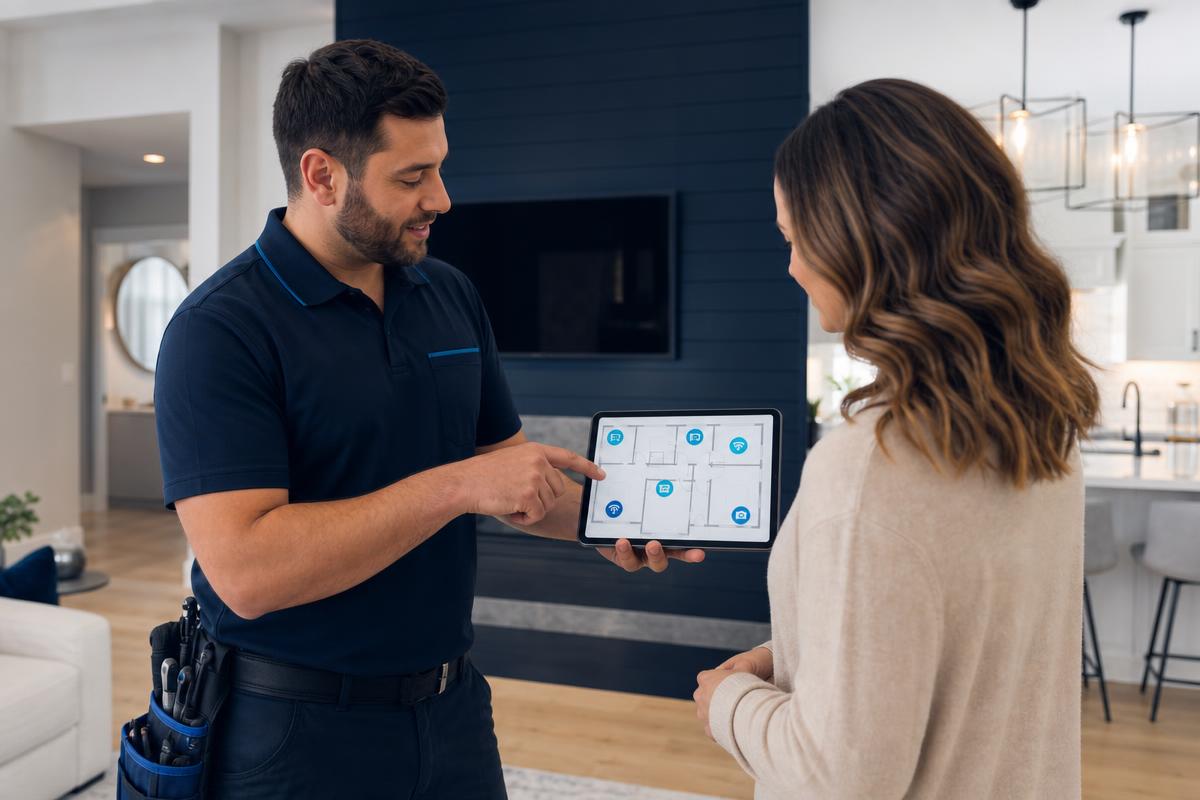
Audio zones let occupants select sources or adjust levels for different areas. A Chatham home might separate the kitchen, living room and covered outdoor area, while a business may divide reception, customer space, offices and staff rooms. Zone design affects amplifier selection, wiring topology and control hardware, so it must be decided before cabling. We confirm whether users want wall controls, an application, a central rack or integration with existing audio equipment. Controls are then configured on site and handed over using the customer’s own credentials.
- Coverage based on actual listening areas
- Coordination with lights, ducts and alarms
- Stereo, mono and distributed audio layouts
- Independent volume and source zones
- Control options defined before cabling
Ceiling Construction and Cable Routes
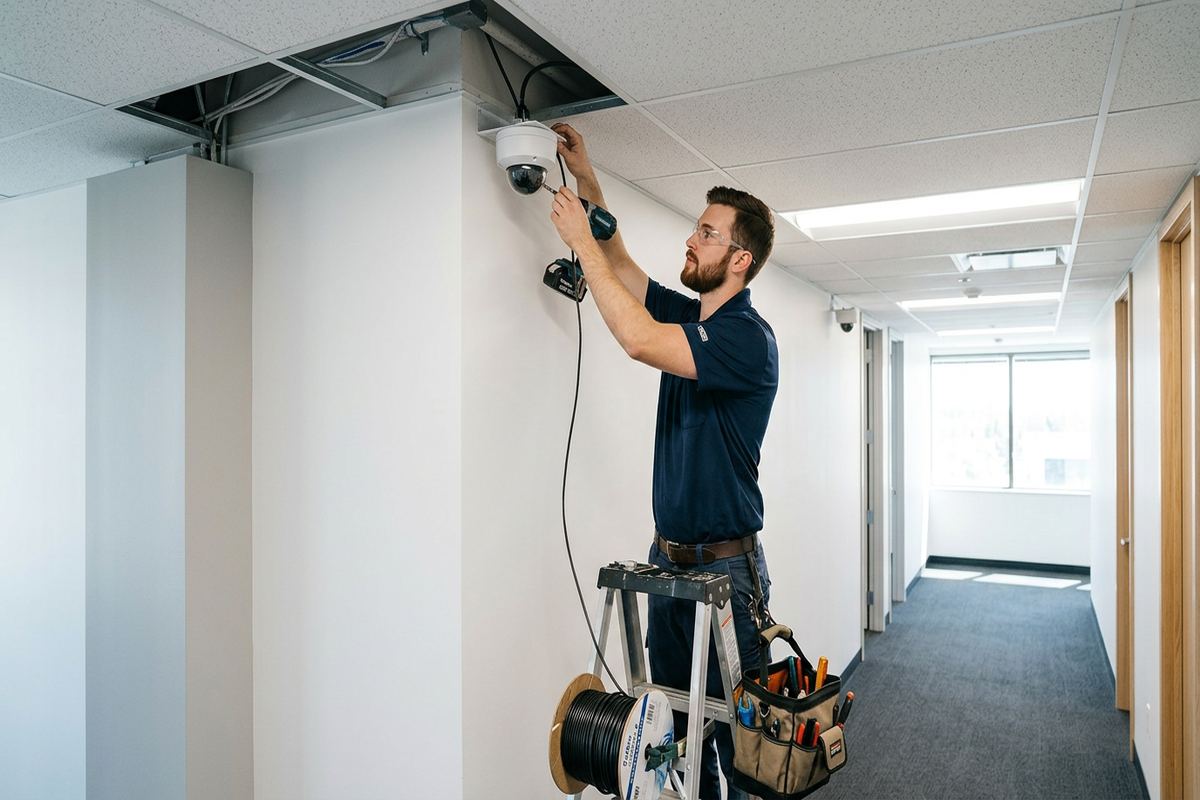
Ceiling construction determines both the installation method and the repair risk. Drywall below open wood joists is usually straightforward when there is attic or unfinished basement access. Finished spaces, strapping, resilient channel and concealed blocking can make routes less direct. Suspended commercial ceilings offer access, but speaker supports and cable management still require proper planning. UnifiedLink reviews the proposed pathway from each speaker to the amplifier or equipment location, including transitions between floors. Continuous labelled cable runs are installed wherever the approved route allows, without hidden intermediate joins.
Many older Chatham houses have been renovated in stages, leaving mixed framing, plaster, added insulation or abandoned wiring behind finished surfaces. Downtown Chatham properties may also include narrow cavities or masonry sections that prevent a conventional vertical drop. We do not assume every ceiling bay is open. Instead, likely obstructions are identified during assessment, and the scope records any access panels or localized openings that may be required. If another trade must repair or finish surfaces, that responsibility is stated rather than left uncertain after installation.
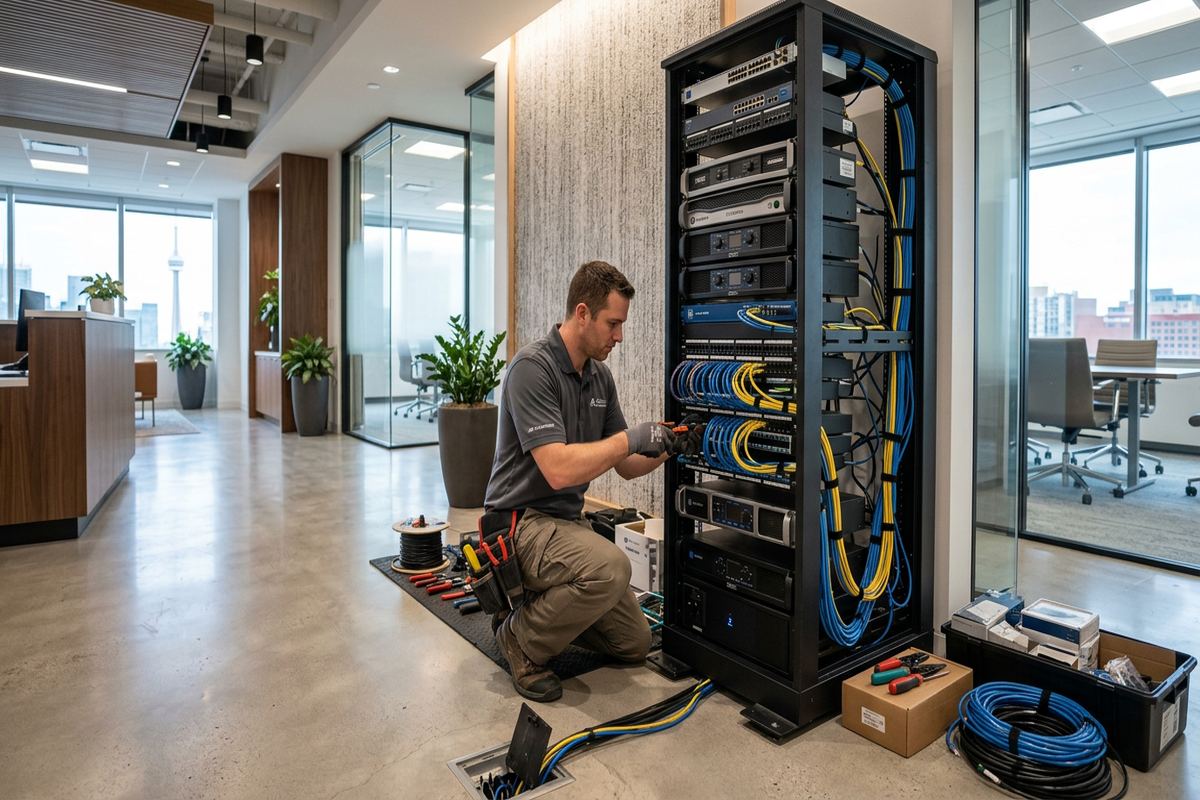
Cable type is matched to run length, amplifier requirements, speaker load and the spaces it passes through. Low-voltage audio cable should remain separated from electrical wiring where practical and be supported rather than laid across fixtures or ceiling systems. At the equipment end, each run is labelled to its room or speaker position, making testing and future service easier. For larger Chatham-Kent properties, home runs may terminate in a structured panel, rack or dedicated cabinet. Enough ventilation and working clearance must remain around amplifiers and networked audio components.
- Continuous speaker cable without concealed joins
- Routes planned around framing and masonry
- Every run labelled at the equipment end
- Cable supported through accessible spaces
- Rack and amplifier ventilation considered
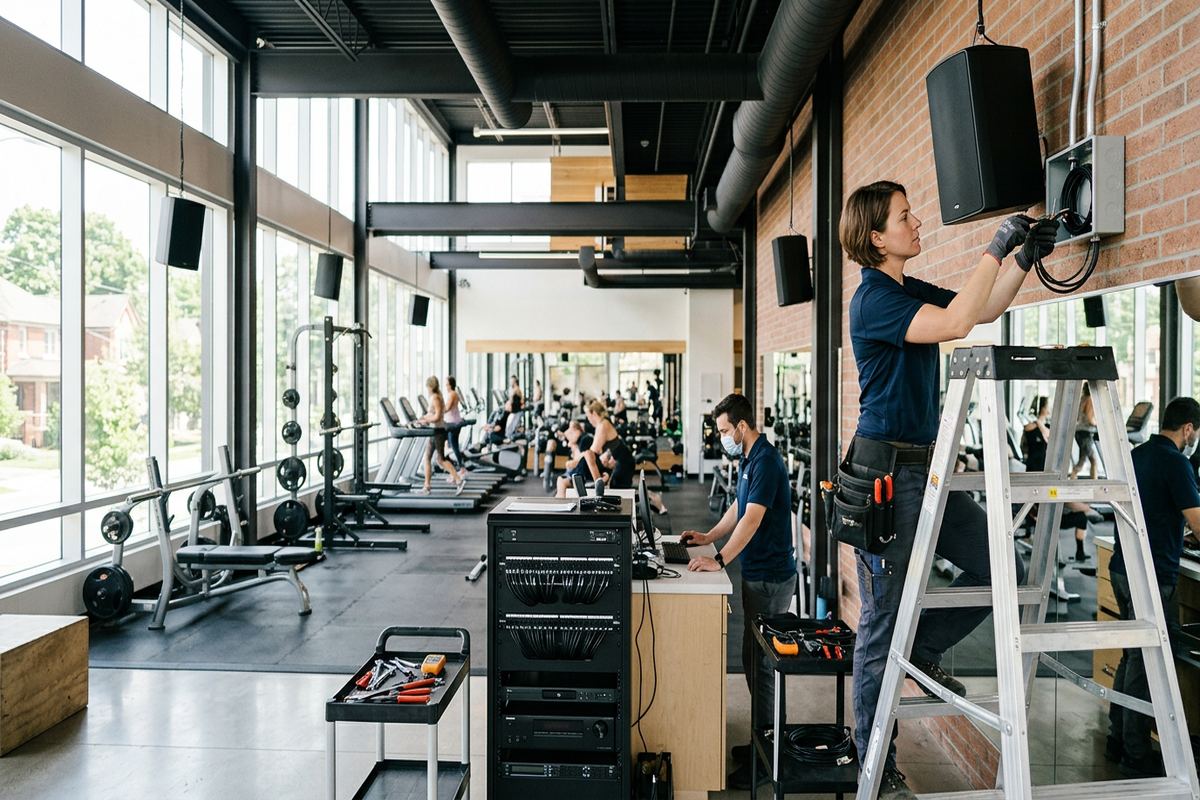
Chatham, Ontario
In-ceiling speaker installation in Chatham, scoped in writing first
Book a site assessment and get equipment, routes, exclusions, and warranty on paper before anything is installed.
Retrofitting Older Chatham Homes
Retrofit work requires a balance between useful speaker placement and controlled disruption. In older Chatham housing, plaster, lath, decorative ceilings and previous renovations can make exploratory cutting risky. We first look for routes through closets, unfinished utility areas, attics or basements. Small access openings may still be necessary where framing changes direction or a cable must cross a blocked cavity. Those possibilities are discussed before work begins. Speaker cut-outs are made only after the proposed positions are checked for accessible obstructions and accepted within the project scope.
Room proportions in older town homes can also affect sound. Narrow living rooms, divided dining areas and additions may not suit a standard four-speaker grid. A carefully placed pair can sometimes provide better results, while connected rooms may need separate zones to prevent uneven volume. Maple City and the Thames Campus area include varied property types, so plans are based on the particular ceiling and occupancy rather than a neighbourhood assumption. Existing amplifiers or receivers are tested for compatibility before they are incorporated into the installation.
Permission may be required before cables or speakers are installed in a rented unit, condominium or managed property. Tenants should obtain landlord approval, and condominium owners may need confirmation where ceilings, shared walls or common building systems are involved. UnifiedLink can describe proposed equipment locations and cable routes for an approval request, but the property owner or manager controls authorization. Fire separations, access restrictions and building rules can change what is practical. Those constraints are reviewed early so the final Chatham installation does not rely on an unapproved pathway.
- Retrofit routes chosen to limit openings
- Plaster and decorative finishes assessed first
- Existing receivers checked for compatibility
- Landlord or condominium approval considered
- Room layout determines speaker quantity
Audio for Chatham Businesses and Facilities
Commercial audio must suit daily operations, not only sound good during a demonstration. Shops, offices, restaurants and service counters may need low, consistent background music that allows conversation. Paging or announcements require intelligibility across occupied areas, including locations where machinery, refrigeration or customer activity raises ambient noise. We identify each zone’s purpose, expected volume and control access. Equipment can be placed in a secure office, communications room or cabinet, provided ventilation, power and cable routing are suitable for reliable operation and future servicing.
Farm properties and grain or food facilities around Chatham-Kent need additional planning. Building size, exposed structure, long cable distances and operational restrictions can change the equipment choice. In processing or storage environments, a standard residential in-ceiling speaker may not suit dust, moisture, cleaning or temperature conditions. We confirm the intended environment and exclude unsuitable locations from the proposed design. Installation scheduling may also need coordination with production, deliveries or restricted areas. The written scope records these conditions so responsibilities and access requirements are understood before site work starts.
Commercial strips and industrial units often combine suspended ceilings, open deck areas and masonry demising walls. A cable route that appears direct on a floor plan may be blocked by fire separations, structural beams or tenant boundaries. In Wallaceburg and Chatham business properties, we assess the actual unit rather than relying on drawings alone. Any required coordination with the landlord, property manager, electrician or ceiling contractor is identified. UnifiedLink remains the accountable low-voltage contractor for the approved audio scope, from cabling and speaker mounting through configuration and documented handover.
- Background music and paging applications
- Separate public and staff audio zones
- Operational access coordinated before installation
- Environmental suitability reviewed for facilities
- One contractor for cabling and configuration
Outdoor and Transitional Audio in Chatham
Covered patios, porches and sheltered work areas can sometimes be included in the same audio system, but exterior conditions require purpose-rated equipment. Chatham winters, summer humidity and repeated freeze-thaw cycles can damage speakers or connections that are intended only for indoor use. We review the mounting surface, exposure to wind-driven moisture, seasonal temperature changes and available cable route. An indoor in-ceiling model is not substituted where an exterior-rated product is required. The design also considers whether the outdoor zone needs independent volume control to limit sound beyond the property.
Exterior mounting and sealing must protect both the cable entry and the surrounding building surface. Frame construction may allow a protected route through a soffit or wall cavity, while masonry requires appropriate drilling, anchors and a carefully sealed penetration. We avoid relying on sealant alone where flashing, a weather-rated fitting or another protective detail is appropriate. Cable loops and terminations are positioned to reduce water tracking toward the building. The scope identifies the planned route and mounting approach, including any finishing work that falls outside the low-voltage installation.
A room near an exterior wall can also be affected by insulation and vapour-control layers, even when the speaker itself remains indoors. Cutting without understanding those layers may create air leakage or condensation concerns. During assessment, we look for attic access and visible construction details, then select positions that reduce interference with insulated assemblies where possible. Prestancia homes, farmhouses and renovated Chatham properties can each have different roof and ceiling arrangements. Any required restoration of vapour barriers or specialized building-envelope work is identified as an exclusion or assigned responsibility.
- Exterior-rated speakers used where required
- Freeze-thaw exposure considered in selection
- Masonry penetrations anchored and sealed
- Indoor vapour-control layers respected
- Outdoor zones receive separate controls
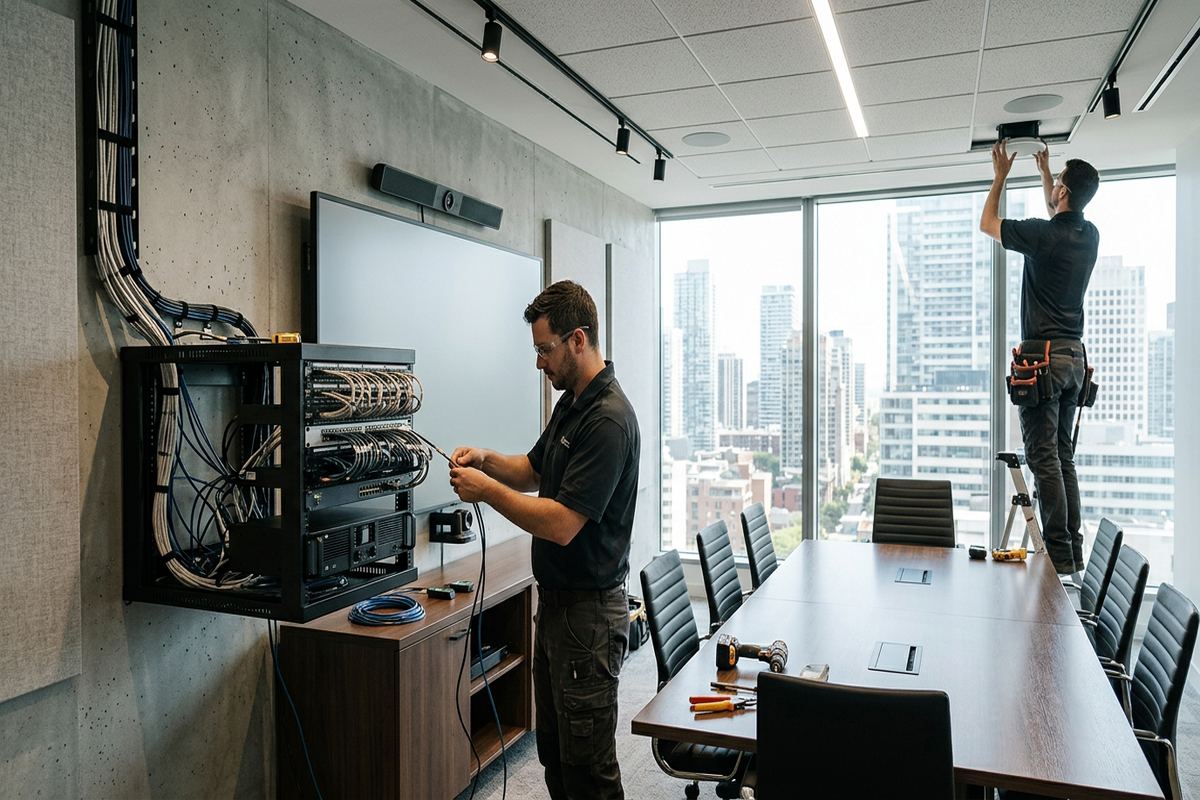
Equipment, Amplifiers and System Controls
Speakers are only one part of a complete audio system. The amplifier must support the number of speakers, their impedance or transformer requirements, expected listening level and planned zones. Residential receivers can work for some television and music systems, while multi-zone amplifiers may be more suitable for distributed audio. Commercial paging and background systems can require a different architecture. UnifiedLink confirms compatibility before finalizing the equipment list, including source connections, network requirements and control methods. This prevents a visually neat installation from being paired with electronics that cannot operate the intended load.
Networked audio depends on reliable connectivity at the amplifier and control devices. If applications, streaming services or wireless controls are part of the design, we verify available Ethernet or Wi-Fi conditions and identify any network work required. Customer accounts remain under the customer’s own credentials rather than an installer-controlled login. During on-site configuration, we name zones clearly, set practical volume limits where supported and test source selection. We also explain which functions depend on third-party applications, subscriptions or internet access, without treating those external services as part of the speaker warranty.
Existing equipment can often be retained when it is compatible and in suitable condition, but that decision follows inspection and testing. Customer-supplied speakers, amplifiers or controls are listed separately in the written scope so equipment ownership and warranty responsibility remain clear. We do not assume an older receiver has enough channels or that every speaker can share one output. For Chatham projects, the final design records connection points and installed components. This makes later troubleshooting, room changes or amplifier replacement more manageable for the owner or another qualified technician.
- Amplifier capacity matched to speaker load
- Residential and commercial architectures available
- Network requirements checked during planning
- Zones named and configured on site
- Customer-supplied equipment documented separately
Testing and Handover for Chatham Installations
After mounting and termination, every installed speaker is tested from its intended source. We check channel assignment, polarity, basic level balance and zone control, then listen for obvious vibration or interference around the grille. A speaker that operates is not automatically considered complete if it is connected to the wrong room control or produces uneven coverage. For networked systems, we confirm control access using the customer’s credentials. Where equipment supports configuration settings, those settings are adjusted on site for the approved rooms and normal operating use.
Handover includes an as-built record showing speaker locations, labelled cable destinations and the main equipment arrangement. The customer receives relevant operating information and knows which components they own, which warranties apply and what work was excluded. Hidden cable routes are documented to the extent they are known from the completed installation. This record is particularly useful when a Chatham property is renovated later, because another contractor can identify audio runs before opening ceilings or changing an equipment cabinet. It also reduces dependence on memory when zones require service.
Future changes are easier when the original system has clear labels, accessible terminations and enough planning capacity. During assessment, customers can discuss likely additions such as another room, a patio zone or a different source, though unapproved future work is not included automatically. UnifiedLink provides one accountable contractor for the agreed in-ceiling speaker scope, including cable installation, mounting, configuration and handover. Requests made during business hours receive a same-day answer, while requests received after hours are answered the next business day. Assessment timing depends on service requirements and travel distance.
- Each speaker and zone function tested
- Polarity and channel assignment checked
- As-built speaker and cable record supplied
- Customer credentials used for connected controls
- Ownership, exclusions and warranties documented
Chatham neighbourhoods we cover
- Downtown Chatham
- Thames Campus area
- Maple City
- Prestancia
- Wallaceburg
In-ceiling speaker installation in Chatham — common questions
Can speakers be installed in an older Chatham home?
Usually, but the route depends on the ceiling and wall construction. Older Chatham homes may contain plaster, lath, blocking, masonry sections or insulation that limits access. We assess attic, basement, closet and service-area routes before pricing. The written scope identifies expected openings, cable routes and any surface repair or specialized finishing that is excluded from the low-voltage work.
How many in-ceiling speakers does my room need?
The quantity depends on room dimensions, ceiling height, listening positions, furniture and intended volume. A focused music room may use a stereo pair, while an open Chatham kitchen and living area may need several speakers at lower levels for even coverage. We plan around actual use and obstructions rather than applying a fixed speaker count to every room.
Can you connect speakers to my existing receiver?
Yes, when the receiver is compatible with the speaker load, channel count and required zones. We inspect the available outputs and confirm whether it can operate the proposed Chatham installation safely. If existing equipment cannot support the design, the written scope explains the required amplifier or control changes. Customer-owned equipment and its warranty responsibilities are identified separately.
Do I need landlord or condo approval?
Approval may be required because in-ceiling installation involves permanent openings and concealed cabling. Chatham tenants should obtain written landlord permission, while condominium owners should check rules covering ceilings, shared assemblies and building systems. We can provide proposed locations and cable routes for review, but authorization remains the responsibility of the owner, landlord, condominium corporation or property manager.
Can indoor speakers extend to a covered patio?
A covered area still experiences Chatham temperature swings, humidity, wind-driven moisture and freeze-thaw conditions. Exterior or damp-location-rated equipment may be required even when the speaker is beneath a roof. We assess exposure, mounting construction and sealing details before specifying equipment. Outdoor audio can also be placed on a separate zone so its volume and source are controlled independently.
What do I receive when installation is finished?
UnifiedLink tests speaker operation, channel assignment, polarity, source selection and zone controls. For connected systems, configuration is completed using your own credentials. You receive an as-built record showing speaker positions, cable destinations and the main equipment arrangement, along with documented equipment ownership, warranty information and exclusions. This provides a practical reference for future service or renovations at your Chatham property.
Coverage in Chatham is confirmed against the address before we quote. See everything we install in Chatham or the province-wide in-ceiling speaker installation page.