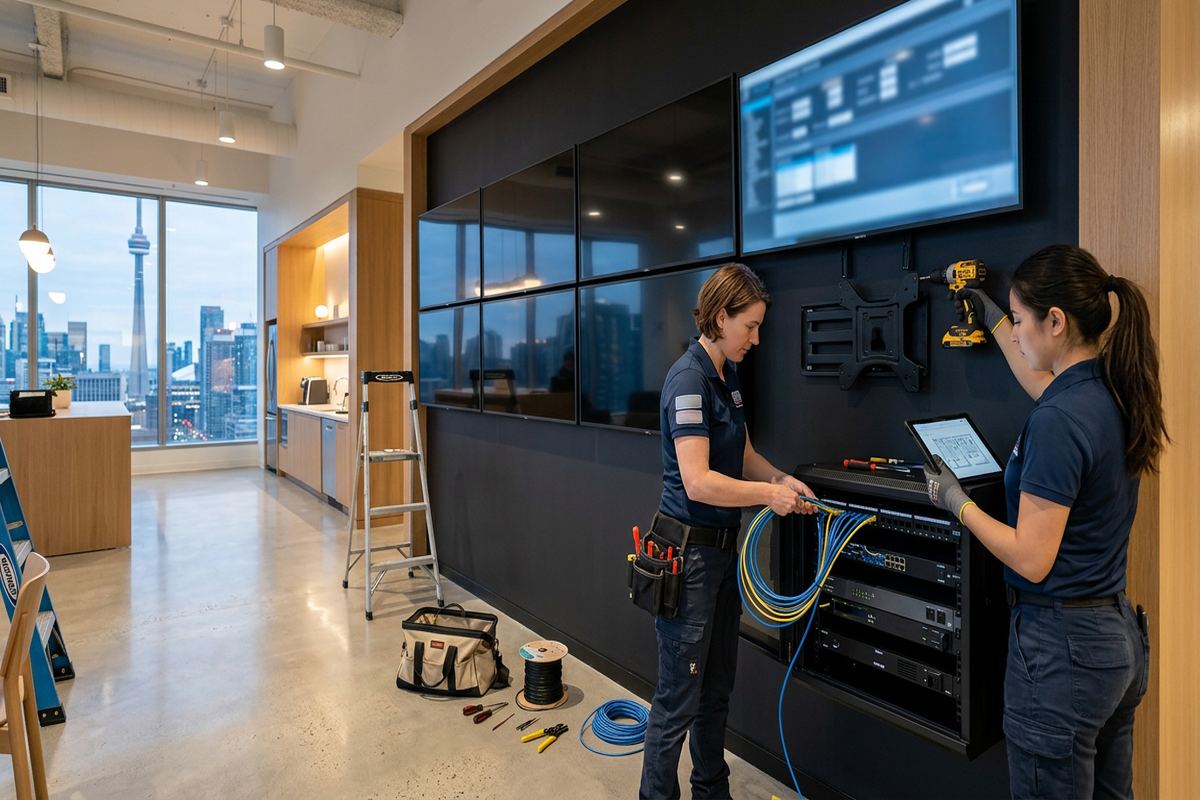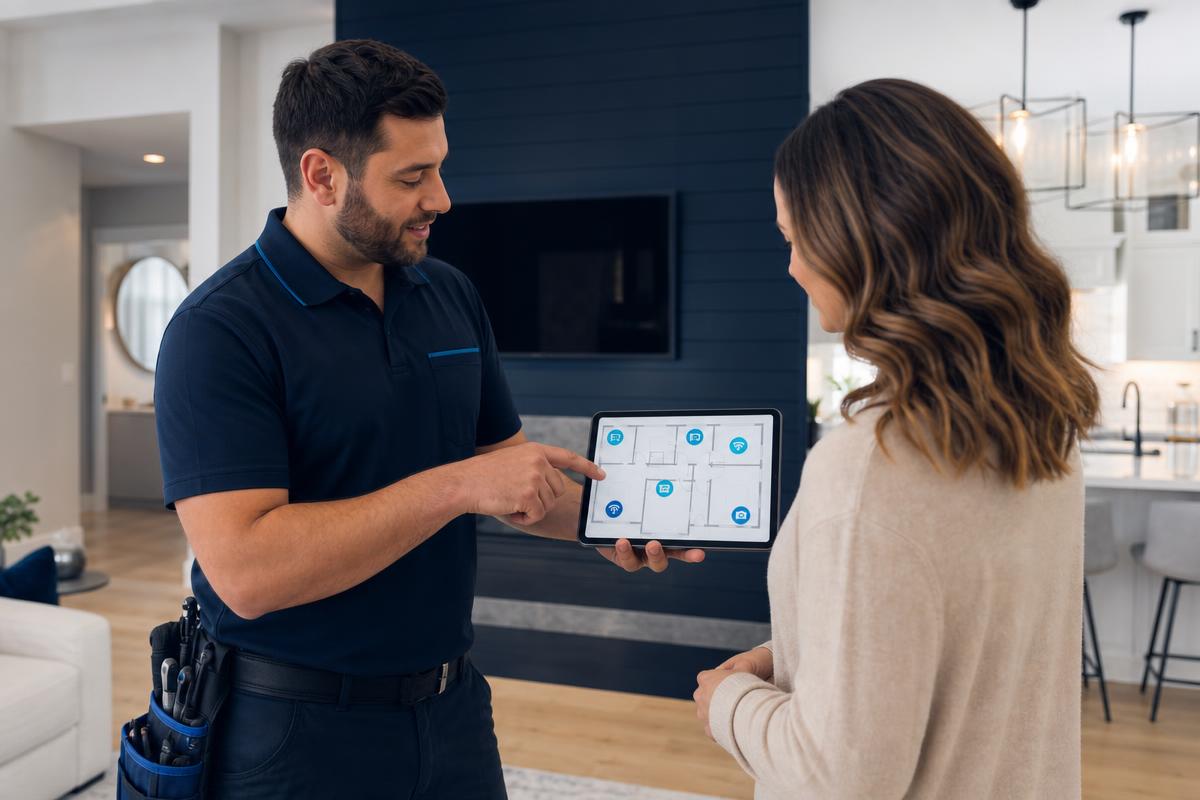
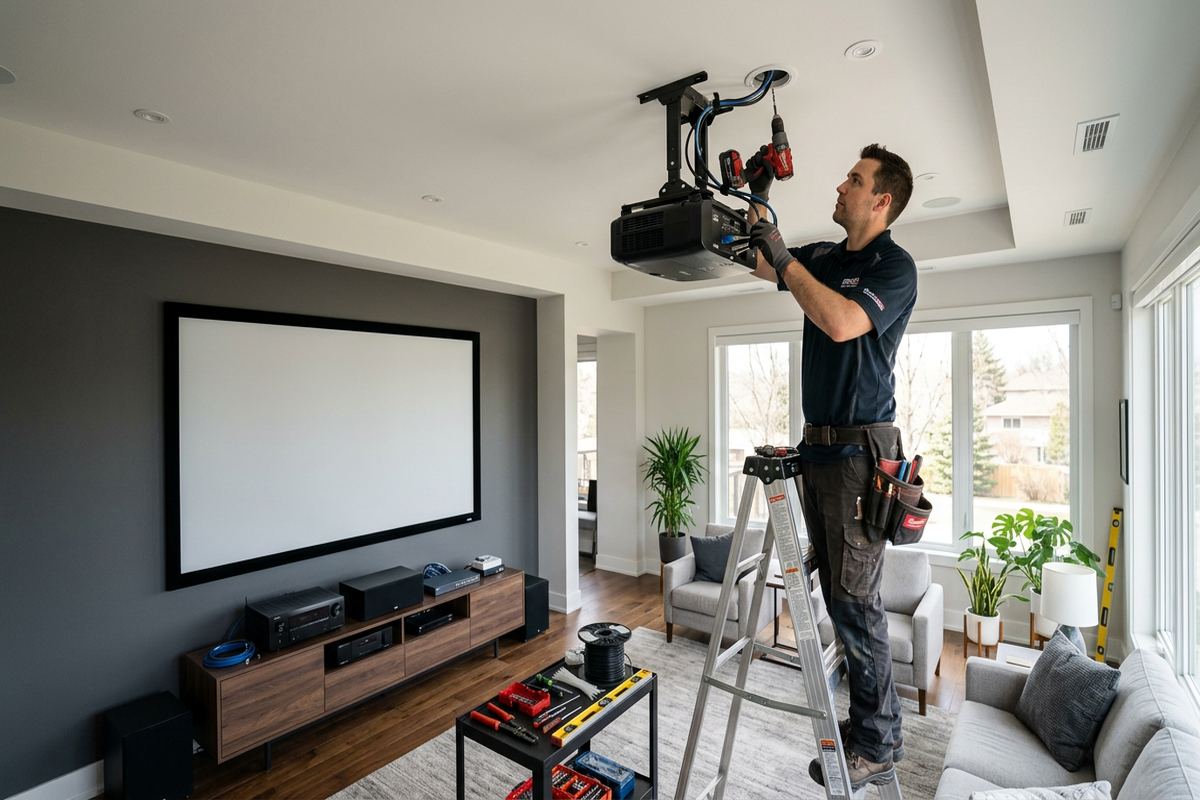
UnifiedLink installs TVs above and beside fireplaces in Brantford homes and commercial spaces. Each installation starts with an assessment of heat exposure, wall construction, viewing height, power, cable routing and equipment location. The result is a securely mounted display with practical connections, documented placement and no unnecessary surface wiring.
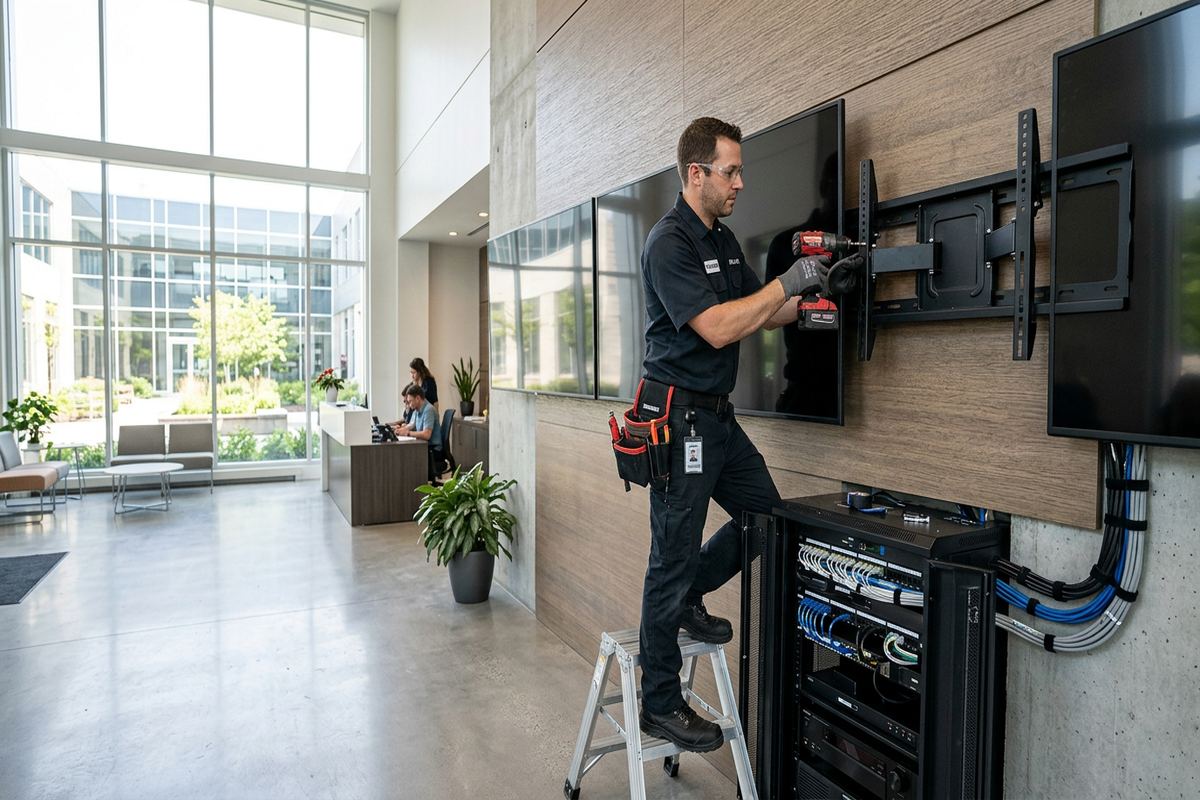
Planning Fireplace TV Mounting in Brantford
A fireplace creates several constraints that do not apply to an ordinary flat wall. Before mounting a TV, UnifiedLink checks the fireplace type, mantel depth, wall temperature, chimney or flue position, available fastening points and likely viewing angle. The assessment also identifies where power, network, HDMI and audio connections can run without crossing hot areas. This step is particularly important in Brantford’s older brick homes, where a finished fireplace surround may conceal solid masonry, wood framing, a chimney breast or several layers of previous renovation work.
Viewing comfort matters as much as whether the bracket will physically fit. A TV mounted too high can produce an uncomfortable neck angle, while a low position may expose the display to excessive heat. Screen size, seating distance, mantel height and room layout are considered together. If the preferred location is unsuitable, alternatives can include an adjacent wall, a lower mantel arrangement or an appropriate downward-tilting mount. The recommendation is based on measured conditions rather than a standard height applied to every Brantford living room or customer.
Following the assessment, the written scope identifies the display and mount, planned device placement, proposed cable routes, visible finishes, exclusions, equipment ownership and applicable warranty details. It also notes whether another trade is required for electrical, fireplace or finish work. This prevents uncertainty when walls are opened or masonry is drilled. Site assessment occurs before pricing, since fastening methods and cable access vary between older houses, converted industrial buildings and newer west-end subdivisions. Assessment timing depends on the requested work and travel distance within Brantford and Brant County.
- Fireplace type and heat exposure reviewed
- Viewing height checked against seating
- Wall composition and fastening points identified
- Cable routes included in the written scope
- Trade dependencies and exclusions documented
Heat, Clearance and Fireplace Conditions
Heat assessment begins with the fireplace in its normal operating condition whenever practical and safe. The installer considers rising heat, warm air discharged from vents, mantel projection and the manufacturer’s required clearances. A mantel can redirect some heat, but it is not automatically sufficient protection for a television. Fireplace and TV documentation takes priority over appearance preferences. When safe operating conditions cannot be confirmed, UnifiedLink will not treat the space above the firebox as an ordinary mounting surface or conceal wiring within an area that may exceed the cable’s suitable temperature range.
Different fireplace systems create different concerns. A sealed gas unit, electric insert and wood-burning fireplace do not produce identical temperatures or require identical clearances. Older masonry fireplaces may also have hidden flues or repaired brickwork that must not be drilled casually. The assessment does not replace inspection or servicing by a qualified fireplace professional. If the fireplace condition, venting or clearances are uncertain, those matters should be resolved first. Mount placement can then be planned around confirmed boundaries, avoiding penetrations that could affect the firebox, chimney, vent path or non-combustible assembly.
Seasonal use must be considered in Brantford, where a fireplace may remain off during the summer assessment but operate regularly through winter. The selected position needs to remain suitable when the system is producing its expected heat. Freeze-thaw conditions also matter where an exterior chimney, exterior masonry wall or outdoor display is involved. Cracked mortar, moisture entry and moving masonry can undermine a fastening or cable penetration over time. Exterior routes require weather-rated materials, drip control and proper sealing rather than interior caulk or cable passed through an unprotected hole.
- Manufacturer clearances take priority
- Mantel projection considered during placement
- Flues and vent paths kept clear
- Seasonal fireplace operation accounted for
- Exterior penetrations sealed against moisture
Masonry and Frame Mounting in Brantford
Wall construction determines the bracket, anchors and drilling method. Solid brick, concrete block, stone veneer, framed walls and masonry covered with drywall each behave differently under load. In Downtown Brantford and Terrace Hill, an older fireplace may include brittle brick, soft mortar or an uneven plaster finish. Fasteners must reach suitable structural material rather than relying on decorative surfaces. UnifiedLink checks the mounting pattern, display weight, bracket movement and substrate condition before drilling. A full-motion arm creates greater leverage than a fixed mount and may require a different mounting position or backing arrangement.
Newer homes in West Brant and Lynden Hills more often use frame construction, although the fireplace wall may include tile, manufactured stone or a prefabricated chase. Stud locations do not always align with a bracket’s preferred position, and decorative cladding is not automatically structural. The installer determines whether usable framing or installed backing is present behind the finish. Where adequate support is unavailable, the scope can identify required carpentry or finish changes. The objective is to transfer the display load into suitable structure without crushing tile, loosening veneer or placing unsupported force on the fireplace surround.
Converted industrial buildings introduce another set of pathways. Exposed brick, deep masonry, steel framing and unusually high ceilings can make a simple-looking display wall technically involved. Commercial strips may combine block demising walls with shallow service cavities, limiting concealed cable access. In these settings, a neat surface pathway may be safer and more serviceable than extensive drilling. Any proposed anchor pattern is selected for the actual substrate and bracket movement. The installation record documents the chosen location and route so future display replacement, tenant work or equipment servicing does not depend on guesswork.
- Anchors matched to the actual substrate
- Bracket leverage included in load planning
- Decorative veneer treated as non-structural
- Studs or backing confirmed before drilling
- Mounting details added to the record
Brantford, Ontario
Fireplace TV mounting in Brantford, scoped in writing first
Book a site assessment and get equipment, routes, exclusions, and warranty on paper before anything is installed.
Concealed Cabling and Power Pathways
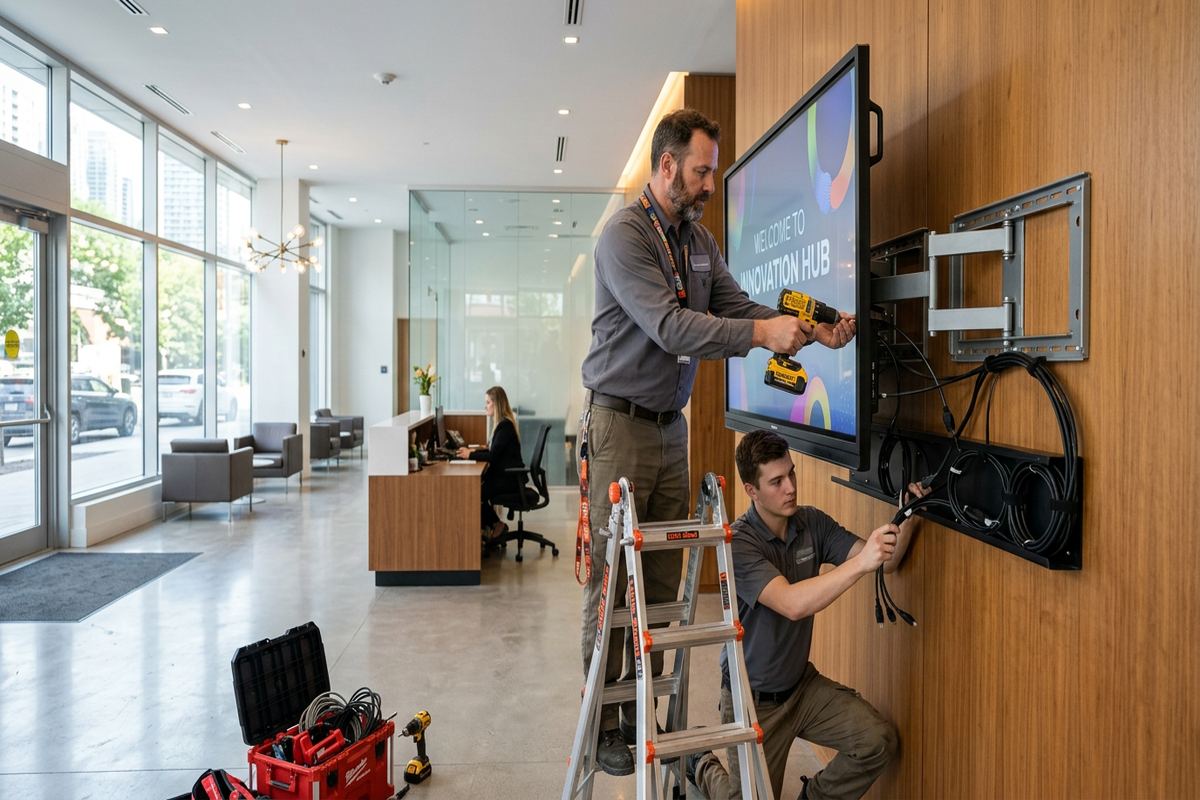
A clean fireplace installation requires a complete pathway, not merely a hole behind the display. Power and low-voltage cabling have different requirements and should not be improvised through the same opening. UnifiedLink plans continuous, labelled low-voltage runs for HDMI, network, audio or control connections, using cable types suited to the route. If a new receptacle or electrical circuit is needed, that work must be completed by a qualified electrical contractor. Extension cords and detachable TV power leads are not treated as permanent in-wall wiring solutions, even when they would remain hidden from view.
Equipment placement is decided before cables are installed. Streaming players, cable boxes, game consoles, sound equipment and network devices may sit in cabinetry, on shelving or in a remote rack. Each option affects cable length, ventilation, remote-control operation and future access. Long HDMI paths may require an active cable or an extender rather than an ordinary passive lead. Spare capacity can also be included when the pathway permits it. In Brantford homes with finished basements or renovated fireplace walls, early route planning reduces unnecessary cuts through ceilings, trim and completed decorative surfaces.
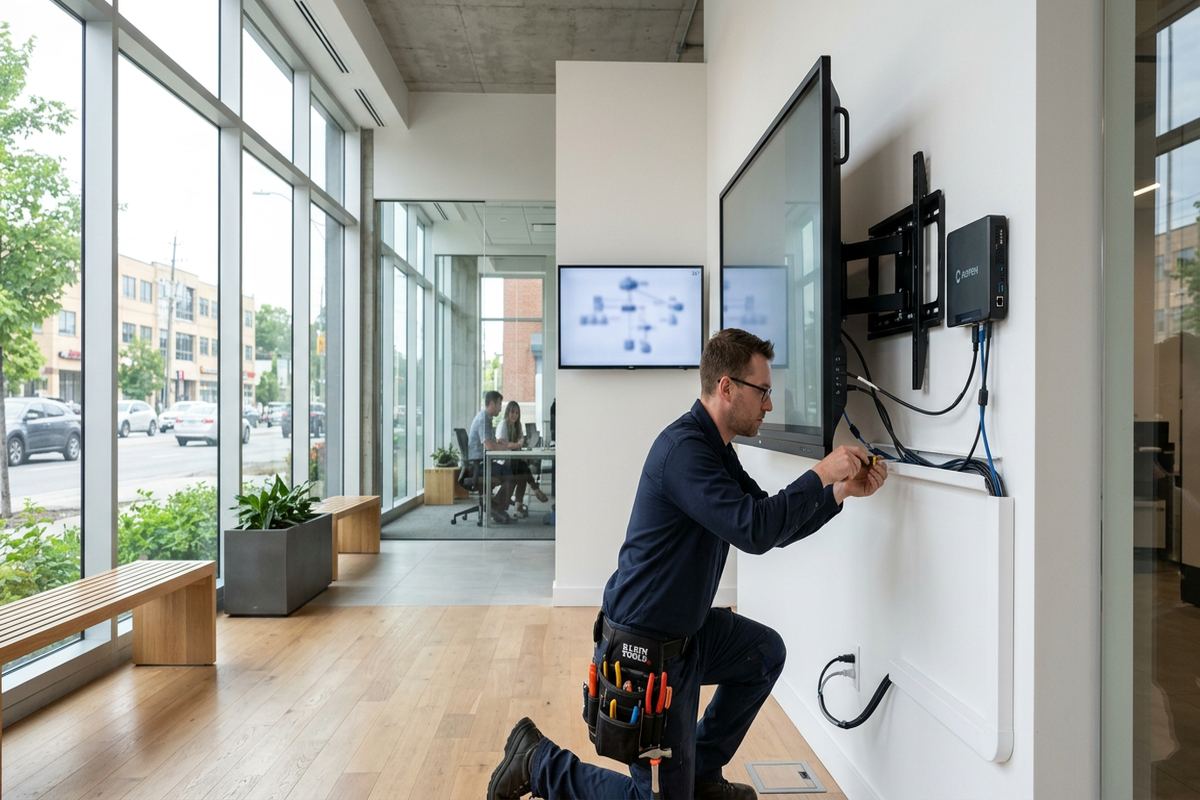
Some walls cannot accept a fully concealed route without substantial finish work. Solid masonry, a working chimney breast, shallow framing or a tiled surround may block access between the display and equipment. In those cases, options can include paintable surface raceway, routing through adjacent cabinetry or approaching from a basement, attic or neighbouring wall cavity. The written scope states what will remain visible and whether patching or painting is included or excluded. Cable bends, entry points and service loops are arranged so connections can be reached without pulling tightly against the television when it is removed.
- Low-voltage runs remain continuous and labelled
- Power changes assigned to a qualified electrician
- HDMI distance and format requirements checked
- Equipment ventilation and access maintained
- Visible raceways identified before work begins
TV Placement and Audio in Brantford Rooms
Fireplace walls often dominate a room, but the architectural centre is not always the best screen centre. Window glare, seating direction, doorway traffic and room width can shift the useful viewing position. In Echo Place bungalows or Henderson Survey homes, an offset fireplace and compact room may favour a tilting or articulating bracket. Mount movement must remain clear of the mantel, wall finish and nearby shelving. UnifiedLink also considers how far the display projects when folded, whether ports remain accessible and whether the mount can be levelled against an uneven masonry or plaster surface.
Soundbar placement should be coordinated with the television rather than added after the mount height is fixed. The bar may attach to the TV bracket, mount independently below the display or sit on a mantel where heat and vibration permit. Its microphones, upward-firing drivers and remote sensor need appropriate clearance. Larger audio systems may require speaker wire routes, an equipment receiver and network connectivity. The planned layout avoids blocking fireplace controls or service panels. It also allows the television and soundbar to move together where an articulating bracket is used, preventing alignment and cable-strain problems.
Commercial displays above decorative fireplaces need additional planning for operating hours, content sources and staff access. A reception area, restaurant seating zone or tenant lounge may require a locked mount, scheduled power, managed signage player or network connection. Converted industrial units can offer visible conduit pathways that suit the building character, while finished commercial strips may need discreet raceway. The screen should remain serviceable without disrupting the fireplace surround. Device credentials, input settings and basic operating instructions are transferred at handover so the business controls its own display and connected services.
- Screen centre aligned with practical seating
- Glare and bracket movement reviewed
- Soundbar clearance planned with the TV
- Fireplace controls remain accessible
- Commercial source equipment positioned for service
Exterior and Four-Season Display Considerations
An outdoor fireplace or covered patio requires equipment designed for its actual exposure. An indoor television is not made suitable simply by placing it beneath an overhang. Brantford weather includes cold winters, wind-driven moisture and repeated freeze-thaw cycles that affect displays, brackets, masonry and penetrations. The assessment considers the manufacturer’s temperature range, water exposure, sunlight, ventilation and seasonal storage expectations. Outdoor-rated screens and mounts may still require a protected orientation. Cable jackets, boxes, connectors and raceways must also be approved for the environment rather than borrowed from an indoor installation method.
Exterior masonry should be examined before mounting because surface appearance can hide deteriorated mortar, spalled brick or moisture movement. Anchoring into a weak section can damage the wall and leave the display unstable. Penetrations are positioned and sealed to shed water, with cable entries arranged to prevent runoff from following the cable indoors. Where a route crosses an exterior wall, compatible sleeves and sealants are selected for the substrate. Sealant alone is not a substitute for sound masonry, correct flashing or an appropriate exterior box, particularly on walls exposed to prevailing weather.
Condensation is another concern when electronic equipment moves between cold and warm conditions. A display intended to remain outdoors should be operated and stored within its specified limits, while removable devices need time to acclimatize before use. Network coverage may also be weaker outside, especially through older brick walls or foil-backed insulation in newer construction. UnifiedLink can assess the connection required for streaming or signage and coordinate the display pathway with suitable Wi-Fi or wired networking. The final scope separates mounting work from any masonry repair, electrical work or weatherproof enclosure supplied by another trade.
- Outdoor-rated equipment specified where required
- Freeze-thaw effects considered at masonry walls
- Cable entries arranged to shed water
- Exterior boxes and pathways properly sealed
- Network performance checked at the display location
Approvals for Brantford Condos and Rentals
Condominium and rental work should begin with written approval where the wall, fireplace or exterior forms part of the property owner’s or corporation’s responsibility. Rules may limit drilling into masonry, alterations to common elements, work hours or cable routing between spaces. A landlord may also require restoration at the end of a tenancy. UnifiedLink can provide a proposed location and pathway for the customer to submit, but the customer remains responsible for obtaining authorization. Work does not proceed on the assumption that a decorative fireplace wall belongs exclusively to the occupant.
Multi-unit buildings can contain fire separations, concrete walls and shared service cavities that must not be penetrated without an approved method. Surface raceway is sometimes preferable because it keeps the route visible and avoids disturbing unknown assemblies. In Downtown Brantford conversions, original brick may also be protected by owner rules even when it is not a designated heritage feature. The assessment records accessible construction and identifies uncertainties. If building drawings, management approval or another specialist is required, that dependency appears in the written scope rather than being discovered after mounting has started.
Businesses leasing space in commercial strips or industrial units face similar responsibilities. A lease may restrict penetrations through demising walls, exterior brick or structural steel, and the building owner may specify removal conditions. The display location should also preserve exits, signs, sprinkler clearance and access to building controls. UnifiedLink coordinates one accountable installation scope for the mounting and low-voltage work it performs, while clearly listing work assigned to electricians, fireplace technicians, carpenters or other trades. That division helps the tenant, landlord and installer understand who owns each decision and completed component.
- Owner or condo approval obtained before drilling
- Common elements and fire separations respected
- Permitted work hours confirmed by the customer
- Restoration responsibilities stated in writing
- Other trade responsibilities clearly separated
Installation and Handover in Brantford
On installation day, the planned location is verified before drilling. The display, bracket, fireplace, wall finish and cable entry points are checked against the written scope. Mounting holes are made with methods appropriate to the identified substrate, and the bracket is secured and levelled before the television is attached. Cables are protected from sharp edges, excessive bends, heat and moving mount components. Work areas are kept controlled around masonry dust and finished surfaces. Any condition that differs materially from the assessment is discussed before the route or mounting method is changed.
Configuration takes place on site using the customer’s own accounts and credentials. UnifiedLink can connect the selected sources, confirm input switching, check the wired or wireless network connection and set practical display or soundbar options. Credentials remain with the customer rather than being replaced by installer-owned accounts. The screen and attached equipment are tested through the expected operating positions, including bracket extension and tilt where applicable. Basic operation is reviewed with the person responsible for the system, including how to reach equipment, disconnect the display and avoid stressing concealed cables during future service.
Handover includes an as-built record showing the completed device placement and cable route, along with relevant equipment information and noted exclusions. Labelled continuous cable runs make later troubleshooting or replacement more direct. Equipment ownership and applicable warranty details follow the written scope. Requests sent during business hours are answered the same day, while after-hours requests are answered the next business day. For additional Brantford work, site assessment timing depends on the service and travel distance. The customer retains control of the television, connected devices, accounts and documentation after the installation is complete.
- Final position confirmed before drilling
- Bracket and display tested through movement
- Customer-owned credentials used for setup
- Continuous cable runs labelled at handover
- As-built placement and pathways documented
Brantford neighbourhoods we cover
- Downtown Brantford
- West Brant
- Echo Place
- Henderson Survey
- Terrace Hill
- Lynden Hills
Fireplace TV mounting in Brantford — common questions
Can any TV go above a fireplace?
No. Suitability depends on the TV manufacturer’s limits, fireplace clearances, mantel projection, operating temperature and wall construction. In Brantford, older masonry fireplaces can also contain hidden flues or repaired brick. UnifiedLink assesses the proposed position before pricing. If heat or structural conditions are unsuitable, an adjacent wall or different height may be recommended.
Can you hide all fireplace TV cables?
Often, but not in every Brantford property. Frame walls may permit concealed low-voltage pathways, while solid brick, tiled surrounds and active chimney breasts can limit access. Surface raceway, adjacent cabinetry or a basement route may be more appropriate. The written scope identifies the cable path, visible sections, exclusions and any electrical work required before installation.
Do I need an electrician?
An electrician is required when the project needs a new receptacle, circuit or other electrical alteration. UnifiedLink handles the planned low-voltage display, network and audio cabling within its scope. Detachable TV cords and extension cords are not installed as permanent in-wall wiring. Any electrical dependency is identified during the Brantford site assessment and documented before work proceeds.
Will mounting damage my brick fireplace?
Drilling creates permanent penetrations, but appropriate anchors and methods reduce unnecessary damage. The brick, mortar, veneer and underlying structure must first be identified. Deteriorated or decorative masonry may not provide suitable support. This is especially relevant in older Brantford homes and converted industrial buildings. Required masonry repair or finish restoration is listed separately from the mounting work.
Do I need approval in a condo or rental?
Possibly. Brantford condo corporations and landlords may restrict drilling, fireplace alterations, common-element work or cable routing. The customer should obtain written permission before installation. UnifiedLink can document the proposed display position and pathway for an approval request. Building management may also require work-hour coordination, restoration terms or a specific approach to concrete and fire-separated walls.
Can you mount a TV above an outdoor fireplace?
Yes, when the equipment, structure and location are suitable. Brantford’s winter temperatures, moisture and freeze-thaw conditions require outdoor-rated displays, mounts and cable components selected for the actual exposure. Masonry condition and sealing are assessed carefully. An overhang alone does not make indoor equipment suitable outdoors, and electrical or masonry work may require another qualified trade.
Coverage in Brantford is confirmed against the address before we quote. See everything we install in Brantford or the province-wide fireplace tv mounting page.