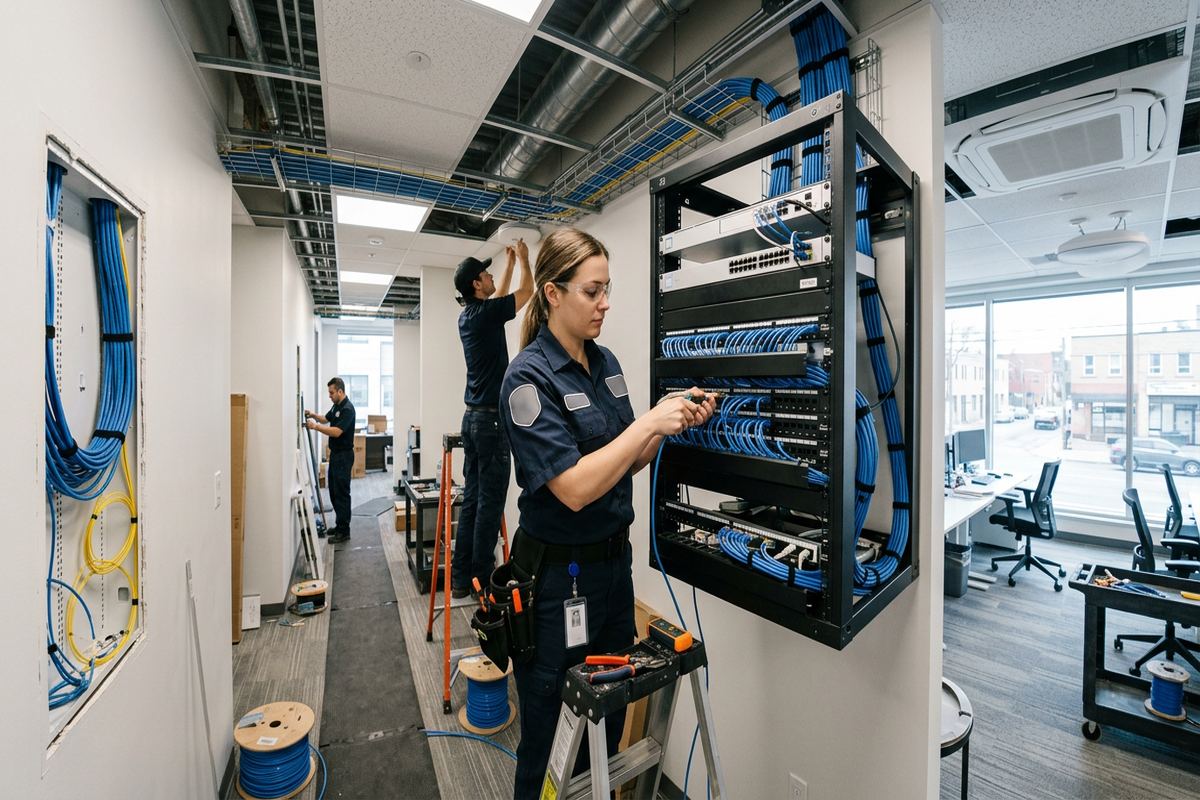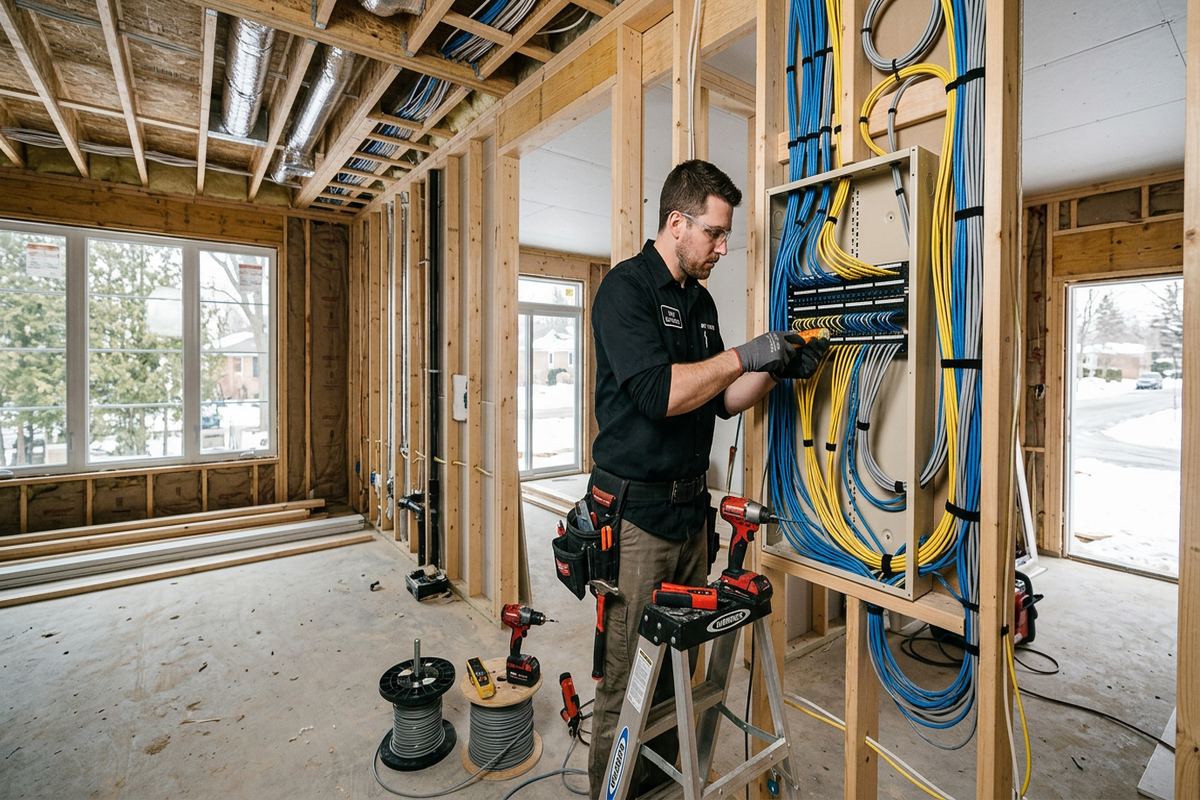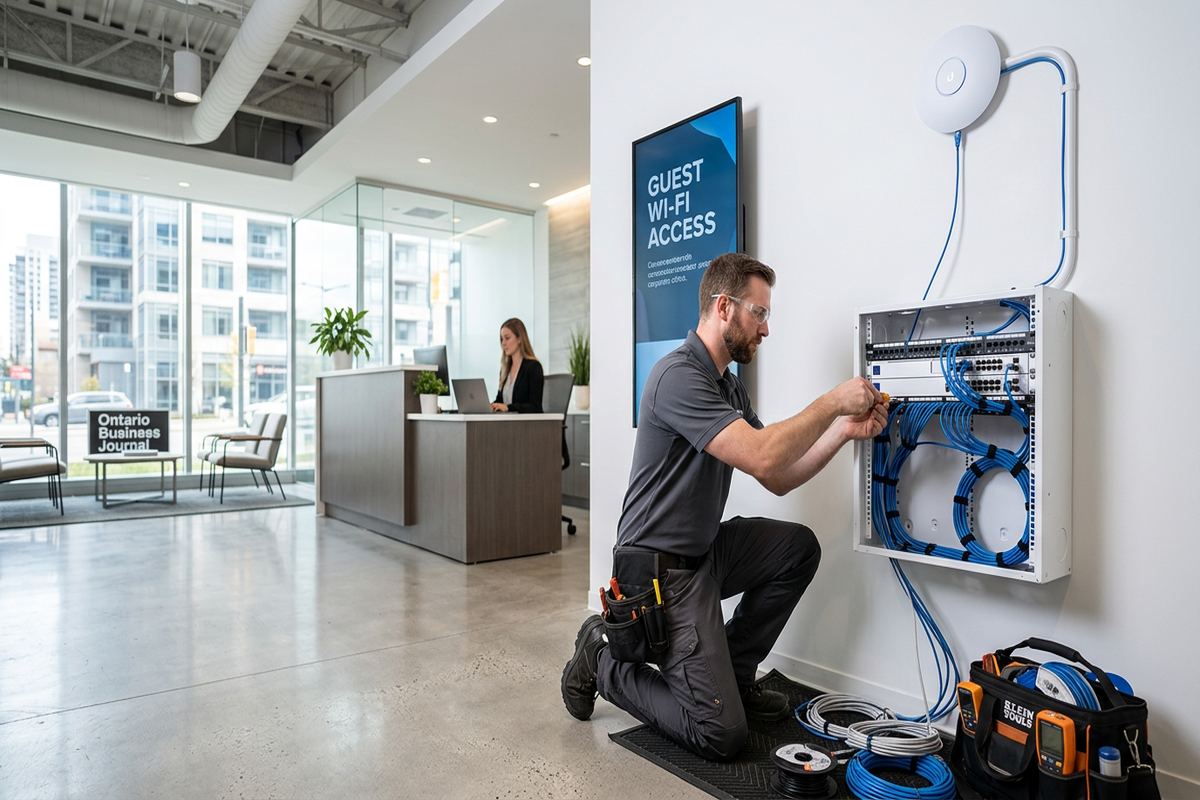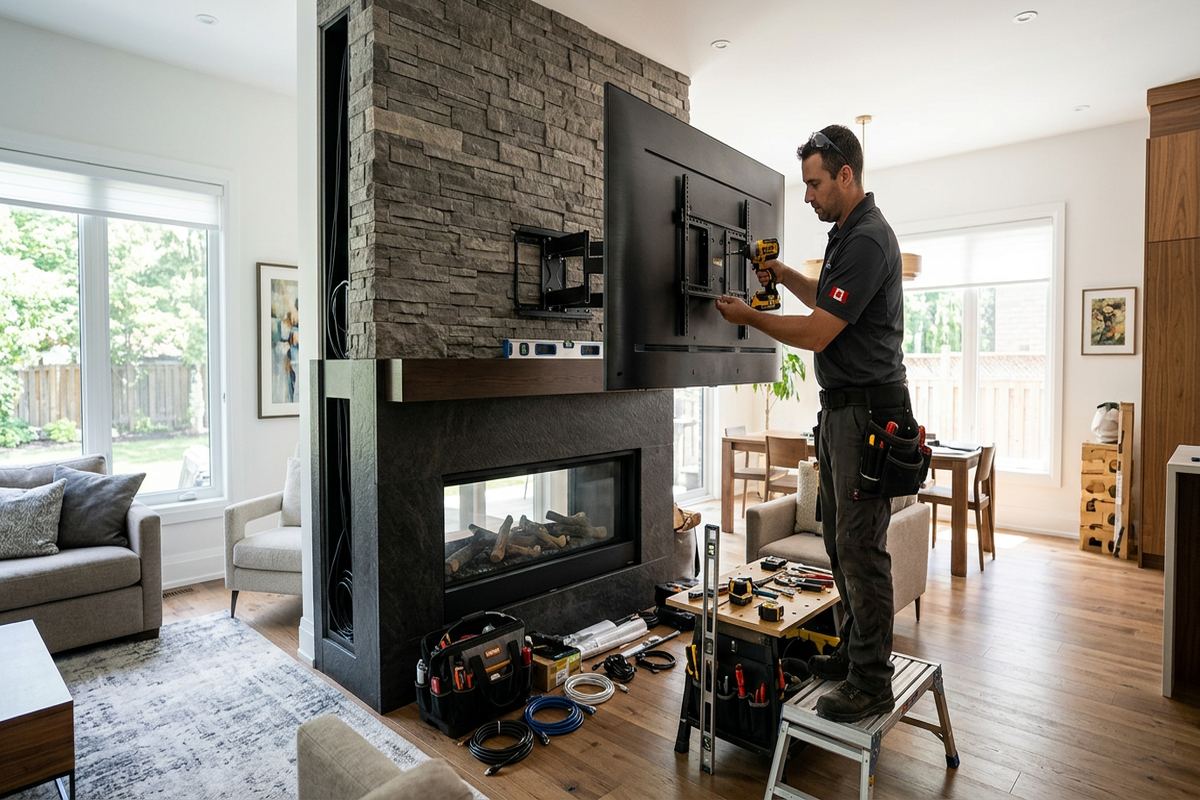
UnifiedLink installs structured cabling for homes, cottages, offices, retail spaces and industrial units across Georgina. We plan cable routes, install continuous labelled runs, terminate and test each connection, configure network equipment on site, and document the completed system. Every project begins with a site assessment before pricing and a written scope tailored to the property.
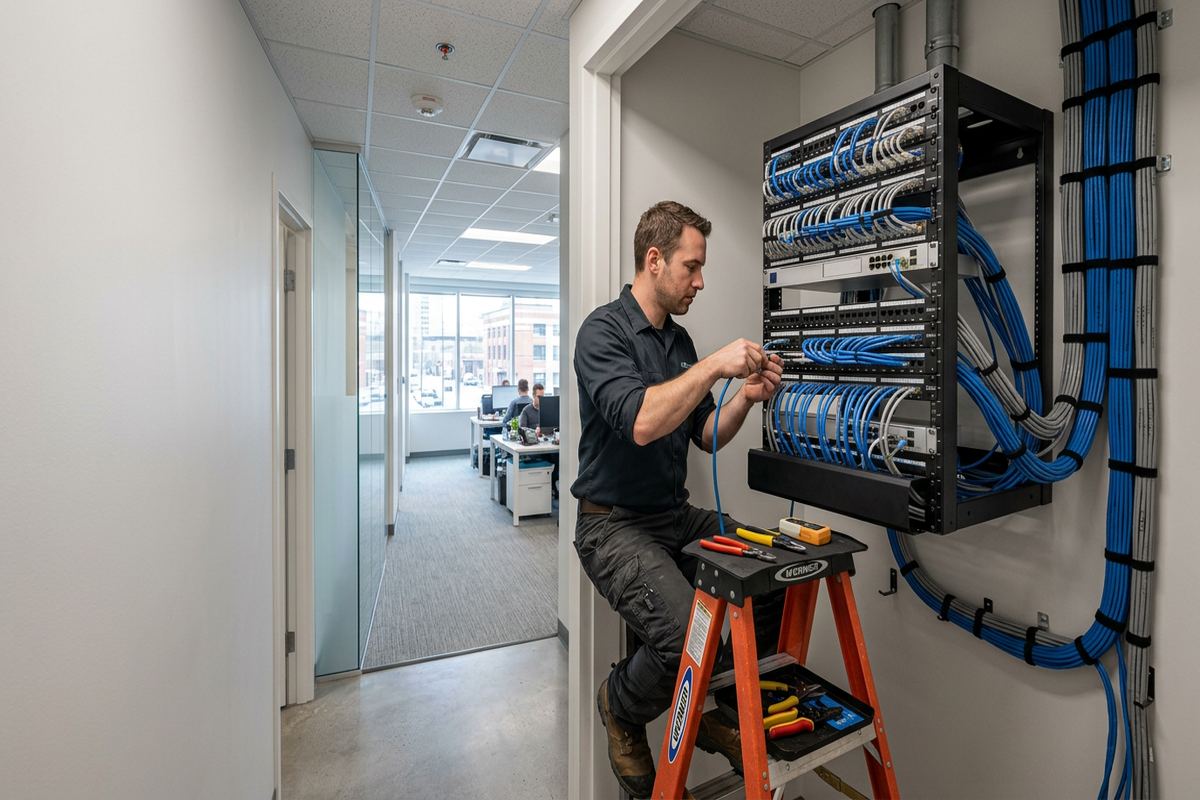
Structured Cabling Designed for Georgina Properties
Structured cabling provides the physical foundation for internet, Wi-Fi, security cameras, access control, phones, displays and other connected systems. In Georgina, that foundation may need to serve a year-round home, a Lake Simcoe cottage, a commercial unit or a mixed-use property. UnifiedLink plans each installation around the devices being connected, their bandwidth and power requirements, and the practical limits of the building. Cable category, outlet locations, rack capacity and pathways are considered together rather than treating every data drop as an isolated connection.
Local buildings do not all present the same installation conditions. A newer frame house in Keswick may offer accessible basement ceilings and open service spaces, while an older cottage near Jackson's Point may have additions, limited cavities or previous wiring installed without a clear plan. Masonry walls, finished ceilings, shallow framing and converted rooms can all affect routing. During the assessment, we examine practical pathways and discuss visible versus concealed cabling so the written scope reflects the property rather than relying on assumptions made from drawings or photographs.
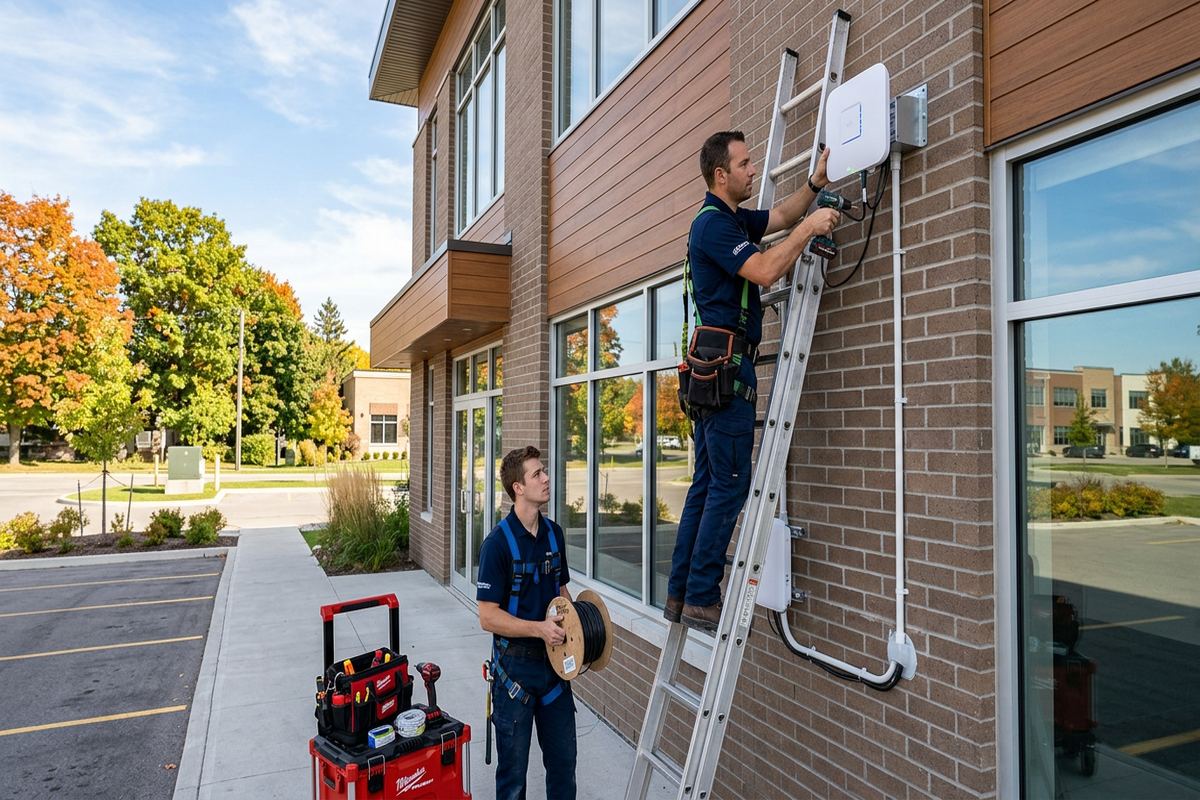
Georgina winters also matter when cabling reaches detached garages, exterior cameras, gate equipment or lakeside structures. Freeze-thaw movement, moisture, wind exposure and temperature changes can damage unsuitable cable, connectors or penetrations. Exterior routes require cable and hardware selected for the environment, supported correctly and sealed where they enter the building. The design must also keep network equipment in an appropriate interior location. A convenient corner is not necessarily suitable if it is damp, unheated, difficult to service or vulnerable to accidental damage.
- Home, cottage and business network cabling
- Copper and fibre pathway planning
- Interior and exterior cable routes
- Central rack and enclosure layouts
- Connections for network-powered devices
Planning a Georgina Structured Cabling Installation
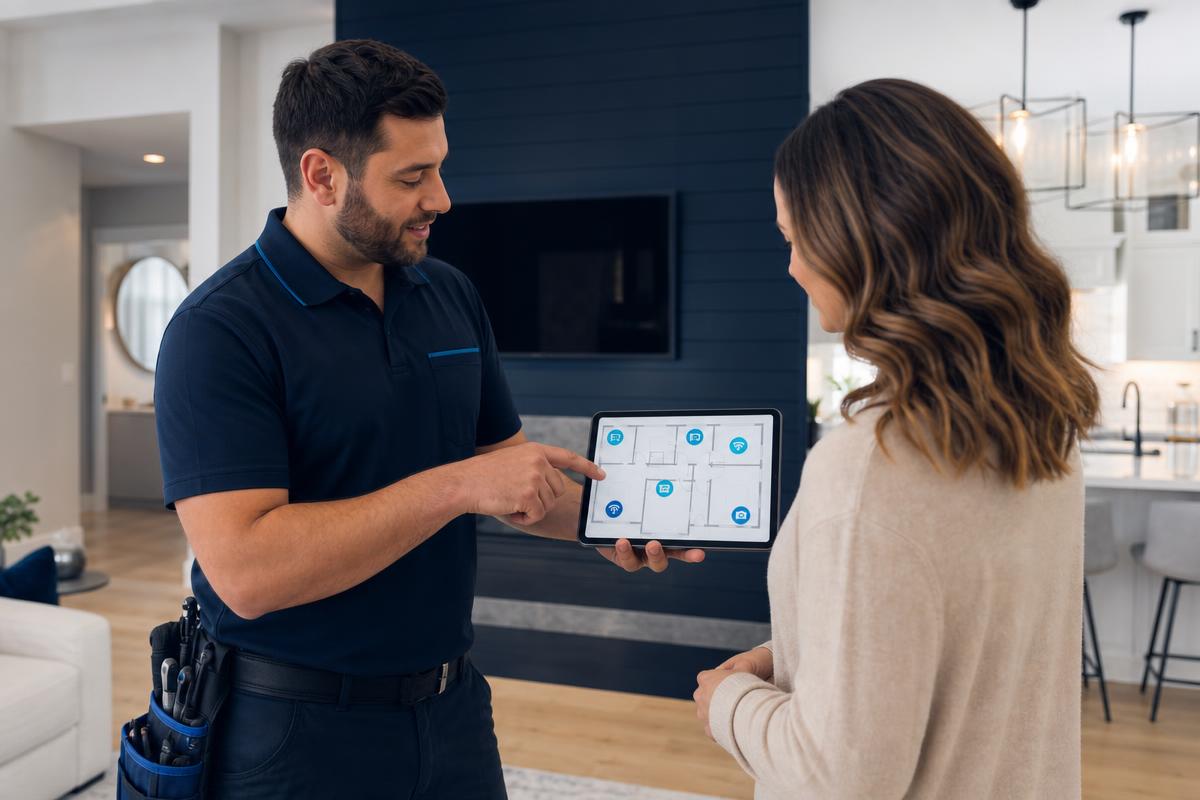
Before pricing, UnifiedLink completes a site assessment appropriate to the service and travel distance. The assessment identifies the internet entry point, proposed network location, required outlets, connected equipment and available pathways. It also helps reveal obstacles such as blocked joist spaces, finished basements, masonry sections or shared building areas. For renovations and new construction, we coordinate the cabling stage with framing, insulation, drywall and electrical work. That sequencing reduces unnecessary openings and ensures cables are protected before walls and ceilings are closed.
The resulting written scope sets out the equipment, cable routes, device placement and exclusions. It also identifies equipment ownership and applicable warranty information, giving the property owner a clear record of what is and is not included. If alternate routes may be required after limited cavities are opened, those conditions are documented before work begins. For Georgina cottages or seasonal homes, planning can include remote monitoring devices, wireless access points and network equipment that must remain dependable when the property is vacant during winter.
Network planning should account for present requirements without creating an oversized or undefined project. We discuss how many wired endpoints are needed, whether devices require Power over Ethernet, and where future connections are reasonably likely. Spare pathways or rack capacity may be useful in a growing office, renovated home or industrial unit. They are not automatically added everywhere. The aim is an organized system that supports known equipment, allows sensible changes and avoids bundles of unidentified cable that become difficult to maintain.
- Site assessment before pricing
- Written routes and device locations
- Documented equipment ownership
- Renovation and construction coordination
- Practical allowance for future connections
Cable Routes, Penetrations and Winter Conditions
A sound route protects both signal performance and the building. Data cables must be kept within their permitted pulling tension and bend radius, supported at suitable intervals, and separated appropriately from electrical conductors and sources of interference. UnifiedLink installs continuous labelled runs between the outlet and the central termination point rather than hiding unnecessary joints inside walls. Where cable crosses framing or enters cabinets, openings and supports are planned to reduce abrasion, compression and accidental movement during later maintenance.
Exterior work in Georgina needs particular attention at wall penetrations. Openings should be sized for the route, positioned to reduce water entry and sealed with materials compatible with the surrounding surface. Frame siding, masonry, concrete and finished stucco require different drilling and fastening methods. A route serving an outdoor access point or camera may also need a drip loop, weather-suitable enclosure or protected transition indoors. These details help limit damage caused by rain, snow, ice and repeated freeze-thaw cycles around poorly sealed holes.
Detached buildings create another set of decisions. A garage, workshop or lakeside outbuilding may be too far from the main network room for the preferred copper connection, or it may have a separate electrical service that affects system design. Fibre can be considered where distance, electrical isolation or capacity makes it appropriate. Aerial and buried pathways have different protection and approval requirements. We review the route, available conduit, termination locations and environmental exposure before specifying a link instead of assuming an ordinary indoor cable will be adequate.
- Supported runs with controlled bend radius
- Separation from electrical interference
- Sealed exterior wall penetrations
- Weather-appropriate cable and enclosures
- Fibre options for detached structures
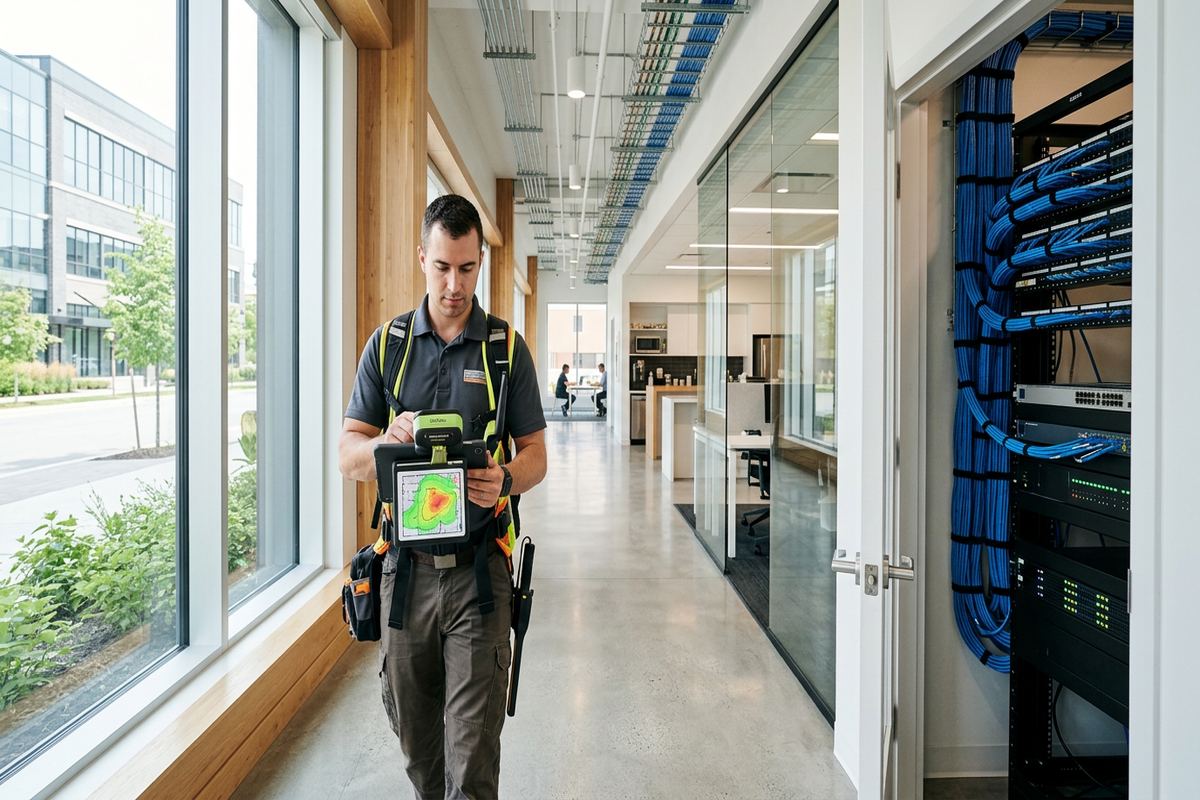
Georgina, Ontario
Structured cabling installation in Georgina, scoped in writing first
Book a site assessment and get equipment, routes, exclusions, and warranty on paper before anything is installed.
Cabling for Georgina Homes and Cottages
Home networks increasingly support more than computers. Wired connections may serve wireless access points, televisions, workstations, door stations, alarm communicators and security cameras. A structured layout brings these runs back to one managed location, making faults easier to trace and changes easier to document. In Georgina homes, access point placement should reflect wall materials, floor layout and outdoor living areas rather than being chosen only for convenience. Cabling creates reliable backhaul so wireless coverage does not depend entirely on repeaters communicating through several finished walls.
Lake Simcoe cottages and year-round homes often need remote monitoring when owners are away. Cabling can provide stable links and network power for cameras, environmental sensors, access devices and properly placed Wi-Fi equipment. The connected devices, internet service and backup-power strategy still determine whether remote access remains available during an outage. We explain those dependencies during planning. Hardware exposed to unheated spaces or outdoor conditions must be selected for those conditions, while switches, recorders and internet equipment generally need a secure, dry and serviceable interior location.
Older properties in Sutton, Virginia and Pefferlaw may combine original construction with later additions, producing changes in framing direction, ceiling height and wall finish. Rather than forcing one routing method throughout, we assess each section and discuss accessible alternatives. A basement or crawlspace route may work in one area, while surface raceway is less disruptive in another. Where concealment would require extensive repair, that limitation is included in the scope. The objective is to protect the building finish while keeping the installed cabling organized and available for service.
- Wired backhaul for Wi-Fi access points
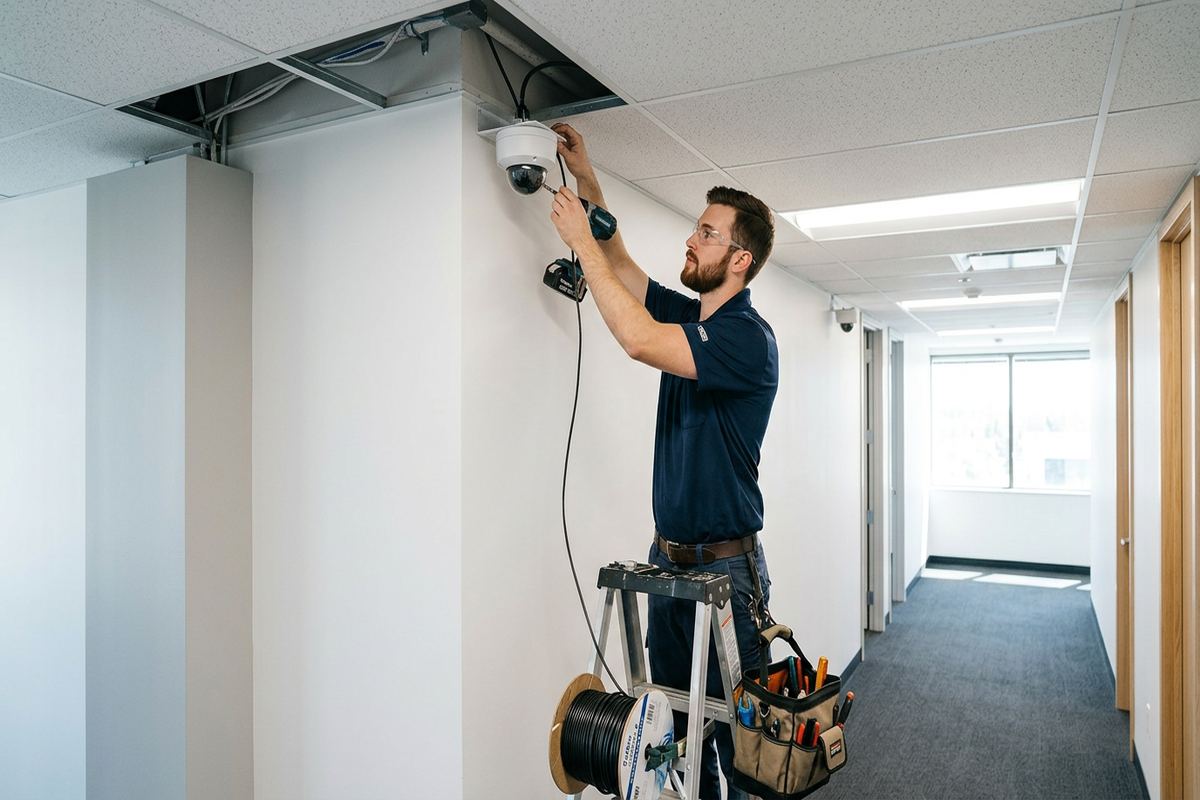
- Connections for cameras and monitoring devices
- Central home network locations
- Routes suited to additions and renovations
- Options for discreet surface raceway
Business Network Cabling Across Georgina
Retail spaces, professional offices and commercial strips need cabling that matches their operations and tenancy conditions. Connections may be required for point-of-sale stations, phones, printers, wireless access points, cameras and staff work areas. The network location must provide enough room for patch panels, switching equipment and cable management without obstructing daily work. We also plan around store fixtures, stock areas and public spaces. If the premises are leased, landlord approval may be needed before drilling, using common pathways or mounting equipment on exterior walls.
Industrial units can include offices, shop floors, loading areas and high ceilings within the same property. Each area presents different risks from dust, vibration, equipment movement and electrical interference. Cable pathways and device mounts must avoid doors, lifting equipment, storage zones and machinery service access. Where long distances or high-capacity links are involved, fibre may be more suitable than copper. The assessment identifies environmental and operational constraints, while the written scope records any work that depends on lifts, existing conduit access or coordination with other contractors.
For businesses in Keswick, Sutton or Jackson's Point, installation scheduling should consider customer access and active work areas. Some tasks can be completed around normal operations, while others require a clear workspace or temporary interruption at the network cabinet. We identify those conditions in advance instead of promising that every installation will be invisible to occupants. At handover, ports and cables are labelled, configuration is completed on site where included, and the customer receives an as-built record that supports later troubleshooting, expansion or tenant changes.
- Office and retail data outlets
- Point-of-sale and phone connections
- Industrial pathway assessment
- Rack and patch-panel organization
- Coordination for occupied premises
Termination, Testing and Network Handover
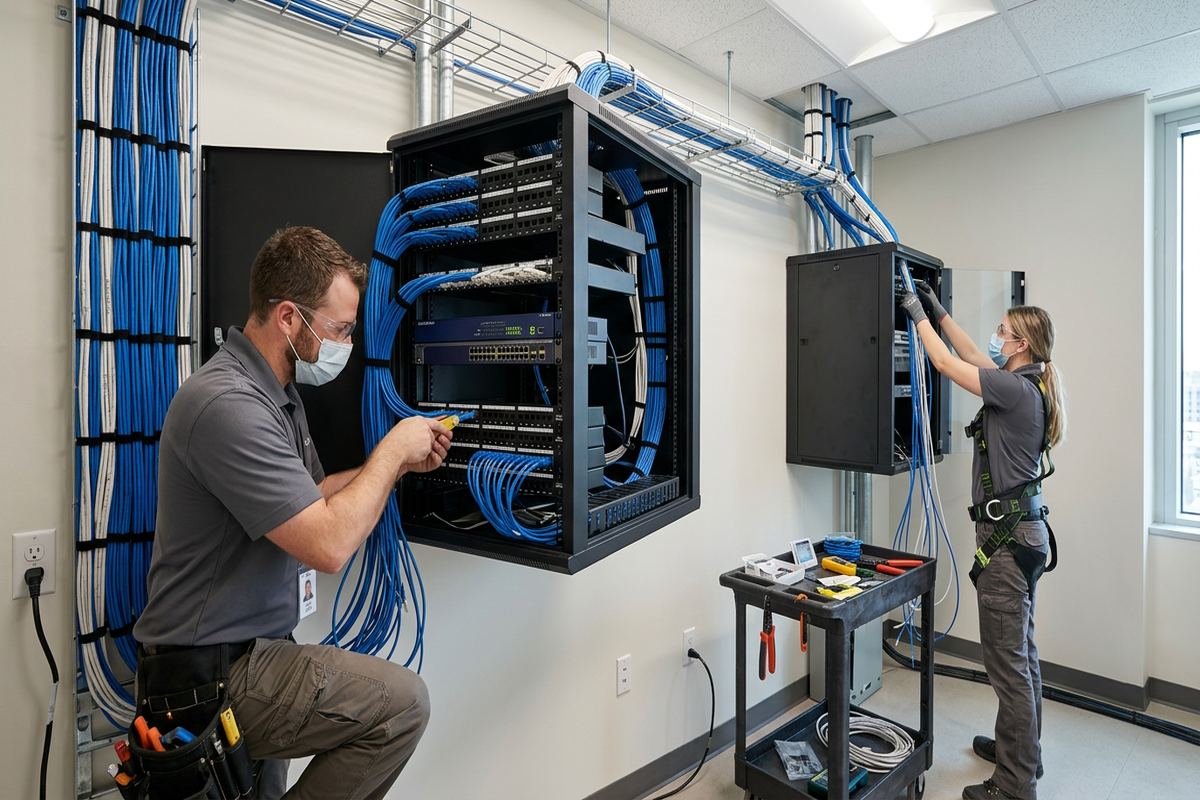
A cable run is useful only when its endpoints are terminated consistently and identified clearly. UnifiedLink labels both ends and organizes terminations at patch panels, enclosures or approved equipment locations. Faceplates and jacks are selected for the planned cable type and installed where they can be used without sharply bending patch cords or exposing them to routine damage. Rack layouts include practical cable management so individual circuits remain traceable. Clear identification is especially important when camera, access control and data systems share the same communications area.
After termination, each installed link is tested using methods appropriate to the cable and project scope. Testing can identify open conductors, incorrect pairing, shorts or other installation faults before devices are connected. Where performance certification or specific fibre testing is required, that requirement must be included in the written scope because test standards and deliverables vary. Results and outlet identifiers are tied to the as-built information, giving the Georgina property owner a more useful record than an unlabelled collection of cables left above a ceiling or inside a cabinet.
On-site configuration may include switches, wireless access points or other network equipment listed in the scope. The customer receives access using their own credentials rather than relying on an installer-controlled account. We record relevant device locations, outlet labels and installed pathways in the as-built handover. Passwords and sensitive information are handled separately from general drawings where appropriate. This approach gives the owner control of the system and provides a practical reference for future support, even if equipment changes after the original installation.
- Labelled outlets and patch-panel ports
- Consistent jack and panel termination
- Link testing before device connection
- On-site configuration when scoped
- Customer credentials and as-built record
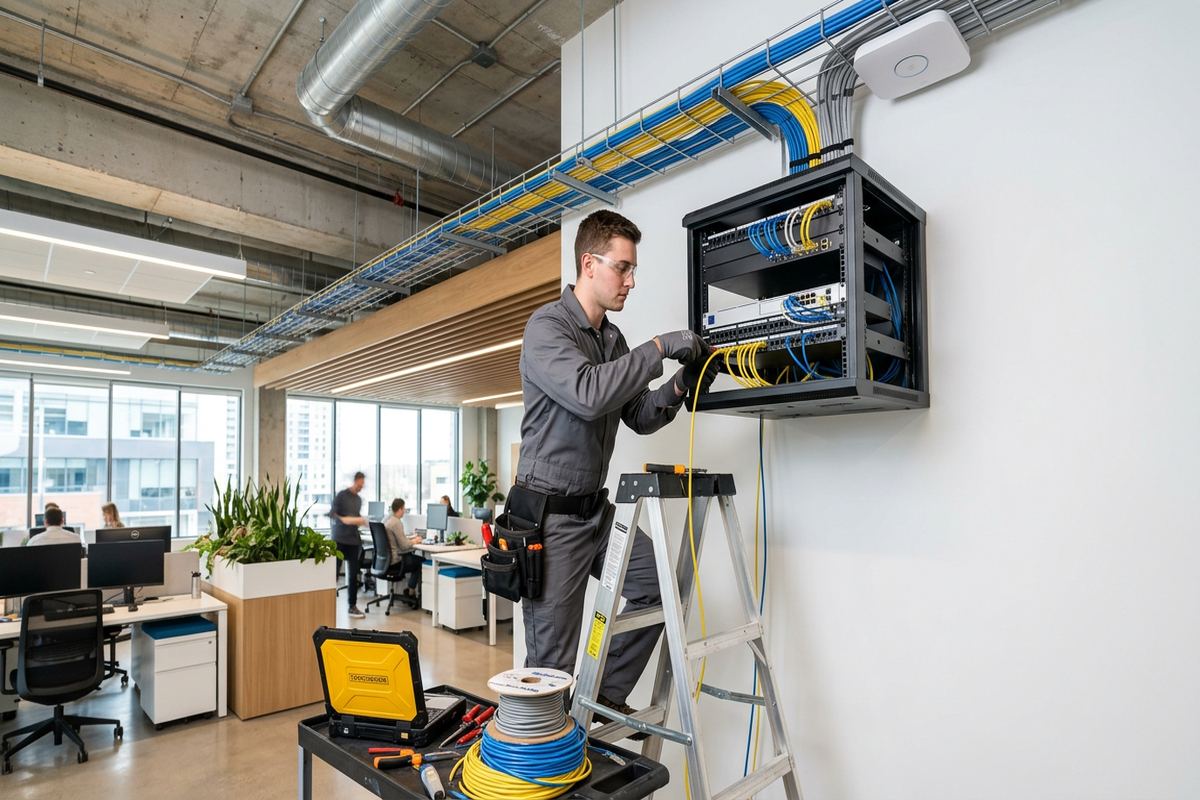
Approvals, Shared Buildings and Project Boundaries
Permission is part of cabling design when work affects property beyond the customer's exclusive area. Condo corporations, landlords or property managers may require drawings, approved mounting locations, contractor documents or defined work hours. Shared ceilings, risers, telecommunications rooms and exterior walls cannot be treated as unrestricted pathways. Before installation, the customer should confirm the applicable approval process. UnifiedLink can describe proposed routes and equipment locations for review, but the building owner or governing body controls authorization for work on common or leased property.
In multi-unit or mixed-use buildings, existing pathways may already contain other services or may not be accessible without coordination. Fire separations, locked rooms and shared utility areas can change what is practical. Penetrations through rated assemblies require suitable treatment and cannot simply be filled with ordinary sealant. The site assessment notes visible conditions, while concealed conditions may only become apparent when approved access is available. Any dependency on another contractor, property representative or building schedule is identified in the scope so responsibilities remain clear.
Project exclusions matter as much as included tasks. Wall repair, painting, trenching, electrical receptacles, internet-provider work or removal of unidentified abandoned cable may fall outside a structured cabling installation unless expressly listed. The written scope records those boundaries, along with equipment ownership and warranty information. Using one accountable low-voltage contractor for the included work keeps routing, labelling, configuration and documentation connected. It does not remove the need for landlord consent, utility coordination or specialized trades when the property conditions require them.
- Condo and landlord approval planning
- Defined access to shared pathways
- Treatment of rated penetrations
- Clear inclusions and exclusions
- Coordination with required trades
Maintaining and Expanding Cabling in Georgina
Structured cabling should remain understandable after furniture moves, staff changes or network equipment is replaced. Labels, patch-panel organization and as-built records make it easier to identify active circuits without repeatedly tracing cables through finished spaces. In a Georgina home, this may simplify changing an office into a bedroom or adding a wired access point. In a business, it can support workstation moves and equipment replacement. Documentation should be updated when later changes are made, otherwise even a well-organized original installation can gradually become difficult to service.
Troubleshooting begins by separating cabling faults from internet, configuration, power and device problems. A slow connection may result from a damaged patch cord, incorrectly negotiated port, wireless interference, provider issue or endpoint limitation rather than the permanent cable. Labels and test records narrow the investigation. For seasonal cottages, winter outages may also involve lost utility power, disconnected internet service or hardware operating outside its environmental range. Cabling is one part of the system, so fault finding should consider the complete connection path before replacing installed runs.
When expansion is required, the existing cabinet, pathways and records are reviewed before new cable is added. Available patch-panel positions, switch capacity, network power budget and conduit space can all limit a change. Adding cameras, Wi-Fi access points or tenant workstations may also affect bandwidth and equipment configuration. UnifiedLink assesses the requested work, provides a written scope and remains one accountable contractor for the included installation. Requests sent during business hours are answered the same day; after-hours requests are answered the next business day. Assessment timing depends on service and travel distance.
- Records for future service work
- Fault isolation across the full network
- Capacity checks before expansion
- Updates for homes and businesses
- Clear request and assessment process
Georgina neighbourhoods we cover
- Keswick
- Sutton
- Jackson's Point
- Pefferlaw
- Udora
- Virginia
Structured cabling installation in Georgina — common questions
What type of network cable should I install?
The appropriate cable depends on link speed, distance, device requirements, pathway and environmental exposure. Many Georgina interior data runs use balanced copper cabling, while fibre may suit long links, detached buildings or higher-capacity backbones. Exterior or underground routes require products intended for those conditions. UnifiedLink reviews these factors during the site assessment rather than recommending one cable type for every property.
Can you run cable in a finished Georgina home?
Yes, although the available routes determine how concealed the installation can be. Basements, attics, crawlspaces and existing conduits may provide access, but additions and blocked framing can limit movement between rooms. In some Georgina homes, discreet surface raceway causes less disruption than opening several finished walls. Proposed routes, visible sections and exclusions such as wall repair or painting are documented before work begins.
Do exterior network cables need special protection?
Yes. Georgina weather exposes exterior routes to moisture, sunlight, snow, ice and freeze-thaw movement. Cable, connectors, supports and enclosures must be suitable for the location. Wall penetrations also require appropriate positioning and sealing for frame, masonry or other finishes. Indoor cable should not simply be extended outdoors. The route is assessed along with grounding, distance and transition points before materials are specified.
Can cabling connect my house to a detached garage?
Often, but the design depends on distance, pathway, electrical arrangement and required capacity. Fibre may be considered because it supports longer links and provides electrical isolation between buildings. Copper has defined distance and environmental limitations. For a Georgina garage or workshop, we inspect available conduit, burial or aerial options, entry points and equipment locations before defining the route and termination method.
Do I need landlord or condo approval?
Approval may be required when cabling crosses common space, enters a shared telecommunications room, penetrates a rated assembly or uses an exterior wall. Georgina tenants and condo owners should confirm their building's process before installation. UnifiedLink can provide route and device-location details for review, but authorization comes from the landlord, property manager or condo corporation. Approval-related dependencies are recorded in the scope.
What do I receive when the installation is complete?
At handover, UnifiedLink provides labelled cable runs, the testing deliverables defined in the scope, on-site configuration where included, and an as-built record showing relevant outlets, routes and equipment locations. Network access is transferred using the Georgina customer's own credentials rather than an installer-controlled account. The handover also reflects equipment ownership and warranty information established in the written scope.
Coverage in Georgina is confirmed against the address before we quote. See everything we install in Georgina or the province-wide structured cabling installation page.