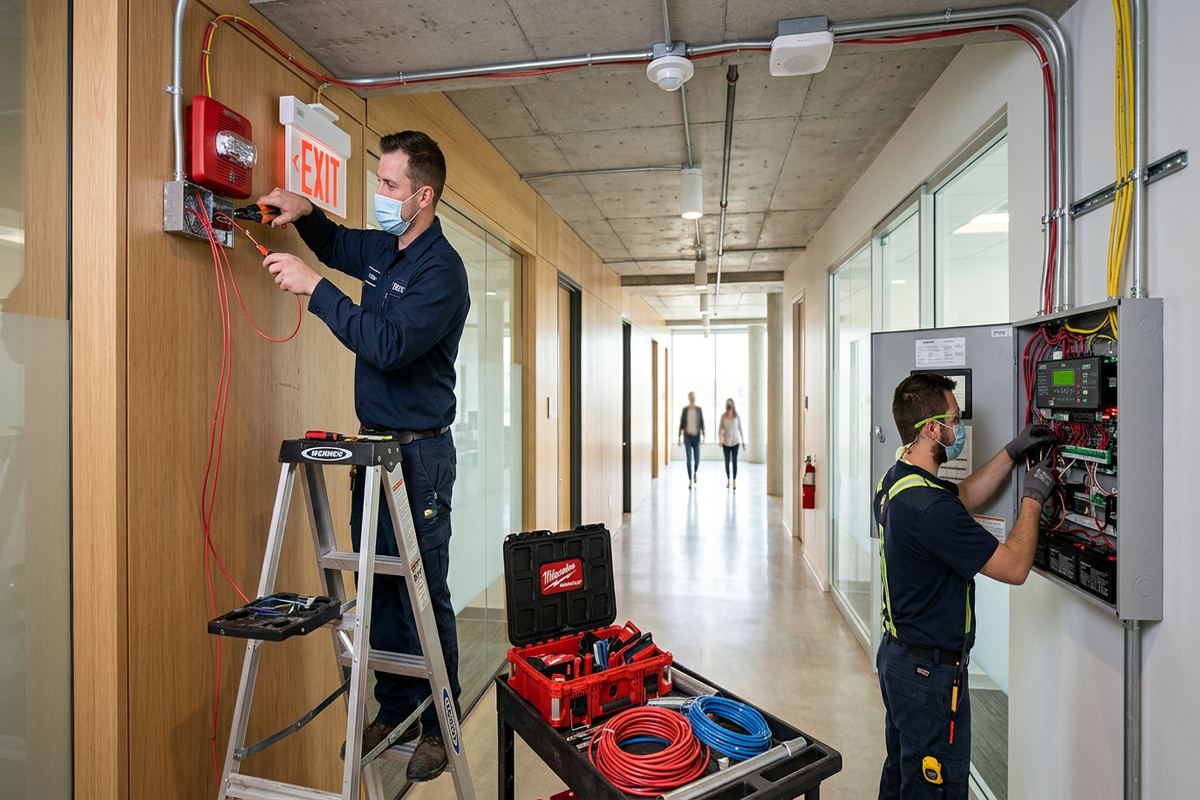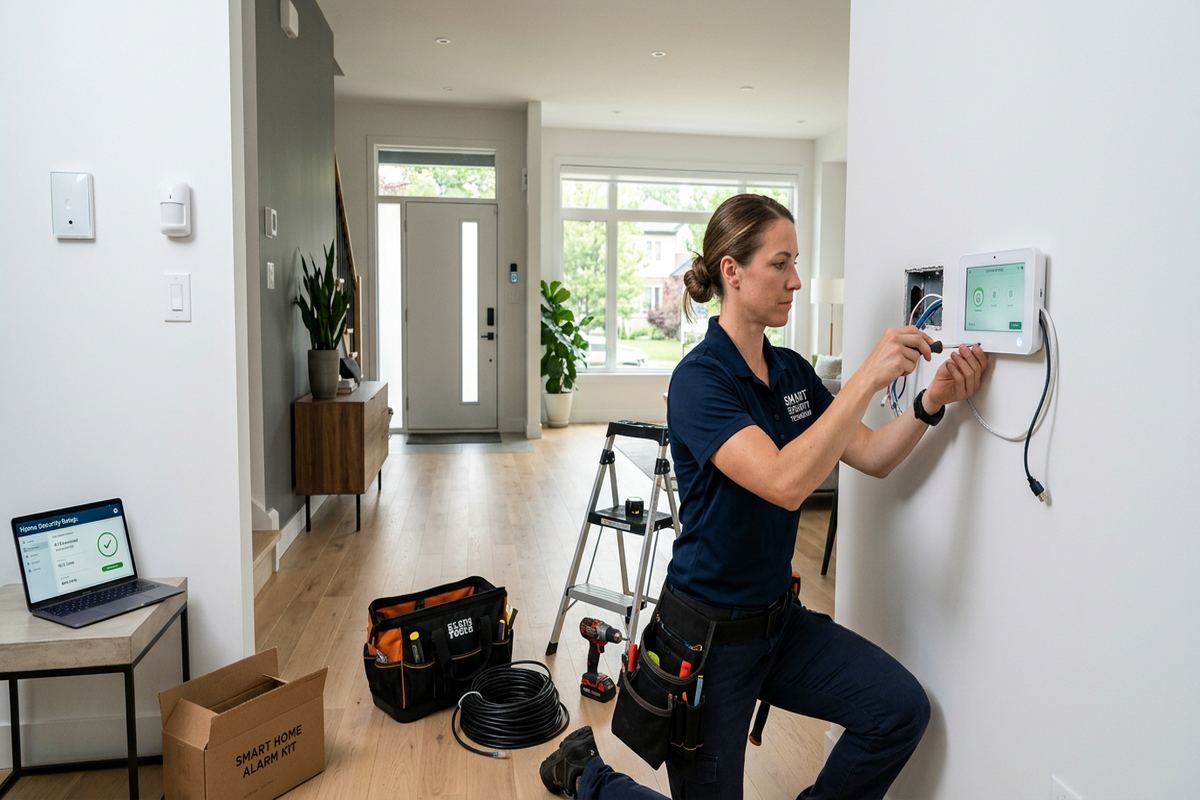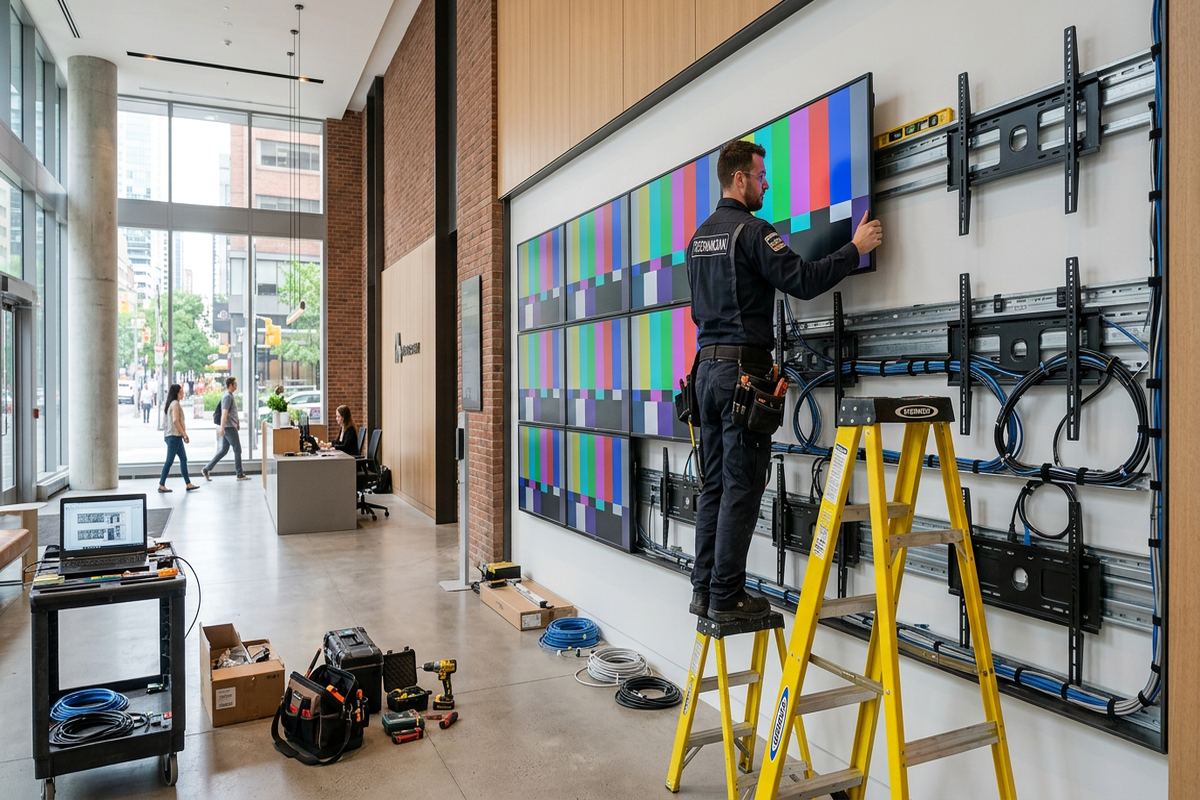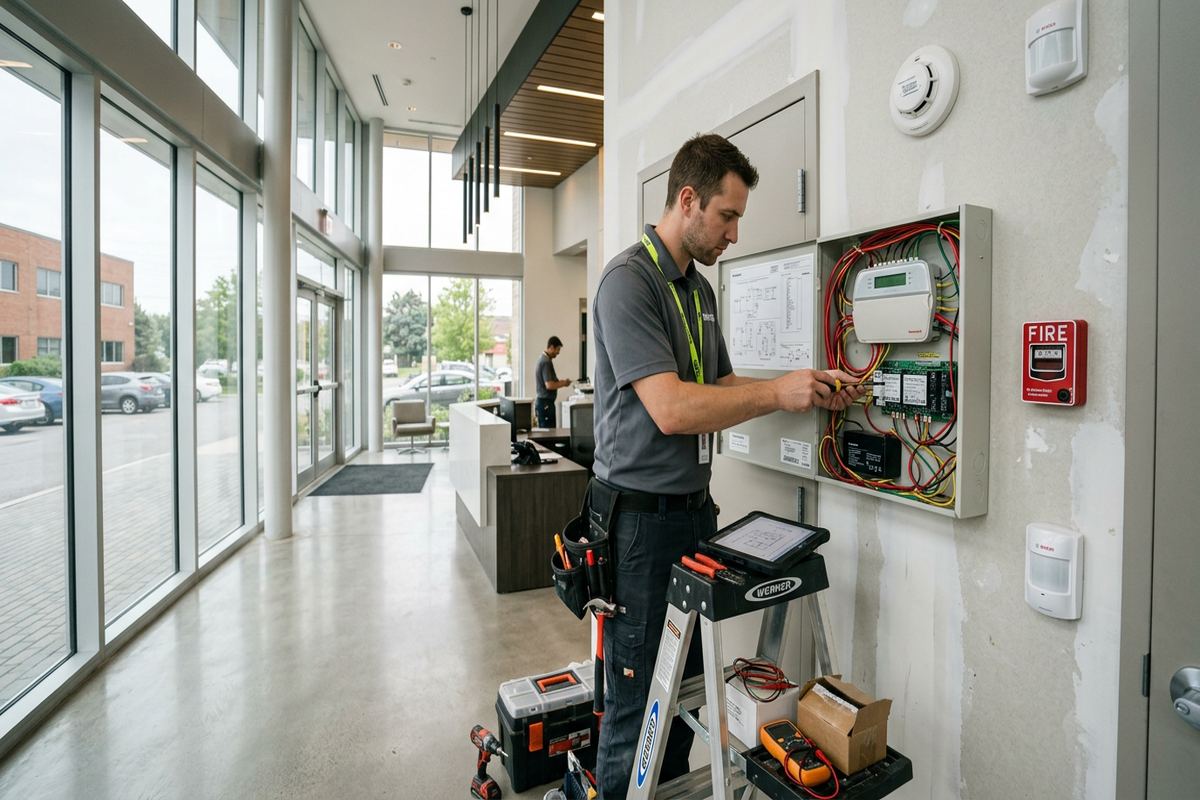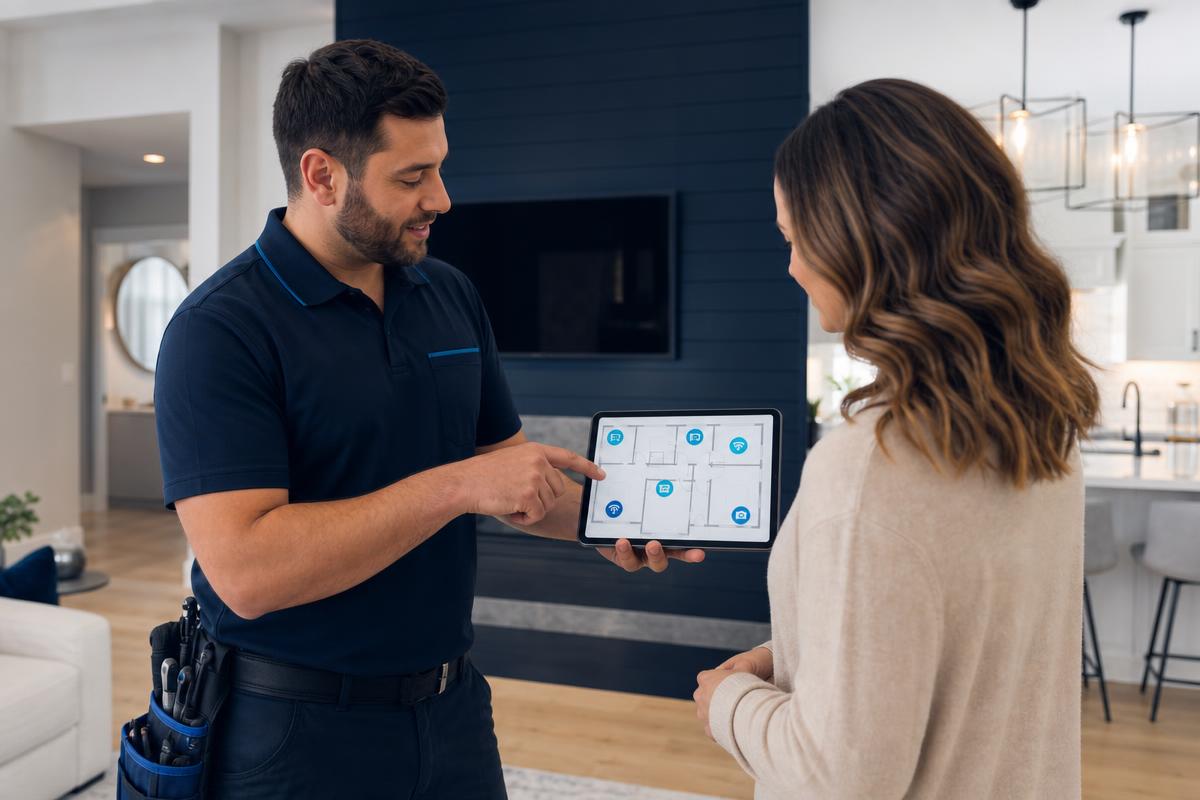
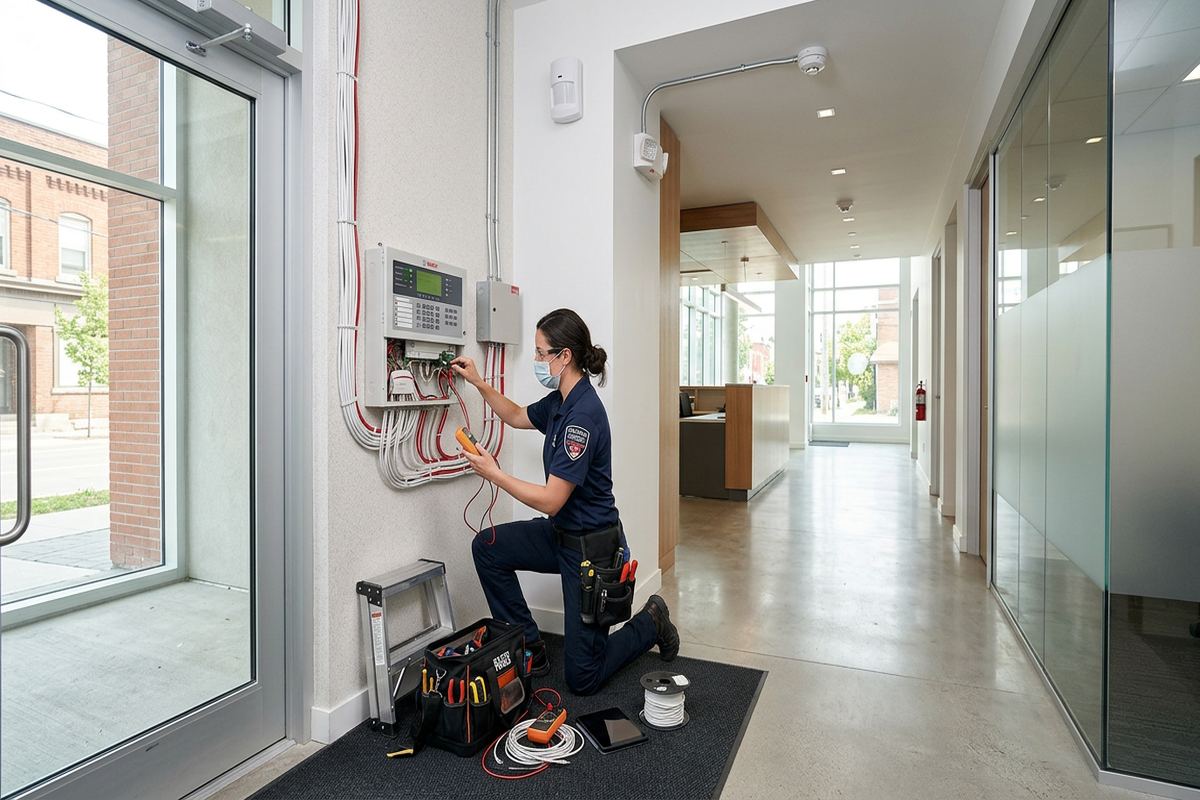
UnifiedLink installs home alarm systems in Georgina, including Keswick, Sutton, Jackson's Point, Pefferlaw, Udora and Virginia. We plan wired and wireless protection for cottages and year-round homes, considering remote monitoring, winter conditions, entry points and reliable communications. Each project starts with an assessment and finishes with on-site configuration, customer-owned credentials and documented system details.
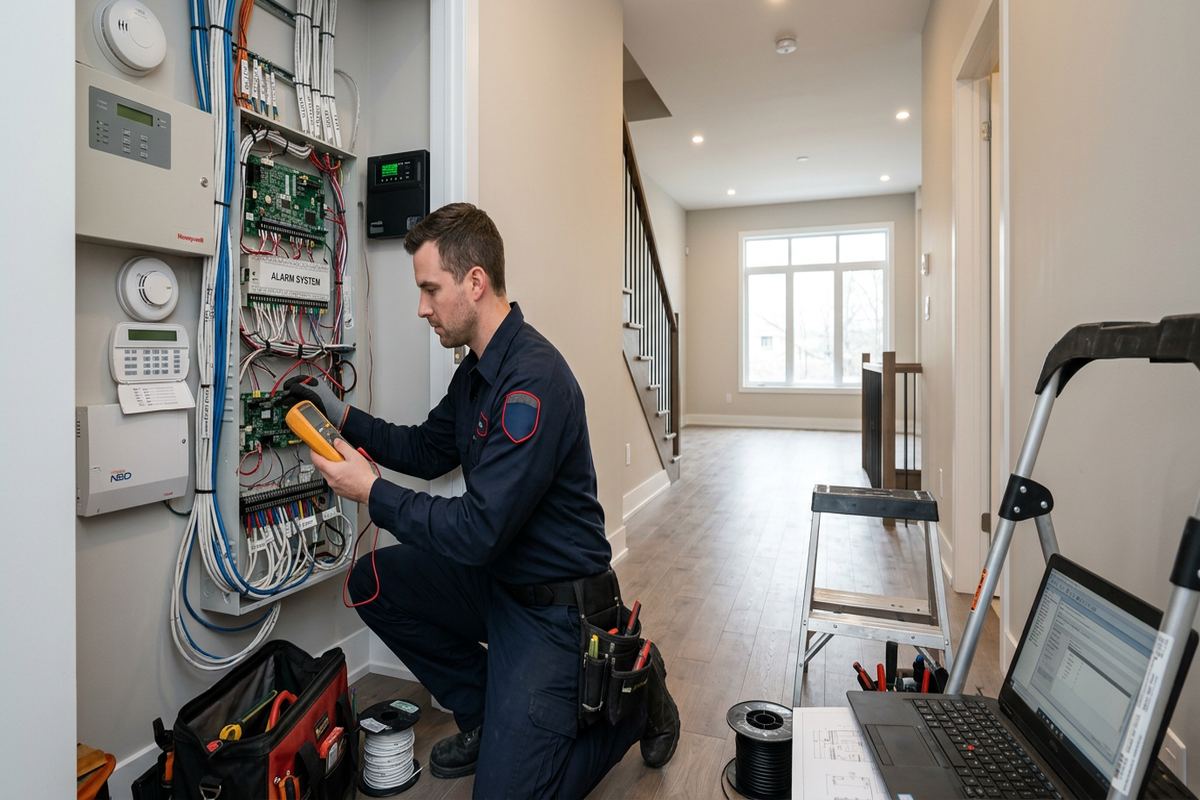
Home Alarm Planning for Georgina Properties
A useful alarm system begins with the property rather than a standard equipment package. During a Georgina site assessment, we review doors, accessible windows, attached garages, lower levels, utility entrances and routes between occupied and less-visible areas. We also discuss how the building is used: full-time, seasonally, by family members or with occasional contractors. That information determines where contacts, motion detectors, keypads, sirens and communications equipment belong. Pricing follows the assessment, so the proposed system reflects actual construction, access and operating needs instead of assumptions made before anyone has examined the site.
Lake Simcoe cottages can sit unoccupied for extended periods, while year-round homes need protection that remains practical during everyday routines. Remote monitoring and app access may help owners check system status, receive event notifications and manage access without being on site. Those functions still depend on suitable communications, stable power and correctly configured equipment. We assess available internet and cellular options, identify likely points of failure and explain what happens during an outage. The written scope states included devices, cable routes, placement, exclusions, equipment ownership and warranty information before installation work begins.
Georgina includes older buildings, renovated cottages, newer frame homes and properties with additions completed at different times. Construction type affects drilling, cable access, sensor attachment and the choice between wired, wireless or hybrid equipment. A finished basement may restrict routes that would be simple in an unfinished utility area. Masonry surfaces require different anchors and techniques than wood framing or drywall. We identify these conditions early, avoid unnecessary surface damage and plan serviceable equipment locations. Where concealed cabling is not practical, we discuss neat, protected alternatives rather than promising routes that cannot be completed responsibly.
- Entry-point and interior detection review
- Wired, wireless or hybrid system planning
- Internet, cellular and power assessment
- Written scope before installation
- Equipment ownership and warranty details
Alarm Equipment Selected for Georgina Winters
Cold weather, wind-driven moisture and repeated freeze-thaw cycles matter when alarm equipment is mounted near exterior doors, garages or outbuildings. Hardware should be chosen for its intended environment, not simply placed outdoors because it fits physically. We consider rated operating conditions, exposure, mounting surfaces and the possibility of condensation around penetrations. Exterior cable entries are routed and sealed to limit water movement into the wall assembly. Devices remain accessible for inspection and battery replacement. This approach is especially important for Georgina cottages that may cool down between visits or have spaces with uneven winter heating.
Door and window contacts must match the opening, frame material and movement of the building. A contact that aligns in warm weather may become unreliable if a seasonal door shifts, a frame swells or an older cottage settles. We position sensors with suitable clearance and test each opening through normal operation. Garages, porches and mudrooms may need separate consideration because their temperatures and humidity can differ from the main living area. In Jackson's Point or Virginia properties near exposed lakeside conditions, sheltered placement and careful sealing can be as important as the sensor model itself.
Interior motion detection also requires more than choosing an open wall. Heating equipment, direct sunlight, moving curtains, pets and changes in temperature can affect detection behaviour. We review room layout and normal travel paths before choosing detector locations and settings. Areas that become substantially colder while a property is vacant may require a different strategy from consistently heated rooms. For detached structures, we examine distance, power, communications and environmental exposure before including them. The final design aims to provide useful detection without creating avoidable alarms that encourage occupants to stop using the system.
- Environment-appropriate device selection
- Sealed exterior cable penetrations
- Cold-space and garage assessment
- Door movement and alignment checks
- Motion detector placement testing
Wired, Wireless and Hybrid Options
Wired alarm devices can provide stable connections where cable routes are available, particularly during renovations or before walls are closed. UnifiedLink installs continuous labelled cable runs rather than hidden joins that complicate later testing. In completed homes, however, reaching every opening may require disruptive access or visible pathways. A site assessment establishes which routes are realistic through basements, attics, utility rooms and closets. Georgina homes with several additions may have blocked wall cavities or roof transitions, so a fully wired design is not always the least intrusive or most serviceable choice.
Wireless sensors reduce cable work and can suit finished spaces, older cottages or openings separated from practical wiring routes. They still require deliberate placement, compatible construction and a plan for battery maintenance. Dense materials, metal surfaces, distance and building layout can affect communication between devices and the control equipment. We test operation on site rather than assuming catalogue range will apply inside a particular building. Wireless does not mean maintenance-free, and owners should know how battery conditions appear, how replacement is handled and which notifications indicate a communications issue instead of an intrusion event.
A hybrid alarm system combines wired and wireless devices where each method makes sense. Existing usable alarm cable may support contacts or keypads, while wireless equipment can cover an addition, detached area or finished room that is difficult to reach. Before reusing any cable, we inspect accessible terminations, identify conductors and test the run. Existing sensors are not automatically compatible with new controls. The written scope distinguishes reused components from new equipment and records exclusions. This prevents uncertainty about which parts were tested, who owns supplied equipment and what warranty applies after the Georgina installation is complete.
- Continuous labelled alarm cabling
- Wireless signal checks on site
- Existing cable inspection and testing
- Hybrid designs for difficult routes
- Clear record of reused equipment
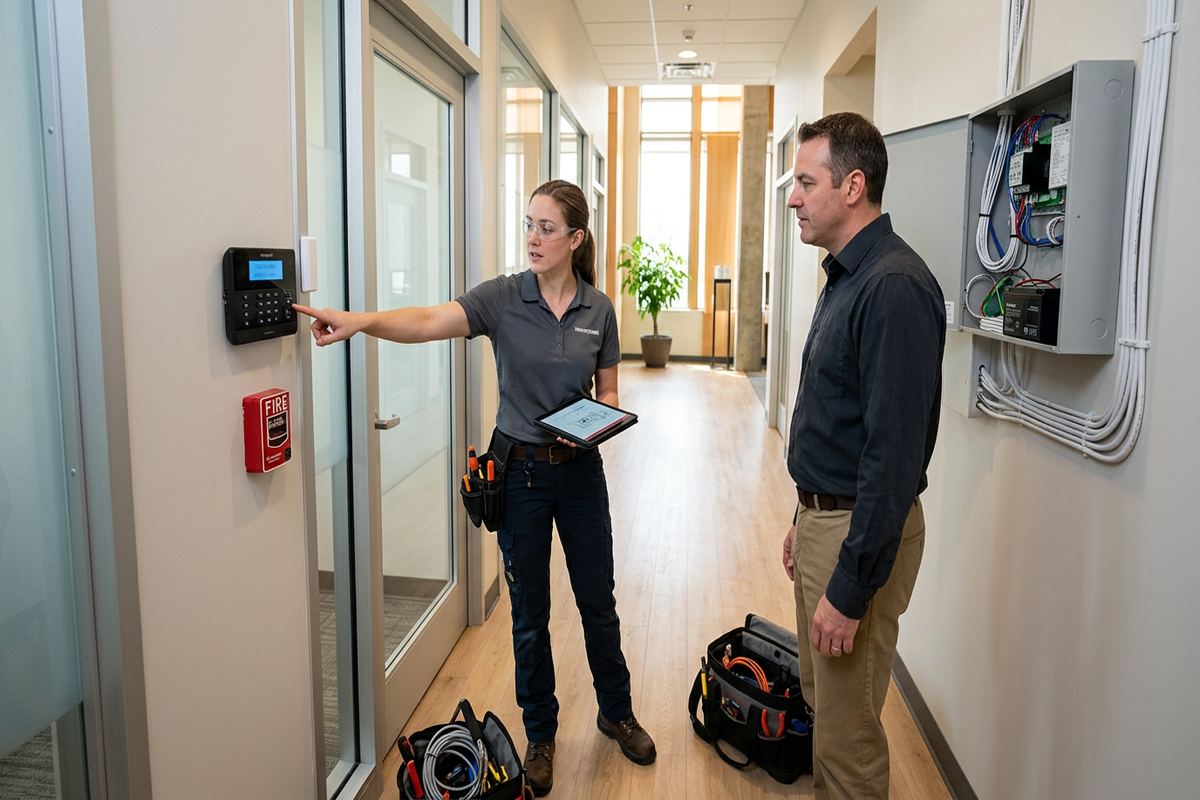
Georgina, Ontario
Home alarm system installation in Georgina, scoped in writing first
Book a site assessment and get equipment, routes, exclusions, and warranty on paper before anything is installed.
Remote Monitoring for Georgina Cottages
Remote access is often a priority for a Lake Simcoe cottage or any Georgina home left vacant during travel. Depending on the selected system and service arrangement, an owner may be able to arm or disarm areas, review system status and receive notifications from a phone. We configure available functions on site and demonstrate their use. Remote features are not a substitute for sound detection design or dependable communications. The scope identifies required network connections, compatible services and any items the customer must maintain, helping avoid confusion about what remains operational when internet, cellular service or power is interrupted.
Alarm communication can use internet, cellular service or an appropriate combination, depending on equipment and site conditions. Each path has limitations. Internet reporting depends on powered network equipment and an active connection, while cellular performance depends on signal availability and supported hardware. Backup power can keep selected alarm components operating for a period, but it does not make every connected device or household network independent of an outage. We explain the system's communication path, test reporting functions available within the project and show the customer where communication faults or low-power conditions appear.
Monitoring arrangements should be understood before activation. Some systems provide customer notifications, while others may connect to a monitoring service under separate terms. We do not present these as interchangeable. Owners should know who receives an event, what verification steps apply and whether police, fire or another contact can be requested under the chosen arrangement. False-alarm prevention remains important, particularly when a cottage is distant from the owner. Clear user codes, correct arming routines, maintained contacts and an updated call list help make notifications more actionable when an event occurs in Pefferlaw, Udora or elsewhere in Georgina.
- Remote arming and status configuration
- Internet and cellular path review
- Communication fault testing
- Backup-power limitations explained
- Monitoring workflow documented
Device Placement and Building Construction
Frame construction usually provides more routing options than solid masonry, but insulation, vapour barriers, fire blocking and finished surfaces still limit access. We do not cut or drill based on assumptions about concealed space. Cable routes are discussed during assessment and confirmed as work progresses. When a route passes toward an exterior wall, penetrations must be located and sealed carefully to reduce moisture entry. In older Georgina cottages, previous renovations may have created unexpected cavities or inaccessible transitions. If conditions differ from what was visible during assessment, we explain the alternative before changing the agreed route or device location.
Masonry walls, concrete foundations and brick finishes require suitable drilling methods, anchors and cable protection. Surface mounting may be the practical choice where concealed access would cause unnecessary damage. Equipment also needs enough clearance for servicing and should not be located where stored items, doors or seasonal furniture will interfere. In mixed-construction properties, one floor may permit concealed wiring while another requires protected surface pathways. The written scope records these distinctions, including any finishing or repair work that is excluded, so the homeowner understands the installation boundary before devices and cables are placed.
Condos, rented homes and landlord-controlled properties may require written approval before drilling, routing common-area cable or attaching equipment to exterior elements. Building rules can also limit where communications equipment, sirens or visible pathways are installed. The customer is responsible for securing required owner, landlord or condominium approval, while we can provide a proposed device and route description for review. Similar coordination may apply to commercial strips or industrial units where a Georgina business owner shares walls, entrances or service spaces. Approval should be settled before installation to prevent relocation, delay or removal of completed work.
- Frame and masonry mounting plans
- Protected surface pathways where needed
- Exterior penetrations properly sealed
- Service clearances maintained
- Approval requirements identified early
Georgina Installation, Configuration and Handover
Installation follows the written scope developed after the site assessment. We confirm control equipment, keypads, contacts, motion detectors, sirens and agreed communications hardware before work begins. Cable runs are installed continuously and labelled at their terminations, with routes chosen for protection and future service access. Devices are mounted to suit the surface and tested after placement. If a concealed obstruction or unexpected building condition prevents the planned route, the change is discussed instead of being improvised without approval. One accountable contractor coordinates the alarm work, configuration and handover throughout the project.
On-site configuration turns installed hardware into a system that matches the household's routines. We set agreed zones, names, entry and exit behaviour, user permissions and available notification features. A main entrance used every day may need different operation from a basement door, garage entry or seasonal patio opening. We test arming states and device responses, then correct labelling or placement issues found during commissioning. Where pets, cleaners, guests or contractors affect use, we discuss appropriate user access without encouraging shared credentials. Final settings remain subject to the selected equipment's supported features.
At handover, the customer receives access using their own credentials rather than an installer-controlled personal account. We demonstrate routine arming and disarming, notification review, user management and basic fault indicators supported by the system. The as-built record identifies installed devices, zone names and relevant cable or equipment details, giving the owner a practical reference for future service. We also review responsibilities such as battery maintenance, contact-list updates, internet availability and any separate monitoring arrangement. Handover is part of the Georgina installation, not an unexplained login sent after technicians leave the property.
- Installation to an approved written scope
- Continuous runs labelled at terminations
- Zones configured and function-tested
- Customer-owned account credentials
- As-built system record provided
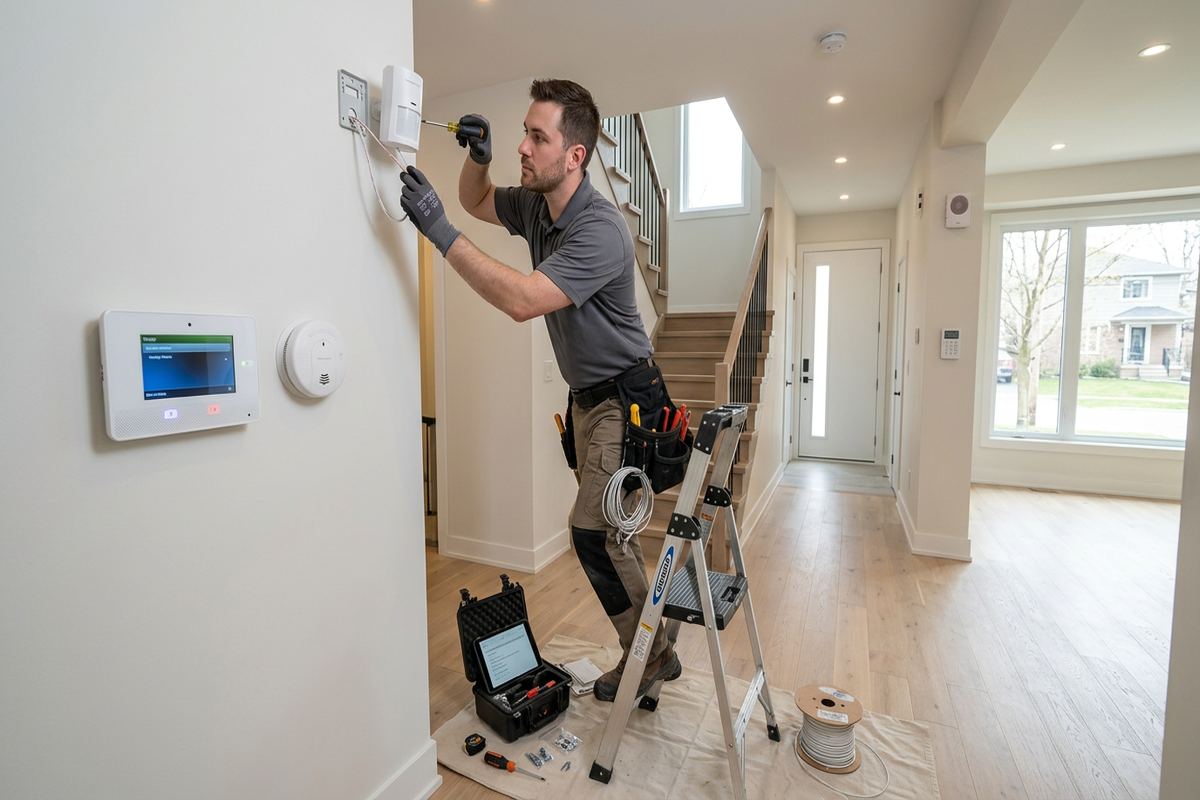
Alarm Upgrades and Existing Systems
An existing alarm panel does not necessarily need complete replacement, but age alone cannot determine whether it should stay. We inspect accessible equipment, power supplies, keypads, contacts, detectors and cabling, then consider compatibility with the requested functions. Some existing parts may remain serviceable but lack support for remote access or current communication methods. Others may have unclear wiring, damaged contacts or missing identification. The assessment separates equipment that can be tested and reused from components that should be replaced, allowing the Georgina owner to review a defined scope rather than receiving a vague upgrade recommendation.
Renovations often disrupt alarm coverage. A replaced door may no longer align with its contact, new windows may be unprotected, and a finished basement can hide or damage earlier cable routes. Changes to internet equipment can also affect remote functions even when the alarm panel itself has not changed. We trace accessible wiring, verify device response and update zone descriptions as part of an agreed upgrade. If testing reveals abandoned or inaccessible cabling, the scope identifies that limitation. New continuous runs are labelled so future work does not repeat the same uncertainty.
Commercial strips and industrial units may use alarm equipment similar to residential systems, but their operating patterns are different. Multiple staff, delivery doors, stock areas, overhead doors and shared service corridors can require partitions, individual codes and more detailed event handling. A business in Keswick or Sutton may also need landlord consent for drilling, exterior devices or work in common areas. We assess the premises and define the requested alarm work without assuming residential routines apply. Access control, cameras and network cabling can be coordinated separately where required, while each system retains a clear scope.
- Existing panel and device assessment
- Compatibility checked before reuse
- Renovation-related gaps identified
- Zone names and records updated
- Business operating patterns considered
Arranging Alarm Installation in Georgina
The process starts with a request describing the Georgina property, its use and the main concerns to address. Useful details include whether it is occupied year-round, currently has alarm equipment, includes detached structures or requires landlord or condominium approval. Requests sent during business hours are answered the same day; after-hours requests are answered the next business day. Site assessment timing depends on the service and travel distance. An initial conversation can identify obvious requirements, but final device counts, routes and pricing follow an assessment rather than being guessed from a short description.
During the assessment, we walk through likely entry points, daily travel paths, utility spaces and possible equipment locations. We ask who will use the system, how often the building is vacant and which remote or monitoring functions are expected. Construction and finish conditions are reviewed wherever accessible, including attic or basement routes when relevant. For cottages and homes around Georgina, we also consider unheated areas, winter access, exterior exposure and network availability. The purpose is to develop a practical design that can be installed and maintained without leaving key assumptions unresolved.
After assessment, the written scope sets out equipment, cable routes, device placement, exclusions, ownership and warranty information. Review it for operational fit as well as physical coverage: which doors receive delay, who needs a code, what happens during a communication fault and how seasonal users will manage notifications. Installation can then proceed against a shared record. From Keswick and Sutton to Pefferlaw, Udora, Virginia and Jackson's Point, the same disciplined process applies while the final design responds to the individual building, occupancy pattern and site conditions.
- Same-day business-hours request response
- Assessment before project pricing
- Scope lists equipment and exclusions
- Seasonal occupancy requirements reviewed
- Installation based on agreed documentation
Georgina neighbourhoods we cover
- Keswick
- Sutton
- Jackson's Point
- Pefferlaw
- Udora
- Virginia
Home alarm system installation in Georgina — common questions
Can I monitor my Georgina cottage remotely?
Remote status, notifications and arming functions may be available, depending on the selected alarm equipment, communications path and service arrangement. For a Georgina cottage, we review internet and cellular availability, backup-power limitations and who should receive events. We configure supported functions on site and provide access through the customer's own credentials. Remote features still require maintained equipment, power and active communications.
Will the alarm hardware work through winter?
Equipment must be selected and placed for the environment where it will operate. In Georgina, that can include cold garages, seasonal cottages, exposed entrances and spaces with uneven heating. We review operating conditions, condensation risk, mounting surfaces and freeze-thaw exposure. Exterior penetrations are routed and sealed carefully. No device should be installed outdoors or in an unheated area unless it is suitable for that location.
Should I choose wired or wireless sensors?
The right approach depends on construction, accessible cable routes, finish conditions and maintenance preferences. Wired devices can suit open renovation areas and accessible basements, while wireless sensors may reduce disruption in finished Georgina homes. Hybrid systems can use both. We inspect possible routes, test relevant wireless communication and identify existing cable that may be reusable before recommending a defined system design.
Can you upgrade an older alarm system?
Yes, where the existing panel, devices or cabling are compatible and testable. We inspect accessible components and identify what can be reused, what lacks required functions and what should be replaced. Older Georgina homes and cottages may have unlabelled or altered wiring after renovations, so reuse is not assumed. The written scope records reused equipment, new components, exclusions, ownership and applicable warranty information.
Do I need condo or landlord approval?
Approval may be required before drilling, attaching devices, using common spaces or modifying exterior elements. Georgina condo owners and tenants should confirm applicable building or lease rules before installation. UnifiedLink can provide proposed device locations and cable-route information for review, but the customer must obtain required owner, landlord or condominium approval. Resolving permission first reduces the risk of delayed work or required relocation.
What do I receive after installation?
After the Georgina installation, we complete on-site configuration and test agreed device and communication functions. You receive access using your own credentials, instruction on routine operation and an as-built record identifying installed devices, zone names and relevant system details. We also review battery responsibilities, notification handling, communications dependencies and any monitoring arrangement that is separate from the installed alarm equipment.
Coverage in Georgina is confirmed against the address before we quote. See everything we install in Georgina or the province-wide home alarm system installation page.